
❌

Reading view

Nominate for NASA AI/ML STIG Leadership Council

Nominate Yourself or a Colleague: NASA AI/ML STIG Leadership Council

16 June 2026

Dear Physics of the Cosmos (PhysCOS) community members-

As we begin planning the next iteration of the NASA Artificial Intelligence and Machine Learning Science and Technology Interest Group (AI/ML STIG)Β seminar series, we are expanding our leadership council and would love your help. We are writing to invite you to nominate yourself or a colleague to join.

We are especially looking for early-career researchers, including graduate students, postdocs, and early-career scientists, who are broadly interested in the intersection of AI and astronomy. You do not need to be an expert across the whole field; curiosity and a willingness to help the community learn matter most.

The organizational duties are light. Council members help suggest speakers and run the remote seminars, which mainly means sending email reminders and introducing the speaker. It is a great way to meet people across the field and to help shape a series that reaches the NASA community and beyond.

Two themes will anchor next year’s series:

1. Agentic AI for Astrophysics. How LLM agents and multi-agent systems can accelerate astronomical research, from literature and data analysis to simulation and discovery workflows.

2. AI and Astronomy in the US: Initiatives, Funding, and Broader Impacts. The wider landscape of AI in astronomy, including national initiatives, funding opportunities, AI pedagogy, the ethics and philosophy of AI in science, and ways AI can support NASA priorities such as ASTRA.

Please use this Google formΒ to nominate yourself or someone else by the end of this week (20 June 2026).Β 

Wishing you the best,

Dr Francesca Civano & Dr Brian Humensky
PhysCOS Chief Scientists, NASA GSFC

Dr Bernard Kelly
PhysCOS Support Scientist, NASA GSFC

News Straight to Your Inbox

Subscribe to your community email news list

We will never share your email address.
Privacy Policy

Sign Up
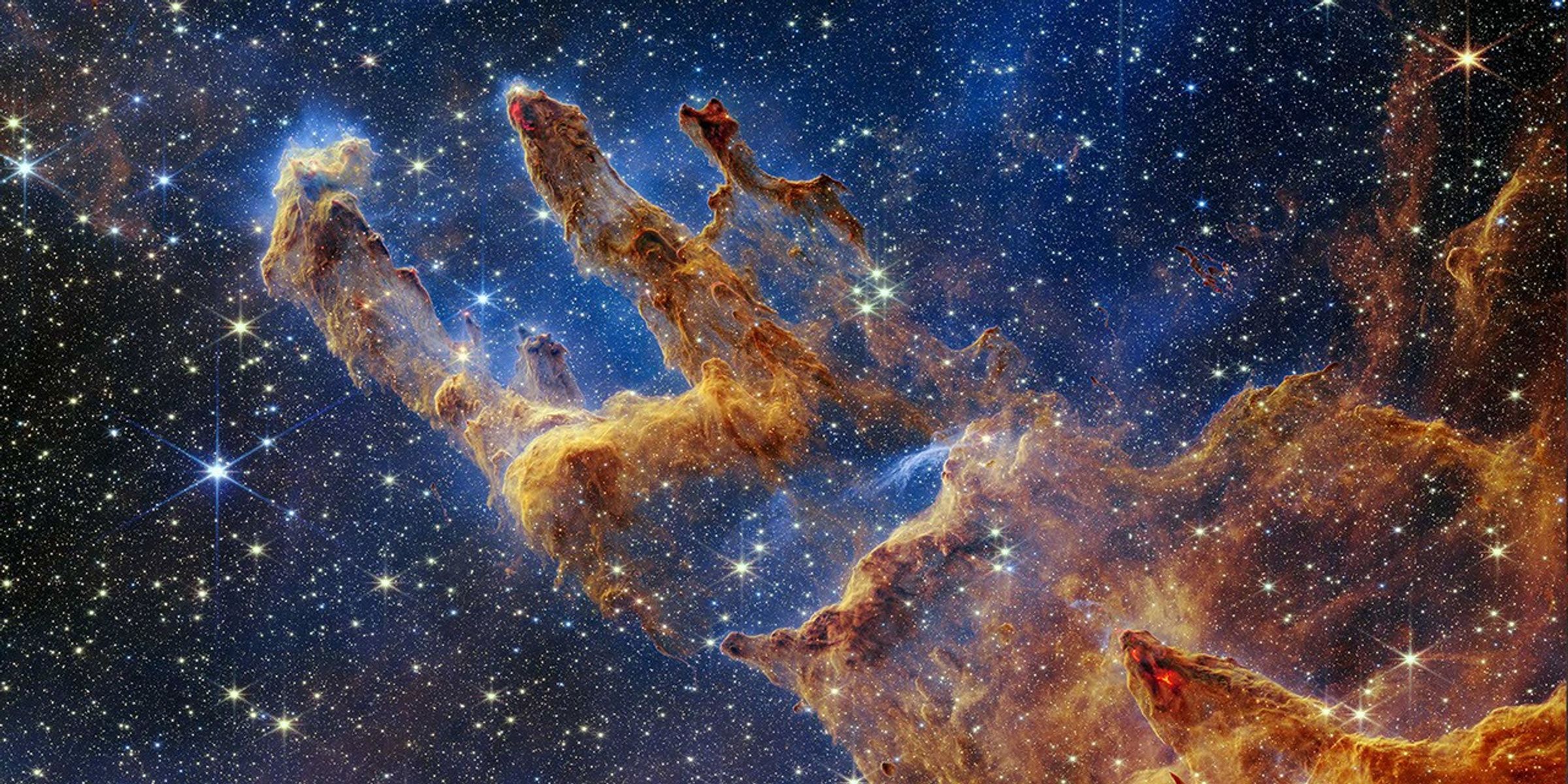
This cropped horizontal image has layers of semi-opaque rusty red colored gas and dust that starts at the bottom right and goes toward the top left. There are three prominent pillars rising toward the top left. The left pillar is the largest and widest. The peaks of the second and third pillars are set off in darker shades of brown and have red outlines.

The post Nominate for NASA AI/ML STIG Leadership Council appeared first on NASA Science.
  •  

PhysCOS Activities at AAS 248 – Tuesday 16 June 2026

PhysCOS Activities at AAS 248 – Tuesday 16 June

15 June 2026

Dear Physics of the Cosmos (PhysCOS) community members-

If you’re attending the American Astronomical Society’s 2026 Summer Meeting (AAS 248) in Pasadena CA, please note the following activities that may be of special interest to the PhysCOS community (all times Pacific):

Tuesday, 16 June

  • 8a ‑ 9a, Ballroom DE: Warner Plenary Lecture: Kyle Kremer, Globular Clusters: Astronomical factories of gravitational-wave and electromagnetic transients
  • 10a – 11:30a, Conference Center 204: NASA’s Big Science, Small Missions
  • 11:40a – 12:30p, Ballroom DE: HEAD Early Career: Carolyn Kierans
  • 12:45p – 1:45p, Ballroom A: National Science Foundation Update Town Hall
  • 3:40p – 5:10p, Conference Center 211: HEAD: NewAthena: The Next X-ray Flagship
  • 3:40p – 5:10p, Conference Center 212: HEAD: Exploring the MeV Gamma-ray Sky with COSI

And please drop by the PhysCOS table in the Exhibit Hall!

For more information on PhysCOS throughout the meeting, check out our meeting webpage.

Wishing you the best,

Dr Francesca Civano & Dr Brian Humensky
PhysCOS Chief Scientists, NASA GSFC

Dr Bernard Kelly
PhysCOS Support Scientist, NASA GSFC

American Astronomical Society

The 248th Meeting of the AAS

The 248th AAS meeting (joint with the High Energy Astrophysics and the Laboratory Astrophysics Divisions) will be held 14-18 June 2026 in Pasadena, California.

Learn More
Black line art with letters on a white background
American Astronomical Society (AAS)

News Straight to Your Inbox

Subscribe to your community email news list

We will never share your email address.

Privacy Policy

Sign Up
This cropped horizontal image has layers of semi-opaque rusty red colored gas and dust that starts at the bottom right and goes toward the top left. There are three prominent pillars rising toward the top left. The left pillar is the largest and widest. The peaks of the second and third pillars are set off in darker shades of brown and have red outlines.

The post PhysCOS Activities at AAS 248 – Tuesday 16 June 2026 appeared first on NASA Science.

  •  
❌