❌

Reading view

5,000-year-old burial of man with battered skull found in kiln in Germany — and he may have been a human sacrifice

Archaeologists in Germany have unearthed an unusual burial of an injured man who was thrown into an abandoned kiln nearly 5,000 years ago. Because archaeologists don't typically find artifacts or bones in kiln pits, they suspect the man may have been a human sacrifice.

While workers were constructing a power line near Gerstewitz, a village in central Germany, archaeologists found a Corded Ware culture grave, according to a June 15 statement from the State Office for Heritage Management and Archaeology (LDA) Saxony-Anhalt.

The Corded Ware culture, named after the distinctive cord-like impressions found in their pottery, spread across Northern Europe between the Late Neolithic and the Bronze Age, around 2900 to 2050 B.C. Graves of Corded Ware people tend to follow a strict pattern: Men were buried on their right side, women were interred on their left, and everyone was buried in a crouched position facing south. But sometimes, graves deviate from this pattern.

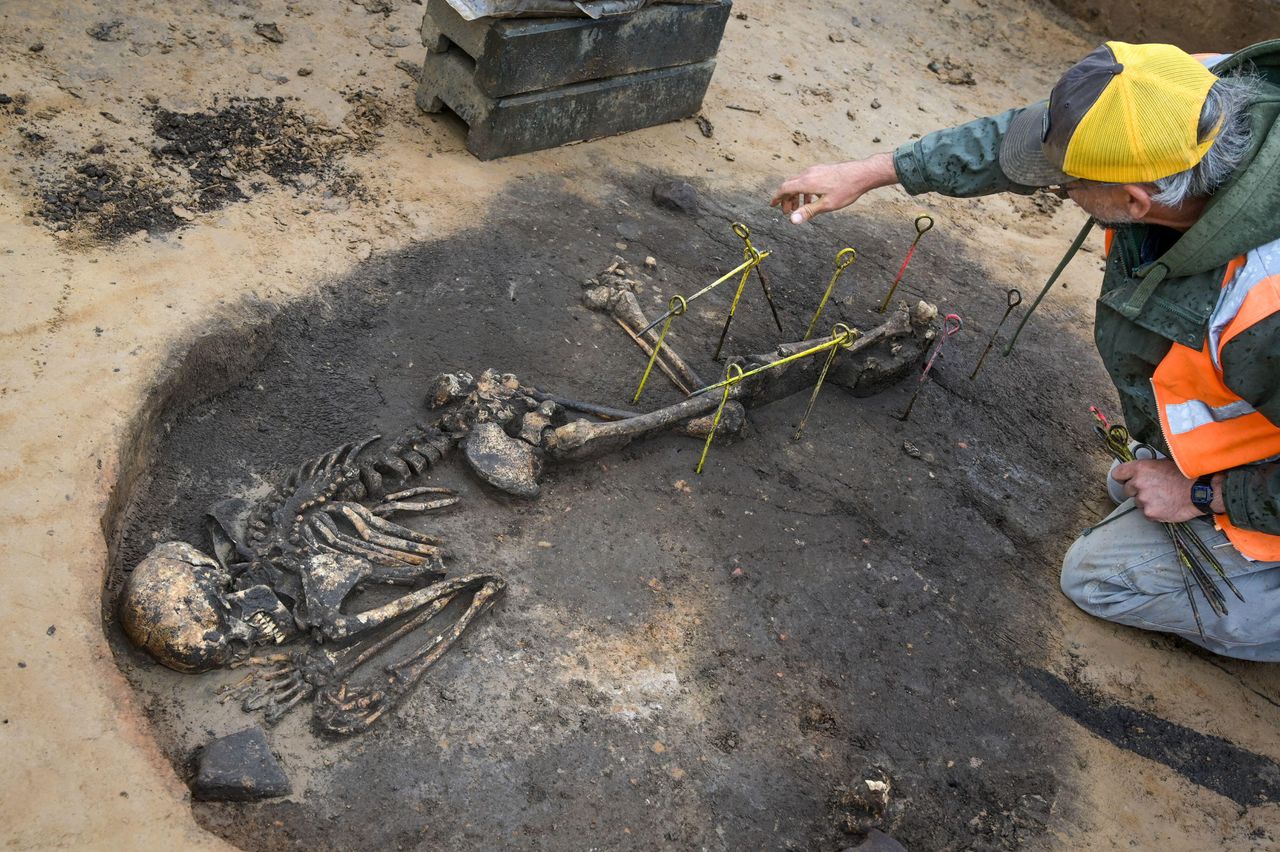
The newly excavated grave at Gerstewitz revealed the skeleton of a man who was about 25 years old when he died. He was buried in a crouched position facing south, but rather than being placed in a grave or under a small mound, he was found in a kiln pit. This pit, essentially a hole that had been dug into the ground, held ancient evidence that people had used it to burn material, such as wood or food, or to fire clay. Additionally, the man's skull showed signs of injury.

Experts have suggested three possible explanations for the unusual burial. The skull injury may have resulted from violence, meaning someone murdered the man. Alternatively, he could have perished in a Copper Age battle lost to history. But a third possibility is that he was placed in a kiln pit as a human sacrifice.
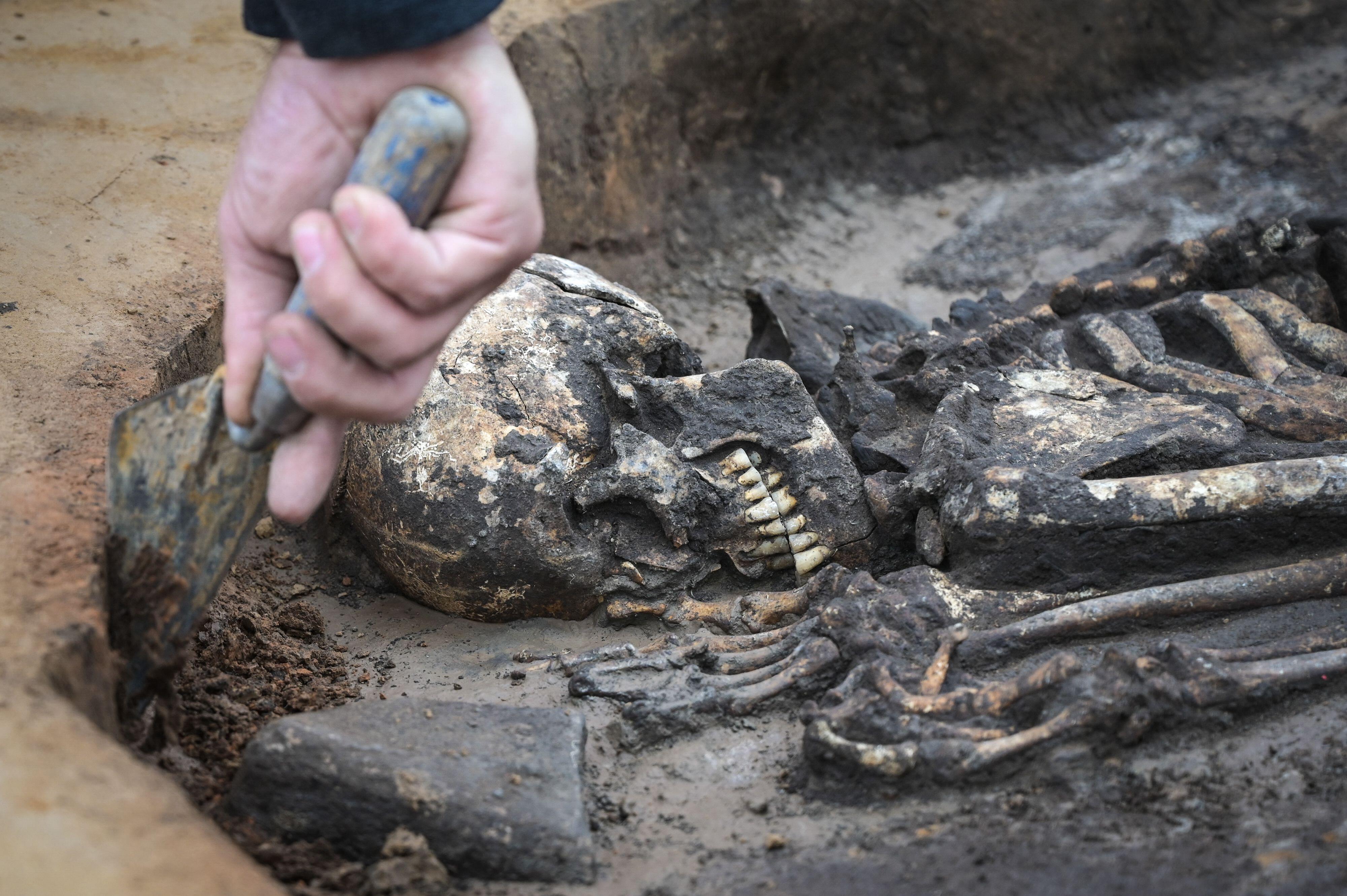
an archaeologist places the point of a trowel near the skull of a person who died 5,000 years ago

The man buried in the kiln pit sustained an injury to his head before he died. (Image credit: dpa Picture-Alliance)

Oliver Dietrich, an archaeologist at LDA Saxony-Anhalt, wrote in the statement that, in rare cases, Corded Ware kiln pits contain cow or dog bones thought to be sacrificial offerings to unknown deities. While it's possible this man was a human sacrifice, Dietrich noted that future laboratory analysis should provide more information about the grave and the person buried there.

This is not the first time a sacrificial pit has been found in Gerstewitz. Last year, archaeologists with LDA Saxony-Anhalt discovered 12 pits ringed by a moat-like ditch. The pits were full of dog bones, human skulls and complete ceramic pots and had been sealed with the rubble of burnt houses, according to a 2025 statement about that discovery. An additional human skeleton was found buried in a converted oven pit. These finds, however, were attributed to the Salzmünde Culture (3400 to 3050 B.C.), which predated the Corded Ware people.

Other discoveries near Gerstewitz have revealed that the area was settled and occupied for over 6,000 years. The excavation there will last until at least 2027, when the power line project is expected to be completed.

What do you know about the Paleolithic, Mesolithic and Neolithic eras? Find out with our Stone Age quiz!
  •  

Forgotten in a Museum for Two Centuries, This Weird Artifact’s Rediscovery Upends a Long-Held Belief About the Vikings

A curiosity that had been locked away in a museum’s archives for more than 200 years is now revealing clues to a longstanding Viking mystery.

Although much is known about these seafaring Scandinavians who dispersed throughout Europe between the 8th and 11th centuries, a few fundamental questions remain unanswered.

Among them is the question of their grooming and style: how did this historic group of pirates and traders wear their hair?

Now, a discovery long hidden within the archives of Denmark’s National Museum could finally provide clues by offering historians a rare glimpse at a Viking “portrait,” revealing a surprisingly well-kept individual.

A Forgotten Discovery Resurfaces

The rediscovery of this curious artifact, known as the Flygstad Figurine, was made by Peter Pentz, the curator of Denmark’s National Museum. While combing through some of the museum’s archives, he located a small figurine depicting a noticeably well-groomed man.

It soon dawned on him that the one-inch-tall object was most likely a gaming piece, which would have been used by Vikings in the tenth century. However, this recognition of the artifact’s purpose only deepened its mystery, since the appearance of the individual it represented seemed distinctively unlike our general conception of how Vikings looked.

“When I came across him in one of our storage rooms a few years ago, I was really surprised,” Pentz recently said of the discovery. “He just sat there, looking directly at me, and I had never before seen such a Viking, not in the many years I’ve been at the museum.”

The piece consists of the tiny head and torso of a bearded man, whose facial hair appears to be braided. Along the sides of his face are sideburns, as well as a moustache with curled ends; the man’s hair is evenly parted, with wavy strands that descend the sides of the head around his prominently protruding ears.

However, the deeper history of this unusual artifact reveals an even more intriguing story, along with new perspectives on the way these ancient Scandinavians looked and presented themselves.

Discoveries in a Viking Warrior’s Grave

The artifact’s history can be traced back to discoveries made before the nineteenth century, when excavations in the late 1700s were underway at a burial site in southeastern Norway near the appropriately named locale of Viken.

There, among the items entombed within a Viking warrior horse grave near Norway’s famous Oslofjord, had been the tiny and unusually well-trimmed figurine. Placed in storage for safekeeping, the small artifact was given the label of item “No. 589,” becoming one of the first few hundred items ever housed within the museum.

Ultimately, the tiny item was forgotten, and it remained hidden in the museum’s collection for more than two centuries. Now, out of the more than two million artifacts that have accumulated in the facility over the years, this tiny homage to Viking style, grooming, and gaming has finally resurfaced.

A Tenth-Century Gaming Piece

Pentz and his colleagues say the item was probably used as part of the Viking-era board game known as Hnefatafl, part of a broader family of amusements known as Tafl games that featured checkered boards similar to modern chessboards.

Beyond merely being an implement of tenth-century gaming, the specific features on the tiny artifact could reveal much more about Viking men from the period in question.

“We haven’t had any detailed knowledge about Viking hairstyles, but here, we get all the details—even the little curl above the ear is marked,” Pentz recently said.

“This is the first time we see a figure of a male Viking with his hair visible from all angles,” he added.

The uniqueness of the small character could suggest that he was more than just your average Viking—the elegance of his visage may even suggest he was a member of royalty, with possible identifications including the Viking king Harald I, who reigned during the late 900s C.E.

One thing is clear, however: the Flygstad Figurine is now causing scholars like Pentz to fundamentally rethink past ideas about how Vikings looked.

“If you think of Vikings as savage or wild, this figure is proving the opposite,” says Pentz.

“He is very well-groomed,” Pentz added.

The rediscovery of the Flygstad Figurine was recently detailed in a study, titled, “Understanding the Flygstad (Fløgstad) Figurine: Gaming Pieces, Kings, Gender and Fertility Rites,” which appeared in Medieval Archaeology.

Micah Hanks is the Editor-in-Chief and Co-Founder of The Debrief. A longtime reporter on science, defense, and technology with a focus on space and astronomy, he can be reached at micah@thedebrief.org. Follow him on X @MicahHanks, and at micahhanks.com.

  •  

Evidence of Fire Use by Early Humans May Date Back Nearly 1.8 Million Years

Shaar et al. unveil the oldest evidence of human activity in Wonderwerk Cave, South Africa. Image credit: Michael Chazan.

Scientists have uncovered compelling new evidence that early human ancestors, likely Homo erectus, were deliberately bringing fire into Wonderwerk Cave in South Africa as far back as 1.79 million years ago.

The post Evidence of Fire Use by Early Humans May Date Back Nearly 1.8 Million Years appeared first on Sci.News: Breaking Science News.

  •  

Wreck of World War II Japanese 'hellship' that sank with more than 1,000 Allied POWs on board discovered off the Philippines

The wreck of a Japanese prison ship that was sunk by U.S. warplanes and went down with more than 1,000 Allied prisoners of war in 1944 has been discovered in the Philippines.

The vessel was one of the notorious "hellships" used by the Japanese to ferry POWs between work camps. Many of the prisoners who died when the ship sank had worked on the infamous Burma-Thailand "Death Railway."

"Sadly, a lot of these prisoner transport ships were sunk by the Allies," expedition leader and American TV show host Josh Gates told Live Science. "The ships were painted to just look like military vessels, and they were inside the Japanese convoys — so the Allies thought they were legitimate military targets."

Gates teamed up with the Hellships Memorial Foundation, a U.S.-registered non-profit based in Subic Bay in the Philippines, to investigate the sinking of the hellship Hōfuku Maru. Its wreck had never been found, probably because searchers were guided by incorrect U.S. records to look too far north, he said.

But Japanese wartime records were more precise about the wreck's location, helping the team find the remains of the Hōfuku Maru in January, Gates said. His team has since made five dives to the wreck, which sits a few miles off the west coast of the main Philippines island of Luzon at a depth of about 160 feet (50 meters).

A blue 3D reconstruction of a shipwreck on the bottom of the ocean against a black background

The newfound wreck lies a few miles from the coast of the main Philippines island of Luzon, northwest of Manila. (Image credit: Evan Kovacs, Marine Imaging Technologies, LLC)

Prison ships

Japan used more than 130 hellships during World War II, but the wrecks of only a few have been found. Many hellships, including the Hōfuku Maru, were converted freighters. The Hōfuku Maru was used as a prison ship from 1942 until its sinking about two years later.

Gates said the vessel was part of a Japanese military convoy sailing from the Philippines to Japan when it was attacked on Sept. 21, 1944. U.S. warplanes had spotted the convoy, and one dropped a torpedo that cut the Hōfuku Maru in half. It quickly sank.

But the ship had roughly 1,200 Allied POWs on board, from the British and Dutch armies, many of whom had been forced to work on the Death Railway. Some were able to swim ashore, but they were recaptured by the Japanese. About 1,040 died in the sinking, Gates said.

3D maps of shipwrecks found in the bottom of the ocean, with blue areas showing 3D ship reconstruction on the bottom of the seafloor against a black background

Mapping with an underwater drone has identified three separate sections of the wreck. (Image credit: Evan Kovacs, Marine Imaging Technologies, LLC)

War captives

The 1929 Geneva Convention placed strict limits on the use of prisoners of war for labor, but Japan was infamous for flouting these rules during World War II, claiming that it never ratified the convention and that wartime made POW labor important. Japan used POWs for slave labor on railways and docks, as well as in factories and mines. Of the roughly 132,100 prisoners captured from the United States and United Kingdom armies, nearly a third of them — about 35,000 people — died of exhaustion, malnutrition and disease.

Gates said the Japanese hellships used to ferry thousands of POWs between work camps were miserable places themselves: there was little light, air or food, and prisoners might be kept there for months. Human remains have been identified on the newfound wreck, and it will now be considered a war grave, he said. International conventions aim to prevent such wrecks from being disturbed.

The team first spotted the wreck with sonar, and then dove to identify parts of the structure that confirmed it as the Hōfuku Maru. They also mapped the wreck with a remotely operated underwater vehicle, which helped them determine that the ship had split into separate parts, just as accounts of the sinking had reported.

The Hellships Memorial Foundation would now work to try to locate the families of the victims, Gates said.

  •  

2,700-year-old standing stone may provide fresh evidence for King Hezekiah's religious reforms

A new study by Prof. Avraham Faust of Bar-Ilan University's Department of General History presents new evidence that may shed light on one of the most debated questions in the study of Israelite religion: Did King Hezekiah's religious reforms actually occur, and did they transform religious practices throughout the Kingdom of Judah?

  •  

Radiocarbon dating confirms 10,000 years of continuous human occupation in the Pyrenees

Researchers from the Universitat Autònoma de Barcelona (UAB) have created an open database with 124 carbon-14-dated samples that have made it possible to construct the chronological sequence of 380 sites located in the Aigüestortes i Estany de Sant Maurici National Park. The evidence confirms continuous human occupation for several thousand years at sites found at more than 2,000 meters (6,562 feet).

  •  

Quest for Fire: New Technique Pushes First Intentional Use of Fire to Over One Million Years Ago


An international team of researchers led by Dr. Liora Kolska Horwitz of the Hebrew University of Jerusalem’s National Natural History Collections, working at the site of the oldest dated intentional use of fire by ancient human ancestors, South Africa’s Wonderwerk Cave, has found new evidence pushing that date even earlier into prehistory.

The research team behind the potentially history-altering findings said the discovery, which suggests that ancient hominins intentionally controlled fire, resulting in charred animal bones sometime between 1.07 and 1.79 million years ago, provides researchers with previously unavailable insights into how our ancestors first began to harness one of the most important tools in the evolution of human society and culture.

The study also introduced the archaeological community to a promising new method for analyzing burned bone samples by monitoring its light-emitting properties.

Intentional Use of Fire Provided Human Ancestors with a Critical Tool

According to a statement announcing the study, Dr. Horwitz, who is co-director of the Wonderwerk Cave project with Prof. Michael Chazan at the University of Toronto, and colleagues note the historical significance of fire, ranging from warmth and predator protection to extended daylight and the cooking of meat. However, historians have struggled to identify a single moment or historical period where humanity’s ancient ancestors first started to use fire intentionally.

“Evidence of fire from such ancient sites is often subtle and difficult to detect,” Dr. Horwitz explained.

Before the new analysis, the oldest agreed-upon evidence for intentional fire use also came from Wonderwerk Cave. Situated within the Kalahari Desert of South Africa, the cave provided evidence placing fire use to approximately 1 million years ago.

first intentional use of fire
Wonderwerk Cave Entrance. Image Credit: Wonderwerk Cave Project.

While that study used the most advanced techniques available, the team behind the new study decided to employ a non-invasive process that involves illuminating ancient bone fragments with specific wavelengths of light to determine whether they had been exposed to intense heat. In cases where bones have been heated to fire-like temperatures, the right wavelength of light will cause them to glow.

Remains Likely Left by Homo Erectus

Because evidence from ancient sites is scarce, the team’s non-invasive technique allowed them to study tiny fossilized rodent bones left in the cave by owls without damaging them. The team noted that using remains that accumulated naturally on the ancient cave floor provides an “independent, non-anthropogenic record” of ancient events within the local area.

first intentional use of fire
White (#5 on right) is the most burnt, while yellow-beige (on left #1) is unburnt. Image Credit: Wonderwerk Cave Project.

After exposing the ancient bone to specific wavelengths of light, the team found what they described as “clear signs of burning.” Dr. Horowitz confirmed the findings, noting that the team’s analysis reveals “fire was repeatedly present deep inside Wonderwerk Cave.”

Because the deposits were found over 30 meters deep in the cave, the team ruled out wildfires as a possible source of combustion. The layer also lacked bat guano remains, which the team noted “rules out spontaneous combustion.”

A chemical analysis of the charred bones dated them to between 1.07 and 1.79 million years ago, redating the 2012 findings. Critically, the evidence for ancient fire use was in an archaeological layer “associated with artifacts” from the initial Acheulean period, which is consistent with the dating. If correct, this would make the likeliest early human ancestor that used fire Homo erectus.

Although the findings appear to extend the chronology of one of the earliest known records of fire use associated with hominins by as much as 790,000 years, the research team said the findings do not suggest that these early proto-humans could create fire “at will.” Instead, the likeliest scenario involves early human ancestors collecting fire from natural sources, such as lightning-induced wildfires on the African savanna, and bringing it into the cave.

“The early humans introduced this fire into the cave on multiple occasions and maintained it there before it eventually died out,” the team’s statement explained.

The team did not immediately pinpoint what methods these early hominins used to maintain a burning fire. However, they suggested that burning owl pellets as additional fuel may inadvertently have scorched the rodent bones.

A New Tool for Identifying Traces of Burning

When discussing the implications of the new, earlier date for the first intentional use of fire, Dr. Horwitz said the discovery shows that early human ancestors “were not simply passive observers of natural fires,” but instead were “actively engaging with fire and incorporating it into their lives.”

Beyond offering an earlier date range for early fire use, the work provides clues into how our ancestors used fire before they could make it on their own. The study also debuted a new, non-invasive, portable tool for investigating early fire use, which the study authors note “can be applied to large collections of fossils without damaging them.”

“Our study provides new tools for identifying traces of ancient burning,” Dr. Horwitz explained, with the team adding that application of this new technique to sites around the world “may help clarify the origins and development of one of the most consequential technologies in human history.”

The study “New evidence for Early Pleistocene use of fire at Wonderwerk Cave (South Africa)” was published in PLOS One.

Christopher Plain is a Science Fiction and Fantasy novelist and Head Science Writer at The Debrief. Follow and connect with him on X, learn about his books at plainfiction.com, or email him directly at christopher@thedebrief.org.

  •  

Lavish Roman villa discovered outside Rome's walls may have been frequented by Hadrian and Marcus Aurelius

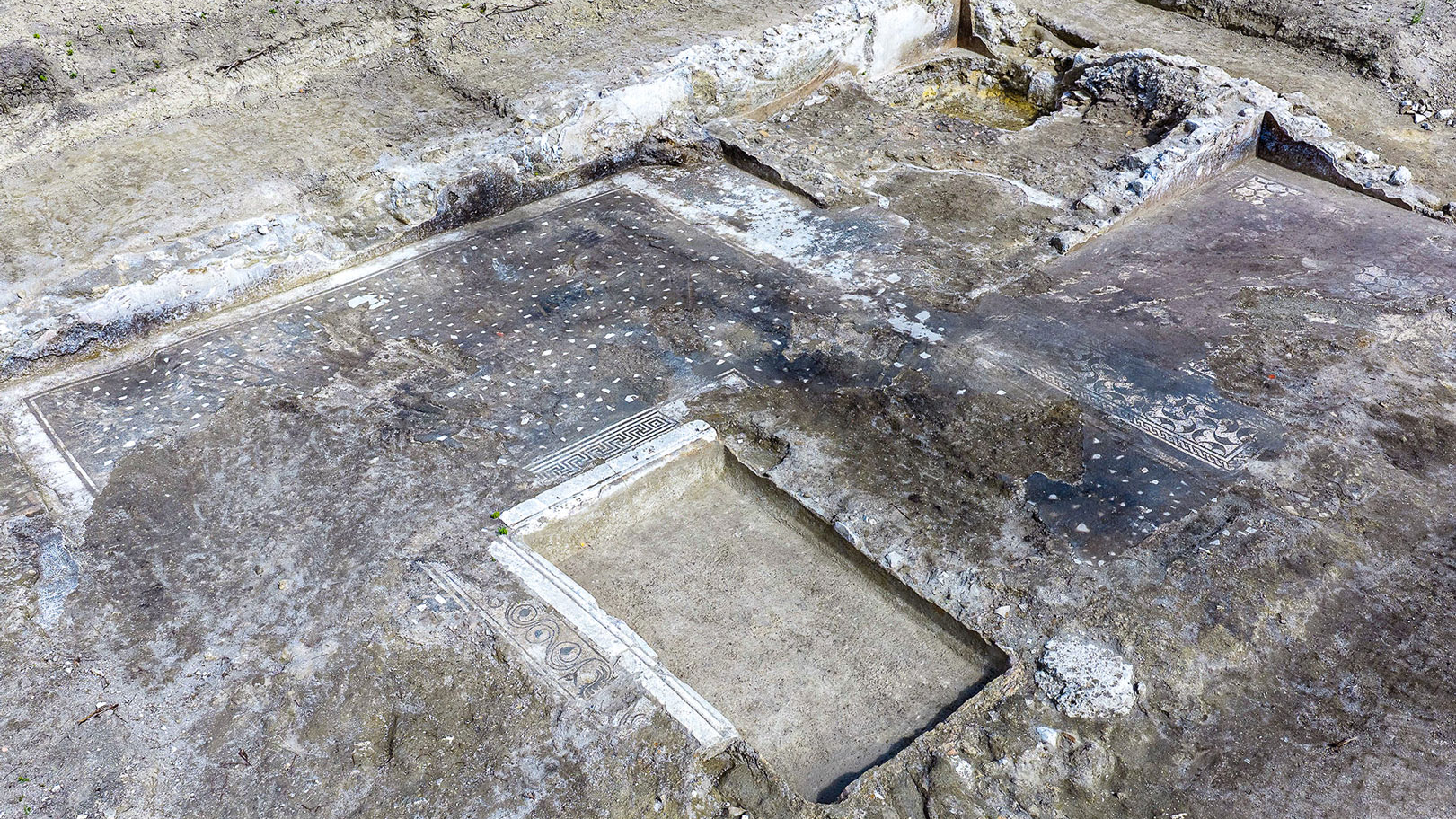
A clandestine excavation on the outskirts of Rome has brought to light a "splendid villa" that may have belonged to a member of the Antonine imperial family, according to archaeologists with the Special Superintendency of Rome. The remains of the first-century villa, which was previously unknown to archaeologists, include frescoed walls and mosaic floors that showcase the elite social status of the owners.

The villa was discovered at Castel di Guido, a village about 12 miles (19 kilometers) west of the ancient city walls of Rome. In ancient times, the area was known as Lorium, and it was frequented by prestigious Roman families, including the Roman emperors Hadrian, Antoninus Pius and Marcus Aurelius.

In February, the local police were alerted to illegal excavations at Castel di Guido on government-owned land, according to a June 15 translated statement from the Italian Ministry of Culture's Special Superintendency of Rome. The unauthorized excavations had been undertaken with a backhoe, which made deep cuts into the villa and left huge piles of dirt.

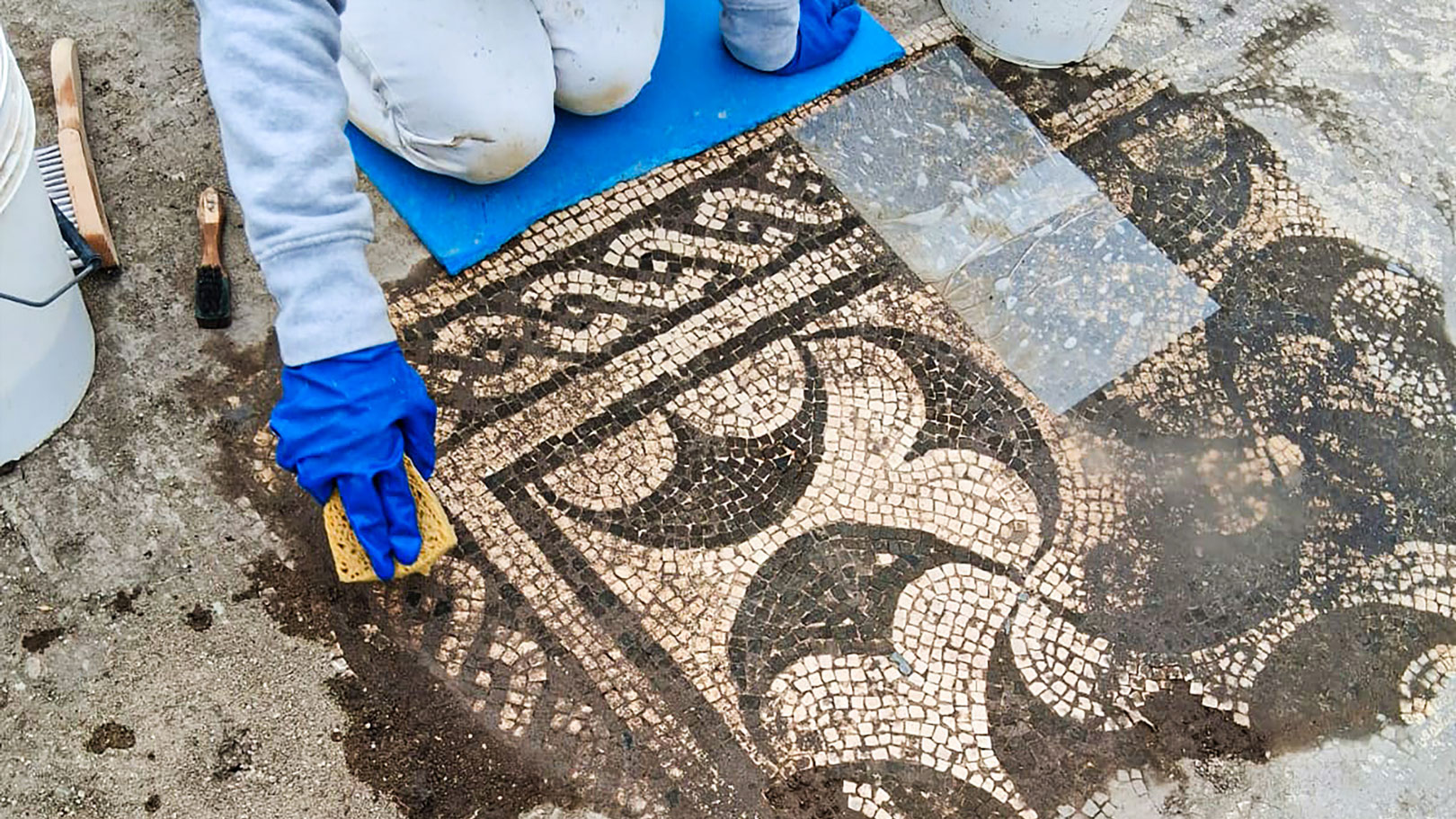
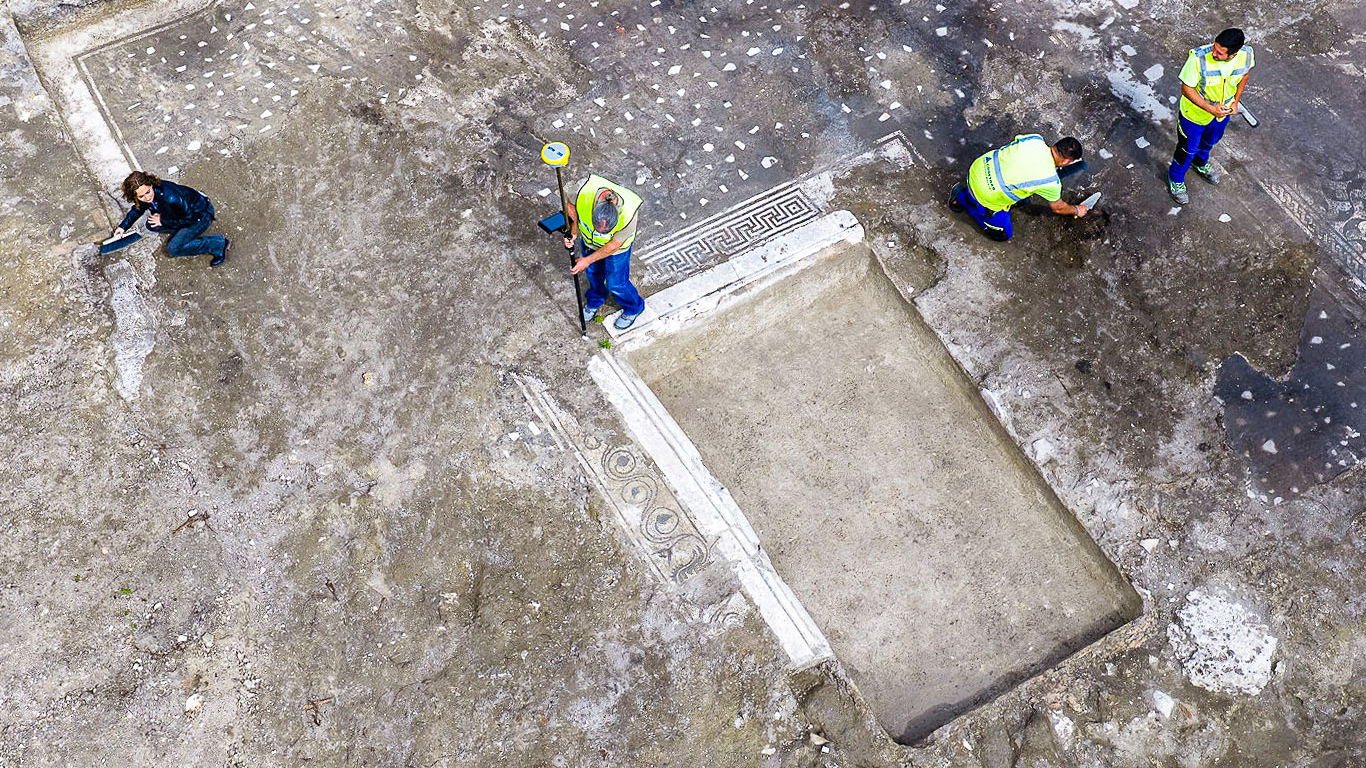
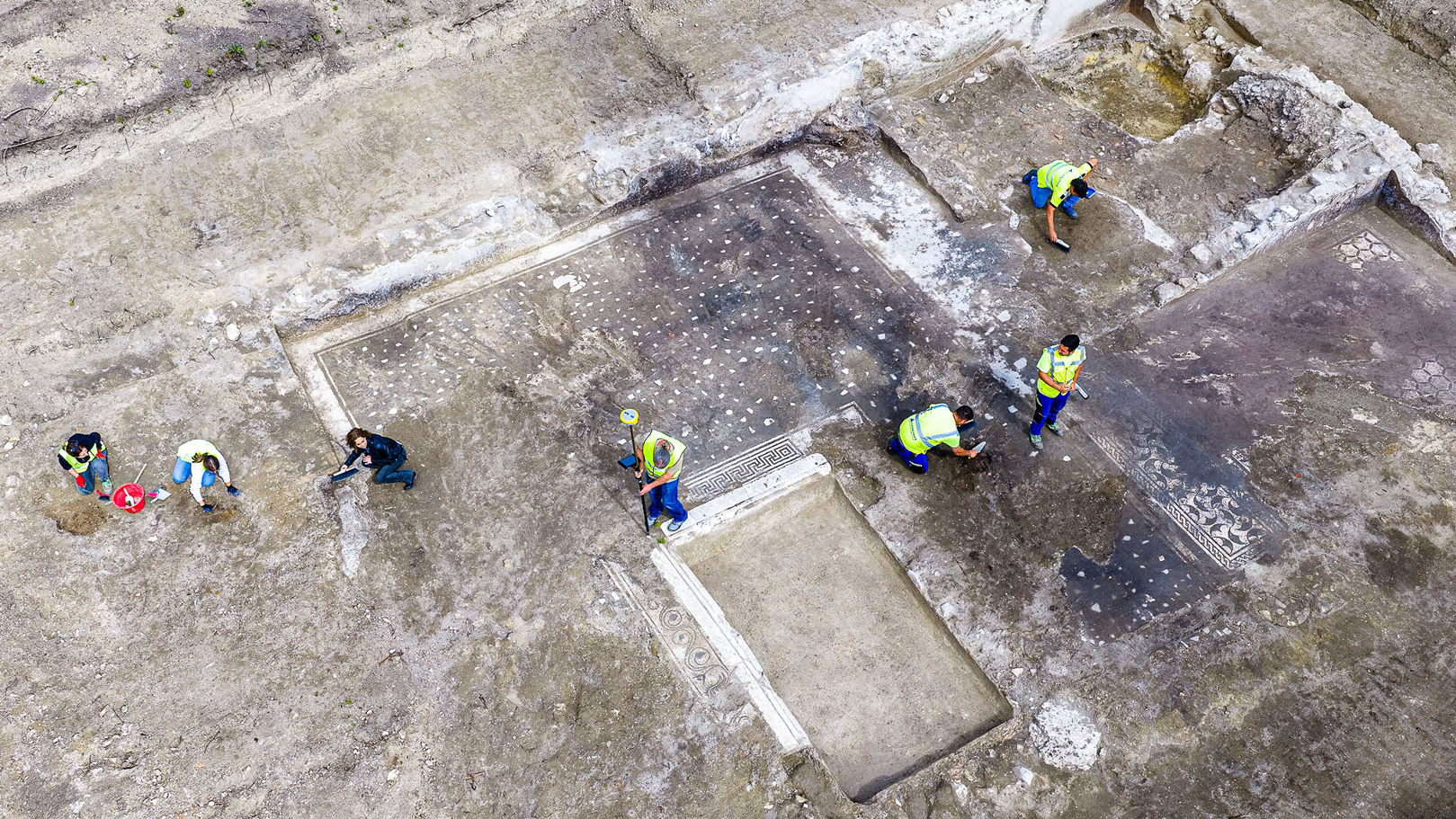
Superintendency archaeologists led by Alessia Contino carried out emergency excavations to document and stabilize the architecture at the site.

"Thanks to the local report and prompt intervention, it was possible to identify part of a large, previously unknown Imperial-period villa and uncover a splendid array of decorations, as well as the discovery of a statue in fine white marble," Contino said in the statement.

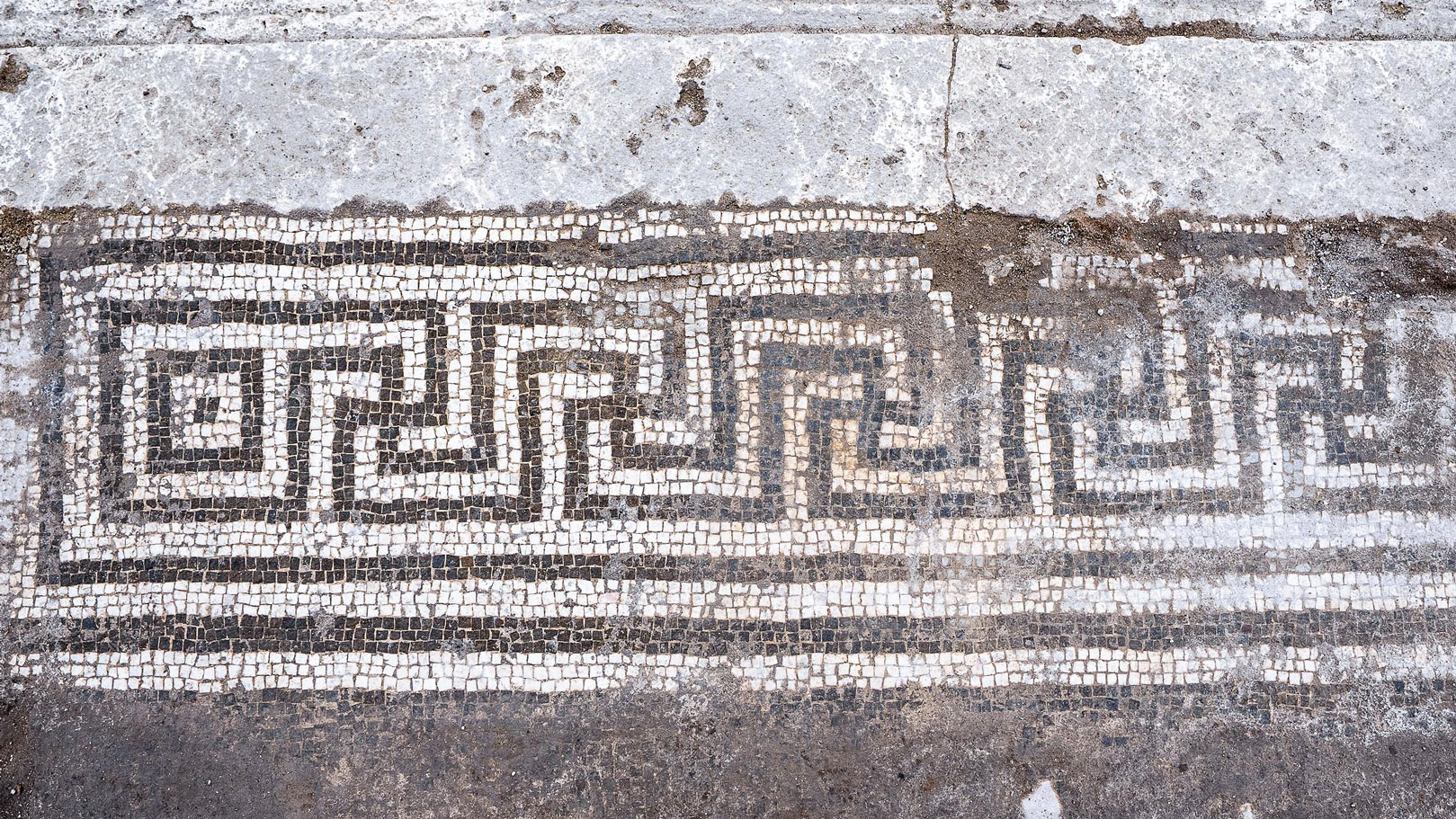
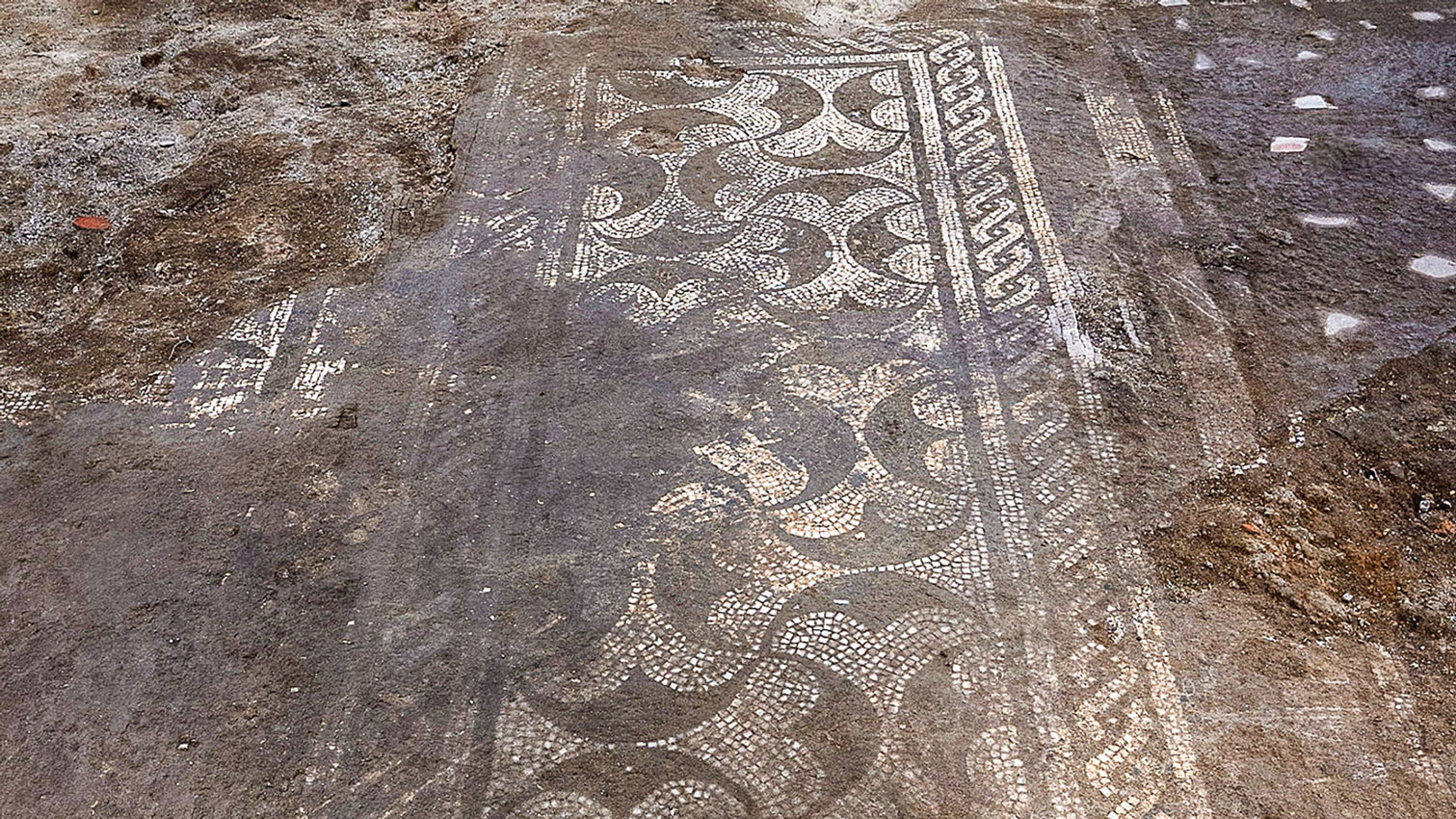
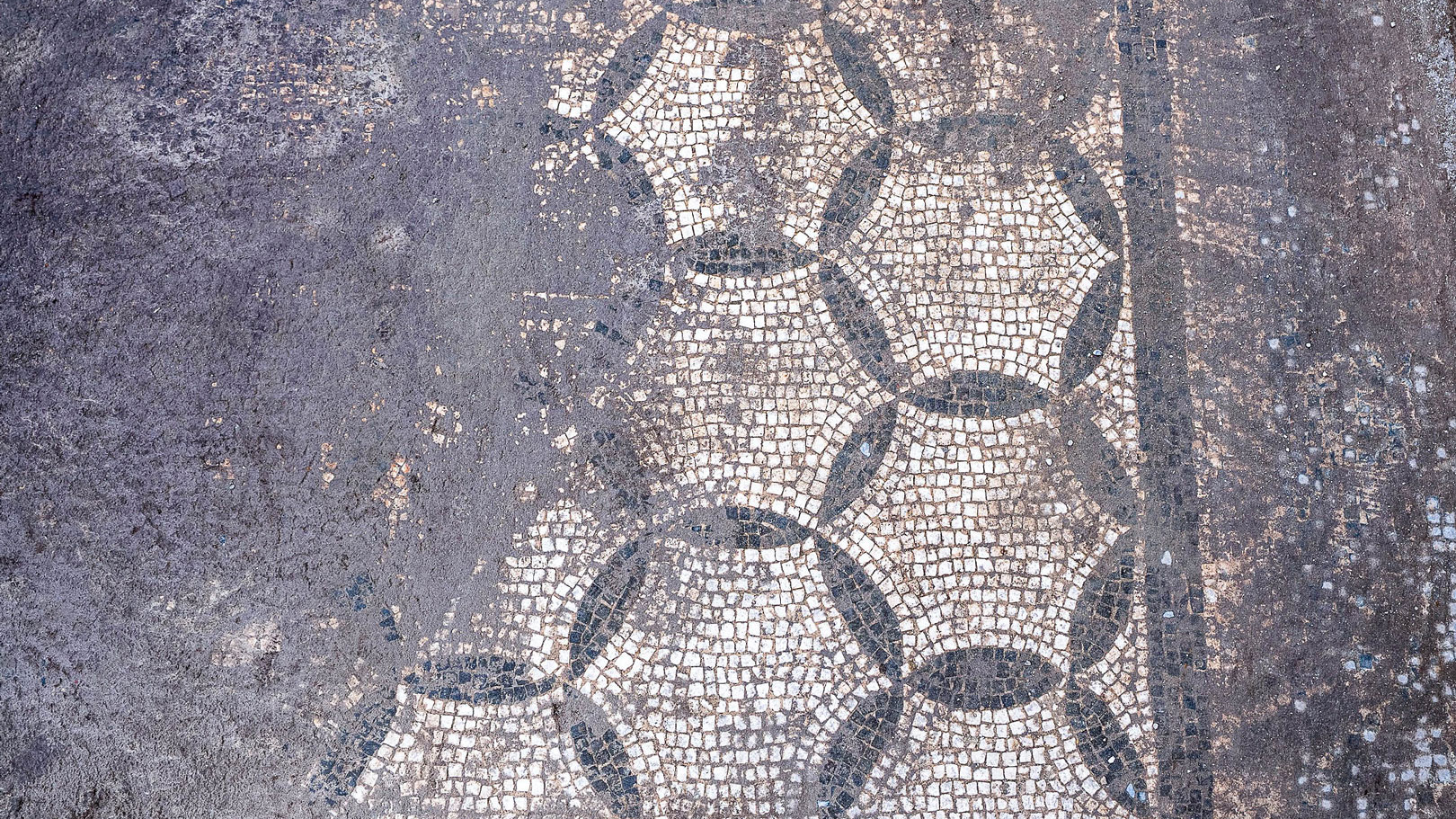
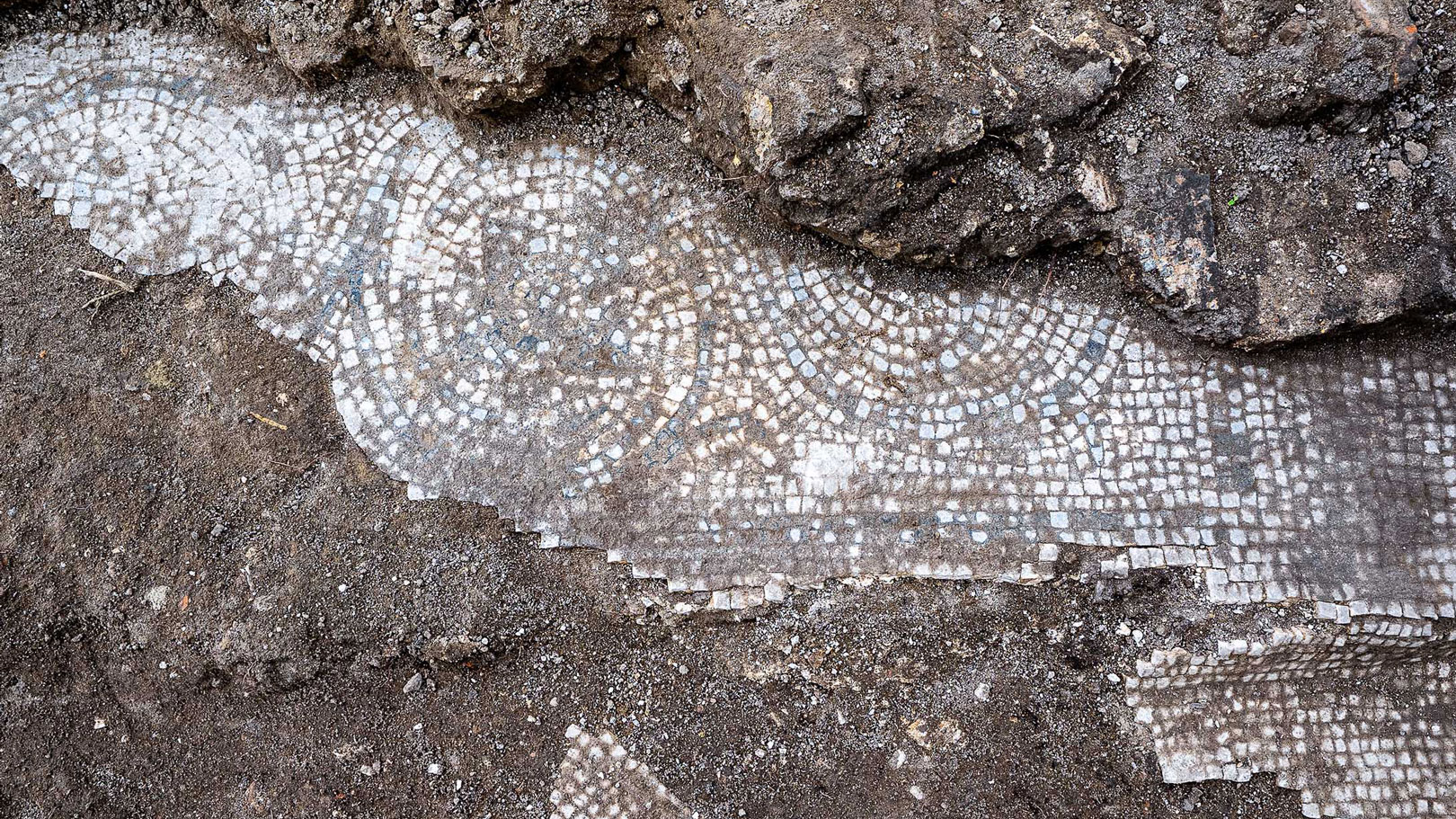
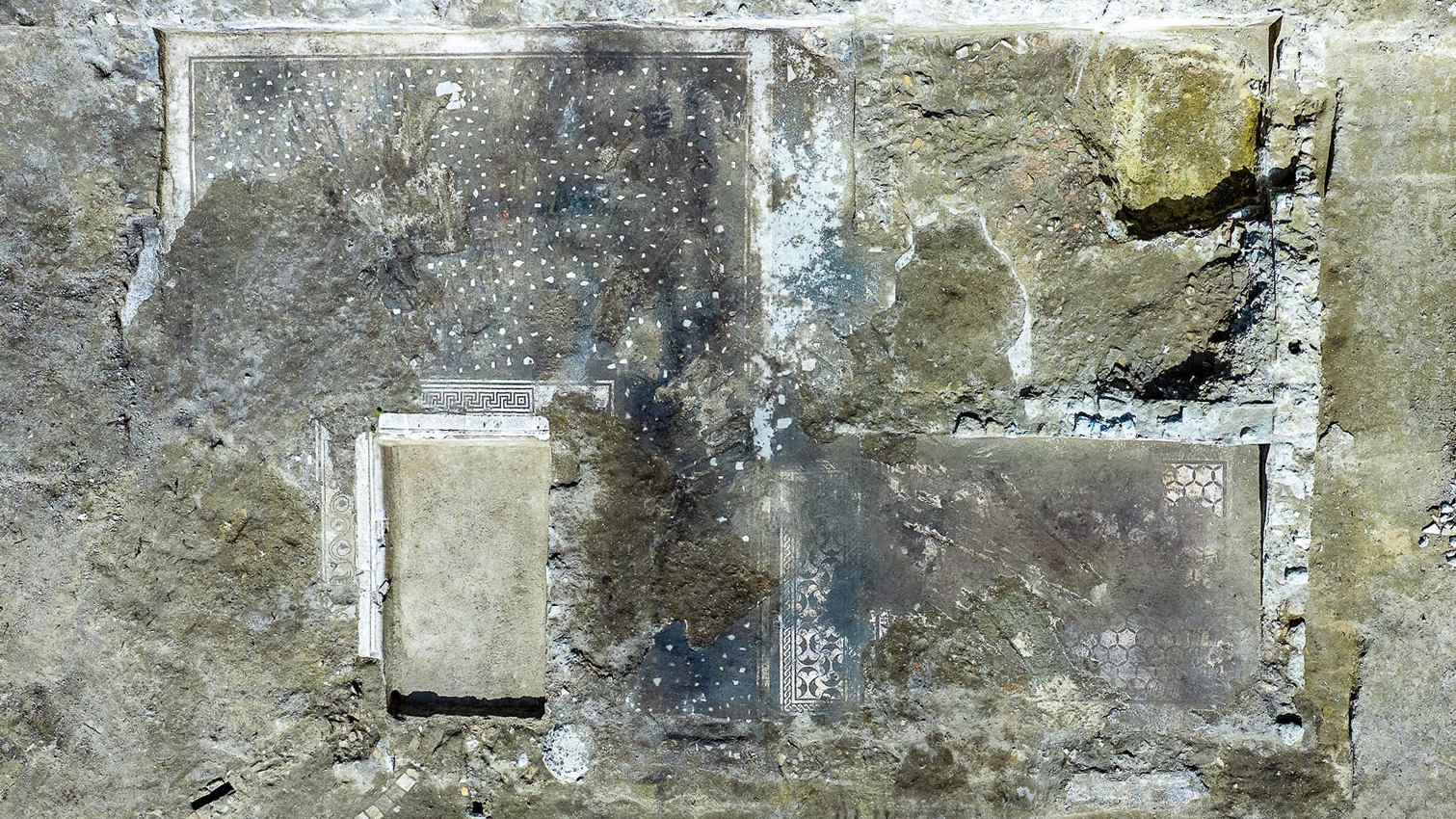
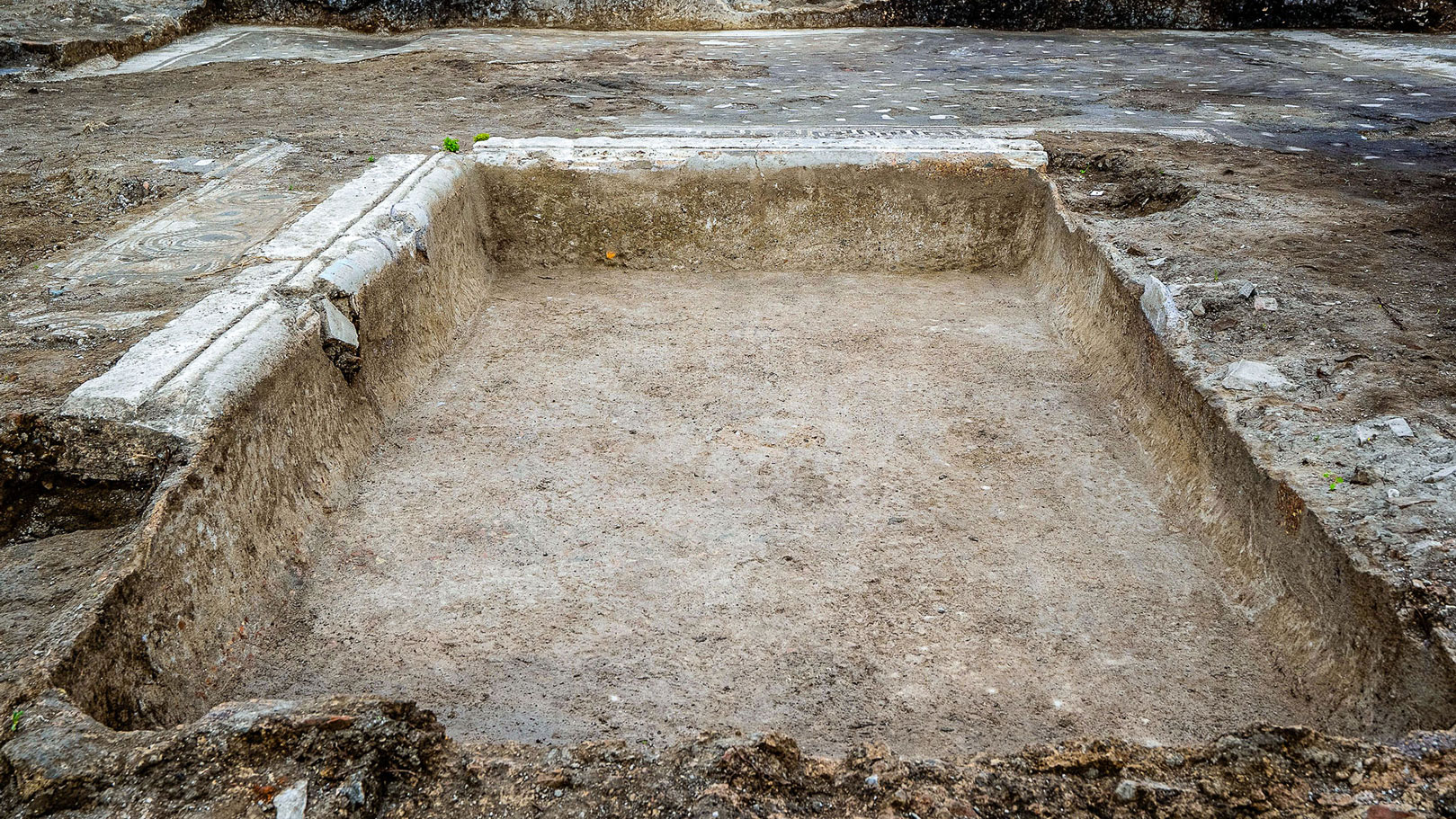
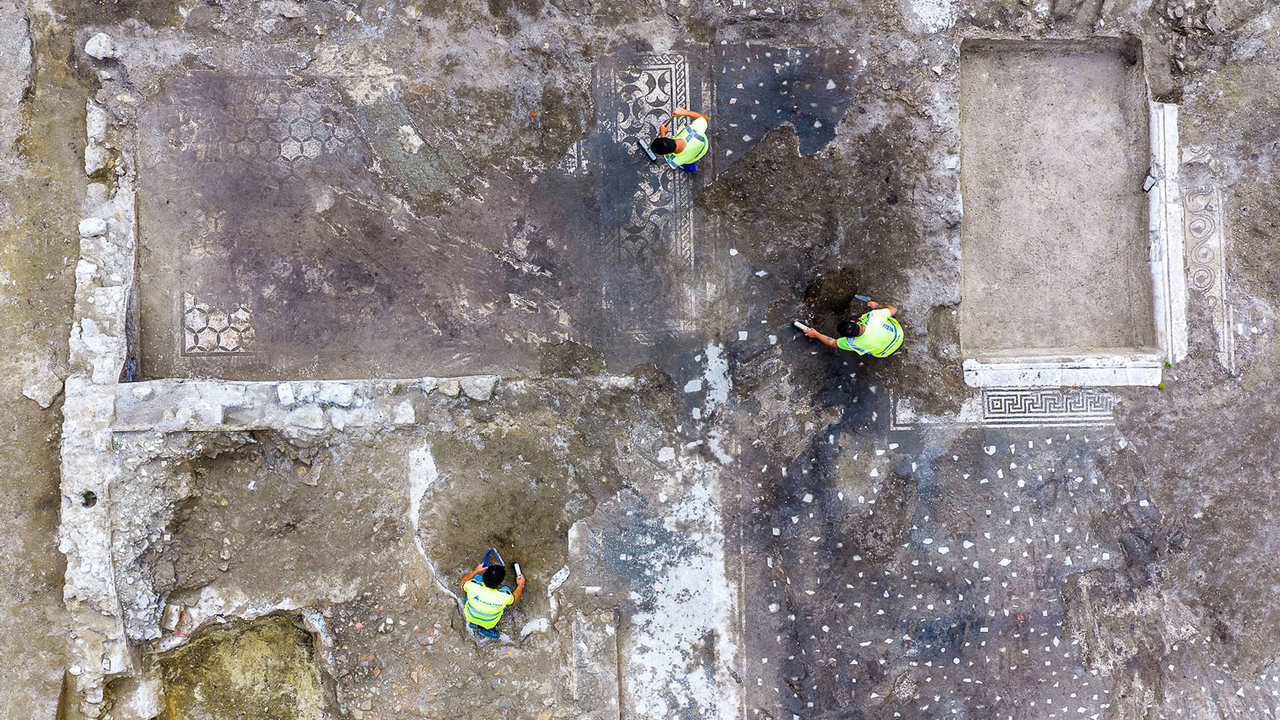
The excavation revealed the atrium at the entrance of the villa, two rooms decorated with frescoes and mosaics, and several other spaces related to the agricultural activities of the large, rural house. The villa was likely built in the early first century and abandoned in the third century.

archaeologists work at an ancient Roman site revealing mosaic floors and frescoed walls of a villa
Italian Ministry of Culture / Special Superintendency of Rome
archaeologists work at an ancient Roman site revealing mosaic floors and frescoed walls of a villa
Italian Ministry of Culture / Special Superintendency of Rome
archaeologists work at an ancient Roman site revealing mosaic floors and frescoed walls of a villa
Italian Ministry of Culture / Special Superintendency of Rome
archaeologists work at an ancient Roman site revealing mosaic floors and frescoed walls of a villa
Italian Ministry of Culture / Special Superintendency of Rome
archaeologists work at an ancient Roman site revealing mosaic floors and frescoed walls of a villa
Italian Ministry of Culture / Special Superintendency of Rome
archaeologists work at an ancient Roman site revealing mosaic floors and frescoed walls of a villa
Italian Ministry of Culture / Special Superintendency of Rome
archaeologists work at an ancient Roman site revealing mosaic floors and frescoed walls of a villa
Italian Ministry of Culture / Special Superintendency of Rome
archaeologists work at an ancient Roman site revealing mosaic floors and frescoed walls of a villa
Italian Ministry of Culture / Special Superintendency of Rome
archaeologists work at an ancient Roman site revealing mosaic floors and frescoed walls of a villa
Italian Ministry of Culture / Special Superintendency of Rome
archaeologists work at an ancient Roman site revealing mosaic floors and frescoed walls of a villa
Italian Ministry of Culture / Special Superintendency of Rome
archaeologists work at an ancient Roman site revealing mosaic floors and frescoed walls of a villa
Italian Ministry of Culture / Special Superintendency of Rome
archaeologists work at an ancient Roman site revealing mosaic floors and frescoed walls of a villa
Italian Ministry of Culture / Special Superintendency of Rome

The atrium's central impluvium — a marble basin in the center of many ancient Roman houses that collected rainwater from an opening in the roof — was surrounded by a floor decorated with bands of black-and-white botanical and geometric mosaics. The rear wall of the room, about 5 feet (1.5 meters) of which was still preserved, was painted red as part of a fresco that featured multicolor panels with human figures and botanical elements.

Surrounding the large room were four smaller ones, three of which still have preserved mosaic floors. One room includes nine black-and-white geometric panels, another includes black octagons on a white background, and the third has black rectangles.

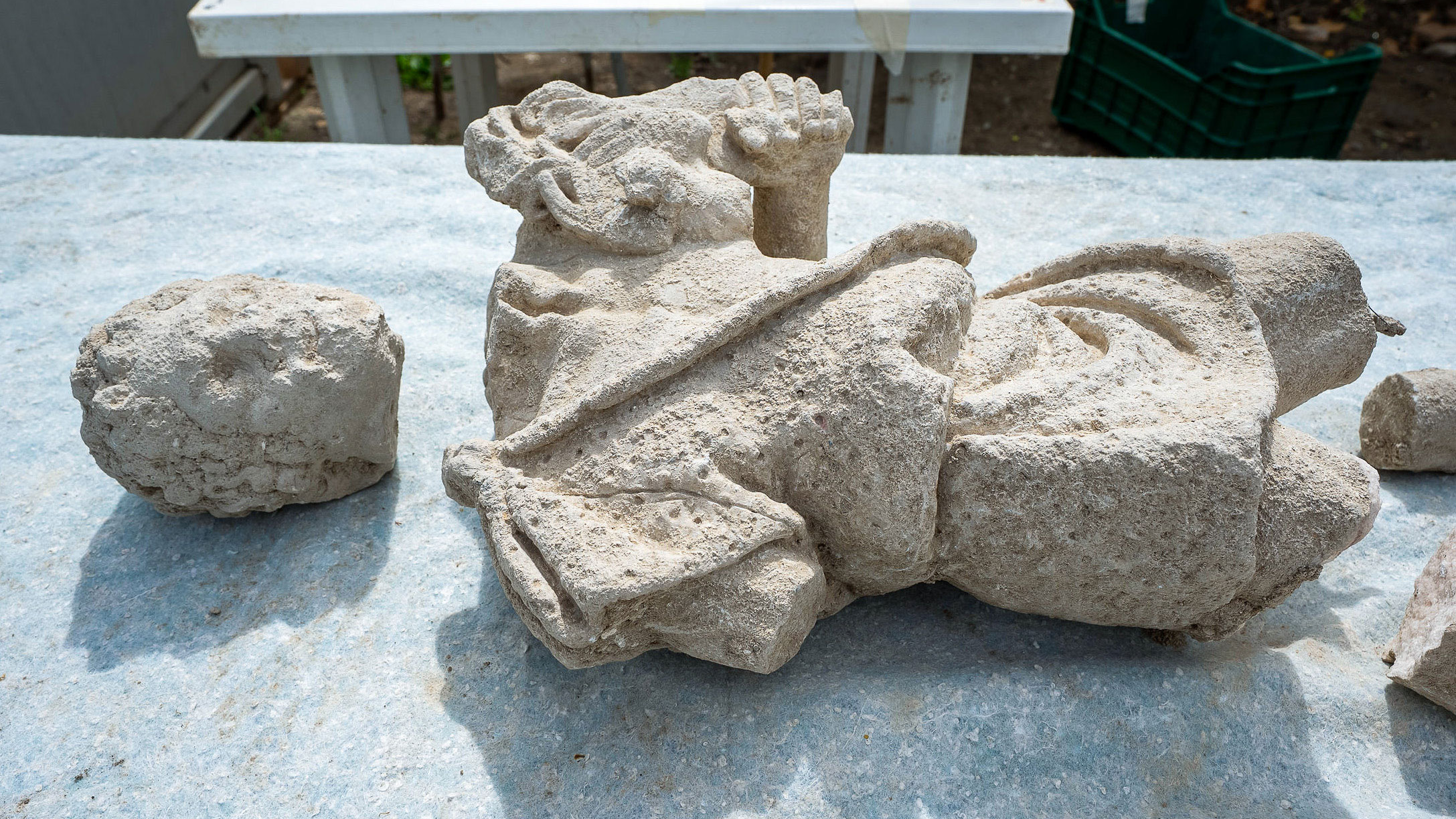
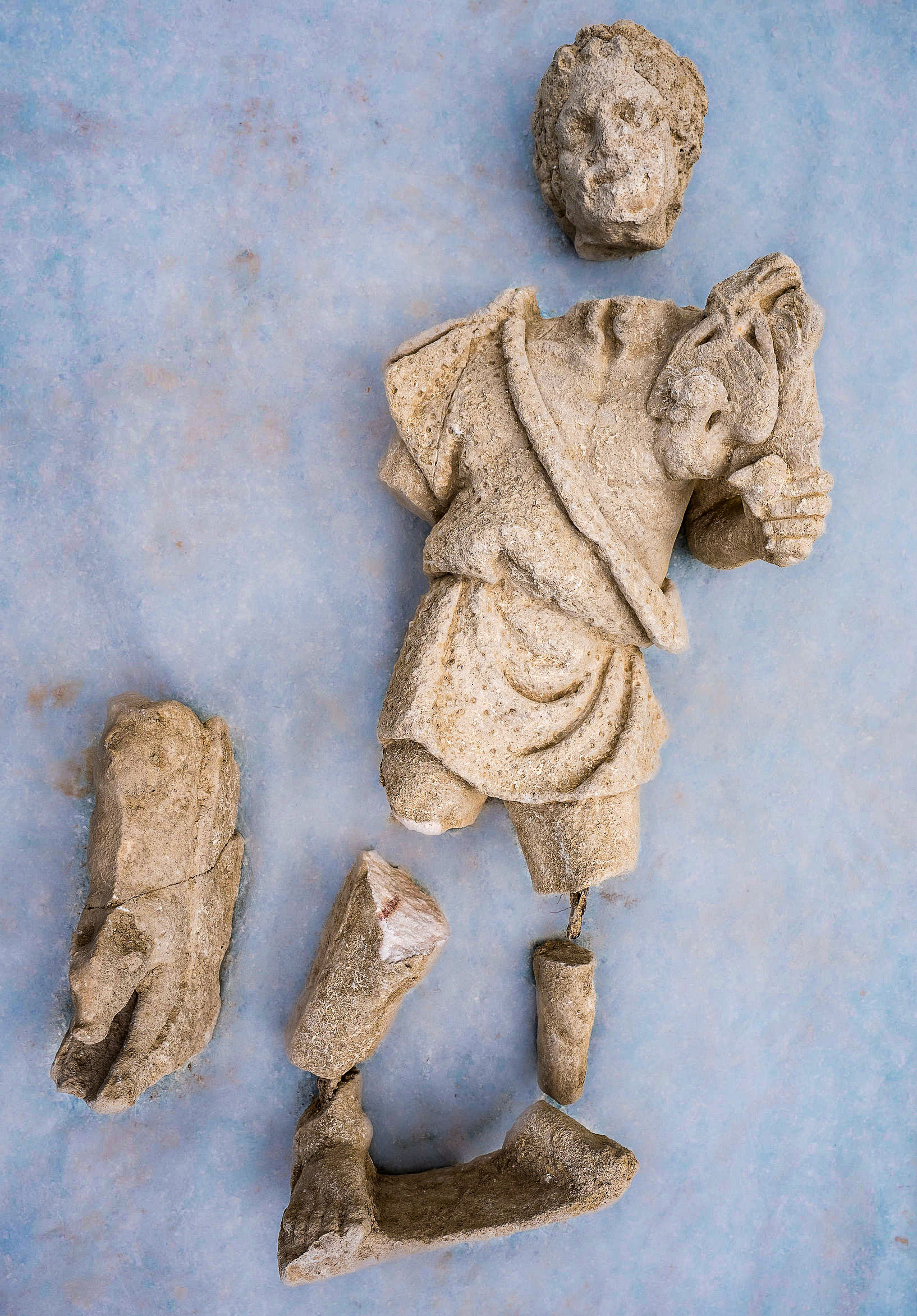
Within the villa's central basin, archaeologists found a broken statue, about 31 inches (80 centimeters) tall, depicting a bearded man wearing a short tunic and carrying a basket with birds and fruit. The statue may represent Silvanus, the Roman deity of woods and other uncultivated lands, who watched over domesticated flocks of animals. Silvanus was also a companion of Bacchus (known in Greek as Dionysus), the god of wine and ecstasy.

a fragmented marble sculpture of an ancient Roman deity (Silvanus) lies on a blue table

Archaeologists discovered a statue of the ancient Roman deity Silvanus, guardian of the flocks. (Image credit: Italian Ministry of Culture / Special Superintendency of Rome)

The scale of the villa and the quality of the mosaics and frescoes suggest that the villa's owners were Roman aristocrats and may have even been members of the imperial family, according to the statement. In the Roman Empire, elite families like the Aurelii and the Arrii — the paternal and maternal families of Antoninus Pius, who reigned from A.D. 138 to 161 — lived in Lorium. Ancient sources suggest that Antoninus Pius spent his childhood in Lorium, built his imperial palace there, and died there at age 74.

Lorium was also frequented by Emperor Hadrian, who adopted Antoninus Pius to make him his heir, and by Marcus Aurelius, who was Antoninus Pius' nephew, adopted son and son-in-law. Because of Lorium's strong connection to the Antonine imperial dynasty, numerous villas and ancient estates have previously been discovered in the region.

But the newly uncovered villa "is another important piece of the puzzle," Contino said, "opening up new perspectives for understanding and preserving our history-rich territory."

Further work on the villa and its artifacts will help archaeologists date the building more accurately and work out whether it was abandoned when the imperial household was relocated out of Lorium, according to the statement.

Although work on the villa has not been completed, the public has a chance to visit the newly excavated villa and its mosaics on June 20 through a free archaeological hike and guided tour organized by the Special Superintendency of Rome.

From Augustus to Nero, see how much you know about ancient Rome's famous leaders with our Roman emperor quiz!

  •  
❌