SEATTLE (AP) — Lawmakers are demanding the National Science Foundation stop dismantling the Ocean Observatories Initiative, a $386 million ocean monitoring network being wound down under President Donald Trump’s administration. House Democrats on two committees call the action illegal. Democratic Sen. Jeff Merkley says he’s drafting legislation to freeze the removal of instruments until a full scientific review is completed. The National Science Foundation directed the removal of most of the system’s instruments from waters off Oregon, Washington, Alaska, North Carolina and Greenland by 2027. Monday’s pushback against the Republican administration’s actions comes as scientists are set to remove instruments from the Pacific and as an El Niño event is predicted to arrive this summer. By Annika Hammerschlag, Associated Press Banner image: In this 2021 image provided by Woods Hole Oceanographic Institution, workers walk near buoys used to gather data at Pioneer New England shelf off the coast of Martha’s Vineyard, Mass. Image courtesy of Véronique LaCapra/Woods Hole Oceanographic Institution via Associated Press. This article was originally published on Mongabay
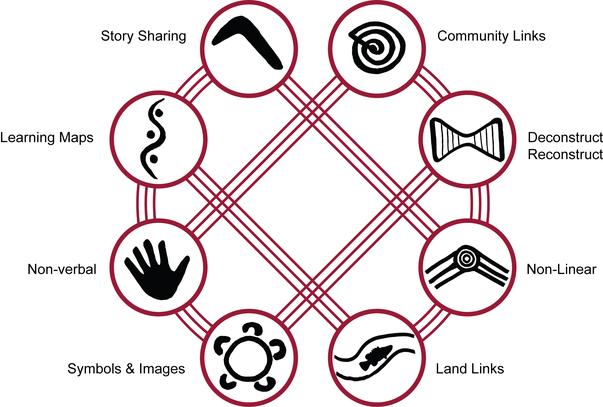
A new book from Indigenous scholar Tyson Yunkaporta of Australia explores how human narratives dictate how modern society governs itself and, crucially, how it exploits or protects the natural world. “It’s a terrible thing to … misrepresent things, make false claims, bear false witness in a way that is bending story, the story that everybody follows,” Yunkaporta told Mongabay’s newscast host Mike DiGirolamo. Yunkaporta is a Deakin University senior research fellow and member of the Apalech clan (Wik) whose traditional lands are located in far north Queensland, Australia. His book, Right Story, Wrong Story: Adventures in Indigenous Thinking, argues that identifying and correcting “wrong stories” is key to stopping environmental exploitation. A wrong story, according to Yunkaporta, is one that acts as a deceptive “curse” by presenting an illusion as if it were real to justify the exploitation of nature and community well-being through narratives that have no connection to the land. To illustrate the “wrong story” of modern resource exploitation, Yunkaporta told Mongabay the Aboriginal folk tale of Tidalik, a giant frog who hoarded all the world’s water for himself. Yunkaporta compares Tidalik to Wall Street firms and billionaires who gamble on water futures and “park their cash” in housing, exacerbating the affordability crisis while stopping the natural flow of resources. In the legend, the animal kingdom does not “eat” Tidalik; instead, an eel makes him laugh by tying himself in knots, forcing the frog to “vomit all the water back into the land.” “A lot of people…This article was originally published on Mongabay

 Login