Login

LeoLabs’ new 3D radar fits in 20-foot box, tracks objects 143 miles above Earth
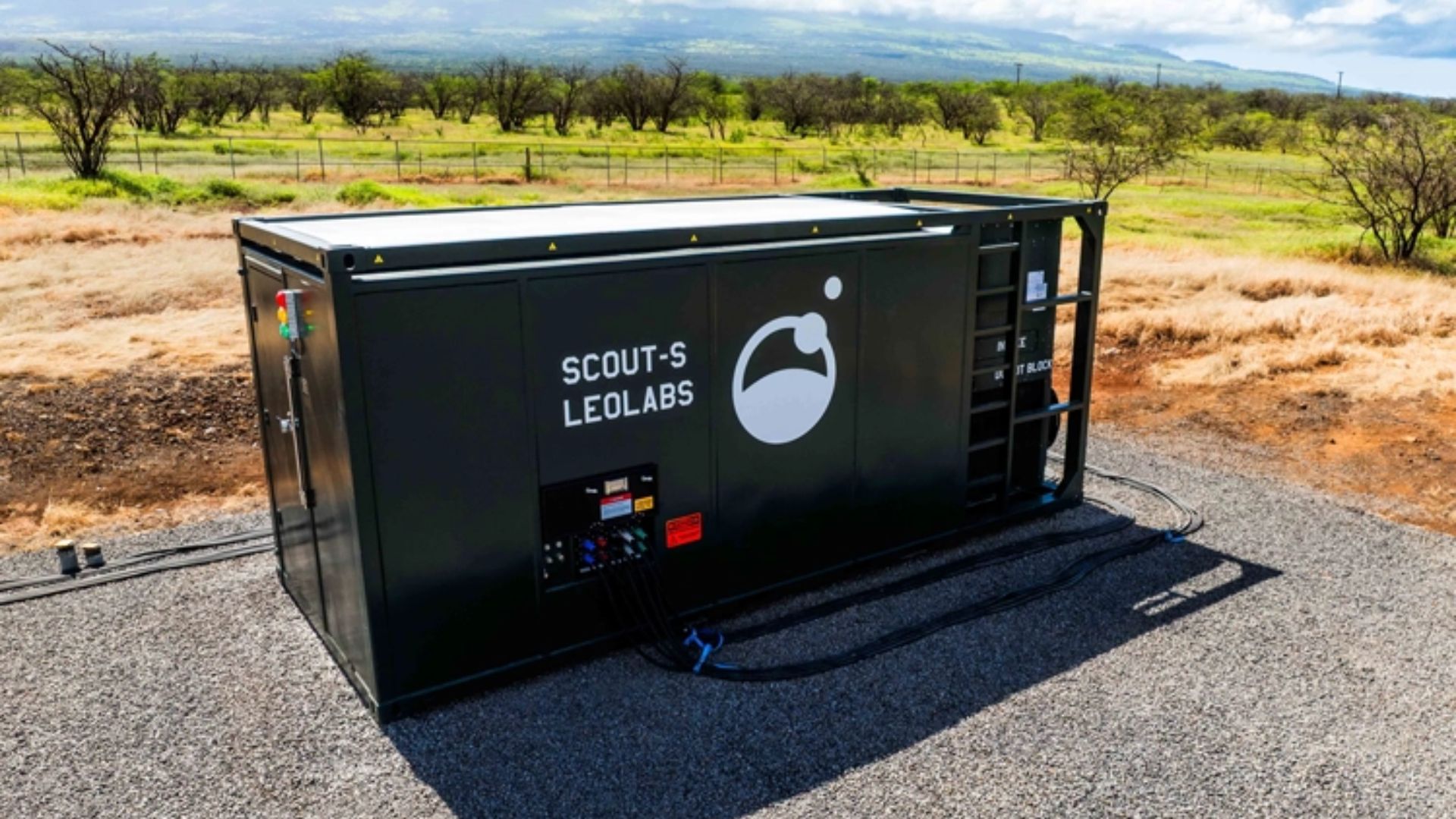
A new mobile space surveillance radar is now active as military planners focus more on tracking potential threats in orbit, including satellites used for nuclear command, control, and intelligence. LeoLabs, a space monitoring company, announced that its latest radar, Scout Hawaii, began operating and will take part in the Valiant Shield 2026 exercise in the Pacific.
This is the first time the company’s Scout-S radar has been used in the field. It is designed to better track objects in low Earth orbit (LEO) and very low Earth orbit (VLEO).
Radar heads to major Pacific military exercise
Valiant Shield is a major joint military exercise held every two years by the United States in the Indo-Pacific. Since 2024, regional allies have also taken part.
This year’s exercise will take place from June 22 to July 1 in Hawaii, Guam, Japan, and nearby waters.
LeoLabs has not shared details about the contract for the radar’s participation. The company said the Scout-S program is funded by private investment and support from the US Space Force, including a Tactical Funding Increase (TACFI) award announced in 2025.
The company views the exercise as an opportunity to test the radar in real-world conditions and demonstrate how it can support military space awareness missions.
A new class of radar is here.
— LeoLabs (@LeoLabs_Space) June 10, 2026
Scout-Sdelivers persistent custody, dynamic tracking, and deployable sensing for LEO and VLEO — extending coverage where mission demand is greatest.
It's more than a radar. It’s a new approach to space sensing.
Deploy Where the Mission Demands. pic.twitter.com/If1pt0N2E9
Built for rapid deployment anywhere
One of the key features of the Scout-S system is its mobility. The radar fits in a standard 20-foot shipping container, so it can be moved by truck, plane, or ship.
The system uses 3D scanning, direct-radiating-array technology, and a modular S-band electronic system. LeoLabs said these features help the radar find and track objects in busy orbital areas.
A company spokesperson said the improved design greatly increases how long the radar can observe a satellite as it passes by.
From snapshots to continuous tracking
Traditional tracking systems usually watch satellites for only short periods before waiting for the next pass. LeoLabs said Scout-S is built to provide much longer observation periods, helping operators track objects in orbit more continuously.
The company thinks this feature is more important now that military and commercial satellites can maneuver more often.
“The acceleration of adversarial activity in space is challenging U.S. and Allied Space Superiority. Tracking objects periodically to predict orbits is no longer enough. What matters now is the ability to maintain persistent custody of maneuverable payloads so our customers can respond to emerging threats,” said LeoLabs CEO Tony Frazier in the release.
The design also allows multiple units to be deployed quickly, helping to cover surveillance gaps that fixed radar sites cannot easily reach.
Tracking Chinese satellites and future expansion
Scout Hawaii is already sending data to LeoLabs’ global monitoring network. The company said the radar has consistently tracked Chinese intelligence, surveillance, and reconnaissance satellites, including the Yaogan military spacecraft.
According to the firm, the system has tracked China’s reusable spaceplane in low Earth orbit. The radar has also shown it can monitor objects flying at very low altitudes. The company reported successfully tracking an object orbiting at 143 miles (230 kilometers) above Earth.
The firm plans to keep the Hawaii-based radar running after Valiant Shield ends, using it for more experiments and testing new features. The company also said a second Scout-S unit should be built by early 2027, with more production expected later that year.