❌

Reading view

German firm unveils 4-ton CA-1EA unmanned electronic warfare aircraft, IOC in 2031 

The German defense technology company Helsing has presented an electronic attack variant of the CA-1 autonomous unmanned aircraft at the International Aerospace Exhibition in Berlin. The platform named CA-1EA builds on the company`s existing CA-1 Europa architecture. 

CA-1 Europa is 4 ton class, single engine unmanned combat aircraft employing a low observable design. It has a length of 11 meters and a wingspan of 10 meters. Its autonomy is centered around the Helsing’s Centaur AI pilot stack and advanced mission systems.

The original combat variant, which the company is already producing, will now carry the designation CA-1KA (Kinetic Attack), distinguishing it from the new electronic warfare model. According to the company, the electronic attack variant is intended to provide non-kinetic effects on the battlefield by disrupting and degrading enemy sensors and reconnaissance networks. 

Helsing argues that modern air forces increasingly need a combination of kinetic and electronic attack capabilities to penetrate advanced air defence systems and counter sophisticated surveillance assets, making autonomous electronic warfare platforms a key component of future military operations.

New CA-1EA creates safer corridors through enemy air defences

Modern military operations depend heavily on suppressing enemy radar and surveillance networks before strike aircraft enter contested airspace. Helsing says the CA-1 EA is designed to fill that role by using airborne electronic warfare capabilities to disrupt and jam hostile ground-based radar systems. By interfering with an adversary’s ability to detect and track targets, the autonomous aircraft can help create safer flight paths for other assets operating behind it.

The company notes that the CA-1EA is designed to work alongside autonomous systems such as the CA-1 Europa as well as conventional crewed fighters, including the Eurofighter, extending electronic protection across mixed air fleets.

Both the CA-1KA and the CA-1EA electronic warfare variant are built on a common architecture, using the same airframe, propulsion system, autonomy software stack, and ground control infrastructure. The distinction between the two platforms is primarily defined by their payload configurations, which determine whether the aircraft is optimised for kinetic or electronic effects on the battlefield.

By standardising the core design across both variants, the German company aims to reduce production and lifecycle costs while streamlining manufacturing processes. The shared system architecture also simplifies logistics and maintenance requirements, while making it easier for operators to transition between mission types and train across both configurations within a unified operational framework.

Flexible CA-1 platform aims to meet diverse air force requirements 

As the company further explains, this modular approach enables the CA-1 platform to evolve further, giving it the flexibility to be adapted to the operational needs of European air forces. By maintaining a scalable and shared architecture, the system can be configured for different mission profiles without requiring a complete redesign. 

This design philosophy is intended to support rapid capability expansion while aligning with the varied requirements of modern European defense users.

“Modern air forces cannot do without electronic warfare. Helsing has been working to develop this capability for years. The CA-1EA is the result: an unmanned system that operates alongside the CA-1KA at tactical range, but can also be deployed flexibly as a standalone platform for electronic warfare,” said Stephanie Lingemann, vice president for air domain at Helsing.

The CA-1 platform is still under development, with the first flight of the CA-1 Europa attack variant planned for early 2027. It is being developed and produced in southern Germany by Helsing’s subsidiary Grob Aircraft, positioning the system as a fully European solution for German and allied air forces. The first operational capability is expected in 2029 for the CA-1KA variant, followed by 2031 for the CA-1EA electronic warfare version.


  •  

China’s BYD unveils new AI system that can spot living beings underneath parked vehicles

At the heart of the patented technology is a baseline imaging approach that creates a visual reference of the vehicle’s underside. When the car is switched off and in a stable state, the system captures and stores an image of the underbody, establishing a snapshot of what the area should normally look like.

Later, when the vehicle is preparing to move or performing a safety check, new real-time images are taken and compared with the stored reference. Rather than processing the entire underbody scene every time, the software focuses only on areas where it detects a change from the baseline image. 

These altered sections are isolated as target images and sent for more detailed analysis, allowing the system to reduce computing demands while quickly identifying anything unusual beneath the vehicle.

AI safety technology could help prevent underbody accidents

Rather than repeatedly processing every component beneath the car, the patented system is designed to ignore elements that remain unchanged from one scan to the next. Fixed structures such as the battery pack housing, suspension components, aerodynamic covers, and other underbody hardware are treated as part of the reference environment, allowing the software to concentrate on anything that appears or moves after the baseline image has been recorded.

Once a new or altered area has been identified, the technology performs a more detailed examination of that specific section. It extracts visual features from the target image, analyses them using its detection algorithms, and determines whether the object is a living organism. The system can then assess the detected subject’s condition or status before deciding whether further action or a safety warning is required, CarNewsChina reported.

Unlike in-cabin monitoring technologies, identifying living organisms beneath a vehicle presents a far more complex computer-vision challenge. The space underneath a parked car is highly unpredictable, with constantly changing environmental conditions that can interfere with accurate detection.

Shifting shadows, uneven lighting, road debris, accumulated dirt, and different ground textures all create visual noise that makes reliable recognition difficult. Conventional motion-detection systems can also generate false positives, often failing to distinguish between ordinary environmental changes and the presence or movement of a person or animal beneath the vehicle.

Two-stage detection system could make parked cars safer

Instead of depending exclusively on object-recognition software, BYD’s patented technology first builds a unique visual reference of the area beneath each parked vehicle. By comparing new images against this stored baseline, the system can quickly identify anything that has changed in the underbody environment before carrying out a more advanced analysis.

Only after these differences have been isolated does the software apply its recognition algorithms to determine whether the detected object is a person, an animal, or another living organism. This layered, two-step process is designed to improve the accuracy of the detection system while cutting down on false alarms triggered by fixed structures or other non-threatening objects that remain stationary beneath the vehicle.

The patent also aligns with BYD’s broader push into advanced vehicle safety systems. The company recently unveiled another invention designed to detect forgotten occupants inside a car using radar-based sensing and signal analysis.

Together, the two technologies monitor opposite sides of the vehicle – one focusing on the cabin and the other on the space underneath. The approach suggests BYD is building a wider sensing ecosystem that combines computer vision, radar, and intelligent monitoring to improve overall vehicle awareness.

💾

BYD has filed a patent for an underbody vision system capable of detecting living organisms beneath parked vehicles.
  •  

Chinese scientists identify critical vulnerability in NASA’s single-engine lunar landing system

The design philosophy behind the American lunar architecture depends heavily on a single high-performance main engine responsible for critical mission phases. During descent, that engine governs the entire journey from lunar orbit down to the Moon’s surface. 

On ascent, the same single-point system becomes the only means of returning astronauts to lunar orbit. The lack of redundancy means that a malfunction would eliminate any backup option, a concern highlighted in a peer-reviewed study published in Chinese Space Science and Technology in March, which argues the system “contains some glaring weaknesses.”

By contrast, China’s proposed lunar lander adopts a multi-engine approach. Developed by a Shanghai-based national laboratory team, it uses four variable-thrust engines producing over 30 kilonewtons collectively. Even if one engine fails entirely, the remaining three would still deliver thrust comparable to the main engine of NASA’s Orion spacecraft.

Lunar ascent safety debate centers on redundancy versus mass constraints

Beyond the primary propulsion system, the design includes an additional safeguard layer intended to improve mission resilience. If the main engines were to become inoperative, six smaller orbit-control thrusters can still be activated on the lunar surface, providing an alternative pathway for a rapid ascent. This redundancy raises a broader engineering question: if multiple engines offer greater safety than a single one, why are they not universally adopted, the South China Morning Post writes.

The constraint is mass, as additional engines typically increase overall vehicle weight, reducing efficiency and payload capacity. The Chinese engineering team addressed this trade-off through a structural optimization known as a common bulkhead tank, which integrates fuel storage more efficiently and reduces excess mass while still enabling a multi-engine configuration.

China introduced a new tank design in a crewed deep-space vehicle that uses a pressure-fed system, where fuel and oxidiser are separated by a shared wall, often called a “common bottom.” In earlier lunar lander designs, the two propellants were stored in completely separate tanks, which added extra structural weight and took up more space inside the vehicle.

By combining them into a single structure with a shared barrier, the system reduces unnecessary duplication in the tank framework. According to the researchers, this change cuts weight at the “hundred-kilogram level,” making the overall design more efficient without sacrificing capacity or performance.

Hot-fire tests validate new lightweight tank architecture for space missions

The reduction in mass created by this design enables the use of four engines instead of a single main unit, increasing redundancy without exceeding launch constraints. Built from composite materials, the tank achieves more than a 20 per cent weight reduction compared to traditional metal alternatives. 

Beyond storing propellant, the structure also serves a dual purpose as a load-bearing component of the spacecraft, effectively becoming part of the vehicle’s frame and improving overall mass efficiency. The approach is backed by experimental validation, with the paper drawing on results from full-system hot-fire tests. These tests provide real-world performance data under operating conditions, confirming the feasibility of the integrated structural and propulsion design.

Test results indicate that the four variable-thrust engines can be closely coordinated, keeping thrust variation within less than 100 Newtons. This level of precision is crucial for preventing unstable motion that could cause the lander to tumble during critical flight phases. The experiments also suggest that pressure challenges within the common bulkhead tank can be effectively managed.

Replicating this kind of system would be difficult for any other space programme. It requires highly precise autonomous control of pressure inside a shared-tank structure operating with very narrow safety margins. In addition, it demands tightly synchronised performance across multiple throttling engines, a task that becomes significantly more complex as each additional engine is introduced.

💾

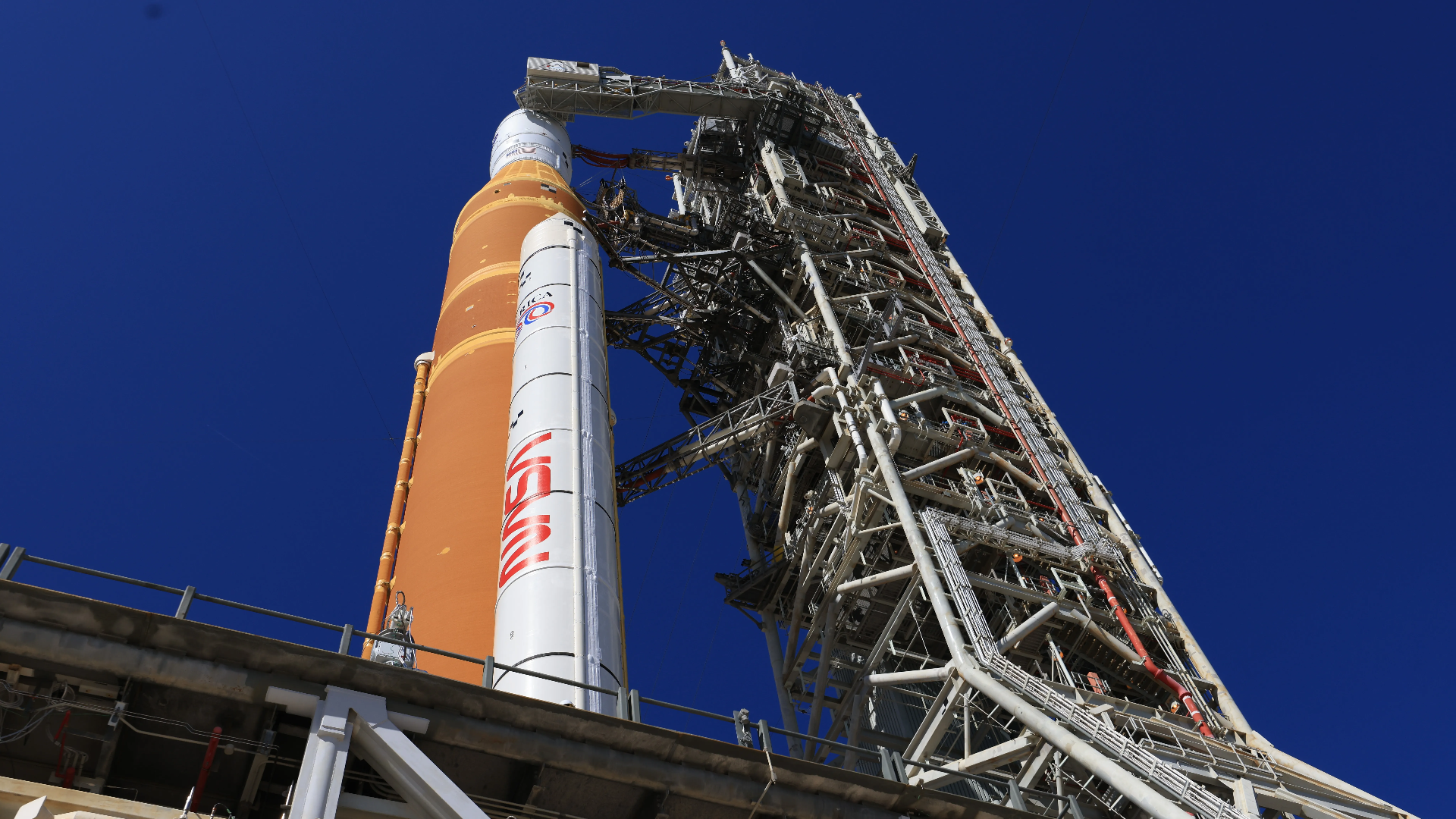
A Chinese research team has raised concerns about the structural resilience of NASA’s Artemis lunar landing system.
  •  
❌