 Login

Archaeologists Found 77 Headless Bodies in 7,000-Year-Old Slovakian Village and There’s no Clear Explanation
 A 7,000-year-old village may have practiced a haunting skull ritual that left bodies behind
 A 7,000-year-old village may have practiced a haunting skull ritual that left bodies behind
Free-thinking comedy and political satire are alive and well. Jack Watson reviews Comedy Unleashed’s recent gig in Leeds – banter, 'inappropriate' accents and un-PC jokes that cancel culture will never be able to kill off.
The post Comedy Unleashed Knocks It Out of the Park in Leeds appeared first on The Daily Sceptic.
Early in the 11th century, a young Benedictine monk named Eilmer jumped from the 150-foot tower of his abbey in the small English town of Malmesbury, wearing a pair of crude wings he’d fashioned from willow wood and cloth. Eilmer managed to glide a good 600 feet, passing over the city wall before crash-landing in a small valley near the river Avon. The fall broke both his legs, crippling him. Malmesbury Abbey still boasts a stained-glass window in honor of Brother Eilmer.
This legendary experiment in medieval aviation comes to us via 12th-century historian William of Malmesbury in an account written circa 1125, although William neglected to provide future historians with an exact date for the feat. But William does mention another key episode in Eilmer's life when the monk was "advanced in years": Eilmer witnessed Halley's comet in 1066, commenting, "It is long since I saw you." Some historians have interpreted this to mean that Eilmer saw Halley's comet on an earlier fly-by in 989, when he would have been a young boy.
Assuming Eilmer was at least 5 years old in 989, he would have been born no later than 984. This would make Eilmer in his 80s in 1066, with his attempt at flight—which occurred when he was "in his first youth"—likely falling between 1000 and 1010. However, it's an estimate that is based on a lot of assumptions, according to James Aitcheson of the University of Leicester, who argues in a paper published in the journal Notes and Queries that Eilmer may have seen a different comet altogether in his youth—the comet of 1018. If so, he would have been born much later, and the date of his flight would have occurred between the 1020s and 1040s.
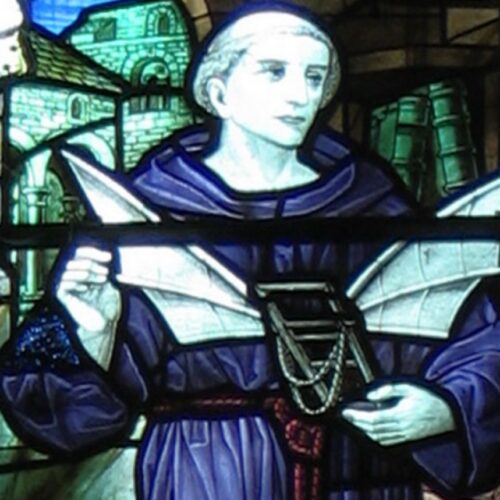
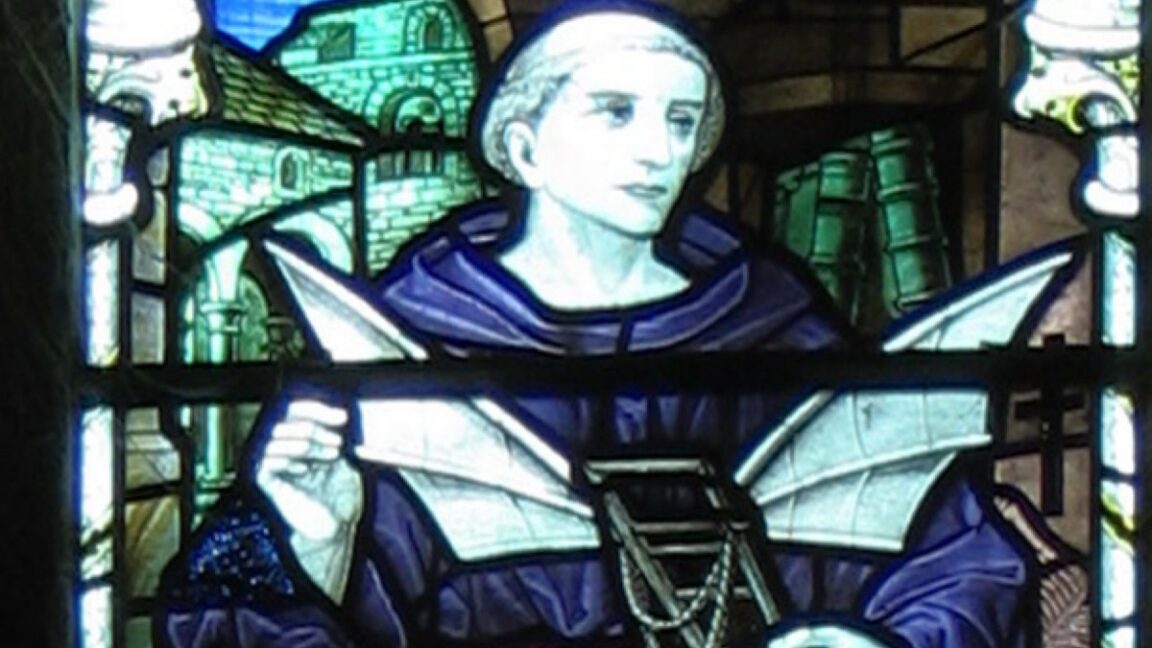
© Andrew Dunn/CC BY-SA 2.0

Students at a local high school in Rome had long known of the mysterious underground passages that lay beneath the ground, but finally, a protest stirred the school, authorities were informed, and they discovered an ancient Roman villa.
Cavour Scientific High School is located about a five-minute walk from the Colosseum, and it sits on the site of the recently identified Roman villa. Built in the 19th century as a missionary complex, the school embodies layers of history for which Rome is known.
For years, students quietly shared stories about the rooms, artwork, and passages beneath the gymnasium. As time went on, these tales grew more elaborate, leading the school administration to take them less seriously, according to Popular Mechanics.
The situation escalated when the students staged a protest during COVID. Locking themselves into school, these restless teenagers roamed the premises unsupervised. They explored the underground passageways beneath the gymnasium, seeking to prove the validity of their claims. A curious teacher, Claudia Marino, heard the fervor in their accounts and took a group of adventurous students through an iron door.
They found themselves in an old boiler room, and as they ventured deeper into this unused chamber, they encountered ancient Roman walls. Continuing through a narrow passage, they stumbled upon an intact domus, or villa.
Archaeologists from the Special Superintendency of Rome began excavations a few years later in September 2025.
The ancient residence first came to light in 1895 when Via degli Annibaldi was constructed. At that time, archaeologists uncovered sections of the building as well as a water pipe inscribed with the family name, Umbrius. However, further excavation did not take place, and the ancient villa faded into obscurity.
Graffiti from the 1940s and 1950s, however, indicates that students had long left their mark on someone else’s house, but the secret held among the youth never seeped into adult consciousness until the Romans took to the streets.
Once the protests signaled the villa’s existence, archaeologists were eager to investigate because the school is positioned in an exclusive neighborhood in Rome where ancient prominent figures lived: Cicero, Pompey, Octavian, Emperor Augustus, and more, according to Archaeology News.
Excavation officially began in January 2026, with an announcement made on May 28 confirming that the students had discovered a mid-Imperial domus, which was subsequently named Domus Liceo Cavour. Dating to the mid-second century CE, it indeed belonged to the Umbrius family, originally from south-central Italy.
Archaeologists left the site with 48 crates of artifacts, including wall paintings, decorative elements, and a notable mosaic of large, irregularly shaped tiles—designs that were popular in the second century CE.
The villa’s exceptional preservation prompted the Italian Ministry of Culture to describe the paintings as “spectacular” and in need of full excavation, according to Popular Mechanics. It is likely that the grounds extend into the school’s courtyard, so further exploration is planned.
The project aims to open the site to visitors, with students serving as tour guides—a thoughtful conclusion that honors those who discovered and appreciated this piece of history.

Sensitivity readers, racist gatekeepers, editing by committee – mainstream publishing has been destroyed by woke gobbledegook. The silver lining? Substack is thriving because publishers have failed to discover good new writers.
The post Why I’m Glad Publishing Has Destroyed Itself appeared first on The Daily Sceptic.

Could consciousness exist in alien life forms that look nothing like us? Could it even appear in machines? According to a new paper by philosophers Eric Schwitzgebel of the University of California, Riverside, and Jeremy Pober of the University of Lisbon, the answer may be yes. The researchers argue that consciousness is probably not limited […]
The post Consciousness may exist beyond humans, animals, and even Earth appeared first on Knowridge Science Report.
Já imaginou transformar uma fotografia numa composição feita de milhares de pequenos símbolos coloridos? Esta é a proposta da See in CMYK, uma nova experiência online criada pelo Google Arts & Culture em colaboração com a artista Stefanie Posavec e com o museu Exploratorium, em São Francisco.
The post See in CMYK transforma fotografias em composições artísticas com milhares de símbolos coloridos appeared first on Tek Notícias.
