❌

Reading view

Black Lives Matter movement changed workplace cooperation between Black and white employees, research shows

The increased public attention on racial injustice after the murder of George Floyd influenced how Black and white employees interacted at work, new University of Washington research suggests. The study, recently published in the Academy of Management Journal, examines how major societal events tied to race and injustice can shape workplace behavior. Researchers specifically investigated how the heightened salience of the Black Lives Matter (BLM) movement impacted cooperation between Black and white coworkers.

  •  

Voici comment des chercheurs travaillent à reprogrammer nos cellules pour leur faire retrouver leur jeunesse

Des chercheurs viennent de franchir une étape que la biologie considérait encore récemment comme inaccessible : rajeunir de vraies cellules humaines. Non pas les remplacer mais pour les rajeunir. Cette avancée, qui a eu lieu il y a quelques mois, mérite qu'on s'y attarde sérieusement, tant ses...

  •  

Hidden Pollutants Drive 15 Percent of Global Warming, Wildlife Trade Creates ‘Pandemic Roulette’ With Billions of Animals — Today’s Environmental Briefing for Sun, Jun 14 2026

Scientists analyzing data on overlooked pollutants contributing to global climate change

Across the stories today, a common thread emerges: the gap between what we know and what we’re able to protect is narrowing, but not fast enough. From hidden pollutants driving 15 percent of global warming to fungal networks stretching nearly a billion times the distance to the sun, science continues revealing the intricate systems that sustain life on Earth—even as political and economic forces test our commitment to preserving them.

The day’s coverage points to growing momentum around conservation breakthroughs. In the Marshall Islands, researchers hunt for “super reefs” that could survive rising ocean temperatures, while Brazil celebrates Amazon deforestation dropping to nearly decade-low levels. Young Stanley the giraffe joins breeding programs in Wiltshire, osprey chicks hatch successfully in North Wales, and Australia’s PlantBank emerges as a global leader in seed conservation. These aren’t just feel-good stories—they represent systematic efforts to build resilience into ecosystems under unprecedented pressure.

Yet the challenges are accelerating too. A century of Antarctic research data now helps scientists track El Niño patterns, but current observations show Antarctica missing a France-sized area of sea ice while winter temperatures soar 20 degrees above normal. The Hoover Dam faces massive power cuts as Lake Mead approaches critical lows, and millions of climate-displaced people find virtually no legal pathway to safety in the United States. It’s a reminder that progress and pressure often arrive together.

Perhaps most striking is how these environmental shifts intersect with human communities. Behind the numbers are real communities adapting in real time—from families near the massive illegal waste dump behind a UK primary school that’s become an election flashpoint, to Florida volunteers mounting dramatic rescue operations for endangered sea turtles. When botanist Beronda Montgomery explores connections between trees and Black American history in her new memoir, she’s mapping how environmental and social justice have always been intertwined.

The global wildlife trade, operating like “pandemic roulette” as it moves billions of animals across continents, exemplifies how our interconnected world amplifies both risks and opportunities. Commercial satellite launches threaten the night sky that has guided humanity for millennia, while SpaceX prepares for a massive public offering. Each technological leap forward carries environmental trade-offs that ripple across systems we’re still learning to understand.

China’s story encapsulates these tensions perfectly: achieving a historic drop in power sector emissions for the first time in a decade, yet simultaneously surging coal power that threatens to reverse those gains. Australia faces a similar paradox, preparing to lead international climate negotiations even as climate denial gains political ground domestically.

What emerges from today’s reporting is a picture of accelerating change on multiple fronts. Scientists are racing to identify heat-resistant corals and document rare butterfly discoveries in Surrey, while bird enthusiasts fly across Australia for a single gull sighting—small acts of attention that collectively map our changing world.

As the week unfolds, all eyes will be on how these parallel tracks—scientific discovery, conservation innovation, political resistance, and community adaptation—continue to intersect. The federal judge ruling against the Trump administration’s cancellation of environmental justice grants signals that legal frameworks remain crucial battlegrounds. But the deeper story may be in the fungal networks beneath our feet: vast, interconnected systems working largely unseen to sustain life, reminding us that resilience often operates at scales both smaller and larger than we imagine.

The post Hidden Pollutants Drive 15 Percent of Global Warming, Wildlife Trade Creates ‘Pandemic Roulette’ With Billions of Animals — Today’s Environmental Briefing for Sun, Jun 14 2026 first appeared on EnviroLink Network.

  •  

Is 'gender gating' the secret to success in online dating?

Digital matching platforms—from professional networking to ride-sharing and accommodation services—add value by bringing supply and demand into balance. But deep-seated asymmetries can prove difficult to expunge, causing platforms' functionality and productivity to suffer. This imbalance is common for many dual-matching platforms, including online dating services where men vastly outnumber women.

  •  

Scientists Hunt for Heat-Resistant ‘Super Reefs’ That Could Save Coral Ecosystems from Climate Change

Scientists Hunt for Heat-Resistant ‘Super Reefs’ That Could Save Coral Ecosystems from Climate Change

In the crystal-clear waters of the Marshall Islands, marine researchers are racing against time to identify extraordinary coral reefs that can survive rising ocean temperatures. These “super reefs” represent a crucial lifeline for coral ecosystems worldwide as climate change continues to devastate marine habitats through mass bleaching events.

Using advanced underwater robotics and cutting-edge research techniques, scientists are mapping coral strongholds in the Central Pacific that demonstrate unusual resilience to heat stress. The yellow robotic vehicles glide through lagoons, collecting data that could unlock the secrets of coral survival in warming seas. These technological marvels allow researchers to survey vast reef systems more efficiently than traditional diving methods, identifying pockets of coral that thrive despite challenging conditions.

The discovery and protection of these resilient reefs could prove vital for ocean conservation efforts. Researchers believe these hardy coral communities possess genetic traits or environmental advantages that help them withstand temperature spikes that would kill more vulnerable reefs. If successfully protected and studied, these super reefs could serve as natural nurseries, potentially helping to repopulate and restore degraded coral ecosystems across the Pacific.

This groundbreaking research offers hope in the face of widespread coral decline. As ocean temperatures continue to rise, understanding why certain reefs survive while others perish could provide the key to preserving these biodiversity hotspots for future generations. The work in the Marshall Islands represents a critical step toward developing strategies that could help coral reefs adapt to our changing climate.

The post Scientists Hunt for Heat-Resistant ‘Super Reefs’ That Could Save Coral Ecosystems from Climate Change first appeared on EnviroLink Network.

  •  

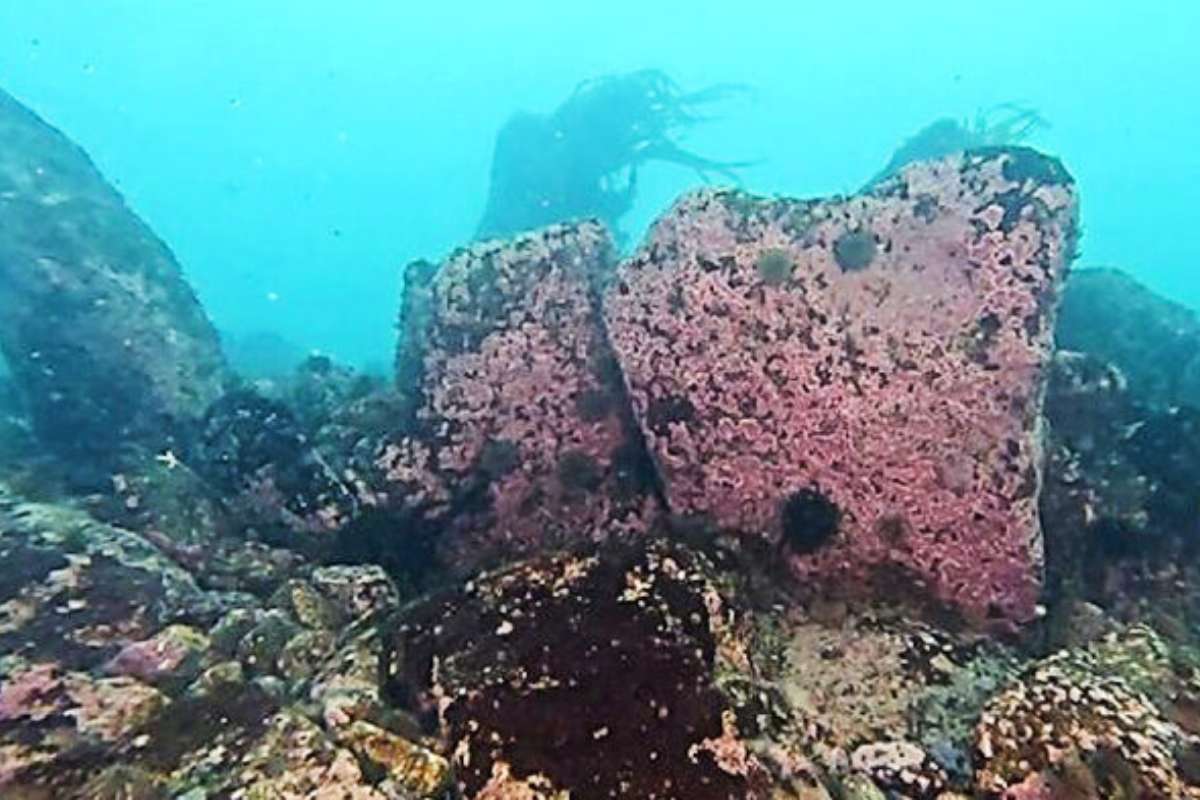
Au large de la Bretagne, cette découverte sous-marine pourrait bouleverser ce que l’on sait des sociétés du Néolithique

À 9 mètres de fond, au large de l'île de Sein, des plongeurs ont mis au jour une structure de pierre longue de 120 mètres. Elle daterait de 7 000 ans. Une fenêtre ouverte sur un monde englouti que l'on croyait définitivement perdu.

  •  

Voici ce qui se passe vraiment dans votre cerveau quand vous avez un trou de mémoire selon la science

Imaginez-vous soudain incapable de vous rappeler ce que vous alliez dire. Cette expérience déroutante du « black-out mental » touche chacun d'entre nous. Les neuroscientifiques ont récemment percé certains mystères de ce phénomène qui occupe jusqu'à 20 % de notre temps d'éveil. Que se passe-t-il...

  •  
❌