 Login

NASA Leader Responds to Criticism Over All-Male Artemis III Crew
NASA’s missions these days rarely feature all-male crews. Jared Isaacman, its administrator, said women play prominent roles throughout the space agency.


As SpaceX gears up to start launching orbital data center spacecraft as soon as next year, astronomers warn those satellites could cause serious interference with their observations.
The post Astronomers fear orbital data centers will interfere with observations appeared first on SpaceNews.
 Astronomers studying the atmospheres of several intensely heated exoplanets uncovered an unexpected pattern that may reveal a hidden property of these distant worlds. Astronomers have uncovered the clearest evidence so far that some planets beyond our Solar System possess magnetic fields. By measuring atmospheric winds on seven extremely hot gas giants, researchers found signs that [...]
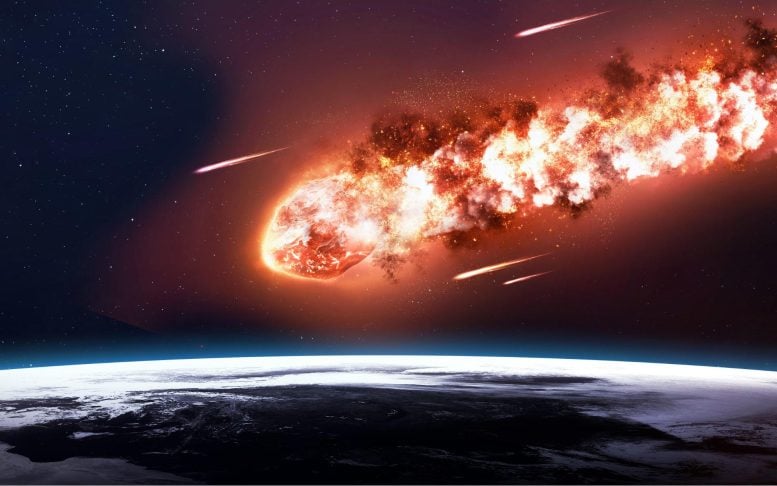 A rare meteorite recovered from the Sahara Desert has revealed compelling evidence for a long-lost world that existed during the solar system’s earliest days. About 4.5 billion years ago, a large planetary body, potentially as large as the Moon or even Mars, orbited the Sun before colliding with another object and breaking apart. Now, researchers [...]
On June 12, 2021, Nova Herculis 2021 (V1674 Herculis) erupted, and was discovered by amateur astronomer Seiji Ueda of Japan. The white dwarf quickly became visible to the naked eye, surging to 10,000 times brighter than it originally had been. Its speed was unprecedented: V1674 Herculis faded from that peak brightness in just over oneContinue reading "June 12, 2021: Seiji Ueda discovers Nova Herculis 2021"
The post June 12, 2021: Seiji Ueda discovers Nova Herculis 2021 appeared first on Astronomy Magazine.

Using NASA’s Chandra X-ray Observatory and ESA’s XMM-Newton satellite, astronomers identified a possible remnant of ancient stellar explosion just a few dozen light-years from Sagittarius A*, a supermassive black hole at the center of our Milky Way Galaxy.
The post Astronomers May Have Found Supernova Remnant near Milky Way’s Central Black Hole appeared first on Sci.News: Breaking Science News.
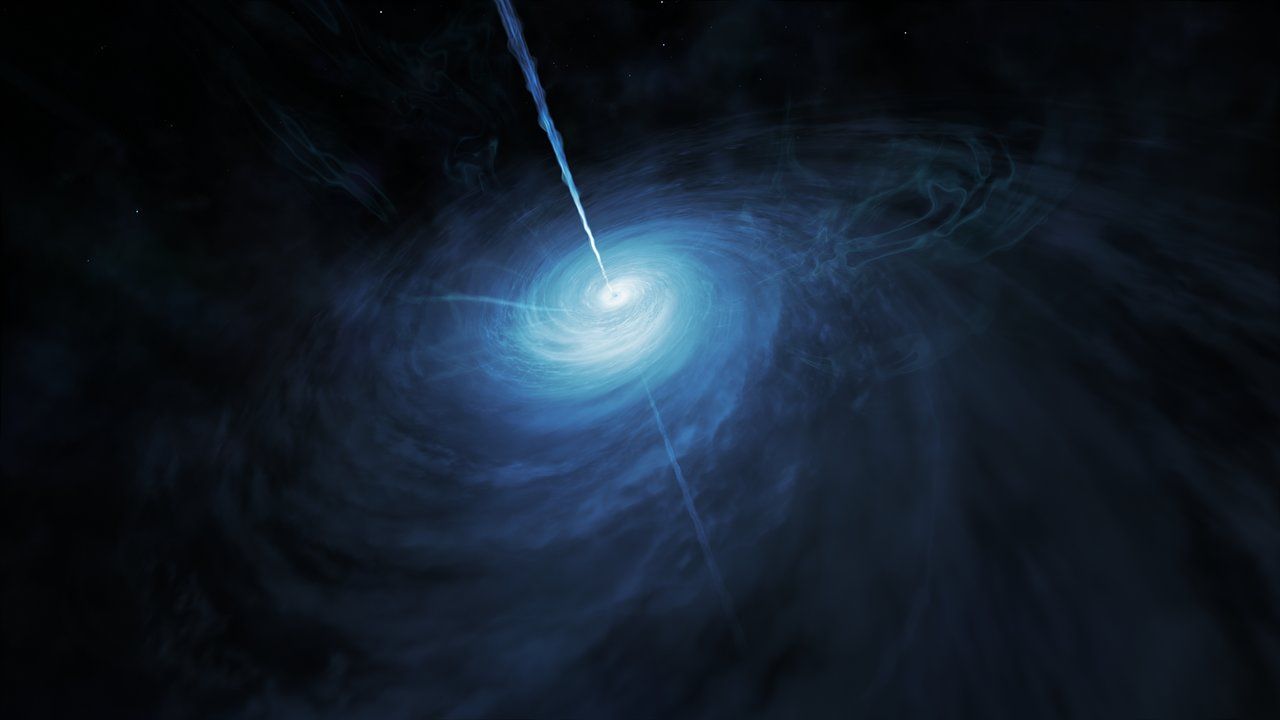
James Webb Space Telescope (JWST) observations of what astronomers call “little red dots” have intrigued researchers since their discovery in 2022.
Now, new data on the spectra of one of these dots, made possible with imagery obtained by Webb, may hold the answers researchers have long sought.
In a recent paper published in The Astrophysical Journal, a team of astronomers led by the University of Texas at Austin’s Vasily Kokorev revealed their intriguing observations of the little red dot GLIMPSE-17775 using the JWST.
Data collected by the JWST support the BH* scenario, the hypothesis that little red dots are supermassive black holes surrounded by a cloud of partially ionized gas.
The recent JWST observation of GLIMPSE-17775 is the deepest spectral view of a little red dot ever captured, spanning 40 spectral lines and offering a powerful opportunity to compare the data with various theories about the object’s origins. Born only about 1.8 billion years after the Big Bang, or about 12 billion years ago, the object hails from the universe’s early days.
As with many of science’s most interesting discoveries, this observation was a fortunate accident, captured as the JWST was observing the Abell S1063 galaxy cluster, located in front of GLIMPSE-17775 from our point of view.
Gravitational lensing magnifies GIMPSE-17775, allowing JWST a better look at the object despite its extreme distance, and making the 30-spectrum JWST captured equivalent to hours of observations.
“When we saw the spectrum for the first time, it was like having all the pieces of a puzzle scattered on the floor,” said Kokorev. “We picked up each piece of the puzzle, measured the lines, and started combining the different pieces into a mosaic. Maybe a few pieces looked like nothing at first, but then a couple of them came together, and we realized that there was something there.”
First appearing at around 600 million years after the Big Bang, the mysterious little red dots have puzzled scientists since they first came to light. The black hole scenario is just one of several that researchers have proposed as a possible explanation, although it is currently gaining the most support as more data comes in.
“I think part of the scientific community is converging on a singular picture — that little red dots can be explained by black hole star models. But none of the previous little red dots have all of the pieces of evidence in the same place,” Kokorev said. “With GLIMPSE-17775, we can test these models because of how deep and amazing this source’s spectrum is.”
The researchers interpret the data as showing a rapidly accreting black hole covered by a dense gas cocoon that reprocesses the black hole’s light into the spectrum observed by JWST.
Comparing the spectra to various models revealed some intriguing evidence for the BH* scenario. The helium, oxygen, and hydrogen lines don’t fit a simple rotating gas cloud model, but do correspond to an electron scattering, a broadening effect associated with a dense, layered gas cocoon.
Other lines, such as the 16 iron lines, suggest a powerful energy source, which could indicate a rapidly accreting black hole. Additionally, helium absorption and fluorescence are seen in the spectrum, signs that a powerful energy source is enveloped in a dense medium.
Beyond this incredibly deep spectrum, other little red dot observations have been faint in X-rays, a form of emission that the gas cocoon, in the BH* scenario, is likely to absorb.
One strange quirk of GLIMPSE-17775 is that the spectrum was missing the portion that would indicate the little red dots’ signature dip in light emission, known as a Balmer break. However, supplementary data collected by the Hubble Space Telescope resolved this issue, identifying that interference from a giant host galaxy is the root cause.
“Everything fits, nothing is broken, and I think that makes the puzzle that is our universe even better,” Kokorev concluded. “Looking ahead, I’m eager to dive deeper and learn about what is powering the central engines of little red dots. While we think it’s a black hole, there are some other interesting theories being proposed, which is exciting. Maybe in a year or two, we’ll have the final answer to what powers these sources.”
The paper, “The Deepest GLIMPSE of a Dense Gas Cocoon Enshrouding a Little Red Dot,” appeared in The Astrophysical Journal on June 10, 2026.
Ryan Whalen covers science and technology for The Debrief. He holds an MA in History and a Master of Library and Information Science with a certificate in Data Science. He can be contacted at ryan@thedebrief.org, and follow him on Twitter @mdntwvlf.
Nearly three out of every four images obtained by NASA’s new SPHEREx space telescope revealed something many astronomers were afraid of: contamination by artificial objects humans are launching into space.
The findings were reported in a new preprint paper by researchers at NASA’s Ames Research Center, who say that 73.3% of all the images the telescope captured over four months last summer revealed evidence of at least one trail left by SpaceX satellites or other orbital spacecraft.
What may be worst of all is that astronomers aren’t surprised.
With its mission to map the night sky in near-infrared light, NSA’s Spectro-Photometer for the History of the Universe, Epoch of Reionization, and Ices Explorer (SPHEREx) relies on long-exposure imagery that enables it to map large regions of the sky with every viewing.
Unfortunately, long-exposure photography is also ideal for capturing the movement of satellites, an increasing number of which have been placed in orbit in recent years.
Equally troubling is the fact that SPHEREx, from its own position in Earth orbit, had been positioned at an altitude where it was hoped that the number of satellite streaks could be limited. Yet despite such efforts, the new paper featured at the arXiv preprint server reports that, on average, at least two satellite trails were detected in every exposure.
Astronomers have been raising concerns about this problem already for some time, and presently, there doesn’t appear to be any near-term solution.
Even beyond image contamination, the preprint study also found that several satellites that enter SPHEREx’s field of view are bright enough that they are also triggering the space telescope’s automated system that protects its delicate components from stray cosmic rays.
Designed to shut down the telescope’s data collection when it detects what it suspects are cosmic rays, the new research reveals that some satellites reflect enough light to engage algorithms that control this defense system.
Even in instances where imagery is successfully obtained, albeit with contamination from satellites, the brightness of these orbital objects can effectively obscure objects behind the portions of the telescope’s images where the satellites appeared.

The new SphereX findings are only the latest indication that astronomers were right to be concerned about potential light pollution from satellites. In a past study by Sando Kruk and colleagues, Hubble Telescope images had shown an increase in the number of satellites crossing its field of view, rising from contamination shown in just 2.8% of its images, to 5.9% over a period of two decades.
Ideas about how to prevent the issue have focused on using anti-reflective coatings on satellites and other means of reducing their brightness once they reach orbit. However, many modern satellites are large enough that having darker exteriors doesn’t help to significantly mitigate the amount of light they can reflect.
Additionally, the study’s authors note that “Optical reflections are just a fraction of the problem, since satellites also emit and reflect [infrared],” meaning that optical darkening efforts “might even increase their temperature, making them brighter in the IR.”
According to the study’s authors, the problem is likely to worsen before astronomers see any improvements.
“Remarkably, some private operators have announced the intent of deploying 4000 purposely high reflective satellites,” the researchers write, which aim to provide “sunlight on demand.” Such artificial orbital systems, if successfully deployed, would reflect light as much as five times the brightness of the full Moon onto areas of the Earth roughly five kilometers in diameter.
This, the team argues, would potentially have “a catastrophic impact to the quality of the dark sky and the Earth’s inhabitants.”
Fundamentally, the authors hope that bringing additional attention to such issues with their recent study may help to mitigate future concerns about our ever-brightening night sky.
“The widespread contamination addressed in this paper affects multiple areas of astronomical research,” the team says, which they say includes “the study of transient phenomena, deep imaging surveys, spectroscopic studies, and the search for Near-Earth Objects (NEOs), thereby hindering our ability to understand the Universe and protect the Earth.”
The new paper by Alejandro S. Borlaff and colleagues, “SPHEREx confirms predictions for artificial satellite trail pollution in Low Earth Orbit,” appeared at the preprint arXiv server.
Micah Hanks is the Editor-in-Chief and Co-Founder of The Debrief. A longtime reporter on science, defense, and technology with a focus on space and astronomy, he can be reached at micah@thedebrief.org. Follow him on X @MicahHanks, and at micahhanks.com.
