❌

Reading view

US’ first vertically integrated solar factory starts production to power 1.3M homes
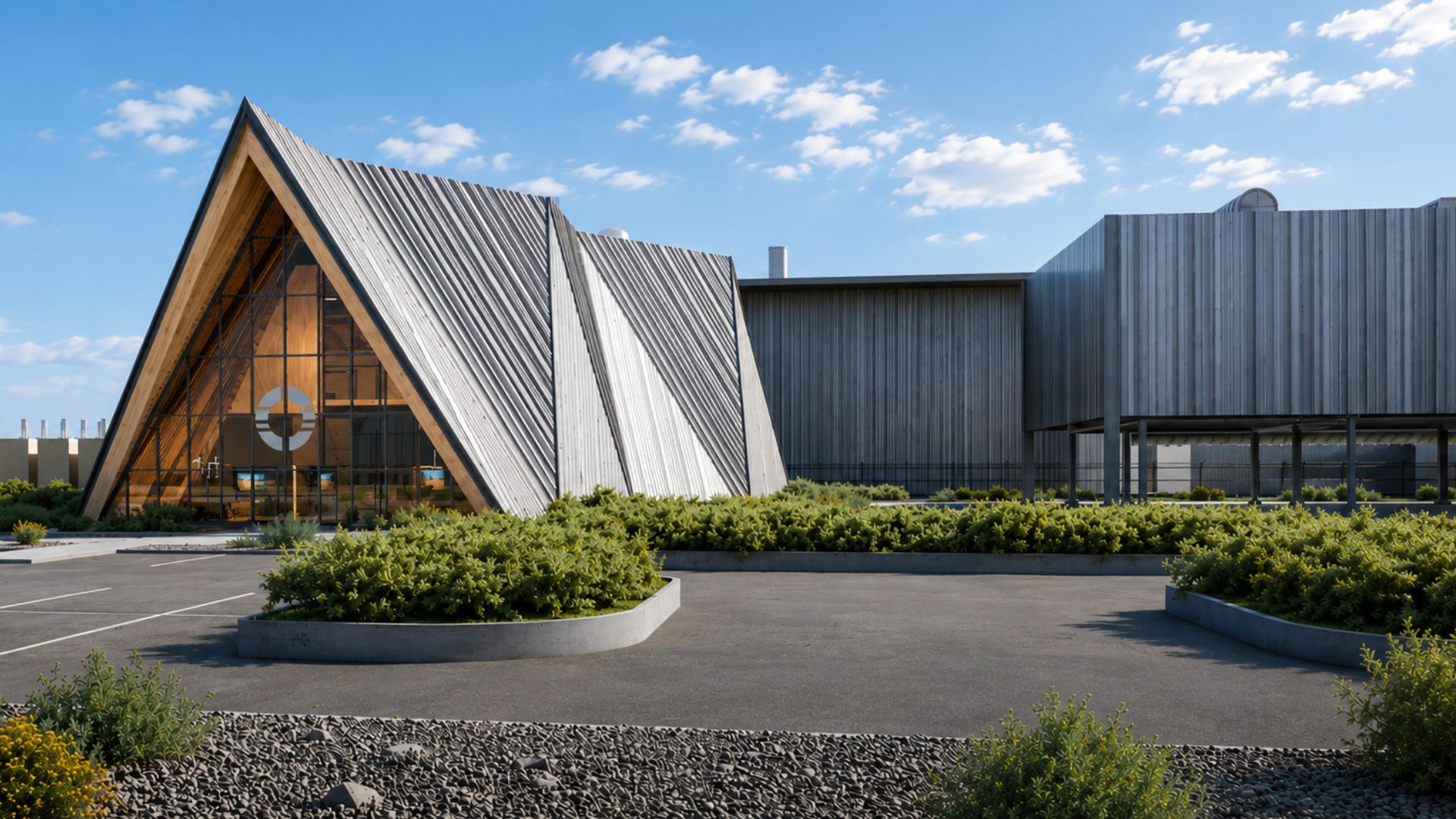
Qcells has begun manufacturing solar cells at its new facility in Cartersville, Georgia, bringing the company closer to operating what it says is the United States’ first and only fully vertically integrated solar manufacturing factory.

The company announced that the plant is now producing solar cells and expects all production lines to reach full capacity by the third quarter of 2026. Once fully operational, the facility will manufacture ingots, wafers, cells, and solar modules under one roof.

The start of cell production marks a significant milestone for domestic solar manufacturing, as most solar panels installed in the US still rely on imported components. Qcells said the Cartersville site will become the largest operating solar cell factory in US history.

Module assembly operations at the facility are already running at full capacity, producing about 16,700 solar panels every day.

Building domestic supply chains

When fully ramped up, the Cartersville factory will produce 3.3 gigawatts (GW) of annual capacity each for ingots, wafers, and cells, along with 3.5 GW of solar modules.

Combined with Qcells’ expanded manufacturing facility in Dalton, Georgia, the company’s total US module production capacity is expected to reach 8.6 GW annually by the end of the third quarter. According to the company, that output is enough to generate the equivalent annual electricity needs of roughly 1.3 million American homes.

“Producing the first solar cells at Cartersville is a milestone for Qcells and for American manufacturing,” said Andy Park, Global CEO of Qcells.

The company said producing key solar components domestically could provide customers with greater certainty around supply availability, pricing, and potential tariff-related disruptions.

Tax credits and jobs

Qcells said the Cartersville operation could also help project developers qualify for the federal Domestic Content Bonus tied to the Investment Tax Credit. Because major solar module components are produced in the US, developers may find it easier to meet domestic sourcing requirements.

The company added that its vertically integrated manufacturing approach allows it to claim production incentives under Section 45X of the Advanced Manufacturing Production Tax Credit across multiple stages of the solar supply chain, including ingots, wafers, cells, and modules.

The investment is also expected to support thousands of manufacturing jobs in Georgia. Together, the Cartersville and Dalton facilities are projected to employ nearly 4,000 workers, including about 3,800 direct jobs across Bartow and Whitfield counties.

Qcells said the Cartersville factory is the first US facility of its kind built in more than a decade and includes what it describes as the largest ingot and wafer production plant ever constructed in the country.

  •  

Russia’s 4,400-MWe nuclear plant gets 132-ton core catcher for Unit 7 safety

Engineers at the Titan-2 Holding, the construction company tasked with building the third unit at Leningrad Nuclear Power Plant in Russia, recently oversaw the installation of a 120-tonne (132 U.S. tons) core catcher in the reactor containment building. This construction is part of phase II of the Leningrad plant, one of the largest nuclear facilities in Russia. 

With an eye on climate goals, countries are turning back to nuclear energy to meet their energy demands without releasing carbon into the atmosphere. While this is a major shift for other countries, for Russia, it is just a matter of upgrading its nuclear facilities with more powerful home-built reactors. 

The Leningrad Nuclear Power Plant, for instance, is one of the largest power facilities in Russia, providing about 55 percent of the electricity demand in the city of St. Petersburg and the Leningrad region at large. With an installed capacity of 4,400 MWe, the nuclear power plant singlehandedly meets 30 percent of the electricity demand of northwest Russia. 

After over five decades of operation, the original nuclear reactors have been shut down, and their replacement is being built as Phase II of the Leningrad Power Plant. 

Construction in Phase II

The Leningrad Nuclear Power Plant consisted of four RBMK units, one of the earliest Generation II reactors, some of which are still operational elsewhere. At Leningrad, the first two units were shut down in 2018 and 2020, after 45 years of operation each. 

In Phase II, Russia is building VVER-1200 reactors with an estimated service life of 60 years, with a possibility of an extension of another 20 years. This will see the reactors in operation, well beyond the 2080s. The first two units at Leningrad Phase II (Leningrad II-1 and II-2) are commonly known as Units 5 and 6, while the other two units, Leningrad II-3 and II-4, are referred to as Units 7 and 8. 

While Units 3 and 4 at the Leningrad Nuclear Power Plant remain operational, work to replace them has already begun, with concrete pouring for Units 7 and 8 scheduled to start in March 2024 and March 2025, respectively. The core catcher for Unit 7 (Leningrad II-3) was completed recently. 

What is the core catcher? 

Made out of thermally resistant steel, the core catcher is a safety device that springs into action in the event of an emergency. In a situation where the core has melted, the core catcher is designed to hold the radioactive material within the containment of the reactor and not let it spill out. 

Engineers at Titan-2 oversaw the installation of the core catcher into a concrete shaft of the reactor containment building for Unit 7. 

“The likelihood that this passive safety system will ever be truly needed is extremely low,” said Alexey Mochalov, Deputy Chief Engineer for the Construction of New Power Units at Leningrad. 

“All the decisions made in the design of domestic power units with VVER-1200 reactors, the high-quality construction, installation, and commissioning work, as well as the highly qualified and responsible personnel of the nuclear power plant, will leave the trap in standby mode for the entire design life of the unit.”

The construction will now proceed to install the thermal insulation, support and thrust trusses, and other equipment and measuring channels to enable reactor vessel assembly as early as next year. 

  •  

Renewable Groups Ask Courts to End Pentagon’s ‘Total Halt’ of Wind Power

More than 100 planned wind farms in 21 states are now stalled indefinitely as the Pentagon delays military reviews once seen as routine.

© Brandon Thibodeaux for The New York Times

The freeze affects 41 wind projects in Texas, which produces more wind power than any other state in the U.S., as well as projects in Colorado, Illinois, Iowa, Kansas, New Mexico, Oregon and Washington.
  •  

This simple ‘battery bath’ could bring dead lithium-ion batteries back to life

A team of researchers at Cornell University has developed a new way to restore worn-out lithium-ion batteries, allowing them to recover up to 95% of their original performance. The breakthrough could make battery recycling much cheaper, reduce environmental pollution, and help ease growing shortages of critical battery materials. Lithium-ion batteries power everything from smartphones and […]

The post This simple ‘battery bath’ could bring dead lithium-ion batteries back to life appeared first on Knowridge Science Report.

  •  

El Niño Officially Begins as Solar Power Surpasses Coal, SpaceX Eyes Historic IPO — Today’s Environmental Briefing for Fri, Jun 12 2026

Satellite view of Pacific Ocean showing temperature patterns indicating El Niño weather phenomenon

**

Across the stories today, a common thread emerges: the planet is sending signals, and communities are finally learning to listen—sometimes by choice, sometimes by necessity.

The day’s most prominent signal comes from the Pacific, where scientists have confirmed the arrival of a powerful El Niño that could rank among the century’s strongest climate events. This naturally occurring phenomenon, which emerges every few years to reshape weather patterns globally, arrives at a moment when human communities are already stretching to adapt to climate disruption. For families from Florida to California already spending an extra $400 to $900 annually on climate-related costs—rising to over $1,300 in the hardest-hit areas—the prospect of intensified extreme weather represents more than meteorological curiosity. It’s a reminder that progress and pressure often arrive together.

Yet the day’s coverage also points to growing momentum around solutions that seemed impossible just years ago. Solar power has quietly crossed a historic threshold, generating more electricity than coal in the United States for the first time ever—12.8% versus coal’s 12.2% in May alone. Meanwhile, engineers in Barcelona have finally realized Antoni Gaudí’s sustainable architecture vision at the Sagrada Familia, using modern technology to complete designs that were ahead of their time by more than a century. These breakthroughs suggest that patient innovation can eventually bridge the gap between ambitious vision and practical reality.

The tension between environmental protection and human needs surfaces repeatedly across today’s stories, revealing communities grappling with complex tradeoffs. In Queens, residents debate whether an abandoned railway should become green space or renewed transit infrastructure. Nebraska towns that fiercely rejected wind and solar projects are welcoming nuclear power plants. Even Britain found time to celebrate, with the peacock butterfly claiming the crown in the nation’s first-ever favorite species poll—a small but significant reminder that public engagement with nature remains strong.

Behind the numbers are real communities adapting in real time. In London, new research shows that clean air zones have measurably reduced emergency hospital visits, translating policy into tangible health benefits. But the challenges run deep: in Alabama, a community that lacks basic sanitation infrastructure now faces a proposed data center that would strain resources further, while in Ecuador’s Amazon, an Indigenous community surrounded by two rivers cannot access clean drinking water due to mining pollution.

The natural world continues revealing both its resilience and vulnerability. Scientists captured the first-ever footage of goblin sharks in their deep-sea habitat, while researchers documented how elephant loss triggers immediate dung beetle extinctions in Kenya—the first direct evidence of coextinction in action. Perhaps most remarkably, new research has mapped the underground fungal networks that span 110 quadrillion kilometers worldwide, moving billions of tons of carbon in an invisible web beneath our feet.

These discoveries underscore how much we’re still learning about the systems that sustain life on Earth, even as we’re rapidly changing them. From pharmaceutical pollution in East African waters to the transformation of Miami’s Biscayne Bay into saltier, more acidic habitat threatening endangered sharks, the impacts of human activity continue cascading through ecosystems in ways we’re only beginning to understand.

As these stories unfold, they reveal a world where environmental challenges and solutions are increasingly inseparable from questions of justice, economics, and community resilience. The coming months will test whether the momentum behind renewable energy and conservation can match the scale of changes already underway.

The post El Niño Officially Begins as Solar Power Surpasses Coal, SpaceX Eyes Historic IPO — Today’s Environmental Briefing for Fri, Jun 12 2026 first appeared on EnviroLink Network.

  •  

Solar Power Surpasses Coal in US Electricity Generation for First Time in History

Solar Power Surpasses Coal in US Electricity Generation for First Time in History

In a landmark moment for renewable energy, solar power generated more electricity than coal in the United States for the first time ever during May 2024. Solar supplied 12.8% of the nation’s electricity, edging out coal at 12.2% – marking coal’s fourth-lowest monthly share on record.

This historic milestone represents the continuation of a dramatic energy transformation happening across America. Despite federal policies favoring traditional fossil fuels, solar energy has maintained its position as the leading source of new power capacity in the country. The shift reflects broader market forces driving the transition to cleaner energy sources, including declining costs of solar technology and increasing investor confidence in renewable infrastructure.

The milestone comes from data released by global energy think tank Ember, alongside supporting analysis from the Solar Energy Industries Association and Wood Mackenzie. These figures underscore how solar power has evolved from a niche alternative energy source to a mainstream electricity provider capable of competing directly with traditional fossil fuel generation.

The achievement highlights the resilience of the renewable energy sector and suggests that market dynamics may be more influential than policy directives in shaping America’s energy future. As solar installations continue expanding nationwide and costs continue declining, this May milestone may represent just the beginning of solar’s dominance over coal in the US electricity mix.

The post Solar Power Surpasses Coal in US Electricity Generation for First Time in History first appeared on EnviroLink Network.

  •  

These tiny microbes can clean water and produce electricity at the same time

Imagine a technology that can generate electricity while cleaning wastewater at the same time. According to a recent review published in the International Journal of Environment and Waste Management, microbial fuel cells (MFCs) could help make that idea a reality. Microbial fuel cells are a unique type of energy system that use naturally occurring microorganisms […]

The post These tiny microbes can clean water and produce electricity at the same time appeared first on Knowridge Science Report.

  •  

US safety design approval advances next-gen Aurora nuclear reactor initiative in Idaho

Oklo has moved one step closer to bringing its first advanced reactor online after securing another key federal approval. The milestone advances the company’s efforts to demonstrate that next-generation nuclear plants can move from concept to deployment under existing government oversight.

The U.S. Department of Energy’s Idaho Operations Office has approved the Preliminary Documented Safety Analysis for Oklo’s Aurora powerhouse at Idaho National Laboratory. The decision pushes the project further through the Department of Energy’s Reactor Pilot Program, which aims to accelerate advanced reactor deployment while maintaining rigorous safety reviews.

For Oklo, the approval represents more than a regulatory checkpoint. It also provides momentum for a technology that supporters believe could strengthen America’s future energy mix and domestic industrial capacity.

Building toward deployment

The approved safety analysis establishes Aurora-INL’s preliminary safety basis. It evaluates potential hazards, accident scenarios, safety controls, and major design commitments that will guide the project through its next stages.

“This approval represents an important milestone for Aurora-INL and helps establish a foundation for future Aurora deployments,” said Jacob DeWitte, Oklo’s co-founder and chief executive officer. He added that the Idaho project is demonstrating how advanced reactors can progress through real-world safety reviews, construction activities, and eventually commercial licensing.

Aurora-INL will be the first of Oklo’s planned fast fission power plants. The project has steadily advanced since 2019, when the company received a site-use permit at Idaho National Laboratory and later secured access to recovered fuel from the Experimental Breeder Reactor-II through a competitive DOE process.

Oklo also received approval to begin site characterization work at the Idaho site in November 2024. Those activities helped prepare the groundwork for future construction and deployment efforts.

Reactor with historic roots

Aurora differs from traditional nuclear plants through its fast neutron reactor design and compact architecture. The system uses heat pipes to move heat away from the reactor core and into a supercritical carbon dioxide power conversion system that generates electricity.

The reactor builds on operating experience from the Experimental Breeder Reactor-II, which operated in Idaho between 1964 and 1994. Oklo says Aurora uses metallic fuel to provide both electricity and usable heat while offering greater operational flexibility.

The design can operate using either fresh high-assay low-enriched uranium, known as HALEU, or recycled fuel derived from used nuclear material. That capability has attracted attention as the United States seeks reliable, carbon-free energy sources to support growing electricity demand.

Expanding fuel strategy

Aurora’s progress comes as Oklo works to secure multiple fuel pathways for future reactor deployments. The company is developing the Aurora Fuel Fabrication Facility in Idaho, where it plans to produce the initial fuel assemblies for Aurora-INL using material recovered from EBR-II.

The Department of Energy approved the facility’s preliminary safety analysis in late 2025. That decision made A3F the first project authorized under the agency’s Fuel Line Pilot Program.

Oklo also entered advanced negotiations last month under the Department of Energy’s Surplus Plutonium Utilization Program. The initiative aims to make designated surplus plutonium available for conversion into reactor fuel under strict security and safeguards requirements.

  •  
❌