
❌

Reading view

Project to restore US uranium enrichment for defense programs commences operations
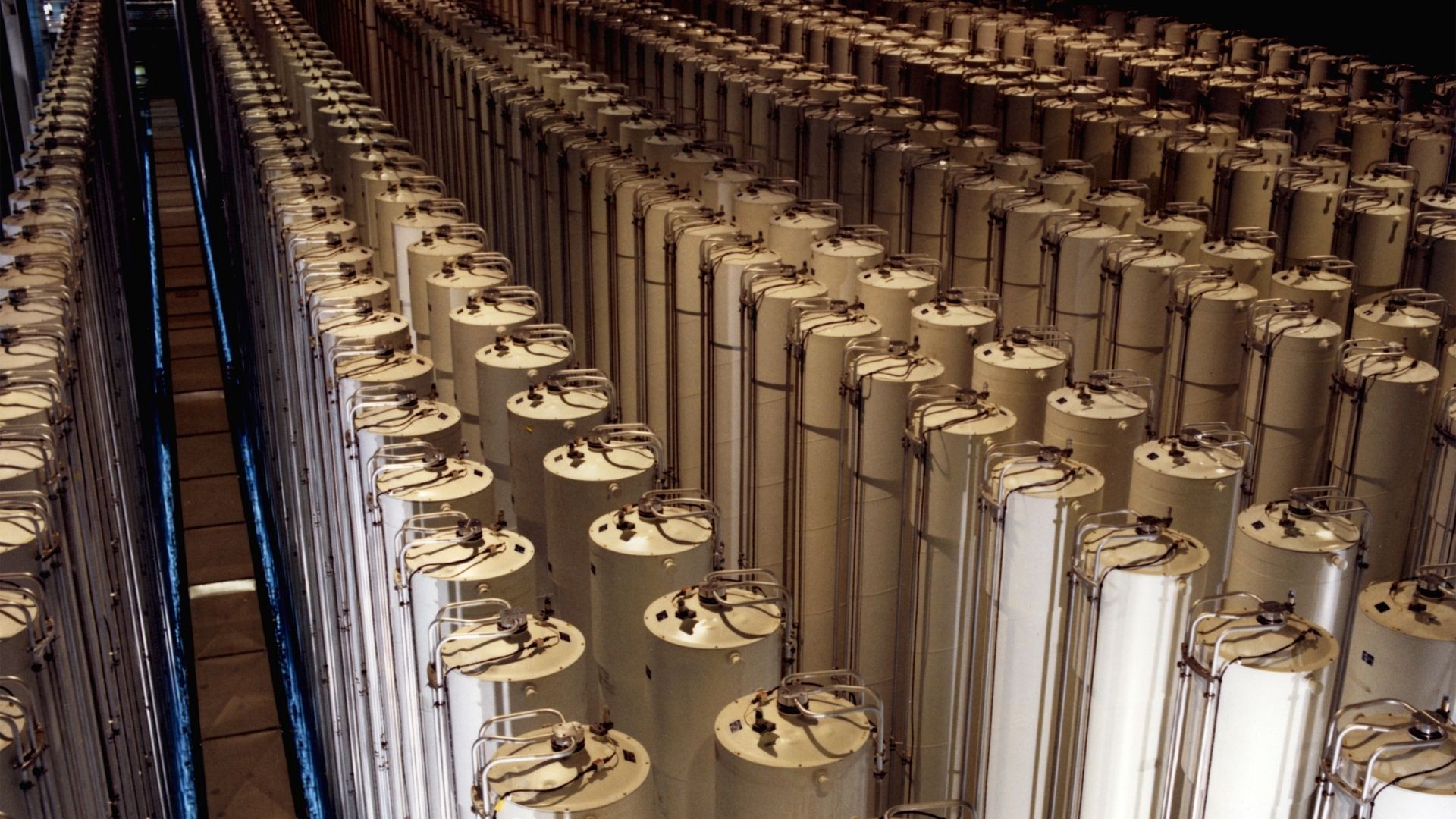
The United States is working to rebuild its domestic uranium enrichment infrastructure for its defense programs, through a project known as DUECE (Domestic Uranium Enrichment Centrifuge Experiment).

It began in 2016, with an objective to develop and demonstrate the next generation of gas centrifuges for uranium enrichment. DUCE is based out of Oak Ridge National Laboratory (ORNL).

The project is strategically significant as it aims to provide a domestic source of highly enriched uranium for powering US nuclear submarines as well as provide tritium for the US nuclear weapons stockpile.

The US imports low enriched uranium for its commercial power reactors but international treaties prohibit the use of imported uranium for military applications.

A capability gap decades in the making

The US once operated three large gaseous diffusion plants for uranium enrichment. These were located in Oak Ridge Tennessee, Portsmouth Ohio, and Paducah, Kentucky (which remained operational until 2013).

These facilities consumed enormous amounts of electricity and were gradually shut down as cheaper, more energy-efficient centrifuge-based enrichment became the global standard.

The US was also developing centrifuge technology at Oak Ridge to eventually replace gaseous diffusion. But events like the Three Mile Island nuclear disaster, the end of the Cold War, and the decrease in global demand for enriched uranium halted plans for commercializing the gas centrifuge technology.

The enrichment process

Gas centrifuge enrichment works by spinning uranium hexafluoride gas at high speed; the heavier uranium-238 isotope migrates toward the outer wall while the lighter, fissile uranium-235 concentrates near the axis. Cascades of thousands of centrifuges connected in series are required to achieve commercially useful enrichment levels.

In general the enrichment levels of uranium fuel in US nuclear submarines is 93-97%. These enable high power density and long-lived reactor cores. It also facilitates in building more compact naval reactors.

What DUECE is building

Currently the project is focused on building a pilot plant in collaboration with BWX Technologies (BWXT). BWXT built a Centrifuge Manufacturing Development Facility to support the pilot plant, it commenced operations in January 2026. The plant will use centrifuges based on the ORNL’s Generation 1 centrifuge design. Currently the Generation 1 design is deployed in a laboratory cascade at ORNL.

It commenced operations on June 1, 2026. Additional deployments of the Generation 1 machine at ORNL are planned through the early 2030s to mature the TRL (Technology Readiness Level) of the design in time for the pilot plant deployment.

Michael Whedbee ORNL’s technical project manager for DUECE said β€œ The DUECE project plans to use the developments in computing and in materials to continue to advance and develop new potential designs and capabilities in the centrifuge arena.”

Eventually the technical and operational learnings from the pilot plant will be utilized in building a follow on commercial scale facility in the 2040s. The DUECE project fits within a broader federal push to secure the nuclear fuel cycle, which includes funding for domestic uranium mining, conversion, enrichment and reprocessing.

  •  

Kratos to upscale engine production to 3000 units for powering one way attack drones

Kratos Defense & Security Solutions is ramping up manufacturing capacity for its Spartan family of small gas turbine engines, responding to increased procurement activity across missile programs and loitering munition platforms.

The company confirmed the production expansion through an official press release.

What the Spartan engine is and why it matters now

The Spartan family comprises of compact turbojet engines designed specifically for expendable and attritable platforms β€” systems built to be used once or with minimal recovery expectation. These engines sit in a performance envelope suited to subsonic cruise missiles, decoy drones, and one-way attack munitions, where cost-per-unit and production throughput matter as much as raw performance.

Steve Fendley, President of Kratos Unmanned Systems Division said β€œAs the Department of War focuses on rebuilding critical missile inventories and increasing affordable precision-strike capacity, the need for scalable, high-performance but low-cost propulsion systems has never been greater.”

He further said β€œKratos is investing today to ensure our customers have access to affordable, reliable, American-made propulsion systems that can be delivered at the speed and scale required by the modern threat environment.”

Loitering munitions, sometimes referred to as kamikaze drones, have moved from niche battlefield tools to standard procurement items for multiple NATO and allied militaries following their documented use in conflicts in Ukraine and the Middle East. That shift has created a supply pressure on propulsion systems, which have historically been a bottleneck in scaling expendable platform production.

Production expansion details

Kratos states that it will produce 3000 engines in 2027. The Spartan line covers multiple thrust classes (ranging from 30 lb to 200 lb at sea level), allowing a single manufacturing infrastructure to serve different platform weight categories without requiring entirely separate production lines.

The vertical integration Kratos maintains over its propulsion systems β€” designing and building engines in-house β€” gives the company tighter control over delivery schedules, a factor that has become a competitive differentiator as defense primes face long lead times on subcomponents.

This investment by the company is strategically aimed at supporting US Department of War`s priorities to replenish missile inventories, expand production capacity for precision-strike weapons, and deliver affordable mass capabilities across the US armed forces

Engineering tradeoffs in expendable propulsion

Designing a gas turbine for an expendable platform involves deliberate compromises. Engineers typically target a service life measured in hours rather than thousands of flight cycles, which allows for reduced material grades in certain hot-section components (cooled by the onboard fuel in Spartan engines) and simplified maintenance architecture.

Supply chain and geopolitical context

Western defense planners have grown increasingly focused on magazine depth β€” the ability to sustain munitions expenditure over a prolonged conflict β€” following assessments of consumption rates in Ukraine. Loitering munitions and cruise missiles consume propulsion units at a pace that peacetime production lines were not sized to support. Kratos quotes an annual production capacity of 10,000 Spartan engines probably indicating towards a buffer surge production capability.

According to the company these engines are designed and manufactured in the United States at Oxford, Michigan, with all parts and components sourced from U.S. companies.

  •  
❌