Elon Musk’s rocket company said it would sell more than 555 million shares at $135 each in its blockbuster initial public offering, which is set to begin trading on Friday.
Two Times tech reporters and their editor talk about assessing the sky-high valuation of the rocket and satellite maker, the potential economic impact of its public debut and the role of the world’s richest man in it all.
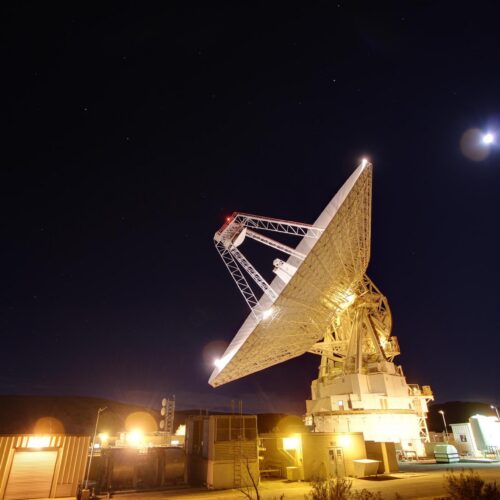
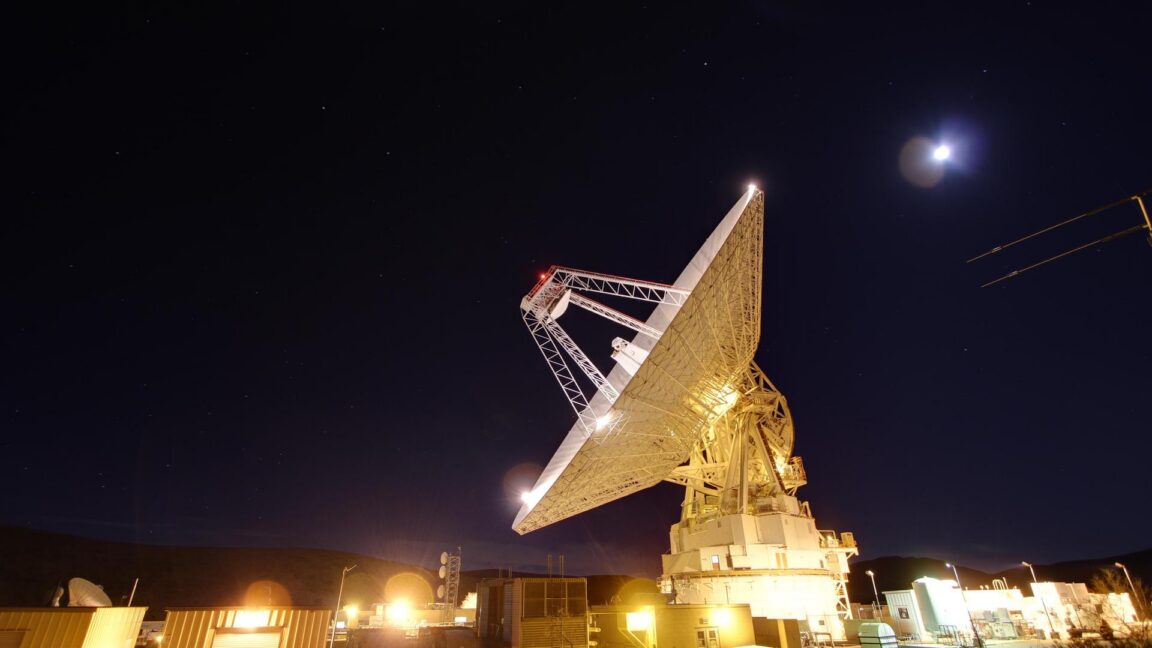
NASA pushed its Deep Space Network beyond its limits during the Artemis I mission nearly four years ago. The global array of deep space communications antennas couldn't keep up with the routine demands of 40 robotic science missions and the extraordinary surge required by NASA's Orion space capsule as it flew around the Moon.
The experience in late 2022 reduced or delayed downlinks from several high-profile science missions, including the James Webb Space Telescope and Mars rovers, as the data-hungry Artemis I mission took priority on NASA's communications network. And that was before the first Artemis mission with astronauts onboard. When Artemis II launched April 1, NASA called upon the Deep Space Network (DSN) again to connect Mission Control to the Orion capsule as it soared more than a quarter of a million miles from Earth.
With a crew of four flying inside the spacecraft, the agency's appetite for data from Orion on Artemis II was even higher than it was on Artemis I. But at a little more than nine days, the Artemis II mission was shorter than the 25 days Artemis I spent in space, helping alleviate the communications overload. Artemis I also launched 10 small CubeSats into deep space, many of which required tracking and telecom services from the DSN. Artemis II carried fewer CubeSats.
O próximo processador de IA da Google terá uma arquitetura de fabrico dividida. A TSMC deverá produzir o núcleo computacional, cabendo à Samsung o fabrico do componente de interligação à memória. A Intel poderá também entrar na equação com a produção da TPU.
Elon Musk’s rocket company is spending big and losing money. That has raised questions about whether it can justify its valuation for its blockbuster initial public offering.
Elon Musk, on the verge of becoming the world's first trillionaire, is whipping up anti-immigration tensions amid ongoing riots in Belfast, Northern Ireland. Following a knife attack in the city on Monday, Musk declared support for Restore Britain, a hard-right populist political party that advocates for large-scale migrant deportation in the UK. He reposted statements from party leader Rupert Lowe calling for "a vast number of people" to be forced out of the country, as well as a promise from Lowe to "prosecute officials and politicians who knowingly placed dangerous third world savages in our communities." "This is the way," Musk added to …
Respect Henry Nowak's family’s wishes and don’t exploit his death, intoned Starmer. But when murdered Rhiannon Whyte's mother demanded an end to illegal immigration, Starmer didn't want to know, says Steven Tucker.
Can anyone or anything stop Andy Burnham becoming PM now, asks Mark Littlewood in his latest Political Betting column as he contemplates breaking his usual rule and taking the 2/5 odds-on bet.
Investors who bought the automaker’s shares in its initial public offering became rich. As a result, many have a deep faith in Elon Musk, the chief executive of Tesla and SpaceX.
EuroPython réunira la communauté Python à Cracovie du 13 au 19 juillet 2026. Pour beaucoup de participants, le voyage ne mettra pas les projets en pause : dépôts GitHub à consulter, environnements cloud à superviser, correctifs à envoyer depuis l’hôtel ou le centre de conférences. Sur ces...
A former xAI engineer is suing the company and SpaceX, alleging he was fired for raising AI safety concerns about Grok days before SpaceX's historic IPO.

 Login