❌

Reading view

Scientists Have Just Uncovered a Thriving Ecosystem Hiding in Fog


Fog is a living ecosystem for bacteria, rather than just a sterile cloud of mist,  and may provide an unexpected buffer against harmful pollution.

In a recent paper published in mBio, an Arizona State University team led by then PhD candidate Phi Thuong Thuong Cao, now a graduate, revealed that bacteria are present in fog that cleans the air at a surprising rate, but also poses a possible risk to drinking water collection.

While scientists have long known that bacteria exist in fog, the researchers were surprised to find that the bacteria are not merely present but form an active, if short-lived, ecosystem.

Investigating the Mysteries of Fog Bacteria

“There’s very limited knowledge about what kinds of bacteria are present in fogs, which are like clouds at the ground level,” Cao said.

To probe the mystery of fog bacteria further, Cao focused on two questions: what kinds of bacteria are present, and whether they are active. Discovering growing bacteria within fog droplets elevates fog from a simple atmospheric phenomenon to a biological habitat, a major shift in how researchers have traditionally viewed it.

Fog is composed of tiny droplets of water, each less than a tenth the width of a human hair and too small to fall to the ground. These minuscule droplets form around particles, which can occasionally be living microbes. Although fewer than 1% of droplets contain bacteria, that still represents a substantial population, with bacterial concentrations roughly comparable to those found in the ocean. About 10 million individual bacteria inhabit just a thimbleful of fog water.

A major challenge in studying fog is the wind. Sampling the same location before, during, and after a fog event can produce misleading results because airborne particles are constantly being transported and mixed. For this reason, Cao focused on radiation fog, which forms in still air near the ground as temperatures cool. This allowed the team to minimize complications associated with sample collection.

Standout Bacteria

In Cao’s investigation, one particular type of bacteria, methylobacteria, predominated within the fog droplets. Intriguingly, samples collected during fog events contained far more bacteria than samples of dry air gathered beforehand, suggesting that these microbes thrive in foggy conditions. Among the compounds methylobacteria consume are simple carbon-based molecules, including pollutants such as formaldehyde. In a laboratory setting, Cao was able to observe and experiment on samples collected in the field.

“We observed them under the microscope to see that, yes, the bacteria are getting bigger, and they’re dividing, so there is growth,” Cao explained. “We also found that they’re using the formaldehyde as food to support their growth.”

Even more surprising was the rate at which methylobacteria were breaking down formaldehyde—far faster than they could consume it. This led the team to conclude that because formaldehyde is toxic to the bacteria, they were converting much of it into carbon dioxide to make their environment safer, doing so even faster than they could use it as a food source.

Potential Hazards

The team’s research suggests that fog may play a more important role in Earth’s ecosystems than previously understood, serving as both a temporary aquatic habitat and a natural filter for harmful pollutants.

The implications of the findings are varied. Harvesting fog for drinking water and crop irrigation is already practiced in some regions of the world. This study suggests that such water may contain more bacteria than previously recognized, potentially requiring additional filtration. The risk to most people appears minimal; researchers say only a slight risk may exist for individuals with severely compromised immune systems who are exposed to fog. However, more work is needed to determine the potential benefits and drawbacks of consuming water collected from fog.

Harvesting fog for drinking water and crop sustenance is an ongoing practice. This work shows that water may be full of bacteria, requiring more filtering than previously understood.  The risk to most people is very minimal; only a minor risk exists to people with heavily compromised immune systems from breathing in fog. However, the researchers say that more work is needed to determine the benefits and harms of drinking fog water.

“It’s relatively new that people are starting to look at biological activities in clouds, so there’s still a lot which we don’t understand,” said co-author Pierre Herckes. “At nighttime, for example, there isn’t that much atmospheric chemistry going on. Chemistry is largely driven by the sun and by light. But if the bacteria are still doing their thing even during the nighttime, they can be important.”

Many questions remain unanswered in the wake of this discovery. Cao’s team focused on a single type of fog, leaving open which bacteria thrive in other kinds of fog in other locations, what they eat, and how they impact air quality, all of which will require further study.

“The sky’s the limit,” co-author Ferran Garcia-Pichel says. “No pun intended.”

The paper, “Growth and Formaldehyde Degradation of Photoheterotrophic Methylobacterium within Radiation Fogs,” appeared in mBio on May 11, 2026.

Ryan Whalen covers science and technology for The Debrief. He holds an MA in History and a Master of Library and Information Science with a certificate in Data Science. He can be contacted at ryan@thedebrief.org, and follow him on Twitter @mdntwvlf.

  •  

Environmental News Roundup: Rare Duke of Burgundy Butterfly Population Soars 90-Fold in Kent Conservation Success

Environmental news and nature photography

Across the stories today, a common thread emerges: conservation is working, but the planet isn’t waiting for us to catch up. From Kent’s butterfly meadows to Cambodia’s tiger corridors, dedicated efforts are bringing species back from the brink — yet climate disasters are simultaneously accelerating faster than anyone predicted.

The Duke of Burgundy butterfly’s 90-fold population surge in Kent represents the kind of conservation victory that reminds us what’s possible with focused effort and patience. Similarly, Kyrgyzstan’s massive wildlife corridor for snow leopards and Cambodia’s ambitious tiger reintroduction program signal that countries are thinking beyond traditional protected areas toward landscape-scale solutions. These aren’t just feel-good stories — they’re blueprints for how targeted conservation can reverse seemingly impossible odds.

But the day’s coverage points to growing momentum around an uncomfortable truth: even our biggest successes are racing against accelerating climate impacts. In Indonesia, extreme rainfall killed 58 of the world’s rarest orangutans in just four days — a 7% population loss that no conservation program can quickly replace. Meanwhile, Antarctica recorded winter temperatures above 15°C, shattering records and leaving scientists describing conditions as “very strange.”

Behind the numbers are real communities adapting in real time. Indonesian fishers are turning to mangrove restoration and crab farming as traditional catches dwindle. Coffee farmers worldwide are rediscovering forgotten species as familiar varieties fail under changing conditions. In the Cotswolds, citizen scientists are filling gaps left by overstretched agencies, uncovering “worrying” pollution levels in rivers that official monitoring might have missed.

The tension between protection and development threads through multiple stories today. Property developers argue that new environmental regulations will drive up housing costs, while environmental groups fight to prevent SpaceX from acquiring wildlife refuge land in Texas. In Ethiopia, successful conservation efforts are preserving nature but may be undermining local food security — a reminder that progress and pressure often arrive together.

Perhaps most revealing is how different institutions are responding to crisis. While the U.S. weakens marine protections domestically, it’s actively policing illegal fishing internationally. Kenya becomes the first African nation to receive UN climate disaster compensation, while proposed federal budget cuts threaten to eliminate Great Lakes monitoring programs. China’s Belt and Road Initiative generates massive emissions through steel-heavy construction, even as solar power surpasses coal in the U.S. for the first time in history.

The enforcement stories offer a different kind of hope. South Africa sentenced two pangolin traffickers to eight years in prison — a serious consequence in a field often marked by weak penalties. Durham’s chemical company faces state lawsuits for decades of toxic contamination, while an 80-year-old Texas shrimper traveled 8,000 miles to Taiwan to confront a petrochemical giant at their shareholder meeting.

What emerges is a picture of environmental action happening at every scale — from butterfly meadows to international courts — but also of systems under unprecedented stress. As extreme weather kills endangered species faster than breeding programs can replace them, and as climate displacement intensifies while immigration laws offer no protection, the question isn’t whether we can solve individual problems. It’s whether we can solve them fast enough, and at the scale the planet now demands.

The post Environmental News Roundup: Rare Duke of Burgundy Butterfly Population Soars 90-Fold in Kent Conservation Success first appeared on EnviroLink Network.

  •  

The history of tsunami-causing earthquakes in Japan

In 2011, miles of rock shifted deep underwater in the Japan Trench, causing an earthquake that deformed the seafloor and caused a devastating tsunami. Off the Eastern Coast of the Tōhoku region in Japan, a huge piece of the Earth’s crust carrying the Pacific Ocean, known as a tectonic plate, is forcing itself beneath Japan and into the Earth’s interior. Researchers think rock from this plate pushed against rock far beneath Japan, building pressure until it became too great. The lower plate slipped, spreading energy from the slip site and causing the earthquake. 

Plate slip can cause 2 types of outcomes. The first occurs kilometers deep in the Earth’s crust, causing earthquakes too small to trigger tsunamis. The second type causes extreme slip events that begin deep in the crust, like the 2011 event that extended into the Japan Trench and warped the seafloor. The moving seafloor displaces seawater, causing a tsunami. These events are referred to as slip-to-the-trench style earthquakes.

Researchers think this phenomenon is not unique to 2011, as Japan has a long history of tsunami-causing earthquakes. Charlotte Pizer and colleagues investigated sediment from the Japan Trench to unearth the geologic history of slip-to-the-trench style earthquakes.

In between earthquakes, Japanese islands continuously shed sediment that fills the trench, forming horizontal layers. Slip-to-the-trench earthquakes bend and fold these layers. The team hypothesized that if they found these folds in the Japan Trench and dated them, they could catalogue the record of slip-to-the-trench style earthquakes in the area.

Earthquakes like these occur repeatedly, meaning that younger ones can erase folds caused by older ones. To account for this overprinting, the researchers chose a study site within the Japan Trench about 100 kilometers (60 miles) north of where the most severe earthquakes occur. This site is only mildly deformed by slip-to-the-trench earthquakes since it’s so far from their source, making it easier for the team to identify individual events. 

Pizer and her group pieced together data collected from this site by previous researchers to reconstruct Japan’s earthquake history. They compiled 3 main types of data. Two of these were images of sediment layers in the trench constructed from reflections of vibrations sent into the ground, called seismic profiles. 

The first seismic profile captured the full trench, over 1 kilometer deep (about 0.6 miles), at 5-meter (16-feet) resolution. Using this method, any layers smaller than 5 meters thick won’t appear in the image. The second seismic profile captured only the top 40 meters (130 feet) of sediment, but could detect layers as thin as 10 centimeters (4 inches). 

The final type of data they used came from a 36-meter (120-foot) long cylinder of sediment extracted from the bottom of the trench, called a sediment core. Researchers in the past tied layers within this sediment core to historic earthquake events. They showed that it recorded 2 specific earthquakes in the area, the Kyotoku earthquake of 1454 CE, and the Jogan earthquake of 869 CE, both of which likely caused tsunamis. 

Pizer’s team could observe the depth of the Kyotoku and Jogan earthquake layers taken from the sediment core in their high-resolution seismic profile of the trench. In these high-resolution data, they noticed that deformation occurred in the sediment up to the layer marking the Jogan earthquake, but not above it, meaning deformation of the trench happened during this 869 CE event. 

The high-resolution data were only able to image sediments from recent earthquakes since 869 CE, but the low-resolution profile, which imaged the full trench, was able to capture the deeper, older record. When they looked deeper into the trench sediment, the researchers noticed that deformation from the 869 CE event had spread from where the tectonic plate is colliding with Japan. They saw at least 6 more similarly deformed layers, implying each was its own slip-to-the-trench event, although the dates of these events are unknown.

Pizer and colleagues concluded that slip-to-the-trench earthquakes are long-standing, common events in the Japan Trench. They hope future scientists will continue to research this site to better assess tsunami risks in Japan.


The post The history of tsunami-causing earthquakes in Japan appeared first on Sciworthy.

  •  

Industrial Agriculture Drives Record Bee Colony Losses as Pollinators Face System-Wide Crisis

Industrial Agriculture Drives Record Bee Colony Losses as Pollinators Face System-Wide Crisis

Commercial beekeepers experienced their worst losses on record last winter, with more than 60% of colonies dying off in what experts are calling an unprecedented pollinator crisis. While the scale of these losses is staggering, the underlying cause has been widely misunderstood.

For years, scientists and policymakers have approached bee deaths as isolated problems—targeting individual threats like varroa mites, neonicotinoid pesticides, habitat destruction, or climate-driven weather extremes. This fragmented approach treats symptoms rather than addressing the root cause that ties all these factors together.

The real driver behind collapsing bee populations is industrial agriculture itself. Modern farming practices create a perfect storm of stressors that weaken bee immune systems and make colonies vulnerable to multiple threats simultaneously. Massive monocultures eliminate diverse food sources that bees need for proper nutrition, while intensive pesticide applications—even those not immediately lethal—compromise bee health over time. Meanwhile, the commercial beekeeping industry trucks hives across vast distances to pollinate crops, creating additional stress and facilitating disease spread.

This systemic crisis threatens far more than honey production. Bees and other pollinators are essential for roughly one-third of human food crops, including fruits, vegetables, and nuts worth billions of dollars annually. Without fundamental changes to how we produce food—moving away from chemical-intensive monocultures toward more diverse, ecologically sound farming systems—the pollinator crisis will only deepen, ultimately threatening food security for millions of people.

The post Industrial Agriculture Drives Record Bee Colony Losses as Pollinators Face System-Wide Crisis first appeared on EnviroLink Network.

  •  

Fossil Fuel Industry Accused of Influencing Federal Judges Through Educational Seminars

Fossil Fuel Industry Accused of Influencing Federal Judges Through Educational Seminars

A battle is brewing over who has undue influence on America’s federal judiciary as climate litigation intensifies across the country. Cities and states are pursuing billions of dollars in damages from major oil companies, alleging these corporations deliberately concealed the environmental dangers of their products for decades.

In response to this wave of lawsuits, conservative organizations have launched accusations that environmental lawyers are working with legal education nonprofits to bias federal judges against the fossil fuel industry. However, climate attorneys are firing back with evidence that the opposite is true – that oil and gas companies are the ones actively trying to sway judicial opinion in their favor.

The most compelling evidence centers on judicial education seminars hosted by fossil fuel-backed organizations. These events have featured prominent pro-industry speakers, including current Energy Secretary Chris Wright, who participated when he was still serving as a fracking industry executive. Such seminars raise questions about whether judges are receiving balanced information about climate science and the environmental impacts of fossil fuel extraction.

This controversy highlights the high stakes surrounding climate litigation, as courts increasingly become battlegrounds for determining corporate responsibility for environmental damage. With billions of dollars and the future of climate policy hanging in the balance, both sides are fighting not just legal cases, but for the hearts and minds of the judges who will ultimately decide them.

The post Fossil Fuel Industry Accused of Influencing Federal Judges Through Educational Seminars first appeared on EnviroLink Network.

  •  

Immigration Restrictions Target Nations Most Vulnerable to Climate Displacement

Immigration Restrictions Target Nations Most Vulnerable to Climate Displacement

New analysis reveals a troubling overlap between countries facing U.S. immigration restrictions and those most severely impacted by climate-related disasters. Of 39 nations currently subject to entry limitations, the majority are experiencing severe environmental vulnerabilities that force residents to flee their homes.

This pattern emerges as climate-driven displacement reaches unprecedented levels worldwide. Intensifying storms, devastating floods, and prolonged droughts are pushing millions of people from their ancestral lands, creating a growing population of climate migrants seeking safety and stability elsewhere. These environmental refugees often come from regions least equipped to handle the mounting pressures of a changing climate.

The timing presents a stark contradiction in policy approaches. While restrictions tighten on immigration from climate-vulnerable nations, policies simultaneously promote increased fossil fuel production—the primary driver of the climate crisis that creates displacement in the first place. This creates a feedback loop where the very activities contributing to climate displacement are expanding, while pathways to safety for those affected are narrowing.

The affected countries typically lack the infrastructure and resources needed to adapt to rapidly changing environmental conditions. Small island nations facing sea-level rise, drought-stricken regions experiencing crop failures, and flood-prone areas with inadequate drainage systems all contribute to the growing tide of climate migration. As extreme weather events become more frequent and severe, the number of people seeking refuge from environmental disasters is expected to increase dramatically in coming decades.

The post Immigration Restrictions Target Nations Most Vulnerable to Climate Displacement first appeared on EnviroLink Network.

  •  

Climate Disasters Force Millions to Flee, but US Immigration Laws Offer No Protection

Climate Disasters Force Millions to Flee, but US Immigration Laws Offer No Protection

Across the globe, millions of people are being displaced from their homes as climate change intensifies natural disasters. Rising seas, devastating floods, prolonged droughts, and extreme storms are forcing entire communities to abandon the places they’ve called home for generations. Yet despite this growing crisis, those seeking refuge in the United States face an increasingly hostile immigration system that offers no legal pathway for climate-displaced individuals.

Current US and international refugee laws were written decades ago and fail to recognize environmental disasters as valid grounds for asylum or protection. The legal framework only covers persecution based on race, religion, nationality, political opinion, or membership in particular social groups—leaving climate refugees in a legal grey area with few options for safe, legal migration. This gap in protection comes at a time when the US has dramatically reduced overall refugee admissions and tightened immigration enforcement across the board.

Scientists predict that climate displacement will only accelerate in the coming decades, potentially affecting hundreds of millions of people worldwide. Without significant policy reforms to address climate-induced migration, vulnerable populations will continue to face an impossible choice: remain in increasingly dangerous conditions or risk dangerous, unauthorized border crossings. Environmental and immigration advocates argue that the US needs to modernize its refugee system to acknowledge the reality of climate displacement, but political resistance to expanding immigration pathways suggests that meaningful change remains unlikely in the near term.

The post Climate Disasters Force Millions to Flee, but US Immigration Laws Offer No Protection first appeared on EnviroLink Network.

  •  

Restaurant Chain Agrees to Fund Orchard Restoration After Illegally Cutting Down 500-Year-Old Oak Tree

Restaurant Chain Agrees to Fund Orchard Restoration After Illegally Cutting Down 500-Year-Old Oak Tree

A major UK restaurant chain has reached a settlement with local authorities after illegally damaging a centuries-old oak tree, agreeing to pay for the restoration of a lost orchard as compensation for their environmental transgression.

The controversy began in April of last year when Toby Carvery took unauthorized action against a 500-year-old oak tree located next to their restaurant’s car park in Whitewebbs Park, north London. The company partially felled the ancient tree without obtaining proper permissions, sparking immediate public outcry and drawing attention from parliamentary officials. The oak, which had stood for five centuries, represented not just a significant piece of natural heritage but also an irreplaceable ecosystem that supported local wildlife.

Enfield Council pursued legal action against the restaurant chain following the incident, recognizing the severe environmental and cultural damage caused by the unauthorized tree felling. Ancient oaks like this one are considered irreplaceable natural treasures, often serving as biodiversity hotspots that support hundreds of species of insects, birds, and other wildlife while also storing substantial amounts of carbon.

Under the settlement agreement, Toby Carvery will fund the replanting and restoration of an orchard, though no amount of new plantings can truly replace the ecological value and historical significance of a 500-year-old tree. The case highlights the ongoing challenges in protecting ancient trees from development pressures and the importance of strict enforcement when environmental regulations are violated.

The post Restaurant Chain Agrees to Fund Orchard Restoration After Illegally Cutting Down 500-Year-Old Oak Tree first appeared on EnviroLink Network.

  •  

Solar generates more energy in US than coal for first time

Solar supplied 12.8% of US electricity in May even as Trump boosts coal over clean energy

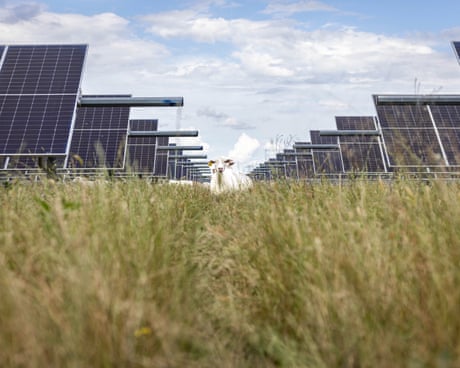
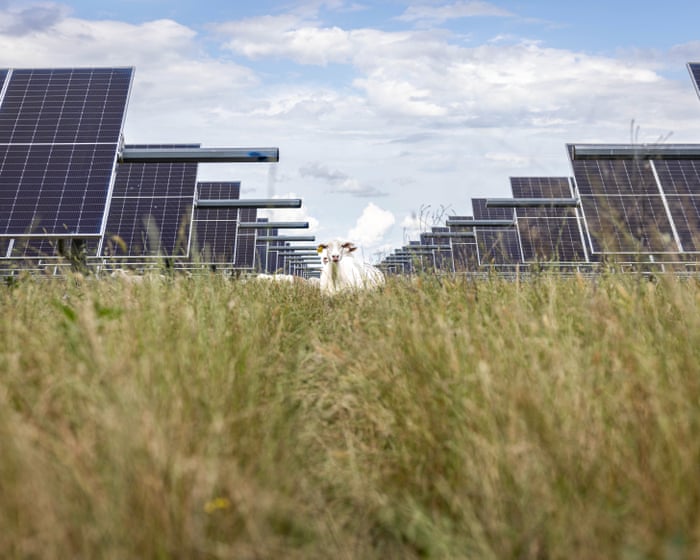
Even as Donald Trump boosts coal over clean energy, solar power is hitting new milestones in the US and remains the leading source of new power.

Data released on Wednesday by the global energy thinktank Ember, along with a report by the Solar Energy Industries Association (Seia) and analytics firm Wood Mackenzie, show the continued growth of solar and decline of coal in the United States despite federal policy. In May, for the first time, solar supplied more of the nation’s electricity than coal, or 12.8%, Ember said. Coal supplied 12.2%, its fourth-lowest monthly share ever.

Continue reading...

© Photograph: Angela Piazza/The Dallas Morning News via Getty Images

© Photograph: Angela Piazza/The Dallas Morning News via Getty Images

© Photograph: Angela Piazza/The Dallas Morning News via Getty Images

  •  

Labor to set terms for datacentre and AI growth as it vows not to repeat mistakes of resources boom

Assistant minister agrees concerns over resource usage are legitimate but argues Australia cannot ignore ‘consequential’ economic wave

Australia should learn from the mistakes of the resources boom and set the terms for the AI and datacentres boom, the assistant minister for the digital economy, Andrew Charlton says.

Growth in datacentres has exploded in the past two years, Charlton told the Sydney Institute on Wednesday night, with 44 projects in the pipeline in New South Wales alone seeking 11GW of capacity on the electricity grid.

Continue reading...

© Photograph: Bloomberg/Getty Images

© Photograph: Bloomberg/Getty Images

© Photograph: Bloomberg/Getty Images

  •  
❌