Login

SpaceX officially prices shares at $135 in the largest IPO ever
Wits its official share pricing announcement, SpaceX's IPO has begun.

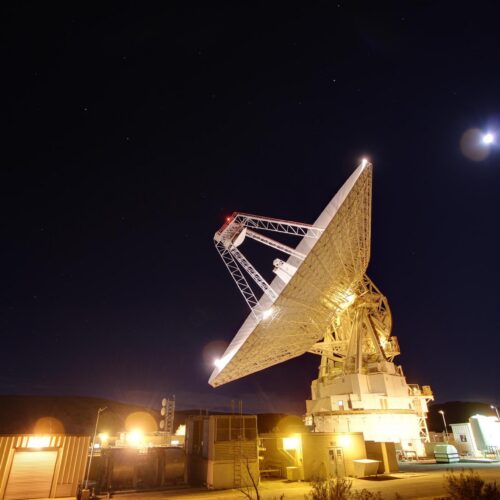
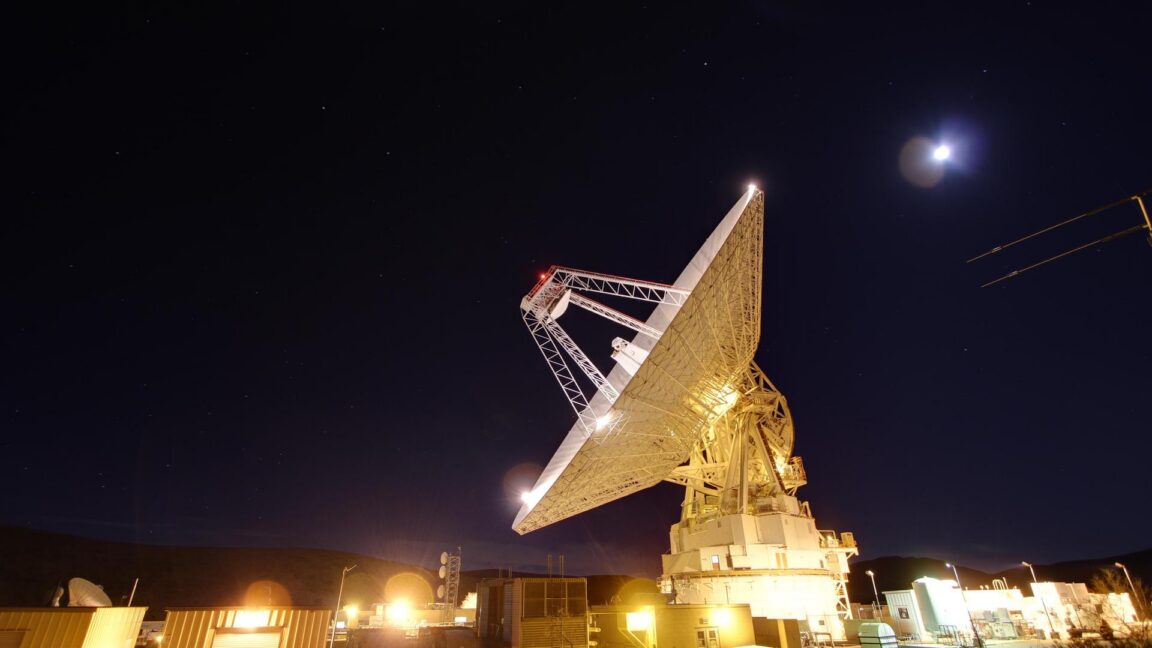
NASA pushed its Deep Space Network beyond its limits during the Artemis I mission nearly four years ago. The global array of deep space communications antennas couldn't keep up with the routine demands of 40 robotic science missions and the extraordinary surge required by NASA's Orion space capsule as it flew around the Moon.
The experience in late 2022 reduced or delayed downlinks from several high-profile science missions, including the James Webb Space Telescope and Mars rovers, as the data-hungry Artemis I mission took priority on NASA's communications network. And that was before the first Artemis mission with astronauts onboard. When Artemis II launched April 1, NASA called upon the Deep Space Network (DSN) again to connect Mission Control to the Orion capsule as it soared more than a quarter of a million miles from Earth.
With a crew of four flying inside the spacecraft, the agency's appetite for data from Orion on Artemis II was even higher than it was on Artemis I. But at a little more than nine days, the Artemis II mission was shorter than the 25 days Artemis I spent in space, helping alleviate the communications overload. Artemis I also launched 10 small CubeSats into deep space, many of which required tracking and telecom services from the DSN. Artemis II carried fewer CubeSats.
© NASA/JPL-Caltech
NASA pushed its Deep Space Network beyond its limits during the Artemis I mission nearly four years ago. The global array of deep space communications antennas couldn't keep up with the routine demands of 40 robotic science missions and the extraordinary surge required by NASA's Orion space capsule as it flew around the Moon.
The experience in late 2022 reduced or delayed downlinks from several high-profile science missions, including the James Webb Space Telescope and Mars rovers, as the data-hungry Artemis I mission took priority on NASA's communications network. And that was before the first Artemis mission with astronauts onboard. When Artemis II launched April 1, NASA called upon the Deep Space Network (DSN) again to connect Mission Control to the Orion capsule as it soared more than a quarter of a million miles from Earth.
With a crew of four flying inside the spacecraft, the agency's appetite for data from Orion on Artemis II was even higher than it was on Artemis I. But at a little more than nine days, the Artemis II mission was shorter than the 25 days Artemis I spent in space, helping alleviate the communications overload. Artemis I also launched 10 small CubeSats into deep space, many of which required tracking and telecom services from the DSN. Artemis II carried fewer CubeSats.
© NASA/JPL-Caltech

Elon Musk, on the verge of becoming the world's first trillionaire, is whipping up anti-immigration tensions amid ongoing riots in Belfast, Northern Ireland. Following a knife attack in the city on Monday, Musk declared support for Restore Britain, a hard-right populist political party that advocates for large-scale migrant deportation in the UK. He reposted statements from party leader Rupert Lowe calling for "a vast number of people" to be forced out of the country, as well as a promise from Lowe to "prosecute officials and politicians who knowingly placed dangerous third world savages in our communities." "This is the way," Musk added to …

How supermassive black holes (SMBH) in the center of galaxies accrete material, how they feedback into the surrounding region, and how they regulate these to influence the evolution of their galaxies are all hot topics in astronomical/astrophysical research. Astronomers are nearly certain that all large galaxies like the Milky Way have a SMBH, and detailed […]
The post This is how supermassive black holes feed themselves appeared first on Knowridge Science Report.

K2 Space and Rocket Lab will supply spacecraft buses to SES and Viasat for the military's next-generation protected satcom program
The post K2 Space, Rocket Lab win key supplier roles in Space Force satcom program appeared first on SpaceNews.
A new study has taken a fresh look at a late 2025 Yonsei University study claiming the universe’s expansion is stalling out and instead has found that the universe is still expanding as previously believed.
Led by researchers from the University of Southampton, the team behind the new analysis acknowledged the scientific value of the 2025 team’s work, noting that their calculations were not wrong but lacked the additional data needed to confirm the universe’s expansion rather than refute it.
The lead author of the 2025 study, Dr. Chul Chung, told The Debrief that he and his colleagues “have already submitted our response to Wiseman, Riess et al. 2026 on May 14,” adding that the paper, “Still accelerating: age bias correction in supernova cosmology is robust to host-progenitor age mapping,” has also been posted on arXiv.
“The abstract summarizes the two main issues we identify in Wiseman et al., so I think it provides a concise overview of our position,” Chung told The Debrief.
According to a statement announcing the findings, scientists first confirmed the universe’s expansion was accelerating in 2011, a discovery that won astrophysicists Professor Adam Riess and Professor Brian Schmidt the Nobel Prize in Physics. Since that discovery, cosmological models have incorporated this accelerating expansion, with experiments on dark matter and dark energy attempting to explain it.
Then last year, a separate team of astronomers announced that a new analysis of stellar phenomena indicated that the universe was no longer expanding. Adding to the controversy was the team’s claim that dark energy may not exist, citing the lack of concrete evidence for a universe undergoing accelerating expansion.
According to the Southampton-led team behind the new study, the 2025 study suggested that previous methods used to measure the universe’s expansion, such as measuring supernovae, “were fundamentally flawed.”
“This points to a time-varying dark energy and a universe that is no longer accelerating, representing a potential paradigm shift in cosmology if confirmed,” explained Professor Chul Chung, co-lead author on the study, in a 2025 email to The Debrief.
The claims sent shockwaves through the scientific community, a result that the researchers note could have dismantled the Nobel Prize-winning team’s historic findings, and “nearly three decades of astronomical progress.”
When discussing the 2025 team’s work, the lead author of the new study, Dr Phil Wiseman, said the team’s findings and the resulting debate were not necessarily incorrect. Instead, the Southampton researcher said it was primarily a result of a scientific understanding.
“The previous and well-accepted measurements were, in fact, fine and our current understanding of the fate of the universe remains robust.”
In their reanalysis, the Southampton-led team recalibrated the original data to account for variables not in the original study. According to Wiseman, these included “different host environments and populations.”
For example, the research team looked at Type 1a supernovae, which are violet, extremely bright explosions of white dwarf stars. The authors of the 2025 study claimed that this class of supernova had “different maximum brightness,” which had tricked astronomers into thinking the cosmos was accelerating, when their analysis said it was actually slowing down.
When they took a fresh look at the data, the Southampton team found that they had incorrectly estimated the age of these stars. The new study also says the 2025 team didn’t account for the mass of the galaxies hosting these cosmological phenomena, which they described as “a standard correction used in modern cosmology to prove accuracy.”
When his team factored those data points in, Wiseman said the evidence for a stalling expansion was not supported. Instead, the researcher observed that “the evidence for cosmic acceleration remains remarkably consistent.”
In their reply on ArXiv, the Yonsei University team said the new research failed to factor in two variables of their own, adding that “when these two effects are consistently combined in computing the redshift-dependent magnitude correction, the final correction, and hence the resulting cosmological impact, remain largely unchanged,” from the original 2025 calculations.
When discussing the new study’s findings, Southampton Professor Mark Sullivan highlighted the benefits of scientific review, noting that “this is how progress is made.”
“Although this idea did not turn out correct, it has opened up new ways of thinking about how supernovae explode and how we can measure dark energy more accurately,” the researcher added.
Paper co-author, Dr Brodie Popovic agreed, noting that the 2025 study provided astronomers a good opportunity to “go back over all of our assumptions,” adding that “it turns out, yes, we do understand this stuff, and we’re accounting for it in our cosmology measurement.”
In a salute to the Sagan Standard established by astronomer Carl Sagan, which says “extraordinary claims require extraordinary evidence,” Reiss seemed to celebrate the new findings that reestablish his original work by quipping that “extraordinary claims require especially careful testing.”
With the accelerating expansion of the universe seemingly reestablished, at least for now, Dr Wiseman said: “we can get back to trying to understand what dark energy actually is, rather than wondering if it exists at all.”
“Thankfully we have averted this crisis, but the mystery about why the universe is still accelerating in size remains,” he added.
The study “Still Accelerating: Type Ia supernova cosmology is robust to host galaxy age evolution” was published in Monthly Notices of the Royal Astronomical Society.
Christopher Plain is a Science Fiction and Fantasy novelist and Head Science Writer at The Debrief. Follow and connect with him on X, learn about his books at plainfiction.com, or email him directly at christopher@thedebrief.org.
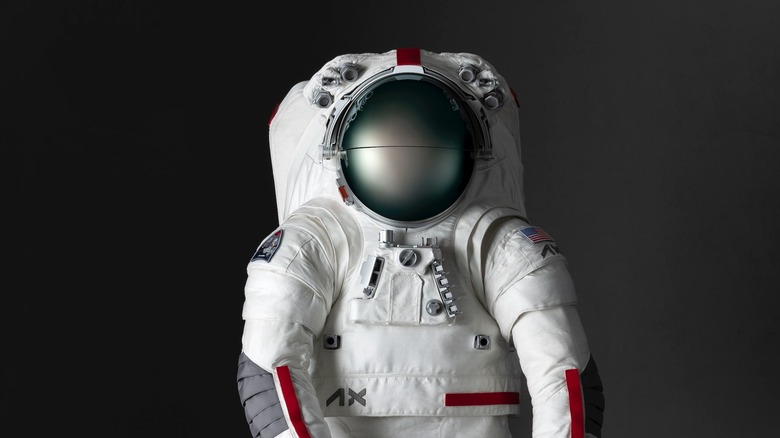
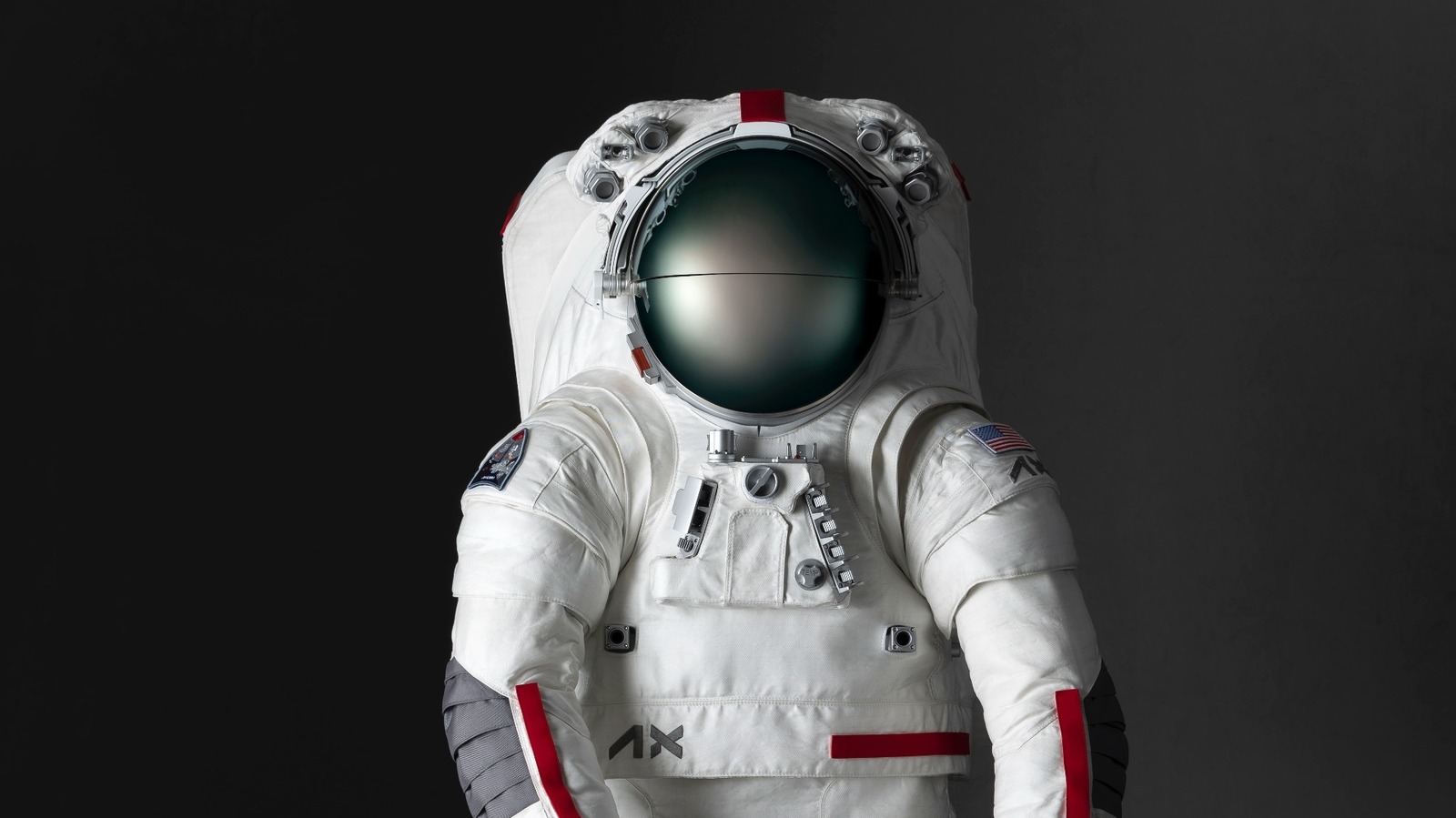

Thales Alenia Space and Airbus Defence and Space won contracts to build the next generation of radar imaging satellites for Europe’s Copernicus Earth observation program.
The post ESA awards contract for next-generation radar imaging satellites appeared first on SpaceNews.

The asteroid impact that wiped out the dinosaurs 66 million years ago is often remembered as one of the most destructive events in Earth’s history. However, new research suggests that the same catastrophe may also have created an underground environment where life could thrive for millions of years. An international team of scientists has found […]
The post Dinosaur-killing asteroid may have created an underground oasis for life appeared first on Knowridge Science Report.
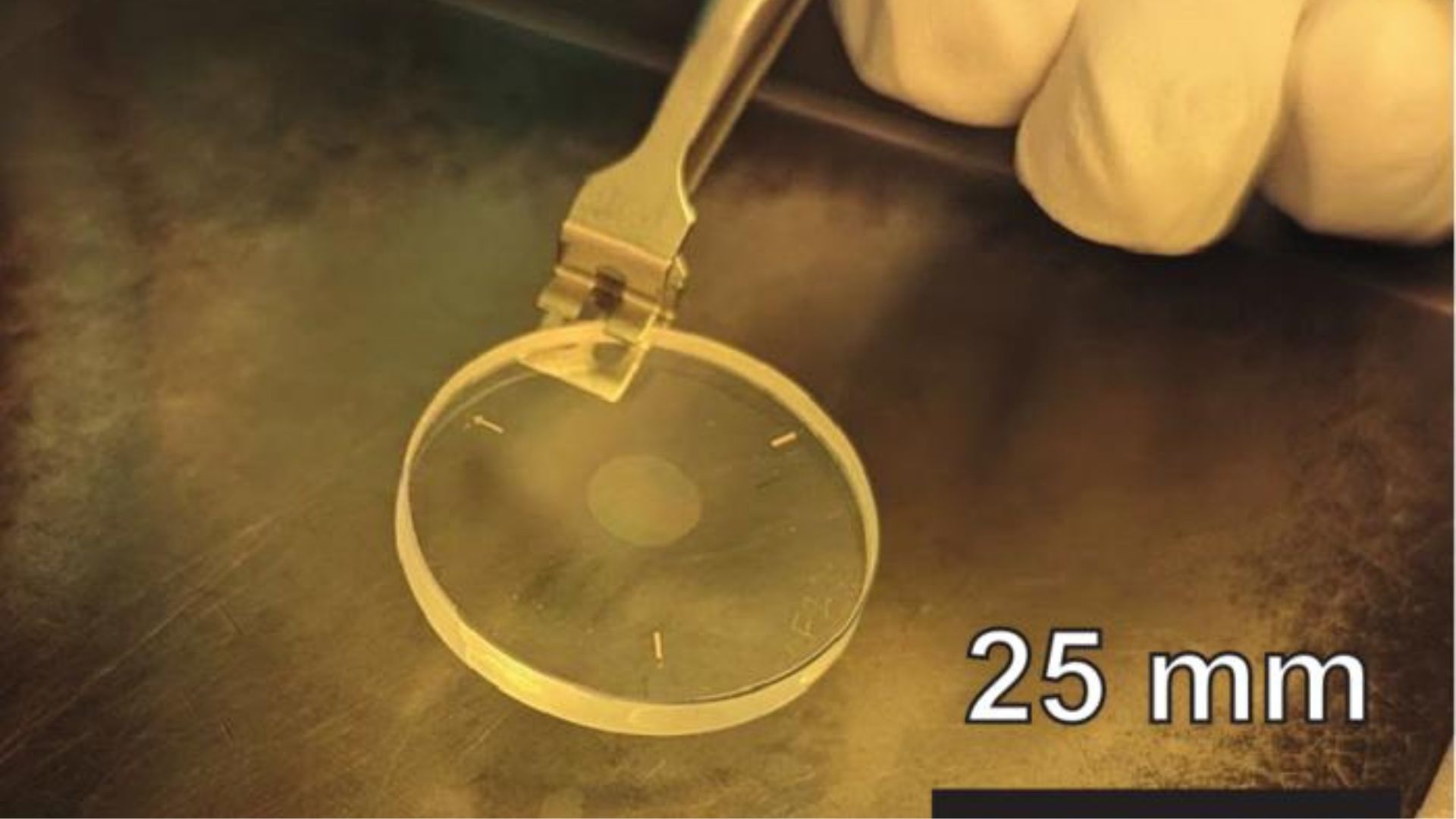
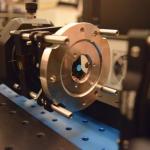
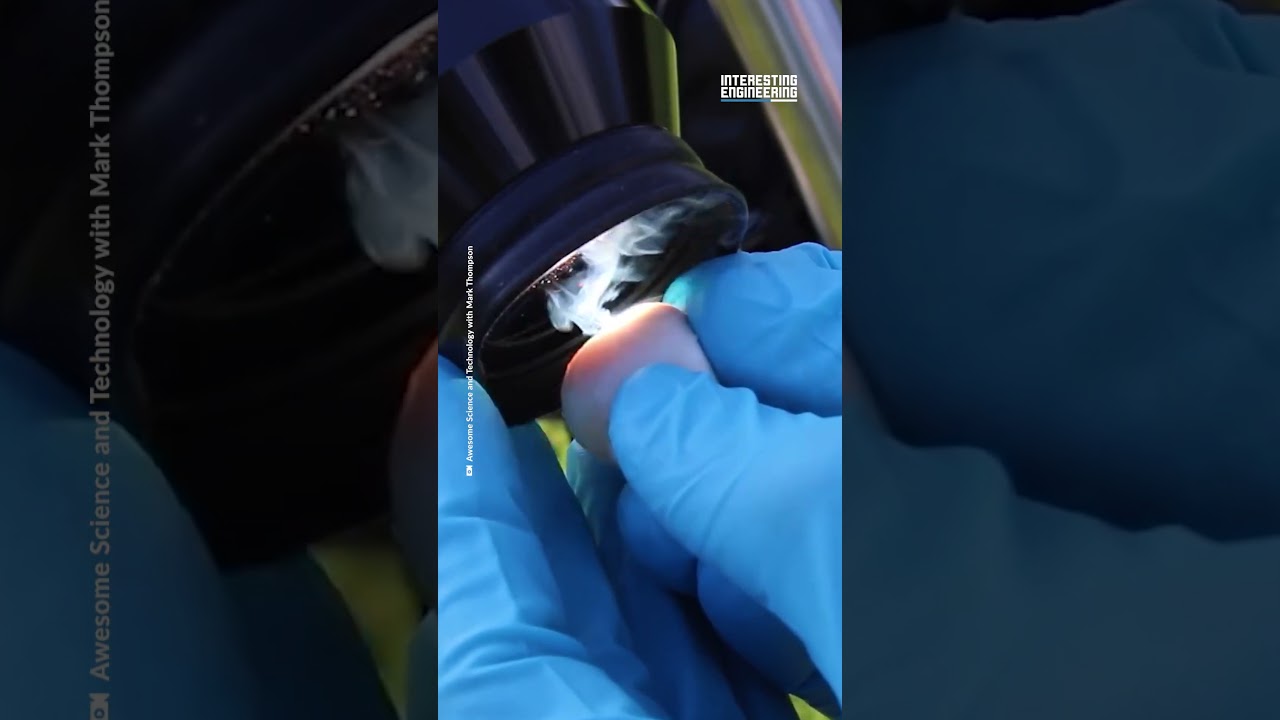
Engineers at the University of California San Diego have built a tiny optical component measuring just six millimeters in diameter for telescopes.
Developed in collaboration with BAE Systems Space & Mission Systems, the device could simplify space exploration hardware. It promises to slash mission costs while vastly improving the ability to monitor dangerous space weather.
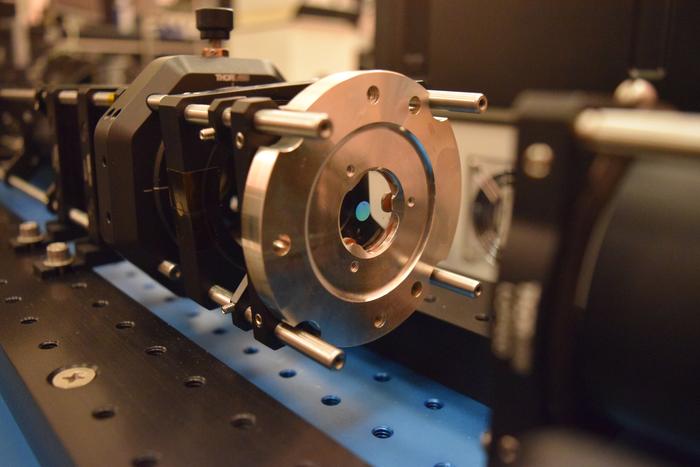
A metasurface is an advanced class of nanotechnology consisting of a flat optical component engineered with microscopic, nanoscale structures.
Using these nanostructures, the device can manipulate light — such as splitting and controlling its polarization channels simultaneously — in unique ways that conventional glass lenses and mirrors physically cannot.
Until now, this tech was mostly an academic parlor trick. “Most academic work on metasurfaces has remained at the proof-of-concept stage,” said Noah Rubin, the study’s senior author and an engineering professor at UC San Diego.
Rubin’s team took the concept out of the lab. Their industry partners at BAE Systems subjected the tiny lens to brutal vibration and extreme temperature testing.
It passed. The nanotech was officially space-qualified.
“We’re excited for the possibility to deploy our technology in space,” Rubin said. “I think this is a very nice example of where fundamental academic research actually can translate to something with real potential for space exploration and science.”
The sun’s magnetic fields are often studied to predict massive solar eruptions, such as coronal mass ejections, that send charged particles toward Earth.
For this, polarization, or the vibration direction of incoming sunlight, is analyzed.
Existing space telescopes use a different approach to do this. These take an image, mechanically rotate an optical component, and take another image. And then digitally stitching them together.
This process is slow and vulnerable to the slightest jitters. As spacecraft vibrate, even a tiny nudge between exposures can completely blur delicate solar data.
To stop this, NASA has to build incredibly complex, expensive stabilization systems. “These systems often cost far more than the telescope itself,” Rubin noted.
The new six-millimeter metasurface eliminates the moving parts entirely.
It splits incoming sunlight into several different polarization paths at the exact same time. Instead of a slow sequence of photos, the telescope captures all the magnetic data simultaneously in a single snapshot.
“With these faster frame rates, we can observe phenomena that were too quick for previous instruments to capture,” said Lisa Li, the study’s first author.
To prove the device could actually do real science, the researchers integrated it into a custom telescope and traveled to the Dunn Solar Telescope in New Mexico.
The setup was a contrast of epic proportions. Sunlight hit a mirror at the top of a 136-foot tower, traveled 228 feet underground, and was reflected back to the surface. There, it passed through the team’s tiny six-millimeter component.
The microscopic lens successfully mapped the intense magnetic fields inside active sunspots. When the team compared their data to observations from NASA’s massive, orbiting Solar Dynamics Observatory, the results were nearly identical.
The tiny lens performed just as well as a giant satellite.
Now, the team is setting its sights on the launchpad. Backed by five years of development and funding from NASA, the researchers have submitted a formal proposal for a mission concept study.
If selected, their tiny six-millimeter eye could soon be riding a rocket into space — proving that sometimes, the biggest breakthroughs come in the smallest packages.
The paper was published on June 10 in Science Advances.