Draft defense bill funds Pentagon at requested discretionary levels but excludes $350 billion in proposed reconciliation spending, casting doubt on Golden Dome and other space programs
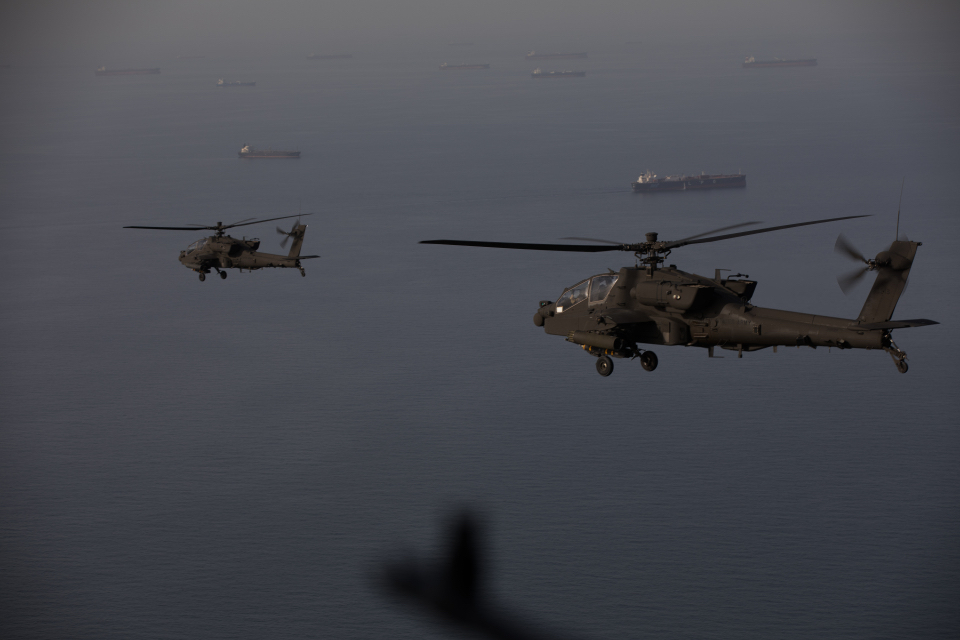
A US Army helicopter gunship was apparently struck by an Iranian Shahed drone before going down near the Strait of Hormuz—but it's unclear whether the one-way attack drone was deliberately aimed or achieved more of a lucky accidental strike.
Axios correspondent Barak Ravid first reported an unnamed US government official’s comments that an Iranian drone had hit the US Army AH-64 Apache helicopter before the latter went down on June 8. The New York Times later confirmed that reporting through more anonymous US officials, including one official who said US military investigators were still evaluating whether the Iranian drone strike on the helicopter was intentional or accidental.
Iran has fired thousands of such Shahed drones against a wide range of military and civilian targets in the Gulf region since February 28, 2026, when the United States and Israel began the war by jointly attacking Iran with a barrage of bombs and missiles. But Shahed drones have mainly struck stationary targets such as Amazon data centers and energy facilities, sometimes hitting slow-moving commercial ships in the Strait of Hormuz.
A new facility in the United States is set to keep the country safe from from the threat of nuclear proliferation. The new state-of-the-art 21,000-square-foot facility, at the Oak Ridge National Laboratory (ORNL), is also aimed at contributing to nuclear energy developments.
The Advanced Testbed and Operations Learning Laboratory (ATOLL) will develop critical workforce expertise and capabilities essential to monitoring foreign weapons-grade uranium production activities. The project is expected to be completed in the summer of 2028.
Initiative to advance energy dominance agenda
“It takes a weapons program to know a weapons program,” said Administrator Williams. “At NNSA, we deter adversaries by being experts in atomic science and weapons production, and the investment in ATOLL strengthens our understanding of both.”
The Department of Energy’s National Nuclear Security Administration (NNSA) has announced that the initiative will also advance President Trump’s energy dominance agenda and his executive orders on nuclear energy by contributing to the growing nuclear infrastructure being built in Tennessee, providing critical expertise that can be leveraged by American industry to revitalize domestic civil nuclear capabilities.
Detection of adversary nuclear programs and capabilities
“Our nation’s nuclear deterrent and the NNSA enterprise that maintains it serve as the foundation of our national defense. My highest priority as Chairman of the House Energy & Water Appropriations Subcommittee is ensuring this nuclear security enterprise is properly resourced,” said Congressman Fleischmann.
“DNN plays an essential defensive role within our deterrence architecture by enabling the detection and attribution of adversary nuclear programs and capabilities. The scientific and technological expertise of our national labs are critical enablers for NNSA’s national security missions.”
Fleischmann also underlined that the Advanced Testbed and Operations Learning Laboratory, being built at ORNL, will provide the cutting edge scientific facilities needed to perform critical nonproliferation missions, as the ability to monitor foreign nuclear production and weapons activities is essential to the country’s national defense and extended deterrence commitments.
“I was honored to participate in the groundbreaking for this important demonstration of these tremendous partnerships advancing U.S. national security,” added Fleischmann.
The project is part of the Nonproliferation Stewardship Program within NNSA’s Office of Defense Nuclear Nonproliferation. The program focuses on maintaining the scientific expertise, technical infrastructure, and specialized facilities necessary to address current and future nuclear security challenges.
As geopolitical tensions and concerns over nuclear proliferation continue to evolve, the development of ATOLL represents a strategic investment in America’s ability to detect, understand, and prevent the misuse of nuclear technology. The facility is expected to serve as a cornerstone of U.S. nonproliferation efforts while fostering innovation and expertise in the broader nuclear field for decades to come.
The new facility is expected to strengthen America’s ability to monitor nuclear activities globally and respond effectively to emerging proliferation risks.
By supporting research, workforce development, and advanced nuclear infrastructure, the laboratory will help reinforce domestic capabilities in both civilian nuclear power and national security applications.
European aerospace firm Airbus will unveil its latest drone wingman, the U760 Ravenstorm, at the International Aerospace Exhibition (ILA) 2026 in Berlin. The wingman drone for fighter jets has been unveiled alongside a comprehensive suite of uncrewed aerial systems (UAS).
The full suite unveiled by Airbus at the event includes the new autonomous aircraft, named U145, based on its popular H145 helicopter platform. U740 Valkyrie, developed in cooperation with Kratos, is another uncrewed collaborative combat aircraft (UCCA) announced by the company for the German Air Force.
The company is showcasing other cargo drones ranging from 55 pounds (25 kilograms) to 264 pounds (120 kilograms) to provide customers with cutting-edge capabilities for surveillance, intelligence, and operational flexibility.
Another offering is the U680 Bird of Prey, an uncrewed drone interceptor which is designed to counter mass aerial threats at once. The company says it can down multiple one-way attack drones per mission.
Airbus’ U760 Ravenstorm
The U760 Ravenstorm drone from Airbus is designed to operate alongside cutting-edge crewed fighter jets. The missions it can carry out include air-to-air operations, air-to-ground strikes, and electronic warfare.
The company will be displaying a 1:1 model of the uncrewed collaborative combat aircraft at the Berlin exhibition. The model on display has a 32-foot (10-meter) wingspan and a length of 42 feet (13 meters).
According to a press release, the drone wingman is optimized for multi-domain missions, and it will carry precision-guided munitions for surface strikes, as well as anti-aircraft missiles for taking out enemy jets and other uncrewed aircraft. Moreover, the electronic warfare suite has the capability to suppress enemy air defenses and offensive counter-air using non-kinetic jamming.
Airbus believes that Ravenstorm will be available in the early 2030s. It will be powered by MARS – the company’s sovereign mission system, which integrates an AI-supported software core to enable platform autonomy.
The system builds on the Barracuda demonstrator that flew for the first time 20 years ago.
Eurodrone and the new ‘U’ prefix
The company stated that, going forward, all its unmanned systems will be designated with the ‘U’ prefix. It should be noted that Airbus uses the ‘A’ prefix for all its crewed fixed-wing aircraft, while ‘H’ precedes all crewed helicopter systems.
“Whatever uncrewed or ‘drone’ capability our customers need to strengthen sovereign air power, we deliver,” said Mike Schoellhorn, CEO of Airbus Defense and Space. “Our portfolio ranges from rapid-response drone interceptors and various tactical drones, autonomous cargo helicopters, to uncrewed fighter aircraft, UCCAs, operating co-operatively with crewed fighter jets.”
He also commented on the U950 Eurodrone, a high-payload and very-long-endurance ISTAR (Intelligence, Surveillance, Target Acquisition, and Reconnaissance) platform. Schoellhorn added that all of the company’s systems come with open architecture and a “mission system compatible with the wider European and international defense ecosystem.”
The Eurodrone, a Medium-Altitude Long-Endurance (MALE) platform, is designed to provide independent, strategic ISTAR capabilities, early warning, and anti-submarine warfare. The program is progressing steadily toward its scheduled first flight in 2029, according to the press release.
A U.S. Navy unmanned surface vessel successfully rescued two Army pilots after their AH-64 Apache helicopter crashed near Oman on Monday. Officials describe it as the first known use of a drone boat in a real-world military search-and-rescue mission.
The rescue happened near the Strait of Hormuz, an important shipping route that has been a focus during the conflict between the United States and Iran. According to U.S. Central Command (CENTCOM), the two crew members were found in about two hours and are in stable condition.
The incident quickly got attention after President Donald Trump posted on social media that Iranian forces shot down the helicopter during a patrol. He also said the U.S. launched strikes against targets in Iran.
This rescue shows that autonomous systems are becoming more important in military missions, especially in dangerous areas at sea where quick action is needed.
Autonomous vessel takes on rescue role
A Corsair drone boat from the U.S. Navy’s Task Force 59 handled the rescue. This Bahrain-based group was set up to use more autonomous technology with regular military forces in the Middle East.
According to the U.S. Navy Captain Tim Hawkins, the drone boat found the two soldiers after they had been in the water for about two hours. CENTCOM said the rescue finished at 7:33 p.m. EDT on Monday.
“Rescue efforts were led by US Naval Forces Central Command and the 82nd Airborne Division, with support from US Air Force and Navy units including US 5th Fleet’s Task Force 59,” the statement added.
This operation demonstrated how unmanned vessels can help with missions usually done by helicopters, ships, or rescue teams. Military leaders have been looking into using autonomous systems for surveillance, logistics, and security, but this is the first time their use in rescuing people has been made public.
"I have just been informed by our Great Military that last night the Iranians shot down one of our highly sophisticated Apache Helicopters while patrolling over the Strait of Hormuz. There were two pilots involved, both are safe and uninjured. Nevertheless, the United States… pic.twitter.com/yMGXqG89ax
The Corsair drone boat is made by Saronic Technologies, a defense company in Texas. It is 24 feet long, looks like a speedboat, and is designed to work at sea for long periods.
The company said the vessel can travel over 1,000 nautical miles while carrying up to 1,000 pounds (453.5 kilograms). It can also reach 35 knots.
The U.S. Navy has invested heavily in the platform. In December 2025, Saronic received a $392 million contract to provide Corsair autonomous vessels.
Task Force 59 started using the drones in the Middle East in late March, according to Hawkins. Since then, the vessels have been used in security operations throughout the region.
Growing importance of unmanned systems
This successful rescue comes as the U.S. military is increasingly using autonomous platforms in CENTCOM’s area of operations. Task Force 59 uses both sea- and air-based drones to improve surveillance and give commanders a clearer view of what is happening in the region.
Senior military leaders have often said unmanned systems help track threats and watch busy sea routes. Since the U.S.-Iran conflict began in March, commanders have stressed how drones help improve awareness at sea. The Apache rescue now adds another milestone to that record.
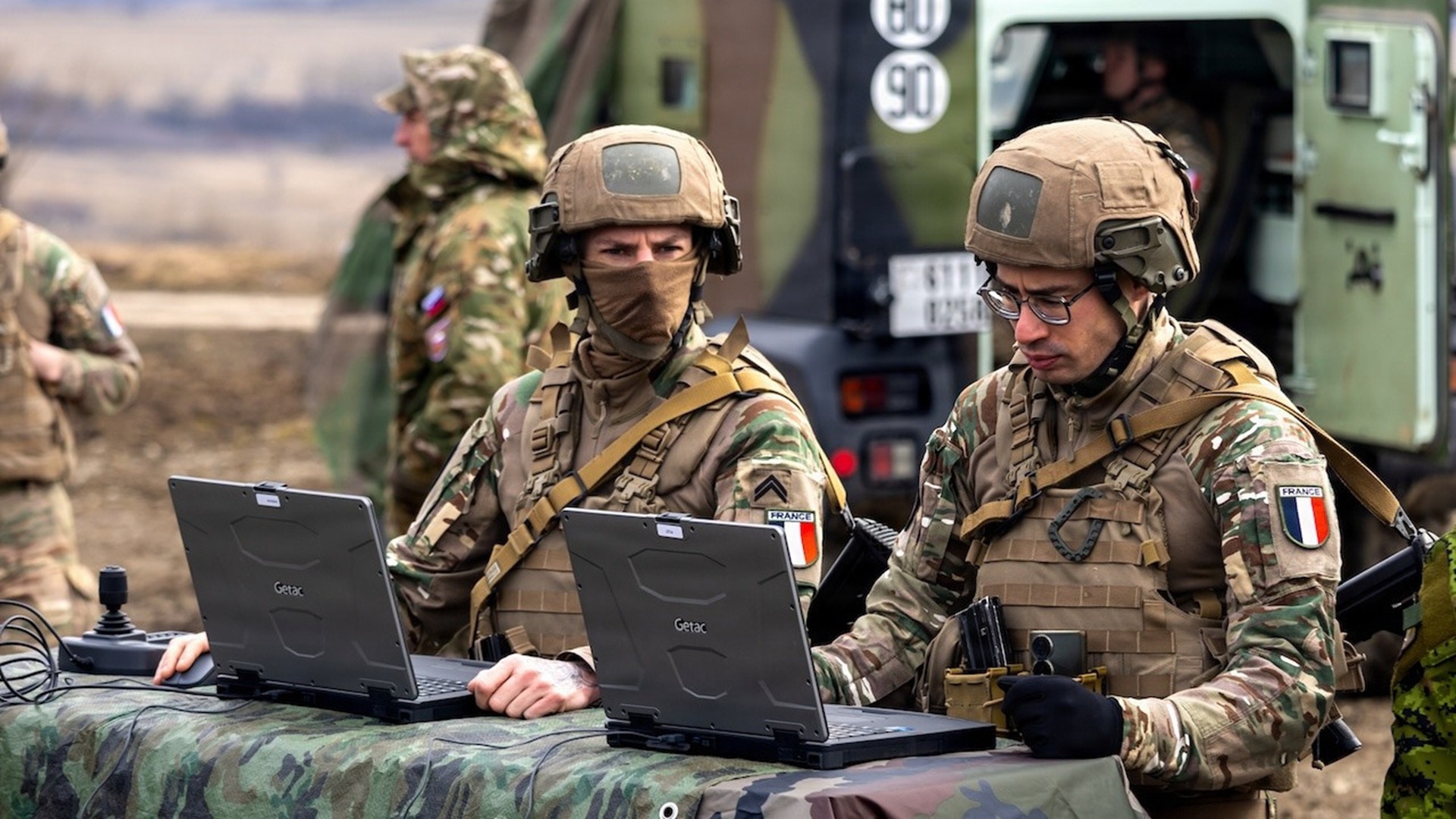
France is advancing plans to develop its own military artificial intelligence (AI) infrastructure, codenamed Arcadia, aiming to reduce its reliance on American defense technology firms—chiefly Palantir Technologies.
Supported by the French Ministry of Armed Forces, the Arcadia initiative forms part of a broader strategy in Paris to safeguard operational autonomy over military data systems. The urgency for such sovereignty has heightened as NATO allies increasingly adopt US-developed AI platforms for critical command-and-control operations.
Why France is building its own military AI platform
The French government’s concerns are both strategic and structural. Palantir’s Gotham and Artificial Intelligence Platform (AIP), which consolidate battlefield data for predictive analysis and decision support, are now central to US military operations and are being actively promoted to European partners.
French defense officials have raised serious concerns about the risks associated with channeling classified operational data through foreign-owned systems, even those operated by close allies. Issues around data sovereignty—specifically, control over access, auditing, and the potential for denial of service—have taken center stage in France’s defense procurement debates.
The French initiative appears to draw a sharper line by opting to develop indigenous capability rather than negotiate data-handling clauses with a foreign vendor.
Technical architecture: What a domestic platform requires
Developing a viable alternative to Palantir’s military solutions is a complex, long-term undertaking. Palantir’s Gotham platform, for instance, integrates structured and unstructured data from a variety of sources—signals intelligence, geospatial inputs, logistics, and human intelligence—into a unified system that allows analysts to query and identify patterns across multiple domains simultaneously.
To replicate this, France needs more than a data fusion engine; the project demands sophisticated ontology management, granular role-based access control, and modular pipelines capable of real-time data ingestion from diverse sensors.
France’s defense procurement agency, the Direction Générale de l’Armement (DGA), is familiar with commissioning sophisticated defense systems. However, developing military-grade AI at this scale requires continuous software iteration—something traditional defense contractors may not be fully equipped to handle.
The French defense technology sector, featuring giants like Thales and Airbus Defence alongside a burgeoning group of dual-use AI startups, is expected to play a central role. Whether the platform will leverage open-source tools or rely on proprietary frameworks remains to be determined.
Interoperability risks with NATO allies
A major technical hurdle is interoperability. If US, UK, and other NATO allies are using Palantir-based platforms during joint missions, a French-developed system built on distinct data ontologies and APIs could complicate integration.
Effective intelligence sharing, collaborative operational planning, and coordinated targeting all rely on seamless data exchange. A sovereign French platform that cannot interface smoothly with allied infrastructure risks introducing new vulnerabilities, even as it addresses concerns about foreign control.
France’s experience with the development of its national military AI strategy suggests the DGA is aware of this tension, but resolving it will require either building compatible APIs from the start or negotiating data-exchange standards with NATO’s C3 architecture bodies — a process that can take years.
Procurement timeline and industrial capacity
No firm delivery timeline has been confirmed publicly, and that ambiguity itself carries operational risk. Military AI platforms require continuous retraining on current threat data, red-team adversarial testing, and integration with live classified networks — all of which take time even after initial software delivery.
Rushing a system to fielding without adequate validation can create the kind of brittle AI behavior that defense analysts warn can lead to catastrophic misclassification in high-tempo scenarios.
The French effort, as reported by Military AI, represents a calculated bet that sovereignty over defense AI infrastructure is worth the cost and delay of domestic development.
Whether Arcadia can match the operational maturity of a system that Palantir has refined through years of real-world deployment in US and allied theaters remains the central unanswered question.
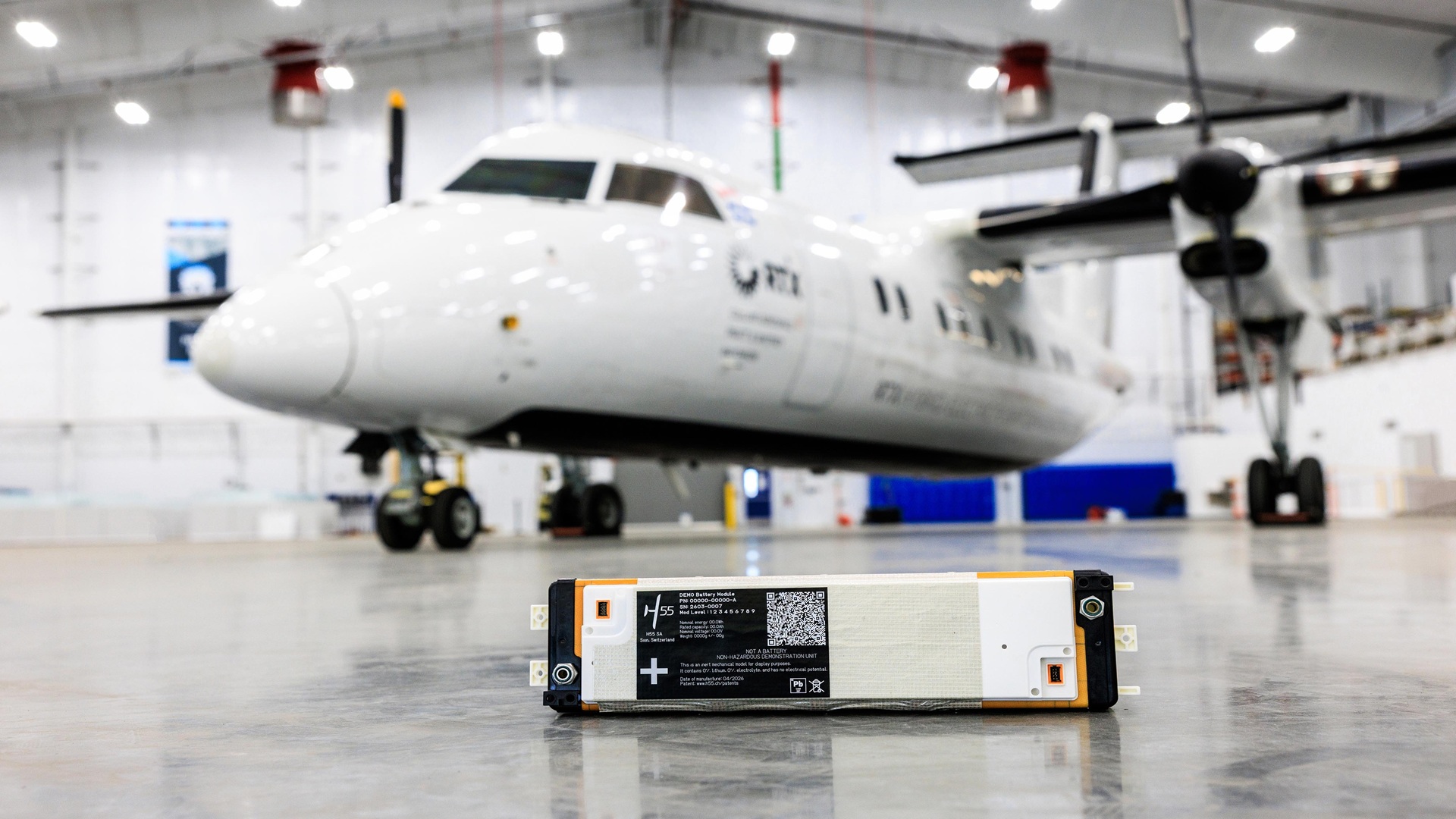
H55 has delivered certification-grade propulsion battery modules to Pratt & Whitney Canada for RTX’s hybrid-electric flight demonstrator program, marking a key step in the integration and flight-testing phase of the project.
The delivery places H55’s battery systems directly into an active aerospace testing environment, where they will support hybrid-electric propulsion trials aimed at improving aircraft efficiency and reducing fuel consumption. The move signals growing maturity in H55’s technology, shifting it further into certified aviation applications rather than prototype development.
Hybrid-electric aviation is now moving beyond concept-stage research into regulated testing and certification pathways. Aircraft manufacturers and engine makers are increasingly relying on suppliers that can meet strict aviation safety standards while also scaling production for real-world deployment.
H55’s modules are designed specifically for this environment. The company focuses on certification-grade energy storage systems that can be integrated into aircraft propulsion architectures and repeatedly deployed across different platforms once approved by regulators.
From lab to flightline
The latest delivery reflects a transition from development work to industrial deployment. According to the companies, the battery modules are now part of a flight demonstrator program led by Pratt & Whitney Canada under RTX.
“H55’s ability to deliver aviation-grade battery systems within a rigorous certification and production framework plays a crucial role in demonstrating hybrid-electric technology in flight.”
The system is intended to support ongoing integration and flight-testing activities, where hybrid-electric propulsion is evaluated under real operating conditions. This includes verifying performance, safety, and reliability in environments that simulate commercial aviation use cases.
H55 says its battery architecture was built for certification requirements from the ground up. The company has also accumulated more than 2,000 flight hours across multiple electric aircraft programs without battery-related incidents, forming a safety record that supports its current aerospace partnerships.
Certification push underway
The delivery also highlights the increasing importance of certification readiness in electric aviation. Unlike early-stage prototypes, systems used in flight demonstrators must already meet regulatory expectations for safety design, testing, and operational reliability.
“This achievement provides a strong foundation for what comes next across hybrid-electric aviation, defence, UAVs and next-generation aerospace platforms.”
The company added that its technology is designed to scale from certified design to repeatable manufacturing, a key requirement for aircraft manufacturers preparing for future commercial deployment of hybrid-electric systems.
The RTX demonstrator program is part of broader efforts across the aviation industry to validate hybrid-electric propulsion technologies that could reduce fuel use and emissions. Battery systems remain one of the most critical components in this transition due to their impact on weight, safety, and performance.
H55’s role in the program places it among a small group of companies supplying certification-focused energy storage systems for aerospace testing programs. The company has also completed regulator-required propulsion battery certification testing, which it says strengthens its position in the emerging electric aviation supply chain.
As hybrid-electric aviation moves closer to commercial adoption, suppliers capable of meeting both regulatory and performance demands are expected to play a central role in shaping next-generation aircraft platforms.

 Login