❌

Reading view

Massive 23,000-pound magnetic core fuels world’s most advanced fusion system revival

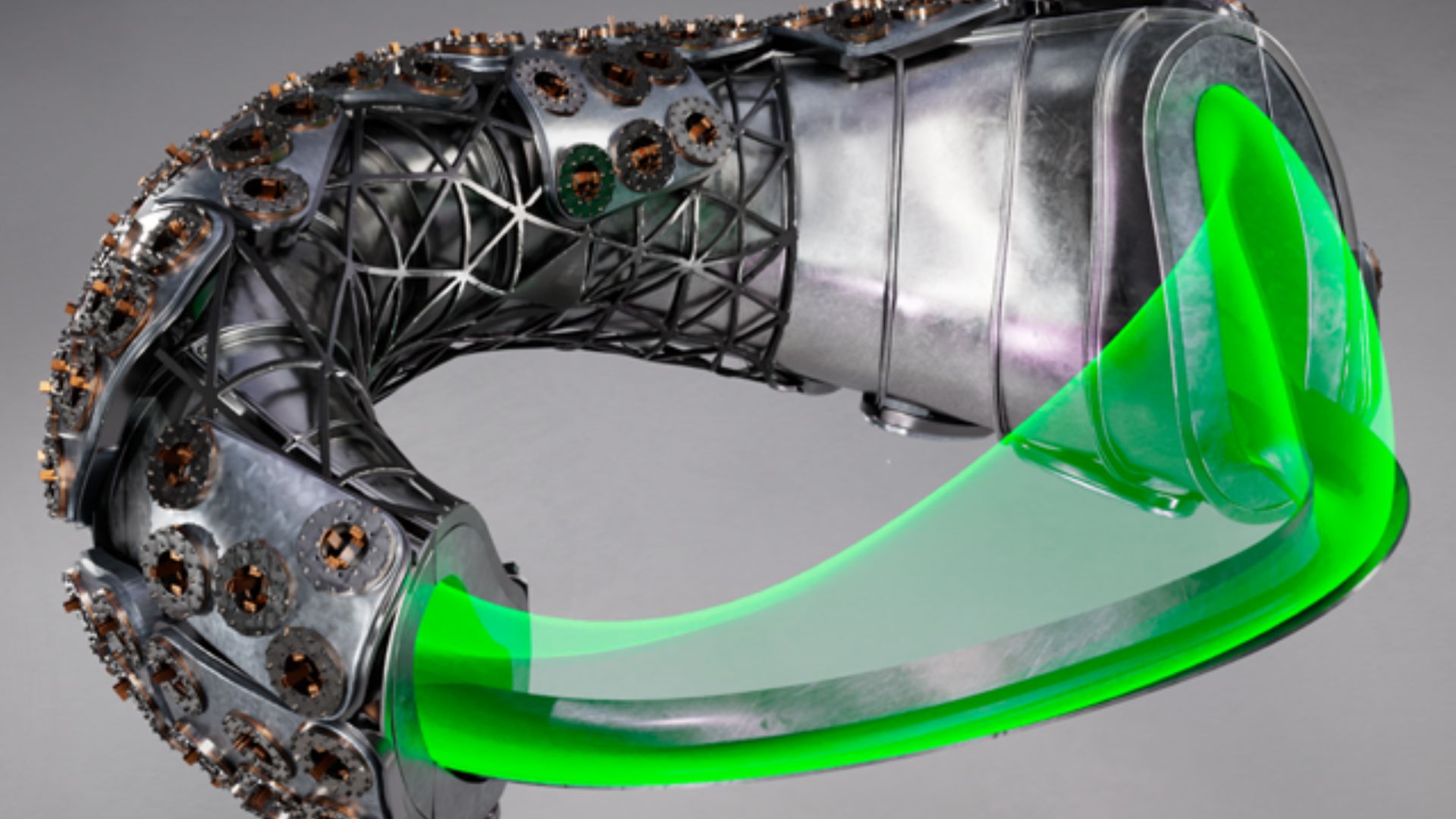
A massive magnet that crossed the Atlantic Ocean has brought one of America’s most ambitious fusion projects a step closer to reality. The U.S. Department of Energy’s Princeton Plasma Physics Laboratory recently received the central magnet bundle for its upgraded spherical tokamak, a compact fusion system designed to test technologies that could shape future power plants.

The delivery marks a critical milestone for the machine’s return to operation. Engineers now enter the final stages of assembly before experiments resume in 2027.

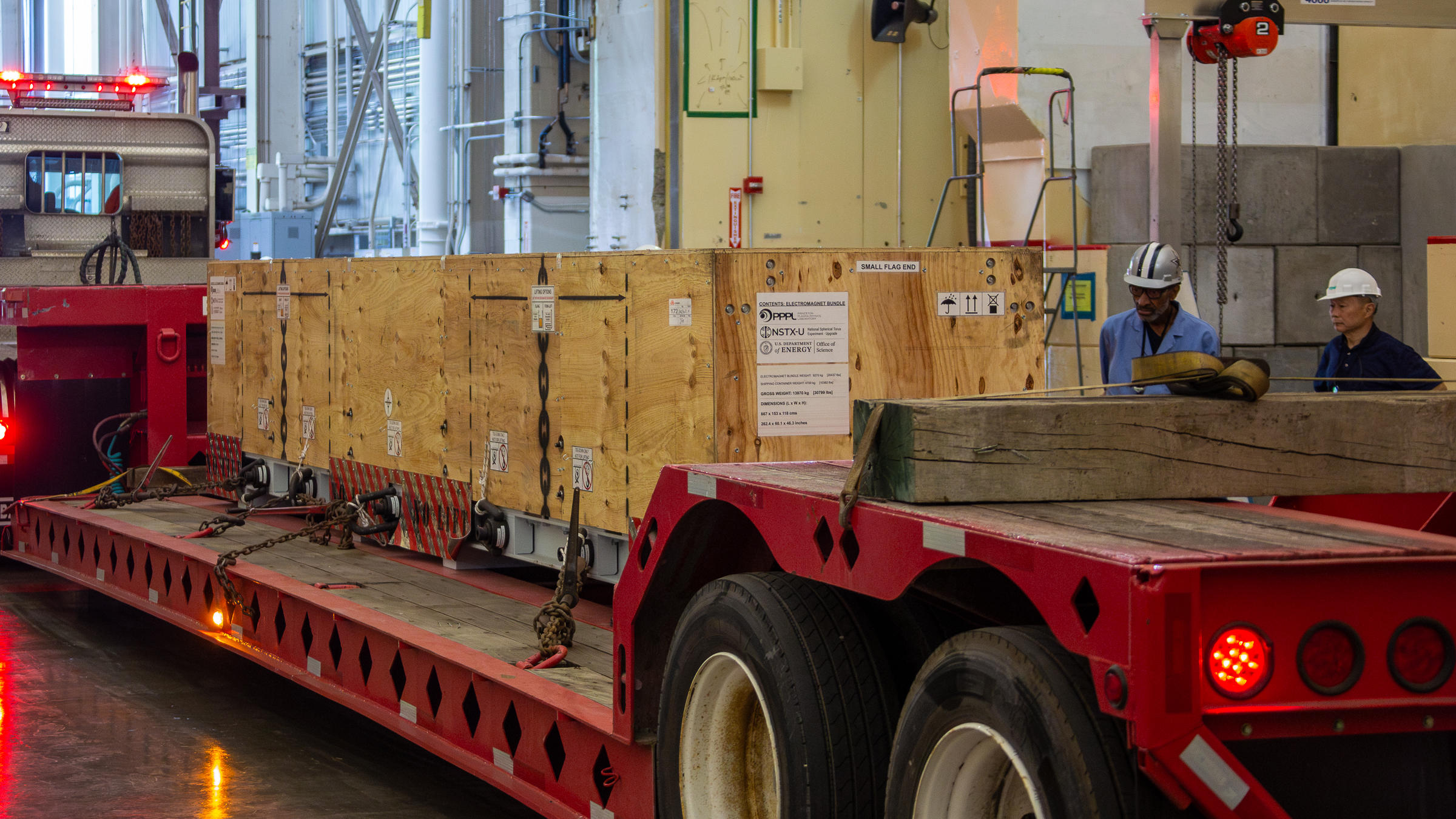
Manufactured by Spain-based Elytt Energy, the component traveled from Bilbao to New Jersey aboard a cargo aircraft before making its final trip by flatbed truck to Princeton. Weighing 23,000 pounds and stretching roughly 20 feet long, the bundle ranks among the most important pieces of the fusion device.

Dave Micheletti, associate laboratory director for engineering and project director, called the arrival “a truly momentous occasion.” He said the team will now focus on completing assembly and preparing the system for scientific use.

Magnetic core

The central bundle combines two critical magnet systems into a single structure. The toroidal field magnets generate the primary magnetic fields that confine the plasma. Meanwhile, the ohmic-heating system drives electrical current through the plasma to raise temperatures and support confinement.
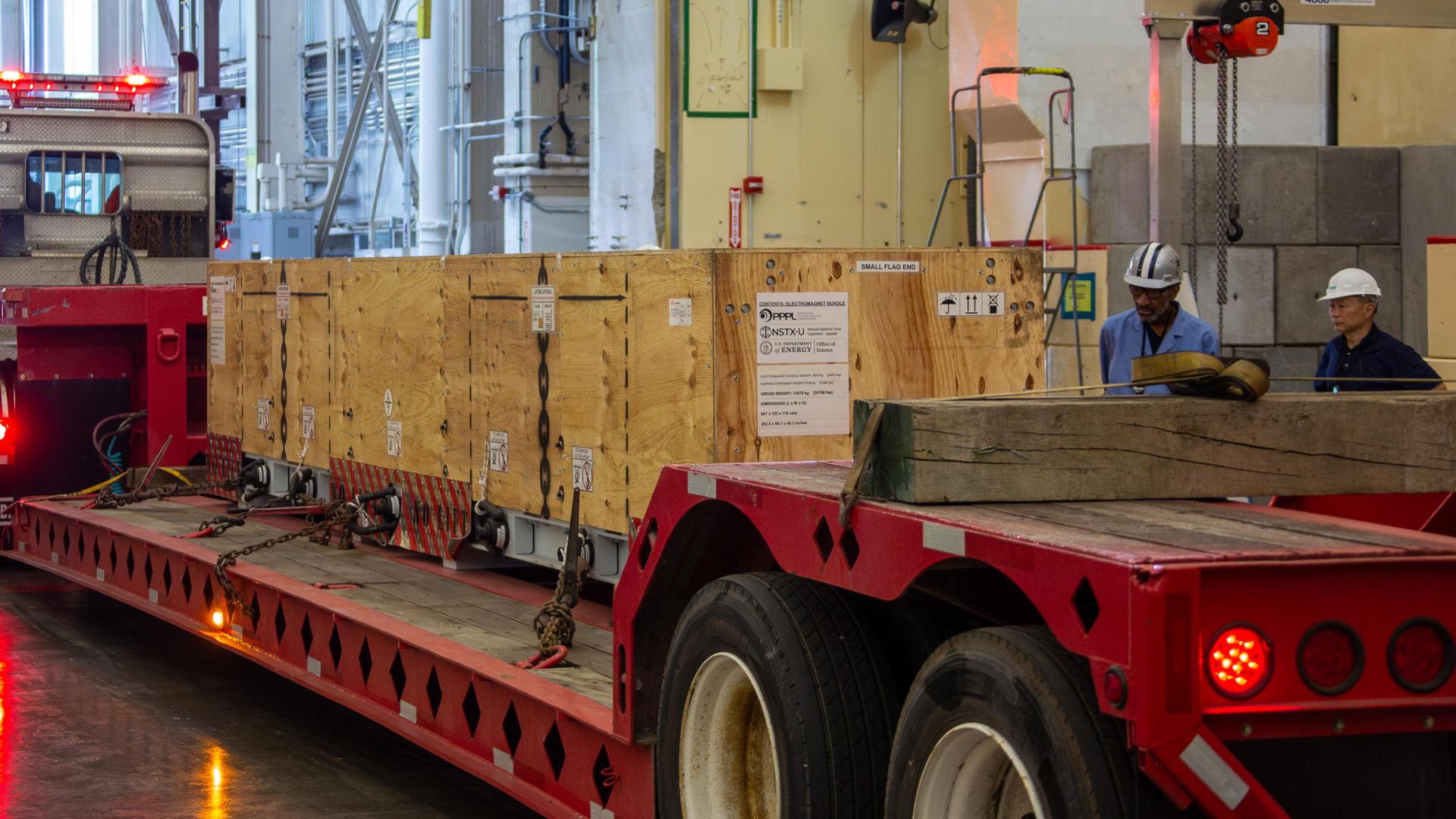
A flatbed truck delivers the magnetic bundle. Credit – Michael Livingston / PPPL Communications Department

Building the assembly required a complex manufacturing process. Technicians joined 36 copper conductors, each measuring 19 feet long, using fiberglass tape, resin, and vacuum-pressure impregnation techniques.

Engineers then wrapped additional copper coils around the structure to create the ohmic-heating system. They sealed the completed assembly with insulating resin to withstand demanding operating conditions.

Once installed, the magnets will create two magnetic field configurations inside the apple-shaped vacuum vessel. Together, they stabilize and heat the plasma needed for fusion experiments.

Testing future reactors

Researchers believe spherical tokamaks could offer advantages over conventional designs. Their compact shape may improve efficiency while reducing construction and replication costs. The upgraded system will help scientists evaluate whether the approach can support future commercial fusion plants.

The machine also supports broader national goals. Researchers plan to gather operational data that could train artificial intelligence tools capable of improving fusion performance and control strategies.

Jonathan Menard, the laboratory’s deputy director for research, said the facility will provide new opportunities for scientists and engineers entering the field. He encouraged researchers worldwide to use the platform to advance fusion science.

Final assembly begins

Engineers have already positioned the magnet bundle near the fusion device using heavy-duty cranes. Over the coming months, teams will rotate the structure upright and prepare it for installation. Workers will lower protective shielding around the assembly before placing it inside the machine’s interior.

Technicians must still connect dozens of flexbus components, cooling lines, and internal systems. They will also complete bakeout procedures and commissioning tests to verify that all systems operate together safely.

Steven Cowley, the laboratory’s director, said the upgraded machine possesses capabilities unavailable elsewhere. He noted that the project could play an important role in determining the future direction of commercial fusion research.

If the remaining work proceeds as planned, the upgraded facility could begin experiments in 2027, giving American researchers a powerful new platform to explore the promise of fusion energy.

💾

The arrival of a 23,000-pound central magnet moves a next-generation fusion device into its final assembly phase.

  •  

Tiny additive helps water-based battery run for 2,800 hours with record capacity

Researchers in South Korea have developed a new electrolyte additive that significantly improves the lifespan and capacity of aqueous batteries, a technology widely viewed as a safer and lower-cost alternative to lithium-ion batteries.

The team, led by Professor Hoseok Park from Sungkyunkwan University (SKKU), found that adding a small amount of a specially designed zwitterionic material to the electrolyte helped overcome key problems that have long limited the commercialization of aqueous battery systems.

Unlike lithium-ion batteries, aqueous batteries use water-based electrolytes, making them less flammable, more environmentally friendly, and potentially cheaper to manufacture. However, their performance has been hindered by unstable zinc deposition and unwanted reactions between zinc electrodes and water during charging and discharging.

These issues can lead to corrosion, uneven metal buildup, and rapid capacity loss, reducing battery life and limiting large-scale deployment.

Tiny additive, big impact

To tackle the problem, the researchers developed a zwitterionic additive known as C10. Zwitterions contain both positive and negative charges within the same molecule, allowing them to interact with surrounding ions in unique ways.

When added to the electrolyte, C10 molecules spontaneously assembled into nanostructures measuring about 3.77 nanometers in diameter. These structures served two functions simultaneously.

First, they guided zinc ions to deposit more evenly across the electrode surface, reducing the formation of irregular zinc structures that can damage batteries. Second, they formed a thin protective layer over the zinc metal, shielding it from direct contact with water and limiting corrosion-causing side reactions.

The combined effect produced substantial performance gains.

Aqueous batteries using the modified electrolyte maintained stable operation for more than 2,800 hours. The cells also achieved an areal capacity of 8.10 mAh cm⁻², which the researchers describe as world-leading performance among aqueous battery systems reported to date.

“We have demonstrated that the performance of aqueous batteries can be substantially enhanced through a simple approach of adding a small amount of material to the electrolyte, without the need for expensive materials or complex fabrication processes.”

Storage systems targeted

Improving both cycle life and storage capacity has been a longstanding challenge for aqueous battery developers. Many previous approaches improved one metric at the expense of the other.

The new electrolyte strategy appears to address both issues simultaneously while avoiding costly manufacturing changes.

The researchers believe the technology could be useful for large-scale energy storage applications, where safety, cost, and durability are critical factors.

“Beyond renewable energy storage, this technology holds potential for application in large-scale energy storage systems (ESS) for AI infrastructure and data centers, which are experiencing explosive growth.”

Demand for energy storage is expected to rise alongside the expansion of renewable power generation and the rapid growth of AI computing infrastructure, both of which require reliable methods to store and distribute electricity.

Because the new approach relies on a simple electrolyte modification rather than redesigning the battery architecture, it may offer a practical path toward improving the commercial viability of aqueous battery systems.

The findings were published in the journal Nano-Micro Letters.

  •  

21,000-sq-foot facility to keep US safe from threat of nuclear proliferation, boost clean energy goals

A new facility in the United States is set to keep the country safe from from the threat of nuclear proliferation. The new state-of-the-art 21,000-square-foot facility, at the Oak Ridge National Laboratory (ORNL), is also aimed at contributing to nuclear energy developments.

The Advanced Testbed and Operations Learning Laboratory (ATOLL) will develop critical workforce expertise and capabilities essential to monitoring foreign weapons-grade uranium production activities. The project is expected to be completed in the summer of 2028.

Initiative to advance energy dominance agenda

“It takes a weapons program to know a weapons program,” said Administrator Williams. “At NNSA, we deter adversaries by being experts in atomic science and weapons production, and the investment in ATOLL strengthens our understanding of both.”

The Department of Energy’s National Nuclear Security Administration (NNSA) has announced that the initiative will also advance President Trump’s energy dominance agenda and his executive orders on nuclear energy by contributing to the growing nuclear infrastructure being built in Tennessee, providing critical expertise that can be leveraged by American industry to revitalize domestic civil nuclear capabilities.

Detection of adversary nuclear programs and capabilities

“Our nation’s nuclear deterrent and the NNSA enterprise that maintains it serve as the foundation of our national defense. My highest priority as Chairman of the House Energy & Water Appropriations Subcommittee is ensuring this nuclear security enterprise is properly resourced,” said Congressman Fleischmann.

“DNN plays an essential defensive role within our deterrence architecture by enabling the detection and attribution of adversary nuclear programs and capabilities. The scientific and technological expertise of our national labs are critical enablers for NNSA’s national security missions.”

Fleischmann also underlined that the Advanced Testbed and Operations Learning Laboratory, being built at ORNL, will provide the cutting edge scientific facilities needed to perform critical nonproliferation missions, as the ability to monitor foreign nuclear production and weapons activities is essential to the country’s national defense and extended deterrence commitments.

“I was honored to participate in the groundbreaking for this important demonstration of these tremendous partnerships advancing U.S. national security,” added Fleischmann.

The project is part of the Nonproliferation Stewardship Program within NNSA’s Office of Defense Nuclear Nonproliferation. The program focuses on maintaining the scientific expertise, technical infrastructure, and specialized facilities necessary to address current and future nuclear security challenges.

As geopolitical tensions and concerns over nuclear proliferation continue to evolve, the development of ATOLL represents a strategic investment in America’s ability to detect, understand, and prevent the misuse of nuclear technology. The facility is expected to serve as a cornerstone of U.S. nonproliferation efforts while fostering innovation and expertise in the broader nuclear field for decades to come.

The new facility is expected to strengthen America’s ability to monitor nuclear activities globally and respond effectively to emerging proliferation risks.

By supporting research, workforce development, and advanced nuclear infrastructure, the laboratory will help reinforce domestic capabilities in both civilian nuclear power and national security applications.


  •  

US firm taps Australian thorium reserves for advanced nuclear reactor fuel

Energy technology firm AMPERA has confirmed that its new modular, supercritical nuclear systems will operate on thorium obtained from Australian suppliers. The raw material will be managed and processed through an internal supply chain established by the business.

“Our strategy is to secure thorium directly at the source and vertically integrate the entire fuel value chain, from mineral supply through advanced fuel production,” said AMPERA Founder and CEO Brian Matthews.

“Thorium offers a compelling combination of abundance, energy potential, economics, and safety, making it an ideal fuel for AMPERA’s advanced microreactors and a promising resource for the broader nuclear industry.”

To manage the import logistics, the business launched an overseas branch named Ampera Australia earlier this year. This expansion builds upon a bilateral critical minerals agreement signed by the United States and Australian governments late last year, which sets guidelines for the extraction and processing of rare-earth elements.

Domestic production strategy

Following the launch of its primary office in Florida this past April, the organization intends to set up a secondary facility within the state dedicated to fuel production.

The manufacturing plant will focus on turning the raw material into tri-structural isotropic (TRISO) fuel kernels. This fabrication process involves proprietary liquid jetting methods and additive manufacturing techniques. The company has filed more than 60 patents and established trade secrets to safeguard these technical designs.

“Thorium is the future for ultra-safe, clean power production,” Matthews added. “By producing TRISO thorium kernels in the United States, we can ensure ample access to the needed fuel supply as we scale up and also minimize price volatility risk.”

Domestic production is intended to shield the company’s manufacturing pipeline from international market shifts. Internalizing the assembly phase ensures that the business maintains a predictable volume of fuel as it expands its hardware assembly lines.

Technical profile of thorium fuel

Using element 90 presents alternative mechanics compared to standard uranium-based nuclear designs. The material is widespread, with crustal reserves measuring approximately three times larger than those of uranium.

When utilized in advanced cycles, it demonstrates a higher fuel utilization rate, which means a larger percentage of the material undergoes fission rather than turning into heavy waste. The material starts out as weakly radioactive and fertile, meaning it must absorb a neutron to become fissile reactor fuel.

Additionally, the chemical byproducts are less suited for weapons production, and the cycle yields a smaller volume of long-lived transuranic elements compared to typical uranium-plutonium processes. 

Documentation from the International Atomic Energy Agency (IAEA) indicates that these fuel cycles could support global electrical infrastructure requirements over a long time horizon.

Generating decades of electricity

The firm’s compact units use a subcritical design that will be permanently enclosed during initial assembly. These modules are intended to generate electricity continuously for three decades without needing a replacement fuel core.

“Through its proprietary TRISO fuel platform, neutron-source technology and advanced additive manufacturing, AMPERA delivers scalable, factory-built, rapidly deployable, emission-free power for data centers, defense, industrial and maritime applications,” concluded the company in a press release.

  •  

New water-based capacitor survives 60,000 charging cycles without degrading

It turns out that pure water can store electricity.

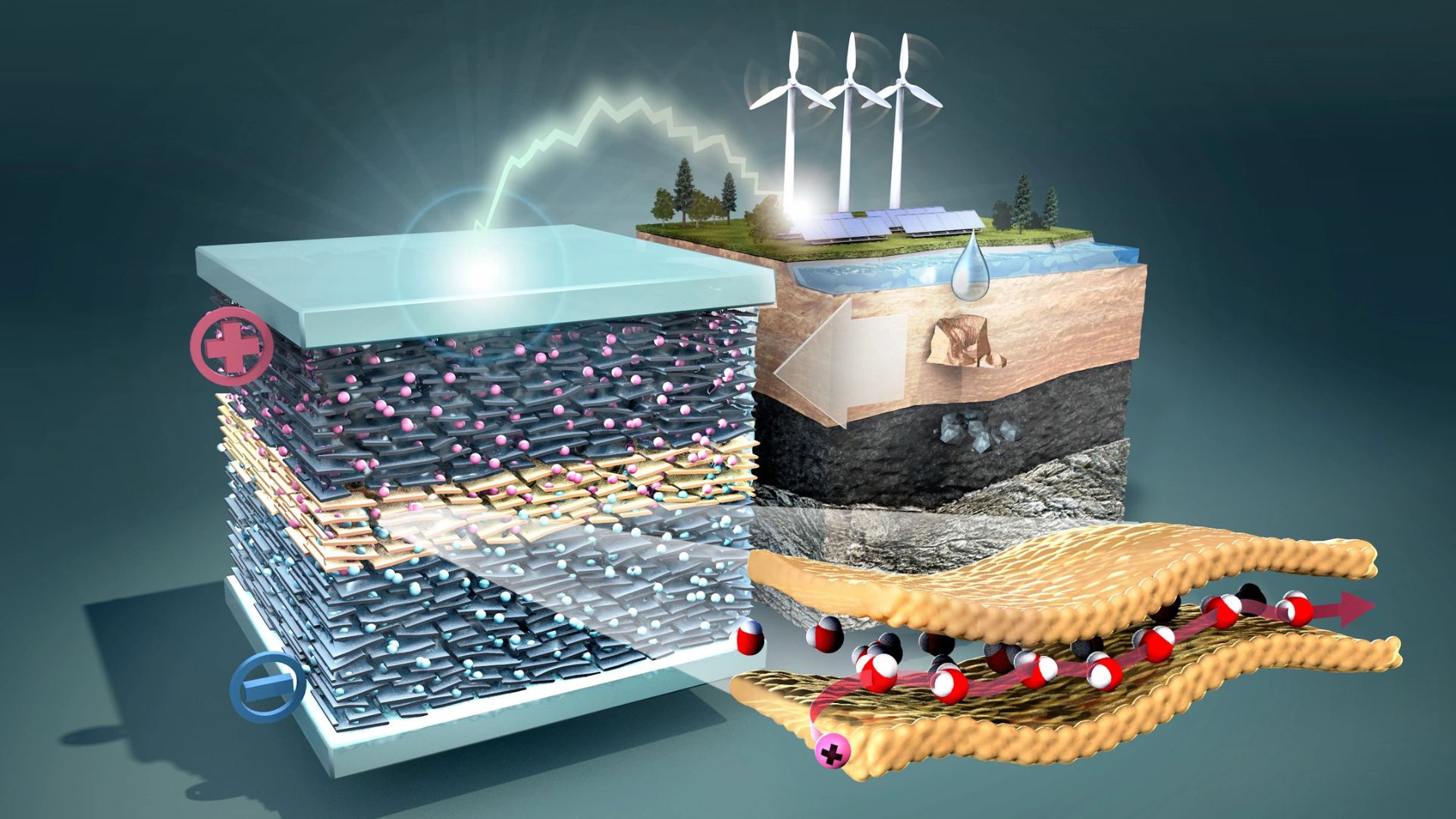
A new study by the Hamburg University of Technology in Germany reveals that trapping water inside nanometer-sized clay channels creates a supercapacitor capable of efficiently storing and moving electrical charge.

In this work, pure water has been used as an electrolyte to carry electrical charge. This system is dubbed the “Blue Capacitor.”

“Our goal is to develop safer and more sustainable energy-storage technologies based on abundant materials rather than complex chemical compounds,” said Dr. Vasily Artemov from the Cluster of Excellence “BlueMat—Water-Driven Materials” at Hamburg University of Technology. 

“The device stores and releases energy efficiently, operates at a comparatively high voltage for a water-based system, and remains stable over tens of thousands of charging cycles,” the lead author added.

Nanometer-sized channels

Pure water is mostly considered a terrible medium for storing power. To conduct electricity, batteries and supercapacitors have always required a chemical cocktail of added salts, acids, or volatile organic solvents. Without them, energy storage simply stalls.

But the research team tried to change this through its functional “Blue Capacitor” technology. It is an energy-storage device made entirely from three of Earth’s most abundant, naturally occurring materials: water, clay, and carbon.

The system has been engineered to confine pure water within microscopic channels, thereby altering the liquid’s fundamental behavior.

The clay minerals were blended with graphene — a highly conductive, ultra-thin form of carbon. When combined, these materials form a dense labyrinth of millions of parallel channels. Each channel measures just one nanometer wide, roughly 100,000 times thinner than a human hair.

“Our results show that nanoconfined water can serve as the active electrolyte in a practical energy-storage device,” noted Artemov.

To actually see this happening, the team had to look more closely than almost anyone has before. They utilized PETRA III at DESY, one of the world’s most powerful particle accelerator research centers. 

“Only with DESY’s brilliant X-ray source PETRA III, were we able to visualize the ultra-thin sheets of individual water films within the clay structures,” said Prof. Patrick Huber, co-author of the paper.

Rigorous testing

The new device is a supercapacitor, a type of energy-storage technology that stores energy by separating electrical charges rather than through chemical reactions. Because of this mechanism, supercapacitors feature rapid charging and discharging capabilities, along with exceptionally long operational lifetimes.

In testing, the proof of concept showed promising results. 

In rigorous laboratory testing, the Blue Capacitor survived more than 60,000 charge-discharge cycles without degrading. Furthermore, it operated at up to 1.6 volts. 

That is an exceptionally high voltage threshold for any water-based system, which typically breaks down into hydrogen and oxygen gases at much lower voltages.

While commercial applications are still years away, the implications of a non-toxic, un-burnable capacitor are massive.

It offers a promising path for future energy storage. Potential applications include managing renewable energy from solar and wind power, stabilizing electrical grids, and powering devices that need rapid, frequent charging cycles.

According to researcher Artemov, understanding the unexpected nanoscale properties of a familiar substance opens the door to the development of entirely new technological applications. 

Beyond green power, the discovery opens the door for water-based nanoscale sensors and bio-inspired computing.

The findings were published in the journal Nature Communications.

💾

A new study by the Hamburg University of Technology reveals that trapping water inside nanometer-sized clay channels creates a supercapacitor capable of efficiently storing and moving electrical charge.
  •  

US nuclear fusion firm shifts stellarator complexity to software using flat magnetic coils

Thea Energy will develop a virtual model of its planned fusion power plant using software engineering and computation tools. The enterprise aims to replicate its upcoming “Helios” facility as a digital twin, which allows engineers to simulate the plant’s operational variables before construction begins.

To execute this project, the firm is working with technology companies NVIDIA and Synopsys, alongside two federal entities: Argonne National Laboratory and Princeton Plasma Physics Laboratory.

The initiative connects to the US Department of Energy’s Genesis Mission, an agency program that applies data analytics to accelerate projects outlined in the national Fusion Science and Technology Roadmap. 

By simulating physical systems through software, the team expects to lower the capital requirements typically needed for hardware-based exploratory testing. The engineering timeline targets the delivery of grid-ready baseload electricity by 2035.

Distribution of technical responsibilities

The participating organizations provide distinct computational and physical datasets to build the overarching virtual architecture.

NVIDIA provides its Omniverse computing infrastructure to ingest Thea Energy’s baseline code. This framework allows engineers to view three-dimensional operational data and track potential design adjustments simultaneously.

Synopsys is responsible for integrating structural data into a multiphysics software environment. Its primary objective is to analyze the performance of the plant’s breeding blanket, a component that absorbs thermal energy from the fusion core and provides a radiation barrier for the surrounding magnetic systems.

Argonne National Laboratory delivers specialized data on particle interactions and neutronics. By feeding this data into the virtual model, the lab helps train software algorithms to predict how the physical blanket components will handle high-energy particle bombardment.

Princeton Plasma Physics Laboratory supplies numerical codes that map plasma behavior. These calculations provide the digital twin with the rules necessary to model highly turbulent ionized gases under elevated temperature and pressure conditions.

Mechanical design shift

Traditional stellarators require complex, curved three-dimensional magnetic coils to contain plasma. Thea Energy alters this approach by utilizing flat, repeatable planar magnetic coils arranged in a specific geometry. 

Because flat magnets are easier to manufacture, the physical complexity of plasma containment is transferred to computer software.

The control software regulates the magnetic fields dynamically. This configuration permits the system to adjust for physical deformation or material degradation during continuous operations without requiring manual mechanical interventions.

Development sequence

The road map for deployment consists of two primary hardware systems. The initial system, named Eos, serves as a large-scale prototype designed to achieve steady-state fusion and test structural integrity under real operational loads.

Following the validation of the prototype, the company will build the Helios facility, which will operate as a commercial power station in the 2030s. The digital twin framework is designed to function as an active feedback loop between these two systems. 

Engineers will apply data derived from the virtual Helios model to optimize the engineering components of the Eos prototype during its active testing phases.

  •  

Cornell’s electrochemical ‘bath’ restores spent lithium EV batteries to 95% power

The life cycle of an electric vehicle battery has been a violent, one-way street. When a battery dies, the industry routinely tears it apart to access the parts that matter. High-tech recyclers either blast the dead cells in extreme-heat furnaces or grind them into a powdery substance known as “black mass” before drenching them in harsh, corrosive acids.

It is an expensive, carbon-intensive, and messy way to extract scarce minerals like nickel and cobalt. But what if you didn’t have to destroy a dead battery just to rebuild it?

Researchers at Cornell University have developed a way to overcome the destruction altogether. Rather than smashing the battery, the method turns to chemical washing. 

In this, intact components were immersed in a specialized electrochemical bath to restore 95 percent of the dead batteries. Plus, this method could cut recycling manufacturing costs by 56 percent.

“We repair them, as is, without shredding or powdering them, and then put them back into a new battery,” said Vibha Kalra, the Fred H. Rhodes Professor of Chemical Engineering in the Cornell Duffield College of Engineering. 

“The dissolution is basically what helps the battery recover its capacity. It shows 95 percent recovery. So we are shortening the circularity loop immensely,” added Kalra. 

Cost-saving battery fix

To understand how it works, look at what actually happens when a battery dies.

Batteries don’t usually run out of minerals. But, as electricity flows back and forth between the positive and negative sides, a thick, crusty layer of gunk gradually builds up inside the cell.

Engineers call this the solid electrolyte interphase. The materials are all still there, but the energy can no longer flow. Standard recycling destroys the whole part just to clean it. 

Cornell’s method, called Direct Electrode-to-Electrode Regeneration (DEER), is far gentler. 

Workers open the casing and pull out the battery’s core parts — the electrodes — while these are still completely intact. Then the parts are submerged into a chemical solution called 1,3-dimethyl-2-imidazolidinone. The liquid targets the gunk. It dissolves the insulating buildup, leaving the delicate internal structures perfectly preserved. 

The process cuts down air pollution and slashes industrial water consumption.

The growing demand

At this moment, the world is grappling with disruptions to global supply chains for essential battery ingredients. The United States currently possesses very few domestic reserves of the critical minerals required to build modern batteries.

US depends mostly on complex, foreign supply chains to import materials. It also lacks the massive infrastructure needed to refine raw materials or rebuild crushed battery powder from scratch; domestic recycling has lagged.

“When these lithium-ion batteries came about, nobody was thinking about how these minerals are limited on the Earth’s crust, and you cannot make them forever,” Kalra said. “In recent years, people are realizing you can’t just keep making batteries, because you don’t have enough material.”

By keeping the battery components intact, the DEER method eliminates the need for expensive, overseas refabrication. It allows the entire recycling process to happen locally, cheaply, and quickly. 

The research team’s next step is to test the DEER method on larger, industrial-scale batteries and adapt the process to combat other forms of wear, such as permanent lithium loss. 

Currently, the technique successfully treats batteries at a 70-80 percent state of health — the typical retirement threshold for electric vehicles. But researchers believe they can widen this recovery window by targeting these additional degradation mechanisms.

The study findings were published in the journal Energy and Environmental Science on June 9. 

💾

Cornell University researchers have developed a new, highly efficient, and cost-effective method to recycle spent lithium-ion batteries.
  •  

Rare African Bird Makes Historic UK Debut While Communities Transform Lawns Into Wildlife Havens — Today’s Environmental Briefing for Wed, Jun 10 2026

Rare African bird species perched in British countryside landscape with birdwatchers observing in background

Across the stories today, a common thread emerges: the growing gap between urgent environmental realities and the systems—political, economic, and social—struggling to keep pace with change.

This tension plays out most starkly in the realm of climate health impacts. New research warns that heat-related hospitalizations could double by 2040, while a super El Niño threatens to deepen global economic inequality through cascading climate disruptions. Behind the numbers are real communities adapting in real time. In Pacoima, a working-class Los Angeles neighborhood sandwiched between highways and heavy industry, residents like Jose Luis Salas are mounting their own defense against air pollution, installing shoebox-sized monitoring devices that track what they breathe daily.

Yet the day’s coverage also points to growing momentum around practical solutions gaining real traction. Solar energy quietly surpassed coal in U.S. electricity generation for the first time this May—a milestone that arrived not through grand announcements but through the steady accumulation of rooftop panels and utility-scale installations. Britain cleared a major bottleneck by offering grid connections to over 700 clean energy projects, while new data reveals the country’s green economy now employs over one million workers across a £100 billion sector.

The stories reveal how environmental challenges are increasingly driving innovation at the community level. In Guatemala’s Western Highlands, approximately 60 communities are reviving ancient Maya agricultural wisdom, creating homemade biopesticides from aromatic plants to replace expensive chemical alternatives. Similarly, 120 women farmers in Malawi’s Chiradzulu district have transformed traditional maize cultivation by adding organic fruits and vegetables now in high demand from urban buyers—though their success is shadowed by a troubling reality: their bees, crucial pollinators for food security, are mysteriously disappearing.

It’s a reminder that progress and pressure often arrive together. Colombia enacted groundbreaking legislation requiring detailed cattle tracking to prevent deforestation-linked beef from reaching markets, while Indonesia’s magnificent hornbills face accelerating threats from both habitat loss and an illegal online pet trade. The contrast illustrates how conservation gains in one area can be undermined by emerging threats in another.

Perhaps most telling is how wealth continues to complicate climate action. New research from Greenpeace reveals that the ultra-rich drive a quarter of global emissions not through private jets—their visible symbols of excess—but through their investment portfolios and asset ownership. Meanwhile, chemical companies are quietly pushing “immunity laws” across 15 states to shield themselves from health-related lawsuits, even as communities bear the costs of environmental damage.

The space program offers its own metaphor for these broader tensions. NASA’s latest astronaut selections for Artemis missions reflect both ambition and limitation—crews training for missions that won’t reach the Moon, while hundreds of women gathered at the AeroWomen conference to prepare for space careers in an industry still taking shape.

As the week unfolds, all eyes will be on whether these parallel tracks—accelerating environmental pressures and emerging solutions—can converge into the systemic changes scientists say are necessary. Today’s stories suggest we’re living through a period when local innovation and global challenges are both intensifying, creating opportunities for breakthrough and breakdown in equal measure.

The post Rare African Bird Makes Historic UK Debut While Communities Transform Lawns Into Wildlife Havens — Today’s Environmental Briefing for Wed, Jun 10 2026 first appeared on EnviroLink Network.

  •  

The rightwing campaign to control how US judges view the climate crisis

US energy secretary Chris Wright featured in seminars to judges when he was a fracking executive

As cities and states sue big oil for billions in damages over allegations that it covered up the dangers of its products, rightwing organizations are attempting to discredit the wave of litigation. They claim the lawyers behind it are teaming up with an environmentally focused legal education non-profit to bias federal judges against oil companies.

But it is actually fossil fuel-backed organizations that are attempting to sway the judiciary in their favor, one of those law firms is countering. Evidence of this includes judicial seminars hosted by one such group featuring pro-industry speakers such as the current energy secretary, Chris Wright, in his former occupation as a fracking executive.

Continue reading...

© Composite: Reuters

© Composite: Reuters

© Composite: Reuters

  •  

A Universe Without Dark Energy? Mathematicians Challenge Standard Cosmology

Dark Matter Particles Astrophysics ConceptNew mathematical research suggests dark energy may not be needed to explain the accelerating expansion of the universe, challenging the foundations of the standard cosmological model. Mathematicians are questioning whether dark energy is actually responsible for the universe’s accelerating expansion. In a new study published in Proceedings of the Royal Society A, researchers at the [...]
  •  

A question for Nigel Farage – why is your nationalist party so obsessed with destroying British jobs? | George Monbiot

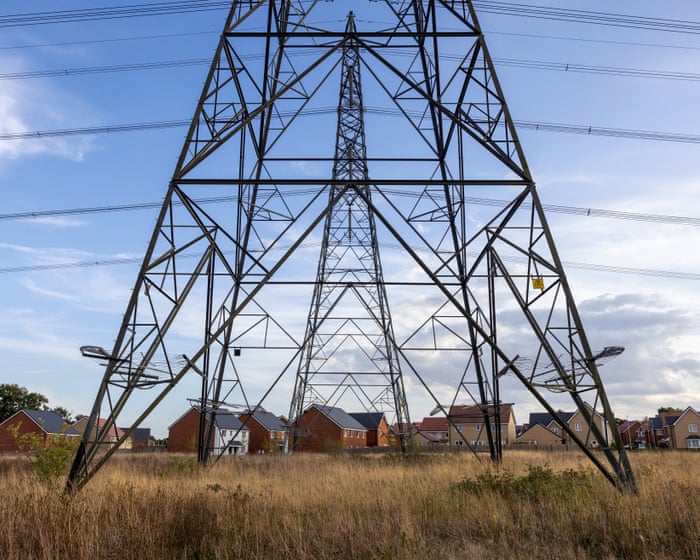
The net zero economy is booming, so claims that prosperity depends on oil and gas are bunkum – unless you’re a Reform backer with fossil fuel interests, of course

Really? You want to destroy a million jobs? Vote Reform UK for mass unemployment: is that your pitch? Hammer these questions home whenever you meet a supporter of the party. Or, for that matter, a Conservative, as their party now takes an almost identical line.

The figures are stark. They were compiled not by Just Stop Oil or the Green party, but by that bastion of conservatism, the Confederation of British Industry. They show that the net zero economy now directly employs more than 300,000 full-time workers, while supporting the jobs of 1.1 million. The net zero sector is worth £100bn to the UK already, and is likely to grow by hundreds of billions more. The rest of the green economy directly employs a further 600,000.

Continue reading...

© Photograph: Tolga Akmen/EPA

© Photograph: Tolga Akmen/EPA

© Photograph: Tolga Akmen/EPA

  •  

More than half of clean energy schemes needed for Labour’s 2030 target offered grid connection

The 700 projects include wind and solar farms, battery storage, gas and hydro plans

More than half the renewable energy projects needed to meet the government’s clean power targets by 2030 are now able to plug into the electricity grid after years of delay, according to the system operator.

The National Energy System Operator (Neso) has offered more than 700 clean energy projects in Great Britain a grid connection date since the start of the year, after a two-year process to unblock a bottleneck that threatened to delay projects into the 2030s.

Continue reading...

© Photograph: Murdo MacLeod/The Guardian

© Photograph: Murdo MacLeod/The Guardian

© Photograph: Murdo MacLeod/The Guardian

  •  

Households could save £200 on energy bills in plan to break link between gas and electricity prices, says thinktank

Government plan to de-link gas and electricity prices aims to reduce bills for consumers after global surge in prices

Households in England, Scotland and Wales could save nearly £200 a year on their energy bills if the government stepped into the market to act as the sole buyer of electricity, according to a thinktank.

The research found that public procurement of electricity, meaning the government would become the “single buyer” of power before it is resold to consumers, could shave billions of pounds from electricity prices.

Continue reading...

© Photograph: Bloomberg/Getty Images

© Photograph: Bloomberg/Getty Images

© Photograph: Bloomberg/Getty Images

  •  

Commonwealth Fusion makes the physics case for its 400 MW reactor

The scientific community has a plan for achieving fusion power. It involves getting a better understanding of how to control fusion in a tokamak-style reactor using the currently under construction ITER reactor, and then using that knowledge to build DEMO-style plants. But ITER isn't even expected to see hot plasmas until the middle of the 2030s, by which point solar panels will be so cheap that we'll probably all be getting them free in our cereal boxes.

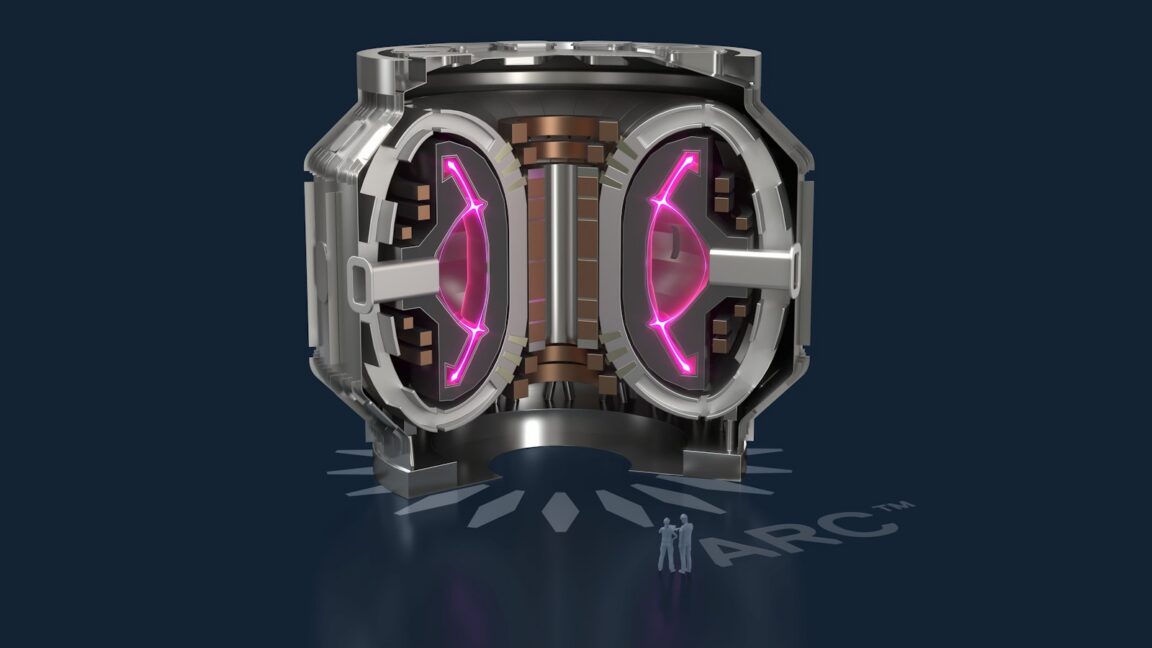
Commonwealth Fusion is a startup that's basically asking "what if we did that, but now?" Its ITER equivalent, a tokamak called SPARC, is over 70 percent complete and is planned to be operating as soon as next year. The company already has a site and customers for the power-generating follow-on, called ARC. Both of those projects are predicated on using high-temperature superconductors to generate an extremely powerful magnetic field that will allow the company to build a smaller reactor, and thus get things done faster.

Years of running plasmas through tokamaks has given us confidence that the basics of these plans are sound. But there are lots of potential devils in the details (otherwise there'd be little need for experimental reactors). So Commonwealth's scientists, in collaboration with the academic community, have recently released five peer-reviewed papers that detail its plans for ARC: what our best models tell us now, and what we'll still need to learn from SPARC to finalize the design of a production fusion plant.

Read full article

Comments

© Commonwealth Fusion

  •  
❌