
❌

Reading view

AAS Meeting 248, June 2026

The 248th Meeting of the American Astronomical Society

Location

Pasadena, California

Dates

14-18 June 2026

Community

Physics of the Cosmos

Type

Meeting

AAS Meeting 248

Joint AAS with HEAD and Laboratory Astrophysics Divisions Meeting

14-18 June 2026 at the Pasadena Convention Center

The meeting will be jam-packed with great scientific content and provide ample opportunity for networking with friends and colleagues.

Meeting Overview about Joint AAS with HEAD and Laboratory Astrophysics Divisions Meeting
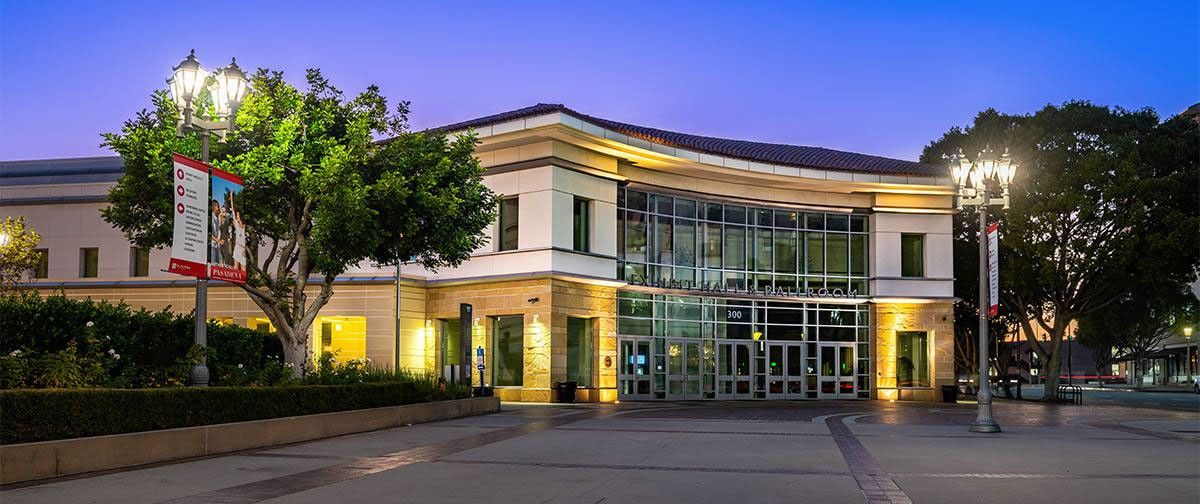
Pasadena Convention Center

The 248th AAS meeting (joint with HEAD and Laboratory Astrophysics Divisions) will be held 14-18 June in Pasadena, California.

Join us in the exhibit hall at the NASA booth and attend the NASA sessions.

Monday, 15 June 2026

TimeSessionLocation
10:00am ‑ 11:30am PTNASA’s Future Large Gamma Ray (FLAG) Mission Concepts Working GroupPasadena Convention Center ‑  
Conference Center, 204
SummaryThe Future Large Gamma-ray Mission Concepts working group will hold a hybrid work session to review progress and needed inputs for a technical report on gamma-ray instrumentation. Working group members will present updates and lead discussions to complete gathering of input on gamma-ray capabilities, mission concepts, and technologies. The group will work on identifying and filling gaps in the draft and refining the content of the report.

Wednesday, 17 June 2026

TimeSessionLocation
11:40am ‑ 1:10pm XR SIG Special Session
HEAD: Toward the 2030 Decadal: Science Cases for Potential Future X-ray Mission Concepts
Pasadena Convention Center ‑ 
Conference Center, 211

XR SIG Special Session Agenda

TimeTopicSpeakerPresentation
11:40am ‑ 11:50amIntroductionDave Pooley, Trinity University
Breanna Binder, Cal Poly Pomona
11:50am ‑ 11:56amHigh Angular Resolution X-ray Imager SAG: Updates & Results IKimberly Weaver, NASA/GSFC
11:56am ‑ 12:03pmHigh Angular Resolution X-ray Imager SAG: Updates & Results IIScott Randall, CfA
12:03pm ‑ 12:10pmHigh Angular Resolution X-ray Imager SAG: Updates & Results IIIHerman Marshall, MIT
12:10pm ‑ 12:20pmLynx 2030 SAG: Updates & Results ISteven Ehlert, NASA/MSFC
12:20pm ‑ 12:30pmLynx 2030 SAG: Updates & Results IIFabio Pacucci, CfA
12:30pm ‑ 12:36pmBroad-Band X-ray Observatory SAG: Updates & Results IChien‑Ting Chen, USRA/NASA MSFC
12:36pm ‑ 12:43pmBroad-Band X-ray Observatory SAG: Updates & Results IIKristin Madsen, NASA/GSFC
12:43pm ‑ 12:50pmBroad-Band X-ray Observatory SAG: Updates & Results IIDaniel Stern, JPL
12:50pm ‑ 1:10pmX-ray Timing SAG: Updates & ResultsThomas Maccarone, Texas Tech

Thursday, 18 June 2026

TimeSessionLocation
10:00am ‑ 11:30amSpecial Session: Planning for the Future of Astrophysics and the ASTRA Initiative Pasadena Convention Center ‑ 
Ballroom G

ASTRA Initiative Special Session

TimeTopicSpeakerPresentation
10:00am ‑ 10:10amIntroduction from the NASA Astrophysics Division DirectorShawn Domagal‑Goldman
10:10am ‑ 10:25amThe ASTRA Initiative: Overview & Path ForwardJessica Gaskin, NASA HQ
10:25am ‑ 10:40amInnovation for Astrophysics Workshop: Initial FindingsKendra Short, JPL
10:40am ‑ 10:55amAd ASTRA Community Science WorkshopPeter Kurczynski, NASA/GSFC
10:55am ‑ 11:30amPanel DiscussionFrancesca Civano, NASA/GSFC

DaySession TitleTimeLocations
Sunday, 14 JuneHigh Energy Science Analysis with HEASARC Services10:00a ‑ 12:00nConference Center 102
An Introduction to Fornax: Scalable Data and Compute for Scientific Analysis2:00p ‑ 4:00pConference Center 101
Monday, 15 JuneNASA Update Town Hall12:45p ‑ 1:45pBallroom DE
115 – HEAD: NuSTAR and the future of hard X-ray observations2:00p ‑ 3:30pConference Center 211
118 – Gamma-ray Astrophysics from Fermi to the Future2:00p ‑ 3:30pBallroom F
NSF NOIRLab Open House6:15p ‑ 8:15pConference Center 106
Tuesday, 16 June201 – Warner Plenary Lecture: Kyle Kremer, Globular Clusters: Astronomical factories of gravitational-wave and electromagnetic transients8:00a ‑ 9:00aBallroom DE
NASA’s Big Science, Small Missions1:00a ‑ 11:30aConference Center 204
212 – HEAD Early Career: Carolyn Kierans11:40a ‑ 12:30pBallroom DE
National Science Foundation Update Town Hall12:45p ‑ 1:45pBallroom A
221 – HEAD: Exploring the MeV Gamma-ray Sky with COSI3:40p ‑ 5:10pConference Center 212
222 – HEAD: NewAthena: The Next X-ray Flagship3:40p ‑ 5:10pConference Center 211
Wednesday, 17 June313 – Time Domain and Multi-messenger Astrophysics10:00a ‑ 11:30aConference Center 211
The NASA Astrophysics ROSES Program11:00a ‑ 12:00nConference Center 204
323 – Stellar/Compact Objects 2: HMXBs and Pulsar Phenomena2:00p ‑ 3:30pConference Center 211
325 – HEAD: Chandra: Today and Tomorrow3:40p ‑ 5:10pConference Center 212
Thursday, 18 June401 – Planning for the Future of Astrophysics and the ASTRA Initiative10a ‑ 11:30aBallroom G
402 – Gravitational-Wave Astronomy in the Next-Generation Era10a ‑ 11:30aBallroom F
403 – High Energy Astrophysics10a ‑ 10:40aBallroom C

News Straight to Your Inbox

Subscribe to your community email news list

We will never share your email address.
Privacy Policy

Sign Up
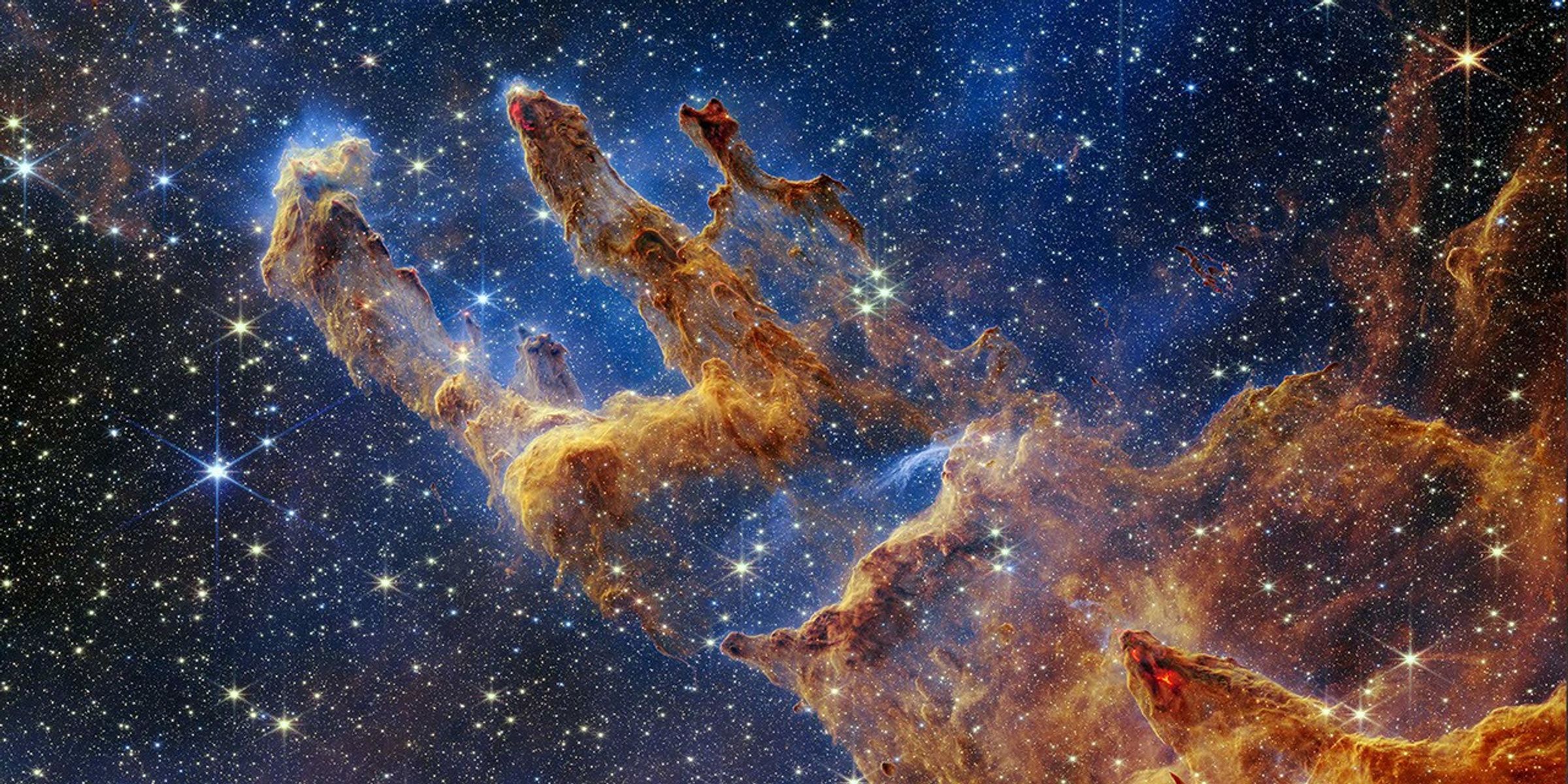
This cropped horizontal image has layers of semi-opaque rusty red colored gas and dust that starts at the bottom right and goes toward the top left. There are three prominent pillars rising toward the top left. The left pillar is the largest and widest. The peaks of the second and third pillars are set off in darker shades of brown and have red outlines.

The post AAS Meeting 248, June 2026 appeared first on NASA Science.
  •  

Fornax Initiative at AAS 248, June 2026

Fornax Initiative at the 248th AAS Meeting

The meeting will be jam-packed with great scientific content and provide ample opportunity for networking with friends and colleagues.

AAS 248 Workshops about Fornax Initiative at the 248th AAS Meeting

Location

Pasadena, California

Dates

14-18 June 2026

Community

Fornax Initiative

Type

Meeting

Sunday, 14 June 2026

Fornax Workshop

TimeSessionLocation
2:00pm ‑ 4:00pmAn Introduction to Fornax: Scalable Data and Compute for Scientific AnalysisPasadena Convention Center – Conference Center, 101

Related Workshops

TimeSessionLocation
10:00am ‑ 12:00pmHigh Energy Science Analysis with HEASARC ServicesPasadena Convention Center – Conference Center, 102
10:00am ‑ 11:30amEuclid Data in the Cloud: Access, Analysis, and Science OpportunitiesPasadena Convention Center – Conference Center, 101

Wednesday, 17 June 2026

TimeSessionTitleSpeakerLocation
10:00am ‑ 11:30amSimulated Universes for Precision CosmologyAccessing and Analyzing OpenUniverse 2024 Simulations through IRSA and FornaxVandana DesaiPasadena Convention Center – Exhibit Halls & Ballrooms, Ballroom F

Thursday, 18 June 2026

TimeSessionTitleSpeakerLocation
2:00pm ‑ 3:30pm40 Years of Community Engagement at IPAC: Lessons LearnedBuilding User Support for Fornax: Community Engagement for Cloud-Based AstrophysicsVandana DesaiPasadena Convention Center – Exhibit Halls & Ballrooms, Ballroom

Related Sessions of Interest

DateSession TitleTimeLocation
Monday, 15 JuneNASA’s Future Large Gamma-ray Mission Concepts Working Group10:00am ‑ 11:30amPasadena Convention Center ‑ Conference Center, 204
Tuesday, 16 JuneNASA’s Big Science, Small Missions10:00am ‑ 11:30amPasadena Convention Center ‑ Conference Center, 204
American Astronomical Society

The 248th Meeting of the AAS

The 248th AAS meeting (joint with the High Energy Astrophysics and the Laboratory Astrophysics Divisions) will be held 14-18 June 2026 in Pasadena, California.

Learn More
Black line art with letters on a white background
American Astronomical Society (AAS)

The Fornax Initiative

NASA Astrophysics is developing the Fornax Initiative, a cloud-based system that brings together data, software, and computing so that researchers can focus on science.

Learn More about The Fornax Initiative
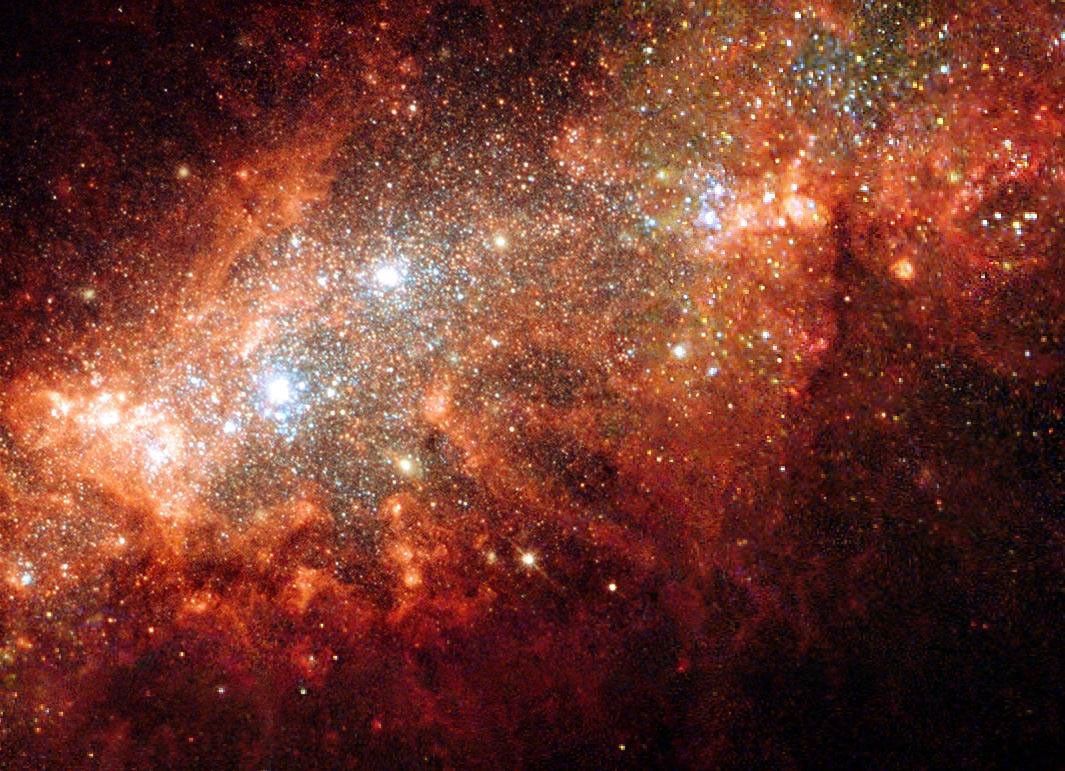
The nearby dwarf galaxy NGC 1569 is a hotbed of vigorous star birth activity, which blows huge bubbles that riddle the galaxy's main body. The image was taken by the WPF2 camera, designed and built by JPL, on NASA's Hubble.

News Straight to Your Inbox

Subscribe to your community email news list

We will never share your email address.

Privacy Policy

Sign Up
This cropped horizontal image has layers of semi-opaque rusty red colored gas and dust that starts at the bottom right and goes toward the top left. There are three prominent pillars rising toward the top left. The left pillar is the largest and widest. The peaks of the second and third pillars are set off in darker shades of brown and have red outlines.

The post Fornax Initiative at AAS 248, June 2026 appeared first on NASA Science.
  •  

CRN SIG Seminar, 17 June 2026

Cosmic Ray and Neutrino SIG Seminar

Cosmic Ray and Neutrino Science Interest Group

CRN SIG about Cosmic Ray and Neutrino SIG Seminar

Location

Virtual

Dates

17 June 2026
2:00pm – 3:00pm ET

Community

CRN SIG

Type

Seminar

Discussion on ASTRA Whitepapers

This webinar will be on the ASTRA initiative, as the deadline for white paper submissions approaches (June 26th). We will present some brief updates about the process and the September Ad ASTRA workshop, as well as hear brief presentations about the science impact of the planned white paper submissions. 

Speakers

John Krizmanic
Pier Simone Marrocchesi 
Stefano Profumo
Toni Venters 
Tsuguo Aramkaki 
Keith McBride
Philip von Doetinchem 
Stephanie Wissel
Priya Ghosh 

Current Agenda

  1. ASTRA-Related Updates
  2. Low-Energy Antinuclei Searches
  3. Lunar Cosmic Ray Observatory
  4. Ultrahigh Energy Cosmic Rays and Neutrinos

Meeting Connection

Join the Meeting

News Straight to Your Inbox

Subscribe to your community email news list

We will never share your email address.

Privacy Policy

Sign Up
This cropped horizontal image has layers of semi-opaque rusty red colored gas and dust that starts at the bottom right and goes toward the top left. There are three prominent pillars rising toward the top left. The left pillar is the largest and widest. The peaks of the second and third pillars are set off in darker shades of brown and have red outlines.

The post CRN SIG Seminar, 17 June 2026 appeared first on NASA Science.

  •  

16th International LISA Symposium, June 2026

The 16th International LISA Symposium

The Symposium will take place on the University of Maryland campus in College Park, Maryland, USA.

Location

College Park, Maryland

Dates

21-26 June 2026

Community

Physics of the Cosmos

Type

Symposium

About the LISA Symposium

A Biennial Gathering of Researchers Working on the Laser Interferometer Space Antenna and the Gravitational Wave Science It Will Enable

First held in 1996, the International LISA Symposium is held every two years to celebrate and share information and science related to the Laser Interferometer Space Antenna mission.

The 16th International LISA Symposium will highlight gravitational wave astrophysics, with a primary focus on the most up-to-date mission development, theory and analysis enabling the science to be performed with the Laser Interferometer Space Antenna.

Learn More about A Biennial Gathering of Researchers Working on the Laser Interferometer Space Antenna and the Gravitational Wave Science It Will Enable
LISA's three spacecraft are separated from each other by 5 million kilometers.
LISA’s three spacecraft are separated from each other by 5 million kilometers.
Credit: NASA

News Straight to Your Inbox

Subscribe to your community email news list

We will never share your email address.

Privacy Policy

Sign Up
This cropped horizontal image has layers of semi-opaque rusty red colored gas and dust that starts at the bottom right and goes toward the top left. There are three prominent pillars rising toward the top left. The left pillar is the largest and widest. The peaks of the second and third pillars are set off in darker shades of brown and have red outlines.

The post 16th International LISA Symposium, June 2026 appeared first on NASA Science.

  •  

Community Science (Ad ASTRA) Workshop, Sept 2026

Community Science (Ad ASTRA) Workshop

The workshop will take place in Baxter Lecture Hall on the Caltech campus in Pasadena, California

ASTRA Initiative about Community Science (Ad ASTRA) Workshop

Location

Pasadena, California
& Virtual

Dates

1-3 September 2026

Community

Physics of the Cosmos

Type

Workshop

The Community Science (Ad ASTRA) Workshop is organized by the NASA Astrophysics Division to engage the community in defining future large, strategic astrophysics missions. Structured over three thematic days—Science, Capabilities, and Missions—the workshop provides a comprehensive framework to connect scientific priorities with technological readiness and mission implementation. Across all three days, plenaries, panels, breakout sessions, and poster contributions are designed to maximize community input. The outcomes of the workshop will help NASA prioritize mission concepts and shape a balanced, forward-looking astrophysics portfolio.

This workshop is organized by the NASA Astrophysics Program Offices in partnership with the Infrared Processing and Analysis Center (IPAC).

Important Dates: 

  • Registration opens: March 31, 2026
  • Abstract deadline: June 24, 2026
  • Contributed talks/posters selection: July 1, 2026
  • Deadline for in-person registration: August 15, 2026
  • Deadline for virtual registration: August 31, 2026

Session Connection: Join the Session

Day 1 Science

TimeTopicSpeakersPresentations
8:30amIntroduction to ASTRAShawn Domagal-Goldman, APD Director
9:00amPlan for the Workshop: Deliverables and Mandate (Day 1 focus)Jessica Gaskin, APD AD for Concept and Tech Development
9:20amHow did we get here: PhysPAGManel Errando, PhysPAG EC chair
9:40amHow did we get here: COPAGShouleh Nikzad, COPAG EC Chair
10:00amHow did we get here: EXOPAGIan Crossfield, ExoPAG EC Chair
10:20amMorning Break
11:00amPressing Science Questions for Space Missions in the 2030s and Beyond

Parallel Breakout Sessions:
-Compact Objects and Energetic Phenomena
-Cosmology
-Galaxies
-Exoplanets & Astrobiology
-Stars and Stellar Populations
Contributed presentations from community members (TBA after abstract selection)
12:30pmLunch
Afternoon
2:00pmPressing Science Questions for Space Missions in the 2030s and Beyond

Parallel Breakout Sessions:
-Compact Objects and Energetic Phenomena
-Cosmology
-Galaxies
-Exoplanets & Astrobiology
-Stars and Stellar Populations
Contributed presentations from community members (TBA after abstract selection)
3:30pmAfternoon Break
4:00pmSynthesis Panel on Pressing Science Questions for Space Missions in the 2030s and BeyondBreakout Session Moderators
5:00pmEvening Reception
7:00pmEnd of Day 1

Day 2 Capabilities

Session Connection: Join the Session

TimeTopicSpeakersPresentations
9:00amPlan for the Workshop: Deliverables
and Mandate (Day 2 focus)
EC PAG Chairs
9:10amInnovation Workshop SummaryInnovation Workshop SOC speaker
9:50amNASA Strategic Technology GapsChief Technologist from PAGs
10:10amMorning Break
10:40amEmerging Technologies (session)Presentations from 
community/industry members (TBA)
12:30pmLunch
Afternoon
2:00pmAstrophysics Technology: Capabilities Needed

Parallel Breakout Sessions: What are 
the capabilities needed (software and hardware, platform, location) relevant
to the ASTRA submitted mission concepts?

-Breakout categories TBD
Contributed presentations from 
community members (TBA after
abstract selection)
4:00pmAfternoon Break
4:45pmSynthesis panel to summarize the breakout sessions on capabilitiesBreakout Session Moderators
5:45pmEnd of Day 2

Day 3 Wrap UP

Session Connection: Join the Session

TimeTopicSpeakersPresentations
9:00amPlan for the workshop: Deliverables and Mandate (Day 3 focus)EC PAG Chairs
9:10amBeyond the Selection: The Path ForwardJessica Gaskin, APD AD for Concept and Tech Development
9:50amWorkshop synthesis 1: Key Science Questions for the 2030s and Beyond
TBA
10:50amMorning Break
11:20amWorkshop synthesis 2: Key Technology Capabilities for the 2030s and BeyondTBA
12:20pmLunch
Afternoon
2:00pmBuilding the Future: Community consensus on Science, Capabilities, and Missions for the next decadesTBA
3:30pmClosing RemarksTBA
4:00pmEnd of Day 3

Selected Abstracts

News Straight to Your Inbox

Subscribe to your community email news list

We will never share your email address.

Privacy Policy

Sign Up
This cropped horizontal image has layers of semi-opaque rusty red colored gas and dust that starts at the bottom right and goes toward the top left. There are three prominent pillars rising toward the top left. The left pillar is the largest and widest. The peaks of the second and third pillars are set off in darker shades of brown and have red outlines.

The post Community Science (Ad ASTRA) Workshop, Sept 2026 appeared first on NASA Science.

  •  
❌