
❌

Reading view

Gemini 3.5 and Antigravity come to Google NotebookLM

Google's NotebookLM was one of the company's first forays into generative AI technology, and in un-Googley fashion, it hasn't been shut down yet. In fact, NotebookLM is getting one of its biggest updates, ever, today, moving to the latest Gemini 3.5 model, support for more file types, and streamlined web source integration. Google also says NotebookLM will be able to do more with all those queries thanks to embedded support for Antigravity.

Gemini 3.5 Flash debuted at Google I/O this year, promising much faster and more efficient processing. Google has claimed that companies worried about token costs can save big by moving their projects to the new Flash model while also getting outputs that are of similar or better quality. Those improvements are now filtering down to other Google products. NotebookLM, which launched in 2023 at the very beginning of the AI boom, lets you analyze specific sources like documents and webpages with Google's latest AI models.
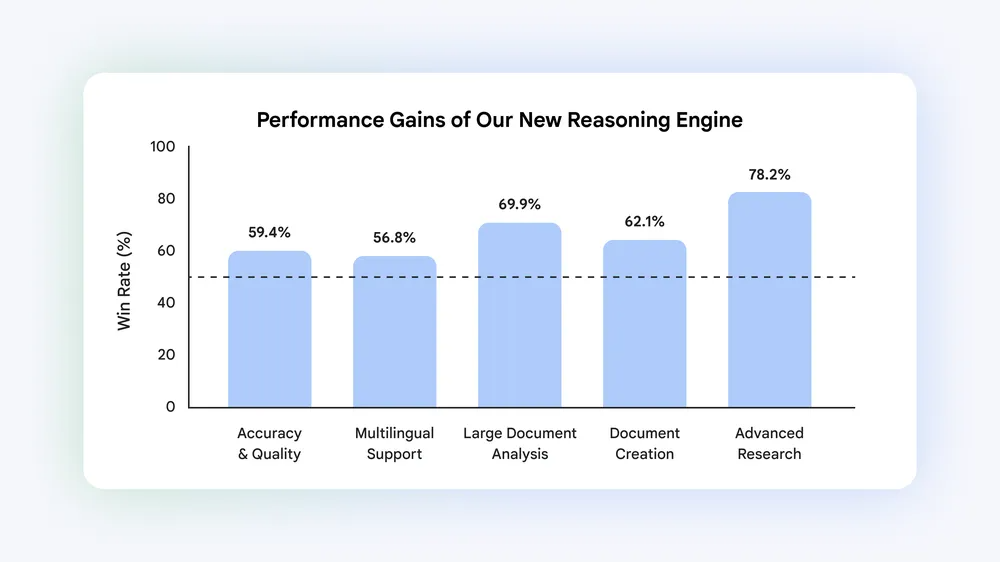
NotebookLM evaluation graph The upgraded NotebookLM beats the old version in all of Google's "core evaluation dimensions." Credit: Google

Google conducted side-by-side evaluations of NotebookLM on the old Gemini 3.1 branch and with the updated 3.5. The company is being somewhat vague about the nature of the tests, breaking things up into "top five core evaluation dimensions," which are Accuracy and Quality, Multilingual Support, Large Document Analysis, Document Creation, and Advanced Research. In these tests, Google says NotebookLM averaged a 65 percent win rate versus the older model.


Read full article

Comments

© Google

  •  

Google taps Intel for 3M AI chips in 2028

Alphabet’s Google reportedly placed an order with Intel to manufacture more than 3 million of its specialised AI chips in 2028, a move which increases pressure on Taiwan Semiconductor Manufacturing Co. (TSMC).

The Information reported Google plans to use Intel to manufacture some of its tensor processing units (TPUs) after months of testing the chipmaker’s manufacturing capabilities.

Google Cloud’s TPUs are custom chips purpose-built for AI and optimised for training and inference of advanced AI models.

The news agency’s sources state the move reflects mounting strain on TSMC, which is struggling to meet surging demand for its foundry capacity, pushing customers to seek alternatives.

The deal marks another significant win for Intel after CEO Lip-Bu Tan, who spent much of last year shoring up Intel’s balance sheet through major external investments, now appears to be delivering on operational improvements which seemed unlikely a year ago.

In April 2026, Google expanded its long‑running partnership with Intel, committing to use multiple generations of the chipmaker’s CPUs in its AI data centres.

The same month, Intel revealed a plan to join Elon Musk’s Terafab AI chip project to build processors which would power the billionaire’s orbital data centres and humanoid robots.

Last month, the tech giant struck a joint venture agreement with asset management company Blackstone to create a US-based AI cloud company, giving a boost to its TPU manufacturing.

The Information also said Nvidia is evaluating Intel’s manufacturing technology for a forthcoming processor which could combine four graphics chips into a single unit.

The post Google taps Intel for 3M AI chips in 2028 appeared first on Mobile World Live.

  •  

Google Met Top German Government Officials Dozens of Times to Discuss Online “Hate Speech” and “Disinformation”

Google held at least 34 meetings with top German government officials – including the Chancellor – to discuss suppressing "hate speech" and "disinformation" online, reveals John Rosenthal.

The post Google Met Top German Government Officials Dozens of Times to Discuss Online “Hate Speech” and “Disinformation” appeared first on The Daily Sceptic.

  •  
❌