❌

Reading view

1,700-year-old legendary Roman-era submerged bridge found in Switzerland’s Solothurn

A long search has finally concluded: Swiss divers have discovered a legendary Roman-era bridge that researchers have been trying to locate for decades. It may be the only pile trestle of its kind that exists.

As plans were underway to construct a bridge over the Aare River, Swiss archaeologists hired by Cantonal Archaeology conducted routine archaeological investigations in the area near Solothurn, Switzerland, which has long been a subject of interest for archaeologists.

A bridge pier, known as a pile trestle, was believed to have been built in this location. Archaeologists were eager to investigate due to the area’s “strategic geography” and “its position along an important transalpine trade and military route.”

And finally, as construction work would be carried out, archaeologists were hired by Cantonal Archaeology to take the plunge, which they did several times, guided by previous accounts of the presence of “stakes” in the waters. On fins, they came to discover a row of timber piles near Solothurn’s Wengi Bridge.

The piles, just under 6.56 feet long and arranged in the direction of the current, provided the first physical evidence of a pile trestle ever found. Upon analyzing the wood and remnants of the bridge pier, they confirmed its existence, dated it to the 4th century, and established that it was linked to the city’s development as a castrum, or fortified settlement.

A major bridge pier

This long-sought bridge was part of a major road connecting Italy with the Rhine River, according to LBV. Sections of this road had already been identified on either side of the river, suggesting that a bridge must have existed to facilitate crossings.

For years, archaeologists contended that the riverbed near Solothurn could contain a pile trestle due to the unique characteristics of this small municipality in Switzerland. The Aare River narrows at a point near the town, which helped archaeologists estimate where the bridge might have been constructed.

Historically, Salodurum is the Latinized version of a Celtic toponym that means “river narrows” or “gateway of the waves.” Until now, no physical evidence had been found, only rumors of “stakes” underwater.

Previously, it was known that the Romans settled in this area between the 1st and 3rd centuries. In the 4th century, a defensive wall was constructed in response to instability and military pressures, leading to the fortification of urban settlements. This bridge symbolizes an empire striving to protect itself from its ultimate demise.

A system of defense

A castrum wasn’t a town wall, but rather a system, Arkeonews clarified. Solothurn, a picturesque town today, once held strategic importance due to its placement on the Aare. This region was well-developed and interconnected by imperial routes. The Romans built this bridge pier to enhance a gateway crucial for preventing significant losses. The settlement lying beneath the Baroque center even reveals how the Romans intentionally selected this spot for its strategic value.

Because the 1,700-year-old wood would decay if exposed to air, the construction project will not disturb the precious timbers submerged in the river, allowing them to remain in their watery grave. They represent the Roman Empire at a pivotal time in its history.

Archaeologists will continue investigating the bridge, Heritage Daily concludes, and they hope to glean new insights into their methods of construction and how it functioned in this vast network that linked the Mediterranean and Northern Europe.

💾

Swiss divers have discovered a legendary Roman-era bridge that researchers have been trying to locate for decades
  •  

Dominican Republic Families Flee Gold Mine Pollution as Canada’s Watchdog Office Remains Empty

Dominican Republic Families Flee Gold Mine Pollution as Canada’s Watchdog Office Remains Empty

In the Dominican Republic town of La Piñita, 65-year-old Leoncia Ramos fears for her health and wants to leave the home she’s known her entire life. She’s one of 450 families demanding relocation from what they say is dangerous pollution from the nearby Pueblo Viejo gold mine, operated by Canadian mining giant Barrick Mining Corp.

The community has spent 15 years fighting to address their environmental and health concerns, alleging the mine is contaminating their surroundings. Residents also worry about catastrophic flooding if a tailings dam located just one kilometer away were to collapse. Their struggle highlights a broader accountability gap in international mining operations.

Canada, which hosts about half of the world’s publicly traded mining companies, created the Canadian Ombudsperson for Responsible Enterprise (CORE) in 2019 to investigate human rights complaints against Canadian corporations operating overseas. However, this critical oversight position has sat vacant for the past year, leaving communities like La Piñita without recourse as their complaints pile up.

The timing couldn’t be worse. Global demand for transition minerals is surging as countries race to build clean energy infrastructure, while shifting geopolitical dynamics are intensifying pressure on mining operations worldwide. Environmental advocates warn that without proper oversight, vulnerable communities will continue bearing the environmental costs of resource extraction while corporate accountability remains elusive. The empty watchdog position underscores how regulatory gaps can leave affected populations with few options for addressing environmental harm from international mining operations.

The post Dominican Republic Families Flee Gold Mine Pollution as Canada’s Watchdog Office Remains Empty first appeared on EnviroLink Network.

  •  

Shell Operated Leaking Nigeria Pipeline for Years Despite Knowing Environmental Risks to Mangrove Forests

Shell Operated Leaking Nigeria Pipeline for Years Despite Knowing Environmental Risks to Mangrove Forests

Internal company documents reveal that oil giant Shell knowingly continued operating a severely compromised pipeline in Nigeria’s Niger Delta for years, despite being aware it posed significant pollution risks to the region’s precious mangrove ecosystems. The communications show that senior executives were informed as early as 2008 about the deteriorating conditions of the 97-kilometer Nembe Creek Trunk Line, yet chose to keep the oil flowing rather than shut down operations for repairs.

The pipeline, which carries 150,000 barrels of oil daily to export terminals, became a source of repeated environmental disasters as thieves tapped into the line through illegal connections, causing massive spills into the surrounding wetlands. Company documents from 2013 classified such compromised pipelines as requiring immediate shutdown or urgent remedial action, yet operations continued. The resulting oil contamination has devastated the region’s mangrove forests, which are home to diverse species of Rhizophora and Avicennia trees that form critical coastal ecosystems.

Local communities have paid a devastating price for Shell’s decision to prioritize profits over environmental protection. Residents of the nearby Bille community report that approximately 2,000 hectares of mangrove swamps have been killed by oil spills, with contamination affecting a total area of 13,200 hectares. The pollution has destroyed fish populations and other aquatic life that local communities depend on for their livelihoods. Satellite imagery confirms the massive scale of mangrove degradation around affected villages, showing the long-term environmental consequences of operating damaged oil infrastructure in sensitive coastal ecosystems.

The post Shell Operated Leaking Nigeria Pipeline for Years Despite Knowing Environmental Risks to Mangrove Forests first appeared on EnviroLink Network.

  •  

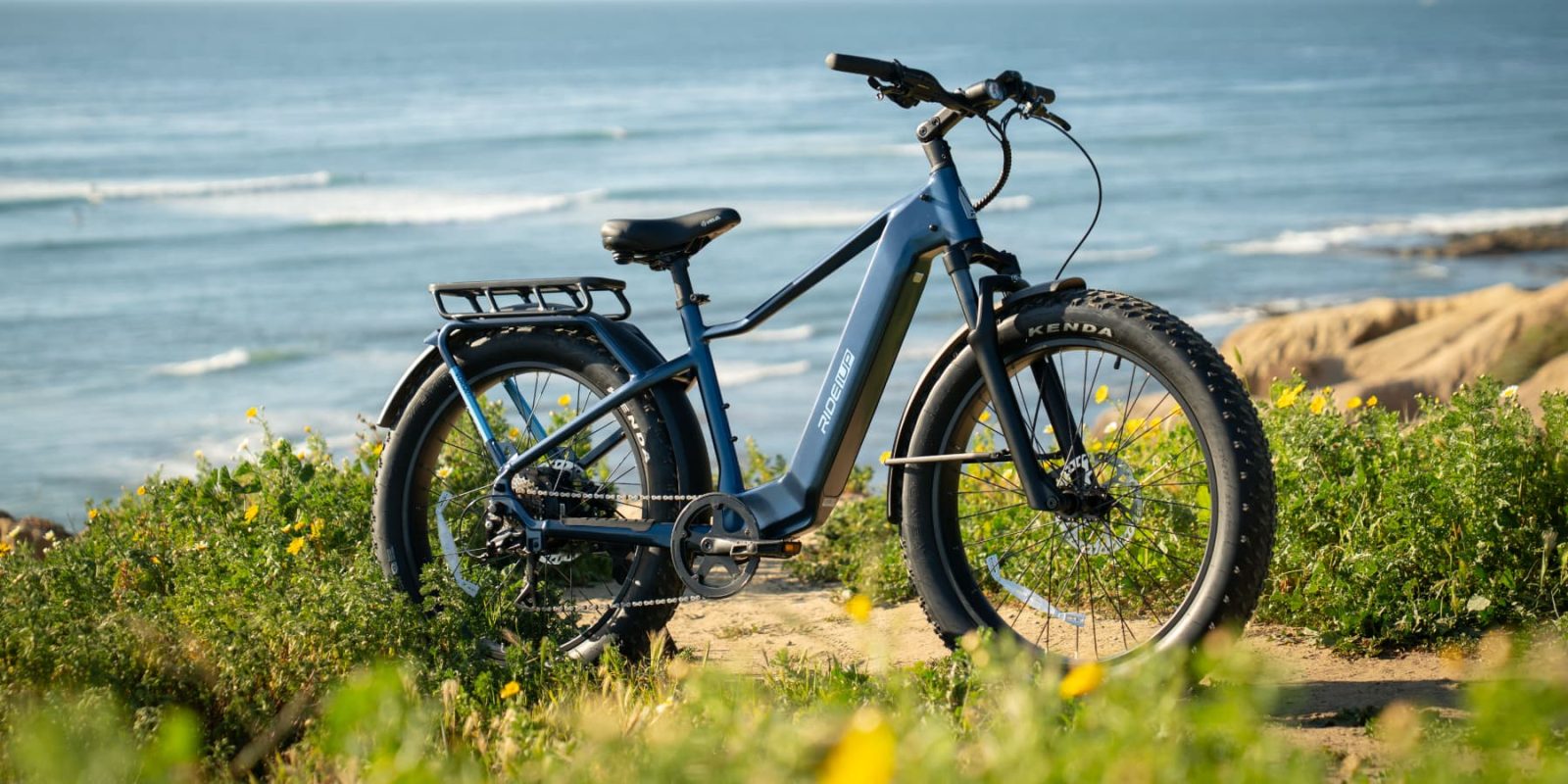
Here are the best electric bikes you can buy at every price level in October 2026

I’ve spent countless hours here at Electrek doing detailed hands-on testing of hundreds of electric bikes. Through thousands of miles of riding, I’ve been fortunate to learn these e-bikes inside and out, top to bottom and front to back. That long-term experience with real-world e-bike testing has helped me find the best electric bicycles on the market for just about any budget.

Below are some of the top e-bikes I’ve hand-tested for every price range, current as of October 2026. Fall weather is upon us, bringing cooler temps and beautiful views, so it’s a great time to hop in the saddle and get out there riding! Check out the awesome e-bikes below, any one of which could become your next electric bike.

more…
  •  

One Detroit-area Hyundai dealer wants $400 to charge your car

Drivers opening an EV charging app for the first time today will be presented with thousands of so-called “public” chargers at local car dealers. Once they arrive, however, the store’s customers, store hours, security gates, and Wild West pricing can turn what should be a routine charging stop into a frustrating ordeal. For first-time EV drivers, that doesn’t just reflect poorly on the dealer – it reflects poorly on the EV, itself. And we need to fix it.

UPDATE 05SEP2026: another Hyundai store, another $418 bill.

more…
  •  

Banco Central libera ferramenta que BLOQUEIA contas falsas no seu CPF #AssistênciaTec

💾

Você sabia que alguém pode abrir uma conta bancária no seu nome sem você perceber? Agora o Banco Central lançou o BC Protege+, uma ferramenta gratuita que bloqueia a abertura de contas no seu CPF sem autorização. Veja o passo a passo completo e proteja seus dados agora mesmo contra golpes, fraudes bancárias e contas falsas.

#BancoCentral #BCProtege #GolpesOnline #SegurançaDigital #CPF #GovBR #Tecnologia #Fraudes #DicasDeTecnologia #YouTubeShorts
  •  

Scientists ejected from diabetes conference for distributing journal reprints

Five leading scientists were ousted from the annual meeting of the American Diabetes Association (ADA) in New Orleans on Friday. Their crime: handing out copies of an editorial, published in the journal Diabetes Care on April 29, sharply criticizing the Trump administration's ongoing attacks on scientific research.

Those ousted were Steven Kahn, professor of medicine at the University of Washington and editor-in-chief of Diabetes Care, who co-authored the published editorial; former ADA President Desmond Schatz of the University of Florida, Gainesville; Aaron Kelly, pediatrics professor at the University of Minnesota; Justin Ryder of Northwestern University; and Irl Hirsch, also of the University of Washington. The five were handing out reprints of the editorial outside a room where NIH director Jay Bhattacharya had been scheduled to speak. Bhattacharya canceled and another NIH official spoke in his stead.

"They physically grabbed us, forced us out of the conference center, and now are telling us we can no longer attend this meeting," Kelly told MedPage Today, which first reported the incident. "They're taking our lanyards. It really has come to this in America. Censorship is real. America needs to stand up. Scientists, stand up. Physicians, stand up."

Read full article

Comments

© Screenshot/MedPage Today

  •  
❌