❌

Reading view

Chile’s Light-Pollution Standard Takes Full Effect

The South American country, which hosts some of the world’s major astronomical observatories, promises to protect its night skies, from the Atacama Desert to Tierra del Fuego.

The post Chile’s Light-Pollution Standard Takes Full Effect appeared first on Sky & Telescope.

  •  

The search for habitable worlds

The NASA Exoplanet Exploration Program (ExEP) has a curated list of 164 nearest Sun-like stars that are easily visible from Earth. This list represents the first targets for a proposed large space telescope specially designed to find life in the universe, currently known as the Habitable Worlds Observatory (HWO). 

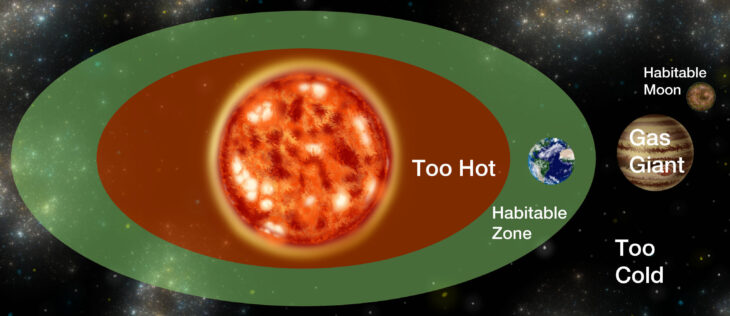
After the HWO is completed, likely sometime in the 2040s, scientists will use the specialized telescope to directly image planets in those star systems. The telescope will search around Sun-like stars for planets in a region known as the habitable zone, where temperatures allow liquid water to exist. Scientists hope to find Earth-like planets with liquid water in the habitable zones of other stars.

While the 164 stars on ExEP’s list have qualities that make them good candidates for study, it remains unknown how many actually have terrestrial planets within their habitable zones. A team of scientists at Arizona State University used simulated data for ExEP’s 164 stars and their hypothetical planetary systems to assess which are most likely to have habitable worlds. Their results would help the HWO prioritize which star systems to observe.

The team started with a subset of 134 stars on ExEP’s list with no known exoplanets, giving researchers the freedom to simulate potential worlds around them. They used a software model called the DYNAmical Multi-planet Injection TEster (DYNAMITE) to predict the possibility that an unseen planet exists around each star by generating 100,000 simulated planetary systems around it. The simulations use mathematical formulas based on observations of real exoplanets to determine the sizes and orbital characteristics of hypothetical gas giants and rocky exoplanets. DYNAMITE then determines whether these planetary systems would be stable and include a terrestrial exoplanet in the star’s habitable zone.

The other 30 stars in the ExEP’s list have known exoplanets, but none of them are rocky planets in habitable zones. To predict whether these stars have unseen terrestrial planets in their habitable zones, the team used the same DYNAMITE process as before with the additional requirement that each star must have an exoplanet matching the one already found.

The space around a Sun-like star can be divided into three regions. The region closest to the star is too hot for liquid water to persist on an exoplanet’s surface, while the region farthest from the star is so cold that any water on an exoplanet would be frozen solid. Between these lies the habitable zone, where temperatures would allow liquid water to exist. However, it’s also possible that a combination of light and gravity could create habitable temperatures on large enough moons orbiting gas giants even beyond a star’s main habitable zone. Illustration by <a href="https://www.linkedin.com/in/andrew-bizal-ab14401ab/">Andrew Bizal</a>.

The space around a Sun-like star can be divided into three regions. The region closest to the star is too hot for liquid water to persist on an exoplanet’s surface, while the region farthest from the star is so cold that any water on an exoplanet would be frozen solid. Between these lies the habitable zone, where temperatures would allow liquid water to exist. However, it’s also possible that a combination of light and gravity could create habitable temperatures on large enough moons orbiting gas giants even beyond a star’s main habitable zone. Illustration by Andrew Bizal.

To increase the chances of finding a terrestrial planet in a habitable zone, the team also investigated potentially habitable moons orbiting gas giants in these systems. For each simulation that included a gas giant, the team inserted between 2 and 23 moons, with masses between 10% of Earth’s Moon and 50% of Earth. Then they simulated the surface temperatures of these moons based on how much starlight they receive and how strongly their host planet pulls on them. They deemed the moons potentially habitable if they were large enough to retain an atmosphere and had a temperature ideal for liquid water, even if they were not technically in their stars’ habitable zones.

For each star, the team calculated a metric based on the probabilities that the star had a terrestrial planet in its habitable zone, that the planet would remain in a stable habitable zone for at least 2 billion years, and that the star had a potentially habitable moon. They called this probability statistic a ranking metric and used it to compare star systems. 

Based on the ranking metric, the team found that the dimmer and cooler stars on their list generally had better chances of hosting a habitable-zone terrestrial planet than the brighter, hotter stars. They also found that stars without known exoplanets ranked more favorably. Around 70% of the stars with known exoplanets had less than a 1% probability of hosting a terrestrial planet in their respective habitable zones. Additionally, fewer than 0.1% of their simulated moons were habitable.

Overall, the researchers concluded that the HWO should prioritize observing cooler, Sun-like stars with no known exoplanets. They claimed that the exoplanets with known characteristics in their sample set were of sizes and in positions that made it unlikely for other exoplanets to be in their systems’ habitable zones. Even with expanded habitability criteria for moons, it would be very unlikely for HWO to find another Earth orbiting a gas-giant exoplanet. They ranked 47 stars in the highest-priority category (A Tier), 51 stars in the middle category (B Tier), and 66 stars in the lowest category (C Tier) to observe with HWO. 

At the end of their study, the team remarked that the proposed HWO represents a potential next step in the search for other Earths, but scientists still need to identify the best targets for this future telescope. The HWO telescope should be able to image rocky exoplanets directly, so thorough research to prepare a list of high-priority targets will help avoid overlooking other Earths.

The post The search for habitable worlds appeared first on Sciworthy.

  •  
  •  

Needles turn rain into electricity

For centuries, civilizations have harnessed energy from water. However, hydropower often requires large bodies of water to move heavy machinery, confining its use to rivers. But what if the electricity needed to light up your house could be generated from raindrops hitting its roof? 

To achieve this, scientists rely on electrical charges created when materials come into contact and then separate, a phenomenon called the triboelectric effect. As an example, rubbing a balloon against your hair gives them opposite charges, causing your hair to stand up and stick to the balloon. Scientists apply the same principle to make droplet-based triboelectric nanogenerators, or D-TENGS, where raindrops slide across negatively charged surfaces. As the droplets move, their positive charges gather near the surface, freeing up their negative charges. When the droplets reach a metal strip called an electrode, these negative charges flow into a circuit, generating electricity. However, water often remains on D-TENG electrode surfaces, blocking subsequent droplets and corroding the device.

Researchers at the China Three Gorges University and the Chinese Academy of Sciences approached this problem by modifying the shape of the electrodes used in D-TENGs. They proposed that a needle rather than a strip would help droplets detach quickly, allowing charge to flow into a device that uses inexpensive components. They called this design a needle electrode droplet-based triboelectric nanogenerator, or NED-TENG.

To build the NED-TENG, the researchers prepared a plastic film using a water-repellent polymer called polytetrafluoroethylene as the negatively charged surface. They inserted a copper wire through the center of the plastic film, protruding 3 millimeters (0.1 inches) from the front side to form the needle-shaped electrode exposed to raindrops. Meanwhile, they attached copper foil to the plastic film’s backside as a second electrode, completing the circuit. The team connected both electrodes to an instrument that measures electrical performance and mounted the components on an acrylic sheet, sealing it with waterproof tape.

To simulate raindrops, the team inclined the NED-TENG at 50° from a table and dispensed tap water drop by drop from 30 centimeters (12 inches) above its plastic film. Like conventional D-TENGs, the device generated electricity as droplets slid across the film and contacted the needle electrode. However, because the water touched only a small area of the needle, it easily slid off the NED-TENG, preventing the water from building up like in D-TENGs.

The researchers then evaluated and optimized the device using 2 metrics: the force driving charges through its circuit, or voltage, and how fast its charges transfer, or current. First, they compared the NED-TENG with a conventional D-TENG. The NED-TENG generated about 564 Volts (V) and 5 milliamperes (mA) of current, nearly twice the voltage and 3 times the current of the D-TENG, and enough to power small electronics like indicator lights.

Next, they varied the droplets’ release height to maximize electricity production. They found that increasing the release height from 10 to 30 centimeters (4 to 12 inches) increased both voltage and current, peaking at about 543 V and 4 mA. At greater heights, droplets splashed hard on impact, scattering the water and disrupting the charging process they observed in sliding droplets. 

Similarly, the researchers tested different device inclination angles, ranging from 10° to 70°. Their tests revealed that the device’s electrical performance increased at steeper angles and peaked at 50°, reaching 521 V and 3 mA. At steeper angles, droplets spent less time in contact with the surface, reducing electrical output. They explained that because triboelectric materials are highly sensitive, results can vary slightly between experiments, leading to individual peak values that are lower than the highest overall outputs. 

The researchers then explored how the technology might perform in a simulated rooftop installation. To reduce power fluctuations during real-world applications, they connected multiple NED-TENGs. They observed that 10 connected devices could fill a small energy-storage component within 2 minutes and power 200 LED lights.

Overall, the NED-TENGs shed water efficiently and generated more electricity than D-TENGs, while remaining simple to build. The team noted that future upscaled studies should examine how rooftop systems can direct rainwater onto the devices at optimal heights, and how droplets interact with their surfaces to improve long-term performance. With further development, these low-cost systems could turn rooftops into practical generators powered by everyday rainfall. 

The post Needles turn rain into electricity appeared first on Sciworthy.

  •  
❌