❌

Reading view

Six Ways India Is Redefining Energy Risk: Dispatch From the BNEF Summit New Delhi 2026

The US energy landscape is changing quickly. Demand for artificial intelligence is driving up power demand while electric vehicle (EV) adoption slows down and enters a more complex phase. Together, these trends are reshaping how utilities, policymakers, financiers and automakers respond to emerging challenges in the energy sector.
  •  

Japan’s Energy Transition Enters New Phase Shaped by Rising Electricity Demand and Energy Security Needs, Per BloombergNEF’s New Energy Outlook 2026: Japan

PRESS RELEASE Download Report KEY TAKEAWAYS BloombergNEF’s New Energy Outlook 2026: Japan finds that despite Japan’s declining population, electricity demand begins to recover, driven by the rise of data centers and electrification of the transport sector. An accelerated energy transition boosts Japan’s energy security, while increased electrification reduces exposure to imported fossil fuels and global…
  •  

Reducing earthquakes caused by fracking

Drilling for electricity or geothermal energy is a common human-caused source of earthquakes. Drillers or engineers inject water into the earth to fracture underground rock through a process known as fracking. This allows scientists to produce clean energy almost anywhere on Earth by heating up water in the cracks using facilities called enhanced geothermal systems or EGS plants. However, fracking causes earthquakes, which are a major concern for people’s safety globally. Therefore, scientists are looking for new fracking methods that cause fewer earthquakes.

Fracking for EGS plants can trigger earthquakes by changing the pressure underground and adding stress to the surrounding rock. However, these earthquakes happen at pre-existing, naturally occurring cracks called faults, which are different from the newly formed, man-made cracks. Faults are naturally under pressure from the overlying rock and the surrounding earth since they reach deep underground. As pressure builds up over time, it eventually causes the rocks to shift along these faults and release energy in the form of earthquakes. 

During fracking, engineers use 4 different shut-in strategies to finish off water pumping. The standard industry strategy is called instant shut-in, where the injection pump is turned off immediately, but the water stays underground, causing the pressure to lower naturally. In a similar strategy, known as the tapered shut-in, engineers gradually reduce the water injection rate to zero instead of immediately turning it off. For the high-rate and low-rate extraction strategies, they pump the water back out after injection is complete, at different pump rates.

Recently, scientists aimed to mitigate the risk of earthquakes by testing these 4 shut-in strategies to determine which is most effective. They compared the shut-in strategies using crystalline basement rock with low porosity and permeability, meaning water couldn’t easily flow through it. Engineers use this same type of rock for EGS plants so they can control where the water flows. The scientists pumped water into the rock, then measured the pressure and stress levels where rocks began to move along faults, determining the point at which earthquakes would occur. 

The scientists applied high-rate and low-rate extraction methods to the rock and found that pressure and fault movements decreased. However, when they applied instant and tapered shut-in methods to the same rock, they increased the pressure and caused continuous fault slipping. They measured stress in the rock during these methods and found that high-rate extraction stabilized the fastest, while low-rate extraction stabilized more slowly. In contrast, instant shut-in continuously increased the pressure and slip, and tapered shut-in caused the highest stress of all.

The scientists also used a computer model to simulate what happened at an EGS site in South Korea, where earthquakes occurred after injections using the instant shut-in method. They set up the model using a rock with the same characteristics, injection wells, and faults as that site. Then, they simulated periods of injection based on the previous real-world events and modeled the effects of pressure and stress to determine if the earthquakes could have been prevented. 

The team used the model to compare how a site like this would respond to the instant shut-in method versus the other shut-in methods. They found that the tapered shut-in method increased pressure and stress in the rock, while the high-rate and low-rate methods both decreased pressure and stress. The high-rate method decreased pressure and stress more than the low-rate method. 

The scientists concluded that high-rate extraction is the most effective method for reducing the risks of post-injection earthquakes during EGS fracking in crystalline basement rock. Additionally, the scientists determined that the earthquakes in South Korea could have been prevented if engineers had used either the high-rate or low-rate extraction methods. They recommend using high-rate extraction to reduce earthquakes during EGS fracking, which would allow EGS plants to generate clean energy more safely.

The post Reducing earthquakes caused by fracking appeared first on Sciworthy.

  •  

BloombergNEF’s South Africa Transition Factbook: Power-Market Reform and Private Investments Drive Energy Transition

South Africa’s energy system is undergoing a major transition as the nation has moved beyond the worst of its power crisis, according to BloombergNEF's (BNEF) South Africa Transition Factbook 2026. Persistent load shedding has ended after coal power plants returned to service and private-sector participation increased.
  •  

Scientists Have Uncovered Large Quantities of Hidden Hydrogen Beneath Australia—and It Could Lead to a Clean Energy Breakthrough

Researchers say an untapped source of clean energy has been hiding beneath Western Australian soil, where some of the world’s largest iron deposits could harbor an unexpected secret.

These deposits, according to researchers at Edith Cowan University (ECU), are also rich in magnetite capable of producing hydrogen when it interacts with hot water, under conditions that mirror those which occur naturally deep underground.

Such processes, the researchers say, could be stimulated in magnetite-rich locations like Western Australia’s naturally reddish Pilbara region, stimulating hydrogen production and potentially unleashing a valuable, untapped clean energy source.

An Unexpected Source of Energy  

Magnetite is abundant within the Pilbara’s vast banded iron formations, and when subsurface temperatures rise, the naturally occurring interactions between this iron-rich mineral and water lead to chemical reactions—the same kind which can produce molecular hydrogen.

“Australia could be sitting on a massive, untapped energy reserve,” said ECU Associate Professor Alireza Keshavarz of the team’s recent discovery, “and the potential is enormous.”

To better understand the processes that may hold the key to unlocking Australia’s untapped subsurface energy reserves, the ECU team began by placing samples of magnetite in water heated to 200 degrees Celsius and under extreme pressure. The experiments continued for close to two months, during which time the researchers were able to recreate some of the same conditions that occur naturally deep within the Earth.

Doing so allowed the team to look at how hydrogen naturally forms, as well as what geological conditions help to sustain its production.

“Western Australia has some of the world’s largest banded iron formations,” said Kaveh Moghanirahimi, the lead author of a recent study detailing the team’s findings.

“If we can unlock this resource at scale, it could be transformative for our energy future,” he adds.

Water May Hold the Key

Significantly, the team says they found that just having large amounts of magnetite in subsurface deposits may not be all that is required for significant hydrogen production. Another key component is having enough water present to be able to reach fresh mineral surfaces for the hydrogen-producing reactions to continue.

Importantly, the researchers found that simply having large quantities of magnetite underground may not be enough. Water must also be able to reach fresh mineral surfaces for the hydrogen-producing reactions to continue.

“Our findings show that hydrogen production depends not only on the amount of magnetite present, but also on how easily water can access fresh mineral surfaces through fractures, pores, and permeable pathways,” said Professor Stefan Iglauer, a researcher with ECU’s School of Engineering.

Hydrogen through Injection?

The researchers also say they have identified a potential method for stimulating hydrogen generation by injecting a solution into banded iron formations. This, they say, points to a novel possibility: that geological deposits of the right specific kind may also one day function as sites for engineered production of naturally generated hydrogen.

That possibility, the researchers argue, could prove to be significant as governments and industries seek lower-emission alternatives to hydrogen currently produced mainly using fossil fuels. Also, unlike conventional methods of hydrogen manufacturing, tapping geological hydrogen only requires leveraging natural reactions that occur underground.

A Step Toward the Future of Clean Energy

Presently, the research remains an early step toward determining whether the process can be translated from lab experiments into a commercially viable method of producing clean energy with the resources present in natural geological formations.

However, if researchers can continue to capitalize on methods that allow hydrogen to be generated and recovered at economical scales, there are already remarkable possibilities in terms of what Western Australia’s enormous iron formations could one day help provide.

“This work helps bridge the gap between laboratory experiments and real geological systems,” Iglauer said.

The team recently reported its findings in the paper, “Geometry-driven controls on hydrothermal natural hydrogen generation from magnetite mineral,” published in the International Journal of Hydrogen Energy.

Micah Hanks is the Editor-in-Chief and Co-Founder of The Debrief. A longtime reporter on science, defense, and technology with a focus on space and astronomy, he can be reached at micah@thedebrief.org. Follow him on X @MicahHanks, and at micahhanks.com.

  •  

Sustainable Aviation Fuel Price Outlook: Leveling Off

Prices of sustainable aviation fuel, or SAF, are rising as the closure of the Strait of Hormuz disrupts global fuel markets. Higher oil-product prices are increasing demand for biofuels, particularly for road transport, as governments seek to soften the impact of elevated fuel costs. Prices in Northwest Europe, the largest SAF consumption hub, are set to remain elevated over the next year according to BloombergNEF analysis, averaging $2,746 per metric ton.
  •  

Solar Set to Rule World’s Power Supply: Three Things to Know

Solar is set to oust coal as the leading generator of electricity within six years, BloombergNEF finds in its latest energy transition outlook, despite a first ever slight dip in installations in 2026. “Solar is the cheapest source of power in many countries, and is proving the easiest and fastest to deploy,” said Jenny Chase, BNEF’s clean power specialist. “Its role in the global energy mix will be substantial, ushering in a new age where power is cheap whenever the sun shines.”
  •  

Energy Transition Impacts: Sector and Country Impacts from a Demand-Driven Model

The global economy has reached the “messy middle” of the energy transition where renewable energy and electric vehicles are prevalent enough to affect the demand for fossil fuels without entirely displacing them. This introduces new tensions and volatilities to established industries from energy to transport and countries from Canada to Indonesia.
  •  

Clean Cooking and Remittances Slash Somalia’s Ecological Footprints

In recent years, the pressing issue of environmental sustainability has taken center stage across the globe, with particular emphasis on regions facing acute developmental and ecological challenges. Somalia, a nation historically beset by conflict and economic hardship, emerges as a potent case study in understanding how innovative approaches in energy use and financial inflows can synergistically influence ecological outcomes. New research by Hussein and Warsame, published in Scientific Reports in 2026, offers an illuminating analysis of how the adoption of clean cooking energy technologies, paired with the critical economic role of remittances, impacts Somalia’s ecological footprint in measurable ways.

Somalia’s environmental landscape is complex, marked by drought-prone land, limited infrastructure, and a reliance on biomass fuels such as charcoal and firewood for cooking and heating. These traditional practices have created intensive pressure on the country’s already fragile ecosystems, leading to increased deforestation, land degradation, and carbon emissions. The transition to clean cooking energy sources is thus not merely a technological upgrade; it represents a potential paradigm shift towards substantially reducing environmental harm. Hussein and Warsame’s study provides a detailed evaluation of how this transition, supported by economic inflows from abroad in the form of remittances, influences Somalia’s environmental sustainability trajectory.

Clean cooking energy technology largely encompasses alternatives such as liquefied petroleum gas (LPG), solar cookers, improved biomass stoves, and biogas systems. These technologies are designed to burn fuel more efficiently or switch to renewable energy sources, thereby reducing particulate matter emissions and carbon footprints. According to the research, the adoption of these technologies in Somali households correlates with a marked decrease in health hazards associated with indoor air pollution as well as a diminution in the rate of deforestation. The shift alleviates the ecological strain imposed by traditional fuel use, contributing significantly to sustainability goals.

Remittances, financial resources sent from the Somali diaspora to families in the home country, play a critical role in enabling the adoption of clean cooking technologies. Hussein and Warsame emphasize the economic empowerment remittances provide, facilitating investments in household technology that may otherwise be unattainable due to poverty. This link between remittance flows and environmental improvement is a novel concept, highlighting a socio-economic mechanism that can drive sustainable development in fragile states. The paper’s data-driven insights suggest that remittance-receiving households are substantially more likely to invest in clean energy solutions, thus mitigating their ecological footprint.

From a technical standpoint, understanding the ecological footprint encompasses measuring the aggregate environmental impacts of resource consumption and waste generation. Hussein and Warsame utilize a rigorous methodology incorporating both satellite data on environmental degradation and household-level survey data. This mixed-method approach enables a nuanced understanding of how macroeconomic factors, like remittances, intersect with micro-level behavioral changes relating to energy use. Their results demonstrate a statistically significant reduction in per capita ecological footprints within communities with higher access to clean cooking energy, amplified by remittance income.

One of the pivotal challenges outlined in the study is the availability and affordability of clean cooking technologies in Somalia. Market constraints, supply chain issues, and political instability present formidable barriers. Yet, the data reveal a growing acceptance and preference for cleaner energy amid urban and semi-urban populations. The research advocates for policy frameworks that bolster supply networks, subsidize initial costs, and encourage innovations tailored to local contexts. These technical and economic interventions could serve as blueprints for other nations grappling with similar environmental and social dynamics.

The implications of this research extend beyond Somalia’s borders, illuminating a model where socio-economic and technological factors combine to create pathways toward sustainability in developing regions. Hussein and Warsame argue for an integrated approach that treats environmental issues not in isolation but as interconnected with economic livelihoods and social structures. The nexus of remittances and clean energy adoption is a critical finding, emphasizing how diaspora networks act as agents of sustainable change, channeling not only money but also knowledge and technology.

Importantly, the study also engages with the gender dimension of clean cooking energy adoption. Women, who traditionally bear the brunt of household cooking duties, stand to benefit significantly from cleaner cooking options through reduced exposure to hazardous smoke and the alleviation of labor associated with fuel collection. Remittances contribute here as well by enabling women’s access to these technologies, thus improving health outcomes and catalyzing broader social empowerment. This multifaceted impact underscores the intersectionality of environmental and social sustainability.

In terms of ecological metrics, Hussein and Warsame’s quantitative assessment captures reductions across several dimensions—carbon emissions, land use change, and biodiversity loss. Cleaner cooking energy reduces carbon monoxide, methane, and particulate emissions, all major contributors to climate change and respiratory illnesses. Reduced reliance on charcoal extraction leads to forest conservation, mitigating soil erosion and preserving biodiversity hotspots. This suite of environmental benefits is critical in a region frequently vulnerable to climate-induced shocks.

The technical backbone of this research includes the use of geospatial analysis to monitor environmental degradation patterns over time, coupled with econometric modeling to parse out the specific impacts of remittances and energy adoption on ecological footprints. This fusion of environmental science and economic analysis is innovative and critical for policy makers to design targeted interventions. The data sets employed are unique, combining remote sensing with social surveys to provide a holistic picture rarely captured in similar studies.

The ripple effects of these findings also touch on Somalia’s energy policy landscape. The government, alongside international donors and NGOs, is increasingly oriented towards promoting renewable energy uptake and sustainable development under the country’s national strategy frameworks. Hussein and Warsame’s research offers empirical backing to these initiatives by quantifying the environmental returns on investment in clean cooking infrastructure and diaspora engagement. Their work strengthens the case for scaling such interventions in fragile socio-political environments.

Furthermore, the research addresses challenges in ensuring long-term sustainability and scalability of clean cooking energy interventions. While initial uptake driven by remittance income is promising, the study highlights potential risks including reliance on imported fuels like LPG and fluctuations in remittance flows due to global economic shifts. The authors suggest that a diversified energy strategy encompassing solar, biogas, and locally sourced renewable fuels could foster resilience and greater ecological benefits in the long run.

This study also contributes to the ongoing discourse on global climate justice by contextualizing Somalia’s environmental challenges within historical inequalities and economic constraints. The authors argue that international cooperation and climate financing mechanisms should recognize the role of diaspora remittances as an informal yet powerful climate action enabler. Harnessing this dynamic could complement formal climate aid and investment, thereby enabling countries like Somalia to leapfrog to cleaner energy futures.

Critically, this pioneering research underscores the necessity for interdisciplinary approaches to tackle environmental sustainability. Combining technological innovation, economic flows, social behavior, and environmental assessment produces a robust analytical framework. This holistic perspective is essential to unravel the complexities faced by developing nations, where environmental degradation is often intertwined with economic vulnerability and political instability.

In conclusion, Hussein and Warsame’s 2026 publication in Scientific Reports offers a compelling narrative on how clean cooking energy and remittances jointly influence Somalia’s ecological footprint, presenting a replicable model for sustainability in resource-constrained settings. Their work pushes forward the agenda on integrating socio-economic factors with environmental technology adoption, providing a roadmap for future research, policy development, and international cooperation. As nations worldwide strive toward the Sustainable Development Goals, insights from Somalia remind us that innovative pathways can emerge even in the most challenging contexts, driven by the interplay of technology, finance, and social capital.


Subject of Research: Environmental sustainability in Somalia, focusing on the impact of clean cooking energy adoption and remittance flows on ecological footprints.

Article Title: Environmental sustainability in Somalia: the role of clean cooking energy and remittances on ecological footprints.

Article References: Hussein, H.A., Warsame, A.A. Environmental sustainability in Somalia: the role of clean cooking energy and remittances on ecological footprints. Sci Rep (2026). https://doi.org/10.1038/s41598-026-57469-3

Image Credits: AI Generated

  •  

Competitiveness, Cost and Climate: Five Themes From the BNEF Summit Amsterdam

The US energy landscape is changing quickly. Demand for artificial intelligence is driving up power demand while electric vehicle (EV) adoption slows down and enters a more complex phase. Together, these trends are reshaping how utilities, policymakers, financiers and automakers respond to emerging challenges in the energy sector.
  •  

Trump admin abandons fight against wind energy as clean energy output surges

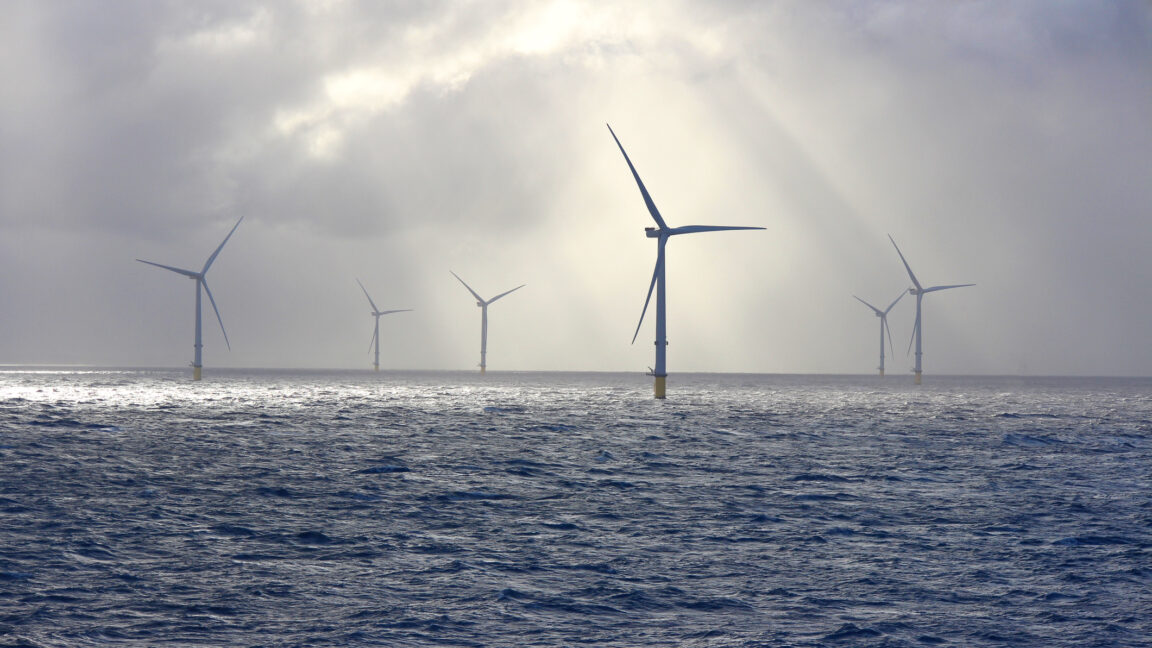
The Trump administration has abandoned its effort to halt wind energy projects across the United States and dropped its challenge to the court ruling that tossed President Donald Trump’s order freezing federal permitting and leasing for wind projects. States that challenged the order hailed the development as one of the most significant legal victories against the Trump White House’s campaign against the energy transition.

On Monday, the US Court of Appeals for the First Circuit dismissed the appeal after the Justice Department filed a motion for its voluntary dismissal on June 10.

The case against Trump’s executive order was filed in May 2025 by a coalition of attorneys general from 17 states and Washington, DC, led by New York Attorney General Letitia James.

Read full article

Comments

© glegorly

  •  

Insurance Shortfalls Challenge Expansion of Net-Zero Hydrogen Technologies

The global shift toward net-zero emissions has thrust hydrogen into the spotlight as a promising energy vector capable of decarbonizing sectors traditionally reliant on fossil fuels. Yet, as hydrogen technologies surge from concept to commercial reality, a critical question has emerged: can the insurance industry keep pace with the novel risks intrinsic to these systems? A compelling new article published in Engineering unveils the stark challenge facing insurers and innovators alike. It argues that the nascent nature of hydrogen processes and infrastructures presents a complex risk landscape that current insurance frameworks are ill-equipped to navigate, potentially impeding large-scale deployment needed to meet climate goals.

Central to the discourse is the intricate, multifaceted nature of hydrogen technologies, encompassing production, storage, transport, and utilization systems. Unlike mature renewable technologies such as wind and solar, hydrogen operations are fraught with unique hazards—including extreme flammability, material embrittlement due to hydrogen exposure, and elusive leakage risks—that conventional insurance models have yet to thoroughly address. This gap in risk assessment and management means that financial security mechanisms crucial for investment confidence remain underdeveloped, posing a significant barrier to scalable hydrogen adoption.

The article elucidates that hydrogen’s promise as a clean energy carrier depends not only on decarbonized production but also on scaling the entire value chain rapidly and reliably. However, these pioneering engineering systems entail a gamut of evolving operational risks. These span from property damages and equipment failures to worker safety concerns heightened by hydrogen’s explosive potential. Cybersecurity risks also arise given the increasing digitalization of energy assets, while governance challenges manifest through liability exposures of company directors as projects push technical boundaries. Furthermore, these uncertainties extend into supply chain fragility and performance shortfalls during system ramp-up phases, compounding insurers’ difficulties in crafting comprehensive coverage.

Drawing a parallel to renewable energy insurance markets, the authors observe how wind and solar have benefited from years of data accumulation, modeling refinement, and standardization efforts that underpin sophisticated insurance offerings. This data-driven maturation enables parametric insurance and warranties that safeguard against specific performance metrics and supply chain disruptions. Yet, hydrogen insurance remains embryonic, characterized by cautious underwriting and limited products chiefly targeted at niche applications rather than broad industrial deployment. This immaturity translates to cost premiums and coverage limitations that stall financing and project momentum.

To transcend these hurdles, the article emphasizes the critical need for structured data collection and robust risk characterization specific to hydrogen processes. Without granular operational insights and validated risk models, insurers default to conservative stances that restrict underwriting appetite. The authors champion innovative insurance instruments, notably parametric policies calibrated to predefined risk triggers, and performance warranties that hedge against technology underperformance. These solutions can lower uncertainty for investors and catalyze capital flow, but their success hinges on collaborative data-sharing and transparent risk communication between all stakeholders.

Importantly, the narrative draws attention to a strategic opportunity for insurers. Engagement with hydrogen not only mitigates climate-related portfolio risks but also opens access to a burgeoning industrial market driven by global net-zero ambitions. Nonetheless, disconnects persist between technology developers’ needs and insurers’ capabilities, underscoring the urgency for proactive, multi-stakeholder dialogue. Fostering early-stage collaboration among engineers, academia, private sector, and insurance providers is pivotal to co-design risk assessment methodologies, standardize certification regimes, and ultimately align insurance solutions with engineering innovation trails.

Academia is positioned as a critical catalyst in this ecosystem. Researchers can bridge the gap by aggregating operational data, refining risk models via simulations and real-world studies, and facilitating standardization efforts that underpin insurer confidence. Such integrative efforts advance both scientific understanding and commercial viability. Aligning insurance mechanisms with engineering innovation timelines ensures risk management is embedded from technology readiness level milestones onward, thus streamlining the pathway from pilot projects to full-scale industrial rollouts.

The article also highlights the financial repercussions of currently inadequate insurance coverage. High premiums and coverage gaps retard investment flows and engender hesitancy among financiers wary of unquantified risks. As hydrogen projects are capital-intensive with long development horizons, risk mitigation via comprehensive insurance is non-negotiable for unlocking broader investor appetite. Hence, the advancement of hydrogen insurance products is not merely a financial instrument but a keystone for sustainable market adoption and technological acceleration.

Furthermore, the article delves into technical challenges such as hydrogen’s propensity to induce embrittlement in metals, which degrades structural integrity over time and raises maintenance costs. Insurance models must incorporate such materials science insights to accurately price and cover long-term durability risks. Leakage detection and mitigation technologies also play a vital role in controlling operational hazards, with insurance frameworks incentivizing advancements in sensor deployment and safety protocols. These technological synergies between engineering and insurance amplify resilience and facilitate risk reduction.

In conclusion, the article contends that unlocking hydrogen’s potential as a linchpin of a net-zero future demands a paradigm shift in insurance thinking coupled with systemic collaboration. By gathering rigorous data, designing bespoke risk instruments, and fostering cross-sector partnerships, the insurance market can evolve to support hydrogen innovation robustly. This evolution will serve as the linchpin of investor confidence, enabling swift scale-up while safeguarding public and environmental safety. Without such advancements, the hydrogen economy risks stalling, imperiling global decarbonization trajectories.

The implications extend beyond risk transfer to the very architecture of hydrogen energy systems. Insurance integration informs engineering decisions, safety standards, and policy frameworks, creating a virtuous cycle that harmonizes technical innovation with financial viability. The authors’ clarion call is clear: accelerating the hydrogen transition mandates bridging the gap between emergent technology risks and insurance market readiness. Achieving this nexus will be transformative—not only for hydrogen but for the broader energy transition imperative writ large.

Subject of Research: Insurance frameworks and risk management for new hydrogen technologies and adapted hydrogen processes.

Article Title: Insurance for New and Adapted Hydrogen Processes

News Publication Date: 15-Apr-2026

Web References:
https://doi.org/10.1016/j.eng.2025.11.018
https://www.sciencedirect.com/journal/engineering

Image Credits: Elisabeth Shrimpton, Nazmiye Balta-Ozkan

Keywords: Hydrogen, Net-Zero Energy Transition, Insurance, Risk Management, Engineering Innovation, Parametric Insurance, Performance Warranty, Material Embrittlement, Hydrogen Safety, Technology Readiness, Energy Decarbonization, Financial Instruments

  •  

Mexico Transition Factbook 2026

Mexico is entering a pivotal moment for its energy system and economy more broadly. Power-sector reforms, shifting oil and gas trade flows, US-Mexico-Canada Agreement negotiations and industrial competitiveness are converging to reshape the country’s investment landscape.
  •  

Liebreich: The Great Clean Energy Acceleration 2.0

In September 2022, six months after Russia invaded Ukraine and with oil and gas prices around the world soaring, I wrote a piece entitled After Ukraine - the Great Clean Energy Acceleration, predicting that “Things are going to start moving extremely fast. The Great Energy Price Spike is going to give way to the Great Clean Energy Acceleration.” That turned out to be one of my better predictions – over the four years since the invasion, installations of wind and solar power, sales of EVs and investment in clean energy have all more or less doubled.  Even within the U.S., despite the Trump administration’s efforts, strong growth in clean energy has continued.
  •  
❌