Anthropic announced the creation of a new fund that will get at least 5% of its shares and support public-benefit causes such as addressing the employment impact of AI.
The Anthropic Public Benefit Fund could get an additional 2% of the company’s shares on top of the initial 5% commitment, at ...
Microsoft has pulled out of a planned U.K. data center Nscale was building for it, an Nscale spokesperson said, after the cloud provider faced delays accessing power to bring the site online.
The cancellation is likely to weigh on Nscale’s planned public offering this month as investor concerns ...
On the evening of March 18, as it was growing dark, I went to the window, not knowing what was drawing me. Next to the house stood a shadow, ghost-like, shrunken, at one with the dusk, almost translucent, and I recognized The Girl with the Broken Foot.
I walked out into the falling wet snow, slowly approaching her, and she allowed me to come close. Nine months old, she was the size of a fawn half that age. Starkly emaciated, her body seemed to be collapsing inward, her head held low. Literal hunger and a deeper starvation were palpable. She bore the haunted look of terminal solitude seen in souls driven to the margins of society, among the liv-ing, yet apart. She seemed so frail that I couldn’t imagine she would live more than another day or two.
Going inside and returning with a bowl of apples, I cut them into pieces and placed a few on the ground between us. She was raven-ously hungry and I gave her a few more apples, and still more, until she had eaten a total of eight. After she had finished eating, she stayed with me. We stood about a foot apart. She showed no fear of me, a fact which I would later come to recognize as meaningful. The moment had the compelling quality which has been present at the onset of many enduring connections in my life, of being un-bound by linear time.
“I am watching over you,” I said softly. “If you come here, I will take care of you. You are not alone.”
It was fully dark when we parted, having been together for an hour. I expected that she would recede into the woods, yet the next morning she was sleeping against the house, directly beneath the window closest to where I sit all day to work. Save for the wall separating us, she could not have gotten any closer to me.
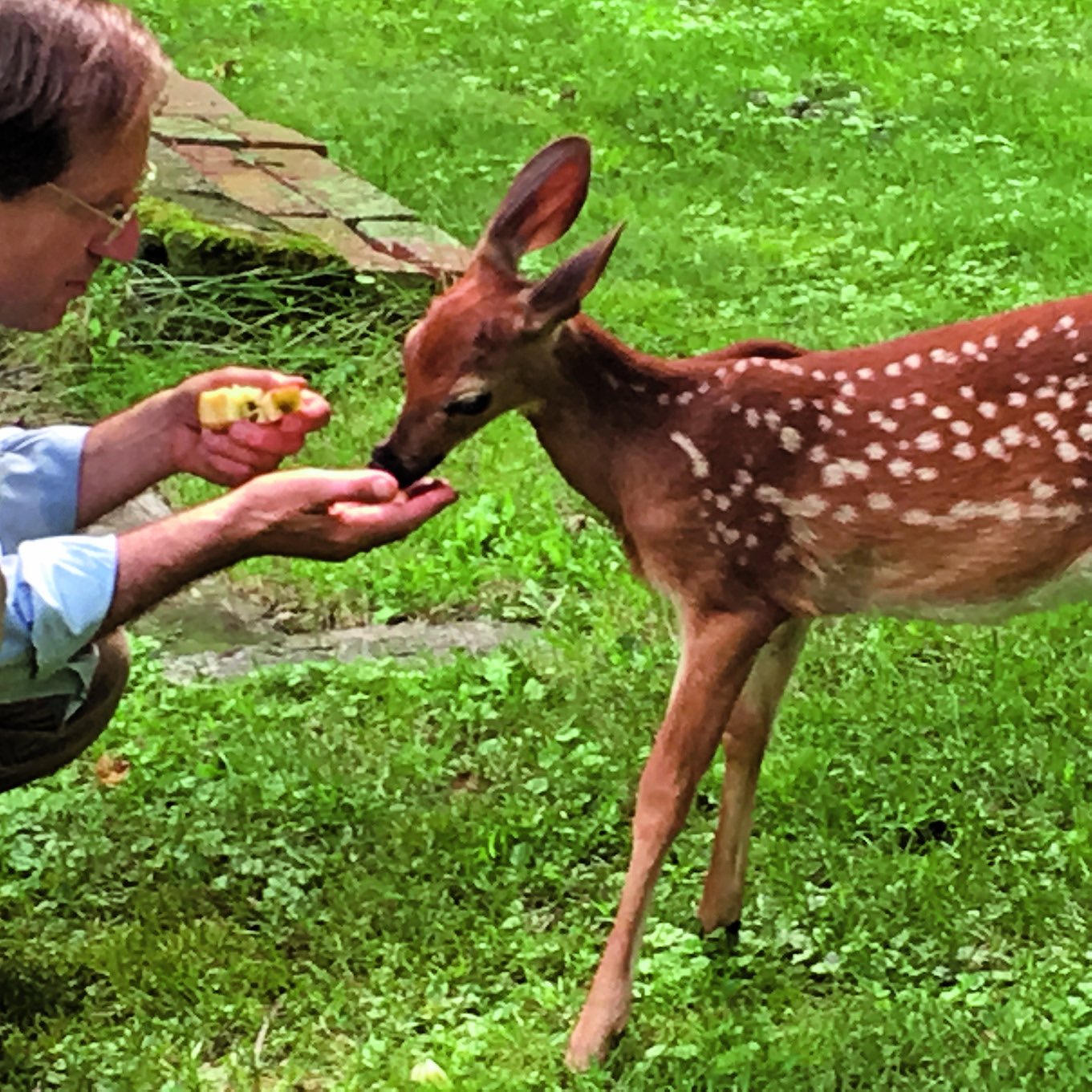
Paul feeding Penelope. Image: Paul Bochner.
When I went around to the front of the house, she struggled to her feet and approached. In the morning light, I was better able to assess the state of her health. Months of solitary survival had taken a severe toll. Her body seemed hollowed, her ribs and pelvis sharply visible beneath her skin, and it felt a miracle that she was alive. On her right flank was a hemispherical mass the size of a cantaloupe, which I took to be a tumor, yet it had an open, running wound at its center, which she periodically craned her neck to lick. Her eyes were running and had congealed masses at their inner corners.
I bent to get a look at her injured foot. From not being walked on, the backward-facing cloven hoof had grown to an abnormal length and was curling upward. The wrist, which unnaturally bore her weight, had a flattened forward surface, an oval about two inches across, worn raw, without hair or skin, only pale pink–grey flesh, which, at its center, appeared to have been further abraded to the bone. Her right front foot, forced to compensate, was splayed and rockered, her right scapula protruded, and her front quarters were substantially lower than her hips.
I again placed apple pieces on the ground between us. I spoke very gently to her, saying, “You are the best one of all the deer. You are the most beautiful. You are good.” I continued to talk to her while she ate her apples, and when she had taken all she could, she returned to her resting spot under the window. I went inside to work, keeping periodic watch, pleased that she seemed to have claimed a place. But in a few minutes, from around the corner of the house came the twins, followed by their mother who immediately and ag-gressively charged at her. The Girl with the Broken Foot lurched upright and hobbled down the embankment, across the road and into the woods.
She was once again alone, but a step had been taken. Since the previous evening, things had changed. Even before her second feed-ing she had recognized me on sight. She had approached and had again allowed me near.
Although I had seen her fewer than half a dozen times in the preceding months, from the night of our first connection, she began to come to the house every day. She slowly gained strength and I would watch for her and thrill to the sight of her slow approach. It was our private time. We stood together, and I placed her food on the ground between us. After she ate, she would stare into my eyes for long periods, seemingly entranced. I told her stories. I sang softly to her. I told her she was my beauty.
So began our journey, and one of the greatest loves I have ever known.
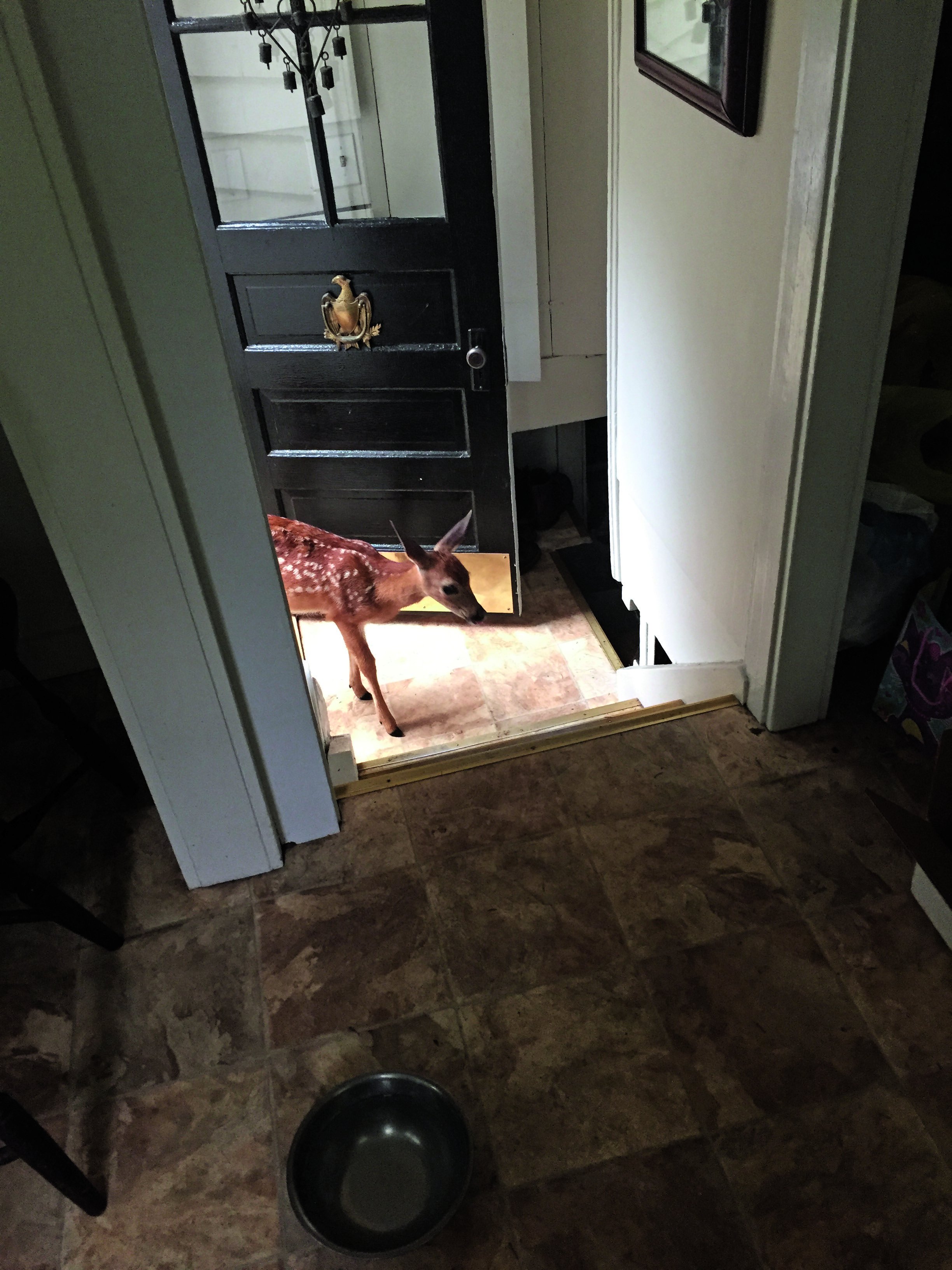
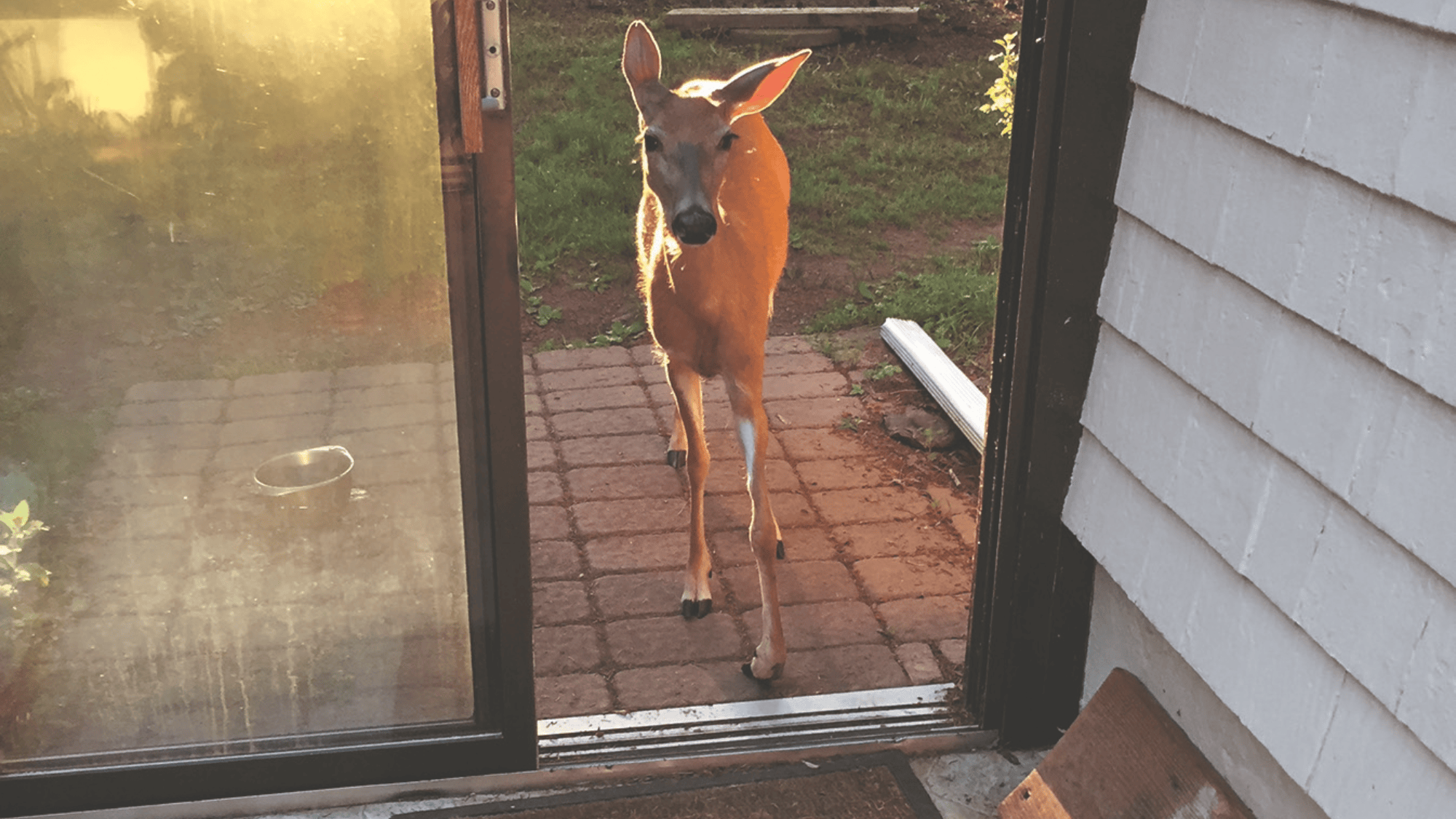
Penelope walking into the house. Image: Paul Bochner.
About the Author
Paul Bochner began his professional life early, as a working musician through his mid-teens in Los Angeles, then moving to Montreal at the invitation of the National Film Board of Canada. He has won several international awards for his films and is the recipient of a Guggenheim Fellowship in painting. He has written for The New Yorker and The Atlantic.
How many young AI cloud providers can the market, and Nvidia, support?
That’s one of the big questions after a week in which investors worried about the data center buildout and the risks that its unproven participants, known as neoclouds, are taking. Those risks include loading up on debt (CoreWeave) or trying to go public without much of a track record (Firmus and Nscale). Firmus abruptly pulled its public offering last week while shares of CoreWeave and its smaller rivals fell around 20%. The concerns even hit bigger AI cloud providers like Oracle.
Data center and neocloud executives told me there’s a limit to the number of AI cloud providers that can exist, even if Nvidia provides many of them with investment or backstops.
You would think, post-COVID, that we would all understand the importance of frequent and thorough handwashing. And yet, spend any time in a public restroom and you’ll see an alarming number of people who still see it as optional.
We know it can help curb the spread of illness when you’re sick, but on an average day, just how gross is it to not wash your hands?
“Your hands have a microbial flora that is always present. These are mostly good bacteria that help protect your skin,” Allison Pappas, PhD, Director of Business Development at Gillson Sciences, tells Popular Science. “On unwashed hands, your normal flora is going to be the most abundant group of inhabitants and they’re nothing to worry about. If you’re not washing your hands, they won’t become overgrown by deadly bacteria. However, your hands will accumulate an increasing number of pathogenic bacteria and viruses from your environment.”
Pappas explains that eating a sandwich or wiping your nose after exposure to these pathogenic bacteria are quick ways to then introduce those germs into your body. She describes it as a “tug-of-war,” with germs pulling one way and handwashing your only way to tug in the opposite direction. There are also physical characteristics that come into play as well. People with longer fingernails or rough, coarse skin give bacteria more places to hide. And it’s not always visible. As Pappas puts it: “Your hands can look clean but be utterly disgusting from a microbial perspective.”
“It’s extremely gross, but assume you’ve got poop on your hands,” says Pappas. “That sounds crazy, but studies have found fecal bacteria on children’s hands and toys and on the hands of 28 percent of commuters in the UK. Even if you don’t have a child and don’t commute via subways, you’re still touching all the same door handles and common utensils as the people who do. That poop is transferring to your hands, you just can’t see it.”
So how gross is not washing your hands? It’s “you have poop on your hands” gross.
Recent studies suggest that most people wash their hands too briefly to actually kill germs. So, if you want to avoid getting sick and spreading illness, it’s time to forget everything you thought you knew, and follow these instructions for proper hygiene:
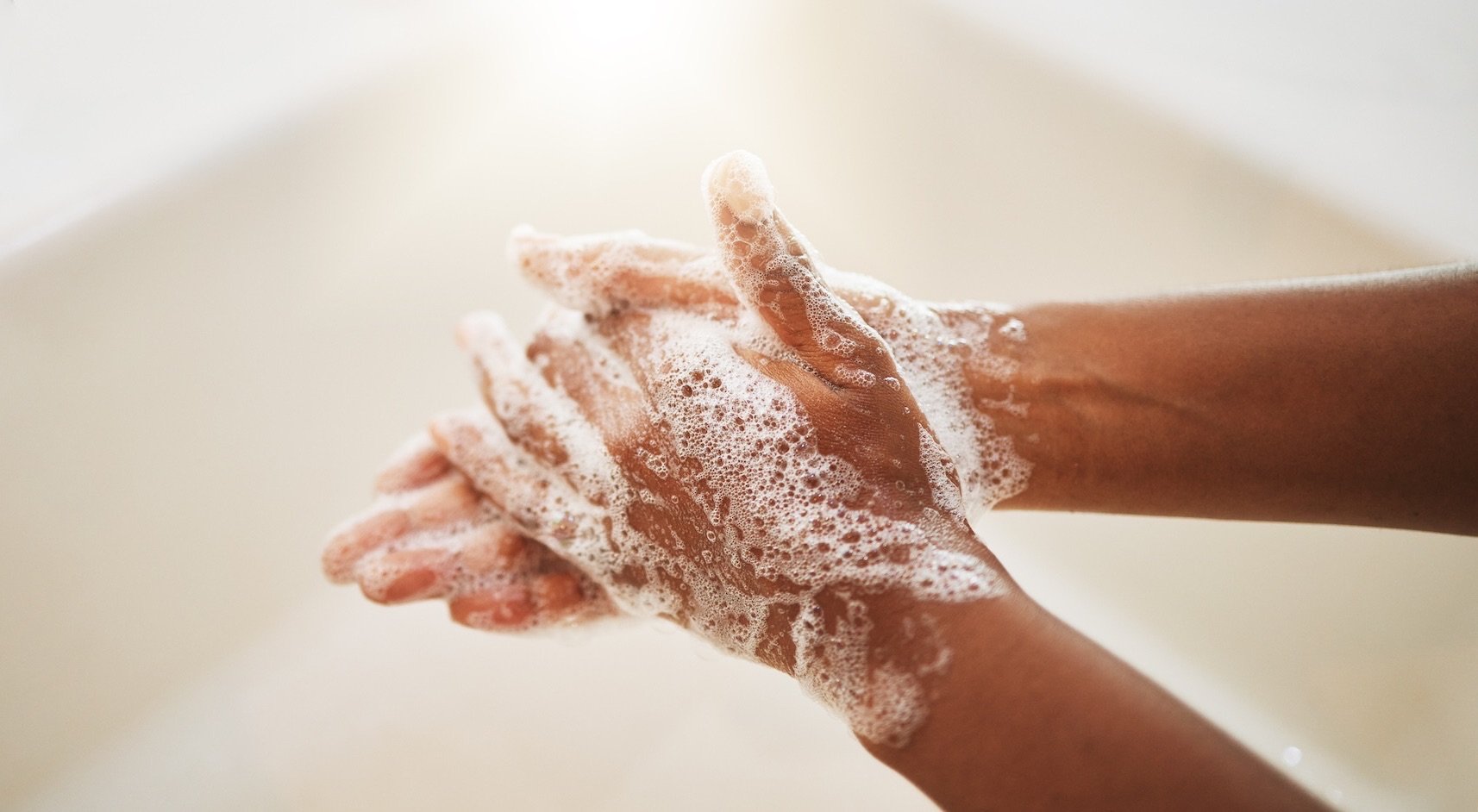
Wet your hands with water at a comfortable temperature. You can’t actually get the water hot enough to kill microbes without burning your skin, so just do what feels nice. The CDC actually recommends shutting the tap off while you lather your soap to conserve water.
Lather your hands with soap. Don’t worry about buying something with anti-microbial ingredients; research shows that outside of a hospital setting, these additives don’t provide a significant benefit, and their use contributes to the rise of antibiotic resistance.
Make sure you lather the backs of your hands, between your fingers, and under your nails, as dangerous microbes can lurk on any part of your skin.
Continue scrubbing for 20-30 seconds before you start rinsing. It’s longer than you think. One study showed that most adults lather for just six seconds. Try singing “Happy Birthday” twice in your head (or out loud, if you’re feeling fun) to help keep time.
Turn the tap back on and rinse. The CDC notes there’s little evidence that using a paper towel to turn the tap on and off after washing will improve your health.
Dry your hands with a clean towel if possible, or with an air dryer. The CDC says that wet hands more easily transfer microbes. Plus, you don’t want to walk around with clammy hands all day.
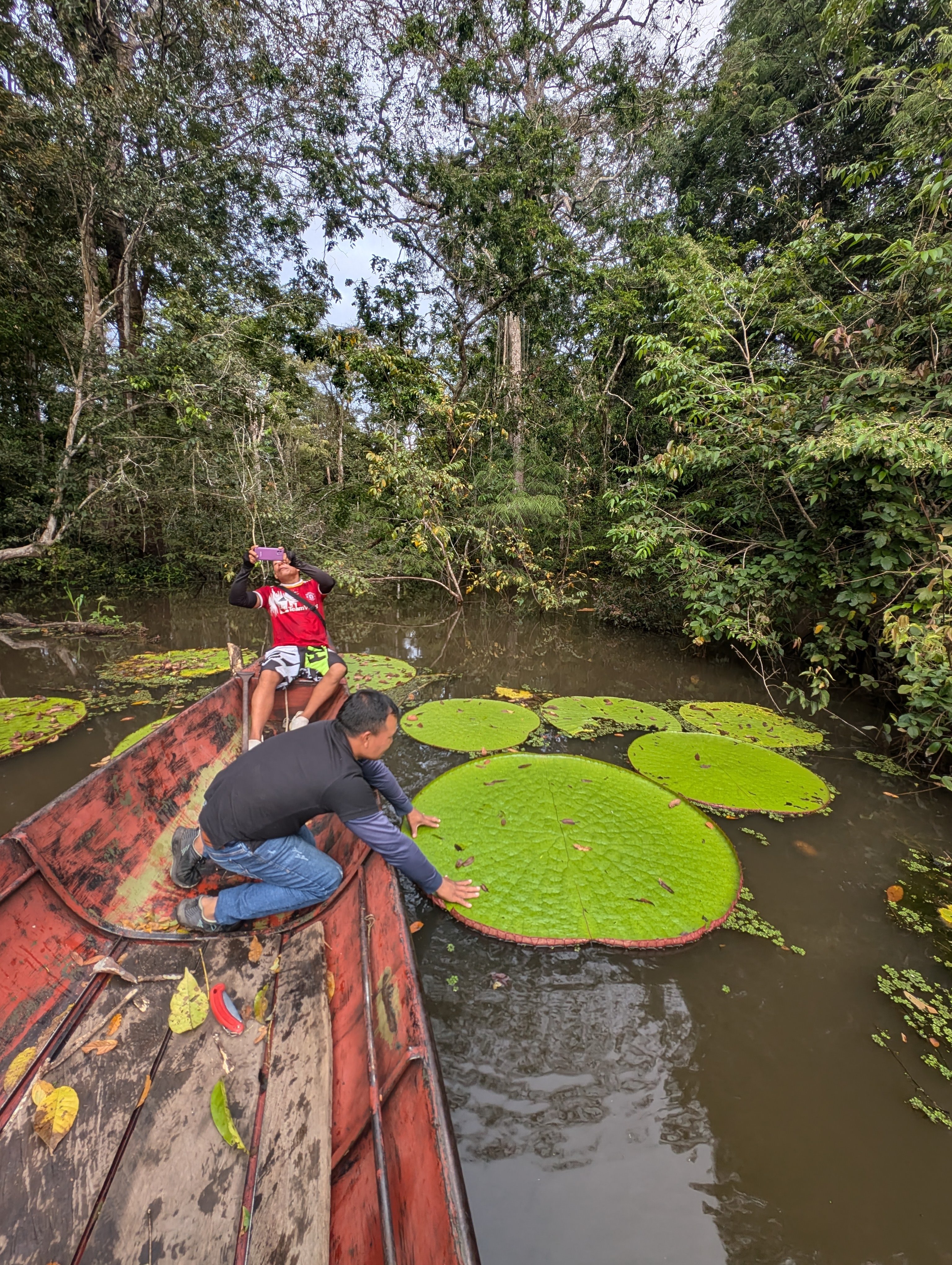
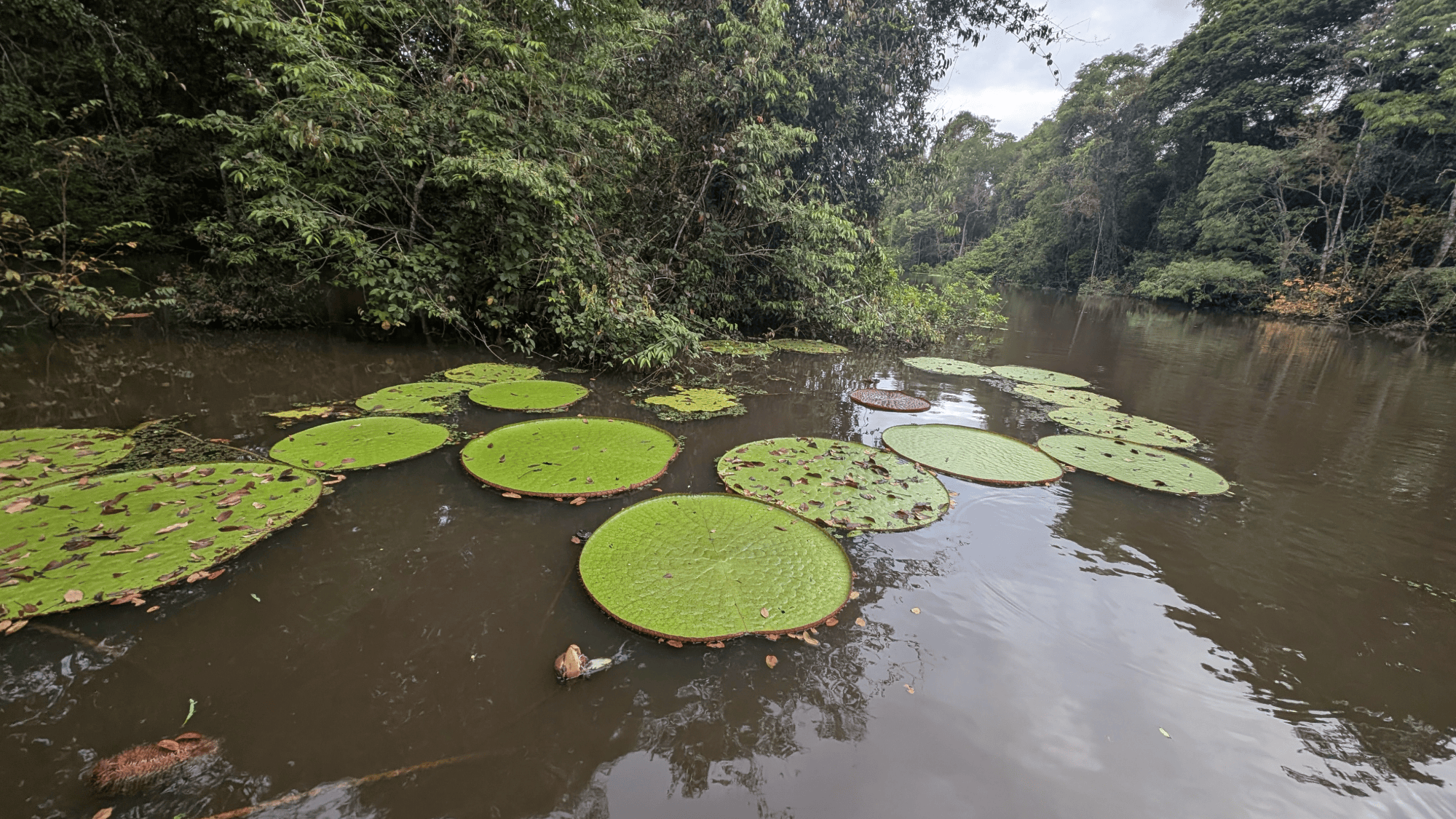
One cold December day in 2021, Colorado carnivorous plant grower Jeremiah Harris shared some pictures of wild Amazonian giant water lilies (Victoria amazonica) plants in the Inírida River in Guainía, Colombia to Instagram. There’s just one problem. No known Victoria water lily species grow there.
When water lily expert Carlos Magdalena saw the post on Instagram, he suspected a new plant species could be involved. To investigate the matter, he used satellite imagery to remotely search the Inírida River and its surrounding lakes and confirmed the presence of Victorias.
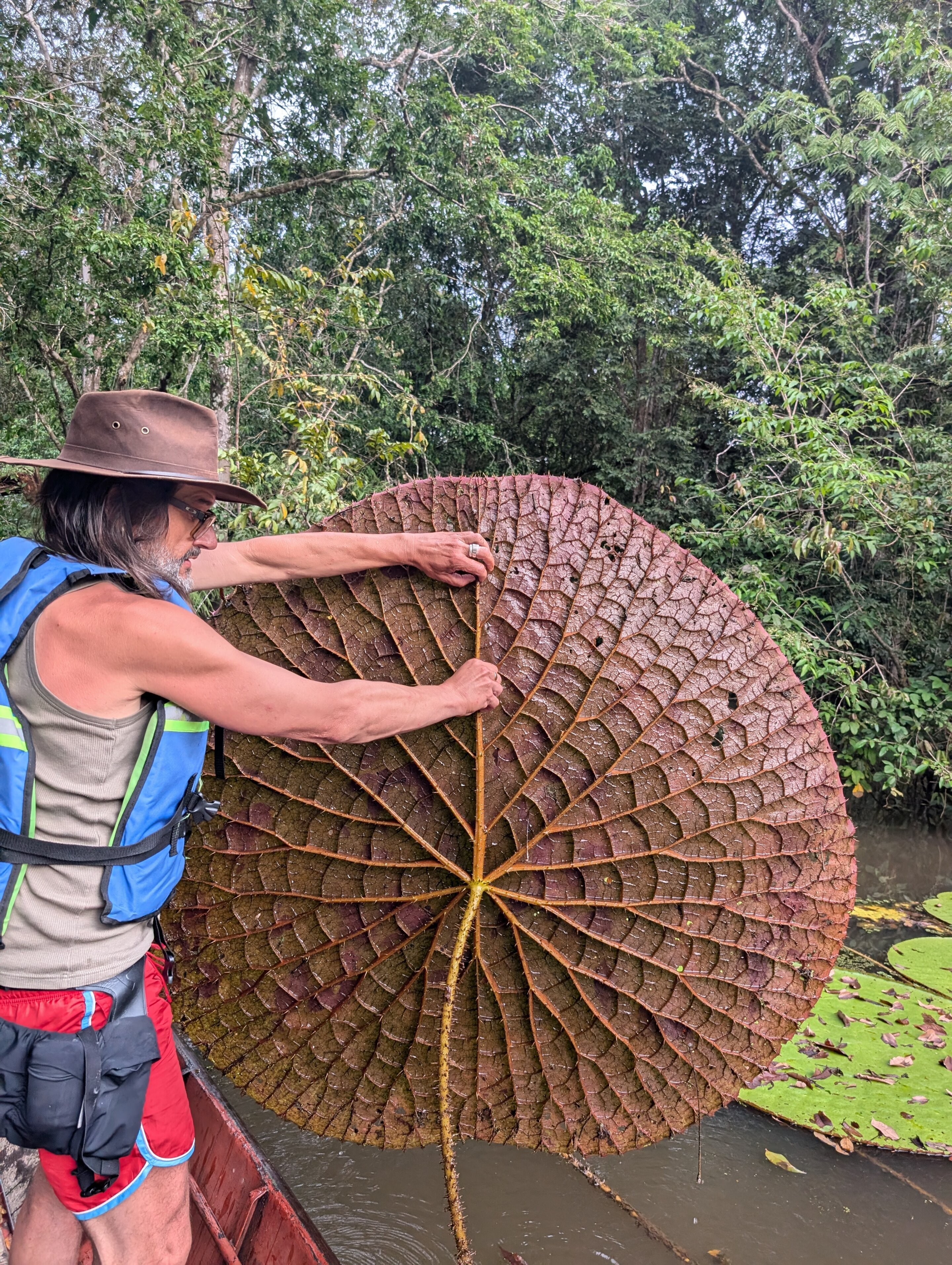
And yes, you can see these enormous plants from space. Victorias grow the world’s second largest single plant leaf.
Victoria colombiana is the fourth Victoria water lily to be described. Image: Carlos Magdalena.
Magdalena is a botanical and scientific research horticulturist at the Royal Botanic Gardens, Kew in the U.K. Along with his colleagues, the team went on a five-day expedition to Inírida. The team included members of the Indigenous reserves del río Atabapo, one of whom had seen the lilies during his childhood.
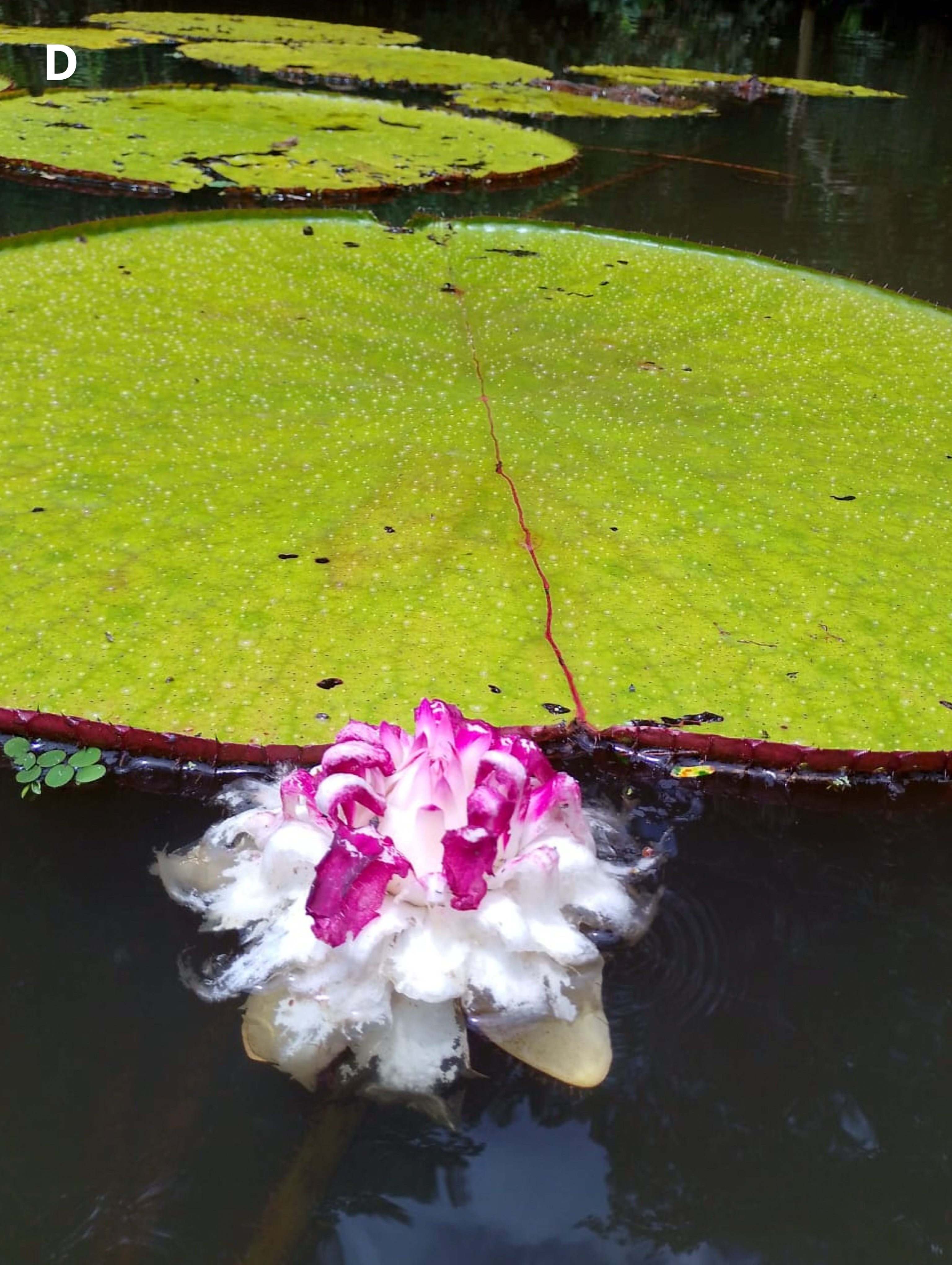
However, the trip didn’t exactly go according to plan. By their last night, they had found only two water lily plants, neither of which had flowers. This was a problem, because botanists need a flower to differentiate species. As if that wasn’t bad enough, the water lilies they found seemed to be struggling with a late rainy season.
But when Magdalena described their situation to the expedition’s boat captain, Gustavo Melo, he said he knew where they could find more of this water lily. They didn’t have much time to do so, with the team’s flight back to Bogotá was at 9:00 a.m. the next morning. Thus at 1:00 a.m., Melo, a member of the Indigenous Tucano community, led them to a small lake. There, they found five more Victorias, one of which was blooming.
Horiculturalist Carlos Magdalena holds up a giant lilypad. Image: Mauricio Bernal.
“This is one of those extraordinary stories where indigenous and horticultural knowledge with the help of social media and technology came together to uncover a truly extraordinary botanical achievement,” Magdalena said in a statement.
The researchers were able to collect what they needed to start the official scientific description of the new species: Victoria colombiana. They even managed to make that early flight. In their recent study published in the journal Phytotaxa, he and his colleagues also announced the discovery of another new Victoria species, Victoria mattogrossensis.
A Victoria colombiana bud. Image: Nilo Rodriguez.
The team estimates that there are only between 30 and 50 wild V. colombiana plants, and is extremely vulnerable to extinction. They are currently working to get the plant officially categorized as Critically Endangered by the IUCN Red List.
“Now that we know this water lily exists, our responsibility is to understand it better and protect it. With so many plants in the wild threatened with extinction, we simply cannot wait any longer to take action,” Magdalena added. Experts are considering starting a naturalized population in a more accessible lake in Indigenous territory and researchers also are hoping to cultivate the species in Bogotà.
The Trump administration has opened the door for entrepreneurs to start new banks in the U.S., many funded by venture capital. But there’s a catch for fast-growing newcomers.
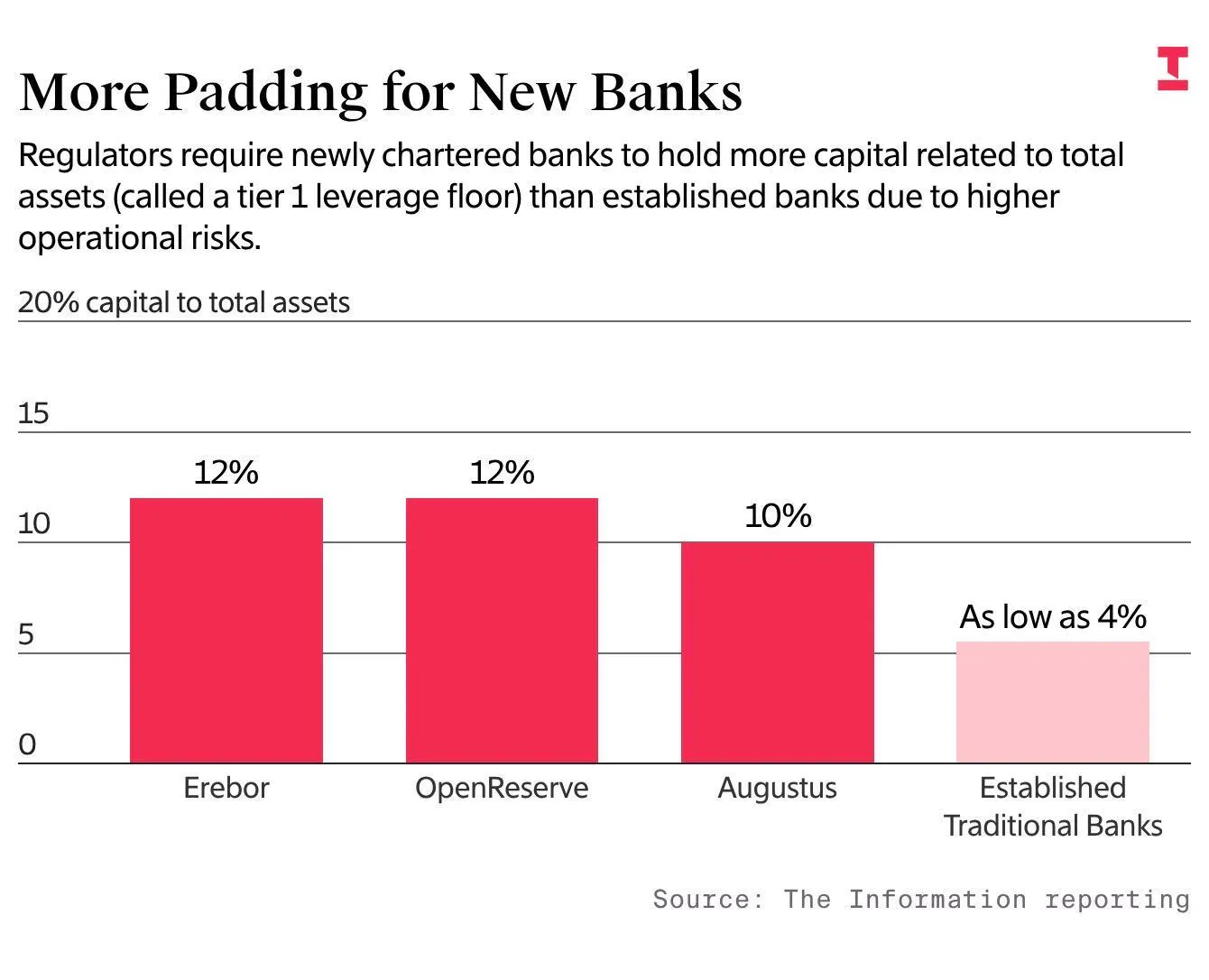
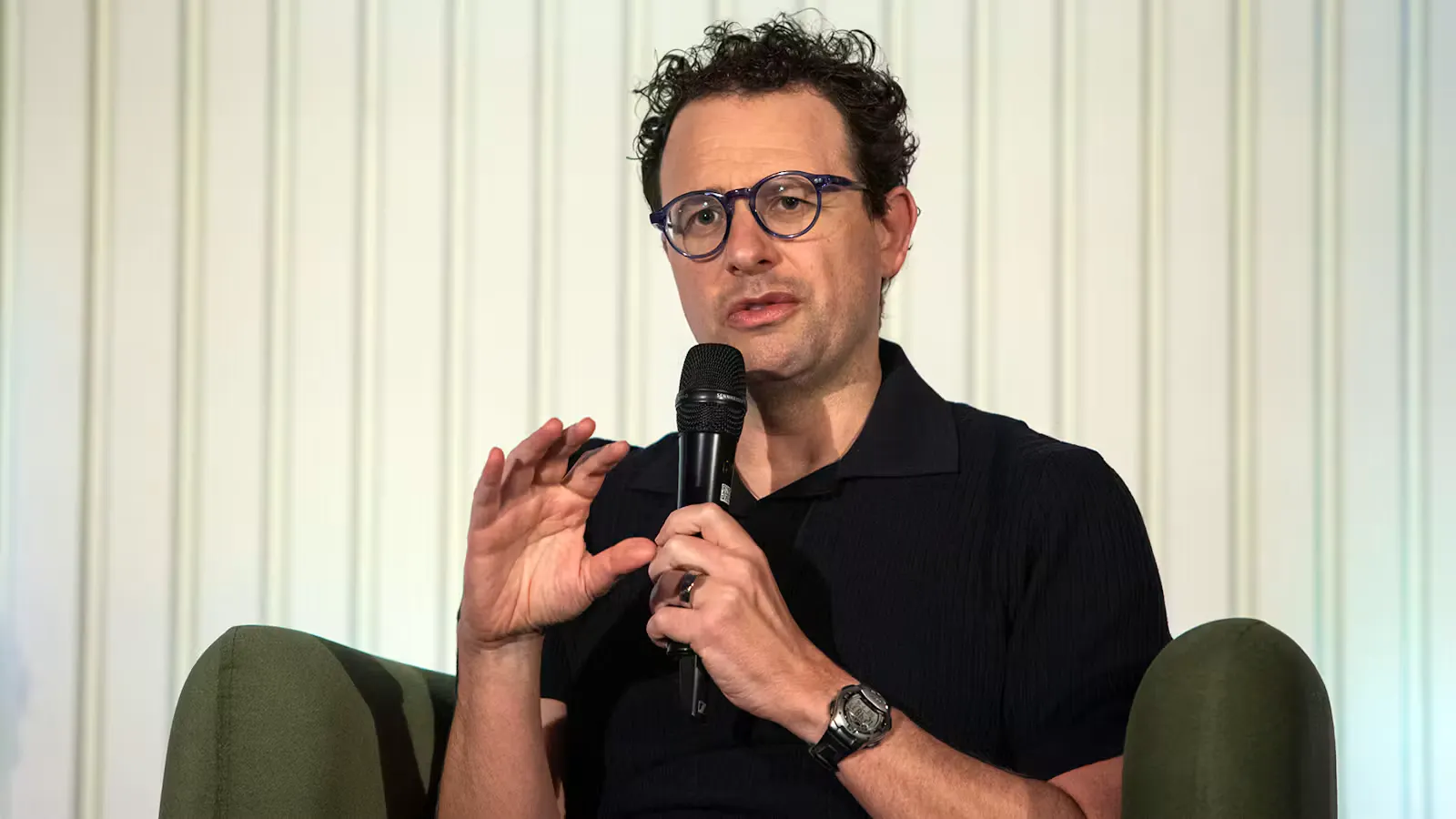
Upstarts like Palmer Luckey’s Erebor Bank, as well as other new entrants like Openreserve and Augustus, will likely have to keep raising money as they grow to maintain the capital cushion they need to satisfy bank regulatory requirements. That’s a contrast to most startups, which use fresh venture money to pay for operating expenses and expand the business.
Regulators require banks to maintain a capital cushion to absorb potential losses and protect depositors. That cushion is typically measured through a minimum tier 1 leverage ratio, which measures a bank’s capital relative to assets including cash, loans and investments. For instance, a bank subject to a 12% minimum tier 1 leverage ratio needs to maintain at least $12 in capital for every $100 in assets.
As a bank attracts more deposits, its assets, such as loans, typically grow too, increasing the amount of capital it needs to meet that minimum ratio. Established banks can build up their capital through their profits, but newer banks that aren’t yet profitable have to rely instead on raising fresh equity from investors.
Startup banks have already been raising significant funding to get their businesses off the ground or as deposits grow.
Erebor Bank is set to raise $1.5 billion in a fresh fundraising round at an $8 billion valuation before the investment, after launching with $625 million in committed capital in February. The fundraising comes as the bank has seen its deposits surge to $7 billion as of the end of September, up from $4 billion at the end of the prior quarter.
Meanwhile, Openreserve, an a16z crypto-backed bank that raised $25 million in September, said it expects to announce an additional capital raise to meet its regulatory requirements ahead of its planned opening early next year.
Then there’s Augustus, a startup bank focused on serving fintech companies. It raised $180 million in a Tiger Global Management–led round in July at a $1 billion valuation and expects to open later this year.
Regulators give capital ratios to each bank based on their assessment of the institution’s business plans and risks. Newly created banks typically face tougher capital requirements than established banks. For the first three years of operation, Erebor and Openreserve must each maintain a minimum tier 1 leverage ratio of 12%, while Augustus faces a 10% minimum. Established banks, by comparison, typically have ratios of between 5% and 6%.
“There’s no question that the regulators treat de novo banks—new banks—differently than they do well-established banks,” according to Brian Graham, a partner and co-founder at consulting firm Klaros Group who advises clients on bank charter applications. Graham noted that the extra capital requirements typically go away after a bank has been operating for three years.
The upstart banks are generally pursuing relatively new business models or focusing on sectors big banks typically avoid. Erebor Bank, for example, has gained traction in areas prioritized by the Trump administration, such as defense startups and crypto firms, and is expanding in geographies traditional banks typically avoid, including Venezuela and Syria.
In addition to making minimum capital requirements, the Federal Deposit Insurance Corp.—a banking regulator—imposed an unusual condition on its approval of Erebor for the deposit insurance program. Under a capital-call provision, Erebor’s investors must contribute additional capital if the bank doesn’t meet its minimum capital requirements, according to a filing. The filing didn’t disclose which investors are required to provide the capital backstop.
In the meantime, upstart banks that are looking to drive revenue growth from lending rather than fees will likely need to tap investors to build their capital.
“To the extent the bank’s business model is reliant materially on the balance sheet for revenue and net income, you’re going to need to raise more capital to drive growth,” Klaros’ Graham said.
Openreserve, for its part, plans to make loans backed by traditional assets and turn them into digital tokens that can trade on blockchain, potentially providing a new source of loans for investors and lenders in the crypto market. For example, it plans to lend businesses money against their trade receivables, turning those assets into digital tokens to make them easier to trade.
“Our ambition is to be the on-chain GSIB,” referring to a globally systemically important bank, said Dee Choubey, founder and CEO of Openreserve. The bank also plans to issue its own stablecoin and to offer tokenized deposits, digital versions of traditional bank accounts that earn interest. Over time, it aims to provide banking and payment services to other digital banks.
Augustus plans to focus on helping fintech, crypto and remittance companies move money across borders using both traditional banking systems and stablecoins. That will put it in competition with existing banks like United Texas Bank, which has become dominant in processing dollar payments for overseas crypto exchanges.
“Whenever someone outside the U.S. touches the dollar through a local bank or local fintech, that always has to be facilitated by a U.S. nationally chartered clearing bank, so we provide that service,” said Augustus CEO Ferdinand Dabitz. In Europe, the bank already counts crypto exchange Kraken among its clients.
Augustus is less focused on activities like lending, however, and has a lower ratio than the other two. The company has raised significantly more than its initial capital requirement, which could lessen the need for more fundraising in the near term. “We are less focused on the credit side as other market participants. We think the clearing side is really where we shine,” Dabitz said.
A song has been stuck on loop in my mind for days now. Yeah, this one.
C’mon, haven’t you heard the big, brassy James Bond theme playing too? We have an honest-to-goodness spy scandal on our hands! That would be the affair over at OpenAI, where the FBI has arrested a former engineer, Abdulrahman Alfozan, for allegedly placing a toilet paper–wrapped recording device in a conference room. Why’d he do it? The Justice Department wasn’t explicit in its press release announcing Alfozan’s arrest, though the statement does make sure to prominently describe him as a “national of the Kingdom of Saudi Arabia,” implying, obviously, that he was hoping to spy on OpenAI for the Saudis.
I expect a not unsizable part of Silicon Valley experienced some schadenfreude when reading about the turn of events at OpenAI. I’d advise against indulging in that feeling, because when I struck up conversations with a few corporate security consultants and surveillance experts over the last few days, they all echoed the same sentiment: Plenty of companies risk ending up in the same situation—especially as they move quickly in today’s era of frenzied, heightened competition. A discomforting thought, eh?
“Organizations can sometimes be moving so fast that they often don’t understand that there’s an issue associated with somebody until that person’s on board and up to no good,” said Bill Priestap, a former head of FBI counterintelligence who now runs his own security consultancy, Trenchcoat Advisors. “Meaning they’re recruiting, and they’re under such pressure to get the right people and get them on board that in many regards, they end up with a minimal understanding of the people they’re bringing on board.” Well, good thing there hasn’t been an enormous, frantic hiring binge lately. Ha ha ha.
If you’re starting to feel a little paranoid, I strongly, strongly advise against talking to someone like David Abbott, a San Francisco private detective, to find out how easy it is to bug an office. Such conversations will only further unnerve you—you might end up holding your next board meeting in your home basement, Tony Soprano style—because according to Abbott, it’s pretty darn easy to install a recording device.
A suitable one can be bought for less than $100. Some of the popular ones resemble phone chargers, which get tucked into a power socket, hidden in plain sight. He’s also seen surveillance devices in fake coffee cups—you know, like the ones that might lie casually around an office—and quite a few in fake smoke alarms.
More bad news: Should you find such a device, it’s like spotting an ant in your kitchen. One ant suggests the presence of more ants. “If I’m doing a bug sweep, just because I find one does not mean there isn’t a second,” said Abbott. “If you find one, there’s going to be two. If you find two, there’s going to be three. You just keep looking.”
What happened at OpenAI underscores Abbott’s warning. There, Alfozan, the alleged spy, did plant two bugs. Well, he tried to do so. Alfozan, not the sort who seems like he would’ve ever earned double 0 status, had placed another bug in a bag that he then mislaid: He reported it missing and had to go pick it up from the company’s lost and found.
OK, if I’ve spooked the heck out of you, I guess I can offer some solace by pointing you in the direction of Eric and Greg Levesque, whose Salt Lake City–based startup, Strider Technologies, has raised $110 million in the last few years to sell AI-powered software to businesses that monitors email and other internal communications, flagging suspicious behavior and possible espionage attempts. (Yes, the company’s name is a reference to Strider from “The Lord of the Rings,” the nom de cloak of Aragorn, the character Viggo Mortensen plays.)
“What we’ve found is that companies are not always dealing with trained intelligence operatives. Like, they’re dealing with scientists or legitimate engineers who have been approached or coerced in some form or fashion and are now working on behalf of someone else,” said Greg Levesque. “They can leave a lot of digital exhaust.”—Abram Brown(abe@theinformation.com)
As the pandemic shut down the world in 2020, Sayre Quevedo, then a producer for The New York Times’ “The Daily” podcast, quit his job and headed out to Los Angeles, hoping for a chance at self-reinvention. To cope with those tumultuous times, he decided to pursue a documentary project, recording every phone call. Had nothing else of import happened in his life, Quevedo might’ve wound up with an intriguing time capsule. But something quite unusual did occur: Just months after moving to LA, he and his twin brother, Connor, happened to finally locate their biological father, whom they’d never before met. He worked as a barber—blocks from where Sayre lived. “Reaching Out,” a new podcast co-produced by NPR station KCRW that won a top prize in the Tribeca Festival’s expanded podcast categories, is a starkly intimate account of their journey to meet him and their reconciliation with each other, their lives and what life might’ve been like if their father hadn’t been a total stranger who happened to be just down the street.—Abram Brown
Chuck Lorre, the indefatigable TV showrunner, writer and producer, has kept the masses laughing for years—and years—and years, with a list of hits that includes “Two and a Half Men,” “The Big Bang Theory” and “Dharma and Greg.” Those are sitcoms, a term Lorre acknowledges once made him practically break out in hives, since it was often used to cheapen what he sees as grueling, high-touch art. With spicy good humor, he reclaims the word in his new memoir about his time in Hollywood, “Sitcom.”
“The truth is, making a live studio audience laugh for twenty-odd minutes every week, for twenty-two weeks, is incredibly hard and unbelievably stressful,” Lorre writes. “If you’re one of those people who insist on labeling all sitcoms as being cheap, juvenile and unsophisticated, well…all I can say is, blow me.”
I’d say “Sitcom” functions as a good primer on managing talent, too, and Lorre attests to having learned the importance of keeping out of the way. “Creativity needs air to breathe,” he writes. To do the opposite risks turning a leader into “one of those plastic bags you get at the dry cleaners that can kill small children.” Lorre also takes the opportunity to set down what he sees as good comedy’s basic tenets and decry the medium’s basest impulse: to write only about stupid people doing stupid things: “A better, perhaps deeper means to achieving laughter involves pain and suffering.”
Such a sentiment is most certainly shared by Larry David of “Seinfeld” and “Curb Your Enthusiasm,” the subject of “Emperor of Nothing,” a biography that won his reluctant cooperation. (When author Blake J. Harris finally wore David down, Harris received a two-line email from him: “Oh Jesus. If we must.”) As with “Sitcom,” “Emperor of Nothing” charts a remarkable rise across Hollywood from an inauspicious start: Lorre was a wannabe musician before his TV run, while David was a little-known stand-up comic with an unremarkable series of TV writing jobs before co-creating “Seinfeld.”
Like Lorre, David describes the process of penning comedy as an arduous affair. And by David’s own telling, the process of sitting down to write a new “Seinfeld” season would bring on full panic. “That always seemed like a daunting prospect,” he recalled. “Especially because all the good ideas were used up the year before.” Fortunately, David had his friendship with the show’s eponymous star, Jerry Seinfeld, one of many people within David’s orbit who gave interviews for “Emperor of Nothing.” “I would always say, ‘All we have to do is write today,’” Seinfeld said. Or as David recalled: “Jerry always talked me off the ledge.”—A.B.
No one does a charming, self-involved cad better than Dominic West, the British character actor who first washed ashore in America as “The Wire”’s Detective McNulty and then again in Showtime’s “The Affair” and in the final two seasons of “The Crown” as Prince Charles. In “War,” HBO’s new high-tension legal drama, he’s tech billionaire Morgan Henderson, a fellow championing a safer, more responsible social media—while embroiled in an increasingly messy divorce from his Hollywood star wife, Carla (Sienna Miller). Much of that mess is Morgan’s own doing: He looks wonderful in his Savile Row trousers—he just has trouble keeping them on. As Morgan and Carla gird for an extended battle, they assemble a posse of cutthroat attorneys, who find their impulsive clients constantly upending their carefully laid strategies. That flock of legal eagles includes a handsome rogue, Johnny (Archie Renaux), a lad from working-class south London who sees a chance to ascend by, uh, redefining zealous representation. Backstabbing and double crosses abound.—A.B.
When zoology professor Daniel Baldassarre traveled to the remote Galápagos Islands of Wolf and Darwin with two other researchers, getting there proved quite a challenge. With no beaches to land a boat on, they had to approach the islands’ cliffs in a small dinghy and wait for a lull in the waves before jumping onto sharp, black lava rocks.
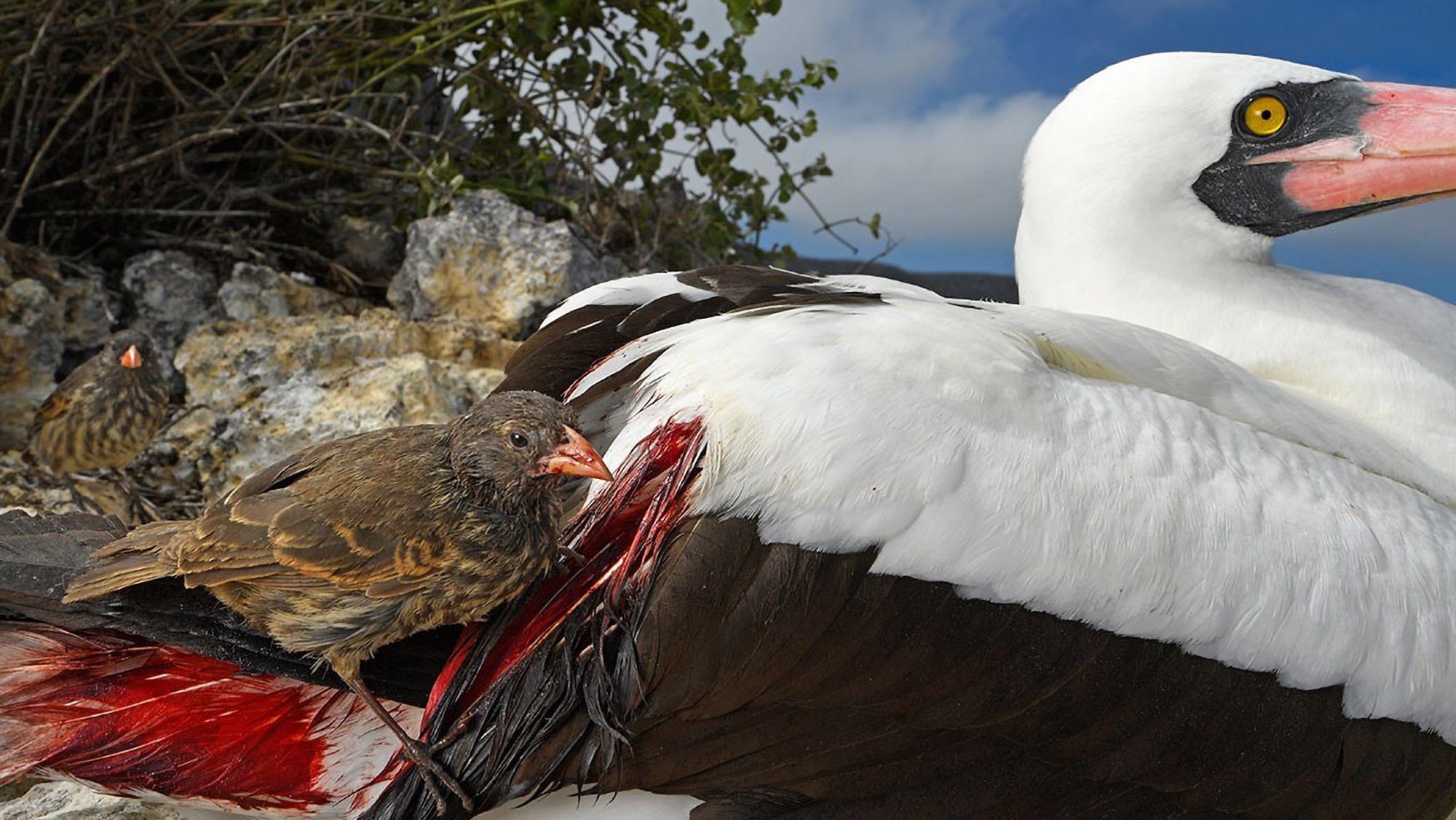
But their efforts paid off. On that trip, they saw a bird that very few people have ever set eyes on in the wild: the vampire ground finch. These finches are only found on Wolf and Darwin, and feed on the blood of much larger birds called Nazca boobies that also live on the islands.
Up close, Baldassarre and his colleagues noted the vampire finches’ blood-stained bills and their throats visibly engorged with blood. They also saw them in action.
“We observed scores of vampire finches clamouring all over the backs, tails, and wings of boobies, opening up substantial wounds with their sharp beaks, and drinking their fill of blood,” they wrote in an article for The Conversation.
Why only some birds drink blood
“Blood is a notoriously difficult food source to process and extract nutrients from, which probably partly explains why so few animals have evolved to feed on it,” Baldassarre tells Popular Science. He suspects that on these islands where freshwater is extremely rare, blood might serve as a water source for the finches.
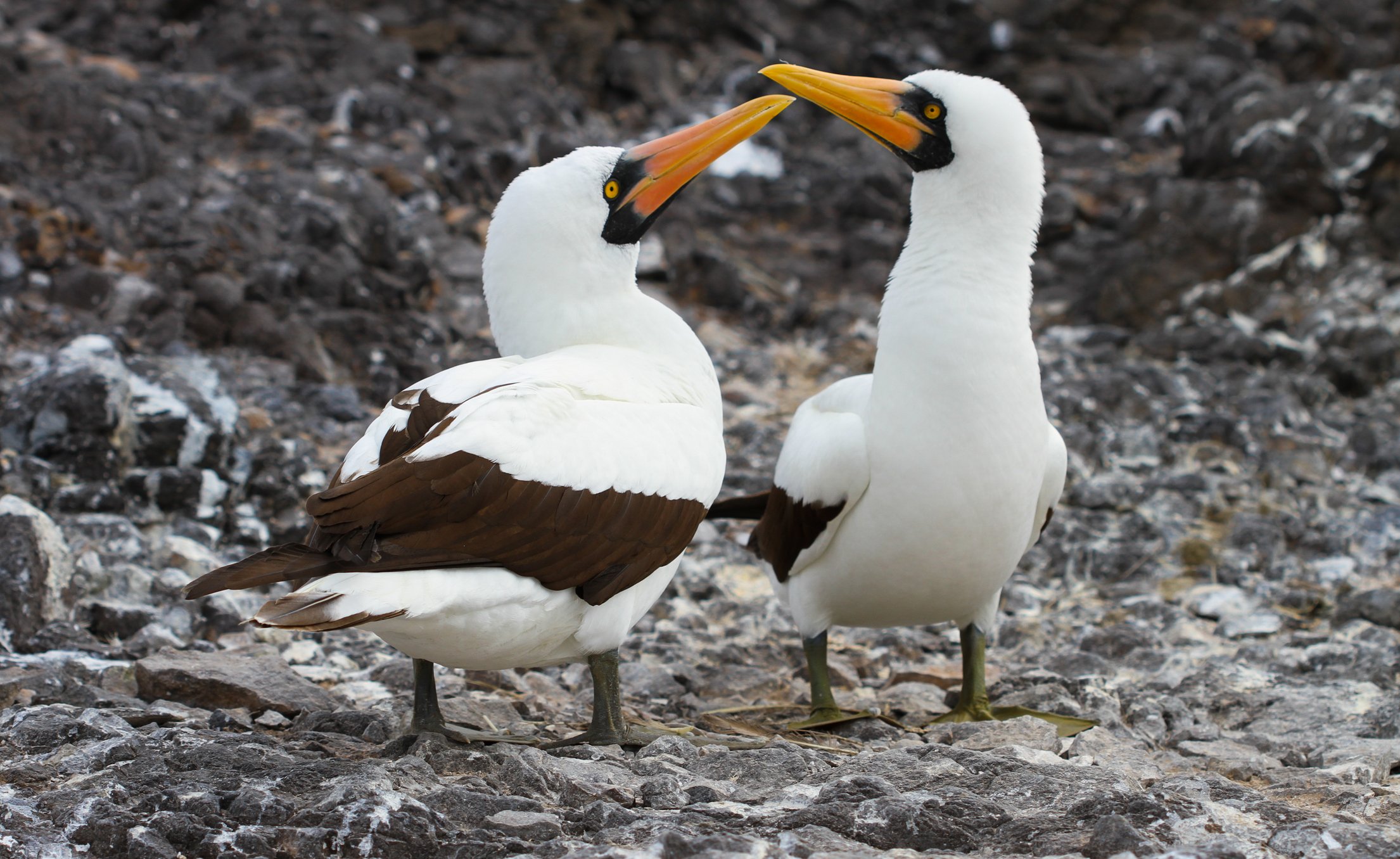
Two Nazca boobies perform their species’ mating call. Vampire ground finches feed on Nazca boobies on the remote Galápagos Islands of Wolf and Darwin. Image: Getty Images / inthedark72
It’s not the only component of the vampire finches’ diet, however. Based on unpublished data collected by Baldassarre and his colleagues, blood makes up about one-tenth of the vampire finches’ diet.
“These finches are quite opportunistic, so they will eat just about anything they can find,” Baldassarre says. “We observed them feeding on everything from seeds to insects to broken seabird eggs.”
One theory is that vampire finches rely more on blood feeding in periods of extreme drought, when other resources are scarce. But more research is needed to see if this idea holds up in practice.
How this strange behavior evolved
Vampire finches weren’t always vampires, scientists think. The relationship between vampire finches and boobies probably started off with the finches eating parasites found on the skin and feathers of the boobies. This would have been mutually beneficial because it provided a cleaning service for the boobies and food for the finches.
But at some point in evolutionary history, in the process of picking off parasites, the finches started to create lesions on the boobies’ skin, and eventually began feeding on their blood.
Over time, their bills became more scalpel-like, perfect for making skin incisions. Their digestive system also changed. When Baldassarre and his colleagues studied the microbes found in vampire finches’ guts, they found that their gut microbiome was very different from that of other, non-blood-consuming finches on the Galápagos Islands, something they attribute to their unique diet.
Until recently, vampire finches were considered a subspecies of the sharp-beaked ground finch (Geospiza difficilis).
“But they have now been designated as their own species [Geospiza septentrionalis] because of the differences they have evolved because of blood feeding,” Baldassarre notes.
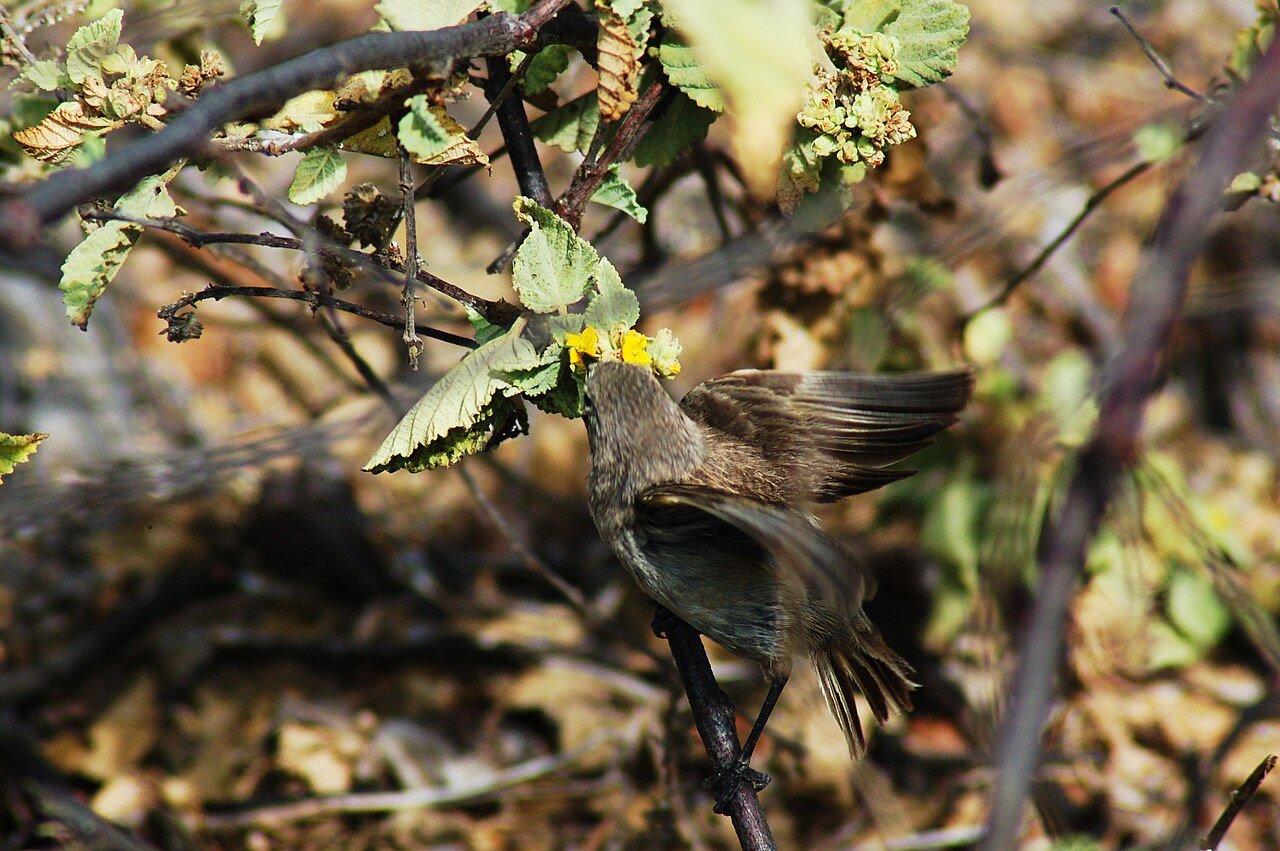
Vampire ground finches on Wolf island have been seen drinking nectar from Galápagos prickly pear flowers and other flowers. Image: Peter Wilton / CC BY 2.0
How the boobies cope
Baldassarre and his colleagues have seen vampire finches gang up on and kill nestling boobies,“but that was quite rare,” he points out.
“In most cases, the finches seem to inflict just enough damage to break the skin and extract some blood, but not too much to harm the boobies significantly.” This is similar to many parasite-host relationships, such as fleas, ticks, and mosquitoes on mammals. “You can kind of think of the vampire finches as giant mosquitoes,” Baldassarre says.
“For one, as in large animals being bitten by mosquitoes, often the damage is minimal and not noticeable, so it doesn’t elicit a strong reaction. Also, the boobies sometimes have a vested interest in staying put and guarding their spot in the colony, or perhaps nest or nestlings, so may not want to fly away. Finally, the finches seem to target hard-to-reach areas on the boobies like the base of tail feathers, so it’s likely difficult for the boobies to deter them.”
I, for one, was feeling very sorry for the boobies being constantly hounded by these small vampire birds. Until I learnt that Nazca boobies practice something called “obligate siblicide,” which essentially means that the first-hatched chick routinely attacks and kills its younger sibling. It’s a harsh, bird-eat-bird world in the Galápagos Islands.
In Ask Us Anything, Popular Science answers your most outlandish, mind-burning questions, from the everyday things you’ve always wondered to the bizarre things you never thought to ask. Have something you’ve always wanted to know? Ask us.
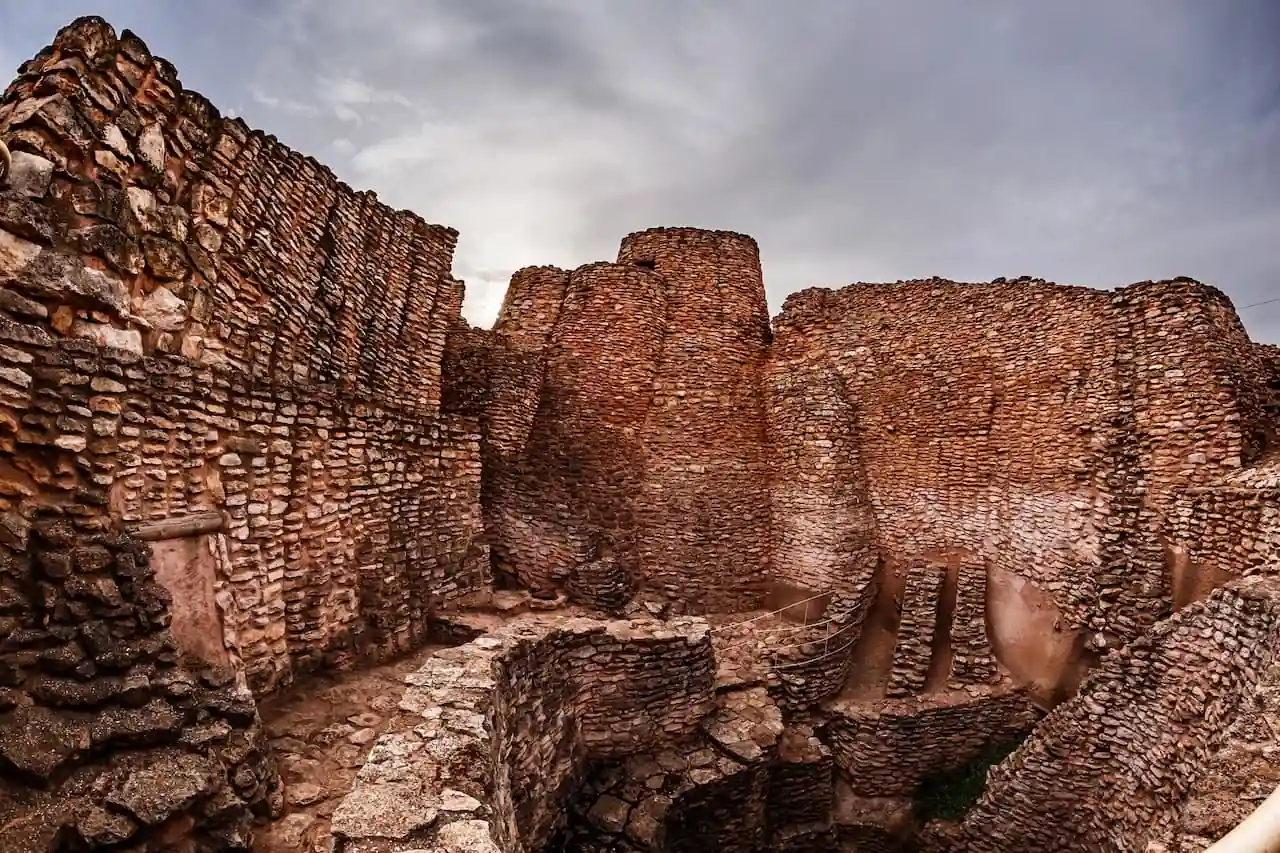
Around 4,200 years ago, in the dry south-east of the Iberian Peninsula, a society began building cities on hilltops, stockpiling grain on a large scale and arming its warriors with halberds (blades like axe heads mounted on long poles) and metal swords. Archaeologists call it El Argar. Further north, in what are now La Mancha, […]
Hace unos 4.200 años, en el sureste de la península ibérica, una sociedad levantó ciudades en lo alto de los cerros, almacenó cereal a gran escala y armó a sus guerreros con alabardas y espadas de metal. Es lo que los arqueólogos llaman El Argar. Más al norte, en lo que hoy son La Mancha, […]
Thirty-five thousand spectators. That is the capacity the authors of a new study attribute to the Roman amphitheatre of Itálica, in Santiponce, near Seville in southern Spain. It is roughly the crowd of a mid-sized modern football stadium, and there was not a single loudspeaker in those stands. Whatever happened on the sand had to […]
Treinta y cinco mil espectadores. Esa es la capacidad que los autores de un nuevo estudio atribuyen al anfiteatro romano de Itálica, en Santiponce (Sevilla), y en aquellas gradas no había ni un altavoz. Lo que ocurría en la arena tenía que llegar al público sin ayuda de aparatos, y hasta ahora había pocos estudios […]
When it comes to the mobile app heavyweights, few can beat WhatsApp. It’s estimated that around 3 billion people now use the cross-platform messaging tool at least once a month. And it’s important to remember there are only 8 billion or so people on the planet, so there are no signs of its popularity waning anytime soon.
Beyond being a hugely successful app, it’s also packed with features. You can use it to chat, make voice and video calls, share files, broadcast your location, and more. Even if you’ve used WhatsApp for years, you might not have discovered everything it’s capable of—which is where these tips come in.
1. Set a timer for messages to disappear
You don’t necessarily want everything you say on WhatsApp to be remembered forever, and the app includes a timer feature that will automatically expunge messages in a chat 24 hours, 7 days, or 90 days after they’re read, unless you specifically keep them. This is set on a chat-by-chat basis, and affects everyone in a conversation.
To change the setting for one of your chats, tap the contact or group name at the top of the screen, then pick Disappearing messages to select your time limit. This is applied until you turn it off or select a different period, but doesn’t affect the conversation history.
2. Lock away your most sensitive chats
Put certain chats behind a lock. David Nield
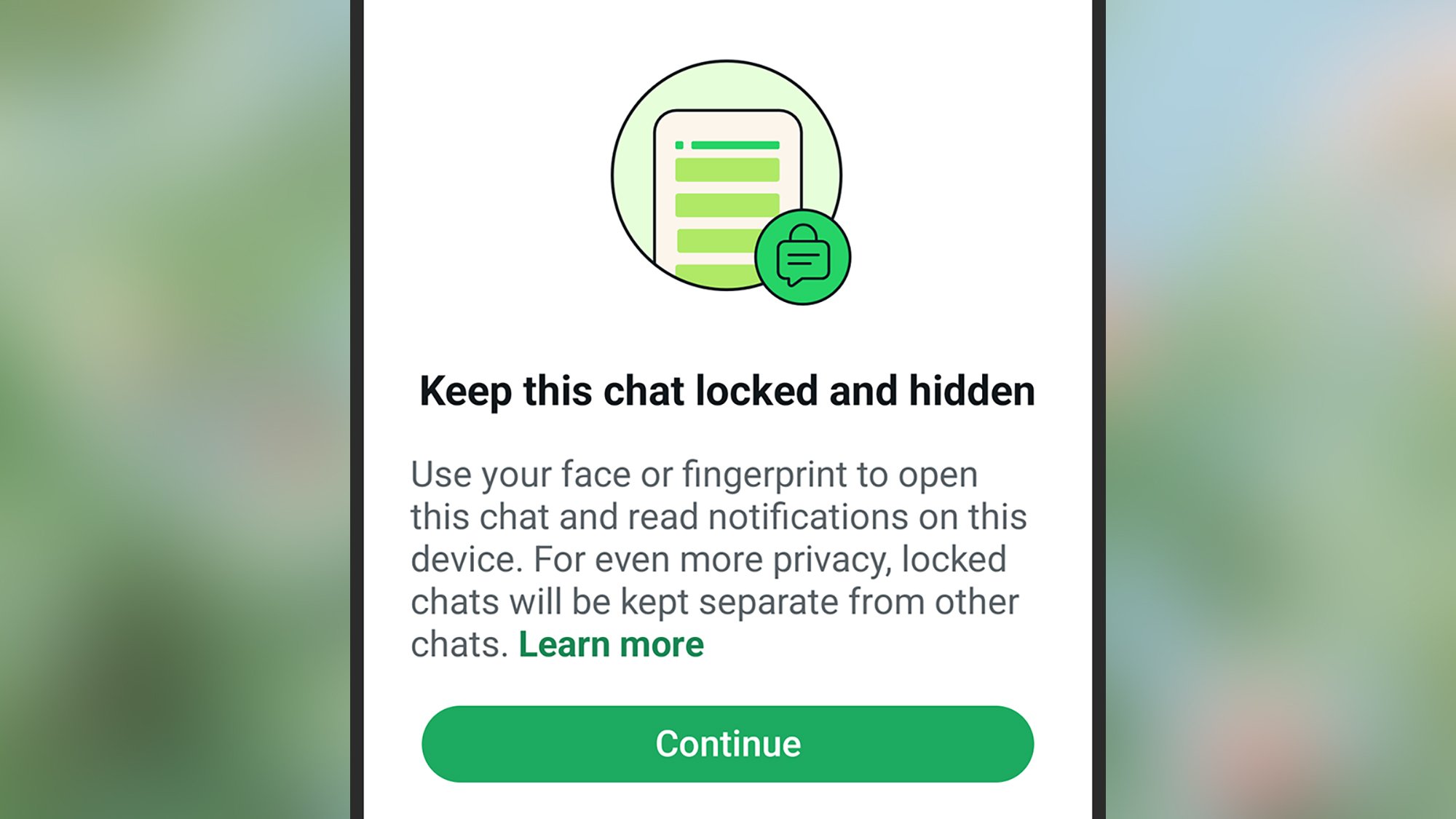
Another way of protecting sensitive information in chats is to add an extra lock to specific conversations. Even if someone should gain access to your phone and your apps, they won’t be able to see your locked chats.
From inside a conversation, tap the contact or group name at the top, then pick Chat lock (Android) or Lock chat (iOS). You can then use a specific PIN code to block access to the conversation, or use the same biometric scan technology (such as Face ID) that already protects your phone at the lock screen.
3. Edit a message after sending it
Have you noticed you can edit messages after sending them? It’s handy for those typos you only spot after dispatching a message—long-press on whatever you just sent, then tap the three dots and Edit (Android), or just Edit on the pop-up menu (iOS). Modified messages have an ‘Edited’ label visible to everyone in the chat, but they won’t be able to see what the original message said.
4. Stop specific contacts from seeing when you’re active
Take control of who sees your activity on WhatsApp. David Niel
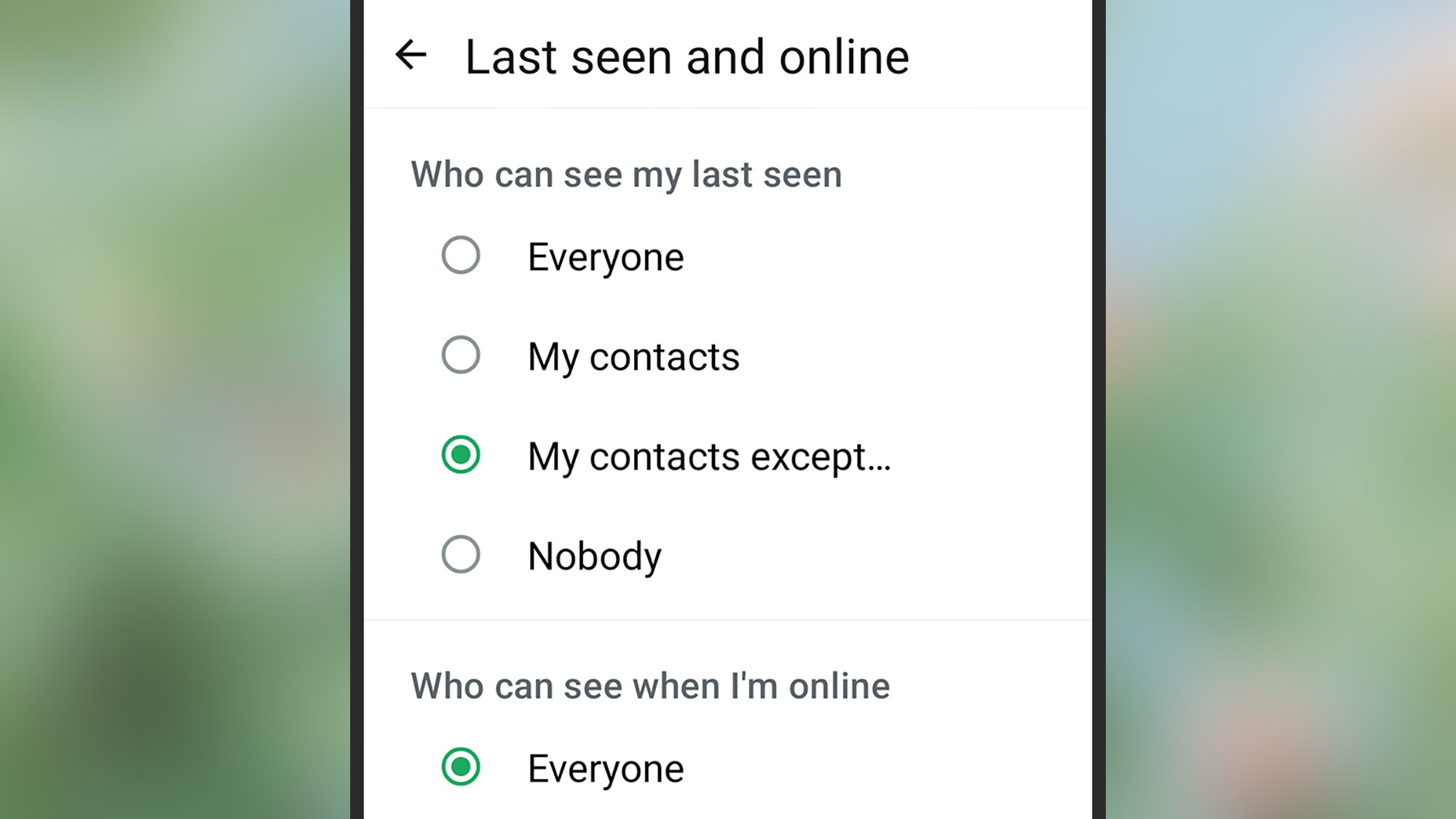
WhatsApp can tell your contacts whether you’re currently using the app and when you were “last seen,” but this might not be information you want to share with everyone. As well as disabling the feature entirely, you can also turn it off for specific contacts.
Open the You tab, then tap Privacy > Last seen and online, then select My contacts except … under the Who can see my last seen heading. You can then pick the contacts you don’t want to give this information to, and set the Who can see when I’m online option to match the same list.
5. Pin important messages you need to refer to or remember
Important details can quickly get lost in WhatsApp conversations, especially in busy group chats. But there is a way to pin specific messages to the top of the chat so they’re easy to get back to—someone’s address or the start time of an event, for example.
To pin a message on Android, long-press on it, then tap the three dots (top right) and Pin. On iOS, long-press a message and choose More > Pin. You can have up to three pinned messages per conversation, and select from three options for how long they’re pinned for: 24 hours, 7 days, or 30 days.
6. Give contacts their own notification sound
Your contacts can have their own alert sounds. David Nield
WhatsApp lets you assign specific notification sounds to specific contacts, which means you know who’s calling or messaging without picking up your phone. It gives you a better idea of whether something needs attention right away or can be safely ignored for a while.
Tap the group or contact name at the top of a chat, then pick Notifications and Notification tone or Ringtone to make changes. You can also select Vibrate to customize vibrations for each chat, though there are only four options here.
The option to mute the conversation is on the same screen—you can set mute separately for calls and messages.
7. Message yourself with notes and reminders
Not all messaging apps let you have a conversation with yourself, but WhatsApp does. This might seem like a rather pointless (and lonely) way of using the messaging app, but it can be really useful for jotting down things you need to remember on the go, leaving yourself voice notes of ideas and thoughts, and so on.
From the main conversation list, go to start a new chat, then search for “you” as the contact (or just enter your own username or phone number).
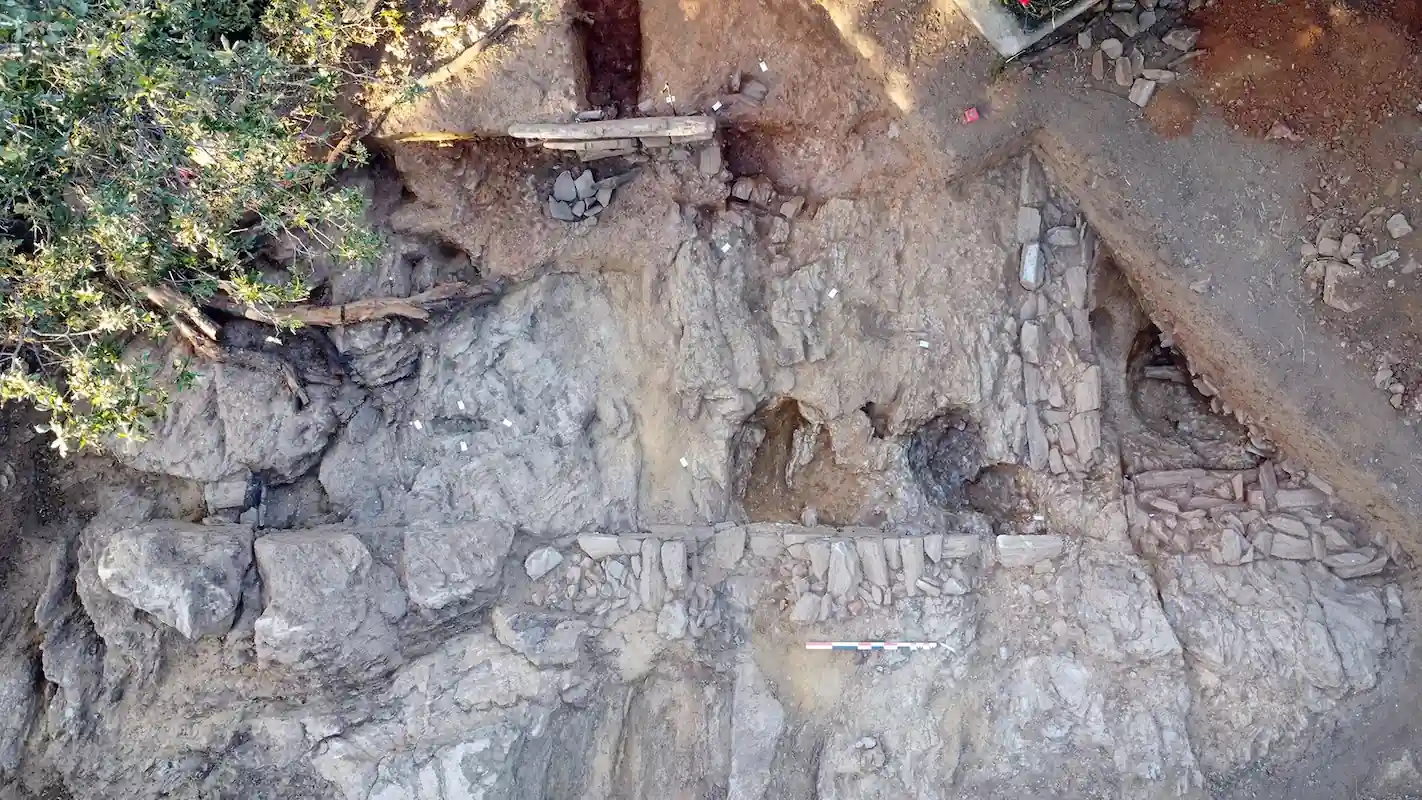
Anyone who wants to build a house on the waterfront at Meria, at the northern tip of Corsica, has to let archaeologists look underneath first. The rule comes from the island’s regional archaeology service (the DRAC of Corsica). It has just paid off. Working on the plot, a team from Inrap, France’s national institute for […]
Cuando alguien quiere construirse una casa en la marina de Meria, en el extremo norte de Córcega, antes de poner el primer ladrillo hay que mirar qué hay debajo. Así lo exige el Servicio regional de Arqueología (la DRAC de Córcega), y gracias a esa norma los arqueólogos del Inrap, el instituto francés de arqueología […]
Some animal rescues are more complicated than others—especially when the creature in peril is about to become a snack for a seagull on a remote Alaskan beach with polar bears lurking nearby.
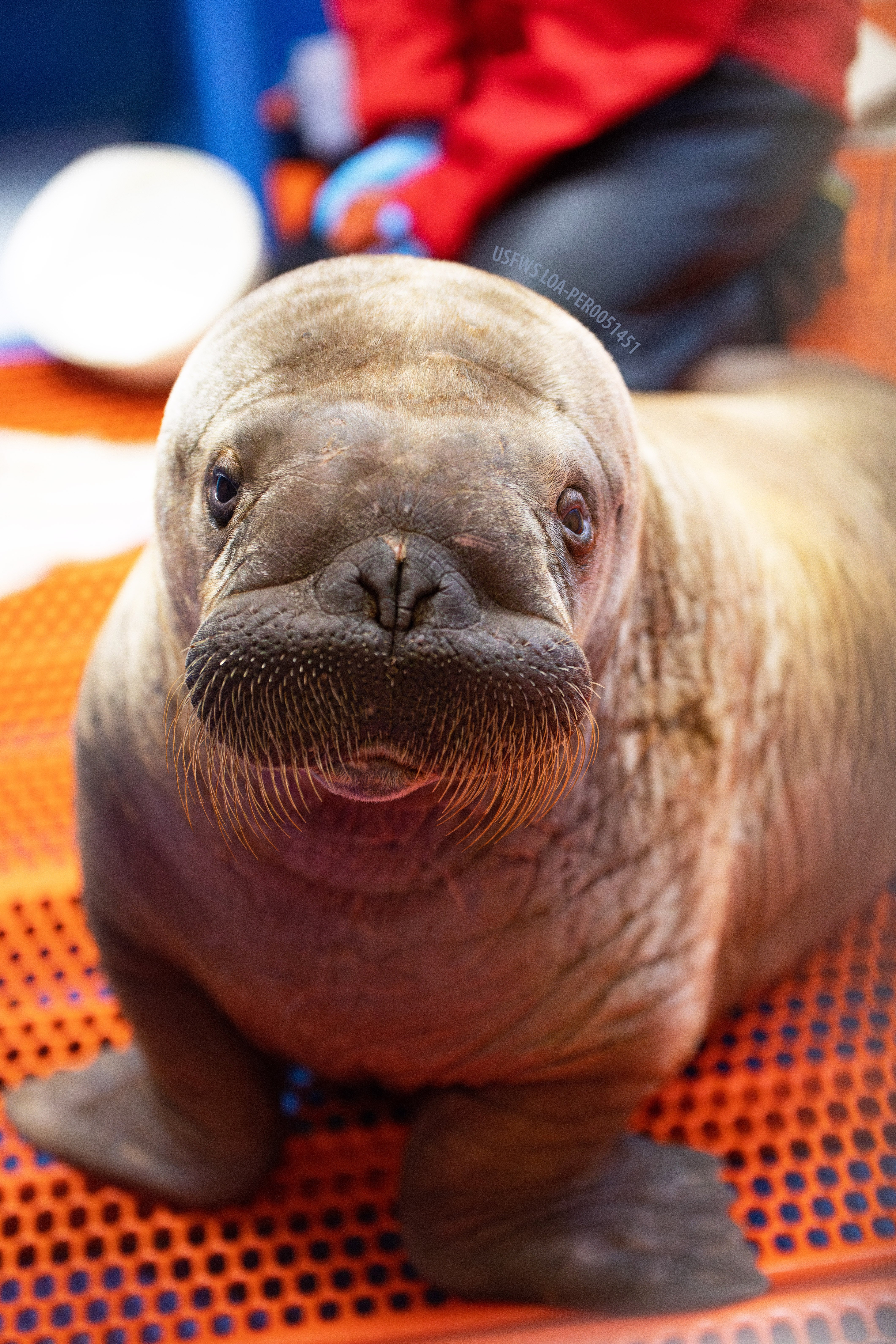
That was the sticky situation an orphaned Pacific walrus (a subspecies of Odobenus rosmarus) calf was in when two researchers found it on an island in the region of Point Lay, Alaska. U.S. Geological Survey (USGS) research walrus biologist Tony Fischbach and Ilisaġvik College student and Point Lay local Violet Anniskett stumbled upon the young male while investigating walrus carcasses on a remote beach. They found the orphan between the remains of two adult walruses, which was a first in Fischbach’s long experience working with walrus herds there.
The researchers requested permission to rehabilitate the walrus from the local Inupiaq community and the U.S. Fish and Wildlife Service. Once the approval arrived, the next hurdle was getting the mammal to the Alaska SeaLife Center. The center is the only marine mammal rehabilitation facility in Alaska, and was over 800 miles away. As if things could get any more difficult, stormy weather left Anniskett, Fischbach, and the walrus stuck on the island for days. In the meantime, the researchers guided the calf to an abandoned building to shelter from predators.
“When we found him, a determined flock of gulls was intent on scavenging him. He was in immediate peril of suffering this fate had we not gotten approval to intervene. Two polar bears were also active on the island,” Fischbach said in a statement.
“He bonded with us fast and wouldn’t sleep unless one of us were in the room. It was just us two for three days, stuck in a storm with the young walrus,” Anniskett added.
The calf was finally transported to the local airport, and made it to Alaska SeaLife Center on September 14 after a flight and van ride. The 200 pound baby arrived dehydrated, but in good physical condition. They treated some superficial wounds, gave him fluids, and applied other stabilizing treatments.
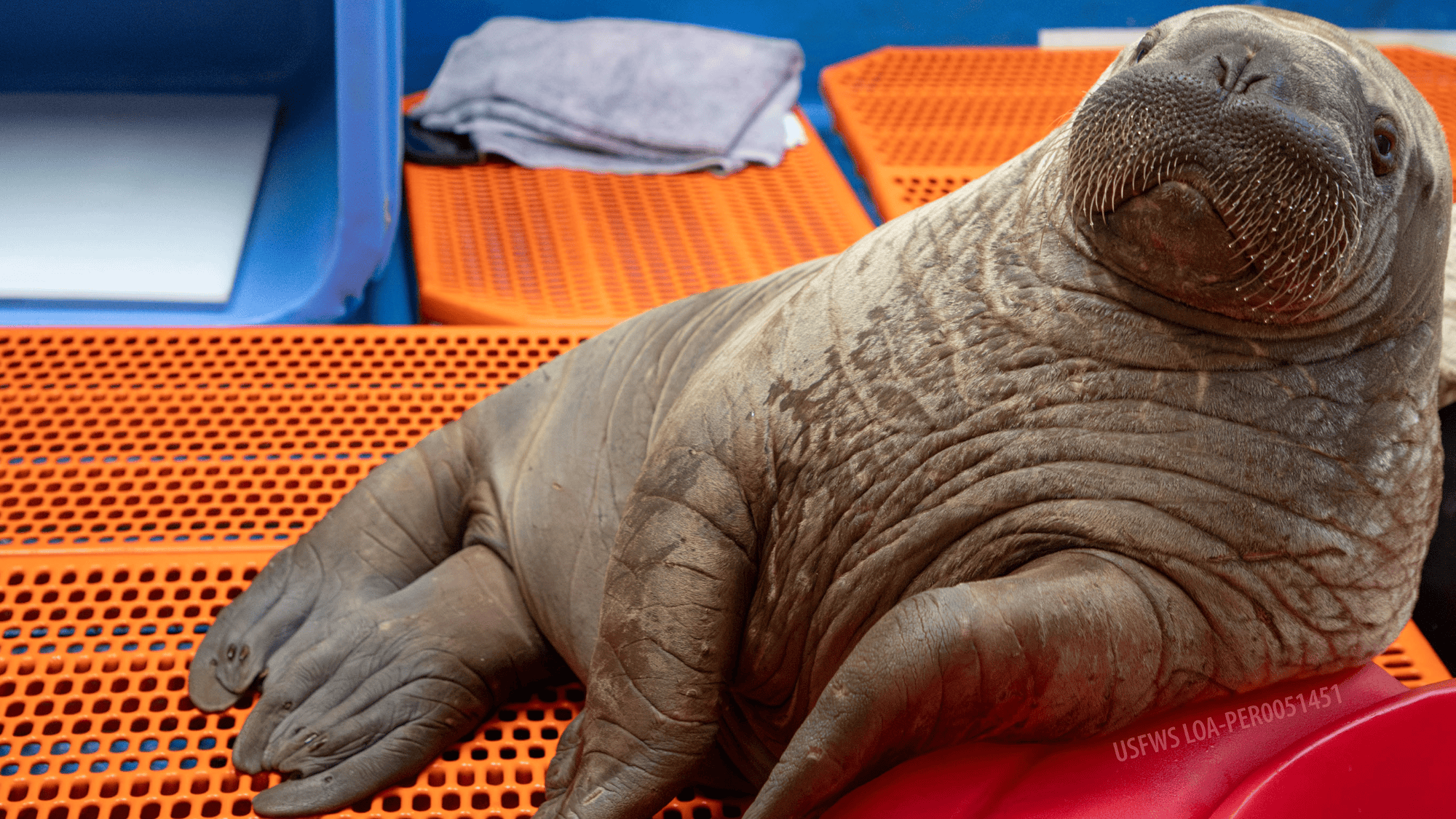
But the calf’s journey wasn’t over. In fact, orphaned Pacific walrus calves are one of the most specialized patients in marine mammal rehabilitation.That’s because in the wild, calves are very attached to their mothers, with whom they usually stay for one to two years. Close physical contact both with their mothers and others of their king is a crucial element in a calf’s early life. In the case of an orphaned calf, humans (who are authorized specialists) can act as surrogates, but it’s a tough babysitting job. Someone has to be around all the time to provide physical contact, social interaction, feeding support, and any veterinary care.
Caring for a Pacific walrus calf is not for the faint of heart, but can be pretty cute. Image: Kaiti Grant/Alaska SeaLife Center.
“Caring for an orphaned walrus calf is truly a team effort and requires around the clock commitment,” said Jane Belovarac, an Alaska SeaLife Center wildlife response curator. “At least two staff members have been working shifts around the clock to stay with him and provide the care he needs. This means long days and some unusual sleeping schedules for our team.”
It also means that the calf becomes comfortable with humans and thus cannot return to the wild. Now in a new long term home (whose location hasn’t been announced yet), he will be an ambassador for his species by teaching people about Pacific walruses.
Sometime between 32,000 and 11,000 years ago, dogs domesticated. Since then, these four-legged friends have provided companionship, assistance, and protection for people. Whether you favor a squished-face potato dog or a determined and smart working dog, you likely understand how dogs got the designation of “man’s best friend.”
The Dog Photography Awards celebrate dogs of all shapes and sizes. The annual competition awards prizes across six categories (Studio, Action, Portrait, Dogs & People, Documentary, and Open) in addition to naming an overall winner.
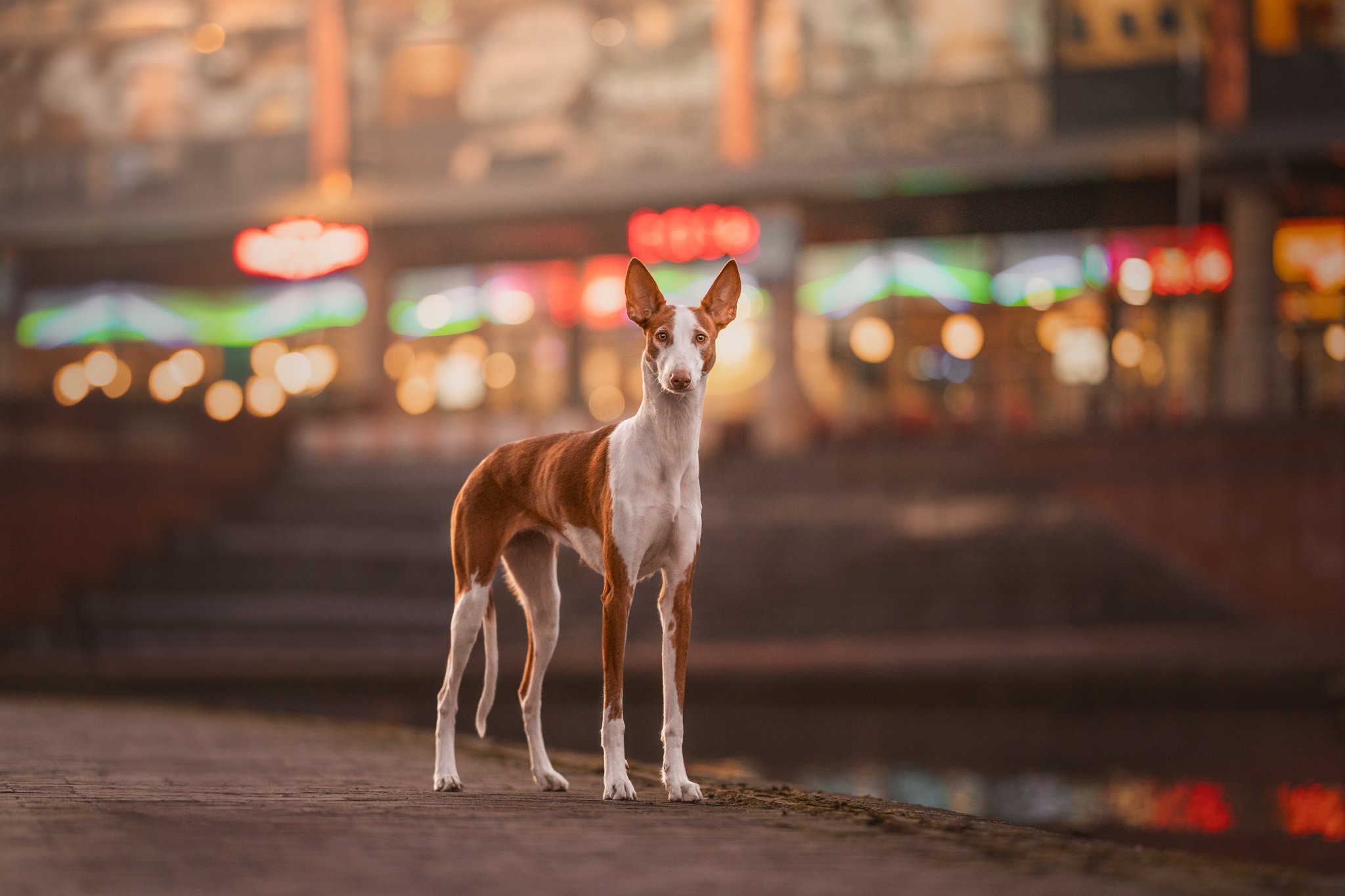
“City Lights” 2026 Portrait Outdoor, Honorable Mention Credit: Maddie Newton / Dog Photography Awards
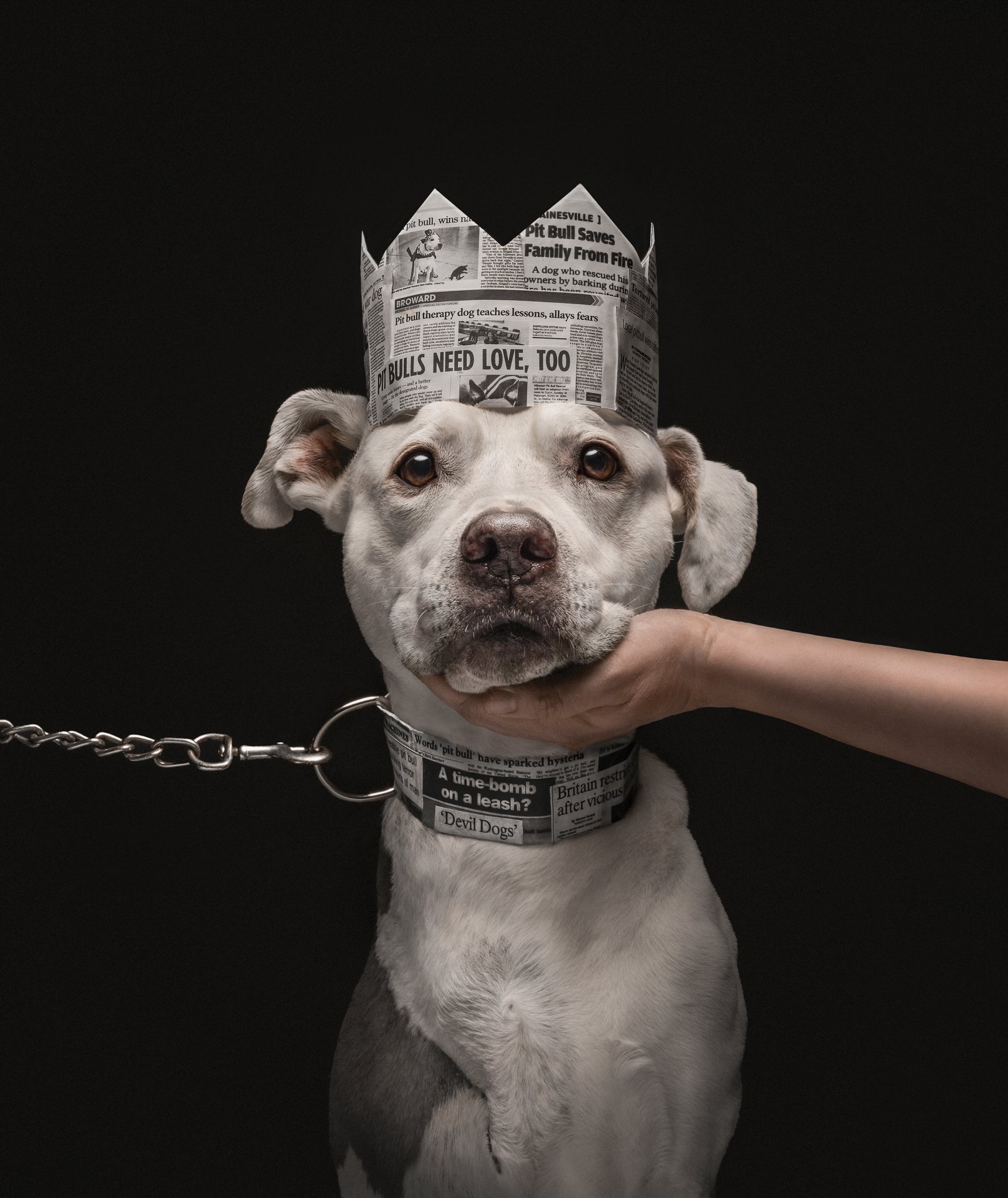
This year, Katie Brockman took the prestigious title of Dog Photographer of the Year. The St. Louis-based photographer’s winning entry, titled “Loved and Hated” (seen below), captures the duality of feelings around pitbulls and similar breeds.
“I started photography after my dog Caldwell ended up at the emergency vet on Christmas Eve 2020 for an obstruction surgery” Brockman said. “I suddenly realized that I didn’t have enough photos of him, and I wanted a way to document our adventures together. So I saved up for a camera, and in 2021, I officially started my dog photography journey.”
“Loved and Hated” Dog Photographer of the Year 2026 Credit: Katie Brockman / Dog Photography Awards
This year’s competition drew 1,900 entries from photographers in 50 countries. A judging panel of photographers, dog experts, and industry professionals decided on the winners. And when it comes to photographing dogs, aren’t we all winners?
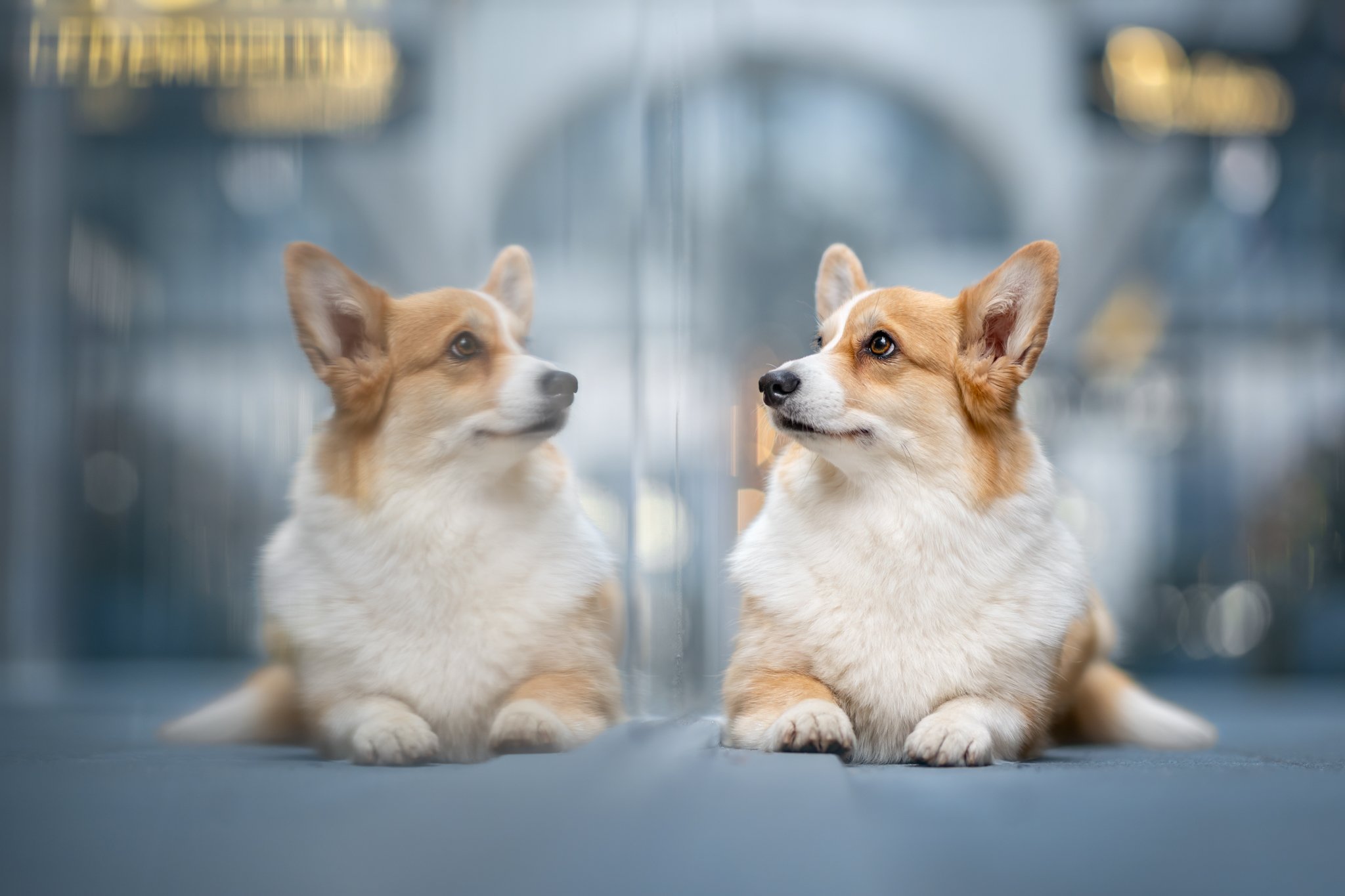
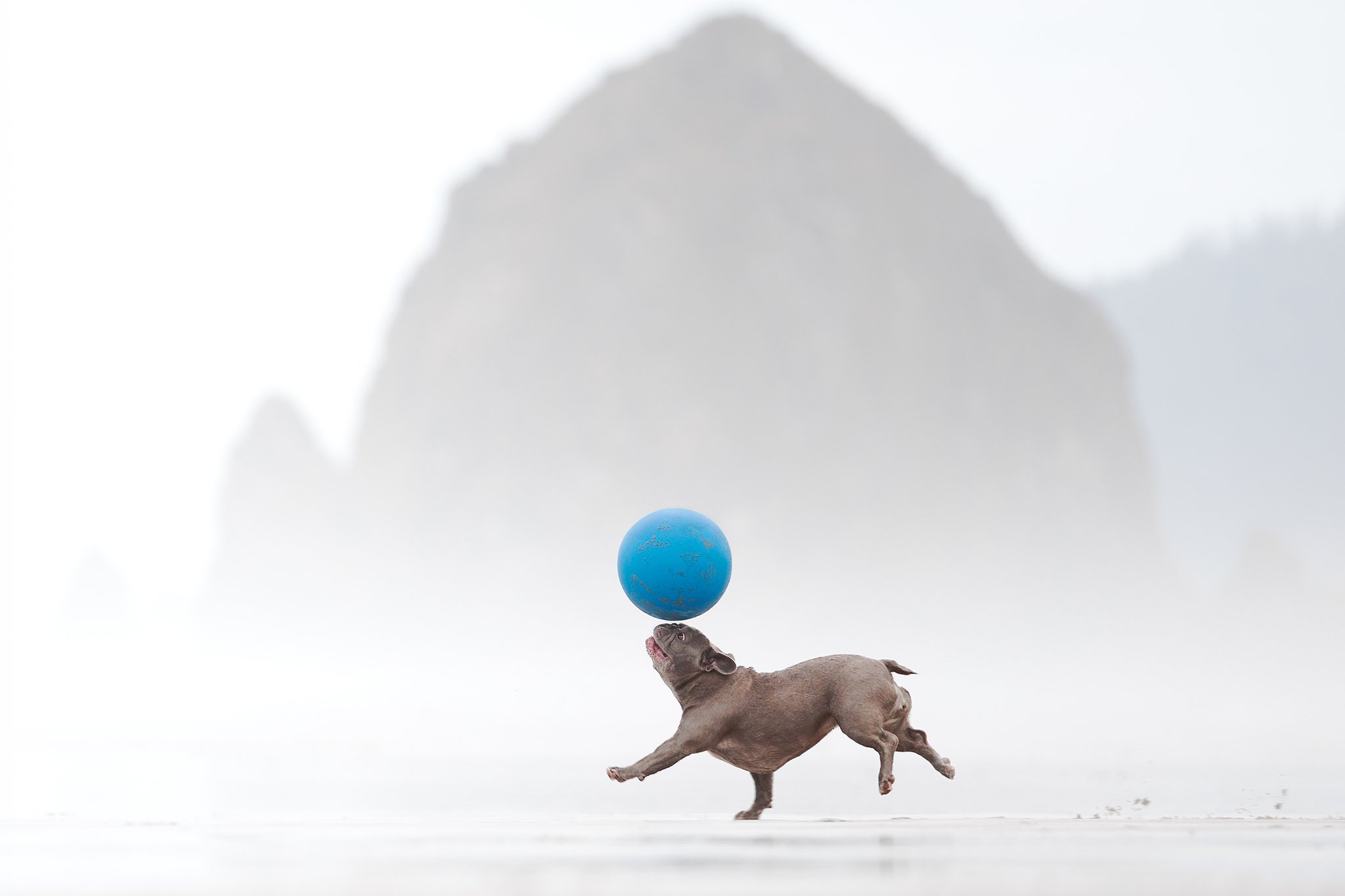
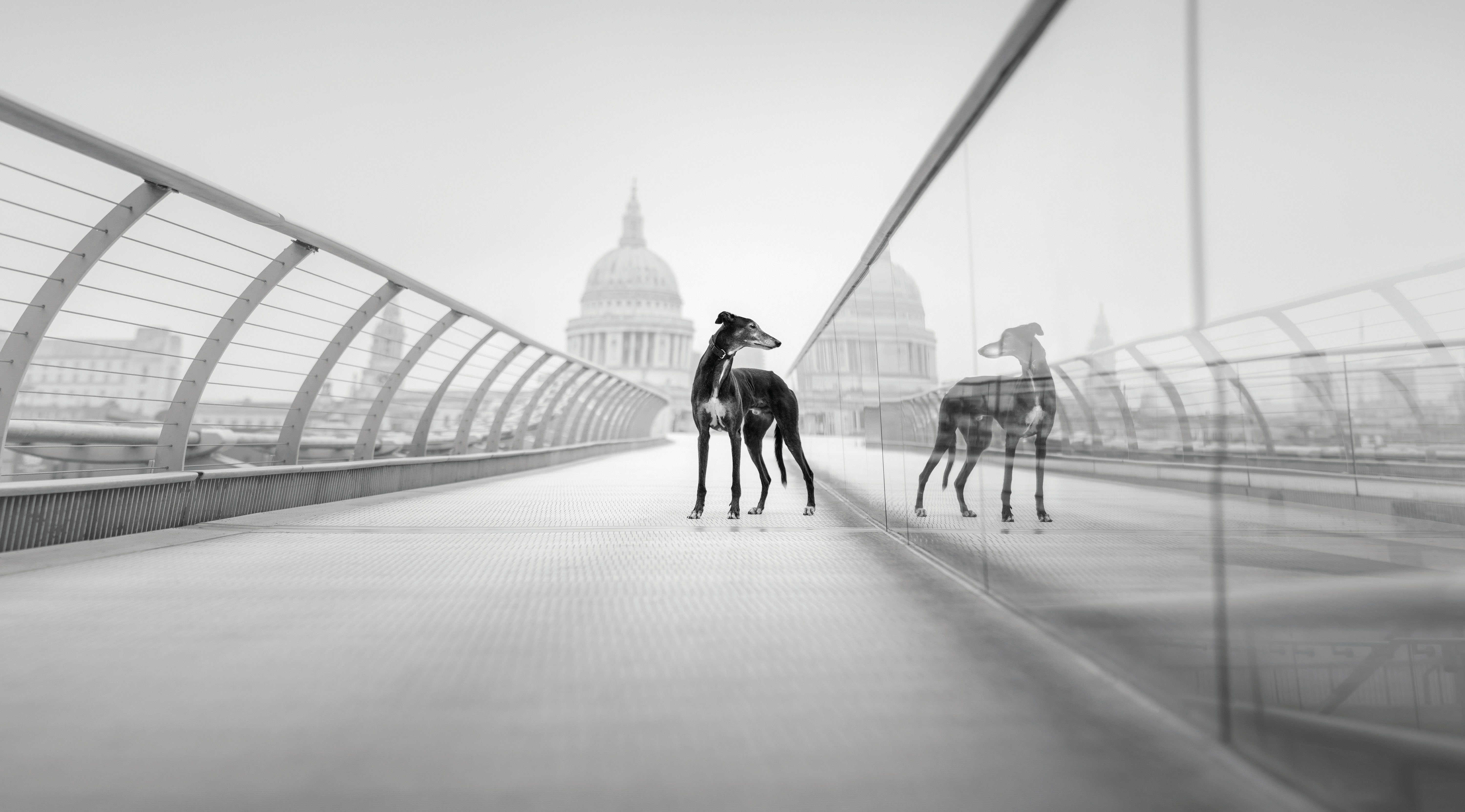
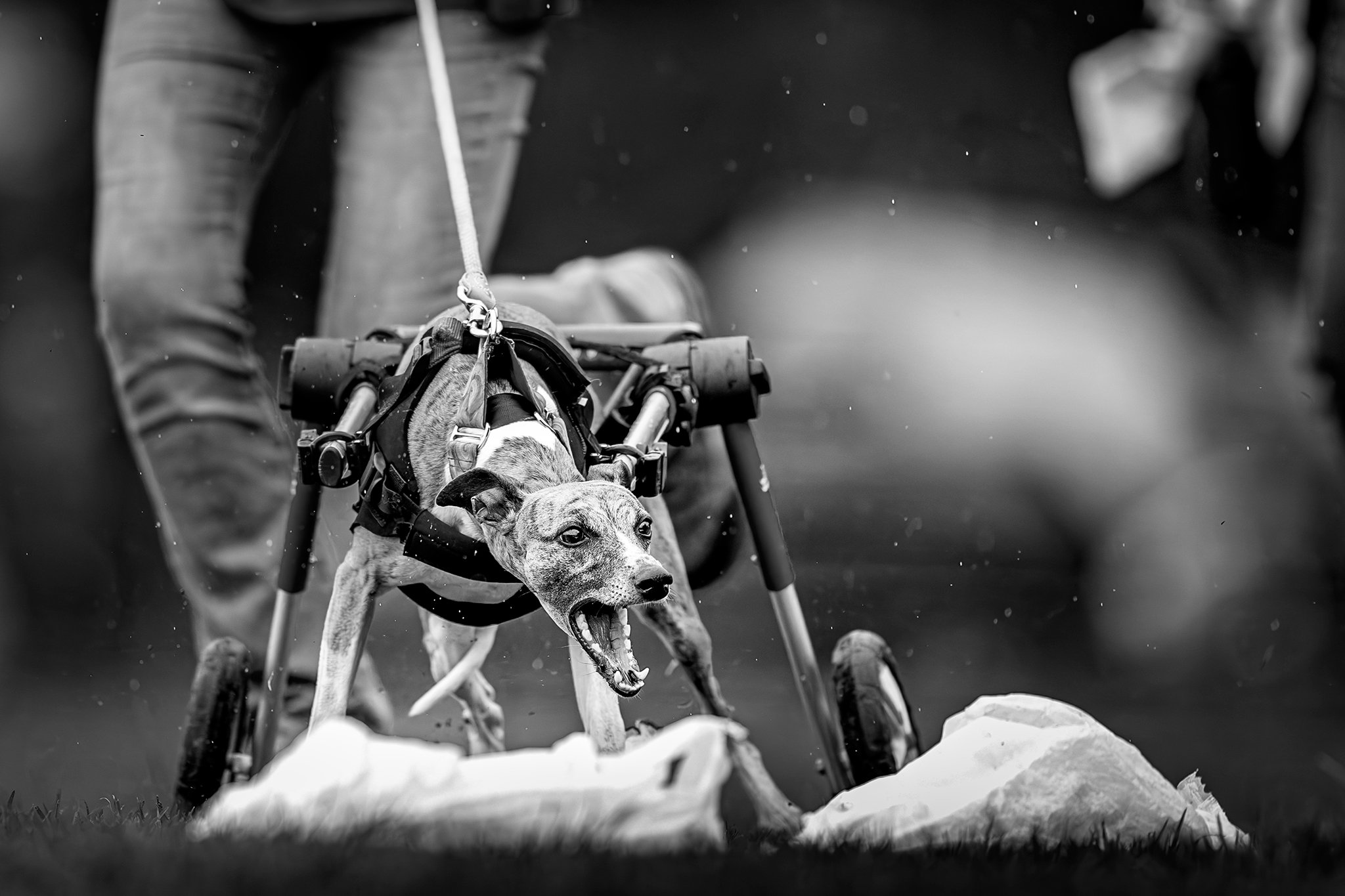
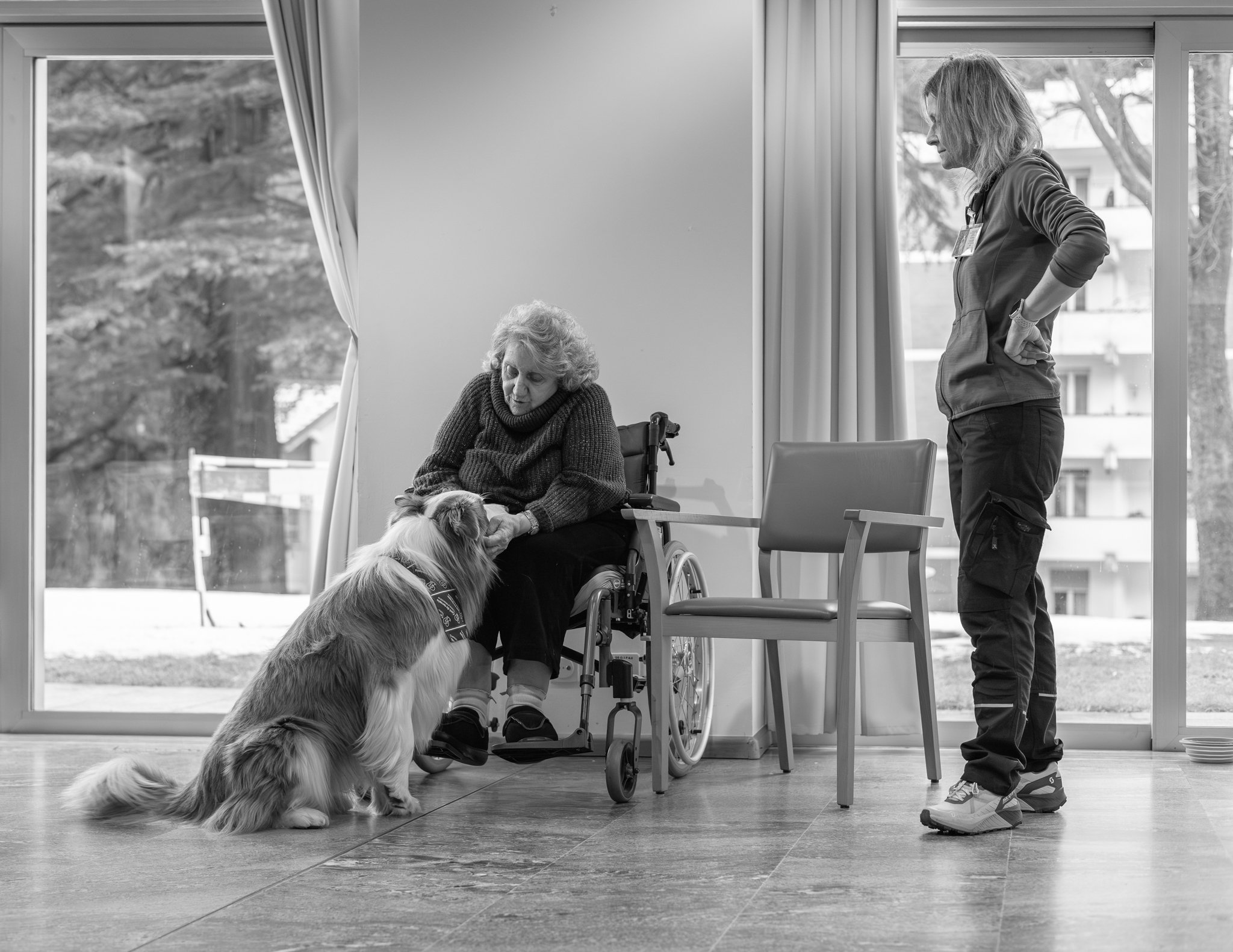
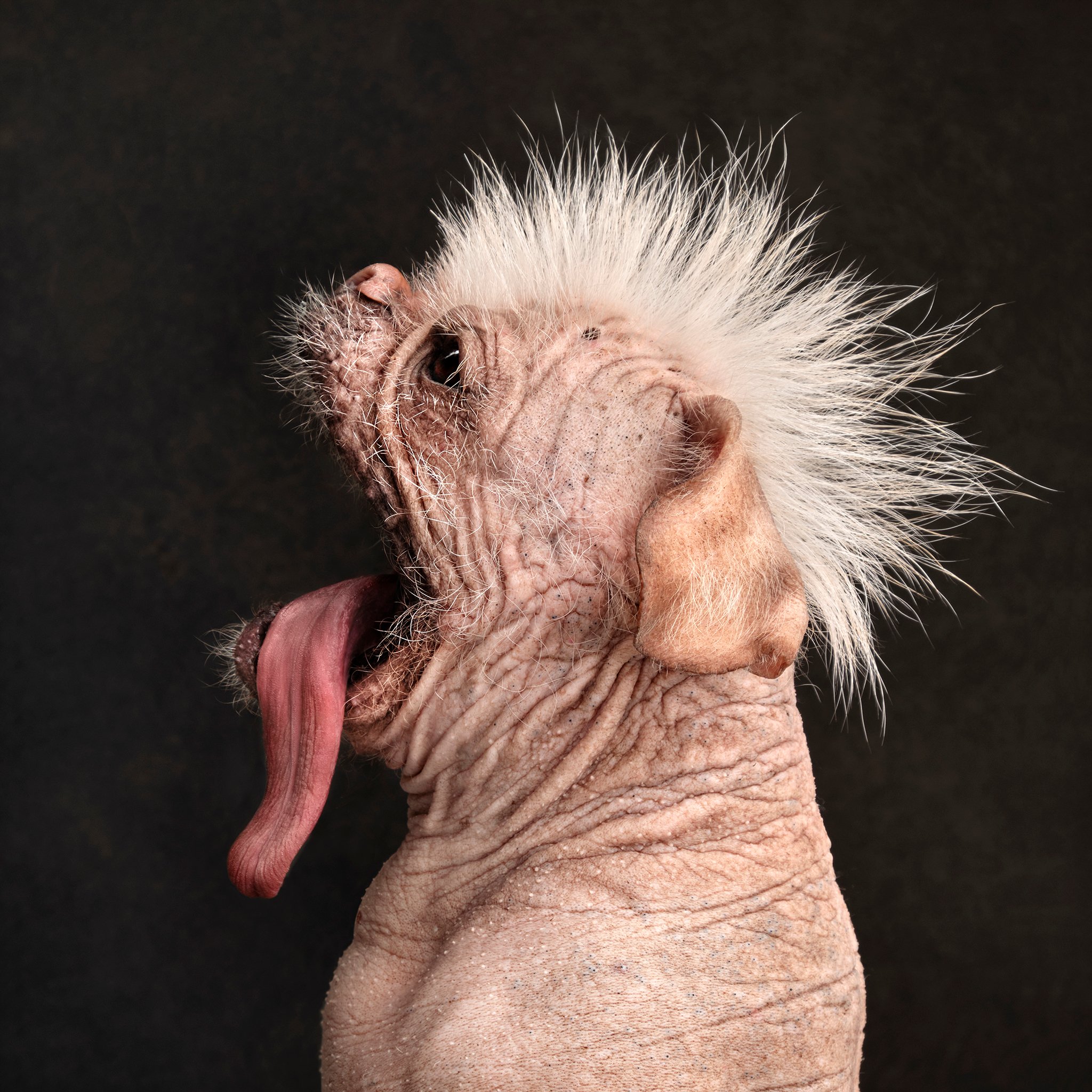
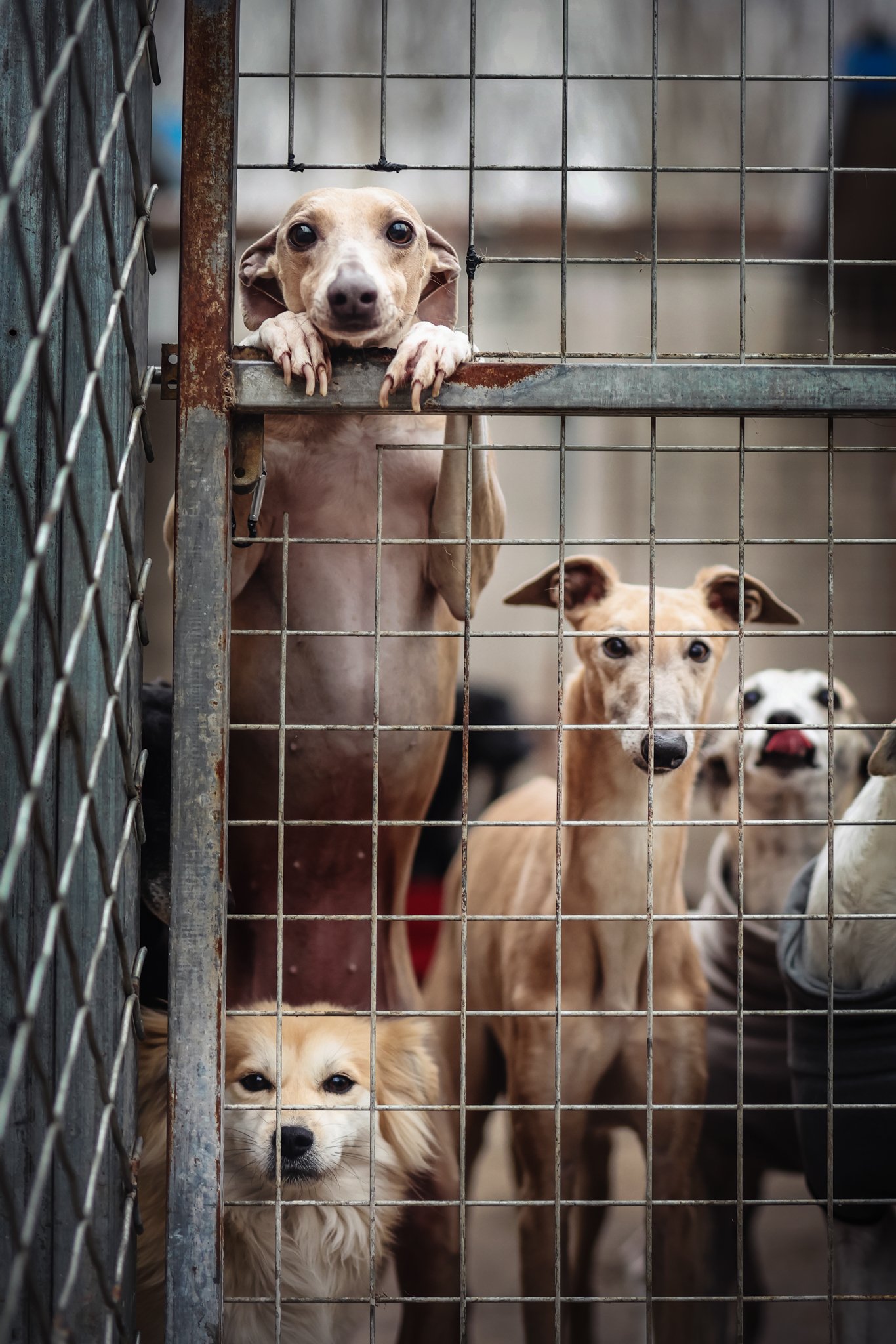
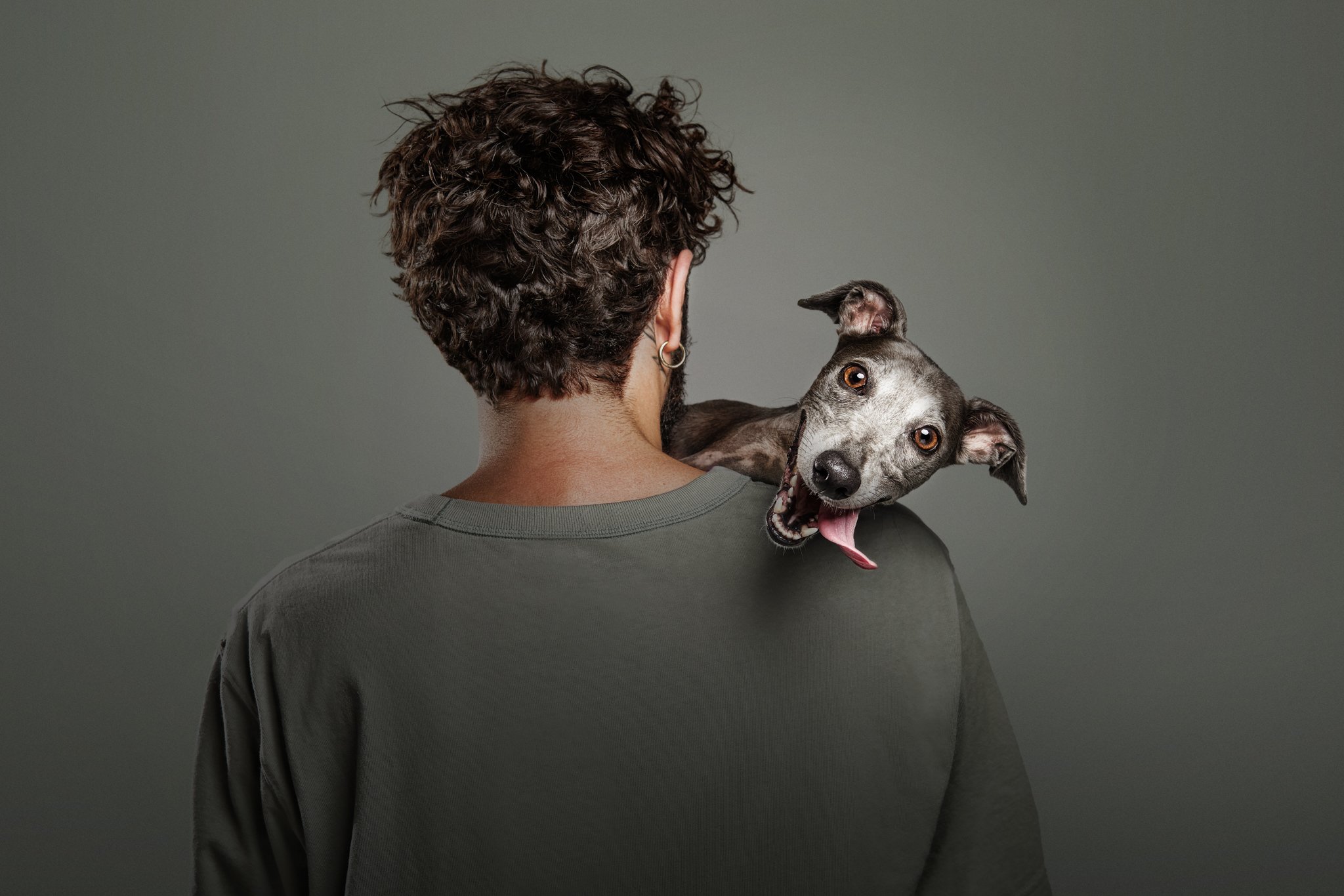
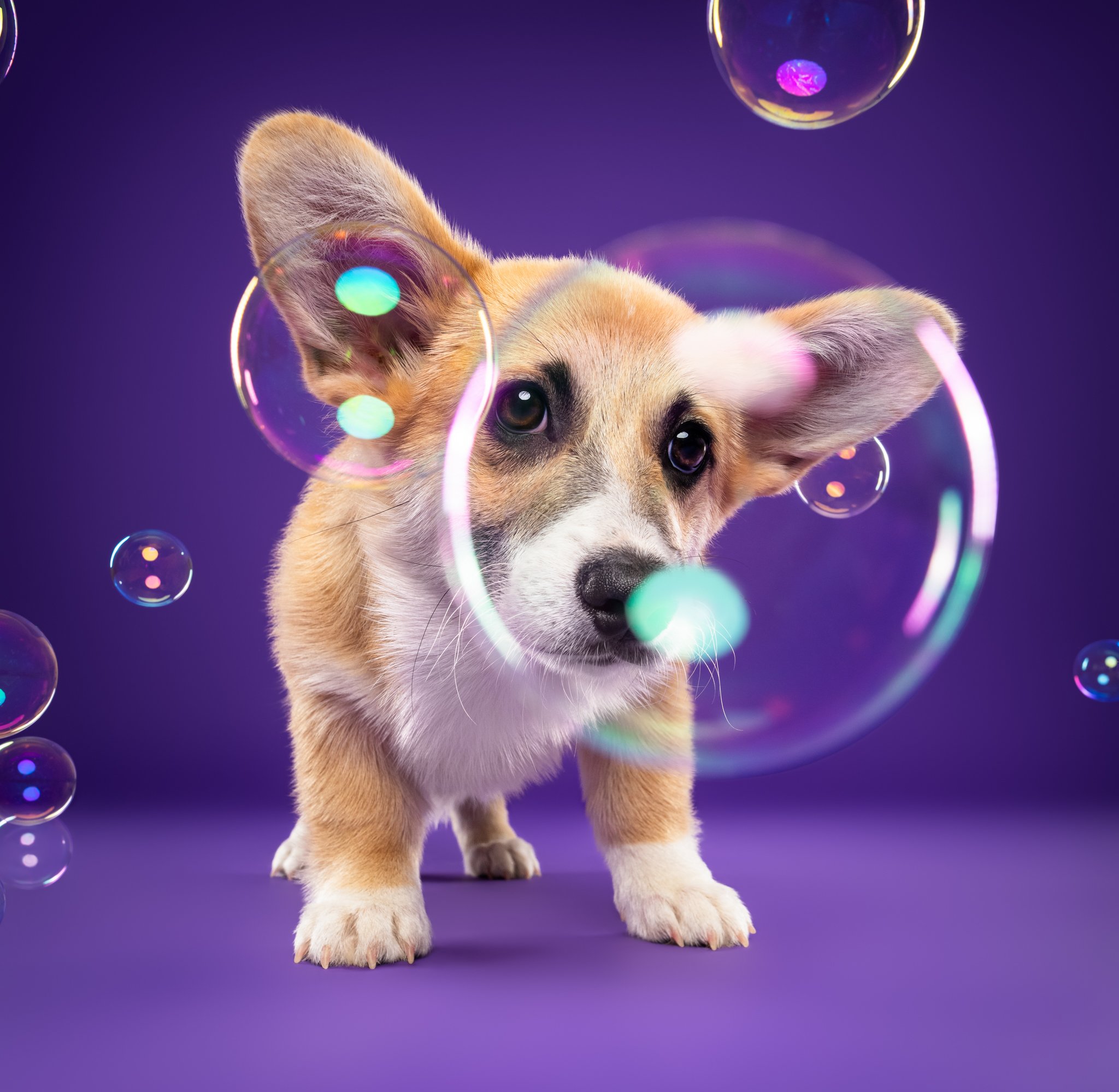
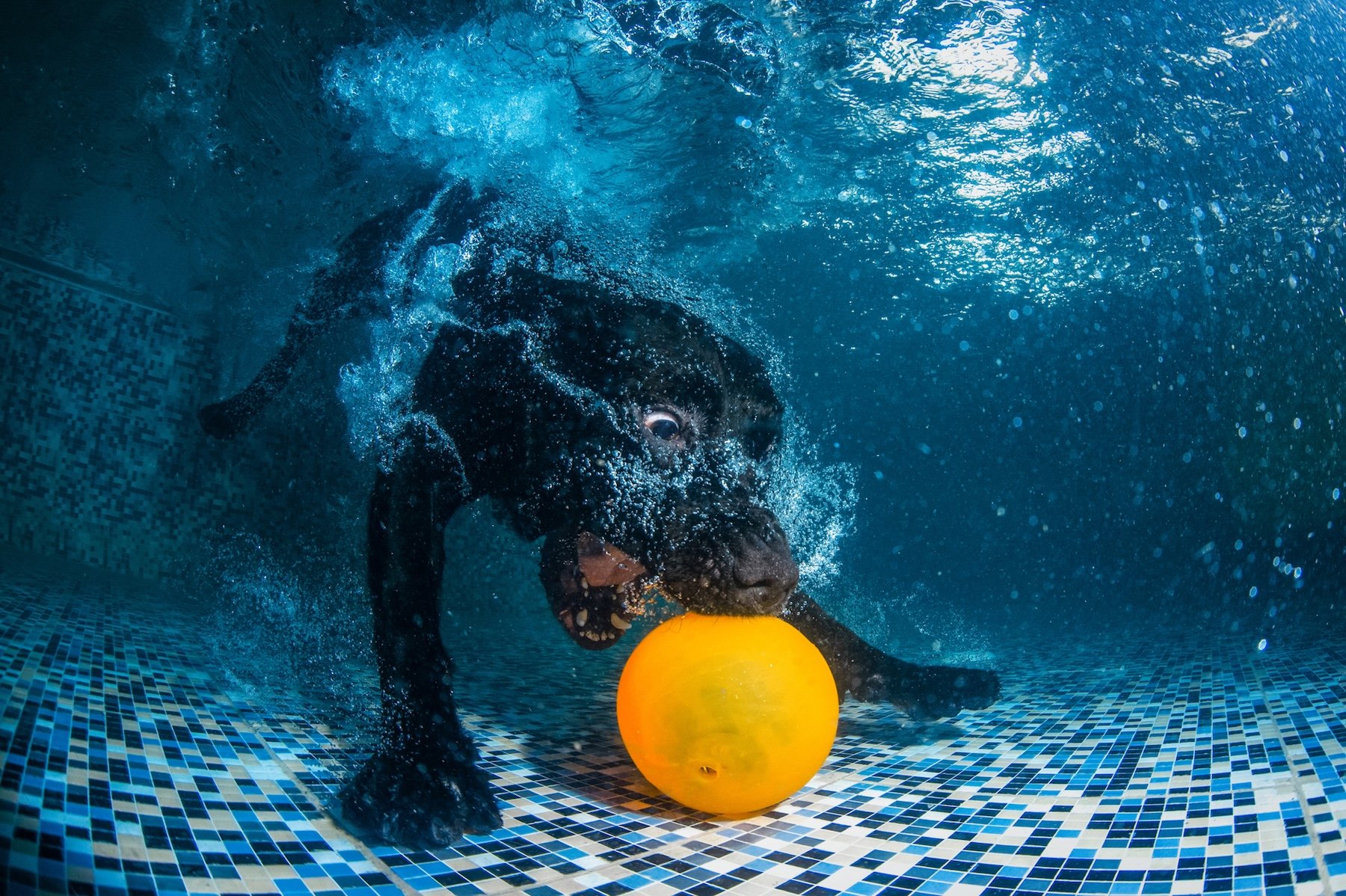
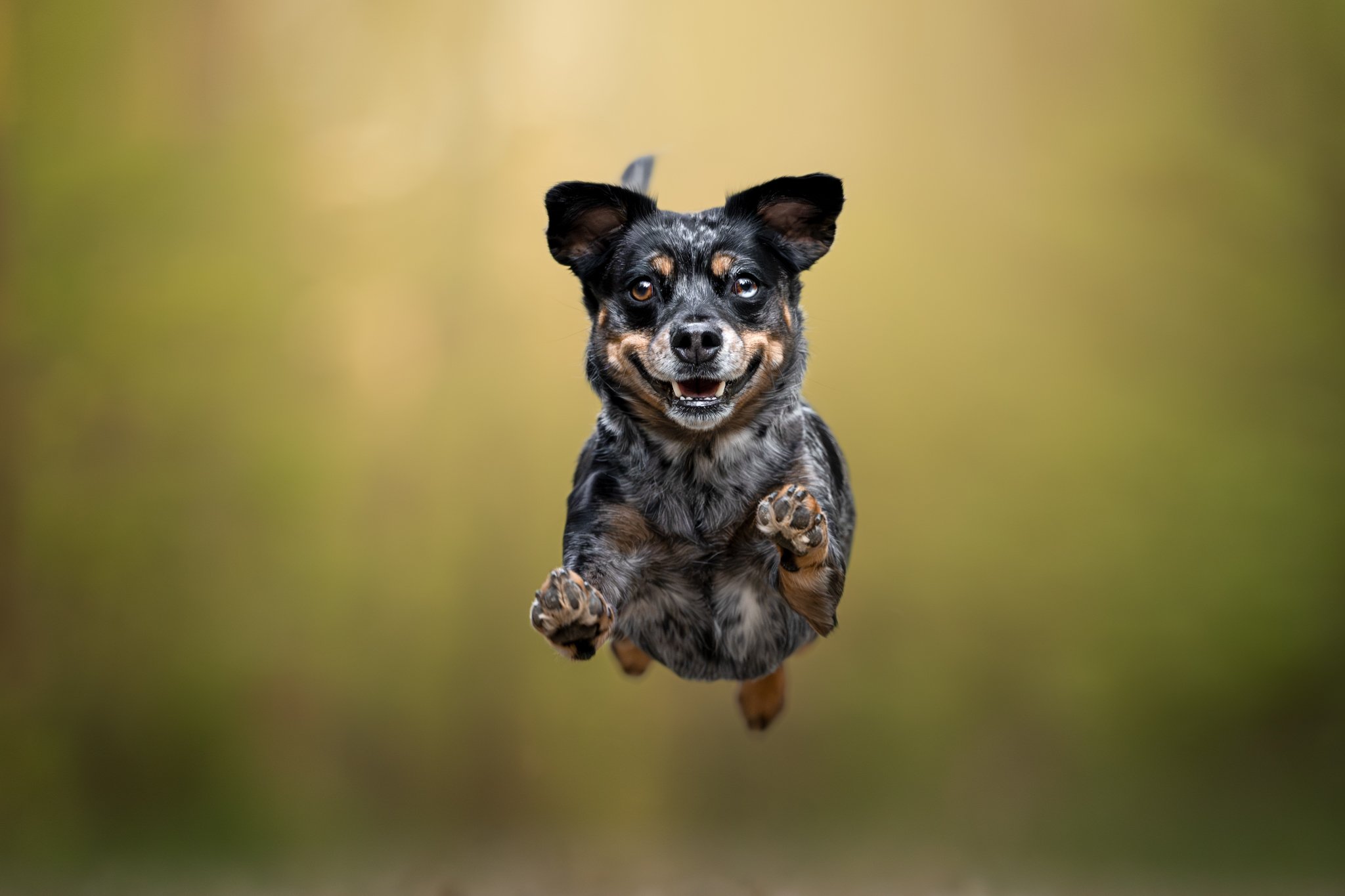
“Elegance Awaits” 2026 Portrait Outdoor, Honorable Mention Credit: Grace Fiselman / Dog Photography Awards“Mirror, Mirror” 2026 Portrait Outdoor, Honorable Mention Credit: Perdita Pretzl / Dog Photography Awards Henrik Spranz“Mission Balance” 2026 Action Category, 2nd Place Credit: Gavriella Leon / Dog Photography Awards“Beyond the Track” 2026 Portrait Outdoor Category Winner Credit: Elena Marchi / Dog Photography Awards Zeiss57“Chasing Beyond Limits” 2026 Documentary, Honorable Mention Credit: Jodie Grieve / Dog Photography Awards“Therapy Dogs in a Nursing Home” 2026 Documentary, Honorable Mention Credit: Jessica Mozzetti / Dog Photography Awards Jessica Mozzetti“Peggy” 2026 Studio Category, Honorable Mention Credit: Jane Thompson / Dog Photography Awards JANE THOMSON“Working as a Team” 2026 Documentary, Honorable Mention Credit: Rebecca Williams / Dog Photography Awards“Waiting” 2026 Documentary Category Winner Credit: Tianhang Zhang / Dog Photography Awards“The Weight of Connection” 2026 Dogs & People Category, 3rd Place Credit: Santos Ramón / Dog Photography Awards SANTOS ROMAN“Puppy’s Curiosity” 2026 Studio Category, Honorable Mention Credit: Sylvain Langler / Dog Photography Awards“Underwater Fetch” 2026 Action Category, Honorable Mention Credit: Tianhang Zhang / Dog Photography Awards
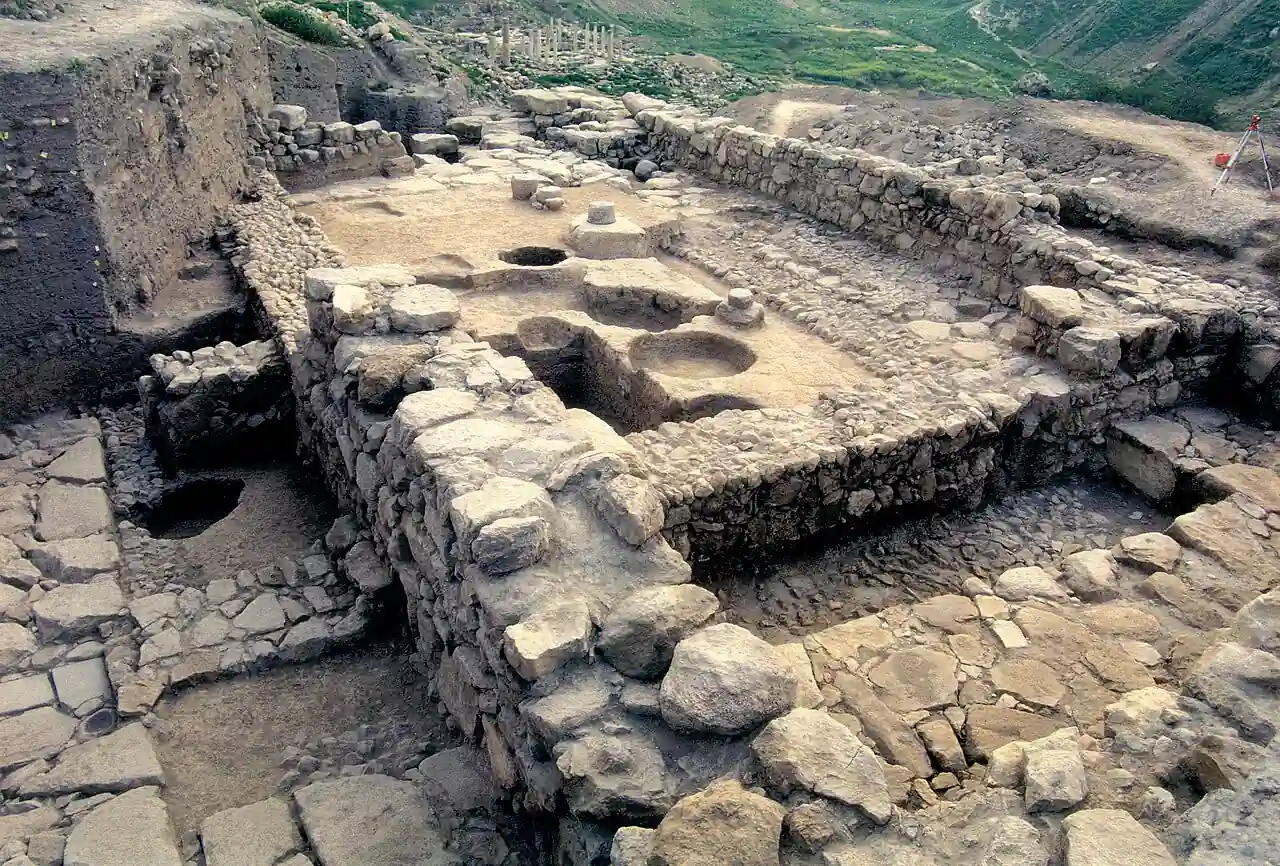
Around 1200 BC, the eastern Mediterranean fell apart. The great empires of the Bronze Age collapsed, many cities were destroyed or emptied, writing disappeared from much of the region, and long-distance trade shrank to almost nothing. Archaeologists call what came next the dark age, and the name is earned: with few texts and almost no […]
Hacia el año 1200 a.C. el mundo del Mediterráneo oriental se vino abajo. Cayeron los grandes imperios de la Edad del Bronce, se destruyeron o se vaciaron muchas ciudades, se perdió la escritura en buena parte de la región y el comercio a larga distancia se redujo a lo mínimo. Los arqueólogos llaman a lo […]

 Login