❌

Reading view

Education Alone Is Not Enough: What Nursing Home Staff Really Think About Palliative Care

Palliative care has long been framed as a specialist discipline reserved for hospices and oncology wards, but a growing body of evidence insists it belongs everywhere people approach the end of life, including nursing homes, where a large share of deaths in ageing societies now occur. A new qualitative study from Sweden, published in BMC Nursing, offers an unusually candid look at what happens inside care teams after they receive structured palliative care education, and the central finding is striking: training changes how staff think, but thinking alone does not change care. The researchers, Camilla Ekeblom, Carina Lundh Hagelin and Jane Österlind of Marie Cederschiöld University in Stockholm, found that the value of an educational intervention depends on an intricate alignment between individual emotions, relational dynamics and organisational realities, and that when any one of these dimensions falls out of step, the benefits of education can quietly dissolve.

The study set out to explore how nursing home staff reason about providing palliative care after participating in an interprofessional educational intervention, abbreviated in the literature as IPEI. Rather than measuring outcomes with questionnaires, the team chose a descriptive qualitative design, interviewing eighteen staff members drawn from five Swedish nursing homes. The participants represented the full spectrum of people who actually deliver and manage care: registered nurses, assistant nurses, a physician, first-line managers and designated palliative care champions. This breadth matters, because palliative care in nursing homes is not delivered by any single profession; it emerges, or fails to emerge, from the daily interplay of people with different training levels, responsibilities and emotional exposures to dying residents.

Data were collected through semi-structured individual interviews conducted between March and April 2024, and analysed using inductive qualitative content analysis, a method that allows themes to rise from the material itself rather than being forced into pre-existing theoretical boxes. From this analysis, three main categories emerged, and together they map the terrain on which palliative care is actually practised. The first concerns managing one’s own emotions, thoughts and attitudes. The second addresses the significance of relationships, communication and interactions in care. The third captures how staff navigate norms, assumptions and organisational structures in everyday palliative care. The categories correspond, respectively, to the individual, relational and organisational dimensions of the work, and the authors argue that it is the interplay among all three, not any single factor, that determines whether good palliative care becomes possible.

The individual dimension is perhaps the most human part of the findings. Staff described the ongoing internal work of confronting their own feelings about death, ageing and suffering, and of examining assumptions they carried about what palliative care even means. A recurring tension in the literature, echoed here, is the tendency to equate palliative care narrowly with end-of-life care, the final days and hours, rather than understanding it as an approach that can and should be integrated into everyday care over a longer trajectory. The interviews suggested that the educational intervention gave participants opportunities for personal as well as professional development, creating space to reflect on attitudes that had previously gone unexamined. In this sense, education functioned less like a knowledge transfer and more like a mirror, prompting staff to notice how their own emotional responses shaped their clinical decisions.

The relational dimension proved equally consequential. Palliative care in a nursing home is saturated with communication: conversations with residents about what matters to them, exchanges with distressed relatives, coordination between assistant nurses who know the residents intimately and nurses and physicians who carry clinical responsibility. The participants’ reasoning placed relationships and interactions at the heart of care provision, indicating that no amount of theoretical knowledge substitutes for the ability to build trust, listen and communicate across professional boundaries. This is where the interprofessional design of the intervention appears to have paid off. By bringing different professions into a shared educational space, the programme created a common language and, implicitly, a shared understanding of what the team was trying to achieve together, something that fragmented, profession-specific training often fails to produce.

The third dimension, the organisational, is where the study’s message becomes most uncomfortable for policymakers and care home leadership. Staff described navigating norms and assumptions embedded in their workplaces, along with structural conditions that could either support or obstruct a palliative approach. Staffing levels, routines, leadership priorities and workplace culture all shape what is practically possible on a shift where residents are dying, families are anxious and time is scarce. The authors’ conclusion is explicit on this point: providing palliative care was not solely a matter of enhancing staff knowledge. Knowledge and the conditions for care are shaped through the interplay between staff attitudes, their reasoning about care, relational dynamics and organisational conditions. When these dimensions align and mutually reinforce one another, favourable conditions for palliative care may be supported; when they do not, even well-trained staff may find their intentions frustrated.

Why does this matter on a societal scale? Nursing homes accommodate older people with complex needs and account for a large proportion of deaths, which makes palliative care a central component of care in these settings rather than an occasional emergency. Yet access to palliative care remains unequal, particularly for older people, and staff in long-term care often lack sufficient training. The demographic arithmetic is unforgiving: as populations age, the number of people who will die in nursing homes rises, and the quality of their final months depends heavily on the competence and confidence of the workforce that cares for them. Studies like this one move the conversation beyond the simplistic assumption that a training course fixes the problem, and toward a systems view in which education is necessary but insufficient on its own.

The study also carries a methodological lesson for how we evaluate educational interventions in care settings. Much of the existing research measures knowledge gains or self-reported confidence before and after training. Those metrics are useful, but they cannot reveal how staff actually reason about applying what they have learned in the messy reality of daily care. By using inductive content analysis of interviews, the Swedish team surfaced the texture of that reasoning: the hesitations, the emotional labour, the negotiations with colleagues and managers, the quiet adjustments between ideal practice and what the shift allows. The findings suggest that interprofessional educational initiatives work best when they combine theoretical knowledge with opportunities for reflection and practical application, allowing staff to translate concepts into their own working context rather than leaving translation to chance.

There are limits worth noting. The study involved eighteen participants in five Swedish nursing homes, interviewed at a single point in time after the intervention, and qualitative findings are not designed to be statistically generalised. The researchers themselves submitted the work for ethical review, receiving approval from the Swedish Ethical Review Authority, and obtained written informed consent from all participants, but the transferability of the results to other health systems will depend on how similar those systems’ nursing homes and educational programmes are to the Swedish context. Still, the three-dimensional framework that emerged, individual, relational and organisational, offers a portable lens that other teams can use to examine their own settings, and it aligns with a broader international consensus that palliative care competence must be built at every level of an organisation simultaneously.

The most durable insight from this research may be its refusal to locate the solution in any single place. Staff who completed the intervention perceived it as an opportunity for growth, and their reasoning showed genuine movement in how they understood palliative care as an ongoing approach rather than a final act. But their accounts also made clear that attitudes, relationships and structures must pull in the same direction for that understanding to reach residents’ bedsides. For nursing homes everywhere, the implication is a practical checklist of a different kind: train your staff together, give them room to reflect, examine the norms your workplace quietly enforces, and make sure the organisation’s daily conditions match what the education teaches. Where those elements align, palliative care stops being an aspiration and becomes, simply, the way care is done.

Subject of Research: Nursing home staff's reasoning about providing palliative care after an interprofessional educational intervention

Article Title: “Nursing home staff’s reasoning about providing palliative care following an educational intervention – a qualitative interview study”

Article References: Ekeblom, C., Lundh Hagelin, C., & Österlind, J. (2026). “Nursing home staff’s reasoning about providing palliative care following an educational intervention – a qualitative interview study”. BMC Nursing, 25(1), Article 956. https://doi.org/10.1186/s12912-026-05480-4

Image Credits: AI Generated

DOI: 10.1186/s12912-026-05480-4

Keywords: palliative care, nursing homes, older people, interprofessional education, qualitative research, nursing education, end-of-life care, care staff attitudes, organisational conditions, Sweden, BMC Nursing, healthcare workforce


  •  

Cellular Stress Hubs Help Oral Cancer Spread, Study Finds

Inside every stressed cell, a quiet emergency response unfolds. When oxygen runs low, toxins accumulate, or nutrients grow scarce, mammalian cells assemble temporary structures known as stress granules, non-membranous aggregates of proteins and RNA that condense in the cytoplasm. In healthy tissue, these assemblies act as a protective pause button, halting protein production so the cell can weather the storm and resume normal function once conditions improve. But a new study suggests that in oral squamous cell carcinoma, one of the most common and disfiguring malignancies of the head and neck, this ancient survival machinery may be hijacked to serve a darker purpose: helping tumors grow and spread.

The research, conducted by a team at Kangwon National University in South Korea and published in Cell Death Discovery, examined how stress granule formation influences tumor progression and metastasis in oral squamous cell carcinoma, or OSCC. The findings point to a specific molecular switch, the phosphorylation of a protein called eIF2α, as a central driver of the process. When that switch is suppressed, the study reports, stress granule formation drops, and with it the growth and metastatic burden of tumors in mouse models. The work adds oral cancer to a growing list of malignancies in which the integrated stress response appears to fuel, rather than restrain, disease.

To understand why this matters, it helps to consider what stress granules actually do. Under stress, cells activate kinases that phosphorylate eIF2α, the alpha subunit of a translation initiation factor. Phosphorylated eIF2α dampens global protein synthesis, and the messenger RNAs that would otherwise be translated are instead sequestered, along with RNA-binding proteins, into dense cytoplasmic droplets. Key markers of these structures include G3BP1, TIAR, and PABP, proteins that researchers use to identify stress granules under the microscope. In normal cells, this translational arrest conserves energy and prevents the accumulation of damaged or misfolded proteins. The system is meant to be reversible: when the stress passes, the granules dissolve and translation restarts.

Cancer cells, however, live in a state of chronic stress. Tumors outgrow their blood supply, creating regions of hypoxia, low oxygen tension that would kill most normal cells. They also face nutrient deprivation, acidic microenvironments, and assault from chemotherapy and radiation. In this context, the stress response can become a liability for the patient rather than a safeguard for the cell. Previous work in other cancers has implicated stress granules in tumor progression and metastasis, partly through their interactions with key signaling pathways, but their role in oral squamous cell carcinoma had remained poorly understood, despite growing scientific interest in the topic.

The Korean team began by comparing human tumor tissue with adjacent normal tissue. They found that markers of stress granules, including G3BP1, eIF2α, TIAR, and PABP, were significantly overexpressed in OSCC tissues compared with their normal counterparts. This observation established that the stress granule machinery is not merely present in oral cancer but is amplified, suggesting that tumor cells may rely on it more heavily than the healthy cells around them. Overexpression of these markers alone does not prove causation, but it set the stage for the functional experiments that followed.

Those experiments turned to mouse models built from OSCC cells that had been preconditioned with hypoxia, deliberately exposing the cells to low oxygen before implantation. The logic was to mimic the stressful conditions tumor cells encounter in a real growing tumor and to ask whether cells that had already mounted a stress response behaved differently afterward. In parallel, the researchers used a compound called ISRIB, an inhibitor of the integrated stress response that acts downstream of eIF2α phosphorylation, in mice subjected to sodium arsenite-induced stress. Sodium arsenite is a classic laboratory trigger of oxidative stress and a reliable inducer of stress granule formation, making it a useful tool for probing the pathway.

The results were striking. In both experimental settings, suppression of eIF2α phosphorylation was associated with reduced stress granule formation, reduced tumor growth, and a reduced metastatic burden. In other words, when the researchers blocked the molecular event that nucleates stress granules, the tumors not only grew more slowly but also spread less aggressively. Conversely, the study found that stress granule formation was elevated during hypoxia-induced stress, underscoring a stress-responsive regulatory mechanism in which the harsh conditions of the tumor microenvironment actively promote the assembly of these granules. Together, the data sketch a coherent chain of causation: hypoxia and other stresses trigger eIF2α phosphorylation, phosphorylation drives stress granule assembly, and the granules support the cellular programs that allow OSCC cells to proliferate and colonize distant sites.

Why would a structure designed to protect cells become an engine of metastasis? The authors and other researchers in the field point to the selective nature of stress granules. While global translation is arrested, certain messenger RNAs are preferentially stored within the granules and protected from degradation. Among the transcripts sheltered this way are often those encoding proteins that promote survival, invasion, and epithelial-to-mesenchymal transition, the process by which stationary epithelial cancer cells acquire the motility needed to invade surrounding tissue and enter the bloodstream. By acting as temporary warehouses for pro-metastatic messages, stress granules may allow tumor cells to stockpile the tools of aggression, releasing them for translation once the acute stress subsides. In this view, the granule is not merely a damage-control structure but a staging ground for the next phase of tumor progression.

The therapeutic implications are considerable. Oral squamous cell carcinoma is frequently diagnosed at advanced stages, and metastasis to cervical lymph nodes is one of the strongest predictors of poor outcome. Existing treatments, surgery, radiation, and chemotherapy, remain limited in their ability to control disseminated disease. If stress granule formation genuinely drives metastatic behavior, then the pathway offers a new target. ISRIB, the compound used in the mouse experiments, has attracted attention in recent years for its ability to blunt the integrated stress response, and the new findings suggest that agents with a similar mechanism could be explored as anti-metastatic therapies in oral cancer. The authors conclude that stress granules promote OSCC progression via eIF2α phosphorylation and might serve as a novel therapeutic target, a formulation that is deliberately cautious but clinically suggestive.

As with any preclinical study, important caveats apply. The evidence comes from human tissue comparisons and mouse models, and translating these findings into patients will require further work to confirm that the same mechanism operates in human tumors in real time, to identify which patient subsets have the highest stress granule activity, and to develop inhibitors with acceptable safety profiles. Suppressing a fundamental cellular stress pathway carries risks, since normal tissues also rely on the integrated stress response during injury and inflammation. Still, the study fills a genuine gap in the literature by connecting a well-characterized cellular stress mechanism to one of the most clinically feared behaviors of oral cancer. It also adds to a broader shift in cancer biology: the recognition that tumors are not just collections of mutated genes but ecosystems shaped by physical and chemical stress, and that the survival programs cells use to endure hardship can be turned against the organism that hosts them. For patients with oral squamous cell carcinoma, whose disease too often spreads before it can be stopped, the humble stress granule may prove to be an unexpected and consequential adversary.

Subject of Research: The role of stress-induced eIF2α phosphorylation and stress granule formation in promoting metastasis of oral squamous cell carcinoma

Article Title: Stress-induced eIF2α phosphorylation promotes tumor metastasis in oral squamous cell carcinoma

Article References: Kim, S., Park, S., Lee, Y., Park, G., & Choi, J. (2026). Stress-induced eIF2α phosphorylation promotes tumor metastasis in oral squamous cell carcinoma. Cell Death Discovery. https://doi.org/10.1038/s41420-026-03412-4

Image Credits: AI Generated

DOI: 10.1038/s41420-026-03412-4

Keywords: stress granules, eIF2α phosphorylation, oral squamous cell carcinoma, metastasis, integrated stress response, ISRIB, hypoxia, G3BP1, tumor progression, translational arrest, cancer biology, therapeutic target

  •  

New Scale Reveals How Culture Shapes What We Call Child Abuse

Where is the line between firm discipline and child abuse? For millions of families in the United States, the answer depends on where they grew up, what their parents did, and how their culture defines good parenting. A new study published in the Journal of Child and Family Studies tackles this thorny question with an ambitious goal: building a scientific instrument that can measure how people from different backgrounds judge parenting practices that are accepted in some communities but condemned in others. The Parenting Practices and Discipline Scale, or PPDS, developed by Kevin Ortiz Diaz, Maureen C. Kenny, and Helia Baez at Florida International University, is one of the first tools designed specifically to capture culturally situated discipline practices that existing measures simply ignore.

The stakes are enormous. Child abuse is recognized as a global health issue, and in the United States it occurs at what researchers describe as epidemic proportions. Federal data show 546,159 victims of child abuse and neglect in 2023 alone, and the vast majority of these cases, roughly 89 percent, are committed by one or both parents. Children from minority groups are often the most affected, with Black or African American children among the most likely to experience abuse, second only to American Indian or Alaska Native children. Yet the definitions of what constitutes abuse vary dramatically across countries and cultures, creating a legal and ethical minefield for immigrant families who may not realize that practices considered normal at home are illegal in their new country.

The problem is particularly acute for Hispanic families, who make up 19 percent of the American population and represent the largest share of recent immigrants. Hispanic culture is far from monolithic, encompassing communities from South and Central America and the Caribbean with distinct traditions, but certain common threads run through the research. The concept of familismo, a cultural orientation and sense of obligation to family, has been linked to greater parental warmth in some studies. At the same time, physical violence as a disciplinary method remains common in many Hispanic cultures, and the chances that such behaviors are carried over by families immigrating to the United States are high. The result is a potential collision between generations of cultural practice and a legal system, anchored by the Child Abuse Prevention and Treatment Act of 1974, that defines abuse in terms of serious physical or emotional harm.

What makes the new study distinctive is its grounding in intersectionality theory, a framework rooted in feminist scholarship that examines how multiple categories of identity, such as race, ethnicity, gender, and nativity, interact to shape experience. Rather than treating demographic characteristics as independent variables, the researchers designed their analyses to test whether these dimensions jointly predict how individuals classify discipline practices as culturally acceptable or abusive. The framework has practical urgency: racial and ethnic disparities exist in both the reporting and substantiation of child maltreatment, and current child protection policies can disproportionately affect women of color who use social services and face heightened surveillance and risk of reports to child protective services.

The scale itself emerged from a careful two-stage piloting process. First, four experienced mental health clinicians specializing in child abuse, with 10 to 20 years of experience each, reviewed a draft pool of 54 items describing parenting behaviors and case vignettes. Then ten first-generation Hispanic immigrants from a range of nationalities, including Puerto Rican, Cuban, Colombian, Mexican, Dominican, and Nicaraguan participants, examined the refined items and identified which behaviors they would associate with parents in their own cultures and whether they would label those behaviors abusive or acceptable. Consensus required agreement from at least 70 percent of the pilot group. Eighteen items survived, ten identified as culturally acceptable behaviors such as yelling, using the chancla, the slipper famously wielded in many Latino households, or letting a child sleep with parents, and eight identified as abusive behaviors such as spanking, leaving a child alone in a car, or forcing a child to bathe with an adult.

The main study recruited 1,477 undergraduates at a large Hispanic-Serving Institution in Miami, ultimately yielding an analytic sample of 1,089 participants after exclusions for failed attention checks, missing data, and groups too small for meaningful analysis. The final sample was 72.2 percent Hispanic, 16.3 percent non-Hispanic Black, and 11.6 percent non-Hispanic White, nearly 70 percent U.S.-born, and predominantly female at 88.8 percent. Participants rated each of the 18 behaviors on a three-point scale: not abusive, inappropriate but not abusive, or abusive. The choice of a college population was deliberate, since emerging adults are on the cusp of parenthood, attitudes at this life stage predict later parenting intentions, and parenting practices tend to be transmitted intergenerationally.

Psychometrically, the study unfolded in two parts. Study 1 established the scale’s initial properties using exploratory factor analysis with principal axis factoring and oblique rotation on a polychoric correlation matrix, an approach suited to the ordinal, non-normally distributed responses. The analysis supported a two-factor structure: Factor 1 captured discipline and psychological aggression, including spanking, yelling, the chancla, cursing, ignoring, comparing, fighting, and religion, while Factor 2 reflected neglect and physical endangerment, such as using drugs in front of a child, refusing treatment for illness, and allowing smoking. The two factors accounted for 29.5 percent of the variance and were moderately correlated. Internal consistency for the full 18-item measure was acceptable at a Cronbach’s alpha of 0.71, though the abusive subscale showed weaker reliability, a limitation the authors acknowledge candidly.

Study 2 then deployed regression models to test how demographic identities shaped perceptions, and the results were revealing. Gender and parental status emerged as the strongest and most consistent predictors: women and parents were significantly more likely to classify culturally acceptable practices as abusive. Among Hispanic participants, those not born in the United States were more likely than U.S.-born Hispanics to view behaviors like spanking as abusive, a finding that ran counter to the researchers’ hypothesis and suggests that acculturation may shift parenting beliefs toward American child protection norms. Across racial and ethnic groups, Hispanic participants were more likely than Black participants to classify culturally acceptable practices as abusive. Notably, for the more overtly harmful behaviors in Factor 2, parental status was the only significant predictor, suggesting broad agreement that neglecting a sick child or encouraging substance use transcends cultural and gendered expectations.

The effect sizes were small, with the models explaining roughly 1 to 6 percent of the variance, a reminder that unmeasured cultural and contextual factors account for most of the variation in how people judge discipline. Still, the patterns carry real implications for prevention. The authors suggest that father-focused education programs may be valuable, since men were less likely to identify physical discipline as harmful and may therefore be at greater risk of normalizing such practices. Culturally adapted interventions have already shown promise, from brief summer parent training programs benefiting Hispanic children to the multinational Triple P Positive Parenting Program, and the PPDS could help practitioners identify which disciplinary practices are perceived as acceptable within specific communities, allowing messaging to be tailored rather than uniform.

The researchers are careful to frame their findings as preliminary. The sample was heavily female and drawn from a single Miami institution in a minority-majority city, socioeconomic status was not assessed, and social desirability bias may have influenced responses to questions about parenting. The abusive subscale needs refinement, and future work should apply confirmatory factor analysis and measurement invariance testing across cultural groups. Yet the core contribution stands: a novel measure that captures culturally situated discipline practices invisible to existing tools like the Alabama Parenting Questionnaire or the Child Abuse Potential Inventory. As parenting practices pass from generation to generation and families cross borders into legal systems with different rules, understanding exactly how culture shapes perceptions of abuse may be the first step toward protecting children without criminalizing the traditions their parents brought with them.

Subject of Research: Development and validation of a scale measuring cultural perceptions of parenting and discipline practices

Article Title: Development and Validation of the Parenting Practices and Discipline Scale in an Ethnically Diverse Sample

Article References: Ortiz Diaz, K., Kenny, M. C., & Baez, H. (2026). Development and Validation of the Parenting Practices and Discipline Scale in an Ethnically Diverse Sample. Journal of Child and Family Studies. https://doi.org/10.1007/s10826-026-03370-6

Image Credits: AI Generated

DOI: 10.1007/s10826-026-03370-6

Keywords: child abuse, parenting practices, discipline, Hispanic families, intersectionality, psychometrics, scale development, cultural perceptions, child welfare, corporal punishment, acculturation, exploratory factor analysis

  •  

Why Metal Ions Make Fluorescent Probes Glow or Go Dark: New Design Rules Emerge

Metal ions are everywhere in biology and the environment, and telling them apart quickly and cheaply has long been a challenge for chemists. A new open-access review published in Discover Chemistry by M. S. Ajay Kumar, Pradeep Bhaskar, and B. Anindita of Presidency University in Bengaluru takes a fresh look at one of the most versatile tools in the detection toolbox: organic fluorescent probes. Rather than simply cataloguing probes and their detection limits, the review argues that the real key to building better sensors lies in understanding why different metal ions produce fundamentally different fluorescence responses, from brilliant turn-on emission to complete quenching.

The stakes are high. Essential ions such as copper, zinc, and iron participate in enzymatic catalysis, cellular signaling, redox regulation, and gene expression, but when their balance is disrupted they can contribute to oxidative stress, metabolic disorders, and neurodegenerative diseases. Toxic heavy metals such as mercury and lead offer no biological benefit at all and are hazardous even at trace levels because of their persistence, bioaccumulation, and long biological half-lives. Conventional analytical techniques like atomic absorption spectroscopy and inductively coupled plasma mass spectrometry deliver excellent accuracy, but they demand expensive instruments, trained personnel, and complex sample preparation, making them poorly suited for real-time or on-site detection. Fluorescent probes, which convert metal-ligand interactions into measurable optical signals, promise something different: fast, simple, and biologically compatible sensing.

The central insight of the review is that probe performance depends not only on the fluorophore but on the compatibility between the target ion and the sensing mechanism. Paramagnetic ions such as Cu2+ and Fe3+ usually promote fluorescence quenching through non-radiative decay, intersystem crossing, and charge-transfer pathways. Diamagnetic Zn2+, by contrast, more readily supports turn-on emission through suppression of photoinduced electron transfer, known as PET, and chelation-induced rigidification of the molecular framework. Soft heavy metals such as Hg2+ and Pb2+ occupy a middle ground: they bind strongly to carefully selected donor atoms, yet their heavy-atom character can trigger spin-orbit coupling that quenches emission, so designers must balance strong binding against signal reliability.

The authors walk through the major photophysical mechanisms one by one. PET-based probes contain an electron-rich donor unit that quenches the excited fluorophore in the free state; when a metal ion coordinates to the donor, the electron-transfer pathway is blocked and fluorescence returns. This OFF-ON switching works beautifully for closed-shell d10 ions like Zn2+ but often fails for paramagnetic targets, where suppressing PET merely opens the door to stronger quenching routes such as ligand-to-metal charge transfer. Intramolecular charge transfer, or ICT, systems integrate the binding site directly into the conjugated framework, producing wavelength shifts that enable ratiometric sensing, a more reliable readout than simple intensity changes because it reduces dependence on probe concentration and excitation conditions. Twisted intramolecular charge transfer adds a conformational dimension: metal coordination can restrict torsional motion, suppressing non-emissive twisted states and boosting emission.

Chelation-enhanced fluorescence and its counterpart, chelation-enhanced quenching, are presented not as separate mechanisms but as opposite outcomes of the same coordination event. When metal binding locks a flexible ligand into a rigid, planar geometry, non-radiative decay is suppressed and brightness increases; when the bound ion instead introduces intersystem crossing or electron transfer, the same binding event extinguishes the signal. Excited-state intramolecular proton transfer, or ESIPT, offers another elegant route: photoexcitation drives a proton from a donor group to a nearby acceptor, generating a keto tautomer with a much larger Stokes shift. Metal ions can either disrupt the hydrogen bond required for this process or stabilize it, giving designers a tunable switch between enol and keto emission bands.

The review also highlights through-bond energy transfer, an emerging mechanism in which excitation energy moves along a covalently linked donor-acceptor backbone rather than through space as in FRET. Because TBET does not require strict spectral overlap or precise donor-acceptor distances, it can generate large pseudo-Stokes shifts and support ratiometric, multi-channel detection. A representative Hg2+-responsive cassette shows weak emission in the OFF state but strong acceptor fluorescence once metal binding enhances electronic communication between the chromophores. The authors caution, however, that TBET systems demand precise molecular architecture and often struggle with aggregation-induced quenching in water.

Computational chemistry receives a notably critical treatment. Density functional theory and time-dependent DFT are now standard in probe studies, but the authors argue their value is frequently squandered on decorative HOMO-LUMO diagrams. Used properly, ground-state DFT can confirm binding sites, coordination geometry, and structural rearrangements such as rigidification or ring opening, while TD-DFT can assign whether an observed transition is locally excited, charge-transfer, or ligand-to-metal in character. The review stresses that a smaller HOMO-LUMO gap alone proves nothing; orbital localization, charge-transfer direction, and experimental fluorescence output must all be correlated. Method choice matters too: hybrid functionals like B3LYP suit organic fluorophores, while effective core potential basis sets such as LANL2DZ are needed for heavy metals, and long-range corrected functionals like CAM-B3LYP or omega-B97XD better describe charge-transfer states.

Metal-by-metal, the review distills design lessons from dozens of representative probes. For Cu2+, quenching dominates because of its paramagnetic d9 configuration, with peptide-based probes reaching detection limits as low as 1.5 nanomolar, while rhodamine ring-opening and ratiometric platforms offer turn-on and quantitative alternatives. Iron sensing is even harder because Fe3+ is a hard, highly charged, paramagnetic d5 ion that promotes ligand-to-metal charge transfer, so most probes are turn-off or colorimetric. Zn2+ is the friendliest target: ratiometric and turn-on probes routinely achieve low-nanomolar detection in seconds, though discriminating Zn2+ from its fellow d10 ion Cd2+ remains the field’s stubborn challenge. For Hg2+ and Pb2+, the standout performers combine aggregation-induced emission, near-infrared output, and ratiometric readout, with some systems reporting detection limits down to the picomolar range in water, food, and living cells.

The application landscape is shifting rapidly from bench-top demonstrations to real-world deployment. Recent probes have been validated in tap water, groundwater, river water, milk, soil, fruit juice, and plant tissues, with recovery values typically between 90 and 102 percent. Smartphone-assisted detection, 3D-printed sensing devices, and paper test strips are turning molecular recognition into field-ready tools. In bioimaging, ratiometric probes have tracked intracellular Cu2+ in HeLa cells, an AIE probe with a 130-nanometer Stokes shift visualized Hg2+ in A549 cells and in the roots of rice plants, and a peptide-based self-assembling system detected Pb2+ in groundwater and living cells below 10 nanomolar. Nitrogen and sulfur co-doped carbon dots have even combined metal sensing with logic-gate behavior in a single platform.

Significant hurdles remain before fluorescent probes fulfill their promise. Absolute selectivity in complex matrices is still elusive, because borderline and soft ions such as Pb2+, Hg2+, and Cd2+ exhibit overlapping coordination behavior. Quantitative accuracy inside cells is compromised by probe distribution, intracellular heterogeneity, and interference from endogenous biomolecules like glutathione. Many probes lack reversibility, subcellular targeting, or the long-term stability needed for continuous monitoring. The review’s closing message is clear and likely to shape the next generation of research: successful probes must be mechanism-guided rather than structure-driven, matching the electronic personality of each metal ion with the right signal-transduction pathway, and validated not under ideal laboratory conditions but in the messy, competitive environments where metal ions actually matter.

Subject of Research: Organic fluorescent probes for detecting metal ions through mechanism-guided photophysical design and bioimaging

Article Title: Organic fluorescent metal ion probes for understanding design rules photophysical mechanisms and bioimaging applications

Article References: Ajay Kumar, M. S., Bhaskar, P., & Anindita, B. (2026). Organic fluorescent metal ion probes for understanding design rules photophysical mechanisms and bioimaging applications. Discover Chemistry, 3(1), Article 472. https://doi.org/10.1007/s44371-026-00857-5

Image Credits: AI Generated

DOI: 10.1007/s44371-026-00857-5

Keywords: fluorescent probes, metal ion sensing, photoinduced electron transfer, intramolecular charge transfer, ESIPT, chelation-enhanced fluorescence, aggregation-induced emission, DFT calculations, zinc detection, mercury detection, lead detection, bioimaging

  •  

AI Paints Building Schedules Out of Noise, Cutting Energy Use by Nearly 29 Percent

Buildings are responsible for an enormous share of global electricity demand, and the way their air conditioners, lights, and heating systems are scheduled can make the difference between a grid under strain and one running smoothly. For years, engineers have tried to optimize these schedules with evolutionary algorithms and reinforcement learning, but the problem becomes brutally hard when dozens of buildings share a single electrical network and must be coordinated simultaneously. A new study published in Discover Artificial Intelligence proposes a strikingly different approach: instead of searching step by step for the best schedule, a generative artificial intelligence model learns to paint one directly out of pure noise, guided by a map of how the buildings are physically wired together.

The framework, called DMCBO, short for Diffusion-driven Multi-objective Collaborative Optimization for Building Clusters, was developed by Yalan Zheng of Zhengzhou Technical College and Taixiang Yin of North China University of Water Resources and Electric Power. Their central insight is that the joint scheduling of equipment settings and load distribution across an entire cluster of buildings can be treated as a high-dimensional data sample, much like an image. Diffusion models, the same family of generative techniques behind modern text-to-image systems, work by progressively corrupting data with Gaussian noise and then learning to reverse that corruption. The researchers reformulated multi-objective building optimization as exactly this kind of conditional denoising process: starting from random noise, the model strips away noise step by step until a complete, Pareto-optimal collaborative schedule for every piece of equipment in every building emerges.

Technically, the forward diffusion process is a fixed Markov chain that adds tiny amounts of Gaussian noise to real scheduling data over one hundred steps, with the noise coefficient increasing linearly from 0.0001 to 0.02 until the original data becomes indistinguishable from standard Gaussian noise. A neural network is then trained to predict the noise that was added at each step, given the noisy schedule and a conditional encoding vector describing the current situation. Once trained, the model can generate fresh solutions at inference time by sampling pure noise and running the reverse process, refining it over one hundred denoising steps into a schedule tailored to the prevailing weather, occupancy, and grid conditions. Because this generation is a gradient-based learning process rather than an iterative search, it avoids the local optima traps that plague traditional multi-objective evolutionary algorithms and the reward oscillations that destabilize deep reinforcement learning.

What makes the system genuinely cluster-aware is its use of graph neural networks. The researchers model the building cluster as a graph mapped onto a radial distribution microgrid topology, where nodes represent buildings and edges encode physical constraints such as maximum line thermal capacities and transformer limits. A two-layer graph convolutional network passes messages between neighboring buildings, fusing spatial-topological dependencies and network constraints into a single graph embedding. This embedding is concatenated with an adjustable preference weight vector to form the condition that steers the denoising trajectory. In effect, when the model generates a control strategy for one building, it simultaneously perceives the state of its neighbors and the limits of the shared electrical infrastructure, suppressing systemic coordination errors from 0.18 down to 0.06 in the team’s experiments.

The multi-objective aspect is handled through an elegant scalarization trick. Each objective, such as energy consumption, operating cost, or thermal comfort, is normalized to a dimensionless value between zero and one using Min-Max normalization based on historical operational bounds. The normalized objectives are then blended into a single scalar condition via a weight vector whose components sum to one. During training, these weights are sampled from a uniform Dirichlet distribution, exposing the model to the entire space of possible preferences so it learns the distribution of the full Pareto front. At deployment, a decision maker can slide the weight vector like an adjustment knob, instantly generating schedules that emphasize energy saving, comfort, or a balanced compromise, all within the same trained model.

The denoising backbone itself is a U-Net adapted to process one- and two-dimensional building scheduling tensors. Diffusion time steps are embedded through sinusoidal positional encodings, while the graph-derived condition is injected into every residual block via Adaptive Layer Normalization. A bottleneck layer with multi-head self-attention captures long-range dependencies across the entire daily scheduling horizon, and symmetric skip connections preserve high-resolution information during reconstruction. The authors trained the model for 300 epochs on dual NVIDIA Tesla V100 GPUs, and the loss curves dropped from 0.75 to below 0.03 with training and validation curves closely coinciding, indicating no overfitting. As the reverse diffusion step count decreased from 90 to 10 during analysis, the noise-prediction error distribution became sharply concentrated at zero, demonstrating extremely high denoising precision at the end of generation.

Validation was carried out on the open-access Building Data Genome Project 2 dataset, which supplied real hourly weather records, operational schedules, and annual electricity, cooling, and heating load profiles across diverse climate zones. Because that dataset provides metered energy data rather than physical building models, the team used United States Department of Energy Commercial Reference Buildings as templates and calibrated them in EnergyPlus, a high-fidelity thermodynamic simulation platform, to create a digital twin consistent with the real data. All results were benchmarked against a rule-based control strategy with static thermostat setpoints of 25 degrees Celsius in summer and 22 degrees in winter, and every experiment was repeated ten independent times to confirm statistical significance.

The headline numbers are impressive. In high-demand summer conditions, DMCBO achieved an average energy-saving rate of 28.6 percent and cut peak load by 38.5 percent, shaving the afternoon peak from roughly 560 kilowatts down to about 440 kilowatts and saving approximately 142.80 US dollars per day. Cumulative daily power savings exceeded 1,000 kilowatt-hours, compared with 400 kilowatt-hours for a traditional collaborative strategy and just 120 kilowatt-hours without coordination. In winter, peak shaving and valley filling reached about 39 and 42 percent respectively, far above the 22 and 25 percent of conventional methods. When the solution sets were projected into objective space, DMCBO dominated the baselines: it reached a hypervolume indicator of 0.95 within 12,000 function evaluations, versus 0.85 for NSGA-II and 0.70 for MOPSO, while keeping operating costs between 140 and 160 dollars against more than 210 dollars for deep reinforcement learning and 260 to 300 dollars for a GAN-based generative approach.

Robustness and scalability proved equally compelling. Under injected stochastic disturbances mimicking sudden weather changes and occupancy swings, the framework confined power fluctuations to a narrow band of plus or minus 5 kilowatts, whereas the deep reinforcement learning baseline swung between minus 15 and plus 20 kilowatts. Scaling from 5 to 50 buildings, the global energy-saving rate actually rose from 28.5 to 31.2 percent, because larger clusters unlock more load-complementary opportunities that the graph encoder can safely exploit within encoded grid boundaries. Computation time grew to 9.8 seconds at the 50-building scale, but that remains comfortably within the 15-minute control horizon used by real building management systems, and the hypervolume index slipped only slightly to 0.88. Ablation experiments confirmed that both the graph neural network module and the choice of 100 diffusion steps, which yields a 50-millisecond inference latency, were essential to this balance of speed, accuracy, and stability.

The authors are candid about limitations. The framework has so far been validated only in simulation, and EnergyPlus simplifies sub-minute mechanical actuation latencies that real HVAC hardware would introduce; they propose cascading PID loops and predictive safety margins to absorb those delays in practice. Data quality, generalization to residential buildings and extreme climates, the computational cost of scaling to city-sized networks, and the black-box nature of the generative process all remain open challenges, with explainable AI and transfer learning flagged as future work. Still, the architecture is designed to slot into standard building management systems as a supervisory layer, transmitting setpoints over protocols such as BACnet or Modbus. If the simulation gains survive contact with physical buildings, the idea of generating optimal energy schedules from noise, guided by a graph of the grid itself, could become a powerful new tool in the push toward decarbonized cities.

Subject of Research: Conditional diffusion models with graph neural networks for multi-objective energy optimization in building clusters

Article Title: Diffusion model-driven multi-objective collaborative optimization for building energy management using graph neural networks

Article References: Zheng, Y., & Yin, T. (2026). Diffusion model-driven multi-objective collaborative optimization for building energy management using graph neural networks. Discover Artificial Intelligence, 6(1), Article 1383. https://doi.org/10.1007/s44163-026-02140-z

Image Credits: AI Generated

DOI: 10.1007/s44163-026-02140-z

Keywords: diffusion models, graph neural networks, building energy management, multi-objective optimization, EnergyPlus, smart buildings, Pareto optimization, deep learning, energy efficiency, HVAC control, microgrids, generative AI

  •  
  •  
  •  

Photojournalist Steve Winter on his iconic Hollywood puma image, the illegal tiger trade and having a black panther knock on his door

For decades, photojournalist Steve Winter has traveled across the world capturing incredible images of big cats as part of his work for National Geographic. Yet he didn't photograph an animal professionally until he was 34.

"If anybody had said, 'You're going to work with big cats for 25 years of your career,' I would have said 'No, I don't know anything about big cats,'" he told Live Science. "But I learned from scientists and local people," he added. "That was very, very important — that's what, to me, was the biggest change in my life."

Together with his wife, author and environmental journalist Sharon Guynup, Winter has helped change laws around big cats in the U.S.; revealed the horrors of the Tiger Temple in Bangkok, resulting in its closure; and took an iconic photograph of the cougar P-22 beneath the Hollywood sign, which eventually led to the creation of the world's largest highway wildlife corridor over Highway 101 in California.

In their new book, "Big Cats" (National Geographic Books, 2026), Winter and Guynup provide a retrospective of their careers, looking at the fragility of these predators, the conservation work helping to save them, and the challenges they still face. Live Science spoke with Winter about his career, the changes he's seen, and why he's hopeful for the future.

Steve Winter headshot

Steve Winter has won numerous international awards, including BBC Wildlife Photographer of the Year and BBC Wildlife Photojournalist of the Year. He lectures internationally on photography and conservation issues and has been interviewed on CBS Nightly News, 60 Minutes, NPR, BBC and CNN. He contributes regularly to National Geographic magazine, for which he can spend months working on a single story. He’s camped for weeks in steamy jungles, vast grasslands, and at 15,000 feet in the Himalayas to capture cats’ stunning beauty and secret behaviors. (Image credit: Steve Winter)

Hannah Osborne: You've traveled all over the world and seen so many things. Is there one photograph that really sticks out for you, one that you come back to and think about?

Steve Winter: I always look at the images that have had an impact at the time. That makes a huge difference to me, because in the end, I know that in taking this [photograph], not only did I succeed beyond my wildest expectations, but it's making a difference in the world. Right now, I have just been putting remote cameras up on what will be the world's largest wildlife overpass, and that was started by my Hollywood cougar picture of P-22, Puma 22, under the Hollywood sign. [Editor's note: The common names cougar, puma and mountain lion all refer to the same species, Puma concolor.]

That changed so much in Los Angeles. I've never seen a city be transformed in their love for the fact that they have a mountain lion in a park in the city. What came of that was [people] thinking, "Hey, maybe we should connect these areas where these animals are living." [Editor's note: The Wallis Annenberg Wildlife Crossing over the 10-lane Highway 101 that was inspired by the cougar P-22 is due to open Dec. 2.]

To think about that is pretty amazing, so right now, P-22 and the Hollywood cougar is my go-to image.

He became a celebrity in the land of celebrities; people loved him. There's a P-22 day; schools are using urban wildlife in their curriculum. The LA Natural History Museum has a permanent exhibit, and what is right in the center of it? The Hollywood cougar picture.

HO: How did the P-22 photograph come about?

SW: As wildlife photographers, we will often go to these meetings where people are gathering to save elephants, to save this, to save that. So I went to meet the scientists that worked with these cats in the largest urban park in the United States. I asked Jeff Sikich, a biologist for the National Park Service, "[Do] you have a lot of trails in that park? Do you have any that the cats walk on where you could see the lights of LA in the background?" He kept saying no.

When you're working with camera traps, it's very important to visualize the picture in your mind that you're after [when] you visit a spot. I just said, "Well, Jeff, you know what would really tell the story of urban wildlife is if we had a mountain lion under the Hollywood sign." He looked at me like I'm crazy, and said, "There's no mountain lions in Griffith Park." I said, "If anything changes, let me know."

Eight months later, I got a text. They had a trail camp set up to census bobcats [Lynx rufus] in the park, and there was P-22.

a cougar in a tree looking down

A cougar that biologists had chased into a tree so they could collar it to monitor its movements via GPS. (Image credit: Steve Winter)

With camera traps, you don't need to sit, and I learned that from the beginning. For the second story I did, it was photographing a quetzal, which is a sacred bird of the Maya and the Aztecs. I knew nothing about birds, either. It's got a meter-long [3 feet] tail. I was enamored by the fact that it had a historical background — they used quetzal feathers as a form of currency; they were sacred birds.

I loved all that, but working on that story in a cloud forest in Guatemala on top of a mountain all by myself, every morning I'd come down and set my camera up on the tripod [near the bird's nest], and then take it away at the end of the day. I'd walk back, and all of a sudden, the hair on the back of my head would stand up and on my arm, and I'd get this tingling feeling and it's like, what's going on? I'd turn around. You can't see anything in a rainforest or a cloud forest because the proliferation of life is everywhere. One night when I'm reading my book in the one room shack that I was staying in my bunk bed, all I hear is the stairs creaking. Then I hear the floorboards creaking. Then I hear scratching, and then sniffing, outside the door.

I grabbed the walkie-talkie to call Juan Carlos, the naturalist that I was working with. He would find the quetzal nests for me. I asked him, in Spanish, "Juan Carlos, what is this?"

And he said, "Oh, Steve, don't worry; it's just a black panther [Panthera onca]." I've been there five weeks, and I said, "Well, how come it took you so long to tell me there was a black jaguar here?" And he said, "We didn't want to worry you."

two lions standing on a track with trees and foliage on either side

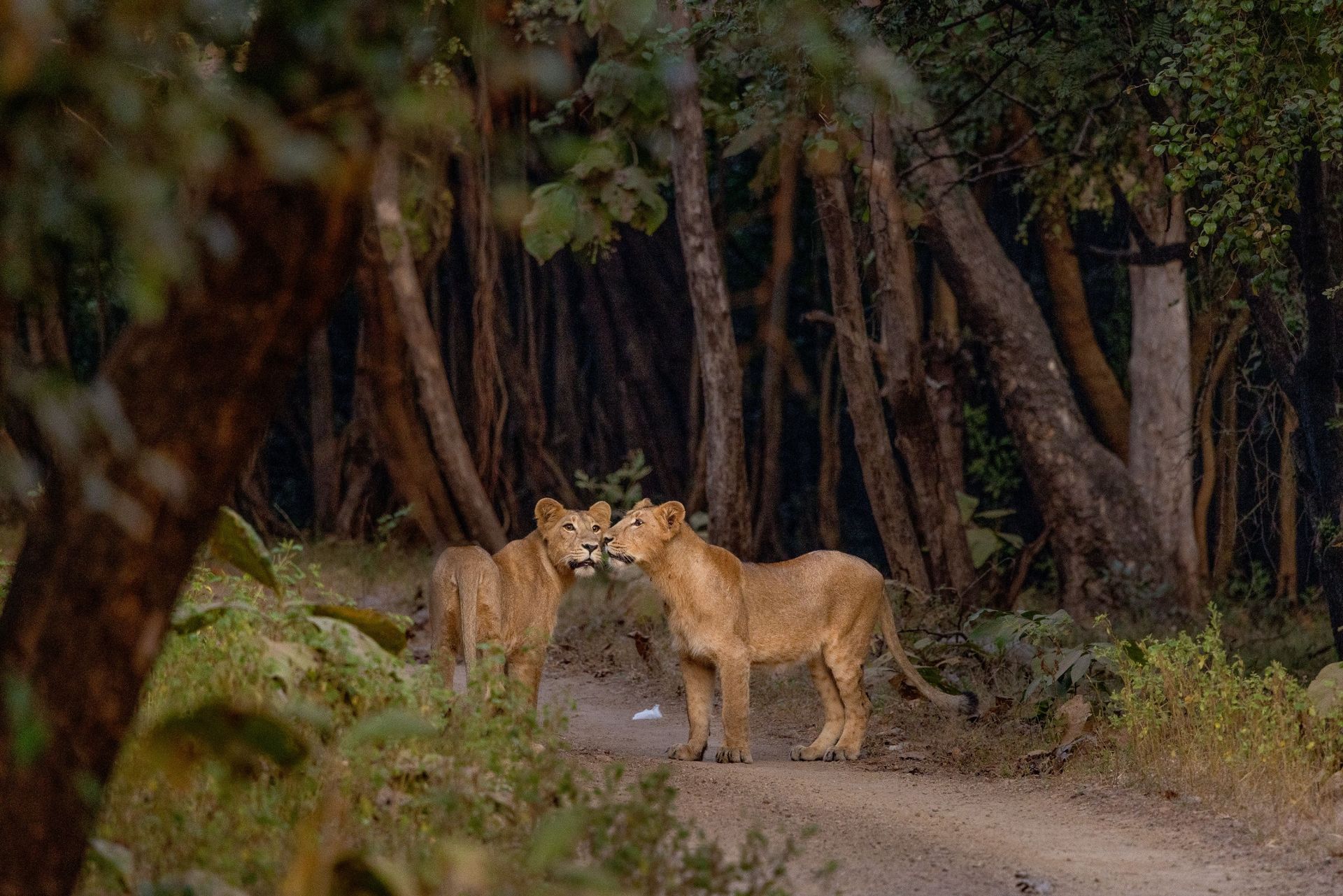
Two Asiatic lionesses greeting each other with a nose-to-nose touch. (Image credit: Steve Winter)

HO: Throughout the book, you look at topics like poaching, captive tigers in the Tiger Temple in Thailand, and the way they're kept in the U.S. for entertainment. And a lot of these things are still going on. How do you cope with seeing that side of their lives?

SW: When I was first working on tigers, I was in Thailand. I was wanting to work in Thailand and Sumatra because they were the two subspecies that experts said may go extinct. I was working with the most incredible group of scientists I've probably ever worked with. They were trying to save the Indo-Chinese tiger [Panthera tigris corbetti] in Thailand.

But close by was this place called the Thai Tiger Temple. And I said, "Hey, guys; I'd like to go there." And they said, "No, Steve; don't go. These are bad people, and we think they're involved in the black-market trade of tiger parts and tigers to Laos and then into China."

That's a good reason for me to go if you don't want me to go. The first thing I saw was this huge sign that said "conservation." This was a Buddhist monastery. For some reason, the abbot had been given a tiger cub about 10 years before, and he fell in love with tigers. So they started a tiger tourism operation that brought in at least $3 million a year.

I could see something was fishy right away, because by then, I'd learned a lot about these cats. They kept saying that they always had 150 tigers. But you could pet tiger cubs for Instagram selfies or bottle-feed them 365 days a year. If you're breeding tigers, what are you going to have? More tigers. Something was happening to them, because the death rate wouldn't take over the birth rate when you're speed-breeding cubs, which is what they were doing. A female has cubs; they take them away immediately so she'll be ready to have another litter. You can only use the cubs for three months because after that, they're too big to pet.

They had all these tourist things where you could get a selfie with a head of a tiger in your lap. I was saying, "Why are these tigers acting so sleepy?" They're taking this giant head of a tiger and putting it in somebody's lap that's sitting on the concrete. You would think that if you put the head of a tiger in your lap, you're going to end up with your head in their mouth.

[Editor's note: Winter and Guynup worked together on an investigation into the Tiger Temple in 2016, which eventually led to it being exposed for its abuse and connections with the illegal wildlife trade. Shortly after, the Tiger Temple was shut to the public.]

Sharon did the investigation, and I already had pictures. But we went to do a video and go visit the temple again … By the time we got done, the TV stations in Bangkok had taken the video and showed it all over on the nightly news. We kept working on this, and Sharon wrote four more stories. And after the last one, the Thai government was inundated with people calling for the prime minister to shut it down. They went in with the army and the police, and what they found was horrific. They went to the freezer. There were tigers hanging on meat hooks, cubs in jars, with a little Thai flag on them. They shut it down.

three tigers, with two in a big metal tub, in a grassy landscape

Three tigers that were rescued from Joe Exotic's Oklahoma zoo cooling down at the Wild Animal Sanctuary in Colorado. (Image credit: Steve Winter)

Stopping this is really important. After that, we did a story on tigers in the U.S., which was very difficult psychologically. It was one thing to see them in Thailand, but we had always heard that there were more tigers in the United States than there are in the wild, and people would go, "What are you talking about? We don't have tigers here."

Sharon and I … we found a lot of the same speed-breeding cubs at these roadside zoos, whether it was Doc Antle's Myrtle Beach that was $500 a day, or some dumpy little place on the road down south where you can give them $10 to look at a tiger. They were everywhere.

After that story came out, the National Geographic Society gave a copy of this 30-page story that we had done for the magazine to every member of Congress. We got this text on 20th December, 2022, that President Biden had signed the Big Cat Public Safety Act, which outlawed all that. We were part of getting this law passed, which was incredible.

HO: What are some of the biggest changes in conservation you've seen over your career?

SW: Conservation was changing a lot in the '90s and 2000s. Alan Rabinowitz [a zoologist who served as the president, CEO and chief scientist at Panthera Corp., a nonprofit conservation organization devoted to protecting wild cats] had this idea after he had a lot of scientists in Central and South America give him data on where they were working and where jaguars were. When he took it away and just showed the locations, he goes, this is a corridor, a natural corridor, because now we're talking a lot about connectivity and how roads get in the way. It's like animals are in prison because they can't cross these big freeways or even small ones. Find out where animals are, their migrating paths, and put in an overpass or an underpass or something.

leopard cub in a rocky landscape

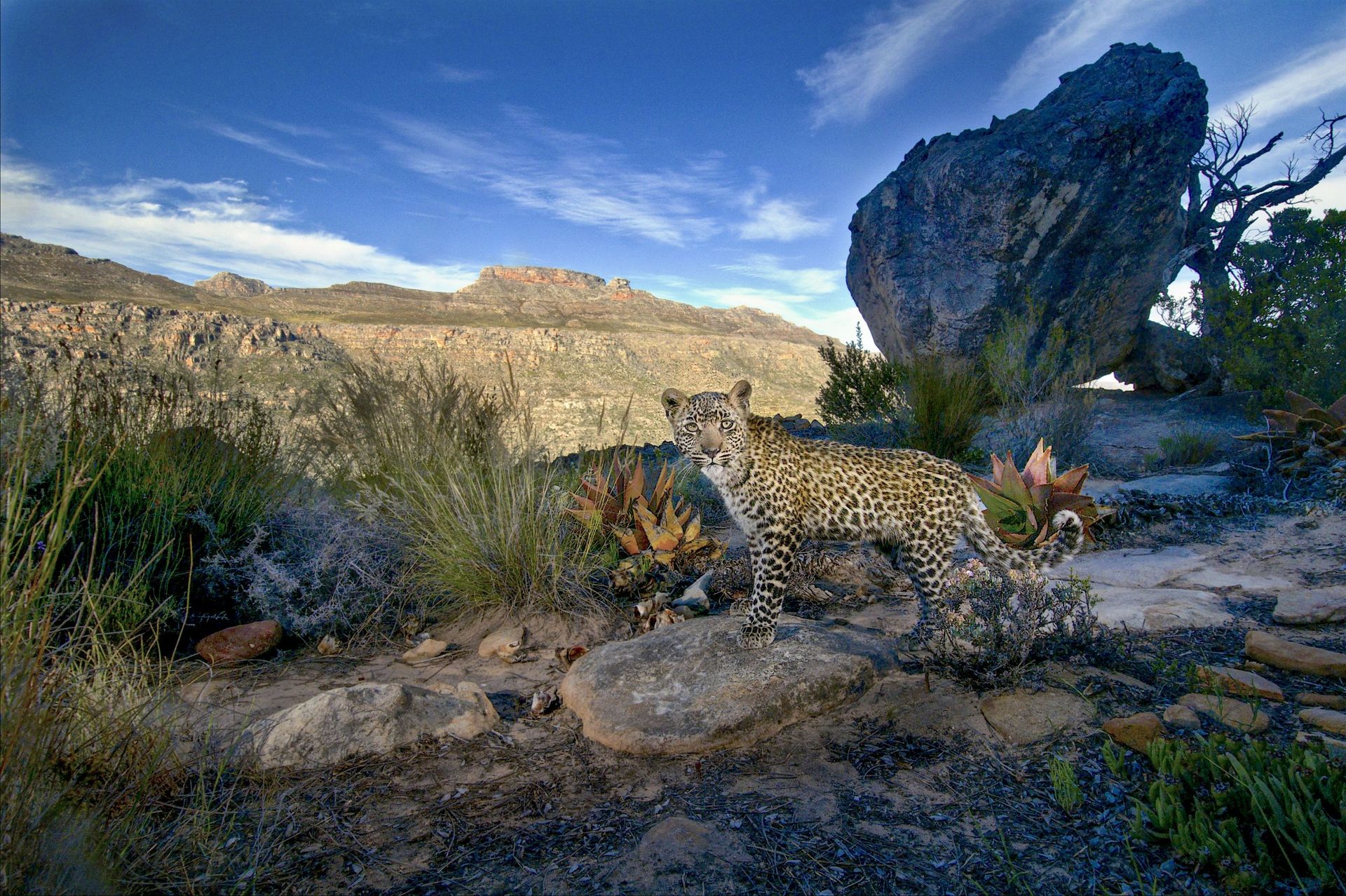
A Cape leopard cub in the Cederberg Wilderness Area in South Africa. (Image credit: Steve Winter)

All this was happening, all this new science, new conservation. That was all spearheaded by the work of [biologist and conservationist] George Schaller, who became a friend of ours. What a life that we've had — and are having. We're still working on the connectivity part right now.

HO: Are you hopeful for the big cats in LA?

SW: Oh, definitely. The ones that live in the Santa Monica National Recreation Area will be able to cross the 101 and then go all the way to San Jose. They could actually then hug the top of a certain mountain and get close to San Francisco, which is incredible to think about now. It's a huge metropolitan area, so you're leaving one, going to another. But there's so much land in between, and they can cross safely.

HO: What made you specialize in big cats in the first place, and what's the draw that keeps you coming back?

SW: Big cats are so charismatic and, to me, mystical. And they're an umbrella species, so if you save the largest predator, which is usually a big cat in any landscape, you save everything underneath it.

I was just taken over by these animals. National Geographic had never done a jaguar story before. I found out really quick why: You can't see them. I tried to use remote cameras, camera traps, but they're really smart. They'll go around them, so they don't have the flash going off or they don't like the sound or the smell of meat on these waterproof boxes and the cords and all that.

I just fell in love with big cats, and what a life to be able to work with every one of them. The only one that was on my list that I haven't done is the Amur tiger, Siberian tiger [Panthera tigris altaica]. When I was ready to photograph them with the scientists that had been monitoring them for over a decade, [the tigers] got canine distemper and about 60% died.

Big cats really bounce back when you give them protection, and there was protection given after you lose this many. All the study tigers that had the GPS collars on, the ones they could monitor, died. But the population bounced back, and there's more now than there were before.

I won't get to photograph Amur tigers. And the reason is, there's people — locals — who are working on it, and they're doing an incredible job. I've got a book here that has all the cats that I've worked on. The impact these stories have had, and the change that's come about, is what really makes me proud.

This interview has been condensed and edited lightly for clarity.

Help us improve Live Science Pro: We're always trying to make our content better. Leave us feedback about Pro here.

Big Cats

National Geographic
Big Cats

National Geographic photographer Steve Winter has spent his career photographing big cats around the world, from the graceful jaguars of Brazil’s Pantanal to the elusive Himalayan snow leopard. His photographs astound; his stories, even more so. In Big Cats, Winter and environmental journalist Sharon Guynup share experiences behind the lens.

In chapters on every key species—cougar, jaguar, leopard, snow leopard, tiger, and lion—readers will witness the power of Winter’s work, including uplifting stories of how his photographs have made a difference and powered important conservation efforts on behalf of these mighty creatures.

  •  

Cool chemistry trick allows new tattoos to 'turn on and off'

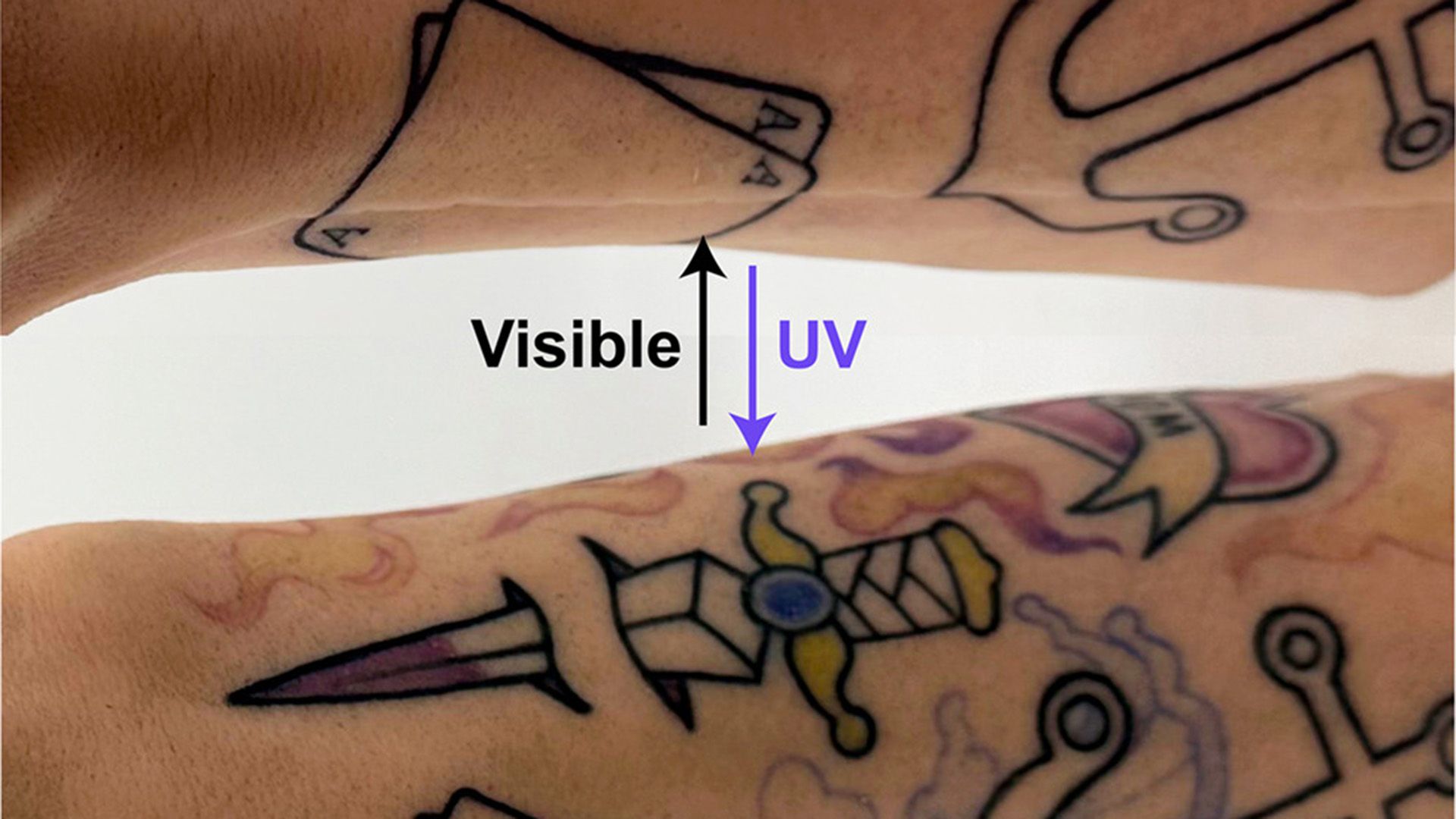
Two arms with one showing tattoos and the other showing colors amidst the tattoos

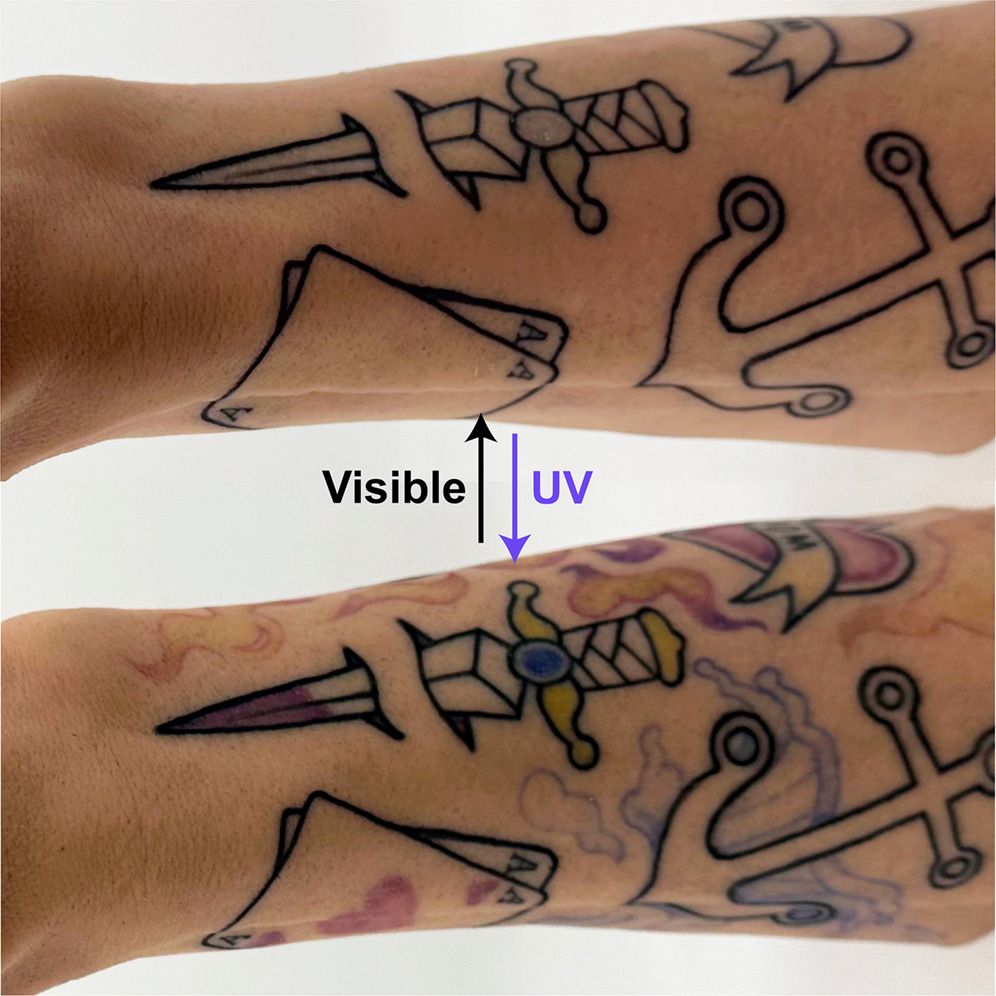
The new tattoo ink is activated under UV light. (Image credit: Matter & Light, Bruns et al.)

Researchers have developed a new type of tattoo ink that can be switched on and off with light, allowing colors and images embedded in the skin to be changed and even "erased" without having to go through the painful tattoo-removal process.

The system, which is being commercialized under the name PhotoTat, could eventually give people a way to conceal or change permanent body art. It could also have more practical applications, including medical tattoos that are visible only when a doctor needs to see them, researchers reported in a study published Friday (Oct. 9) in the journal Matter & Light.

"This is a tattoo that you can have, and whenever you decide you don't want it to be showing anymore, or you just don't want it there, you just turn it off," said study co-author Carson Bruns, an associate professor of biomedical engineering at the University of Colorado at Boulder. "And that's it. You don't have to turn it on again."

Working like a light switch

PhotoTat contains three primary color inks — blue, magenta and yellow — made with photochromic dyes, which are light-sensitive compounds that can change color with different wavelengths of light. These dyes are encapsulated in nanoparticles of polymethyl methacrylate (PMMA) — a medical-grade, glass-like plastic that is already used in medical implants and dermal fillers.

The dyes change their molecular structure when exposed to specific wavelengths of light. A 365-nanometer ultraviolet (UV) LED can activate pigments in around two to three seconds, Bruns said. Once activated, the colors can persist for hours to days under typical indoor lighting. But once the wearer exposes their skin to the bright outdoor sun, the colors disappear in seconds, erased by the intense light.

That makes the tattoo unique, as the pigment itself remains in the skin but the tattoo's appearance changes. Bruns and his team found that all three PhotoTat channels remained switchable in the skin for between 1.4 and 2.2 years.

Tattooing yourself for science

The three colors enable someone to activate different portions of a tattoo using different wavelengths of light. That means the magenta part of the tattoo might be turned on with green light, while the yellow pigment would be activated by blue light. This allows the wearer to customize their design and coloration to whatever they want at the moment — from a purple cherry to a yellow group of hearts.

That feature makes PhotoTat appealing for "people who love tattoos and have lots of tattoos, but just want something kind of fun and playful to add," Bruns told Live Science.

Bruns has tested each iteration of PhotoTat's inks on his own skin. His art is arranged in a series of tattooed scales, with different ink formations in individual scales.

"I gave myself these scales on purpose because they're each sort of a container for an experiment," Bruns said. The result, he joked, resembles a "magical mermaid trick," with some scales appearing out of nowhere and others changing color when activated.

The technology can also be combined with conventional tattoo ink. A permanent black ink design, for example, could contain hidden PhotoTat elements that appear only when activated.

The new tattoos could be appealing to people who want tattoos but are hesitant about their permanence, as well as to people who love their tattoos but occasionally need to conceal them because of work, social expectations or family, Bruns said.

"It's going to be on for most of the time, but just for this one moment, I'm going to turn it off for you grandma, for example," Bruns said.

Medical tattoos

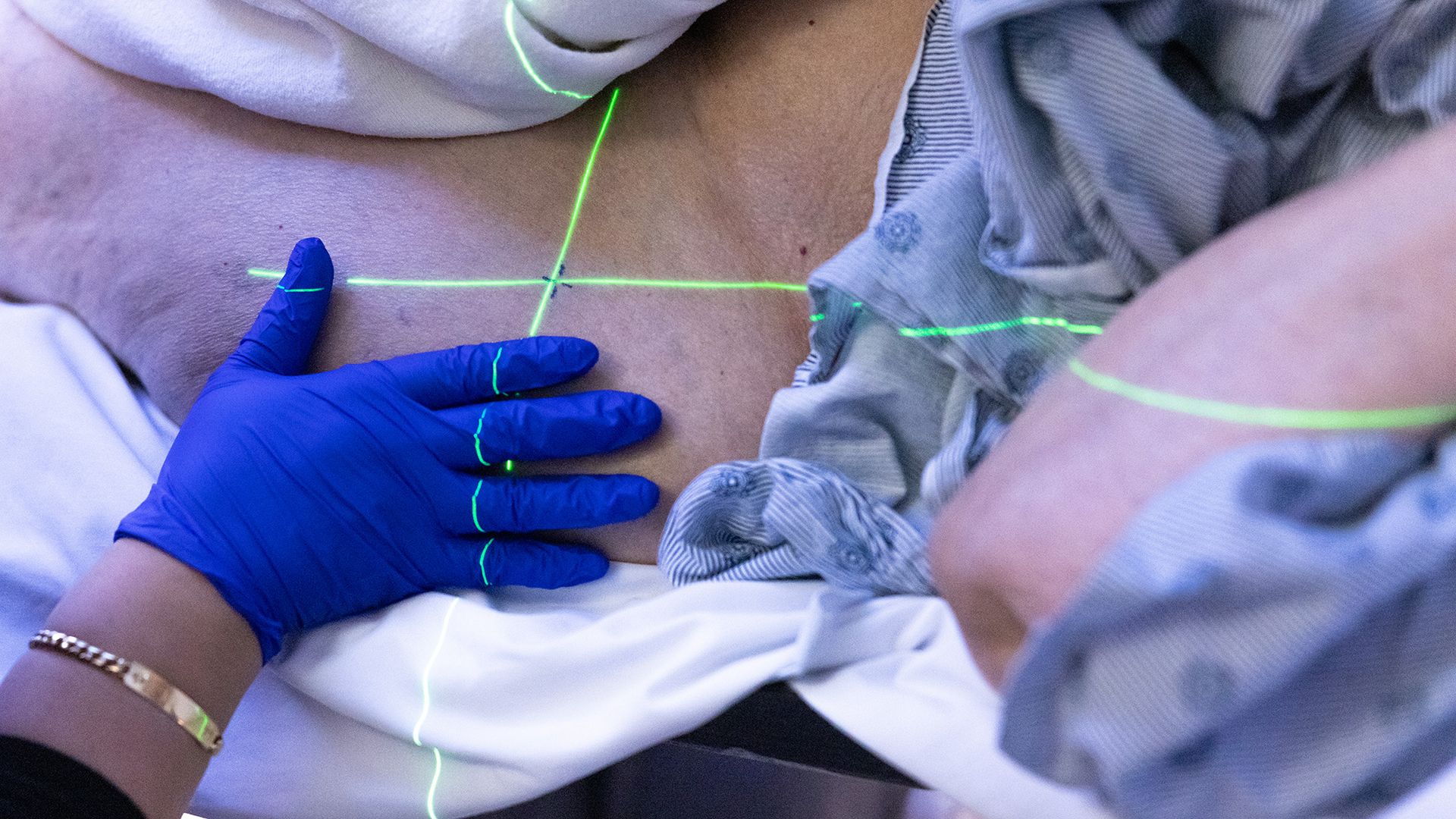
Bruns thinks the tattoos could be helpful in a medical setting, too. Patients undergoing radiation therapy, for example, sometimes receive permanent tattoos that help doctors precisely align radiation beams. While useful, those marks remain after the treatment, reminding the patient of their experience. These would make such markings invisible if a patient wants them to be.

PhotoTat could potentially allow similar markings to be switched on during surgery and hidden afterward.

Bruns has spent several years developing other smart tattoos for medical applications, including a dosimeter-type tattoo that measures the amount of UV radiation a wearer experiences, along with a tattoo that changes color when the wearer is exposed to dangerous gamma radiation.

A crossbeam of green laser light is on someone's back.

A cancer patient receives radiation treatment, guided by laser lines and a tattoo on their skin. (Image credit: The Washington Post via Getty Images)

"It's not for you and me, but if you're like an astronaut or a nuclear engineer, they have to wear these dosimeters," Bruns said. "So, we have like a dosimeter tattoo that sort of puts that in your skin."

So far, Bruns and a fellow tattoo artist, have only commercialized the purple PhotoTat ink, after running the ink through a series of third-party medical tests.

The tests showed the purple is safe for use, and available to order, but it isn't cheap at $100 for a small bottle. Bruns hopes as more research is done, he can bring the other colors to market and lower the production cost, so the technology is more accessible.

  •  

Cosmic House of Mirrors

A massive galaxy cluster, made of many golden elliptical galaxies with the largest, brightest one in the center. Heavily distorted orange galaxies appear all around the cluster, the largest concentrated in a large arc around the cluster's center; these are images of very distant galaxies, created by gravitational lensing. A few galaxies are large and bluish-white in color; bright, nearby stars are the same color.
ESA/Webb, NASA & CSA, L. Furtak, S. Fujimoto

Galaxies warp and multiply as if in a house of mirrors in this image from NASA’s James Webb Space Telescope released on Sept. 29, 2026.

The brilliant golden galaxies seen here are part of a galaxy cluster called MACS J0454.1-0300. The orange galaxies bunched together on one side of the image, however, are not actually part of the cluster, but rather galaxies much farther away whose light has been bent and magnified by gravitational lensing. This phenomenon occurs when the enormous mass of a foreground object such as a galaxy cluster bends and magnifies the light from a more distant object in the background.

Learn more about this galaxy cluster.

Image credit: ESA/Webb, NASA & CSA, L. Furtak, S. Fujimoto

  •  

What to Know About the Facebook Whistle-Blowing Case Depicted in ‘The Social Reckoning’

Aaron Sorkin’s sort-of sequel to the 2010 “Social Network” dramatizes a whistle-blowing case at Facebook. Here’s what to know.
  •  

South Korean 'robot dog' became first to run a marathon on a single battery charge — now we know how

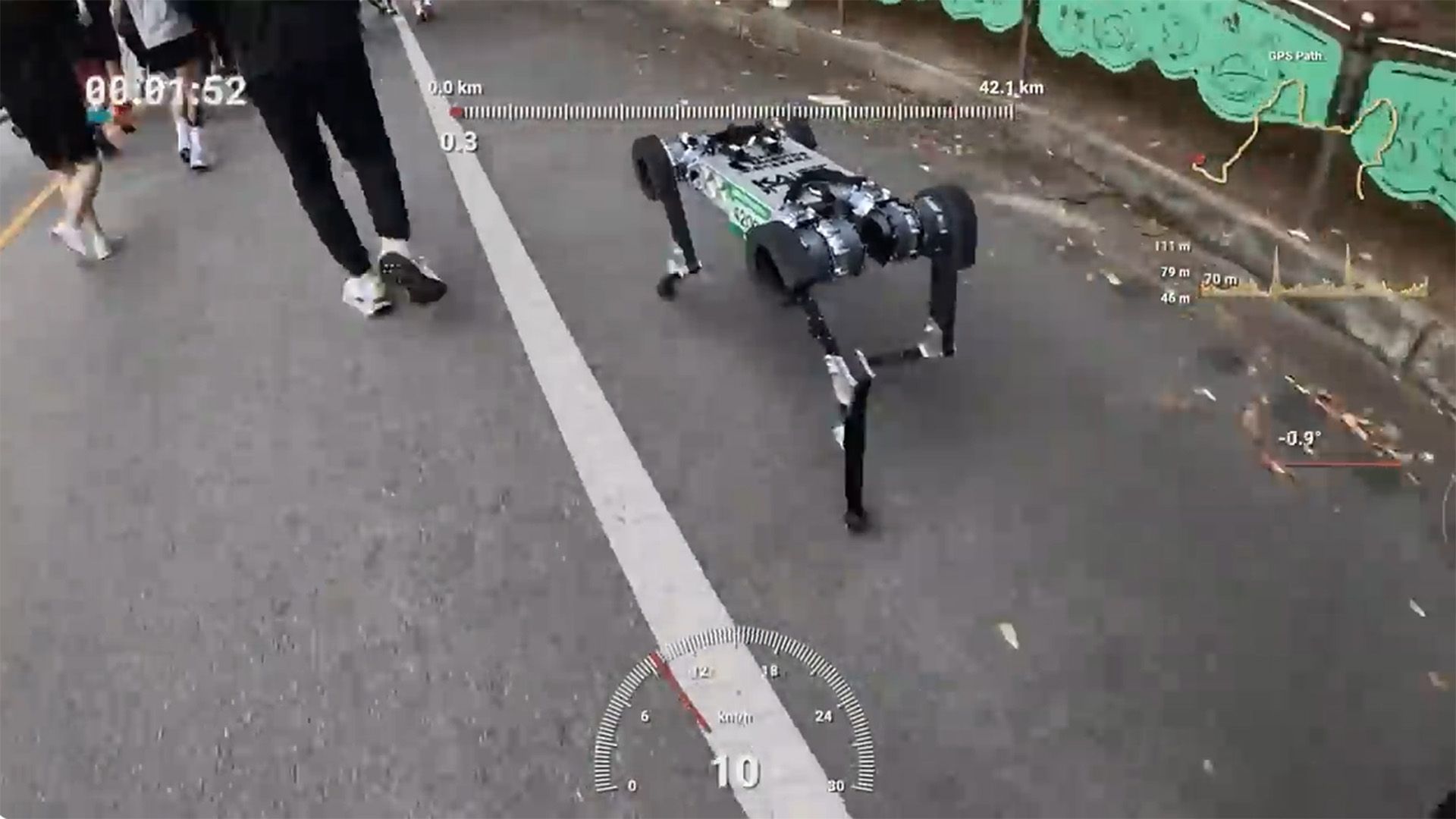
A four-legged robot completed a full marathon on a single battery charge, covering 26.2 miles (42.2 kilometers) on a hilly public-road course in South Korea two years ago. Now we know a lot more about how it achieved this record-breaking feat.

The dog-like robot, called RAIBO2, finished the 22nd annual Sangju Dried-Persimmon Marathon in just over 4 hours, 19 minutes. The bot's developers say it's the first quadruped robot to have completed an official marathon-distance event without stopping to recharge. They're commonly referred to as "robot dogs" because the movement of their joints in both front and hind legs resembles that of canines.

The scientists outlined their findings about the robot's feat, which it achieved Nov. 17, 2024, in a study published Sept. 23 in the journal Nature.

This achievement represented a new milestone in overcoming a critical limitation for quadruped robots: endurance. Although four-legged robots can cross difficult terrain that wheeled machines struggle to traverse (like stairs and rugged trails), their endurance has been limited because powering multiple joints while repeatedly lifting and stabilizing the machine's body consumes huge amounts of energy.

"Unlike wheeled robots, quadrupeds continuously expend energy at their joints to support body weight and incur kinetic energy losses during intermittent foot-ground contact," the researchers wrote in the study.

RAIBO2's race was a demanding real-world trial. It took place during the Sangju Dried-Persimmon Marathon, with the bot racing alongside human participants. The route covered two 50-meter [164 feet] elevation climbs, with slopes of up to 10 degrees. Those kinds of gradients put increased strain on the robot's energy resources, stress-testing the bot's battery management capabilities, the scientists said.

RAIBO2 had previously run a 26.7-mile (43 km), GPS-guided route across a flat athletic field, which it knocked out in 4 hours, 40 minutes on one charge. However, an earlier marathon attempt across uneven terrain against other competitors had to be aborted around the 23-mile (37 km) mark after the robot's battery ran out. The robot's developers attributed that shortfall in part to frequent pace changes as the machine attempted to adjust to the pace of nearby runners.

To compensate, the team boosted the robot's battery capacity by 33% and tinkered with the control system, including implementing joint-stiffness control at the actuator. This allowed the bot to soften its leg when it had to absorb an impact or it needed a stable, forceful push-off. After the adjustments, RAIBO2 expanded to a maximum range of 41.6 miles (67 km) on a single charge, albeit on straight paths, according to the researchers.

Another key metric was RAIBO2's total cost of transport — a measure of the energy required to move a body over a given distance, with lower values indicating less energy expended. Researchers reported that RAIBO2 achieved a total cost of transport of 0.25, compared with a human benchmark of 0.37. The researchers said their machine was the first quadruped robot to surpass that figure.

The team attributed that efficiency to several optimizations across RAIBO2's software and hardware. Especially vital were its lightweight mechanical components, which were capable of transmitting kinetic energy from its joints with very little interference. They also credited a low-loss motor-driving circuit and, on the software side, a locomotion policy specifically streamlined to limit energy use. The system was also trained using the team's simulation environment, called RaiSim, which includes models of slopes, stairs and icy roads.

Like many electric vehicles, RAIBO2 can regenerate some battery by capturing kinetic energy, particularly while traveling downhill. That capability allows it to offset some of the energy it expends while climbing, though it doesn't eliminate the extra cost of hilly terrain.

The researchers said RAIBO2 has more than three times the travel range per charge of existing quadruped robots, with a total battery capacity of 2,016 watt-hours. It's in part because of that capacity increase that the team now estimates that the robot could travel up to 15.5 miles (25 km) farther than its marathon stint, up to a total of 41.6 miles (67 km).

That kind of endurance could broaden the roles for quadruped robots in places where wheeled models are impractical, the developers added in the study. For example, they could be useful in disaster zones and mountainous areas, where a sufficiently mobile, high-endurance robot could carry cameras, sensors or communications gear across uneven terrain.

  •  

James Webb telescope pinpoints the most distant 'fast radio burst' ever seen

Astronomers have detected the most distant burst of radio signals ever seen: an explosion that's emitting waves of energy from more than 10 billion light-years away.

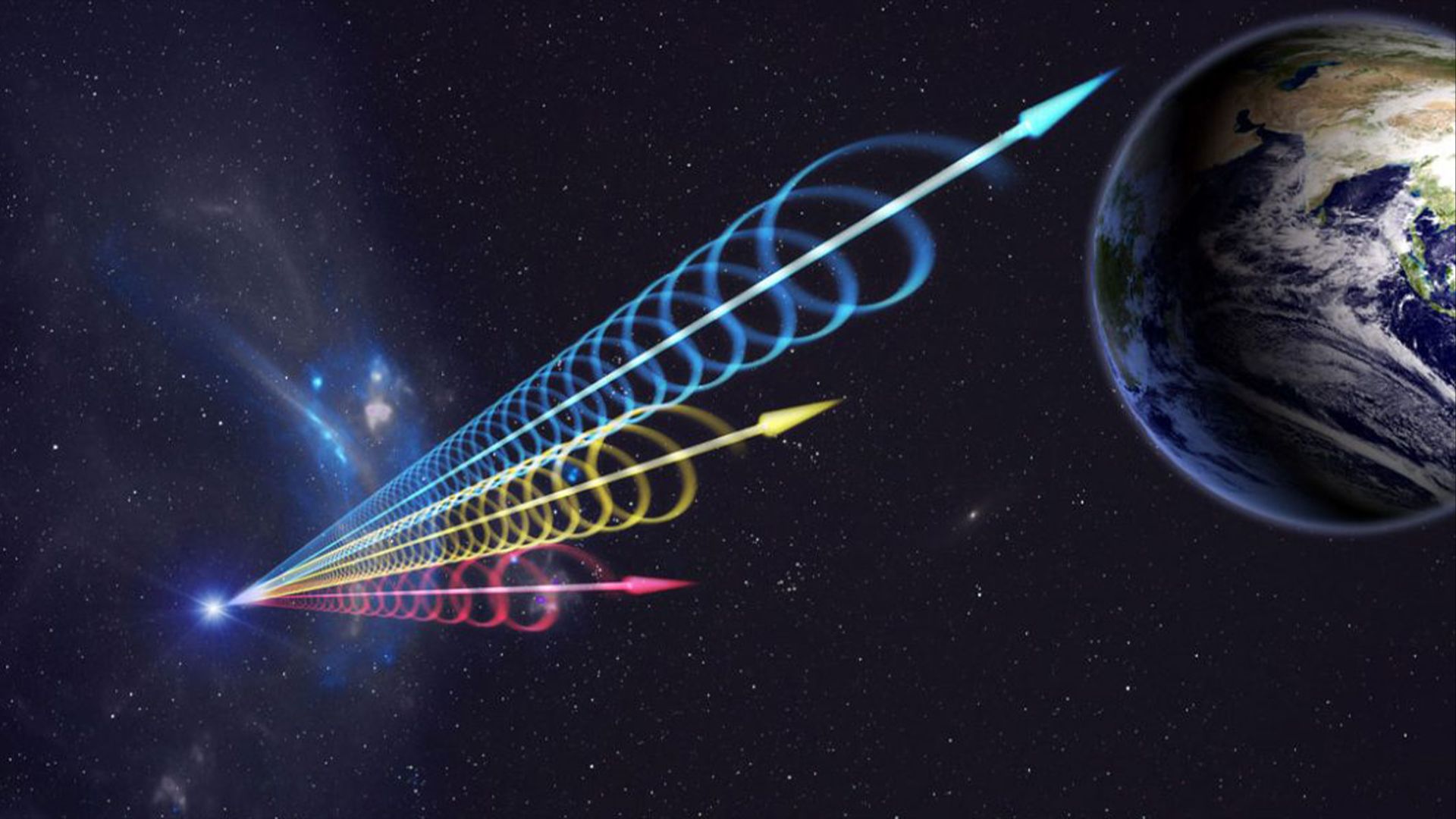
The event, named FRB 20240304B, is known as a fast radio burst (FRB). Astronomers have detected thousands of FRBs before this. But because these events last only milliseconds, they are extremely difficult to study and their origin stories remain unclear.

In this case, however, astronomers managed to use a radio telescope array and the James Webb Space Telescope (JWST) to chart the event, with JWST narrowing down the precise host galaxy that FRB 20240304B came from. The study, published Thursday (Oct. 8) in the journal Science , sheds more light on a time when the universe was only about 3 billion years old, showing that FRBs arose early in our cosmos' history. The detection more than doubles the previous distance record for FRBs.

The JWST played an instrumental role in the discovery, study co-author Themiya Nanayakkara, a senior lecturer at the Sydney Institute for Astronomy, told Live Science in an email. The email was written in collaboration with study first author Manisha Caleb, a senior lecturer in astrophysics at the same university.

For example, JWST's observations showed that the host galaxy was smaller than expected, was "metal-poor" (had few elements besides hydrogen and helium), and was forming a lot of stars. These characteristics could offer new clues about the environments in which FRBs arise, giving more information about the mysterious events. Researchers suggest that this FRB may have been linked to a magnetar, a highly magnetic star core left after a supernova.

Zooming in with the James Webb telescope

The ancient FRB was initially detected with MeerKAT, an array of 64 radio telescopes in South Africa. Nanayakkara said MeerKAT revealed "both the detection of the fast radio burst and, importantly, a very precise position on the sky."

The researchers knew the FRB was far away because of the large dispersion of the radio signal, but initial searches with powerful ground-based telescopes, "saw essentially nothing; it looked like empty sky," the researchers told Live Science. "The most likely explanation was that the galaxy was simply too faint to be detected in those observations. That is where JWST became transformative."

An illustration of a series of colorful hexagons in front of a pink background

An illustration of a fast radio burst (FRB) being detected by the MeerKAT radio telescope array. (Image credit: Carl Knox - OzGrav, Swinburne University of Technology Background Image Credit: NASA, ESA, CSA, STScI, Themiya Nanayakkara (USYD) Background Image Processing Credit: Joseph DePasquale (STScI))

The science team successfully got time on JWST with a program called Director’s Discretionary Time, which is aimed at time-sensitive observations. The researchers started by using JWST's Near Infrared Camera to trace the radio signal and take a very deep image of the target region.

"Suddenly, there it was: a very faint galaxy almost exactly where we expected the host of the FRB to be," Nanayakkara said. The researchers then used JWST's Near Infrared Spectrograph to obtain a spectrum (wavelengths of light broken into different chemical signatures), which showed hydrogen and oxygen.

"These spectral features act like fingerprints: because we know the wavelengths at which they are produced in the laboratory, we can measure how much they have been shifted by the expansion of the universe," Nanayakkara explained. "That gave us a very precise redshift of about 2.15. We are therefore seeing this galaxy as it was when the universe was only around three billion years old, so roughly one-fifth of its current age."

Because the host galaxy is fairly young, it supports the idea that at least some FRBs are generated by magnetars, which are more likely to appear in spry galaxies where intense star formation is occurring, the team said.

The team plans to continue hunting for FRBs with JWST.

"We do not know what the sources will be yet," Nanayakkara said, as that depends on what pops up in the sky and is spotted by ground-based radio telescopes. "Once our radio telescopes find and localize a suitable new source, we can trigger the JWST observations. So it is quite exciting, because we really have no idea what we will find when we combine the power of these two types of telescopes."

  •  

Amazon riporta i tablet in Italia: Android 16, Google Play e Alexa+ a partire da 229,99 euro. Prime impressioni

Il modello di punta è Alexa Tablet 12 Pro: scocca unibody in alluminio, schermo opaco e Pro Pen e Pro Keyboard come accessori. Per tutti Alexa+ integrata, l'accesso al Play Store di Google e una modalità di lettura Kindle che garantisce fino a 20 ore di autonomia. I nuovi tablet Amazon in Italia dal 19 ottobre.... Leggi tutto
  •  

1,000-mile-long cloud that forms and vanishes on Mars every day obeys 'exotic physics' never seen on Earth

A 1,000-mile-long (1,600 kilometers) Martian cloud that emerges and then quickly disappears from the Red Planet's sky nearly every day is even weirder than scientists realized. New simulations suggest that the eerie apparition can only be explained using "exotic physics" that have been theorized but never seen on Earth or anywhere else in the solar system.

The mysterious floating mass, dubbed the Arsia Mons Elongated Cloud (AMEC), frequently emerges above Arsia Mons, a 12-mile-tall (20 km) extinct volcano located in the Tharsis region, just south of the Red Planet's equator. The water vapor cloud was first spotted in 2018 by the European Space Agency's Mars Express orbiter and has since appeared nearly every morning throughout Mars' spring and summer, when increased solar radiation triggers strong surface winds. But it lasts only a few hours each day, before fully evaporating.

The AMEC can stretch up to 1,100 miles (1,800 km) long, around one-twelfth of Mars' circumference. For context, that is roughly twice the length of the U.K. or the distance between New York City and Miami.

Although the Red Planet is no stranger to giant dust clouds and occasional "iridescent streaks" of carbon dioxide, it is almost completely devoid of atmospheric water vapor. That makes it extremely rare for puffy, Earth-like clouds to form there, let alone ones so vast. As a result, scientists have struggled to explain this whacky weather.

But in a new study published Wednesday (Oct. 7) in the journal Nature Geoscience, researchers used Mars Express data to create new simulations in an effort to finally explain the AMEC. Initially, the team struggled to recreate the puzzling phenomenon. But when they abandoned traditional meteorological principles in favor of a more out-of-the-box explanation, they were eventually successful.

A top-down photo of the cloud next to Arsia Mons

The AMEC forms when summer winds push water vapor up and over the 12-mile-high slopes of Arsia Mons. But it only lasts for a couple of hours at a time. (Image credit: ESA/DLR/FU Berlin)

"To create the AMEC in our modelling, we found that we needed to include some exotic physics … physics that, while included in textbooks, is treated as theoretical and usually thought not to happen in nature," study first author Jorge Hernández-Bernal, a planetary scientist at the University of the Basque Country in Spain who was affiliated with Sorbonne University in Paris at the time of the study, said in a statement. "Once we included this physics in our simulations, the AMEC emerged just as we hoped."

"Wholly unexpected"

The AMEC is an orographic cloud, meaning it forms as strong winds push water vapor up and over a raised structure, such as a mountain. Similar clouds also exist on Earth, including the "Levanter" cloud, which occasionally forms above the Rock of Gibraltar in southern Europe. However, the Martian equivalent cannot be explained by the same processes that occur on our planet.

On Earth, clouds form via a process called heterogeneous nucleation, in which moist air cools and condenses into ice crystals that form around tiny atmospheric particles, such as dust, salt, pollen or soot. But while Mars has plenty of atmospheric dust, that's not what's happening there.

"For the AMEC, it seems that cloud formation takes place without needing any of this 'stuff' [in the air]," said Hernández-Bernal, who has been studying the AMEC for the past six years. "Water vapour turns directly into icy cloud particles without any middle step. It's akin to droplets of condensation appearing in the middle of a room, rather than on a window."

The researchers call this "homogeneous nucleation" and say it has never been seen before in a planetary atmosphere. "It's wholly unexpected," Hernández-Bernal added.

A blurry photo of Arsia Mons towering over the surface of Mars.

Arsia Mons is the second-tallest volcano on Mars behind Olympus Mons, but is twice as tall as Mount Everest. This image, captured by NASA's Odyssey orbiter, helps give a scale of how huge the Martian mountain really is. (Image credit: NASA/JPL-Caltech/ASU)

Other scientists previously predicted that homogeneous nucleation could occur in Earth's upper atmosphere or in the skies above Venus. However, this has been deemed highly unlikely because it requires humidity levels roughly 100,000 times greater than those on our planet's surface.

Given that modern-day Mars is almost completely devoid of water, it may seem unlikely that its humidity levels could reach such lofty heights. However, the Mars Express data tells a different story.

As wind rises up the slopes of Arsia Mons, which is more than twice as tall as Mount Everest, it creates a powerful wave that shoots air into the upper atmosphere at tremendous speed. The researchers calculated that the temperature of this air can drop by up to 54 degrees Fahrenheit (30 degrees Celsius) in just 10 minutes. This not only makes it easy to freeze but also greatly increases the humidity within the wave, allowing homogeneous nucleation to take place, the simulations show.

So where does all this water come from? Some of it is already in the atmosphere, but some likely originates at the summit of Arsia Mons, which is covered with a thick layer of frost, the researchers suggested.

"A big success"

The new simulations mark a big step forward in our understanding of the AMEC and wider Martian meteorology.

"We don't have nearly as much information about Mars' atmosphere as we do about Earth's, so reproducing the AMEC to this degree is a big success for the model," Hernández-Bernal said.

Two side-by-side photos of Mars as a crescent in space with the cloud stretching across its surface

Mars Express has been closely monitoring the AMEC since 2018. These photos show the cloud appearing over consecutive days in July 2020. (Image credit: ESA/GCP/UPV/EHU Bilbao)

The findings would not have been possible without the Mars Express orbiter, which used three instruments — the Visual Monitoring Camera, the High Resolution Stereo Camera and the OMEGA instrument — to map out how the AMEC takes shape and evolves every day. It is also one of the only Mars spacecraft that can see Arsia Mons in daylight.

"Mars Express discovered the AMEC, has followed up and monitored it for years, and is now helping reveal the secrets of its formation," Colin Wilson, the project scientist for Mars Express, who was not involved in the new study, said in the statement.

The discovery is also a reminder that, despite sharing the same basic principles, weather systems do not behave the same on other worlds as they do on Earth, which could have big implications for solar system exploration and the hunt for extraterrestrial life on distant exoplanets.

"While clouds on Earth and Mars seem to be governed by the same 'rules', understanding this exotic Martian cloud required exotic physics — and this may be true elsewhere in the cosmos," Wilson said.

  •  
❌