Login

Android makes switching password managers much easier
What you need to know
- You can now move passwords and passkeys directly between supported apps on Android without exporting sensitive data to an unencrypted file.
- Your new password manager hands the process to Android, which detects compatible managers installed on your phone and coordinates the transfer.
- Once authorized, Android moves the credentials between apps without requiring manual file handling.
Android has always made it a pain to switch password managers. Moving passwords usually involved exporting your data into an unencrypted text file, and passkeys were pretty much stuck in place. Android is tackling both of those issues with a new transfer experience that makes moving your credentials much more secure and simple.
In a blog post, Google said the new system lets you transfer passwords and passkeys directly between password managers, without first having to download a file.
That eliminates one of the biggest security hassles of the old process, which was that sensitive credentials were sitting unprotected on your device for a while. Furthermore, passkeys weren’t transferable, so you had to manually recreate them across websites and apps.
The process is built to be mostly out of your way. Start in your new password manager and select the option to import or copy credentials from another provider. The app then hands the job to Android, which knows which compatible password managers you have already installed on your phone and shows you where the data can come from.
You are then sent back to the password manager you already use to select, review, and approve the transfer. Once approved, the passwords and passkeys move between the apps in just a few seconds.
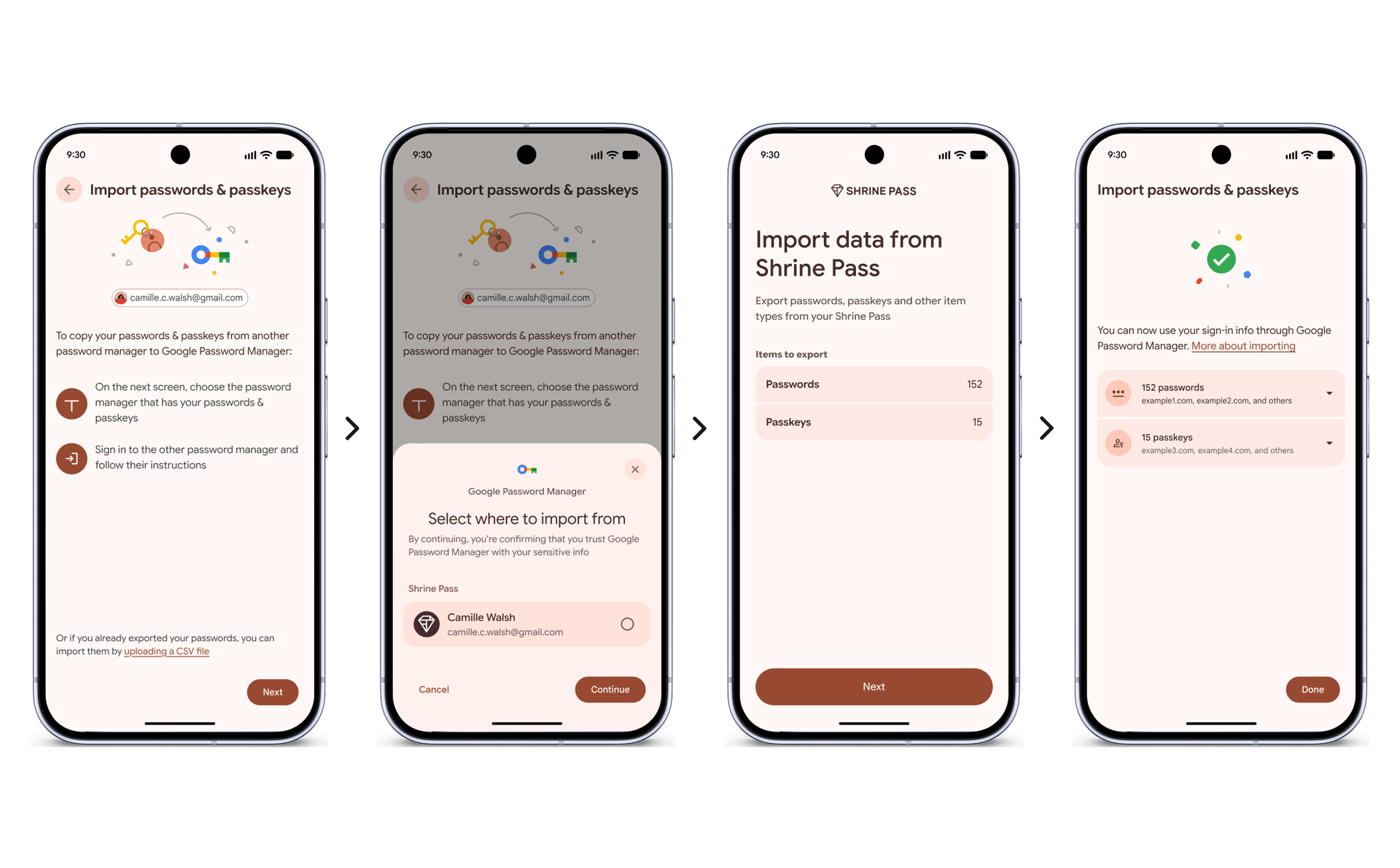
The feature is already available with Google Password Manager, 1Password, Bitwarden Password Manager, and Dashlane. Dashlane notes that CXP is compatible with devices running Android 10 or newer with the latest Play Services update. Bitwarden needs Android 14+ with Play services 26.21+.
It is not merely a matter of convenience. Passkeys are more secure than passwords and resistant to phishing. Adoption has been stalled in part due to user concerns around vendor lock-in. CXP removes that barrier.
Bitwarden says the creation of passkeys peaked this summer at over 500% compared to early 2024, with nearly half of all passkeys created in the past three months alone.
Google says more partners are on the way. If you’ve been waiting to change password managers because of the hassle, that excuse just went out the window.