❌

Reading view

LG Energy Solution Begins Second Phase of Gwacheon R&D Campus Expansion

LG Energy Solution's Gwacheon R&D Campus. (Source: LG Energy Solution)

LG Energy Solution is consolidating its research and development (R&D) capabilities in Gwacheon. The company is expanding its R&D scope from battery packs and battery management systems (BMS) to materials.

LG Energy Solution has completed the first phase of expansion work at its Gwacheon R&D Campus and began the second phase this month, according to industry sources on Sept. 16. The company plans to obtain approval for use of the expanded building by the end of 2028 and begin operations in 2029. It has been conducting preliminary construction and site preparation for the campus expansion since early last year.

The second phase, which began this month, involves construction of the structural framework for a new research building. Xi C&A is handling construction. Xi C&A has also participated in construction projects for LG Energy Solution's Ochang Energy Plant and plants in Nanjing, China, and Poland.

LG Energy Solution decided in late 2024 to expand the Gwacheon campus. The company needed additional research space as it broadened its research scope from battery packs and BMS to materials. The site opened in 2015 as an R&D base before LG Chem spun off its battery business.

Administrative procedures for the expansion were completed last year. LG Energy Solution reached a final agreement with Gwacheon City in October last year following preliminary negotiations on expanding the research facilities. Gwacheon City agreed to pursue changes to its urban management plan needed for the expansion, while LG Energy Solution agreed to provide more than 70 billion won to the city through public contributions and land donations.

Under the construction schedule, structural work on the new research building is expected to be completed by March 2028. The building will have three basement levels and seven above-ground floors, with a total floor area of about 22,425 square meters. Following interior facility work, R&D equipment will be brought in sequentially starting in June that year. Commissioning and finishing work will begin in September, with approval for use targeted for the end of December. The building will be used as research space starting in 2029.

LG Energy Solution operates R&D institutes in Daejeon, Gwacheon and Magok in Seoul. It also uses LG Electronics' Seocho R&D Campus as research space. Battery technologies developed at the research facilities are tested for mass-production feasibility on pilot lines before being applied to actual production. A key site is the Ochang Energy Plant. LG Energy Solution is building pilot lines there for all-solid-state batteries and sodium-ion batteries to develop process and mass-production technologies for next-generation batteries.

The company is also expanding its R&D infrastructure overseas. LG Energy Solution's Nanjing subsidiary in China established a materials research facility inside an existing battery plant this year. The facility is equipped to analyze and test battery raw materials and samples to study material properties and their performance in battery applications.

LG Energy Solution holds Battery Tech Conferences (BTC) in South Korea and overseas each year to recruit master's and doctoral-level talent. CEO Kim Dong-myung has attended BTC events since last year as part of efforts to recruit researchers. The company is also expanding next-generation battery research through joint research centers with the University of California, San Diego (UCSD), the University of Münster in Germany and the Helmholtz Institute.

LG Energy Solution has increased R&D investment despite a slowdown in the battery industry. Revenue fell about 30% to 23.6718 trillion won last year from 33.7455 trillion won in 2023. Over the same period, R&D spending rose about 28% to 1.3278 trillion won from 1.0374 trillion won. R&D spending as a percentage of revenue increased to 5.6% from 3.1%. The company spent 725.9 billion won on R&D in the first half of this year.

  •  

iPhone 18 Pro setup: How to set a charge limit and still charge to full

A new iPhone 18 Pro starts out charging to 100 percent, with Optimized Battery Charging switched on. If you’d rather cap it, open Settings, tap Battery, tap Charging, and choose a limit between 80 and 100 percent in 5 percent steps. It’s worth deciding during setup. Charge limits aren’t new: Apple’s guide lists them for […]

The post iPhone 18 Pro setup: How to set a charge limit and still charge to full appeared first on The Mac Observer.

  •  

LG Energy Solution Adopts Real-Time Weld Inspection for ESS Batteries

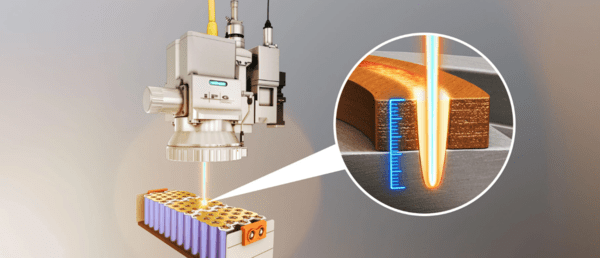
LDD laser welding and monitoring equipment measures weld depth during laser welding to verify quality. (Photo: IPG Photonics)

LG Energy Solution has introduced laser inspection technology that detects welding defects in real time during production of energy storage system (ESS) batteries. It is the first Korean battery maker to deploy nondestructive 100% inspection technology on a large-scale mass-production line. The equipment was supplied by US laser specialist IPG Photonics.

According to industry sources on Sept. 15, LG Energy Solution has installed nondestructive laser weld inspection equipment on its battery module assembly (BMA) lines for ESS batteries in the US. IPG Photonics has supplied more than 80 units since last year.

LG Energy Solution is using the laser inspection technology in the process of assembling its JF2 pouch-type lithium iron phosphate (LFP) cells into modules. The system measures weld depth and internal conditions while metal components are being laser-welded. Unlike inspections performed separately after production, it can verify weld quality at mass-production speeds.

Weld quality directly affects battery performance and safety. Metal components including copper and aluminum are welded as multiple cells are assembled into a battery module. Uneven weld depth or microscopic internal defects can reduce electrical performance and cause durability problems over prolonged use.

Conventional inspection primarily uses cameras and sensors to examine weld shape, temperature and reflected light to identify defects. Internal defects often require destructive testing in which sample products are cut open or disassembled.

The nondestructive laser inspection adopted by LG Energy Solution can reduce reliance on post-production sampling. Because the internal condition of each product is checked during welding, defective products can be identified before moving to subsequent processes. It can also reduce the burden of reworking or scrapping defective products discovered later. The technology can be used regardless of battery form factor.

“There are few nondestructive inspection technologies capable of checking internal weld defects in battery modules at the same time as production,” an industry official said. “Other companies have tested laser nondestructive inspection with a small number of systems, but LG Energy Solution is the first to deploy it on this scale in mass production.”

IPG Photonics acquired Canadian laser-weld quality monitoring company Laser Depth Dynamics (LDD) in 2017, gaining technology for measuring laser weld depth. LDD developed technology that directly measures how deeply a laser melts metal during welding.

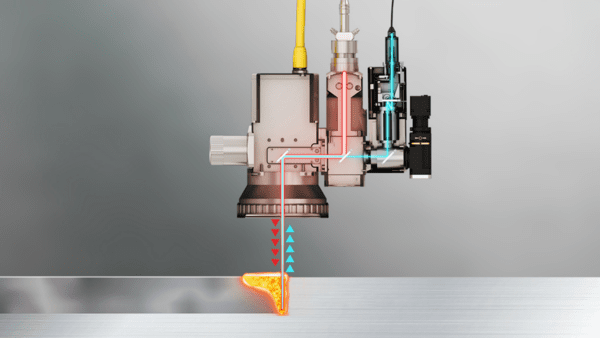
At the core is inline coherent imaging (ICI). The technology directs a low-power sensing laser along the same path as the welding laser to measure weld depth and geometry. Unlike cameras or sensors that indirectly assess weld conditions based on reflected light and temperature, ICI can directly measure actual weld depth with micrometer-level precision.

Diagram of inline coherent imaging (ICI), which directs the welding and sensing lasers along the same path to measure weld depth and geometry in real time. (Source: IPG Photonics)

LG Energy Solution is rapidly expanding its ESS battery production capacity in North America. The company has increased its manufacturing footprint by converting local plants that previously produced electric-vehicle batteries to ESS production. Five sites are responsible for ESS battery production, including the Lansing and Holland plants in Michigan, NextStar Energy in Ontario, Canada, L-H Battery Company in Ohio and the Ultium Cells plant in Tennessee.

The company plans to secure more than 50 gigawatt-hours (GWh) of annual LFP battery production capacity for ESS applications in North America by the end of this year. Its cumulative ESS order backlog exceeds 140GWh. As production volumes increase, quality control that identifies welding defects during mass production becomes increasingly important.

LG Energy Solution has initially deployed the nondestructive laser inspection equipment for pouch-cell-based ESS modules. The technology can also be used for welding cylindrical and prismatic batteries. The company plans to mass-produce cylindrical batteries at its Arizona plant and prismatic batteries at its Lansing plant in Michigan.

Lasers are widely used to precisely join metal components in battery manufacturing. Typical applications include welding tabs that connect internal cell electrodes to external circuits, intercell connections, and electrode tabs to prismatic cans and caps. Because lasers can precisely process narrow areas without physical contact, they are also used for notching to form tab shapes in electrodes. Samsung SDI and SK On, as well as LG Energy Solution, are expanding the use of laser technologies in battery production.

  •  

Xiaomi Pad 9 Pro Max Review: 13.3-Inch Display Explained

The Xiaomi Pad 9 Pro Max makes an immediate impression with its 13.3-inch display and 3:2 aspect ratio. The larger screen provides noticeably more workspace, yet the tablet remains surprisingly portable at just 5.67mm thick and 653g. Despite its size, it does not feel like a device that needs to stay on a desk.

The model tested here is the Soft Light Edition. Unlike a standard display designed to deliver higher brightness and more vivid colors, the soft light panel is better suited to extended viewing. This gives the 13.3-inch tablet a clearer focus on productivity, reading, and long sessions.

However, the large display is not necessarily the most interesting part of the Xiaomi Pad 9 Pro Max. The bigger question is how Xiaomi intends users to take advantage of such a large tablet.

Flagship Performance in a Slim Body

The Xiaomi Pad 9 Pro Max is the first tablet to feature the Xiaomi Xring O3 chip, bringing the company’s flagship-level processor to a tablet form factor. Fitting such a powerful chip into a body measuring only 5.67mm thick makes the device particularly interesting from a hardware perspective.

However, the Xring O3 is not simply about achieving higher benchmark scores or faster gaming performance. Its real value becomes more apparent when combined with the tablet’s large display and software features.

The HyperOS 4 experience introduces large-screen features such as improved multitasking and multi-window functionality. When paired with the floating keyboard and touchpad, the Pad 9 Pro Max starts to feel less like a traditional tablet and more like a flexible productivity device.

Apps such as WPS Office and CapCut also benefit from the additional screen space, giving users more room to work with documents, timelines, and multiple applications. The inclusion of DP-in video input further expands the tablet’s potential use cases, allowing the large display to serve purposes beyond conventional tablet tasks.

This is what makes the Xiaomi Pad 9 Pro Max particularly interesting. Its appeal is not simply based on having a 13.3-inch screen or a powerful processor. Instead, Xiaomi appears to be exploring how hardware, software, and accessories can work together to make a large tablet genuinely useful.

During my experience with the Xiaomi Pad 9 Pro Max, the main question was not how powerful the Xring O3 could be. Instead, I wanted to see whether the combination of the Xiaomi Xring O3, 13.3-inch display, HyperOS 4, keyboard, touchpad, and other accessories could unlock the full potential of a large-screen tablet.

That approach makes the Pad 9 Pro Max more than simply a bigger tablet. It is an attempt to create a device that can adapt to productivity, entertainment, creative work, and other everyday scenarios. The rest of the review will explore whether Xiaomi has successfully achieved that goal.

Design and Screen

The Xiaomi Pad 9 Pro Max features a large 13.3-inch LCD display with a 3408 × 2272 resolution, delivering a sharp 3.4K viewing experience at 308 PPI. It also supports a 144Hz refresh rate, making scrolling, animations, and everyday navigation feel noticeably smoother.

One of the display’s standout features is its 3:2 aspect ratio. Compared with the more common 16:10 format, the taller screen provides additional vertical space, which is particularly useful for browsing websites, reading documents, and working with productivity apps. The panel also supports the P3 wide color gamut, HDR10, and Dolby Vision, while its peak brightness reaches 1,000 nits. As a result, the display is well suited to both office tasks and multimedia consumption.

The model featured in this review comes in a deep wine-red finish inspired by the Burgundy wine region of France. Its color sits between bright and dark red, giving the tablet a distinctive appearance without looking overly flashy. The overall finish feels refined and premium.

At just 653g, the tablet made an immediate impression with its relatively light weight. Considering its 13.3-inch display, it feels considerably easier to carry than a typical laptop of a similar screen size.

Flip the tablet over and you’ll find an all-metal unibody construction that gives it a sturdy and premium feel. The Xiaomi logo sits in the center, while the camera module is positioned toward the upper-right corner. Three metal contact points can be found near the opposite side for connecting the optional floating keyboard.

These three circular contacts allow the keyboard to attach directly to the tablet. Once the magnetic connection is made, the keyboard is ready to use without requiring additional pairing or complicated setup. It’s a simple but practical design for users who frequently switch between tablet and laptop-style workflows.

The rear camera module uses a rounded rectangular design and houses a 50MP main camera. The upper portion of the module also carries the “XRING” branding, highlighting Xiaomi’s in-house Xuanjie chip platform and giving the rear design a distinctive touch.

Along one side of the tablet, you’ll find the speakers and a USB Type-C 3.2 Gen 2 port. The port supports DP-in video input and can handle output of up to 3.4K at 120Hz. This expands the tablet’s versatility, allowing it to work as a secondary display when connected to a laptop or as a larger gaming screen when paired with devices such as a Nintendo Switch.

The opposite edge houses the power button, another speaker, and microphone openings. Xiaomi has also added a “Dolby Vision · Atmos” marking to the chassis, reflecting support for Dolby Vision and Dolby Atmos technologies.

Floating Keyboard

The accompanying Xiaomi Pad 9 Pro Max floating keyboard attaches magnetically and holds the tablet securely in place. Once connected, it is immediately ready for use, allowing the tablet to transition quickly from a traditional touchscreen device into a laptop-style workstation.

With the 13.3-inch display paired with a physical keyboard, tasks such as writing documents, responding to messages, and handling other productivity work become much more comfortable. The setup gives the tablet a laptop-like experience while retaining the flexibility of a detachable design.

The keyboard uses large 16mm keycaps with approximately 1mm of key travel. During typing, the keys provide clear feedback and a relatively crisp response, making the layout more familiar to users accustomed to conventional laptop or desktop keyboards.

The integrated touchpad uses a linear motor to provide tactile feedback and supports multiple gesture shortcuts. This makes navigation more convenient when the tablet is being used in laptop mode without relying heavily on the touchscreen.

The rear of the keyboard cover follows the tablet’s overall material and color scheme, creating a cohesive look when the two are attached. When closed, the cover sits firmly against the tablet and maintains a clean, integrated appearance.

Slim Design and Battery

At only 5.67mm thick, the Xiaomi Pad 9 Pro Max has an exceptionally slim profile for a device of this size. From the side, its thin body gives it an almost plate-like appearance. More impressively, Xiaomi has managed to fit a large 12,000mAh battery and its flagship Xring O3 chip into this slim chassis.

The tablet also comes with a 120W fast-charging adapter. According to Xiaomi’s official figures, the 12,000mAh battery can reach a full 100% charge in approximately 53 minutes. We will put that claim to the test later in the review to see how the real-world charging performance compares with the manufacturer’s specifications.

Hardware and Performance

The Xiaomi Pad 9 Pro Max is the first Xiaomi tablet to feature the company’s third-generation self-developed Xring O3 chipset. The processor uses a 10-core all-big-core CPU architecture and a 16-core Mali G2-Ultra NX GPU, giving it hardware specifications that are closer to desktop-class performance.

As Xiaomi’s most powerful tablet chipset to date, the Xring O3 achieved more than 5.22 million points in AnTuTu V11 under low-temperature laboratory conditions. In our own testing, we used the latest version of AnTuTu in a 25°C environment, where the Xiaomi Pad 9 Pro Max reached 5.53 million points. This puts the tablet firmly among the highest-performing Android tablets.

Thermal Performance and Cooling

To maintain sustained performance, Xiaomi has equipped the Pad 9 Pro Max with a 3,038 mm² vapor chamber (VC) cooling plate and a massive 10,112 mm² graphite heat-spreading layer. The tablet’s 13.3-inch chassis also provides additional internal space for its cooling hardware.

The key question is whether this thermal design can prevent performance from dropping during extended gaming sessions. To find out, we tested three demanding mainstream games under high-performance settings.

1. Honor of Kings

For Honor of Kings, we enabled Performance Mode and selected the highest available graphics quality and frame-rate settings.

During a standard 5v5 match, the Xiaomi Pad 9 Pro Max delivered an average frame rate of 144.22 fps, while the 1% Low frame rate reached 134.3 fps. The frame-rate curve remained remarkably stable throughout the test.

The large 13.3-inch display provides a clear advantage for MOBA games. The wider screen gives players more room to view the battlefield, while the larger interface makes controls and on-screen information easier to see. However, the tablet’s size also makes it less comfortable to hold for extended gaming sessions.

For longer gaming sessions, placing the tablet on a stand is a more practical solution. This is one of the main compromises of using a large-screen tablet for gaming.

Average power consumption during the test was 4.6W, with power consumption per frame measured at 31.9mW.

The highest surface temperature reached 31.9°C on the front and 31.5°C on the rear, showing that the cooling system kept temperatures under control.

2. Genshin Impact

For Genshin Impact, we enabled Performance Mode and frame interpolation. We then ran through Sumeru City for 10 minutes using the highest graphics settings.

Sumeru City is a demanding area because of its dense combination of NPCs, buildings, vegetation, and other environmental elements. This makes it a useful scenario for evaluating sustained GPU performance.

After 10 minutes of gameplay, the Xiaomi Pad 9 Pro Max achieved an average frame rate of 119.7 fps, while the 1% Low figure reached 94.9 fps. Overall, the tablet maintained performance close to a consistent 120 fps.

Average power consumption was 5.98W, while power consumption per frame was 49.98mW.

The highest temperature recorded on the front was 35°C, while the rear reached 33.6°C.

One of the more interesting features of the Xring O3 is its integrated AI rendering capability. The GPU includes eight AI rendering acceleration units that support 3.2K super-resolution and 120fps frame interpolation at the same time.

In practical terms, this allows the tablet to improve image sharpness and frame-rate smoothness without relying on a separate discrete graphics processor.

We also tested the feature directly in Genshin Impact. After opening the game toolbox, enabling Display Enhancement, and turning on super resolution, the visual quality became noticeably sharper. Fine details such as Keqing’s hair, clothing patterns, and textures on the stone walls appeared clearer, while distant building edges looked less blurred.

3. Honkai: Star Rail

For Honkai: Star Rail, we again enabled Performance Mode and frame interpolation. The game was tested for 10 minutes at the highest graphics settings while exploring the Golden Hour area.

After the 10-minute test, the average frame rate reached 119.27 fps, while the 1% Low frame rate was 74.1 fps. Performance remained generally stable, although frame-rate fluctuations became more noticeable during the second half of the test. Even so, the overall result remained within a reasonable range for demanding gameplay.

Average power consumption was 7.92W, with power consumption per frame reaching 66.37mW.

The highest temperature measured on the front was 34.9°C, while the rear reached 33.6°C.

The Xiaomi Pad 9 Pro Max demonstrates strong sustained gaming performance across all three tests. Its Xring O3 chipset, large cooling system, and spacious 13.3-inch chassis work together to maintain high frame rates without excessive surface temperatures.

The tablet is particularly well suited to players who prefer a large display and high refresh-rate gaming. Its main limitation is physical size: while the 13.3-inch panel improves visibility and immersion, holding such a large tablet for long gaming sessions can become uncomfortable.

For users who primarily game with the tablet supported on a desk or stand, however, the Xiaomi Pad 9 Pro Max offers a compelling combination of large-screen immersion, high frame rates, and strong thermal performance.

Productivity Experience

The Xring O3 showed impressive results in gaming, but raw performance is only part of what makes a premium tablet useful. For a device positioned as a large-screen productivity flagship, the more important question is whether its processor, 13.3-inch display, and Surge OS 4 can make everyday work faster and more convenient.

After spending time with the Xiaomi Pad 9 Pro Max, its productivity features make a stronger impression than benchmark numbers alone.

A 13.3-Inch Display Designed for Productivity

The Xiaomi Pad 9 Pro Max features a 13.3-inch display with a 3408 × 2272 resolution and a 3:2 aspect ratio. While the specifications are impressive, the real advantage becomes clear during office work.

When using WPS to write documents, the taller 3:2 screen shows more vertical content than a typical 16:10 tablet display. This means less scrolling when reading or editing long documents.

The Soft Light Edition is particularly useful outdoors. Its anti-glare treatment noticeably reduces reflections under strong lighting, making the display more comfortable to view during extended work sessions.

1. Six Apps Can Run at the Same Time

The Xiaomi Pad 9 Pro Max supports up to six application windows simultaneously. A four-finger pinch gesture opens the panoramic view, allowing all active windows to be displayed together and resized or repositioned as needed.

I tested this feature while planning a weekend trip to Shanghai Disneyland. I used Xiaohongshu to browse travel recommendations, Gaode Maps to check the route from Zhengzhou to Shanghai, Flightradar24 to compare flight information, QQ to communicate with my friend, the Disney store to check ticket prices, and the calculator to work out the overall budget.

With all six applications open, switching between them remained responsive, with no obvious stuttering. This is where the multi-core capability of the Xring O3 becomes useful in everyday productivity rather than simply in benchmarks.

For normal work, four windows feel more comfortable. Six windows are better when you need to compare several sources at once, such as when researching, shopping, planning a trip, or managing multiple work tasks.

2. Full-Featured WPS Brings a Desktop-Like Office Experience

Android tablets have traditionally offered a more limited WPS experience compared with desktop computers. Large spreadsheets could become sluggish when scrolling, while long documents sometimes suffered from delays when zooming or navigating.

The Xiaomi Pad 9 Pro Max takes a different approach with a full-featured version of WPS designed for the tablet. Xiaomi states that its performance is more than 20% higher than the previous container-based version, while scrolling through large spreadsheets, scaling lengthy documents, and rendering complex presentations have also been optimized.

In practical use, large Excel spreadsheets containing tens of thousands of rows remained smooth while scrolling. The brief delays that can occur on less powerful tablets were much less noticeable.

Adding the floating keyboard and touchpad makes the experience even closer to using a traditional computer. Document editing, navigation, and text input feel familiar enough for extended office sessions.

The built-in Lingxi AI features add another layer of convenience. Users can generate presentations, analyze Excel data, and create text content with AI-assisted commands, reducing the amount of repetitive work required for common office tasks.

3. CapCut Pro Makes Large-Screen Video Editing More Practical

The Xiaomi Pad 9 Pro Max comes with CapCut Pro pre-installed. Its interface provides a familiar editing environment, while the 13.3-inch display gives the timeline, media library, preview window, and editing controls more room than a smartphone.

The larger canvas makes dragging clips, adjusting effects, and managing multiple layers considerably easier.

Even with several video tracks, filters, transitions, and effects active, playback remained smooth during testing. This highlights one of the biggest advantages of combining a powerful processor with a large display: the goal is not simply achieving a high benchmark score, but maintaining a responsive experience during real work.

I also tested video export performance. A 30-second 4K video file measuring 113MB took less than 15 seconds to export from the moment the process was started. That makes the tablet particularly useful for creators who need to edit and share footage quickly while traveling or working away from a desk.

4. AI Features: Super Xiao Ai and Cross-Device File Management

Surge OS 4 introduces an expert mode for Super Xiao Ai that goes beyond basic question-and-answer functions. It can understand more complicated instructions, divide them into multiple tasks, and perform operations across different applications.

4.1 Cross-Device AI File Management

One of the more useful AI features is the ability to access files across tablets, smartphones, and computers using natural-language commands.

Instead of manually opening a file manager and transferring documents, users can simply tell Xiao Ai what they need. During testing, a request to send an order-data spreadsheet from a computer to the tablet prompted the system to locate the relevant file and transfer it to the Pad.

The process took only a few seconds and removed several manual steps from the workflow.

4.2 Super Xiao Ai Expert Mode

Expert Mode becomes more interesting when handling multi-step tasks. For testing, a six-minute meeting recording was used with a simple instruction: organize the latest recording, create notes, and prepare a PowerPoint presentation.

Super Xiao Ai automatically processed the recording, created structured meeting minutes, identified the main ideas, and summarized the advantages and risks of the five startup plans discussed during the meeting.

It then generated an 11-page business-style presentation containing a cover page, meeting overview, plan details, comparison information, and an action flow. After reviewing the generated content, the presentation could be created with a confirmation. The system can also generate interactive web pages, data dashboards, and other structured office content from basic instructions.

4.3 AI Notes Turn Recordings Into Structured Summaries

The AI Notes feature can automatically transcribe meeting recordings and turn them into organized summaries.

In one test, a six-minute recording was converted into approximately 660 words of structured notes. The result included the key discussion points, the five solutions mentioned during the meeting, and the final conclusion.

Different processing modes, including key-point summaries, meeting minutes, proofreading, and simplified content, provide additional flexibility.

AI can also answer questions about previously recorded meetings, making it easier to find information without manually searching through every note.

5. DP-In Could Be One of the Tablet’s Most Useful Features

DP-In is arguably one of the most interesting features of the Xiaomi Pad 9 Pro Max. Using a full-featured USB-C cable, the tablet can function as an external display and portable second monitor, supporting input of up to 3.4K at 120Hz.

Because the connection does not depend on Wi-Fi, it can also be useful in environments where wireless connectivity is unreliable.

5.1 Use the Pad as a Portable Second Monitor

I connected the Xiaomi Pad 9 Pro Max to a laptop and used it as a secondary display. Text remained sharp, and moving application windows between the two screens felt responsive.

A dual-screen setup is particularly useful for office work. For example, the laptop can display the main document while the Pad shows reference materials, communication apps, or meeting information.

The tablet also works with Mac devices and supports multiple HiDPI display modes, making it more flexible for different desktop setups.

5.2 Turn a Handheld Console Into a Larger Gaming Setup

DP-In can also expand the display of a handheld gaming device.

After connecting a handheld console, the 13.3-inch screen provided a much larger viewing area than the console’s built-in display. During testing with the SFC version of Chrono Trigger, the larger panel made the pixel graphics easier to appreciate and the dialogue easier to read.

This setup offers a portable alternative to carrying a separate desktop monitor when you want a larger gaming screen.

5.3 Use the Pad as a Portable Drawing Display

When connected to a PC and paired with the Xiaomi Focus Stylus Pro, the Pad can also function as a digital drawing display.

The stylus supports up to 16,384 levels of pressure sensitivity. Its gesture controls can be used to access the color palette, adjust brush settings, and change brush thickness, making common drawing operations easier to access.

I tested the setup with Drawing World Pro. The pen response was responsive, while the 13.3-inch canvas provided enough space for drawing and annotation work. For users who regularly create illustrations or annotate documents while traveling, this setup can be more convenient than carrying a dedicated graphics tablet.

The Xiaomi Pad 9 Pro Max can also connect directly to mainstream cameras. With compatible photo-editing software, photos can be transferred to the tablet for quick editing and output without first moving them to another computer.

Beyond traditional productivity, the tablet can also serve as a rear entertainment and control screen in supported Xiaomi vehicles, including the SU7 and YU7. Depending on the vehicle configuration, users can access functions such as air conditioning, seat controls, music, and navigation. Child-space and anti-motion-sickness features further expand its potential for passengers.

Battery Life and Charging

Battery life is an important consideration for any large-screen tablet, especially a 13.3-inch flagship model. A bigger display and powerful hardware can consume more power, making battery capacity and charging speed key factors in the overall user experience.

The Xiaomi Pad 9 Pro Max addresses this with a large 12,000mAh battery and support for 120W fast charging. While these specifications look impressive, real-world battery performance is a better measure of how well the tablet handles demanding tasks.

Battery Life Test

To evaluate the Xiaomi Pad 9 Pro Max’s endurance, we used BatteryDog, a battery testing tool developed by Fast Technology. The test combines several demanding scenarios to simulate typical daily use, including CPU-intensive workloads, multi-threaded processing, AI recognition, image browsing, video playback, and web browsing.

For consistency, the display brightness was set to 50%, automatic brightness was disabled, and the volume was fixed at 30% throughout the test. These settings help reduce external variables and provide more reliable results.

The test results provide a clearer picture of how the 12,000mAh battery performs under a mixed workload. For a tablet with a 13.3-inch display and flagship-level hardware, endurance under sustained use is particularly important, as it determines how long users can work, stream videos, browse the web, or handle demanding applications before needing to recharge.

Battery Life and Charging

Battery life is an important consideration for a large-screen tablet, especially when it combines a high-resolution display with flagship-level performance. The larger display and more powerful hardware can naturally lead to higher power consumption.

The Xiaomi Pad 9 Pro Max addresses this with a 12,000mAh battery and 120W fast charging. While these specifications are impressive, real-world performance is more important. Here is how the tablet performed in our battery and charging tests.

1. Battery Life Test

We used BatteryDog, a testing tool from Fast Technology, to evaluate the Xiaomi Pad 9 Pro Max under a range of simulated everyday workloads. The test included CPU-intensive tasks, multi-threaded processing, AI recognition, image browsing, video playback, and web browsing.

To maintain consistent testing conditions, the display brightness was fixed at 50%, automatic brightness was disabled, and the volume was set to 30%.

The Xiaomi Pad 9 Pro Max lasted 11 hours and 2 minutes, dropping from 100% to 20% battery capacity during the test. Based on this result, the tablet’s estimated full battery endurance is approximately 13 hours and 47 minutes.

The tablet also maintained a relatively low peak temperature of 35.3°C throughout the test, indicating good control over both heat and power consumption.

For a device featuring the Xring O3 flagship chipset and a 13.3-inch 3.4K high-refresh-rate display, this is a strong result. The combination of a large 12,000mAh battery and the chipset’s power-efficiency optimizations allows the Xiaomi Pad 9 Pro Max to provide enough endurance for a full day of typical use.

2. Charging Test

The Xiaomi Pad 9 Pro Max was also tested with its included 120W fast charger. We performed the test with the screen turned off to measure the charging performance under controlled conditions.

The results were impressive. The tablet charged from 1% to 25% in just 10 minutes, reached 63% after 30 minutes, and completed a full charge in approximately 57 minutes.

Considering the tablet’s large 12,000mAh battery, reaching a full charge in under an hour is particularly useful for users who need to quickly prepare the device before heading out.

The Xiaomi Pad 9 Pro Max also supports 27W wired reverse charging, allowing it to provide emergency power to a smartphone or other compatible device. Although 27W is considerably lower than the tablet’s own 120W charging speed, the feature can still be useful when another device needs a quick power boost.

Overall, the combination of a 12,000mAh battery, nearly 14 hours of estimated endurance, and 120W fast charging makes the Xiaomi Pad 9 Pro Max well suited to users who want both long battery life and fast recharge times from a large-screen flagship tablet.

Verdict

The Xiaomi Pad 9 Pro Max shows that a larger tablet display can offer more than simply extra screen space. After using the device, it becomes clear that the real advantage of its 13.3-inch panel comes from how Xiaomi integrates the display with the hardware and software.

A bigger screen alone does not necessarily make a tablet more useful. However, when the additional space is combined with productivity features, multitasking, creative tools, and support for external devices, the experience becomes significantly more practical.

This is where the Xiaomi Pad 9 Pro Max stands out.

The Xring O3 chip provides a strong performance foundation, but Xiaomi has designed the tablet around more than gaming and everyday performance. The 13.3-inch display works alongside Surge OS 4, a keyboard, and a range of software features to create a more desktop-like experience.

Features such as multi-window support, full-featured WPS, CapCut, AI tools, and DP-in make better use of the large display. Instead of simply showing larger versions of the same content, the screen provides additional room for office tasks, creative projects, and multitasking.

DP-In Adds Another Dimension

One of the most useful features is DP-in, which expands how the tablet can be used. The Xiaomi Pad 9 Pro Max can connect to a computer and serve as a secondary display. It can also work with gaming devices or be used as a digital display when paired with a stylus.

This makes the 13.3-inch screen more than a tablet display. It can become a portable workspace, secondary monitor, or entertainment screen depending on the situation.

For users who frequently switch between a laptop, desktop, gaming device, and tablet, this flexibility could be one of the tablet’s biggest advantages.

Is the Large Size a Problem?

The 13.3-inch form factor does have one obvious drawback: portability in the traditional tablet sense. Its larger body makes it less comfortable to hold for extended periods, particularly when using it without a stand.

For gaming, reading, or watching videos for a long time, placing the tablet on a desk or stand is likely to be more comfortable. However, this limitation matters less for users who primarily want a large workspace for office tasks, creative work, or multitasking.

In other words, the Xiaomi Pad 9 Pro Max is not designed to compete with smaller tablets purely on portability. Its strength lies in providing a much larger working area while retaining the flexibility of a tablet.

The Xiaomi Pad 9 Pro Max is not aimed at users who simply want the biggest tablet possible. Instead, it makes more sense for people who can take advantage of a large display and want one device that can combine tablet functionality, productivity features, creative tools, and secondary-screen capabilities.

Its 13.3-inch display is therefore more than a size upgrade. Combined with the Xring O3 chip, Surge OS 4, multitasking features, and DP-in, it gives the tablet a broader range of practical uses.

That is what makes the Xiaomi Pad 9 Pro Max interesting: it is not just a tablet with enough power to handle work. It is a tablet designed to become a more capable part of a user’s everyday workspace.

Read Also: Xiaomi 18 Pro Max Appears on Geekbench With Snapdragon 8 Super Gen 6

The post Xiaomi Pad 9 Pro Max Review: 13.3-Inch Display Explained appeared first on IGeeKphone China Phone, Tablet PC, VR, RC Drone News, Reviews.

  •  

iPhone 18 Pro Gets A20 Pro and Variable Aperture Camera

Apple’s iPhone 18 Pro and Pro Max pair the faster A20 Pro chip with a variable-aperture Fusion Main camera, a smaller, more capable Dynamic Island, longer battery life, and higher prices, while otherwise changing surprisingly little from last year.

macOS Hidden Treasures: Copy and Paste

  •  

Hyundai Motor Group Partners on Used EV Battery ESS Project

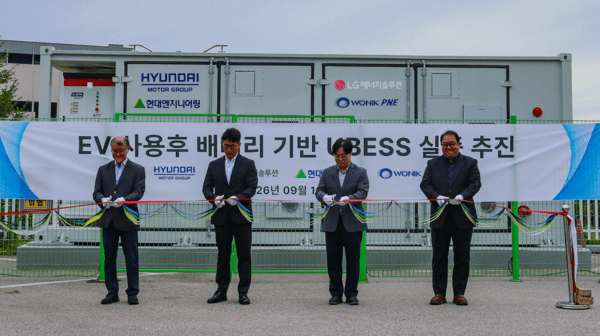
From left: Kim Cheol-ho, head of development and production at Wonik PNE’s Charger Business Division; Joo Seung-tak, head of EaaS Business at LG Energy Solution’s ESS Division; Hwang Woong-tae, head of EV Energy Strategy at Hyundai Motor and Kia; and Lee Sang-hoon, head of Asset Planning at Hyundai Engineering.

Hyundai Motor Group will work with LG Energy Solution, Wonik PNE and others to test technology that reuses spent electric vehicle batteries in energy storage systems (ESS). The project will connect an ESS with an EV fast-charging station to assess charging infrastructure efficiency and the potential for reusing spent batteries.

Hyundai Motor and Kia said they held an event on Sept. 10 with LG Energy Solution, Hyundai Engineering and Wonik PNE at Wonik PNE’s Dongtan site in Hwaseong, Gyeonggi Province, to launch a demonstration project for a Used Battery Energy Storage System (UBESS) based on spent EV batteries.

The project will use battery packs previously deployed in Hyundai Motor Group vehicles built on its Electric-Global Modular Platform (E-GMP). It is Korea’s first ESS demonstration using spent E-GMP batteries. The system has a capacity of 200 kilowatt-hours (kWh) and will operate in conjunction with an EV fast charger.

The ESS will store electricity during periods when power rates are lower and use the stored electricity for EV fast charging when rates are higher. The participating companies will test charge and discharge control algorithms, system safety and reliability, battery performance and charging service quality.

LG Energy Solution will build the ESS using spent battery packs provided by Hyundai Motor and Kia and will be responsible for battery diagnostics and performance and safety validation.

Wonik PNE will handle facility operation and technical validation based on its EV charger manufacturing and charging infrastructure expertise.

Hyundai Engineering will assess the project’s economic viability in a real-world business environment and its potential integration with EV charging infrastructure businesses.

Hyundai Motor and Kia plan to use the demonstration results to establish a system for reusing spent batteries and evaluate ESS business models.

  •  

Hyundai Mobis Expands R&D Into Robotics

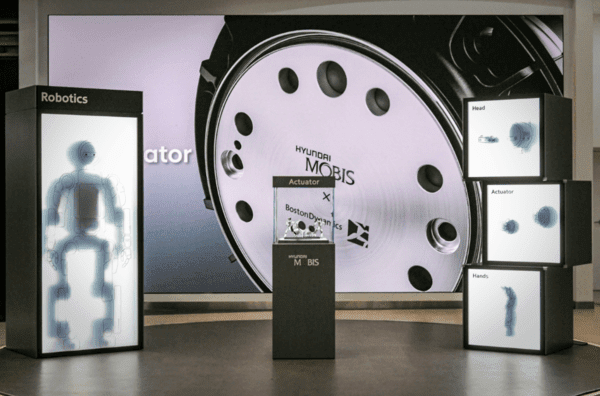
Robotics components unveiled by Hyundai Mobis at its 2026 R&D Tech Day. (Photo: Hyundai Mobis)

Hyundai Mobis is expanding its research and development (R&D) beyond automotive components into robotics. The company plans to apply its core technologies in electrification and software-defined vehicles (SDVs) to robotics and develop competitive products into items for global customers.

Hyundai Mobis said it is holding its 2026 R&D Tech Day at its technology research center in Yongin, Gyeonggi Province, through Sept. 18. The company is showcasing about 60 next-generation technologies in areas including electrification, electronics, chassis and safety, and infotainment. It is also displaying two types of actuators for robotics.

Hyundai Mobis selected 10 products with strong technological competitiveness as its “Hero” technologies. Its next-generation hybrid battery system, one of the key products, can accommodate pouch, prismatic and cylindrical battery cells. It also supports both liquid- and air-cooling systems.

The company also unveiled an integrated controller combining autonomous driving and advanced parking functions. By integrating long- and short-range sensors into a single controller, the system improves convenience and safety during low-speed driving and parking. Hyundai Mobis has also developed an airbag designed to protect passengers from rear impacts in purpose-built vehicles (PBVs) where the first- and second-row seats face each other.

Other technologies include a suspension system that enables U-turns within the width of two lanes, a four-wheel independent steering system and fire-resistant materials that prevent battery thermal propagation. Hyundai Mobis is also displaying infotainment technologies including its CES Innovation Award-winning holographic windshield display.

During the event, Hyundai Mobis will present the technologies to customers from North America and Asia and discuss potential orders and technology cooperation.

  •  

Standard Energy Targets Europe With Vanadium-Ion Batteries

Officials from European embassies in Korea tour Standard Energy's automated V-Line production line for vanadium-ion batteries as Kim Sung-jin, head of Standard Energy's technology business division, explains the facility.

Standard Energy introduced its vanadium-ion battery (VIB)-based energy storage system (ESS) technology and production processes to officials from major European countries.

The company said more than 20 officials, including representatives from the Delegation of the European Union to the Republic of Korea and the French and German embassies, visited its Daejeon facility on Sept. 9. The visit was part of the 2026 INNOPOLIS-Europe Innovation Partnership Day program organized by the Innopolis Foundation.

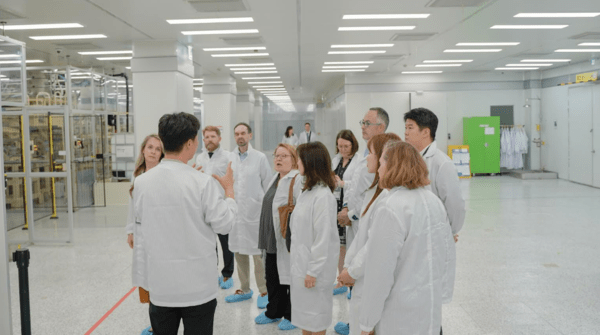
Participants toured a VIB ESS demonstration site at KAIST's Munji Campus and Standard Energy's automated V-Line production line at its headquarters. They discussed the commercialization and production status of VIB ESS, as well as potential expansion and cooperation in Europe.

VIB is a non-lithium battery that uses a nonflammable aqueous electrolyte. Its fast charging and discharging capabilities and high power output make it suitable for applications including AI data centers, power grid stabilization and ultra-fast electric vehicle charging infrastructure.

"We will accelerate the commercialization of VIB technology by expanding cooperation in Korea and overseas," said Kim Sung-jin, vice president at Standard Energy.

  •  

SolarPlay Q3600 Brings 3840Wh Capacity and 3600W Output to Portable Backup Power

Portable power stations have moved beyond simply charging phones and laptops. As more people look for backup power for home appliances, RVs, outdoor equipment and emergency situations, the useful question is no longer just how many USB ports a power station has. It is whether the system has enough capacity, output power and charging flexibility to handle demanding equipment without becoming impractical to move.

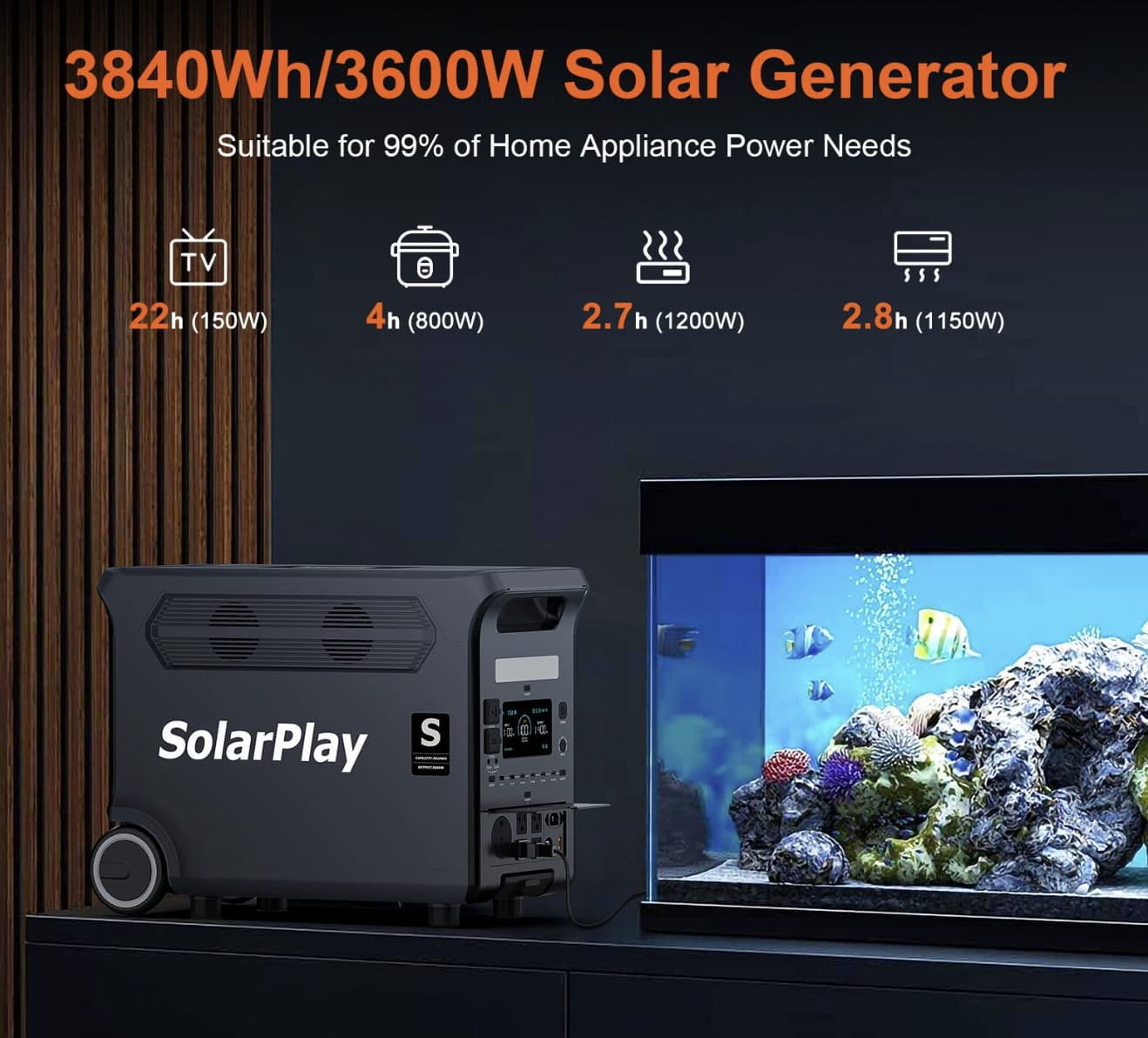
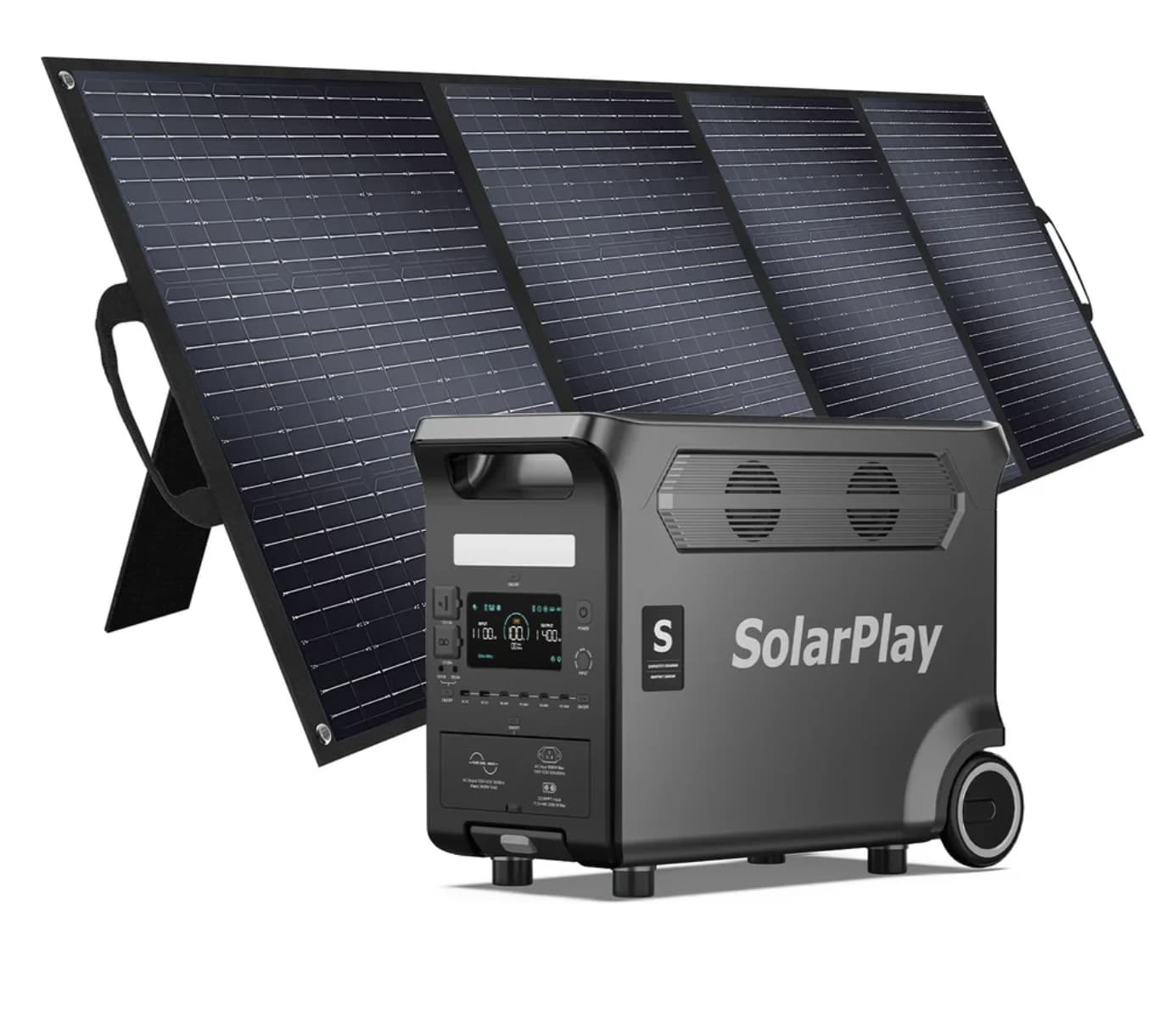
The SolarPlay Q3600 is designed around that idea. It combines a 3,840Wh LiFePO4 battery with up to 3,600W of AC output, 2,000W solar input and multiple charging interfaces. The result is a large-format power station aimed at users who need considerably more than a conventional portable battery can provide.

A 3,840Wh Battery Changes What a Portable Power Station Can Do

The Q3600’s biggest selling point is its 3,840Wh battery capacity.

That amount of stored energy gives the unit a very different role from smaller power banks or compact camping batteries. Instead of being primarily a device for keeping phones and laptops alive, the Q3600 is intended to support a wider range of equipment, including household appliances, workshop tools, RV equipment and other higher-power loads.

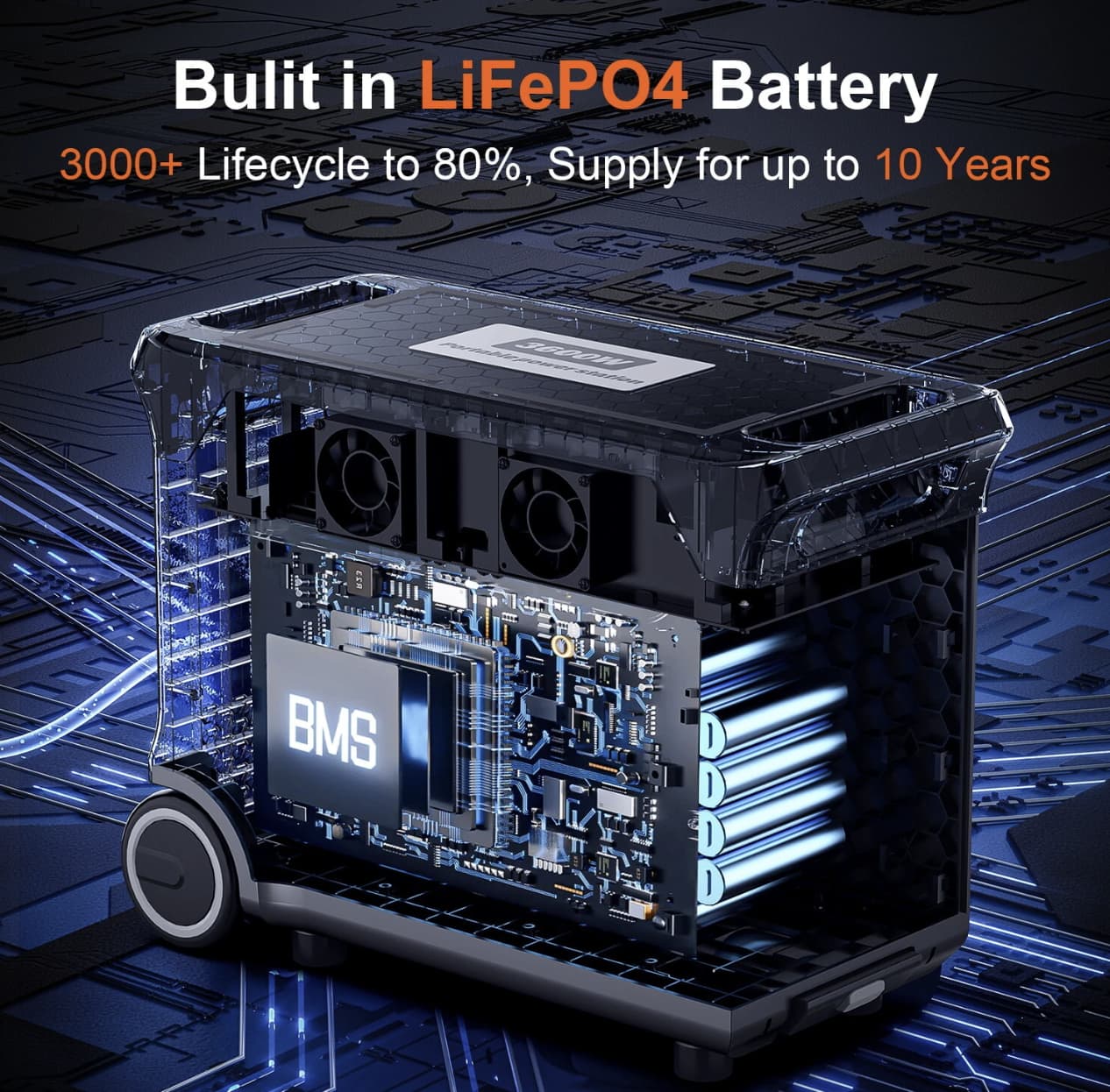
SolarPlay uses a LiFePO4 battery architecture for the Q3600. The manufacturer’s specifications list more than 4,000 charge cycles while retaining 80% of the original capacity, although real-world battery longevity will naturally depend on charging habits, temperature and load conditions.

For users considering a power station as an emergency backup, this distinction matters. A large capacity does not automatically mean unlimited runtime, because actual operating time depends heavily on the wattage of the connected equipment. A 3,840Wh battery can therefore be thought of as a substantial energy reserve rather than a guarantee of a specific number of hours.

3,600W of AC Output Makes It Suitable for More Demanding Loads

The Q3600 is rated for 3,600W continuous AC output and uses a pure sine wave inverter. The European version provides 220–240V AC output at 50Hz/60Hz.

This is one of the areas where the Q3600 separates itself from smaller portable power stations.

A 3,600W output ceiling gives users considerably more room for equipment with higher power requirements. That can be useful for appliances and tools that would simply be outside the practical range of a compact 1,000W-class station.

However, the sensible approach is still to check the rated and startup power of each appliance before connecting it. Motors, compressors and heating appliances can behave differently from their advertised average consumption, so the station’s maximum output should not be treated as a universal guarantee for every device.

Solar Charging Is One of the Q3600’s Most Interesting Features

The Q3600 is not limited to wall charging. Its solar input can accept up to 2,000W, giving the system a much stronger off-grid charging capability than many smaller portable power stations.

SolarPlay states that the Q3600 can reach a full charge in approximately 1.5 hours when AC and solar charging are combined, rather than implying that a 3,840Wh battery can always be fully recharged from solar alone in that time.

The European model also provides adjustable AC charging levels of 400W, 800W, 1,200W, 1,600W and 2,200W. This gives users more control over charging speed and power demand depending on the situation.

That flexibility could be particularly useful during longer outdoor trips. Instead of treating the battery as a one-time energy source, users can recharge it during the day and use the stored energy later when solar production falls.

Multiple Output Types Make It More Versatile

Another strength of the Q3600 is the range of connection options.

The specification includes AC outlets alongside a 12V cigarette-lighter output, an XT60 port, DC outputs, USB-A ports and several USB-C connections. One USB-C port supports up to 100W PD output, making it suitable for higher-powered compatible devices such as laptops.

The Banggood listing describes the product as having 17 outputs, while SolarPlay’s current product page lists 15 output ports. Because the two sources present the port count differently, buyers should check the exact configuration of the package and regional version before ordering.

More importantly, the variety of outputs means the Q3600 can serve several types of equipment at the same time rather than functioning as a single-purpose AC battery.

UPS Support Adds a Practical Home-Backup Role

The Q3600 also supports a UPS function, which makes it more interesting for use around the home.

According to the listed specifications, the system can switch to battery power in less than 20 milliseconds under its specified UPS conditions. This is intended to reduce interruption when mains power disappears.

That feature can be useful for equipment that needs a more consistent power source, such as networking hardware, computers or selected electronic devices.

It should not, however, be confused with a dedicated enterprise-grade UPS system. Users with particularly sensitive equipment should check the manufacturer’s UPS specifications and the equipment’s own power requirements before relying on the Q3600 as their only backup solution.

Large Capacity Comes With a Real Weight Trade-Off

The Q3600 is portable, but it is not lightweight.

The listed bare-device weight is approximately 42.2kg, with dimensions of about 608 × 289 × 456mm.

That makes the built-in wheels and telescopic handle particularly important. The Q3600 is better understood as a movable power station rather than something most users will casually carry by hand over a long distance.

For an RV, garage, workshop, campsite or home backup location, this design makes sense. Users can position the unit where it is needed and roll it into place instead of repeatedly lifting the entire 42kg system.

Designed for Home Backup, RVs and Off-Grid Use

The Q3600’s specifications suggest several practical use cases.

For home backup, the large battery and high AC output provide a way to keep selected appliances and electronics operating during outages.

For RV use, the combination of AC, 12V and other DC outputs can reduce the need to carry separate power solutions for different types of equipment.

For off-grid applications, the 2,000W solar input becomes especially important because it allows the Q3600 to function as part of a rechargeable solar-based power system rather than relying entirely on the electrical grid.

Outdoor users should still consider the unit’s 42.2kg weight and physical size when planning transportation. Its wheels make movement easier, but this is not a lightweight backpacking power station.

What About Noise and Protection?

SolarPlay lists the Q3600 with multiple battery-management protections covering conditions such as overcharging, over-discharging, over-current and short circuits. The Banggood specifications also list a working temperature range of approximately -10°C to 45°C for the Q3600.

The product is also listed with safety and transport-related certifications including CE, FCC, RoHS, PSE, UN38.3 and MSDS documentation.

These features do not eliminate the need to use the power station within its operating limits, but they show that the Q3600 is designed as a substantial energy-storage system rather than simply a large battery pack.

SolarPlay Q3600 Specifications

Specification SolarPlay Q3600
Battery capacity 3,840Wh
Battery type LiFePO4 / LFP
AC output 3,600W
AC voltage 220–240V
AC waveform Pure sine wave
Solar input Up to 2,000W
AC charging Up to 2,200W
UPS Less than 20ms under specified conditions
USB-C Up to 100W on dedicated PD port
DC output 12V options
Weight About 42.2kg
Dimensions About 608 × 289 × 456mm
Operating temperature Approximately -10°C to 45°C

Specifications can vary by regional version or package, so buyers should verify the configuration before purchase.

Is the SolarPlay Q3600 Worth Considering?

SolarPlay Q3600 power station is not trying to win the portability contest by being small and light. Its appeal comes from the opposite direction.

The 3,840Wh battery, 3,600W AC output and 2,000W solar input give it the kind of electrical capacity that makes sense for home backup, RV trips, workshops and longer off-grid use. The multiple output types and UPS function further expand its potential applications.

The biggest compromise is its size and 42.2kg weight. That means the Q3600 works best when it can be rolled into position rather than carried frequently.

For buyers who prioritize large energy storage, high output power and solar recharge capability over lightweight portability, the Q3600 offers a much more capable alternative to smaller portable power stations.

Before purchasing, users should also confirm the exact regional version, output configuration and included accessories, particularly because the current Banggood listing and SolarPlay’s own product page differ in how they describe the number of output ports.

The post SolarPlay Q3600 Brings 3840Wh Capacity and 3600W Output to Portable Backup Power appeared first on IGeeKphone China Phone, Tablet PC, VR, RC Drone News, Reviews.

  •  

AirPods 5 Launch With Active Noise Cancellation as Standard at $129

Apple has officially introduced the AirPods 5, bringing a notable upgrade to its entry-level wireless earbud lineup without increasing the starting price.

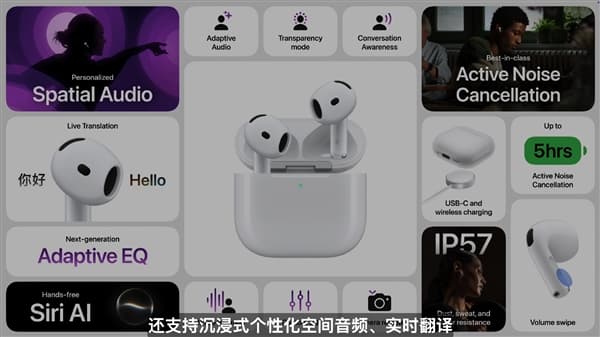
The biggest change is that Apple is no longer offering a separate non-noise-cancelling version. Active Noise Cancellation (ANC) is now standard on AirPods 5, making this the first generation in the series to include ANC across the lineup.

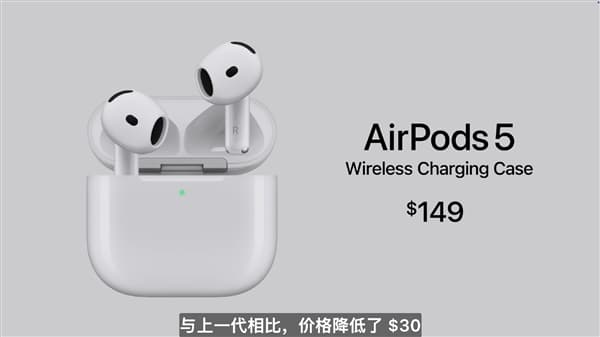
Prices start at $129, while the version with a wireless charging case costs $149. That means Apple has added a major feature without raising the entry-level price.

AirPods 5 Keep the Familiar Half-In-Ear Design

At first glance, AirPods 5 look largely unchanged from the previous generation. Apple continues to use a semi-in-ear design, rather than switching to silicone ear tips.

This design choice creates an interesting balance. Traditional in-ear earbuds can generally provide stronger passive isolation because their ear tips form a tighter seal, while semi-in-ear earbuds can feel more comfortable during extended listening.

For users who dislike the pressure associated with sealed in-ear headphones, AirPods 5 may therefore offer a more comfortable approach to noise cancellation.

ANC Becomes a Standard Feature

The headline upgrade is active noise cancellation.

Apple says AirPods 5 deliver up to a 50% improvement in noise reduction compared with AirPods 4. Instead of requiring buyers to choose a more expensive noise-cancelling configuration, Apple has made ANC part of the standard AirPods 5 package.

The earbuds also support Adaptive Audio, which can automatically balance Active Noise Cancellation and Transparency Mode according to the surrounding environment.

This makes the AirPods 5 more practical for users who move between quiet indoor spaces, busy streets, public transportation and other changing environments.

Up to 5 Hours of Listening on a Single Charge

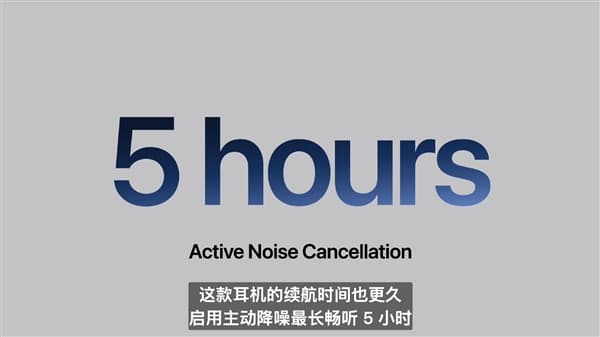
With Active Noise Cancellation enabled, AirPods 5 can provide up to five hours of listening time on a single charge.

The charging case extends total listening time to up to 20 hours, giving users several additional charging cycles throughout the day.

While the five-hour figure is not class-leading compared with some larger wireless earbuds, it is reasonable for compact semi-in-ear headphones. The case is also important for users who typically listen in shorter sessions and recharge the earbuds between uses.

IP57 Protection Adds More Durability

AirPods 5 also receive an IP57 rating, giving the earbuds greater protection against dust and water exposure than many basic wireless earbuds.

That additional durability could be useful for everyday activities such as commuting, walking or exercising. However, an IP rating should not be interpreted as making the earbuds suitable for every type of water exposure.

Apple Intelligence Features Expand Their Role

The new AirPods 5 also support several Apple Intelligence-related features, including real-time translation and access to broader knowledge-based functions.

This reflects Apple’s wider strategy of turning its earbuds into more than simple audio accessories. With tighter integration between hardware, software and Apple’s AI features, AirPods can increasingly serve as a hands-free interface for information and communication.

The usefulness of these features will naturally depend on device compatibility, supported languages and Apple’s software ecosystem.

AirPods 5 Price and Availability

Apple is keeping the entry price at $129, despite adding Active Noise Cancellation as a standard feature.

The pricing is:

  • AirPods 5: $129
  • AirPods 5 with wireless charging case: $149

The decision to maintain the previous starting price makes ANC the most significant value improvement in this generation.

What Makes AirPods 5 Different?

The AirPods 5 are not a dramatic redesign, but Apple has focused the upgrade on features that can have a noticeable effect on everyday use.

The combination of standard ANC, Adaptive Audio, a comfortable semi-in-ear design, IP57 protection and Apple Intelligence features gives the new earbuds a broader feature set without moving the starting price above $129.

For users who prioritize comfort and want noise cancellation without the tighter fit of traditional in-ear earbuds, AirPods 5 could be one of the more interesting additions to Apple’s audio lineup.

The post AirPods 5 Launch With Active Noise Cancellation as Standard at $129 appeared first on IGeeKphone China Phone, Tablet PC, VR, RC Drone News, Reviews.

  •  

iPhone 18 Pro and Pro Max Launch With 2nm A20 Pro Chip and Variable Aperture Camera

Apple has officially launched the iPhone 18 Pro and iPhone 18 Pro Max, bringing a major round of upgrades to its high-end smartphone lineup. The new models focus on four key areas: processing performance, camera flexibility, sustained performance and battery life.

The iPhone 18 Pro starts at 9,999 yuan in China, while the iPhone 18 Pro Max begins at 10,999 yuan. Both models will open for pre-orders at 8 PM on September 12, with sales starting September 18.

Four Colors and a Refined Pro Design

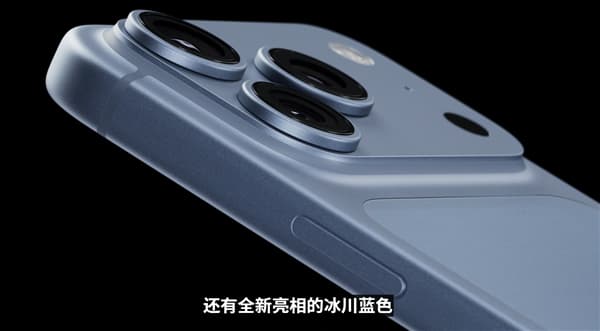
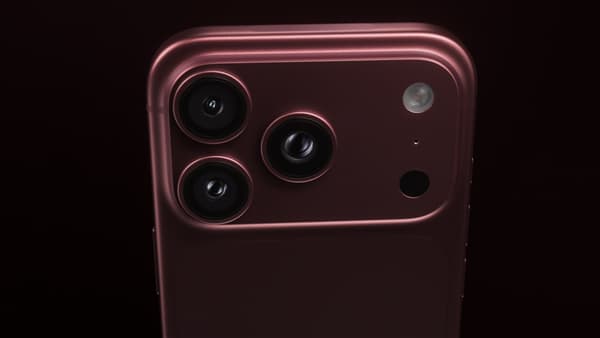
The iPhone 18 Pro series is available in four finishes. Apple retains familiar black and silver options while introducing Glacier Blue and Burgundy Red, giving the new Pro models a more distinctive appearance.

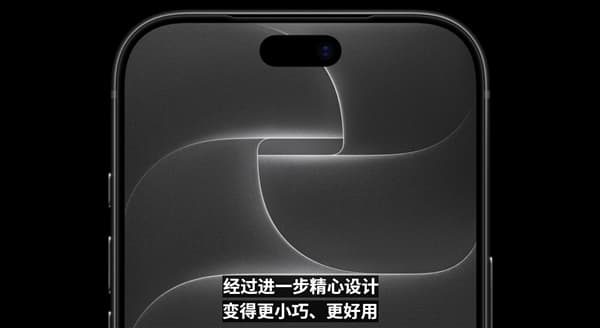
The overall design remains closely related to the previous generation, but Apple has made another change to the front display area. The Dynamic Island has been reduced in size, allowing Apple to maintain its existing interactive features while taking up less screen space.

The iPhone 18 Pro features a 6.3-inch display, while the larger iPhone 18 Pro Max comes with a 6.9-inch screen. This keeps the two models clearly separated by size while maintaining the same general design language.

2nm A20 Pro Chip Brings a Major Performance Upgrade

The biggest change inside the iPhone 18 Pro series is Apple’s new A20 Pro chip, which is built using a 2nm manufacturing process.

The processor uses a six-core CPU configuration consisting of two performance cores and four efficiency cores. Apple says the performance cores can deliver up to a 20% improvement over the previous generation.

Graphics performance also gets a significant upgrade. The A20 Pro moves to a seven-core GPU architecture, with peak GPU performance reportedly increasing by up to 40%.

The chip’s AI capabilities have also been expanded. Apple equips the A20 Pro with two Neural Engine groups containing a combined 32 cores, along with a new generation of neural accelerators. Eight-bit floating-point processing can reach twice the previous speed, while memory bandwidth increases by 50%.

These improvements are particularly relevant as on-device AI becomes a larger part of the smartphone experience. More processing capacity can help Apple handle demanding AI workloads without relying entirely on cloud-based services.

New Vapor Chamber Helps Sustain Performance

Higher peak performance is only useful if a phone can maintain it under sustained workloads. To address this, Apple has added a new vapor chamber cooling system to the iPhone 18 Pro series.

The improved thermal design works alongside the A20 Pro to manage heat during demanding tasks such as gaming, video processing and intensive AI workloads.

Apple says sustained performance is up to 40% higher than the previous generation and can reach roughly double the level of the iPhone 16 Pro series.

That makes thermal management one of the more important changes in the new generation. Instead of focusing solely on short benchmark bursts, Apple appears to be placing greater emphasis on maintaining high performance over longer periods.

iPhone 18 Pro Gets Its First Variable-Aperture Main Camera

Camera hardware is another major highlight of the iPhone 18 Pro series.

The phones feature a 48-megapixel Fusion main camera, but this generation adds something new: a variable aperture.

The lens uses a six-blade aperture mechanism with four selectable aperture levels. This allows the camera to adjust how much light reaches the sensor according to the shooting environment.

In practical terms, variable aperture gives the main camera more flexibility than a fixed-aperture design. It can help balance light intake in darker scenes while also providing greater control in situations such as portraits and backlit photography.

The addition is particularly notable because Apple is bringing a traditionally camera-focused hardware feature to its mainstream Pro smartphone system.

Up to 30 Hours of Battery Life

Battery endurance has also received a substantial upgrade.

The iPhone 18 Pro is rated for up to 24 hours of battery life, while the iPhone 18 Pro Max can reach 30 hours.

Charging has been improved as well. Apple says the new models can reach 50% battery capacity in 15 minutes, giving users a faster way to recover power when they are short on time.

The combination of a more efficient 2nm chip, improved thermal management and increased battery endurance could make the Pro Max particularly attractive to users who prioritize long daily usage.

iPhone 18 Pro and Pro Max China Pricing

Apple is offering both models with four storage configurations in China.

iPhone 18 Pro

  • 256GB: 9,999 yuan
  • 512GB: 11,999 yuan
  • 1TB: 15,499 yuan
  • 2TB: 20,499 yuan

iPhone 18 Pro Max

  • 256GB: 10,999 yuan
  • 512GB: 12,999 yuan
  • 1TB: 16,499 yuan
  • 2TB: 21,499 yuan

Pre-orders will begin at 8 PM on September 12, while the iPhone 18 Pro and iPhone 18 Pro Max will officially go on sale on September 18.

What Makes the iPhone 18 Pro Series Different?

The iPhone 18 Pro generation is more than a routine processor refresh. The combination of the 2nm A20 Pro chip, new vapor chamber cooling, variable-aperture main camera and longer battery life gives Apple several hardware upgrades to highlight.

The variable-aperture camera is arguably the most visible photography change, while the new cooling system could have a bigger impact on users who regularly play demanding games or run intensive applications.

At the same time, the 9,999-yuan starting price for the iPhone 18 Pro keeps Apple’s premium Pro lineup firmly in the flagship segment. For buyers considering an upgrade, the most meaningful question may be whether the improved sustained performance, camera flexibility and endurance justify the higher price compared with the previous generation.

The post iPhone 18 Pro and Pro Max Launch With 2nm A20 Pro Chip and Variable Aperture Camera appeared first on IGeeKphone China Phone, Tablet PC, VR, RC Drone News, Reviews.

  •  

Todoo CENIZO Disposable Vape Combines Slim Design With a 1.2Ω Mesh Coil

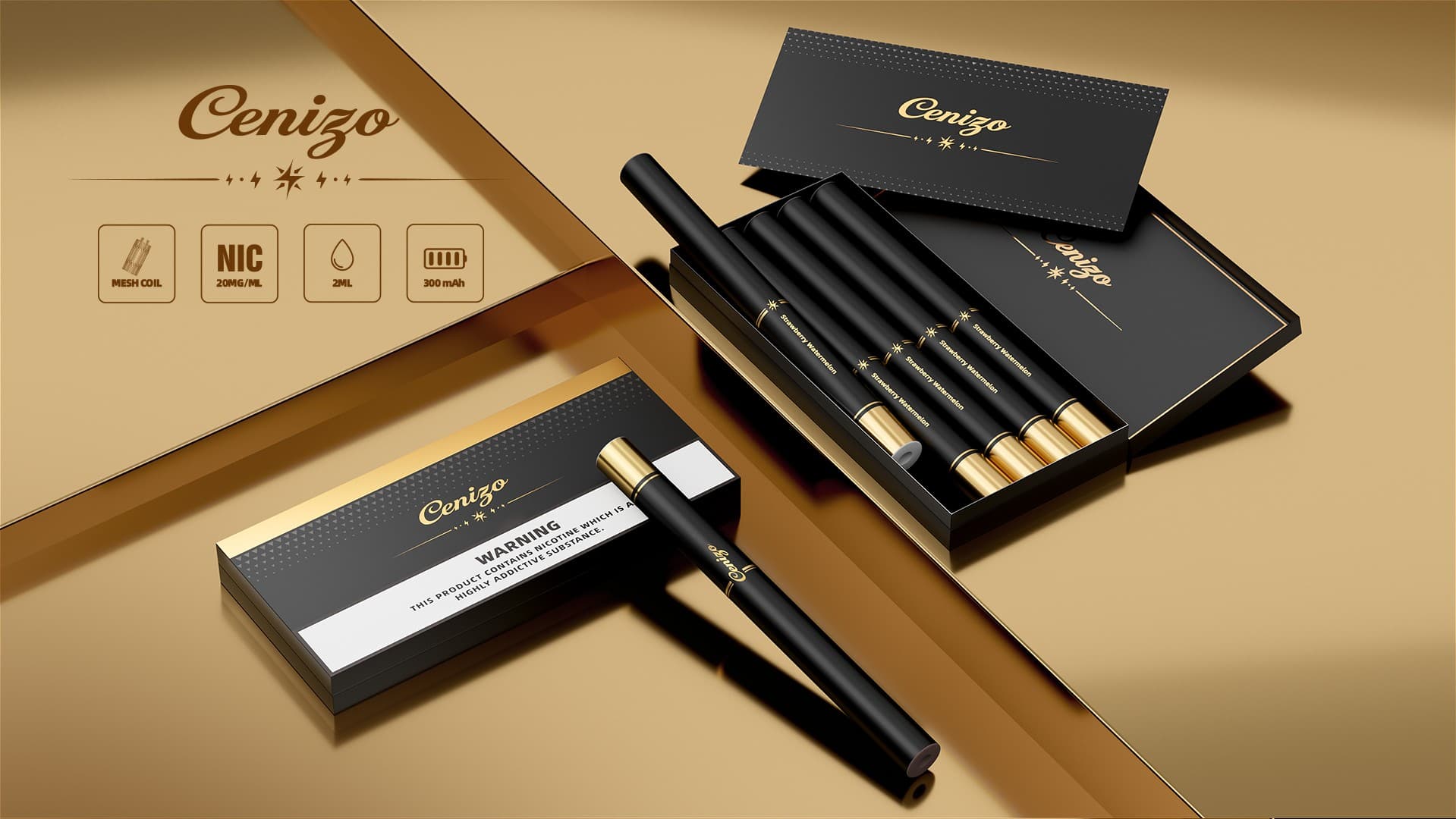
Todoo Vape has introduced the  Todoo CENIZO Disposable Vape, a compact device aimed at adult consumers who value understated design as much as everyday vaping performance. Instead of focusing on an oversized body or complicated features, CENIZO takes a simpler approach with a slim profile, lightweight construction, coordinated color options, and a 1.2Ω mesh coil.

The device combines a 2ml e-liquid capacity, 300mAh built-in battery, and 1.2Ω mesh coil, while nicotine options include 2% and 5%. Todoo is positioning CENIZO as a more design-oriented addition to its disposable vape lineup, with premium-style packaging intended to match the appearance of the device.

Todoo CENIZO Specifications

Feature Details
E-liquid Capacity 2ml
Battery Capacity 300mAh
Nicotine Strength 2% / 5%
Coil 1.2Ω Mesh Coil
Product Type Disposable Vape

A Slimmer Approach to Disposable Vape Design

The most noticeable characteristic of CENIZO is its compact exterior. Todoo has opted for a slim body rather than a bulky design, making the device easy to hold and convenient to carry.

Its appearance is built around simple proportions and coordinated finishes. Instead of adding unnecessary visual elements, CENIZO uses carefully selected color combinations and a clean exterior to create a more polished appearance.

That design direction also carries over to the packaging. The presentation is intended to complement the device rather than compete with it, giving the product a consistent look from the packaging to the hardware itself.

For adult consumers who prefer a more discreet and minimalist aesthetic, this design approach may be one of CENIZO’s strongest differentiators.

Compact Construction for Everyday Carry

CENIZO pairs its slim body with a built-in 300mAh battery. The relatively compact power system allows Todoo to keep the overall form factor small while providing the battery capacity needed for its intended disposable format.

The lightweight construction also makes the device easy to carry in a pocket or small bag. Its compact dimensions can be useful for users who prefer a disposable vape that does not take up much space during daily activities or travel.

Rather than making battery size the headline feature, CENIZO focuses on balancing portability, appearance, and practical everyday use within a small body.

1.2Ω Mesh Coil Targets a Smoother Draw

Inside the CENIZO is a 1.2Ω mesh coil, which is a key part of the device’s vaping experience.

Mesh coil construction uses a larger heating surface than many conventional wire-coil designs. In a properly matched system, this can help distribute heat more evenly across the coil and support consistent e-liquid vaporization.

For CENIZO, the 1.2Ω configuration is designed around a smoother and more controlled draw rather than simply maximizing vapor production. This fits the product’s broader emphasis on a compact body and refined user experience.

Coil performance can also influence how consistently a flavor is delivered during use. By combining the 1.2Ω mesh coil with its compact disposable format, Todoo is attempting to keep the flavor experience consistent without making the hardware significantly larger.

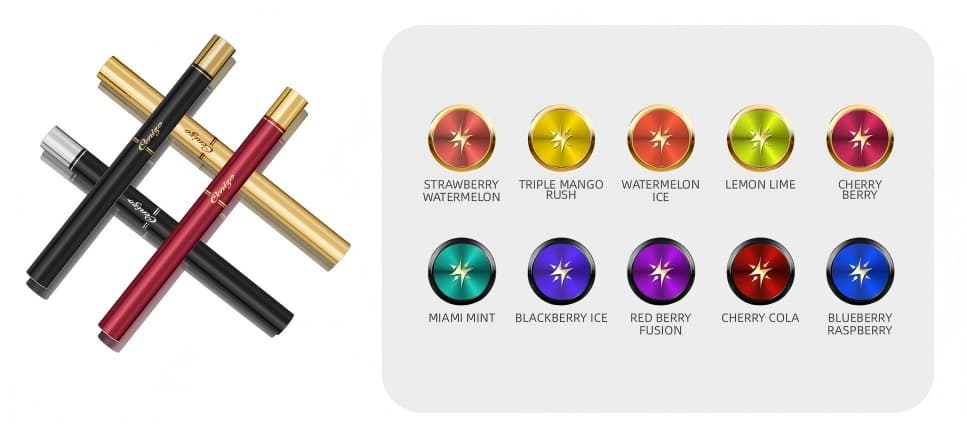
Tobacco and Fruit-Inspired Flavor Options

CENIZO is available with different flavor directions, giving the lineup a broader appeal among adult consumers.

Tobacco profiles are aimed at users who prefer deeper and more familiar flavor characteristics. These options focus on a traditional tobacco-inspired taste rather than a heavily sweet profile.

Fruit profiles, meanwhile, offer a brighter alternative. Fruit-forward combinations are designed around sweeter and more refreshing flavor characteristics, providing a different experience from the tobacco selections.

This combination gives the CENIZO range a straightforward flavor structure: familiar tobacco choices for traditional preferences and fruit-oriented options for those looking for something more vibrant.

Color Options Add to the Premium Positioning

CENIZO’s visual identity is not limited to its basic shape. Todoo has also developed a selection of colorways intended to complement the device’s slim construction.

The colors and exterior finishes give users more room to choose a style that matches their personal preferences. At the same time, the overall design remains consistent across the range, helping CENIZO maintain a recognizable appearance.

This is an important part of the product’s positioning. CENIZO is not simply presented as another functional disposable vape; its design is clearly intended to play a larger role in the buying experience.

What Makes Todoo CENIZO Different?

The CENIZO combines several relatively straightforward specifications rather than relying on a single headline feature. Its 2ml capacity, 300mAh battery, 1.2Ω mesh coil, slim body, and multiple flavor options form the foundation of the device.

Its stronger point of differentiation is the way those elements are packaged together. Todoo has placed considerable emphasis on exterior design and presentation, while the mesh coil is intended to support a smoother and more consistent vaping experience.

That makes CENIZO particularly relevant to adult consumers who consider appearance, portability, and flavor delivery together when choosing a disposable vape.

Final Thoughts on Todoo CENIZO

Todoo CENIZO takes a design-led approach to the disposable vape category. Its slim and lightweight body gives it a portable form factor, while the 1.2Ω mesh coil is designed to provide consistent heating and a smoother draw.

With a 2ml e-liquid capacity, 300mAh battery, 2% and 5% nicotine options, and tobacco and fruit-oriented flavors, the device covers the core requirements of a compact disposable format while placing additional emphasis on aesthetics.

For adult consumers looking for a more understated disposable vape design, CENIZO represents a new option within Todoo’s product portfolio.

For additional product information, visit the Todoo CENIZO Disposable Vape product page.

About Todoo Vape

Todoo Vape develops vaping products with an emphasis on product design, usability, and flavor. The company serves markets across Europe, Asia, and the Middle East and continues to expand its range of vaping devices.

For more information about Todoo and its product lineup, visit the company’s official website.

The post Todoo CENIZO Disposable Vape Combines Slim Design With a 1.2Ω Mesh Coil appeared first on IGeeKphone China Phone, Tablet PC, VR, RC Drone News, Reviews.

  •  

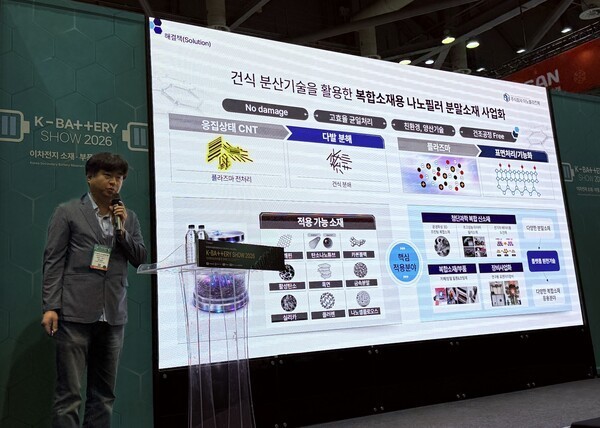
Inoplaztech to Build 100-Ton Annual CNT Conductive Additive Capacity

Inoplaztech CEO Lee Deok-yeon introduces dry dispersion technology at the K-Battery Show 2026 Materials, Parts and Equipment Conference at KINTEX in Ilsan, Gyeonggi Province, on Sept. 9. (Photo: THE ELEC)

Inoplaztech plans to expand its annual production capacity for carbon nanotube (CNT) conductive additives to 100 tons. Conventional CNT additives in liquid dispersion form are difficult to use in dry electrode manufacturing, which does not use solvents. Inoplaztech aims to target the dry electrode market by using its proprietary plasma technology to disperse CNTs in powder form.

Inoplaztech CEO Lee Deok-yeon unveiled the company’s CNT conductive additive mass-production plan at the K-Battery Show 2026 Materials, Parts and Equipment Conference held Sept. 9 at KINTEX in Ilsan, Gyeonggi Province. Starting next year, the company plans to expand production facilities over three years to secure annual capacity of 100 tons. It plans to finance the investment through fundraising and programs including Scale-up TIPS, which supports the growth of small and medium-sized ventures.

CNTs are carbon materials used as conductive additives to improve electrical conductivity inside batteries. They can provide high conductivity in small amounts but tend to agglomerate, making them difficult to use as-is. A dispersion process is needed to separate CNT agglomerates and distribute them evenly throughout battery materials.

CNT conductive additives are currently produced mainly through a wet process in which CNTs are dispersed in a solvent using mechanical force. Dispersants are also used to prevent reagglomeration. The process can damage CNTs or leave residual dispersants that reduce conductivity. CNTs can also agglomerate again after the solvent is removed.

Inoplaztech disperses CNTs using plasma without solvents or dispersants. The process separates CNT agglomerates while treating their surfaces to suppress reagglomeration. Because the CNTs can be used as a powder rather than a liquid dispersion, they can be applied to dry electrode manufacturing.

Inoplaztech has been validating the applicability of its dry-dispersed CNTs with battery companies and others. It will now shift its focus from technology validation to securing mass-production capacity. The company expects annual sales of 20 billion to 30 billion won from its CNT conductive additive business once it reaches annual production capacity of 100 tons.

The company is also commercializing technology to improve CNT conductivity. The process uses plasma to attach nitrogen to the surface of multi-walled carbon nanotubes (MWCNTs), increasing their conductivity. Inoplaztech plans to begin selling nitrogen-functionalized MWCNTs as reagents by the end of this year. Such products remain relatively uncommon, with only three to four suppliers worldwide.

The goal is to improve the performance of relatively inexpensive MWCNTs so they can partially replace more expensive single-walled carbon nanotubes (SWCNTs). “Our long-term goal is to provide SWCNT-level performance at MWCNT prices,” Lee said.

Inoplaztech is also applying its plasma technology to other nanopowders. Nanopowder coating is a potential next business. As battery materials such as lithium iron phosphate (LFP) become finer, technologies capable of uniformly coating even small particles are increasingly needed. The company is considering plasma-based surface coating of fine powders as its next business area.

The dry plasma technology can also be applied outside batteries. Potential applications include polyethylene (PE) for battery separators, alumina fillers used in semiconductor thermal management materials and CNT composites for electric-vehicle tires. The underlying principle is the same: modifying surface properties so different materials can be mixed more effectively.

Inoplaztech is a nanomaterials company founded in 2018 as a startup by researchers from Ulsan National Institute of Science and Technology (UNIST). It has developed plasma technology that disperses aggregation-prone nanomaterials such as CNTs and graphene without solvents.

  •  

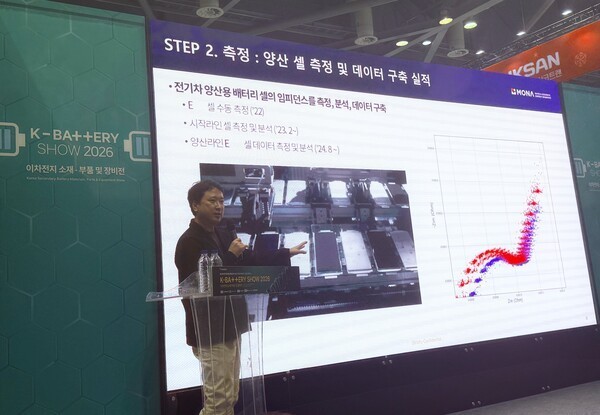
MONA Develops Universal AI Model for Battery Diagnostics

MONA CEO Jang Ikhwang presents battery diagnostic technology at the K-Battery Show 2026 Materials, Parts and Equipment Conference at KINTEX in Ilsan, Gyeonggi Province, on Sept. 9. (Photo: THE ELEC)

Battery diagnostics company MONA is developing an artificial intelligence foundation model using data from 10 million battery cells. The goal is to create a universal model that can apply diagnostic capabilities learned from one type of battery to different batteries. The company also plans to expand diagnostics to electric vehicles, energy storage systems (ESS) and second-life batteries.

"We plan to secure data from 10 million battery cells and develop a universal diagnostic model that can be applied across different batteries," MONA CEO Jang Ikhwang said at the K-Battery Show 2026 Materials, Parts and Equipment Conference held Sept. 9 at KINTEX in Ilsan, Gyeonggi Province. MONA has so far collected data from about 8 million battery cells and 1,000 battery packs.

Current battery diagnostic AI models struggle to maintain accuracy when applied to batteries different from those used for training. Materials, designs and production conditions vary by battery, meaning the same abnormality can appear differently in measurement data. MONA is training on large datasets collected from various batteries to develop a universal model capable of determining quality and detecting abnormalities across different products.

MONA's ability to collect large datasets is based on battery diagnostic technology using Electrochemical Impedance Spectroscopy (EIS). EIS applies alternating-current signals to a battery and measures how impedance changes at different frequencies.

The technology can identify latent internal cell defects and quality variations that are difficult to detect through conventional voltage and visual inspections. Even when a battery has normal voltage at shipment, quality problems can emerge during transportation and storage due to differences in factors such as self-discharge.

Applying EIS to mass-production lines requires faster inspection because directly measuring multiple frequency ranges takes time. MONA developed a high-speed diagnostic technology that measures only part of the frequency range and uses generative AI to reconstruct the remaining impedance data. The company has reduced inspection time to about one second per cell, allowing it to accumulate large datasets on mass-production lines.

Fast measurement alone is not enough for accurate quality assessment. Impedance is sensitive to temperature, meaning readings from the same battery can vary depending on the measurement environment. MONA corrects variations caused by temperature and equipment conditions and establishes a normal range based on the statistical distribution of accumulated data. Batteries outside that range are automatically flagged as potential defects.

MONA has also confirmed correlations between its data and actual defects. The company identified batteries in accumulated incoming-inspection data whose internal resistance and charge-transfer characteristics fell outside the normal distribution. Computed tomography (CT) and cross-sectional analysis subsequently found physical defects, including uneven electrode thickness. The abnormalities detected solely from impedance data matched physical defects inside the cells.

MONA is extending data collected from mass-production sites beyond the manufacturing stage. It is expanding the technology to diagnose batteries installed in EVs and determine whether used batteries recovered from vehicles can be reused. The company can collect data throughout the battery lifecycle, from incoming inspection of cells, modules and packs to EV diagnostics and second-life battery reuse.

MONA is also testing the feasibility of using second-life batteries in ESS applications. The company is conducting pilot tests of ESS systems incorporating used battery modules and packs. It is also developing diagnostic solutions for next-generation batteries, including all-solid-state batteries and batteries using silicon anodes.

  •  

LG Chem Develops SFB Material to Block Battery Thermal Runaway

Hyun Sung-jae, a team leader at LG Chem, presents battery thermal runaway prevention material technology at the K-Battery Show 2026 Materials, Parts and Equipment Conference at KINTEX in Ilsan, Gyeonggi Province, on Sept. 9. (Photo: THE ELEC)

Battery thermal runaway can generate flames exceeding 1,200°C as well as pressurized debris. LG Chem has developed an engineering plastic called Super Flame Barrier (SFB) that withstands such extreme conditions to prevent battery fires from escalating into larger accidents.

Hyun Sung-jae, a team leader at LG Chem, presented SFB and other materials designed to prevent battery thermal runaway propagation, along with the company’s development results, at the K-Battery Show 2026 Materials, Parts and Equipment Conference held Sept. 9 at KINTEX in Ilsan, Gyeonggi Province.

Battery thermal runaway is particularly dangerous because it may not remain confined to a single cell. When a cell is damaged or develops an internal short circuit, its temperature and pressure rise rapidly. If the resulting heat raises the temperature of adjacent cells, it can trigger further thermal runaway in a chain reaction. A problem originating in a single cell can ultimately escalate into a fire or explosion involving the entire battery pack.

Preventing cascading thermal runaway requires blocking the transfer of flames and heat between cells. Inorganic materials such as ceramics, mica and aerogel are commonly used for this purpose. LG Chem instead turned to plastics. Engineering plastics can be injection-molded, making them easier to use in complex-shaped battery components. LG Chem added resistance to high-temperature flames while retaining that processability.

LG Chem developed a material called Flame Barrier for this purpose. When exposed to flames, the plastic forms multiple carbonized layers on its surface to prevent heat and flames from penetrating. In LG Chem tests that exposed 1-millimeter-thick samples to a 1,000°C flame, conventional flame-retardant plastics developed holes or melted within eight to 109 seconds. Flame Barrier maintained its shape for more than 600 seconds. The material has been used in electric-vehicle batteries from a European automaker and a global battery manufacturer and is also being supplied for energy storage systems (ESS).

LG Chem subsequently developed SFB with further improved heat resistance. SFB has also been spec-in approved by a global automaker and has entered the commercialization stage. The company unveiled SFB at InterBattery 2026 in March. The technology won an InterBattery Award in the Reliability, Safety and Sustainability category.

The key to SFB is a protective barrier that remains intact at temperatures exceeding 1,200°C. When exposed to flames, special flame retardants and inorganic materials form an aluminum phosphate-based ceramic layer. While the existing Flame Barrier slows flame penetration through carbonized layers, SFB uses a rigid ceramic layer to withstand both high-temperature flames and pressure. The barrier can also remain intact against debris generated during thermal runaway.

LG Chem also verified SFB’s performance in tests simulating actual thermal runaway conditions. In repeated tests involving high-temperature flames and high-pressure particles, SFB withstood temperatures of 1,050°C to 1,200°C more than 12 times. It showed no holes or melting after the tests.

In tests using actual cylindrical battery cells, flames did not spread to surrounding cells even when the center cell was made to explode. A tray using SFB also showed no deformation. LG Chem has expanded the SFB product lineup for use in module covers and housings, battery cell frames and busbar components.

“It is important to delay the propagation of thermal runaway to surrounding cells when a battery fire occurs,” Hyun said. “We will continue developing engineering plastic materials that can be applied to battery components.”

  •  

iQOO Pad Ultra to Feature Built-In Cooling Fan and Gaming Accessories

iQOO has revealed more details about its upcoming iQOO Pad Ultra, giving users a closer look at the tablet’s cooling system and gaming-focused accessories. The new compact tablet is expected to target users who want stronger performance in a smaller form factor.

According to the latest official teaser, the iQOO Pad Ultra will feature a built-in cooling fan designed to help manage heat during demanding workloads and extended gaming sessions. The fan measures just 30 × 30 × 3.5mm, while the cooling area reaches 1,661mm². It can spin at up to 14,500rpm and deliver a maximum airflow of 0.94 CFM.

iQOO Pad Ultra Gets Dedicated Gaming Accessories

iQOO is also preparing two gaming accessories for the Pad Ultra: a telescopic game controller and a rear grip attachment.

The telescopic controller is designed to turn the compact tablet into a more console-like gaming setup. It features a dedicated USB-C port, micro-switch buttons and Hall-effect joysticks, which should provide more precise control and a more responsive feel during gameplay.

The rear grip takes a different approach. Rather than adding traditional controls, it is designed to improve the way users hold the tablet. This could make longer gaming sessions more comfortable by providing additional support for the hands.

8.8-Inch OLED Display and High-End Hardware

iQOO has already confirmed that the device will officially carry the iQOO Pad Ultra name. The company is expected to launch it alongside the iQOO 16 series toward the end of September.

Previous reports suggest that the tablet could feature an 8.8-inch OLED display with a centered punch-hole camera and four narrow bezels. Its rear design is also expected to include a square-shaped camera module and an integrated air outlet for the internal cooling system.

The tablet is rumored to use a 2nm Snapdragon 8 Elite Extreme Gen6 processor, positioning it as a high-performance compact tablet aimed at demanding users and mobile gamers. It may also pack a 9,000mAh-class battery, offering a relatively large capacity for an 8.8-inch device.

The reported color options include Endless Black and Star Armor Silver.

A Compact Tablet Designed for Gaming

With an active cooling fan, high-end hardware and dedicated gaming accessories, the iQOO Pad Ultra appears to be taking a different approach from conventional small tablets. Instead of focusing solely on portability, iQOO seems to be building the device around sustained performance and gaming.

More official details, including the final specifications, pricing and availability, should become clearer when iQOO officially introduces the Pad Ultra later this month.

The post iQOO Pad Ultra to Feature Built-In Cooling Fan and Gaming Accessories appeared first on IGeeKphone China Phone, Tablet PC, VR, RC Drone News, Reviews.

  •  

Duksan Electera Starts Electrolyte Supply to Major North American EV Maker

Duksan Electera's plant in Tennessee, US. (Photo: Duksan Electera)

Duksan Electera has begun supplying battery electrolytes to the largest electric vehicle maker in North America. The company has secured seven customers in the region and expects the number to increase to nine next year.

Duksan Electera said Sept. 8 that it has been commercially supplying electrolytes to the North American EV maker since July. The customer is the largest EV manufacturer in North America.

Duksan Electera began shipments after several years of quality verification and mass-production approval procedures. Electrolytes are key battery materials that affect battery life, power output and safety.

The company has secured a total of seven electrolyte customers in North America. They include South Korean battery makers, overseas cell manufacturers, joint ventures (JVs) between automakers and battery companies, and automakers. Duksan Electera has also secured two of South Korea's three major battery makers with large-scale production bases in North America as customers. It is already supplying some customers and plans to begin shipments to the remaining customers within this year.

Duksan Electera is also undergoing quality approval procedures with additional customers. The company expects the number of customers it supplies to increase to nine in 2027 once the procedures are completed.

The company will also leverage the supply chain it has established with parent company Duksan Techopia. Duksan Techopia produces additives for battery electrolytes, while Duksan Electera supplies electrolytes. Duksan Techopia produces additives that can comply with US Foreign Entity of Concern (FEOC) restrictions. Duksan Electera has also established electrolyte production bases in South Korea and North America.

Its financial performance is growing as it expands supplies in North America. Duksan Electera began mass production in July last year and posted annual revenue of 5.9 billion won. Revenue reached 17.3 billion won in the first half of this year, about three times its full-year revenue last year.

Duksan Electera is also pursuing a listing on South Korea's Kosdaq market. Parent company Duksan Techopia disclosed on Sept. 7 an assessment of the listing's impact on shareholders and measures to protect shareholders.

The company plans to apply for preliminary listing approval from the Korea Exchange after gathering shareholder opinions and obtaining approval at a general shareholders' meeting. Proceeds from the listing will be used for investment in North American production facilities and working capital.

  •  

Answering random Redditor’s questions with professional backup: home solar edition

Earlier this week, a home solar shopper took to Reddit looking for a home solar panel + home backup battery system that could intelligently manage solar and grid power, auto switch in a power outage, and accept ICE generator input in a prolonged grid power failure. I reached out to some home energy experts to get them an answer.

more…
  •  

These EVs retain their battery best, largest-ever study finds

The Mercedes EQA, Hyundai IONIQ 5, and BMW i4 hold onto their battery health better than any other electric car, according to the largest independent study of used-EV batteries ever run.

That’s the ranking that falls out of 500,000-plus battery tests published by Austrian diagnostics firm AVILOO, which measured 20 popular EVs at up to 150,000 km (93,000 miles) of use.

more…
  •  

Donut Lab hits 409 Wh/kg in battery lab test, but credibility is gone

Donut Lab has published a new independent test claiming its battery reached an energy density of 409 Wh/kg and 805 Wh/L, the first energy-density figure the company has put on record after months of scrutiny.

But the number lands against a promise the company has already broken: that this “solid-state” cell was in production and ready to power a production EV by the end of Q1 2026. It isn’t, and it wasn’t.

more…
  •  
❌