California Governor Gavin Newsom issued an executive order on Friday pushing to implement guardrails on artificial intelligence in the state that’s the epicenter of the technology’s boom.
The threat of perjury has a funny way of forcing people to say the quiet parts out loud.
As a recently unsealed and unredacted motion in the ongoing legal battle between the New York Times and OpenAI and Microsoft shows, top AI executives have admitted that training AI models required “an astonishing theft of unprecedented proportions.”
In the motion filed on behalf of the NYT, flagged by digital media advocate Jason Kint, attorneys used the quotes of Microsoft director of applied science Brent Hecht and OpenAI cofounder and president Greg Brockman to essentially argue their case for them: that the AI industry built its foundation on an unfathomably large pile of stolen intellectual property.
Hecht, for his part, is quoted calling the AI buildout the “largest theft of labor in human history.” It’s a damning admission as the NYT accuses the two AI labs of copying “millions of [the] Plaintiffs’ copyrighted articles in their entirety without permission to produce substitutive commercial AI products.”
Brockman, for his part, is quoted saying that “publishers” face an “existential threat” from generative AI, which “are largely substitutive, period, [and] will get more and more substitutive as they get better.”
As the plaintiff’s counsel argues, these admissions “eviscerate” any claim to fair use — a statement with which Hecht evidently agrees.
“For Defendants to prevail on this defense ‘would,’ the same Microsoft executive recognized, arguably “make a complete mockery of the idea of ‘fair use,'” the motion reveals.
The damning documents come during the middle stretch of a case that began in 2023, when the NYT accused the two AI labs not only of vacuuming up its original news content, but of using that content to train AI products meant to compete with traditional news outlets.
As Axios recently reported, the battle is far from over, as the presiding judge is expected to decide whether to allow the case to proceed to trial by sometime in 2027.
It’s always a good idea to carefully consider the company you keep — especially if you happen to work for one of Elon Musk’s massive companies.
According to local channel FOX7, SpaceX manager Kyle Gonzalez has been arrested over the alleged stabbing of a Tesla contractor during a team-building exercise gone horribly wrong.
During the night out with a group of co-workers and friends, Gonzalez reportedly got into a heated argument with the Tesla worker over a game of pool at the Waterhole Saloon, a roadside honky-tonk just outside of Austin, Texas.
Court documents viewed by the Austin American-Statesmanclaim that the SpaceX manager became irate after one of the women he had entered the bar with went to compliment the Tesla contractor’s performance on a karaoke song. When the Tesla worker asked the woman to join him for a game of pool, Gonzalez allegedly became angry, saying he was “going to kill” the contractor.
That’s when Gonzalez allegedly pulled out his pocket knife and stabbed the man in the neck, leaving him with a one-inch puncture wound, the Statesmen recounts.
The unnamed contractor was then rushed to the hospital for life-saving surgery, and is expected to pull through.
Gonzales was reportedly found hiding out in a nearby parking lot, still holding the bloody knife. Court documents note that the SpaceX manager said he hid “for his safety,” though he later apologized for the attack three separate times. He was charged with felony assault with a deadly weapon, with a bond set at $25,000.
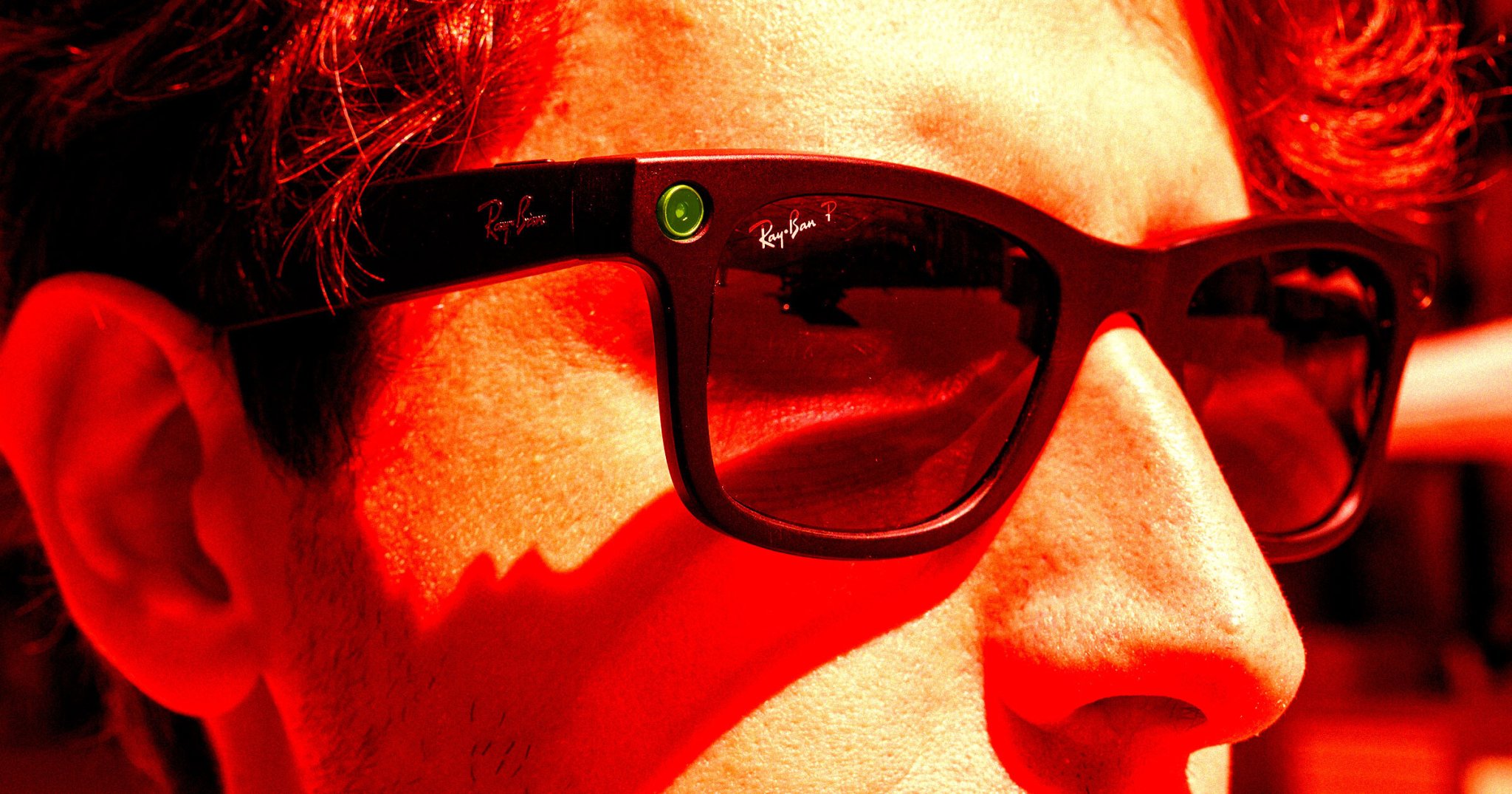
After only a few months on the market, Meta’s new AI-integrated smart glasses are already being exploited for nefarious purposes.
Dubbed “pervert glasses” for their incognito ability to film anybody in public, the new specs have enabled voyeurs and content creeps the world over, leading to widespread harassment, bullying, and privacy violations.
And now the pervert glasses are also feeding another grim genre of content: joybait.
You may have heard of ragebait, which is online content deliberately designed to piss people off, therefore driving clicks and views. Joybait is ragebait’s seemingly innocent twin: content designed to stir up those warm fuzzies and make you smile.
A now-viral clip uploaded by public prank content creator Levese shows that a user of Meta’s AI glasses shows how the scheme unfolds. The video, first spotted by journalist James Vincent, shows Levese catch a glimpse of the author Travis Schick as he shops with his partner in a Walmart.
Crucially, Levese doesn’t approach Schick right away, but rather uses his phone to snap a photo of Schick’s face, which he then searches using a facial recognition site. After the service uncovers Schick’s social media accounts — revealing the random man as an aspiring novelist — Levese makes his approach, recording with his Meta glasses as he catches the unassuming writer off guard.
“Wait, Travis?” Levese asks as Schick tries to check out. “You wrote the book ‘The Readhead?'”
“Yeah?” the confused writer confirms.
“No way I love that book man! Yo I love that book bro,” Levese replies disingenuously. “It was a really good novel.”
“Yeah that was me,” Schick says, trying to contain a smile.
As positive as the interaction seems on its surface, it’s all based on a false premise constructed through use of facial recognition software, without which Levese never would have known who Travis Schick actually was. Of course, Schick himself is ancillary to the entire scheme, which was really about making some content — joybait — for Levese to post to his 225,000 TikTok followers.
And as content, the stunt was wildly successful. The reel has over 60 million views and 30,000 comments on Levese’s TikTok page alone, and has become easy fodder for content farms on every social media feed you can think of.
On uncovering the clip, the journalist James Vincent remarked that it embodies “individualized surveillance culture posing as feelgood content.”
Falling for the original premise of the bait, some excused the privacy violation, arguing the exposure is boosting Schick’s work.
Sure enough, comments under Schick’s novel “The Redhead” on the creative platform Quotev are flooding in by the hundreds, full of well wishers and supporters who otherwise never would have found his work. Schick’s TikTok page has likewise exploded, going from around 150 followers to well over 12,700 in just a few short days.
But Schick’s viral moment is beside the point, as Vincent observes: “there may be positive outcomes from this one video (which stem from its novelty as short form content) — but the larger effect is creating a society where we monetize kindness, exploit the goodwill of strangers, and destroy the right to privacy in public,” he wrote in a comment on X-formerly-Twitter.
And the aspiring novelist is far from alone. Levese has dozens of videos following the exact same format, each with millions of views. For his part, the content creator is well aware that he’s crossing a line. The first one, in which the content creator stalks a man buying bananas, prominently features pinned text reading “day 1: stealing people’s digital footprint.”
“This app is dangrous [sic],” Levese wrote in the video caption.
Imagine it’s the dead of night. Your phone pings with a text – it’s a government emergency alert: “Leave your home immediately! Only take with you enough supplies for the next three days.” What would you want in your go-bag?
Our new survey of UK adults (results not yet published) has found a surprising number of people prioritised sentimental belongings such as a childhood teddy bear.
In the face of climate change and growing geopolitical instability, governments have started to advise citizens to prepare now for disaster. In 2024, the UK government launched its Prepare initiative. This was followed by preparEU, a flagship EU project which argued: “Today’s threats are fast, complex and interconnected; our response must be more proactive.”
These initiatives typically recommend that people should have enough food, water and medicine to last 72 hours. In addition, they need ready access to documents, cash, batteries or power banks and a wind-up radio, plus a working knowledge of emergency support in their local area.
But when that message pings in the night, will you already be packed, with documents, food and medicine in a go-bag? Or will you be scrambling to find things, hoping you have enough essentials to keep you going?
In April 2026, as part of the After the End project – a Wellcome Trust-funded research project exploring how people experience and recover from crises – we surveyed 1,000 UK adults to understand how prepared they were for a sudden crisis or disaster.
We found that most people have less than half of what is recommended by the UK government and the US Federal Emergency Management Agency. Only four out of 1,000 people reported being fully prepared.
However, the focus on practical items and supplies may not capture what people need to withstand the emotional toll of crisis and disaster.
When asked what other items they would take with them during a crisis, many participants felt that personal items would be critical to their post-disaster wellbeing. They expressed a strong desire to keep sentimental items such as jewellery, family photographs and objects from their childhood close to them during crisis.
As one participant wrote: “My childhood teddy bear. He is going to the grave with me. Apart from that, nothing matters much.”
Pets also featured heavily in people’s responses. Animals such as cats and dogs were often described as members of the family. Some participants even found comfort in the idea of taking the ashes of deceased pets with them if they needed to flee in an emergency.
A concept in psychology called extended self theory explains why these types of items hold such importance during everyday life – and also during crisis. It suggests that our sense of self is fragile, and continually built and maintained through our connections with the world around us.
In this way, the things we surround ourselves with do more than serve practical functions. They help us construct, stabilise and make sense of our identity. Consciously or subconsciously, our possessions become part of who we are.
A childhood teddy bear, therefore, becomes a possession imbued with memories and emotions which tell a tale of who we are, where we have come from, and who we care about. Objects can reinforce continuity of identity over time and space.
A strong sense of self
Having a strong sense of self can be beneficial during times of crisis. If we enter such a period with a sense of identity that is stable and coherent, it can act as a psychological anchor. A strong identity helps us cope in a challenging situation, and reduces the likelihood of ruminating about negative experiences.
Research also suggests that our ability to connect with items from pre-disaster periods influences our ability to cope and recover psychologically following an emergency. So, salvaging photographs and other items of sentimental value during disaster could help to preserve and rebuild our memory and identity.
If everything around us falls apart, a treasured item can help us maintain some sense of normality. This is perhaps why survivors of the 2011 Japan tsunami frequently described the loss of family photos as one of their greatest emotional losses.
Sentimental items can maintain or even improve our belief that we are capable of achieving our goals. Psychologists refer to this as self-efficacy. And research suggests higher levels of self-efficacy are associated with greater preparedness for, and better coping after, a disaster – particularly in vulnerable groups such as those with disability.
Our analysis found that people who reported greater self-efficacy also said they had more of the items and knowledge recommended by the UK’s Prepare initiative.
Sentimental items can also help to rebuild communities. Heirlooms and meaningful everyday items from before a crisis become points of storytelling afterwards. So, remember to save a little space in your backpack for something that means something to you.
Whether it is a childhood teddy bear, your late mother’s engagement ring or a beer coaster from a first date, these items are more than just “things”. When so much else is uncertain, the small objects that remind us who we are may be among the most valuable items we can take with us.
Ruth Ogden receives funding from British Academy, the Wellcome Trust, the Economic and Social Research Council, CHANSE and Horizon 2020.
Anna Powell receives funding from the Wellcome Trust through the After the End Discovery Award, and from The Pandemic Institute through a partnership with CSL Seqirus UK.
Patricia Kingori receives funding from the Wellcome Trust through the After the End Discovery Award and the Antitheses Research platform.
Since the debut of Garrett P Serviss’ 1898 novel “Edison’s Conquest of Mars,” space-based warfare was relegated to the imagination — but no longer.
In an address on the “State of the Space Force” on Tuesday, reported by Space.com, chief of space operations for the US Space Force General Douglas Schiess informed the public that the Pentagon has definitively deployed active space-based weapons platforms.
“Let me be crystal clear: today, Guardians operate on-orbit weapons that can defend the joint force against space-enabled attacks,” Schiess said. “Space is both a battlefield and the backbone of our joint force.”
Schiess stopped short of providing any details about the weapons, instead sharing a war story of one Space Force operator named “Specialist Gray.”
“Even as alarm red sirens were blaring and incoming missiles targeted her site, she courageously held the line, protecting forces, denying adversary capability, and delivering space effects until her commander had to literally pull her from the console to safety,” Schiess recounted with a dramatic flair. “She locked onto the target, optimized her weapon system and waged electromagnetic warfare against a determined adversary.”
As Space.com notes, those descriptive elements may point to a kind of non-physical platform, like a signal jammer or a microwave emitter, though it’s anyone’s guess what weapon “Specialist Gray” was supposed to be operating.
The news came just ahead of the Space Force’s request for over $71 billion in additional funding for 2027, adding to the over $100 billion it’s already been allocated, independent journalist Ken Klippenstein reported.
Evidently, the orbital-weapons announcement was meant to give that absurd request some extra oomph — which, if granted, it would represent the single highest one-year budget adjustment received by any US military branch since 1952.
With Wall Street on pins and needles amidst a wide-ranging discussion of AI safety, we may well be living through one of the most consequential weeks for the future of AI in the United States.
That doesn’t necessarily mean we’re headed to an ascendant future for the AI industry. According to London-based firm Capital Economics, the entire economy of the Western world is currently mired in a “late-stage bubble” — a massive misallocation of capital fueling the AI boom, Fortune reported.
In a recent analysis, also flagged by Fortune, Capital Economics senior markets economist James Reilly surveyed eight types of market indicators, finding the vast majority at or near critical levels. These indicators amount to blinking warning lights on the economic dashboard, which have historically only lit up ahead of massive fall-offs in market euphoria: equity and debt issuance is surging, market-cap is concentrated in just a few massive tech stocks, and expected income growth for major indices is looking increasingly unstable.
Breaking down all that marketspeak is beside the point. The fact is, financial markets are under tremendous strain from the AI buildout, and the only precedent for this moment comes from the months before markets crash, like the peak of the dot-com boom.
“On balance, we think the data look consistent with a late-stage bubble,” Reilly wrote in his analysis. “Most of the factors we consider are at, or close to, levels that have preceded past stock market peaks.”
And as economists work to make sense of the precarious moment we’re in, the US Federal Reserve faces a critical decision: whether to apply the emergency brake, or sit back and pray the current market euphoria doesn’t drive us off a cliff.
Later this afternoon, Fed chair Kevin Warsh is expected to announce he’s raising interest rates, applying brakes that would make borrowing more expensive, and — in an ideal scenario — curb both consumer and business spending, thus cool inflation. Yet for as routine an exercise as that is, some say inflation isn’t the issue it’s being made out to be, arguing that Fed intervention in this moment would be without historical precedent.
As Fortune reports, core consumer price index (CPI) inflation — a measure that excludes volatile costs like food and energy — reached a new post-pandemic low in August. That being the case, the analytics firm UBS expects the Fed to simultaneously lower its long-term inflation projections while raising interest rates anyway, something the company says has never happened before.
“That is really, really odd, indeed unique,” a UBS analyst wrote, quoted by Fortune.
Whatever the justification for that decision, its impact on the AI bubble will be telling. A CNN analysis notes there’s an acute possibility that rate hikes cool everything except runaway AI investments — in which case the warning lights could continue to blink as the brakes come all the way off.
So far, the long-fear AI job-apocalypse has been little more than smoke and mirrors, with one gigantic exception: entry-level tech workers.
According to a new report on New York City jobs data compiled by the nonprofit Center for an Urban Future — first reported by the City — job postings for entry-level roles in “computer and mathematical” occupations has plummeted by 49 percent since 2022, the latest indication that tech firms are using AI to justify a massive slowdown in new hires.
Though computer science grads are bearing the brunt of the mayhem, tech jobs may just be the first domino to fall. As Urban Future’s executive director Jon Bowles told the City, “entry-level postings” overall have “fallen off a cliff, and the first rung of the ladder in tech is under pressure.”
“For many years, these were amazing opportunities for people getting a job because tech was growing so fast and adding so many entry-level jobs,” Bowles continued. “Those positions for young people with limited experience are harder to come by and there is intense competition.”
Other industries with drastically lower entry-level hiring include roles in office and administrative support; financial operations; arts, design, entertainment, sports, and media; and roles in education and libraries, among others.
While AI is the most obvious variable at play here, there are many other factors helping contribute to a decline in entry-level job postings. For one thing, tech companies have been slashing jobs left and right to reverse COVID-era overhiring, coinciding with the rise of generative AI.
The Urban Future findings also come amidst a rapidly decaying job market in the US, with nearly a quarter of the US labor force functionally unemployed as of July.
All told, AI certainly isn’t improving things, but if we were to shut down every AI chatbot tomorrow, it’s highly unlikely that entry level jobs would rebound on their own.
There has still been no reckoning for the five long months it took for the authorities to warn the public about myocarditis from Covid vaccines, nor for falsely claiming it was only "mild" when they did, says Dr Ros Jones.
Chinese President Xi Jinping suffered a severe stroke in India and, after refusing treatment in the country, may now be suffering with long-lasting effects, it has been claimed by his political opponents.
First-year university students in Northampton are being asked to complete a race equality course as part of their induction, with requirements to write about "white privilege" and how to "improve anti-racist practice".
Opposition to wind farms is fuelling support for Alternative for Germany (AfD), with locals who protest that their country "is not a wind farm" turning to the climate sceptic party, which has pledged to tear them down.
Une tache lumineuse sur une image de la Lune. Suffisant pour mettre les spécialistes en alerte. Car derrière ce point brillant se cache une découverte aussi rare qu’instructive pour l’exploration spatiale.
While China and Russia rush to build a SpaceX competitor, the UK is taking another route by developing an alternative to satellite internet that relies mostly on aircraft. Its Advanced Research and Invention Agency (ARIA) is funding 18 projects aimed at building aircraft that will deliver wireless communications to areas in the UK and the rest of the world that are not served by terrestrial networks. According to The Register, the program, called Enduring Atmospheric Platforms, aims to have a unit with a 300-watt communications payload aloft and holding station for a week.
These units are called high-altitude pseudo-satellites (HAPS), with ARIA allocating $94 million over three and a half years for these projects. There are three technical areas in focus at the moment: TA1, which aims to develop the underlying technologies; TA2, which looks into the integration and testing of the developed systems; and TA3, which will concentrate on actual deployment.
Two startups have proposed multiple drone systems that will cover the entire United Kingdom — Carousel, by Menapia, wants to build a constellation that can hover at altitudes of up to 12 miles, while Enduring Drone Networks, by VFP Aerospace, proposes a relay of units that automatically fly back to their ground station for charging and servicing, with a cost of about $67,000 per drone.
Two other proposals suggest wireless power — one is Scalable Laser Ltd, which is working on a laser-based technology that pairs high-power laser diodes on the ground with advanced photovoltaic receivers in the air. On the other hand, Space Solar Engineering Ltd wants to use radio frequencies, like microwave, to deliver power to airborne units. There’s also a more novel approach from the University of Bath, which plans to use atmospheric gravity waves — using the upward movement of air caused by weather fronts and geographical features and the subsequent pull of gravity that brings it back down — to extend the range and endurance of HAPS aircraft.
"This research expands the UK's leadership in high-altitude platforms to become the place where this industry is designed, built, and scaled," says ARIA program director Rico Chandra. "Getting there means backing bold ideas, from fixed-wing solar aircraft to designs nobody predicted, including aircraft that fly on spinning wings instead of propellers."
JAKARTA — Conservationists are racing to rescue orangutans from a fire-ravaged peat-swamp forest inside an RSPO-certified oil palm concession in West Kalimantan, with smoke still rising and the ground remaining dangerously hot. The 657-hectare (1,623-acre) forest, designated as a High Conservation Value (HCV) area inside PT Kayung Agro Lestari (KAL), is home to around 60 Bornean orangutans (Pongo pygmaeus), one of three orangutan species in the world and the only one found on the island of Borneo, according to conservationists. The forest was also used in October 2015 to release four orangutans rescued by the Yayasan International Animal Rescue Indonesia (YIARI), a Borneo-based NGO working to establish and maintain sustainable orangutan populations. Nearly 11 years after four orangutans were released there, the peat-swamp forest that provided their habitat has itself been almost completely affected by fire, according to satellite analysis by technology consultancy TheTreeMap. This animation shows the progression of fire within and around the PT Kayung Agro Lestari concession in Ketapang (yellow lines), West Kalimantan, between 8 August and 12 September 2026. The sequence shows how fires progressively burned the HCV forests (turning from dark green to dark red) over the course of several weeks. Image courtesy of TheTreeMap/Nusantara Atlas. The analysis indicates that one of the major fires began on Aug. 8 along a canal at the edge of the oil palm plantation in Ketapang district, before spreading westward into the HCV forest. A team of conservationists, including staff from YIARI, is now trying to rescue orangutans still…This article was originally published on Mongabay

 Login