Arctic summer sea ice should have melted away years ago, according to the 'experts' who foretold its demise by 2007, 2012, 2016... But with the ice going nowhere, those experts are very quiet now, says Paul Homewood.
On Tuesday, two survivors of child sex abuse accused the Justice Department of failing to notify dozens of victims found in Jeffrey Epstein’s massive collection of child sex images.
In a proposed class action, survivors explained that Epstein apparently started collecting child sex images in the 1990s, many of which the DOJ recovered after his arrest. In 2025, the FBI started reviewing “tens of thousands of videos” containing illegal child sexual abuse material (CSAM) and issued a memo confirming that “a large volume of images” seized depicted likely minors.
Some of these victims may have had contact with Epstein, as the disgraced financier kept a "modelbook" of nude photos of young girls roped into his ring. However, the FBI also identified hundreds of CSAM images in cache, which include approximately 15–20 images of known CSAM dating back to the 1990s. And so far, the DOJ has largely ignored those victims, who likely never met Epstein and have no way of knowing if he possessed, transported, or traded their images, survivors alleged.
The animals may help reveal the causes of brain disease in people and point the way to treatments. But researchers already are calling for new ethical guidelines.
In recent years, there has been a lot of excitement about the potential for studying human diseases in what are called "organoids." These small patches of tissue, formed using stem cells, appear to produce many of the same cell types and at least some of the structures normally formed in actual organs, and thus can provide a better model for diseases that rely on the sometimes complex interactions among multiple specialized cell types that are a feature of the human body.
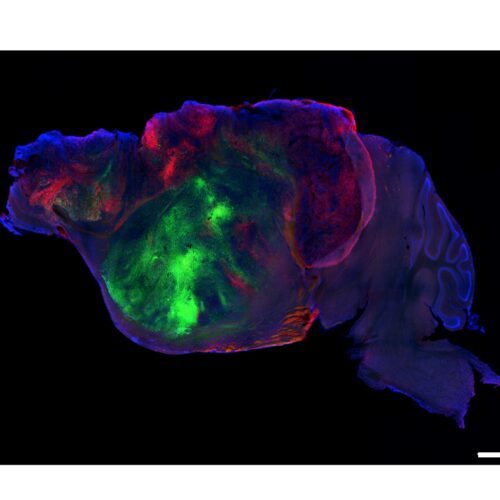
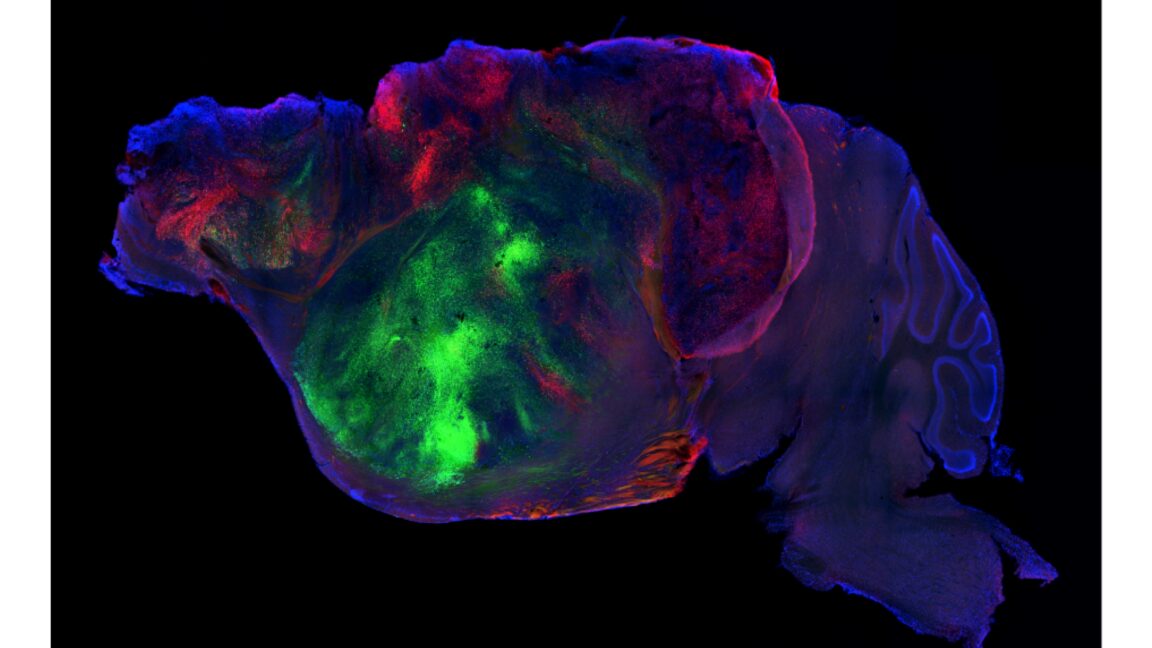
But even the most sophisticated organoids lack a lot of the features of a real human body. This is especially true for brain organoids, which don't form any of the connections with specialized brain structures needed to behave "normally." On Wednesday, a research group at Stanford University described a possible way to study brain organoids in a somewhat more natural context: They genetically wiped out a large portion of the mouse brain and replaced it with human brain organoid cells.
The replacements
Organoids, because they adopt a three-dimensional tissue structure and consist of various specialized cells, provide a much better model for an intact tissue than simply having a bunch of disassociated cells lying flat on a culture dish. But they still have a lot of limitations—they're not hooked up to a circulatory system that allows the liver to process chemicals the organoid produces and don't have immune cells moving through them, to give just a couple of examples.
It’s not illegal to send an email telling Immigration and Customs Enforcement (ICE) officials that their actions will haunt them, a federal judge ruled Tuesday, granting a preliminary injunction that blocks ICE from threatening to prosecute a critic for protected speech.
Back in January, David Streever sent a scathing three-paragraph email to then-acting director of ICE, Todd Lyons. Outraged by the killings of two Minnesota protestors against ICE, Renee Good and Alex Pretti, Streever told Lyons that he was a “monstrous human being” who will eat himself “alive with shame” for defending officers who shot people who posed no threat and had no weapons. Comparing Lyons to an infamous high-ranking Nazi cop, Streever predicted that “even Trump” would one day turn on Lyons for defending the “obvious” slayings of Americans.
David Streever's email to ICE.
Credit:
via FIRE
“You are a monstrous human being and will go down in history as America’s Reinhard Heydrich, the butcher,” Streever wrote. “You will never know peace. You will seek to lose yourself, to escape the burden of knowing the truth about yourself. But wherever you go, you will find yourself. You will torment yourself until your last day on Earth.”
A federal judge on Tuesday said more than 20 defendants including 3M, DuPont, and Honeywell must face claims by Connecticut firefighters who said their protective gear was contaminated by toxic "forever chemicals" that increased their risk of cancer.
Cape Fear River Watch released a statement, saying the settlement “won’t come close to making us whole again after all the harm DuPont and Chemours have done to the communities of the Cape Fear Region.”
The U.S. Air Force has offered to start work cleaning up groundwater contaminated by "forever chemicals" at Davis-Monthan Air Force Base if Tucson, Arizona officials agree to allow Air Force retirees to build a golf course.
Heat waves, wildfires and floods have cascading economic impacts, causing incomes to decline and the price of basic goods to rise. The trend will escalate as temperatures continue to increase.

 Login




 David Streever's email to ICE.
Credit:
via FIRE