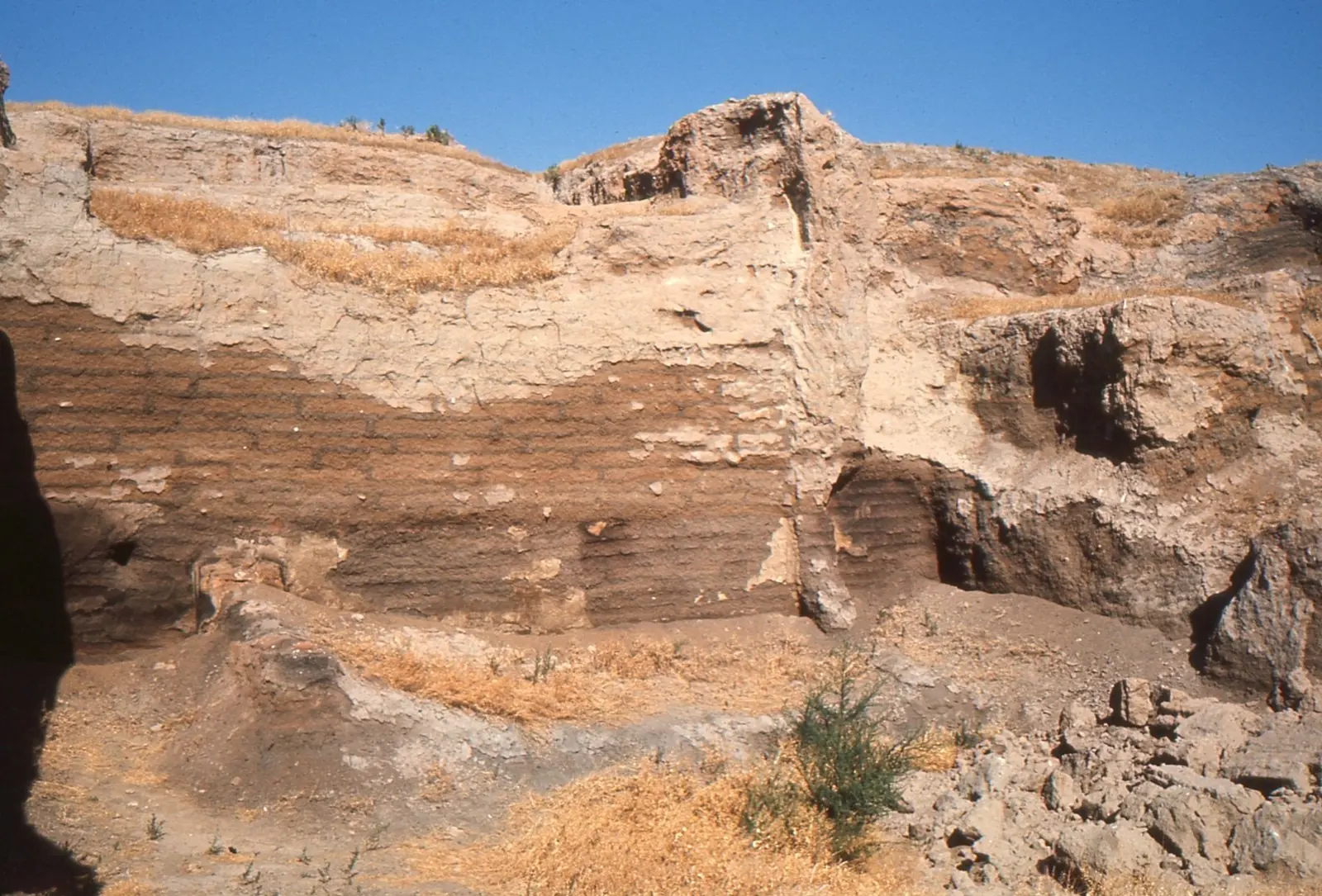
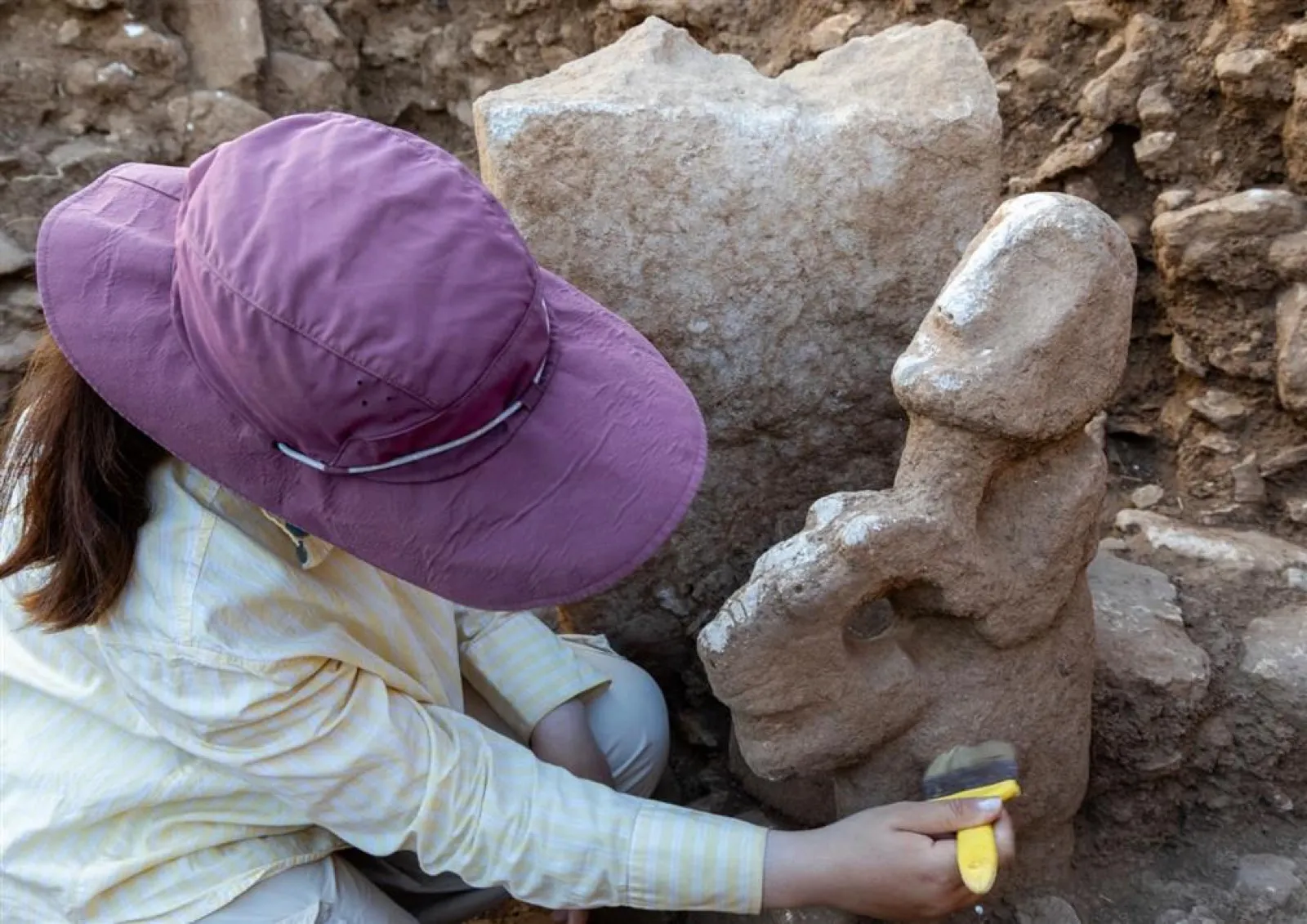
Archaeologists rarely identify a settlement from one object. They combine buildings, hearths, tools, food remains, activity areas, and patterns of rebuilding to understand a site.
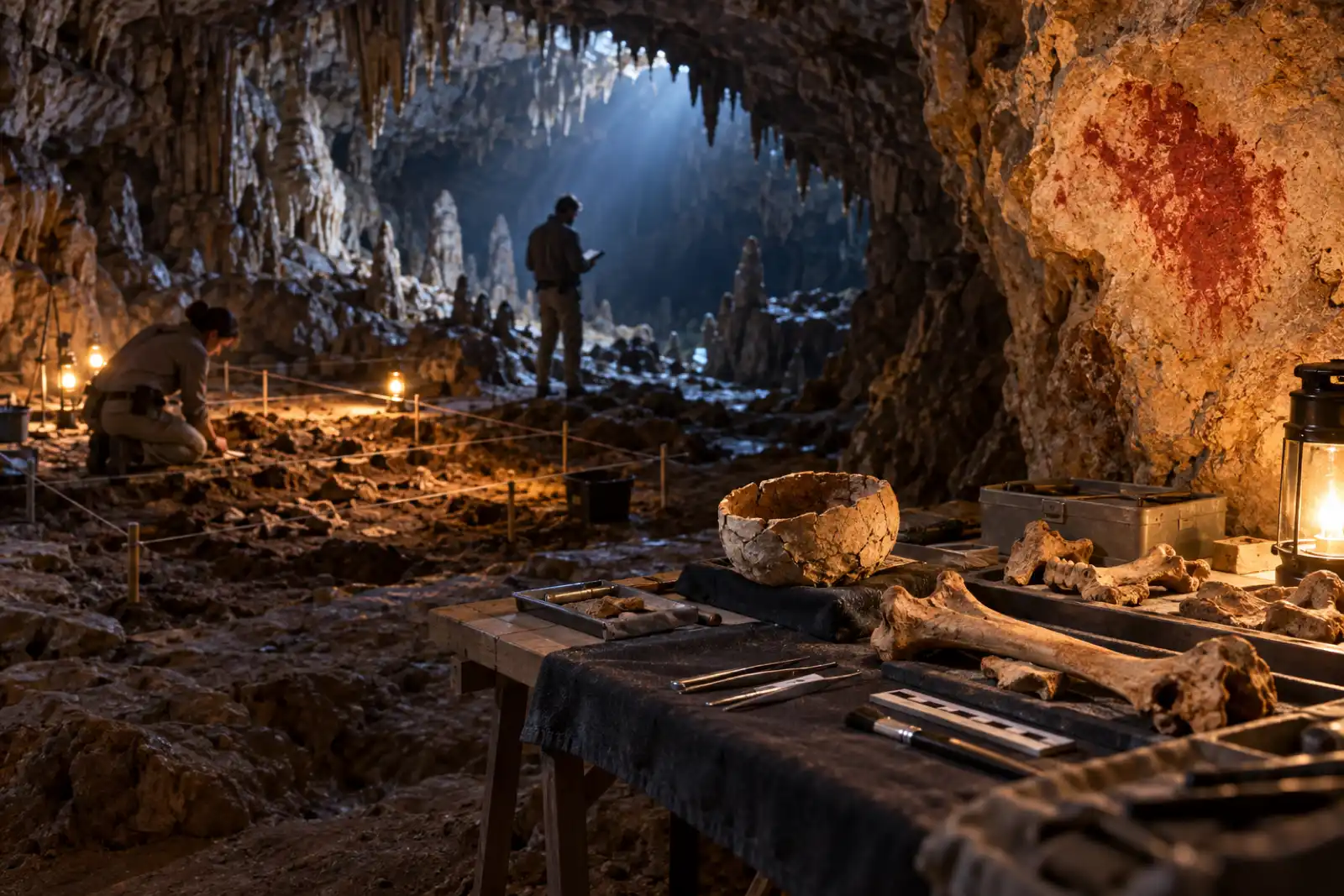
Nearly 1,000 bones and teeth from three Granada caves show that Neolithic cannibalism was not one practice or one event. The dates and traces point to different stories.
For many, the Bayeux Tapestry conjures images of clinker-built ships, prancing horses, the Normans feasting on chicken on the eve of the Battle of Hastings, and the arrow in King Harold's eye that ended centuries of Anglo-Saxon rule.
Sir John Gage, a key figure in Henry VIII's dissolution of the monasteries, saved a dangerous Catholic book from likely destruction, a new study suggests. The identification of six lost pages of a medieval bestseller—illicitly prized by Catholics in the Reformation—as belonging to Gage, exposes the split loyalties of one of Tudor England's great survivors.
Sir John Gage, a key figure in Henry VIII's dissolution of the monasteries, saved a dangerous Catholic book from likely destruction, a new study suggests. The identification of six lost pages of a medieval bestseller—illicitly prized by Catholics in the Reformation—as belonging to Gage, exposes the split loyalties of one of Tudor England's great survivors.
Archaeologists have analyzed insect remains preserved in the 7th to 9th centuries AD funerary cave of Cruz de la Esquina, Gran Canaria, and found that it was used by the island's Indigenous people for food storage before being adapted into a burial site. The findings have been published in the journal Antiquity.
Archaeologists have analyzed insect remains preserved in the 7th to 9th centuries AD funerary cave of Cruz de la Esquina, Gran Canaria, and found that it was used by the island's Indigenous people for food storage before being adapted into a burial site. The findings have been published in the journal Antiquity.
The Black Death is often remembered as a single catastrophic event that swept across Europe between 1347 and 1353, killing millions. Yet the disease did not disappear after that first devastating outbreak. For more than four centuries, plague continued to return in recurring waves, reshaping communities, economies and societies across Europe and beyond. A new study led by researchers at the University of Tartu sheds fresh light on this long and complex history by analyzing the DNA of the plague bacterium preserved in archaeological human remains. The study is published in the journal Proceedings of the National Academy of Sciences.
The Black Death is often remembered as a single catastrophic event that swept across Europe between 1347 and 1353, killing millions. Yet the disease did not disappear after that first devastating outbreak. For more than four centuries, plague continued to return in recurring waves, reshaping communities, economies and societies across Europe and beyond. A new study led by researchers at the University of Tartu sheds fresh light on this long and complex history by analyzing the DNA of the plague bacterium preserved in archaeological human remains. The study is published in the journal Proceedings of the National Academy of Sciences.
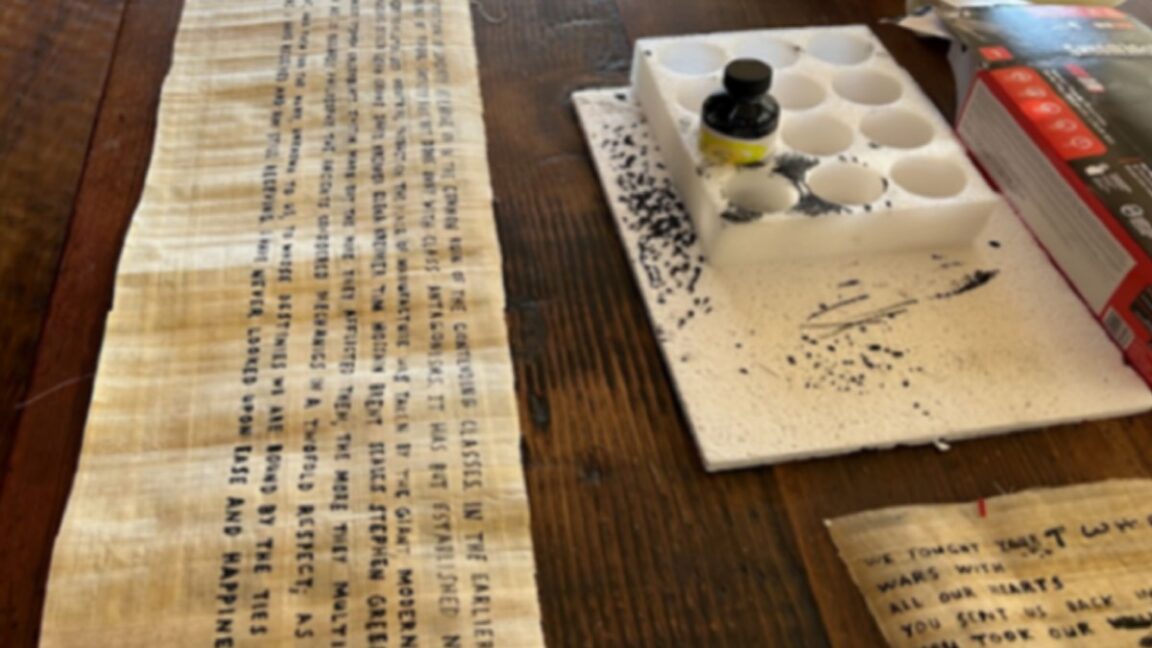
The Vesuvius Challenge is an ongoing project that combines "digital unwrapping" with crowdsourced machine learning to decipher the so-called Herculaneum scrolls, badly charred 2,000-year-old papyri too fragile to be physically unrolled. The effort just got an additional boost. A team of researchers created their own contemporary model papyrus scrolls—charring them just like the originals—to validate a screening method to determine which of the Herculaneum scrolls were written in lead-based ink and hence are the most promising candidates for further analysis. They described the process in a new paper published in the journal PLoS ONE.
As previously reported, the ancient Roman resort town of Pompeii wasn’t the only city destroyed in the catastrophic 79 AD eruption of Mount Vesuvius. Several other cities in the area, including the wealthy enclave of Herculaneum, were fried by clouds of hot gas, called pyroclastic pulses and flows. But still, some remnants of Roman wealth survived. One palatial residence in Herculaneum—believed to have once belonged to a man named Piso—contained hundreds of priceless written scrolls made from papyrus, singed into carbon by volcanic gas.
The scrolls stayed buried under volcanic mud until they were excavated in the 1700s from a single room that archaeologists believe held the personal working library of an Epicurean philosopher named Philodemus. The few opened fragments helped scholars identify various Greek philosophical texts, including On Nature by Epicurus and several by Philodemus himself, as well as a handful of Latin works. But the more than 600 rolled-up scrolls were so fragile that it was long believed they would never be readable, since even touching them could cause them to crumble.
The Corps of Discovery Expedition set out in 1804, directed by President Thomas Jefferson to survey the United States’ newly acquired Louisiana Purchase. The exploration forms a core piece of early U.S. history. Picture a scene from the journey: It’s a cool morning, the silence punctuated by birdsong and the rustle of the breeze through the cottonwood trees. To one side, Commander William Clark, his rifle leaning against a plum tree and his rucksack nearby, squats over a latrine pit, unceremoniously heeding the call of nature.
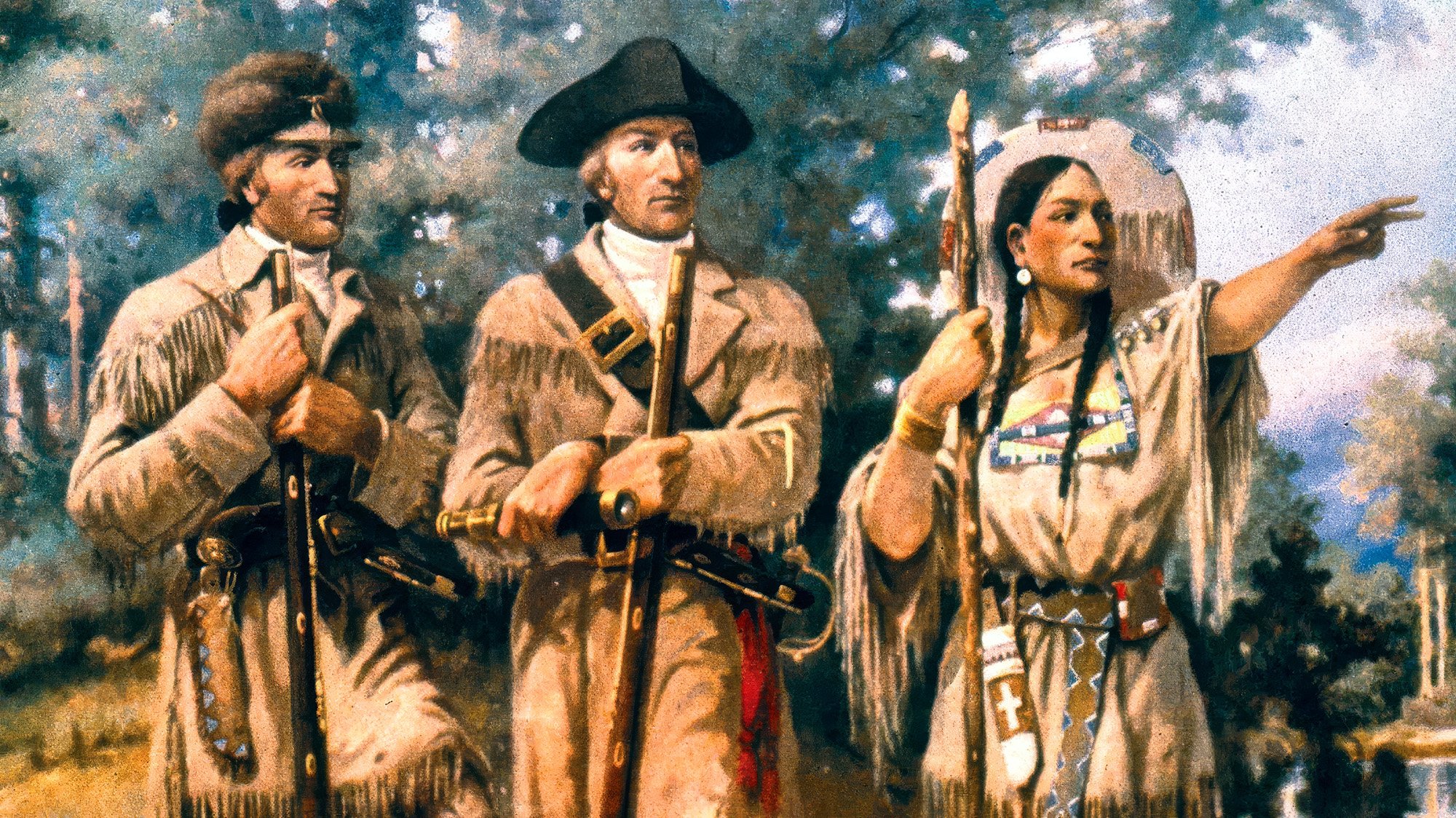
The Louisiana Purchase constituted a territory of around 828,000 square miles, which the U.S. had bought from France in 1803. This was, it is worth noting, largely without the consent of the Indigenous groups who had lived there for millennia. The purpose of the expedition was threefold: to find a practical trade route westward to the Pacific coast, to explore and document the territory, and to stake a claim to the area before any other European powers butted in. Led by Meriwether Lewis and William Clark, the 40-man team, plus their guide Sacagawea, spent more than two years trekking westward.
Believe it or not, the holes that were used as toilets along the march to the Pacific have been invaluable for archaeologists and historians. This is thanks especially to a type of treatment included in the expedition’s medical kit.
How Lewis and Clark went to the bathroom
Everybody poops—it’s a universal human need. But most accounts of the Corps of Discovery’s journey leave out the details of how the Corps members dealt with bathroom business.
Each of the campsites where the expedition spent time had an accompanying latrine pit, situated well away from camp for sanitary (and privacy) reasons. The latrines would have seen a lot of use, because the Corps of Discovery’s diet wasn’t the best for gut health.
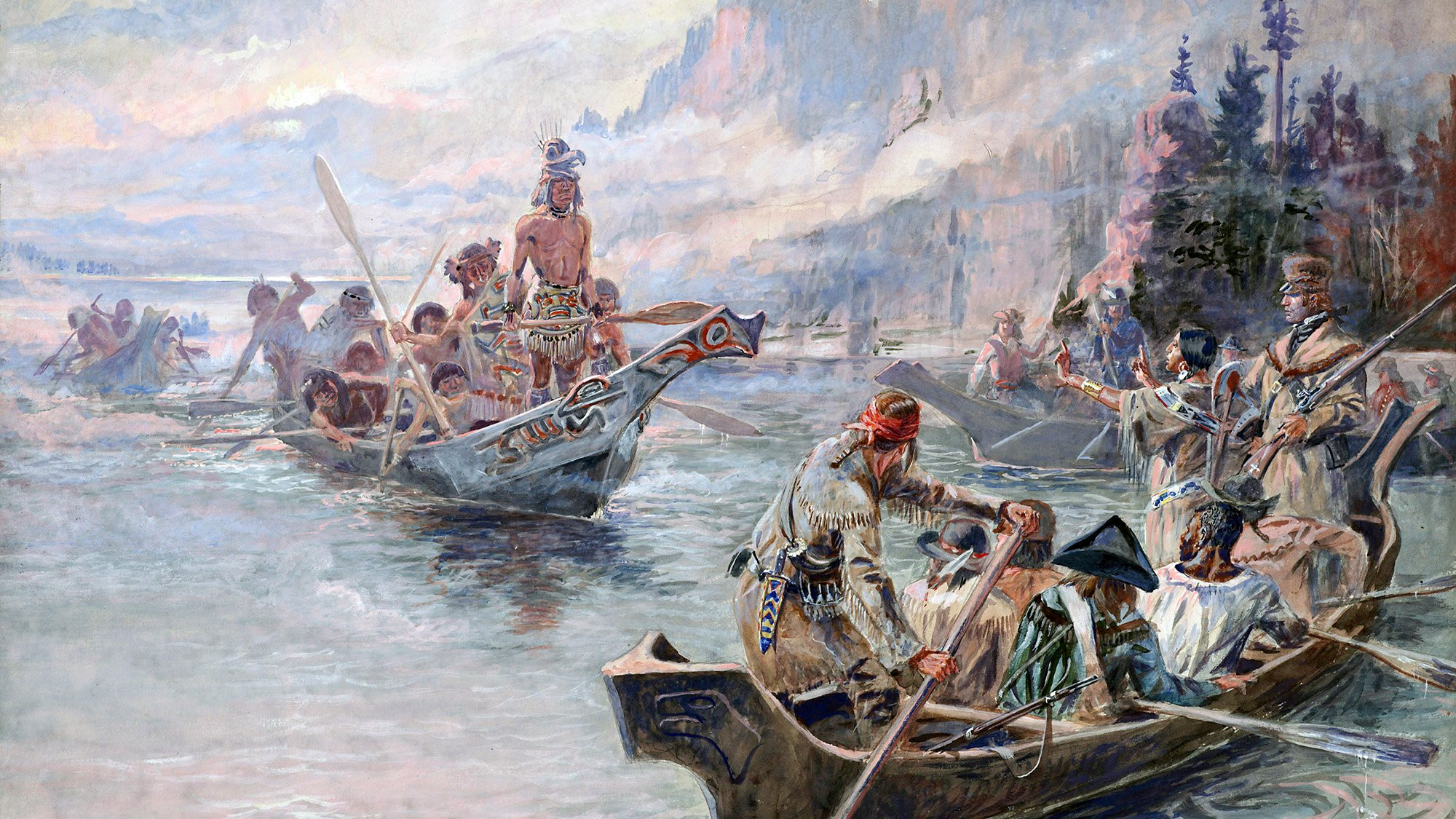
American artist Charles Marion Russell painted this piece entitled “Lewis and Clark on the Lower Columbia” in 1905. Image: Public Domain
While the expedition members relied heavily on foraged and hunted food, they also carried backup rations. These included nearly 14,000 pounds of dry goods, including flour, salt, coffee, dried pork, and lard. All told, each member of the Corps ate around nine pounds of meat per day. All of that protein without lots and lots of fiber added up to frequent constipation. The untreated water they drank from rivers and creeks they encountered probably didn’t help their circumstances. Enter…Dr. Rush’s Bilious Pills.
The mercury constipation pills known as “thunderclappers”
In 1803, as preparation for the upcoming expedition, William Clark traveled to Philadelphia for a two-week medical crash course with Dr. Benjamin Rush. Rush was a prominent physician in his day, and a Founding Father of the United States. His signature is one of the 56 on the Declaration of Independence.
Rush taught Clark some basic field skills, such as bone-setting and wound treatment. Clark left Philadelphia with new skills and a well-stocked medical kit that included 50 dozen of Doctor Rush’s Bilious Pills. These were compounded tablets about the size of a raisin, composed of powerful laxative ingredients. The pills were nicknamed “thunderclappers” because of the speed with which they took effect. The main ingredient of the thunderclappers was calomel, or mercury chloride.
Mercury, historically also called quicksilver, has been thought to have curative effects for centuries. It’s a metal that is liquid at room temperature, which seems miraculous in and of itself.
It was also a popular treatment for syphilis. This is not to say it was an effective treatment for syphilis. When it was administered for that disease, slowly in low doses, patients were more likely to die from mercury poisoning than from the STI.
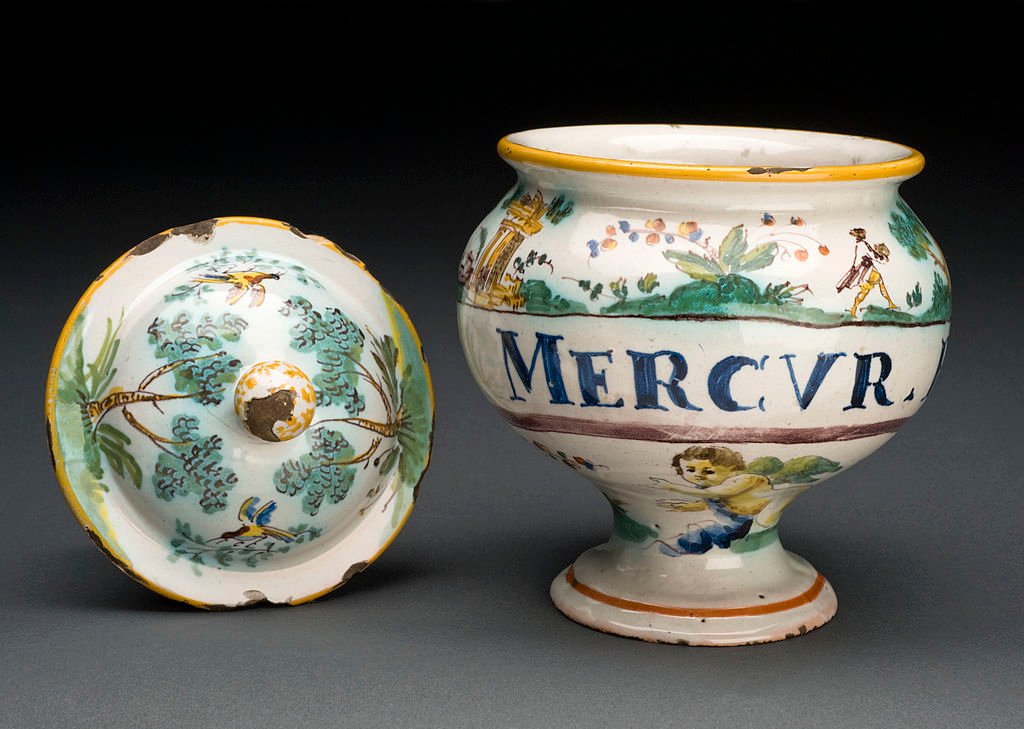
This drug jar for mercury pills was made in Italy sometime between 1731 and 1770, several decades before Meriwether Lewis and William Clark set out on their historic expedition. Image: Science & Society Picture Library / Contributor / Getty Images Jaron Chubb
When taken in larger doses, though, as in the thunderclapper pills, it prompted a quick evacuation, the body’s way of ejecting poison. The men of the Lewis and Clark expedition used these pills freely as a way to compensate for their high-protein and low-fiber diet. As a result, all the latrine pits they used between the Midwest and the Pacific coast were laced with high concentrations of mercury.
Lewis and Clark pooped mercury. Today archaeologists use it to map their route.
As many an environmentalist will caution, mercury does not decompose when it’s in the ground. It stays put, and is detectable through modern soil testing techniques. The 600-plus latrines dug and used by the Corps of Discovery form a trail of their own, marked by mercury.
The expedition was a government-sanctioned military expedition, so Lewis and Clark both kept copious notes on every aspect of their travels. Historians have tried to pinpoint the locations of these camps based on the expedition journals, with minimal success.
The only campsite that archaeologists have been able to confirm so far is the Traveler’s Rest camp, just outside of Missoula, Montana. This is all thanks to the remains of Dr. Rush’s Bilious Pills, which left enough mercury in the ground to differentiate the remains of a latrine pit (or “sink” as they were called in the 1800s) from animal burrows or agricultural ditches.
Archaeology is all about reconstructing the lives of people in the past, and it’s worth remembering that this means all aspects of life. Our own bodily functions remind us that we all share complex and interwoven histories, and that even the most mundane parts of our lives can be important in the future.
In That Time When, Popular Science tells the weirdest, surprising, and little-known stories that shaped science, engineering, and innovation.
A team of archaeologists digging at the site of Ursoaia, in Romania’s Iași County, has uncovered a nearly 6,000-year-old pottery kiln unlike anything previously found in the region. Described in a paper published this month in the journal Antiquity by Diana Măriuca Vornicu, Felix-Adrian Tencariu and colleagues from the Romanian Academy and Alexandru Ioan Cuza […]
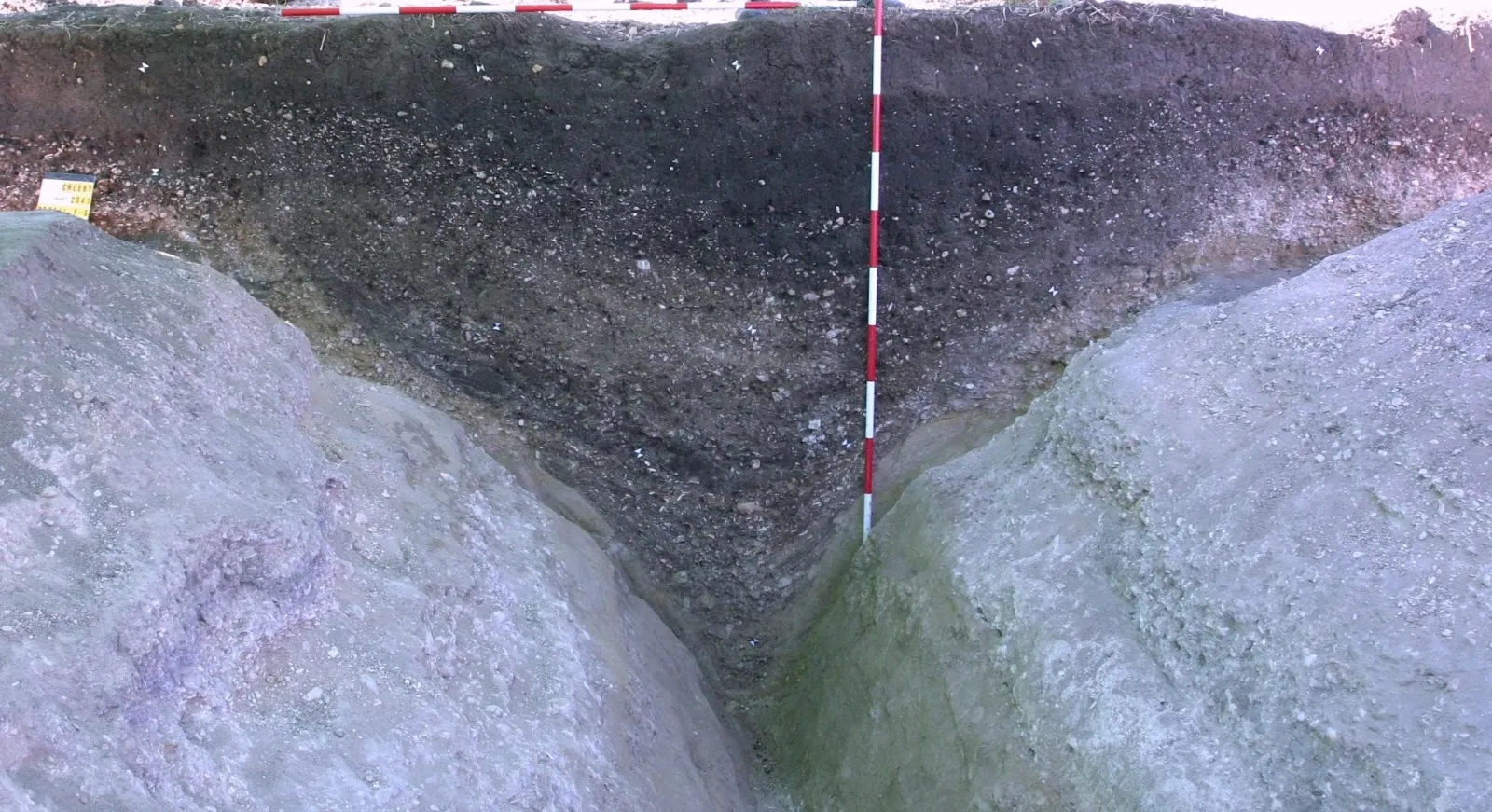
Twelve entrances opened onto the horizon at Chleby. The excavators link their directions to the Sun and Moon, raising questions about how people gathered there.
In the hills of northwestern Morocco, overlooking the river that gives the site its name, research at Oued Beht is bringing to light a previously unknown chapter of the region's past. The discovery of a substantial built structure suggests that, during the second millennium BC, communities in northwestern Africa were actively shaping their environment. They were also engaging in broader networks of interaction across the Mediterranean world.
In the hills of northwestern Morocco, overlooking the river that gives the site its name, research at Oued Beht is bringing to light a previously unknown chapter of the region's past. The discovery of a substantial built structure suggests that, during the second millennium BC, communities in northwestern Africa were actively shaping their environment. They were also engaging in broader networks of interaction across the Mediterranean world.
A multidisciplinary team of researchers from Aarhus University in Denmark, Queen Mary University of London and other European institutions analyzed a data set representing almost 300,000 kilometers (186,000 miles) of Roman roads across the former empire, creating the most detailed quantitative picture yet of how the Roman road network was structured.
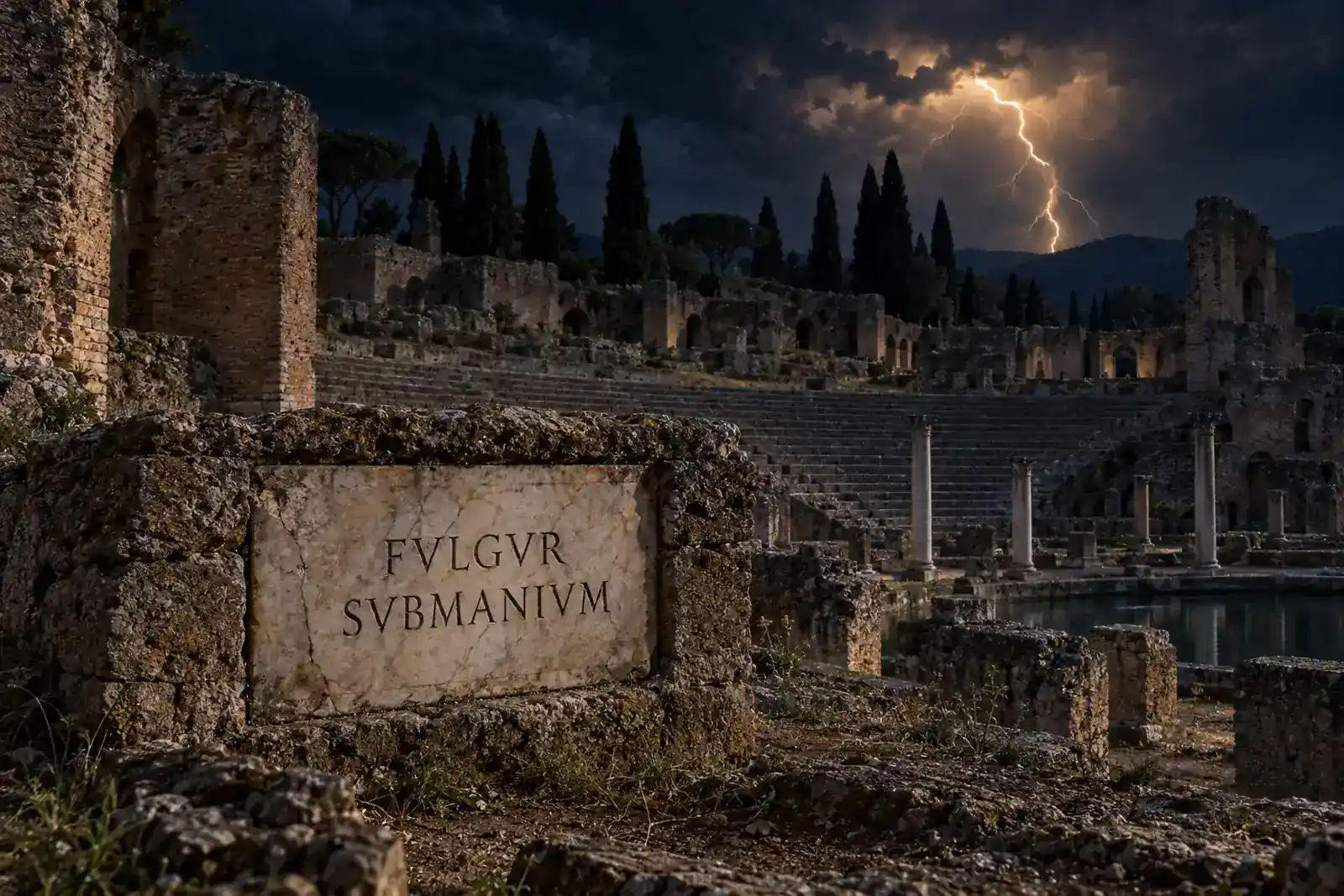
A marble inscription found in its original position at Hadrian’s Villa refers to a lightning strike attributed to Summanus—and the Roman ritual of making the place sacred.
Before Rome existed, before Phoenician ships ever reached the western Mediterranean, and around the same time the first fortified villages of the Argaric culture were rising in southeastern Iberia, a farming community on a rocky ridge in inland Morocco was already digging a ditch and piling up earth. What they were defending against is still […]

 Login