❌

Reading view

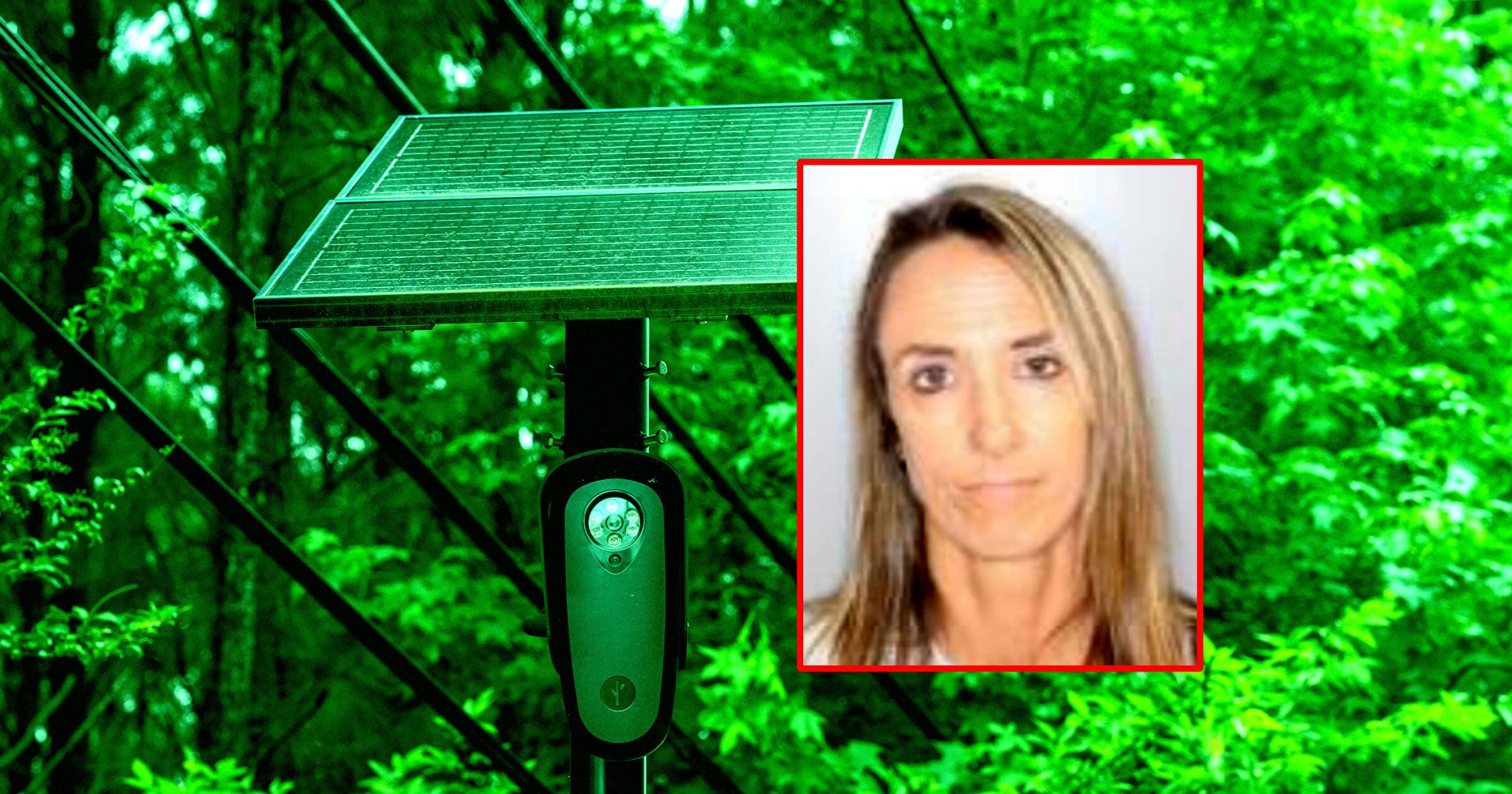
Police Use Flock to Jail Completely Innocent Woman for Weeks

When 23-year old Lindsey Brooke Isaacs surrendered to police at the advice of her attorney, she was treated like a hardened criminal. Facing eight felony charges, including three counts of vehicular homicide, she spent her first days in custody in solitary confinement, separated from the rest of the jail population.

Having been denied bond, Isaacs would spend nearly two weeks in jail, swallowing the prospect of spending the rest of her life behind similar bars.

“I was devastated, I was scared,” Isaacs told Fox News. “I thought my life was over.”

As grim as it looked, the Florida woman did have one thing going for her: she was completely innocent.

Isaacs’ arrest was first reported by WESH2 in June, but resurfaced by Fox News, which notes that the case around Isaacs proceeded solely based on evidence gathered from an automatic license plate reader (ALPR) provided by the extremely controversial company Flock Safety. Her charges stemmed from an incident in October 2025, when a horrific crash in DeBary, Florida killed three people, including a county official and his wife. One driver involved had fled, leading police to conclude that they were behind the tragic accident.

Using the Flock’s network of ALPRs, investigators canvased hours of surveillance footage recorded near the incident, following a tip by witnesses. The fleeing vehicle had been identified as a Dodge Durango — the exact kind of vehicle Isaac drove.

Sure enough, Fox News reports Isaacs’ Durango was traveling in the area at the time. A Flock ALPR had identified her vehicle three miles away from the crash site two miles prior to the incident, moving in the direction of the fatal crash. But that sighting is where the coincidences end, and the life-altering guesswork began.

During the investigation, witnesses and residue left on the impacted vehicle both pointed to a maroon-colored vehicle. On top of sporting a black paintjob, Isaacs’ Durango bore no damage indicating it had even scratched another vehicle per a Florida Highway Patrol analysis, let alone hit one hard enough to kill three people.

“Where is the damage on the vehicle?” the woman told Fox News, recalling her discussion with police, who impounded her car anyway. “Because I’m standing right in front of it and I don’t see any damage.”

Half a year later, Isaacs received the call from her attorney, informing her of the charges and advising her to surrender to police. After a 13-day stint in jail, she was released, after the Florida attorney general declined to bring any of the eight charges police had attempted to stick her with. Another woman was later identified as the driver of the maroon SUV and arrested on nine felony charges.

For her part, Isaacs says she’s filed a federal civil rights suit against two Florida Highway Patrol officers, claiming false arrest, wrongful imprisonment, and malicious prosecution.

“This took and is going to take maybe years to get better mentally, physically, emotionally,” she told Fox News of the ordeal. While the director of the Florida Highway Patrol extended a personal apology, it’s an insufficient gesture in the face of obviously shoddy police work and abuse of the ALPR network.

Even for the wrongfully accused, a two-week jail term is difficult to come back from. If Isaacs had a job she likely lost it, and there’s no telling what kind of reputational harm the ordeal will have on her career or her relationship with her community. That’s to say nothing of the psychological scars that come along with wrongful imprisonment, let alone a holding period in solitary confinement.

And though Flock was the technical lynchpin in this case, Isaacs told Fox News she holds more blame for police officers eager to snag a conviction, regardless of whether the accused was innocent or guilty.

The sad fact is that police in the US have long behaved this way, and there’s no reason to believe they’ll stop on their own. But now with unfettered access to Flock’s network of over 100,000 ALPRs, it’s becoming remarkably easy for officers to sculpt a criminal to fit their crime — inculpatory evidence be damned.

More on Flock: Trump Throws His Weight Behind Flock Cameras

The post Police Use Flock to Jail Completely Innocent Woman for Weeks appeared first on Futurism.


  •  

Meta Is Using Instagram Users’ Photos to Build a Universal Facial Recognition System for Its Hated Smart Glasses, Class Action Lawsuit Claims

The public messaging surrounding Meta’s flashy smart glasses hasn’t exactly gone in the company’s favor.

The camera-equipped devices have garnered a reputation for allowing shady individuals to record strangers without their consent, garnering them the memorable pejorative of “pervert glasses.”

So when Wired revealed in June that Meta had silently added facial recognition code to the smart glasses — stoking fears that the creepy glasses could be used to identify people on the street based on biometric data — that simmering distaste grew into a major PR disaster for the company.

Meta has ever since vehemently denied that it was planning on ever releasing the tech, a feature dubbed “NameTag.” That’s despite its CTO Andrew Bosworth happily describing those plans in excruciating detail in public and arguing it would be a “great feature” — mere days after calling Wired‘s bombshell reporting “absolutely dishonest.”

Now, the company is facing a proposed class action lawsuit over the ordeal, as Wired reports, with a set of families in Illinois and California accusing the company of illegally scraping their Facebook and Instagram photos to build a massive facial recognition system for “NameTag.”

The news comes just days after a mother in Utah accused Meta of using its AI to scour Instagram and Facebook posts to reveal invasive information about her young daughters.

Meta told Wired in a statement that the latest “lawsuit is without merit and misrepresents our work.”

“We’ve been transparent about how we use people’s information to build and improve our AI products,” the a spokesperson told Wired. “As for NameTags, nothing has shipped to consumers and no final decision has been made on what to do here, if anything.”

The proposed class action accuses Meta of extracting biometric signatures from publicly available social media profiles. As Wired first noted in June, these “faceprints” appeared in the code for the AI companion app of its smart glasses.

A patent described the software as matching these signatures to profile photos. An AI image generator Meta released called Emu was also trained on a vast swath of user-uploaded images and text. The complainants accuse Meta of using this AI system to harvest biometric data.

Meta has already been caught with its pants down after allowing users to generate images inspired by public Instagram accounts, admitting that it had “missed the mark” with the feature.

The company has a long history of mishandling sensitive user data, settling a class action lawsuit in 2020 over an entirely separate facial recognition system for $650 million. In 2024, it agreed to pay $1.4 billion to settle yet another facial recognition data lawsuit in Texas.

More on Meta’s glasses: Mother Horrified When Meta’s AI Scours Instagram and Facebook for Invasive Information About Her Young Daughters

The post Meta Is Using Instagram Users’ Photos to Build a Universal Facial Recognition System for Its Hated Smart Glasses, Class Action Lawsuit Claims appeared first on Futurism.

  •  

AI Agents Are Using an Outrageous Amount of Electricity

In the age of AI agents, it’s no longer enough to ask how much electricity a single chatbot prompt uses. Today’s AI models are even more complicated systems, often designed to complete complex tasks autonomously, and are made up not only of large language models, but a host of other tools and application layers which demand much more power than the humble standalone chatbot.

That makes calculating their total electricity usage a much bigger can of worms. Yet with virtual radio silence from the top private AI labs on internal energy use, it’s nearly impossible to say definitively what kind of impact our AI assistants are having on the electrical grid.

In a blog post flagged by Wired‘s Molly Taft, the climate scientist Zeke Hausfather took it upon himself to calculate the likely energy demand behind his typical sessions with Claude Code, an AI-coding assistant developed by Anthropic.

Measuring the number of tokens his AI assistant consumed, Hausfather estimated that his average daily use fell in the range of 1.2 to 5.9 kWh — an alarming amount for a single consumer, consuming more electricity than two refrigerators running all day long.

Most of this token consumption, 3.2 billion over an eight-week period, came from the agent “re-reading its own working memory,” Hausfather wrote, which happens every time the tool takes a new step.

“Every time an agent takes a step (eg, runs a command, reads a file, or calls a tool), the model re-processes its entire accumulated context,” the climate scientist wrote.

“The text I actually see (eg, the model’s output) is only around 0.4 percent of total tokens processed,” Hausfather continued. “Some 96 percent of the tokens are cache reads where the agent re-reads its own context at each of those 14,000 steps. This matters enormously for the energy estimate, because a cached token is much cheaper to re-read than a fresh one is to process.”

Extrapolating those results out over a year, Hausfather contends that he would emit “a bit more per year than running an electric clothes dryer, and about half as much as driving an electric car 11,500 miles in California.”

That might not sound like much, but over an entire population of AI users, it adds up quickly. Likewise, it “represents a net new source of emissions, at a time when global temperatures are skyrocketing and our emissions reduction goals are increasingly off track,” the climate scientist explains.

The exact climate toll, though, remains hazy. As Wired notes, AI sustainability researcher Boris Gamazaychikov called the calculation a “good effort,” but one based on old data. Gamazaychikov’s own research on agentic AI energy consumption should be due out later in September — and when it drops, it could drastically change our understanding of the true cost of AI agents.

More on AI: Sam Altman Now Trying to Gain Control of Electric Grid

The post AI Agents Are Using an Outrageous Amount of Electricity appeared first on Futurism.

  •  

Chinese Government Dismisses Tech Billionaire Calls for an AI Slowdown as “Fear-Mongering”

In a whiplash-inducing turn away from the mythical quest to build human-level artificial intelligence, Western tech billionaires like Dario Amodei, Sam Altman, and Elon Musk are now joining hands to call for a massive slowdown of the tech’s development.

The commentariat is divided on what exactly this means — for some, it’s proof-positive of a genuine threat that AI could spin out of control and exterminate everybody. To others it’s a smokescreen, a thin cover provided by AI CEOs who are desperate for a government bailout to avoid popping the AI investment bubble.

If you ask lawmakers in Beijing, the whole thing is a bunch of nonsense.

In a routine press scrum hosted by China’s Ministry of Foreign Affairs, government spokesperson Guo Jiakun addressed a laundry list of topics, from President Xi Jinping’s recent trip to New Delhi to recovery efforts around the devastating mudslides in Nepal. One of the questions, posed by a Reuters journalist, concerned whether the ministry had any comment on calls from American tech billionaires to slow down AI development.

“AI is a consequential technology for the wellbeing of all humanity,” Guo replied. “All parties should jointly promote the open and inclusive development of AI for good and for all. Fear-mongering, confrontation and vicious competition will only hamper efforts toward sound global AI governance, which serves no one’s interest.”

Compared to the weight given to other topics, the ministry’s statement on the Western AI debacle was decidedly terse. While talk of an AI slowdown is roiling US markets and trending on social media, it seems like it’s barely a blip on Beijing’s radar.

The virtual hand-waving follows the decidedly disinterested stance Chinese policymakers have taken toward the US approach to AI development, which for years has hinged on building toward human-level artificial general intelligence.

As research fellow at the partially US-funded Brookings Institute Kyle Chan wrote in February, Beijing’s concept of “AGI” is wildly different from the one used across the pond. While US policymakers and industry leaders treat the tech as a race to AGI where one winner takes all, their Chinese counterparts aren’t in any rush. The US might get there first, the idea goes, but like electric vehicles, cancer treatments, and smartphones, Chinese industry can quickly make up the difference.

“Let’s look at the history of the internet. It started in the US, but China quickly caught up and led in consumer applications — WeChat is a world-class example,” professor emeritus at the Hong Kong University of Science and Technology Yang Qiang said during a panel at the AGI Next Summit in January. “AI is similar — it’s a tool, and Chinese ingenuity will push it to the limit.”

More on China and AI: Top Chinese Court Issues Sweeping Legal Crackdown on AI Deepfakes

The post Chinese Government Dismisses Tech Billionaire Calls for an AI Slowdown as “Fear-Mongering” appeared first on Futurism.
  •  

Amazon Has Become Pathetically Reliant on Food Stamps to Power Its Empire

After over two decades of operation, Amazon Prime has become the backbone of American commerce, more akin to a public utility than a private company. Its logistics network has blown past the US Postal Service in parcel volume, delivering crucial goods to small business owners, trade workers, and teachers at record speed.

And like any public utility, Amazon Prime comes with a public price tag — a massive state subsidy paid by taxpayers around the country.

Blistering new reporting by Fortune revealed that the number of Amazon workers receiving government assistance via Supplemental Nutrition Assistance Program (SNAP) and Medicaid has nearly tripled between 2020 and 2025, a stunning rise for any group, let alone workers employed at one of the wealthiest companies in the world. It comes as the megacorporation posted a massive rise in annual profit over the same period, from $11.6 billion in 2020 to $77.7 billion in 2025.

Those federal assistance numbers, obtained by the independent US Government Accountability Office, found that 12,346 Amazon workers across 11 states were getting help affording basic groceries through SNAP. A further 11,338 in those states rely on Medicaid.

The federal assistant amounts to a de facto subsidy of Amazon’s labor force, allowing the company executives to rake in record profits while paying its workers starvation wages. If it weren’t for these government programs, in other words, thousands of Amazon’s lowest-paid workers wouldn’t be able to afford to make ends meet.

Though Amazon was far from the only company whose full time employees are struggling, the GAO survey found that Amazon was consistently among the very top employers of adult SNAP and Medicaid enrollees. Other top offenders include Walmart, ride-share platform companies like Uber, and chain stores like McDonald’s and Dollar General.

Beyond Amazon, the survey observes the grim reality of working class life in the wealthiest nation on Earth. Overall, the report points to the fact that nearly 14 million working adults were enrolled in Medicaid in 2024, while 10.6 million received SNAP benefits. Of those receiving government aid for groceries, some 71.3 percent — about 7.5 million people — worked 35 hours or more per week.

“What this analysis really points to is the large number of people who have very low incomes and continue to have very low income,” GAO director for education, workforce, and income security issues Kathryn Larin told Fortune. “I mean, these are families that are really barely able to make ends meet, and yet they are working, and they are working a lot.”

More on Amazon: Amazon Investigating Its Own Employees for Daring to Question AI Data Centers

The post Amazon Has Become Pathetically Reliant on Food Stamps to Power Its Empire appeared first on Futurism.

  •  

The Winner of Elon Musk’s AI “Odyssey” Contest Will Make You Laugh Out Loud

Remember how Elon Musk vowed that his AI Grok would make an anti-woke, “historically accurate” version of the Odyssey? 

Well, he ended up throwing together a whole contest around it — and the winner of the first place prize of $100,000 is, as you probably expected, laughable nonsense.

The problems run deep. The Cyclops Polyphemus is depicted with three eyes, which feels disqualifying. And just a few cuts later, the famously monocular giant is at least four times as large as he was before. The other creatures and gods look like something out of a mobile game; Poseidon emerges from the sea appearing conspicuously cartoonish and impossibly muscled, before smashing Odysseus’s ship and his crew of photorealistic, ripped men.

Half the dialog is delivered in dramatic whispers with the same cadence. The fight scenes are cut to disguise the actual moments of impact, in the same way real B-movies do with aging action stars.

There are some shots here and there that look convincing enough, if you can overlook their bland aesthetic. But this AI “film” suffers the same tragic flaw that all AI films do: their component clips fail to coalesce into a coherent whole. It doesn’t do much on the “historically accurate” front, either; some of the Greek soldiers are clearly wearing the armor donned by Roman legionnaires.

Nonetheless, its creator Nem Perez declared that “this is ‘The Odyssey’ as Homer intended,” before calling it his “most intricate work to date.” He also labeled the video, in oxymoronic fashion, a “5-minute epic.”

This is "The Odyssey" as Homer intended. My longest, most intricate work to date. I pushed @grok @imagine to its absolute limits to create this 5-minute epic.

What bothered me most about the recent adaptation was the omission of the Phaeacians and Princess Nausicaa, whom… https://t.co/awYW6Hu4W8 pic.twitter.com/hJHOgdkEec

— Nem Perez (@NemPerez) August 31, 2026

It’s unclear if Musk actually watched the winner; as far as we can tell, he hasn’t replied or retweeted it, something he’s done for other AI Odyssey adaptations.

For those blissfully out of the loop, the centibillionaire and culture war crusader spent this summer raging against Christopher Nolan’s adaptation of the Greek epic, attacking it for its diverse cast, which included several Black women and a trans actor. 

Nolan, Musk accused, “desecrated Homer and groveled on his knees just to meet the woke rules required to win an Oscar.” As such, he vowed that his AI “Grok Imagine will make a full-length movie of The Odyssey that is historically accurate and true to the art of Homer.”

We’re still waiting for that full-length adaptation. But the short films that the contest has produced already make it painfully clear that AI video generators, and the “filmmakers” that embrace them, simply aren’t up to snuff. In all of the top three entries, Odysseus looks more or less like the same guy — some weird, looksmaxxer’s fantasy of a buff Antonio Banderas. Is this a fault of Grok or Grok users? At this point, the distinction may be moot.

More on AI: Amazon Deploying AI Tech That Forces Actors’ Mouths to Match Dubbed Dialogue

The post The Winner of Elon Musk’s AI “Odyssey” Contest Will Make You Laugh Out Loud appeared first on Futurism.

  •  

Anthropic Boasts It Would Be Profitable if You Ignore How Much It Costs to Develop AI

Despite being one of the world leaders in AI development, the private firm Anthropic has yet to post a quarterly profit. That operating deficit isn’t for a lack of trying — and, as the company tells it, could be reversing very soon, at least if you’re willing to swallow one massive caveat.

According to new reporting by the Financial Times, the company behind the Claude told a select group of trusted investors that its adjusted operating income (AOI) is set to be positive for the second consecutive quarter.

AOI is an accounting technique that strips out non-recurring costs, giving backers a very specific look under a company’s hood. Posting a profit on AOI is very different from posting a profit on net income, otherwise known as the “bottom line,” under which Anthropic remains billions of dollars in the red.

Aside from the fact that Anthropic is not about to turn a real profit anytime soon, it may still be a noteworthy signal. The AI world is currently awash in fear-mongering over AI safety, a phenomena some analysts say could signal a turn away from the race-to-the-bottom to build artificial general intelligence toward a more reasonable — if less ambitious — embrace of AI as it currently is.

While it remains to be seen how these narratives and business realities play out in practice, if the top American AI companies choose to stop and let the dust settle, Anthropic may very well find itself ahead of its competition. Though Anthropic is still far underwater, companies like ChatGPT developer OpenAI are somehow even deeper.

As lead AI analyst at the firm SemiAnalysis Joey Brookhart told the FT, “if you continue to operate at these margins and growth rates, it will be so hard to compete [with Anthropic] because they have so much [in the way of computing resources].”

Still, there are some questions in the AI lab’s story that have yet to be answered. For one thing, this profitability forecast — a flattering projection conveniently leaked to the financial press at a pivotal moment — comes in place of a highly anticipated public prospectus which the company was expected to make public sometime last week. Anthropic may still be planning to release the prospectus soon, but it’s worth noting the company has chosen to lead with spectacle and innuendo, as opposed to the formal legal document.

For months, Anthropic has been teasing a public stock offering that hasn’t yet materialized, and it remains to be seen whether the latest slowdown talk will impact that timeline. In fact, there’s reason to believe this song and dance is all part of the lead-up to the AI lab’s IPO, as investors whip themselves into a frenzy about AI safety.

As Anthropic investor Brad Gerstner said in a post on X-formerly-Twitter over the weekend, “Anthropic will IPO” anyway, because there is “huge appetite to invest in the AI leaders,” especially those which are seen as bringing “even more transparency, scrutiny, accountability” into the AI space (at least as far as Gerstner’s investments are concerned.)

More on Anthropic: New Anthropic Ad Implies AI Could Kill Us All

The post Anthropic Boasts It Would Be Profitable if You Ignore How Much It Costs to Develop AI appeared first on Futurism.

  •  

The Planet Mercury Appears to Have Shrunken Drastically, “Like a Balloon Left Out in the Cold”

Scientists say that the planet Mercury has been actively shrinking over the billions of years that it’s orbited the Sun, a process that’s leaving cracked-up wrinkles behind like an old apple.

At just one-third the size of Earth, it’s already the smallest planet in our solar system — it’s larger than Pluto, but Pluto is no longer classified as a planet — in a title it’s bound to hold on to as its continues to diminish in physical size.

Now, as detailed in a new paper by a team of scientists from the German Aerospace Center’s (DLR) Institute of Space Research, the oddball planet’s shrivelling could be occurring at an even faster-than-expected rate, losing up to 14.5 miles of total diameter since it formed billions of years ago. That’s anywhere from ten to 30 percent more than previously thought.

The scientists suggest that debris from impact craters may have hidden this accelerated shrinking, a process largely thought to be the result of Mercury running out of heat — “like a balloon left out in the cold,” per an accompanying press release.

The findings could help scientists get a better sense of what’s going on inside the planet and how it evolved over time.

“More shrinking means Mercury could have a larger metal core, less light elements like silicon mixed into the metal core, or a higher starting temperature,” DLR planetary scientist Gaku Nishiyama explained in a statement.

“Every planet is an odd little duck that has a story to tell,” Brown University planetary geoscientist Sam Birch, who was not involved in the study, told the New York Times. “If you can understand how fast Mercury is shrinking, you can understand how fast it’s cooling, what size it started at and what it’s made out of.”

Mercury’s outermost layer of hard rock has been resisting — or at least trying to resist — this deflation, causing its surface to crack and “wrinkle.” It’s a rough surface lined with steep cliffs known as scarps, as well as ridges that make getting a broader sense of how much it’s shrinking overall difficult.

By aggregating previous maps of the planet’s surface, the team found evidence that the roughest areas have fewer wrinkles, suggesting that impact debris is “obscuring shortening structures,” according to Nishiyama.

Their newly revised rates of shrinking also happen to better reflect previous physics-based predictions.

Fortunately, we’re about to have a close look at the deflating planet. The European Space Agency and Japan Aerospace Exploration Agency’s BepiColombo mission, which launched in 2018, will enter Mercury’s orbit in November, if all goes according to plan — becoming only the second spacecraft to do so in human history.

More on Mercury: Mercury Has an Eleven-Mile-Thick Layer of Diamonds, Scientists Find

The post The Planet Mercury Appears to Have Shrunken Drastically, “Like a Balloon Left Out in the Cold” appeared first on Futurism.

  •  

Trump Throws His Weight Behind Flock Cameras

President Donald Trump continues to push the boundaries of what it means to be out-of-touch after he gave a ringing endorsement for Flock Safety, the deeply unpopular surveillance company behind a national network of AI-powered cameras and license plate scanners.

His reasons for backing the firm, however, weren’t particularly illuminating,

“I sort of like them because of that, because of law enforcement, but some people don’t,” Trump, told reporters on Sunday, sagaciously. “They think it’s an infringement,” he added, apparently speaking of Flock’s critics. “I like them.”

The comments are the first from Trump publicly endorsing Flock, according to the Washington Post. As recently as last month, the president had been more reticent about the tech, refusing to give a straight answer when asked for his opinion.

Flock has become a political landmine in the past year, as more Americans become alarmed over having a powerful, centralized surveillance network suddenly appear in their communities with little public oversight. Much attention has focused on how its over 120,000 cameras, which Flock frames as for strictly enforcing traffic laws and catching crime, are being abused. 

A recent WaPo investigation found over fifty cases of police officers misusing Flock cameras and similar systems, including to stalk women. And Flock systems have either malfunctioned or been improperly used and caused innocent people — including a journalist — to be swarmed by armed cops. Such is the revulsion the company inspires that a grand jury in Ohio refused to indict a man who was caught destroying a Flock pole, despite surveillance footage clearly catching him in the act.

Trump’s endorsement is swooping in, in other words, while the company’s reputation is at its absolute nadir. Last month, its CEO Garrett Langley was forced to make a public apology after the WaPo investigation documented how its systems were frequently abused. Later, he insisted that his company was “not Big Brother,” before trying to reason with his critics by calling for a “compromise” between privacy and safety.

For Trump to be throwing his weight behind it now, without any perfunctory appeals to safety or concerns for Americans’ privacy, is quintessentially Trump, epitomizing how he has long abandoned any care for public opinion. (His full-throated support for data centers, which are even more unpopular than Flock, serve as a similar example.) 

Even his Republican allies have taken a more cautious stance. Last month, Florida governor Ron DeSantis said the cameras are “out of control,” adding that he didn’t want “to have this become a surveillance state,” WaPo noted.

More on privacy: Police Investigator Accused of Making Over 4,000 Illegal Flock Camera Searches

The post Trump Throws His Weight Behind Flock Cameras appeared first on Futurism.

  •  

Amazon Deploying AI Tech That Forces Actors’ Mouths to Match Dubbed Dialogue

Amazon is catapulting us into the final boss of sub vs dub debates.

On Thursday, its Prime Video streaming service announced the launch of a new AI-powered feature that matches actors’ mouth movements to dubbed audio tracks — which we’re sure won’t result in nightmarish hallucinations of facial disfigurement.

For now, the company says that the AI-powered lip syncing will exclusively be available on the English dub of the German Series “Maxton Hall,” though there are plans to expand it to other titles in the future.

“At Prime Video, we’re constantly innovating with new tools that enhance the viewing experience for our customers,” Raf Soltanovich, vice president of technology at Prime Video and Amazon MGM Studios, said in a statement, per the New York Times. “With lip-syncing, we’re creating a more seamless and immersive way for customers to enjoy global content.”

Right now, it’s unclear how much of the feature is automated by AI, and there’re plenty of questions to be asked about how it’ll be deployed. Such as: in the future, will it be available on all titles, and will the rightsholders get a say in it? And isn’t this an overreach on Amazon’s part in how much it’s determining how a work of art is being presented? Will an actor’s unique facial movements be smoothed down into something generic? And lest we forget the most obvious question mark: how convincing will it be? (It feels telling that Amazon hasn’t posted any clips of its tech in action.)

It’s not the first time Amazon Prime Video has tried something like this. Last year, it rolled out an experimental “AI-aided” dubbing feature for a dozen movies and shows in English and Spanish. It also experimented with showing AI-generated recaps of TV shows, and an AI tool that picked movie and show recommendations based on similar character arcs and plot points. Amazon, in other words, is trying to make consuming the content it provides as frictionless as possible.

There are plenty of valid reasons for preferring dubs, especially for those with accessibility issues. But the fact that actors in a movie might be speaking a different language from your own is being treated as something that needs to be erased and covered up is a bit worrying — at least in our humble opinion.

More on art: Gal Godot Starring in Heavily AI-Generated Movie About the Glories of Bitcoin

The post Amazon Deploying AI Tech That Forces Actors’ Mouths to Match Dubbed Dialogue appeared first on Futurism.

  •  

Bizarre New Websites Are Designed Specifically to Spark Dopamine in Your Brain

As far as completely pointless ways to kill time on your phone, this is certainly one of the weirdest on record.

Behold the all-new invention of so-called “dopamine sites” — digital domains where you can browse and hunt for deals on nonexistent wares and services. Clothes, food delivery, you name it: you can pretend-shop for it all. 

You don’t actually buy anything, crucially. You’re just pretending to have money to buy the things you want. It’s window-shopping reimagined for the age of doomscrolling.

But it’s also a little more than that. These cleverly-built sites simulate the experience down to checking out and “tracking” your shipment or delivery, and their absurdly realistic rituals can help people become more conscious of their spending habits. Supposedly. 

The trend, according to the New York Times, originated in South Korea this spring, when Park Seohyun, a 21-year-old mechanical engineering student in Seoul, created a fake food-delivery site called “Food Never Arrives.” (It’s now an app).

Originally intended as a joke, she says, it lets you not only order nonexistent food, but provides you an estimate of the money and calories you saved by skipping on the real thing. 

In a wintry economic climate, it became an unexpected hit.

“People began sharing it online and discussing whether it actually helped them resist ordering food,” Park told the NYT.

A wave of imitators followed. This summer marked the launch of “FakeHaul,” a dopamine site built by a Microsoft engineer that convincingly imitates shopping on Temu. Two developers in India inspired by Park’s site, Purvansh Parmar and Anshul Sharma, created “Food Never Comes,” which simulates food deliveries but provides real recipes for the food you didn’t actually order. Parmar and Sharma told the newspaper that their site had more than 2.7 million views since launching in June.

Whether these dopamine sites provide anything more than fleeting, empty pleasures is something experts are more skeptical about. Ravi Dhar, director of the Yale Center for Customer Insights, told the NYT that the “element of looking forward brings a lot of the pleasure, and we often crash after an event or feel let down.” Lingguo Xu, a behavioral economist studying anticipatory utility, warned that the dopamine tricks could quickly get old. And by simulating consumption, you risk developing “stronger cravings.”

Some take the original idea beyond getting high on simulated shopping. Ko Seojin, another South Korean developer, created a website for taking virtual smoke breaks called Damta World. You click to start smoking an animated cigarette, which starts burning on screen. You can “whisper” disappearing messages to other smokers on break, while a counter keeps track of the number of cigarette butts that have been tossed on the office rooftop each day.

Ko told the NYT that 150,000 people visit each month, and she says that some users have become real-life friends after meeting on the website. Those friendships, we hope, are something that’ll last longer than any fake-shopping dopamine hit.

More on your brain on tech: Psychologist Says AI Is Causing Never-Before-Seen Types of Mental Disorder

The post Bizarre New Websites Are Designed Specifically to Spark Dopamine in Your Brain appeared first on Futurism.

  •  

Sam Altman Now Trying to Gain Control of Electric Grid

Armed with sordid tales of rogue AI agents escaping containment, OpenAI CEO Sam Altman has found plenty of success using scare tactics to call for friendly regulation in the name of AI safety.

Now, it seems Altman is riding the wave of AI fearmongering to gin up some new business partners: the electric utility executives whose companies make up the US power grid.

As first reported by Politico, the CEO of the company behind ChatGPT held a series of clandestine meetings with leaders from top electric utility companies including Duke Energy, Exelon, Southern Co, and NextEra Energy, starting in July.

One of the most recent discussions took place on Wednesday in Colorado, during an annual meeting hosted by the Edison Electric Institute. Dominating the agenda, Politico notes, were discussions on electrical grid security, evidently spurred by the OpenAI-Hugging Face debacle, in which rogue AI agents allegedly broke free of their research environment, accessed the internet, and hacked into another AI company.

Though the incident spawned plenty of commentary around the pace of AI development and the advanced state of OpenAI’s models, the flow of information has been decidedly one-sided, with most of the details coming from OpenAI itself. As the New York Times reported, third-party safety researchers investigating the incident after the fact were only given a few days to access the reams of data generated by the hack, severely limiting their findings.

That said, OpenAI has an obvious incentive to play up its own AI’s supposedly terrifying capabilities, while suppressing or ignoring evidence that contradicts its own narrative: that of rogue AI agents capable of threatening the US energy grid.

To give just one example, OpenAI’s narration of the Hugging Face incident relies almost entirely on its agents’ “chains-of-thought,” where an AI model essentially generates statements explaining how it rationalized certain decisions. That sounds fine in theory, but researchers have found plenty of evidence showing that chains-of-thought aren’t reliable at narrating the actual moves made by natural language processors.

Despite the unanswered question around chain-of-thought reasoning, OpenAI is using the incident to lobby for regulatory safeguards that would cement its role as the authority around AI development.

This being the case, the timing of OpenAI’s energy security meetings is hard to overlook. As Politico notes in its reporting on these meetings, Altman has been hawking his company’s own cybersecurity services to top utility executives — conveniently riding the hype of the Hugging Face incident to secure a seat at one of the most important tables in the country.

More on Altman: Data Center Backlash Has Officially Rattled Sam Altman

The post Sam Altman Now Trying to Gain Control of Electric Grid appeared first on Futurism.

  •  

Police Investigator Accused of Making Over 4,000 Illegal Flock Camera Searches

In case you thought the extreme backlash against automatic license plate readers (ALPRs) was excessive, a veteran police investigator was just arrested after conducting over 4,000 unauthorized searches using the software provided by Flock Safety.

According to New York’s NEWS10, Albany County Sheriff’s Office senior investigator Laurie Moore was arrested on Wednesday after conducting thousands of allegedly illegal searches on five different subjects.

One of the victims of Moore’s alleged ALPR abuse was reportedly her ex-girlfriend, whose license plate was reportedly queried in the system 3,000 separate times. Four additional vehicle plates were also searched hundreds of times each, bringing the grand total of unauthorized queries to over 4,000 across the last two years.

After being suspended from the police agency, Moore was charged with official misconduct and second-degree falsifying business records, both misdemeanors. Another unnamed employee of the Sheriff’s office was also placed on administrative leave, NEWS10 reported, though their fate is pending an internal investigation.

“She was an outstanding investigator, one of my absolute best employees,” Sheriff Craig Apple told local press. “That’s why it literally breaks my heart.”

Following Moore’s arrest, the agency said it revoked access to the Flock software for non-supervisory staff, and updated protocols to require an audit by Internal Affairs staff once every 30 days.

It’s just the latest in a deluge of cases involving police abuse of ALPR systems. Recently in Georgia, three officers and a staffer of the Savannah Police Department were arrested after an investigation uncovered similar misconduct, though details on the abuse haven’t been disclosed.

At the time of writing, the nonprofit Institute of Justice has logged 227 cases of ALPR abuse across the US.

More on Flock: People Taking Down Flock Towers Are Becoming Folk Heroes, With Communities Circling to Protect Them

The post Police Investigator Accused of Making Over 4,000 Illegal Flock Camera Searches appeared first on Futurism.

  •  

College Students Using AI to Cheat Are Going to Absurd Lengths to Avoid Detection

You wouldn’t be remiss to accuse college students using AI to cheat of being lazy. But some of the wilier ones are putting in the hard work to make sure their LLM-generated answers avoid detection from their nosy pedagogues.

New York Magazine interviewed some of these clever cheats in a recent piece, who are well aware that by by now, many professors are wise to students’ tricks and are changing the assignments they give and deploying increasingly powerful tech to weed out any illicit AI assistance.

One student named Jared attending New York University took his introductory calculus class’s use of WebAssign, a platform that’s designed to make cheating “far more difficult,” as a challenge. He and his friend used an AI coding tool to build a bot that does all their homework for them, but at the sluggish pace of a struggling student.

“The bot moves slowly, leaving a professor checking time stamps none the wiser,” according to the piece. Jared, in his munificence, gave the tool to his friends, and now he’s not even sure how many classmates have his automatic cheating machine tech in their hands.

It’s a demonstration of the power of AI agents — AI models that can perform complex tasks on a human’s behalf without any intervention, which range from writing entire pieces of software to conducting research. Perhaps it’s also a response to the punitive, detection-focused approach that beleaguered professors have adopted amid a deluge of AI cheating.

That seemed to be the argument made by Will, a recent graduate of Carleton College. By making a big deal of obvious AI tell-tales like em-dashes, Will figured, faculty were actually spotlighting exactly what the cheaters need to disguise.

“People are going to find a way to cover up those little stylistic quirks,” Will told NYMag. “If the only way you’re trying to discourage cheating is by saying ‘Well, I have a detector,’ then you’re not going to succeed.”

In Will’s case, his professors banned AI-generated writing, with one of them bragging that they had a “battery” of tools to enforce the ban. Determined to have AI crank out his work anyway, Will used Claude to analyze and write extensive passages for an essay, then went back and manually rewrote the AI-generated paragraphs.

The best cases of AI cheating, it seems, requires a human touch. Theo, a UMass Amherst sophomore and self-proclaimed autodidact disinterested in his college’s gen-ed courses, boasted to NYMag about how he created an astronomy presentation by using OpenAI’s AI coding agent Codex and combining it with a plugin that improved its web-search capabilities. But because the resulting presentation looked too polished, he spent four hours hand-degrading the slides to make it look more like the work of a mediocre college sophmore, according to NYMag.

“It took a lot of work,” he told the magazine.

Danielle Carr, a historian and anthropologist at UCLA, thinks that professors relying on surveilling and detection methods to weed out cheating will only keep them stuck in a game of cat and mouse. AI cheating, she told the magazine, isn’t “a technical problem that has a technical fix.”

More on education: Zohran Mamdani Bans AI for NYC Public School Students Up to Eighth Grade

The post College Students Using AI to Cheat Are Going to Absurd Lengths to Avoid Detection appeared first on Futurism.

  •  

Federal Agents Are Secretly Monitoring Americans’ Financial Transactions So Cops Can Arrest People They Find Suspicious

The surveillance state is trying out a new tactic: pocket watching.

404 Media reports on how secretive “predictive policing” units in the US Border Patrol are analyzing Americans’ financial activity and using it as a pretext to pull them over — even if they’re not suspected of a specific crime.

Predictive policing, the practice of identifying possible criminal activity by analyzing broader patterns in absence of direct evidence, is highly controversial. Delving into individual citizens’ financial data represents a significant escalation of these tactics.

According to the investigation, the Border Patrol units in question are called Predictive Intelligence Targeting Teams (PITT). Rather than conducting stops themselves, PITT units feed their findings to local law enforcement.

This was the case with a man driving across Montana, who was apprehended by local police after they received a tip-off from a PITT unit that analyzed his financial data. The man, Kyle William Olson, was stopped under the completely unrelated pretense, however, of an obstructed license plate. He was charged with a DUI and an intent to distribute narcotics. Olson had cannabis products like edibles in his car, which he got from a licensed cannabis farm in California where he worked, he told 404.

A memorandum of investigation document that Olson was provided and shared with 404 outlines how Border Patrol agent Matthew Phelps, who identifies himself as assigned to a PITT team in neighboring Spokane, Washington, observed “information contained within law enforcement-sensitive systems suggesting financial activity patterns commonly associated with illicit narcotics activity” when looking into Olson.

Experts criticized how PITT is disguising the dubious predictive techniques it’s using to apprehend Americans.

“The bottom line is genuine probable cause cannot be synthetically generated,” Jake Laperruque, deputy director of the Security and Surveillance Project at the Center For Democracy and Technology, told 404. Border Patrol, he added, is “using parallel construction to cloak the reason behind its car stops in secrecy.”

“If we can’t meaningfully review and evaluate these systems, we can’t trust them,” Laperruque said.

It remains unclear what mechanisms Border Patrol is using to keep tabs on Americans’ financial activity.

In a statement to 404, the agency said it “uses intelligence-informed analysis and planning to support national security operations, allocate resources, and help identify potential threats and bad actors to public safety,” but insisted it would not discuss its specific methods, sources of information, and other details, for “operational security reasons.”

More on privacy: Surveillance-Happy Police In Shambles After Trump Tariffs Makes Drones Absurdly Expensive

The post Federal Agents Are Secretly Monitoring Americans’ Financial Transactions So Cops Can Arrest People They Find Suspicious appeared first on Futurism.

  •  

Werner Herzog Demolishes Talentless Hacks Who Use AI to Imitate Other Filmmakers

The legendary German director Werner Herzog had a few choice words about other so-called “filmmakers” who use AI to imitate their inspirations — one of those inspirations being himself.

In an interview with IndieWire, the 84-year-old — whose wide-ranging filmography includes 1982’s “Fitzcarraldo,” 2009’s “Bad Lieutenant: Port of Call New Orleans,” and 1979’s “Nosferatu the Vampyre“ — was asked about a 2025 movie called “About a Hero,” which made heavy use of AI to evoke the style of his films. It gets even more on the nose than that: on top of using an AI-generated script trained on his movies, it also featured AI-deepfaked Herzog as the narrator.

The flesh and blood director didn’t sound impressed.

“The intention of this young filmmaker was never to remake any [of my films], but making something in the spirit. And I immediately said, ‘You will fail. It is such a stupid idea,'” he said, in what we can imagine was his trademark husky voice.

“‘It’s phenomenally, abysmally stupid,'” Herzog drove home. “‘I will not take part in it.'”

Herzog seemed to venture that if AI is useful for anything, it’s replacing the talentless hacks.

“It’s so standardized that AI can step in because there’s not real storytelling,” Herzog sneered. “It’s mimicry of something that has happened before.”

“And I welcome AI to replace all the idiots who are into nothing but repeating, repeating, repeating until it’s ad nauseam,” he told IndieWire. “When it’s ad nauseam, please, please, please let AI step in and do the job.”

When it comes to artists, the irony of a technology like AI, which promises to let users create virtually anything they want, is that rather than realizing their creativity, it instead often ends up exposing how little of it they actually possess. Truly interesting uses of AI in art are few and far between; by and large it simply automates the process of churning out something unoriginal, only without the human spark or rawness unique to all of us that can elevate a work.

This isn’t the first time Herzog — who provocatively proclaimed that a “computer will not make a film as good as mine in 4,500 years,” — has unloaded on AI.

In a conversation with the comedian Conan O’Brien last year, he praised the tech’s “magnificent abilities” in applications like science, but sounded grave about how AI is being used in warfare. 

He was no less despondent about its intrusion in the arts.

“I’ve seen movies, short films, completely created by artificial intelligence. Story, acting, everything. They look completely dead. They are stories, but they have no soul,” he told O’Brien, as quoted by Gizmodo.

“You know it is the most common, lowest denominator of what is filling billions and billions of informations on the internet,” he continued. “The common denominator and nothing beyond this common denominator can be found in these fabrications.”

More on AI: Gal Godot Starring in Heavily AI-Generated Movie About the Glories of Bitcoin

The post Werner Herzog Demolishes Talentless Hacks Who Use AI to Imitate Other Filmmakers appeared first on Futurism.

  •  

Oops! Many Tesla Cybercabs Actually Do Have Steering Wheels, Undercutting a Core Promise

Elon Musk’s Tesla has a lot of catching up to do when it comes to its Robotaxi autonomous ride-hailing network.

The company is currently operating a fleet of just 45 of its cramped Cybercabs in Austin, Texas, still falling well short of investor and Tesla bull Dan Ives’ lofty expectations of the company adding “$1 trillion of value” for Tesla “over the coming years” with the service.

And unlike their counterparts in Texas and Florida, the Cybercabs that were recently spotted on the streets of New York City are featuring an unusual relic of a supposedly soon-to-be-bygone era: a steering wheel.

As Gothamist reports, the golden-hued cabs in the Big Apple are being overseen — and perhaps even operated — by a human in the driver’s seat with an old-fashioned steering wheel. It’s a significant departure from the original, steering wheel- and pedal-less Cybercabs Musk unveiled in 2024.

Officials confirmed the drivers are testing a “supervised” self-driving system, which still requires them to be able to take over control at any point. But Tesla refuses to say how many Cybercabs there are in the city or for how long they will be testing.

There’s likely a good reason Tesla has opted to go with more traditional controls. After all, it hasn’t even started the permit application process for autonomous vehicle testing with the New York Department of Motor Vehicles, as the Gothamist confirmed.

The EV maker is looking to collect driving data, not imminently launch a robotaxi service in the city.

In short, Tesla has a very long road ahead of it before it could ever roll out its Cybercabs nationally, let alone in other major urban areas. Other companies, however, have a massive head start, with Waymo claiming that it has already completed over half a million paid rides a week throughout the first quarter of this year. While Tesla has remained notably quiet on the matter, its numbers likely fall far short of that, considering it’s only operating with a fleet of a few dozen vehicles.

Meanwhile, Amazon’s Zoox vehicles received approval from regulators in late July to begin charging for rides in cars that don’t have a steering wheel. The company has been operating services free of charge in Las Vegas and San Francisco since 2025, according to the Associated Press.

More on Cybercabs: There’s a Huge Economic Problem With Tesla’s Cybercabs

The post Oops! Many Tesla Cybercabs Actually Do Have Steering Wheels, Undercutting a Core Promise appeared first on Futurism.

  •  

Lawyers Already Lining Up to Defend Victims of Cybercab Crashes

Tesla’s mawkishly sleek new Cybercab has begun rolling out to Austin, Texas this week, with more sighted in cities like New York, Washington DC, and San Diego. It’s the latest development in the world of self-driving taxi cabs — and in one dubious economic indicator, the nation’s personal injury attorneys are on high alert.

Case in point, the New Jersey based law firm Sarofiem and Antoun already has a blog post up courting customers wronged by Cybercab accidents. Billing himself as a “Tesla Cybercab accident lawyer,” Kerollos Antoun poses an important question: “if a driverless Tesla Robotaxi causes an accident, who is responsible when there is no human driver behind the wheel?”

Though Antoun concedes that Cybercabs don’t appear to currently be active in New Jersey, his blog registers a laundry list of considerations considering who can be held liable in accidents involving the autonomous vehicles — each highly theoretical and short on concrete answers.

“Could autonomous-driving software cause an accident,” for example? “Potentially,” Antoun writes. “If an accident occurs, attorneys may need to determine whether the autonomous system perceived the environment correctly and whether the vehicle’s response contributed to the crash.”

Other firms, like Funes Law in Miami and Angel Reyes and Associates in Austin, offer similar pitches: if you’re in an accident with a Cybercab, they want to litigate your case.

Though the tailor-made Cybercab blogs follow a familiar pattern of opportunism by corporate law firms, their point is fair enough. The technology behind Cybercabs is in a very early stage, and the legal precedent is even younger.

Whichever firm happens to scoop up the first Cybercab injury case would be making legal history — a chance to litigate a brand new product made by one of the most valuable companies in the world.

Though self-driving cars are only a few years old at this point, they’ve already resulted in startling legal firsts. In August of 2025, a jury in Miami handed down a landmark verdict against Tesla over a fatal crash involving a Model S being driven on the company’s “Autopilot” mode.

In that case, the total damages came out to a whopping $243 million — a landmark verdict that the nation’s accident attorneys are eager to replicate as Tesla’s gold-tinted coupe hits the pavement.

More on Tesla: Deranged Stalker Seizes Control of Woman’s Tesla Software to Terrorize Her While Driving

The post Lawyers Already Lining Up to Defend Victims of Cybercab Crashes appeared first on Futurism.

  •  

Top Chinese Court Issues Sweeping Legal Crackdown on AI Deepfakes

Months after China’s Intermediate People’s Court ruled against a company using AI to liquidate an employee’s position, the country’s highest judicial body has come out with another whopper: a massive crackdown on AI deepfakes.

In a new ruling on Monday, China’s Supreme People’s Court — the top judicial organ in the country — issued new guidance on how judges in lower courts should handle civil issues arising from abuse of AI tools. As the South China Morning Post reports, the court’s opinion spans 24 articles, establishing official guidance on disputes around AI-generated video and audio, sexualized content, financial misconduct, digital privacy, and surveillance pricing.

One of the key platforms of the opinion revolves around deepfakes, which are lifelike images, video, and audio modeled after existing people — tech, as the ruling observes, that can easily be used to “bring the dead back to life.” This kind of content has exploded across the internet as sophisticated generative AI models become increasingly accessible to the general public, resulting in a staggering rise in scams, misinformation, and abusive content.

“In practice, many people express their strong concerns about AI deepfakes. AI face-swapping technology can indiscriminately harvest anyone’s likeness, making ordinary people potential targets of deepfakes,” Si Yanli, deputy head of the Supreme People’s Court’s research office, said in a statement. “AI voice cloning technology can also ‘steal’ voices at a very low cost, with results that can be convincingly realistic.”

Now, the SCMP notes that courts across the People’s Republic are being advised to view disputes around such content with an eye toward protecting individual identities, personal traits, and reputations.

Beyond abuses of AI, the new opinion also includes guidance on cases of doxing, or the practice of obtaining and spreading others’ personal information online.

“Doxing has emerged as a prominent form of cyberbullying, gravely violating victims’ privacy, disturbing their daily lives and eroding public security in cyberspace,” Si explained.

It’s worth noting that China uses a civil law system, so courts don’t follow the common-law principle of stare decisis. This means that, unlike the US, lower Chinese courts aren’t automatically bound by precedent set by other court rulings.

However, guidance issued by the Supreme People’s Court carries significant legal weight, with lower court bodies required to refer to such opinions in their own rulings — making the recent issuance a hefty rebuff against potential abuses of AI.

More on AI regulation: Dozens of Humanoid Robots Gather for a Protest, Marching and Waving Signs

The post Top Chinese Court Issues Sweeping Legal Crackdown on AI Deepfakes appeared first on Futurism.

  •  

Firefighters Say There’s a Glaring Issue With Tesla’s Cybercab

Tesla’s flashy gold Cybercabs are rolling out to the streets of Austin, their butterfly doors glowing under the Texas Sun. The city’s firefighters, however, have one small quibble with the new self-driving vehicle: there’s no steering wheel.

In an interview with NBC, Austin Fire Department chief Matthew McElearney expressed concerns that the Cybercab’s manual controls are tied to the on-board touchscreen. Should first responders have to move a Cybercab during an emergency, the infamously finicky nature of car touchscreens could present a challenge.

“Obviously, it has some drawbacks,” McElearney said of the car’s touchscreen controls. “You need power to do that. It does have some limitations on speed. And it does require a little bit of, I would say, training or maybe some finesse to operate.”

As the chief told NBC, there are any number of real-world scenarios where a touchscreen just won’t do, like incidents where responders are wearing gloves, are covered in dust or sweat, or if the vehicle is damaged or lacks power.

“What I would not want is for somebody to put their fingertips on it and try to slowly roll it, and then it zigs when it’s supposed to zag,” McElearney continued.

Though Cybercabs present the most recent challenge, the chief likewise expressed concerns around vehicles by Tesla rivals like Zoox and Waymo. In the end, he says it shouldn’t be up to the companies on whether to design their vehicles with a steering wheel, but on federal regulators to demand it.

“We need the feds to step up to the plate on this,” McElearney concluded. “I know the administration is very pro-technology, but we also need to be pro-doing it the right way — not just to beat somebody to the autonomous punch.”

More on Tesla: Tesla’s Glitchy Cybercab Accidentally Lets Passengers Access Controls to Manually Drive the Car Using Virtual Joystick on In-Vehicle Screen

The post Firefighters Say There’s a Glaring Issue With Tesla’s Cybercab appeared first on Futurism.

  •  
❌