 Login

Military Testosterone Policy Raises Questions About Its Links to Aggression
A new policy raises questions about testosterone’s effect on aggression in some men.


© Nina Riggio for The New York Times
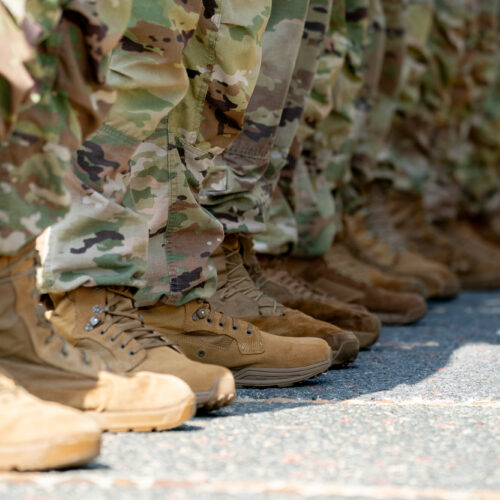
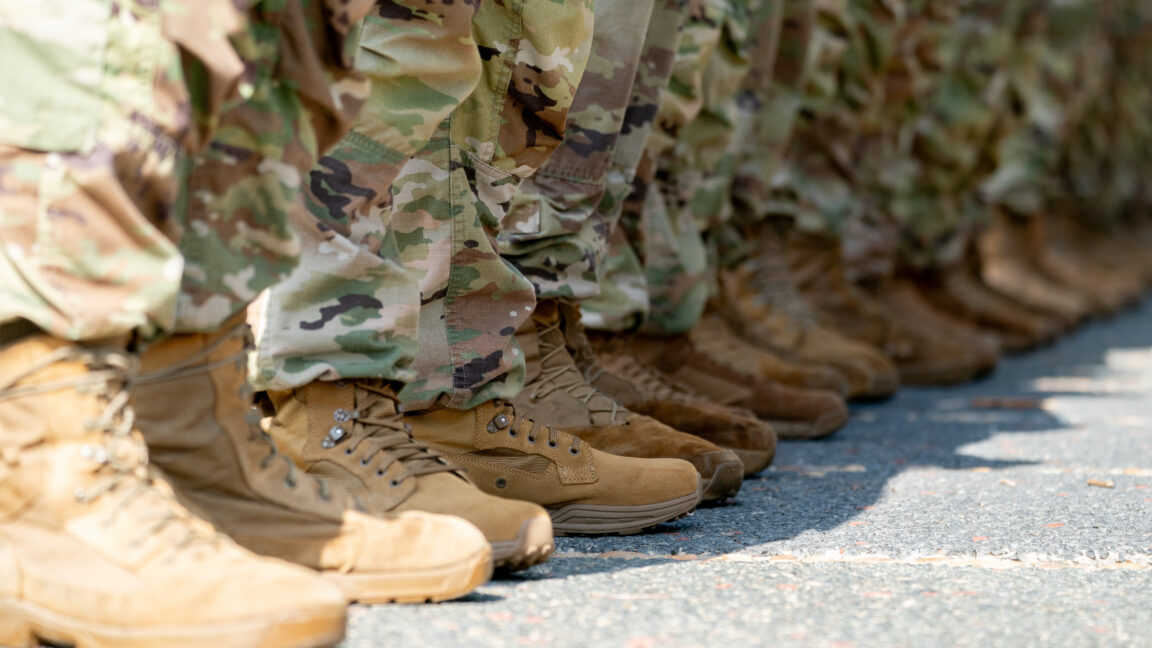
On Wednesday, Defense Secretary Pete Hegseth made the startling announcement that the US military would begin requiring all active duty and reserve personnel aged 30 and older to undergo mandatory screening for testosterone deficiency. The screenings will take place during yearly health assessments. Those under age 30 can also get screened on request.
In a short video posted on social media, Hegseth explained to the military community that the screenings and possible subsequent treatments are intended to "optimize your performance, your resilience, and your long-term health." While saying that the initiative wasn't about "artificial enhancement" and that members could decline treatment, Hegseth claimed that the testing and potential treatment was for "restoring and optimizing" capabilities, protecting "longevity," and "ensuring you have the biological foundation required to sustain the fight."
But will testosterone screening and treatment actually "optimize" our "warfighters"? Will it help most of them live longer? Should everyone else get screened and treated, too?
© Getty | Stefani Reynolds

Welcome to this edition of The Intelligence Brief… This week, the Pentagon announced a major milestone in the development of President Trump’s proposed Golden Dome missile defense system after successfully testing a next-generation directed-energy weapon capable of intercepting drones and cruise missiles. In our analysis, we’ll be looking at 1) what the Pentagon revealed about the new directed-energy technology, 2) how the Golden Dome aims to defend against ballistic, cruise, and hypersonic missile threats, 3) why the program has drawn comparisons to Ronald Reagan’s “Star Wars” initiative, and 4) the growing debate over what could become one of the most expensive defense projects in U.S. history.
“With Golden Dome, the War Department will defend our homeland more powerfully than ever before. Golden Dome is real, powerful, and on track.”
If you enjoy the news and perspectives offered by The Debrief, make sure that you aren’t missing our stories by making us one of your “preferred sources” on Google News. You can simply follow this link to add The Debrief to your list of favorites, and you can read more about Google’s preferred sources in our article here.
This week, it was revealed that the Pentagon has made significant strides with the development of its proposed Golden Dome missile defense system, with tests involving a next-generation directed-energy weapon.
Capable of destroying incoming drones and cruise missiles, the weapon has been characterized as a major step toward strengthening America’s future air and missile defense capabilities.
Planned as a multi-layer missile defense system that aims to be operational by the end of President Trump’s term, the Golden Dome aspires to be capable of spotting and destroying a range of missile threats, including ballistic, hypersonic, and cruise missiles.
With the deployment of the new directed-energy weapon this week, the Pentagon has now implemented the first use of next-generation technology that U.S. officials say will lead the way in redefining America’s future air and missile defenses.
In a statement, U.S. Secretary of War Pete Hegseth called the recent test a “first milestone test” for the Golden Dome system.
“Cutting edge directed energy was harnessed and the Dynamic Defense Autonomous Defeat (DDAD) system flawlessly and autonomously cued, targeted, and eliminated a multitude of incoming threats,” Hegseth’s statement read. “This test was executed on schedule — and dynamically defeated every threat.”
Hegesth, who said he was present for the demonstration, “watched our elite warfighters integrate with next-generation technology to stop incoming drones and cruise missiles dead in their tracks,” crediting the advancement to Trump’s One Big Beautiful Bill, a sweeping legislative package put forward in an effort to solidify the permanence of the 2017 Tax Cuts and Jobs Act, along with enacting various other Trump administration priorities.
Hegseth said the legislation provided “the funding to deliver on the ultimate shield to protect America,” and builds on the efforts of former U.S. President Ronald Reagan’s Strategic Defense Initiative (SDI).
While the Pentagon did not provide technical details about the new system, Hegseth refers to the new weapon as “cutting edge directed energy” technology.
For several years, the Pentagon has been developing directed-energy systems for use in the interception of unmanned aerial vehicles and cruise missiles, with Israel previously reporting operational use of prototype laser capabilities as well.
America’s Golden Dome is partly inspired by Israel’s Iron Dome, although the U.S. counterpart’s design will aim to defend America against longer-range missile attacks—a key element which has encouraged comparisons to Reagan’s SDI.
The project also carries a large price tag. Presently, the Congressional Budget Office estimates that the initiative could cost as much as $1.2 trillion—an amount nearing the total requested $1.5 trillion defense budget for fiscal year 2027, making it one of the most expensive defense initiatives in U.S. history.
The high cost of the initiative is also impacted by the recent costs associated with the U.S. conflict with Iran, which, by some estimates, could exceed $200 billion. Additionally, a recent controversial memorandum of understanding aiming to halt the conflict agrees to supply $300 billion to Iran, which, as noted by some analysts, is an amount that exceeds the current Iranian defense budget by well over a dozen times.
On Wednesday, the U.S. Senate voted 47-50-1 to block a war powers resolution led by Sen. Tim Kaine that sought to limit President Trump’s authority to conduct military operations against Iran.
Although the measure narrowly advanced in an earlier procedural vote, a surprise upset resulted in a loss of support after Republican Sens. Bill Cassidy and Rand Paul changed their positions. The latest vote came just hours after a heated exchange between Trump and Cassidy, during which Cassidy challenged the president over the duration and objectives of the conflict with Iran.
Many have expressed concerns over the unprecedented U.S. defense spending under the current administration, including U.S. Senator Merkley (D-Oregon), Ranking Member of the U.S. Committee on the Budget, who rebuked a recent addition that asks Congress to spend an additional $88 billion in the form of a supplemental request.
“Padding the pockets of their defense contractor friends does nothing to help Americans get ahead,” Merkley said on Wednesday.
That concludes this week’s installment of The Intelligence Brief. You can read past editions of our newsletter at our website, or if you found this installment online, don’t forget to subscribe and get future email editions from us here. Also, if you have a tip or other information you’d like to send along directly to me, you can email me at micah [@] thedebrief [dot] org, or reach me on X: @MicahHanks.

Here are the top stories we’re covering right now…

Welcome to this edition of The Intelligence Brief… This week, the ongoing conflict between the United States and Iran appears to be edging closer to a broader regional crisis, as both nations exchange new rounds of military strikes amid fading hopes for diplomacy. In our analysis, we’ll be looking at 1) the latest U.S. and Iranian attacks near the Strait of Hormuz and across the Gulf region, 2) President Trump’s escalating rhetoric and warnings of additional military action targeting Iran’s oil infrastructure, 3) the growing humanitarian and economic consequences of the conflict, including disruptions to shipping and concerns over civilian infrastructure, and 4) why analysts increasingly fear that continued escalation could draw the region closer to a wider war with global repercussions.
“The strikes are in response to Iran’s unwarranted and continued aggression. U.S. forces remain vigilant, lethal, and ready.”
If you enjoy the news and perspectives offered by The Debrief, make sure that you aren’t missing our stories by making us one of your “preferred sources” on Google News. You can simply follow this link to add The Debrief to your list of favorites, and you can read more about Google’s preferred sources in our article here.
This week, a clear end to the ongoing U.S. conflict with Iran still seems remote, as the United States and Iran engaged in another round of military strikes.
Early this morning, strikes exchanged between the nations’ military forces signaled the potential that a dangerous new phase of the conflict may be approaching, after an initial several months of efforts aiming to avoid escalation to a broader regional war.
Among the most recent attacks, several locations near the Strait of Hormuz were targeted, as ongoing warnings by President Trump urged Iranian officials to heed U.S. warnings and bring the conflict to an end.
In response to the attacks, Iran also launched several strikes on targets linked to U.S. assets that include military facilities in Kuwait and Bahrain. The Iranian strikes prompted air-defense activity throughout the region, along with airspace restrictions that have been temporarily elevated in the Gulf.
Amid the strikes, Iranian officials claimed that all maritime traffic had been closed off from passage through the Strait of Hormuz. However, U.S. officials disputed the claims on Thursday.
The renewed violence follows several strikes confirmed by U.S. Central Command late on Wednesday.
“CENTCOM forces launched strikes on Iranian military surveillance capabilities, communication systems, and air defense sites across Iran. U.S. Marine Corps, Air Force, and Navy assets fired precision munitions on Iranian targets that posed a threat to U.S. forces and international commercial ships transiting regional waters,” read a posting on the official U.S. Central Command X account.
Early on Thursday, President Trump also warned about further military action by the United States against Iran.
“The United States will be hitting Iran (Whose Navy, Air Force, Radar, Anti Aircraft, and all other forms of Defense, together with most of its offensive capability, are GONE!), VERY HARD TONIGHT,” President Trump wrote in one of his characteristically bombastic social media postings on Thursday.
Trump also claimed that in “the not too distant future” the U.S. would be capturing Kharg Island, along with other locations that play a key role in the oil infrastructure of the region, with the broader plan to “assume total control of their Oil and Gas Markets, much like we have with Venezuela, which is working out brilliantly for both Venezuela and the United States of America.”
Beyond the typical hyperbolic phrasing, the President’s post on Thursday appeared to indicate locations that could become future targets, although similar ongoing threats have repeatedly been made by Mr. Trump in recent weeks, in an effort to encourage Iranian officials to agree to U.S. demands that aim to curb the country’s nuclear ambitions—a significant goalpost the U.S. has maintained in efforts to end the war.
Efforts to bring about a cease-fire agreement have been in the works since April, although Iran’s foreign ministry now says such efforts have been rendered “meaningless” by the continued American strikes.
Firing back, U.S. officials, including Secretary of War Pete Hegseth, have characterized the attacks as being “part of an effort to pressure Tehran into accepting negotiations over its nuclear program” amid broader security concerns the U.S. is attempting to reconcile.
However, more broadly, the conflict is also having a far wider economic and humanitarian impact. Recent U.S. military operations that have targeted vessels suspected of transporting Iranian oil have reportedly struck multiple commercial ships in recent days, with India confirming that three of its citizens were killed aboard one tanker.
“CENTCOM forces have disabled nine non-compliant vessels, redirected 135 ships that complied, and allowed 42 vessels supporting humanitarian aid to pass since initiating the blockade on April 13,” U.S. Central Command wrote in an update on Thursday.
“The blockade is being enforced impartially against vessels of all nations entering or departing Iranian ports and coastal areas, including all Iranian ports on the Arabian Gulf and Gulf of Oman,” the posting added.
Based on satellite imagery reviewed by analysts, the potential that some of the recent strikes may have damaged drinking-water infrastructure in southern Iran has also been raised, increasing humanitarian concerns.
Financial markets are also reacting to the growing instability. The European Central Bank cited war-related inflation pressures as it raised interest rates, while the World Bank warned that rising energy costs linked to the conflict are slowing global economic growth to its weakest pace since the COVID-19 pandemic.
Overall, as the ongoing military operations by both nations continue, and with few signs of diplomacy on the immediate horizon, concerns continue to mount over whether a broader regional crisis—one the U.S. has hoped to avoid—could now loom nearer than at any time before.
That concludes this week’s installment of The Intelligence Brief. You can read past editions of our newsletter at our website, or if you found this installment online, don’t forget to subscribe and get future email editions from us here. Also, if you have a tip or other information you’d like to send along directly to me, you can email me at micah [@] thedebrief [dot] org, or reach me on X: @MicahHanks.

Here are the top stories we’re covering right now…
