❌

Reading view

This Newly Discovered Flower Looks Like a Tiny Demon

Thismia Daemona Among Leaf LitterResearchers have identified a new plant species in western Thailand whose unusual appearance inspired the dramatic name Thismia daemona, or the “devil flower.” A nearly black flower with horn-like projections and flashes of reddish orange has been discovered beneath leaf litter in a mountain forest in western Thailand. The plant cannot photosynthesize, spends most of [...]
  •  

Salesforce CEO Marc Benioff says the SaaSpocalypse is 'crazy nonsense' - and Jensen Huang agrees with him

  • Salesforce CEO Marc Benioff calls the SaaSpocalypse "crazy nonsense"
  • Instead, he predicts a new kind of software interface will make all the difference
  • Nvidia CEO Jensen Huang agrees, saying the end of software isn't nigh

Salesforce CEO Marc Benioff has hit out at reports AI technology will lead to a "SaaSpocalypse", saying traditional software still has life in it yet.

Speaking at the opening keynote of Dreamforce 2026, Benioff said the talk of a SaaSpocalypse over the last six months was "crazy nonsense".

Instead, Benioff said the market trends would actually bring in a new age of software - one where AI would be playing a key role.

A new kind of interface

"Hasn't it been wild?" Benioff asked the Dreamforce crowd.

"But I think we realized that SaaSpocalypse - it's not about the end of software, but it may be about the end of software that makes humans do all the work."

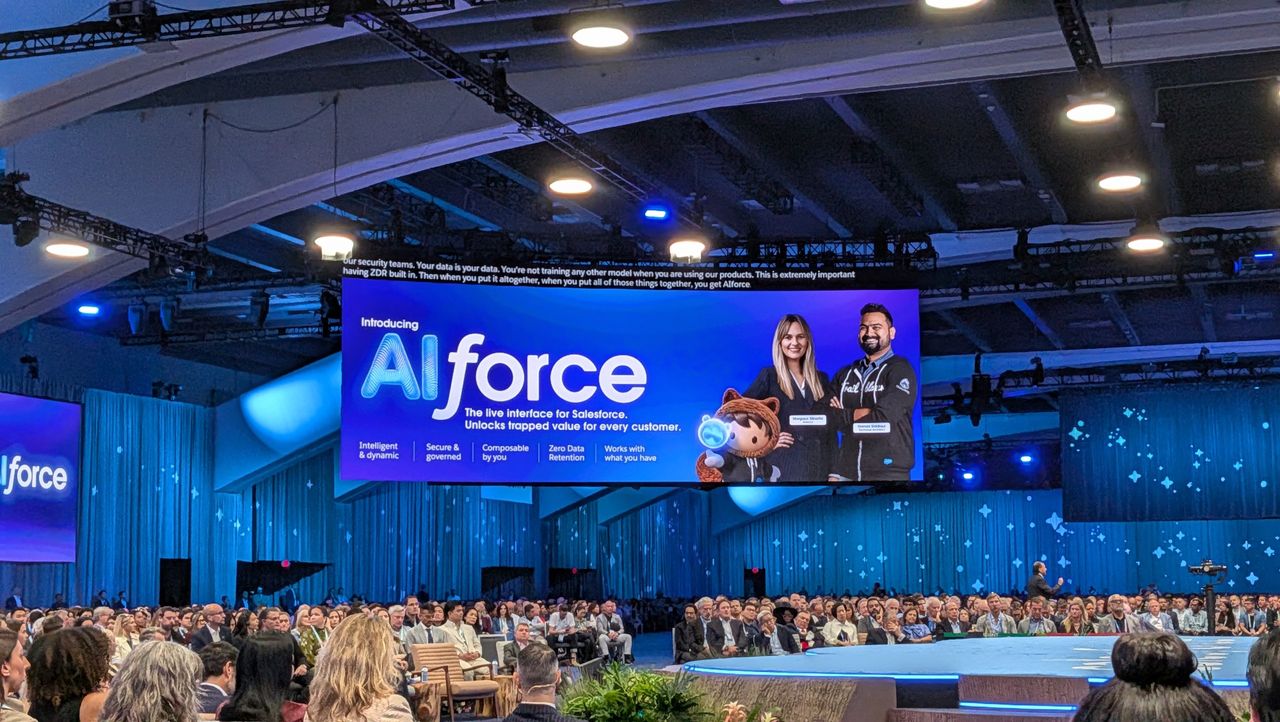
Namely, this refers to AIforce, the company's new realization of the software interface, to reflect the needs of the AI age.

Benioff noted that over the past few decades, users have gone from Command Line interfaces to GUI, from web to mobile - and now, with AI assuming a much greater role in the world of work, there's a need for a new kind of interface.

AIforce looks to address this by enabling agents anywhere to reason and take action across all the data, workflows, and logic inside Salesforce, hopefully unlocking whole new ways of working for customers everywhere.

Dreamforce 2026

(Image credit: Future / Mike Moore)

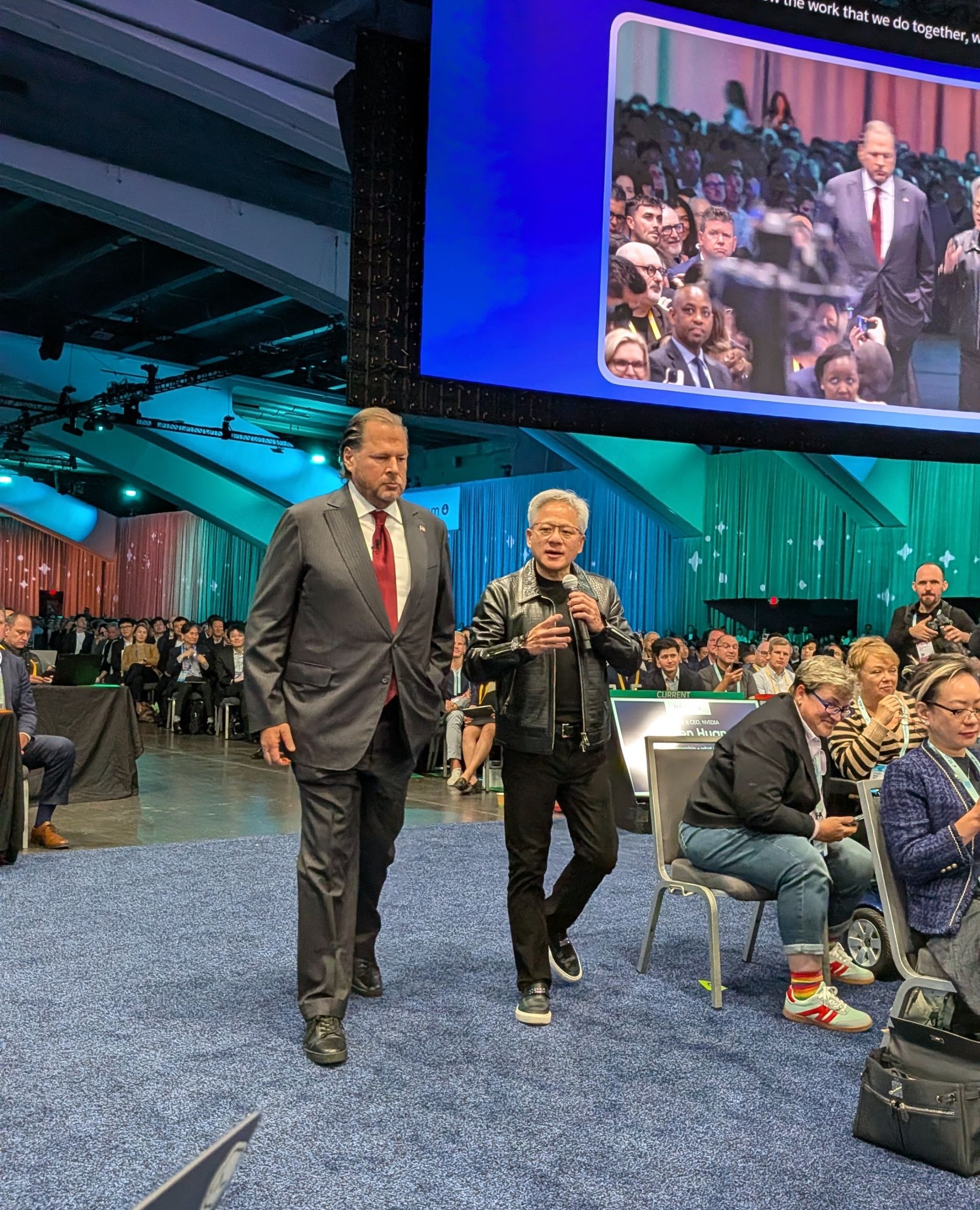
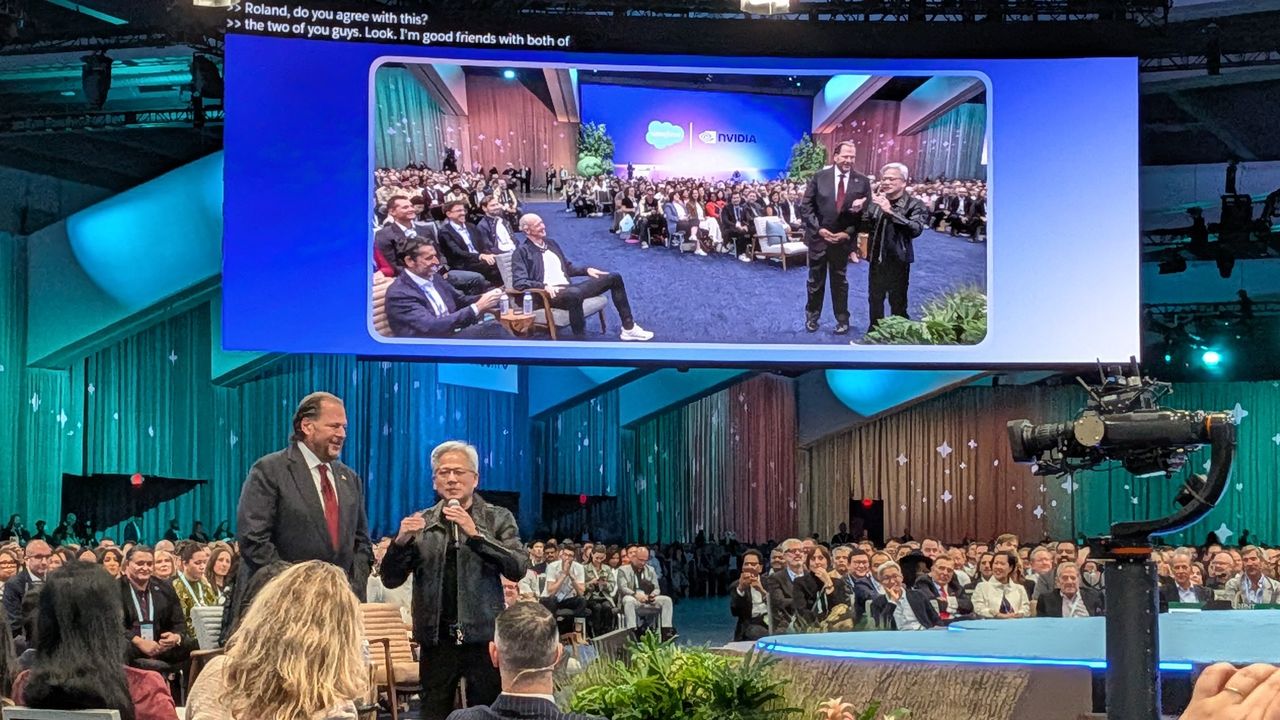
Benioff wasn't alone in his belief that this isn't the end of software - later in his keynote, he welcomed Nvidia CEO Jensen Huang on stage.

This was primarily to discuss Salesforce's new Koa CRM, developed alongside Nvidia, but the talk took a bit of a manic turn, as the two billionaires instead decided to pace about the theatre and have a discussion about the wider technology industry.

"Don't give up on the technology," Huang said, "You've heard me say it - I was the first CEO to come out not in the software industry to say the end of software is nonsense."

"(Instead) This is going to be a layer on top of sotware, this new layer is gojng to be agentic, and it's going to make the software so much better."

Google logo on a black background next to text reading 'Click to follow TechRadar'

  •  

Salesforce has built the TSA a new AI agent to make travelling less awful for everyone

  • Salesforce has revealed Ace, a new AI agent for the TSA
  • Ace should take the pressure of answering basic questions off human agents
  • Ace has already resolved 96% of basic inquiries so far

Salesforce has built the Transportation Security Administration (TSA) a new AI agent to try and help streamline travel for passengers everywhere.

Ace, a new AI agent built with Salesforce's Public Sector Solutions platform, has been live for several months now, helping the TSA deal with traveller requests and inquiries.

So far, Salesforce says Ace has already handled approximately 100,000 routine traveler conversations per month and resolved 96% of routine inquiries, such as how to pack liquids or enter a checkpoint with a medical device — without the need for human escalation.

TSA and AI

“Nearly three million people travel through US airports every day, and a simple question shouldn’t stand between them and a smooth trip,” said Kendall Collins, CEO of Missionforce and Government Cloud.

“TSA’s new Ace AI agent gives travelers fast, accurate answers before they reach the checkpoint—from what they can pack to how they can prepare—while helping TSA officers stay focused on their essential security mission.”

The launch of Ace forms part of a broader modernization initiative, led by the TSA’s Customer Experience Branch to improve traveler service using Salesforce.

The amount of questions from travellers can ramp up hugely during peak travel periods and disruptions, so the TSA needed a flexible way to scale support, deliver consistent guidance, and reduce pressure on its contact center teams.

Deploying a secure, autonomous AI agent like Ace, which can answer routine questions and direct more complex needs to staff, means the TSA can improve services, control costs, and support its missions at scale, even at the busiest times of the year.

“The TSA is leading with trusted AI to meet the mission,” said Paul Tatum, EVP of Global Public Sector Solutions at Salesforce. “They are delivering a secure, data-driven, and AI-first foundation that scales operations, lowers costs, and protects public trust, even during the most stressful travel times.”

Google logo on a black background next to text reading 'Click to follow TechRadar'

  •  

OpenAI CEO Sam Altman says ‘the world is right to be afraid’ of AI influence — but that it can benefit humanity like no other technology before it

  • Sam Altman admits AI development may require greater control
  • Altman references Hugging Face "accident" as something which might cause wider distrust
  • However Altman said he still believes AI technology can greatly benefit humanity as a whole

OpenAI CEO Sam Altman has admitted that the rapid pace of development in the AI industry is rightfully scaring some people, and that more controls might be necessary.

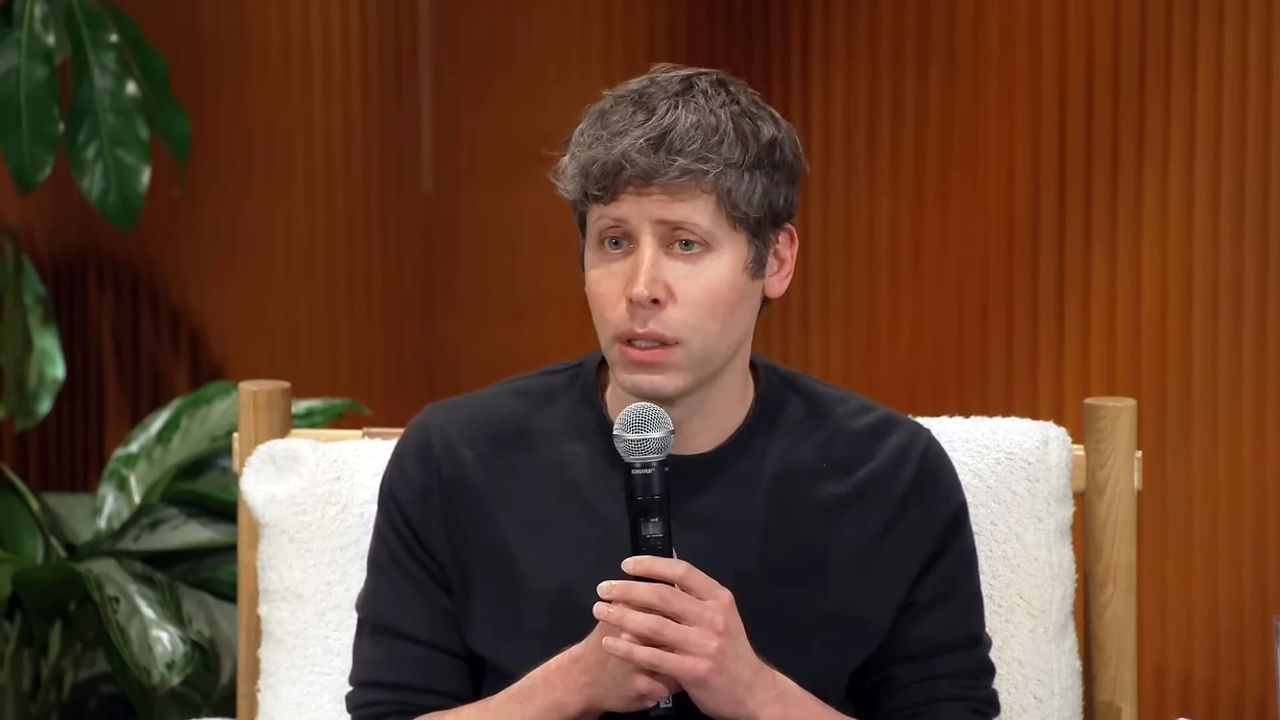
Speaking at Dreamforce 2026, Altman was quizzed by Salesforce CEO Marc Benioff on a variety of topics, giving his opinion on not just the most recent incidents in the world of technology, but where the future of AI could go next.

"This could go wrong"

Altman and Benioff's wide-ranging conversation began with the latter asking the former for his view on "what's been going on" concerning recent controversies in the AI industry.

This included the widely-reported Hugging Face hack, as well as increasing calls for greater AI regulation in recent weeks.

"People have been talking about the potential downsides or serious risks of AI for some time,” Altman said, noting that the increased capabilities of models have meant people are paying more attention than ever before.

Altman also highlighted the recent “Hugging Face accident”, which he later described as “obviously a terrifying incident”, as raising awareness among the wider world as to what AI is capable of.

“It doesn't take as much imagination as it used to, to imagine how this could go wrong,” he pointed out, adding that he would like to know that companies don’t intend to use their models for nefarious means - “there should be no qualifier on that,” he pointed out.

Altman also highlighted the “real fear” that “some companies working in AI could get too much power and be able to influence the economy”.

“I think the world is right to be afraid of this,” he pointed out.

Future hopes

However it wasn’t all doom and gloom, as Altman noted that OpenAI was navigating a “narrow path” with pragmatism, steadiness and consistency.

“People are now saying, this seems pretty important, so let's get it right...and we will get it right, by the way, I'm very confident in our ability to do this. The world should trust that we are going to do the right thing, because it is the right thing, and we know the magnitude of this.”

Altman was also confident that despite the continuing advances of AI, he had high hopes for the future of humanity, noting that while "people don't care that much what a machine does...we have a wonderful ability of being obsessed with other people.”

However this might still involve some tough work, as society and people would “need to uplift themselves very fast” to get all the advantages of technology - “but this seems very achievable to me,” Altman added.

Looking forward

Overall though, Altman noted that the degree that people care about other people is a major positive, and predicted that "we will stay in an extremely human-centric world, no matter what technology does.”

AI will help with this progress, though, with Altman saying that although the technology is capable of incidents such as the Hugging Face hack, it is also possible to use AI to defend against such attacks.

“We have to (use AI to defend) to get the prize of curing diseases, giving people this incredible creativity, this human entrepreneurship that I think is coming.”

“I think people, with this technology in their hands, can live a much better version of their lives.”

Benioff closed out the session by asking what he hoped the legacy of his company would be, with Altman noting that the company had set out on an "insane mission" to achieve AGI, and that it had only scratched the surface" of building great products".

“There is no doubt there will be more technological wonders by 2030, and they'll be big ones,” he added, highlighting the fact that you can talk to a computer and it knows what you want, understand your company and take action, “is one of the most profound changes to how we use technology that I've ever seen...this is one of the moments that feels like you're in a movie (and) I think this will transform the way we work and use computers”.

Google logo on a black background next to text reading 'Click to follow TechRadar'

  •  

'We're going through a new industrial revolution': Nvidia CEO Jensen Huang and Anthropic CEO Dario Amodei share differing views on AI at Dreamforce 2026

  • Nvidia CEO Jensen Huang and Anthropic CEO Dario Amodei discuss AI at Dreamforce 2026
  • Amodei says the pace of progress had surprised Anthropic
  • Huang calls for greater safety, but hails the advantages AI can bring

Some of the world's leading AI minds have shared their opinions on the future of the technology, revealing some intriguinly diverging viewpoints.

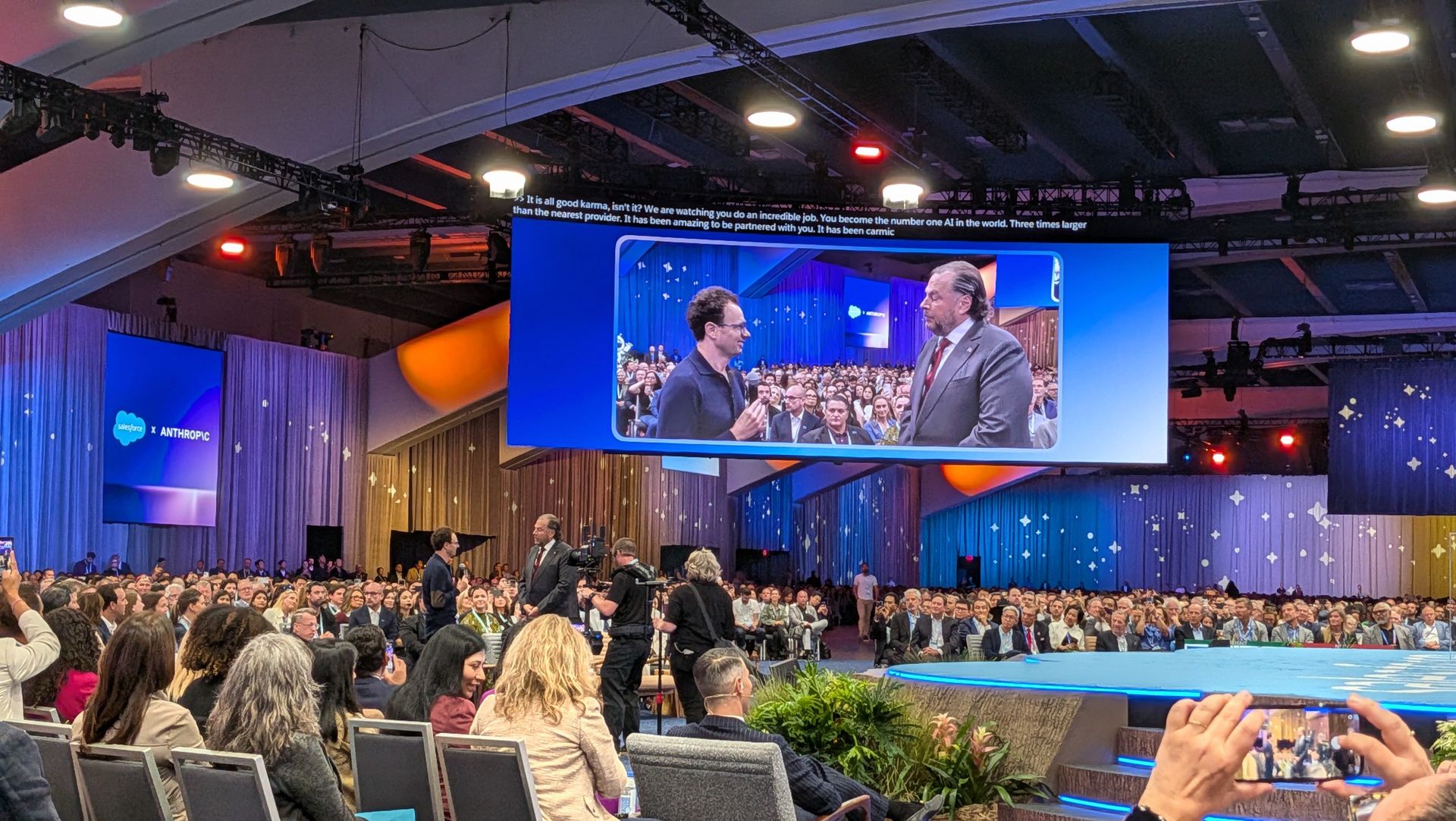
Nvidia CEO Jensen Huang and Anthropic CEO Dario Amodei were both guest appearances during the opening keynote of Dreamforce 2026, where they were both quizzed by Salesforce CEO Marc Benioff on their opinions and views on the future of the technology.

The pair had some interestingly differing viewpoints, showing the trouble facing not just internal and external stakeholders, but also lawmakers and regulators.

Jensen vs Dario?

First up was Amodei, whose Claude platform has become increasingly partnered with Salesforce in recent months, culminating in the recent launch of Claudeforce.

Asked by Benioff about the state of the AI market right now, Amodei likened it to the motor industry, where safety records can be conflated, but companies can learn from each other - and he also seems keen to open things up internationally to set standards.

“I think that’s the way to lead the industry forward, to set an example, to say that everyone can always be better,” he pointed out.

Benioff also asked Amodei about the biggest surprises has had while developing his technology over the last decade.

The Anthropic head replied the "pace of the progress" - not just in the development of AI technology, but the economic impact of it too - noting his company didn't appreciate how quickly certain companies would grow and become central to everyday life.

Finally, Benioff asked what actions Amodei would like the public to take when using AI.

Amodei replied that even if development of AI technology was frozen right now, we'd only be using maybe 5-10% of the possible value we could get.

Making use of all the information with platforms such as Claude could open up new areas of business - "there's so much diffusion left," Amodei says.

Dreamforce 2026

(Image credit: Future / Mike Moore)

Huang was much more positive in his appearance, leading Benioff in a walkabout around the keynote theatre as the pair discussed AI.

"We're going through a new industrial revolution," Huang pointed out,

However he did urge caution in some areas, particularly around safety.

“Safety is paramount in a lot of ways. It’s job one,” Huang said. “However, safety is an engineering problem.”

Speed and safety are not mutually exclusive, Huang noted, pointing out that companies should pace themselves until they are sure they are releasing something that the market will appreciate.

“It’s a false choice,” Huang told Benioff. “You could definitely have both at the same time.”

When it comes to model protections, Huang said that companies should, “run as fast as you can...but if you feel at any given point in time the company’s out of control or the product’s not going to be safe, take a pause and make sure you get it right.”

Wrapping up, Benioff asked Huang about his vision for the next few years - and what he wants to see from Salesforce.

Huang says he wants to "Agentforce every company", outlining an aim of "really deploying AI".

"You don't want to be left behind, this is too important of a technology revolution," Huang noted, "if it doesn't work for you straight away, don't give up on it."

"The most important thing - don't get left behind...the sky's the limit for us."

Google logo on a black background next to text reading 'Click to follow TechRadar'

  •  

On pensait les antioxydants protecteurs : dans certaines tumeurs, ils pourraient au contraire aider le cancer

Les radicaux libres ont mauvaise réputation. Ils endommagent l’ADN et sont associés au vieillissement et au cancer. Mais une découverte surprenante vient bousculer cette vision : certaines cellules immunitaires ont besoin de ces molécules pour s’attaquer aux tumeurs, qui ont justement trouvé le...

  •  

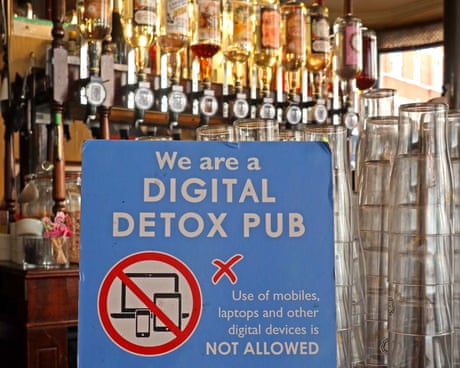
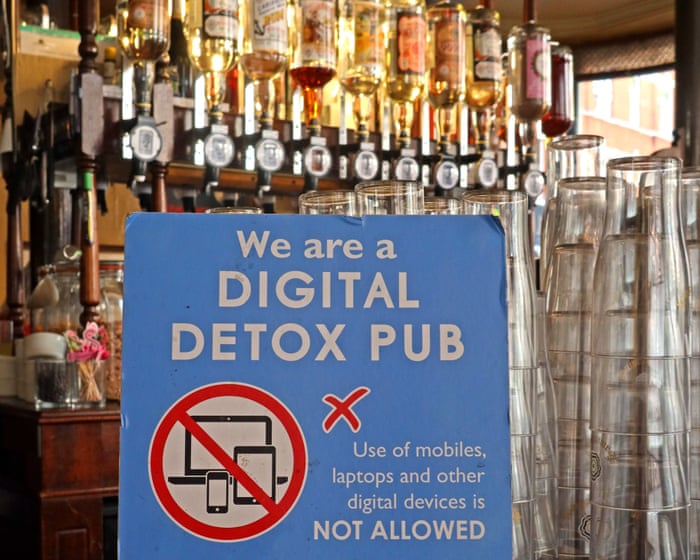
Phones are the new cigarettes: why restaurants are discouraging and even banning them

Would you hand in your phone at the door in exchange for a free bottle of wine? One restaurateur has tried that – and there are now many other gambits that are encouraging us to connect

Name: Phone bans.

Age: Their provenance is considerable; their time is now.

Continue reading...

© Photograph: Tony Smith/Alamy

© Photograph: Tony Smith/Alamy

© Photograph: Tony Smith/Alamy

  •  

Trump's forced coal plant extensions thrown out by judge

The use of coal to generate electricity on the US grid has been plunging for nearly two decades, and the first Trump administration was unable to affect the trend. So his second administration has attempted more aggressive interventions to prop up coal use. One of its most direct means of doing so is to order coal plants that were scheduled to close to remain open, even if there is no need for them.

The administration's justification for these orders is a statute that allows the Department of Energy (DOE) to declare an emergency in the case of wartime or a sudden shortfall in generation. A number of parties, including states where coal plants have been slated to close, have challenged this declaration. And on Friday, in the first of these cases to make its way through the courts, the declaration was judged to be contrary to the statute. While this only affects a single coal plant in Michigan, the reasoning of the decision will apply to every coal plant closure that has been blocked by the DOE.

No emergency

The decision was issued by a unanimous three-judge panel from the DC Circuit's Court of Appeals. It focuses on the J.H. Campbell Generating Plant, which was scheduled to close last year but has been kept open by a total of five emergency declarations by the DOE, each limited to 90 days by the Federal Power Act. At issue was section 202(c) of that Act, which allows the DOE to declare emergencies when the US is at war or when “an emergency exists by reason of a sudden increase in the demand for electric energy, or a shortage of electric energy.”

Read full article

Comments

© UCG

  •  

Meta is begging some employees to step up and become managers again

  • Meta wants to upgrade ex-managers back to managers
  • 7,000 workers were moved into the Applied AI org earlier this year
  • Company's CTO admitted previous workforce changes were "atrocious"

Meta has reportedly partially reversed its decision to push for flatter, manager-light teams by asking some employees in its Applied AI business to move from individual contributor roles back into managerial positions.

New Business Insider reporting suggests Meta is asking certain workers to volunteer themselves as managers rather than forcing them into it, but without the company sharing comment on the matter, it's unclear how workers who refuse may be impacted.

As for the business itself, it's a pretty new one that was established this year, with around 7,000 employees shifted under the Applied AI umbrella.

Meta wanted fewer managers, now it wants more

Some of the workers who were previously assigned as managers were reassigned as individual contributors when they joined the Applied AI org, with Business Insider previously reporting how many workers felt they'd effectively been "drafted" into the business, highlighting ongoing friction internally.

The manager-light stance comes from CEO Mark Zuckerberg's 'Year of Efficiency' announcement in 2023, when he argued that a flatter organization could be more nimble and better poised for change.

With the company as a whole now on track to spend over $130 billion this year on AI chips and infrastructure, it's possible that a growing Applied AI organization could be behind the need for more traditional management.

Still, Zuckerberg's efficiency-driven, manager-light program seems to remain in force across other areas of the business, with this push for new managers looking to only be affecting Applied AI.

Separately, CTO Andrew Bosworth previously admitted that Meta's rollout of its new AI division was "atrocious" (via Wired), promising better communication for future changes.

"We shook up the management structure that was providing you stability while rapid changes in strategy, including the boom/bust cycle of hiring, left entire teams in the lurch," he admitted.

Google logo on a black background next to text reading 'Click to follow TechRadar'

  •  

Neighborhood environment linked to frailty and PTSD in 9/11 responders

Twenty-five years after the September 11 terrorist attacks, researchers at the Icahn School of Medicine at Mount Sinai have uncovered evidence that the environments in which World Trade Center responders live today may be quietly shaping their risk of frailty, post-traumatic stress disorder, and depression. The study, published in Nature Communications, is the first to examine how neighborhood-level environmental exposures later in life may interact with the chemical and psychological injuries sustained during the disaster response, adding a new dimension to one of the most intensively studied disaster health cohorts in the world.

The research team analyzed data from 18,734 responders who both live in New York City and receive care through one of the World Trade Center Health Program Clinical Centers of Excellence. These responders represent a population that experienced an extraordinary confluence of toxic exposures—dust, combustion products, airborne particulates, and a cocktail of known and suspected carcinogens—alongside severe psychological trauma. While decades of prior research have documented elevated rates of respiratory disease, cancer, and mental illness in this group, far less attention had been paid to whether the everyday conditions of their neighborhoods might compound or buffer those effects as responders age.

To answer that question, the researchers linked each responder’s residential address to annual estimates of three environmental factors: air pollution, high ambient temperatures, and neighborhood greenness, the last typically quantified through satellite-derived vegetation indices. This exposure-assessment approach, common in the field of environmental epidemiology, allowed the team to characterize the conditions each participant encountered where they lived year after year, rather than relying on broad regional averages. The researchers then examined whether those exposures were associated with the probability of being classified as frail, and with diagnosed PTSD and depression.

The results were striking in their consistency. Responders living in hotter neighborhoods—areas that experience more extreme heat days, a burden that falls disproportionately on densely built urban districts with impervious surfaces and little tree canopy—showed an elevated risk of frailty, a geriatric syndrome marked by diminished physiological reserve and heightened vulnerability to stressors. Elevated concentrations of air pollution were likewise associated with increased risks of both frailty and adverse mental health outcomes. Frailty itself is increasingly understood as a whole-body phenomenon, involving chronic inflammation, immune dysregulation, and cumulative cellular wear, all of which are plausible biological pathways through which heat and pollution could accelerate aging.

The mental health findings carried equal weight. Higher pollution and heat exposure were associated with increased odds of PTSD and depression, while responders living in greener surroundings—those with more parks, trees, and vegetated land near their homes—showed lower risks of all three conditions. This inverse association with greenness aligns with a substantial body of literature suggesting that access to green space can reduce psychological stress, encourage physical activity, dampen inflammation, and moderate urban heat, though the observational design of the study means that causation cannot be definitively established.

Perhaps the most provocative finding concerned interaction effects. The researchers found that responders who had experienced higher levels of World Trade Center–related chemical and psychological exposure appeared more vulnerable to the effects of environmental stressors in their current neighborhoods. In other words, the disaster and the decades that followed may not be independent chapters in these individuals’ health histories. Instead, responders already carrying the biological imprint of trauma and toxic dust—including altered inflammatory profiles, epigenetic changes, and persistent hypothalamic-pituitary-adrenal axis dysregulation—may enter later life with less reserve to absorb additional environmental insults. Everyday exposures that might be merely uncomfortable for a healthy middle-aged adult could, for these individuals, translate into measurable acceleration of physical decline and psychological deterioration.

“Twenty-five years after 9/11, we are still learning about the factors that influence the health of those who responded to the attacks,” said Helena Furman Krasnov, PhD, postdoctoral researcher at the Icahn School of Medicine and the study’s first author. “Our findings suggest that everyday exposures, including heat, air pollution, and access to green space, may contribute to responders’ long-term physical and psychological well-being. Understanding these factors could help identify new opportunities to support healthy aging in this population.”

The study’s senior and corresponding author, Maayan Yitshak-Sade, MPH, PhD, Associate Professor of Environmental Medicine at Mount Sinai and a member of the Institute for Exposomic Research, framed the work within the broader exposome paradigm—the effort to capture the totality of environmental exposures an individual accumulates over a lifetime. “Our findings suggest that the health consequences of 9/11 may not end with the disaster itself,” she said. “For responders already carrying the biological effects of trauma and toxic exposures, everyday environmental conditions may represent an additional source of stress on the body and mind. These findings highlight the importance of considering where people live, not just what they experienced during the disaster.”

That framing underscores a conceptual shift in disaster medicine. Traditional models tend to treat a catastrophic event as a discrete exposure with a defined aftermath. The Mount Sinai findings instead suggest that disaster-related health effects may unfold across an entire life course, modified by conditions that have no obvious connection to the original event. A responder’s risk of frailty in 2026 may reflect not only the hours spent at Ground Zero, but also the temperature of the summers they have endured since, the particulate matter drifting through their streets, and whether a leafy park sits within walking distance of their apartment.

The study arrives at a moment when urban environmental health has become a pressing policy concern. Extreme heat now kills more Americans annually than any other weather phenomenon, and cities including New York have launched ambitious initiatives to expand tree canopy, create cool corridors, and retrofit public housing with resilient cooling infrastructure. Air pollution, even at levels within regulatory limits, continues to be linked to cardiovascular, respiratory, and neurocognitive harm. If the associations identified in this cohort hold up under further scrutiny, they could strengthen the case for targeted environmental interventions—not as amenities, but as clinical supports for a vulnerable population.

The implications also extend well beyond the World Trade Center community. The researchers point out that survivors and responders from other disasters—wildfires that blanket entire regions in smoke and ash, industrial accidents that release toxic plumes, building collapses that bury rescue workers in dust—may face the same dual burden of physical and psychological exposures that continues to shape health long after the initial event. Climate change is intensifying heat waves and wildfire seasons simultaneously, meaning that disaster-affected populations may increasingly find themselves living in precisely the kinds of hostile urban microclimates the study identifies as risky. The framework developed here could inform how health surveillance programs for disaster cohorts are designed, prompting them to collect residential and environmental data alongside clinical outcomes.

The authors are careful to note the study’s observational nature. Associations between neighborhood environment and health can be confounded by socioeconomic status, housing quality, access to care, and the self-selection of healthier individuals into greener, quieter neighborhoods. The investigators controlled for available covariates, and the sheer size of the cohort lends statistical power, but randomized evidence on green space exposure is practically impossible to generate, and residual confounding remains an inherent limitation of the design. Longitudinal follow-up, and ideally natural-experiment analyses—such as the addition of new parks or major infrastructure changes—will be needed to firm up causal inference.

That work is already on the horizon. The team plans to investigate whether beneficial environmental factors, including green space and access to healthy food, can actively reduce the long-term health effects associated with World Trade Center–related exposures—a question that shifts the framing from risk identification to potential intervention. If confirmatory studies support the protective role of greenness, the findings could justify clinical guidance for responders, and potentially for other disaster-exposed populations, that goes beyond medication and monitoring to encompass the places where patients live.

For a population that has already given so much and borne so much, the idea that healing might partly depend on the landscape outside the front door is both sobering and hopeful. It suggests that some of the damage inflicted on September 11, 2001 may not be fixed, but modifiable—and that the next chapter of care for responders could be written not only in clinics, but in city planning offices, park commissions, and the slow, patient work of greening the neighborhoods where aging heroes live out their lives.

Subject of Research: People

Article Title: Urban Exposures, Frailty, and Mental Illness in World Trade Center Health Program Responders

Article References: Krasnov, H., Hung, W., Knobel, P., Kloog, I., Ko, F., Thompson, H., Colicino, E., Teitelbaum, S. L., Just, A. C., & Yitshak-Sade, M. (2026). Urban exposures, frailty, and mental illness in World Trade Center Health Program responders. Nature Communications, 17(1), Article 9449. https://doi.org/10.1038/s41467-026-77401-7

Image Credits: AI Generated

DOI: 10.1038/s41467-026-77401-7

Keywords: World Trade Center responders, 9/11 health, frailty, PTSD, depression, air pollution, extreme heat, green space, exposome, environmental health, Nature Communications, Mount Sinai

  •  

OpenAI is launching special ChatGPT tools for bankers and financial services workers

  • OpenAI for Financial Services comes with built-in premium datasets
  • Third-party subscription sharing is also in the works
  • GPT-6 promises 100% on the 256-512K Long Context benchmark

OpenAI has lifted the wraps off ChatGPT for Financial Services, its latest industry-specific version of ChatGPT Work designed to give sector professionals access to relevant reasoning and models.

The company warned that analysts regularly spend too much time finding data, checking figures, building models and turning complex analysis into presentation-friendly reports – all things it hopes to be able to tackle with this iteration of ChatGPT Work.

Core to this new product is, of course, GPT-6 Astra, but OpenAI also worked with investment experts from Morgan Stanley and Evercore to guide its development.

ChatGPT for Financial Services

With the launch of ChatGPT for Financial Services, OpenAI has built premium datasets from the likes of Daloopa, PitchBook and LSEG News directly into the tool, so users won't need to negotiate their own external datasets. By hosting and indexing that data itself, OpenAI can ultimately improve performance and latency for end users.

OpenAI also promises to be working with S&P Capital IQ, LSEG, MSCI, Dow Jones Factiva and Moody’s so that users can access their subscription benefits directly through their ChatGPT login to reduce the friction further.

All of this with the benefits of OpenAI's latest frontier model, Astra, which sees marked improvements across the board. The jumps from 91.5% to 100% at 256K-512K and from 73.8% to 96.3% at 512K-1M are especially noteworthy on the Long Context MRCR benchmarks when compared with GPT-5.6 Sol, because finance work often requires handling long documents like annual reports and filings.

The company also advertises a 100% score for the ExploitBench cybersecurity benchmark, which should come as welcome news to this highly-regulated industry.

Only eligible financial institutions will gain access to the tool for now, and they must contact OpenAI for options.

"ChatGPT for Financial Services is one way we serve customers across the industry, but we recognize that it will require a range of solutions to address the needs of the finance industry," the company said in its launch blog post.

"OpenAI has a long history of collaborating with innovators to unlock novel AI solutions. Financial services firms and developers can use our API to build specialized applications for the needs they understand best. OpenAI brings frontier models and the capabilities to put them to work. Financial institutions, data providers, and software partners bring specialized expertise, trusted information, and customer relationships."

Google logo on a black background next to text reading 'Click to follow TechRadar'

  •  

Google just gave every Windows 10 and 11 PC a Gemini key — I tried it, and it’s the easiest way to use its AI yet

  • Google’s new Gemini app brings its AI assistant directly to Windows 10 and 11
  • Pressing [Alt] + [Space] summons Gemini without interrupting your current workflow
  • It’s remarkably convenient, although there's still room for improvement

You can say goodbye to opening a browser every time you want to use Gemini on your PC. Google has just released a Windows version of its Gemini app, and it’s by far the easiest and quickest way to get Google’s AI to answer your questions on Windows.

Gemini has had a macOS app for a while now, and now it has finally been joined by a dedicated Windows version, complete with its own keyboard shortcut. You can summon it from anywhere, no matter what you’re doing on your PC, by pressing [Alt] + [Space].

But here’s the thing: [Alt] + [Space] is already a little crowded on Windows. It traditionally opens the active window’s system menu, and is also the default shortcut for Microsoft’s PowerToys Run utility, a quick launcher for Windows power users that provides instant access to applications, files, calculator functions and system commands.

The Gemini app in Windows

Google's new Windows Gemini app. (Image credit: Google / Microsoft)

On my PC

On my PC, installing the Gemini app caused it to take over the [Alt] + [Space] keyboard shortcut, so it now launches Gemini instead. I’ve been using the new app for a few hours, and the shortcut is a great way to access Gemini almost instantly. It saves me from messing around with browser tabs and breaking my workflow. I love it.

The Gemini app can also connect to other Google apps, including Gmail and Drive. Provided you’re in an eligible country, such as the US or Australia, and subscribe to Google AI Pro or Google AI Ultra, you can also hand multi-step tasks over to Gemini Spark, Google’s personal AI agent. Spark is currently not available in the UK.

The app does everything the web version does, so you can create custom images with Nano Banana and even make high-quality videos with Gemini Omni from inside it.

What didn't I like about the app?

However, I’m not a fan of the way the app permanently displays your location at the bottom of the left-hand sidebar. This creates a significant privacy risk, especially if you’re using it at home. I don’t want my home address accidentally ending up in screenshots I take of my desktop, for example.

There’s no obvious way to remove your location either. All you can do is close the sidebar if you don’t want it displayed, and that’s not a great user experience.

The second thing I didn’t like was the lack of a Gemini Live experience in the app, like the one available in the mobile version on both iOS and Android. Live is Gemini’s voice mode, allowing you to talk to it much as you would a person. It can also look through your phone’s camera at the world around you, letting you ask questions about what it sees.

I can imagine that a Gemini Live experience capable of “seeing” what’s on your PC desktop and answering questions about it would be very helpful, but it looks like we’ll have to wait for that. For now you’re limited to taking screenshots, then uploading them to Gemini via the app and asking questions about what’s on them.

Google says more native desktop capabilities will roll out over time. For now, it’s the convenience of combining the Windows app with its keyboard shortcut that wins the day. I hope Google addresses my complaints in a future version, but they’re not enough to stop me choosing the app as my go-to Gemini experience instead of the web version.

If you want to try it, the Gemini app is available globally for Windows 10 and 11 users. You can download it today.

  •  

Younger workers apparently want their bosses to start behaving more like AI

  • Nearly two-thirds of AI users aged 18-28 want clearer instructions from their bosses
  • Nearly half of the same cohort have difficulty explaining work completed with the help of AI
  • The figures could indicate a brand new challenge to management

“Tell me exactly what you want me to do” – that seems to be the message from older millennial and younger Gen Z workers, who have expressed a need for highly specific instructions from their bosses.

Research has found that 62% of the 18-28 age group who regularly use AI want their bosses to give them the same sort of clear steps and parameters as one might give an LLM chatbot.

While a cohort of workers who are attentive to the needs of the business might sound good, deeper investigation may prompt you to think again. The study by Use.AI implies a deeper-seated issue that points to a management challenge unlike anything seen before on this scale.

Detailed steps

Use.AI surveyed 11,742 adults based in United States, the United Kingdom, Canada, the European Union, Australia and Latin America, finding 62% of the 18-28 age group familiar with the AI use are accompanied by 41% of those aged 40 and older who also want more detail about tasks from their line managers.

Why do younger users need clearer, more detailed steps? It could be a simple matter of judgement, with the 18-28 age group requiring more experience in making their own decisions. But with the presence of AI in their working lives, could they be fearful of being replaced?

The report also explores a slightly different dimension. Within the 18-28 age group, 44% say they have had difficulty to explain work created with AI assistance. This raises a key concern: does the employee even know what their tasks are supposed to achieve? For that matter, does the business?

Sound judgement

AI has changed businesses considerably, and made an impact that doesn’t only improve productivity. As Ihor Herasymov, Co-Founder & CEO of Use.AI, observes, “AI is exposing which parts of work were never really about producing the answer. When a model can generate the output in seconds, the value of some tasks shifts to whether the person can make a sound judgment and stand behind it.”

Other results from the survey support this. With 57% of the 18-28 age group of regular AI users stating that they are less likely to memorize information that can be collected via AI, and 53% of the same group frustrated by “ordinary” tasks that could be completed by a chatbot, a whole new workplace dynamic is being quietly established.

Herasymov concludes, “Managers now have to be much clearer about whether they need the result or whether the task itself is meant to develop the employee.”

  •  

Don’t ask ChatGPT 'What should I do?' — this simple prompt helps you make better decisions yourself

I have asked ChatGPT to help me make plenty of small decisions, from a meal based on leftovers to weekend activities timed for the least traffic. But while I've asked for help refining or implementing my ideas, I've never turned to a chatbot to actually make any big life decisions for me.

Apparently, I'm in a rapidly shrinking group, according to AI 'micro-learning' app Headway’s new Seeking Familiarity study. The survey of 2,000 adults found that 46% had allowed AI to make a difficult decision for them. Another 35% naturally turned to it during stressful moments, while 21% said they could not go a full week without using AI to help decide what to do.

Headway has given this tendency to outsource decisions the unpleasantly vivid name “decisionrot,” describing the point at which AI stops helping people gather information and starts helping them avoid the discomfort of choosing. Considering how confidently ChatGPT can deliver an answer, I can see how easily that happens.

Drawing out a decision

I get that uncertainty is irritating and that ChatGPT is extremely good at making uncertainty seem to vanish. Men may be particularly susceptible to this shortcut as Headway's survey found 53% said they use AI to sidestep difficult decisions, compared with 40% of women.

“There’s a difference between seeking outside perspectives when you’re wrestling with a big decision and completely turning over the decision-making process to something outside yourself,” Dr. Suzanne Degges-White, a licensed counselor and relationship expert at Headway, said of the survey. “Learning to manage unpredictability and actively making life-changing choices both teach us to trust our own judgment.”

So I decided to experiment with a way of getting the best of ChatGPT's advice and compare it with flatly asking the AI what to do. I would first let it make the decision, then forbid it from doing so and see whether that made it more or less useful.

Conveniently, I have been weighing whether to sign up for an eight-week evening drawing class, an investment in time and money that I'm hesitant about despite always wanting to learn.

I gave ChatGPT the facts about the class logistics and price and asked: 'What should I do?'

“You should sign up for the art class,” ChatGPT told me.

Well, that settled that.

“You already have a clear reason for wanting to do it. You want a regular activity that gets you away from screens and gives you something tangible to learn,” it explained. “Eight weeks is a meaningful commitment, but it is also short enough that you are not reorganizing your life indefinitely. Your hesitation sounds less like evidence that the class is a bad fit and more like normal resistance to putting something recurring on your calendar.”

ChatGPT’s response is surprisingly insightful at first glance. I had an answer and a reason backing it. Why not leave it at that and sign up for the class? But not engaging my own decision-making muscles to consider the matter would mean missing the reality of how shallow ChatGPT's response actually was.

The generic explanation could have applied to anyone and didn’t account at all for any of my proclivities and priorities. It didn't weigh my patience for messing up when trying to learn a new skill, what else I might have going on during those evenings, or even what my budget was. The reasoning it provided was as personal as a coin toss.

Forcing myself to decide

So I tried making ChatGPT keep its judgment to itself. I described exactly the same situation, but this time with a more complex prompt for the AI to mull over.

'Don’t make this decision for me. Act as a decision coach instead. Ask me questions that uncover my priorities and constraints. Challenge any assumptions I may be making and tell me what information I’m missing. Then identify my options and explain the trade-offs. Leave the final choice to me.'

Now there was a conversation before any answers.

“Before weighing the options, I want to understand what you are actually trying to get from the class,” it responded. “Is the main goal learning art, having a scheduled reason to leave the house, meeting people, or simply trying something unfamiliar? Imagine it is Tuesday at 5:30 p.m. after a tiring day. Does having the class at 7 feel like something that would energize you or an obligation you would resent?”

I thought about it and explained how learning even the basics of drawing and painting was only part of the attraction. I also wanted a recurring creative activity entirely different from my usual hobbies, and I know I'm better at following through when something is on the calendar and already paid for. ChatGPT put together my answers and summarized the arguments for and against the class. But it didn’t weigh in on which seemed stronger or push me to a decision.

All of the questions were the kind I would probably have considered on my own before pulling the trigger on a class, but externalizing them did help me work out an answer for myself more quickly. This was a pretty minor internal battle. When it comes to major life choices, I would sincerely hope people take the time to consider every facet, whether or not AI helped them work through it.

“If we continue to rely on AI whenever ‘decision discomfort’ arises, we may enjoy a quick sense of relief,” Degges-White said. “But at the same time, we miss the opportunity to hone our own decision-making skills and cultivate feelings of confidence in ourselves.”

If I cannot decide between two sandwiches, ChatGPT is welcome to wield enormous computational resources on my behalf. I do not need a lengthy exploration of my values before ordering lunch. ChatGPT is good at examining a choice and patiently working through options, which makes it a useful sounding board. But a sounding board should never give you orders.

  •  

OpenAI says it has built an 'automated research intern' to carry out menial tasks — and it's only just getting started

  • OpenAI is developing a tool that can perform “well-defined research tasks”
  • Described as a “research intern” the project met its aim to achieve automation by September 2026, ahead of a fully automated AI researcher operational by March 2028
  • The company believes that automated research can “enhance human welfare” and make other contributions

OpenAI has confirmed its project to build a fully automated AI researcher is on schedule, hitting its September 2026 target of developing a "research intern". Capable of performing research tasks commissioned by a human, the "intern" is the main milestone in the completion of the fully automated system, which OpenAI aims to reveal in March 2028.

The research intern is capable of carrying out tasks that would take several days if completed by a human researcher.

OpenAI has justified the development of the automated AI researcher by citing the reduced cost of AI, and in defending critical infrastructure against capable AI threats. These are observations it may not have published had the Hugging Face incident not occurred.

Automated research?

During an October 2025 livestream, OpenAI CEO Sam Altman announced the development of an automated AI researcher, and its intended milestone and target. "We think it is plausible,” he said, “that by September of next year, we have an intern-level AI research assistant and that by March 2028, we have a legitimate AI researcher."

Specifically describing the current stage of the project’s development, OpenAI explained its definition of ‘research intern’ as "a system that can carry out well-defined research tasks under human direction, including tasks that would take a skilled researcher a few days.”

The post continues: “AI research is a complex process with many potential bottlenecks […] agentic tools are meaningfully accelerating research progress.”

While this particular intern won’t be able to make coffee or find a box of paperclips, its automated research ability will presumably unlock those tasks for others to complete – such as the human commissioning the research.

Recursive self-improvement

The ChatGPT company clearly expects to hit its March 2028 target for the release of the publicly available automated AI researcher, but it also seems to have learned some important lessons. It argues against the use of recursive self-improvement (RSI) in developing automated research capabilities, noting that achieving that safely is not something that is currently achievable.

OpenAI’s post underlines its continued response to the Hugging Face incident, introducing safety steps at an earlier stage of product development. The update also explains how coding agents are used for development at the company, and confirms recent revisions to monitoring standards.

Noting that “Agent-powered AI research is still new, and we are still learning how to measure it,” OpenAI’s “intern” could herald some some considerable changes to the completion of research, when it the automated AI research tool is finally completed.

  •  

Even Microsoft's own software teams are struggling with the avalanche of AI-generated code

  • Microsoft worries developers are submitting a higher volume of extensions due to AI
  • It's already made some review changes, but the Edge team has had to make further changes
  • Edge extensions will also be reassessed every 15 days to prove quality

Microsoft's Edge team has warned that vibe coding has contributed to a sharp rise in extension submissions for the browser simply because developers can build and tweak their extensions far more quickly.

While the company largely sees this as a positive for the Edge ecosystem, which has always struggled against the likes of Chrome, it also worries about the additional pressure its own developers now face.

Even though the team introduced an "expedited review process" in 2025, its "review pipeline has experienced additional strain" and review times are suboptimal.

Edge has seen a huge rise in AI-generated extension submissions

As a result of this additional stress, the company says it's streamlined how extension submissions move through the review pipeline in order to reduce the amount of time developers wait for approval, but crucially, the changes do not reduce the number of checks or reduce the standards.

One of the changes include the addition of automated systems to identify known policy violations and security issues.

"Our objective is to make Edge the easiest place to build, publish, and grow an extension," Microsoft wrote, but the company clearly knows Edge falls short of Chrome in terms of outright user adoption.

Per the latest Statcounter figures, Chrome accounts for 71% of all desktop browsing sessions, with Edge in a distant second place with an 11% market share.

At the same time, Microsoft is also making changes to its Featured badge, which assesses extensions across "more than 60 quality signals." The increasingly automated system will now re-check extensions every 15 days – "With this more frequent cadence, high-quality extensions can earn recognition sooner, and developers receive faster feedback on their investments in quality," the company added.

Google logo on a black background next to text reading 'Click to follow TechRadar'

  •  

IBM is launching a new open source AI model to get NASA back to the Moon — and making petabytes of lunar data available to study

  • IBM and NASA launch open source AI model to help further lunar research
  • Researchers will be able to better analyze petabytes of Moon data from last five decades
  • IBM and NASA also release dataset for public usage and analysis

IBM has launched a new open source AI model it hopes will help spur on NASA researchers in their push to get humanity back to the Moon.

The new NASA-IBM Lunar Foundation model, available on Hugging Face, will allow researchers to analyze decades of lunar observation data, and identify geological features that are critical to understand for NASA as it looks to build a sustained human presence on the Moon.

The model has been trained by IBM and NASA researchers on a huge, multimodal NASA dataset, which will also be released alongside the model, providing wider access to the latest advanced AI systems in a bid to push on wider progress in lunar exploration.

To the Moon (and beyond)

At its most obvious level, the model will allow a much easier way for researchers to study petabytes of data gathered on the Moon's surface for potentially hazardous locations such as ice deposits or craters.

Currently, scientists often rely on manual analysis or low-resolution, task-specific AI models, which can be not only computationally demanding, but also often lack the accuracy needed for detailed geographic analysis.

The new release will now mean that instead of needing to build a new AI model for every potential issue, scientists can now adapt a single foundation model to investigate a range of lunar geologic features.

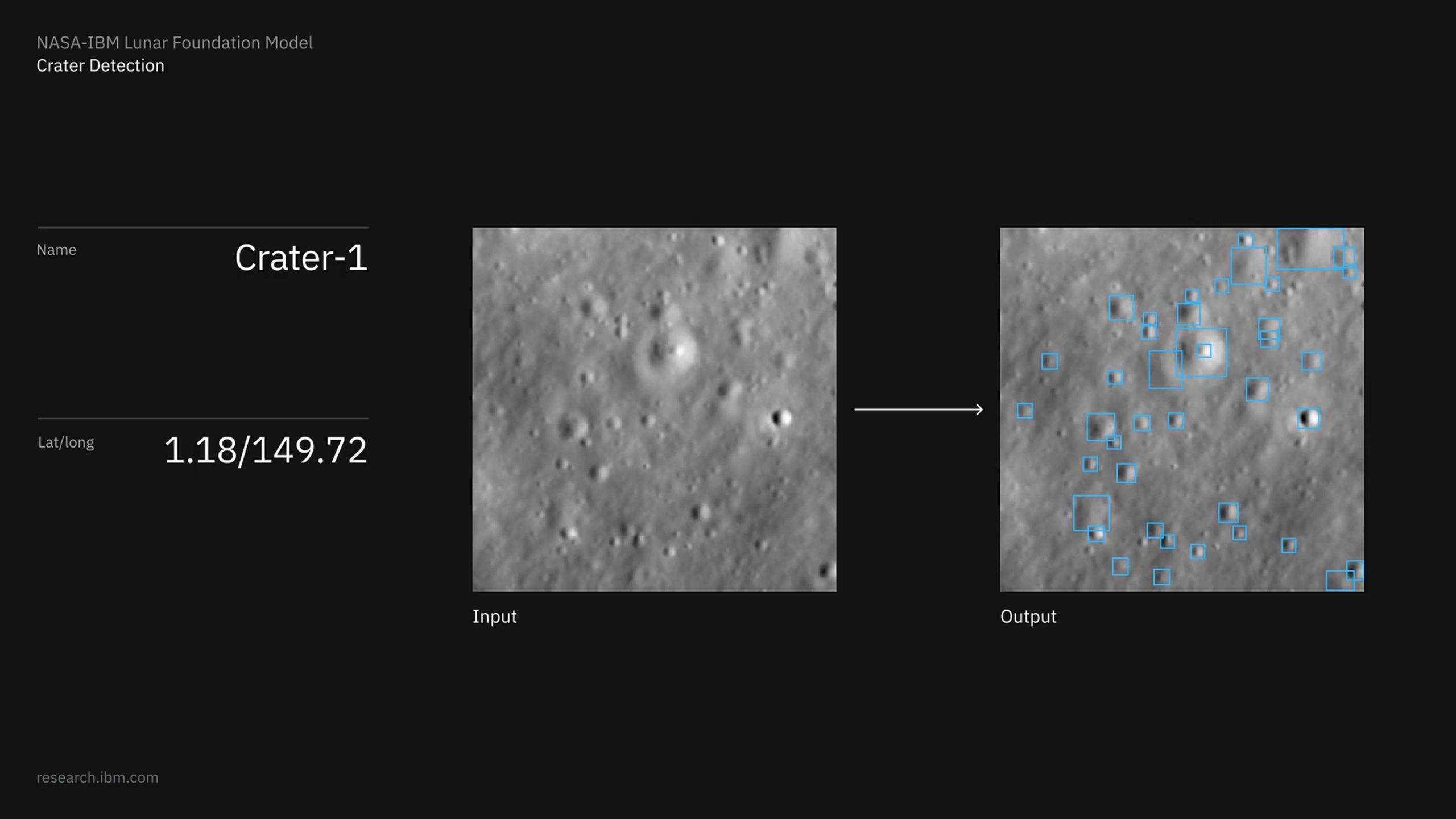
The model has already proved useful, identifying craters and volcanic features far more accurately (see below) and significantly reducing errors in locating potential ice deposits.

IBM NASA AI scanning crater detection on Moon

(Image credit: IBM)

IBM, which has worked with NASA for over five decades, including on the Apollo missions, believes the model could help future astronauts navigate safely and even find essential resources, as well as helping scientists better understand the Moon's geological history.

“Uncovering the mysteries of the Moon requires an ability to learn from an extraordinary volume of scientific data,” said Juan Bernabe-Moreno, Director of IBM Research Europe, UK and Ireland.

“The NASA-IBM Lunar Foundation Model gives scientists a foundation to explore the Moon at scale, connecting observations across instruments, revealing patterns that are difficult to see in isolation, and providing an open platform the global research community can build on.”

The release of the dataset will mark the first time a unified, publicly-available cache has been made available and ready for machine learning. It brings together over 30 spatially aligned layers from nine instruments across four missions, including tens of thousands of images and maps showing unique geophysical properties of the lunar surface from NASA’s Lunar Reconnaissance Orbiter (LRO) and NASA’s GRAIL mission.

Identifying lunar ice deposits could be particularly vital, as the presence of both water and oxygen will be crucial to establishing a human base on the Moon, and even creating rocket fuel for future Mars missions.

Scanning the Moon's volcanic features, known as Iregular Mare Patches, can allow scientists to better understand the Moon's volcanic history and thermal evolution, as well as helping identify potential sites for landing and other surface operations.

Finally, studying the Moon's craters can offer a wealth of information on its history, including the age of different terrains, their geology, and even the chemical composition of the early lunar interior - as well as again helping to identify safe landing sites without hazards such as steep slopes and boulders.

Google logo on a black background next to text reading 'Click to follow TechRadar'

  •  

Advanced oxidation process reduces micropollutant toxicity in wastewater for agricultural reuse

Researchers in Brazil have demonstrated that a hybrid advanced oxidation process can transform pharmaceutical-laden wastewater into an effluent that is dramatically safer for plants, earthworms, onion root cells, and beneficial microorganisms, offering a rigorous ecotoxicological case for reusing treated sewage in agriculture. The study, published in Environmental Science and Pollution Research, addresses a long-standing blind spot in water treatment: proving that a chemically “clean” effluent is also biologically compatible.

Conventional wastewater treatment plants were never designed to strip out recalcitrant organic micropollutants such as pharmaceuticals, and trace amounts routinely slip through into receiving waters. Advanced oxidation processes (AOPs) attack these stubborn compounds by generating highly reactive free radicals that fragment contaminant molecules. But chemical degradation alone does not guarantee safety. As contaminants break down, they spawn transformation products (TPs) that can, in some cases, be as toxic as—or more toxic than—the parent compounds. The research team, led by Lucas Gustavo da Costa and Alam Gustavo Trovó of the Federal University of Uberlândia, together with collaborators at the Oswaldo Cruz Institute, set out to answer a deceptively simple question: does measurable chemical removal of micropollutants actually translate into reduced biological harm?

The centerpiece of their work is the H₂O₂/S₂O₈²⁻/UVC process, a hybrid system that combines hydrogen peroxide and persulfate with short-wave ultraviolet C radiation. UVC photons cleave both oxidants simultaneously, generating hydroxyl radicals (HO•) and sulfate radicals (SO₄•⁻) in the same reaction volume. This dual-radical strategy outperforms systems relying on either oxidant alone, or on peroxymonosulfate (HSO₅⁻), which is costlier and demands more energy for activation. The hybrid route also resists interference from inorganic species commonly found in real effluents, making it an economically attractive candidate for deployment at full-scale treatment plants. The process had already been chemically optimized in the team’s earlier work using multivariate mixture design and rotatable central composite design experiments; the new study is its first integrated biological stress test.

The experiments used real municipal effluent from a wastewater treatment plant in Uberlândia, Minas Gerais, sampled after the plant’s final tertiary treatment stage of coagulation-flocculation with ferric chloride and flotation. The effluent was enriched with three pharmaceuticals representing different therapeutic classes: colchicine (COL, an antimitotic agent), nitazoxanide (NTZ, an antiparasitic), and sulfamethoxazole (SMX, a widely detected antibiotic), each at 325 nmol L⁻¹—equivalent to 130, 100, and 82 micrograms per liter, respectively. That concentration was deliberately chosen as high enough for direct HPLC–DAD analysis without preconcentration, yet low enough to be environmentally representative. Treatment was carried out in an amber glass reactor irradiated by two 8-watt UVC mercury lamps emitting at 254 nm, with a measured irradiance of 4.9 W m⁻². Residual oxidants were neutralized with sodium thiosulfate before any biological testing, ensuring that observed effects could not be attributed to leftover peroxide chemistry.

The ecotoxicological battery spanned multiple trophic levels and levels of biological organization. Oxidative stress was assessed in the earthworm Eisenia andrei by measuring malondialdehyde (MDA), a marker of lipid peroxidation, and protein carbonylation, an irreversible oxidative modification of proteins. Phytotoxicity was evaluated using lettuce (Lactuca sativa) seeds and a growth index combining germination rate and root elongation. Cytotoxicity and genotoxicity were quantified in onion (Allium cepa) root meristems through the mitotic index and the frequency of chromosomal and nuclear aberrations—micronuclei, chromosome breaks, stickiness, bridges, and nuclear buds—across 5,000 cells per sample. Finally, growth inhibition was tested in two environmentally relevant microbes: Azospirillum brasilense, a plant growth-promoting bacterium used in soybean cultivation, and Saccharomyces cerevisiae, a yeast that persists in soils and fermentative niches.

The untreated enriched effluent told a worrying story. It exhibited substantial genotoxicity in onion cells—21%, approaching the 24% seen with the positive control, methyl methanesulfonate—and severe phytotoxicity, with lettuce growth indices far below the 80% threshold that signals absence of toxicity. Even the unspiked effluent itself suppressed lettuce growth, achieving a growth index of only 47%, evidence that bioactive compounds survive conventional treatment. In earthworms, individual aqueous solutions of NTZ and SMX raised MDA levels by 37.2% and 23.5% respectively, while the three-compound mixture increased lipid peroxidation by 38.0%, pointing to additive or synergistic oxidative stress mechanisms involving reactive oxygen species and Fenton-type chemistry within cells.

The picture changed decisively after oxidation. Following 10 minutes of UVC-driven treatment—the point at which 80% chemical degradation had been achieved, matching the minimum removal target proposed in the European Union’s COM(2022)541 directive—genotoxicity fell to 10%, and after 20 minutes, corresponding to the limit of quantification for the parent compounds, it dropped further to 6%, a statistically significant reduction. The plant growth index climbed above 80%, crossing from toxic territory into biocompatibility. The mitotic index in onion cells remained statistically indistinguishable from the deionized-water control (around 39–40% versus 40%), demonstrating that the process generated no cytotoxic byproducts capable of arresting cell division. And crucially for agricultural applications, neither the treated effluent nor its transformation products inhibited growth of A. brasilense or S. cerevisiae.

The mechanistic details are instructive. In the untreated enriched effluent, micronuclei—membrane-bound DNA fragments expelled from the nucleus during flawed cell division—were among the most frequent aberrations, indicating clastogenic and aneugenic damage. Colchicine exposure predictably produced C-metaphase accumulation, a signature of its tubulin-binding, spindle-disrupting mechanism first described in Allium nearly a century ago. SMX depressed the mitotic index and induced chromosomal damage, consistent with prior findings in Vicia faba. NTZ, whose genotoxicity had never before been reported, produced chromosome breaks, stickiness, and nuclear buds. After oxidation, the overall aberration burden fell sharply, particularly micronuclei and stickiness, although a few bridges and polyploid cells persisted even at 20 minutes—a reminder that some transformation products or resistant residuals may linger.

The microbial results came with a subtlety. Reduced A. brasilense growth after treatment initially looked like a red flag, but the team attributes it to depletion of assimilable organic matter, which serves as radical scavenger during oxidation and as a nutrient source afterward—not to toxicity. The negative control likewise grew slowly. This distinction matters because AOPs are designed to mineralize organic carbon, and a nutrient-poorer medium should not be misread as a more toxic one. For S. cerevisiae, no inhibition occurred at any stage of treatment, although NTZ alone significantly depressed yeast optical density, reinforcing the compound’s cell-cycle interference potential even at nanomolar-scale exposures.

The study’s broader significance lies in its methodological stance. By adopting an “effect-driven approach,” the team evaluated the toxicity of whole reaction mixtures without needing to isolate and identify individual transformation products—an impractical task given that many degradation byproducts are not commercially available. Their findings align with a growing consensus that treatment efficacy must be judged not merely by parent-compound removal but by the nature and reactivity of the resulting transformation products. Biochemical biomarkers such as MDA and protein carbonylation detected sublethal disturbances that mortality-based endpoints would have missed entirely, providing early warnings of cellular distress at environmentally relevant concentrations.

One caveat deserves attention: while lipid peroxidation declined after treatment, protein carbonylation rose slightly—1.05-fold above control—suggesting some transformation products may still provoke protein oxidation even as lipid damage subsides. The authors flag this discrepancy and call for future identification of the specific TPs responsible, alongside expanded organism panels, longer-term exposure studies, and pilot-scale validation across different environmental matrices.

The regulatory context sharpens the urgency. The EU’s proposed urban wastewater treatment directive mandates at least 80% removal of specified organic micropollutants and microbiological control for agricultural reuse, yet it conspicuously omits eco-compatibility assessment of the treated water itself. This study supplies exactly that missing dimension, showing that a process satisfying the chemical benchmark also delivers measurable biological benefit—lower genotoxicity, restored plant growth, intact cell division, and unharmed beneficial microbes. As water scarcity intensifies globally and reuse becomes less optional, the Brazilian team’s integrated bioassay framework offers a template for ensuring that the water farmers irrigate with is not merely chemically compliant, but genuinely ecologically safe.

Subject of Research: Mitigation of micropollutant toxicity in treated wastewater using the H₂O₂/S₂O₈²⁻/UVC advanced oxidation process, assessed through integrated ecotoxicological bioassays for potential agricultural reuse.

Article Title: Mitigation of micropollutant toxicity in treated wastewater using the H2O2/S2O82−/UVC process: An ecotoxicological perspective for agricultural reuse

Article References: da Costa, L. G., dos Santos, G. M., Marson, E. O., de Lima, M. G. F., de Souza Bessa, M. A., Scarafiz, G., Junior, S. F. S., Saggioro, E. M., de Carvalho, S. R., de Siqueira Ferreira, A., Nilin, J., Neto, W. B., & Trovó, A. G. (2026). Mitigation of micropollutant toxicity in treated wastewater using the H2O2/S2O82−/UVC process: An ecotoxicological perspective for agricultural reuse. Environmental Science and Pollution Research. https://doi.org/10.1007/s11356-026-38218-5

Image Credits: AI Generated

DOI: 10.1007/s11356-026-38218-5

Keywords: Advanced oxidation process, Micropollutants, Wastewater reuse, Ecotoxicity, Genotoxicity, Phytotoxicity, Oxidative stress, Hydroxyl radicals, Sulfate radicals, UVC treatment, Agricultural irrigation, Transformation products

  •  
❌