New species of 240-million-year-old prehistoric animal could reshape dinosaur origins timeline

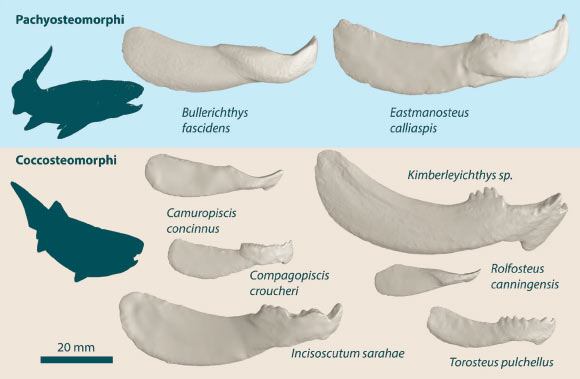
Long before sharks or reptiles ruled the seas, armor-plated fish called placoderms were already experimenting with different jaw designs to crush hard-shelled prey.
The post Devonian Armored Fish Show Multiple Ways to Crush Hard-Shelled Prey appeared first on Sci.News: Breaking Science News.
Many organisms often set up their homes on sea turtles. Known as epibionts, the most noticeable passengers are usually the algae and barnacles clinging to the marine reptile’s protective shell. Other epibionts include tiny crabs in the Planes genus who frequently hitch rides inside the crevices between a turtle’s shell and body.
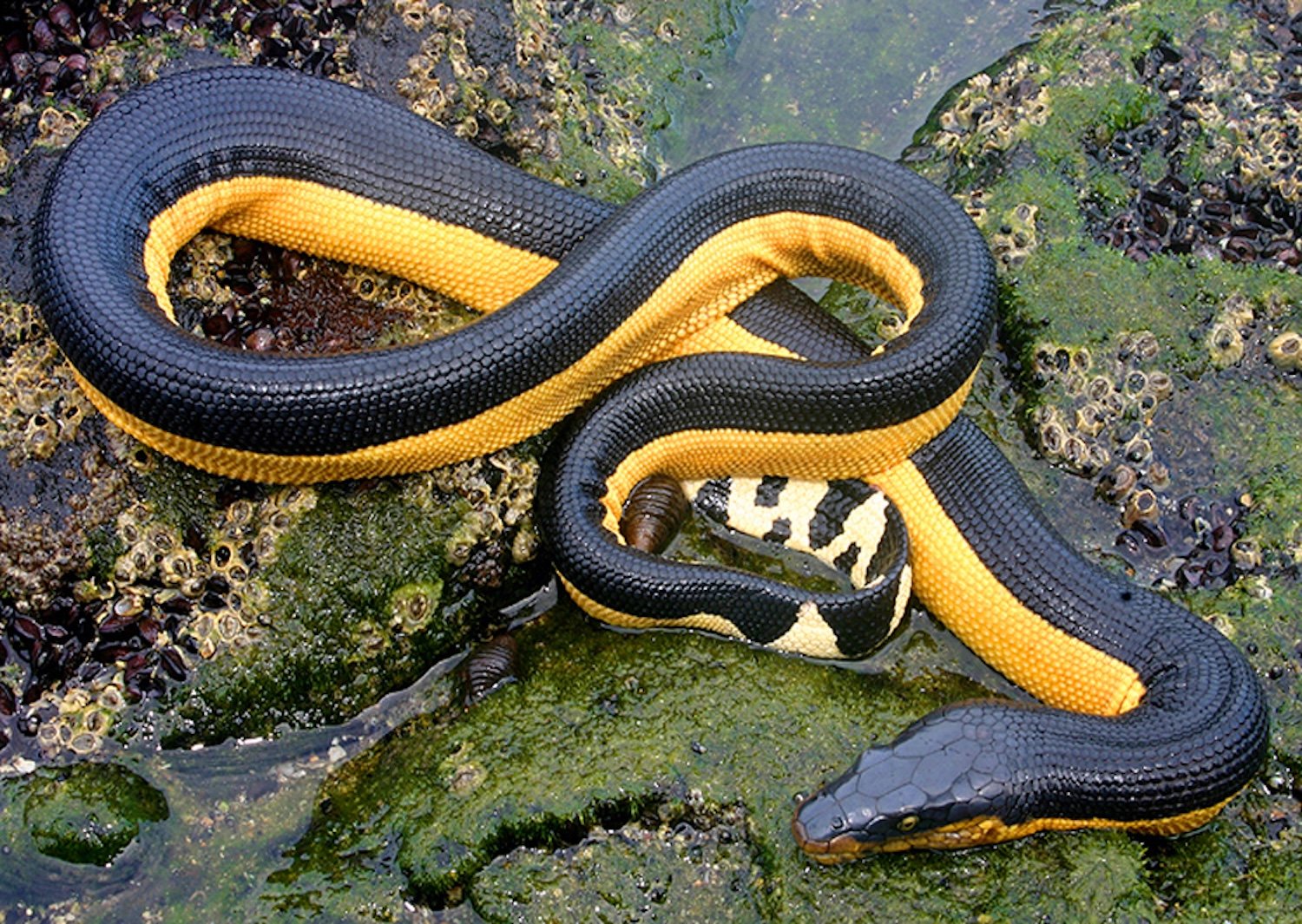
Biologists at the Florida Museum of Natural History recently confirmed a surprising addition to crustaceans’ roster of ocean taxis, however. After examining dozens of specimens collected during surveys off Costa Rica’s Pacific Coast, researchers now know that some small crabs will occasionally climb aboard sea snakes. But these aren’t the Planes crabs the biologists expected. As they describe in a study published in the journal Ecology and Evolution, the clawed invertebrates instead belong to three species related to Planes within the same family.
University of Florida (UF) marine herpetologist Joseph Pfaller first noticed one of the suspicious crabs back in 2012 while studying the yellow-bellied sea snake (Hydrophis platurus). More specifically, he was examining the reptiles’ old skin. Sea snakes shed their scales just like their land-based cousins, but they accomplish the task much differently. Without any hard surfaces to slide against, sea snakes coil into loops to generate enough friction to remove the outer epidermal layers.
“When you find a sea snake’s skin, it’s usually in a knot,” Pfaller explained in a UF profile.

After only collecting a couple of snakes, Pfaller soon watched a small crab fall off one of them. He knew the ocean serpents sometimes hosted barnacles or other stationary organisms, but couldn’t recall a similar situation involving crustaceans—so he started paying attention.
Pfaller amassed 371 sea snakes by the end of his expedition, and he identified far more than crabs. Some of the reptiles also hosted shrimps, snails, and even a clingfish. Pfaller and his colleagues assumed no one previously noticed the additions because marine biologists are generally more focused on the yellow-bellied sea snakes themselves due to their colorful appearance, uncommon distribution, and fascinating underwater behaviors.
Technically speaking, most of the crabs weren’t actually crabs just yet. Instead, most of Pfaller’s collection were considered to be in megalopae—a phase between larva and adult life. That said, at least one young crab appeared to belong to the Planes genus.
Although Pfaller stored the preserved specimens at Florida Museum of Natural History, he soon transitioned to focusing on sea turtles instead of snakes. It took a decade before the oddities resurfaced. After casually mentioning the collection to University of Guam crustacean expert Robert Lasley, his colleague couldn’t resist the joke:
“‘Wait! Wait! Wait! Are you saying you have planes on a snake?’” remembered Pfaller, referencing the cult horror movie Snakes on a Plane.

The pair decided to follow up on his specimens by sequencing their DNA, assuming to confirm their Planes suspicions,but results collected by study co-author and UF invertebrate researcher Soma Elefánti weren’t what they expected.
“Honestly, the thought that we could name this study ‘Planes on a Snake’ was enough to get me motivated, but when we got the results, it was evident that something weird and interesting was going on here,” Lasley said.
As it turned out, none of the megalopae were in the Planes genus. Instead, they belonged to other species in the Grapsidae family, whose adult crabs live on Costa Rica’s coastal trees and rocky shorelines. The study authors knew most crabs release larvae into the water, regardless of living on land or in the water when adults. Because of this, they theorized that the larvae that survived long enough to transition into megalopae instinctually started scoping out a more solid habitat.
“They can swim well, but these things are also built to climb or settle onto something,” Lasley said.
The megalopae that eventually ended up on coastal drift lines likely encountered sea snakes, latched on, then were swept back out into the ocean.
“The snakes are just there, and the crabs don’t know the difference,” explained Pfaller.
The reason no adult Planes crabs were found on the snakes can also be explained by their family tree—Planes crustaceans evolved to know better than to try making a home on the reptiles. Meanwhile, these other species in the Graspidae family are still learning. But since these floaters would never make it back to shore, evolution would have likely taught them the hard way.
“It’s not a good idea. These crabs [had] made a poor decision,” said Lasley.
The post Tiny crabs discovered hitching rides on sea snakes appeared first on Popular Science.


New research from the Natural History Museum at the University of Oslo suggests ichthyosaurs’ rib cages may have done a job modern whale ribs don’t: acting as ballast to help them dive.
The post Ichthyosaurs Had Surprisingly Dense Ribs, New Study Finds appeared first on Sci.News: Breaking Science News.
In one of the most ambitious mapping efforts in the history of radio astronomy, China’s Five-hundred-meter Aperture Spherical radio Telescope — better known as FAST — has delivered a cosmic atlas of staggering proportions. The FASHI team, headquartered at the National Astronomical Observatories of the Chinese Academy of Sciences (NAOC), has announced the second data release of the FAST All Sky HI Survey, published as a cover story in the journal Science China Physics, Mechanics & Astronomy. Just two years after the survey’s first data release catalogued 41,741 galaxies, the new edition explodes that figure to 156,411 extragalactic sources detected in neutral hydrogen — nearly a fourfold leap that firmly establishes FASHI as the largest census of atomic hydrogen gas in galaxies ever compiled.
The scale of the achievement is difficult to overstate. FASHI DR2 now spans roughly 19,500 square degrees of sky, equivalent to 47.3 percent of the entire celestial sphere, and reaches out to redshifts below z = 0.09 — distances of well over a billion light years. For comparison, the previous benchmark in this field, the ALFALFA survey conducted with the now-collapsed Arecibo telescope in Puerto Rico, charted approximately 31,500 hydrogen-bearing galaxies across about 7,000 square degrees. FASHI DR2 has thus quintupled the galaxy count of its Arecibo predecessor while covering nearly three times the sky area, and it has done so with a sensitivity roughly 0.7 times deeper than ALFALFA’s, measured as a median noise level of 0.57 mJy per beam at a velocity resolution of 6.4 kilometers per second. In radio astronomy, lower numbers mean better sensitivity — and FASHI’s numbers are among the best ever achieved in a blind, wide-area survey.
The engine behind this performance is FAST itself. With its 500-meter dish nestled in the karst hills of Guizhou Province, the telescope remains the most sensitive single-dish radio instrument on Earth at the 21-centimeter wavelength of neutral hydrogen. The survey exploited a 19-beam receiver array, allowing the telescope to sweep the sky in an efficient drift-scan mode that turned routine transits of the sky above the dish into a torrent of data. Crucially, the instrument maintained exceptional stability across five full years of observing, from August 2020 through July 2025. In surveys of this kind, calibration drifts and instrumental fluctuations can quietly corrupt weak extragalactic signals; FAST’s long-term steadiness meant that faint hydrogen emission from distant galactic disks could be stacked, averaged and trusted.
Neutral hydrogen — the primordial fuel of star formation — is invisible to optical telescopes. The 21-centimeter spectral line, produced when the electron in a hydrogen atom flips its spin relative to the proton’s, provides the only direct tracer of the cold atomic gas from which galaxies build their stars. Detecting this feeble signal across cosmological distances requires both enormous collecting area and exquisite receiver stability. A blind HI survey, unlike targeted observations, simply listens to every direction on the sky and catalogs whatever whispers back, making it an unbiased inventory of gas-rich galaxies regardless of their optical brightness, dust content or morphology. That is precisely why such surveys are prized: they catch the dim, gas-dominated dwarfs and bloated hydrogen clouds that optical catalogs systematically miss.
To give the hydrogen detections physical meaning, the FASHI team cross-matched their radio catalog with the two great optical spectroscopic endeavors of the current era: the Dark Energy Spectroscopic Instrument survey and the Sloan Digital Sky Survey. This cross-identification yielded precise optical counterparts for approximately 64,000 sources, anchoring the hydrogen detections to galaxies with measured distances, stellar masses and star-formation rates. From these matches the team constructed a completeness-corrected statistical sample of more than 109,000 galaxies — a sample robust enough to push fundamental measurements into territory previously beyond reach.
The flagship result of the release is a new measurement of the HI mass function, the statistical distribution describing how many galaxies of a given hydrogen mass populate the local universe. Thanks to the sheer sample size and FAST’s depth, the team extended the reliable measurement range of this function down to hydrogen masses of about one million solar masses — roughly 10 to the power 6.2 in solar mass units — a regime where only the faintest dwarf galaxies live. These smallest gas reservoirs are the building blocks of galaxy evolution, the raw material that hierarchically assembles larger systems, and their census has long been fragmentary. Equally striking is the derived cosmic density of neutral hydrogen: Ω_HI equals (4.71 ± 0.03 statistical ± 0.40 systematic) × 10⁻⁴ in units of h₇₀³ Mpc⁻³ dex⁻¹. The statistical uncertainty is a mere 0.6 percent — the most precise determination of the universe’s atomic hydrogen budget ever made at low redshift.
Why does such a number matter? The cosmic HI density tracks how much raw fuel exists for future star formation, and comparing its evolution across cosmic time constrains how galaxies acquire and exhaust their gas. Because atomic hydrogen sits at the interface between the intergalactic medium and the star-forming interstellar medium, its abundance is a sensitive probe of gas accretion onto dark matter halos and of the feedback processes that heat or expel gas from galaxies. Baryonic matter, after all, is hidden in far more places than stars: cold gas, warm gas, plasma in and around halos. A precision measurement of the hydrogen component anchors models of where ordinary matter resides within the cosmic web of dark matter.
The applications of the new catalog ripple far beyond that single number. For galaxy evolution studies, the 156,411 detections provide direct observational constraints on gas accretion, star formation feedback and galaxy transformation — the processes that turn blue, gas-rich spirals into passive red systems. For cosmology, the HI mass function tests galaxy formation models within the prevailing dark matter framework. For large-scale structure work, the survey complements optical galaxy catalogs to trace the so-called HI cosmic web, revealing how diffuse gas threads through filaments and pools in voids — architecture that optical surveys alone can only infer. The dataset will also aid gravitational-wave and transient science: rapid localization of the host galaxies of gravitational-wave events depends on accurate galaxy catalogs, and an inventory of hundreds of thousands of nearby galaxies sharpens those host identifications. Finally, FASHI serves as a pathfinder for the Square Kilometre Array, the giant interferometric observatory under construction in Australia and South Africa, providing benchmark samples against which next-generation interferometric surveys will calibrate their systems and select their targets.
The trajectory of the project tells its own story. When FASHI DR1 appeared, it broke ALFALFA’s long-standing record for the largest blind HI survey. With DR2, the team argues, FASHI has moved from record-breaking to benchmark-setting — a transition that observers of Chinese radio astronomy describe as the shift from follower to leader in 21-centimeter science. The cover of the journal issue reinforces the mood: a warm sunset scene evoking the faint 21-centimeter photons from distant galaxies arriving at FAST after journeys of billions of light years, messengers of the cold gas that permeates the universe.
The survey’s story is also one of institutional perseverance. The work is led by NAOC in collaboration with the Guizhou Radio Astronomical Observatory, the Shanghai Astronomical Observatory, the CAS South America Center for Astronomy, Peking University and other partner institutions, with funding from the National Natural Science Foundation of China, the Chinese Academy of Sciences and the Ministry of Science and Technology of China. Sustained national investment in a single flagship instrument has now produced a dataset whose statistical power no other facility can currently match at these wavelengths.
The full FASHI DR2 source catalog has been released to the public through the FAST data portal, a decision that will likely seed hundreds of follow-up studies in the coming years, from targeted observations of hydrogen-rich dwarfs to statistical analyses of gas in galaxy groups and environmental studies of gas stripping in clusters. As the SKA era approaches, FASHI DR2 stands as both a scientific foundation and a demonstration: that a single dish, used patiently and precisely over five years, can still redraw the map of the gaseous universe. With nearly half the sky covered and a quarter of a million more square degrees potentially within reach, the question is no longer whether FAST will extend the hydrogen frontier, but how far.
Article Title: FAST All Sky HI Survey completes “two-step leap” — from 41,741 to 156,411 galaxies, China’s FAST telescope maps the largest cosmic gas atlas
Article References: FAST All Sky HI Survey completes “two-step leap” — from 41,741 to 156,411 galaxies, China’s FAST telescope maps the largest cosmic gas atlas. https://doi.org/10.1007/s11433-026-3072-1 Original publication
Image Credits: AI Generated
DOI: 10.1007/s11433-026-3072-1
Keywords: FAST telescope, FASHI survey, neutral hydrogen, HI mass function, cosmic web, galaxy evolution, 21 cm line, ALFALFA, radio astronomy, Square Kilometre Array, dark matter halos, cosmology
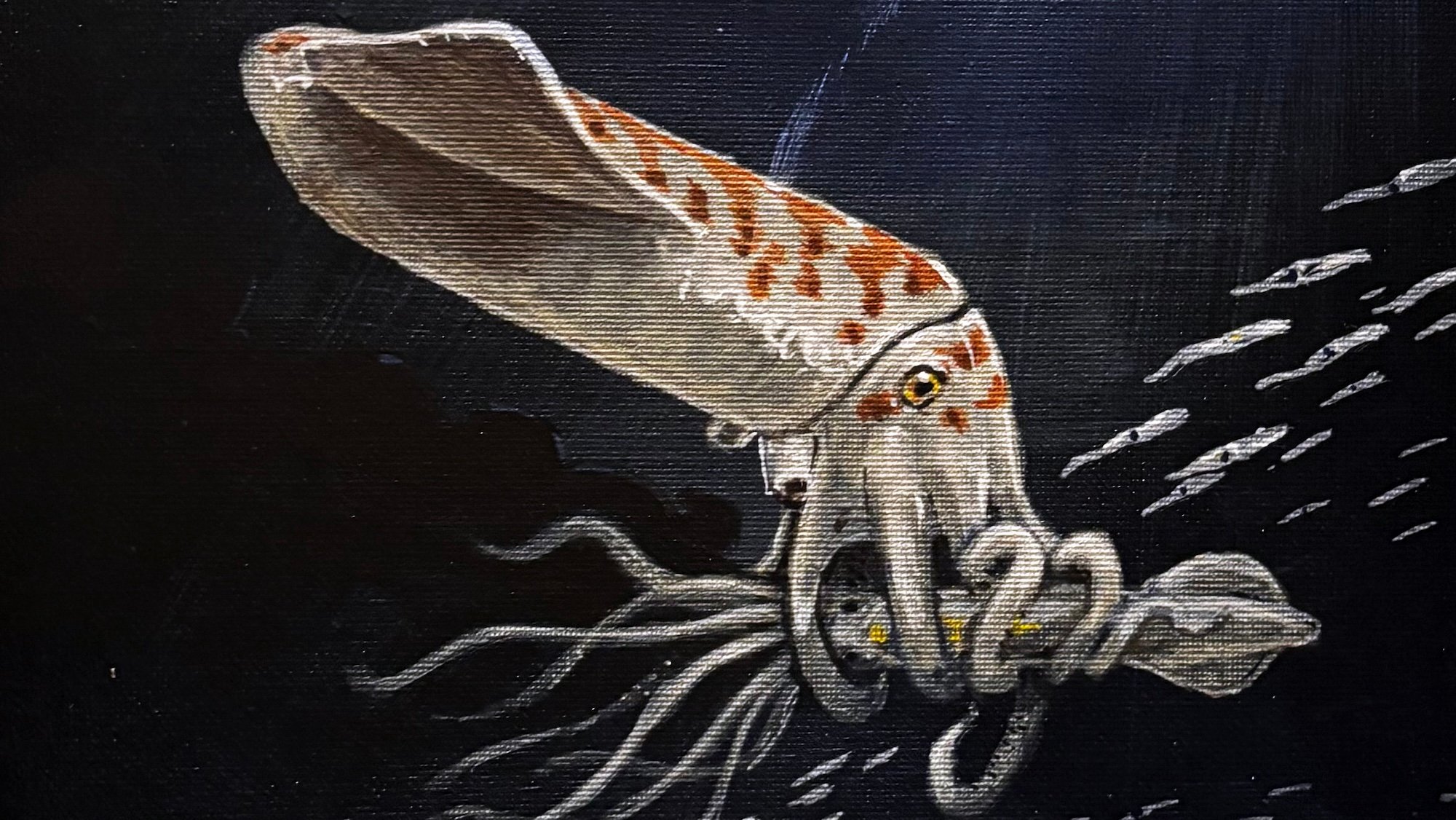
Thanks to having the “chunkiest squid butt” ever seen on an ancient cephalopod, paleontologists have discovered a 160-million-year-old octopus cousin. The newly identified fossils are described by an international research team in their study recently published in Papers in Palaeontology, which also includes a potential explanation for Wyoteuthis linsterorum’s hefty proportions. Just like today’s tentacled ocean dwellers, the Mesozoic squid ancestor likely had no problem devouring its relatives—or even members of its own species.
W. linsterorum is a belemnite, a group of prehistoric cephalopods who left behind some of paleontology’s most common fossils. Examples of their bullet-shaped structures known as a rostrum have regularly shown up at dig sites around the world for over 200 years. This includes the Sundance Formation in present-day Wyoming, which was covered by an inland sea millions of years ago.
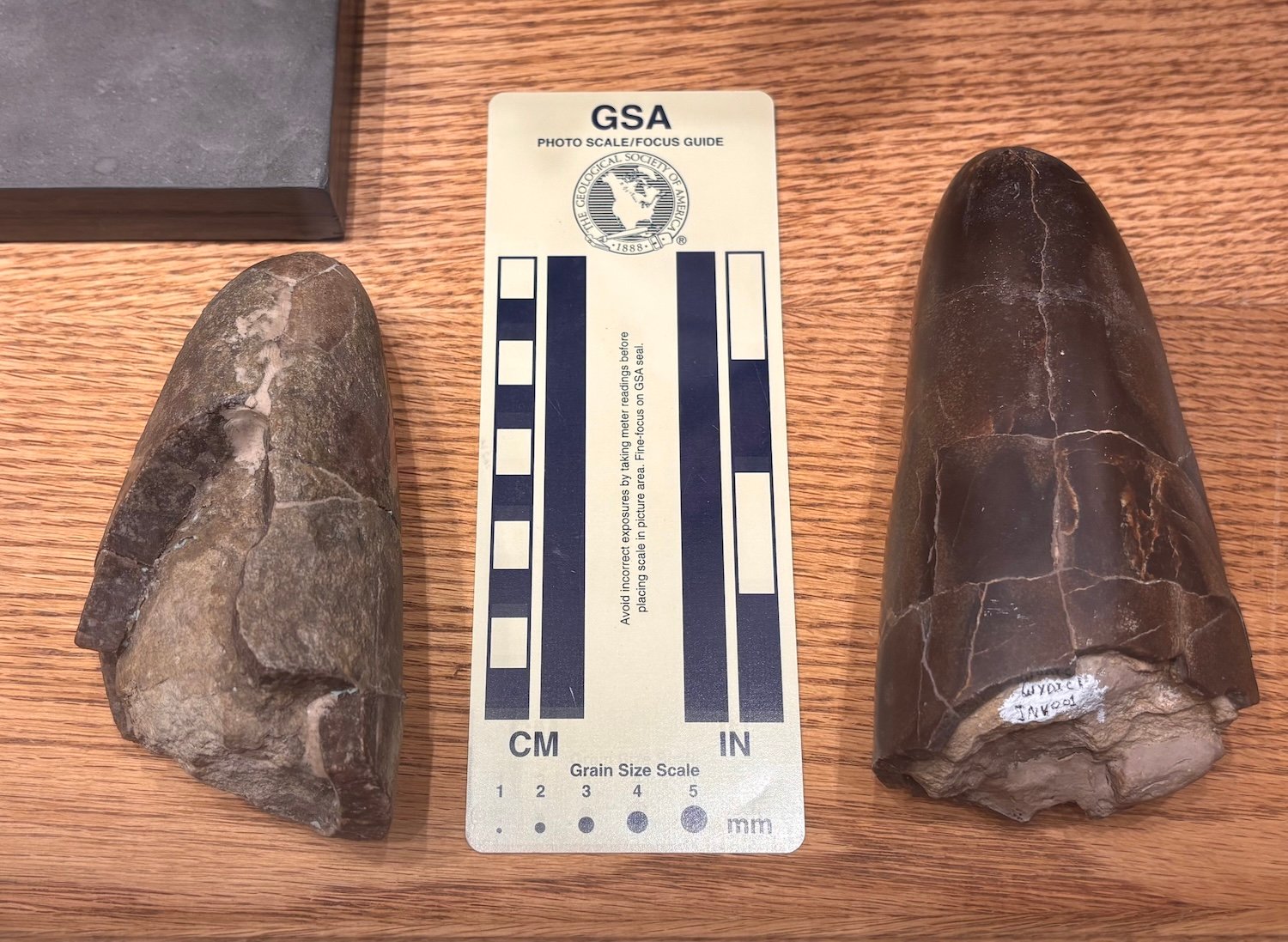
Most of Wyoming’s belemnites are comparatively tiny—usually about two-to-four inches long and less than one inch wide. But about 30 years ago, Wyoming Dinosaur Center founder Burkhard Pohl found a fossil that “stuck out like a sore thumb,” according to study co-author Bill Wahl. While the preserved belemnite rostrum was about as long as other examples, it measured about 2.4 inches wide. Based on what they knew of belemnite proportions, paleontologists estimated this specimen’s entire body probably reached nearly two feet long.

Without any comparable examples, the thick squid butt remained in storage for nearly three decades. In 2019, fossil collector Cliff Linster finally discovered a similar cephalopod near Ten Sleep, Wyoming. He soon donated it to the Wyoming Dinosaur Center, and researchers began analyzing this pair of mystery fossils.
Computed tomography (CT) scanning allowed the team to inspect the remains without damaging them. The results confirmed the ancient sea creatures were never-before-seen belemnites.What’s more, they belonged to a family researchers previously believed went extinct millions of years earlier.
“After spending years fossil hunting in Wyoming and collecting countless fossils of the common Pachyteuthis belemnites here in Wyoming, this one is unlike anything I have ever seen,” Jessica Lippincott, a paleontologist and study co-author, said in a statement.
But why did W. linsterorum evolve to reach such bulky proportions? The team believes the answer lies in the diets of many present-day cephalopods.
“A possible explanation is that their relatively large size gave them an advantage when hunting co-occurring smaller belemnites of the genus Pachyteuthis,” explained paleontologist Alexey Ippolitov, a study co-author now at New Zealand’s Victoria University. “Modern squid, after all, are hardly picky when it comes to prey: they readily hunt not only other species of cephalopods, but sometimes even their own kind.”
An unexpected and surprising species, W. linsterorum is named in honor of Cliff Linster, who died in June 2026. While he didn’t live to see the dedication, Linster was well aware that the team was working to describe the animal he helped discover.
“It goes to show that we are still finding new species of fossils all the time, and people who rockhound or collect invertebrate fossils can also contribute to science,” said Lippincott.
The post ‘Squid butt’ fossil belongs to one of the ‘chunkiest’ cephalopods ever discovered appeared first on Popular Science.

In the wild, mimicry is an important tool for survival. Some baby hummingbirds disguise themselves as caterpillars with stinging hairs to avoid predators, while octopus, squid, and cuttlefish use camouflage to blend in with their surroundings and hide. Even plants get in on the mimicry fun, with some mimicking the small of rotten meat to attract flies and others using their petals to trick flies into pollinating on them.
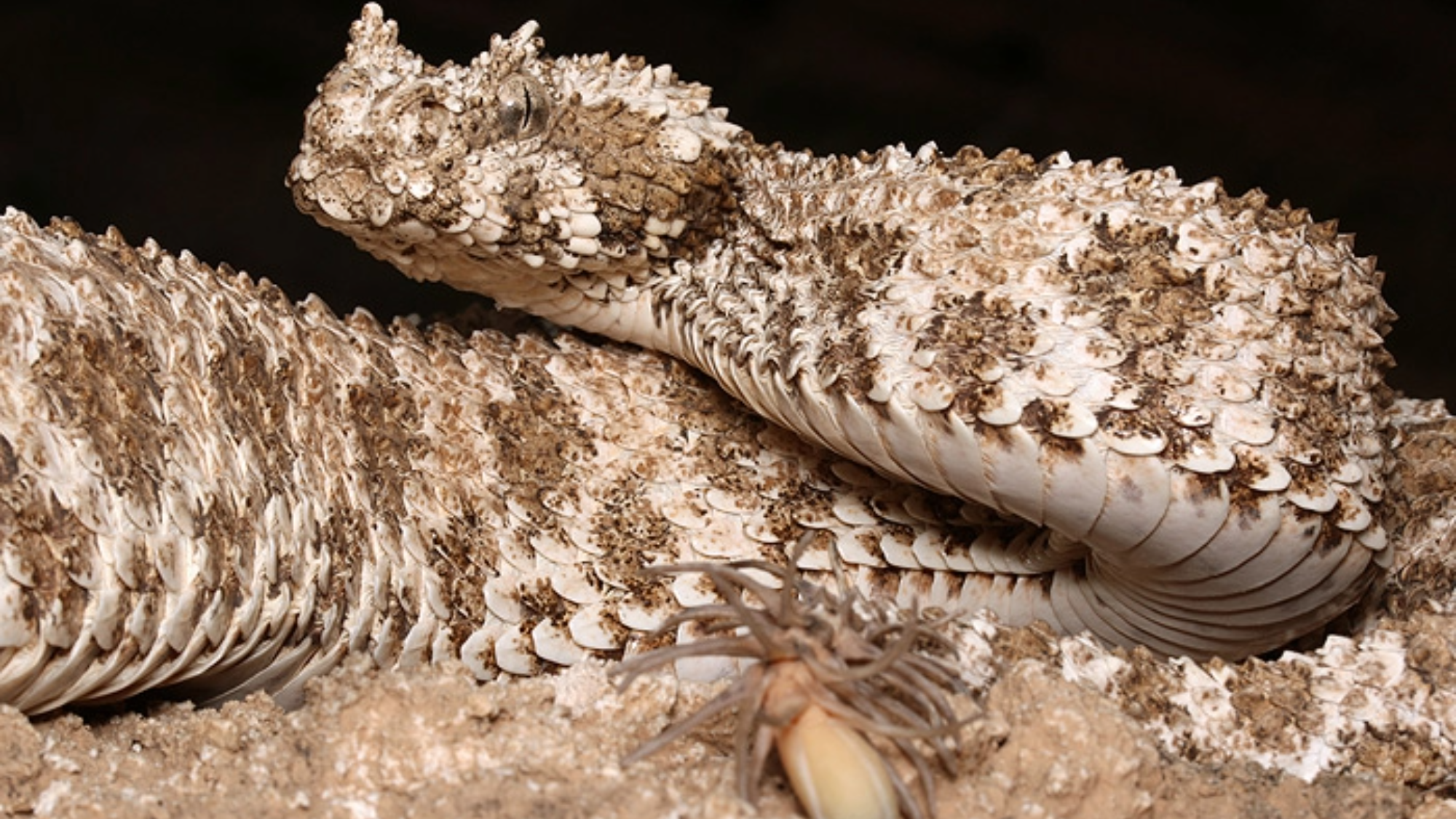
True to its name, Iran’s spider-tailed horned viper (Pseudocerastes urarachnoides) has a rather novel strategy. It uses a tail that looks like a spider to lure birds trying to eat the decoy spider. When the time is right, the snake jumps into action and eats the bird.
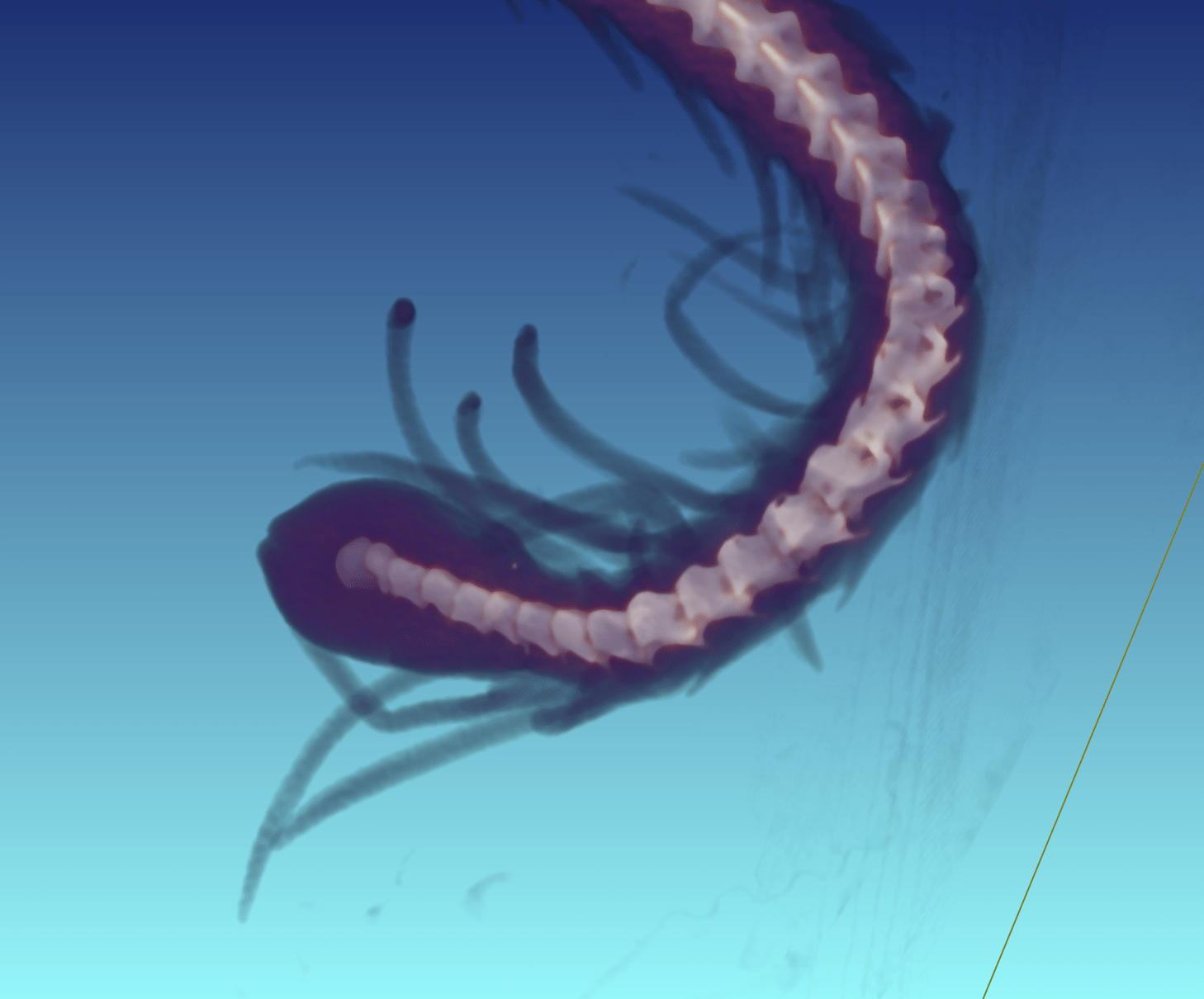
The spider-tailed horned viper is a relatively new species to science, and a study published today in the journal The Anatomical Record is peeling back the layers of this master mimic. A team from the Field Museum in Chicago used X-ray computed tomography (XCT) scanners to take a look inside of the snake’s spidery tail and found that their tailbones appear rather normal.
“Scientists first collected a specimen of this snake in 1968, and when they brought it back to the Field Museum, people thought that it had some sort of deformity at the tip of its tail, like a tumor,” Sara Ruane, a study co-author and the Field’s Associate Curator of Herpetology and Director of the Core Laboratories, said in a statement. “It sat on the shelves of the museum for decades, but it wasn’t until another specimen with a similar tail was found in 2003 that people revisited it.”
Scientists described the snake as a new species in 2006, using the specimen housed in the Field Museum’s collections as the holotype. Holotype specimens serve as a main standard-bearer and reference point for the physical characteristics of a species, so that scientists can compare and contrast them to see if a specimen belongs to one species or another.
Shortly after naming the spider-tailed horned viper, researchers recorded video of the snake using the spider-like appendage at the tip of its tail as a way to lure in unsuspecting birds.
“I remember being a PhD student in about 2008 and first seeing the videos of this snake in the wild,” says Ruane. “The appendage at the end of its tail is so outrageous, I remember thinking it was so cool. It’s truly unique among snakes.”
In 2023, Ruane attended a conference with Georgios Georgalis, an associate professor at the Polish Academy of Sciences in Kraków. Georgalis mentioned that he was interested in studying the Field Museum’s spider-tailed horned viper holotype specimen.
“I am primarily a paleontologist, so I try to use modern snake species to make sense of fossil remains,” said Georgalis, who is also a co-author on the new study. “In vipers, the vertebral column unfortunately doesn’t give us very many clues about what kind of snake we’re looking at. When we find fossils, we often just find individual bones rather than the entire skeleton, and the individual vertebrae are so different from each other along the snake’s body that it’s hard to use them to identify a species.”
The spider-tailed horned viper offered a unique opportunity to study snake vertebrae. Georgalis said that viper vertebrae in particular have not been very well studied. They also wanted to know more about this species’ unusual tail.
To take a closer look, they used the Field Museum’s XCT lab. With XCT, scientists can scan objects and take thousands of X-ray images. These images are then stacked together to produce a 3D rendering of the object’s interior. It essentially allows scientists to study rare or one-of-a-kind specimens in detail without cutting them open or and risking damage.
“With the spider-tailed horned viper, we were particularly interested in seeing what the vertebrae at the tip of the tail look like, because the exterior of this snake’s tail is so unusual, and because it’s used for this unusual bird-luring behavior,” says Georgalis. “In some other snakes, like sand boas and rubber boas, the vertebrae at the tip of the tail have extreme shapes that look really alien. We wanted to investigate if the spider-tailed horn viper’s tail was similarly strange inside.”
Surprisingly, the scans revealed that the inside of the viper’s tail looked quite normal. The spider-tip tail is only visible on the outside of the snake and the vertebrae were the same as they would be in other vipers.
“There was nothing in the snake’s skeleton that would suggest how extreme its tail looks on the outside,” said Georgalis.

Findings like these show how fossil skeletons only tell one part of the story of what an animal looked like and how it behaved. Nothing in the spider-tailed horned viper’s skeleton would suggest it has such a unique tail, or that the tail twitches in a way that tricks birds.
“It’s one of the, let’s say, frustrations of the life of a paleontologist,” says Georgalis. “We work with beautiful animals, but most of the time, we’re trying to put together puzzles with some of the pieces missing, and in the end, we can’t be 100% sure of what the animal actually looked like.”
It’s also a reminder that prehistoric life may be even stranger than we can imagine by looking at bones alone. These findings also lay some groundwork for scientists studying how tissues evolve and develop and underscores the value of museum collections.
“Specimens that were collected 50, 100, 200 years ago are still being used all the time to learn new things,” said Ruane.
The post Snake that hunts with fake spider on its tail shocks scientists appeared first on Popular Science.

One of the most popular explanations of human behavior has been that somewhere beneath our rational mind lurks an ancient “lizard brain”—a primitive evolutionary holdover responsible for instinct, emotion, fear, and aggression.
There is just one problem. Neuroscientists have long known that the lizard brain story is wrong. Humans did not evolve a sophisticated new brain by simply stacking it on top of an older reptilian one.
But a new study suggests the enduring lizard brain myth may have inadvertently pointed to something more interesting. Mammalian brains do appear to be organized around two broad computational systems—but not an ancient reptilian brain located beneath a newer, more sophisticated one. Instead, the divide appears to reflect two fundamentally different ways of organizing and processing information.
Published in Science Advances, the research combines anatomical measurements from 182 mammalian species with experiments using artificial neural networks. The researchers found a striking evolutionary trade-off between the neocortex and a collection of structures associated with smell, memory, and the limbic system.
Instead of representing “new” and “old” brains, the researchers say these regions may have evolved different wiring styles optimized for solving different kinds of computational problems.
“Rather than an ‘old’ brain and a ‘new’ brain, our results suggest two systems wired for different kinds of computation,” lead author Dr. Nabil Imam, a researcher at the Georgia Institute of Technology, told The Debrief. “The neocortex is wired to preserve spatial relationships—for example, neighboring points in the visual world are analyzed by neighboring parts of the cortex. The limbic system is more diffusely connected and supports holistic associations across different pieces of information.”
“So, the division between the neocortex and limbic system is about how the two systems are wired,” Dr. Imam added.
This distinction offers a very different picture from the famous lizard brain story.
The lizard brain concept grew from the so-called triune brain theory, which portrays the human brain as having evolved in distinct layers. A primitive “lizard brain” handling basic instincts, a mammalian limbic system producing emotion, and, finally, a newer neocortex responsible for higher thought.
The problem is that neuroscience has long since overturned that evolutionary story. Vertebrate brains did not evolve by progressively stacking newer brain regions on top of older, more primitive ones. Instead, vertebrates share essentially the same broad organizational plan, with existing regions changing in size, connectivity, and function over evolutionary time.
The new study suggests, however, that the mammalian brain may be divided very differently—not by evolutionary age, but by how different neural systems are wired to process information.
Across 182 species from 10 taxonomic groups, animals with an unusually large olfactory system tended to have a smaller-than-expected neocortex. Animals with an expanded neocortex tended to show the opposite pattern.
The nine-banded armadillo provides a particularly dramatic example. Armadillos are largely nocturnal and depend heavily on smell while foraging. As researchers note, the armadillo’s olfactory system was approximately 1.5 times larger than expected for its overall brain size. Its hippocampus—a region central to memory and spatial processing—was about twice its expected size.
Its neocortex, meanwhile, was reduced by a factor of 2.8. Primates such as squirrel monkeys sit closer to the other end of the spectrum. They rely heavily on vision and devote a large portion of their expanded neocortex to processing visual information.
At first glance, that could look like evolution trading smell for sight. But the researchers noticed something more intriguing. The hippocampus grew and shrank alongside the olfactory system, even though memory is obviously not another form of smell. Other structures traditionally grouped into the limbic system, including the amygdala and septum, also tended to change together.
That suggested the important difference might not be what these regions process, but how they are wired to process it.
Vision offers a relatively straightforward example. Neighboring points in the visual world are generally processed through neighboring areas of the visual system. Touch operates similarly. Locations beside one another on your body retain spatial relationships as the nervous system processes them. Hearing also uses orderly mappings, including those based on sound frequency.
The result is what neuroscientists call “spatiotopic” organization. In simple terms, the brain preserves relationships between incoming information by arranging it into orderly maps.
However, smell works differently. Odors are represented through combinations of activity distributed across networks rather than being laid out in the same neat spatial fashion.
The researchers suspected that this difference might help explain the anatomical trade-off they had identified across mammals. To test the idea, they turned to artificial neural networks trained to handle vision, touch, hearing, and smell.
They then mapped the networks’ internal models onto artificial two-dimensional surfaces resembling sheets of cortex.
Results showed that networks optimized for vision, touch, and hearing produced smooth, highly ordered maps. On a scale in which 1 represented strong spatial order, the visual network scored 0.90, touch scored 0.86, and hearing scored 0.89.
Yet, the smell network scored just 0.11. Rather than producing a smooth map, information was scattered across a fractured, distributed representation. The researchers even found that imposing localized connectivity on the olfactory model harmed its ability to perform its task.
Researchers then examined memory. Using an artificial network designed to reproduce some relational computations associated with the hippocampus and entorhinal cortex, researchers again saw a fractured, distributed representation resembling the olfactory system rather than vision, hearing or touch.
For Dr. Imam, one of the most surprising results was that artificial networks arrived at an organization resembling real brains despite learning in profoundly different ways.
“Artificial networks are trained by an algorithm that propagates errors through the network, whereas brains are shaped by evolution and through localized changes in synapses,” Imam explained. “The fact that both nevertheless arrive at similar organization suggests that the structure of the information itself—whether visual, auditory, tactile, or olfactory—determines what kind of wiring works best.”
Researchers next wanted to know whether competition between these two wiring styles could reproduce the anatomical patterns seen across real mammals.
They created an evolutionary simulation containing five artificial networks. Vision, hearing, and touch occupied one computational domain based on localized, spatial organization. Smell and hippocampal memory occupied another based on distributed connectivity.
Then an evolutionary algorithm redistributed computational resources between them.
When selection favored vision, resources moved toward the spatially organized networks. When selection favored smell, the distributed networks expanded.
But something interesting occurred to the simulated hippocampal network. Even though researchers weren’t directly selecting for memory, the hippocampal network grew along with the olfactory network because both shared the same broad computational architecture. As resources shifted toward the other system, both contracted.
That closely resembled the pattern found across real mammalian brains.
“It suggests that evolution may not be selecting individual brain regions one at a time, but rather the functions produced by whole patterns of wiring,” Dr. Imam explained. “Because regions that share similar wiring tend to grow or shrink together, selection for one kind of function comes at the expense of another, given that the system must operate with limited energy and space.”
That does not mean an animal with a larger neocortex is simply more intelligent than one with a larger limbic system. Nor does the distributed system represent a primitive emotional brain fighting against a rational one.
Instead, the two architectures appear suited to different computational problems. Evolution may have repeatedly adjusted how much neural real estate mammals devote to each.
Nevertheless, researchers caution that their models are intentionally simplified. Anatomical measurements came from several datasets; some taxonomic groups are better represented than others, and artificial neural networks are not replicas of biological brains.
The evolutionary model is intended to demonstrate that a relatively simple developmental mechanism could produce the observed trade-off, not to reconstruct exactly how mammalian brains evolved.
Still, the research raises another interesting possibility extending beyond the demise of the “lizard brain.” Our brains may arrive in the world with considerably more computational structure already built in than the familiar idea of a blank slate implies.
“The brain may be much less of a blank slate than we often imagine,” Dr. Imam told The Debrief. “Evolution and development build useful assumptions into its wiring before experience-driven learning.”
It is also another example of something scientists are increasingly encountering across very different areas of biology: evolution can produce remarkably sophisticated structures and systems that human engineers are just starting to understand, much less reproduce.
In a recent study covered by The Debrief, researchers discovered that cable bacteria construct microscopic electrical pathways from nickel-rich nanoribbons arranged remarkably like braided electrical wires. The naturally grown structures may achieve extraordinary conductivity while remaining flexible, properties that researchers are now interested in replicating for bio-based electronics.
The mammalian brain represents an enormously more complicated example, but the underlying lesson may be similar. Evolution does not begin with a blank slate each generation. It can build useful solutions into biological architecture itself, leaving subsequent learning along with adaptation to operate within structures refined over immense spans of evolutionary time.
That could also help explain one of the most striking differences between biological intelligence and today’s artificial intelligence. Modern AI systems can require enormous datasets to acquire abilities that biological brains learn from comparatively limited experience.
“That built-in structure may explain why brains can learn efficiently from relatively little experience, whereas most artificial networks require enormous datasets to learn useful functions,” Imam said. “The idea has deep roots in philosophy of mind, but only recently have neuroscience and computer science begun to provide concrete demonstrations of how such built-in structure can aid function.”
The recent study, “Dual computational systems in the development and evolution of mammalian brains,” appeared in Science Advances.
Tim McMillan is a retired law enforcement executive, investigative reporter and co-founder of The Debrief. His writing typically focuses on defense, national security, the Intelligence Community and topics related to psychology. You can follow Tim on Twitter: @LtTimMcMillan. Tim can be reached by email: tim@thedebrief.org or through encrypted email: LtTimMcMillan@protonmail.com

Archaeologists excavating in southwestern China have discovered a cave that was used by Denisovans for more than 100,000 years. Five human fossils, scores of stone tools, and hundreds of animal bones recovered from the cave reveal for the first time that the enigmatic Denisovans thrived in a forested environment where they hunted and ate large game animals.
Denisovans were a lineage of humans who lived in Asia and went extinct around 30,000 years ago. Ancient DNA has shown that Denisovans, Neanderthals and modern humans (Homo sapiens) are distantly related and that all three groups interbred in the past. But while archaeologists have found numerous Neanderthal and modern-human skeletons, Denisovans are known from only a handful of fragmentary fossils scattered from Siberia to Laos. This lack of evidence has severely limited experts' understanding of Denisovans' bodies and their culture.
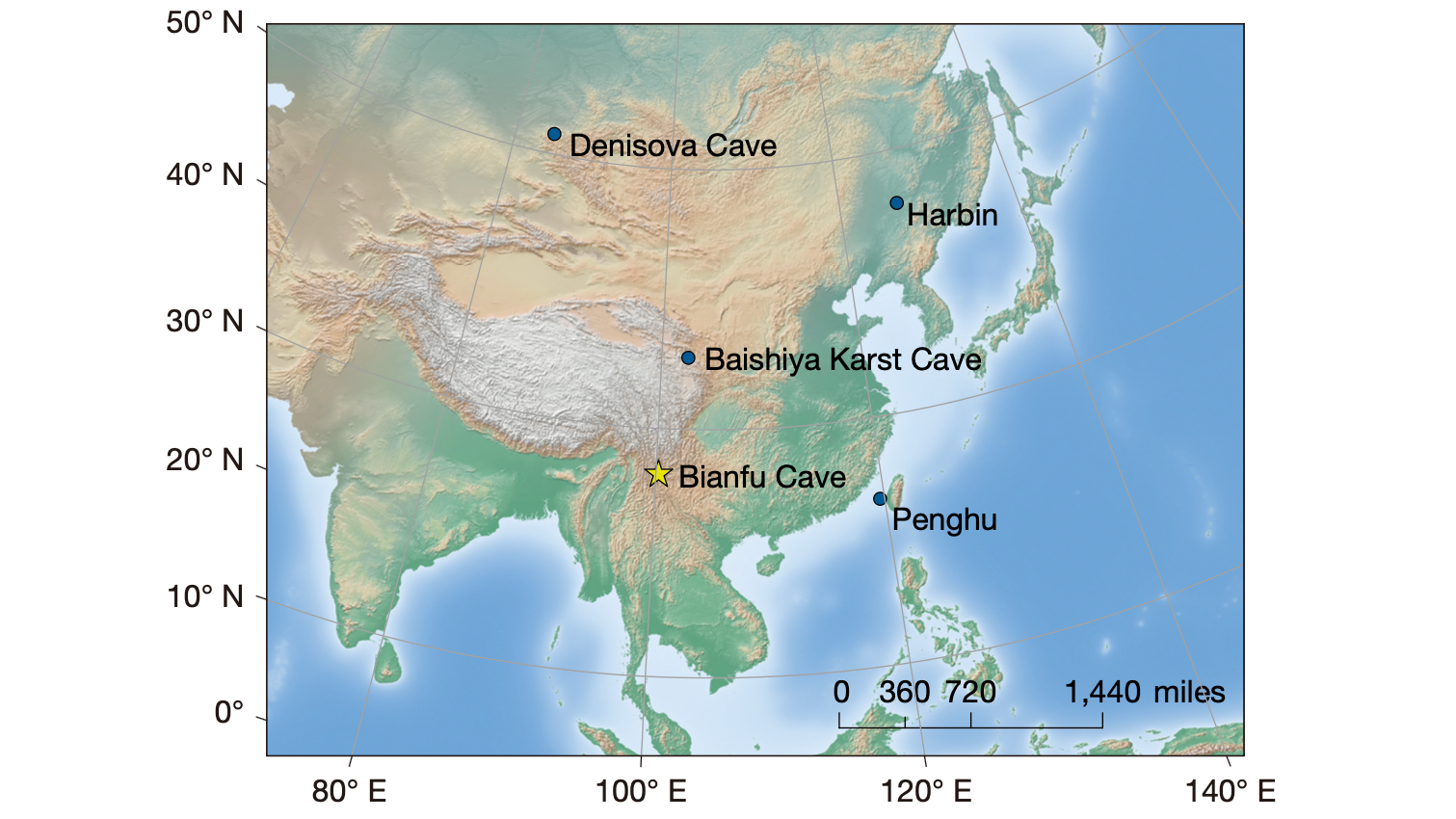
In two studies published Wednesday (Sept. 9) in the journal Nature, researchers detailed their excavation of Bianfu Cave in southwestern China. Animal bones and ancient tools revealed that the cave was used from 190,000 to 70,000 years ago, and five human fossils dating to between 134,000 and 167,000 years ago confirmed that the people who used the cave were Denisovans.
Bianfu Cave is in the Yunnan province of southwestern China. In 2019, archaeologists excavated several stratigraphic layers of the cave and discovered nearly 1,400 stone artifacts, more than 64,000 mammal bones, and four teeth from an unknown human lineage. The Yunnan area is where Denisovans and modern humans are known to have met and mated, so researchers were unsure which group had used tools to butcher animals inside Bianfu Cave.

In one study, a research team used a technique called zooarchaeology by mass spectrometry (ZooMS) to quickly and efficiently screen the bone fragments from Bianfu Cave. ZooMS is a form of protein analysis that involves extracting collagen from the bones of an unknown species and comparing the protein pattern to the unique "fingerprint" of reference animals.
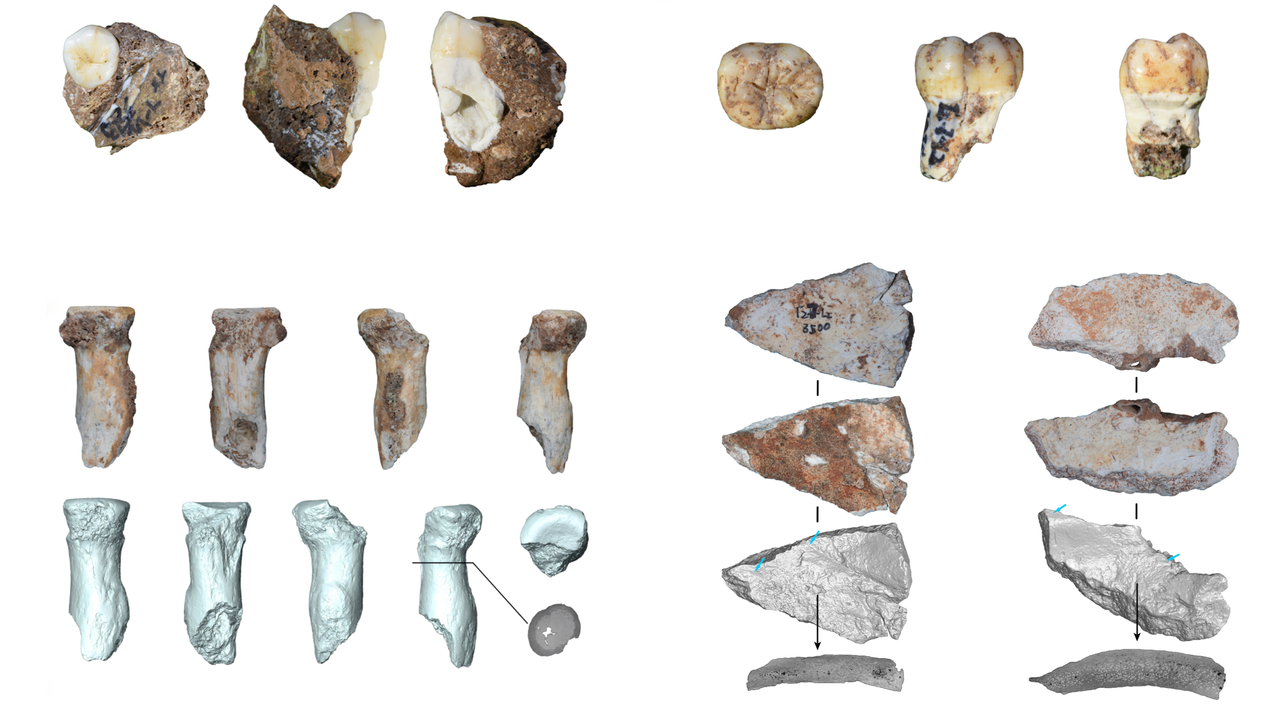
When the researchers applied the ZooMS technique to the Bianfu Cave bones, they discovered that three of the fragments had a collagen pattern found in members of the Homo genus. Then, using proteomic analysis, the researchers found that two teeth and three bones from Bianfu Cave had a particular amino acid variation linking the fossil remains with Denisovans.
Denisovans are still poorly understood, in part because no complete skeleton has ever been found. Most of the Denisovan fossils that experts have studied are pieces of the skull and teeth. A tiny finger bone and a rib fragment were all that had been found of Denisovans' bodies before the Bianfu Cave excavation. But one of the three bones identified as Denisovan through ZooMS was a fragment of a radius, one of the paired bones in the forearm. It is the only Denisovan radius found to date.
The newly discovered radius has a large head (where it connects to the humerus at the elbow) that is more similar to those seen in Neanderthals than in modern humans, but its overall shape is more similar to modern-human radii, the researchers wrote in one of the new studies. The fact that the Denisovan radius was shaped more similarly to the radius in humans "likely provided functional advantages for lightweight, precise manipulation," study co-author Qiaomei Fu, director of the Ancient DNA Laboratory at the Institute of Vertebrate Paleontology and Paleoanthropology, part of the Chinese Academy of Sciences, in Beijing, told Live Science in an email.
The unique features of the Denisovan radius also suggests that the Denisovans living near Bianfu Cave had different biomechanical demands on their bodies and different behavioral adaptations, the researchers noted.
In a related study, researchers looked at the entire cultural sequence from Bianfu Cave to work out what Denisovans were doing there.
Of the nearly 1,400 stone artifacts recovered from the cave, there were about 200 flake tools, many of which were made from a sedimentary rock called sandy mudstone. These tools left marks on a number of animal bones discovered in the cave, suggesting that Denisovans regularly hunted, butchered and extracted marrow from cow- and deer-like animals, the researchers wrote in the study.
But the stone tools found at Bianfu Cave are different from the more sophisticated ones that Neanderthals made around the same time. The Denisovan stone tools appear to have been crafted quickly and efficiently from locally available materials, according to the study. The researchers, however, discovered that Denisovans at Bianfu Cave were also making bone tools, which Neanderthals did as well. This suggests that bone tool use may have been more widespread among Pleistocene human groups than experts previously thought, the researchers wrote, and it highlights the need to better understand the human evolutionary record of eastern Asia.
Although the studies have contributed new information to archaeologists' understanding of the enigmatic Denisovans, more work needs to be done, according to the researchers.
"We hope that similar proteomic analyses will aid in the identification of further Denisovan long bones in the future," Huiyun Rao, an associate professor at the Institute of Vertebrate Paleontology and Paleoanthropology, Chinese Academy of Sciences, and colleagues wrote, "to further understand the adaptive behavior of Denisovans in response to climate change or competitive pressure from contemporary hominins."
What do you know about early humans? Test your knowledge with our human origins quiz!
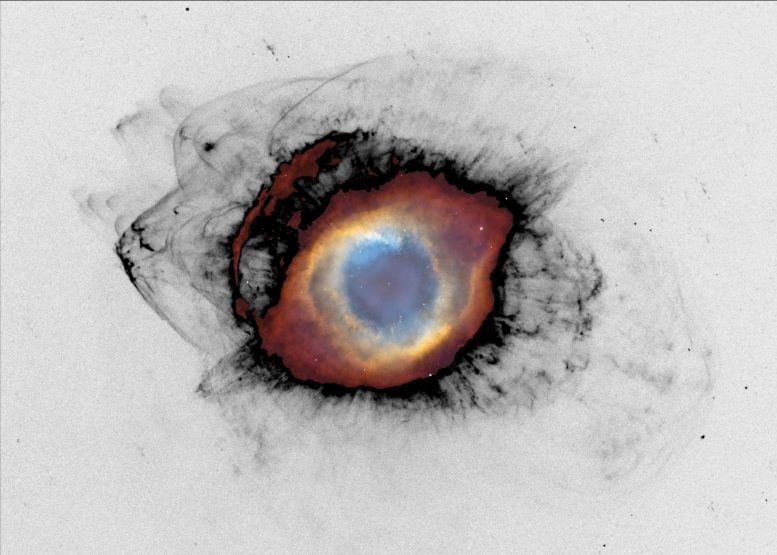
A new image of the Helix Nebula reveals how dying stars return material to the galaxy. The Helix Nebula offers a rare look at what happens after a dying star releases its outer layers into space. New observations show fragments of that material colliding with surrounding gas, breaking apart, and beginning their return to the [...] For more than a decade, scientists have known that strange bacteria living in aquatic mud can conduct electricity along distances thousands of times longer than a single bacterial cell. Such long-range electrical conduction should be extraordinarily difficult for a living organism, and how they accomplish the feat has remained a biological mystery.
Now, researchers say they have found the wiring. Inside so-called cable bacteria, scientists have discovered an elaborate network of nickel-rich nanoribbons arranged into what amounts to a naturally grown electrical cable.
The structure is unlike the conventional machinery biology normally uses to move electrons and may represent the first known example of a metal-organic framework produced by a living organism.
What surprised lead study author Dr. Filip Meysman, a professor at the University of Antwerp in Belgium, most was not how alien the structure looked, but how familiar it was.
“It had a very familiar feeling: a braided wire consisting of thin individual wires surrounded by a protective shell layer,” Meysman told The Debrief. “This is very similar to the power cords that we use to charge our smartphones, only the cable bacterial version is 20,000 times smaller in size. Evolution came up with this design 600 million years earlier than electrical engineers.”
Meysman’s comparison is not simply rhetorical. Molecular-clock estimates suggest the cable bacteria lineage may have diverged roughly 560 million years ago, although when their unusual electrical capabilities evolved is still unknown.
Published in Nature Communications, the findings could eventually provide researchers with a biological blueprint for creating flexible, biodegradable electronics that organisms effectively manufacture themselves.
Cable bacteria first attracted scientific attention because of their outstanding ability to move electrons over centimeter-scale distances. The multicellular organisms live in sediments where different layers offer different chemical resources. Cells buried deeper can harvest electrons from sulfide, while cells closer to oxygen-rich water dispose of them.
The result is an organism that successfully separates parts of its metabolism across space, with electrical current passing along the filament connecting them.
Scientists eventually identified dozens of parallel fibers running through the bacteria’s outer layers as the likely electrical pathways. Measurements later showed conductivity reaching levels unusual for any biological material and, in some experiments, comparable to materials used in electronic inks. The new study notes previously reported conductivity values reaching up to 500 siemens per centimeter.
But knowing where the current traveled was not the same as knowing how it traveled.
Most biological electron conduction relies on proteins containing metal-bearing cofactors, commonly iron-containing structures such as hemes or iron-sulfur clusters. Electrons typically move between those sites in a sequence of molecular transfers often described as “hopping.”
Previous research showed that cable bacteria did not fit neatly into that model. Their conducting fibers were associated with sulfur-bound nickel rather than the usual iron cofactors. At the same time, theoretical work suggested electron movement was too fast to be explained by conventional non-adiabatic hopping alone.
The mystery deepened in 2024, when some of the same researchers examined cable bacteria at temperatures approaching that of liquid helium and found that their electrical behavior matched an unusually efficient multistep hopping mechanism. But even then, the extraordinary conductivity challenged standard models of electrons simply hopping between isolated molecular sites.
The new structural work may help explain why.
Rather than a series of small, separated metal cofactors, the researchers have now found an extended nickel-organic structure running through the conductive fibers.
Using electron microscopy, X-ray fluorescence, Raman spectroscopy, electron paramagnetic resonance, X-ray absorption spectroscopy, and computer modeling, the team found that each conductive fiber contains roughly 11 extraordinarily thin nanoribbons, about 1.4 nanometers across.
Those ribbons pass through the center of the fiber and are built from repeating nickel bis-dithiolene complexes, which the researchers call NiBiD. Nickel atoms are linked through sulfur-containing organic molecules, creating planar units that appear to stack into an extended, highly ordered electrical pathway.
That arrangement may explain the extraordinary conductivity. Rather than electrons simply jumping between isolated metal centers, the stacked structure creates extensive electronic interaction and delocalization, allowing charge to spread across overlapping molecular networks. In that sense, the bacterial wire begins to resemble an organic electronic material more than a conventional biological electron-transfer chain.
The arrangement also appears mechanically well-suited to the bacteria’s lifestyle.
Cable bacteria move through sediment and can bend sharply while maintaining electrical contact between cells. A single rigid conducting strand could be vulnerable to damage. Multiple intertwined nanoribbons, however, offer something closer to braided copper wire: strength, flexibility, and redundancy at the same time.
The discovery also appears to broaden scientists’ understanding of what biology can manufacture.
Metal-organic frameworks, or MOFs, are structures in which organic molecules link together metal centers into larger networks. Chemists have spent years designing them for uses ranging from gas storage and chemical separation to catalysis and electronics.
Until now, the researchers say, no one had observed a metal-organic framework configuration naturally constructed inside a living organism.
Cable bacteria appear to have arrived at the idea on their own, and this natural version appears to conduct electricity exceptionally well.
Previous electrical conductivity measurements of cable bacteria used the entire cross-section of their conductive fibers. But the new structural work indicates that the current is concentrated within a much smaller network of nanoribbons.
Recalculating conductivity based on the estimated dimensions of those conducting channels, the researchers found that an individual nanoribbon could have a conductivity of roughly 150 to 15,000 siemens per centimeter.
That range, the researchers say, ranks among the highest reported for any metal-organic structure. The upper figure remains an estimate, however, instead of a direct measurement of a single nanoribbon.
“We need to be able to isolate the individual nanoribbons from the cable bacteria and connect them electrically with electrodes,” Dr. Meysman explained. “This would provide the direct proof of the high conductivity. We are currently working on such nanoscale electrical measurements.”
Doing so would let researchers determine whether the extraordinary conductivity predicted for an individual nanoribbon holds up experimentally.
If it does, the technological implications could extend well beyond understanding an unusual microbe.
Researchers have long been interested in bio-based electronics because living systems can manufacture sophisticated materials through self-assembly while operating under relatively mild conditions. Biological materials can also be flexible and potentially biodegradable.
Their weakness has usually been electrical performance. Cable bacteria suggest nature may have found a way around that tradeoff.
Scientists still do not know exactly how cable bacteria biosynthesize the nickel-organic framework, and parts of the nanoribbon architecture remain unresolved.
But evolution has already solved one problem materials scientists would like to reproduce: how to build a highly conductive, flexible electrical pathway largely from organic components under biological conditions.
Dr. Meysman says one especially promising possibility is flexible printed electronics, where conductive inks are deposited onto surfaces to create circuits, sensors, and other electronic components.
“The material produced by the bacteria provides a flexible and conductive material, and so flexible printed electronics—conductive inks—emerges as a promising application domain,” Dr. Meysman said.
“The challenge is to demonstrate that the biomaterial can be made in a cost-effective fashion,” Meysman added, “and that it has the same—or even better—properties than the electronic ink materials currently in use.”
Ultimately, for hundreds of millions of years, bacteria buried in mud may have been growing microscopic power cables.
Scientists are only now beginning to understand how they work.
The study, “Highly efficient long-range conduction through a biosynthetic nickel-organic framework,” appeared in Nature Communications.
Tim McMillan is a retired law enforcement executive, investigative reporter and co-founder of The Debrief. His writing typically focuses on defense, national security, the Intelligence Community and topics related to psychology. You can follow Tim on Twitter: @LtTimMcMillan. Tim can be reached by email: tim@thedebrief.org or through encrypted email: LtTimMcMillan@protonmail.com