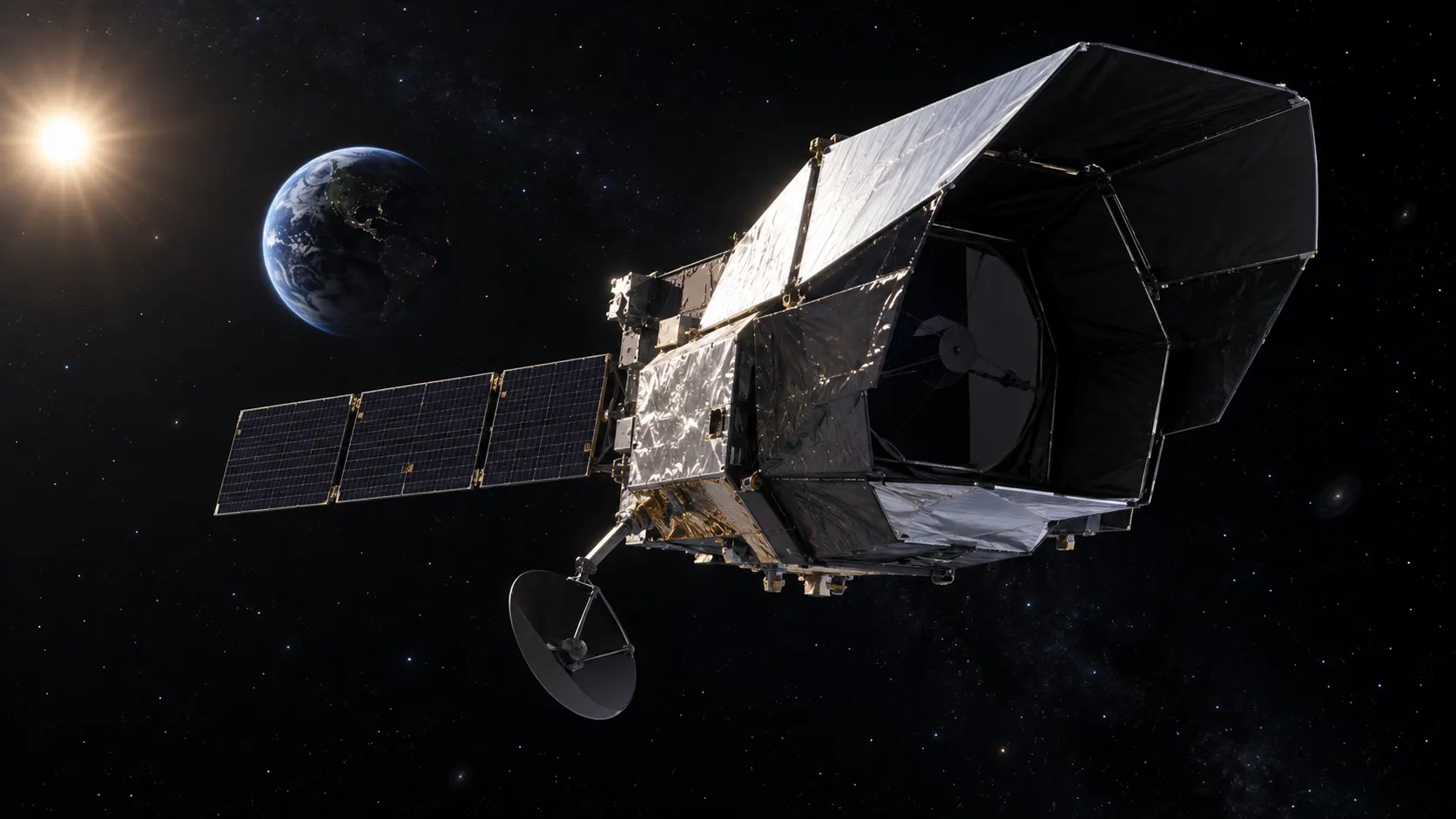
Roman’s antenna, sunshade and visor are deployed. Here is why the telescope’s three-month commissioning journey matters before its first images arrive.
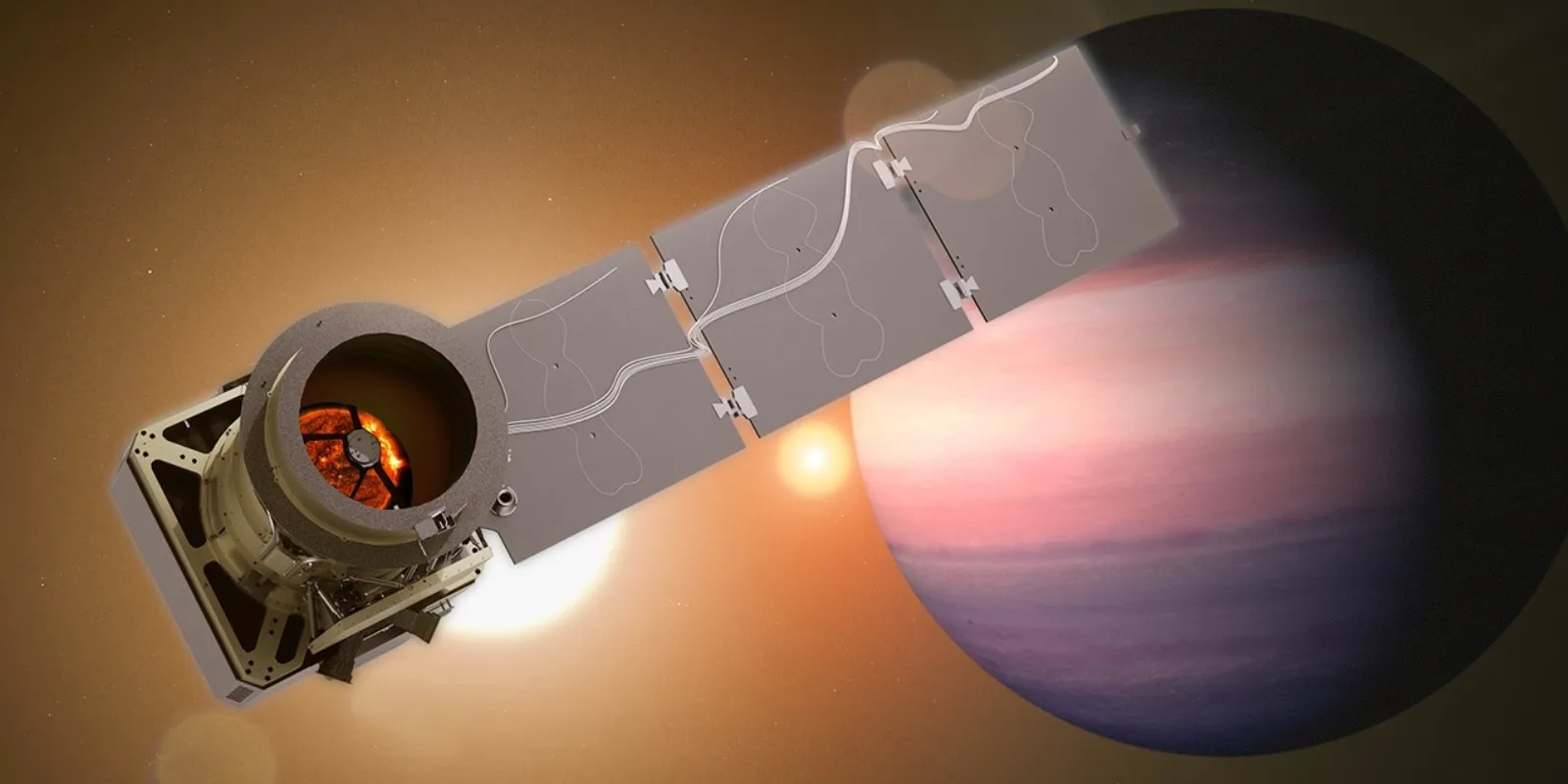
NASA’s Pandora satellite has started science observations of at least 20 exoplanets, measuring their host stars so Webb’s atmospheric results can be read more reliably.
Auf YouTube findest du die angesagtesten Videos und Tracks. Außerdem kannst du eigene Inhalte hochladen und mit Freunden oder gleich der ganzen Welt teilen.
NASA's Nancy Grace Roman Space Telescope is gliding toward its distant observation post on a pinpoint trajectory so precise that engineers estimate the spacecraft's fuel load will last twice as long as their initial expectations, the space agency confirmed Monday.
The $4.3 billion observatory's designers originally planned to load enough propellant into Roman's four fuel tanks for a minimum lifetime of five years, plus a potential five-year mission extension. That was a conservative estimate. NASA officials knew an on-target launch and perfect execution of the observatory's first post-launch course correction maneuver would leave Roman with a hearty fuel reserve.
"As a result of exquisite planning by our orbital dynamics team, brilliant execution by the operations team, and a precise launch from SpaceX, Roman has fuel for at least 22 years of potential science operations," Jamie Dunn, center director at NASA's Goddard Space Flight Center, said in a press release.
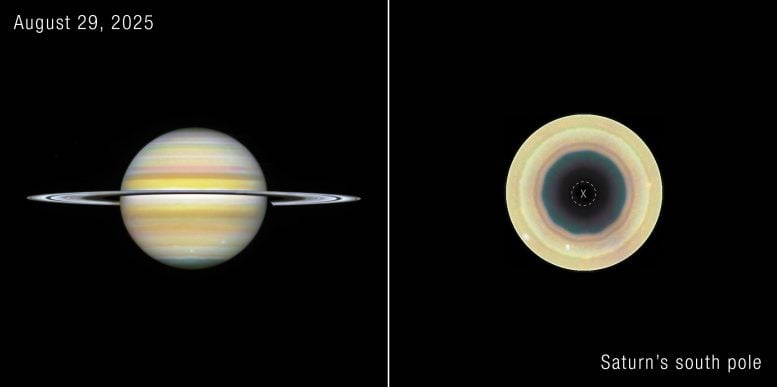
A giant 10-sided wave is emerging around Saturn’s south pole, giving scientists a rare chance to watch a planetary weather pattern take shape. NASA’s Hubble Space Telescope has detected a huge, evolving atmospheric wave with 10 sides wrapped around Saturn’s south pole. It is the first time scientists have seen a large, regular-sided jet pattern [...]
The Hubble and James Webb space telescopes have teamed up to target some of the smallest, most distant objects in the solar system, discovering that the history of these tiny objects is more puzzling than we'd realized.
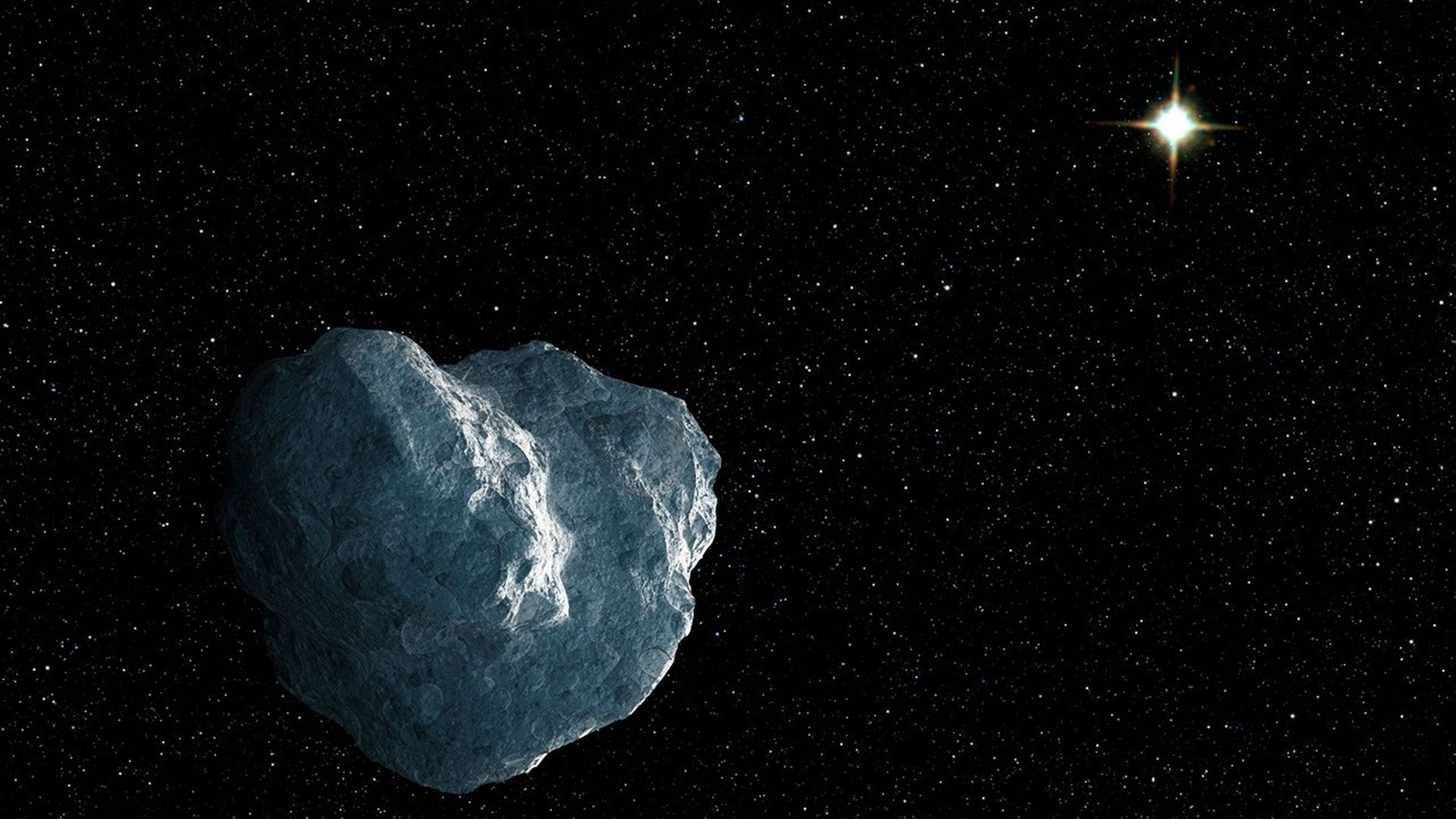
The two orbiting observatories collectively discovered 27 new Trans-Neptunian Objects, or TNOs, all less than 25 miles (40 kilometers) across, with the smallest being only 6 miles (10 kilometers) in diameter. As their name suggests, TNOs orbit the sun from far beyond Neptune. Some of them were born out there, at the dawn of the solar system, as small planetesimals unable to take the extra step to form planets.
Models of how these TNOs formed predicted that they should have been peppered with impacts that mixed up their surface material so that their composition, and therefore color, would be different than larger TNOs. Yet new observations, led by two PhD candidates, Anastasia Morgan of Northern Arizona University and Marielle Eduardo of the University of Victoria found the opposite – the little TNOs still look as pristine as the day they formed.
"You could imagine a scenario where getting knocked around and fragmented would change the surface composition, and then you would see a different surface color for tiny TNOs compared to their larger siblings," said Morgan, who led the color and composition analysis, in a statement. "So it's really fascinating to see that the smallest objects are somehow 'remembering' and preserving the history of how they were made."
TNOs native to the Kuiper Belt move in near-circular orbits around the sun and are level with the ecliptic plane, the imaginary flat 'disc' on which the planets and other objects orbit our star. They are said to be dynamically 'cold' because they haven't really budged since they formed.
Other TNOs, however, formed between the seventh and eighth planets, Uranus and Neptune, but before they could be assimilated into those worlds while those planets were growing, they were ejected by gravitational resonances into the region far beyond Neptune, collectively forming a 'Scattered Disk' of objects on highly elongated orbits significantly inclined to the plane of the solar system. Such TNOs are referred to as being dynamically 'hot'.
Yet even the 'hot' TNOs seem to have resisted any changes to their surface composition.
"These dynamically hot TNOs retain a signature of where they were born, even though they've been orbitally scrambled since then," said David Trilling of Northern Arizona University.
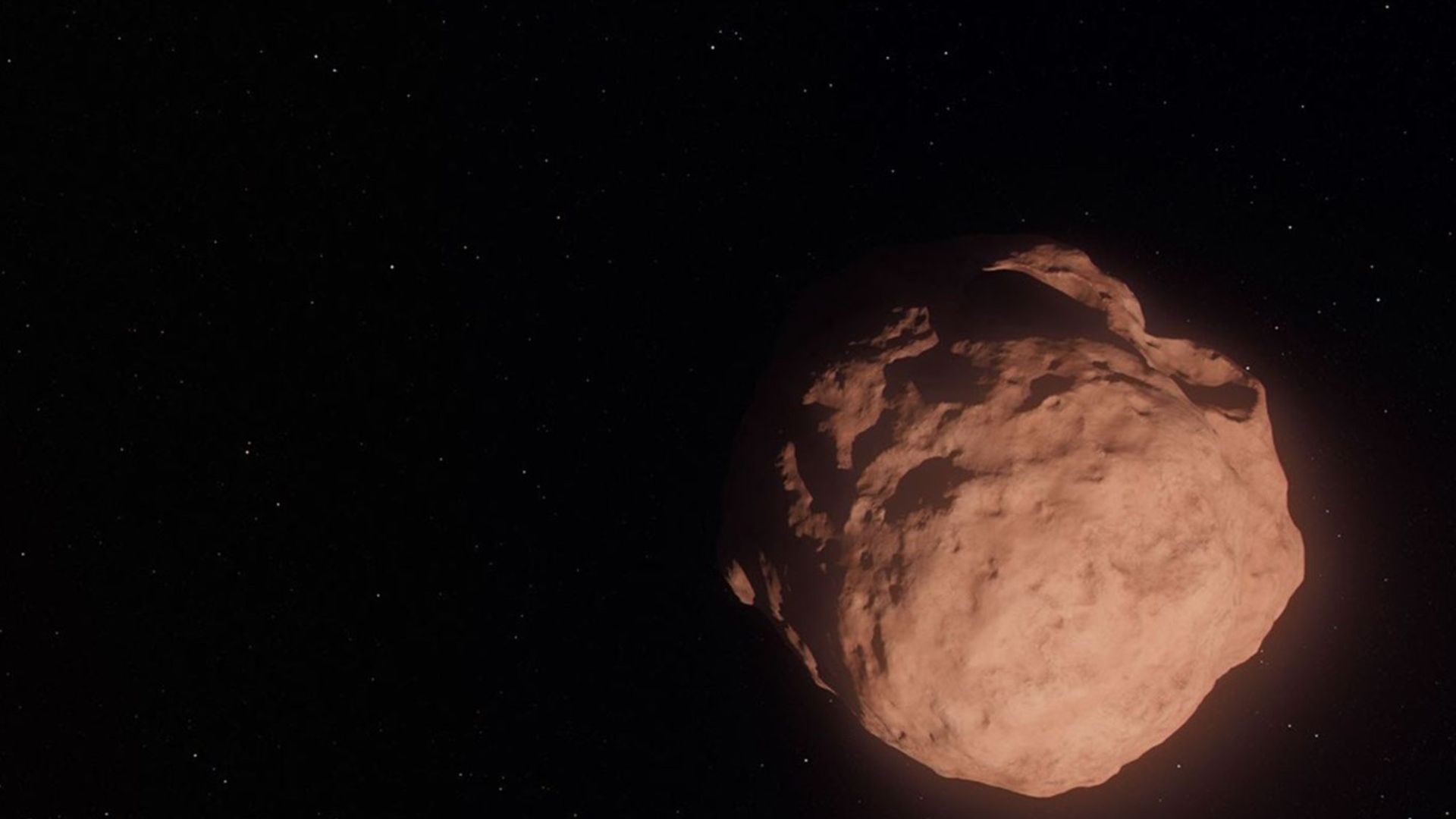
An artist's interpretation of a trans-Neptunian object. (Image credit: Artwork: NASA, ESA, and G. Bacon (STScI); Science: NASA, ESA, and C. Fuentes (Harvard-Smithsonian Center for Astrophysics))
This leads to one of two surprising possibilities. Either there are far fewer impacts taking place far from the sun than astronomers thought, which doesn't match with what we think we know about the population density of objects out there, or the impacts and collisions do take place but for some reason do not tear up the surface of the small TNOs as much as we might expect.
Thanks to the James Webb Space Telescope's (JWST's) infrared vision, Marielle Eduardo was able to figure out the size distribution of the TNOs. When we look in visible light, how bright a TNO appears depends in part on how reflective its surface is, a property referred to as albedo. A larger body with a composition that isn't very reflective might appear fainter at the same distance as a smaller object covered in shiny ice.
However, at infrared wavelengths the brightness of an object is dependent mostly on its size, allowing accurate determinations of the diameters of the 27 TNOs. Surprisingly, there seem to be fewer of the very small TNOs than what models of their formation predict.
"It's very interesting that the process of planetesimal formation ends up producing the same distribution of sizes for both cold and hot populations, despite forming in different regions of the early solar system," said Eduardo. "The process seems to be insensitive to [planet-forming] disk conditions, producing similar planetesimal sizes whether the disk is hot or cold, and dense or fluffy."
These observations push Hubble's and JWST's abilities to the limit. The TNOs are incredibly faint, shining between magnitudes 24.1 and 29.3, described as being equivalent to seeing a swarm of fireflies on the moon from Earth. As such, it is the deepest survey yet into the relatively unknown realm beyond Neptune, just as you'd expect from these two powerful space telescopes getting together.
The research was published in The Astronomical Journal as two separate papers on Sept. 8, one on color and composition, the other on the size distribution of the TNOs.
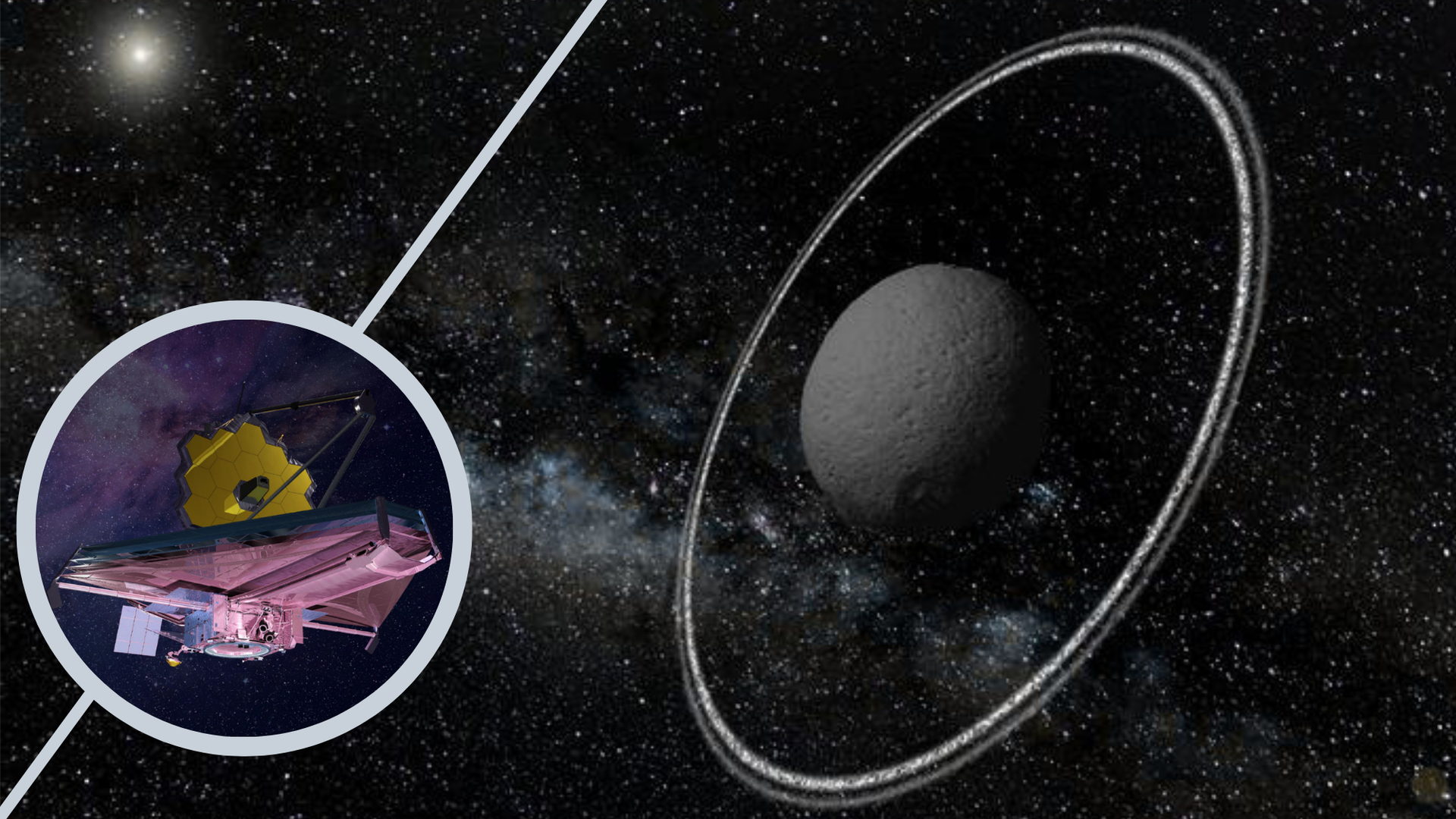
Using the James Webb Space Telescope (JWST), astronomers have discovered that the ring system of a tiny solar system body is even more interesting than they knew.
The object in question is Chariklo, which orbits the sun between Saturn and Uranus, at around 17 times the distance between Earth and the sun. Despite only being around 155 miles (250 kilometers) wide, Chariklo, part of the Centaur family of asteroids, possesses two thick rings.
Though Saturn is the solar system body most famous for its rings, other planets also have ring systems, albeit less prominent. That includes Uranus, Neptune, and Jupiter. However, Chariklo and the even smaller body Chiron, show that even the most diminutive bodies can develop rings. Now, thanks to the incredible sensitivity of the JWST, scientists know that the rings of Chariklo are even stranger than their initial discovery in 2013 suggested.
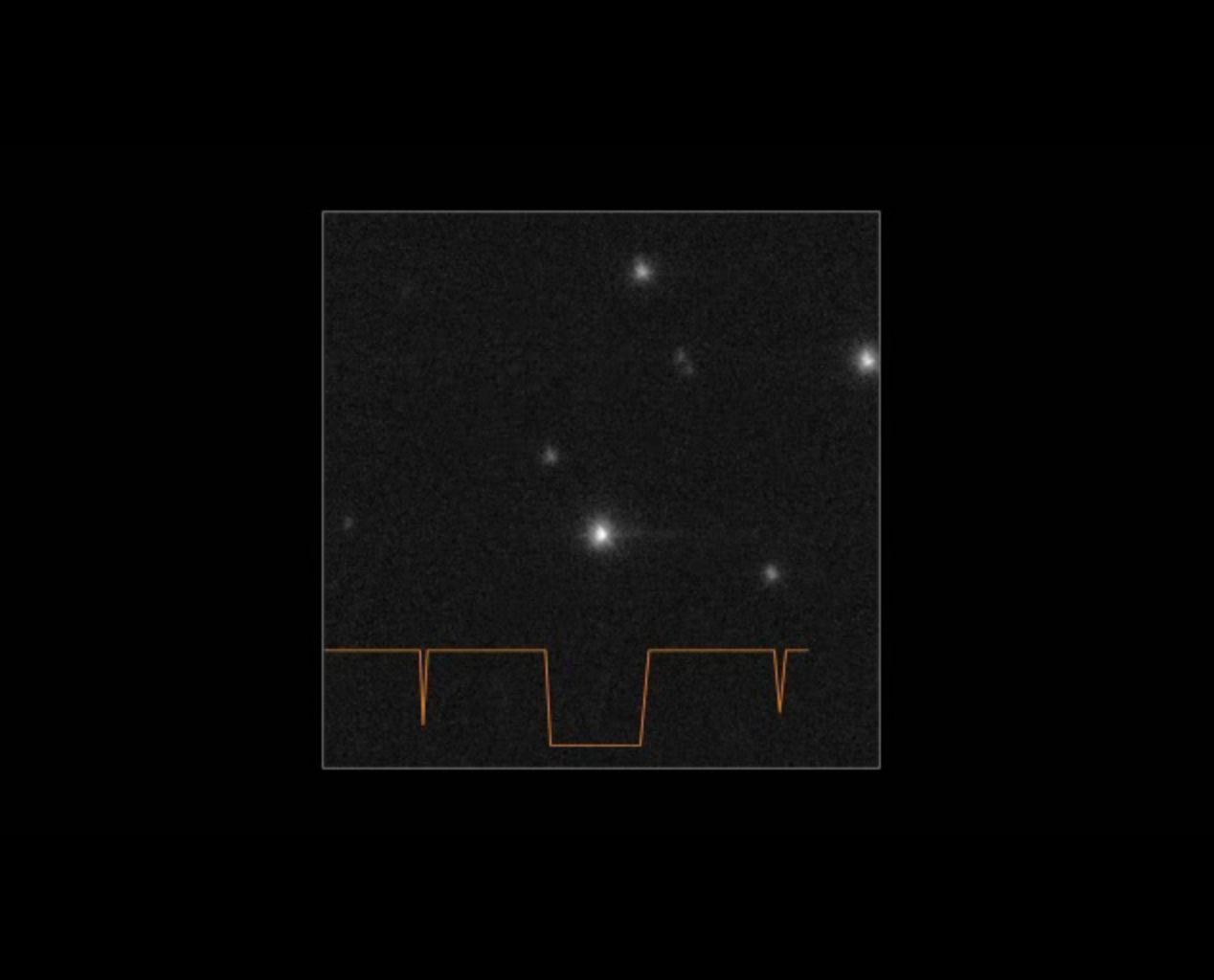
The team, led by researchers from the Institute of Astrophysics of Andalusia (IAA-CSIC), began observing Chariklo with the JWST in Oct. 2022. They used a technique called stellar occultation, which measures the decrease in light from a star when an object passes in front of it.
"By comparing JWST observations with those obtained during other stellar occultations over the last decade, we discovered opposite changes in the two rings: while the inner ring shows significantly higher opacity, the outer ring shows lower opacity," team leader Pablo Santos-Sanz of the IAA-CSIC said in a statement.
The changing rings of the asteroid suggest that it experiences more complex physics than previously thought. This is important because scientists had previously believed that small bodies had relatively stable rings.
"Our results force us to rethink how they form, how they evolve, and what mechanisms maintain their stability," Santos-Sanz said. "The ability to detect these changes opens a new window for understanding the evolution of these systems and, possibly, that of other ring systems in the solar system."
The cause of these changes remains a mystery.
Another milestone for the JWST and Gaia
The research doesn't just represent an important step in our understanding of asteroids and solar system rings, but it is also an important milestone for the JWST.
"Achieving this required knowing with extraordinary precision the orbit of Chariklo, the position of the star, thanks to the European Space Agency’s Gaia mission, and the trajectory of JWST itself around the L2 Lagrange point, a region of space located about 1 million miles (1.5 million kilometers) beyond Earth, away from the sun," team member Yücel Kilic of the IAA-CSIC said. "The JWST follows an orbit around this region that requires periodic corrections through station-keeping maneuvers."
Dips in light from a distant star caused as it is occulted by Chariklo and its rings (Image credit: ESO/Felipe Braga Ribas/M. Kornmesser)
During the occultation the team used in their research, Chariklo was traveling at around 5,600 miles per hour (2.5 kilometers per second) relative to the JWST.
This is incredibly fast by Earth standards, but relatively slow for objects racing through the solar system. This low speed allowed the rings of Chariklo to be resolved in unprecedented detail. Astronomers currently rely on occultation to study Chariklo and its rings, as even the JWST isn't powerful enough to directly image this small and distant asteroid.
The team's research was published on Tuesday (Sept. 9) in the journal Science Advances.
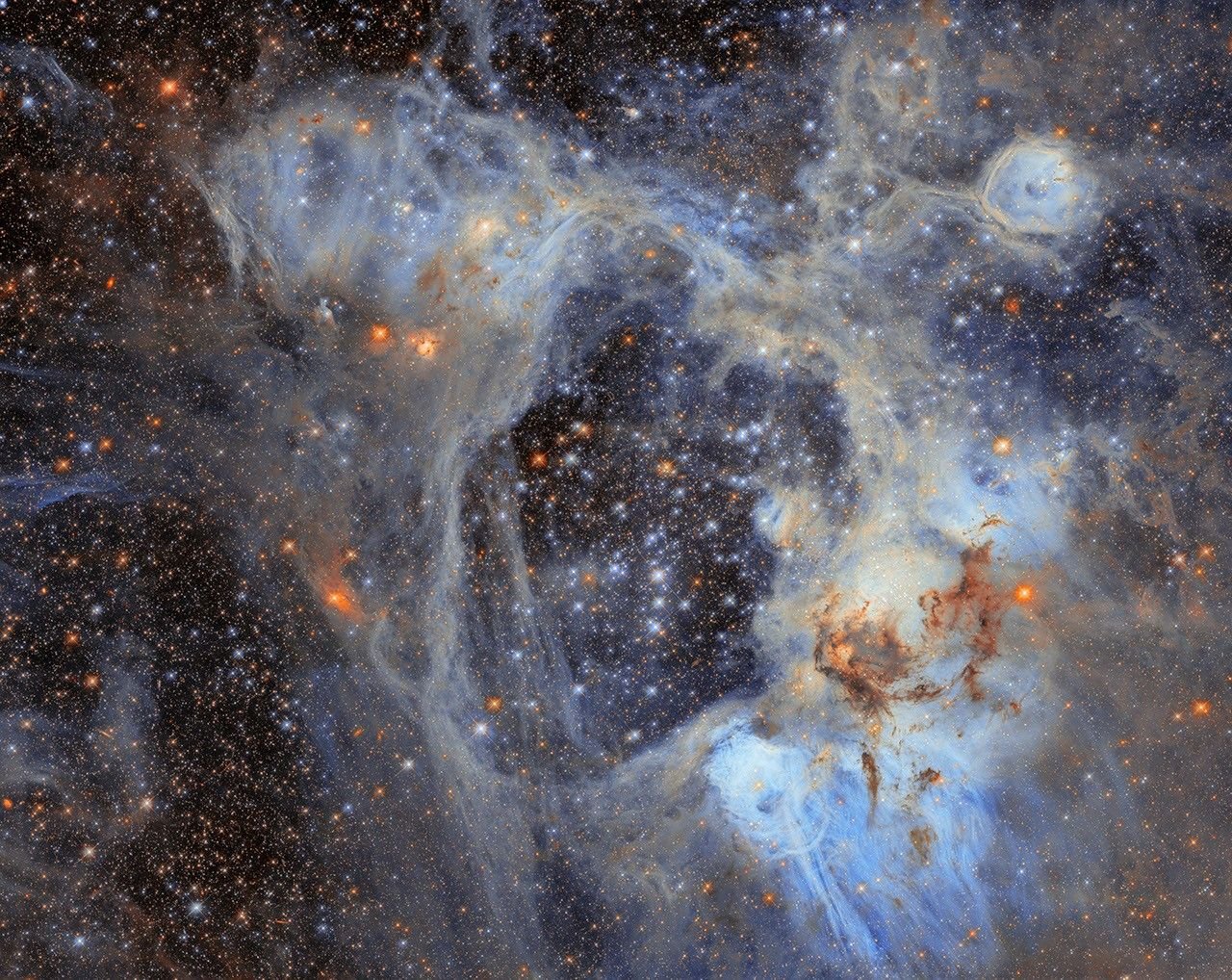
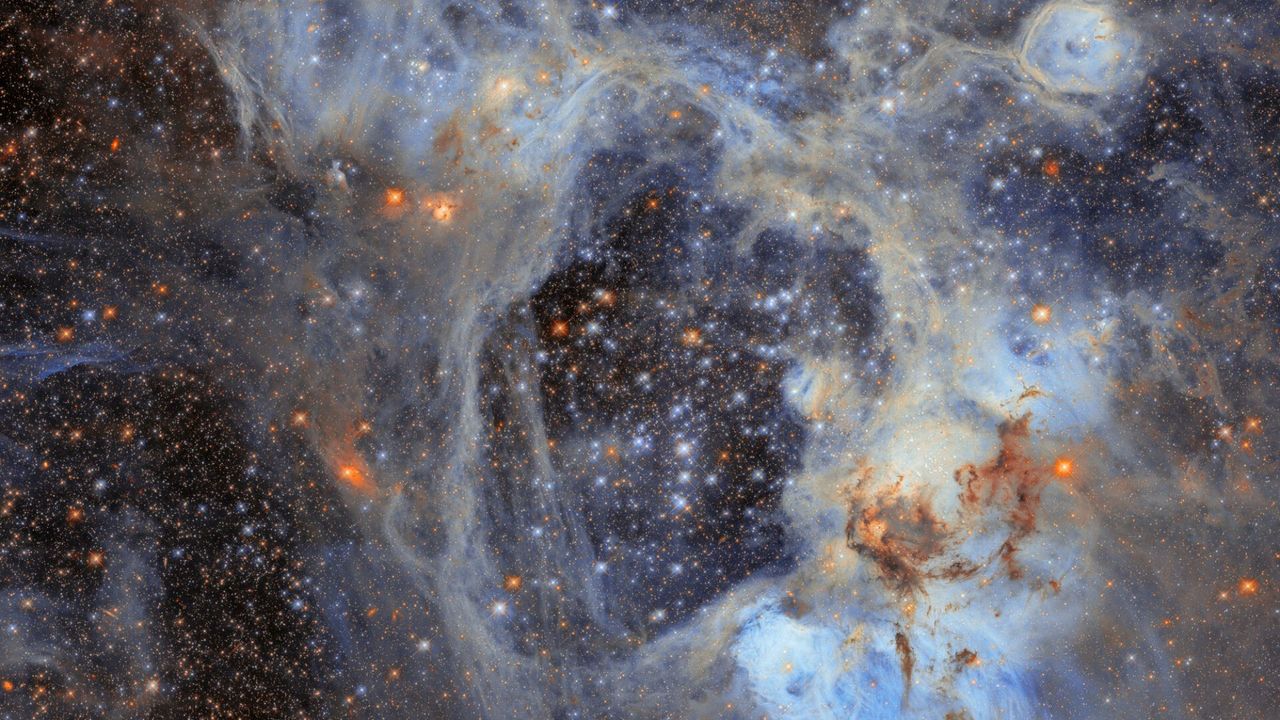
At a spry 36-years-young, the NASA/ESA Hubble Space Telescope just keeps on going. The groundbreaking observatory recently took a new image of a sprawling nebula located in the Large Magellanic Cloud (LMC). The LMC is the largest of the small galaxies that orbit our home Milky Way galaxy, and it’s only 160,000 light-years away. Since it is relatively close by, astronomers can more easily observe star birth hot spots like LHA 120-N44 (or N44).
N44 is located in the constellation Dorado. It is dominated by two main features—a large central void and an outer shell made of dense, dusty gas.
The central void is considered a “superbubble,” that spans about 210 by 140 light-years across. N44’s superbubble void was created by the powerful stellar winds and explosive supernovae from the glittery stars at the center.
The shell surrounding the superbubble is made of all of the gas that was expelled when these stars in the void were born. Once the gas was swept away, it compressed and formed a shell around the superbubble. Now, new stars are forming in this compressed gas shell, making it an interesting target for astronomers. They are using N44 to study how stars form in this type of cosmic environment.
“Their goal is to understand how long it takes from the collapse of cold gas clouds into dense knots to the moment nuclear fusion ignites in the heart of a newborn star,” NASA writes.
The gas shell surrounding N44’s superbubble has intrigued astronomers for over half a century. It is energized by ultraviolet radiation from massive stars, which makes it glow and highlights several distinct features. In the 1950s, astronomer Karl Henize first catalogued the distinct features within the nebula’s star-forming complex.
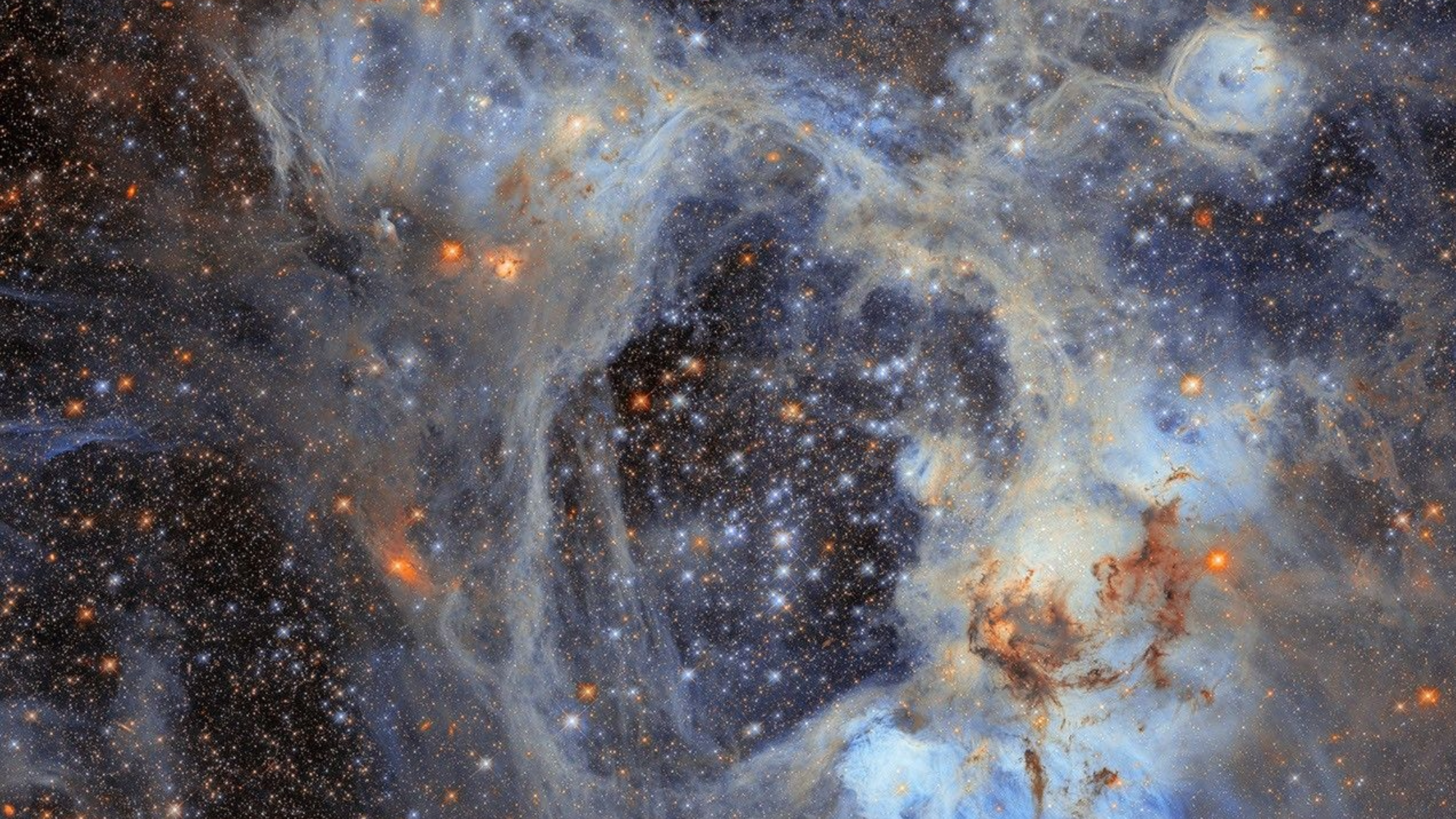
One feature is a smaller bubble (cataloged as N44F). It is an interstellar bubble blown by the intense stellar winds coming from one hot and massive star and is located in the upper-right corner of the new image.
This Hubble Space Telescope image features the picturesque nebula LHA 120-N44, or N44. The interstellar bubble N44F is at the top right corner. Image: NASA, ESA/Hubble, D. Gouliermis.
This Hubble Space Telescope image features the picturesque nebula LHA 120-N44, or N44. The interstellar bubble N44F is at the top right corner. Image: NASA, ESA/Hubble, D. Gouliermis.
The data used in this image is from observing program #14689; PI: Gouliermis. It used Hubble to survey N44 and take a census of its stars, cataloguing roughly 500,000 stars within the cluster, and some interlopers drifting in front of the nebula. Of the stars the team surveyed, roughly 30,000 are what astronomers call pre-main-sequence stars. These baby stars have not begun to fuse hydrogen into helium in their cores. Hubble’s highly-sensitive instruments were able to pick out faint objects in crowded clusters to find these young stars at work.
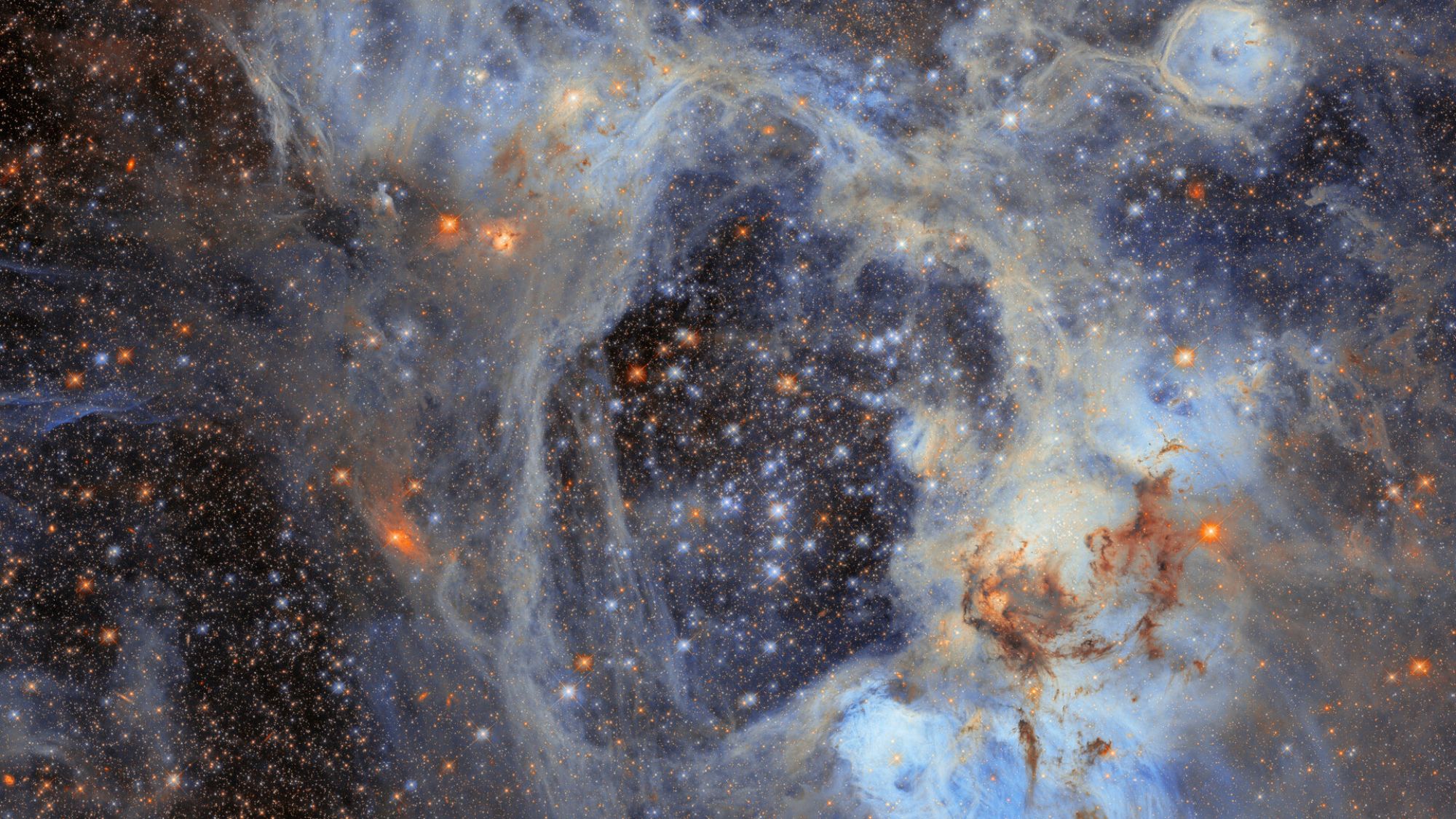
This nebula is named LHA 120-N44, or N44 for short, and it’s located in the constellation Dorado. (Image credit: ESA/Hubble & NASA, D. Gouliermis)
About 160,000 light-years away lies one of our Milky Way's little galactic neighbors: The Large Magellanic Cloud (LMC). And thanks to a new observing program, the Hubble Space Telescope has provided us with an intricate image of a nebula in the LMC. The surprising part? There's a giant void at the center. Scientists call it a "superbubble."
What is it?
What you're seeing in this image is a nebula within the LMC known as LHA 120-N44, or simply N44. It's located in the constellation of Dorado and, like a classic nebula, is the site of stars being born at a noticeably rapid rate.
But of course, what really can't be missed is the huge hole at the center of N44's dusty tendrils — this is the "superbubble," and its dimensions are staggering. NASA says it's about 210 by 140 light-years across — a truly unimaginable size, considering the distance between our sun and Pluto isn't even a single light-year.
One light-year, the distance light travels in a year, is about 6 trillion miles (9.7 trillion kilometers).
Why is it noteworthy?
The superbubble is a bit of a mystery, but one theory of why it exists is that stars at the center of the bubble could have undergone supernova explosions or have released stellar winds that swept away gas in the nebula. This could have resulted in a "void," as NASA calls it, surrounded by a gaseous shell. That would explain away the image we see pretty well, but there will likely be studies dedicated to refining that story.
Of note, in that shell around the superbubble, stars continue to form and show themselves as beautiful little specks across the watercolor-like landscape.
Something else interesting about this image is that N44 is what's known as an "emission nebula," meaning the gas you see has been energized by stars in the area. This enhances the luminescent quality of the portrait.
This is because the energization process, or ionization to be specific, generates ionized gas that ultimately must cool down. During that cooling, it goes from a higher energy state to a lower energy state and thus releases some energy. This energy loss causes N44 to glow brightly, creating the beautiful scene we see.
The reason scientists have used the Hubble Space Telescope to study N44 is this particular nebula offers good conditions to study star formation and evolution. As a matter of fact, Hubble managed to survey nearly half a million stars in and around the cluster, 30,000 of which are in the very early stages of their lives.
N44 has been a major topic of interest for quite some time. For instance, it made headlines in 2021 as well as in 2012 — both times due to Hubble's eye yet again — and observations with the Chandra X-ray Observatory led to a 2011 paper that discusses supernova shock waves and other phenomena shaping the nebula and its cavity.
Searching for Another Earth with the Nancy Grace Roman Space Telescope
In NASA’s mission fact sheet, Roman’s planners pose several questions. These include:
How common are solar systems like our own?
What kinds of planets exist in the cold, outer regions of planetary systems?
What determines the habitability of Earth-like worlds?
Although scientists have used several methods to detect exoplanets, including Earth-like planets, Roman will employ three. These include the transit method, microlensing, and direct imaging. NASA said the combination of approaches will allow mission scientists to conduct a “sweeping search expected to uncover around 100,000 new exoplanets — a staggering leap compared to the nearly 6,200 currently known.”
“It is hoped that Roman will discover thousands of new exoplanets and significantly expand our knowledge of the diversity of planetary systems in our Galaxy,” explained Associate Professor Edita Stonkutė, an astrophysicist at Vilnius University unconnected to the Roman team, in a statement emailed to The Debrief.
Microlensing Can Reveal Earthlike Planets Orbiting Sunlike Stars
Most exoplanets have been detected by the dimming of their host star when they transit between it and Earth, giving the transit method its name. Roman plans to use that same method for most of its larger planetary detections. However, among the expected tens of thousands of transit-method detections, mission planners expect a small but sizeable percentage to come from microlensing.
NASA said the “light-bending” microlensing phenomenon occurs when two distant stars “align closely from our vantage point.” Due to the strength of the nearer star’s gravity, the light from the more distant one is “warped” around the nearer one, essentially focusing it very briefly for a distant observer.
“If the alignment is especially close, the nearer star acts like a cosmic lens, focusing and magnifying light from the background star.” Professor Stonkutė explained. “By analysing these changes, astronomers can determine that the planet exists and estimate its mass and orbital characteristics.”
Critically, Professor Stonkutė also noted that microlensing can occur with objects other than stars, including exoplanets.
“This is Precisely Where Roman Has the Edge”
Using its Wide-Field Array, Roman will monitor hundreds of millions of stars. NASA said the observatory will monitor these target stars for “tiny surges in starlight” that typically signal a microlensing event.
Although the transit method is employed to detect larger exoplanets, NASA noted that microlensing “specializes in finding planets like those in our solar system.” The space agency added that this includes “worlds as lightweight as Mars in their star’s habitable zone or farther out.”
A star’s habitable zone is typically defined as the orbital plane where an exoplanet could sustain liquid water on its surface, a key ingredient for life as we know it.
Professor Stonkutė described microlensing as “particularly valuable” since it can detect planets that are difficult to spot with other planet-hunting methods. The professor said this includes “small Earth-like planets located far from their star.” The Roman team hopes to find “more than 1,000 microlensing planets.”
The professor warned that “most microlensing events cannot be predicted in advance.” As a result, telescopes need to actively scan large areas of the sky to increase the chances of a microlensing detection
“This is precisely where Roman has the edge over other telescopes that have searched for exoplanets using different methods,” the professor added.
A “Stepping Stone” Toward NASA’s Habitable Worlds Observatory Concept
While Roman is tasked with directly imaging exoplanets, finding another Earth around a Sun-like star will still require an indirect detection, most likely from a microlensing event. However, the Roman team notes that their observatory “will provide a crucial stepping stone for NASA’s Habitable Worlds Observatory concept.”
According to the space agency, that “flagship” telescope, still awaiting final approval, “would be designed to photograph Earth-like planets for the first time ever.”
Roman may also be able to scan the atmospheres of planets detected with the transit method. The space agency said Roman “would also look for signs of life called biosignatures by measuring atmospheric gases like oxygen and ozone that could signal the presence of living things.”
Christopher Plain is a Science Fiction and Fantasy novelist and has spent the last six years as Associate News Editor and Head Science Writer at The Debrief. Follow and connect with him on X, learn about his books at plainfiction.com, or email him at christopher@thedebrief.org.
The Nancy Grace Roman Space Telescope, set to launch into orbit, aims to explore dark energy and dark matter, potentially addressing the unresolved Hubble Tension. This discrepancy highlights conflicting measurements of the universe's expansion rate. Some scientists believe Roman may confirm flaws in the standard cosmological model, leading to new physics.
When NASA announced that the new Nancy Grace Roman Space Telescope will perform its science duties from a point in space known as Lagrange 2, many observers noted that the space agency’s current state-of-the-art space observatory, the James Webb Space Telescope, shares this same orbital location.
Due to the extremely sensitive nature of both satellites and their sensors, and the irreplaceable scientific value they will provide in the future, it might seem natural to wonder whether these two space observatories are at risk of a deep-space collision.
Fortunately, that’s a very unlikely prospect, and here’s a look at all the space separating Roman and Webb—and how NASA will ensure the two observatories remain safely apart.
Nancy Grace Roman Space Telescope Heading for Lagrange 2
Many scientific satellites reside a little over 200 miles above Earth in an orbital plane called Low Earth Orbit (LEO). This proximity enables communication with Earth and offers the potential for future servicing missions.
For example, NASA’s groundbreaking Hubble Space Telescope orbits LEO at about 300 miles above Earth. This proximity enabled servicing missions that have kept Hubble delivering valuable scientific data for over three and a half decades since its 1990 launch. Still, LEO also limits which missions Hubble can undertake.
More recently, NASA launched JWST. However, unlike Hubble, Webb rocketed roughly one million miles from Earth before arriving at Lagrange 2. According to a NASA fact sheet detailing the Roman Space Telescope’s mission, this location offers several benefits over LEO.
“At L2, the gravity of the Sun and Earth, together with an object’s motion around the Sun, let it stay lined up with Earth as they orbit,” NASA explains, “allowing Roman to have a relatively steady orbit without using much fuel.”
NASA also notes that heat from Earth, the Sun, and the Moon has less impact on infrared telescopes designed to “see” heat. L2 also offers JWST and Roman, “a constant, unobstructed view of a wide swath of the sky.”
“Earth won’t block much of Roman’s view since it will be so distant,” NASA explains.
Is There a Danger of a Roman-JWST Collision?
Instead of sitting still at the heart of L2, NASA notes that Webb “traces out a large orbit around the actual L2 point.” For comparison, the space agency noted that JWST’s orbit around L2 is “much larger than the Moon’s orbit around Earth.”
Like Webb, the Nancy Grace Roman Space Telescope is also destined for L2. The new space telescope will also trace out an orbit around L2 rather than remaining comparatively stationary.
Because of the wide orbits of both spacecraft and the efforts of the mission’s controllers, NASA said the two valuable space telescopes “will easily be kept far apart.”
Five-Year Mission Could Stretch to Ten or Beyond with Refueling
Like previous NASA missions, Roman will have a primary lifetime and a backup plan if the observatory remains viable after the first mission ends. For Roman, both the primary and secondary missions are slated for five years, bringing the observatory’s planned potential lifetime up to a possible ten years.
Notably, several NASA missions have continued to deliver scientific data well beyond their planned primary and secondary missions. Perhaps the most famous example is Voyager 1. Launched in 1977, the interplanetary mission has since left the solar system and continues to return data from beyond the heliopause, an area of deep space over 14 billion miles from Earth.
When discussing what obstacles may result in a shorter mission profile, NASA said that “fuel is expected to be the mission’s life-limiting resource.”
“While NASA does not currently have an ability to service observatories at L2, Roman is designed to be refuellable,” they added.
Christopher Plain is a Science Fiction and Fantasy novelist and has spent the last six years as Associate News Editor and Head Science Writer at The Debrief. Follow and connect with him on X, learn about his books at plainfiction.com, or email him at christopher@thedebrief.org.
These include a primary mirror, a Wide Field Array sensor, and a Coronograph Instrument technology demonstration designed to block out starlight to enable direct imaging of exoplanets.
Here is a quick peek at those instruments, which will help Roman image exoplanets, search for signs of dark matter and dark energy, and add huge amounts of raw scientific data that will keep scientists busy for years to come.
Nancy Grace Roman Space Telescope Instruments: The Primary Mirror
Designed and built at L3Harris Technologies in Rochester, New York. Roman’s primary is 7.9 feet across (2.4 meters). That is the same size as the one on NASA’s legacy Hubble Space Telescope.
However, NASA said Roman’s main mirror, which weighs 410 pounds (186 kilograms), is just one-fourth the weight of Hubble’s, “thanks to major improvements in technology.” They also noted that the weight difference was critical to the Lagrange Point 2 mission’s viability.
The Wide Field Instrument
While the main mirror will gather light, Roman’s Wide Field Instrument, or WFI, will gather digital images of the cosmos. According to NASA’s mission fact sheet, the 300-megapixel infrared camera “will give Roman the same angular resolution as Hubble but with a field of view at least 100 times larger.”
“Using this instrument, each Roman image will capture a patch of the sky bigger than the apparent size of a full moon,” the space agency explained.
Image Credit: NASA
Unlike many telescopes designed to focus incoming light toward a central point, NASA said Roman is designed to “see the most detail in a ring around the center.” That’s because the WFI’s millions of detectors are laid out in an arch shape. The space agency said this design “helps Roman capture a much wider area with equally sharp imaging and also lets both instruments operate simultaneously.”
Due to the hardware and software improvements, NASA said the WFI will gather data “up to 1,000 times faster than Hubble. When Roman’s five-year mission is completed, mission planners said they expect to gather “up to 20,000 terabytes (20 petabytes)” of data.
“Its sweeping cosmic surveys will help scientists discover new information about planets beyond our solar system, untangle mysteries like dark energy, and map how matter is structured and distributed throughout the cosmos,” the agency said when detailing WFI’s capabilities, adding that the mission’s “broad, crisp view will produce an extraordinary resource for a wide range of additional investigations.”
WFI’s Detectors
In a fact sheet, NASA said that the detector array at the heart of Roman’s WFI contains 18 “saltine cracker-sized” detectors. The space agency also said that each detector contains roughly 16.8 million tiny pixels (for a total of 300 million), “providing the mission with exquisite image resolution.”
Each cutting-edge detector comprises millions of photodiodes, which convert light into electrical current. NASA said this number of detectors, made from mercury-cadmium-telluride photodiodes (sensors that convert light into an electrical current), provides “one for each pixel.”
The space agency also noted that individual detectors are secured to a silicon electronics board that will help process the light signals using indium. Unlike steel, indium is a soft metal that has roughly the same consistency as chewing gum.
When they are working together, NASA said that these ultra-sensitive detectors “can capture vast areas of sky in a single shot while still revealing incredibly fine detail, allowing Roman to map the cosmos faster and more precisely than ever before.”
The Experimental Coronagraph
Astronomers typically infer the existence of exoplanets by the gravitational effects they exert on their host star or the dimming of the star’s light. However, directly imaging exoplanets has remained challenging because the star’s extremely bright light dwarfs the much dimmer light reflected by the planet. As a result, only a few of the largest, young “super Jupiters” have been directly imaged to date.
Image Credit: NASA
To block enough of a star’s light to capture an image of an exoplanet, Roman’s engineers have installed a novel Coronagraph. NASA describes this experimental device as “a system of optics, masks, self-flexing mirrors, and sensors designed to demonstrate the most advanced technologies ever flown in space for directly imaging planets around other stars.”
After its mid-flight deployment, Roman’s Coronagraph team will begin conducting a series of pre-planned observations. Mission planners said these observations “are scheduled for a total of three months spread across the mission’s first year-and-a-half of operations.”
“The Coronagraph aims to photograph worlds and dusty disks around nearby stars in visible light to help us see giant worlds that are older, colder, and in closer orbits than the hot, young super-Jupiters direct imaging has mainly revealed so far,” the space agency explained.
The Roman team expects to release new images by early 2027. For detailed updates, follow the
Roman blog at science.nasa.gov/blogs/roman.
Christopher Plain is a Science Fiction and Fantasy novelist and has spent the last six years as Associate News Editor and Head Science Writer at The Debrief. Follow and connect with him on X, learn about his books at plainfiction.com, or email him at christopher@thedebrief.org.
The Secret History of the Nancy Grace Roman Space Telescope
The clandestine side of the Roman telescope’s story begins in 2012, with a surprise that landed on NASA’s doorstep at the agency’s Goddard Space Flight Center: a pair of once-classified spy satellites.
The Roman Telescope is a modified version of one of those two former spy satellites NASA received in 2012, which were originally developed for looking back toward Earth, rather than scouring the cosmos for signs of exoplanets and signs of some of the universe’s most elusive phenomena.
However, the original NRO project that led to the development of its satellites ended up being cancelled due to budgetary issues. So as not to allow the technology to go to waste, the orphaned satellites were soon handed over to NASA.
Retrofitting a Spy Satellite for Space Observations
Before the new Roman telescope that has astronomers so excited would take shape, NASA had to take the existing satellite frames provided by the NRO and attach special instruments that would equip it for cosmic observations, rather than just the clandestine ones it was originally designed for with its observations of Earth.
These additions included an infrared camera similar to the one on NASA’s James Webb Space Telescope (JWST), which allows it to observe phenomena at infrared wavelengths and spot phenomena across great cosmic distances that may not be discernible from Earth at normal visible wavelengths.
Along with the addition of new instruments, the satellite was also fitted for deployment further from Earth at the same Lagrange Point currently occupied by Webb.
Overcoming Obstacles
The telescope is named after Nancy Roman, NASA’s first female executive, who served as its first chief of astronomy and was an influential astronomer in the development of classifications for stellar objects and their motion.
Even with its original development by another government agency, the Roman Telescope’s mission was nearly cancelled because of proposals in 2018 and 2019 under the first Trump administration.
Fortunately, with its launch scheduled for Sunday morning, Roman has already overcome several hurdles on its way from its original development for one of America’s spy agencies to becoming NASA’s newest milestone in astrophysics studies.
Micah Hanks is the Editor-in-Chief and Co-Founder of The Debrief. A longtime reporter on science, defense, and technology with a focus on space and astronomy, he can be reached atmicah@thedebrief.org. Follow him on X @MicahHanks, and at micahhanks.com.
Here’s a look at the steps, tests, and deployments that NASA’s mission planners hope happen in the hours, days, and weeks after launch.
Nancy Grace Roman Space Telescope’s Carefully Orchestrated Series of Deployments
According to the mission site, once Roman has left Earth’s atmosphere, it will spend the next 90 days going through “a carefully orchestrated series of deployments, calibrations, and tests.”
Within the first hours of launch, NASA says the rocket boosters and main stage of the 18,000-pound (8,000-kilogram) dry-mass spacecraft, which is “about the mass of a Tyrannosaurus rex,” will separate. Soon thereafter, the rocket’s reusable side boosters will return to the area around the launch site and attempt to land.
In space, the rocket’s second stage will separate from the nose cone, which is jettisoned into space. This is followed by Roman separating from the launch vehicle.
To generate power and protect the spacecraft’s sensitive payload, Roman’s solar panels and sunshade will be deployed. According to NASA’s mission fact sheet, each of the space telescope’s six solar panels measures about 7 by 10 feet (2 by 3 meters) and is covered in a total of 3,902 solar cells.
When fully deployed, the panels will combine to provide up to 4 kilowatts of power. For comparison, the mission site says that it is “about the same rate that a modest rooftop solar panel system produces during the daytime.”
The Next 30 Days
Roman will spend the next 30 days speeding toward its final destination, a relatively stable location in the solar system called Lagrange 2, located roughly 930,000 to 1 million miles (1.5 to 1.6 million kilometers) from Earth.
Image Credit: NASA
During that journey, the craft’s antenna and deployable aperture will deploy. NASA says the carbon composite radio dish is 5.6 feet (1.7 meters) in diameter. For comparison, the space organization compared its height to an average refrigerator but noted it “weighs only 24 pounds (10.9 kilograms).”
“Its large size will help Roman send radio signals across a million miles of intervening space to Earth,” NASA explained.
One band of the dual-band antenna will receive commands from mission control and return information about the spacecraft’s location and overall health. The second band will communicate what NASA termed “a deluge of data at up to 500 megabits per second.”
About halfway through its voyage, Roman will make a course correction. During that same phase, the spacecraft’s Coronograph instrument will power up. The telescope’s other primary sensor, the Wide Field Instrument, will activate a few weeks later.
“With all components fully deployed, NASA said Roman is over 42 feet (12.7 meters long) and over 14 feet (4.4 meters) wide. The space agency said these dimensions make Roman “about the size of a tour bus.”
Finally, NASA said that throughout the rest of its 90-day commissioning period, both the antenna and Coronagraph “will run through a series of calibrations and tests.”
First Images Expected in 2027
Although the agency did not specify an exact date for the space telescope’s first light, the Roman team said it “anticipates releasing new images by early 2027.” For detailed updates, you can also follow NASA’s official Roman blog.
Christopher Plain is a Science Fiction and Fantasy novelist and has spent the last six years as Associate News Editor and Head Science Writer at The Debrief. Follow and connect with him on X, learn about his books at plainfiction.com, or email him at christopher@thedebrief.org.
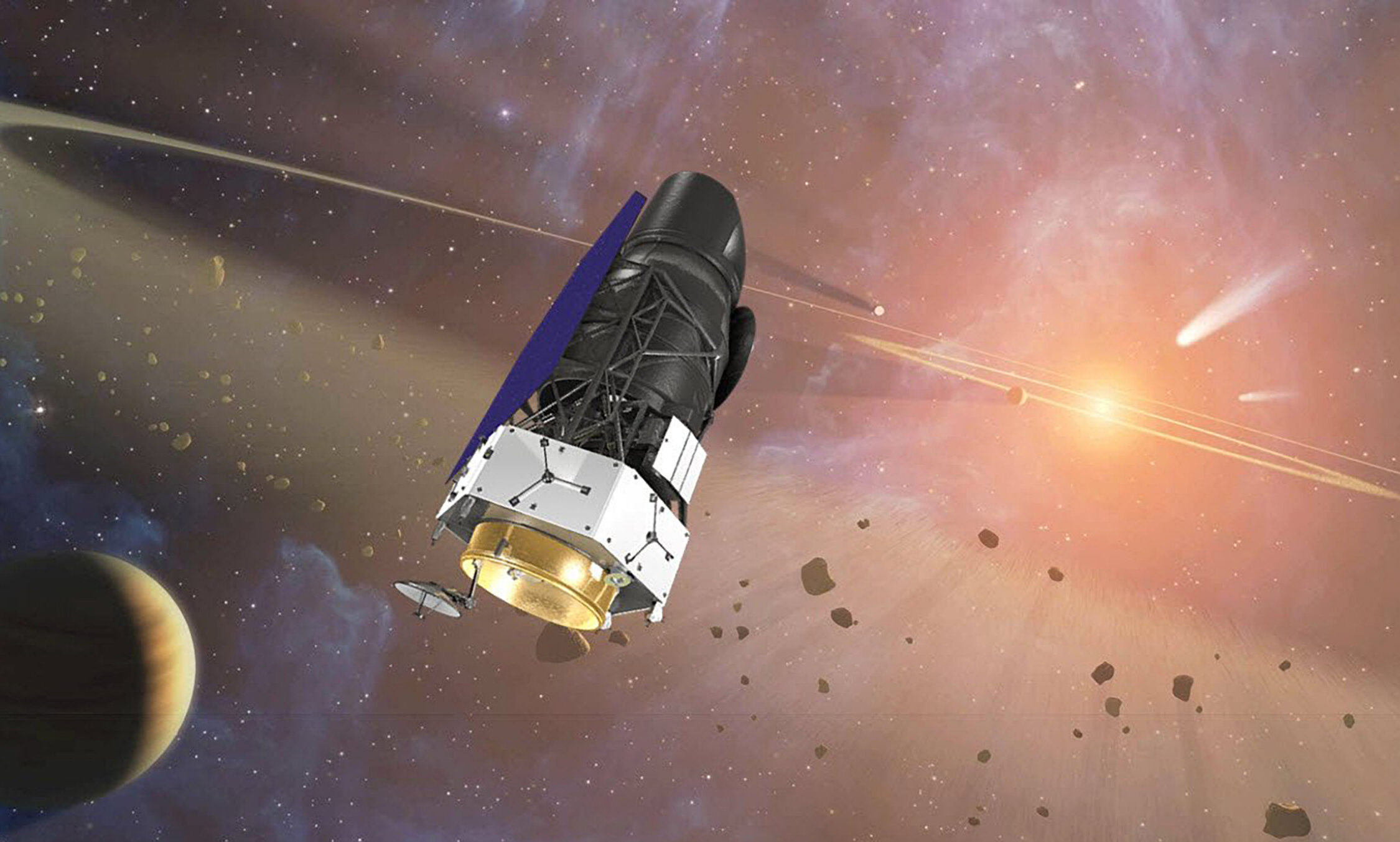
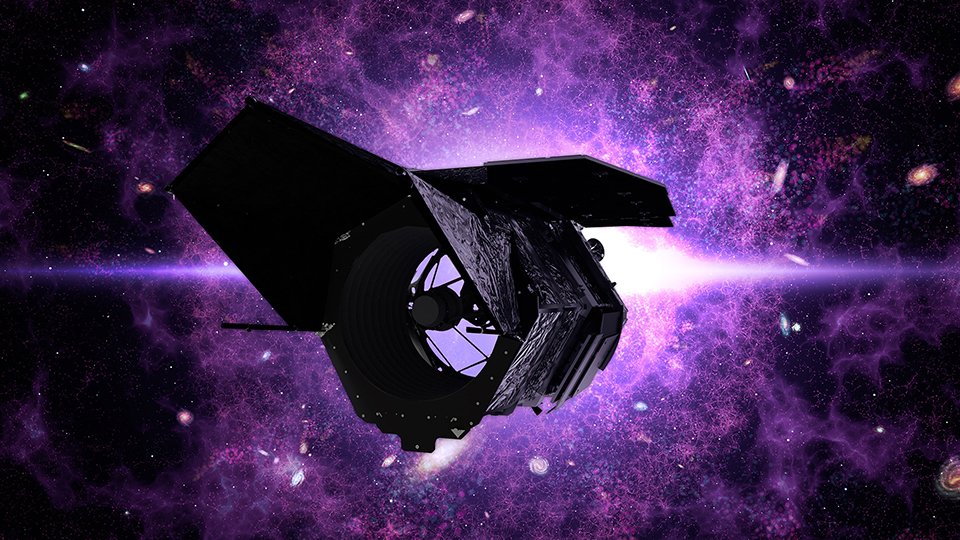
Artist’s concept of the Nancy Grace Roman Space Telescope (Credit: NASA).
Welcome to this special edition of The Intelligence Brief… This week, NASA is preparing to launch the Nancy Grace Roman Space Telescope, its next flagship space observatory and a mission poised to transform our understanding of distant worlds and some of the universe’s greatest mysteries. In our analysis, we’ll be looking at 1) how Roman’s powerful Wide Field and Coronagraph instruments will survey the cosmos on an unprecedented scale, 2) how the telescope could discover thousands of new exoplanets—including elusive rogue worlds—and directly image planets around other stars, 3) how Roman will survey more than a billion galaxies in search of new clues about dark matter and dark energy, and 4) why its combination of Hubble-like image quality and an enormously wider field of view could usher in a new era of astronomical discovery.
Quote of the Week
“We are poised at the brink of unfathomable scientific discovery.”
– Julie McEnery, Roman’s senior project scientist at NASA Goddard
If you enjoy the news and perspectives offered by The Debrief, make sure that you aren’t missing our stories by making us one of your “preferred sources” on Google News. You can simply follow this link to add The Debrief to your list of favorites, and you can read more about Google’s preferred sources in our article here.
Get all the latest stories from The Debrief, with more breaking stories at the end of this week’s newsletter.
NASA’s Nancy Grace Roman Space Telescope Prepares for Lift-Off
On Sunday morning, NASA will set a new milestone with the launch of the Nancy Grace Roman Space Telescope, setting the course for discoveries that may include new insights into some of the universe’s greatest mysteries.
As NASA’s next flagship space observatory, this powerful new telescope is designed to discover thousands of distant worlds while also probing the lingering mysteries of dark matter and dark energy. Named after Nancy Grace Roman, NASA’s first chief of astronomy and an early advocate for the efforts that led to the launch of the Hubble Space Telescope, the new space observatory bearing her name is poised to offer one of the most detailed views of our universe ever captured.
Scheduled to lift off aboard a SpaceX Falcon Heavy rocket on August 30, 2026, at 7:26 a.m. EDT, the Roman telescope’s mission is comparable in ambition to those of the Hubble and James Webb Space Telescopes, but also very different in many respects. Here’s a look at what to know about this historic mission, what it may help researchers uncover, and why it could set the pace for a range of important scientific advancements in the coming years.
Roman’s Historic Mission to Observe the Cosmos
At the heart of its mission, Roman will offer astronomers a remarkably wide view of the cosmos. Surveying immense portions of the sky, the powerful instruments on board the telescope will capture high-resolution imagery comparable to Hubble at certain optical and infrared wavelengths—imagery that could dramatically reshape scientists’ understanding of both planets and the universe they inhabit.
In terms of the technologies it will carry with it into space, Nancy Grace Roman Space Telescope will rely on two primary instruments: its Wide Field Instrument (WFI) and Coronagraph Instrument. The WFI is equipped with a 300-megapixel near-infrared camera enabling wide-area imaging and spectroscopy, allowing Roman to conduct large-scale surveys with great precision and sensitivity—all of which make it ideal for use in the hunt for dark energy, exoplanets, and other hard-to-spot cosmic phenomena.
Meanwhile, Roman’s Coronagraph Instrument is designed specifically for imaging and studying exoplanets. Equipped for both imaging and spectroscopy, the coronagraph will suppress the overwhelming glare of distant stars, potentially making much fainter planets orbiting nearby visible. According to NASA, Roman’s powerful Coronagraph will be the first instrument deployed on a space observatory to leverage “numerically optimized, precision-fabricated coronagraph masks.”
By suppressing the overwhelming glare of distant stars so that much fainter planets around them become visible, Roman’s Coronagraph could achieve as much as 100 times the performance of existing facilities, offering a promising chance that some of the faintest planets in the cosmos—some as much as a billion times fainter than their host stars—could become visible.
With a little luck, Roman could also break new ground with the first direct imagery of an exoplanet possessing rings. Going beyond its immediate discoveries, the coronagraph will also demonstrate technologies that could eventually be incorporated into future observatories, including NASA’s proposed Habitable Worlds Observatory.
A New Era of Planet Hunting
Presently, astronomers have confirmed roughly 6,000 planets beyond our Solar System. However, once Roman’s mission gets underway, that number could see a dramatic increase.
One of the ways it will achieve such landmark detections will be with the help of gravitational microlensing, which relies on detecting how the gravity of a foreground object can magnify light from a source much farther away. Using microlensing alone, there is a good chance Roman may discover several hundred—but more likely thousands—of planets, which may include worlds small enough that they have eluded previous detection using existing methods.
Along with the planets it discovers, astronomers anticipate that Roman will also find several new additions to the growing catalog of “rogue planets,” mysterious planetary bodies that wander through the cosmos without orbiting a star.
Additionally, NASA says that anywhere from 60,000 to 200,000 additional candidate planets could be revealed through transit observations, though only a fraction of these are expected to be confirmed through additional observations.
Mapping the Dark Universe
Arguably, one of the most significant components of Roman’s mission involves its study of the unseen side of the cosmos: the mysterious phenomena known as dark energy and dark matter.
In search of answers to such mysteries, Roman will soon begin scanning more than a billion galaxies as it maps the structure and evolution of the universe throughout cosmic history, providing data that will at the very least help researchers narrow down the most promising interpretations among a range of competing explanations for dark energy.
Simultaneously, the telescope will probe dark matter, the unseen material whose gravitational effects are currently needed to explain phenomena in our universe that include the motions of galaxies, as well as the evolution of some of the largest structures in the cosmos.
Hubble’s Vision, But at Far Greater Scale
In many ways, what Roman is expected to achieve will be comparable to its predecessor, the Hubble Space Telescope, although at a far greater scale.
At some wavelengths, Roman will be capable of producing images that approach the clarity of Hubble’s iconic views of our universe, all while capturing as much as 100 times more of the sky with each observation. By capturing more of the sky with each image it produces, Roman’s efforts to map the universe could occur at a remarkable pace—perhaps a thousand times faster than those of its predecessor.
A Historic Mission Lifts Off This Sunday
If all goes according to plan, Roman will be launched aboard a SpaceX Falcon Heavy rocket at 7:26 a.m. EDT this Sunday, Aug. 30. NASA will begin live coverage of Roman’s launch on Sunday at 6:20 a.m. Eastern Time, and you can follow the updates online with NASA’s free streaming platforms.
Once it lifts off, Roman will be carried 930,000 miles from Earth to the Sun-Earth Lagrange Point 2 region, which is the same location where the James Webb Space Telescope is currently operating. After it reaches orbit, for the next 90 days, Roman will undergo commissioning, after which science operations are expected to begin sometime in early 2027.
The observatory’s primary mission will last five years, although Roman could potentially remain operational for more than a decade, offering astronomers an unprecedented look at our universe and possibly a few answers to some of the most baffling questions about our universe.
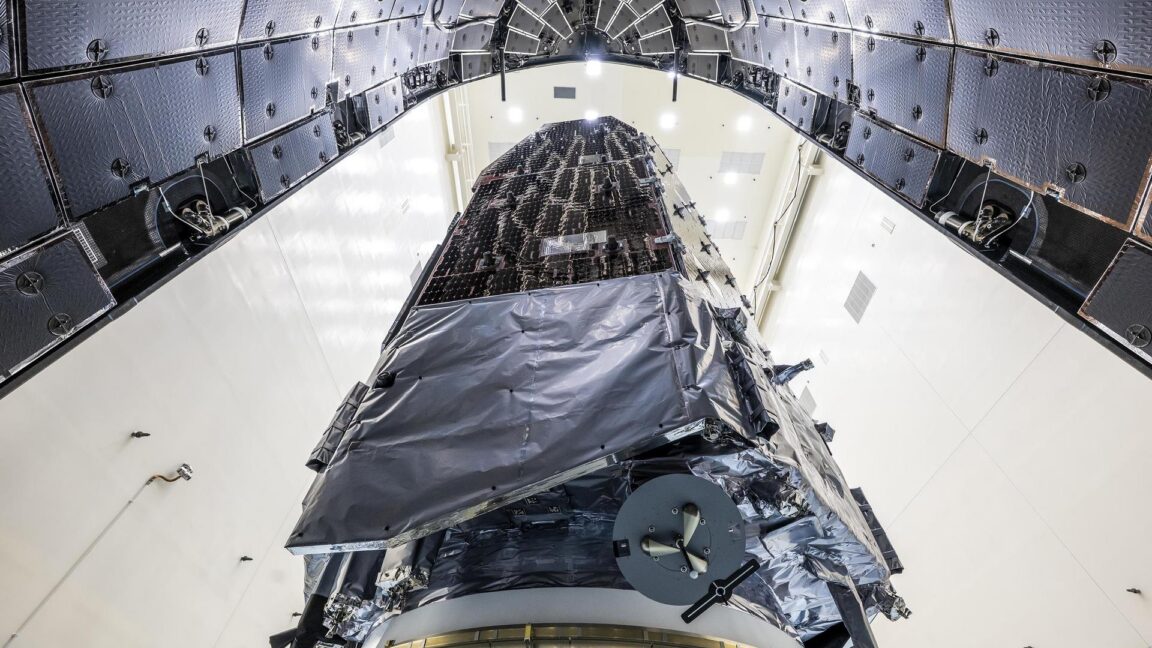
On Wednesday, the American space agency reported that the completed telescope, presently contained within its payload fairing, has been transported from NASA’s Payload Hazardous Servicing Facility to a SpaceX hangar located at the famous Launch Complex 39A at NASA’s Kennedy Space Center.
If all goes according to plan, the telescope will be launched aboard a SpaceX Falcon Heavy rocket at 7:26 a.m. EDT this Sunday, Aug. 30.
What Roman’s Science Tool Kit Includes
The telescope’s unique science instruments make Roman a different breed of space observatory from its predecessors, like the James Webb Space Telescope and Hubble Telescope, as they are designed with the special focus of advancing the search for dark energy.
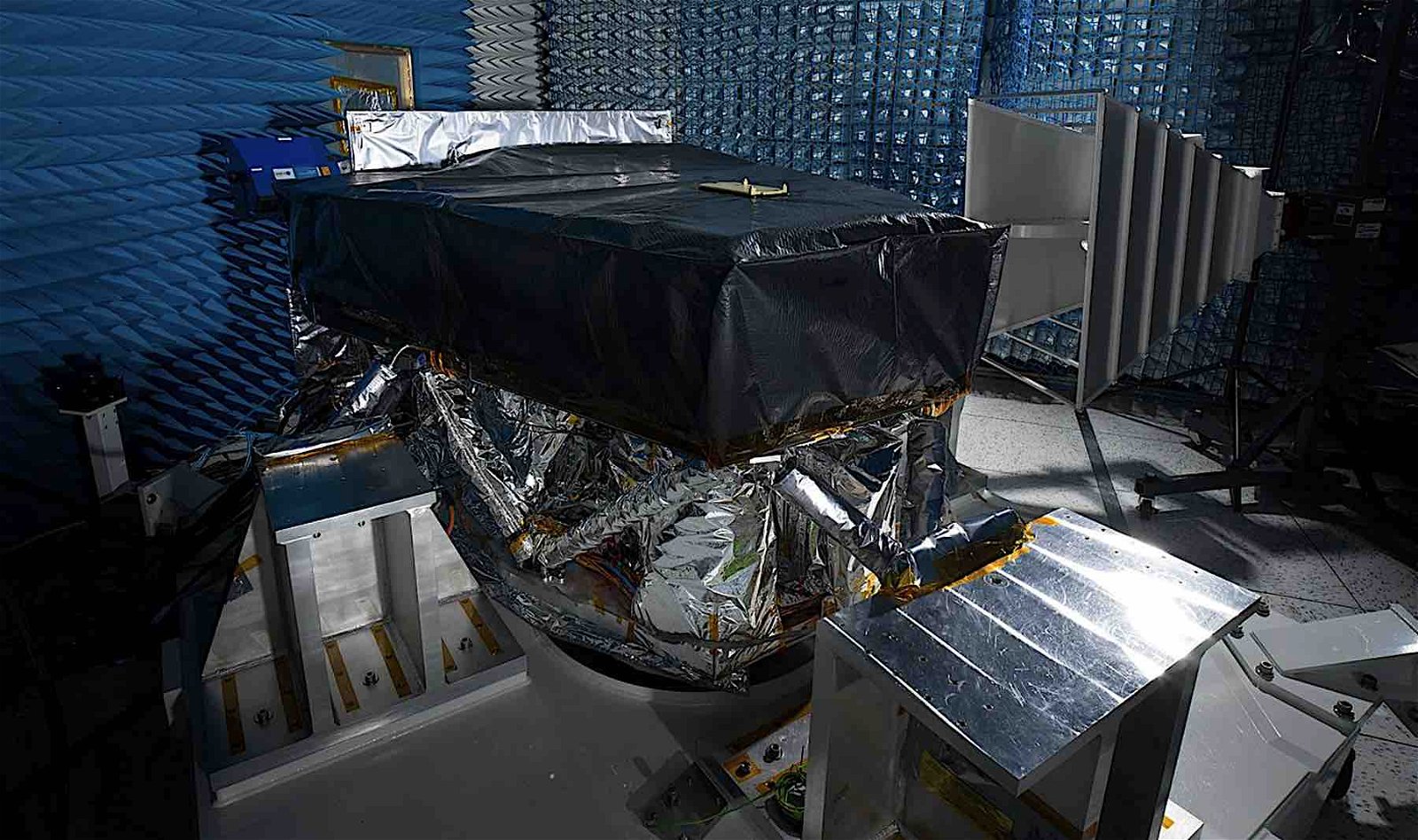
The Nancy Grace Roman Space Telescope, seen as it was nearing assembly (Credit: NASA/JPL-Caltech).
Roman is equipped with two primary capabilities, which involve its Wide Field Instrument (WFI) and Coronagraph Instrument. With a 300-megapixel, near-infrared camera designed for large area image capture and spectroscopy, the WFI will enable astronomers to observe a 0.281 square degree field of view and includes a special imaging mode with two slitless spectroscopy modes.
“The instrument provides a sharp point spread function, precision photometry, and stable observations for implementing the Dark Energy, Exoplanet Microlensing, and NIR surveys,” according to a NASA FAQ page detailing Roman’s primary instrument.
Exoplanet Imagery and Spectroscopy
Meanwhile, the telescope’s Coronagraph Instrument also features both imaging and spectroscopy modes, with capabilities fine-tuned for imaging exoplanets.
“The Coronagraph will be the first instrument on a space telescope to make use of numerically optimized, precision-fabricated coronagraph masks,” NASA’s FAQ page reads. This will be achieved by employing a combination of deformable mirrors that will enable high-order wavefront control, a low-order wavefront sensing and control system, and finally, CCD detectors designed for electron multiplication and counting low-flux photons.
A Next-Generation Space Observatory Prepares for Launch
Along with its search for dark energy and exoplanets, Roman will also provide NASA and researchers around the world with an unprecedented opportunity to study the formation of galaxies and the way that dark matter governs their evolution over time.
NASA will begin live coverage of Roman’s launch on Sunday morning at 6:20 a.m. Eastern Time, and you can follow the updates online with NASA’s free streaming platforms.
Micah Hanks is the Editor-in-Chief and Co-Founder of The Debrief. A longtime reporter on science, defense, and technology with a focus on space and astronomy, he can be reached atmicah@thedebrief.org. Follow him on X @MicahHanks, and at micahhanks.com.
Little red dots, an astronomical mystery unveiled by NASA’s James Webb Space Telescope, have perplexed researchers since their discovery—and now, according to new findings, we may be closer than ever to unraveling their mystery.
According to new research that appeared in Nature Astronomy, the enigmatic little red dots could be residents of very small, but also very dense galaxies with masses close to a billion times our Sun’s mass.
If confirmed, the new research may set the pace for unraveling how these cosmic curiosities, first detected in 2023, first came to be in the early stages of the universe’s development. Not only that, it could hint at the possibility that these “little” cosmic curiosities may also be keeping a big secret.
What Are Little Red Dots?
One of the reasons little red dots remained unknown until recent years has to do with their great distances from Earth. With the help of the Webb telescope’s powerful eye, these tiny objects were initially detected three years ago and detailed in a formal scientific paper in 2024.
The nature of these objects remains unknown, and astronomers still aren’t certain about what the exact source of the light they produce might be. In past research, some clues have pointed to the possibility of material around these objects at ultraviolet wavelengths—this would potentially offer a strong hint that these faint, distant objects are galaxies, or are at least related to them in some way.
One of the challenges astronomers have encountered is the lack of optical light measurements indicating the presence of galactic material. Because of this, questions remain about the mass that could be present in stellar bodies associated with the little red dots.
Capturing Optical Emissions from Enigmatic Objects
Now, in new research by Xuheng Ding, Lilan Yang, and colleagues, imagery captured by the James Webb Space Telescope of 217 examples of little red dots has produced new clues about their mysterious origin.
A key component of the new imagery includes the detection of optical emissions, albeit faint ones, observed beyond the primary central objects themselves. The detections are strong enough to be clearly observed, and based on the team’s models, these emission lines are indeed most likely linked to the presence of stellar mass, meaning that the little red dots are good candidates for star-forming galaxies, as many astronomers have suspected.
If correct, this would help confirm a potentially big secret about these objects, since it would also mean the little red dots reside at the centers of these galaxies—as supermassive black holes.
Anatomy of a Little Red Dot
Additional clues about these objects include new estimates for their size, clocking in with a radius of about 210 parsecs—roughly 685 light-years—on average. This means that the little red dots are far more compact than the kinds of star-generating galaxies expected to possess comparable mass, which date to around the same time in our universe’s development that the dots are believed to originate.
Based on the new research, little red dots are more than just unusual light sources in the distant universe, and their likely association with star-forming galaxies offers a significant clue toward revealing their exact nature.
Still, a few questions remain, and the team cautions that their analysis deals with the average properties based on the recent collection of Webb imagery of these cosmic features, since many of the individual characteristics of the little red dots remain too faint to characterize on an individual basis.
Going forward, the team believes additional observations that include spectrographic analysis of the light produced by little red dots will offer more clues about not only their origins, but will also help astronomers determine clearer estimates for their distances.
Micah Hanks is the Editor-in-Chief and Co-Founder of The Debrief. A longtime reporter on science, defense, and technology with a focus on space and astronomy, he can be reached atmicah@thedebrief.org. Follow him on X @MicahHanks, and at micahhanks.com.
JWST‘s ability to see deep into the cosmos gives astronomers insight into the early universe and challenges prior expectations of what they would find there. Now, an international team led by astronomers from the Netherlands’ Leiden University recently reported the discovery of new stars in a paper published in Nature Astronomy.
With the discovery of these many previously unknown small stars, the researchers say astronomers may need to reconsider the expected mass of these early galaxies, as JWST reveals unexpected levels of development shortly after the Big Bang.
James Webb Space Telescope Observations
For their new work, the astronomers focused on nine massive galaxies in the early universe that had completed their main star-formation period. They combined JWST data with earlier observations from the Very Large Telescope in Chile, operated by the European Southern Observatory.
Spectroscopy is a crucial element of JWST data, breaking light down into separate spectra that allow astronomers to study stars and even planetary atmospheres across extreme distances. However, the smaller, fainter stars revealed in this new research can be much harder to detect than the brighter, more powerful ones.
“If a galaxy were a city, the brightest stars would be the skyscrapers you can immediately see from far away,” said first author Chloe Cheng. “Our models show that behind the brightest stars there is a much larger population of small stars, like houses among the skyscrapers. This means that the galaxy as a whole is much more massive than previous estimates suggested.”
Stellar Birth
Working with data limited by the sensitivity of tools, researchers previously were unable to see as many smaller stellar objects. Researchers then assumed a similar ratio of small to large stars across the universe, which these new findings are now challenging.
Instead, they found ancient massive galaxies filled with many more small stars than previously expected, and far more than in our own Milky Way galaxy today, which is a smaller galaxy. The mass differences produced by this glut of tiny stars increased the expected mass of the galaxy under 1.5 billion years old by fourfold.
“Measurements like these were simply not possible until recently,” explained co-author Martje Slob. “We needed not only a telescope capable of collecting enough light, but also exceptionally high-quality spectra and new analysis techniques. Only then could we reliably distinguish the subtle features of small stars from the light of much brighter stars.”
JWST Discoveries
Launched almost five years ago, JWST has continually defied what astronomers expected to find in the ancient universe. It turns out that the universe shortly after the Big Bang was more massive and had undergone more development than previously considered possible. The new findings add to those ongoing discoveries.
“This result shows that much more mass than we thought is hidden in small stars,” said study lead Professor Mariska Kriek. “It has implications for many areas of astronomy. Small stars often have planets orbiting them, so if there were many more small stars in the early Universe than we thought, there may also have been more planets.”
To follow up on this exciting discovery, the team plans to look even further back into the universe’s past in future observations that will study some of the universe’s very earliest stars.
Ryan Whalen covers science and technology for The Debrief. He holds an MA in History and a Master of Library and Information Science with a certificate in Data Science. He can be contacted at ryan@thedebrief.org.

 Login