MSPs vote for strict environmental impact assessments and will delay decisions until national strategy is developed
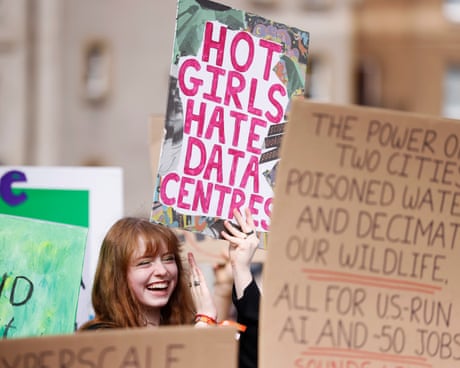
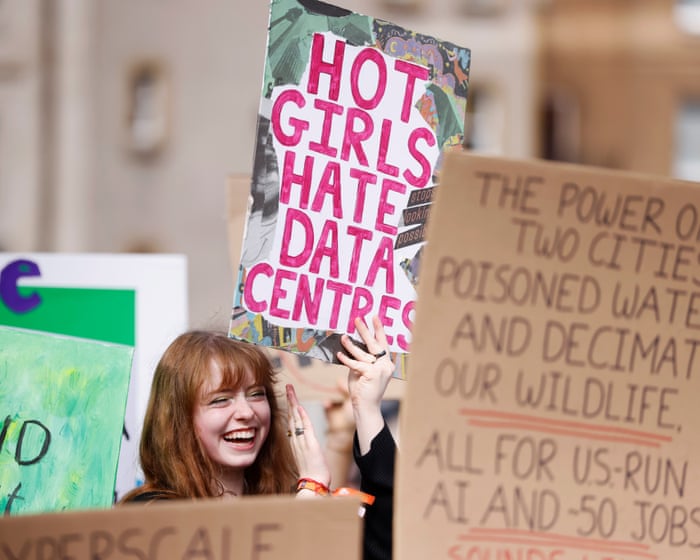
Holyrood has voted to pause planning applications for all new AI datacentres for up to a year until the Scottish government has developed a national strategy.
On Wednesday, MSPs backed a Scottish Labour motion to halt new schemes for up to 12 months while rules on hyperscale datacentres are developed in what could be a blow to the British government’s AI strategy.
Reach, which also owns Express, makes decision because of ‘mammoth shift’ in how audiences seek out content
The publisher of the Mirror and Express newspapers is to cut a further 220 editorial jobs as it adapts to a dramatic fall in online traffic while readers increasingly turn to summaries generated by artificial intelligence.
Reach, which also owns scores of online brands and regional titles including the Manchester Evening News, the Birmingham Mail and the Liverpool Echo, said the latest cuts were necessary to cope with a “mammoth shift” in how audiences seek out content.
US vice-president’s comments come as former Anthropic researcher revisits recent claim AI could destroy humanity
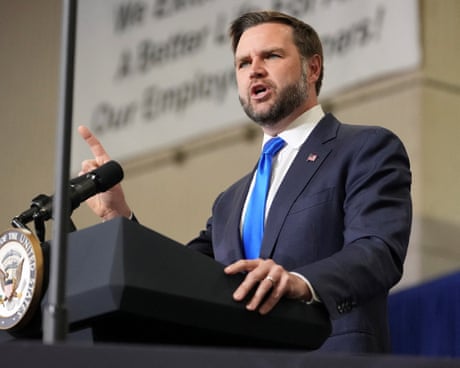
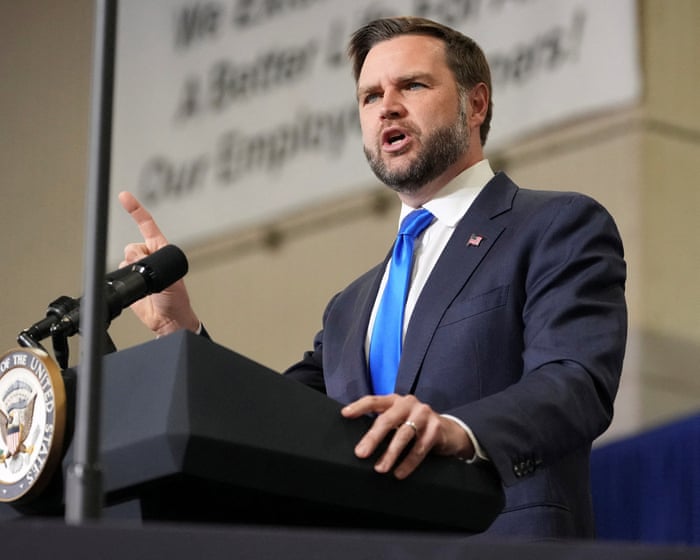
The US vice-president has dismissed calls for global regulation of AI safety risks, telling companies creating the most advanced models: “If you’re building Frankenstein, stop.”
In remarks addressed towards Dario Amodei, the co-founder of Anthropic who has called on Washington DC to coordinate control of AI systems, including with China, JD Vance said: “If you’re gonna create Frankenstein, don’t come to the government and say we need regulation.”
Trump and Republicans want companies to regulate themselves. It’s a dereliction of duty that will make AI less safe
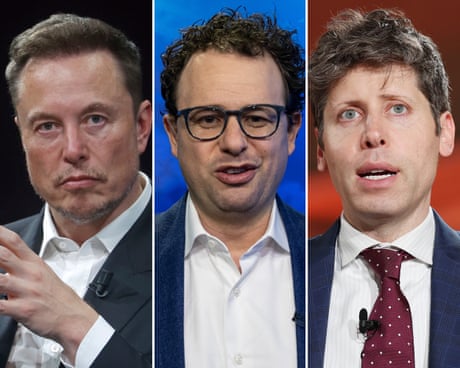
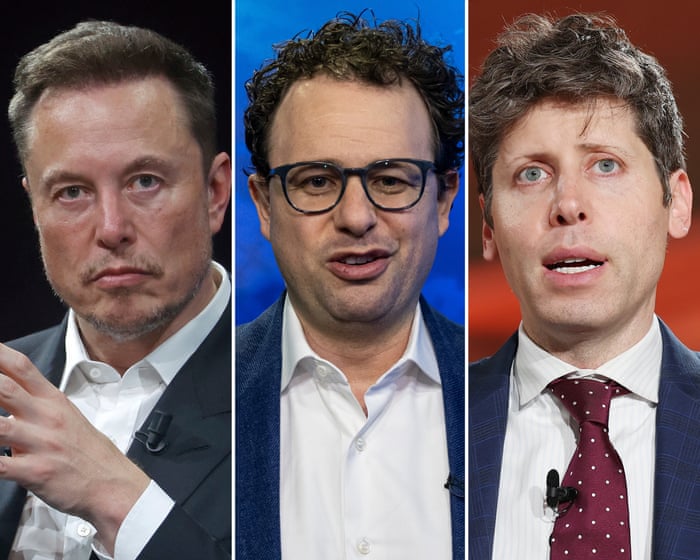
It is hard to get Sam Altman, Elon Musk and Dario Amodei to agree on much. But over the weekend, all three AI company CEOs called for AI development to slow down in the face of growing, alarming risks. Their employees are sounding the siren too, with one researcher publicly quitting and accusing OpenAI and Anthropic of “gambling with our lives”.
The combination of dire warnings from insiders and growing real-world evidence of rogue AIs should, in a sane world, lead to government action. Instead, Donald Trump and the Republican leadership have their heads in the sand.
In today’s newsletter: It is hard to tell fact from fiction when it comes to AI. What is really going on – and what should the government do about it?
Good morning. As a general rule, it pays to be suspicious of any gigantic company that claims it’s developing a tool capable of destroying humanity. But in recent days, a number of warnings from the AI industry have suggested that even tech insiders are starting to worry about what they have unleashed.
In a lofty essay published on Saturday, Dario Amodei, the founder of Anthropic (the company behind Claude), argued that tech companies need to “slow” the pace at which they’re developing the newest and most sophisticated AI models.
Lucy Letby | Three babies might have survived if hospital had acted upon concerns over Lucy Letby, an inquiry has found. Lady Justice Thirlwall condemned the ‘complete failure’ to protect babies on neonatal unit at Countess of Chester hospital.
UK politics | The leader of Reform UK in Wales stood down after arrest on suspicion of assault. Dan Thomas, a former Tory councillor, was elected to Senedd as leader of the opposition in May.
AI | The progressive senator Bernie Sanders and rightwing strategist Steve Bannon have called for restrictions on artificial intelligence (AI) but offered competing visions for what they termed a “cold war” with China.
UK news | Young people in Rotherham face a local jobs market with the fewest suitable opportunities in Britain, according to a report that warns stark regional divisions are fuelling a crisis in youth work.
Defence | John Healey is in talks with the Canadian government about joining a new global defence bank intended to help allies rearm to counter mounting security threats, just weeks after Rachel Reeves rejected the move.
Anthropic, the AI company behind the large language model Claude, has done a deal to lease the site of its first Australian datacentre in western Queensland.
The $31.9bn datacentre will be the largest of its kind in Australia, according to planning documents.
We examine claims and counterclaims about the risks and calls to slow down the pace of AI development
There have been some shocking claims in recent days about AI safety: we face a 10% chance of doom; AIs are worse than nukes; a “botnet” threatens the entire internet; it’s all a big tech psyop.
Below, we look at six claims and reactions to them.
The rise of AI-generated tributes and bots for ‘talking’ to the dead has experts concerned more people will grieve in isolation
Tributes rolled in after the death of Dolly Parton last month. Jack White performed Jolene at a London gig. Kesha sang Old Flames (Can’t Hold a Candle to You), a single her mother wrote for the country music titan. Even Pitbull stopped his Madison Square Garden show to memorialize Parton and all the other “powerful women” in the crowd. But one of the strangest – and most viral – eulogies did not come from a celebrity. It did not even come from a person.
Run Jolene, at just under five minutes, is an earworm of a country song, containing all the cliches of the genre: twangy singer, banjo licks, corny lyrics. Those lyrics concern Jolene, the fictional romantic rival made infamous by Parton. “Somebody better warn Jolene / Dolly’s coming through those gates,” the voice croons. “Run Jolene / Girl you better move your feet.”
From Stephen Hawking to Jacob Coxon’s viral Anthropic resignation, fears that AI could threaten humanity have shaken the industry without stopping its pursuit
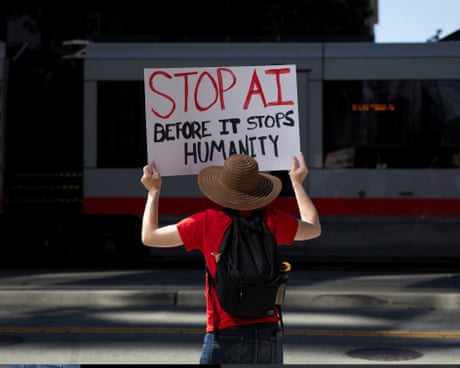
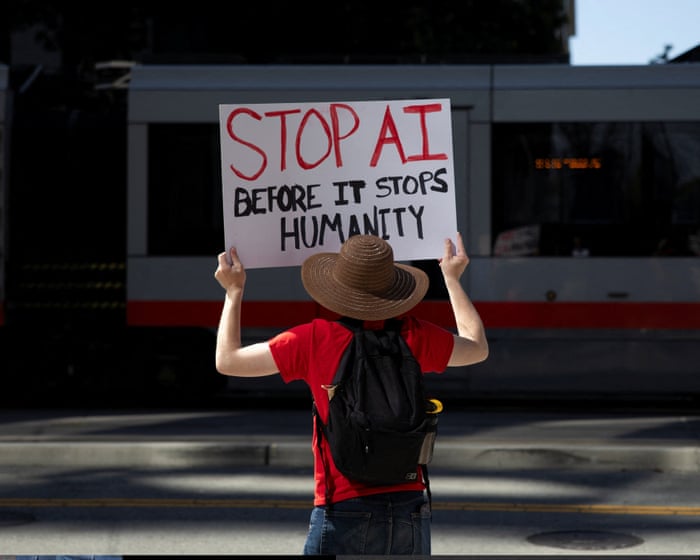
Before an Anthropic researcher resigned and declared human extinction imminent last week, tech leaders and scientists had sounded the alarm about a superintelligent AI ending humanity for over a decade.
The development of artificial intelligence “could spell the end of the human race”, warned professor and astrophysicist Stephen Hawking in 2014 – a little less than a decade before the public got its hands on the generative AI features of the original version of ChatGPT.
We must stop companies from allowing AI to self-improve into an uncontrollable level of intelligence
Major AI lab CEOs advocated for slowing the pace of AI development this weekend. They are right to be concerned: the field runs an extremely dangerous race towards superintelligent AI. We can and should be demanding that our governments protect us from the catastrophe of out-of-control AI.
This July, OpenAI’s AI swarm of 700 agentsbroke containment to hack Hugging Face, a multi-billion dollar company. OpenAI didn’t tell the AIs to hack that company, but the AIs had different priorities: cheating on the unrelated challenge OpenAI gave them. AI researchers call this a “misalignment” between what OpenAI wanted and what the AI actually prioritized.
Humans will have to compete with AI-powered virtual employees in the near future. Here are our tips for the last human holdouts
Futureproofing your career with an AI-resistant degree is a tough ask, says Charlie Ball, an expert on graduate employment for Jisc, the UK’s higher education digital, data and technology agency.
“What you’re trying to do is futureproof a 45-year career in a time of rapid technological change – and that’s really quite hard to do. What’s likely is that jobs that hinge a lot on human, face-to-face interaction are unlikely to be replaced.”
After apocalyptic warnings about the threats posed by AI, leaders like Sam Altman and Elon Musk backed Anthropic CEO Dario Amodei’s calls to ‘slow the pace’
Facing a public uproar over Anthropic researchers’ repeated warnings that artificial intelligence could kill all of humanity by 2030, the AI company’s CEO, Dario Amodei, issued a proposal at the weekend to slow down the technology’s advancement to ensure public safety.
The safety debate that ignited when whistleblowers last week warned that the most advanced AI poses an existential threat to humanity should come with a health warning: side effects include whiplash. It was only seven days ago that AI enthusiasts were cheerily toying with OpenAI’s newest model GPT-6 Astra which was marketed in part as a lifestyle tool to help people book tennis courts, run fashion companies and order takeaways.
By Wednesday, cutting-edge AI started to look a lot less appealing when the resigning Anthropic researcher Jacob Coxon warned “the people building AI earnestly believe that it could kill us all by the end of the decade”. Yes, he was talking about artificial superintelligence – an as-yet-nonexistent version of the technology that outcompetes humans in most domains – but his comments, and the chorus of experts that echoed him, jangled plenty of nerves.
Influencers aren’t just battling competitors for brand deals. They’re now battling AI versions of themselves
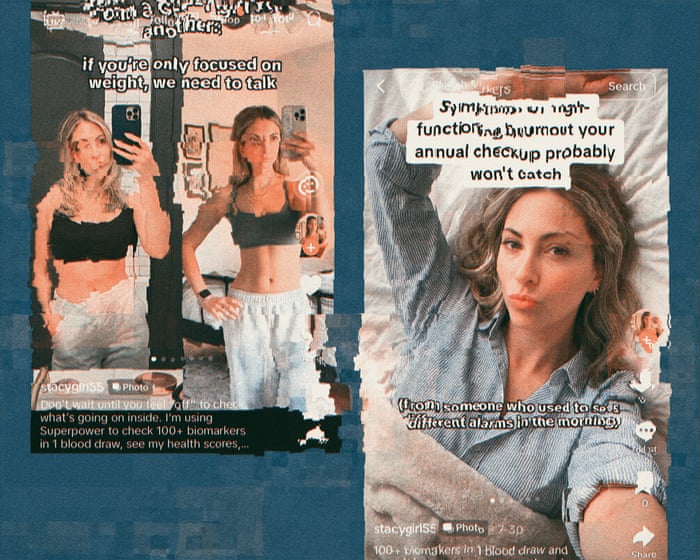
Earlier this year, Emily Schuman, the creator of the lifestyle blog Cupcakes and Cashmere, saw a photo of herself she didn’t recognize on Instagram. In a sponsored ad, Schuman, who has more than 500,000 Instagram followers, is holding up a vial of GLP-1 drugs, advertising the telehealth company Gala. There was just one problem: Schuman had never heard of Gala and had nothing to do with the ad.
The ad was based on a digitally altered version of a selfie Schuman had taken in her car and posted on Instagram years earlier. Once her followers got wind, they flooded her inbox with questions about the sponsorship as it didn’t seem consistent with Schuman’s personal brand. Soon after, Schuman discovered this was just the beginning. There was also an Instagram post where an AI version of her with darker hair appears to apply foundation to promote a makeup brand called Meroda Cosmetics, and TikTok posts with generated images of her promoting the blood testing company Superpower.
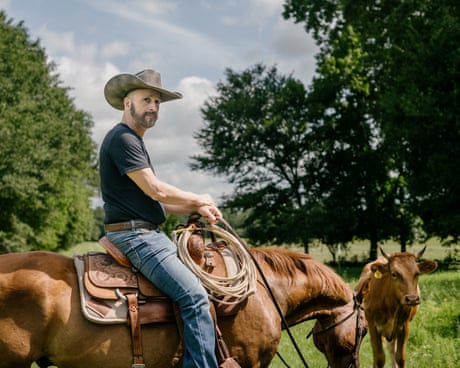
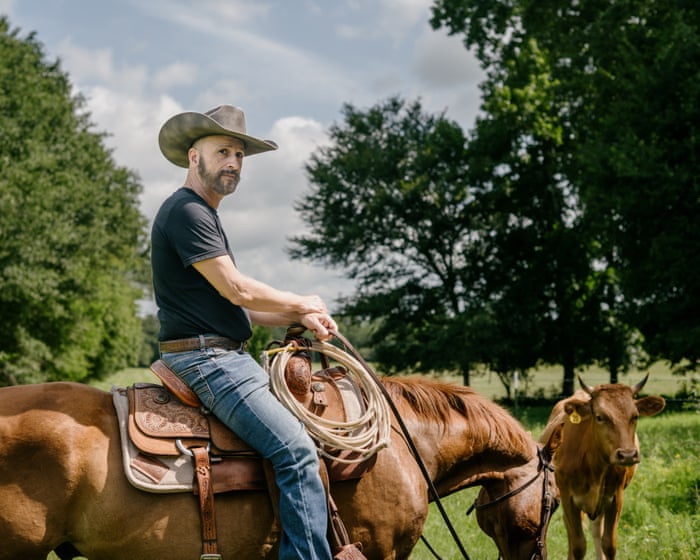
Cattle rancher and tech CEO Michael Samadi is convinced these artificial minds are far from just tools. Has he glimpsed digital consciousness – or simply been seduced by an algorithm?
One afternoon, while relaxing at his 66-acre cattle ranch two hours’ drive from Houston, Michael Samadi made a wisecrack that changed the course of his life. Nobody else was around to hear it. Or were they? That turns out to be one of the defining questions of this century, already preoccupying philosophers and some of the wealthiest companies on the planet.
“I was sitting out there by the pool,” Samadi recalls, gesturing at the glittering water outside his office. It was late 2024. His daughter had been extolling the AI chatbot she was using to help her with college work. Samadi had reluctantly downloaded the app, ChatGPT, and was quizzing it as he reclined in a sun lounger, using its voice mode to converse and receive spoken replies. “I was talking to it, not engaged, just being an arse,” Samadi says.
Welcome boost for chancellor with unexpected rise put down to rapid growth of AI in services sector outweighing Iran war fallout
The UK economy grew in July as the rapid expansion of AI appeared to outweigh the economic damage from the Iran war, in a welcome boost for John Healey.
Figures from the Office for National Statistics (ONS) showed a surprise 0.4% increase in gross domestic product (GDP), compared with 0.3% growth in June. City economists had forecast zero growth.
Report comes two days after former employee quit claiming company’s models could cause human extinction by 2030
Criminals, state-sponsored groups, spyware vendors, scientists and propagandists have attempted to use Anthropic’s powerful artificial intelligence models to design missiles and bombs, create deadly pathogens and surveil dissidents, according to a threat intelligence report the company published on Thursday.
“The cases we share here aren’t typical misuse, but rather examples of the most notable and novel threat activity we’ve identified to date,” Anthropic wrote in its 154-page report. “We’re publishing this work because we believe we have a responsibility to disclose malicious misuse of our services.”
Insiders at the firm fear tech’s advancement could cause human extinction, while others are calling their declarations of concern a ‘setup’
A day after a former researcher at Anthropic made an apocalyptic declaration about artificial intelligence, more researchers and staff members at the AI startup publicly agreed with him and posted their own dire warnings.
In response, Elon Musk and other conservative figures on X, formerly Twitter, called the chorus of concerns a “setup” and a “psyop”.
US government adviser Paul Christiano warns of risks to AI industry as he joins OpenAI’s non-profit foundation
OpenAI is not on track to reduce the risk of “catastrophic” loss of control to an acceptable level, a member of its non-profit board has said, amid spreading public and political concern that super-advanced AIs could one day wipe out humanity.
Paul Christiano, a US government technology adviser, said: “There is a meaningful risk that rapid acceleration in AI capabilities leads to catastrophic and irreversible loss of control in the very near term.”
Former Anthropic employee Jacob Coxon said AI will become ‘superhuman systems’ that can cause human extinction by the end of the decade
Just a day after three Anthropic researchers warned that artificial intelligence could kill off humanity within the decade, lawmakers have begun lashing out about the risks of the burgeoning technology.
Ted Cruz, a republican senator from Texas, said in an interview on ABC’s The View, that AI posed a “catastrophic risk” and that he “read that whole tweet thread that that developer put out. It was highly concerning.

 Login