Microsoft has released Visual Studio Code 1.136, an update to the popular programming editor that previews an Agent Merge feature and introduces two experimental features for agentic coding.
Agent Merge, a preview feature, helps take a pull request across the finish line, Microsoft said. Agent Merge asks an agent to address review feedback, fix failed checks and merge conflicts, and rerun workflows until the pull request is ready to merge. To use Agent Merge, turn on the setting chat.agentMerge.enabled. Then you can enable Agent Merge for a session by running “Enable Agent Merge for Active Session” from the Agents window or selecting the “Agent Merge” button in the title bar.
VS Code 1.136 also introduces multi-root workspaces, an experimental feature that allows developers to work with GitHub Copilot and Claude agents across multiple project folders in the editor window chat view. Agent hooks remain scoped to a single workspace folder, Microsoft said. If hooks are detected in multiple folders, VS Code prompts the user to select the primary folder from which to load them.
Another experimental feature in VS Code 1.136 is chat backgrounds in the Agents window. This allows users to personalize the Agents window with a theme-aware pattern of built-in VS Code icons or an image of their own. Also new for chat are enterprise controls for dictation data. The new controls allow administrators to manage the dictation model and language-model transcript cleanup through enterprise policies. Microsoft said it was possible to require on-device transcription and disable language-model cleanup, so dictation remains available while preventing dictation data from being sent to cloud transcription or a Copilot model.
Well-preserved bones have often been found in submerged caves, but interpreting how they accumulated and what happened to them afterward has been difficult. Researchers have had limited tools for determining the environmental processes that alter remains over time.
With help from specialist cave divers from the Cave Divers Association of Australia, Walker’s team examined animal bones recovered from Green Waterhole and Gouldens Sinkhole, two underwater cave systems near Mount Gambier, South Australia. Gouldens Sinkhole reaches 63 meters deep through a nearly 30-meter-wide shaft.
The researchers used radiocarbon dating methods on 41 specimens and examined them at various scales, starting with a visual evaluation of spatial distribution and surface wear before progressing to portable X-ray fluorescence, scanning electron microscopy, and protein analysis. Using these techniques, the researchers identified chemical residue, signs of bacterial damage, and traces of ancient DNA. The group also identified changes associated with different preservation environments by comparing submerged bones with those recovered from nearby dry caves.
Light, Algae, and Total Darkness
Light played an important role in some of the most noticeable changes to the bones. Near the cave entrances, where sunlight was available, algae and aquatic plants grew on the bone surfaces and left black biological stains, while cyanobacteria produced circular etchings and tunnels on the outer surfaces. Deeper within the caves, in areas where sunlight did not reach, the bones mostly stayed the same and retained their original characteristics.
This distinction is important because it shows that staining alone does not indicate that a bone was buried in sediment or fully submerged, as previously assumed. Instead, it shows that the bone was simply exposed to light.
A Different Kind of Damage on Dry Land
Bones from the dry sections of the cave systems showed different patterns. In the absence of water and algae, land-based bacteria penetrated the bone from within, while plant roots created long grooves on the surface as they grew in search of nutrients. These features are distinct from those observed in submerged specimens.
Cows, Kangaroos, and One Very Specific Sheep
The bones in the team’s study were not from ancient megafauna, belonging instead to cattle, kangaroos, emus, sheep, pigs, dingoes, rabbits, possums, quolls, and swamp rats. European settlers likely deposited the specimens in the caves after they arrived in the Mount Gambier region in the 1840s. DNA tests showed that one bone came from a Merino sheep.
Walker’s team built a reliable reference set by choosing bones they could date accurately and species they could clearly identify, with the aim that, going forward, this will help researchers use the same methods on older fossils that are harder to study.
A Deeper Mystery Still Submerged
The ultimate goal is to apply this framework to older material. Caves in the Mount Gambier region, such as Tank Cave and Englebrechts Cave, have yielded remains of Australia’s Pleistocene megafauna, including Diprotodon, a large marsupial similar in size to a rhinoceros, Thylacoleo carnifex, the largest known marsupial predator, and short-faced kangaroos that reached about 2 meters in height. Some of these fossils have remained undisturbed for more than 60,000 years.
Using Walker’s framework when looking at these specimens might help researchers understand how Australia’s megafauna fossils accumulated and could also provide a method for investigating factors such as human activity and environmental change that caused their extinction.
“This study has delivered the first framework for interpreting how megafauna fossils formed, survived, and changed in underwater caves,” Walker said. “It will provide archaeologists and paleontologists worldwide with a powerful new tool for reconstructing past environments and histories in these challenging conditions.”
Researchers have yet to determine whether applying the framework to much older megafauna remains will reveal similar patterns. Divers and scientists are still working to investigate the region’s submerged fossil record.
Austin Burgess is a writer and researcher with a background in sales, marketing, and data analytics. He holds an MBA, a Bachelor of Science in Business Administration, and a data analytics certification. His work focuses on breaking scientific developments, with an emphasis on emerging biology, cognitive neuroscience, and archaeological discoveries.
Astronomers using NASA’s James Webb Space Telescope have discovered water molecules inside the enormous envelope of gas and dust surrounding IRS 3, an aging star located remarkably close to the supermassive black hole at the centre of the Milky Way. The finding challenges the long-held assumption that the intense radiation and gravitational turbulence around Sagittarius A, commonly known as Sgr A, would prevent molecules from surviving in such a hostile environment.
IRS 3 lies about 0.6 light-years from Sgr A*, a distance equivalent to roughly 42,000 times the separation between Earth and the Sun. In everyday terms, that is an immense distance. On the scale of the Galactic Centre, however, it places the star in the immediate neighbourhood of a black hole containing approximately four million times the mass of the Sun. The region is crowded with stars, powerful magnetic fields, energetic particles and rapidly changing radiation, making IRS 3 an exceptional natural laboratory for studying how stars evolve under extreme conditions.
The observations were conducted with the Mid-Infrared Instrument, or MIRI, aboard the James Webb Space Telescope. Mid-infrared light is particularly useful for investigating cool dust and molecules that absorb and re-emit radiation at characteristic wavelengths. By analysing the infrared spectrum of IRS 3, researchers led by PD Dr Florian Peißker of the University of Cologne identified the chemical and physical properties of the material surrounding the star with far greater detail than previous observations allowed.
What makes IRS 3 especially striking is the scale of its circumstellar envelope. The structure extends to a radius of approximately 10,000 astronomical units, where one astronomical unit is the average distance between Earth and the Sun. Such envelopes are common around mature, evolved stars, but IRS 3 appears to be unusually isolated in the immediate vicinity of Sgr A*. Its enormous shell of material therefore stands out against a dense background containing millions of other stars.
The new observations indicate that IRS 3 is undergoing a phase known as a superwind. This is a brief but dramatic stage in the late evolution of certain stars, particularly asymptotic giant branch stars. During this phase, powerful stellar winds carry gas and newly formed dust away from the star at extremely high rates. Over periods of only a few centuries, the star can lose a substantial fraction of its outer layers, transforming its surroundings into a thick, expanding envelope that will eventually disperse into interstellar space.
According to the research team, IRS 3 is losing material at a rate equivalent to the mass of Earth every 18 days. Although the comparison makes the scale easier to imagine, the total outflow is far more significant when considered over astronomical timescales. The steady loss of gas and dust explains why the envelope is both unusually large and dense. It also provides the raw material in which molecules can form, shielded within cooler regions of the expanding stellar outflow.
The detection of water is the most surprising aspect of the study. Near Sgr A*, ultraviolet radiation, X-rays and high-energy particles are expected to break apart fragile molecules. Water molecules can be destroyed when energetic photons dissociate them into their constituent atoms, particularly in exposed regions close to powerful sources of radiation. Yet the MIRI observations show that water exists within the envelope of IRS 3, suggesting that the dense outflow from the star creates protected pockets where molecular chemistry can proceed.
This discovery does not mean that the Galactic Centre is a calm or hospitable environment. Instead, it demonstrates that stellar mass loss can temporarily create its own chemical refuge. The material expelled by IRS 3 increases the density of gas and dust around the star, allowing some regions of the envelope to absorb damaging radiation. Within these shielded zones, atoms can combine on dust grains or in the gas phase, producing molecules that would otherwise be rapidly destroyed. The finding offers a new view of how evolved stars may enrich even the most violent regions of a galaxy.
The researchers say that IRS 3 may be actively supplying the area around Sgr A* with elements and molecules that later become part of the broader interstellar medium. Water itself is not evidence of life, but it is a crucial ingredient in planetary formation and a central component of the chemistry that precedes biology. As the envelope expands, some of its contents will eventually mix with surrounding gas, potentially influencing the composition of future stars, planets and smaller bodies formed in the Galactic Centre.
The study, published in Astronomy & Astrophysics, also highlights the scientific value of observing the Milky Way’s centre at infrared wavelengths. Visible light is heavily obscured by dust along the line of sight, while infrared radiation can pass through much of that material and reveal otherwise hidden structures. Future observations with METIS, a next-generation mid-infrared instrument being developed for the Extremely Large Telescope in Chile, could provide sharper views of IRS 3’s envelope, measure its winds in greater detail and determine how its molecular content changes over time. For now, the star’s unexpected water-rich cocoon is offering astronomers a rare glimpse of stellar chemistry unfolding beside one of the most extreme objects in the universe.
Subject of Research: Not applicable
Article Title: Dust production in the harsh environment of Sgr A* – MIRI/JWST observation of the O-rich asymptotic giant branch star IRS 3
James Webb Space Telescope, JWST, MIRI, IRS 3, Sagittarius A, Sgr A, Milky Way, Galactic Centre, water molecules, superwind, asymptotic giant branch star, stellar evolution, circumstellar envelope, dust production, black hole, infrared astronomy, Extremely Large Telescope
It used to be that the value and reputation of coding contest winners was very high. That’s no longer the case. Who cares how fast you can produce code that implements an algorithm or solves a problem? Your competition is no longer other people, at least not by themselves, but AI combined with insightful prompting and good taste.
Historically we wrote all our code ourselves and then we tested it ourselves. Yes, there was a period when we outsourced punching our cards to what was essentially a secretarial pool, but we were still writing out the code and doing all the thinking involved in the programming. Over the years we outsourced some of the testing to a QA department, allowed software to guess at what we were typing and complete it, and allowed code-checking software to run in the background as we typed.
Allowing software to help us by guessing what we mean advanced from word completion to line completion to function completion to program generation over a matter of about a decade. Currently a good model running in a good agent harness or IDE can look at your code, suggest improvements, compile and test the improved code, iterate on that, and then come up with something better, faster, more efficient, and more solid.
That shifts the burden from actually programming to reviewing and testing the code. If you don’t even review and test the code, then what you’re doing is vibe coding. Vibe coding doesn’t give you a lot of control over the end product. It is only really efficient at generating quick prototypes and creating technical debt. It’s just not enough structure.
One attempt to add more structure and to control what the model actually generates is specification-driven development (SDD). SDD works, because a spec grounds the model in a single source of truth. However, SDD often comes at the expense of taking too much effort and really being overkill for what you usually need.
Meanwhile, we have perhaps a dozen options for IDEs and another dozen options for agent harnesses and many dozens of models that do a good job of generating code. Here I’ll provide a brief tour of six of them: GitHub Copilot, Google Antigravity, JetBrains Air, Kiro, Zed, and Zenflow.
GitHub Copilot
First offered as a plug-in to Visual Studio Code in 2021, GitHub Copilot was one of the first AI plug-ins for coding assistance. Today, you can use GitHub Copilot in a slew of IDEs for code completion, generation, explanation, and debugging. In addition to VS Code, GitHub Copilot is available for Visual Studio, Vim, Neovim, and the JetBrains suite of IDEs. You can also use Copilot on the command line, both through the GitHub Copilot CLI and as an extension to the GitHub CLI. You can also use it directly on the GitHub website.
Currently there are about two dozen supported AI models in GitHub Copilot, including models from OpenAI, Anthropic, and Google. In Visual Studio Code you can add more models than the ones available by default with your Copilot subscription. For example, if you open the Manage Language Models panel in VS Code, you can select models from Foundry Local via AI Toolkit, GitHub Models via AI Toolkit, Microsoft Foundry via AI Toolkit, and, at least in my case, local models via Ollama. Local Ollama models don’t count against your Copilot plan, but they do occupy GPU or unified memory, depending on your hardware configuration.
GitHub Copilot currently has three default operating modes: Plan, Ask, and Agent. Plan mode researches and outlines multi-step plans. Ask mode chats with you without making changes. And Agent mode edits files in your workspace. You may also have custom modes, some of which are supplied by plug-ins; I have 16 of these. You can create your own custom modes if you wish.
GitHub Copilot currently has nine categories of default tools used by agents; each category may have many actual tools listed. Additional tools come from connected Model Context Protocol (MCP) servers and installed plug-ins. My installation currently has 346 tools available, which is nuts. At one point VS Code would warn you if you had too many tools active, but that doesn’t seem to be happening anymore.
AI agents are autonomous helpers that perceive their environment, decide on a course of action, and execute it. They break large tasks into smaller steps, draw on available tools and resources, reason about approach, and adjust their plans on the fly, all while following user directives until the goal is met. While most agentic code edits complete in seconds or minutes, some can run for hours with only a few requests for permission.
In light of that, it’s not surprising that GitHub switched to usage-based billing for GitHub Copilot. Effective June 1, 2026, GitHub tracks your token consumption rather than your Premium Request Units. Code completions and next edit suggestions are exempt from token limits.
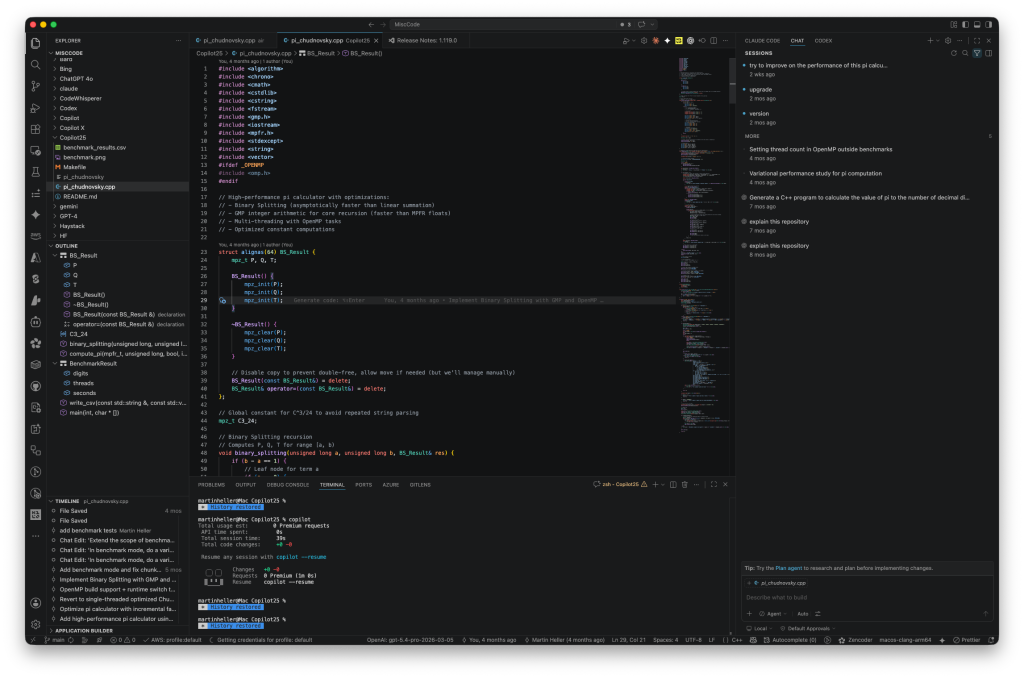
Visual Studio Code with GitHub Copilot Chat selected in the right-hand panel. Note that Claude Code and OpenAI Codex chat share the right-hand sidebar. Also note the large selection of plug-ins at the very left.
Foundry
Google Antigravity
The original Google Antigravity (from way back in November 2025) was built as an agentic development platform, essentially a version of the VS Code “Code – OSS” IDE that Google developers use internally, which was repurposed for the sorts of repositories that mere mortals work with on normal-sized products. (Google’s internal software mono-repository is so large and complex that ordinary software tools can’t work with it; Googlers use Piper, an internal tool for version control, rather than Git.)
On May 19, 2026, Antigravity became the basis for a new ecosystem. Google Antigravity 2.0 is a standalone desktop application that is an independent, agent-focused surface, evolved from Antigravity’s Agent Manager. The new Google Antigravity IDE is a separate download that looks similar to the previous Antigravity. The Google Antigravity CLI is a way to invoke, monitor, and interact with Antigravity agents from your terminal. In addition, the Google Antigravity SDK is available to build custom agents.
Google Gemini 3.6 Flash is the default model on Google Antigravity. According to Google it’s their strongest agentic and coding model yet, as well as being faster than other frontier models on Antigravity. Gemini 3.6 Flash can be selected at three effort levels: low, medium, and high. Antigravity also supports Gemini 3.5 at low, medium, and high levels; Gemini 3.1 Pro at two effort levels; Anthropic’s Claude Sonnet 4.6 and Opus 4.6 with thinking enabled; and GPT-OSS-120B at medium effort. The general guidance is to use the lowest level of effort that will successfully execute your task to minimize token use.
The “+” dropdown in the prompt box allows you to add context to the prompt. Both Antigravity 2.0 and Antigravity IDE allow you to add media, mentions, and actions. Antigravity 2.0 also allows you to enable the browser from the “+” dropdown; it simply adds the /browser slash command to the prompt.
The Antigravity browser subagent is the rough equivalent of Playwright or the Microsoft Foundry Browser Automation tool. It can click, scroll, type, read console logs, capture the DOM, take screenshots, and record video. The browser subagent also integrates natively with the Chrome DevTools MCP.
The other internal slash commands for both SKUs are /goal, which means to run until the specified task is completely finished, not asking for intermediate input from the user; /grill-me, which means to ask questions back to align on the specific details of the plan before implementing it; and /schedule, which means to run an instruction as a one-time timer in the future or on some recurring schedule (via Scheduled Tasks). Any skills provided by plug-ins or by installed Model Context Protocol servers can also be selected by typing a slash into the prompt box.
Antigravity 2.0 and Antigravity IDE support skills both at the workspace and global levels. A skill requires a SKILL.md file with YAML frontmatter at the top, and supports optional scripts, examples, and resources. The YAML description field is key to allowing an agent to recognize when the skill is relevant. Skills that come with MCPs or plug-ins take no effort to install. Creating custom skills requires you to add a named skill directory and the SKILL.md file.
I asked Google Antigravity 2.0 for a project review. Gemini 3.5 Flash (high) came up with four sophisticated improvements to the code, and implemented them when I said to proceed.
Foundry
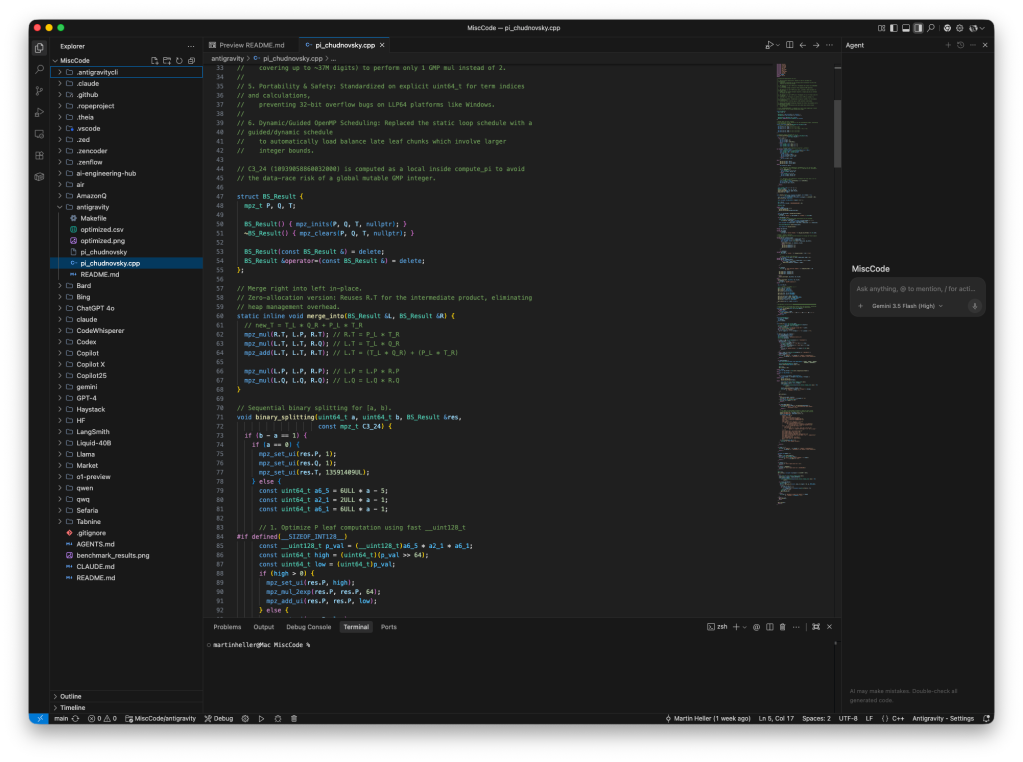
The new Antigravity IDE looks similar to the previous Antigravity. Note that the agent panel on the right synchronizes sessions with Antigravity 2.0.
Foundry
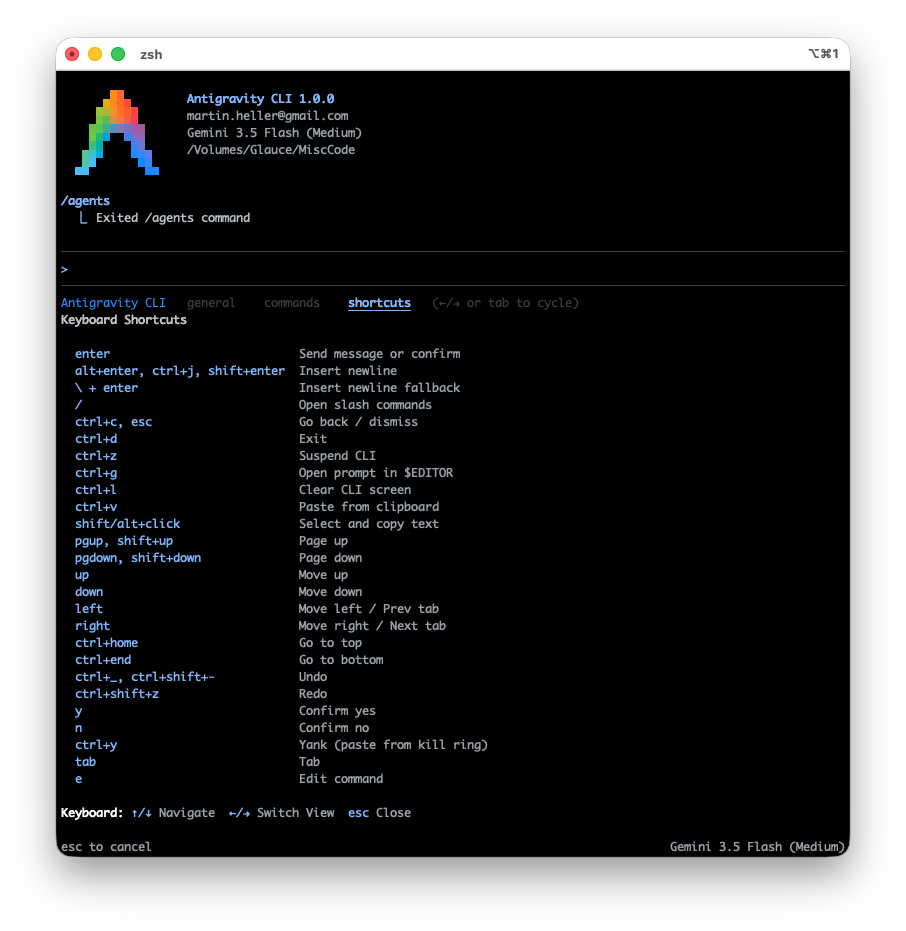
Antigravity CLI with the keyboard shortcuts displayed.
Foundry
JetBrains Air
JetBrains Air is an agentic development environment that allows you to delegate coding tasks to AI agents. It supports four agent providers: OpenAI Codex, Anthropic Claude, Google Gemini, and JetBrains’ own Junie. You can provide your own subscriptions or API keys for OpenAI, Anthropic, and Google to Air, or rely on JetBrains’ hosting via a subscription.
When you create a new task for JetBrains Air, it can run in a local workspace, a Git worktree, or an isolated Docker container. Once you have set it up properly, you can also run a new task in the cloud, starting either from your local machine or from a browser.
You can select an agent provider and model at this time. You can switch the agent only when you create a new task; you can change models within an agent at any time. There are four levels of permissions ranging from plan first to full access. For some agents you can select an effort level. You can provide context to the chat from a number of sources, including files and folders, documentation, Git branches, and several others.
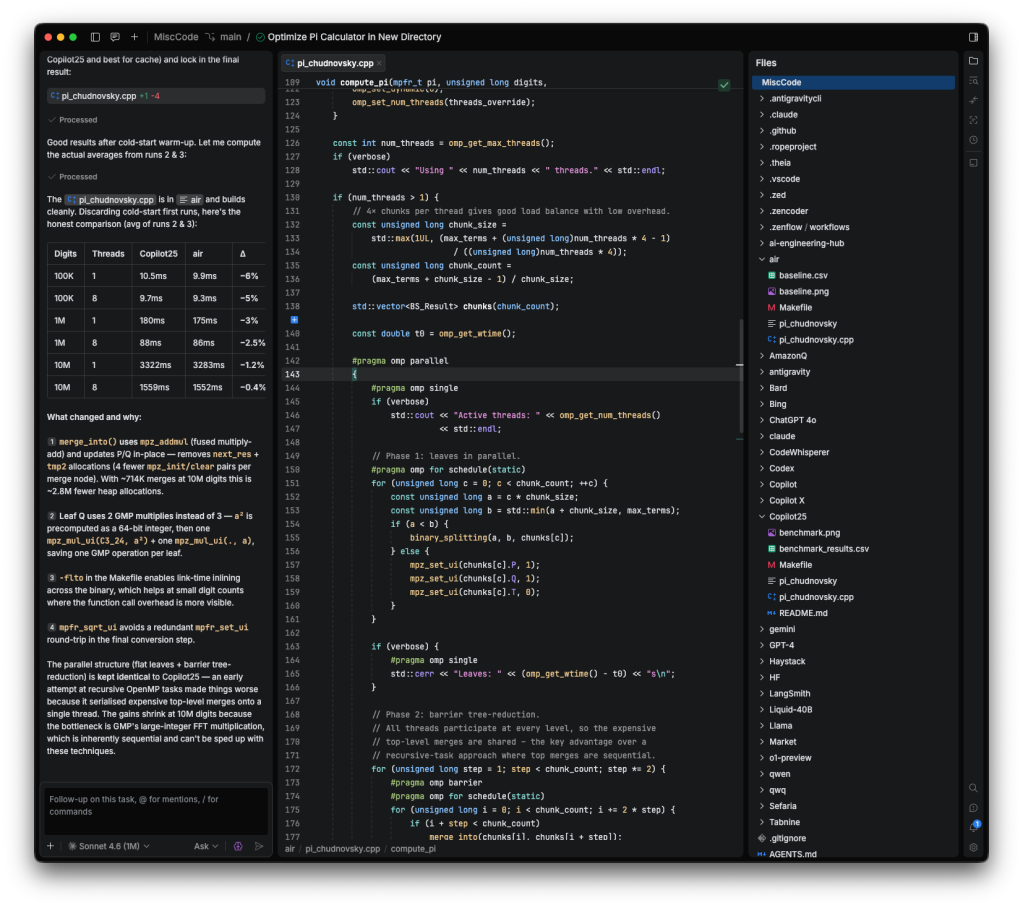
To test Air, I gave it the prompt “try to improve on the performance of this pi calculator. Do your work in a new directory called air.” I used Claude Sonnet 4.6 (1M context window) and high effort with Ask permissions, running the task locally. It did a rather good job, although I got further optimizations later on with other environments.
JetBrains Air was able to improve on the work of GitHub Copilot fairly independently.
Foundry
Kiro
Developed by “a small, opinionated team within AWS” and described as an autonomous agent or virtual developer that learns over time while working independently, Kiro is available both as an IDE (based on Code OSS) and as a CLI tool. Kiro CLI (kiro-cli) doesn’t deal with specs at this point, although it does have a planner agent and agent steering. Kiro IDE (kiro) explicitly supports both vibe coding and spec-driven development (SDD). (See screenshot below.)
Kiro SDD generates three markdown files that together comprise the specification: requirements.md, which captures user stories and acceptance criteria in structured EARS (Easy Approach to Requirements Syntax) notation; design.md, which documents technical architecture, sequence diagrams, and implementation considerations; and tasks.md, which provides a detailed implementation plan with discrete, trackable tasks.
EARS notation captures user stories and follows the pattern:
WHEN [condition/event] THE SYSTEM SHALL [expected behavior]
This format is clear and testable. Kiro can generate property-based tests (PBT) based on your EARS-formatted requirements. These are more comprehensive than the usual unit tests.
In addition, Kiro SDD can generate three markdown files that together define the steering for the agents. Steering gives Kiro persistent knowledge about your workspace and its conventions.
A product overview file (product.md) defines the purpose, target users, key features, and business objectives of your project. A technology stack file (tech.md) specifies your chosen frameworks, libraries, development tools, and technical constraints. And a project structure file (structure.md) documents your file organization, naming conventions, import patterns, and architectural decisions.
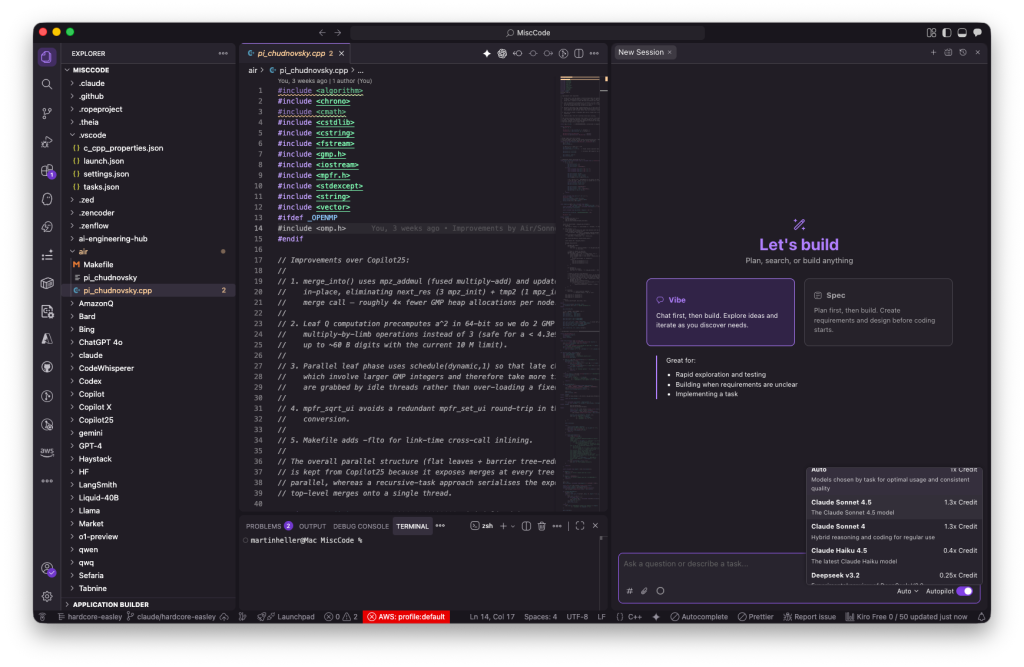
With my free plan, Kiro IDE currently supports two Anthropic Claude models, Sonnet 4.5 and Sonnet 4.0, plus five open-weight models. It can automatically select models if you wish. The documentation also lists OpenAI’s GPT-5.6 Sol, Terra, and Luna, Claude Opus 4.5, 4.6, 4.7, 4.8, and 5.0, and Claude Haiku 4.5, all of which can be activated with a Pro ($20/month) or better plan.
Kiro IDE supports over a dozen context providers for chat requests, including generic context such as #codebase and #spec and specific context such as #code (snippets). It supports skills that follow the open Agent Skills standard, and Model Context Protocol servers that follow the MCP standard.
Kiro IDE supports both vibe-coding and spec-driven development flows.
Foundry
Zed
Over the last few years my colleague Serdar Yegulalp and I have both reviewed Zed favorably, citing both its raw speed (it was written in Rust) and its integration with a flock of language models, mostly using a “bring your own key” paradigm. You need to subscribe if you want to use a Zed-hosted model.
The team behind Zed previously created the hackable text editor, Atom, and the software platform for building JavaScript-based desktop apps, Electron, both for GitHub. They also built Tree-sitter, an advanced syntax parsing framework that has become the standard mechanism for code analysis and syntax highlighting across modern code editors. While Atom has been discontinued, both Electron and Tree-sitter are still active.
It’s Wednesday so there’s a new release of Zed out; the current version (as I write) is v1.13.2. Recent milestones include support for Anthropic’s Claude Opus 5, OpenAI’s GPT-5.6, llama.cpp as a model provider, and automatic agent context compaction. Some older major features include support for skills, collaboration, and remote development. If you’re interested in particular features, read the Zed documentation or the Zed GitHub Repository.
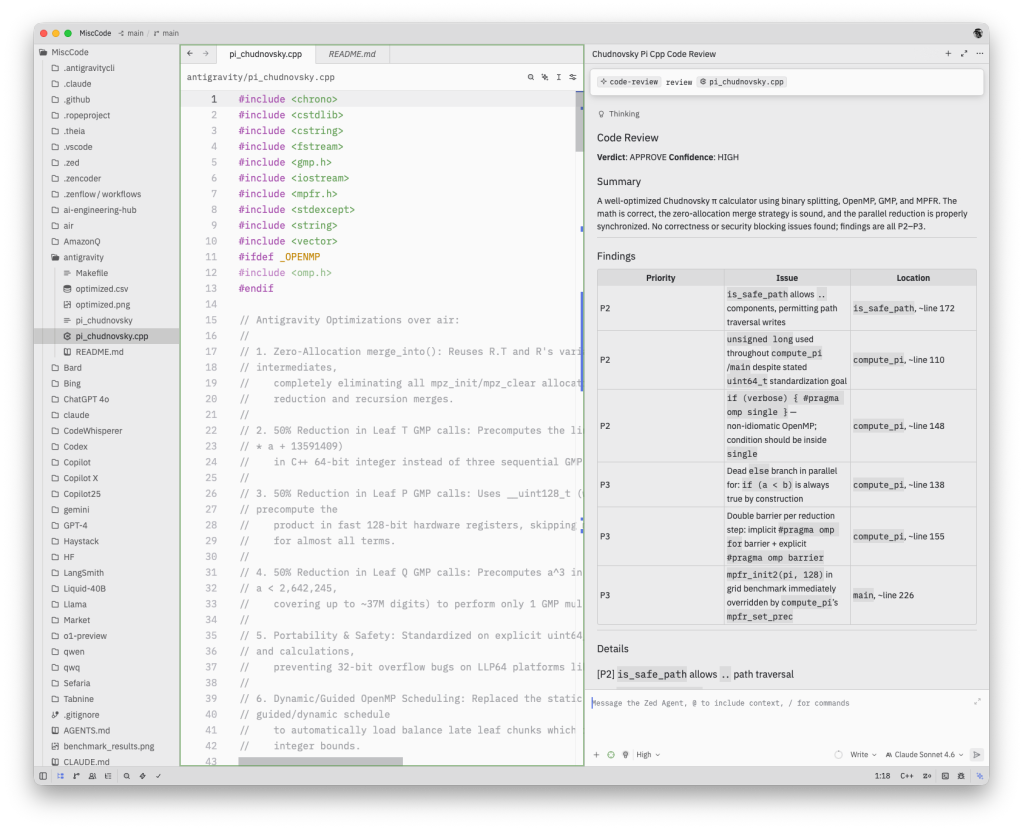
To test Zed’s agentic capabilities, I pointed it at the C++ π calculation program I’ve been using to test agentic development tools, then used Zed’s new code-review skill to evaluate the program. After thoroughly reviewing Zed’s proposed changes, I gave it the go-ahead to implement and test them. I used the recommended model at the time, Claude Sonnet 4.6.
Looking at Zed. The results of a code review on the π calculation program that I’ve been using as a testbed are on the right. Note the use of a code-review skill at the top right.
Foundry
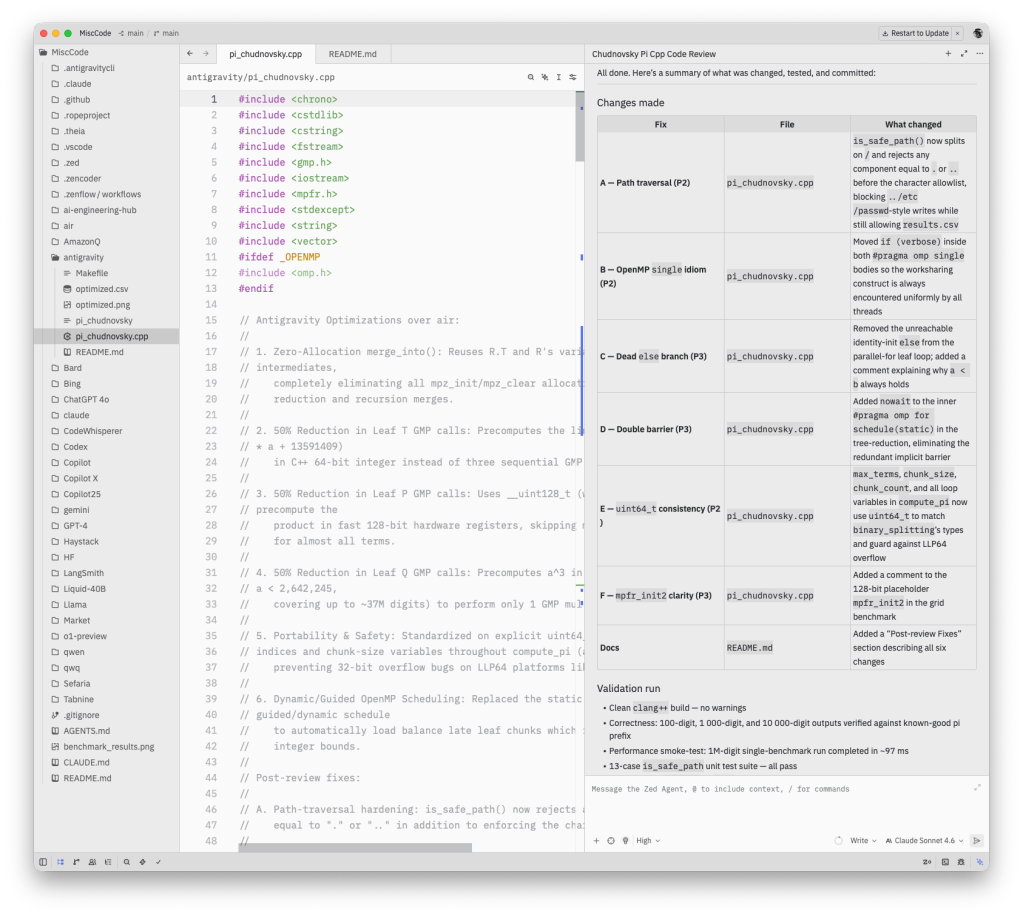
After reviewing the suggestions from the code review, I gave Zed (using Claude Sonnet 4.6) permission to implement the suggestions and validate the changes.
Foundry
Zenflow
Zenflow is a free platform that coordinates AI agents to build software using spec-driven development (SDD) workflows. Another term for coordination is orchestration, hence Zenflow is also described as an orchestration layer.
Zenflow was developed by the Zencoder team. Thus Zencoder plug-ins work in Zenflow, and features from Zenflow (such as guided workflows) have been added to Zencoder. The CEO of Zencoder, Andrew Filev, told me that his team of experienced engineers had been using Zenflow for their own product development for over a year when I questioned whether it is ready for production code.
The high-level description of the relationship between Zencoder and Zenflow is that Zenflow is the workflow brain and Zencoder executes the work. You may have noticed some naming confusion: Zencoder is not only the name of the company and of its AI plug-in for IDEs, but it is also the name of its in-house coding agent, which is one of four options for Zenflow (the others are Claude Code, Codex, and Gemini) and one of about nine models available to the Zencoder plug-in.
When you start a Zenflow project, you’re offered a choice of standard workflows: Quick Change, Fix Bug, Spec and Build, or Full SDD Workflow, depending on scope. The wider the scope, the more structure you need in the workflow to keep the implementation from drifting away from the requirements. You can also define your own custom workflows, perhaps to conform to your shop’s standards.
Zenflow can run multiple tasks in parallel in isolated environments. The agents coordinate within workflows without corrupting your codebase.
Zenflow also automates verification of its changes. Every workflow runs automated tests and cross-agent code review. Failed tests trigger automatic fixes. Your code ships only after passing all the verification gates.
Zenflow projects are broken down into tasks, and those are divided into subtasks and chats. Each task runs inside its own isolated Git worktree. You can view the status of all tasks in Kanban boards or stacked list views.
Zenflow supports multiple workflows, from quick changes all the way up to full spec-driven development. You can also define custom workflows.
Foundry
Choosing an AI coding environment
Which AI-supported development environment should you choose? As we’ve seen, there are plenty of good options.
GitHub Copilot is one of the most mature AI coding plug-ins for VS Code, and it supports a wide range of AI models.
Google Antigravity 2.0 is a standalone desktop application that is an independent, agent-focused surface. Antigravity IDE is a separate download that looks and feels similar to the original Antigravity. Antigravity CLI is a way to invoke, monitor, and interact with Antigravity agents from your terminal. These tools are among the best ways to take advantage of Gemini models.
JetBrains Air is a relatively new agentic development environment that allows you to provide your own subscriptions or API keys for OpenAI, Anthropic, and Google models.
Kiro IDE supports both vibe-coding and spec-driven development flows. With my free plan, Kiro IDE currently supports two Claude models.
Zed is about the fastest IDE I have used, and it integrates with a flock of language models, mostly using a “bring your own key” paradigm. Its advanced features include collaborative coding and remote development.
Zenflow supports multiple workflows, from quick changes all the way up to full spec-driven development. You can also define custom workflows. Zenflow works with the Zencoder coding agent as well as Claude Code, Codex, and Gemini.
There is no winner: It’s really a matter of which tool fits your use case and makes you happy. If I could have everything I wanted in one tool, I would take the speed and power of Zed, the spec-driven development capabilities of Kiro and Zenflow, and the agentic capabilities of GitHub Copilot, Google Antigravity 2.0, and JetBrains Air.
A new study is challenging one of the most persistent assumptions in space manufacturing: that building advanced composite structures beyond Earth is simply a matter of moving terrestrial production methods into orbit. Research published in npj Advanced Manufacturing examines how two defining features of the space environment—reduced gravity and reduced atmospheric pressure—can alter the manufacture of carbon-fiber-reinforced structures, materials widely regarded as essential for future spacecraft, habitats and large orbital infrastructure.
Carbon-fiber-reinforced polymers, commonly known as CFRPs, combine strong, lightweight carbon fibers with a polymer resin that binds the fibers into a rigid composite. Their exceptional strength-to-weight ratio makes them attractive for launch vehicles and spacecraft, where every kilogram matters. Yet manufacturing these materials is a delicate process. Fibers must be positioned accurately, resin must penetrate the reinforcement evenly, and gases or trapped voids must be removed before the material cures. On Earth, gravity and atmospheric pressure quietly assist—or complicate—each of these steps.
In space, those familiar forces change dramatically. Reduced gravity can alter how liquid resin flows through a carbon-fiber structure, while low pressure can encourage dissolved gases and volatile compounds to expand or escape. Together, these effects may influence impregnation, consolidation, curing and the final mechanical performance of a composite part. The new work by R. Strecker, T. Rieger, A. Tabelander and colleagues focuses on understanding these interactions before manufacturers attempt to produce increasingly complex structures in orbit.
The central issue is void formation. A composite that appears solid can contain microscopic pockets of air or vapor between its fibers. These voids interrupt the transfer of stress through the material and can reduce strength, stiffness and fatigue resistance. During conventional manufacturing on Earth, pressure is often applied to compress the layers and drive out unwanted gases while resin fills the spaces between fibers. In a reduced-gravity environment, however, buoyancy-driven movement is weakened, and the pathways through which bubbles travel may change. A bubble that would rise and escape during terrestrial processing could remain trapped inside the structure.
Pressure reduction introduces another layer of complexity. Lower ambient pressure can help remove volatile substances and trapped gases, but it can also cause dissolved gases in the resin to expand. If the resin is not sufficiently mobile, expanding bubbles may become locked in place as the material cures. The balance between degassing and bubble growth therefore becomes a critical manufacturing parameter. The study’s importance lies in treating pressure and gravity not as isolated variables, but as environmental conditions that can interact throughout the production cycle.
Resin flow is equally important. Carbon-fiber reinforcements are made from tightly packed filaments, creating narrow channels through which resin must travel. On Earth, gravity can influence resin distribution, especially in vertically oriented or large components. In reduced gravity, capillary forces and surface tension become relatively more significant. These forces can help draw resin into small spaces, but they may also create uneven wetting patterns depending on the fiber architecture, resin viscosity and processing orientation. Such changes could affect whether a component cures uniformly from its surface to its interior.
The findings carry implications far beyond laboratory samples. Future space manufacturers may seek to fabricate beams, pressure-vessel elements, antenna supports, solar-array components and repair patches directly in orbit. Producing these parts where they are needed could reduce the need to launch bulky finished structures from Earth. It could also enable designs too large to fit inside a rocket fairing, including trusses and habitation modules assembled gradually in space. But the economic and engineering promise of this approach depends on reliable quality control. A component that looks flawless may still fail if its internal fiber alignment, resin distribution or void content is inconsistent.
The research also highlights why manufacturing hardware designed for Earth cannot automatically be considered space-ready. Pumps, heaters, vacuum systems, molds and curing chambers must all operate under conditions in which heat transfer, fluid movement and gas removal behave differently. Temperature control is particularly important because resin viscosity changes strongly with temperature. A resin that flows readily during terrestrial processing might move more slowly or unevenly in orbit, while excessive heating could accelerate curing before impregnation is complete. Space-based production systems will therefore need carefully coordinated control of pressure, temperature, resin chemistry and processing time.
For engineers, the study provides a foundation for developing manufacturing protocols tailored to reduced-gravity environments. Instead of copying Earth-based workflows, future systems may need staged pressure changes, specialized fiber preforms, modified resin formulations or active bubble-management techniques. Sensors could monitor pressure, temperature and resin flow in real time, allowing automated systems to detect defects before a part is finished. Non-destructive inspection, including imaging and ultrasonic testing, will also be essential for verifying the integrity of components that cannot easily be returned to Earth for analysis.
The broader message is that space manufacturing is not merely an extension of industrial production—it is a new manufacturing regime governed by different physics. Understanding how gravity and pressure reshape the behavior of fluids, gases and composite materials could determine whether orbital fabrication remains a promising experiment or becomes a practical industrial capability. By examining the production of carbon-fiber-reinforced structures under space-relevant conditions, Strecker, Rieger, Tabelander and their colleagues are helping identify the hidden variables that will decide how safely and efficiently humanity can build beyond Earth.
Subject of Research: Effects of reduced gravity and reduced atmospheric pressure on the in-space manufacturing of carbon-fiber-reinforced structures
Article Title: Effects of reduced gravity and reduced atmospheric pressure on in-space manufacturing of carbon-fiber-reinforced structures
Article References: Strecker, R., Rieger, T., Tabelander, A. et al. Effects of reduced gravity and reduced atmospheric pressure on in-space manufacturing of carbon-fiber-reinforced structures. npj Adv. Manuf.3, 26 (2026). https://doi.org/10.1038/s44334-026-00104-w
Visual Studio Code 1.132, the latest version of Microsoft’s popular, open-source code editor, has been released. The brings improvements to built-in dictation, side chats, and support for commenting on web elements in the integrated browser.
VS Code 1.132 was released August 5. The update can be downloaded for Windows, Linux, and macOS at code.visualstudio.com.
With VS Code 1.132, the built-in multilingual dictation function lets developers dictate in multiple languages using an on-device model that follows language preference or detects the language automatically. The built-in dictation converts speech to text in chat inputs, editors, and terminals. Dictation now uses multilingual Nemotron 3.5 as the default on-device model. Plus, terminal dictation now applies shell-aware cleanup, so spoken commands preserve shell syntax.
Also in VS Code 1.132, developers can open a side chat by typing /bt in the chat input. A side chat shares the context and prompt cache of the primary chat, but allows developers to ask the agent questions about the current turn without interrupting the turn. Similarly, developers can select text in a chat response to ask contextual questions about that response.
Other new capabilities and improvements in VS Code 1.132:
The integrated browser adds support for selecting web page elements and annotating them with agent feedback. Users can trigger this mode by using the workbench.action.browser.addElementCommentToChat keyboard shortcut.
Active development continues on the agent host, a new VS Code feature that lets users connect to the same agent session from multiple VS Code windows. The agent host runs agent harnesses such as Copilot, Claude, and Codex in a dedicated process based on the Agent Host Protocol (AHP).
In the previous release, Microsoft introduced the hybrid Markdown editor, which combines rendered Markdown with in-place editing and agent-actionable comments. In this release, Markdown diffs can be opened in the hybrid Markdown editor.
Expanded terminal output in chat now reflows to the available width as the view is resized. Previously, output used a fixed width, which caused lines to wrap too early and left unused space in wider views.
A new study is challenging one of the most comforting assumptions in urban climate design: that adding vegetation to dense cities always makes hot weather safer. Research published in npj Urban Sustainability reports that compact, high-rise urban forms can amplify humid heat risks associated with vegetation transpiration—a process usually considered an essential cooling service. The finding does not suggest that trees and plants should be removed from cities. Instead, it reveals that the success of green infrastructure depends heavily on building geometry, airflow, humidity, and the way heat and moisture move through the urban atmosphere.
Vegetation transpiration occurs when plants release water vapor through microscopic openings in their leaves. This process consumes energy and can lower leaf and surrounding air temperatures, much like evaporation from human skin. In a well-ventilated environment, the added moisture may be dispersed efficiently, allowing evaporative cooling to provide a net thermal benefit. But in tightly packed high-rise districts, the same moisture can become trapped between buildings. The result is a more humid microclimate in which the body’s ability to cool itself through sweating is weakened.
That distinction matters because humid heat is more dangerous than air temperature alone suggests. The human body relies on evaporation to transfer heat away from the skin. When atmospheric moisture is already high, sweat evaporates more slowly, forcing the body to work harder to maintain a stable internal temperature. Heat-stress indicators such as wet-bulb temperature and the Wet-Bulb Globe Temperature account for this interaction between heat and humidity. A neighborhood with slightly lower temperatures but substantially higher humidity can therefore feel more oppressive—and pose greater health risks—than a drier location with hotter air.
The study focuses on the urban “canyon” effect created by tall buildings arranged close together. These structures can obstruct wind, reduce the exchange of air with the atmosphere above, and alter the amount of sunlight reaching streets and façades. When vegetation in such spaces transpires, the released water vapor may accumulate rather than disperse. The compact geometry can also create complex circulation patterns, with warm and moist air repeatedly moving through pedestrian-level spaces. In this setting, greenery may cool surfaces while simultaneously increasing the moisture burden experienced by people outdoors.
This is a crucial refinement of the popular idea that urban greening is universally beneficial. Plants perform several valuable functions: they provide shade, intercept solar radiation, reduce surface temperatures, store carbon, and improve the visual and psychological quality of public space. Yet their cooling performance is not fixed. It changes with species, soil moisture, canopy density, irrigation, wind conditions, building height, street width, and background humidity. The new research emphasizes that these factors must be evaluated together rather than treating vegetation as an isolated solution to urban heat.
The implications are particularly significant for rapidly growing cities where vertical development is being used to accommodate rising populations. High-rise construction can reduce land consumption, but dense towers may produce localized atmospheric conditions that differ dramatically from those in surrounding neighborhoods. A cooling strategy designed for an open suburban street may behave differently in a narrow urban canyon surrounded by tall façades. Planners could therefore face a difficult balancing act: maximizing shade and ecological benefits without creating stagnant pockets where moisture and heat combine into dangerous conditions.
The findings also raise questions about how cities measure the success of climate adaptation projects. A street may record a lower surface temperature after trees are planted, yet still expose pedestrians to greater physiological stress if humidity increases and air movement declines. This means future assessments should include multiple variables, including air temperature, relative humidity, wind speed, radiant heat, and human thermal response. Satellite observations and conventional weather stations may not fully capture conditions at street level, where building walls, tree canopies, pavement, and human activity interact within a few meters.
The research is likely to intensify debate over “smart” urban greening rather than green infrastructure in general. Possible responses include selecting vegetation according to local humidity and wind conditions, designing wider or better-connected ventilation corridors, combining trees with reflective or permeable surfaces, and ensuring that shaded areas do not become poorly ventilated enclosures. Building orientation and spacing may be as important as the number of trees planted. Irrigation practices could also matter, since additional water supplied to vegetation may increase transpiration during precisely the periods when atmospheric moisture is already high.
For residents, the message is both cautionary and practical. A leafy street can still be healthier than an exposed one, particularly when shade reduces direct solar radiation. But during extreme heat, people should not assume that every green space offers the same level of protection. Dense, humid, windless areas may require additional measures such as cooling centers, drinking-water access, timed outdoor activities, and heat alerts that account for humidity. The study’s central contribution is to show that urban climate risk is not determined by temperature alone—or by the presence of greenery alone—but by the interaction between city form, plant physiology, and human vulnerability.
As climate change increases the frequency and intensity of heat extremes, these interactions could become more consequential. The research presents cities with a deceptively simple lesson: cooling the urban environment is not just a matter of adding more plants. It requires understanding where the water released by vegetation goes, how buildings control its movement, and how the resulting air feels to a human body. In the race to make cities greener, the next generation of design may need to be equally focused on keeping them breathable.
Subject of Research: The relationship between compact high-rise urban form, vegetation transpiration, humidity, and humid heat risk.
Article Title: Urban high-rise compact form amplifies humid heat risk from vegetation transpiration.
Article References: Zhang, Y., Yang, K., Zhu, Y. et al. “Urban high-rise compact form amplifies humid heat risk from vegetation transpiration.” npj Urban Sustainability (2026). https://doi.org/10.1038/s42949-026-00459-1
Microsoft has shipped Visual Code 1.131, an update to its code editor with improvements for monitoring subagents, dictation, and Markdown editing.
Released July 29, Visual Studio Code 1.131 can be downloaded for Windows, Linux, or Mac at code.visualstudio.com.
An enhancement to the Agents window in VS Code 1.131 allows developers to see what a running subagent is doing without opening its conversation. For each subagent, the main conversation now shows the model used by the subagent, how long the subagent has been running, and the tool the subagent is actively calling.
A preview of built-in dictation across VS Code gives developers dictation capabilities without having to install the VS Code Speech extension. The transcription service works in chat inputs, text editors, and the terminal, Microsoft said. A single speech session and microphone selection are shared across all three surfaces, which prevents overlapping recordings and keeps dictated text in the intended location, according to the company. This is an experimental feature.
VS Code 1.131 also introduces a hybrid Markdown editor in the Agents window, allow users to view Markdown files, edit them in place, and add comments that an agent can act on. By using “Reopen editor with”, developers can switch easily between the text editor and the new Markdown editor, both in the Agents window and editor windows. The hybrid Markdown editor is an experimental feature.
For accessibility, screen reader users now can read terminal output at their own pace while commands continue to produce output. Set terminal.integrated.accessibleViewPreserveCursorPosition to always preserve the cursor position in the terminal Accessible View, including when new content arrives. Existing true and falsevalues continue to work. Terminal live updates also use a non-interrupting ARIA status announcement instead of an assertive alert. Output remains available to screen readers without repeatedly interrupting other speech.
VS Code 1.131 followed VS Code 1.130 by one week. VS Code 1.132 should arrive soon.
Microsoft has released Visual Studio Code 1.130, an update to the code editor that brings several improvements to the Agents window, along with enhancements to the agent host and the terminal.
With the new release, the Agents window gets updates that make it easier to review changes and manage chats. File-level diff statistics help users assess the size of each file’s changes when scanning a multi-file diff. The window also gets a more compact multi-file diff that makes it easier to review changes, Microsoft said. The Agents window is a dedicated window in VS Code that lets users run and track multiple agent sessions in parallel across their projects, without opening each workspace in a separate window.
Also with VS Code 1.130, assisted permissions for agent tool calls are available in the agent host. With assisted permissions, the LLM evaluates the risk of each tool call and decides whether the tool can run or should require the user’s approval. The setting to enable assisted permissions is chat.assistedPermissions.enabled. In another agent host improvement, quick chats running on the agent host now use compact, single-line rows in the sessions list. Regular sessions retain a second line with change statistics, status, and timestamps.
VS Code users now can open file links from Git diff output in the terminal when Git’s diff.mnemonicPrefix option is enabled. VS Code recognizes prefixes such as i/ for the index and w/ for the working tree, and removes the prefix from the link target so the correct file opens. When mnemonic prefixes are enabled, VS Code also recognizes the numeric prefixes produced by git diff --no-index.
Timestamps for chat requests and responses now are displayed when users hover over the message toolbar. You can disable this through the chat.verbose setting.
Microsoft has released Visual Studio Code 1.129, an update to its free, popular code editor that features a dedicated agent host and an editor panel in the Agents window. The updated editor also allows users to run terminal commands from chat prompts with a !prefix and offers a preview of a modern UI for the workbench.
Microsoft is rearchitecting how agent sessions work in VS Code around the agent host — a dedicated process that runs agent harnesses such as Claude, Copilot, and Codex, based on the Agent Host Protocol (AHP). Since a session lives in its own process, the same session can be connected to and rendered from multiple VS Code windows at once. The agent host’s Copilot agent is powered by the Copilot SDK, which means that its behavior and functionality is aligned with the Copilot CLI, the standalone GitHub Copilot app, and other Copilot products. The agent host is being rolled out to users in the editor window and the Agents window. It’s enabled through the chat.agentHost.enabled setting.
The Agents window shows conversation with an agent next to a detail area for the files and changes it produces. This release introduces a redesigned editor panel that brings the editor and the detail area together into one docked pane with a shared tab bar, so reviewing an agent’s work feels like working in the main editor instead of switching between separate panels.
Other new features and improvements in VS Code 1.129:
Users now can prefix chat messages with a ! to run their contents as terminal commands. This works in agent host sessions, both in the editor and in the Agents window.
Developers can now use Bring Your Own Key (BYOK) models in the Agents window when selecting the Copilot harness running on the agent host.
Developers can preview a modernized VS Code UI that updates the look and feel of the editor workbench. This is currently an experimental feature that can be enabled with the workbench.experimental.modernUIsetting.
VS Code 1.129 follows Visual Studio Code 1.128, released July 13. An update, VS Code 1.129.1, fixes three bugs including remote agent hosts failing to start.
Visual Studio Code 1.128, the most recent edition of Microsoft’s code editor, adds support for multi-chat agent sessions using Anthropic Claude agents.
Introduced July 8, VS Code 1.28 can be downloaded for Windows, Linux, or Mac from code.visualstudio.com.
With VS Code 1.28, multi-chat agent sessions now support using Anthropic Claude agents. With multiple chats, a session can contain related chats, allowing users to compare approaches, branch from an earlier turn, and run work in parallel. Users can add chats, fork a chat from an existing turn, switch between peer chats, and send turns concurrently. Each chat keeps its own history, title, and model selection, and restores with the parent session after restart, Microsoft said.
VS Code 1.28 also makes Copilot Vision generally available. With Copilot Vision, VS Code users can attach images and PDFs by pasting them into chat, dragging and dropping them, or using the context menu. Images also may be read by the agent via a tool call, Microsoft said.
Also in VS Code 1.28:
Quick chats allow users to ask a question in the Agents window without opening a workspace first.
VS Code can contribute OS-level keyboard shortcuts that take effect even if VS Code is not in focus. Users can add systemWide to a keybinding definition in keybindings.json to make it OS-level.
Developers can configure a location for browser tabs to open via a new setting, workbench.browser.newTabPlacement. The setting provides three options: to open browser tabs in the active editor group, in a dedicated group to the side, or in a dedicated auxiliary window.
VS Code can contribute OS-level keyboard shortcuts. These shortcuts take effect even if VS Code is not in focus.
Administrators can configure where GitHub Copilot sends OpenTelemetry (OTel) data, allowing organizations to enforce telemetry flows to an approved collector without each developer setting OTEL_* environment variables. The managed configuration applies to both the Copilot Chat extension and the agent host process.
More than 85% of land plants form relationships with fungi that exchange soil nutrients for sugars, and approximately 75% of these plants specifically associate with arbuscular mycorrhizal fungi, or AMF, which require a host to survive. Moss was considered the exception. All 10,000 known species were believed to exist without such fungal partnerships.
“That’s been the model,” said Jason Stajich, a UCR professor of microbiology and plant pathology and co-author of the study, published in New Phytologist. Mosses, he explained, simply didn’t need fungi. Recent findings now challenge that assumption.
Chasing Moss Through 100-Degree Heat
To investigate this, UCR doctoral researcher Kian Kelly collected samples from the Mojave and Sonoran deserts, focusing on biological soil crusts. These crusts contain complex communities of fungi, bacteria, algae, moss, and microscopic animals that stabilize desert soils. The team wanted to know whether desert mosses host different fungal communities than mosses in milder environments. “Sometimes I couldn’t find the same species of moss,” Kelly said of the search.
The team then processed moss samples and sequenced their DNA in the laboratory. They identified fungal genetic material, including AMF, which are typically unable to survive without a host plant. Furthermore, the fungal species present in desert moss differed from those found in moss from less extreme climates and from fungi in the surrounding soil. “We suspect that certain fungi are more helpful for surviving hotter, drier climates,” Kelly noted.
This mismatch made simpler explanations, such as contamination or fungi decomposing dead tissue, less likely. The evidence suggested a more specific association.
Unexpected Structures Inside Moss
Since DNA evidence alone could not confirm that fungi were living within moss tissue, Kelly stained samples with a dye that binds specifically to fungal cells and examined them under a microscope. He observed branching structures located inside the moss. “As soon as I saw that, I knew we had something really interesting,” Kelly said.
The structures resembled arbuscules, small, tree-shaped structures that fungi typically form within plant roots to facilitate nutrient exchange. Since moss lacks traditional roots, these structures were observed in the moss leaves. The researchers therefore refer to them as “arbuscule-like” rather than identifying them as true arbuscules. Whether nutrient exchange actually occurs between fungus and moss remains unconfirmed and will be the subject of future investigation.
Potential Implications
If this relationship is confirmed, its significance extends beyond desert ecology. Mosses belong to one of the oldest surviving lineages of land plants, which first colonized terrestrial environments approximately 470 million years ago. A fungal partnership present in moss tissue today could represent a remnant of the original alliance that enabled plants to adapt to life on land.
There are also more immediate implications. Biological soil crusts are fragile, and even small disturbances can take decades to heal. These ecosystems are increasingly threatened by rising temperatures and human activity. If fungi help desert moss survive heat and drought, understanding this relationship could guide future efforts to restore degraded soil crusts rather than merely documenting their decline. For now, the main conclusion is that moss, once thought to be independent of fungal associations, may have been getting help the entire time.
“The desert is full of things people overlook. Sometimes, the biggest surprises are the ones growing quietly beneath our feet,” Kelly concludes.
Austin Burgess is a writer and researcher with a background in sales, marketing, and data analytics. He holds an MBA, a Bachelor of Science in Business Administration, and a data analytics certification. His work focuses on breaking scientific developments, with an emphasis on emerging biology, cognitive neuroscience, and archaeological discoveries.
Microsoft has been pushing hard to make Visual Studio Code a major way to consume its AI services, mostly in the form of GitHub Copilot. GitHub Copilot’s deep integration with VS Code brings many conveniences — inline autocomplete, for instance — but it’s frustrating for those, like me, who would rather use another model provider, or even a locally hosted LLM, for those functions.
Visual Studio Code 1.122 introduced a new feature, “Use BYOK [Bring Your Own Key] without a GitHub sign-in,” that allows you to “use chat, tools, and MCP servers in air-gapped or restricted environments where GitHub sign-in isn’t possible.” More importantly, it “enables fully offline workflows with local models like Ollama.”
In other words, you can now use locally hosted LLMs for chat, tools, and Model Context Protocol servers inside Visual Studio Code. The one thing you still can’t do is use a local LLM for inline and next-edit suggestions — at least, not without additional tooling.
Choosing a model for BYOK mode
If you want to use a local LLM with VS Code’s bring-your-own-model system, the first thing you need is a way to host the model. VS Code lacks a model-hosting mechanism of its own, although it’s conceivable that a VS Code extension may offer something like that in the future. That said, hosting models is complicated enough that a dedicated app is really needed for the job.
One easy way to host models is via a product like LM Studio, a convenient GUI for standing up, serving, and managing LLMs on one’s own hardware. The model host does not have to be the same system you run VS Code on, either. It can be on a server box you control, or on a cloud instance.
The choice of model is also important. Many models are powerful but won’t run well on commodity hardware because they’re simply too big. A good rule of thumb is to choose a model that fits into existing VRAM, along with the memory needed for a sizable token context (the more, the better). Also, the model should be suited to coding and development work. Some models in this vein that fit comfortably into 8GB VRAM include:
Once you have a model up and running, you can integrate it with Visual Studio Code. If you’ve disabled VS Code’s AI features, you will need to turn them on. Make sure the setting chat.disableAIFeatures is turned off. You can find it in Settings | Chat | Miscellaneous.
Third-party language models are managed through Visual Studio Code’s language model list. Press Ctrl-Shift-P and type Manage Language Models to open the list of existing language models.
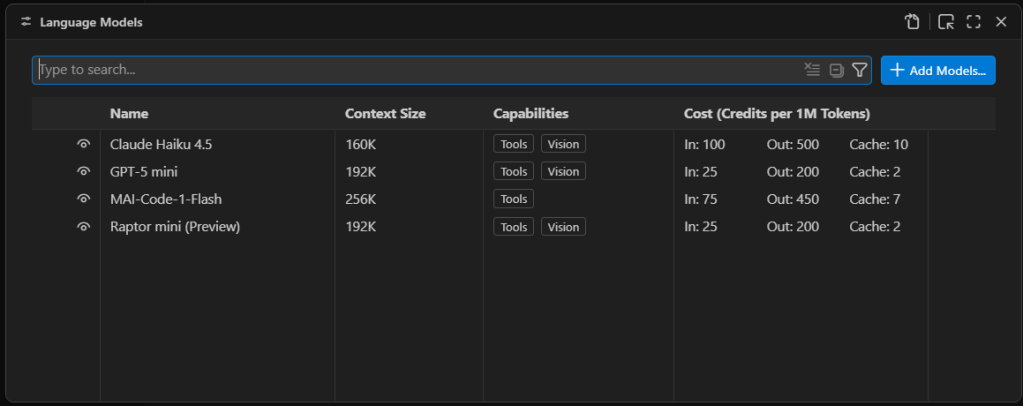
Managing VS Code’s AI language model list. The models available by default are only models available as external APIs, not models that run locally.
Foundry
First you will see a list of the built-in models, which are all externally hosted. To add a new model, select Add Models at the top right and select Custom Endpoint.
You’ll then get a series of prompts:
Group Name: This is “Custom Endpoint” by default, but you can choose any name you want. The name is strictly for organizing the model list and doesn’t affect things like model recognition or connectivity.
API Key: If you’ve configured LM Studio to use an API key for serving models, provide it here. If you’re hosting the model locally and you haven’t explicitly set up API keys, you can leave this blank.
API Type: The options here are Chat Completions, Responses, and Messages. Most of the time you’ll want to use Responses, as it’s the most general-purpose option of the three.
Once you finish providing those answers, you’ll be dropped into a modal editor for a JSON file that holds the details about the endpoint you’re configuring.
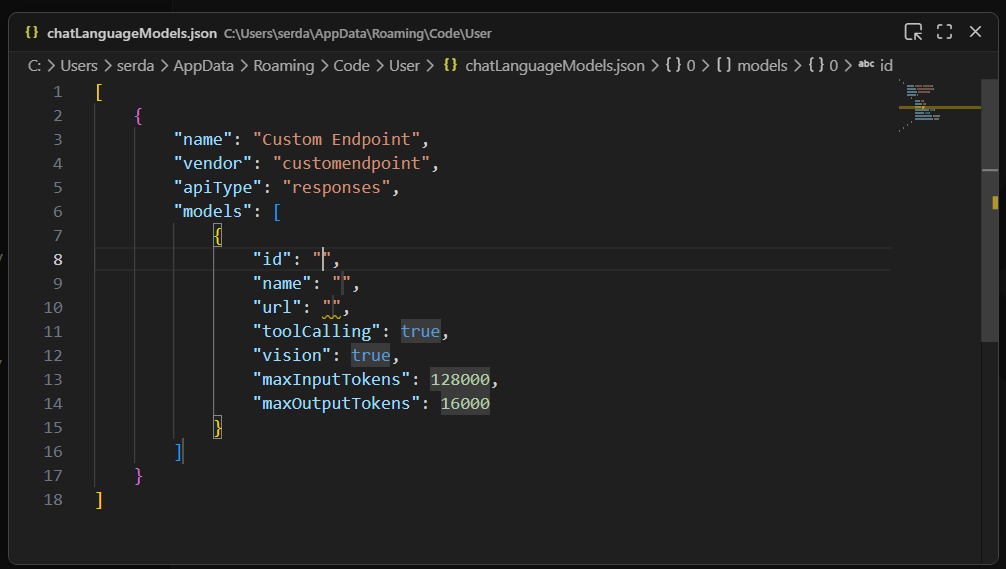
A newly created custom endpoint for a locally hosted model. The ID, name, and URL still need to be defined for this model to be useful.
Foundry
You’ll need to provide a few more details by typing them into the labeled fields:
id: A text field that uniquely identifies this particular entry. The choice of ID is pretty much arbitrary; if you’re using only a single model, the ID could be the model name.
name: The name of the model that is used to identify it on the model server. In LM Studio, you can get this name by clicking on My Models in the main interface, then selecting the three-dot icon for the model in question and clicking Copy Default Identifier. For Qwen 2.5, for instance, name might be something like qwen2.5-coder-7b-instruct.
url: The URL to the server’s endpoint. On LM Studio, this defaults to something like http://127.0.0.1:1234/v1. The /v1 at the end is important because that endpoint is used for autodiscovery of models and their capabilities.
The other fields generally don’t need editing. Most models have tool calling functionality. If you know for a fact that the model you’re using doesn’t have vision support, then set vision to false.
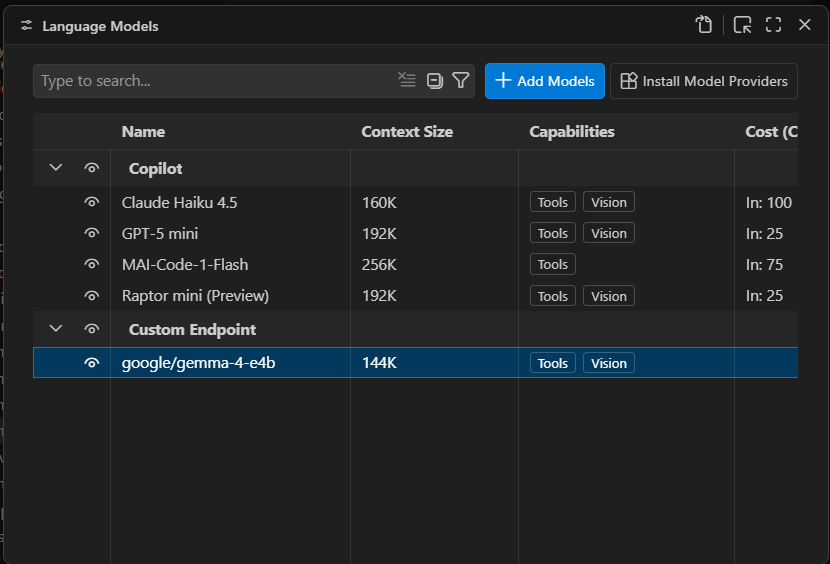
Once you have these fields filled in, you can close the modal editor to save the changes. If you reload the Manage Language Models page, you’ll now see your new endpoint:
A newly created local endpoint. The choice of name and group is arbitrary. “Custom Endpoint” is the default name for a newly created group of endpoints.
Foundry
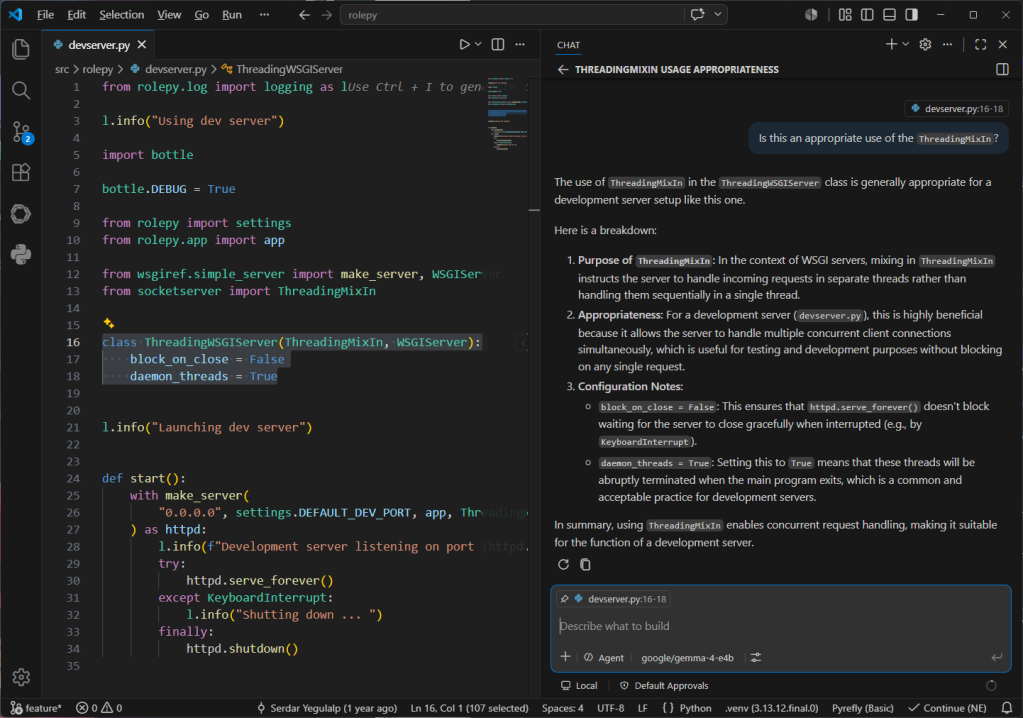
You should now be able to launch the chat window and use the defined model for conversation and utilities:
Conversing with the local model using VS Code’s chat window. Note the selected code block in the left pane that is being used as the context for the conversation.
Foundry
One current, and major, limitation of Visual Studio Code’s BYOK functionality is that it only works for chat and utility tasks. It doesn’t allow you to use a local model for inline suggestions or code completions. The only way to take advantage of local models for expanded functionality with VS Code is to use a third-party tool like Continue.
It isn’t clear if Microsoft will eventually lift this restriction. GitHub Copilot integration in VS Code is a large part of how Copilot as a service reaches its target audience. For the time being, you can certainly use third-party and local models for a significant part of your AI-assisted development work in VS Code, and you can close the functionality gap with additional tooling.
In an extraordinary advance in our understanding of early Holocene oceanographic dynamics, a recent study reveals a vigorous outflow from the Black Sea into the Aegean Sea around 11,000 years ago, profoundly impacting the onset of sluggish deep-water convection in the latter basin. This groundbreaking research, conducted by Evangelinos, Campderrós, Trias-Navarro, and their colleagues, challenges previous assumptions about early Holocene marine circulation patterns in the Eastern Mediterranean and redefines the complex interplay between regional hydrology and oceanographic processes.
The early Holocene epoch, roughly spanning from 11,700 to 8,200 years ago, marked a period of significant climatic transitions following the last glacial maximum. During this time, melting ice sheets contributed to substantial changes in sea level and the freshwater budget of marine basins. The Black Sea, situated at the nexus between continental freshwater inputs and the marine Mediterranean environment, played a pivotal role in modulating regional water mass exchanges. However, prior investigations offered limited insights into the magnitude and influence of its connection to the Aegean Sea.
Employing an integrated approach combining paleoceanographic proxies, high-resolution sediment core analyses, and advanced numerical modeling, the research team meticulously reconstructed the timing, intensity, and consequences of Black Sea outflows during the early Holocene. The results show a robust and sustained volumetric discharge from the Black Sea through the Dardanelles strait, substantially enhancing the salinity and density gradients in the Aegean basin. This intensified outflow propagated a cascade of oceanographic changes, triggering an early onset of sluggish deep-water convection which is key for nutrient cycling, biogeochemical processes, and the overall circulation of the Eastern Mediterranean.
The Black Sea’s outflow was largely driven by postglacial freshwater accumulation and subsequent overspill, a process linked to rapid ice sheet retreat and enhanced riverine inputs from the Eurasian hinterland. These inputs altered the hydrological balance in the Black Sea, elevating its water level sufficient to breach the sill thresholds connecting it with the Aegean. This breach was not a gentle trickle but an energetic pulse of brackish to saline waters that modulated the stratification within the receiving basin. The stratification evolution critically influenced vertical mixing and the ventilation of deeper waters, which prior to this event had been far more vigorous or perhaps absent.
Geochemical signatures extracted from sediment cores, including stable isotope ratios and trace metal concentrations, provide compelling evidence for this intensified Black Sea outflow. Notably, the team documented shifts in δ18O and δ13C signatures compatible with an influx of lower salinity waters at depths that coincide with emergent changes in benthic foraminiferal assemblages. These biological proxies reflect alterations in oxygenation and nutrient availability, tightly coupled to the changes in water column mixing. By correlating these findings with hydrogen isotopic measurements in organic molecular biomarkers, the researchers further elucidated detailed hydrological conditions that underpinned the Black Sea discharge dynamics.
Hydrodynamic modeling simulates the complex interactions between the discharged Black Sea water and the Aegean’s resident water masses, illustrating the resultant sluggish deep-water convection patterns. Unlike the vigorous overturning seen in other Mediterranean sub-basins, the Aegean’s deep-water formation at this time was subdued, governed by the altered buoyancy forcing from the Black Sea influx. Such sluggish convection slows the renewal of deep waters and reshapes elemental cycling, impacting nutrient regeneration and carbon sequestration, with far-reaching consequences on regional marine ecosystems.
This shift in oceanographic conditions at the start of the Holocene further implicates climate feedback mechanisms, as changes in sea surface temperature and salinity could have influenced atmospheric circulation patterns over the Eastern Mediterranean. The study posits that the altered convection regime may have modulated regional climate variability through ocean-atmosphere interactions, potentially linked with the onset of Neolithic cultural developments along the surrounding coastlines due to modified marine productivity and resource availability.
Complementing sedimentological and geochemical datasets with finely resolved chronologies, the researchers critically examined the chronology of inflow pulses vis-à-vis regional climatic archives. Their findings suggest a strong temporal coherence between Black Sea outflow episodes and episodic cooling events recorded in ice cores and speleothems, underscoring a coupled ocean-atmosphere response during this pivotal climate period. This reinforces the importance of marine gateways as sensitive indicators and modulators of earth system dynamics during abrupt climate transitions.
Moreover, the paper opens new avenues for exploring how ancient oceanographic shifts influence carbon cycling. By showcasing how the sluggish Aegean deep-water convection modified the sequestration potential of organic and inorganic carbon in sedimentary reservoirs, the authors contribute crucial knowledge to the ongoing discourse on natural climate regulation mechanisms and how past ocean circulation shaped atmospheric greenhouse gas concentrations.
Applying multidisciplinary tools and innovative analytical techniques, this pioneering investigation represents a model for future studies aiming to unravel the complexity of ancient marine systems. The unprecedented level of detail achieved in reconstructing the early Holocene hydrological regime in this key geographical sector significantly advances the field of paleoceanography and environmental geosciences.
The findings have broad implications beyond academic curiosity, offering critical insights into present-day and future Mediterranean circulation in the face of anthropogenic climate change. Understanding the nuances of how natural variability and regional freshwater inputs influence ocean stratification and convection is essential for predicting ecosystem responses and regional climate feedbacks under ongoing global warming scenarios.
In sum, this study significantly enriches our comprehension of the interactions between postglacial hydrological changes, marine gateway dynamics, and ocean circulation in the Eastern Mediterranean. It highlights the Black Sea not merely as a passive recipient of climatic forces but as an active driver reshaping the marine environment and climate feedbacks in the early Holocene. The rigorous combination of sedimentary evidence, isotopic analyses, and numerical modeling provides a robust framework for future explorations into past oceanographic and climatic regimes.
As we continue to investigate the archives of Earth’s climatic past, unraveling the intricacies of water mass exchanges through narrow sills and their broader repercussions becomes increasingly imperative. This research exemplifies how integrating broad disciplinary approaches can yield transformative insights that resonate across climate science, paleoceanography, and environmental history.
This compelling narrative of the early Holocene oceanographic transformation through the Black Sea outflow is poised to capture the attention of scientists and the public alike, illuminating how ancient hydrological events continue to echo in our modern environmental and climatic landscapes.
Subject of Research:
Paleoceanographic reconstruction of early Holocene Black Sea outflow impacts on Aegean Sea deep-water convection dynamics.
Article Title:
Early Holocene vigorous Black Sea outflow and the onset of sluggish Aegean deep-water convection.
Article References:
Evangelinos, D., Campderrós, S., Trias-Navarro, S. et al. Early Holocene vigorous Black Sea outflow and the onset of sluggish Aegean deep-water convection. Commun Earth Environ (2026). https://doi.org/10.1038/s43247-026-03730-6
In recent years, the alarming degradation of marine ecosystems worldwide has sparked urgent calls for restoration and sustainable management. Amidst this global crisis, China’s recent national initiatives aimed at reviving its marine environment represent a landmark effort, demonstrating that dedicated policy and science-driven interventions can indeed reverse environmental decline at unprecedented scales. A recent groundbreaking study by Chen, Wang, Bao, and colleagues, published in Communications Earth & Environment, presents compelling evidence that these coordinated restoration programs are facilitating significant recovery within China’s vast and economically critical marine ecosystems. By integrating multiple restoration techniques and focusing on ecological integrity, these initiatives offer a powerful blueprint for marine ecosystem management both nationally and globally.
China’s coastline, extending over 14,500 kilometers, encompasses a wide range of habitats, including coral reefs, tidal marshes, mangroves, and seagrass beds, all vital to biodiversity and coastal protection. However, decades of rapid industrialization, urban expansion, pollution, and overfishing had severely weakened these ecosystems. Prior assessments had projected ongoing losses threatening marine species, fisheries productivity, and the livelihoods of coastal communities. The new research highlights how the nation’s comprehensive restoration strategies — initiated roughly a decade ago and accelerated in recent years — have triggered a measurable rebound in ecosystem health, shifting the trajectory from decline to restoration.
Central to the success of China’s national restoration agenda has been the integration of ecological knowledge with innovative engineering and socio-economic frameworks. Unlike earlier piecemeal efforts, the new approach involved large-scale habitat reconstruction, pollution control, protection of key species, and active monitoring programs. The research documents how mangrove reforestation projects, for instance, not only stabilize shorelines from erosion but also enhance sediment deposition, carbon sequestration, and nursery grounds for commercially important fish species. Similarly, artificial reefs and seagrass bed restorations have revived structural complexity underwater, facilitating increased biodiversity and ecosystem resilience.
One of the study’s significant findings involves the role of targeted pollution reduction in catalyzing ecosystem recovery. Coastal urban centers and industrial zones historically discharged untreated effluents and nutrients into marine waters, leading to eutrophication and hypoxic zones detrimental to marine life. The national initiatives implemented stringent environmental regulations and upgraded wastewater treatment infrastructure, substantially reducing nutrient loads entering key bays and estuaries. This nutrient decrease correlated strongly with improvements in dissolved oxygen levels, enabling marine habitats to support more diverse biological communities and enhancing natural bioremediation processes.
Beyond habitat reconstruction and pollution control, species conservation featured prominently in China’s restoration programs. The policy emphasized the protection and recovery of keystone and indicator species such as seagrass, oysters, and various fish stocks that underpin the ecological function of marine systems. The research details the successful establishment of marine protected areas (MPAs), which serve as refuges for spawning and juvenile growth. These MPAs were strategically sited based on ecological monitoring data and incorporated community involvement to ensure sustainable fishing practices outside protected zones. The enhanced populations within MPAs subsequently contributed to spillover effects, boosting fisheries yields in adjacent areas.
Technological advancements also played a pivotal role in enabling precise assessment and adaptive management of restoration efforts. Remote sensing technologies, underwater drones, and sensor networks provided high-resolution data on physical, chemical, and biological parameters, allowing real-time tracking of ecosystem changes. Machine learning algorithms processed these data streams to identify patterns and forecast recovery trajectories, informing iterative adjustments in restoration tactics. The study underscores how integrating big data analytics with ecological expertise optimized resource allocation and improved restoration outcomes at scale.
Socio-economic factors, often overlooked in environmental restoration, were critically addressed in the Chinese model. The initiatives incorporated stakeholder engagement, including coastal communities, fishers, and local governments, to align restoration objectives with economic well-being and cultural values. Livelihood diversification programs, supported by government subsidies and training, reduced dependence on overexploited marine resources, while promoting aquaculture practices compatible with ecosystem health. Education campaigns raised public awareness about marine conservation, fostering stewardship and compliance with environmental regulations. This holistic approach ensured that ecological restoration was intertwined with social sustainability.
The study also explores the climate change mitigation potential inherent in restored coastal habitats. Mangrove forests and seagrass meadows sequester significant amounts of blue carbon, storing carbon in biomass and sediments for centuries. China’s restoration of these habitats not only enhances biodiversity but also contributes to national and global climate goals by offsetting greenhouse gas emissions. The authors quantify this carbon sequestration capacity, demonstrating that these initiatives offer a dual benefit of ecosystem resilience and climate stabilization, making them an essential component of integrated environmental policy.
Despite these encouraging results, the research acknowledges persistent challenges and knowledge gaps in scaling restoration efforts. Coastal megacities continue to exert pressures through land reclamation and industry, while ocean acidification and warming impose new stressors that may limit recovery potentials. The need for enhanced international collaboration is emphasized, as marine ecosystems transcend national boundaries and require concerted global stewardship. Future work must prioritize developing novel restoration materials, enhancing genetic diversity in restored populations, and improving socioeconomic incentives to sustain long-term gains.
China’s experience provides a valuable case study for other nations confronted with similar marine ecosystem crises. The deliberate combination of science-based strategies, policy support, technological innovation, and community participation has generated positive feedback loops that accelerate recovery. This research reinforces the notion that large-scale marine restoration is not only possible but can lead to substantial ecological, economic, and social returns when underpinned by strong political will and interdisciplinary collaboration.
Moreover, the study presents a compelling argument for integrating marine restoration within broader sustainable development frameworks. Healthy marine ecosystems underpin fisheries, tourism, coastal protection, and biodiversity conservation — fundamental pillars of coastal economies and human well-being. Recognizing these ecosystem services and accounting for them in planning and investment decisions is critical to achieving lasting restoration. China’s approach exemplifies how restoration can be a catalyst for green economic growth, providing jobs, stabilizing food supplies, and enhancing resilience to climate impacts.
In conclusion, the research conducted by Chen, Wang, Bao, and their team underscores an optimistic vision for the future of marine ecosystems in China. The national restoration initiatives have demonstrably reversed environmental degradation trends and fostered recovery at scale. This study serves as a timely reminder that with strategic, multi-dimensional efforts, reversing marine ecosystem decline is achievable. It calls on policymakers, scientists, and society to embrace restoration as a priority, employing innovative tools and inclusive governance to safeguard the ocean’s health for generations to come.
Subject of Research: Marine ecosystem restoration and recovery in China through national initiatives.
Article Title: National restoration initiatives promote China’s marine ecosystem recovery.
Article References:
Chen, X., Wang, N., Bao, X. et al. National restoration initiatives promote China’s marine ecosystem recovery. Commun Earth Environ (2026). https://doi.org/10.1038/s43247-026-03760-0
In a groundbreaking development that promises to revolutionize the way artificial intelligence perceives the world, a collaborative research team from KAIST, MIT, and Microsoft has unveiled a novel technology named “Upsample Anything.” This pioneering innovation substantially enhances the visual acuity of AI systems while drastically reducing the memory demand on hardware, specifically GPU memory. The new method achieves up to a sixteenfold increase in memory efficiency, addressing one of the most critical bottlenecks in real-time AI vision applications for mobile and embedded devices.
The cornerstone of this advancement lies in overcoming the traditional compromise faced by AI-driven image processing systems. Historically, achieving higher resolution visual input required extensive GPU memory and computational power, creating a significant barrier to real-time implementation on resource-constrained devices such as smartphones and humanoid robots. Conversely, compressing images into low-resolution features, which is a common practice to conserve resources, often leads to the loss of crucial visual details like small objects and fine structural elements. This trade-off has long hindered the deployment of precise AI vision in dynamic and mobile environments.
The “Upsample Anything” technology ingeniously sidesteps this issue by introducing a training-free upsampling mechanism capable of reconstructing high-resolution features from low-resolution inputs without additional data training. Unlike conventional methods that necessitate retraining or complex optimization when exposed to new data or environmental conditions, this approach adapts instantly by leveraging the edge and structural information inherent within a single input image. This capability drastically simplifies deployment and customization across diverse AI vision applications.
At the heart of the method is a sophisticated process called test-time optimization (TTO), which refines pixel-wise anisotropic kernel parameters based on the specific low-resolution image. These learned kernels are then applied to foundational feature maps to generate high-resolution representations. The final phase involves pixel-wise anisotropic Joint Bilateral Upsampling, a technique that preserves edge details and texture fidelity while reconstructing the image in high resolution. This multi-stage pipeline ensures that essential visual information is restored with remarkable accuracy and efficiency.
Highlighted through an illustrative example, the research team demonstrated the restoration of a 224×224 pixel image— a common resolution in AI research— to a clarity nearly identical to the original, within approximately 0.4 seconds of computation. This substantial leap in processing speed and memory efficiency heralds a new era for real-time AI vision, where systems can now maintain high precision without the prohibitive cost of extensive hardware resources. The direct implication is that AI can better understand and interact with its environment, making it invaluable for applications requiring fine object detection and manipulation.
The utility of “Upsample Anything” stretches far beyond humanoid robots. Autonomous driving systems stand to benefit immensely, as they depend heavily on the rapid and accurate interpretation of complex visual scenes. With this technology, vehicles can process crucial visual cues in a more resource-efficient manner, enhancing safety and navigation capabilities. Additionally, on-device AI for smartphones and other portable gadgets can achieve superior visual comprehension while minimizing battery drain and thermal load— critical factors for consumer electronics.
The research team’s achievement was officially recognized at CVPR 2026, the most prestigious conference dedicated to computer vision and artificial intelligence. The work earned the “CVPR Compute Gold Star” award, a distinction granted to research that excels in computational efficiency. Furthermore, it was named the “Transparency Champion” for leading in research process transparency and reproducibility, emphasizing the team’s commitment to responsible and open scientific practices. This dual recognition highlights not only the technological ingenuity but also the ethical and procedural rigor of the research.
One of the most remarkable attributes of this technology is its universality and plug-and-play nature. Its training-free design means that no additional datasets or retraining cycles are required when deploying it in different settings. This contrasts sharply with existing upsampling methods that often demand labor-intensive tuning or environment-specific learning. Consequently, “Upsample Anything” can seamlessly integrate into a wide array of AI frameworks, simplifying engineering workflows and accelerating the timeline from development to deployment.
Professor Changick Kim, the project lead from KAIST’s School of Electrical Engineering, emphasized the transformative potential of this technology. He noted that by boosting visual precision with minimal resource demands, the algorithm can catalyze the commercial viability of complex AI entities like humanoid robots and enable more powerful on-device AI applications. The convergence of computational efficiency and high visual fidelity, he added, represents a critical step forward in the quest to bring sophisticated AI capabilities to everyday devices.
This advancement is particularly significant in the context of emerging AI models based on world models— frameworks that aim to understand and predict changes in physical environments. Effective deployment of such models often requires processing a large volume of visual data accurately and expediently. By enabling high-resolution feature upsampling without overwhelming hardware limitations, “Upsample Anything” paves the way for smarter, faster, and more adaptive AI models that truly comprehend their surroundings in detail.
The first author of the study, Minseok Seo, a doctoral student at KAIST, alongside co-authors from MIT and Microsoft, detailed their findings in a paper titled “Upsample Anything: A Simple and Hard to Beat Baseline for Feature Upsampling.” The work is publicly accessible via the arXiv repository (DOI: 10.48550/arXiv.2511.16301), facilitating further exploration and innovation by the wider research community. Their approach exemplifies a blend of elegance and practicality, challenging the assumption that high computational cost is a prerequisite for high-quality visual reconstruction in AI.
In conclusion, the “Upsample Anything” technology marks a significant leap in AI visual processing by resolving a longstanding dilemma between image resolution and hardware resource constraints. Its immediate applicability across various AI-driven fields— ranging from robotics to autonomous systems and portable devices— underscores its impact and longevity. As AI continues to entwine itself with daily human interaction and technological progress, innovations like this will form the backbone of smarter, more capable, and accessible intelligent systems.
Subject of Research: Not applicable
Article Title: Upsample Anything: A Simple and Hard to Beat Baseline for Feature Upsampling
As our world is rapidly reshaped by climate change, glaciers have retreated and revealed new swaths of bare land. Throughout the coming decades to centuries, this rocky ground will become dappled with lichens and scrub, eventually giving rise to newborn forests in a process known as ecological succession.
Ecologists have mapped out the stages of ecological succession for plant communities, observing which species are the first to colonize land and how these pioneer species promote secondary growth. Yet before any plants sink their roots into the soil, it is populated by thriving communities of single-celled microbes that prepare it for further habitation. Scientists study how these microbial communities arise to understand how healthy ecosystems develop.
Newly exposed land is nutrient-poor and subject to large temperature fluctuations, so the first species to settle there must overcome these challenges. Pioneer plant species are often habitat generalists, meaning they can thrive under a variety of environmental conditions. However, all plants convert water and sunlight into carbon and energy. Microbes can use many different energy sources, and often contain genes for multiple metabolisms in their genomes. Therefore, researchers wondered whether pioneer microbes could also be defined by their metabolic flexibility.
A team of scientists based at Monash University in Australia tested this hypothesis by studying land left in the wake of 2 retreating glaciers: one on an island off the coast of Antarctica and one in the Swiss Alps. The researchers sampled soils along a path from the tip of the glacier outward, which had been exposed to the air for different amounts of time. By comparing the microbial communities within these soils, the researchers could track the different stages of ecological succession after glacial retreat.
The researchers extracted DNA from the soils and analyzed it using 2 sequencing methods. First, they sequenced a gene called 16S rRNA, which is like a microbial fingerprint for the different species present. They used this method to understand the diversity of these communities and track their species overlap, helping them to identify habitat generalists that thrived under different soil conditions.
To understand the metabolic flexibility of these microbes, the researchers used a second method, known as metagenomics, which sequences all of the DNA in a sample rather than just a single gene. They used these data to reconstruct the entire genomes of microbes present in the soils, providing information on what kinds of metabolic activities they were capable of. The team also measured chemicals like ammonium and sulfide in the soils, as well as atmospheric gases like methane and carbon monoxide, to assess how the microbes used these compounds for growth.
The researchers found microbes inhabiting even the youngest soils, demonstrating the speed at which life takes hold in new environments. The abundance of microbes increased by approximately 8-fold in older soils, alongside a similar rise in species diversity, indicating that complex communities persisted over time. They also found the metabolic capabilities of microbes inhabiting Antarctic and Swiss glacial soils to be remarkably similar, suggesting common selective pressures drove the establishment of these new ecosystems.
They were surprised to discover that the most abundant microbes in younger soils were habitat specialists that were rare in older soils. These pioneer microbes, while still metabolically flexible, had adapted to utilize meager energy sources like atmospheric trace gases, including hydrogen, methane, and carbon monoxide. Many of these microbes could also derive energy from chemicals that dissolved out of rocks, like inorganic sulfur compounds. The researchers proposed that pioneer microbes could quickly take advantage of newly opened ecological niches, like soils exposed during a glacier’s retreat, because of their efficiency at using scant resources.
They found that habitat generalists, on the other hand, tended to dominate older soils. This result suggested that the habitat specialists were eventually outcompeted by the slow and steady growth of the habitat generalists in a real-life turtle-and-hare race.
The team concluded that using multiple growth strategies helps microbes adapt to new environments. However, they acknowledged that ecological succession could occur differently in other landscapes, such as in the aftermath of volcanic eruptions, meteorite impacts, or forest fires. They suggested that future researchers work to uncover how microbial communities lay the groundwork across these diverse ecosystems.
GitHub is expanding Copilot beyond the IDE with a new desktop application and a new collaborative work surface called canvas as part of its broader efforts to pitch the AI-assisted coding tool as the control center for agent-native software development.
The desktop application announced at Microsoft’s annual Build conference this week is designed to give developers a dedicated environment for working with AI agents throughout the software development lifecycle, rather than limiting those interactions to code-generation tasks inside an editor, the company wrote in a blog post.
The application includes a collaborative workspace called canvas where developers can brainstorm ideas, refine requirements, generate plans, and iterate on projects alongside AI, it said.
It also has new Agent Merge and code review features that enable developers to automate Copilot to combine tasks of different agents to complete a specific goal or conduct autonomous code reviews according to set standards, it said.
These new features could reduce context switching, increase engineering efficiency, and accelerate delivery cycles, said Phil Fersht, CEO of HFS Research.
Shift in pricing justified?
However, despite the new features, much of the conversation among developers in recent weeks has centered on a different topic: this week’s shift to a usage-based billing model for GitHub Copilot that it announced in April.
The changes were met with a wave of criticism on the GitHub community forum, where some users accused the company of a “bait and switch,” while others requested refunds or announced plans to cancel their subscriptions.
For analysts, though, the pricing change was, at least from GitHub’s point of view, necessary and justified.
“The pricing change is justified by where GitHub is going, not by where the product is today. Running multiple agents in parallel with sandboxes, canvas reviews, and Agent Merge looping through CI is closer to cloud compute than an IDE plugin, and you cannot price compute on a flat seat fee. So metered billing is the right call structurally,” said Advait Patel, a senior reliability engineer at Broadcom.
Fersht said developers and CIOs need to focus on Copilot’s metamorphosis from being a coding assistant into a platform for orchestrating software-development agents and workflows.
“That changes the ROI conversation significantly. CIOs should stop thinking about Copilot as a seat-license productivity tool and instead evaluate it as an AI-powered software delivery platform,” he said. “The metrics shift from ‘lines of code generated’ to broader operational outcomes such as release velocity, code quality, defect reduction and engineering efficiency.”
GitHub is not the first company offering vibe-coding tools to rethink its pricing strategy as AI agents proliferate across enterprises and evolve to take on more complex software-development tasks that are computationally more intensive.
That common pressure across AI coding vendors is why Amit Chandak, chief analytics officer at IT consulting firm Kanerika, thinks developers and CIOs should focus less on GitHub’s pricing mechanics and more on whether these increasingly capable tools are delivering measurable business value.
“The new features that GitHub announced can act as productivity multipliers as well as features that increase consumption without delivering proportional business value. Without productivity baselines established before adoption, enterprises risk absorbing higher costs with no clear line back to delivered value,” Chandak said.
For Fersht, developers and CIOs will need to focus on governance, monitoring and financial controls as the pricing model is changing.
“The governance challenge is very real. Autonomous agents can continuously reason, test, revise and interact with multiple systems in ways that create far less predictable consumption patterns than traditional SaaS tools,” he said.
Patel, however, advised users and decision-makers to be more skeptical, especially since the new features are currently in technical preview.
“Customers are being asked to pay variable rates now for value that has not been validated in production. Do not assume new capabilities justify higher spend,” he said. “Instead, run a 90 day pilot, measure PRs merged per dollar before and after, and let the data decide. If the ratio improves, the pricing is fair. If it does not, you are paying for promise, not delivery,” Patel added.

 Login