❌

Reading view

Como acelerar o processo de indexação do Spotlight [iPhone, iPad e Mac]

Os corajosos que instalaram as versões beta do iOS 27, do iPadOS 27 e do macOS Golden Gate 27 certamente devem ter notado um aviso no topo do aplicativo Ajustes (Settings) sobre uma indexação do Spotlight em andamento.

Isso ocorre porque o Spotlight indexa o conteúdo do seu dispositivo para que seja possível pesquisar tudo o que está nele.

No caso de uma atualização de software (como as betas), o índice do Spotlight é atualizado quando você instala novos aplicativos ou recebe novos emails e mensagens de texto, por exemplo.

Usando truques simples — nem sempre bem-vindos, é verdade —, é possível acelerar o processo de indexação (que pode levar horas ou dias, dependendo da quantidade de conteúdos). Veja como! 😉

  1. Deixe o seu dispositivo sem uso, ou seja, de forma que você fique um tempo sem mexê-lo;
  2. Conecte o iPhone, iPad ou Mac à energia;
  3. Conecte o aparelho à internet usando uma rede Wi-Fi ou Ethernet, caso os emails ou outros dados precisem ser baixados para a indexação.

A Apple afirma que é possível que sejam vistos, durante esse processo de indexação, alertas como:

  • Um indicador de progresso na parte superior da janela do Spotlight ou da Siri no Mac, que é aberto quando você pressiona a combinação ⌘ command barra de espaço;
  • Uma notificação abaixo do seu nome nos Ajustes do iPhone ou iPad;
  • Um alerta do Mail de que a indexação está incompleta.

Como está o progresso aí para você?

  •  
  •  

Windows 11 can now reinstall itself from the cloud — Cloud Rebuild revives dead systems without secondary boot media, wipes broken installation and downloads a fresh copy of the OS

Microsoft has finally solved one of the biggest pain points of Windows with the rollout of Cloud Rebuild. The new recovery feature can reinstall Windows 11 even when an existing Windows installation is corrupt or refuses to boot. Available as a beta through the newly released Windows 11 Insider Beta Preview Build 26220.9343, the feature is essentially a hassle-free alternative to creating a Windows installation USB drive when a PC needs to be recovered.

According to Microsoft, Cloud Rebuild is designed to restore a Windows 11 PC to a “clean, known-good state” by downloading a fresh image of Windows along with the required drivers directly through Windows Update. Unlike the existing Reset this PC functionality, it does not depend on the health of your existing Windows installation, nor does it require users to have a USB drive or custom recovery image available.

The Cloud rebuild feature available in Windows Recovery

(Image credit: Microsoft)

Available via the Windows Recovery Environment (WinRE), users can access it by selecting Troubleshoot > Recovery and uninstall > Cloud rebuild from WinRE. Speaking of which, Microsoft has also improved networking support in WinRE. The recovery environment can now reuse eligible Wi-Fi profiles saved within an existing Windows installation, allowing a PC to connect during recovery without requiring administrators to separately configure Wi-Fi credentials in WinRE. Once the PC is connected, Cloud Rebuild checks Windows Update for the target Windows build and downloads the required files. Users can then confirm the Windows edition, language, and build before starting the reinstall.

The only catch here is that Cloud Rebuild completely wipes the system drive, meaning that the process removes all data stored in your main installation or C: drive, including locally stored files, accounts, applications, and settings, before reinstalling Windows. Thus, it is recommended to back up all your important files either locally or using a cloud-based service before starting the process. Once the installation is complete, the PC boots into the Windows out-of-box experience, similar to a fresh installation of Windows. For admin-managed PCs using Windows Autopilot and Microsoft Intune, the system can automatically reconnect to the organization's management infrastructure and restore assigned applications, policies, and backed-up settings.

Cloud Rebuild could particularly be useful when Windows becomes too corrupted to boot normally. Instead of finding another PC, creating installation media, and manually reinstalling Windows, users can potentially perform the entire recovery process directly from WinRE. The feature is still in preview; however, we can expect a wider release later this year.

  •  

Como alterar a lista do web app Lembretes exibida na tela inicial do iCloud.com

Com o site do iCloud, os usuários de dispositivos da Apple podem acessar diversos dados da sua Conta Apple (Apple Account), como suas fotos, vídeos e arquivos.

No caso do app Lembretes (Reminders), é possível escolher qual lista será exibida na tela inicial do site — para visualizar aqueles que considera mais importantes sem precisar abrir o web app.

Veja como escolher! 😉

  1. Abra o iCloud.com no seu navegador preferido;
  2. Localize o quadro do Lembretes;
  3. Clique nos três pontinhos;
  4. Marque a lista que deseja que seja exibida.

Simples, não?! 😄

  •  

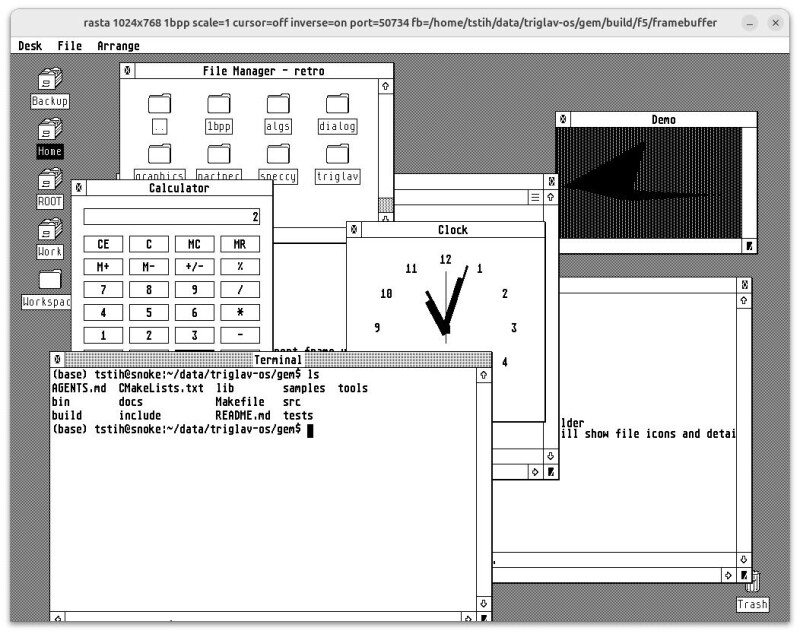
Digital Research's GEM opens a new window on Linux

Digital Research's GEM was one of the earliest graphical environments for PC compatibles, and an inspired hack has now resurrected it on Linux. GEM for Linux is a port of the Atari ST's graphical desktop, created by prolific Slovenian developer Tomaž Štih. Applications share a display server that can output directly through Linux's framebuffer or display the desktop in a window using Štih's SDL2-based Rasta framebuffer emulator. In his Linkedin post, he says that it is "derived from OpenGEM and FreeGEM – now secure, optimized, stabilized, and source-compatible with Atari ST GEM." It is derived from the Digital Research GEM source code released by Caldera in 1999, as the still-young Register reported at the time. GEM was among the first successful GUIs for MS-DOS PC compatibles. European readers may remember that it was the graphical desktop bundled with the Amstrad PC1512 and PC1640 – the first affordable mass-market PC compatibles on this side of the Atlantic. In 1985, Apple threatened legal action against Digital Research over GEM's similarity to the Macintosh interface. Digital Research agreed to make the PC version less Mac-like, removing desktop drive icons, overlapping windows, and other features. The lawsuit didn't affect Atari's version, however. That PC version is what Caldera released as open source. Since 1999, the FreeGEM community has enhanced it beyond the ST version, restoring the removed features and adding others. These include Bézier curve drawing from the runtime-only GEM/4 bundled with CCP Artline and 3D-shaded buttons from Timeworks Publisher's GEM/5 runtime. You can see some of the results on John Elliott's FreeGEM page. As far as we know, this is the second modern FOSS implementation of Atari GEM to benefit from the FreeGEM source code. The other is the remarkable EmuTOS project, a completely open source replacement operating system and GUI for original Atari hardware that we mentioned in 2022. Atari's TOS combined GEMDOS, derived from Digital Research technology, with a modified version of GEM for its graphical interface. Quite a lot of DR source code is available online, but despite the clarification of CP/M's legal status that we covered in 2022, much of it is not strictly open source. FreeGEM and the OpenGEM distribution are. Back in the 1980s, DR had a multitasking version called X/GEM for FlexOS, whose history we described later in 2022. We find it delightful to see some of DR's multitasking ambitions revived nearly 40 years later. We don't expect GEM to render Wayland obsolete or usher in a new era of Atari-inspired Linux development. We wouldn't hate that, but there is precedent for taking GEM further. Third-party development eventually turned ST GEM into a multitasking environment in its own right, called FreeMiNT. There was also a commercial multitasking GEM-compatible operating system called MagiC, with a 68K Macintosh version called MagiCMac. Its source was later released publicly, and development continues in the Atari portions of the code. We asked Štih the inevitable question: was GEM for Linux vibe-coded? Štih replied: "No. In my experience, vibe coding tends to produce code bloat and poor architecture. "I use AI, but I practice architecture-driven design. I define the initial architecture, implement the first iteration, refactor, and repeat. "For me, AI is still a junior developer. I remain in control, and I'm ultimately responsible for the architecture and the quality of the code." ®

  •  

A lifetime license for Office on Mac is $90 right now

Macworld

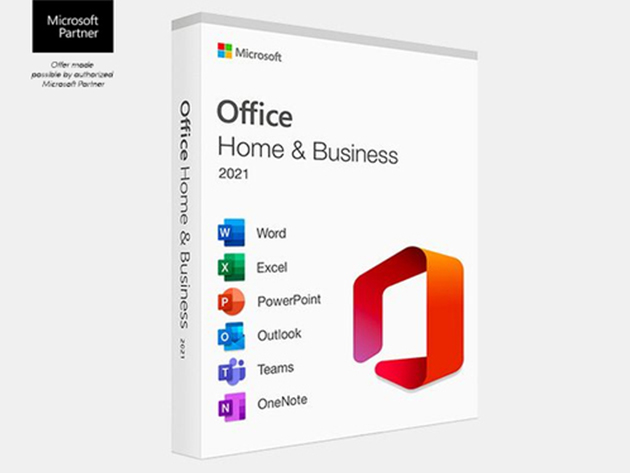
TL;DR: Renewing Microsoft 365 every year adds up fast. Get a lifetime license to Microsoft Office Home and Business 2021 for Mac for $89.97 (reg. $219) and own the core Office apps outright.

This license covers Word, Excel, PowerPoint, Outlook, a basic version of Teams, and the free version of OneNote, installed on one Mac for lifetime use at home or for work. It’s a one-time purchase tied to a Microsoft account rather than a specific device, so reinstalling later doesn’t require buying it again. Again, Microsoft Office Home and Business 2021 for Mac is available here for just $89.97.

Word, Excel, and PowerPoint Without the Subscription

The license supports the three most recent versions of macOS, currently macOS Sonoma, Sequoia, and Tahoe, with Microsoft rolling support forward as new versions launch and phasing out the oldest one.

Delivery is instant. License keys and download links arrive by email right after purchase, and any redemption code must be used within 7 days of purchase. Free customer support is included if setup runs into any snags along the way.

For anyone who’s tired of a recurring Office bill and just wants the core apps running reliably on a Mac, this is a straightforward way to skip the subscription entirely. Get Microsoft Office Home and Business 2021 for Mac for $89.97 (reg. $219) while this price holds.

Microsoft Office Home & Business for Mac 2021: Lifetime LicenseSee Deal

StackSocial prices subject to change.

  •  

Oracle says AI will save it from the SaaSpocalypse, not bring it on

Oracle has argued AI will strengthen its applications business, by giving customers new ways to use software and making them easier to implement. Co-CEO Mike Sicilia decided to defend applications in his first remarks on Oracle’s Q1 FY 2027 earnings call. “The introduction of AI is an accelerator, not a replacement for packaged applications,” he argued. “Before AI came along, application suites had already proven their effectiveness. Companies have been able to increase their profit margins because end-to-end automation of standardized and efficient business processes proved to be much more effective than one-off custom solutions.” The CEO then admitted that business apps “did require organizations to follow workflows and processes as designed in the system, something that many struggle to achieve consistently across functions, teams and regions.” “AI changes this dynamic,” he said. “Rather than asking every employee to navigate and execute a process exactly as a system expects, AI agents can perform tasks using the organization's established workflows and business rules. Employees then shift to overseeing agents, resolving exceptions and applying human judgment where it matters most.” Sicilia is not alone in that view. Salesforce’s Claudeforce puts an AI interface on the CRM giant’s wares. “We are incredibly confident in the potential for this new paradigm to deliver much more rapid ROI for our customers,” Sicilia said. He then promised that in October Oracle will debut an “agentic AI accelerator” that will “automate and orchestrate implementation at an unprecedented scale, compressing SaaS deployments from years to months and months to weeks.” The CEO offered another reason for investors to be bullish about Oracle’s applications biz. “Our SaaS business is also a wonderful lead generation business for our IaaS business,” he said. SaaS is also a solid performer, growing ten percent even as Oracle’s line item for software revenue slipped three percent to $5.5 billion. The database giant’s cloud biz did rather better, growing revenue 60 percent year-over-year to $11.6 billion. Financial analysts on Oracle’s earnings call wanted to know if the company’s colossal investments in datacenters and AI infrastructure are paying off and co-CEO Clay Magouyrk said Oracle is “constantly finding interesting ways to fund the business.” He also pointed to demand for AI infrastructure remaining strong and customers being willing to pay a premium to access it. “GPU longevity and value continue to impress,” he said. “Of all the GPUs that came up for renewal in Q1, that capacity was renewed or resold at a 20 percent premium to prior contracts.” “The majority of those GPUs are four years or older,” he added. “We see a long useful life with increasing value for the AI capacity we're deploying.” That said, Magouyrk warned that some of Oracle’s datacenter mega-builds are progressing faster than others, meaning it can’t offer precise predictions about when its new facilities will start to produce revenue. Magouyrk argued that’s nothing to worry about. “Anyone that's been in the business of doing construction or large-scale infrastructure development, if their plan relies on 100 percent achievement of every one of their deliverables, we have a term for that. It's called a bad plan,” he said. “And so we try real hard not to make bad plans. So we obviously know the difficulty and the complexity of what we're doing, and we don't assume 100 percent of everything is going to work all the time. And we have backup options for those things, as well as we don't count that everything is going to get done exactly on time all the time.” Oracle’s plans did work well enough that it turned on 850 MW of new datacenter capacity in the quarter, and forecasedt earnings per share for the full year would rise five cents to $8.10 on revenue of at least $90 billion. Initial investor response was positive as Oracle shares popped seven percent in after-hours trading, before settling to levels experienced earlier this week. The company’s stock is down 21 percent over the year and is 38 percent below its June peak. ®

  •  

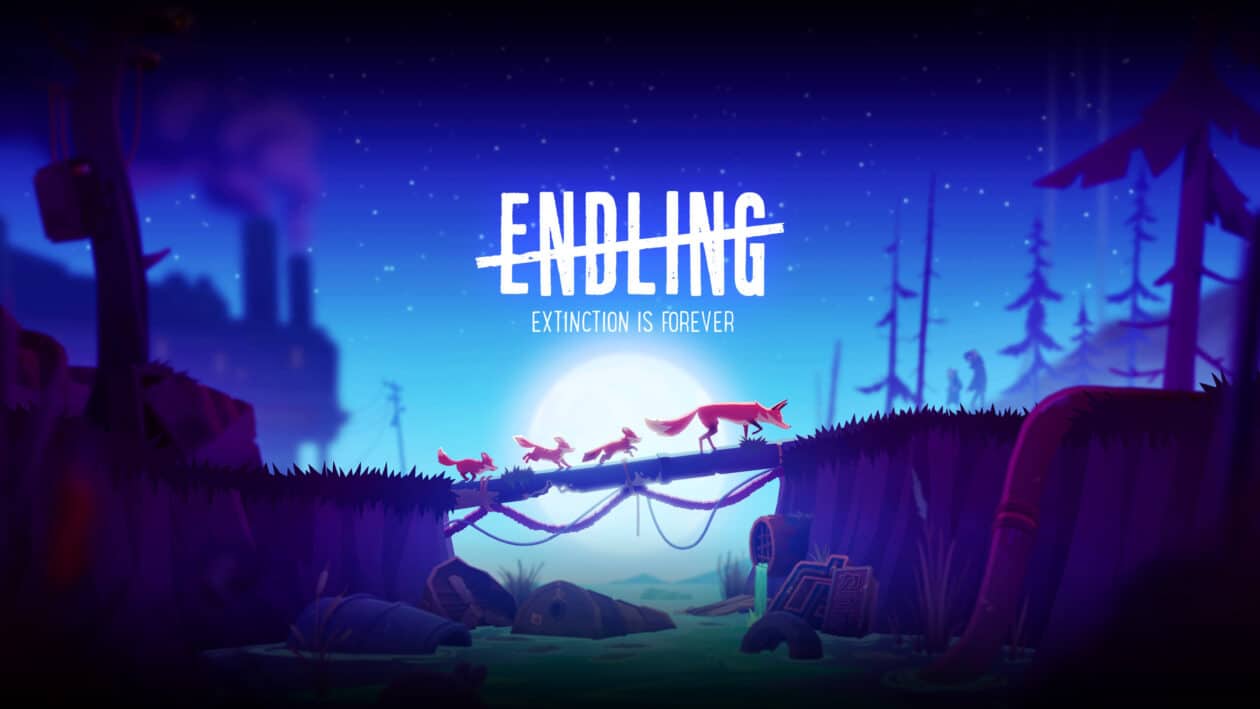
Promoções na App Store: Endling, Labyrinth City, Kana School: Japanese Letters e mais!

Nesta quinta-feira, economize e aproveite a nossa seleção de promoções na App Store!

Endling, criado pela HandyGames e um dos vencedores dos Apple Design Awards 2023, é o nosso destaque do dia.

Experimente e explore um mundo devastado pela humanidade na pele da última raposa da Terra e de seus filhotes. Descubra toda a destruição, a poluição e os problemas causados ao planeta.

Explore várias áreas de rolagem lateral em 3D e defenda suas pequenas bolas de pelo, alimente-as, veja-as crescer, observe suas personalidades e medos únicos e, o mais importante, ajude-as a sobreviver.

Confira um vídeo:

Controles na tela serão as suas ferramentas. Proteja-se de ameaças, cace, esconda-se e teste o seu instinto de sobrevivência. Aproveite a oferta e compre esse belo título! 🦊


Confira outros jogos/apps que, juntos, somam mais de R$90 em descontos:

Jogos

Puzzle.

Torne-se um predador.

Controle de fronteira.

Aplicativos

Aprenda japonês.

Diversão educacional.

Observe a Terra.


Aproveite as ofertas e até amanhã! Lembrando que elas são sempre por tempo limitado, então é bom correr. 🛸

  •  
  •  

OpenAI anuncia novidades para o ChatGPT Voice, Work, Codex e a Biblioteca

A OpenAI anunciou recentemente uma série de novidades para o ChatGPT, incluindo uma atualização muito bem-vinda para usuários do ChatGPT Voice.

Agora, o assistente pode usar os modelos GPT-5.6 ou GPT-6 Astra quando precisa pesquisar ou raciocinar sobre questões mais difíceis — e o usuário pode escolher qual usar com um seletor.

Além disso, a empresa também simplificou os limites de uso diários do GPT-Live:

  • Go: até 3 horas com o GPT-Live-1 mini, substituindo o acesso ao GPT-Live-1;
  • Plus: até 3 horas com o GPT-Live-1;
  • Pro (US$100/mês): até 15 horas com o GPT-Live-1;
  • Pro (US$200/mês): uso ilimitado do GPT-Live-1;
  • Plus e Pro: não mudam mais para o GPT-Live mini depois de atingir o limite de uso do Voice.

Com essas mudanças, os planos Plus e Pro não mudam mais para o GPT-Live-1 mini depois de atingir o limite de uso do Voice. Além disso, os níveis separados de inteligência do Voice (Instant, Medium e High) foram descontinuados.

Novidades para o ChatGPT Work e Codex

A OpenAI anunciou também que a Deep Research está agora disponível no ChatGPT Work e no Codex para os planos Plus, Pro, Business, Enterprise e Edu. Basta ao usuário digitar @Deep Research ou pedir explicitamente para usá-la no comando.

Outra novidade chegando aos dois recursos é o plugin Data, que ajuda a analisar dados de negócios conectados. É possível fazer uma pergunta sobre um negócio, investigar mudanças ou até mesmo criar um dashboard interativo sobre o conteúdo analisado.

Now everyone can put data to work.

We’re introducing a new Data agent in ChatGPT Work so you can turn your company’s data into answers, interactive dashboards, and action—just by asking.

Just add the Data Plugin in ChatGPT Work, connect to the data sources and context you… pic.twitter.com/R7N3I2NFCN

— ChatGPT (@ChatGPT) September 10, 2026

Biblioteca

Agora também é possível compartilhar arquivos e pastas no ChatGPT pela Biblioteca. É possível compartilhar com pessoas específicas ou com integrantes do workspace, com opções de gerenciamento de acesso e uma visualização dos conteúdos compartilhados.

Por fim, a Biblioteca também suporta agora o Box, o Dropbox e o SharePoint, que se juntam ao Google Drive para permitir que o usuário pesquise com facilidade por arquivos e pastas disponíveis nessas plataformas e os usem como contexto em conversas.

  •  
  •  

Driverless cars race wheel to wheel in Europe for first time

Nanyang Technological University, Singapore (NTU Singapore), UAE technology company K2 and autonomous systems specialist Alp Autonomy have won the world's first multi-car autonomous race held in Europe after their joint entry, Team Kinetiz, took first place at Italy's Imola Circuit on Sept. 5.

  •  
  •  
  •  
  •  

Apple confirma limites de uso da Apple Intelligence no iOS 27 e demais sistemas

Durante a WWDC26, em junho, a Apple informou que alguns recursos de inteligência artificial baseados em servidor teriam limites diários — e, às vésperas do lançamento do iOS 27 e demais sistemas, a empresa tratou de confirmar isso.

Um novo artigo de suporte intitulado “Saiba mais sobre os limites de uso do Apple Intelligence” detalha essas limitações, as quais valerão para os próximos sistemas operacionais.

A partir dos lançamentos de software de 2027, os usuários poderão experimentar a próxima geração da Apple Intelligence, com acesso aprimorado a recursos que dependem de modelos baseados em servidor.

Alguns recursos da Apple Intelligence dependem de modelos potentes baseados em servidor e têm limites de uso para garantir uma experiência confiável e de alta qualidade para todos.

Conforme detalhado pela empresa, esses recursos incluem:

  • Siri AI;
  • Ferramentas Inteligentes de edição de fotos, incluindo Limpar, Estender e Reenquadramento Espacial;
  • Image Playground;
  • Modelos AFM 3 Cloud e AFM 3 Cloud Pro em Atalhos;
  • Apps de desenvolvedores que usam os Modelos de Base da Apple no Private Cloud Compute.

Os limites não serão necessariamente iguais para todos os recursos; fatores como a complexidade da solicitação e a demanda do sistema influenciarão a definição de cada um. Caso o limite seja atingido, o recurso ficará indisponível por um período, sendo o acesso restabelecido posteriormente.

De acordo com os termos de uso específicos da Apple Intelligence, usos considerados excessivos, abusivos, automatizados, fraudulentos, ilegais ou desarrazoados também podem sofrer restrições, limitação de velocidade ou suspensão.

A Apple não explicou como a cobrança será feita nem como o acesso expandido variará entre os planos do iCloud+. Em relação aos resumos de vídeo do app Casa (Home), o artigo de suporte indica que o plano de 2TB cobrirá até uma câmera, enquanto o plano de 6TB abrangerá até duas câmeras e o plano de 12TB, até cinco câmeras.

via 9to5Mac

  •  
❌