❌

Reading view

App Tracking Transparency: Apple Faces $2.7 Billion UK Lawsuit

App Tracking Transparency is at the center of a new UK lawsuit seeking approximately $2.7 billion (£2 billion), putting one of the most recognizable iPhone privacy features under fresh legal pressure. The claim follows earlier challenges to the tracking system in France, but this action seeks compensation for developers who say Apple imposed unfair restrictions on their businesses while favoring its own advertising services.

Filed on September 3 at London’s Competition Appeal Tribunal, the case represents another dispute over the rules behind the familiar permission prompt. Apple rejects the allegations and maintains that it follows the same App Tracking Transparency requirements as other developers.

The amount being sought is not a fine or an awarded payment. It is the claimants’ estimate of losses, which Apple disputes.

What the App Tracking Transparency Lawsuit Alleges

The action was brought by ATT Collective Action Limited, whose director, Ann Pope, previously led antitrust enforcement at the UK Competition and Markets Authority. Law firm Hausfeld is representing the proposed class.

According to Hausfeld’s announcement of the claim, developers argue that Apple introduced the framework unfairly, without adequate consultation, and applied more burdensome requirements to outside businesses than to its own services.

The complaint focuses partly on consent. It alleges that third-party developers must obtain permission under data-protection law and then secure an additional approval through the iOS tracking prompt. Apple’s advertising services, the claimants argue, operate under a less demanding process.

Developers also contend that the introduction left them insufficient time to adapt business models dependent on advertising.

These are allegations about how the system was designed and introduced—not established findings in this UK case. The claimants’ stated position is that privacy protections should remain compatible with fair treatment of businesses.

App Tracking Transparency | Two iPhones display Apple’s “Find My” app settings in dark mode, showing options like “Notify When Left Behind,” separation alerts, device locations, and contact sharing. The interface offers users easy access to Find My alerts and seamless integration with AirTag tracking.
Image Credit: AppleMagazine

What the Tracking Prompt Actually Protects

For someone using an iPhone, App Tracking Transparency offers a direct choice about a practice that previously could be difficult to see.

An app may want to connect information about your activity with information gathered through other companies’ apps or websites. That connection can help advertisers build a profile, target advertisements, or measure whether an advertising campaign led to a purchase.

Under Apple’s explanation of the tracking rules, apps must request permission before carrying out the tracking covered by the framework. Choosing “Ask App Not to Track” blocks access to the system advertising identifier and prohibits using other identifying information to perform that tracking instead.

The feature arrived with iOS 14.5 in 2021. It does not remove advertisements, make an app anonymous, or serve as a universal switch for every kind of data collection.

That boundary matters. A retailer remembering purchases made within its own service is not automatically doing the same thing as an advertising company linking activity across unrelated businesses.

The disagreement concerns whether those distinctions, and the consent processes built around them, give Apple an unfair commercial advantage.

App Tracking Transparency | iOS 16 | iPhone 14

Apple Says the Same Rules Apply to Everyone

Apple has responded directly to the lawsuit, defending the feature as a way to give people control over tracking across other companies’ services.

In a statement reported by AFP, a spokesperson said: “Apple is bound by the exact same requirements as all developers under ATT.”

The company also pointed to support for the feature from customers and privacy advocates.

That response challenges the foundation of the developers’ case. Apple presents App Tracking Transparency as a rule based on the type of data activity involved. The claimants argue that its practical operation places competing advertising businesses at a disadvantage.

Resolving that disagreement requires more than comparing the appearance of two permission screens. The underlying data uses, consent requirements, and commercial effects all matter.

Why Free Apps Are Part of the Dispute

Advertising can support both sides of an app business. A developer may sell advertising space inside a free app while also buying advertisements elsewhere to attract new users.

A change to tracking can therefore affect how much an app earns and how confidently its developer can measure spending on promotion.

Consider a small game studio. It needs to know whether an advertising campaign brings in players who keep using the game. If measurement becomes less precise, deciding where to spend the next marketing dollar becomes harder. Separately, advertisers may value the game’s available ad space differently when less information is available for targeting.

That explains the commercial concern without proving the legal claim. Losing revenue after a privacy change does not, by itself, establish that the change was unlawful.

There is also a consumer interest that cannot be reduced to advertising performance. Someone choosing not to be tracked is expressing a preference about personal information, not making a promise to preserve a developer’s previous income.

The difficult question is whether that preference can be protected through a system that treats competing businesses fairly.

France Has Already Examined the Consent Process

The UK action arrives after a separate French competition investigation found problems with the implementation of App Tracking Transparency.

In its March 2025 decision, France’s Autorité de la concurrence distinguished between the legitimate objective of protecting privacy and the way Apple pursued it.

The authority criticized multiple consent requests and differences in treatment between Apple and outside publishers. It also highlighted the position of smaller businesses that lack the extensive first-party data available to large platforms.

Importantly, the French authority did not argue that people should lose the ability to refuse tracking. It said adjustments to the framework could address competition concerns while retaining privacy protections.

That distinction leaves room for changes to wording, consent flows, or implementation without automatically requiring the removal of the feature. The French decision, however, does not determine liability or compensation in the separate UK proceedings.

The Claim Is for Developers, Not iPhone Owners

The official claim website describes a proposed action for UK-based app developers affected since April 2021. It estimates losses across the group rather than offering a fixed payment to everyone who owns an iPhone.

The proposed scope includes developers earning advertising revenue from third-party iOS apps and developers spending money to attract users to those apps. Whether compensation becomes available depends on the proceedings and their outcome.

For U.S. readers, the filing does not announce a change to domestic iPhone settings or create a consumer refund program. There is no reason to grant an app tracking permission simply because its developer objects to the framework.

Businesses following the case should also distinguish registering interest from receiving compensation. The claim website currently invites affected organizations to provide their details; it is not distributing a settlement.

A smartphone screen displays the "Privacy & Security" settings, highlighting iPhone App Permissions for Location Services and Tracking, with the Apple logo in the bottom right corner.

The post App Tracking Transparency: Apple Faces $2.7 Billion UK Lawsuit appeared first on AppleMagazine.

  •  

MacVoice #26207 – Live! – OpenClaw, Stolen iPhone Advice, Apple’s Value, and Waiting on Siri AI

OpenClaw’s official iPhone app is tempting many to get into the whole agentic a AI thing. Chuck Joiner, David Ginsburg, Brian Flanigan-Arthurs, Ben Roethig, Eric Bolden, Marty Jencius, Jeff Gamet, Norbert Frassa, Jim Rea, and Web Bixby discuss whether this is a good idea and how anxious they are to put it into practice. They also touch on the  security implications of a stolen iPhone, and Apple’s standing as the world’s most valuable brand.The discussion evolves in an exploration of  the technical challenges behind an immersive Vision Pro classical concert, and debate whether smart glasses could deliver the same experience, 

💾

  •  

Prince Harry and Fellow Claimants Must Pay £9.5 million to Mail After Judge Rules Hacking Case Was ‘Unreasonable to a High Degree’

Prince Harry and six co-claimants, including Baroness Lawrence, must pay £9.5 million to Associated Newspapers in the next seven days after a judge ruled their hacking case was unreasonable to a high degree.

The post Prince Harry and Fellow Claimants Must Pay £9.5 million to Mail After Judge Rules Hacking Case Was ‘Unreasonable to a High Degree’ appeared first on The Daily Sceptic.

  •  

Meta glasses banned from courts in England and Wales

Exclusive: Court service says anyone trying to enter buildings with glasses will have them confiscated and returned when they leave

Courts in England and Wales have joined a number of restaurants, theatres and pubs in banning Meta glasses, amid a mounting backlash against what has been described as “spyware”.

Last month courts in New York announced a ban on the controversial glasses, which can record video footage while being worn.

Continue reading...

© Photograph: Bloomberg/Getty Images

© Photograph: Bloomberg/Getty Images

© Photograph: Bloomberg/Getty Images

  •  

Valve slowly expands SteamOS support on non-Valve hardware

SteamOS is continuing its slow march to fuller support on a wider variety of non-Valve hardware. This weekend's release of the SteamOS 3.8.25 Beta includes "initial gamepad support" for a few recent gaming handhelds and improved support for a few others.

Those newly supported handhelds include MSI's Claw 8 EX AI+, the extremely expensive, extremely powerful handheld built around Intel's Arc G3 processor that launched this summer. While SteamOS has long included beta support for "other AMD powered handhelds," Valve has only recently been working on offering compatibility with Intel-based handhelds like the MSI Claw line. This weekend's update suggests the company hasn't abandoned those efforts and that Intel chips aren't being left out of the SteamOS conversation.

SteamOS 3.8.25 also newly supports the controllers built into Ayaneo's Android-focused Pocket S2 and the more recently released Windows-based Konkr Fit. Valve also says the new OS offers "improved support" for older MSI Claw devices and the OneXPlayer line of portable gaming PCs.

Read full article

Comments

© Aurich Lawson | Steam

  •  

Buc-ee’s dodges John Oliver to sue another small business

Buc-ee’s mega-convenience store and 120-pump gas station in Mount Crawford, Virginia. | Image: Chip Somodevilla / Getty Images

Buc-ee's became something of a viral sensation during the World Cup, but it has a troubling history of suing small gas stations and convenience stores. On a recent episode of Last Week Tonight, John Oliver literally begged the company to sue him for selling merch featuring his squirrel mascot, Mr. Nutterbutter, with branding that reads "Buc-Off." But Buc-ee's has so far declined to take the bait, instead targeting yet another small business that lacks the deep pockets and legal team of HBO.

According to WDTN, an NBC affiliate in Miami Valley, Ohio, Buc-ee's opened its first locations in the state earlier this year. And now it's targeting es …

Read the full story at The Verge.

  •  

Trump is losing his war on wind power

On Thursday, a US District Court in Oregon ordered the US government to restart the process of approving wind projects. All new wind development in the US has been on hold since August 2025, when the Department of Defense (DoD) stopped participating in a process that allows it to compel developers to alter projects in order to limit their interference with radar equipment. The court ruled, however, that the DoD's national security claims did not allow it to opt out of a process that is legally mandated.

The Trump administration has made many attempts to block wind development, both offshore and land based. Its attempts to stop offshore wind included the same approach at issue in this case: Claim that drone developments mean that radar interference by wind turbines creates a national security risk. The courts were not sympathetic to this claim, including in cases where judges examined a classified report that the DoD was using to justify blocking offshore wind construction. As a result, the administration has turned to paying companies not to pursue wind development.

In parallel, the government was pursuing a similar approach for onshore wind. Here, a law lays out a process for the DoD to evaluate any problems posed by wind turbines and negotiate changes to planned wind farms with the developers. As laid out in the new decision, the government simply stopped participating in this process in August 2025, first by refusing to sign off on previously negotiated agreements, and later by refusing to draft agreements entirely. Eventually, it simply refused to participate in negotiations at all. This has brought a halt to all wind development in the US.

Read full article

Comments

© picture alliance

  •  

Trump made $1.4bn from crypto in one year. Is Justin Sun the man who helped him do it?

The entrepreneur is known in Washington as the financial power behind the president’s crypto fortune. How did Sun’s business love-in with the Trump family spiral into dueling lawsuits?

The most infamous financial scandal in US presidential history – the 1920s Teapot Dome affair – involved then president Warren G Harding’s interior secretary, Albert Fall, taking roughly $400,000 in bribes. Adjusted for inflation, that’s about $6m today. Last year, Donald Trump made at least $2.2bn; his single year of income is on the order of 200 to 300 times larger than the bribe that defined “presidential corruption” in the American imagination for a century.

It’s taken for granted that Trump flogs items like Bibles and gold sneakers as a way to wring more money from his loyal base. But of the president’s $2.2bn, at least $1.4bn came from his crypto businesses. That’s an extraordinary achievement, even for an unscrupulous sitting president. How exactly did he do it without any prior background in crypto?

Continue reading...

© Photograph: Bloomberg/Getty Images

© Photograph: Bloomberg/Getty Images

© Photograph: Bloomberg/Getty Images

  •  

Young Earth Creation vs. Modern Cosmology

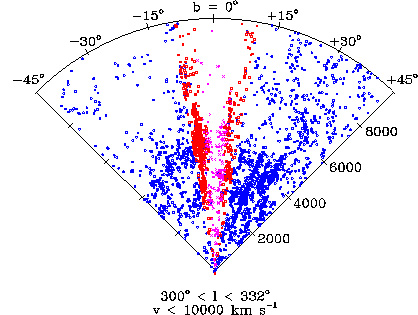
The only three measurables in galactic astronomy are the position, luminosity and spectrum of the source light received in our telescopes. There is no distance information without unprovable assumptions, hence no direct measurement of size or age of the universe. Thus we may conclude it is young in agreement with the Bible.

  •  

The Onion’s rebooted InfoWars is coming July 2nd

InfoWars founder Alex Jones speaks to the media outside Waterbury Superior Court during his trial on September 21, 2022. | Getty Images

The Onion's InfoWars officially has a launch date: On July 2nd, the conspiracy network previously run by Alex Jones will return as a comedy and media platform. The reboot comes more than a year and a half after news broke that the satirical news site was working to acquire the property owned by Jones, a conspiracy theorist who notably targeted victims of the Sandy Hook school shooting.

"Developed with the support of the Sandy Hook families, the new InfoWars is being reimagined as a comedy and cultural platform featuring original programming, guest talent, and new comedic voices," a press release reads. "The project reflects The Onion's broa …

Read the full story at The Verge.

  •  

Hidden texting flaws let attackers impersonate contacts on iPhones and Androids

A major security flaw that allowed attackers to impersonate other people in text message conversations has finally been fixed across the United States, thanks to the work of computer scientists at the University of California San Diego. The vulnerability affected both Android and iPhone users and involved nearly all major wireless carriers, including Verizon, T-Mobile, […]

The post Hidden texting flaws let attackers impersonate contacts on iPhones and Androids appeared first on Knowridge Science Report.

  •  

The bill that would let Jimmy Kimmel sue Brendan Carr is here

Digital photo illustration of FCC chair Brendan Carr.

Under a new bipartisan bill, Americans could sue for damages if a government official illegally tries to coerce a social media, AI, or broadcasting company to remove their post - regardless of whether the platform actually does it.

Senate Commerce Committee Chair Ted Cruz (R-TX) and Sen. Ron Wyden (D-OR) introduced the JAWBONE Act on Thursday, which, in addition to letting individuals sue for these kinds of damages, would create new transparency requirements for government communications with social media, AI, and broadcast companies.

That could empower someone like Jimmy Kimmel to sue Federal Communications Commission Chair Brendan Carr …

Read the full story at The Verge.

  •  

A warrantless wiretap law is about to expire — but surveillance networks aren’t actually ‘going dark’

WASHINGTON, DC - JUNE 09: Speaker of the House Mike Johnson (R-LA) holds a news conference following the passage a $70 billion legislation to fund immigration enforcement at the U.S. Capitol on June 09, 2026 in Washington, DC. The bill will fund Immigration and Customs Enforcement and the Customs and Border Protection agencies for the remainder of President Donald Trump’s term. (Photo by Chip Somodevilla/Getty Images)

Congress has failed to pass a three-week extension of Section 702 of the Foreign Intelligence Surveillance Act (FISA), with the House voting 218-198 against reauthorizing the controversial warrantless wiretapping authority through July 2nd. After a short-term extension earlier this year, the spying program now appears set to lapse for at least a week. This is the nightmare scenario FISA's proponents have been warning about - but it doesn't actually mean the US has lost its surveillance capabilities.

Proponents of a clean extension claim a lapse will hinder intelligence agencies' efforts to thwart potential terrorist attacks, with surveillan …

Read the full story at The Verge.

  •  

Google won’t just admit it’s feeding YouTube creators to its music AI

An image of a gavel coming down on a Google logo
A group of independent musicians is suing Google claiming it trained Lyria on their uploads. | Image: Cath Virginia / The Verge

If you've uploaded a song to YouTube, Google almost certainly considers your video fair game for training its Lyria music AI, it just won't admit it right now.

A group of independent musicians is suing Google, claiming that it illegally used songs they uploaded to YouTube to train its Lyria 3 model. Google has filed a motion to dismiss the case, saying:

Their lawsuit is based on the unsupported hypothesis that Google trained on their specific works. Even accepting their untested allegations as fact, the Complaint cannot stand. Plaintiffs each granted YouTube, and Google - which provides the service-a broad license to use the uploaded con …

Read the full story at The Verge.

  •  

The Outer Space Treaty Was Designed for the Cold War—Researchers Say It Can’t Handle What’s Coming Next


The foundation of global space law that has governed human activity outside Earth for nearly six decades may be approaching a breaking point, according to a new analysis by two astronomers who argue that the legal framework created during the Cold War is inadequate for an era of commercial spaceflight, global political instability, and growing militarization of orbit.

The study, published in Frontiers in Space Technologies, argues that the 1967 Outer Space Treaty (OST), long regarded as the foundation of peaceful space exploration, confronts mounting challenges from transforming global power shifts, increasing orbital competition, and the emergence of private companies as dominant players in space activities.

Dr. John Barentine of the Center for Space Environmentalism and Dark Sky Consulting, along with Dr. Aparna Venkatesan, a physicist and astronomer at the University of San Francisco, contend that while the treaty remains valuable, it may not be able to address the realities of the modern space age.

Rather than emphasizing legal reforms alone, the paper raises a wider question about humanity’s relationship with space itself. Researchers suggest that future governance of outer space may require a fundamental shift away from viewing space as a resource to be exploited and toward treating it as an environment that deserves stewardship and protection in its own right.

Although neither author specializes in international relations or military affairs, they argue that astronomers are uniquely positioned to witness how changes in space policy increasingly affect scientific research and humanity’s future in orbit.

“We are living through a time in which Earth and near-Earth space are facing unprecedented levels of potentially irreversible change,” researchers write. “The modern history of our discipline is inseparable from the technological developments brought on by those who sought to make a warfighting domain of outer space.”

A Space Treaty Born From the Cold War

The Outer Space Treaty emerged during one of the most tense periods of the Cold War. Negotiated primarily by the United States and the Soviet Union, the agreement established several basic principles that still govern space activities today.

Among them are prohibitions on national sovereignty claims over celestial bodies, restrictions on the placement of weapons of mass destruction in space, and commitments to use outer space for peaceful purposes.

For decades, the treaty has been credited with helping prevent an outright orbital arms race. Yet, Dr. Barentine and Dr. Venkatesan argue that the document was written for a vastly different world. One in which only a handful of nations possessed launch capabilities and private space companies were virtually nonexistent.

Today, dozens of countries operate satellites, commercial firms launch rockets at unprecedented rates, and ambitious plans for lunar bases, asteroid mining, and cislunar infrastructure are rapidly moving from science fiction to reality.

Researchers argue that the treaty’s framers could not have anticipated many of these developments, leaving major legal and moral questions unresolved. They note that the treaty lacks robust enforcement mechanisms and provides no definitive mechanism for resolving disputes between member states.

Space Has Always Been a Military Domain

A central theme of the paper is that warfare and space exploration have been intertwined from the beginning.

The authors trace the history of military activity in space back to the V-2 rockets of World War II and the launch of Sputnik in 1957, which demonstrated Soviet intercontinental missile capabilities as much as scientific achievement.

They also recount historical examples such as Soviet space weapons experiments, anti-satellite weapon testing by multiple nations, and the Strategic Defense Initiative of the 1980s, often remembered by its popular nickname, “Star Wars.”

In recent years, nations including the United States, China, India, and Russia have invested heavily in military space capabilities. Meanwhile, proposals such as advanced missile-defense architectures and growing concerns about anti-satellite weapons have renewed fears that space could become an increasingly contested military environment.

The researchers warn that global disputes on Earth are increasingly likely to spill into orbit, where the consequences could be especially severe. In contrast to terrestrial battlefields, debris generated by destructive actions in space can persist for years or even decades, threatening spacecraft belonging to many nations.

The Commercial Space Revolution Creates New Questions

The study additionally highlights the rapid rise of private space companies as a challenge that the Space Treaty never fully anticipated.

Under Article VI of the Space Treaty, governments are responsible for overseeing activities conducted by non-governmental entities within their jurisdictions. However, the researchers argue that the explosive growth of commercial spaceflight is creating uncertainty concerning regulatory oversight and responsibility.

This issue is especially important for the United States, which currently accounts for more than half of all low-Earth-orbit launches and operates the majority of active satellites.

As commercial firms assume larger roles in launch services, communications infrastructure, and moon missions, questions about who bears responsibility for environmental impacts and operational decisions become increasingly important.

The researchers suggest that future governance systems must address not only nation-state behavior but also the increasing influence of private actors whose interests may not always coincide with long-term environmental management.

A Forthcoming Lunar Land Rush?

One of the study’s most important observations concerns the Moon.

Dr. Barentine and Dr. Venkatesan describe moon missions as an early glimpse of future space geopolitics. Five nations have already successfully landed spacecraft on the Moon, and plans for permanent infrastructure continue to accelerate.

Because the Space Treaty prevents claims of sovereignty but does not completely resolve questions about resource use and operational exclusion zones, the researchers warn that countries arriving first could effectively secure the most valuable locations for science, resource extraction, or future settlements.

That dynamic, they argue, risks creating new forms of competition despite the treaty’s intent to promote cooperation.

The same concerns extend to orbital congestion and space debris. Researchers note that nations with little or no involvement in space activities may nevertheless bear the consequences of falling rocket stages and orbital debris generated by major space powers.

Rethinking Humanity’s Relationship With Space

Rather than advocating abandoning the Outer Space Treaty, the researchers ultimately argue that it remains the best framework currently available. However, they contend that future agreements must move past traditional geopolitical thinking.

The paper proposes drawing inspiration from the growing global “Rights of Nature” movement, which argues that ecosystems possess intrinsic value and deserve legal protections independent of human economic interests. Applied to space, such an approach would emphasize environmental health, reciprocity, and long-term stewardship over competition and exploitation.

Dr. Barentine and Dr. Venkatesan point to examples such as the peaceful management of Antarctica, international cooperation aboard the International Space Station, and partnerships among scientific institutions and Indigenous communities as models that could help shape future space governance.

Ultimately, they argue that the greatest threat to the space environment may not be legal loopholes nor technological restrictions, but humanity’s own willingness to abandon cooperation when competition becomes tempting.

“As our title reveals, the fundamental challenge lies in defending the space environment from failure of human goodwill and trust, rather than defending the space environment from the blind spots of current treaties,” researchers write. “The story of humanity in space is still being written, requiring innovation and determination from institutions and communities alike.”

Tim McMillan is a retired law enforcement executive, investigative reporter and co-founder of The Debrief. His writing typically focuses on defense, national security, the Intelligence Community and topics related to psychology. You can follow Tim on Twitter: @LtTimMcMillan.  Tim can be reached by email: tim@thedebrief.org or through encrypted email: LtTimMcMillan@protonmail.com 

  •  

Australia | The Day Free Speech Dies

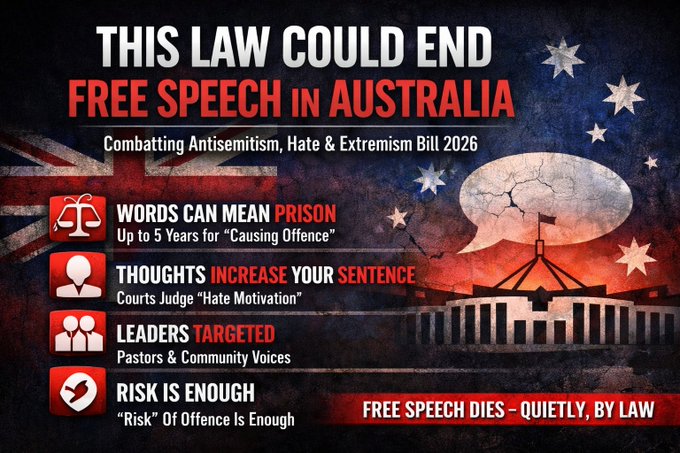
January 2026: the Australian government proposes to pass new draconian anti-free-speech legislation against "hate speech" that will curtail, thought, speech and open discussions in areas pertaining to religion, politics and current affairs. If passed it is the end of free speech in Australia.

  •  
❌