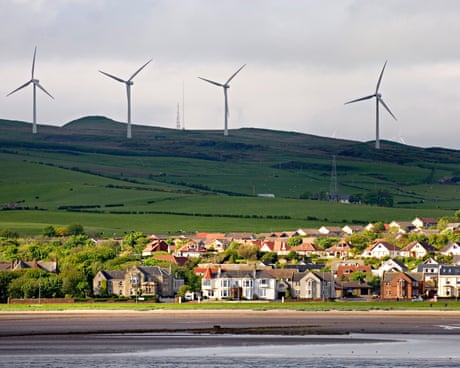
Consumers will pay higher energy bills unless the UK government speeds up work on a vast programme of upgrades to the electricity grid to enable the switch to renewables, the public spending watchdog has warned.
The National Audit Office (NAO) said that without faster action the extra costs associated with managing the ageing power network, which are ultimately passed on to the public, could reach £7.8bn a year by 2030.
Apple’s iPhone 18 Pro and Pro Max pair the faster A20 Pro chip with a variable-aperture Fusion Main camera, a smaller, more capable Dynamic Island, longer battery life, and higher prices, while otherwise changing surprisingly little from last year.
The salmon? Eaten. The days? Shorter. The bears? Fatter.
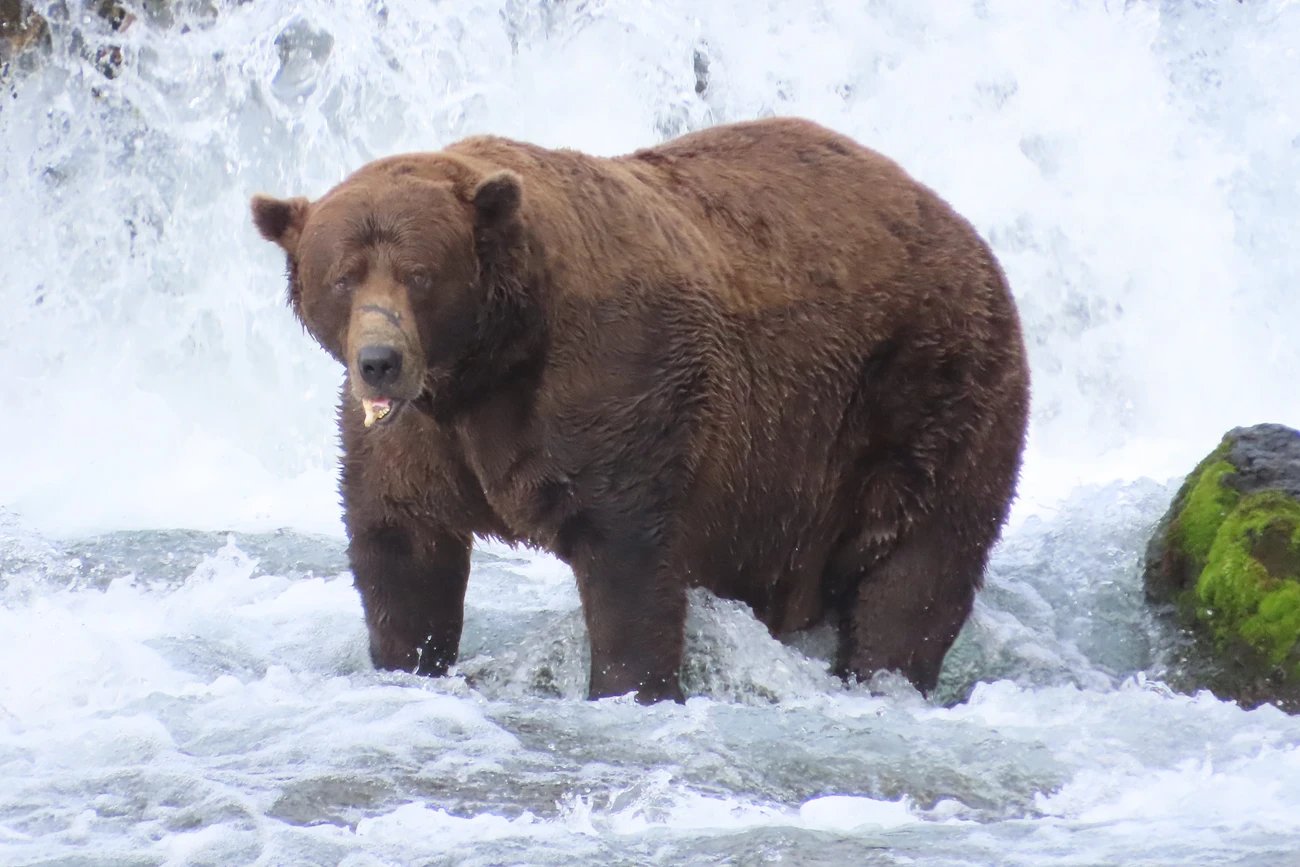
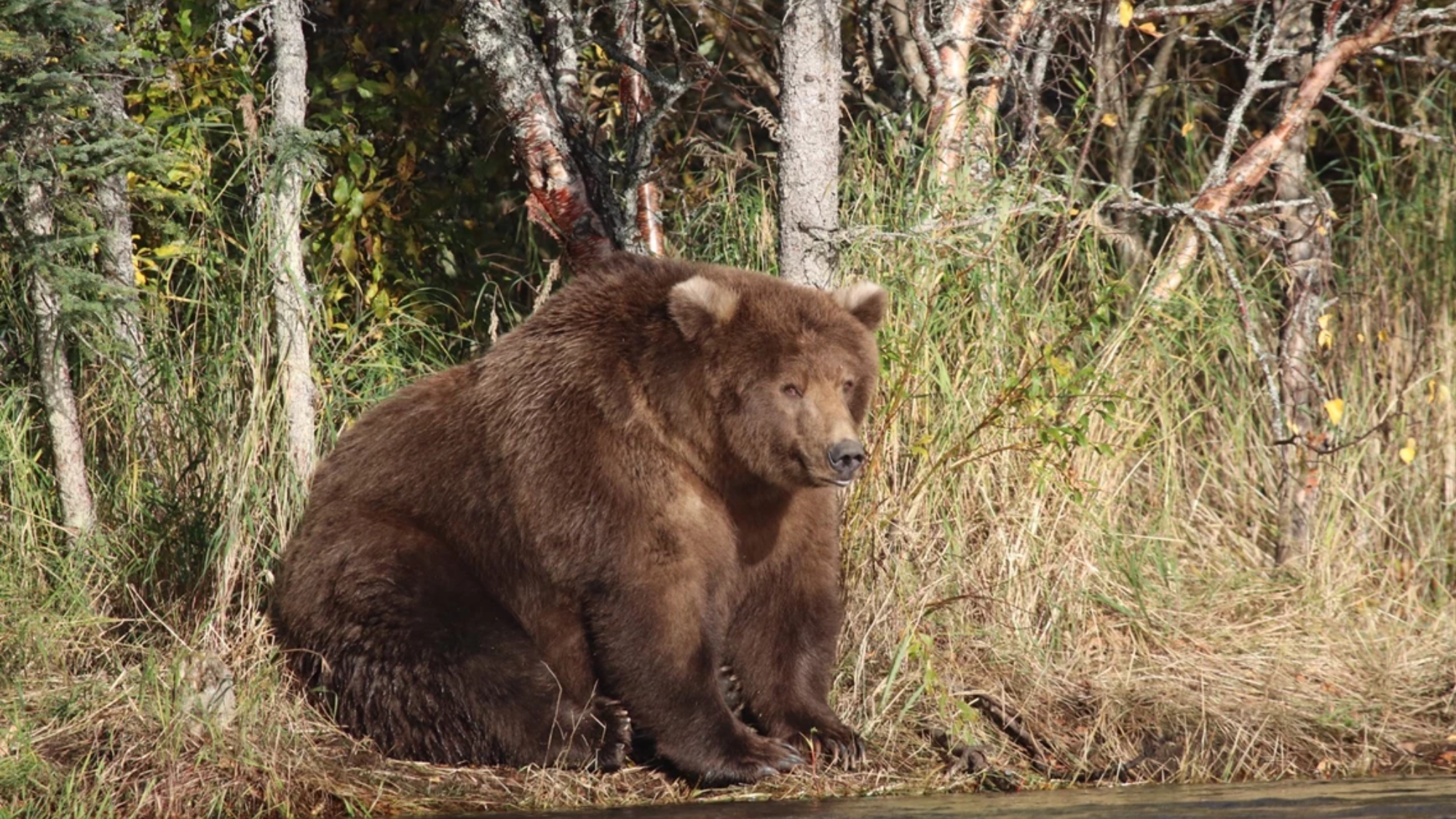
After spending the summer eating the fatty pink salmon swimming through Katmai National Park and Preserve in Alaska, it’s time to celebrate the park’s iconic brown bears (Ursus arctos). Fat Bear Week begins on Tuesday, September 22, and here is everything you need to know.
What is Fat Bear Week?
Think March Madness, just without the basketball and significantly more bears. Fat Bear Week is a single-elimination tournament, where bear enthusiasts from around the world can vote online for their favorite chunky bear. After each round, the bear with the most votes advances until the winner is announced on September 29. According to the Katmai Conservancy, the event began as a one-day event in 2014 with 1,700 votes cast. Only 10 years later, 1.2 million votes were cast from over 100 countries.
The brown bears return to Brooks Falls for the salmon migration every year in late June, where viewers can watch them on explore.org’s livestream. There, they will feast to fatten up for the long winter ahead. By late summer, the nutritious fish will spawn and then begin to die. The bears will then move to the lower Brooks River in September and October to eat the dead and dying salmon near the river’s mouth.
Eating all of this salmon is important because the heftier the bear, the better chance they will survive their long winter hibernation. Despite being the poster species for winter hibernation, bears are not “deep hibernators,” they way that squirrels, bats, and bees are. Bears enter a state called torpor, which is an involuntary state primarily triggered by lack of food. During this time, the bears rely on stored fat reserves for energy. A torpid bear’s eating, drinking, and waste functions will cease, as its body metabolizes these stores it put on over the summer.
Photographs comparing the bears from earlier in the summer and later in the summer will be shown, so voters can get an idea of just how much weight the bears put on during their salmon fest. An adult male bear can go from roughly 700 pounds in the early summer to over 1,200 pounds by fall.
Voters are also encouraged to get familiar with each bear’s life history and the unique challenges they face to survive.
Which bears are competing this year?
The 2026 Fat Bear Week Bracket will be released on Friday, September 18.
In 2025, Bear #32 (Chunk) took the crown, despite beginning the salmon run with a freshly broken jaw. He was likely injured while fighting with another bear for a mate, but he still managed to catch plenty of fish. Chunk is known for his dominance and size, but also narrow-set eyes, dark fur, a prominent brow ridge, and a distinctive scar across his muzzle.
Fat Bear Week 2025 champion Chunk. Image: NPS/ T. Carmack
How can I support Katmai’s bears?
Donations can be made to Katmai Conservancy’s Otis Fund. The Otis Fund is named after Bear #480 (Otis), who won four Fat Bear Week titles before his death around 2024. All donations made between September 22 and October 3 will be matched by explore.org.
What happened with the bears this summer?
This year’s livestream featured an example of how wild (and upsetting to humans) nature can be. On Tuesday, July 28, the live-cams captured a young brown bear cub being killed and eaten by an unrelated mother bear (Bear #806). The deceased cub was born this spring and the child of Bear #909, a 10-year-old brown bear. Bear #909 started the season with two cubs, but now lost both.
On Sunday, August 2, one of Bear #335’s (Jolly) cubs died, after following three unrelated cubs up a tree. The mother of the cubs already in the tree attacked Bear #335’s cub, who did not survive the encounter. The identity of the mother bear who killed the spring cub was not confirmed.
Following the first cub’s death, naturalist Mike Fitz and park rangers Christine Loberg and Sarah Bruce said this likely the first documented case occurring at Brooks River. While there is no one answer as to why mother bears are killing cubs, some experts suspect bear adoption, food scarcity, and fights for dominance all play a role.
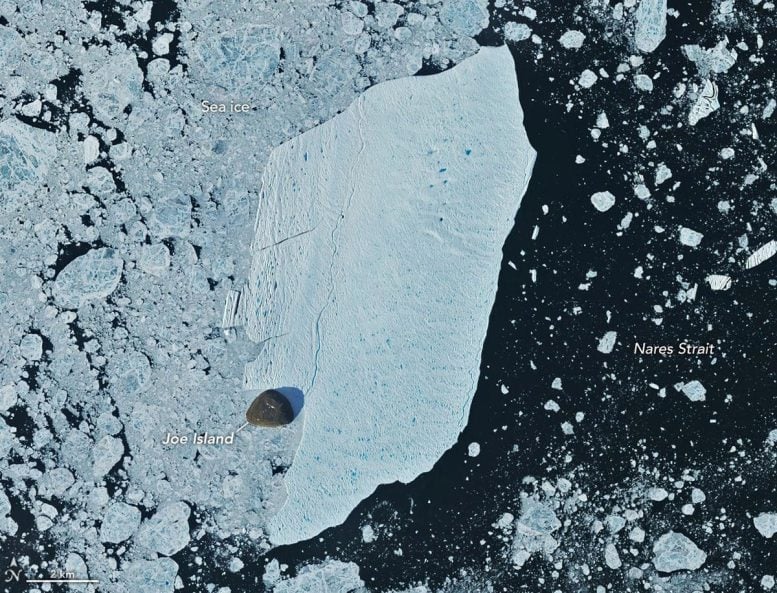
Un imponente piastrone di ghiaccio staccatosi dal ghiacciaio Petermann, nel nord della Groenlandia, ha urtato la costa di Joe Island. Contro ogni previsione dei glaciologi, la struttura non si è frantumata nell’impatto e ha proseguito la sua deriva alla velocità di tre chilometri al giorno lungo lo stretto di Nares, rappresentando una potenziale insidia per […]
Around 1590 BCE — more than 800 years before Rome was founded, and before Tutankhamun was even born — a small number of people in what is now southeastern Poland started eating a cereal that had never grown in their fields. It wasn’t a local crop, and it didn’t belong to any plant known elsewhere […]
Climate catastrophe is on our doorstep – yet Labour’s impending approval of further drilling will bring more pain for negligible gains
Pinch yourself, it’s happening again. Here is a Labour government spending a vast amount of political capital to earn tiny material gains while risking huge political losses. It occurred repeatedly under Keir Starmer, and now – with the impending decision to approve further gas and oil drilling in the North Sea – it is happening under Andy Burnham. You rack your brains to explain it, but no rational explanation comes.
Burnham is studiously cryptic about his reasons. His clearest statement to date goes as follows: “There is a resource there. When people are struggling, we can’t ignore that.” Does he mean that oil and gas workers are struggling? If so, this decision will be of little use to them. The Jackdaw gasfield, likely to be approved this week, will generate a grand total of 27 direct full-time jobs. The Rosebank oilfield, whose approval is likely to follow soon, will support 450 UK-based jobs during its lifetime. Yet the UK’s net zero economy directly employs 300,000 people, and a further 400,000 jobs are planned. The rest of the green economy employs more than 600,000. A just transition for fossil fuel workers, securing jobs in the green economy, is better for everyone.
A giant 29-square-mile iceberg broke from Greenland’s Petermann Glacier and survived a collision with Joe Island that might have shattered a more fragile berg. Summer is the busiest time of year for iceberg activity in Greenland’s glacier-fed fjords, and 2026 brought another dramatic example. In August, a huge iceberg separated from Petermann Glacier on Greenland’s [...]
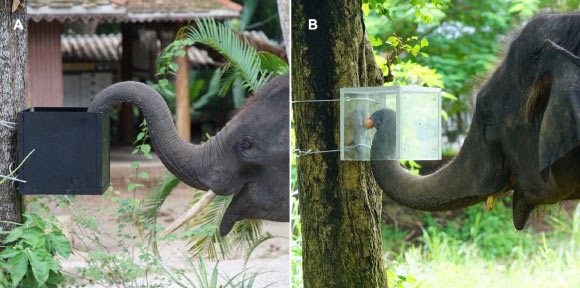
In experiments in Thailand, Asian elephants (Elephas maximus) learned to ignore an enticing but ineffective route to food and quickly adapted when a familiar solution stopped working.
A leaker has activated Apple's upcoming three-item Dynamic Island mode inside the iOS 27 simulator, offering the first video demonstration of the new iPhone 18 Pro feature.
The leaker, known as pdfu, posted a video showing the Dynamic Island toggling between three simultaneous Live Activities, matching what Bloomberg's Mark Gurman described in his report earlier today. "The new Dynamic Island with 3 items is already supported in iOS 27," pdfu wrote.
Great reporting from @markgurman. The new Dynamic Island with 3 items is already supported in iOS 27. Here's what it looks like.
According to pdfu, the underlying code requires a sensor region less than 100 layout points wide to enable the new mode, or below 16.57mm. Layout points are Apple's device-independent unit for describing on-screen dimensions, and they scale differently depending on a display's resolution. By comparison, pdfu notes that the sensor region on the current iPhone 17 Pro measures 20.76mm, meaning Apple would need to shrink the hardware by roughly 20% to unlock the new software behavior.
The iPhone 18 Pro and iPhone 18 Pro Max have been rumored to feature a smaller Dynamic Island for months, but reports about support for a third, additional Dynamic Island Live Activity is new. Since the iPhone 14 Pro launched in 2022, the Dynamic Island has only supported two Live Activities, so adding a third seems like a worthwhile way to demonstrate the utility of shrinking the region.
A proposed ban on 'conversion therapy' in Northern Ireland could criminalise parenting, restrict religious freedom and "leave teachers fearful of expressing honestly held views", a DUP Minister has said.
The just-published 2025 PISA data about the UK’s schools, showing England racing ahead of Scotland and Wales, completely vindicates Michael Gove’s education reforms. So why is Labour so determined to dismantle them?
Prehistoric art hidden in caves throughout southwestern Ireland for thousands of years could push back the timeline on the earliest human presence on the Emerald Isle by as much as 5,000 years, archaeologists say.
The remarkable discoveries may reveal a previously unknown chapter in the ancient history of human migrations across the British Isles during the Ice Age, and how they once traversed a portion of the landscape that is now sunken beneath the Irish Sea.
Reported by a team of researchers with the international Lost Land Bridge Project, the discoveries involve prehistoric markings located in eight caves in Ireland that could potentially date as far back as 15,000 years ago.
Some are engravings into the cave’s stone walls, while others are markings made with ochre and charcoal, and include lines traced along cave surfaces that appear to depict ancient animals that include deer, and extinct species such as mammoths.
If confirmed, Ireland’s long-hidden ancient artwork could dramatically shift past thinking about the earliest evidence of human arrivals on the island, which was previously believed to have occurred around 10,500 years ago.
One of the entrances to Killavullen Caves, a limestone cave system which is known to have been inhabited over time (Image Credit: Fattonyni/Wikimedia Commons/CC 3.0)
Early Humans Crossing an Ice Age Landscape
If humans arrived in Ireland this early, it also raises an intriguing possibility: that they might have done so by traversing terrain that would only have been exposed amid the lower sea levels that prevailed toward the end of the last Ice Age.
This effect was due to the amount of water that was held within the vast glaciers near Earth’s poles, which, in addition to lowering sea levels, helped to reshape the geography of northwestern Europe during the Pleistocene.
Because of this, certain portions of the ancient landscape that are now submerged beneath ocean waters would have been exposed. Among these, one that stretched from modern Pembrokeshire in Wales and southeastern Ireland near Rosslare might have been used by ancient travelers who could have made their way to Ireland, leaving a record of their Ice Age journey on the walls of caves they used as shelter, according to Dr. George Nash of the University of Liverpool, who coordinated the project.
Nash believes this ancient crossing could have comprised a 46-mile-long area, where ancient nomadic people following natural subsistence patterns would have encountered vast expanses of grassland and vegetation, along with ample resources that included horses, bison, reindeer, mammoths, and other animals that these ancient hunter-gatherers were skilled at hunting.
Evidence from throughout Europe and other parts of the ancient world already shows that ancient hunter-gatherers were well-accustomed to following migrating animals and seasonal resources, and that the landscape could have provided a natural route westward.
Nash recently said that until now, archaeologists had relied mainly on accidental discoveries that suggested a human presence in Ireland by around 10,500 years ago. However, a growing number of archaeologists had begun to doubt that this was the period when humans initially arrived.
“We just weren’t looking hard enough, and not in the right places,” Nash said.
Technology Unveils Evidence of Ancient Art
To determine locations where reliable evidence of an earlier human presence might be found, the researchers examined several features associated with prehistoric caves in southern Wales, where documented discoveries linked them to an early human presence.
Based on these characteristics, the team then relied on computer modeling to help them identify Irish locations that had similar features.
The team was assisted by Shane Diffily, an expert in caving, and digital mapping consultant Darren Lee, which allowed them to quickly narrow their search to just under 30 potentially promising caves throughout southwestern Ireland, according to Heritage Daily.
Of those locations, eight were found to contain what appeared to be various kinds of prehistoric rock art. The exact locations of those caves have not been released by the team, to protect the sites from vandalism, or potential looting—a major issue that has long complicated archaeological investigations.
Striking Discoveries
Along with direct engravings into limestone surfaces and markings made with ochre and charcoal, researchers also discovered a few instances of what appear to be “finger flutings,” where soft surfaces such as clay or sediment were marked by ancient artists who dragged their fingers along such surfaces.
One of the most significant discoveries uncovered by Nash and the team appears to be a portion of a deer, and an image within one of the caves that appears to represent a mammoth. Examples like these could potentially help provide connections to similar examples known from prehistoric rock art that has been documented in Wales.
From those sites, some of the same prehistoric artists may have made their way across the ancient land bridge that was once available, leaving their markings at similar sites that once offered shelter as they arrived in Ireland.
Unveiling a Lost Chapter of Ireland’s Past
The initial discoveries at the newly identified eight cave locations may represent only a small portion of the long-overlooked archaeological evidence throughout Ireland, which may document its earliest arrivals. Future investigations will likely focus on sites located near Wexford, Waterford, Cork, and other areas along routes that people may have followed as they made their way to southwestern Ireland.
As investigations continue, Nash and the research team say that reliable dating of the art will be an important next step toward determining how early these prehistoric artists might have arrived.
Once that testing is completed, it will help determine whether the timescales on the arrival of Ireland’s earliest human inhabitants will indeed be pushed back by thousands of years. If so, the newly uncovered cave art could offer an unprecedented look at the lives of those ancient hunter-gatherers who once traversed a landscape before it sank beneath rising ocean waters as Ice Age glaciers retreated.
Micah Hanks is the Editor-in-Chief and Co-Founder of The Debrief. A longtime reporter on science, defense, and technology with a focus on space and astronomy, he can be reached atmicah@thedebrief.org. Follow him on X @MicahHanks, and at micahhanks.com.
Apple is preparing a practical multi-device feature for iOS 27 that lets users keep a single phone number while moving between two iPhones. The capability, called iPhone Handoff, was first spotted in detail by MacRumors after appearing only as a brief line on a WWDC 2026 feature slide.
The idea is straightforward. One iPhone is set as the main device and keeps the user’s primary eSIM. The second phone is designated a companion and receives a companion eSIM tied to the same number and carrier account. The number then follows whichever iPhone is unlocked and in active use, rather than ringing on both devices at once. A Dynamic Island notification can appear when the number transfers. Cellular settings stay on the main iPhone, while location sharing updates to the device currently using the number.
Setup lives in Settings under Cellular. Both phones need iOS 27, and the feature depends on carrier support. Early reports point to T-Mobile in the United States and Deutsche Telekom in Germany as possible first partners, though availability will vary by network. The approach builds on how an iPhone already shares a number with a cellular Apple Watch, using eSIM provisioning instead of cloning a line or swapping physical SIMs.
MacDailyNews Take: The use case is niche, but useful for people who keep a smaller iPhone and a larger one, a personal device and a work device, or a future foldable alongside a standard iPhone. iOS 27 is expected later this month, so more official details and carrier confirmations should arrive soon.
Please help support MacDailyNews — and enjoy subscriber-only articles, comments, chat, and more — by subscribing to our Substack: macdailynews.substack.com. Thank you!
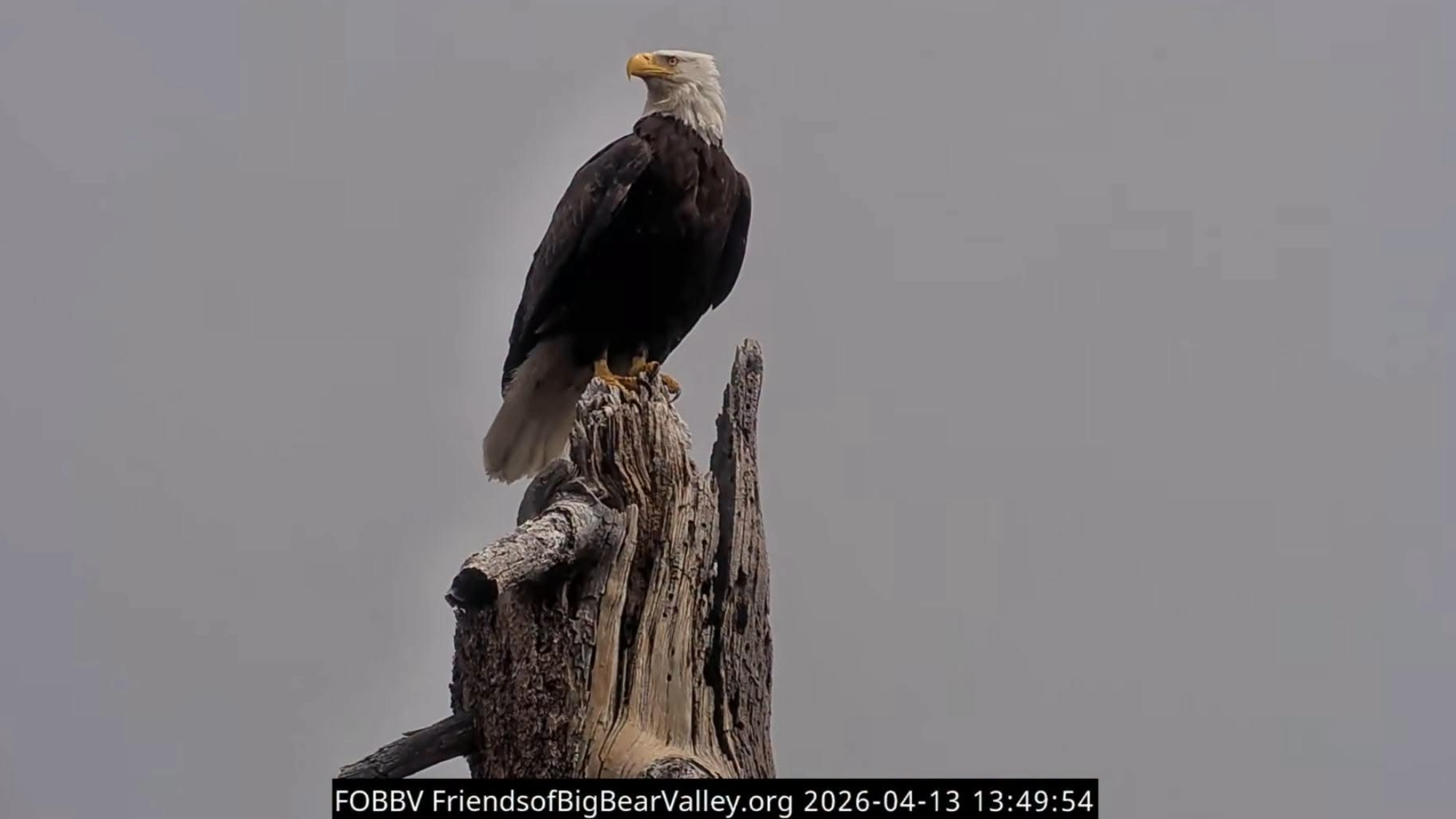
Following an outpouring of support for Jackie, a famous bald eagle mother watched by millions, the California State Senate passed Senate Resolution 140. The bipartisan measure honors Jackie and proclaims that Friday September 4, 2026 is California Wildlife Day to honor her memory and celebrate the Golden State’s biodiversity.
The resolution was introduced by State Senator Tony Strickland (R-Huntington Beach) and is sponsored by KFI AM 640 in Los Angeles. It recognizes the eagle’s role in connecting people with wildlife conservation, while highlighting the state’s biodiversity.
“Jackie captured the hearts of people in California and around the world, giving so many of us a front-row seat to the beauty, strength, and resilience of wildlife,” Senator Strickland said in a press release. “Her story reminds us that wildfire conservation brings people together. As we celebrate America’s 250th birthday this year and reflect on the values that unite us, it is especially meaningful to honor the Bald Eagle and Jackie’s incredible legacy here in California.”
Amy King, the host of “Wake Up Call” on KFI AM640 in Los Angeles, said it was clear how many humans connected with these eagles and their story.
“Over the past decade, many of our listeners watched the webcam and witnessed the beautiful life Jackie, her mate Shadow, and their eaglets created together,” King added. “Jackie’s story brought people together across generations and communities. As storytellers, we believe stories can connect people, inspire compassion, and create a shared sense of community. It has been an honor to share Jackie’s story with our listeners and to be part of the community that followed her remarkable journey.”
Friends of Big Bear Valley (FOBBV), the nonprofit organization that runs the nest cameras that brought Jackie and Shadow to the world, are also planning a memorial service for October 3.
Jackie’s story
Jackie was born, raised, and lived in Big Bear Valley in southern California. Prior to the 2011-2012 nesting season, no bald eagle chicks were known to have ever hatched in Big Bear Valley. Then came Jackie, named after a forest ranger and born to parents Ricky and Lucy in 2012.
During the 2016-2017 nesting season, Jackie took over a nest where Friends of Big Bear Valley (FOBBV) had a camera stationed. In 2018, she had two chicks named Stormy and Big Bear Baby (or BBB) with her first mate, Mr. B.
Her long-time partner Shadow entered the picture in summer 2018. He showed up at the nest and would not leave. FOBBV called the new male Shadow because he appeared so determined to stay in the nest, and the team initially believed he was one of Jackie’s siblings, also named Shadow. The eagle’s plumage indicated he was one year older than the other Shadow and not Jackie’s sibling, but the name stuck.
Shadow continued to hold his ground and Mr. B gave up and eventually left. Jackie then accepted Shadow as her new mate.
Wildlife cameras documented Jackie and Shadow’s life together, offering viewers a direct look into the brutality and beauty of nature. The pair successfully raised chicks in 2019 (Cookie and Simba) and 2022 (Spirit). The pair’s eggs failed to hatch in 2023 and 2024. In 2025, Jackie laid three eggs that all hatched in early March. However, a strong snowstorm dumped up to two feet of snow and battered the nest with strong wind and only two of the chicks (Sunny and Gizmo) survived.
In January, Jackie laid two eggs in the nest, but ravens destroyed them. She later laid two more eggs that hatched in April and named Luna and Sandy. The name Sandy is in honor of FOBBV’s former executive director Sandy Steers who died from cancer in February.
Jackie’s injury
On July 17, Jackie was found injured on the ground near Dana Point Park, California. Cell phone video from a witness confirmed that she had an altercation with two other subadult eagles. She successfully fended off the other eagles by turning over and using her talons, but could not fly far away.
She was transferred to the Ojai Raptor Center for care, where she was diagnosed with severe anemia. Her anemia worsened during the first week of August, the Ojai Raptor Center said that she was in unstable condition on August 9. Her packed cell volume (PCV) fell below percent, before rising to nine percent. She died early in the morning on August 10 and a full necropsy report is still forthcoming.
Jackie’s resilience inspired millions of people around the world.

 Login