❌

Reading view

How heat and cooling methods alter basalt fiber concrete’s mechanical behavior

When a tunnel catches fire, temperatures inside the concrete lining can soar to 800 or 900 degrees Celsius, and the emergency response almost always involves dousing the structure with water. A new study suggests that this familiar firefighting image—flames followed by a torrent of cooling water—may be doing far more damage to the concrete than engineers have typically accounted for. Researchers investigating basalt fiber-reinforced concrete have found that how a fire-damaged structure is cooled can be as important as how hot it got in the first place, with water quenching consistently inflicting greater strength loss than slow, natural cooling across every temperature they tested.

The research, published in Case Studies in Construction Materials, systematically examined how heating temperature, cooling regime, fiber content, and impact loading combine to determine whether concrete survives a fire with its load-bearing capacity intact. The team, led by Yang Liu and colleagues including Delin Li, Jinyue Dong, Yingda Zhang, Xianliang Zhou, and Qiong Zhou, chose basalt fiber-reinforced concrete, or BFRC, as their test material because of the fiber’s unusual combination of properties. Basalt fibers, drawn from volcanic rock, offer high tensile strength, thermal stability up to melting points between 1350 and 1450 degrees Celsius, and a cost profile far more attractive than premium alternatives such as carbon fiber. This makes them an appealing candidate for tunnel linings, where fire resistance and economy must be balanced.

The experimental design was exhaustive. The researchers prepared a C35-grade concrete mix—the grade commonly recommended for tunnel design—using ordinary Portland cement, medium sand, and continuously graded gravel between 5 and 10 millimeters. Into this base mix they incorporated chopped basalt fibers, 12 millimeters long with a monofilament diameter of 17 micrometers, at volume fractions of 0, 0.1, and 0.2 percent. The fibers were added in small batches during dry mixing to prevent agglomeration, and the fresh concrete was cast into cylindrical specimens measuring 50 millimeters in diameter and 25 millimeters in height, then cured under standard conditions at 20 degrees Celsius and 95 percent relative humidity.

The thermal assault began in a high-temperature electric oven capable of reaching 1200 degrees Celsius. Specimens were heated at a controlled rate of 5 degrees Celsius per minute to target temperatures of 200, 400, 600, and 800 degrees Celsius, then held at temperature for a full hour to ensure the heat penetrated the interior. Half the specimens were then removed and allowed to cool naturally in ambient air, mimicking a structure left to cool on its own after a fire. The other half were plunged immediately into a tank of tap water, replicating the thermal shock of firefighting operations. After cooling, the water-immersed specimens were conditioned in air for seven days to return them to a natural moisture state before testing.

The dynamic mechanical properties were then probed using a split Hopkinson pressure bar, the workhorse instrument for measuring how materials behave under the extreme strain rates produced by impacts and blasts. The apparatus used bars 75 millimeters in diameter, made of high-strength steel with an elastic modulus of 210 gigapascals, with a striker bar propelled by compressed gas striking an incident bar that transmitted stress waves through the specimen. Three impact velocities—3.5, 4.4, and 5.2 meters per second—were tested, achieved by varying the operating gas pressure, with three specimens per condition. A thin pulse shaper was pasted at the impact end of the incident bar to smooth out high-frequency oscillations, and stress equilibrium between the two faces of each specimen was verified from strain-gauge signals, confirming the reliability of the data. Fragments from each impact were sieved through meshes ranging from 4.75 millimeters down to 75 micrometers so that a fractal dimension could be calculated, providing a quantitative measure of how thoroughly each specimen shattered.

The visual evidence of thermal damage followed a familiar but telling progression. At 200 degrees Celsius, the concrete surfaces turned bluish-gray, with no cracking. By 400 degrees, the color shifted to yellowish-gray, still structurally sound. At 600 degrees, fine cracks appeared along with slight surface peeling, and by 800 degrees the specimens showed severe cracking, spalling, and edge breakage. Water-cooled specimens generally exhibited more pronounced surface damage than their naturally cooled counterparts, and at 800 degrees the concave shape at the start of the stress-strain curve—evidence of pre-existing microcracks being closed under compression—was especially marked in the water-quenched samples.

The strength data told a stark quantitative story. For naturally cooled specimens containing 0.2 percent basalt fiber, the dynamic peak stress at an impact velocity of 3.5 meters per second fell from 51.1 megapascals at room temperature to 18.6 megapascals at 800 degrees—a reduction of 63.6 percent. Water cooling made matters worse across the board: at the same impact velocity, the reductions reached 23.9 percent at just 200 degrees and climbed to 64.9 percent at 800 degrees. Averaged across the temperature range, each 100-degree increment cost naturally cooled specimens roughly 6.7 to 8.0 percent of their strength, while water-cooled specimens lost about 7.5 to 8.1 percent per 100 degrees. The gap between the two cooling regimes widened at higher impact velocities: at 5.2 meters per second and 800 degrees, the water-cooled specimens suffered 6.4 percent greater strength loss than the naturally cooled ones, whereas at the lowest velocity the difference was a mere 1.3 percent. The explanation lies in competing timescales—at slow loading rates, cracks have time to propagate and dissipate energy, blunting the effect of water-induced damage, but at high rates the loading outpaces the material’s energy dissipation, and the microcracks created by thermal shock propagate catastrophically.

Against this backdrop of degradation, the basalt fibers demonstrated genuine protective power. At every temperature from 200 to 800 degrees, specimens with 0.2 percent fiber content outperformed both plain concrete and the 0.1 percent mix. At 400 degrees and an impact velocity of 3.5 meters per second, the naturally cooled fiber-reinforced specimens reached peak stresses of 40.1 megapascals, some 16.9 percent above plain concrete, while at 200 degrees under water cooling the 0.2 percent mix achieved 38.8 megapascals—a remarkable 32.4 percent improvement over unreinforced concrete. The mechanism, the authors explain, is architectural: randomly distributed fibers form a three-dimensional network that binds tightly with the cementitious matrix, reduces internal pores and cracks, and bridges microcracks before they can coalesce into fracture surfaces. But this protection has a ceiling. Above roughly 600 degrees, the fibers begin to degrade and lose their reinforcing capability, and the fiber-matrix interface—already weakened by thermal mismatch between fiber and paste—becomes a liability during water quenching.

Fractal analysis of the impact debris added another layer of insight. The fractal dimension of the fragments rose steadily with temperature, from around 1.82 at 200 degrees to above 2.3 at 800 degrees under the highest loading rate, indicating progressively finer and more complex fragmentation. Water-cooled specimens consistently shattered into finer pieces than naturally cooled ones, particularly at 600 and 800 degrees, confirming that the steep thermal gradients during quenching seed dense populations of microcracks that later explode into fracture networks under impact.

Microstructural investigation grounded these observations in chemistry and physics. X-ray diffraction of specimens heated to 800 degrees showed the disappearance of calcium hydroxide peaks and weakened calcium carbonate signals, evidence that these phases had thermally decomposed—reactions that release vapor, increase porosity, and weaken the matrix. Scanning electron microscopy revealed the deterioration in vivid detail: an unheated specimen showed a dense microstructure with abundant calcium-silicate-hydrate gel and a compact interfacial transition zone around each aggregate, while specimens heated to 800 degrees contained no detectable C-S-H gel at all, their structure riddled with pores and cracks and hosting instead a dicalcium silicate-like phase. Comparing cooling regimes at 400 degrees, the naturally cooled sample remained relatively dense and rich in hydration products, whereas its water-quenched twin displayed obvious cracks at the interfacial transition zone and a loosened surrounding matrix—the fingerprint of thermal shock stress racing through the cooling material.

The practical implications reach well beyond the laboratory. Tunnel linings that survive a fire are routinely assessed and, if necessary, repaired, but this study shows that the assessment itself must account for the cooling history. A lining quenched by firefighting water may be significantly weaker than its peak temperature alone would suggest, particularly if it subsequently faces dynamic loads from traffic vibration, rockfall impacts, or secondary events. Conversely, the results give engineers a positive tool: specifying basalt fiber reinforcement at around 0.2 percent by volume can meaningfully bolster the impact resistance of fire-exposed concrete below 600 degrees, at a modest material cost. The authors frame their work as a theoretical foundation for post-fire safety assessment of tunnel linings and for the wider engineering adoption of basalt fiber-reinforced concrete—a reminder that in structural fire engineering, what happens in the minutes after the flames matter almost as much as the fire itself.

Subject of Research: Dynamic mechanical properties and deterioration mechanisms of basalt fiber-reinforced concrete after exposure to high temperatures under natural cooling and water cooling, investigated using split Hopkinson pressure bar testing, XRD, and SEM analysis.

Article Title: Dynamic mechanical properties of basalt fiber-reinforced concrete after exposure to high temperature and different cooling methods

Article References: Liu, Y., Li, D., Dong, J., Zhang, Y., Zhou, X., & Zhou, Q. (2026). Dynamic mechanical properties of basalt fiber-reinforced concrete after exposure to high temperature and different cooling methods. Case Studies in Construction Materials, 25, Article e06505. https://doi.org/10.1016/j.cscm.2026.e06505

Image Credits: AI Generated

DOI: 10.1016/j.cscm.2026.e06505

Keywords: basalt fiber-reinforced concrete, tunnel fire, high temperature exposure, water cooling, thermal shock, split Hopkinson pressure bar, dynamic compressive strength, fractal dimension, interfacial transition zone, XRD, SEM, microstructural deterioration

  •  

Hybrid graphene–MXene–WS₂ terahertz metasurface detects chikungunya virus via machine learning

Scientists have unveiled a computational design for a terahertz metasurface biosensor that combines five distinct materials—graphene, MXene, tungsten disulfide, gold, and copper—into a single multilayer architecture capable of detecting refractive-index changes associated with chikungunya virus infection. The study, published in Results in Optics by G. Arunachalam, A.R. Kalaiarasi, Giri.G. Hallur, and V. Parthasarathy, reports a numerically predicted sensitivity of 907 GHz per refractive-index unit, among the highest values reported for hybrid-material terahertz biosensors, and couples the electromagnetic design to an XGBoost machine-learning surrogate model that predicts sensor behavior with accuracies exceeding 99.8 percent.

Chikungunya virus is an enveloped, positive-sense single-stranded RNA alphavirus transmitted primarily by Aedes aegypti and Aedes albopictus mosquitoes. While mortality remains low, generally below 0.1 percent, the broader public health burden arises from severe polyarthralgia that can persist for months or even years in a substantial fraction of patients across tropical and subtropical regions. With no approved antiviral therapy or licensed vaccine currently available, diagnostic accuracy sits at the center of clinical management and transmission control. Yet existing diagnostic tools face significant practical constraints, particularly in point-of-care and field settings.

Serological methods such as enzyme-linked immunosorbent assay suffer from cross-reactivity with related alphaviruses, including Ross River and O’nyong-nyong viruses, reducing diagnostic specificity. Real-time reverse transcription polymerase chain reaction offers high sensitivity during the acute phase but depends on laboratory infrastructure, trained personnel, and controlled sample handling. Virus isolation in cell culture provides confirmatory results but requires biosafety level-3 facilities and extended processing time. These limitations have motivated the search for rapid, label-free sensing approaches capable of operating at clinically relevant concentrations in decentralized environments.

The new work turns to the terahertz band, spanning roughly 0.1 to 10 THz, which lies between microwave and infrared regions of the electromagnetic spectrum. Terahertz radiation is non-ionising, with photon energies in the millielectronvolt range, allowing interaction with biological samples without causing ionising damage. Crucially, terahertz waves couple to low-frequency vibrational and rotational modes of biomolecules such as proteins, nucleic acids, and polysaccharides, producing measurable spectral features that support label-free detection. Because biological media including blood plasma and viral suspensions exhibit refractive-index variations in this domain, differences on the order of 0.01 to 0.02 refractive-index units can shift resonance frequency and field distribution when coupled to resonant sensing structures.

The proposed sensor is built around a periodically repeated square unit cell containing two identical square resonators, 2000 nanometers on a side, coated with tungsten disulfide—a two-dimensional transition metal dichalcogenide with strong light–matter interaction, high carrier mobility, and excellent dielectric confinement. This layer localizes the electric field in the sensing region and increases the interaction volume between the resonant field and the surrounding analyte. A pair of concentric circular rings, 3200 and 3800 nanometers in diameter and functionalized with MXene, surrounds the resonators, enhancing electromagnetic coupling, promoting efficient charge transport, and strengthening plasmonic interactions between resonator elements. An outer gold ring, 6000 nanometers in diameter, serves as the main plasmonic resonator supporting strong localized surface plasmon resonances with low optical loss. The entire multi-resonant assembly is embedded within a monolayer graphene sheet measuring 14,000 by 14,000 nanometers, which acts as a broadband absorber and a high-mobility charge transport medium whose electrically tunable chemical potential allows dynamic, active control of the resonance characteristics. Copper elements woven into the architecture provide supplementary conductive pathways that reinforce current distribution and coupling among the hybrid resonators. The structure rests on a silicon dioxide substrate, chosen for its low dielectric loss and mechanical robustness, which preserves the resonance quality factor.

The authors stress that the multilayer design is compatible with established microfabrication techniques. Fabrication would begin with a cleaned silicon dioxide substrate, followed by polymer-assisted transfer of monolayer graphene and thermal annealing. Gold and copper resonators can be deposited through electron-beam evaporation or magnetron sputtering with lift-off patterning, MXene rings through solution-based deposition, and the tungsten disulfide layer through chemical vapor deposition or thin-film transfer. With a unit-cell dimension of approximately 14 micrometers, the required feature sizes fall comfortably within conventional photolithography capabilities, and because fabrication imperfections remain far smaller than the operating terahertz wavelength, moderate tolerances are expected to have only limited influence on the electromagnetic response. For biosensing, the graphene surface could subsequently be functionalized with chikungunya-specific antibodies or aptamers using EDC/NHS or pyrene-based linker chemistries.

The electromagnetic modeling, performed in COMSOL Multiphysics, reveals a pronounced resonance at 0.355 THz, where electric-field simulations show the strongest and most spatially extensive enhancement. Varying the graphene chemical potential from 0.1 to 0.9 electronvolts produced dramatic modulation of the transmission contrast, which increased roughly 36-fold at the highest bias, from less than one percentage point to more than 27 percentage points, while peak transmission remained essentially unchanged above 98.6 percent. This asymmetric response—stable maxima paired with strongly modulated minima—arises because increasing chemical potential enhances graphene’s intraband conductivity, deepening resonant absorption through stronger light–matter interaction. The sensor also demonstrated remarkable angular robustness, maintaining peak transmittance above 97.8 percent across incident angles from 0 to 80 degrees, an important tolerance for realistic deployment where normal incidence cannot always be guaranteed.

Geometric optimization identified an outer circular resonator radius of 2500 nanometers and a square resonator side length of 2500 nanometers as the dimensions that maximize resonance strength, driving minimum transmittance down to approximately 65 to 67 percent and signifying optimal electromagnetic confinement within the active sensing region. When evaluated across refractive indices from 1.33 to 1.39, a range encompassing reported values for healthy plasma (approximately 1.35 RIU), healthy platelets (1.39 RIU), chikungunya-infected plasma (1.33 RIU), and infected platelets (1.38 RIU), the optimized configuration achieved a maximum sensitivity of 907 GHz/RIU, a figure of merit of 18.519 RIU⁻¹, a minimum detection limit of 0.061 RIU, a sensor resolution of 55.178, and a refractive-index resolution of 0.001 RIU. In comparative benchmarks against recently reported graphene- and hybrid-material-based terahertz biosensors—including graphene/copper/aluminum, graphene/silicon dioxide, MXene–graphene–black phosphorus, and graphene-integrated copper–silver designs—the proposed architecture’s sensitivity exceeded most published values, reflecting the synergistic field confinement produced by the five-material stack.

The machine-learning component addresses one of the central bottlenecks in metasurface development: the computational cost of repeated full-wave finite-element simulations during structural optimization. The team trained an XGBoost regressor, an ensemble method based on gradient-boosted decision trees, on simulation data covering incidence-angle variation and circular-ring dimension variation, using stratified sampling with 80 percent of data for training and 20 percent held out for independent testing, alongside five-fold cross-validation and grid-search hyperparameter optimization. The model captured more than 99.7 percent of response variance on unseen data, with mean absolute percentage errors below 0.162 percent and prediction accuracies from 99.838 to 99.959 percent. Acting as a computational surrogate, the trained model enables rapid interpolation across the design space without sacrificing the fidelity of the underlying electromagnetic model.

The authors are careful to frame the work as a computational proof-of-concept rather than an experimentally validated diagnostic. The sensor detects changes in the local dielectric environment surrounding the resonators, not viral particles or nucleic acids directly, and refractive-index sensing alone cannot intrinsically distinguish chikungunya from other viruses with similar dielectric properties. Analytical specificity in practice will depend on surface biofunctionalization with chikungunya-specific recognition molecules immobilized on the graphene or gold sensing surface. Future work will focus on device fabrication, biofunctionalization, calibration with reference refractive-index standards, experimental validation with clinically relevant plasma and platelet samples, and systematic evaluation of selectivity against related arboviruses—steps that would transform this numerically validated platform into a practical tool for rapid, label-free infectious disease diagnostics in the field.

Subject of Research: Label-free terahertz metasurface biosensing for chikungunya virus detection using a hybrid graphene–MXene–WS₂–Au–Cu architecture with machine-learning-assisted optimization

Article Title: Hybrid graphene–MXene–WS₂ terahertz metasurface detects chikungunya virus via machine learning

Article References: Arunachalam, G., Kalaiarasi, A., Hallur, G., & Parthasarathy, V. (2026). Machine learning-assisted hybrid graphene–MXene–WS₂ terahertz metasurface biosensor for highly sensitive label-free chikungunya virus detection. Results in Optics, 25, Article 101149. https://doi.org/10.1016/j.rio.2026.101149

Image Credits: AI Generated

DOI: 10.1016/j.rio.2026.101149

Keywords: chikungunya virus detection, computational biosensor design, high sensitivity biosensors, hybrid graphene MXene WS₂, machine learning in biosensing, multilayer architecture, nanomaterial-based sensors, public health diagnostics, refractive index sensing, terahertz metasurface biosensor, virus diagnosis in field settings, XGBoost surrogate model

  •  

New Electrochemical Method Boosts Ocean Alkalinity to Capture Carbon

The ocean has quietly absorbed billions of tons of humanity’s carbon emissions over the past two centuries, but scientists and companies racing to supercharge that natural service have long been hampered by a stubborn and costly engineering problem. Now researchers at Stony Brook University, working with the Research Foundation for the State University of New York, have unveiled a method for electrochemical ocean alkalinity enhancement that they say can dramatically lower the cost of ocean-based carbon dioxide removal by eliminating one of the most expensive steps in the entire process: the pretreatment of seawater before it enters an electrochemical reactor. The innovation, now available for licensing through SUNY TechConnect, promises high-quality carbon offsets at a substantially reduced cost while simultaneously helping to counteract the acidification that threatens marine ecosystems worldwide.

At the heart of the challenge is a delicate chemical balancing act. As atmospheric carbon dioxide dissolves into seawater, it forms carbonic acid, which lowers the ocean’s pH and erodes the carbonate chemistry that corals, shellfish and other calcifying organisms depend upon. Ocean carbon dioxide capture exploits a simple principle: if the ocean becomes more alkaline, it can absorb more CO2 from the air and lock it away safely as bicarbonate, one of the most stable and abundant forms of inorganic carbon on Earth. This process, known as ocean alkalinity enhancement, effectively turns the surface ocean into a vast, distributed carbon sink. But adding alkalinity to seawater is not trivial, and doing it in a way that is energy-efficient, scalable and safe has become one of the central engineering puzzles of the emerging carbon removal industry.

One of the most promising approaches relies on electrochemistry, specifically a technique called bipolar membrane electrodialysis. In this system, ion-selective membranes are stacked between two end electrodes, and the arrangement allows operators to split ordinary saltwater into its constituent acid and base. When brine containing sodium chloride flows through the stack, the process generates hydrochloric acid on one side and sodium hydroxide, a strong base, on the other. The elegance of the scheme lies in its product handling: if the hydrochloric acid is kept on land, where it can be stored, neutralized or put to industrial use, and only the sodium hydroxide along with the treated seawater is returned to the ocean, the receiving waters gain a net infusion of alkalinity. That added alkalinity shifts the carbonate equilibrium, allowing the ocean to draw down carbon dioxide from the atmosphere and convert it into dissolved bicarbonate that remains stable for millennia.

This electrochemical pathway has attracted serious commercial interest precisely because it produces what carbon markets call negative emissions, meaning carbon dioxide is durably removed from the atmosphere rather than merely avoided. Companies pursuing net-zero targets increasingly rely on such carbon removal credits to offset their residual emissions, and ocean alkalinity enhancement is widely regarded as one of the largest-capacity avenues available, given the sheer scale of the world’s oceans. Yet the technology has been held back by a deceptively mundane problem: what flows into the reactor matters just as much as what flows out.

Seawater, and many other brine streams that might feed these systems, contains divalent cations, most notably calcium and magnesium ions, alongside the sodium and chloride that the process is designed to split. When these divalent ions encounter the high-pH conditions created at the base-producing side of a bipolar membrane stack, they precipitate as solid calcium and magnesium compounds that coat the membranes in a crust known as scale. The consequences are cascading. Scaled membranes lose their ion-selective efficiency, forcing the system to push harder and consume more electricity to achieve the same output. Over time, the deposits shorten membrane lifetime, increasing maintenance frequency and replacement costs. The conventional answer has been water softening pretreatment, in which the incoming seawater is stripped of calcium and magnesium before it ever reaches the electrodialysis unit. While effective, such pretreatment adds significant capital and operating expense, undermining the economic case for the entire carbon removal operation and eroding the value proposition of the resulting carbon credits.

The Stony Brook researchers behind the new method have essentially designed around this bottleneck. Their technology enables electrochemical enhancement of ocean alkalinity without any pretreatment of the incoming seawater at all. By rethinking how the electrochemical system handles brine streams laden with divalent cations, the researchers have created a process that tolerates raw seawater directly, sidestepping the water softening infrastructure that previous designs demanded. According to the announcement from the Research Foundation for SUNY, the result is a system that produces negative emission carbon offsets of very high quality at a substantially reduced cost, simply because the most expensive upstream step has been engineered out of existence. The advantages claimed for the approach are straightforward and commercially significant: it is cheaper, more energy efficient, and requires no expensive water softening pretreatment.

The implications ripple across both the carbon markets and the broader climate technology landscape. Carbon offset buyers, including corporations striving to meet net-zero commitments, place a premium on removal credits that are durable, verifiable and cost-competitive. Ocean alkalinity enhancement already offers exceptional permanence, since bicarbonate dissolved in seawater represents one of the most long-lived forms of carbon storage known. By cutting costs at the front end, the Stony Brook method could help push the price of these high-quality ocean-based offsets toward levels that make them viable at gigatonne scale, a threshold that analysts consider essential if carbon removal is to play a meaningful role in stabilizing the global climate. Cheaper alkalinity generation also strengthens the second major application of the technology: mitigating ocean acidification directly, without necessarily framing it as a carbon market product at all.

Ocean acidification itself is a mounting crisis. Since the industrial revolution, the average surface ocean pH has dropped measurably as the sea has absorbed roughly a quarter to a third of anthropogenic CO2 emissions. The consequences have been documented across coral reefs, oyster hatcheries, pteropods and other calcifying organisms whose shells and skeletons become harder to build in increasingly acidic waters. A technology that adds alkalinity to coastal waters and open ocean regions simultaneously addresses this chemical stress and harvests the carbon removal benefit, a dual function that distinguishes ocean alkalinity enhancement from many other carbon removal approaches. In regions where fisheries, aquaculture and reef ecosystems are economically vital, localized deployment of alkalinity-enhancing electrochemical systems could offer both environmental resilience and revenue through carbon credit sales.

The scientific pedigree of the work reflects the growing maturity of the carbon removal field. Stony Brook University, a flagship research institution within the SUNY system, has become an active hub for climate and energy innovation, and the new method is protected under intellectual property identified in the licensing announcement. The Research Foundation for the State University of New York, the nation’s largest research foundation supporting the nation’s largest public university system, is actively seeking development partners, commercial partners and licensees to translate the laboratory advance into deployed systems. The foundation describes a broad portfolio of SUNY-led research spanning artificial intelligence for the public good, quantum technologies, next-generation semiconductors, biotechnology and medicine, and energy and climate solutions, with system-wide research expenditures approaching 1.5 billion dollars in fiscal year 2025.

For the carbon removal industry, the timing of the announcement is notable. As voluntary and compliance carbon markets mature, buyers are demanding higher fidelity in the offsets they purchase, favoring durable removal over avoidance-based credits. Electrochemical ocean alkalinity enhancement, with its well-understood chemistry and measurable inputs and outputs, is well positioned to meet rigorous monitoring, reporting and verification standards. The obstacle has always been cost, and the pretreatment bottleneck has been a substantial contributor. If the Stony Brook design performs as described at industrial scale, it could remove one of the largest cost wedges standing between laboratory demonstration and commercial deployment, accelerating a technology class that many climate analysts view as indispensable to achieving deep decarbonization.

The broader lesson of the advance may be as important as the technology itself. In the race to scale carbon removal, progress often comes not from exotic new chemistry but from eliminating the hidden costs and fragilities that make promising concepts uneconomic in practice. Water softening pretreatment is exactly the kind of unglamorous engineering detail that determines whether a climate technology remains a paper exercise or becomes infrastructure. By designing a bipolar membrane electrodialysis system that thrives on untreated seawater, the Stony Brook researchers have addressed one of those decisive details. The ocean, meanwhile, stands ready. Every unit of alkalinity added is an invitation for the sea to take up more carbon dioxide and, in doing so, to heal a little of the acidification that a warming world has inflicted upon it. What remains now is the work of scaling, partnering and commercializing, and the SUNY licensing announcement signals that the researchers and their institution intend to see this chemistry leave the laboratory and reach the sea.

Subject of Research: Electrochemical ocean alkalinity enhancement for carbon dioxide removal and ocean acidification mitigation

Article Title: Method for electrochemical ocean alkalinity enhancement

Article References: Method for electrochemical ocean alkalinity enhancement. Research Foundation for the State University of New York, via EurekAlert! News by Subject: Tech & Engineering. Available at: SUNY TechConnect (https://suny.technologypublisher.com/) Original publication

Image Credits: AI Generated

DOI: Not provided

Keywords: ocean alkalinity enhancement, carbon dioxide removal, bipolar membrane electrodialysis, ocean acidification mitigation, carbon offsets, Stony Brook University, negative emissions, seawater pretreatment, net-zero goals, electrochemistry, Research Foundation for SUNY

  •  

AI-powered VR helps planners design better cities

Artificial intelligence (AI) combined with virtual reality (VR) could guide us through tomorrow's cities before they are even built, according to research in the International Journal of Environment and Pollution. Such models could be useful for architects, planners and policymakers.

  •  

Iron-based glass alloy designed to reduce energy losses in electric motors

Researchers from the European AM2SoftMag project have developed a new iron-based metallic glass that could lead to 3D-printed components for the manufacture of more efficient electric motors. The new alloy, designed by researchers at Saarland University (UdS) in Germany, is free of critical elements with significant social impacts, such as cobalt, and elements with unstable supply chains, such as rare earths. In addition, it can be 3D printed in a fully amorphous state and with a density exceeding 92%, giving it exceptional magnetic properties.

  •  

New anaerobic reactor co-digests biomanufacturing waste and wastewater for energy recovery

Researchers at AIST, in collaboration with researchers at the National Institute of Technology, Kagoshima College, have developed the Anaerobic Baffled Continuous Stirring (ABCS) reactor, a device capable of simultaneously treating solid waste and wastewater from biomanufacturing processes while recovering methane for energy self-sufficiency.

  •  

Mars astronauts could live in houses 3D-printed from freeze-dried yeast

In order to survive, the first humans to reach Mars will immediately need a safe and reliable place to set up shop. But building on Earth’s neighbor is immensely more challenging than construction projects at home. The Martian surface is a practically airless vacuum, constantly bombarded with radiation, and regularly reaches temperatures as low as -81 degrees Fahrenheit.

However, there is a very specific process on Earth that approximates similar conditions to the Red Planet: freeze-drying. According to researchers at The Hong Kong University of Science and Technology, the same method used to preserve perishable foods could also inspire sturdy and even recyclable 3D-printed houses on Mars. The secret ingredients? Everyday gelatin and yeast. The novel approach is detailed in a study published today in the journal Chem Circularity.

“My inspiration came from freeze-dried fruits that become harder. So I asked myself if we can take advantage of that and make some materials,” Jishen Qiu, a study co-author and civil engineer, said in a statement.

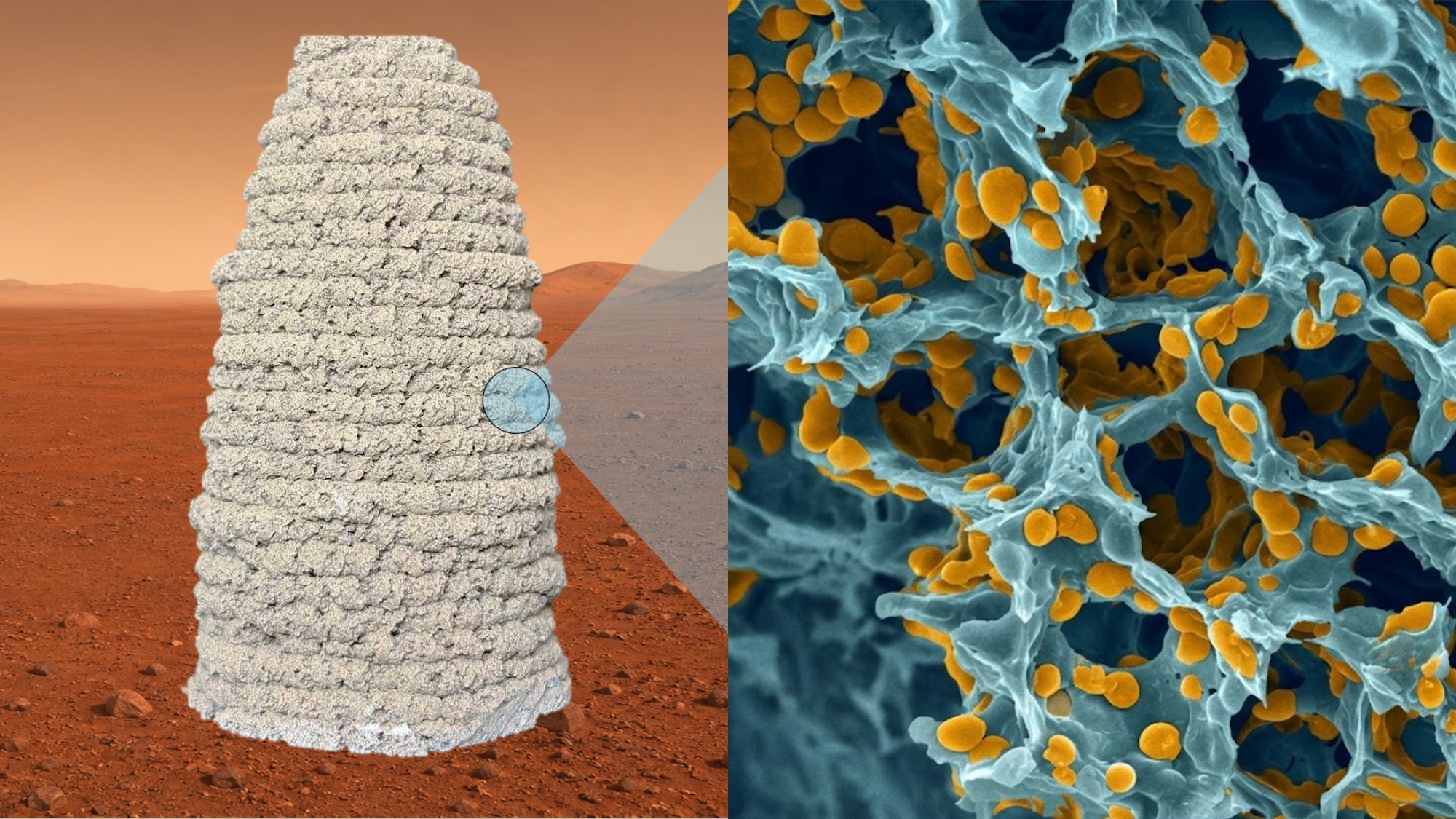
The combination of materials are simple: sand and an adhesive binder. Since gluing tiny rocks together requires specialized stickiness, Qiu’s team invented a new concoction from gelatin and lab engineered yeast. When mixed, the yeast microbes become coated with adhesive proteins similar to those used by mussels to anchor on stones underwater. The goop is then extruded through a 3D printer nozzle into an extremely cold, low-pressure environment, where it solidifies as the water instantly freezes and converts from ice to vapor. The final result is a light, porous, foam-like material that remains very resilient.

“This is actually strong enough to build a one- or two-story building on Earth—whose gravity is three times that of Mars,” explained Qiu. “So, you can probably easily build a multistory building on Mars with the material.”

Qiu and his collaborators know they must first start small before expanding to Martian neighborhoods. Their prototype domes are only about the size of a wine cork at this point, but their compressive strength is comparable to low-grade concrete.

Engineers have experimented with 3D-printed structures to use on the moon and Mars for years, but many of these still require steps like melting down rocks or lunar regolith. These methods usually require a lot of extra energy, which may limit their utility. Qiu’s technique requires comparatively little energy, although he admits it’s still unclear if yeasts can withstand life on Mars. That said, the team’s early results are a promising step towards simple, efficient, and sturdy buildings beyond Earth. If nothing else, yeast also lends itself to trial-and-error.

“As long as there’s one yeast that’s still alive, you can grow them again,” added Qiu.

The post Mars astronauts could live in houses 3D-printed from freeze-dried yeast appeared first on Popular Science.

  •  

Scientists Discover Hidden Flaw in Nanoscale Battery Testing

Signals that appear to show ions moving through a battery material may sometimes be caused by nothing more than a rough surface, according to new research from the Korea Advanced Institute of Science and Technology, or KAIST. The discovery could help scientists avoid misleading measurements while developing faster-charging and longer-lasting batteries. It may be especially […]

The post Scientists Discover Hidden Flaw in Nanoscale Battery Testing appeared first on Knowridge Science Report.

  •  

Reducing earthquakes caused by fracking

Drilling for electricity or geothermal energy is a common human-caused source of earthquakes. Drillers or engineers inject water into the earth to fracture underground rock through a process known as fracking. This allows scientists to produce clean energy almost anywhere on Earth by heating up water in the cracks using facilities called enhanced geothermal systems or EGS plants. However, fracking causes earthquakes, which are a major concern for people’s safety globally. Therefore, scientists are looking for new fracking methods that cause fewer earthquakes.

Fracking for EGS plants can trigger earthquakes by changing the pressure underground and adding stress to the surrounding rock. However, these earthquakes happen at pre-existing, naturally occurring cracks called faults, which are different from the newly formed, man-made cracks. Faults are naturally under pressure from the overlying rock and the surrounding earth since they reach deep underground. As pressure builds up over time, it eventually causes the rocks to shift along these faults and release energy in the form of earthquakes. 

During fracking, engineers use 4 different shut-in strategies to finish off water pumping. The standard industry strategy is called instant shut-in, where the injection pump is turned off immediately, but the water stays underground, causing the pressure to lower naturally. In a similar strategy, known as the tapered shut-in, engineers gradually reduce the water injection rate to zero instead of immediately turning it off. For the high-rate and low-rate extraction strategies, they pump the water back out after injection is complete, at different pump rates.

Recently, scientists aimed to mitigate the risk of earthquakes by testing these 4 shut-in strategies to determine which is most effective. They compared the shut-in strategies using crystalline basement rock with low porosity and permeability, meaning water couldn’t easily flow through it. Engineers use this same type of rock for EGS plants so they can control where the water flows. The scientists pumped water into the rock, then measured the pressure and stress levels where rocks began to move along faults, determining the point at which earthquakes would occur. 

The scientists applied high-rate and low-rate extraction methods to the rock and found that pressure and fault movements decreased. However, when they applied instant and tapered shut-in methods to the same rock, they increased the pressure and caused continuous fault slipping. They measured stress in the rock during these methods and found that high-rate extraction stabilized the fastest, while low-rate extraction stabilized more slowly. In contrast, instant shut-in continuously increased the pressure and slip, and tapered shut-in caused the highest stress of all.

The scientists also used a computer model to simulate what happened at an EGS site in South Korea, where earthquakes occurred after injections using the instant shut-in method. They set up the model using a rock with the same characteristics, injection wells, and faults as that site. Then, they simulated periods of injection based on the previous real-world events and modeled the effects of pressure and stress to determine if the earthquakes could have been prevented. 

The team used the model to compare how a site like this would respond to the instant shut-in method versus the other shut-in methods. They found that the tapered shut-in method increased pressure and stress in the rock, while the high-rate and low-rate methods both decreased pressure and stress. The high-rate method decreased pressure and stress more than the low-rate method. 

The scientists concluded that high-rate extraction is the most effective method for reducing the risks of post-injection earthquakes during EGS fracking in crystalline basement rock. Additionally, the scientists determined that the earthquakes in South Korea could have been prevented if engineers had used either the high-rate or low-rate extraction methods. They recommend using high-rate extraction to reduce earthquakes during EGS fracking, which would allow EGS plants to generate clean energy more safely.

The post Reducing earthquakes caused by fracking appeared first on Sciworthy.

  •  

O que é e como ativar o Feed STEM do TikTok

Além de servir como uma rede social com conteúdos para passar o tempo, o TikTok também possui um grande número de criadores de conteúdo focados em publicações de cunho educacional.

Para incentivar e expandir o acesso a esses posts, a rede social permite ativar o chamado Feed STEM (Science, Technology, Engineering and Mathematics, ou Ciência, Tecnologia, Engenharia e Matemática).

Apesar de já vir ativado para usuários entre 13 e 17 anos, todos podem ativar o filtro STEM manualmente. Veja como! 😄

  1. Com o app do TikTok aberto, toque na aba “Perfil”;
  2. Toque nos três risquinhos (no canto superior direito);
  3. Vá até “Configurações e privacidade”;
  4. Escolha “Preferências de conteúdo”;
  5. Toque em “Feed STEM”;
  6. Selecione “Ativar”.

Volte à tela inicial do TikTok e deslize o dedo da esquerda para a direita (na parte superior) para escolher “STEM”.

Opcionalmente, também é possível ativar as legendas.

  •  

Single-sensor AI maps quake risks across 139 points inside a nuclear power plant in real time

The Korea Research Institute of Standards and Science (KRISS) has developed a deep learning technology that predicts, in real time, vibrations at multiple locations inside a nuclear power plant using the signal from just a single seismometer and quantifies the risk at each location to enable the prioritization of inspections. In particular, because the AI model can be flexibly designed to match the vibration characteristics of a structure, it is expected to be widely applicable to major industrial facilities such as semiconductor plants and data centers in the future.

  •  

Denisovans in southwestern China reveal their ancient subsistence strategies

The Denisovans, the enigmatic archaic human relatives first identified from a finger bone and a handful of teeth in a Siberian cave, have long been known almost exclusively through their DNA. Now, a landmark study published in Nature has pulled back the curtain on how these ancient hominins actually lived — what they ate, how they hunted, what tools they made, and the environments they braved — through an extraordinary assemblage of fossils and artefacts from Bianfu Cave in Yunnan Province, southwestern China. The findings paint the most detailed portrait to date of Denisovan biology, behaviour and ecology in eastern Asia, and suggest that these vanished people left a deep genetic and cultural imprint on later populations across Southeast Asia and Oceania.

The research team, led by Qingfeng Ruan, Hua Li and Song Xing and their colleagues, conducted a comprehensive analysis of hominin fossils and the associated archaeological remains recovered from Bianfu Cave. The hominin fossils themselves date to roughly 167,000 to 134,000 years ago, placing them firmly in the Middle Pleistocene. But the cultural sequence preserved in the cave’s sediments is far longer, stretching from approximately 190,000 years ago to about 70,000 years ago. That span — some 120,000 years of continuous or near-continuous occupation — makes Bianfu Cave one of the longest cultural records that can most parsimoniously be attributed to Denisovans anywhere in the world.

The Denisovan identity of the fossils was established through two independent and technically demanding lines of evidence. The first involved analysis of the enamel–dentine junction, the internal boundary between the enamel cap and the underlying dentine of the teeth. This three-dimensional morphological interface acts something like a fingerprint of evolutionary relationships, revealing diagnostic traits of the tooth’s internal architecture that are invisible from the outside but characteristic of particular hominin lineages. The second line of evidence came from palaeoproteomics, the recovery and identification of ancient proteins preserved within fossilized tissues. Because proteins are far more abundant and durable than DNA, they can survive in warm, humid environments like those of southern China, where genetic material degrades rapidly. Sequencing these ancient proteins allowed the researchers to place the Bianfu hominins on the Denisovan branch of the human family tree with confidence.

The fossil collection itself is remarkable. It includes four teeth that substantially expand the known range of dental variation within the Denisovan lineage — a critical contribution, since Denisovans were previously represented by a very small number of dental specimens, making it difficult to gauge how variable their teeth could be. The new fossils also include two cranial fragments and a radius, a forearm bone, providing rare glimpses of Denisovan skull and postcranial anatomy that were previously almost entirely unknown. Together, these remains transform Denisovans from a genome and a scatter of isolated teeth into a population with recognizable skeletal biology.

Beyond the fossils, the archaeological record from Bianfu Cave offers something equally precious: a window into Denisovan daily life. The researchers reconstructed the ancient environment using faunal remains and pollen preserved in the cave deposits. These records indicate that across Marine Isotope Stages 6 through 4 — a period encompassing major glacial–interglacial climatic swings between roughly 190,000 and 57,000 years ago — the landscape around the cave was dominated by coniferous forest or a mosaic of forest and steppe. This was a cool, variable environment that Denisovans exploited successfully across tens of thousands of years, demonstrating a resilience to climatic change that adds to growing evidence of their adaptability, from the high altitudes of the Tibetan Plateau to the subtropical latitudes of mainland Southeast Asia.

The subsistence evidence is particularly striking. Analysis of the animal bones from the cave shows that its inhabitants practised specialized hunting focused on medium- to large-bodied prey. This was not opportunistic scavenging but a sustained, targeted hunting strategy — one that would have required knowledge of animal behaviour, coordinated effort and effective weaponry. Specialized big-game hunting of this kind has often been associated with modern humans and late Neanderthals in western Eurasia, so finding it in a Denisovan context more than 150,000 years ago dramatically narrows the perceived behavioural gap between these archaic lineages and our own species.

Yet the technological strategy documented at Bianfu Cave is, at first glance, surprisingly simple. The stone tool assemblage is characterized by expedient core reduction and tool production — that is, the inhabitants struck flakes from cores as needed, used them, and discarded them, rather than investing in carefully shaped, curated tools that were carried, maintained and resharpened over time. Alongside this, the Denisovans of Bianfu Cave made pervasive use of unmodified bones, employing skeletal elements of their prey directly as tools without altering them beforehand.

Taken together, the researchers interpret this pattern as an adaptive system that prioritized the exploitation of what they call object affordance — the inherent functional possibilities already present in a raw material or object — over intensive tool manufacture. A suitably shaped bone fragment could serve as a hammer, a digging implement or a scraping tool with little or no modification; a sharp flake struck from a convenient core could cut and butcher without further refinement. In the rich, resource-diverse environments of subtropical southwestern China, where raw materials and animal resources were plentiful, such a flexible, low-investment strategy may have been not a sign of simplicity but a highly efficient way of life. It suggests that Denisovans measured success not by the sophistication of their toolkit but by how skilfully they read and exploited the opportunities their landscape provided.

This behavioural portrait gains added significance when set against the wider geography of Denisovan presence. Over the past decade and a half, Denisovans have been documented across a staggering range: from the original genomic discoveries in the Altai Mountains of Siberia, first reported in 2010, to the mandible from the Tibetan Plateau described in 2019, Denisovan DNA recovered from sediments at Baishiya Karst Cave in 2020, a molar from the Annamite Chain of northern Laos announced in 2022, a male Denisovan mandible from Pleistocene Taiwan reported in 2025, and proteomic identification of the 146,000-year-old Harbin cranium, also in 2025. Bianfu Cave now anchors this story firmly in southwestern China, a region long suspected to have been a Denisovan heartland and a critical corridor for hominin movements between mainland Asia and Southeast Asia.

The study’s authors argue that the region’s Denisovans point to a substantial genetic and cultural legacy in later human populations. Modern populations in Southeast Asia and Oceania carry the highest known proportions of Denisovan ancestry anywhere in the world — a legacy of interbreeding that occurred as modern humans moved through and beyond island Southeast Asia. The new evidence from Bianfu Cave suggests that the ways of life practised by Denisovans in this region — their hunting strategies, their flexible technological approaches, their hard-won knowledge of tropical and subtropical environments — may have been part of the inheritance, alongside their genes, that helped later human populations thrive as they spread across the diverse and challenging landscapes of Asia and the Pacific.

For palaeoanthropologists, the significance of the Bianfu Cave discoveries is difficult to overstate. Denisovans have been the least anatomically documented of all known hominin groups — a lineage defined first by DNA and only slowly fleshed out with fragmentary fossils. The new teeth, cranial fragments and radius from Yunnan, combined with an unmatched 120,000-year archaeological sequence, mean that researchers can finally study Denisovans not just as a genome or a set of molecular signatures but as a living, adapting population: hunters of large game, makers and users of expedient tools, and inhabitants of conifer forests that swung between glacial cold and interglacial warmth. As analysis of the Bianfu material continues, it promises to reshape our understanding of how archaic humans lived in eastern Asia and how deeply their story is woven into our own.

Subject of Research: Denisovan fossils and archaeological remains from Bianfu Cave, Yunnan Province, southwestern China, revealing Denisovan biology, technology, subsistence strategies and palaeoecology

Article Title: Denisovans from southwestern China and their subsistence strategies

Article References: Ruan, Q., Li, H., Xing, S., Zhao, K., Liu, J., Zanolli, C., Doyon, L., Delpiano, D., Peresani, M., d’Errico, F., Demeter, F., Hublin, J.-J., Xiao, P., Wang, Y., Jia, Z., Yang, Q., Fu, Q., Sun, Q., Zhao, Y., … Chen, F. (2026). Denisovans from southwestern China and their subsistence strategies. Nature. https://doi.org/10.1038/s41586-026-10997-4

Image Credits: AI Generated

DOI: 10.1038/s41586-026-10997-4

Keywords: Denisovans, Bianfu Cave, Yunnan, palaeoproteomics, enamel–dentine junction, Middle Pleistocene, subsistence strategies, expedient tool use, object affordance, specialized hunting, Marine Isotope Stages, Southeast Asia ancestry

  •  

Locking-enabled multimodal soliton microcombs achieve day-scale stability for precision metrology

Optical frequency combs have transformed the way scientists measure light and time, earning the Nobel Prize in Physics in 2005 and underpinning technologies ranging from atomic clocks to exoplanet detection. Yet the miniature on-chip versions of these combs, known as soliton microcombs, have long suffered from a frustrating paradox: the most stable and useful operating regimes have also been the most fragile and difficult to sustain. A newly published study in Light: Science & Applications reports a significant advance toward resolving this tension. Researchers led by J. Tang, J. Yang and E. Yan describe a multimodal locking-enabled soliton microcomb that combines robust, self-starting operation with an exceptionally low repetition rate on the scale of a day of stable measurement time, opening a path toward practical high-precision metrology systems that can run unattended for extended periods.

At the heart of the advance is a technique the authors call multimodal locking, a scheme that stabilizes not just a single resonance of the optical microresonator but multiple modes simultaneously, locking the comb dynamics to a regime in which dissipative Kerr solitons can form and persist without delicate manual tuning. In conventional microcomb systems, soliton formation typically requires a precise and rapid traversal of a “chaotic” modulation instability regime, a step that is notoriously sensitive to thermal transients in the resonator chip. Laser frequency must be swept with exquisite control while the soliton’s own heat dissipation shifts the resonator’s resonances, creating a feedback loop that can destroy the soliton state within microseconds. The multimodal locking approach circumvents this fragility by engaging several mode families of the resonator at once, so that the interplay among them pins the comb to a stable soliton state even as environmental and thermal conditions fluctuate.

The significance of achieving a low repetition rate in the same device cannot be overstated. A frequency comb’s repetition rate is the spacing between its individual comb teeth, and for many applications, coarser spacing is a decisive advantage. In laser ranging and distance metrology, for example, the ambiguity range of an interferometric measurement is set by the inverse of the comb’s free spectral range. Microcombs, generated in whispering-gallery-mode or ring resonators only a few millimeters across, usually exhibit repetition rates of tens to hundreds of gigahertz, which severely limits the unambiguous measurement range available to a comb-tooth-resolved distance measurement. By engineering a low-repetition-rate soliton state, the research team extends this ambiguity range dramatically, making the microcomb directly useful for absolute distance measurement, multi-wavelength interferometry and coherent communications, where each comb line must be spectrally resolvable and addressable.

Achieving both low repetition rate and robust soliton generation in a single microresonator is a formidable engineering challenge. Low repetition rates demand large resonator diameters, which in turn produce dense spectra of resonances and increased susceptibility to mode crossings with higher-order transverse and polarization mode families. Such crossings historically destabilize soliton formation, causing comb states to collapse or preventing single-soliton operation altogether. The multimodal locking strategy turns this liability into an asset: rather than engineering mode crossings away, the researchers harness the coupling among mode families to lock the comb dynamics into a favorable basin of attraction. The result is a soliton microcomb whose low repetition rate is preserved over day-scale timeframes, a duration that places the device among the most operationally stable microcomb demonstrations reported to date.

Day-scale stability matters because it transforms the microcomb from a laboratory demonstration into an instrument. Many high-precision experiments, from astronomical spectrograph calibration to the accumulation of statistical confidence in atomic spectroscopy, require comb sources that remain locked and stable across many hours or even days of continuous operation. Conventional fiber-laser-based frequency combs achieve this, but at the cost of table-top size, high power consumption and substantial maintenance overhead. Microcombs promised to shrink the technology onto a photonic chip, yet until now their operational fragility has confined most demonstrations to short observation windows. The robust low-repetition-rate soliton microcomb described in the new work demonstrates that chip-scale frequency combs can, with appropriate locking architecture, sustain the kind of long-duration, hands-off operation that real metrology campaigns demand.

The physics underlying soliton microcombs rests on the Kerr nonlinearity of the resonator material, typically silicon nitride, magnesium fluoride or fused silica. When continuous-wave pump light resonantly builds up inside the ring, the Kerr effect produces a four-wave-mixing process that seeds sidebands spaced by the resonator’s free spectral range. Under the right conditions of pump detuning and intracavity power, these sidebands evolve into a coherent train of ultrashort optical pulses, dissipative Kerr solitons, that circulate around the resonator and emit a broadband comb spectrum with tooth spacing equal to the repetition rate. The comb’s output frequencies are determined by two radio-frequency quantities, the pump laser frequency and the repetition rate, which is why the combs can serve as rulers for measuring optical frequencies against a reference. Any drift in either quantity propagates directly into measurement error, and the multimodal locking mechanism suppresses precisely this drift by anchoring the comb’s underlying mode structure to the resonator’s intrinsic stability.

Applications for such a device span an unusually broad swath of science and engineering. In high-precision laser ranging, low-repetition-rate combs with tooth spacings in the low-gigahertz or even megahertz regime allow interferometric distance measurements over ranges of meters to kilometers without the need for auxiliary synthetic-wavelength techniques. In astronomical spectroscopy, comb calibration sources with well-controlled line spacing enable the detection of Earth-like exoplanets through radial velocity shifts measured in centimeters per second. In telecommunications, low-repetition-rate combs align naturally with standard channel grids used in wavelength-division multiplexed fiber networks, making them attractive as multi-carrier sources. In spectroscopy, dual-comb techniques benefit from repetition rates that are low enough to permit resolution of closely spaced molecular absorption features. A microcomb that is simultaneously robust, low-repetition-rate and day-scale stable therefore functions as a versatile enabling component across these domains rather than a single-purpose device.

The demonstration also speaks to a broader trend in photonics: the migration from delicate, expert-operated laboratory setups to self-contained, self-stabilizing systems. The self-starting character implied by multimodal locking is particularly important for this transition. A comb that requires a skilled operator to initiate soliton formation, sweeping the laser with practiced timing past the chaotic regime, cannot be deployed in an observatory dome, on a satellite platform or inside an industrial instrument. A comb that engages its soliton state reliably on demand and then holds it through thermal cycling, laser drift and mechanical perturbation removes the last practical barrier to integration. The authors’ demonstration of day-scale continuous operation is, in effect, a stress test passed by a technology that researchers have been attempting to harden for more than a decade.

The implications extend to metrology standards and timing as well. Optical atomic clocks, which now achieve fractional frequency uncertainties below one part in 10^18, rely on frequency combs to divide down their optical oscillations to countable microwave rates. Miniaturizing the comb stage of such clocks is a prerequisite for portable optical timekeeping, which would benefit navigation in GPS-denied environments, geodesy that monitors sea level and crustal motion with millimeter precision, and fundamental physics tests that track the constancy of natural constants over months and years. A robust chip-scale soliton microcomb with day-scale stability contributes a key subsystem to this vision, and the multimodal locking principle may generalize to other resonator platforms, materials and spectral regions, including the mid-infrared where molecular fingerprinting awaits compact comb sources.

Looking forward, the study suggests several directions that the photonics community is likely to pursue. Combining multimodal locking with on-chip pump lasers and integrated electronics would complete the transformation toward fully self-contained comb modules with no free-space optics. Extending the approach to lower repetition rates still, into the megahertz regime where fiber-laser combs operate, would bring microcombs into direct competition with their bulkier predecessors for the most demanding ranging and spectroscopy tasks. Improvements in resonator fabrication, reducing mode-volume disorder and engineering dispersion with greater precision, will further expand the parameter space in which robust soliton states can be locked. The present work demonstrates that the fragility once considered intrinsic to soliton microcombs is not a fundamental limit but an engineering problem, and one that can be solved by embracing, rather than avoiding, the multimodal structure of real optical resonators.

The research, published in Light: Science & Applications, marks a milestone in the maturation of microcomb technology. By uniting three properties that had previously been achieved only separately, self-starting robustness, low repetition rate and day-scale operational stability, the work delivers a soliton microcomb genuinely suited to high-precision metrology. As the demand for compact frequency references accelerates across navigation, astronomy, communications and fundamental science, the multimodal locking strategy reported by Tang, Yang, Yan and colleagues offers a clear and technically grounded route from chip-scale optical chaos to dependable, precision measurement light.

Subject of Research: A robust, self-starting low-repetition-rate soliton microcomb enabled by multimodal locking for day-scale-stable, high-precision metrology applications.

Article Title: Multimodal locking-enabled robust and day-scale low-repetition-rate soliton microcomb for high-precision metrology

Article References: Tang, J., Yang, J., Yan, E., Huang, G., Yin, K., Tian, D., Lei, X., Huang, J., Yang, M., Ding, H., Yan, S., Wei, K., Zhu, L., Wang, G., & Jiang, T. (2026). Multimodal locking-enabled robust and day-scale low-repetition-rate soliton microcomb for high-precision metrology. Light: Science & Applications, 15(1), Article 370. https://doi.org/10.1038/s41377-026-02460-w

Image Credits: AI Generated

DOI: 10.1038/s41377-026-02460-w

Keywords: soliton microcomb, multimodal locking, low repetition rate, frequency comb, high-precision metrology, laser ranging, day-scale stability, dissipative Kerr solitons, chip-scale photonics, optical frequency reference, self-starting comb, Light Science & Applications

  •  

Rapid Wildfire Structure Risk Assessment Helps Fire-Adapted Communities

Wildfire scientists have unveiled a new rapid risk-assessment tool that shows substantial wildfire danger to homes and buildings in three major Arctic communities, revealing that between 14% and 26% of structures in Anchorage, Fairbanks, and Whitehorse face high or very high risk from approaching flames. The study, led by Jennifer I. Schmidt of the University of Alaska Anchorage together with Robert H. Ziel, Monika P. Calef, Anna Varvak, and Julio C. Postigo, was published in the International Journal of Disaster Risk Science. Rather than relying on complex fire-behavior simulations that demand specialist analysts and expensive software, the approach combines datasets that most local governments already possess: building footprints, zoning maps, and readily available vegetation layers. The result is an updatable, affordable portrait of which buildings face the greatest threat and where mitigation dollars can do the most good.

The urgency behind the work is hard to overstate. Wildfire costs and damages in the United States alone are now estimated at between USD 394 billion and 893 billion annually, and the 2019 to 2020 Australian fire disasters cost nearly USD 100 billion. The Arctic, often imagined as too cold and wet to burn, is not immune: since 1980, wildfires have cost Alaska between USD 2 billion and 5 billion, with projections suggesting costs could rise 68% by the end of the century. Canadian suppression expenses are expected to climb by 60 to 110% relative to the 1980 to 2009 baseline. Meanwhile, structure loss from wildfire has doubled over the past two decades in the western United States, and western Canada has suffered major structure-loss events in four of the last eight fire seasons. Nearly half the global population now lives within the wildland-urban interface, the zone where people and forests meet or intermingle, making tools that translate fire science into actionable local maps increasingly vital.

The researchers’ central premise is conceptually simple but technically consequential: for a structure to be at high risk, a flammable hazard must exist nearby, within roughly 500 meters, and the surrounding landscape must exhibit high wildfire exposure. The method begins with a flammability hazard layer at 30-meter resolution, built from a modified version of NASA’s ABoVE Landcover dataset in which generic evergreen classes were refined to reflect locally flammable species such as black spruce, white spruce, lodgepole pine, and subalpine fir, each assigned hazard ratings from 0 to 100. Critically, the team treated structures themselves as fuel. Each building contributes three fuel units to the surrounding flammability score, a value chosen after systematic testing of one through ten fuel units; three proved optimal, nudging densely built environments up a hazard category without causing wholesale reclassification. Structure density was computed at 90-meter resolution, multiplied by three, and added to the vegetation-based hazard to produce an enhanced flammability hazard layer.

Wildfire exposure, the second pillar of the assessment, captures the potential for hazard to travel. It is calculated as the average flammability hazard within a 100-meter or 500-meter radius, representing the likelihood that fire can reach and burn a given location even if the local fuels themselves are sparse. Exposure values, also ranging from 0 to 100, are classified into five tiers from very low to extreme, and concentrated pockets of flammable vegetation drive scores upward. The third ingredient is structure vulnerability, produced by multiplying the enhanced flammability hazard by a structure importance factor derived from zoning data: residential buildings and critical infrastructure such as hospitals, schools, and nursing homes receive the highest weight, followed by commercial and other structures. Where zoning was unavailable, as on military installations like Joint Base Elmendorf-Richardson in Anchorage and Fort Wainwright and Eielson Air Force Base in Fairbanks, the team collaborated with base personnel or interpreted aerial imagery to classify neighborhoods. The final risk score synthesizes hazard, exposure, and vulnerability into six categories, from extremely low to very high.

The results paint a nuanced picture of Arctic fire danger. Fairbanks showed the greatest proportion of structures in the top two risk categories at 26%, followed by Whitehorse at 22% and Anchorage at 14%. Anchorage, paradoxically, had the highest share of buildings in the top vulnerability tiers, 42%, yet the lowest risk, a consequence of its large urban footprint where dense housing raises vulnerability but fragmented, less-flammable vegetation and abundant developed ground suppress exposure. Fairbanks and Whitehorse, with structures woven into spruce- and pine-dominated boreal landscapes, showed closer alignment between vulnerability and risk. Anchorage was also the only study area where more than 1% of cells jumped two or more flammability categories when buildings were counted as fuel, at 7%, reflecting its 27% share of structure area containing seven or more buildings per cell. The analysis also confirmed the primacy of exposure: when a structure’s wildfire exposure was extreme, at least 87% of such buildings landed in the highest risk category across all three communities.

A key innovation lies in how the team redrew the wildland-urban interface itself. Traditional WUI maps distinguish urban, interface, and intermix zones; the researchers added a fourth category, the transmission zone, marking areas roughly 2.4 kilometers beyond the WUI boundary where fire could move into a community and where fuel breaks might be sited. Within the 500-meter buffer around structures, urban areas were defined by exposure values of 20 or less, interface zones by 21 to 60, and intermix by values above 60, cross-referenced with Alaska and Yukon wildfire management designations that prioritize suppression from critical down to unplanned or wilderness levels. Fairbanks claimed the largest overall WUI footprint, and the transmission zone proved the largest category in every study area, spanning 23,347 square kilometers around Anchorage, 6,180 square kilometers around Fairbanks, and 665 square kilometers around Whitehorse. Across all sites, most structures fell within interface zones, 52 to 61%, followed by intermix at 20 to 35%. Thousands of buildings sit in the high-risk interface and intermix zones where mitigation should concentrate: 15,537 structures in Anchorage, 16,212 in Fairbanks, and 3,734 in Whitehorse.

The method faced its most demanding test against a real disaster. On 17 August 2019, during southcentral Alaska’s hottest and driest summer on record, the likely human-caused McKinley wildfire was driven by high winds across 13.3 square kilometers in three days, destroying 52 residential structures, 84 outbuildings, and three commercial buildings, affecting 1,028 properties and forcing roughly 350 to 400 people to evacuate. By comparing pre-fire aerial imagery from 2017 with post-fire imagery from 2020 at 0.3-meter resolution and linking vanished buildings to the Matanuska-Susitna Borough structure database, the team identified exactly which structures burned. The verdict was statistically compelling: burned structures had significantly higher wildfire exposure than those that survived, and the proportion of burned structures with exposure values above 60 was significantly larger than among unburned ones. Structure risk scores above 60 were also significantly associated with burning. Notably, the test held even under conditions so extreme that normally resistant, low-flammability fuels were igniting.

The study’s design was shaped by sustained community engagement. Through workshops in 2019, 2021, and 2023, along with 15 to 20 meetings organized by Anchorage community councils and landowner associations and public events ranging from wildfire awareness days to Arbor Day, residents and agency staff reshaped everything from color schemes to model parameters. One consequential example: Anchorage residents and fire managers insisted that the maps reflect the spruce beetle outbreak first detected in 2016 and peaking around 2020, which killed and removed many spruce trees. The team responded with rules derived from aerial detection surveys, reclassifying white spruce cells in areas of beetle intensity of 11% or greater to mixed forest, and shifting mixed forest cells to open shrub, while a succession model updated vegetation on areas burned within the last 30 years. This iterative dialogue ensured outputs that both wildfire practitioners and the general public can interpret, a prerequisite the authors see as central to building fire-adapted communities.

The practical implications for planning are direct. Because mitigation funding is often tied to officially designated WUI areas, the ability to rapidly recalculate boundaries from updated building layers expands funding opportunities and keeps pace with community growth. The framework also points to different interventions in different zones: structures in intermix areas, surrounded by vegetation, benefit most from fuel treatments, while those in interface zones, where flammable vegetation is scarcer, are better served by home hardening measures such as fire-resistant roofs, siding, decks, screens, and unburnable buffers. Given that wildfire activity tends to occur where exposure exceeds 60, the authors recommend concentrating resources on the top two risk categories. Where national products like wildfirerisk.org rely on generalized fuel layers that can overestimate unburnable area in WUI zones and are updated too slowly for annually burning landscapes, this approach trades complexity for transparency, using local data that governments already collect. The underlying wildfire exposure toolbox is publicly available on GitHub, and the team argues that empowered residents, equipped with accurate, current, neighborhood-scale information, are crucial to reducing wildfire risk, particularly where communities may prefer action without government intervention.

Subject of Research: Rapid assessment of wildfire risk to structures and wildland-urban interface delineation in Arctic communities using local vegetation, building footprint, and zoning data.

Article Title: Fueling Fire-Adapted Communities Through a Rapid Wildfire Structure Risk Assessment

Article References: Schmidt, J. I., Ziel, R. H., Calef, M. P., Varvak, A., & Postigo, J. C. (2026). Fueling Fire-Adapted Communities Through a Rapid Wildfire Structure Risk Assessment. International Journal of Disaster Risk Science, 17(2), 351-362. https://doi.org/10.1007/s13753-026-00716-y

Image Credits: AI Generated

DOI: 10.1007/s13753-026-00716-y

Keywords: Arctic, Wildfire, Risk assessment, Wildland-urban interface, WUI, Mitigation planning, Structures, Fire-adapted communities, Wildfire exposure, Flammability hazard, Alaska, Yukon

  •  

Lithium-6 buildup may fingerprint lithium-ion battery degradation

The service life of lithium-ion batteries is limited by complex aging processes, the causes of which are often difficult to distinguish from one another. Researchers at the Federal Institute for Materials Research and Testing (BAM) have now shown that the distribution of two lithium isotopes within cells acts like a fingerprint directly linked to degradation processes. This correlation opens new possibilities for better understanding aging mechanisms and optimizing batteries in a more targeted manner.

  •  

What Happens When You Flush a Toilet? Scientists Reveal What Reaches the Air

Flushing a toilet may send more into the air than most people realize. A new review has found that toilet flushing can produce tiny airborne particles, including some that may contain microorganisms, and these particles can sometimes rise high enough to reach the breathing zone of adults. Researchers from Flinders University examined previous studies to […]

The post What Happens When You Flush a Toilet? Scientists Reveal What Reaches the Air appeared first on Knowridge Science Report.

  •  

Eggshell-Inspired Aluminum Shield Could Protect Spacecraft from High-Speed Debris

Scientists have designed a lightweight aluminum material inspired by eggshells that could one day help protect spacecraft from fast-moving pieces of space debris. Nearly one million pieces of debris larger than 1 centimeter are believed to be orbiting near Earth. These fragments can travel at extremely high speeds, so even a relatively small object can […]

The post Eggshell-Inspired Aluminum Shield Could Protect Spacecraft from High-Speed Debris appeared first on Knowridge Science Report.

  •  

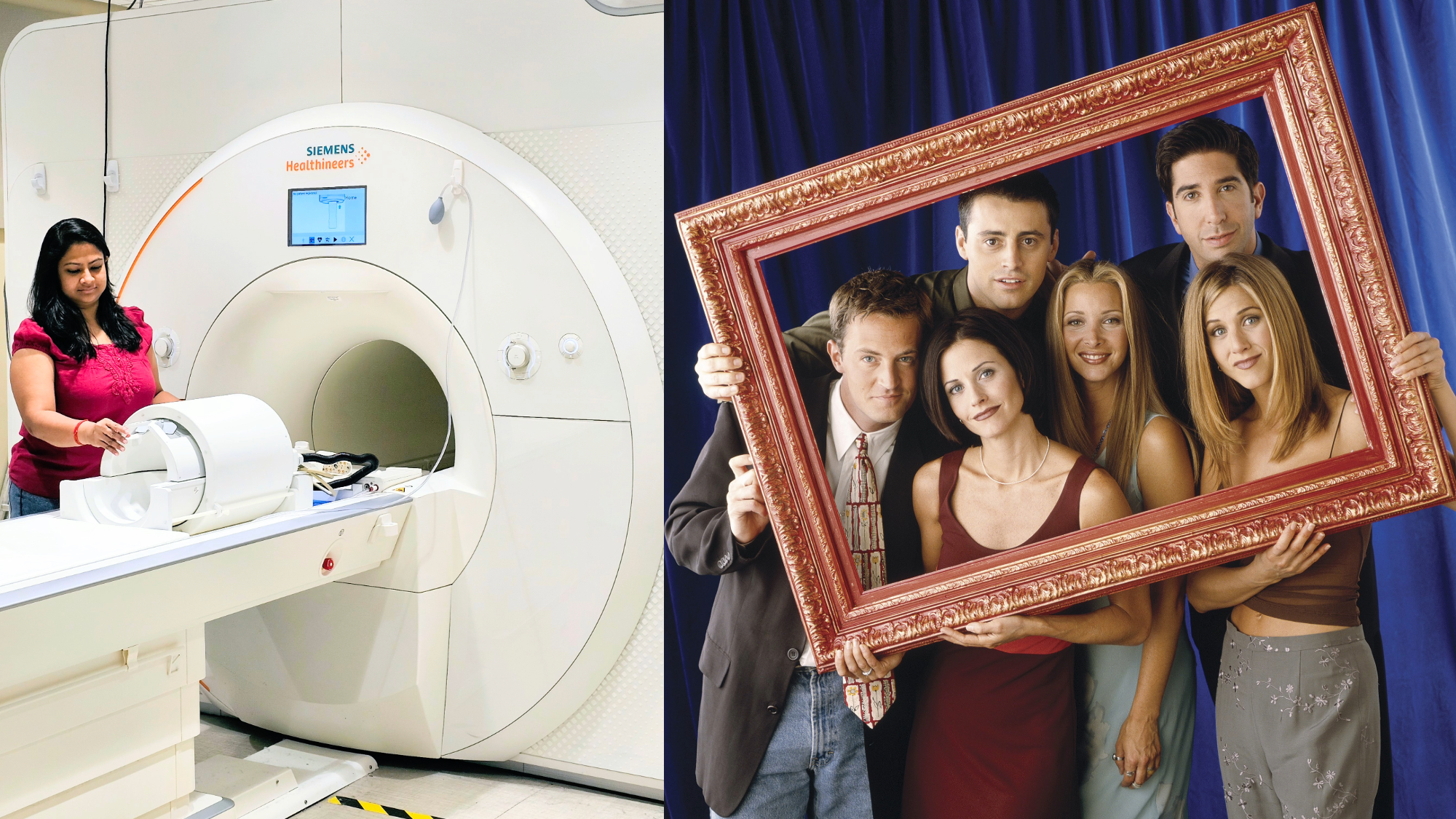
Classic sitcom ‘Friends’ helps grad student endure 104 brain scans

The science of getting Z’s has progressed rapidly in recent years. A growing body of research links poor sleep to increased risk of cognitive decline, a higher likelihood of Alzheimer’s disease, and even greater chances of developing heart problems. At the same time, wearables, like smart rings and watches, are transforming the way everyday people view sleep, turning their resting hours into rich datasets to pore over, sometimes to unhealthy obsessive levels. 

What’s still less understood, is how the subtle, everyday fluctuations in sleep quality that come from simply living a normal life can alter brain chemistry. People don’t live in controlled lab settings, and even the most avid bio-optimizer still has nights where quality sleep takes a backseat. Actually understanding how someone’s day-to-day sleep patterns affect their brain chemistry would require putting them in an MRI machine and collecting data over and over again, over long stretches of time to get a more holistic view. 

That’s exactly what Auburn University electrical and computer engineering graduate student Joshita Majumdar signed up for. Over 76 weeks, Majumdar slipped into the university’s 7-Tesla MRI scanner 104 times. That’s a level of commitment that would make even a stalwart Zen meditator fidget with frustrated boredom. Thankfully, Majumdar had a special companion to accompany her during the loud, cramped, 90-minute sessions: the hit television sitcom Friends.

a woman wearing blue scrubs sits outside of an MRI machiene
Over 76 weeks, Joshita Majumdar went into Auburn University’s  7-Tesla MRI scanner 104 times. Image: Joshita Majumdar/Auburn University.

Majumdar recalls how a screen in the machine would cycle through four 10-minute videos of the staple from the 90’s and early 2000’s, each made up of several different scenes clipped together. The idea was twofold. Majumdar needed something playing during the sessions that would keep her from getting bored, and Friends just happens to be her self-described “guilty pleasure.” It was also one of the first shows she connected with as an international student adjusting to her early days in the United States, so some scenes strike particularly nostalgic, emotional notes. And like any great sitcom, Friends runs the gamut from numbing brain-rot to tear-jerking sentimentality. That’s potentially a great backdrop for a study analyzing changes in brain chemistry.  

“If you’re happy, you watch Friends. If you’re sad, you watch Friends,” Majumdar tells Popular Science. “So all times [are] a good time to watch Friends, right?”

Past studies have looked at the way sleep variability affects brain chemistry, but many of those involve intentionally depriving the subject of sleep. This longer-term approach takes a more subtle approach that should better reflect the nuances of everyday life. 

“This is a person living her life, going through normal ups and downs and we are seeing how brain chemistry responds to that,” Majumdar’s advisor and Auburn University Electrical and Computer Engineering Professor Gopikrishna Deshpande said.  “That’s what makes this dataset so powerful. It’s not artificial. It’s not forced. It’s real.”

The journey to 104 brain scans 

Majumdar grew up in Kolkata, West Bengal, India, and moved to the U.S. in 2016 to pursue a master’s degree in engineering at the University of Georgia, with an emphasis on mechanical engineering. Early on, she became interested in how different environmental factors affect brain function. And while she was busy pushing forward with her rigorous academic work, she also dealt with occasional homesickness, living in a new country thousands of miles away from friends and relatives. 

Around that same time, Majumdar says she started watching Friends to see what all the fuss was about. People around her seemed obsessed with the show, but she hadn’t seen it, and initially didn’t really understand the hype. Eventually, she went back to the show with fresh eyes and everything clicked. The sarcastic Chandler Bing (Matthew Perry) and affable actor Joey Tribbiani (Matt LeBlanc) are among her favorite characters.

“I gave it another try, and then I was like, oh no, this is fun,” Majumdar said. “And then it became a guilty pleasure.” 

When it came time to pick a test subject for this new, lengthy MRI study, Majumdar says Dr. Deshpande asked her if she’d be up for volunteering. Majumdar has some experience with MRI machines from past projects, enough to know that she wasn’t prohibitively claustrophobic or bothered by the machine’s loud industrial noises. Still, nothing she’d done before this could compare to the endurance and commitment it would take to see this through. The team decided not to commit to a set number of scans at the onset, and took it day by day to see how much the grad student could handle. 

“We said, like, ‘Okay, we’ll take one day at a time, one week at a time, and see how far we can pull it through,” Majumdar explained. 

Don’t sleep on Friends  

Majumdar was the one who pitched playing Friends episodes in the machine. She compiled four 10-minute videos, each made up of different scenes from various episodes. The material ran the gamut in tone, with the goal of eliciting a range of brain responses. One particularly strategic choice was to include clips of episodes aired around Thanksgiving. These fan-favorites tend lean heavily on themes of family, friendship, and camaraderie. Friends, in other words, was meant to roughly simulate the backdrop for Majumdar’s everyday life brain state. 

“In a task-based MRI, we are giving a particular stimulus, so we kind of have an idea what we are trying to activate in the brain,”  Majumdar said. “But in a naturalistic run, it’’s kind of like you’re putting yourself into a real-world situation.” 

a still image from an episode of the show friends. a woman with blonde hair stands next to a bench while a woman with a black hat and green shirt, woman with a blue new york giants sweatshirt, man with a red jersey, man with a blue sweatshirt, and man with a black sweatshirt and blue hat on backwards sit on a bench above fall leaves
“The One with the Football” (Season 3, Episode 9) is one of 10 Thanksgiving episodes of Friends. Pictured (left to right) Lisa Kudrow as Phoebe Buffay, Jennifer Aniston as Rachel Green, Courteney Cox Arquette as Monica Geller, Matt LeBlanc as Joey Tribbiani, David Schwimmer as Ross Geller, and Matthew Perry as Chandler Bing. The show ran from 1994 to 2004. Image: Gary Null/NBCU Photo Bank.

But that wasn’t all. Every session, the team would also play a roughly four-minute music video to the song “Love You Zindagi,” from the 2016 Bollywood film Dear Zindagi. Similar to the Thanksgiving episodes, this video was thoughtfully selected for its depiction of friends and family. It also helps remind Majumdar of home. 

“I have left my friends and family back in India,” Majumdar said. “So depending upon what my emotions are on that day, I used to really connect to it differently each day.”

Majumdar and her colleagues quickly settled into a routine for their MRI odyssey. She would come to the university’s neuroimaging center on Tuesdays and Thursdays, typically around 7:30 in the evening. She had the choice of that later time slot or first thing in the morning, but chose the former because she says she isn’t really a morning person. That choice came with some trade-offs, though. 

Early on, she discovered that eating a meal immediately before entering the machine made her feel dizzy. After one fraught experience, she made a point of giving herself a gap of 90 minutes to two hours after eating before going into the scanner. Coming in later at night, especially after a long day of PhD work, also meant she sometimes had to fight the urge to fall asleep. Even though she was stuck in the machine for 90 minutes at a time, the tests required that she keep her eyes open for the vast majority of it. That struggle is partly what makes subsequent findings all the more interesting. 

“Sometimes I was a little bit sleepy, but that’s part of it,” Majumdar said. “And that’s the thing that we wanted to bring out through this research: that you are in a very natural setting. You’re not in a kind of a forced experiment where you are either sleep-deprived or put under some conditions that might evoke a different brain response. We really wanted to look at the real-world condition where I’m just living my life, and in parallel I’m getting scanned and seeing how the brain chemistry responds to it.”

In addition to sitting in the MRI machine, Majumdar logged everything she ate and wore a sleep-tracking ring. With all of that data, the team was able to match each night’s sleep metrics with the next day’s scan and compare patterns over time. Though there’s still data being combed through, they’ve already found an important connection: across the 104 sessions collected over 76 weeks, nights with less deep sleep and more light sleep tended to be followed by higher glutamate levels the next day. Glutamate is an amino acid that acts as a kind of chemical messenger in the brain. In a previous university blog post, Majumdar compared this finding to the brain flushing out byproducts that build up during active, wakeful moments, allowing for a more restful night’s sleep.

“You wake up with a fresh mind,” she said. “But if that process is blocked, it’s going to hamper you the next day.”

Joshita Majumdar (right) a graduate student in the Department of Electrical and Computer Engineering, and Gopikrishna Deshpande (left), the Godbold Professor in the Department of Electrical and Computer Engineering, used equipment at the Auburn University Neuroimaging Center, including the 7-Tesla MRI scanner, to study glutamate levels in the brain. Image: Auburn University.

But is she sick of sipping coffee at Central Perk?

Majumdar’s work in this area has only just begun. Moving forward, she and her colleagues hope to bring on more study participants  to make the dataset even richer, though they’ll likely make adjustments so that each participant doesn’t have to go in for scans quite as often as she did. 

Eventually, she says she also hopes to use AI and other tools to try and extract the feelings and emotions experienced during those MRI sessions (and during certain Friends’ moments) to get a better sense of what’s happening in the brain when certain feelings are evoked. 

Miraculously, even after watching the show in a cramped, rumbling tube for 18 months, Majumdar says she still isn’t sick of Friends. When asked if she can still watch the silly sitcom without getting bored, Majumdar responds with an emphatic, 

“Yes, definitely.”

The post Classic sitcom ‘Friends’ helps grad student endure 104 brain scans appeared first on Popular Science.

  •  
❌