NASA e IBM aplican modelos de IA para integrar datos topográficos y espectrales del LRO en la Luna, reduciendo incertidumbres en la selección de aterrizajes y la búsqueda de depósitos de hielo.
Anthropic withheld Claude Mythos 5.1 from UK prerelease testing, raising questions over frontier AI access and the limits of voluntary government oversight.
Sottoponendo microscopiche gocce d'acqua a pressioni superiori a 2 milioni di atmosfere e a temperature oltre i 2.000 °C tramite celle a incudine di diamante e raggi X al sincrotrone ESRF, un team del CEA guidato da Alexis Forestier ha osservato la dominanza della fase esagonale compatta (hcp) del ghiaccio superionico. In questo stato esotico, la griglia di atomi di ossigeno rimane solida e rigida, mentre i protoni di idrogeno fluiscono liberamente conducendo elettricità. La marcata asimmetria nella conduzione termica ed elettrica di questa struttura hcp fornisce una risposta chiave per comprendere la forma anomala e inclinata dei campi magnetici di Urano e Nettuno.
Despite the march of progress, the humble kettle remains a kitchen staple. It’s what we turn to in times of strife, when spirits are flagging, or to start our day. When a visitor calls, one of the first things we often do is put the kettle on.
Many small appliances have evolved beyond their original form, but the kettle’s basic principles remain largely unchanged. Water goes in and heats until a thermostat switches it off; the water then pours out, and we enjoy a cuppa. However, the technology that goes into a kettle has been slowly improving: better insulation to keep water hotter for longer and reduce reboils; different temperature settings to suit every drink from green tea to herbal brews; and more features such as filters and concealed elements to keep scale out of our cups.
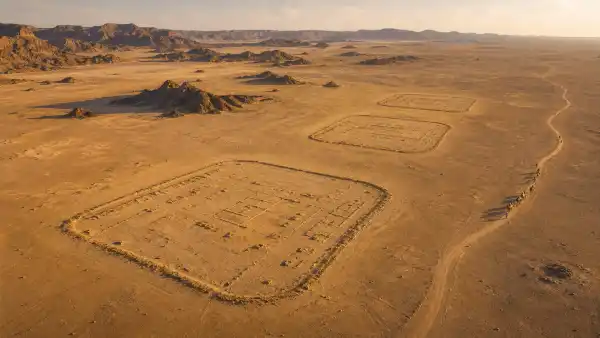
The desert north of Arabia has kept a Roman military story out of sight for almost two thousand years. Now three angular traces in the landscape are giving archaeologists a possible route to follow. Researchers working with satellite imagery have identified three Roman marching camps in the Harrat al-Shaam region, close to the ancient frontier […]
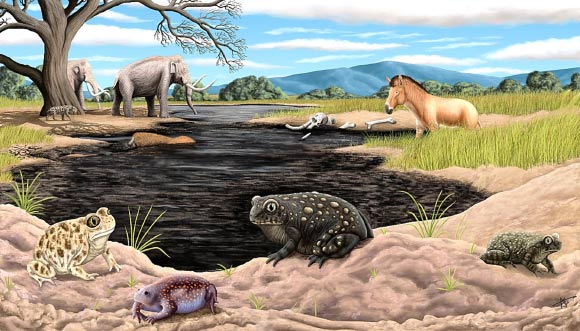
Paleontologists studying the La Brea Tar Pits, one of the world’s richest Ice Age fossil sites, have identified a previously unknown species of spadefoot toad that lived in what is now California during the latest Ice Age.
A changing climate is helping to fuel the growth of a gigantic blob of foul-smelling seaweed that has washed up in some coastal communities. Mexico is fighting back.
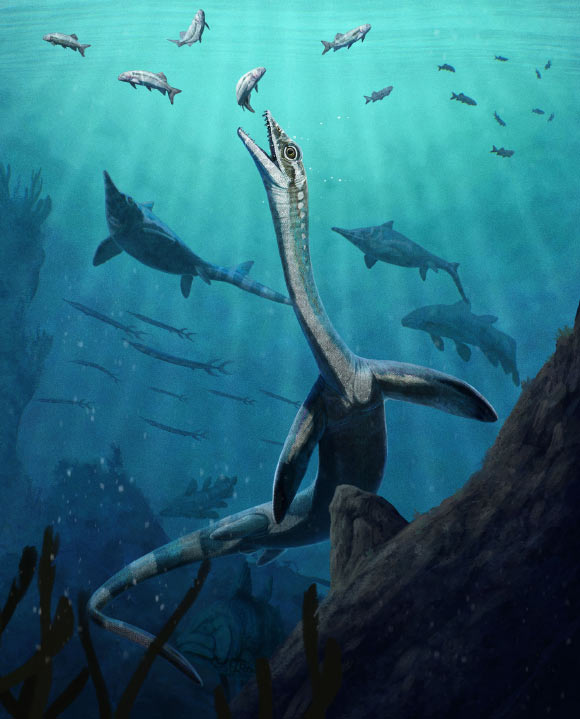
An exquisitely preserved specimen of Austronaga minuta, a small, long-necked marine reptile from the Triassic of China, contains a fossilized stomach, liver and intestines, offering paleontologists their oldest detailed glimpse yet of how early reptiles digested food.
Live, rolling coverage as London’s biggest companies defy Middle East disruption and UK petrol prices rise to around £1.60 per litre, the highest since Donald Trump ordered renewed strikes
The story piquing the interest of the financial press this morning is that of Leopold Aschenbrenner, the AI Wunderkind (he’s German-born) who has been forced to sell off his fund in a fire sale after the AI boom ran out of steam.
The 24-year-old had persuaded a lot of people to give him a lot of money for a hedge fund, after previously working for OpenAI and the FTX Future Fund, a charitable arm of the fraudulent crypto empire of Sam Bankman-Fried, who is now in prison. Aschenbrenner ploughed that money into debt-fuelled bets on artificial intelligence companies, earning huge returns until he found out that stocks can also fall.
The trader dubbed the “Nostradamus of AI” would have been hard-pressed to foresee how quickly his high-flying hedge fund would run into trouble.
The firm’s rapid downward spiral is a familiar tale, as Silicon Valley and Wall Street once again threw their weight behind a bright-eyed but untested investor who promised this time would be different. “Everybody always wants to find the next golden child,” said one longtime hedge fund executive. “It just keeps happening.”
In less than 24 hours — which included a conversation between Griffin and Aschenbrenner — Griffin’s Citadel hedge fund reached out to Situational Awareness and snapped up the investments at a discount, according to a person familiar with the matter who asked not to be identified citing private information.
It was a startling reversal for Aschenbrenner, a former researcher at OpenAI who – before starting his hedge fund roughly two years ago — had no previous investment experience. His fledging firm has watched its assets plunge from $45bn at the start of July to about $10bn.
Do roupeiro PAX à cozinha completa, passando pela sala, casa de banho e escritório, os Planificadores do IKEA permitem visualizar, personalizar e testar combinações de móveis e espaços em 3D directamente no browser.
The publication in the journal PNAS Nexus of new evidence from Malta has shaken the foundations of what was believed about the maritime capabilities of the last hunter-gatherers in Europe. The discovery that the central Mediterranean islands were colonized before the invention of agriculture directly contradicts decades of established conceptions, which placed the development of […]
Paleontologists at the University of New South Wales have described a new genus and species of dasyurid marsupial from the Early Miocene of Australia, offering the first solid evidence that the family Dasyuridae -- which today includes quolls, Tasmanian devils and tiny antechinuses -- existed long before scientists had proof of it in the fossil record.
Il risveglio dopo la polvere: A un quarto di secolo dall'eruzione del 2000, la cortina di polveri attorno al sistema binario V445 Puppis si è diradata. Un team guidato da John Mills (Università di Warwick) ha analizzato i dati combinati di VLT, Hubble, SALT e TESS, osservando per la prima volta la coppia di stelle al centro del residuo.

 Login