❌

Reading view

Fat Bear Week kicks off September 22

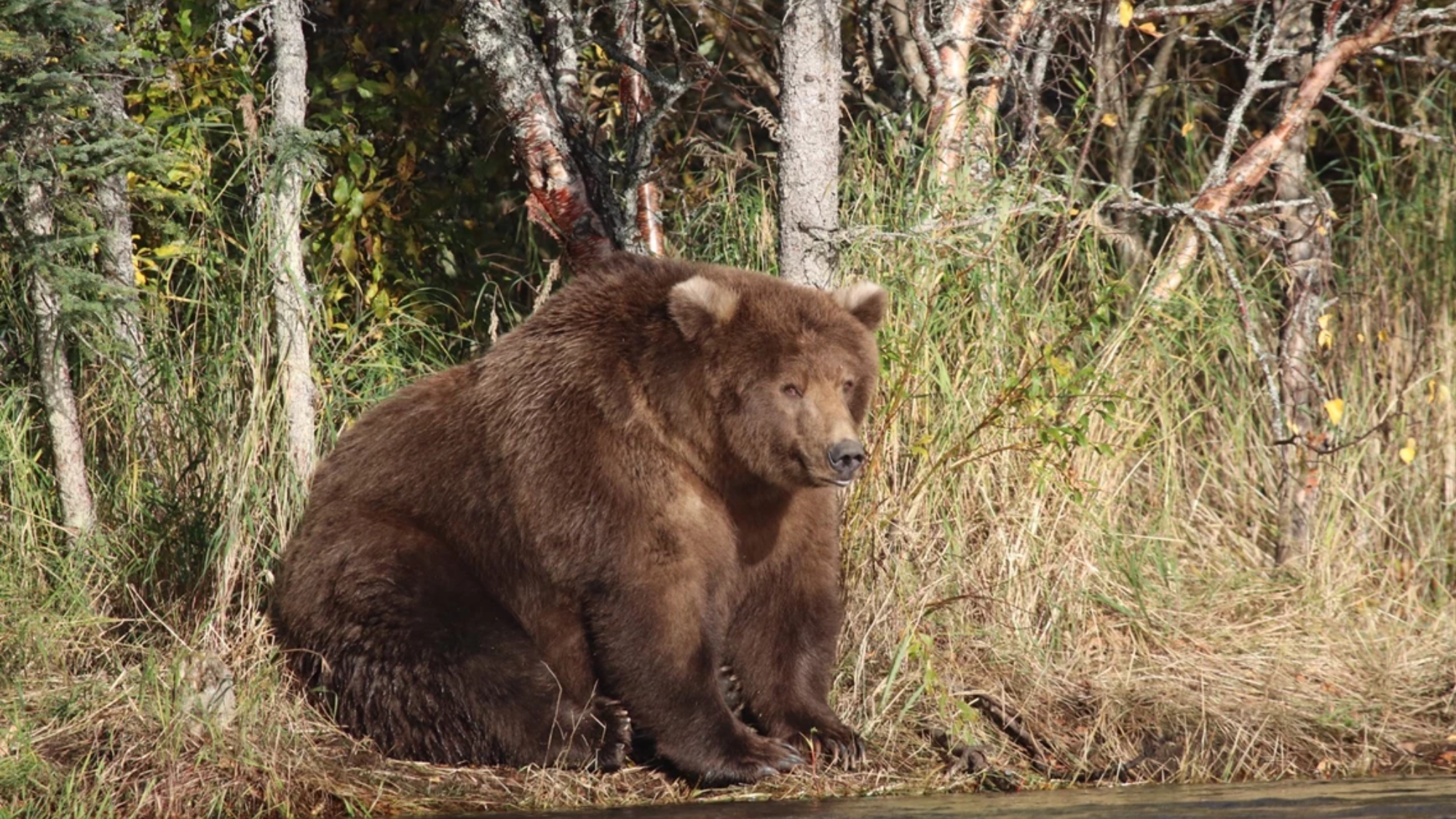
The salmon? Eaten. The days? Shorter. The bears? Fatter. 

After spending the summer eating the fatty pink salmon swimming through Katmai National Park and Preserve in Alaska, it’s time to celebrate the park’s iconic brown bears (Ursus arctos). Fat Bear Week begins on Tuesday, September 22, and here is everything you need to know. 

What is Fat Bear Week?

Think March Madness, just without the basketball and significantly more bears. Fat Bear Week is a single-elimination tournament, where bear enthusiasts from around the world can vote online for their favorite chunky bear. After each round, the bear with the most votes advances until the winner is announced on September 29. According to the Katmai Conservancy, the event began as a one-day event in 2014 with 1,700 votes cast. Only 10 years later, 1.2 million votes were cast from over 100 countries.

The brown bears return to Brooks Falls for the salmon migration every year in late June, where viewers can watch them on explore.org’s livestream. There, they will feast to fatten up for the long winter ahead. By late summer, the nutritious fish will spawn and then begin to die. The bears will then move to the lower Brooks River in September and October to eat the dead and dying salmon near the river’s mouth.

Eating all of this salmon is important because the heftier the bear, the better chance they will survive their long winter hibernation. Despite being the poster species for winter hibernation, bears are not “deep hibernators,” they way that squirrels, bats, and bees are. Bears enter a state called torpor, which is an involuntary state primarily triggered by lack of food. During this time, the bears rely on stored fat reserves for energy. A torpid bear’s eating, drinking, and waste functions will cease, as its body metabolizes these stores it put on over the summer. 

When is Fat Bear Week 2026?

This year, Fat Bear Week begins on Tuesday, September 22, and a winner will be crowned on Tuesday, September 29. 

How can I vote?

Votes may be cast from noon to 9 p.m. EDT (9 a.m. to 6 p.m. PDT and 8 a.m. to 5 p.m. ADT)

from September 22 and 29 at fatbearweek.org.

Photographs comparing the bears from earlier in the summer and later in the summer will be shown, so voters can get an idea of just how much weight the bears put on during their salmon fest. An adult male bear can go from roughly 700 pounds in the early summer to over 1,200 pounds by fall. 

Voters are also encouraged to get familiar with each bear’s life history and the unique challenges they face to survive.

Which bears are competing this year?

The 2026 Fat Bear Week Bracket will be released on Friday, September 18. 

In 2025, Bear #32 (Chunk) took the crown, despite beginning the salmon run with a freshly broken jaw. He was likely injured while fighting with another bear for a mate, but he still managed to catch plenty of fish. Chunk is known for his dominance and size, but also narrow-set eyes, dark fur, a prominent brow ridge, and a distinctive scar across his muzzle. 
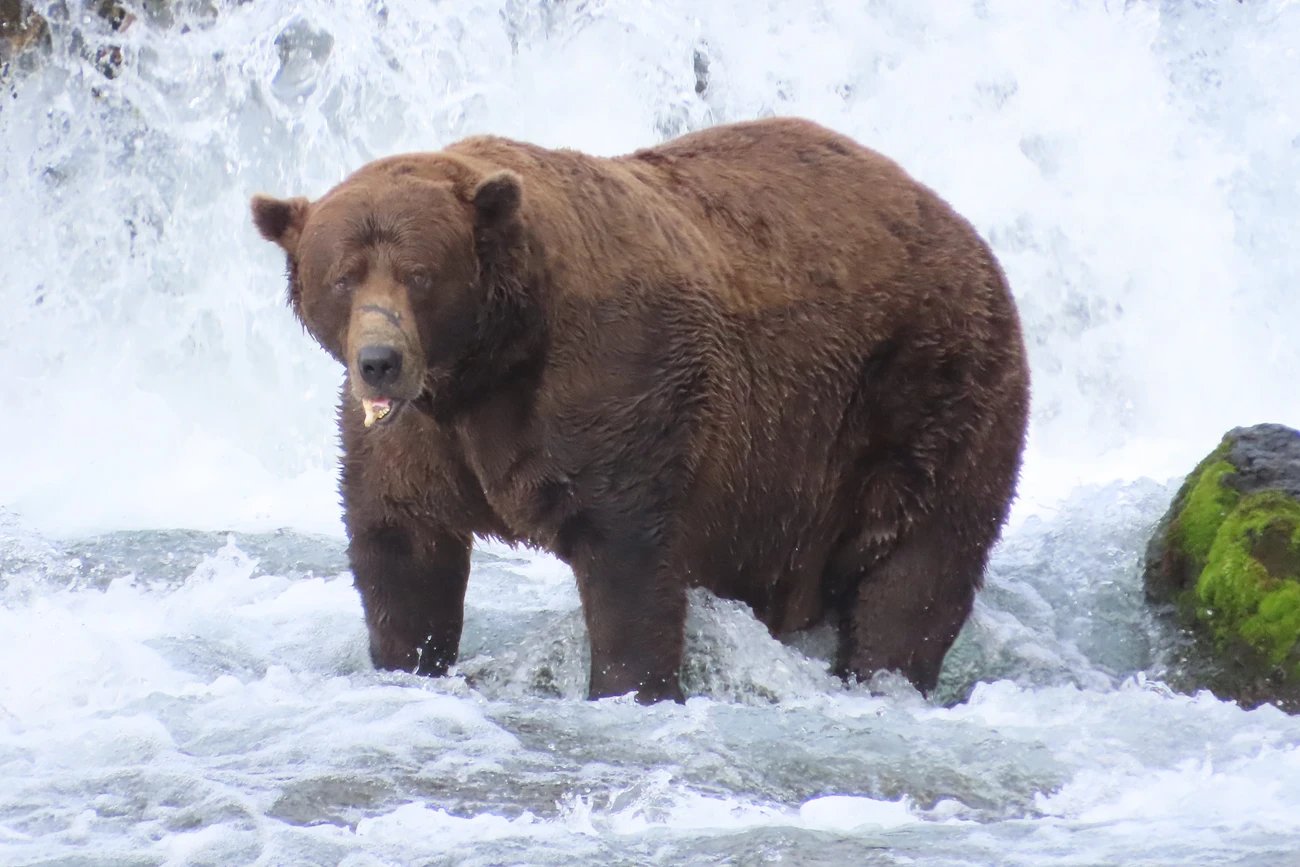
a large bear stands near a waterfall
Fat Bear Week 2025 champion Chunk. Image: NPS/ T. Carmack

How can I support Katmai’s bears?

Donations can be made to Katmai Conservancy’s Otis Fund. The Otis Fund is named after Bear #480 (Otis), who won four Fat Bear Week titles before his death around 2024.  All donations made between September 22 and October 3 will be matched by explore.org. 

What happened with the bears this summer?

This year’s livestream featured an example of how wild (and upsetting to humans) nature can be. On Tuesday, July 28, the live-cams captured a young brown bear cub being killed and eaten by an unrelated mother bear (Bear #806). The deceased cub was born this spring and the child of Bear #909, a 10-year-old brown bear. Bear #909 started the season with two cubs, but now lost both. 

On Sunday, August 2, one of Bear #335’s (Jolly) cubs died, after following three unrelated cubs up a tree. The mother of the cubs already in the tree attacked Bear #335’s cub, who did not survive the encounter. The identity of the mother bear who killed the spring cub was not confirmed. 

Following the first cub’s death, naturalist Mike Fitz and park rangers Christine Loberg and Sarah Bruce said this likely the first documented case occurring at Brooks River. While there is no one answer as to why mother bears are killing cubs, some experts suspect bear adoption, food scarcity, and fights for dominance all play a role. 

Additionally, this year also saw the cub with silver-hued fur, a cub who hopefully learned important lesson about porcupine quill safety, the unique fishing stylings of Bear #164 (Bucky Dent), and Bear #284’s (Electra) family who can “walk on water.”

The post Fat Bear Week kicks off September 22 appeared first on Popular Science.
  •  

Captive Crocodiles Released Into the Wild Did Something Researchers Didn’t Expect

Saltwater Crocodile Mouth OpenCaptive-reared crocodiles adapted well after release, but a translocated wild crocodile showed strong homing instincts, offering new insights for conservation planning. A new study suggests that saltwater crocodiles born or raised in captivity may successfully adapt to life in the wild without returning to the facilities where they were bred. Researchers say the findings could [...]
  •  

Gray Wolf Spotted in Mendocino National Forest for First Time in 15 Years

Gray Wolf Spotted in Mendocino National Forest for First Time in 15 Years

A gray wolf has been confirmed roaming California’s Mendocino National Forest, marking the first verified sighting there since the species made its comeback to the state 15 years ago. Wildlife officials say the discovery signals the predator’s continued expansion across California’s wild landscapes.

The sighting was reported in late August in the far northern reaches of Lake County, roughly two hours north of San Francisco. After receiving multiple reports from residents and observers, the California Department of Fish and Wildlife investigated and officially verified a wolf’s presence in the area, according to a statement from county officials.

Gray wolves were once hunted to extinction within California’s borders, disappearing from the state for nearly a century. Their return began in earnest around 2011, when a lone wolf known as OR-7 crossed into California from Oregon, reigniting hopes for the species’ natural recovery. Since then, small numbers of wolves have gradually reestablished territory across parts of Northern California, with packs forming in areas such as Lassen and Siskiyou counties.

The latest sighting in Mendocino National Forest suggests the animals are pushing further into new territory, a development conservationists view as an encouraging sign of ecological resilience. Wolves play a critical role in maintaining balanced ecosystems by regulating prey populations and influencing the behavior of other wildlife. Wildlife officials say they will continue monitoring the region to better understand the wolf’s movements and determine whether it may be part of a larger pack venturing into unfamiliar terrain.

The post Gray Wolf Spotted in Mendocino National Forest for First Time in 15 Years first appeared on EnviroLink Network.

  •  

Can a Whole Arctic Ecosystem Evolve Fast Enough to Survive Climate Change?

Can a Whole Arctic Ecosystem Evolve Fast Enough to Survive Climate Change?

On Alaska’s remote North Slope, researchers are picking their way across spongy tussock grasses toward Galbraith Creek, a rushing meltwater stream fed by the snowy peaks of the Brooks Range. There, they carefully string up mist nets to catch white-crowned sparrows that have just completed their long migration from warmer latitudes. The birds have only a brief window to stake out territory, find mates, and raise chicks—all fueled by the explosive burst of insects that emerges each summer across the tundra.

From every bird captured, scientists collect blood, feather, and fecal samples to track what the sparrows are eating and how their diets shift as the short Arctic summer progresses. This detailed data collection is part of a groundbreaking research effort seeking to understand something far bigger than individual birds: whether an entire ecosystem—spanning streams, tundra, insects, and wildlife—can adapt fast enough, together, to survive rapid climate change.

Unlike traditional studies that examine how single species adjust to warming conditions, this project treats the Arctic as an interconnected web where the timing of ice melt, insect emergence, plant growth, and animal migration must all stay in sync. As the region warms at a pace several times faster than the global average, that synchronization is increasingly at risk. If insects hatch earlier but sparrows arrive on their usual schedule, birds could miss their crucial food window—a mismatch that could ripple through the entire food chain.

Scientists hope their findings will reveal whether coordinated, ecosystem-wide adaptation is possible, offering a preview of how fragile Arctic systems—and the species that depend on them—might fare as the climate crisis accelerates.

The post Can a Whole Arctic Ecosystem Evolve Fast Enough to Survive Climate Change? first appeared on EnviroLink Network.

  •  

Victoria’s Koala Population Half Previous Estimates, Report Reveals Chronic Poor Health

Victoria’s Koala Population Half Previous Estimates, Report Reveals Chronic Poor Health

A landmark scientific review has revealed that Victoria’s koala population is in significantly worse condition than previously believed, with numbers roughly half of earlier estimates and the animals suffering from chronic poor health. The Victorian government sat on these findings for more than a year before making them public.

The comprehensive study, conducted by the state’s Arthur Rylah Institute in partnership with researchers from major universities, was completed in June 2025 but was withheld from public release for over 12 months. The delay has raised questions about transparency in how the government handles critical wildlife data, particularly for a species considered an icon of Australian biodiversity.

The findings paint a troubling picture of koala welfare across the state, pointing to systemic health issues affecting the marsupials rather than isolated incidents. Combined with the sharp downward revision in population numbers, the report suggests previous conservation strategies may have been built on overly optimistic assumptions about how many koalas remain and how well they’re faring.

Conservationists and wildlife advocates are likely to press the government for immediate action following the report’s release, including questions about habitat loss, disease prevalence, and the adequacy of current protection measures. The revelation adds to mounting concerns about the long-term survival of koala populations in parts of Australia, where habitat destruction, bushfires, and disease have already taken a significant toll on the species in recent years.

The post Victoria’s Koala Population Half Previous Estimates, Report Reveals Chronic Poor Health first appeared on EnviroLink Network.

  •  

Great Koala National Park Carbon Credit Deal Clears Senate Despite Internal Party Revolt

Great Koala National Park Carbon Credit Deal Clears Senate Despite Internal Party Revolt

A contentious plan allowing major polluting industries to use carbon credits generated from a new koala national park in New South Wales to offset their emissions will proceed, after a deal was struck between the governing party and the Greens. The agreement means the Greens declined to join a Coalition-backed effort to block the arrangement in the Senate.

The plan has drawn criticism from environmental advocates who argue that using a protected wildlife sanctuary to generate offset credits undermines the conservation purpose of the park and allows heavy emitters to continue polluting rather than cutting emissions at the source. Supporters of the deal counter that it secures funding and formal protection for critical koala habitat that might otherwise remain vulnerable to logging or development.

The agreement did not have unanimous support within the Greens party room. Three senators — two from Tasmania and one from Western Australia — broke ranks to cross the floor and vote against the deal when it came before the Senate on Thursday afternoon. Their dissent highlights ongoing tension within the party over how far to compromise on environmental protections in pursuit of broader legislative wins, and raises fresh questions about the long-term ecological trade-offs of carbon offset schemes tied to national parks.

The koala park itself has been championed as a landmark conservation project, aiming to protect one of the last strongholds of the vulnerable species amid ongoing habitat loss from land clearing, bushfires, and climate change.

The post Great Koala National Park Carbon Credit Deal Clears Senate Despite Internal Party Revolt first appeared on EnviroLink Network.

  •  

‘Birds Supporting Birds’ connects the Philadelphia Eagles with migrating seabirds

As the 2026-2027 NFL season kicks off, the Philadelphia Eagles are giving new meaning to their signature “Fly, Eagles, Fly” fight song. The football team is partnering with the National Marine Sanctuary Foundation for Birds Supporting Birds, an initiative to support seabirds off the coast of Massachusetts (and in New England Patriots’ territory) this fall. 

The team is supporting NOAA’s Stellwagen Bank National Marine Sanctuary Shearwater Tagging Project, an ongoing initiative dedicated to studying the great shearwater (Ardenna gravis) and their migration. Great shearwaters are large, white-and-grey seabirds known for their epic journeys. They travel thousands of miles every year from their remote South Atlantic breeding grounds up to the cooler North Atlantic waters during the nonbreeding season. According to the National Marine Sanctuary Foundation, they fly the equivalent of over 200,000 football fields across the Atlantic Ocean every single year.

Birds Supporting Birds will help support researchers in Stellwagen Bank, an 842-square-mile marine sanctuary east of Boston, to tag great shearwaters and track their migratory routes across the Atlantic. 

“The Eagles are directly funding researchers to attach lightweight, solar-powered satellite transmitters to great shearwaters,” Joel R. Johnson, President and CEO of the National Marine Sanctuary Foundation, tells Popular Science. “These tags track the birds’ migration patterns around the Eastern Seaboard and down to the Southern Atlantic Ocean in real time.”

Lovingly known as “The Birds” by their incredibly devoted fanbase, the football team is leveraging their platform to bring attention to ocean conservation and highlight environmental stewardship. 

A major 2015 study found that the Gulf of Maine is warming faster than 99 percent of the ocean due to climate change. While the water has slightly cooled since 2021, a report published by NOAA in July found that the environment in the Gulf of Maine still remains unstable. These changes in ocean temperature, currents, and other conditions can impact the seabirds’ food supply. 

Great shearwaters are reliable indicators of an ecosystem’s health, who rely on small fish called sand lance in their diets. Whales, dolphins, bluefin tuna (Thunnus thynnus), and other key Gulf of Maine species also rely on these fish belonging to the family Ammodytidae in their diets. By studying great shearwaters and their health, researchers can better understand what is happening in the local ecosystem as a whole. 

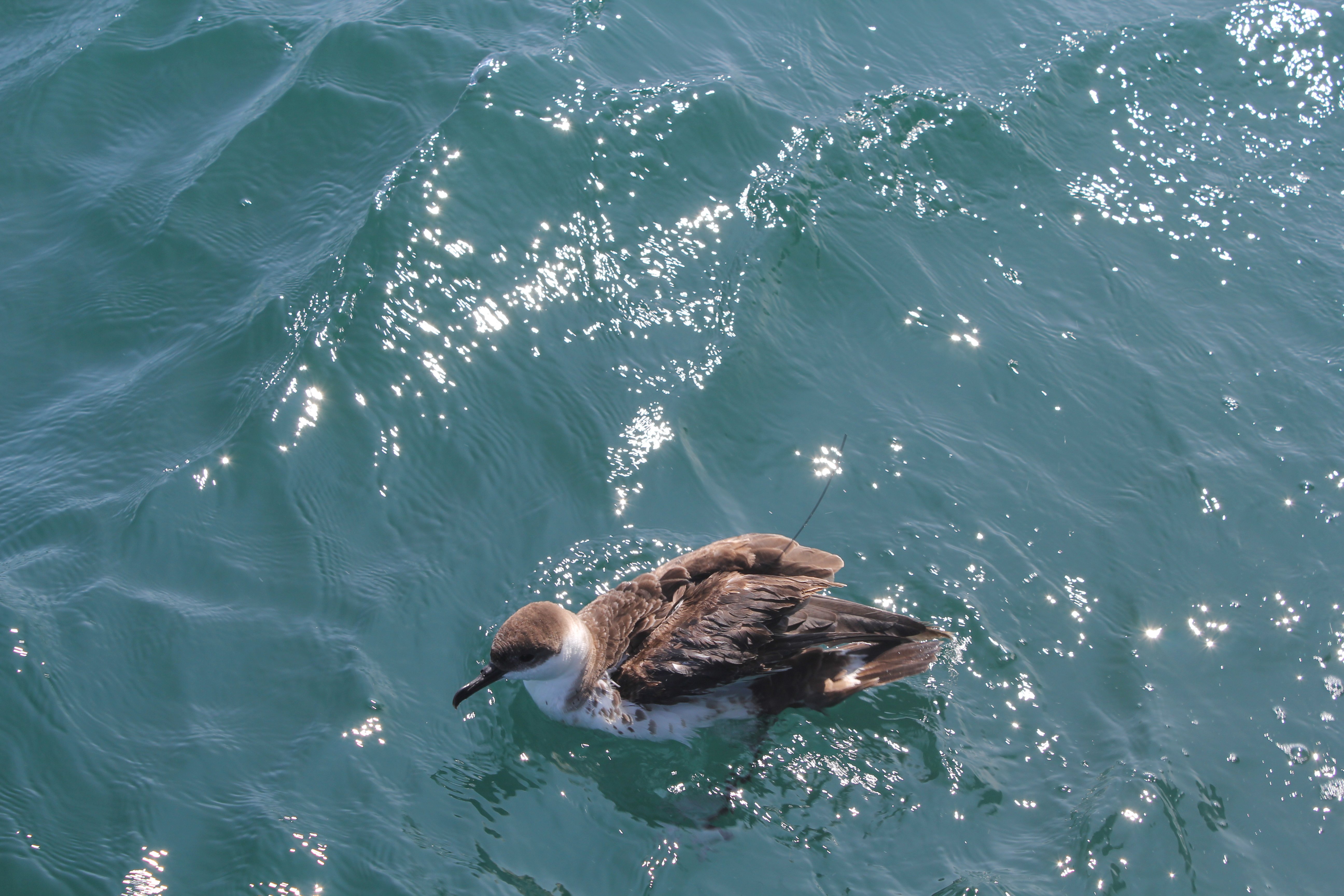
Researchers at Stellwagen Bank National Marine Sanctuary used satellite tracking technology in 2013. These tags are lightweight and attached to the birds with degradable thread. They have small solar panels so scientists can monitor the birds’ routes over extended periods. 

Researchers have now deployed tags on Phil, Franklin, Hoagie, and Liberty, four great shearwaters with very Philly-appropriate names.

a bird wearing a small tracker on its feathers sits on the ocean
Great shearwaters can help scientists understand an ecosystem’s health. Image: National Marine Sanctuary Foundation.

“We are thrilled to invite the public to follow Phil, Franklin, Hoagie, and Liberty in real time on our interactive maps and social channels, bringing everyone along on our shared mission to protect our ocean waters and marine life,” says Johnson, who lists bald eagles (Haliaeetus leucocephalus), great blue herons (Ardea herodias), and great shearwaters among his favorite birds. 

Live interactive maps will be available soon on the Stellwagen Bank National Marine Sanctuary and National Marine Sanctuary Foundation’s website, so you can follow the great shearwater’s epic journey, while the Eagles (or your favorite team) compete on the gridiron.

The post ‘Birds Supporting Birds’ connects the Philadelphia Eagles with migrating seabirds appeared first on Popular Science.

  •  

NOAA is putting commercial fishing ahead of conservation

In July, the Trump administration relegated endangered leatherback turtles, sea lions, and whales to mere collateral damage in its race to profit from the oceans. Now, fisheries science is in the government’s crosshairs.

The National Oceanic and Atmospheric Administration (NOAA) announced new agency priorities last week that they say are a commitment to “cutting bureaucracy, modernizing our science, and putting our fishing communities first.” But experts say the agency’s actions will erode fish stocks, threaten endangered species, and surrender marine habitats to destructive trawlers.

The agency-level reforms serve as a self-proclaimed “operational roadmap” to fulfilling President Donald Trump’s “Restoring American Seafood Competitiveness” executive order, signed in April 2025.

Read full article

Comments

© Reinhard Dirscherl

  •  

Hurricane Lowell Floods Western Hawaii, New Forest Wildfire Threatens Woodland — Today’s Environmental Briefing for Wed, Sep 9 2026

Flooded roadway with uprooted trees in western Hawaii after Hurricane Lowell

Across the stories today, a common thread emerges: the gap between what protects us on paper and what protects us in practice. Again and again, communities are discovering that designations, promises, and permits only matter when someone is willing to enforce them — and that when systems fail, it’s ordinary people, and often the most vulnerable, who absorb the shock.

Nowhere is that clearer than in Jackson, Mississippi, where a federal appeals court ruled this week that the Constitution guarantees no right to clean water. For residents who have lived through years of contaminated taps and boil-water notices, the decision lands as a gut-punch reminder that legal frameworks haven’t caught up to environmental reality. A similar tension runs through the Guardian’s reporting on datacenter wastewater in Wyoming, where testing turned up a rare, potentially hazardous bacterium, and on English golf clubs, where one in twelve have quietly broken water extraction rules amid growing drought stress. Behind the numbers are real communities adapting in real time — often without knowing what’s actually flowing through their pipes or being pulled from their aquifers.

That same gap between promise and delivery surfaces in the UK’s datacentre boom, which new analysis suggests will produce only a quarter of the jobs once advertised, even as it strains the national grid. It echoes in Georgia, where a once-booming EV manufacturing corridor is hitting turbulence under shifting federal policy — a reminder that industrial transitions built on incentives can be as fragile as the politics that fund them.

Yet the day’s coverage also points to growing momentum around care, restoration, and reckoning. Hurricane Lowell’s damage across Hawaii’s western islands — toppled trees, flooded roads, thousands without power — sits alongside quieter stories of renewal: Gloucestershire’s proposal to reintroduce beavers as a defense against drought and flooding, Douglas Head’s new conservation status on the Isle of Man, and Coventry’s investment in Longford Nature Park. These are small, deliberate acts of stewardship, the kind Wendell Berry spent his life advocating for. His death last week, at 92, feels newly resonant this week — a farmer-poet who insisted that loving a place well was itself a form of environmental action, long before it became policy language.

Farther afield, the human cost of extraction runs deep. In Peru and Brazil, mercury from illegal gold mining is showing up in children’s blood and in fish that families have eaten for generations, forcing painful dietary changes in communities that did little to cause the contamination. In Indonesia, El Niño-fueled fires are pushing orangutans out of burning forests, while in Uttarakhand, India, women — who gather firewood and fodder — are bearing the brunt of increasingly long fire seasons. In Colombia, the Wiwa community’s decision to relocate their village down the mountain is less retreat than adaptation, a recognition that sacred land is changing faster than tradition can hold still.

It’s a reminder that progress and pressure often arrive together — a new spaceport investment in Shetland, a badger vaccination program under scientific scrutiny, a push for a Natural History GCSE to reconnect children with the outdoors. Each represents a small bet on the future, even as larger systems strain under climate and economic pressure.

As the week unfolds, watch whether the Jackson ruling prompts congressional attention, whether Britain’s Green Party succeeds in forcing transparency around ecosystem collapse risks, and whether Gloucestershire’s beavers get their chance to prove that sometimes the oldest solutions are still the best ones.

The post Hurricane Lowell Floods Western Hawaii, New Forest Wildfire Threatens Woodland — Today’s Environmental Briefing for Wed, Sep 9 2026 first appeared on EnviroLink Network.

  •  

National Park Service’s WWII series highlights Washington State nature reserve

As the National Park Service (NPS) continues highlighting the many roles of its parks during World War II, the western most landmass in the contiguous United States is getting its due: Olympic National Park. 

First designated a monument by President Teddy Roosevelt in 1909 before President Franklin D. Roosevelt’s reclassification as a park in 1938, the 922,650 acre protected region in Washington State is also recognized by UNESCO as an International Biosphere Reserve. Olympic National Park includes temperate forests, stretches of Pacific coastline, as well as subalpine forests and meadows. Thanks to its location on an isolated peninsula, it’s also home to many endemic plant and animal species including the Olympic marmot (Marmota olympus) and Piper’s bellflower (Campanula piperi).

The national park received a lot of attention during WWII for very different reasons, however. Its history is laid out in a recent social media post by Pearl Harbor National Memorial due to an ongoing search-and-rescue operation in the park. Because the peninsula extends further west than any other landmass in the contiguous United States, military and government officials considered it one of the most strategic—and vulnerable—places in the nation. The nearby Strait of Juan de Fuca funneled all traffic to-and-from vital ports in Seattle and Tacoma, as well as the naval base in Bremerton.

Hurricane Ridge black and white photo from Olympic National Park
Two of the outposts are still accessible by trail today. Credit: NPS

U.S. Army and Coast Guard engineers began installing 13 Aircraft Warning Service (AWS) stations throughout Olympic National Park in 1942, many from converted fire lookouts. Park rangers even staffed some of the stations, and continuously monitored the skies for potential aerial bombardments. The installations remained operational throughout the entire year, regardless of the region’s notorious winter storms.

The many logistical and environmental challenges were even documented by Olympic National Park’s superintendent. At one point, it took two days for a six-person resupply crew to toboggan the three miles to Hurricane Lookout. Another team of eight workers backpacked six miles to one of the park’s most remote posts while carrying 400 pounds of supplies.

The AWS ended in 1944, but two of the original outposts still exist and are accessible to park visitors. Dodger Point and Pyramid Peak can be reached after hiking a steep trail north of Lake Crescent. 

Every week leading up to the 85th anniversary of the attack on Pearl Harbor on December 7, the National Park Service will take you across the country to explore America’s experience in World War II through the lens of national parks. The first week in the series also highlighted the roles of Golden Gate Recreation Area and Governors Island National Monument in protecting the coasts.

The post National Park Service’s WWII series highlights Washington State nature reserve appeared first on Popular Science.

  •  

Backwards-walking fish caught on video in the South China Sea

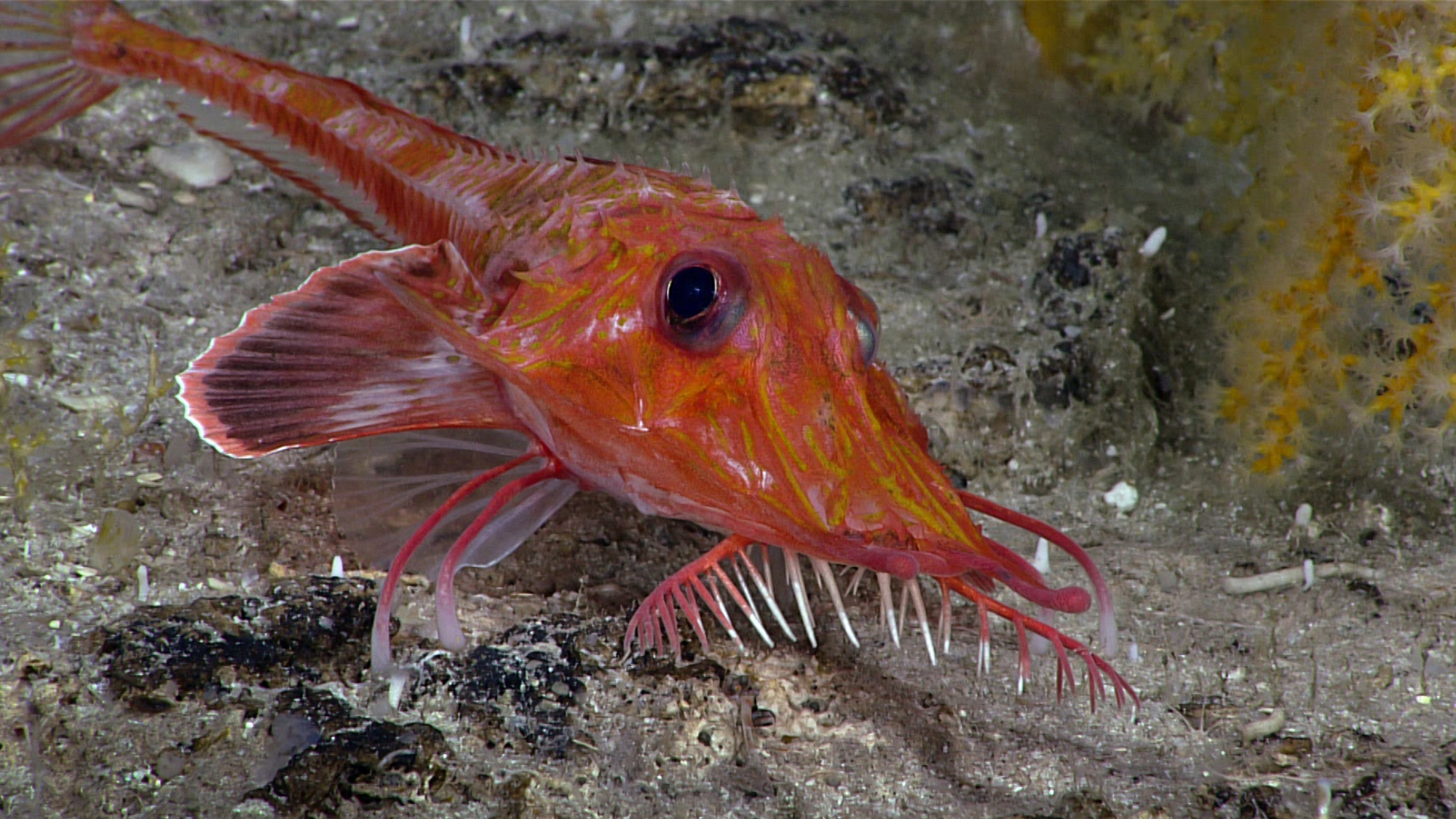
The deep-sea is filled with weird creatures: goblin sharks (Mitsukurina owstoni), vampire squid (Vampyroteuthis infernalis), and… walking fish? For the first known time, a team of scientists in China filmed a strange, shrimp-like fish walking backward along the seafloor. 

The fish, Scalicus engyceros, is a species of armored searobin, a group of fish known for  weird anatomy. Their bodies are  covered in bony plates, while stiff free fin rays stick out of its pectoral rays like tiny legs it can use to “walk.” 

The new study, published in the journal Ocean-Land-Atmosphere Research, not only provides video evidence of the animal’s sea-floor strolls, but it also marks the first time backwards locomotion has been described in fish. 

“[Our] study delivers a paradigm-shifting revelation: the deep-sea fish Scalicus engyceros, a representative of fishes characterized by highly specialized free pectoral-fin rays, is among the few fish species known to walk,” said Han Tian, a postdoctoral researcher at Sun Yat-sen University in Guangzhou, in a statement. 

The video was taken from a deep-sea diving vehicle in the northern South China Sea that also helped the researchers observe the fish’s other unique traits. It has outward-extending barbels that resemble a farmer’s rake. While the barbel makes it awkward for the fish to walk, it provides “an advantage in probing, digging, or hunting for food buried in the sediment,” according to the team. 

Like other deep-sea creatures, Scalicus engyceros also has large eyes. The researchers note that the fish did not seem to react to the approaching vehicle, but it did appear to react to its light beam before swimming away. This suggests its eyes have at least some sensitivity to light, perhaps pointing to the fish not having lived in this habitat for very long. 

While there’s still much to learn about this mysterious creature, advancements in technology are helping scientists better understand the life way beneath our oceans’ surface. 

“Modern deep-sea diving vehicles allow not only discovery of new species but also add a new in situ, functional dimension to the study of species based solely on the morphology of preserved specimens,” said Tian. 

“By observing deep sea animals alive in their surrounding environment, we can gain insight into the adaptation and evolution of the species. These walking fish harbor far more novel behavioral and evolutionary adaptations than previously assumed.”

The post Backwards-walking fish caught on video in the South China Sea appeared first on Popular Science.
  •  

Nearly 500 animals rescued from trafficking arrive at a California aquarium

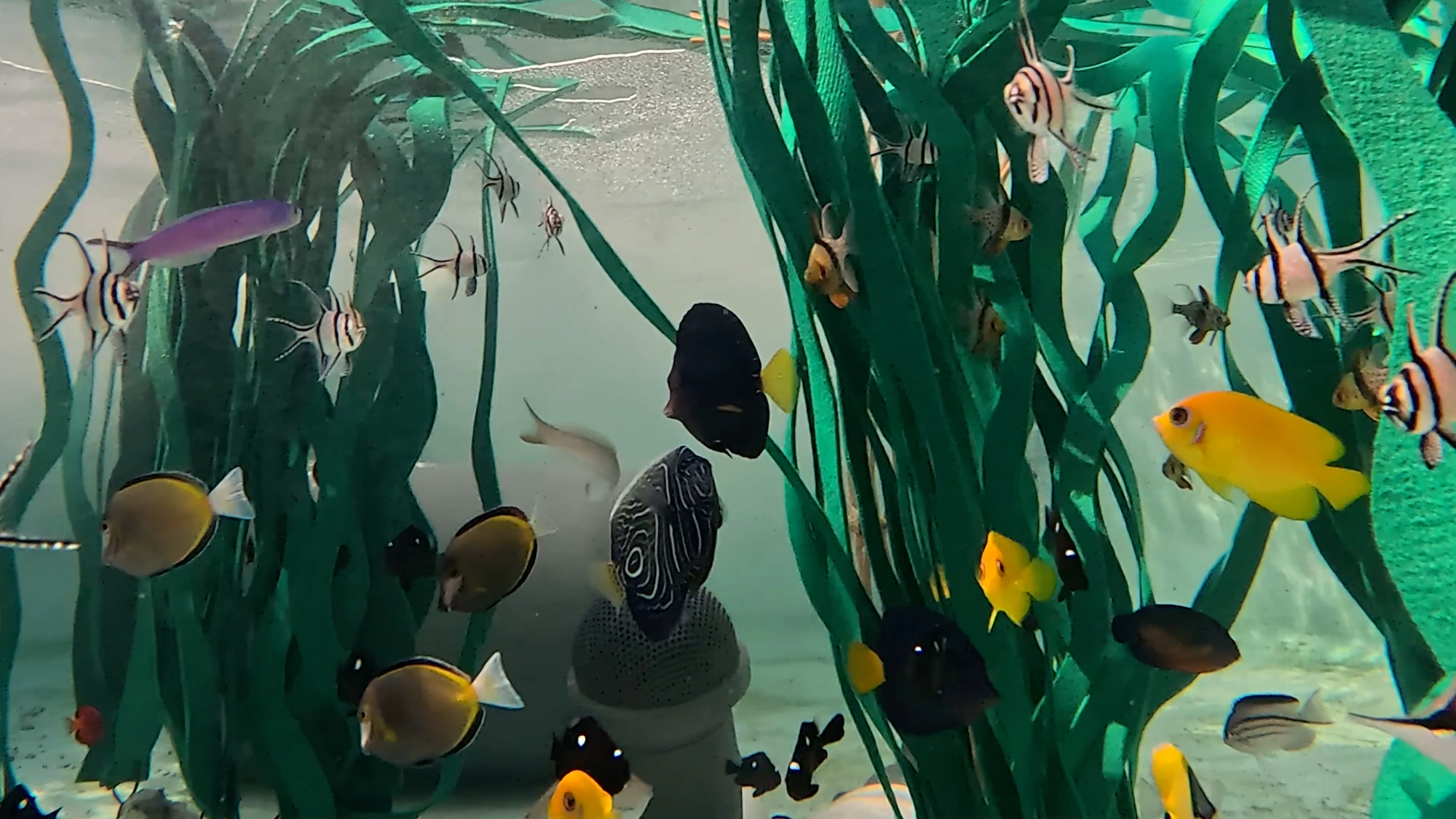
On June 19, the Aquarium of the Pacific took in almost 500 animals in one go. Fish, marine invertebrates, and sharks were all brought into the facility in Long Beach, California, but the aquarium hadn’t just gone on some big marine shopping spree. 

These animals were rescued from animal trafficking, and were in urgent need of a home. At the aquarium, the staff worked through the night to stabilize and care for them. 

“Every animal that arrives at the Aquarium, whether through a carefully planned acquisition or a last-minute confiscation, receives the same high standard of care. What can differ is the condition in which those animals arrive,” Johnathan Casey, Aquarium of the Pacific curator of fish and invertebrates, tells Popular Science. 

Many trafficked animals have been traveling in stressful or poor conditions, so the aquarium’s experts immediately check their physical condition, water quality, and individual needs. They usually know little about an animal’s origin or history, so the team needs to be prepared for anything. The rescued animals are also quarantined to avoid the potential spread of diseases, according to Alyssa Tillman, the assistant curator of fish and invertebrates. 

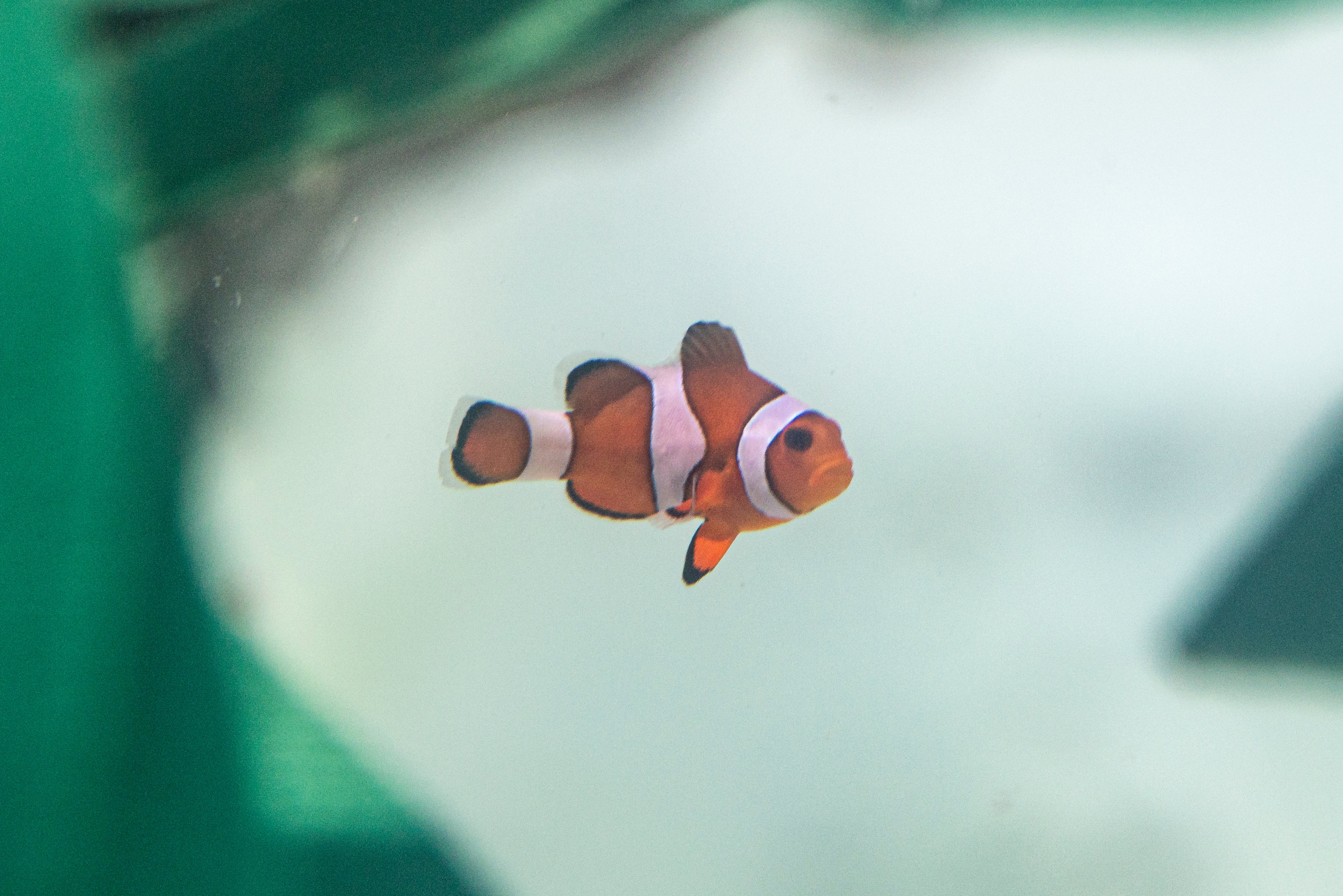
a rescued clownfish swims in a holding tank
Confiscated animals like this clownfish were kept in holding tanks at the Aquarium of the Pacific on Long Beach, California. Image: Josh Barber/Aquarium of the Pacific. Josh Barber

The species included brownbanded bamboo sharks (Chiloscyllium punctatum), ocellaris clownfish (Amphiprion ocellaris), and Banggai cardinalfish (Pterapogon kauderni). The IUCN Red List classifies brownbanded bamboo sharks as Near Threatened and Banggai cardinalfish as Endangered. 

While the arrival of almost 500 animals was a standout event, the Aquarium of the Pacific has received rescued animals from over 30 confiscation events since September 2024.  This means they saw one confiscation event every three weeks, though the first eight months of 2026 have already seen over a dozen cases. Overall, the aquarium has taken in over 3,600 rescued trafficked animals in the past two years. 

The Aquarium encourages “the public to become informed consumers to help avoid wildlife trafficking of exotic pets. This includes researching the protected status of the species and ensuring purchases are through a reputable vendor,” Casey explains. “If the vendor cannot provide proof of where the animal came from, refraining from purchasing it is a way to help.” 

The post Nearly 500 animals rescued from trafficking arrive at a California aquarium appeared first on Popular Science.
  •  

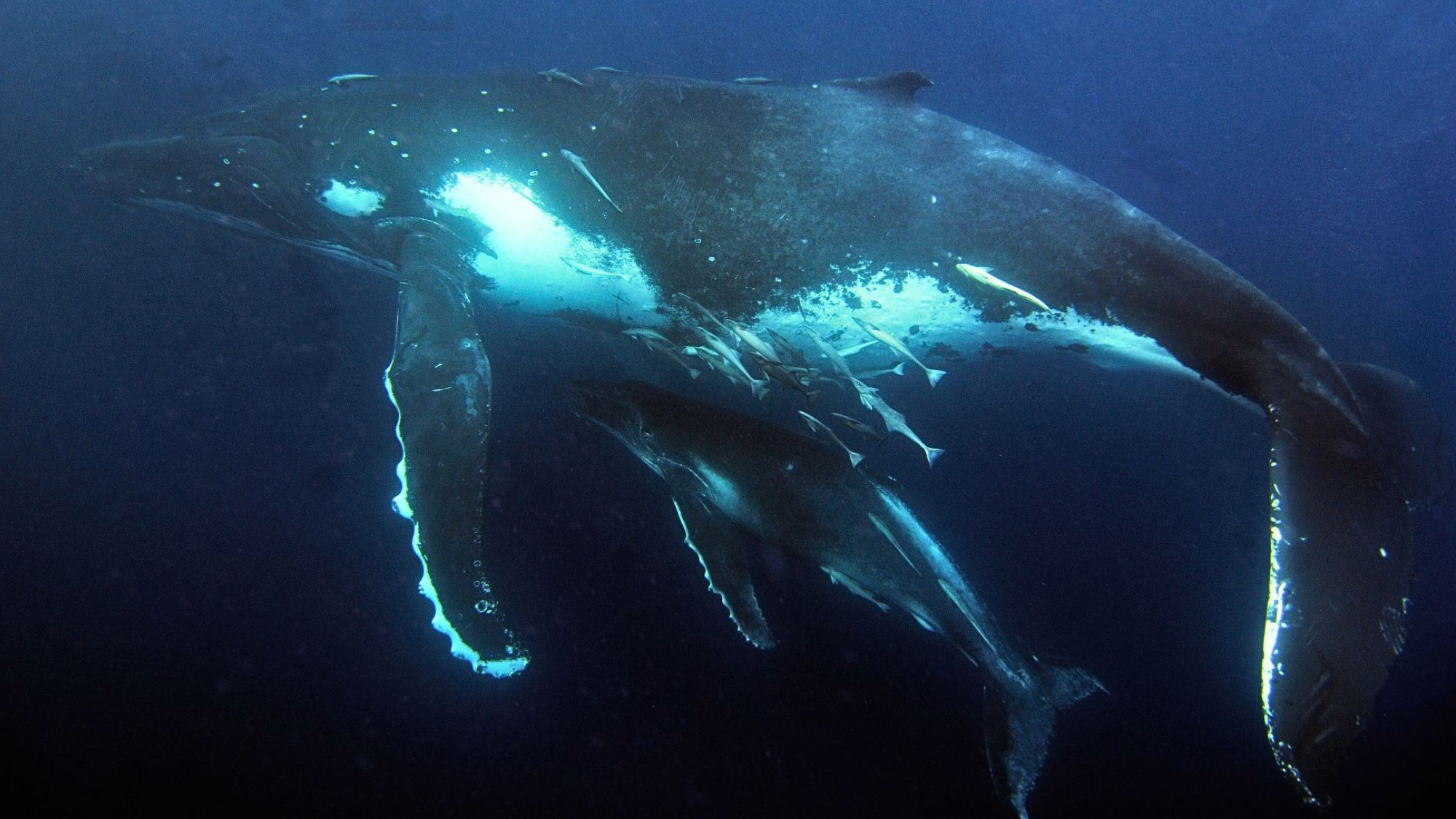
Australia’s humpback whales were acting weird. What happened next surprised scientists.

In 2009, tourism operators in Australia spotted more and more humpback whales (Megaptera novaeangliae) “fluking,” when a whale floats upside down, holding its tail above the water. Confused by the behavior, they reached out to scientists for help, triggering a research effort that solved one of the biggest mysteries about humpback whales on the Great Barrier Reef. 

The Whitsundays, where the fluking was taking place, is a region with dozens of islands between the Great Barrier Reef and Australia’s north-eastern coast. 

“It was an unusual behaviour they had never seen before. Not even the whale scientists knew what it meant at the time,” Crystal Lacey, Master Reef Guides program manager, said in a statement. “So that uncertainty sparked a major research effort, which combined citizen science through the tourism operators’ observations, and scientific research. It was one of the region’s largest citizen science efforts.” 

The efforts included tourism operators counting whales and calves, and scientists mapping the seafloor, monitoring water temperatures, tracking whales by satellite, and surveying the region from the air. The joint mission found that the Whitsundays is one of the Great Barrier Reef’s most important humpback whale calving areas. In other words, they’d revealed a previously unknown whale maternity ward. 

“The fluking the operators observed was actually a breeding behaviour,” explained Lacey. “We discovered the Whitsundays provides the sheltered, warm and shallow waters humpback whales need to give birth and raise newborn calves.”

Their results also resolved one of the biggest enigmas associated with humpback whales on the Great Barrier Reef—the question of where they give birth. The findings ultimately led to the creation of the Whitsundays Whale Heritage Area within the Great Barrier Reef Marine Park. 

Humpback whales are found in all the world’s oceans. They’re a whale-watcher favorite because they can be observed close to shore, and frequently put on a show near the surface of the water. Humpback whales mate while “hugging” face-to-face, and the gestation period of females is 11 to 12 months. When they give birth—once every 2 to three years—the calf comes out tail first. 

The post Australia’s humpback whales were acting weird. What happened next surprised scientists. appeared first on Popular Science.

  •  

11 vibrant deep-sea creatures shine in new Caribbean expedition

Marine biologists from Trinidad and Tobago recently completed the first locally helmed and most expansive survey of the deep-sea waters around the Caribbean islands. The month-long project aboard Schmidt Ocean Institute’s research vessel (R/V) Falkor (too) documented around 13 percent of the nation’s marine territory, and described 20 potential new species. Researchers also collected over 700 specimens for the University of the West Indies, St. Augustine. Once catalogued, the additions will increase the size of the university’s Zoology Museum deep ocean collection by 12 times.

“Every new discovery we make, whether ecosystem, species or behavior, deepens our understanding of what’s at stake and strengthens our ability to be true stewards of this largely unseen but critical part of our country,” said expedition chief scientist Diva Amon.

Check out some of the stunning, rarely seen creatures below. (Click to expand images to full screen.)

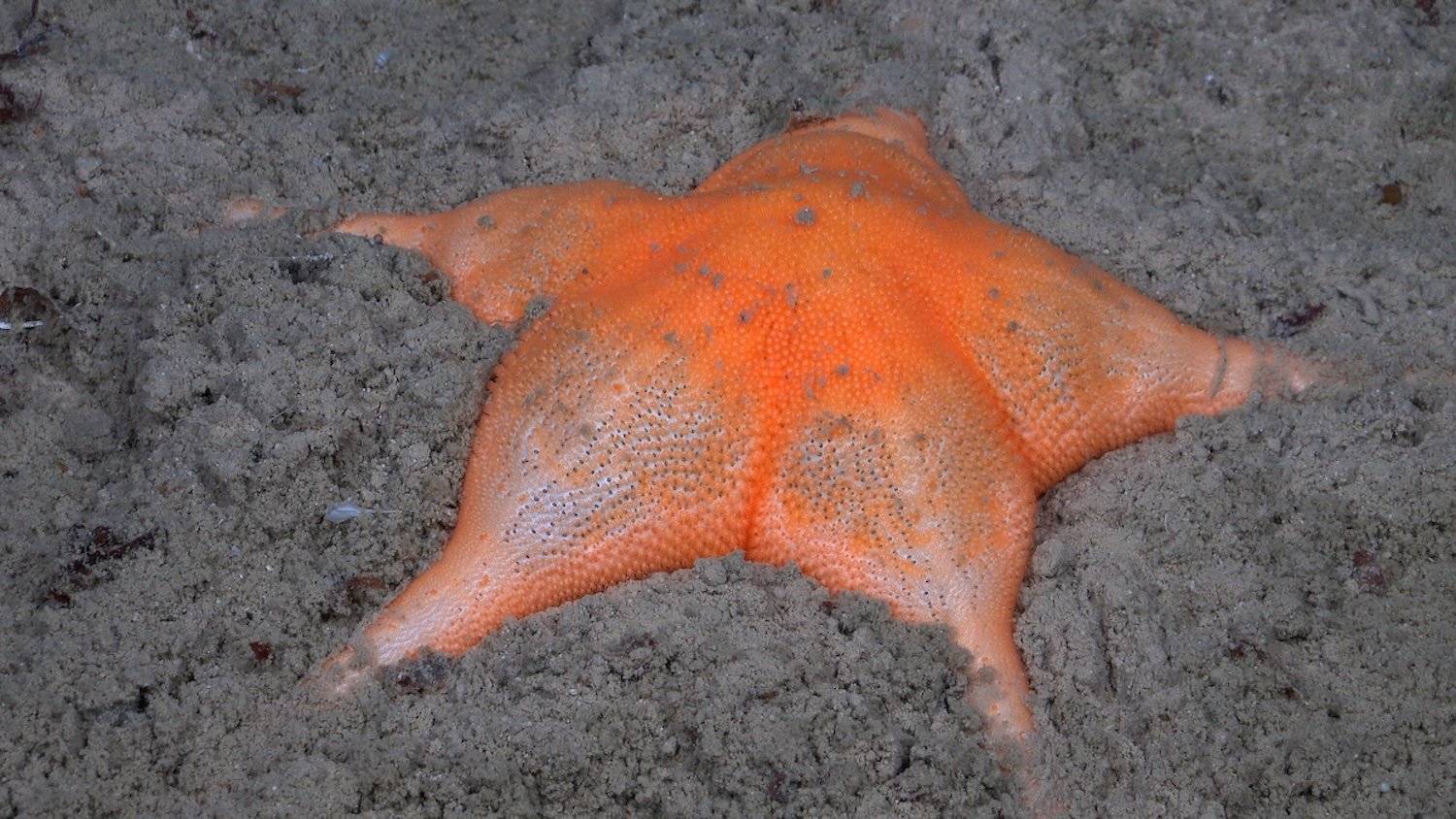
Suspected new sea star

A suspected new species of sea star (Porcellanasteridae) rests on the seafloor at a depth of 3,961 meters. Researchers collected the specimen while making dozens of other discoveries during the expedition, including at least 20 suspected new species. Photo credit: ROV SuBastian / Schmidt Ocean Institute Usage: Available via creative commons Attribution-NonCommercial-ShareAlike CC BY-NC-SA https://creativecommons.org/licenses/by-nc-sa/4.0/
A suspected new species of sea star (Porcellanasteridae) rests on the seafloor at a depth of 3,961 meters. Researchers collected the specimen while making dozens of other discoveries during the expedition, including at least 20 suspected new species. Credit: ROV SuBastian / Schmidt Ocean Institute

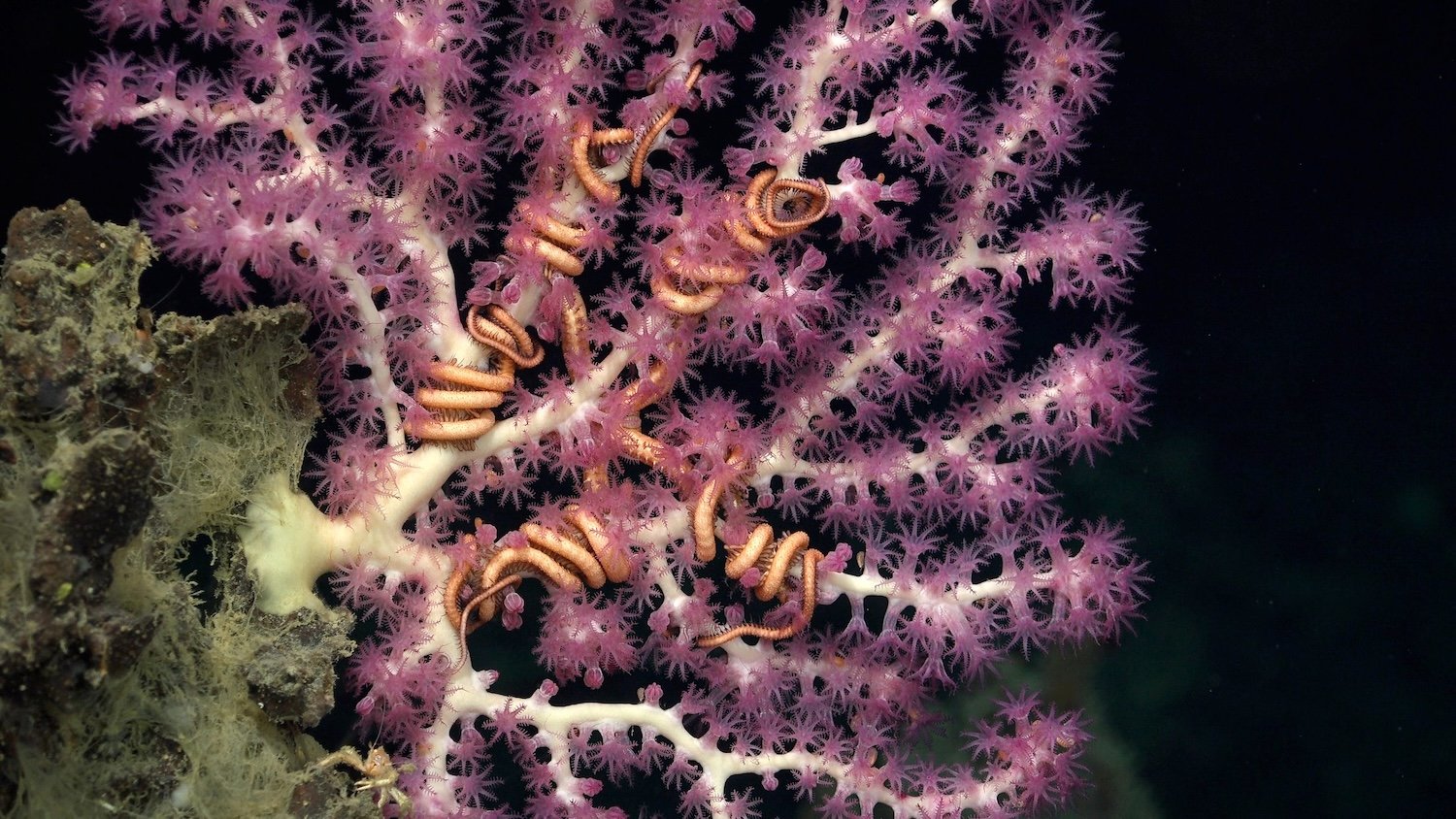
Symbiotic coral

Symbiotic brittle stars cling to a deep-sea coral off the coast of Trinidad and Tobago. A research team led by marine biologist Dr. Diva Amon (SpeSeas), composed largely of Trinbagonian scientists, surveyed the island nation's deep-water territory to document rare ecosystems and guide local conservation efforts.
Symbiotic brittle stars cling to a deep-sea coral off the coast of Trinidad and Tobago. A research team led by marine biologist Dr. Diva Amon (SpeSeas), composed largely of Trinbagonian scientists, surveyed the island nation’s deep-water territory to document rare ecosystems and guide local conservation efforts. Credit: ROV SuBastian / Schmidt Ocean Institute

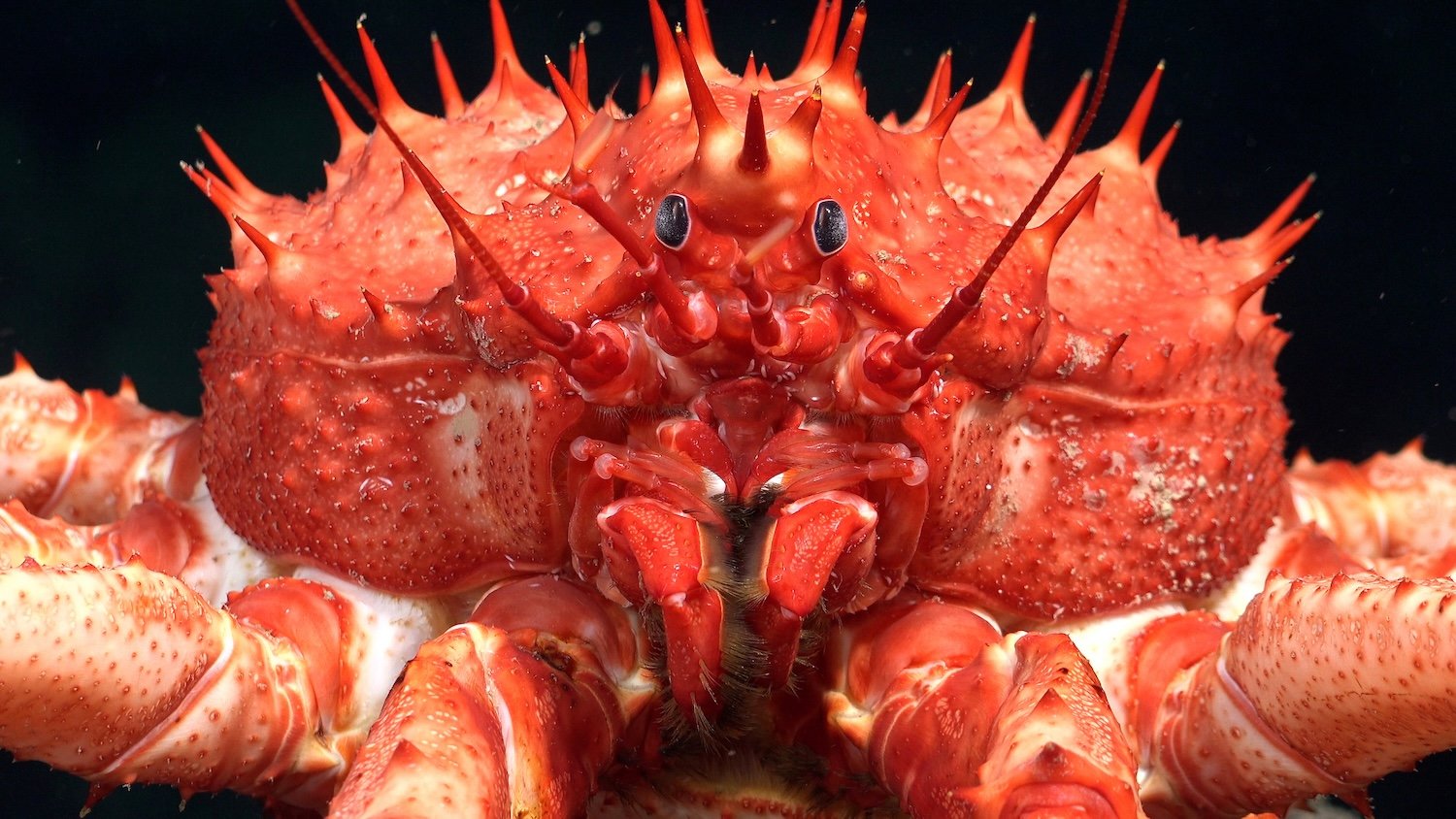
King crab

A king crab (Lithodes genus) crawls across the seafloor at a depth of 1,083 meters. Top predators in deep-sea environments, researchers documented these crabs while searching for bubble streams associated with unexplored cold seeps. Photo credit: ROV SuBastian / Schmidt Ocean Institute Usage: Available via creative commons Attribution-NonCommercial-ShareAlike CC BY-NC-SA https://creativecommons.org/licenses/by-nc-sa/4.0/
A king crab (Lithodes genus) crawls across the seafloor at a depth of 1,083 meters. Top predators in deep-sea environments, researchers documented these crabs while searching for bubble streams associated with unexplored cold seeps. Credit: ROV SuBastian / Schmidt Ocean Institute

Rare manta ray fall

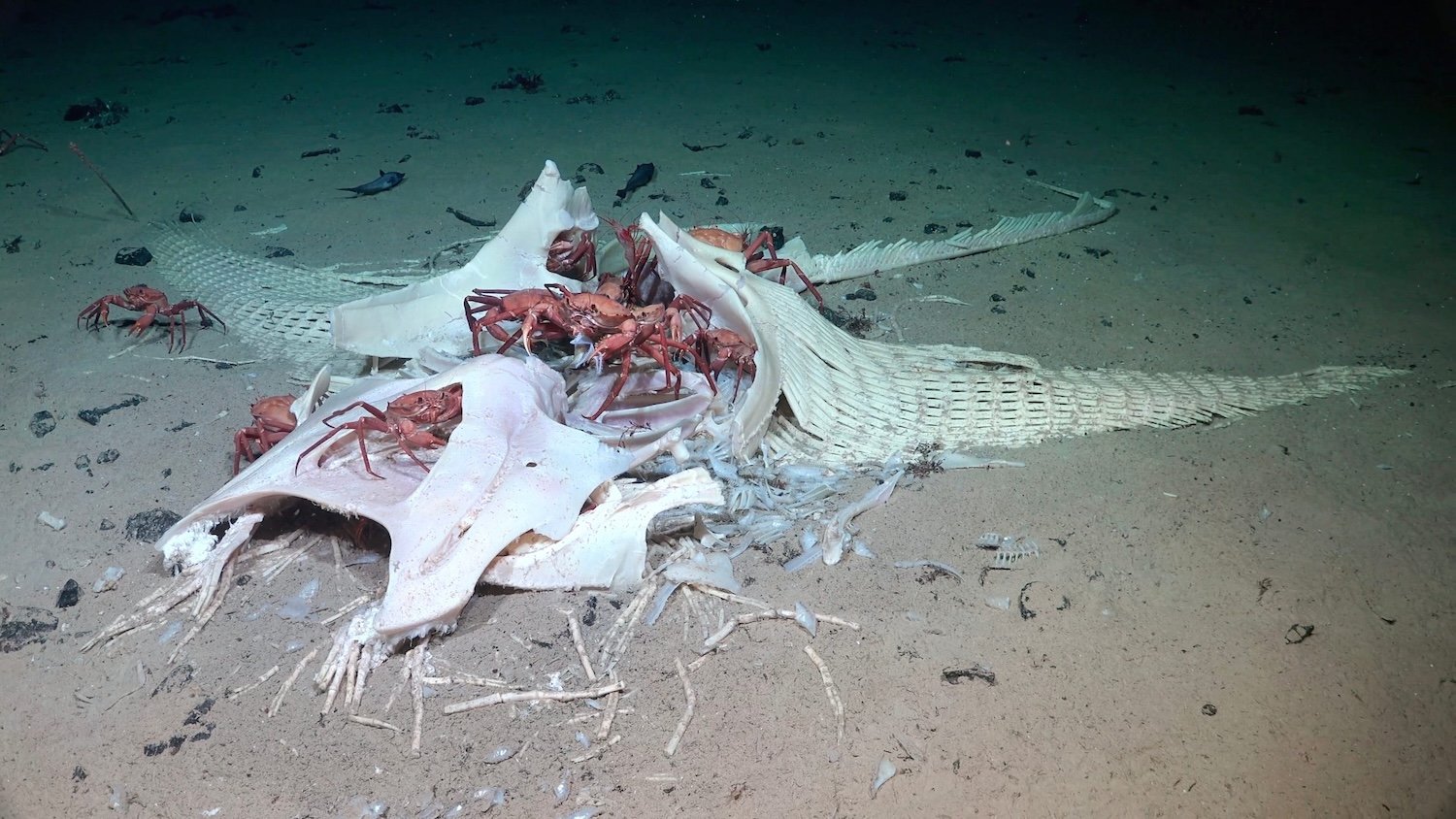
The science team encountered this rare manta ray (Mobula) fall at 1,025 meters depth off the coast of Trinidad and Tobago. When animals die in the Ocean, their bodies often sink to the seafloor, creating a rich food buffet that feeds hundreds of deep-sea species in an often food-scarce environment.
The science team encountered this rare manta ray (Mobula) fall at 1,025 meters depth off the coast of Trinidad and Tobago. When animals die in the ocean, their bodies often sink to the seafloor, creating a rich food buffet that feeds hundreds of deep-sea species in an often food-scarce environment. Credit: ROV SuBastian / Schmidt Ocean Institute

Eelpout

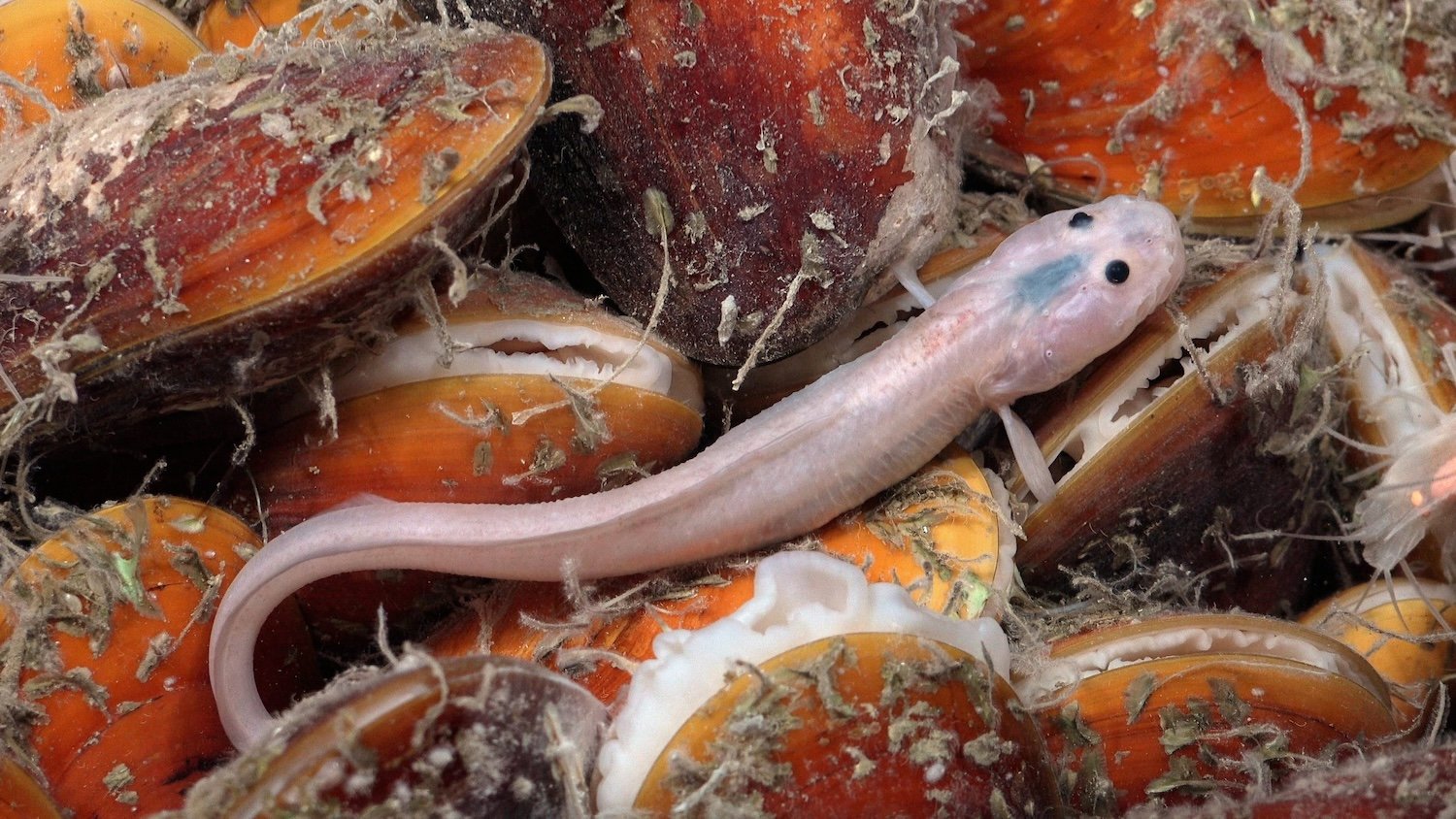
An eelpout (Pachycara caribbaeum) lies on a bed of chemosynthetic mussels (Gigantidas childressi) off the coast of Trinidad and Tobago. Ninety-three percent of Trinidad and Tobago lies below recreational scuba depths, placing its largest ecosystems in the mesophotic zone (between 30 and 199 meters) and the deep ocean. The geological setting of the two islands is ideal for supporting chemosynthetic habitats.
An eelpout (Pachycara caribbaeum) lies on a bed of chemosynthetic mussels (Gigantidas childressi) off the coast of Trinidad and Tobago. Ninety-three percent of Trinidad and Tobago lies below recreational scuba depths, placing its largest ecosystems in the mesophotic zone (between 30 and 199 meters) and the deep ocean. The geological setting of the two islands is ideal for supporting chemosynthetic habitats. Credit: ROV SuBastian / Schmidt Ocean Institute

Squat lobster

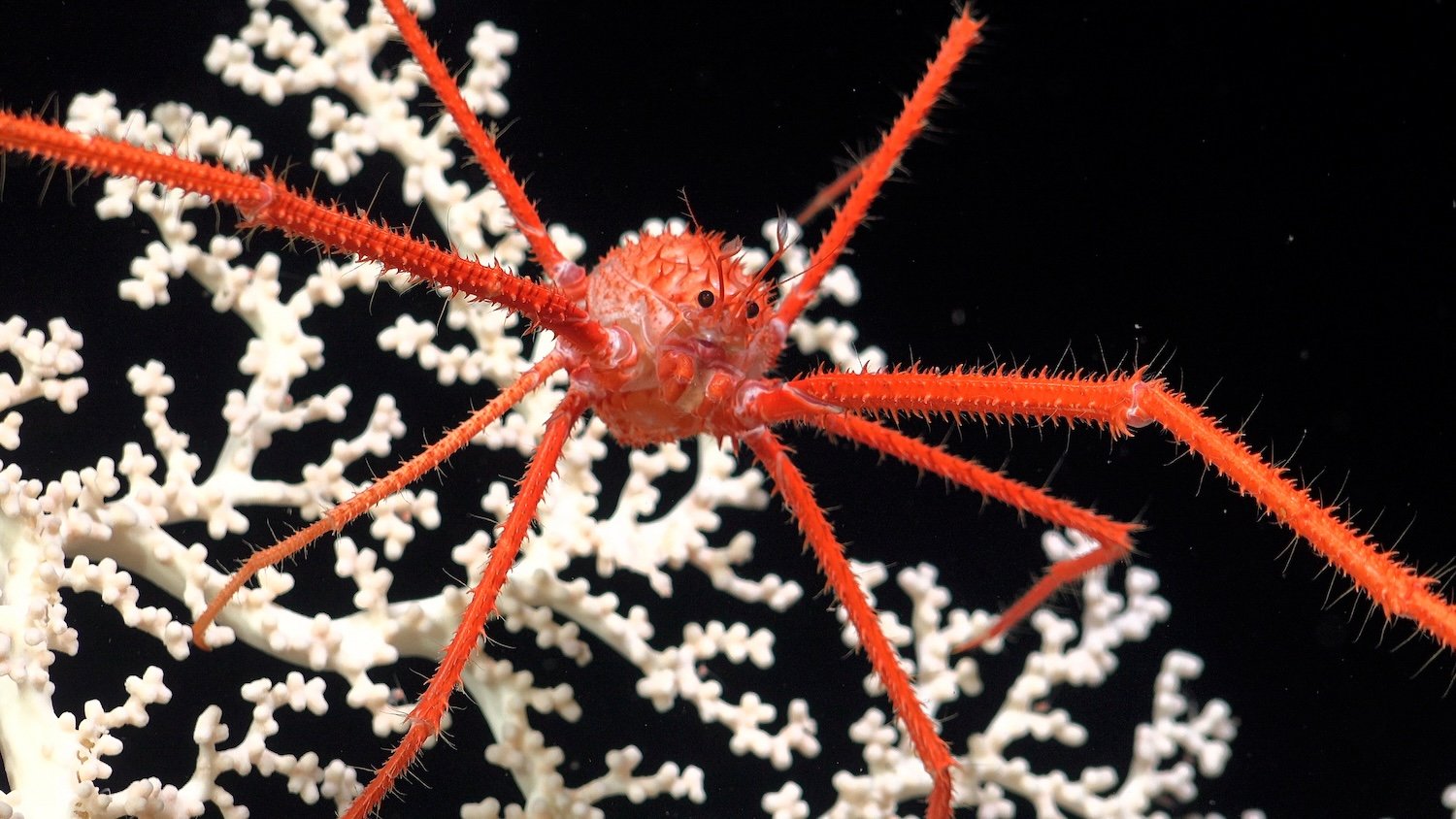
A cold-water coral recorded at a depth of 1,055 meters (3,461 feet) provides habitat for marine life on the seafloor. While warm-water coral reefs at shallow recreational depths are widely known, deep-sea cold-water corals are far more abundant yet remain understudied. These complex ecosystems support diverse marine species, including squat lobsters, as pictured here. Photo credit: ROV SuBastian / Schmidt Ocean Institute Usage: Available via creative commons Attribution-NonCommercial-ShareAlike CC BY-NC-SA https://creativecommons.org/licenses/by-nc-sa/4.0/
A cold-water coral recorded at a depth of 1,055 meters (3,461 feet) provides habitat for marine life on the seafloor. While warm-water coral reefs at shallow recreational depths are widely known, deep-sea cold-water corals are far more abundant yet remain understudied. These complex ecosystems support diverse marine species, including squat lobsters, as pictured here. Credit: ROV SuBastian / Schmidt Ocean Institute

Mushroom coral

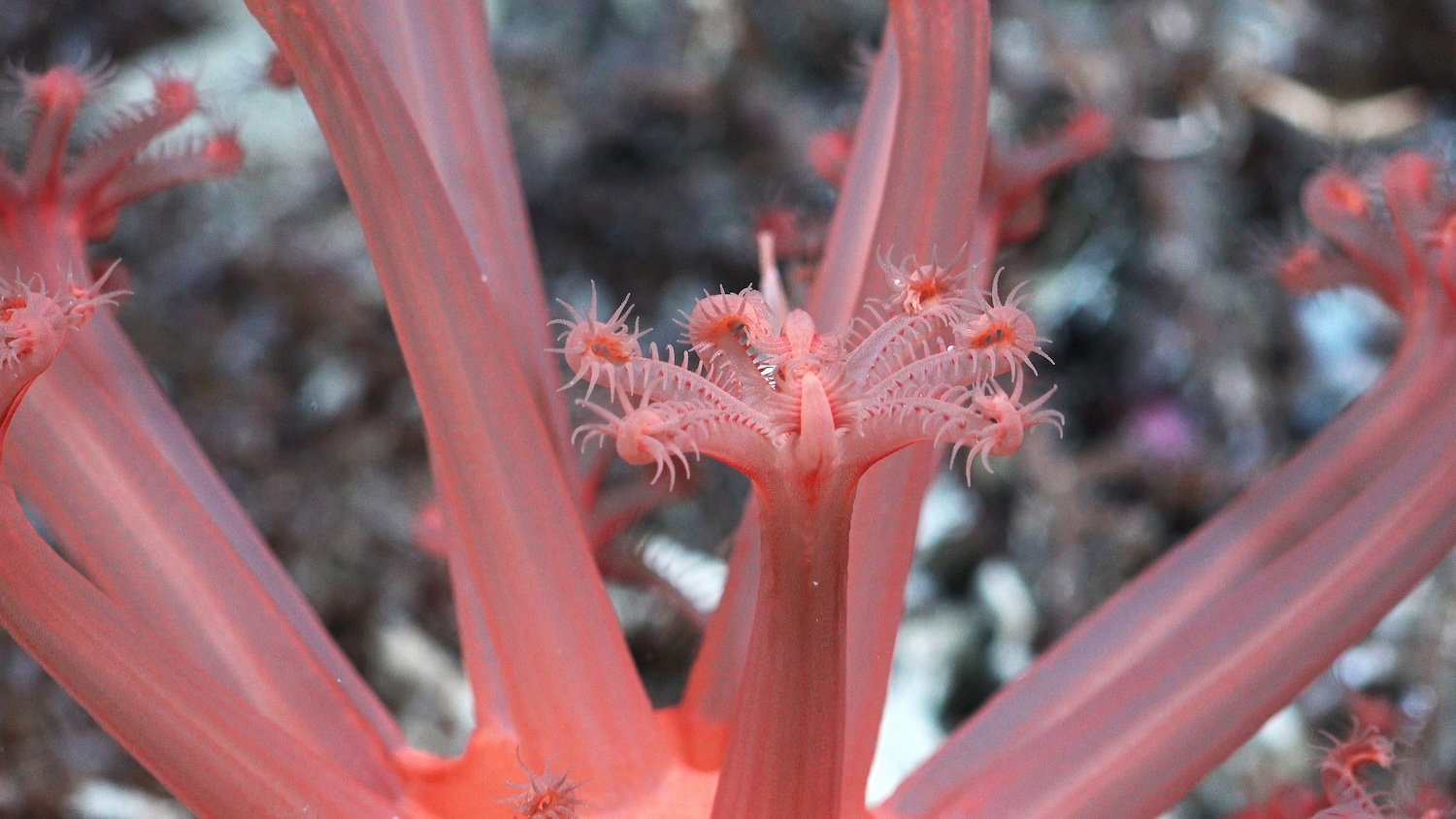
A mushroom coral rests on the seafloor at a depth of 1,277 meters off Trinidad and Tobago. Less than 0.001% of the island nation's deep-ocean territory has been explored due to technological constraints, leaving significant knowledge gaps about deep-water marine life in the region. Photo credit: ROV SuBastian / Schmidt Ocean Institute Usage: Available via creative commons Attribution-NonCommercial-ShareAlike CC BY-NC-SA https://creativecommons.org/licenses/by-nc-sa/4.0/
A mushroom coral rests on the seafloor at a depth of 1,277 meters off Trinidad and Tobago. Less than 0.001% of the island nation’s deep-ocean territory has been explored due to technological constraints, leaving significant knowledge gaps about deep-water marine life in the region. Credit: ROV SuBastian / Schmidt Ocean Institute

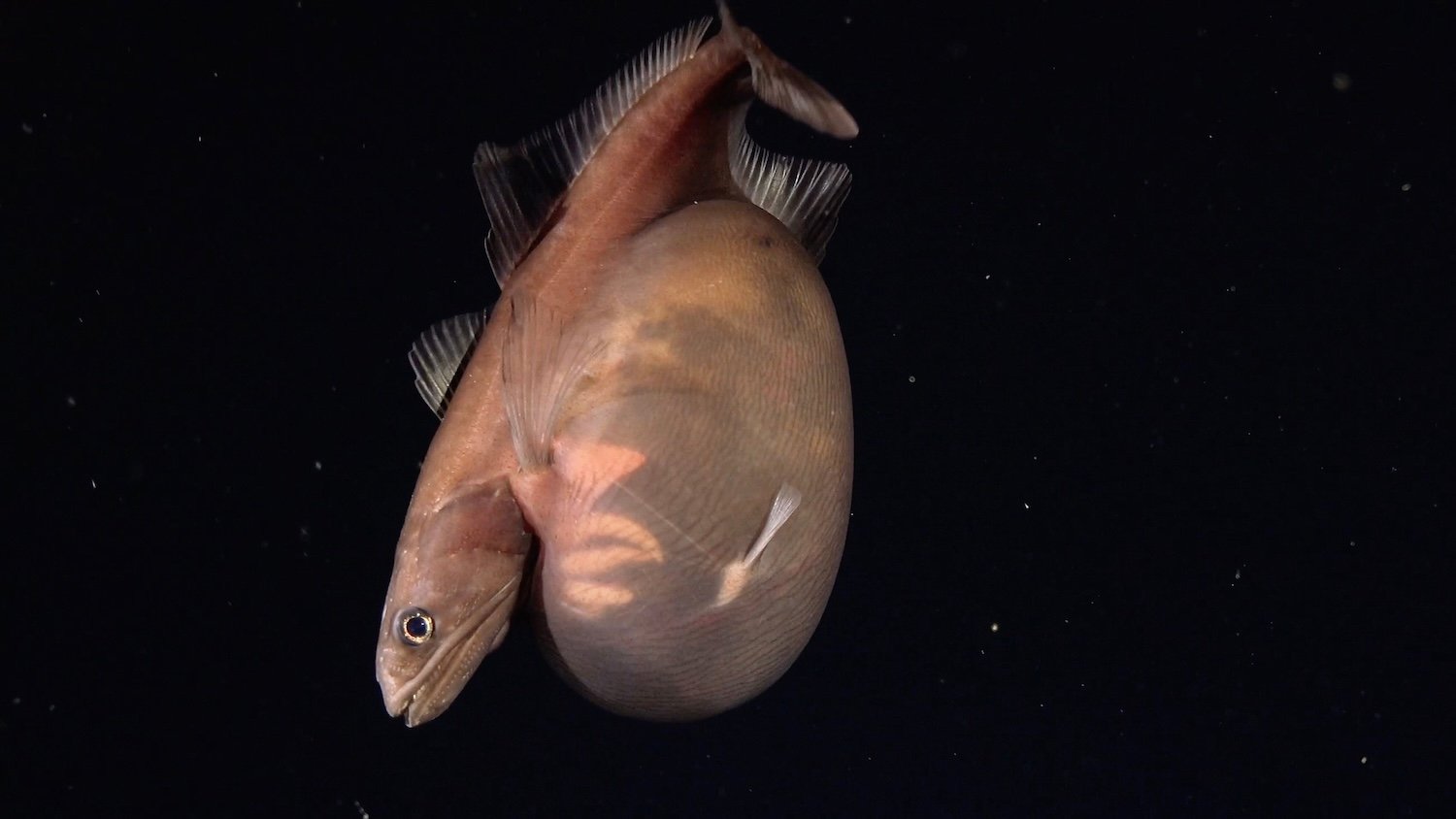
Black swallower fish

A black swallower fish (Chiasmodon niger) swims at a depth of 1,259 meters during a remotely operated vehicle dive off Trinidad and Tobago. Known for their expandable stomachs and dislocating jaws, these rare deep-sea fish can swallow prey larger than themselves. This specimen's translucent belly reveals a recent meal. A research team led by marine biologist Diva Amon conducted the first comprehensive deep-water survey of the nation's ocean territory, where more than 93% of the waters lie below recreational diving depths. Restricted usage: For editorial and news usage only Credit: ROV SuBastian / Schmidt Ocean Institute
A black swallower fish (Chiasmodon niger) swims at a depth of 1,259 meters during a remotely operated vehicle dive off Trinidad and Tobago. Known for their expandable stomachs and dislocating jaws, these rare deep-sea fish can swallow prey larger than themselves. This specimen’s translucent belly reveals a recent meal. A research team led by marine biologist Diva Amon conducted the first comprehensive deep-water survey of the nation’s ocean territory, where more than 93% of the waters lie below recreational diving depths. Credit: ROV SuBastian / Schmidt Ocean Institute

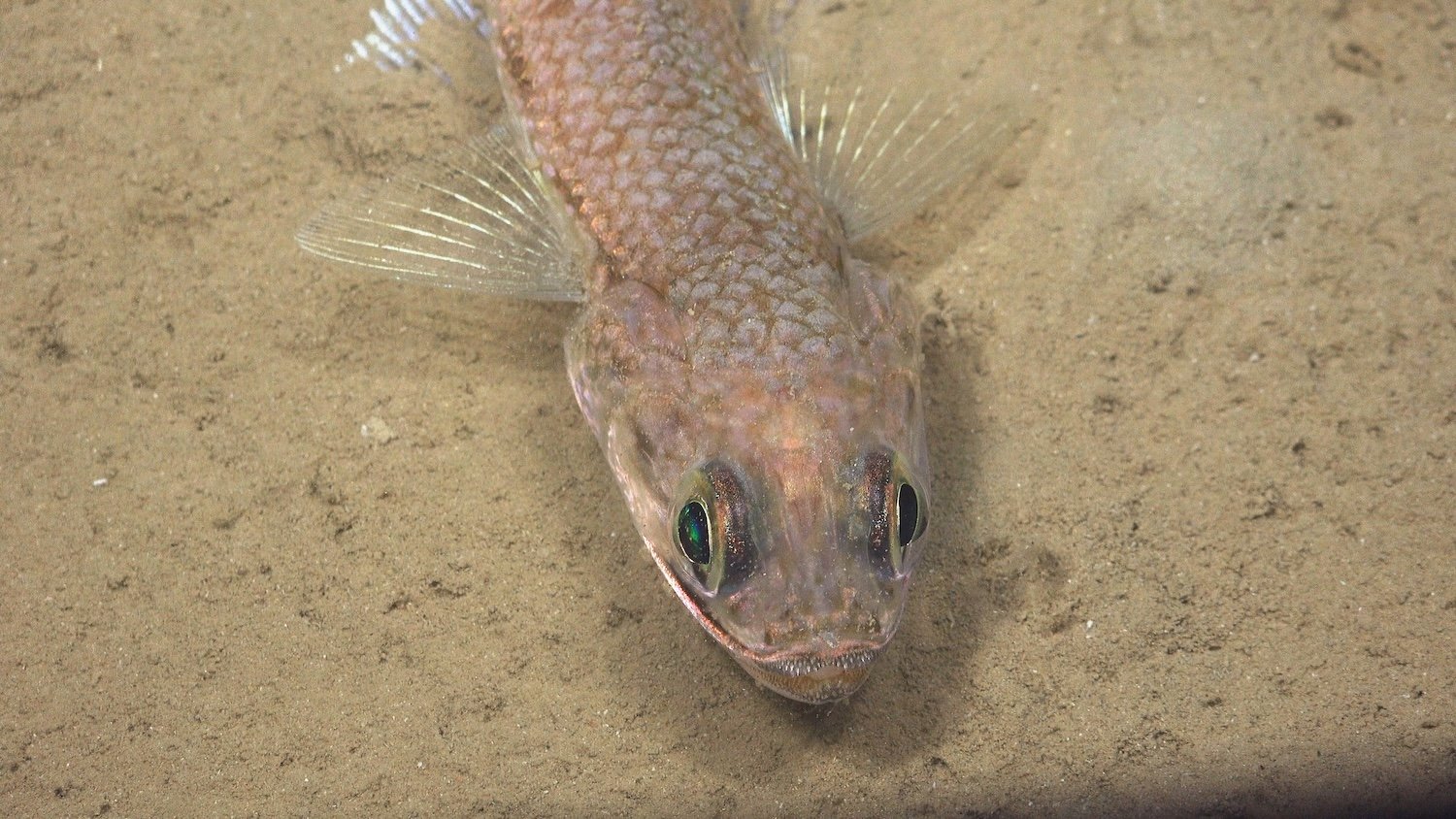
Lizard fish

Scientists observed this lizardfish at a depth of 148 meters while exploring a slope off the coast of Trinidad and Tobago in a UNESCO Biosphere Reserve. Photo credit: ROV SuBastian / Schmidt Ocean Institute Usage: Available via creative commons Attribution-NonCommercial-ShareAlike CC BY-NC-SA https://creativecommons.org/licenses/by-nc-sa/4.0/
Scientists observed this lizardfish at a depth of 148 meters while exploring a slope off the coast of Trinidad and Tobago in a UNESCO Biosphere Reserve. Credit: ROV SuBastian / Schmidt Ocean Institute

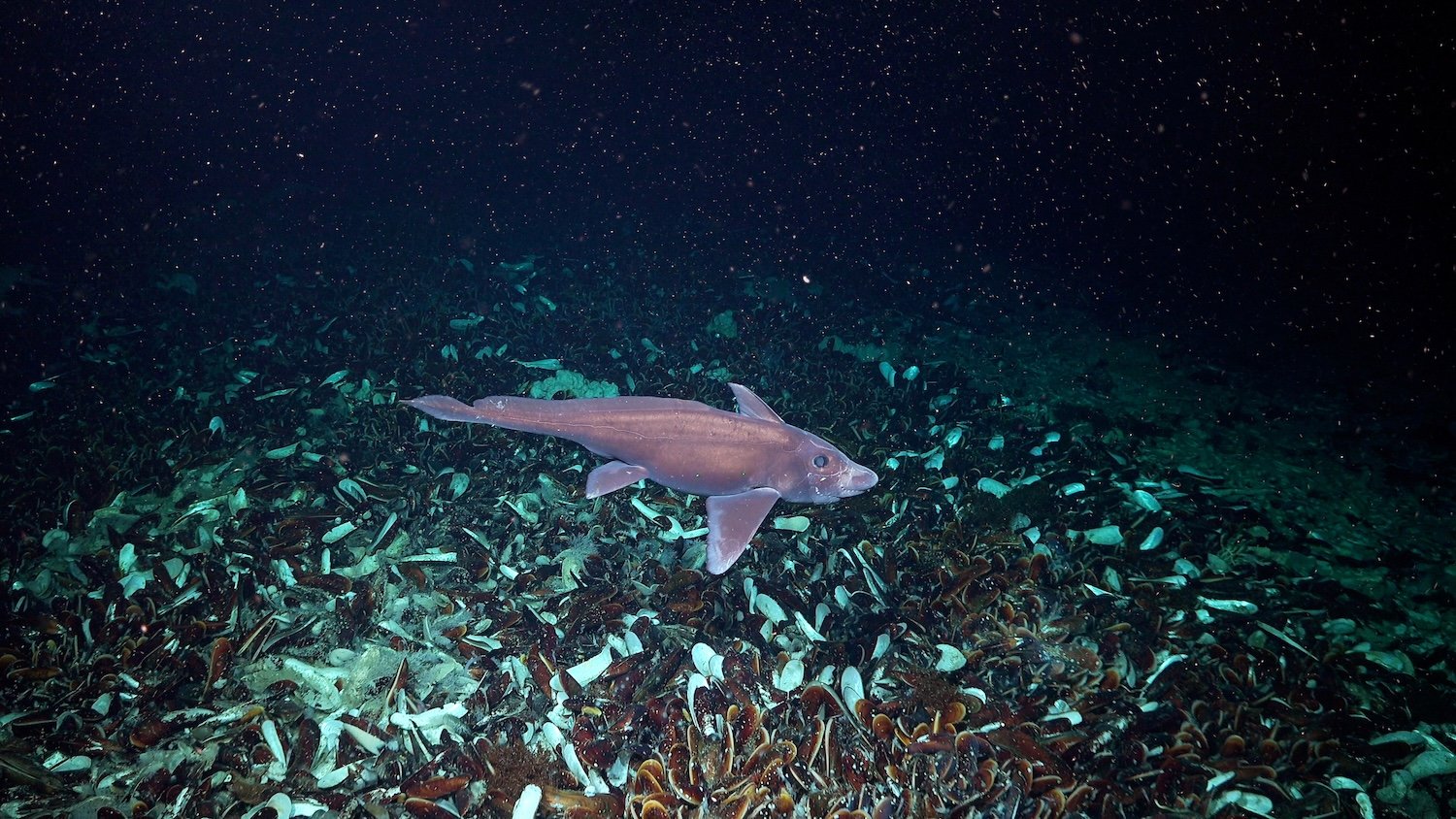
Ghost shark

A chimaera, or ghost shark, swims near a cold seep at a depth of 2,355 meters. Scientists discovered 25 cold seeps during the recent deep-sea expedition. Unlike sunlight-dependent ecosystems, marine life near these seafloor fissures relies on chemosynthetic energy generated by gas escaping from the Earth's surface. Photo credit: ROV SuBastian / Schmidt Ocean Institute Usage: Available via creative commons Attribution-NonCommercial-ShareAlike CC BY-NC-SA https://creativecommons.org/licenses/by-nc-sa/4.0/
A chimaera, or ghost shark, swims near a cold seep at a depth of 2,355 meters. Scientists discovered 25 cold seeps during the recent deep-sea expedition. Unlike sunlight-dependent ecosystems, marine life near these seafloor fissures relies on chemosynthetic energy generated by gas escaping from the Earth’s surface. Credit: ROV SuBastian / Schmidt Ocean Institute

The post 11 vibrant deep-sea creatures shine in new Caribbean expedition appeared first on Popular Science.
  •  

Happy Birth-ray! Mystic the cownose ray turns 27

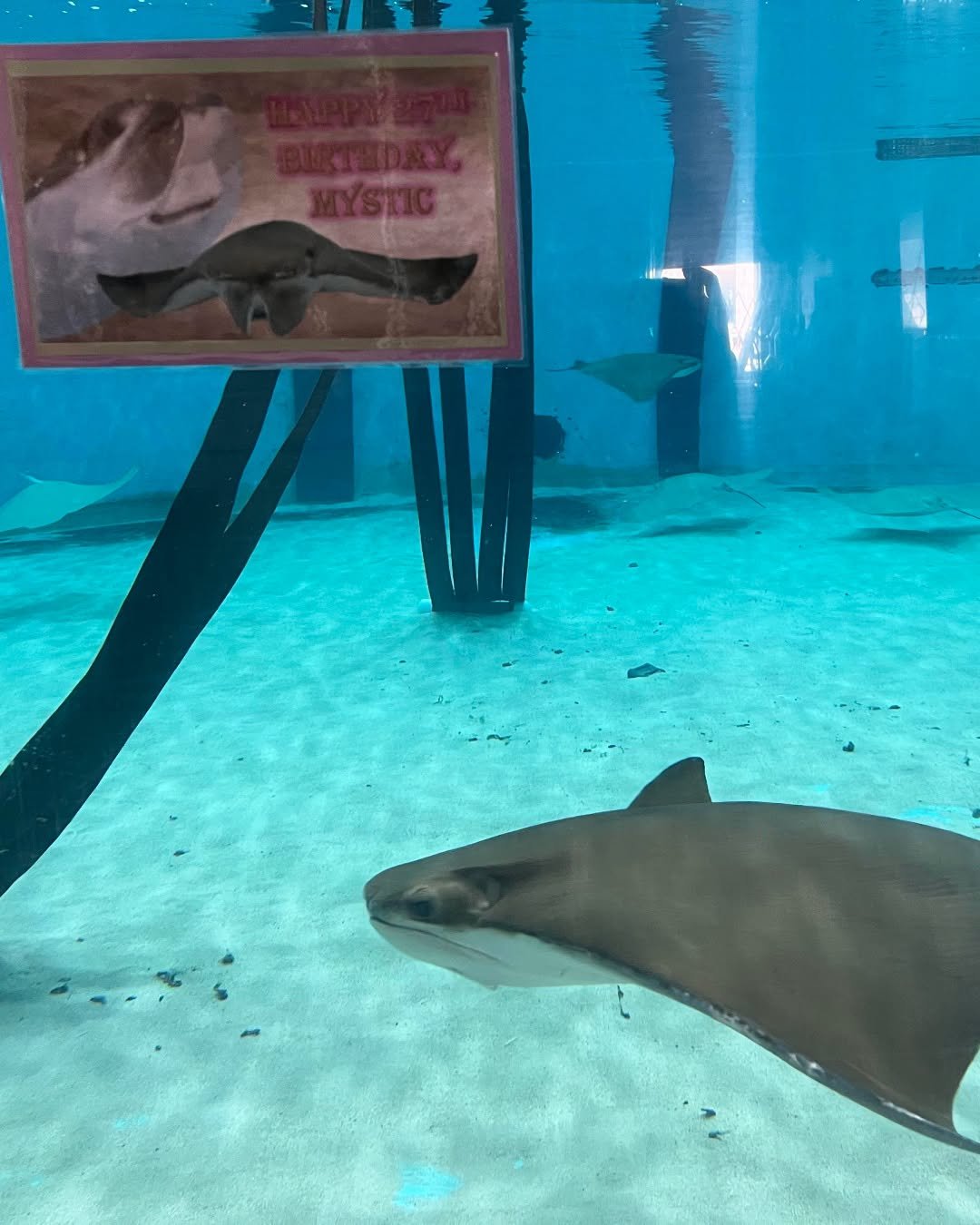
The New England Aquarium has cause to celebrate. Their cownose ray (Rhinoptera bonasus) Mystic officially turned 27-years-old. The birthday girl’s milestone is even more exceptional in light of the fact that cownose rays in the ocean typically live around 18 to 20 years.

“With excellent care, these animals can live even longer. We aren’t sure what the upper age limit for this species is, but Mystic could be considered one of the oldest individuals in public aquariums,” Rachel Moote, manager of husbandry at the New England Aquarium, tells Popular Science. “Our dedicated veterinary and aquarist staff work to keep Mystic in excellent health. She is monitored regularly by our teams and receives hands-on exams whenever a closer look is required.”

a gray stringray swims in a tank by a sign that reads "happy birthday mystic"
Mystic swimming by her birthday sign. Image: New England Aquarium.

Cownose rays are migratory, open-ocean animals related to other rays. Their unique name comes from their snout, which looks a bit like a cow’s nose, and their wingspan can be up to three feet long. Cownose rays have a venomous spine behind their dorsal fins, but the species is shy. In fact, a majority of ray-caused injuries in humans occur when humans unintentionally step on their spines. They are found along the east coast of the United States, and are classified as Vulnerable by the IUCN Red List. 

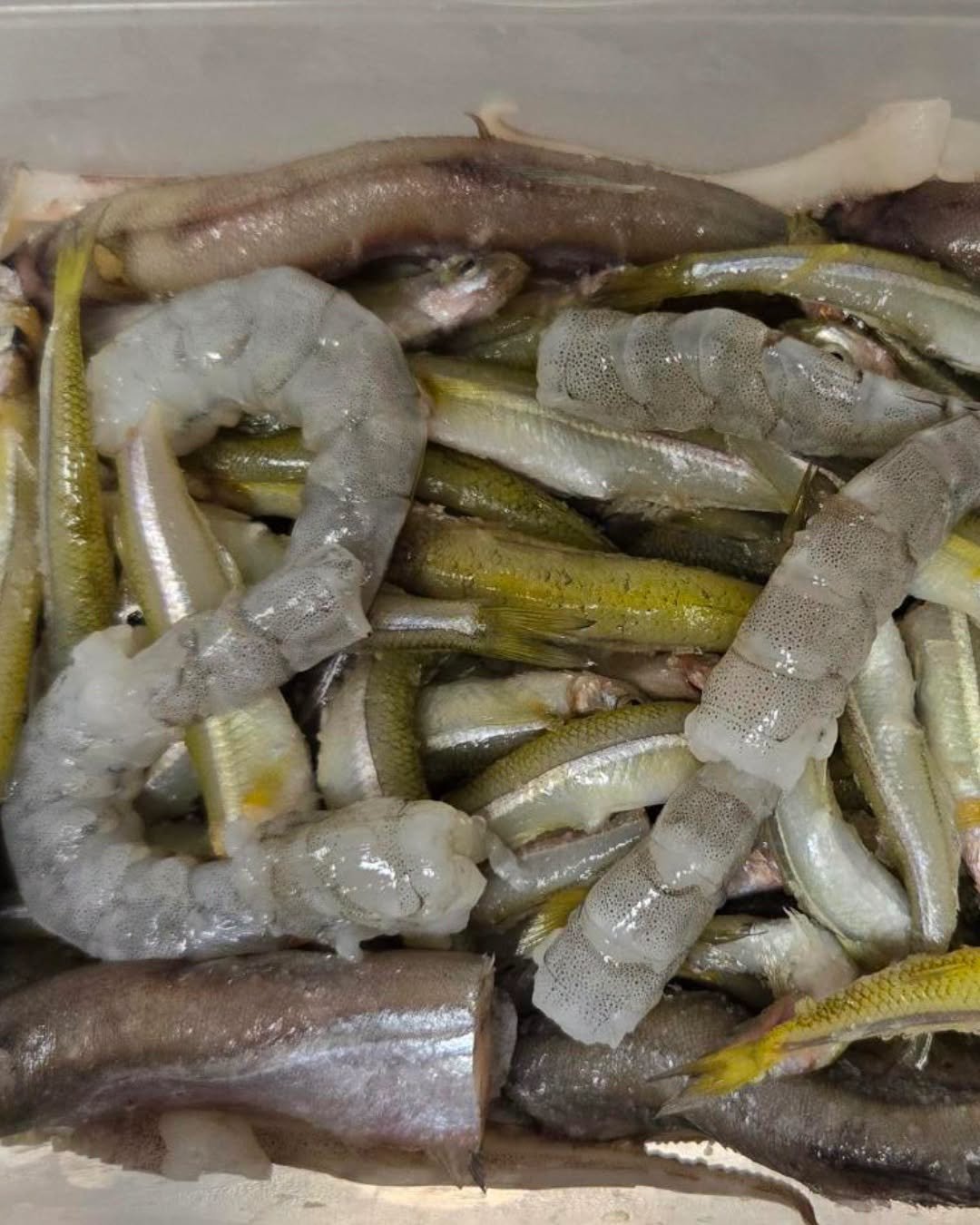
Mystic has lived at the aquarium for almost two decades. Following a long career in the Giant Ocean Tank, she’s currently taking a  “much-deserved retirement,” at the aquarium’s Quincy Animal Care Center. Her care team in Quincy includes aquarists, volunteers, and interns. She is hand-fed a diverse diet of fish, clams, and shellfish similar to what her diet in the wild would be, and also takes vitamin supplements. For her birthday, she received a fish and shrimp cake. 

shrimp and fish
Mystic’s “birthday cake” was fit for a ray. Image: New England Aquarium.

However, her care goes beyond making sure she eats appropriately. 

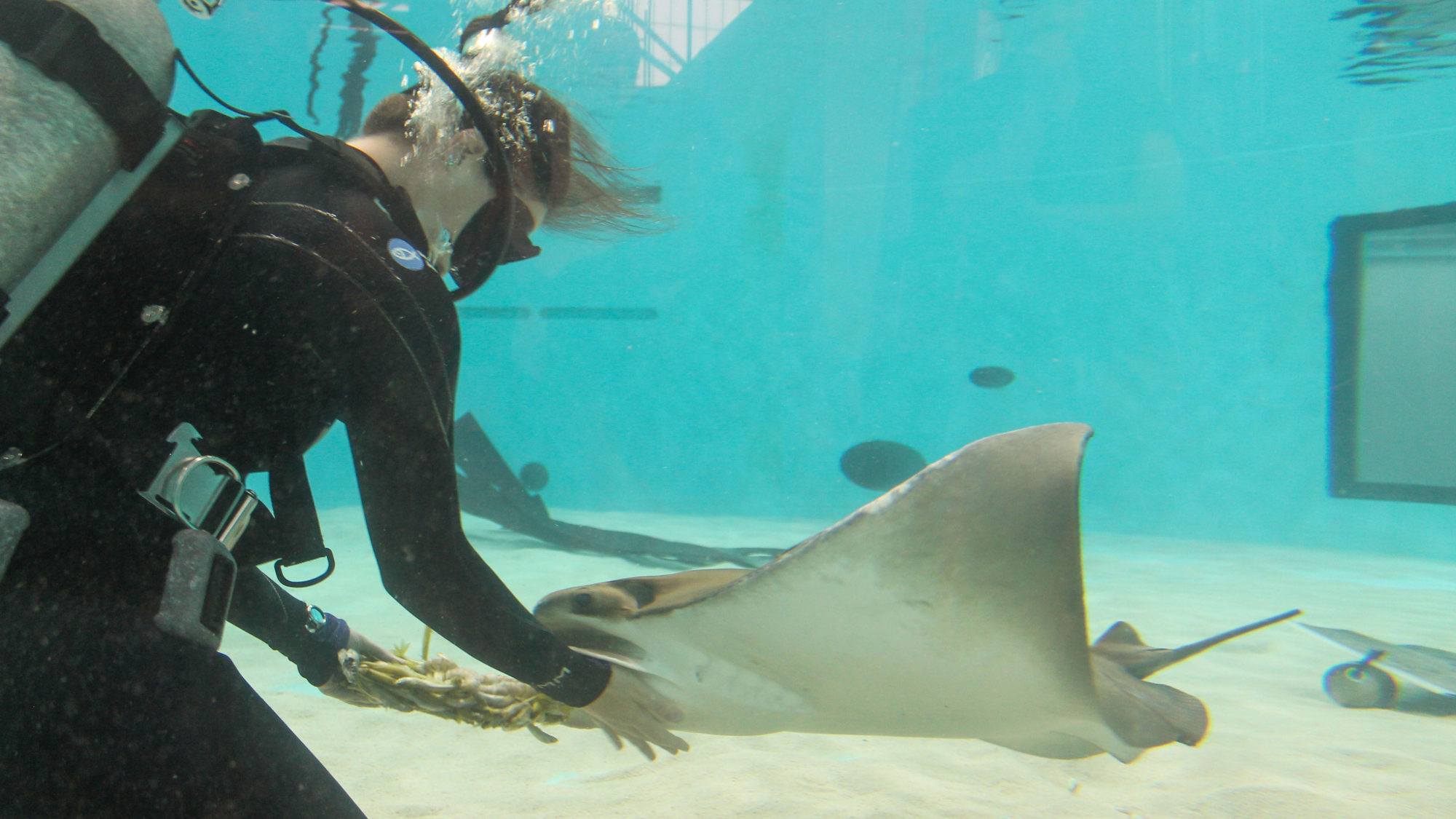
“Our team works hard to ensure Mystic can practice her natural foraging and problem solving abilities. One way we keep her mentally stimulated is by providing her with specially prepared rubber puzzle balls filled with her regular food items,” explains Moote. Every week, aquarists also dive into Mystic’s tank to clean the habitat. 

Happy birth-ray, Mystic!

The post Happy Birth-ray! Mystic the cownose ray turns 27 appeared first on Popular Science.
  •  

Pair of rare, colorful lobsters have a new home in Maine

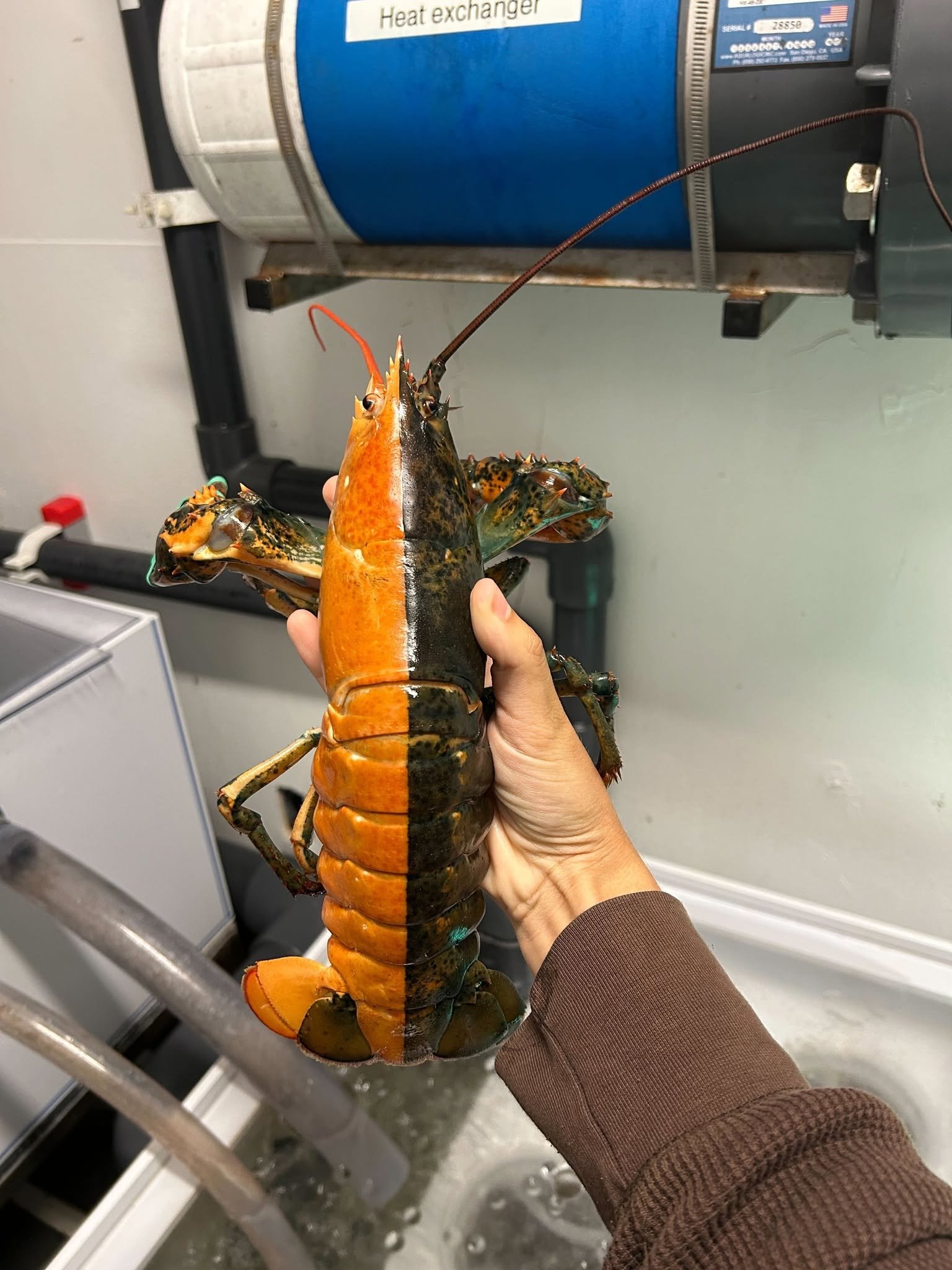
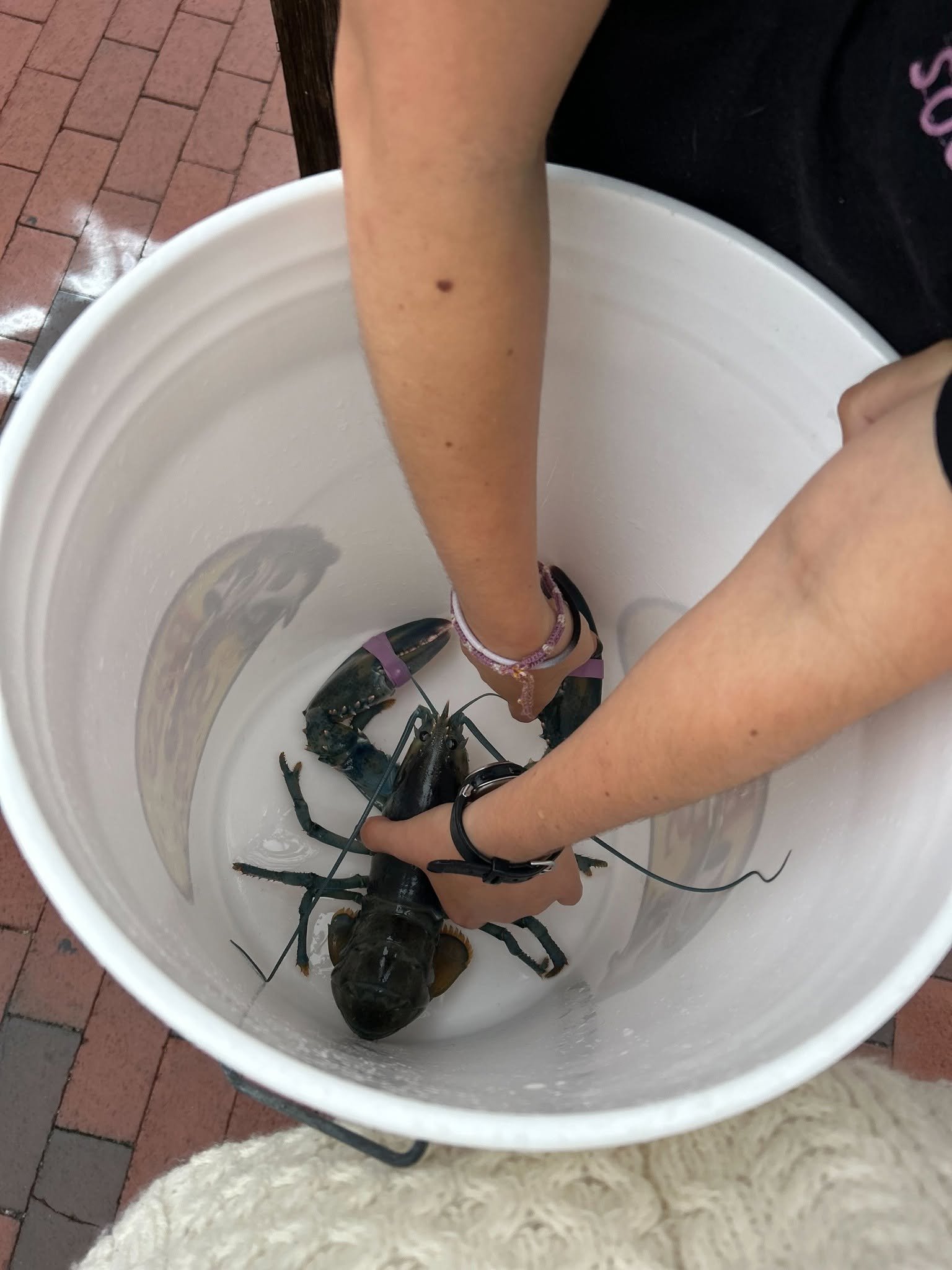
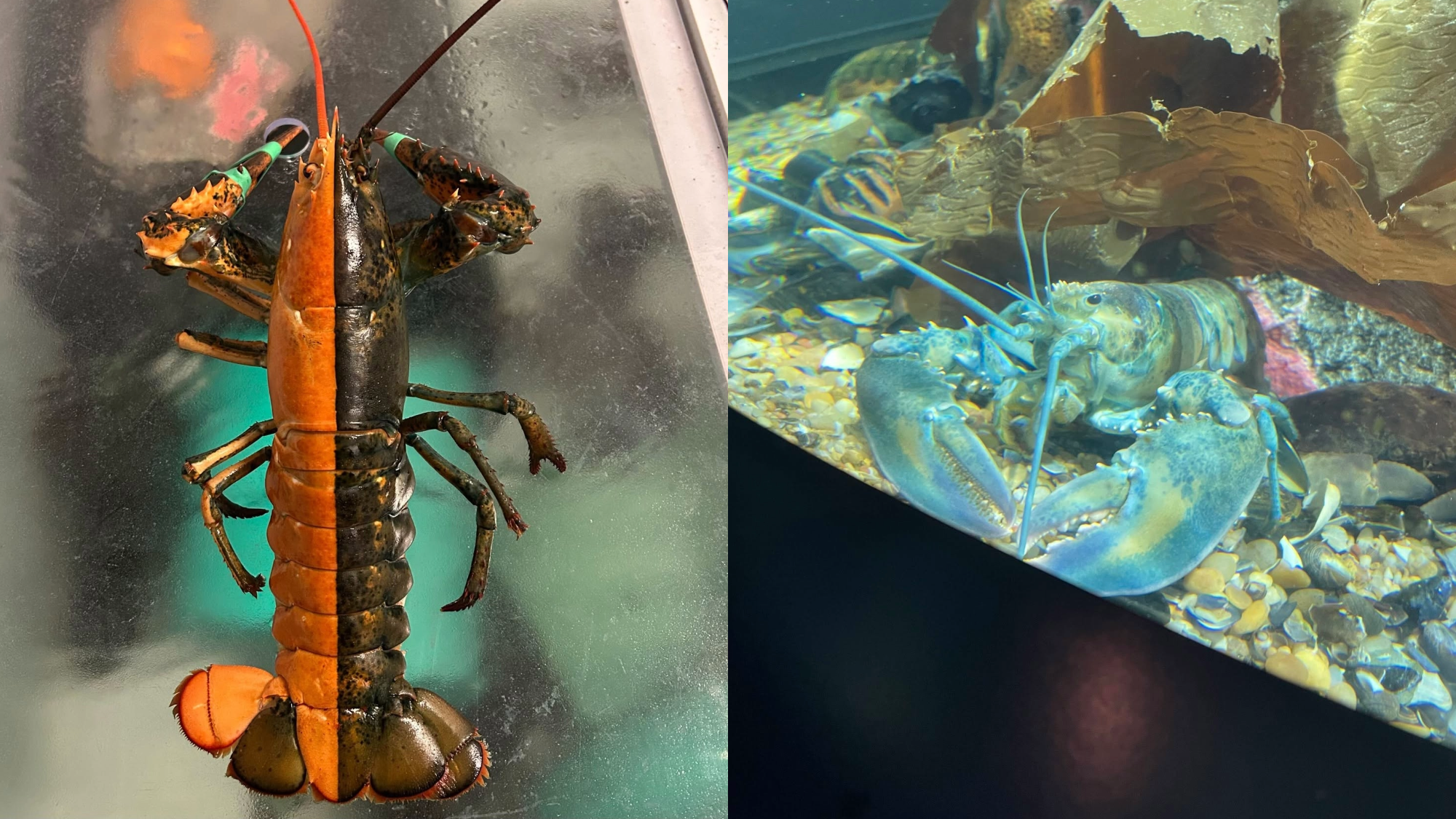
Two unusually colored lobsters have been spared from the dinner plate and are living at the Gulf of Maine Research Institute (GMRI) in Portland, and will be educating students in the process. Ethel is a split-colored lobster, with a very autumnal orange and black hue, while Gertrude is a breathtaking blue.

Shawn McEwen at Sea Salt Lobster Wholesale in nearby Saco, Maine contacted the team at the research center to see if they were interested in taking Ethel the two-toned lobster. 

“He told us ‘We move a lot of lobsters and in my career this is top 3,’” Sam Fuss, an educator with GMRI’s LabVenture program, tells Popular Science.

a lobster with orange on the left side of its body and black on the right
Ethel’s two-tone look is a genetic mutation. Image: Gulf of Maine Research Institute.

To find Gertrude the blue a new home, the staff at the nearby Portland Lobster Company reached out to GMRI. And it could not have been easier for the team to pick up the new colorful crustacean.

“We coordinated a time, walked over to their restaurant with a bucket, and then walked her right back to our tank,” says Fuss. 

a blue lobster in a white bucket
Gertrude the blue on the way to her new home. Image: Gulf of Maine Research Institute.

GMRI works with many of Maine’s lobster fishers and has a network who will reach out about interesting catches like Ethel and Gertrude.  

“Previously, in our tank, we have had blue lobsters, orange lobsters, calico lobsters, and other split-color lobsters,” says Fuss.

Why some lobsters are so colorful

In the wild, American or Maine lobsters (Homarus americanus) typically have a greenish-brown color. This helps them blend in better with the rocky seafloor. Lobsters have several layers of a pigment called astaxanthin. This pigment appears as layers of red, yellow, and blue. When all of those color layers are stacked up, they give lobsters a mottled blotch pattern of oranges, reds, blues, pinks, purples, yellows, and browns.

But some lobsters end up more colorful. Rare genetic mutations can alter the amount of pigment or how they interact with one another, producing striking shell colors such as blue, half-orange half-black, or even calico patterns. A lobster’s diet can also impact its shell color. For example, individuals that only eat small fish rather than shrimp and crabs get less astaxanthin, which can affect their coloration.

Split-colorization like we seen on Ethel occurs when two fertilized, unlaid eggs contact each other. One of the eggs then absorbs the other, creating a lobster that has two sets of genetic information. They also can store color pigments differently on either side of its shell.

The chance of finding a blue lobster like this Gertrude is about 1 in 2 million, while the odds are 1 in 50 million to find a split-colored lobster like Ethel. As for the other colors, the chance of finding a red lobster is 1 in 10 million, and 1 in 100 million for an albino or cotton candy lobster.

Crustaceans tackling climate change

Now that they are at GMRI, Gertrude, Ethel, and the institute’s other fish and crustaceans will be on display for fifth and sixth grade students from across the state who visit during the LabVenture field trip.  Since the program began in 2005, LabVenture has provided a hands-on lab to over 170,000 Maine middle school students free of charge. 

“The display tank that Gertrude and Ethel are living in is always a highlight of the field trip for our students,” Zoë Kennedy, LabVenture’s Lead Educator, tells Popular Science. “Many of them have spent most of their lives living right next to the Gulf of Maine but being able to see what the ecosystem looks like beneath the water brings a whole new perspective and sense of wonder.”

A landmark 2015 study found that the Gulf of Maine is warming faster than 99 percent of the ocean due to climate change. While the water has been cooling off a bit since 2021, a report published by NOAA in July 2026 found that the environment in the Gulf of Maine remains unstable. According to the GMRI LabVenture team, building more climate-ready communities, a strong waterfront workforce, and a blue economy in the face of this upheaval all starts with education.

“Our LabVenture program builds that foundation early by teaching students to interpret real, authentic climate data, while sparking the curiosity that drives them to keep asking questions about the world around them,” says Kennedy. 

The post Pair of rare, colorful lobsters have a new home in Maine appeared first on Popular Science.

  •  

California Wildlife Day to honor beloved bald eagle Jackie

Following an outpouring of support for Jackie, a famous bald eagle mother watched by millions, the California State Senate passed Senate Resolution 140. The bipartisan measure honors Jackie and proclaims that Friday September 4, 2026 is California Wildlife Day to honor her memory and celebrate the Golden State’s biodiversity.

The resolution was introduced by State Senator Tony Strickland (R-Huntington Beach) and is sponsored by KFI AM 640 in Los Angeles. It recognizes the eagle’s role in connecting people with wildlife conservation, while highlighting the state’s biodiversity. 

“Jackie captured the hearts of people in California and around the world, giving so many of us a front-row seat to the beauty, strength, and resilience of wildlife,” Senator Strickland said in a press release. “Her story reminds us that wildfire conservation brings people together. As we celebrate America’s 250th birthday this year and reflect on the values that unite us, it is especially meaningful to honor the Bald Eagle and Jackie’s incredible legacy here in California.”

Amy King, the host of “Wake Up Call” on KFI AM640 in Los Angeles, said it was clear how many humans connected with these eagles and their story. 

“Over the past decade, many of our listeners watched the webcam and witnessed the beautiful life Jackie, her mate Shadow, and their eaglets created together,” King added. “Jackie’s story brought people together across generations and communities. As storytellers, we believe stories can connect people, inspire compassion, and create a shared sense of community. It has been an honor to share Jackie’s story with our listeners and to be part of the community that followed her remarkable journey.”

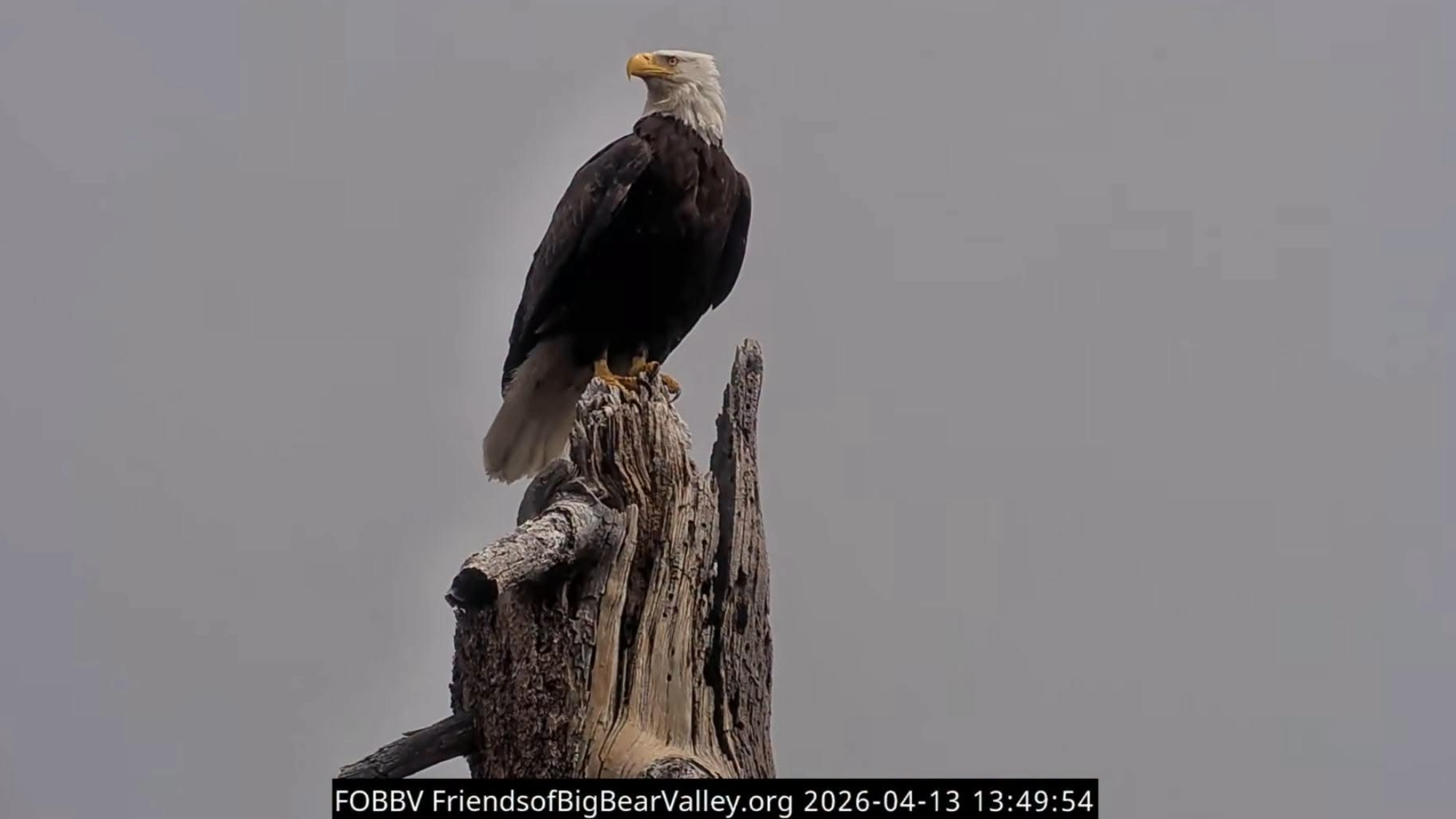
Friends of Big Bear Valley (FOBBV), the nonprofit organization that runs the nest cameras that brought Jackie and Shadow to the world, are also planning a memorial service for October 3. 

Jackie’s story

Jackie was born, raised, and lived in Big Bear Valley in southern California. Prior to the 2011-2012 nesting season, no bald eagle chicks were known to have ever hatched in Big Bear Valley. Then came Jackie, named after a forest ranger and born to parents Ricky and Lucy in 2012. 

During the 2016-2017 nesting season, Jackie took over a nest where Friends of Big Bear Valley (FOBBV) had a camera stationed. In 2018, she had two chicks named Stormy and Big Bear Baby (or BBB) with her first mate, Mr. B. 

Her long-time partner Shadow entered the picture in summer 2018. He showed up at the nest and would not leave. FOBBV called the new male Shadow because he appeared so determined to stay in the nest, and the team initially believed he was one of Jackie’s siblings, also named Shadow. The eagle’s plumage indicated he was one year older than the other Shadow and not Jackie’s sibling, but the name stuck. 

Shadow continued to hold his ground and Mr. B gave up and eventually left. Jackie then accepted Shadow as her new mate.

Wildlife cameras documented Jackie and Shadow’s life together, offering viewers a direct look into the brutality and beauty of nature. The pair successfully raised chicks in 2019 (Cookie and Simba) and 2022 (Spirit). The pair’s eggs failed to hatch in 2023 and 2024. In 2025, Jackie laid three eggs that all hatched in early March. However, a strong snowstorm dumped up to two feet of snow and battered the nest with strong wind and only two of the chicks (Sunny and Gizmo) survived.  

In January, Jackie laid two eggs in the nest, but ravens destroyed them. She later laid two more eggs that hatched in April and named Luna and Sandy. The name Sandy is in honor of FOBBV’s former executive director Sandy Steers who died from cancer in February. 

Jackie’s injury

On July 17, Jackie was found injured on the ground near Dana Point Park, California. Cell phone video from a witness confirmed that she had an altercation with two other subadult eagles. She successfully fended off the other eagles by turning over and using her talons, but could not fly far away. 

She was transferred to the Ojai Raptor Center for care, where she was diagnosed with severe anemia. Her anemia worsened during the first week of August, the Ojai Raptor Center said that she was in unstable condition on August 9. Her packed cell volume (PCV) fell below percent, before rising to nine percent. She died early in the morning on August 10 and a full necropsy report is still forthcoming. 

Jackie’s resilience inspired millions of people around the world. 

The post California Wildlife Day to honor beloved bald eagle Jackie appeared first on Popular Science.
  •  
❌