❌

Reading view

Mobile Hypersonic Spaceports, a Manhattan-sized β€œIce Island,” and a Lost City Surfaces in Egypt
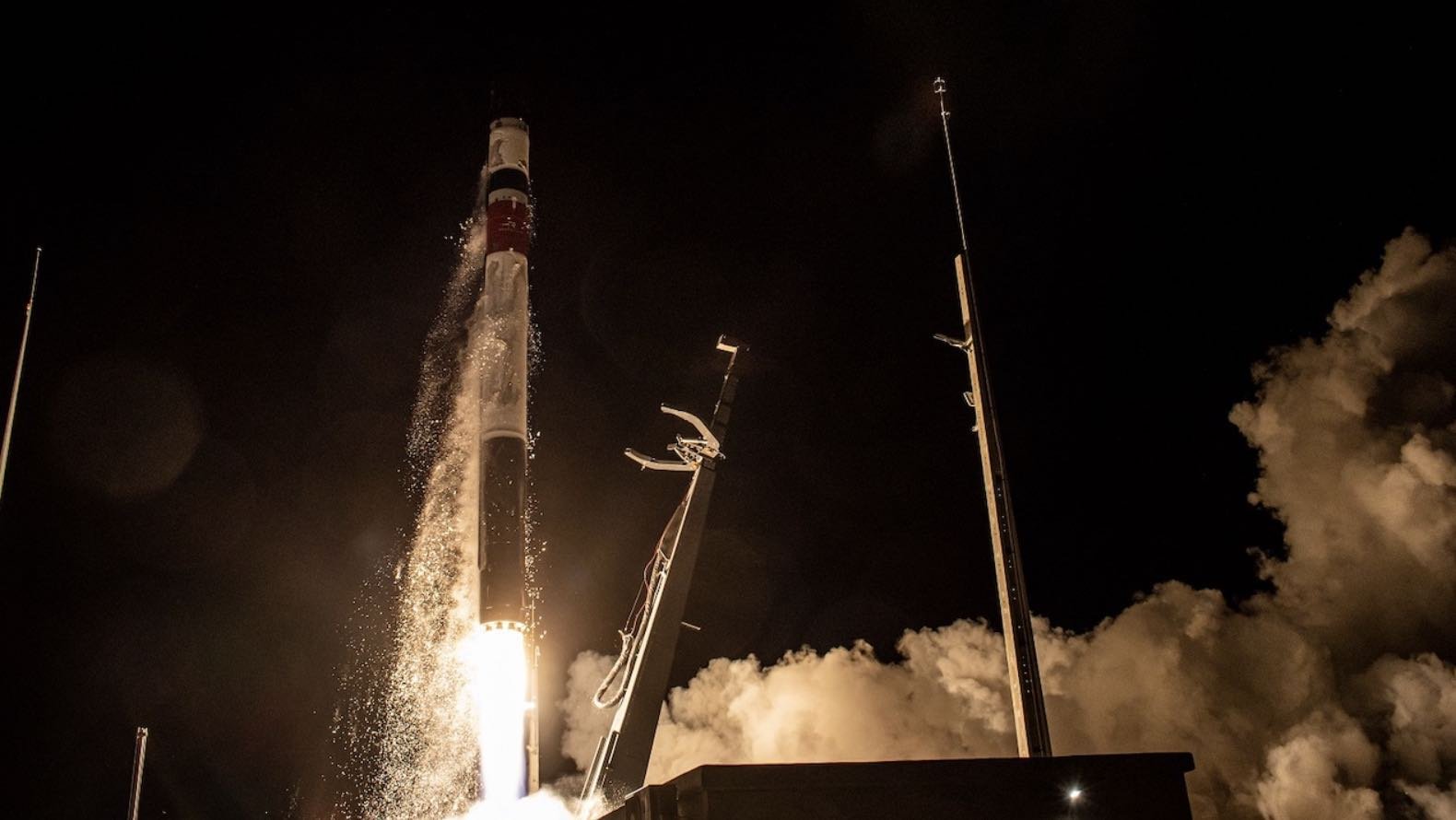
Rocket Lab
(Credit: Rocket Lab/CC 4.0)

This week in stories we’re tracking atΒ The Debrief… Commercial space company Rocket Lab just unveiled GHOST, a game-changing new launch capability that could enable payloads to be carried to orbit from virtually anywhere on Earth. Meanwhile, in a stunning event that unfolded in Greenland, European satellites managed to capture the dramatic moment an β€œice island” the size of Manhattan was formed. Elsewhere, archaeologists have uncovered a mysterious inscription that could link recent excavations to a β€œlost city” known only from ancient Egyptian texts. Finally, in aΒ DebriefΒ exclusive, an Afghan woman provides personal on-the-ground commentary about life in Afghanistan in a poignant reflection written on the day of her country’s independence.

Meanwhile, here’s a look at other stories we’re covering right now atΒ The Debrief:

  •  

Rocket Lab Unveils β€˜GHOST,’ a Game-Changing New Portable Launch System That Can Carry Payloads to Orbit from Anywhere on Earth

Private space launch services company Rocket Lab has unveiled its GHOST (Global Hypersonic & Orbital Spaceport Technology) self-contained mobile launch system, capable of placing payloads in orbit or enabling suborbital launches from virtually anywhere on Earth.

Designed to accommodate the company’s Electron and HASTE rockets, the company said GHOST’s β€œlaunch-anywhere, launch-anytime” capability can support multi-launch flight campaigns for commercial applications. Rocket Lab said the system’s versatility also offers benefits for β€œcritical” national security missions.

GHOST Private Space Launch System Fits Into Standard Shipping Containers

In science fiction, rockets can launch spacecraft from just about anywhere. However, until recently, most launches have occurred at dedicated, government-owned and operated facilities. Even the relatively recent proliferation of private launch services companies promising cheaper, faster alternatives hasn’t reduced the need for a launch facility specially designed to send rockets into orbit.

Now, Rocket Lab says the company has created an all-in-one launch solution called GHOST that can accommodate rocket launches from seemingly anywhere.

For example, when announcing the formal unveiling of GHOST, the company said the entire system can be packaged in standard shipping containers. This includes all the hardware to launch complete rockets and the ground support infrastructure needed to complete single-launch missions or multi-launch campaigns.

Perhaps most critically, the system can be shipped to any destination for customized launch services worldwide. If the already scheduled real-world inaugural launches prove the claims, that launch-location versatility could give Rocket Lab a technological edge over its private space launch competitors.

Two New Alaska Launch Pads Will Provide the System its First Real-World Test

When unveiling GHOST, Rocket Lab also announced its first launch site. Dubbed Rocket Lab Complex 4, GHOST’s new home will be at the Pacific Spaceport Complex at Kodiak, Alaska. The company said this inaugural site will include two distinct launch pads for β€œhigh-frequency launch campaigns.”

The new site will join the already operational Launch Complex 1 in New Zealand and Launch Complexes 2 and 3 in Virginia. The company said that taken together, Rocket Lab now controls six total launch pads β€œacross two hemispheres.” Along with its reported mobility, the company emphasized GHOST’s ability to accommodate both Electron and HASTE.

β€œGHOST delivers a dual-launch capability across new locations, allowing Rocket Lab to expand the mission profiles of both vehicles and meet increasing international demand for orbital and suborbital sovereign launch capability,” the company explained.

Rocket Lab also said that the mobile launch platform is β€œpurpose-built to support responsive launch needs and time-critical national security missions, enabling rapid site activation and simultaneous launch possibilities.”

The company expects to conduct its first GHOST-supported launch from Launch Complex 4 in 2027, including launches announced in July for the U.S. Space Force.

β€œThe size and scale of this contract reflects the Space Force’s confidence in our ability to meet their urgent national security demands with speed, responsiveness, and scale, and we’re proud to provide the high-frequency launch capacity required to keep the U.S. ahead of global threats,” company CEO Sir Peter Beck said at the time of the announcement.

β€œLeading the Field in Small Launch for Missile Defense and National Security”

After noting that Rocket Lab has been β€œleading the field in small launch for missile defense and national security for years,” Sir Beck heralded GHOST’s seemingly sci-fi-sounding ability to launch a rocket into space from virtually anywhere in the world as another example of the launch service reliability and repeatability.

β€œCreating GHOST is about packaging that up into a deployable system that can serve the world’s most important programs from wherever those missions need,” Sir Beck said. β€œWhether it’s for missile defense and deterrence, or opening up more trajectories, orbital missions, and sovereign launch capabilities in allied nations, GHOST is the answer to launching anywhere, anytime, and without compromise.”

Christopher Plain is a Science Fiction and Fantasy novelist and has spent the last six years as Associate News Editor and Head Science Writer at The Debrief. Follow and connect with him on X, learn about his books at plainfiction.com, or email him at christopher@thedebrief.org.

  •  

Kepler books Neutron for 2028 optical relay launch

Kepler Communications plans to deploy next-generation optical relay satellites on Rocket Lab’s upcoming Neutron rocket in one of several launches the Canadian operator has slated for 2028.

The post Kepler books Neutron for 2028 optical relay launch appeared first on SpaceNews.

  •  

Space Force-backed mission does its best impression of Top Gun in orbit

An ongoing military exercise happening hundreds of miles above Earth hasβ€”for the first time in an unclassified settingβ€”demonstrated how future satellites might evade and pursue one another in a future conflict.

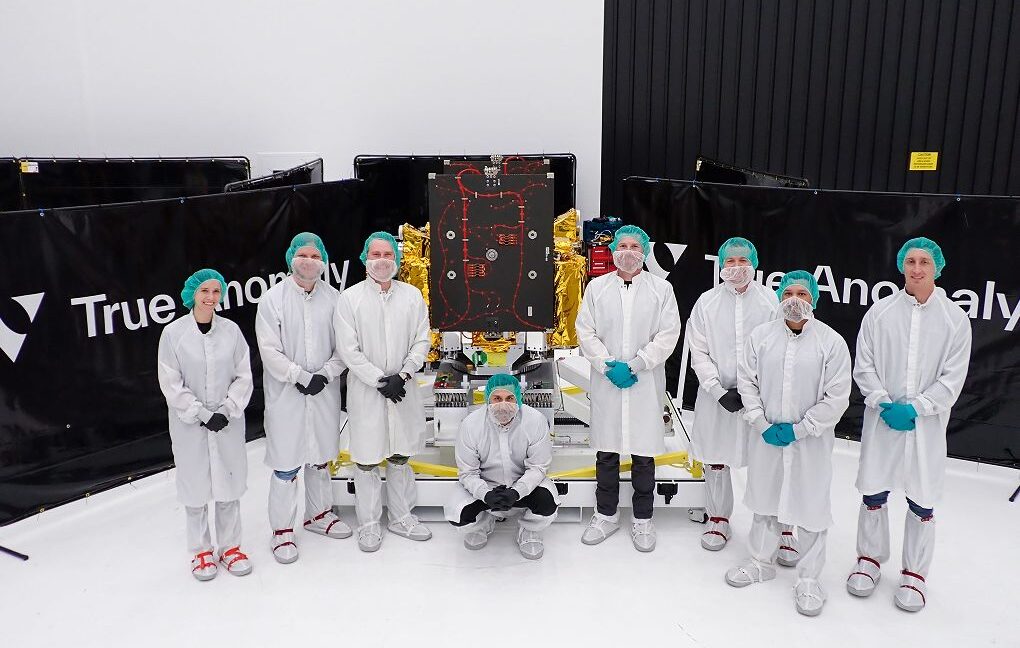
That was the announcement Wednesday from True Anomaly, one of the companies involved in the exercise. True Anomaly's Jackal satellite, also known as Panther, played the cat-and-mouse game with another spacecraft named Puma, based on Rocket Lab's Pioneer satellite platform.

"This is what we've really been building towards for the past four years," said Even Rogers, True Anomaly's co-founder and CEO.

Read full article

Comments

Β© Rocket Lab

  •  

The Space Force is now seeking to buy up to $30 billion in rocket launches

It seems as though $5.6 billion wasn't enough. That was the news from the US Space Force on Friday, when military officials announced they were tripling the maximum value of one of the service's National Security Space Launch contracts to $17 billion.

The expansion of the Space Force's National Security Space Launch (NSSL) Phase 3 contract comes as the Pentagon signals rising demand for military satellite launches. The NSSL program is set up to allow Space Systems Command, which oversees the Space Force's launch program, to select from a pool of launch providers for individual missions to deliver the military's satellites to orbit.

The NSSL program has two parts. Lane 1 covers the Space Force's more risk-tolerant missions, such as medium-lift launches with experimental payloads or rideshare missions carrying satellites for the Pentagon's surveillance or data relay constellations. Lane 2 includes higher-priority strategic missions, like the government's largest and most expensive spy satellites, or radiation-hardened communications satellites designed to survive a nuclear war.

Read full article

Comments

Β© SpaceX

  •  

Rocket Report: Indian startup nears first launch; SpaceX's millenary milestone

Welcome to Edition 9.01 of the Rocket Report! Back in January, I wrote about the 20 launches and landings we were most excited about in 2026. The list included things that were, at the time, officially scheduled to occur this year. I also gave my own view of the probability of each of these events actually happening before December 31. Halfway through the year, we can only count one of the events as completed, and that was NASA's Artemis II mission in April. Many are now scheduled for next year, proving again that delays are a constant in theΒ space industry. A couple of themβ€”such as the launch of NASA's Roman Space Telescopeβ€”do appear to be on track to happen soon.

As always, we welcome reader submissions. If you don't want to miss an issue, please subscribe using the box below (the form will not appear on AMP-enabled versions of the site). Each report will include information on small-, medium-, and heavy-lift rockets, as well as a quick look ahead at the next three launches on the calendar.

Swift Boost Mission reaches orbit. A pioneering commercial mission to reboost the orbit of NASA's Swift astronomy satellite launched early Friday after attempts earlier in the week were thwarted by bad weather and a technical issue. The Link servicing satellite developed by Katalyst Space Technologies soared to orbit on the tip of a Northrop Grumman Pegasus XL rocket that dropped from the belly of a modified L-1011 jetliner over the remote Pacific Ocean. Mission managers called off two launch attempts Tuesday and Wednesday due to poor weather around the L-1011's staging base on Kwajalein Atoll in the Marshall Islands. On Thursday, "a launch vehicle issue temporarily prevented teams from deploying the rocket" after takeoff of the L-1011.

Read full article

Comments

Β© SpaceX

  •  

Rocket Lab launches satellite for U.S. Space Force Victus Haze responsive space exercise

The mission pairs Rocket Lab spacecraft with a True Anomaly vehicle in orbit to demonstrate rapid threat characterization and rendezvous operations

The post Rocket Lab launches satellite for U.S. Space Force Victus Haze responsive space exercise appeared first on SpaceNews.

  •  

A US military exercise in space got underway with barely anyone noticing

Rocket Lab quietly launched a small satellite from New Zealand on Friday in a high-flying military exercise to test the US Space Force's ability to rapidly respond to a crisis in low-Earth orbit.

The launch was scarcely announced in advance. The only public indication of an impending launch was the release of a warning for pilots and sailors to steer clear of the rocket's flight path. Rocket Lab did not provide a livestream of the launch, as it does for most of its missions. As of Monday morning, officials from Rocket Lab and the Space Force had not acknowledged the launch in any official public statements.

But the US military's catalog of space objects was updated over the weekend to reflect the launch. A new satellite, designated Victus Haze Puma, showed up in the catalog with a launch date of Friday from Rocket Lab's privately run spaceport at Māhia Peninsula in New Zealand. The Space Force cataloged the spacecraft in a polar orbit ranging between 215 miles and 286 miles (347-by-461 km), with an inclination of about 97.5 degrees from the equator.

Read full article

Comments

Β© True Anomaly

  •  

K2 Space, Rocket Lab win key supplier roles in Space Force satcom program

K2 Space and Rocket Lab will supply spacecraft buses to SES and Viasat for the military's next-generation protected satcom program

The post K2 Space, Rocket Lab win key supplier roles in Space Force satcom program appeared first on SpaceNews.

  •  
❌