
❌

Reading view

JRX EnerTech Rises as Battery Foundry Leader Amid Surge in Inquiries
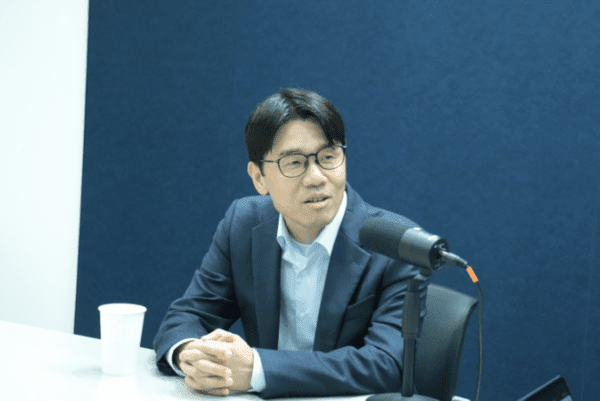
Oh Duck-geun, CEO of JRX EnerTech Solutions. (Photo: THE ELEC)

JRX EnerTech Solutions, a specialized battery foundry company, is accelerating its growth by targeting high-mix, low-volume battery markets such as energy storage systems (ESS), robotics and drones. Revenue surged over fourfold from 4.9 billion won in 2024 — the first year of plant operation — to 20.1 billion won last year. The company targets 32 billion won this year and aims for over 100 billion won next year.

JRX EnerTech Solutions focused on market segments with granular product specifications and diverse demands — areas difficult for major battery manufacturers to address via large-scale dedicated production lines. When battery fabless companies focus on product development, JRX EnerTech Solutions handles mass production, including electrode manufacturing and cell assembly.

The number of corporate clients seeking foundry services is growing rapidly. Currently, the company maintains clients including three automotive OEMs, South Korea's top three battery makers and approximately 40 battery fabless firms. Notably, five clients that collaborated from the development stage have transitioned into mass production.

Increased mass production volume directly led to capacity expansion. JRX EnerTech Solutions is currently operating its 500 megawatt-hour (MWh) electrode production line at its Eumseong plant in North Chungcheong Province at full capacity. By installing a 1.5 gigawatt-hour (GWh) second unit by the end of this year, total production capacity will expand to 2GWh by February next year. Cell assembly capacity will also expand from the current 100,000 cells to 300,000-400,000 cells.

Oh Duck-geun, CEO of JRX EnerTech Solutions, said, "This year served as the year we validated the foundry business model through client expansion, mass production conversion and technological diversification. As five development clients transitioned to mass production, we finalized the decision to expand production capacity."

The foundry's reach is also expanding into after-sales (AS) service batteries for electric vehicles (EVs). Even after an EV model is discontinued, replacement cells must be supplied during the warranty period. Because batteries cannot be stored long-term as inventory, they must be manufactured on-demand. Instead of restarting legacy production lines, major battery manufacturers can outsource this work to a foundry specialized in high-mix, low-volume production.

JRX EnerTech Solutions is currently negotiating AS battery production with South Korea's top three battery makers. One partner is reviewing approximately 100 projects for AS production conversion. By supporting production during the development stage of next-generation batteries and taking over AS volume after product discontinuation, the company is broadening its touchpoints with major battery makers.

JRX EnerTech Solutions plans to expand its domestic production capacity to at least 6GWh. As discussions progress regarding approximately 4GWh of volume with a U.S. ESS client, plans for additional investments near the Eumseong facility are accelerating. The company is also preparing for an initial public offering (IPO) to secure funds required for capacity expansion.

Oh added, "Based on our planned production capacity, we project achievable revenues of around 200 billion won, and we expect over 100 billion won to be feasible next year. We are preparing to submit our listing application in March 2027, targeting an official IPO in September of the same year."

Q&A

Q: Hello, this is Lee Soo-hwan from THE ELEC. Today, we are joined by CEO Oh Duck-geun of JRX EnerTech Solutions to discuss the latest updates on the battery foundry market and industry conditions. Hello, CEO Oh.

A: Hello, I am Oh Duck-geun, CEO of JRX EnerTech Solutions.

Q: We've been having regular check-ins throughout the year. Over the past few years, while the overall battery market has been expanding, domestic companies haven't captured that growth, leading to various industry issues. People talk about slowing EV sales, but looking at Tesla Model Y sales in Korea, that doesn't seem entirely true. Ultimately, the market is growing, but domestic firms failed to capture it. However, your battery foundry business wasn't targeting that main EV segment from the beginning, right?

A: When we launched the foundry business, our initial target focused on non-EV segments — specifically ESS, defense, drones and robotics, which are receiving tremendous attention right now. Ultimately, we are also looking at the EV market, but rather than mainstream production, our focus is on the AS market. When an EV is sold, the battery carries a 10-year warranty. Auto manufacturers and battery makers face a structural issue where they must continue producing cells throughout that 10-year window. Demand for someone to handle that operational burden is surging. The opportunity we see in the foundry market isn't the core mainstream market dominated by the top three battery makers, but the AS market — and those markets are opening faster than expected. We have already initiated discussions with domestic battery majors and auto OEMs regarding AS supply. The defining characteristic of the AS market is precisely high-mix, low-volume production, which aligns with our core focus.

Q: Exactly. AS volume doesn't ship at a constant pace, nor can inventory sit indefinitely.

A: Because battery capacity and quality degrade over time, you cannot produce and stockpile inventory; it must be manufactured on-demand. Major corporations excel at low-mix, high-volume manufacturing, whereas high-mix, low-volume production must be handled by a dedicated foundry. While we don't treat the main EV market as a primary focus today, we see long-term potential, and the target markets we identified are already opening up. The foundry business is growing much faster than we originally anticipated.

Q: Could you highlight a few of your representative client groups?

A: While I cannot mention specific client names directly, I can describe our primary client segments. First, we are engaged in foundry operations with automotive OEMs. Auto manufacturers are currently developing proprietary cell designs internally, and we provide foundry execution for those R&D efforts.

Q: Do these include domestic automakers?

A: Yes, both domestic and overseas automakers. Orders are steadily increasing, so we view this very positively. Our second client segment is South Korea's top three battery manufacturers. People often ask why major domestic battery makers — who possess massive capacity — would outsource foundry work to JRX EnerTech. We view our relationship with the top three through a two-stage lens: front-end and back-end. The front-end involves supporting their R&D. Previously, when the focus was strictly on high-nickel chemistry, they only developed high-nickel. Now, they must simultaneously develop lithium iron phosphate (LFP), sodium-ion and all-solid-state batteries. It is extremely difficult to process all these next-generation chemistries on existing R&D pilot lines, so they leverage us to accelerate development. That is the front-end. The back-end is the AS market I mentioned earlier. The relationship between major battery makers and a foundry isn't competitive — it's mutually complementary.

Q: For example, if LG Energy Solution has a line sitting idle to reduce fixed costs, restarting that factory just to produce a single month's worth of required cells incurs massive operational and manpower costs. Running it for one month and pausing again results in a net loss. Outsourcing that volume to JRX makes far more financial sense — and that calculation is driving the AS market.

A: Exactly. That market always existed, but it remained inactive because entering the automotive supply chain requires a foundry partner that is thoroughly vetted for reliability, scale, quality standards and financial stability. Historically, such players didn't exist, so the top three didn't look outside. Now that a competitive foundry player like JRX has emerged, they are actively pursuing it.

Q: As electric vehicles become mainstream, AS demand is compounding, and older EV models are accumulating. Outsourcing those runs is far more efficient than internal manufacturing.

A: Correct. Those legacy production lines are less efficient, run sporadically and consume valuable floor space. Battery majors want to decommission legacy lines and install new high-speed equipment. That operational need aligns perfectly with our capabilities, and formal discussions are now underway.

Q: Aside from automotive, what other major markets are you expanding into?

A: Our third core client segment consists of battery fabless companies.

Q: By fabless, do you mean emerging battery startups?

A: Emerging battery companies that focus heavily on core R&D and market development. What they lack is mass production capabilities. They often lack commercialization and mass manufacturing expertise, so our core foundry model centers on strategic partnerships with them. This client base is expanding rapidly.

Q: How many active clients do you currently have?

A: We have three automotive OEM clients, all three domestic battery majors and approximately 40 core battery fabless partners.

Q: That already totals nearly 50 clients. It sounds like your Eumseong plant is already operating at full capacity.

A: We are operating at 100% capacity. Our 500MWh cathode and anode lines are fully set up and running. Client demand is strong, and growth will accelerate next year. That is why we are currently preparing our second line.

Q: Will Line 2 be installed within the existing plant? What does the process layout look like? Are you referring to post-mixing processes?

A: The process layout is identical. We currently operate one complete set covering mixing, coating, pressing and slitting. We are bringing in an identical second set, but this line is specifically optimized for mass production. Line 1 was semi-automated for pilot-scale flexibility, whereas Line 2 is an automated mass-production line arriving at the factory by late this year. It will be fully operational by February next year and contribute directly to 2027 revenue.

Q: Combined, Line 1 and Line 2 will total 2GWh of capacity?

A: Correct. Our current capacity is 500MWh, and the new line adds 1.5GWh, bringing JRX's total production capacity to 2GWh by February next year.

Q: Is the 1.5GWh expansion allocated for EV mass-production clients?

A: It is not for EVs. This year served as the validation year for our foundry business model. First, our client base expanded past 50 companies. Second, clients that previously requested pure R&D are now transitioning into commercial mass production. That transition created the need for Line 2. Third, our technical portfolio diversified significantly. Specifically, five client projects successfully transitioned from R&D into full mass production, which justified adding the 1.5GWh capacity.

Q: So fabless clients that secured end-customers and required large cell volumes are now moving into mass production.

A: Exactly. Our core purpose is helping clients commercialize, mass-produce and sell the products they developed. We now have five clear success stories. Looking at their end-customers, these strategic clients manufacture specialized cells for ESS, logistics robots, drones and special-purpose IT/wearable devices. As they enter mass production, JRX is scaling its capacity to 2GWh to support them.

Q: Are there other client categories?

A: We also partner with battery material developers. Companies developing novel materials find it difficult to convince cell manufacturers using material samples alone. Consequently, many adopt a strategy of building complete cells first to prove performance in the market. Waiting for domestic battery majors or Chinese firms to adopt a new material takes years. To bypass that delay, material developers use JRX to manufacture complete cells containing their materials, selling them into specialized markets for rapid validation. Because they lack manufacturing infrastructure, they collaborate heavily with JRX.

Q: How are your revenue metrics trending?

A: We founded the company in December 2022 and officially brought the factory online in February 2024. In 2024, we prioritized operational stabilization over aggressive sales, recording 4.9 billion won in revenue.

Q: In 2024.

A: In 2025 — our first full year of commercial operation — revenue reached approximately 20.1 billion won.

Q: Passing 20 billion won means a fourfold increase year-over-year.

A: Yes, roughly fourfold growth. This year represents the full validation of the battery foundry model. Response from clients has been exceptionally strong, and as of August, our full-year 2026 revenue is virtually locked in at approximately 32 billion won.

Q: What about profitability?

A: Achieving early profitability in the battery industry is notoriously challenging. We posted net losses in 2024 and 2025, but we are executing a complete turnaround to profitability this year. We expect to post solid positive numbers.

Q: What operating margin are you projecting?

A: Ongoing capital investments generate substantial depreciation expenses, making high margins difficult in the short term. However, we are targeting an operating profit margin of approximately 10% this year, and we expect to hit that target.

Q: Looking back over the past year, JRX signed numerous corporate partnerships, including Scandinavian newcomer Morrow Batteries and Australia's 1414 Degrees. Which partnerships stand out as the most significant?

A: Collaboration is the foundation of our business model, and our partnerships fall into three main categories.

First are client partnerships. We have established formal MoUs with key front-end clients like Amprius, Nyobolt and ElectroActive, and we have moved past initial MoUs into concrete negotiations for mass production volumes.

Second are material suppliers, such as 1414 Degrees and Norwegian synthetic graphite maker Vianode.

Third is a novel model: leveraging idle global production capacity. Morrow Batteries was our first partnership in this category. As European battery firms faced operational hurdles after building gigafactories, idle capacity emerged. We initiated discussions to utilize those facilities on behalf of JRX's client base. At the end of September, a major French manufacturing firm will visit our facilities to sign an MoU focused on JRX utilizing their idle production lines.

Q: So based on your track record of rapidly stabilizing your plant, these global firms are asking JRX to help stabilize and run their gigafactories?

A: It's a slightly different strategic approach. They want JRX to route our client orders into their facility to utilize their idle capacity. From our perspective, while we continue investing domestically, our footprint is currently limited to South Korea. Rather than spending capital to build new plants in Europe, we use these partnerships as our European operational hubs.

Q: It functions almost like a "foundry for foundries."

A: Exactly — a foundry for foundries. Directly committing capital expenditure (CAPEX) overseas requires immense capital, time and complex European permitting processes. Partnering allows us to bypass those hurdles. Our global strategy centers on our Eumseong facility, which will expand to 2GWh, while we actively discuss a roughly 4GWh project with a U.S. ESS client.

Q: Regarding the 4GWh project, plans for a second domestic site near Eumseong are taking shape.

A: Timeline planning is accelerating, and we are evaluating site options simultaneously. We plan to hold at least 6GWh of internal capacity in South Korea. In Europe, however, we won't build from scratch. While shipping cells from Korea is an option, leveraging local idle capacity through strategic partners allows us to enter the European market far faster and more capital-efficiently.

Q: Since the battery foundry concept emerged, making prototype or R&D cells has always been possible. But when major players like Morrow or this French firm approach you for large-scale production, have domestic battery makers shown similar interest in handing over legacy fabs to JRX?

A: Domestic large enterprises operate under complex decision-making frameworks. For us to take over and operate an existing domestic site, managing onsite personnel, labor unions and corporate culture introduces significant operational friction, which slows down corporate decision-making. We presented aggressive proposals, but internal approvals stall. Overseas firms like Morrow or the French firm actively seek us out, whereas in Korea, we are the ones initiating proposals. While domestic executives acknowledge it as a great concept, execution remains complex.

Separately, taking over gigawatt-scale electrode lines incurs high operational costs if the site isn't fully decoupled from adjacent facilities. Domestic sites are tightly integrated. So while the strategic logic makes total sense —

Q: Even battery majors acknowledge the business logic.

A: They like the concept very much and actually initiated early discussions. We submitted formal proposals, but final approvals hit corporate administrative roadblocks. While discussions are currently paused, we believe domestic partnerships will eventually materialize.

Q: JRX's core business model is now thoroughly validated. With global cell makers seeking mass-production partnerships, what is your outlook on the broader battery market next year and beyond?

A: In the short term, our target markets are growing rapidly. ESS, robotics and drones are expanding fast. Although these represent high-mix, low-volume segments that seem small to major battery manufacturers, this market is being actively built by foundries like JRX and fabless developers. We project sustained, strong growth here.

Regarding the mainstream EV market, recovery will take time. While global market demand continues to grow, Korean battery makers face intense competition from Chinese suppliers. Meanwhile, market adoption in the U.S. has slowed down due to policy uncertainties surrounding the Trump administration. Industry consensus points toward a broader EV recovery around 2028-2029.

That is why our short-term strategy focuses heavily on non-EV sectors. These markets exhibit intense demand and short sales cycles. Unlike automotive projects that require two to three years of development and validation before generating revenue, non-EV projects translate into immediate orders. For the mainstream EV market, we are positioning ourselves around the AS replacement segment, which offers virtually uncapped growth potential. For instance, one major Korean battery maker we are negotiating with has roughly 100 legacy projects slated for AS production conversion.

Q: Because early-generation EVs are accumulating on roads.

A: Exactly. LG Energy Solution first supplied automotive batteries for the Chevy Volt back in 2008 — nearly 20 years ago. As vehicles age and models are discontinued, maintaining replacement cell supply becomes a major operational burden for automakers and battery firms. That is why our foundry outlook remains exceptionally bright.

Q: To wrap up, what are your key operational targets for next year, and what is your timeline for the upcoming IPO?

A: This year marked the successful validation of our foundry model. Next year will focus on scaling up that model — expanding market share and revenue.

Our 2026 revenue target is roughly 32 billion won, where revenue was strictly capped by physical capacity. Now, electrode capacity is expanding from 0.5GWh to 2GWh. We are also upgrading our cell assembly capacity from 100,000 cells to 300,000-400,000 cells by February next year. As production capacity quadruples, revenue will naturally scale.

Q: Mathematically, scaling capacity from 0.5GWh to 2GWh represents a fourfold potential increase.

A: At full utilization, that capacity translates to roughly 200 billion won in potential revenue. For next year, we are targeting over 100 billion won in revenue. This isn't an internal estimate — it is backed by major purchase orders (POs) scheduled for delivery by late this year from clients transitioning to mass production. Based on those POs, 100 billion won is fully achievable next year.

Q: What is your timeline for the IPO?

A: The IPO is a key milestone in our long-term growth strategy, primarily designed to raise public capital for major expansion opportunities. Beyond our existing Eumseong expansion, we are evaluating capital requirements for a 4GWh project and a 1-million-cell assembly line dedicated to drone battery production.

Starting next week, we are hosting a series of roadshows with Shinhan Securities for existing shareholders to disclose our IPO roadmap. Our target is to submit our formal IPO application in March 2027, with a target listing date in September 2027.

We selected lead underwriters back in November 2025 and have spent the past year establishing internal control systems, financial and accounting compliance, management infrastructure and corporate governance structures required for a public listing. While some internally questioned listing during a broader battery market downturn, our strategy is different: rather than relying on market hype, we intend to prove that our unique foundry model delivers stellar financial results even during industry downturns. We remain fully committed to submitting our application in March 2027 and listing in September 2027.
  •  

TRUMPF Korea: "Strong Demand for HBM and Automation to Drive Double-Digit Revenue Growth"

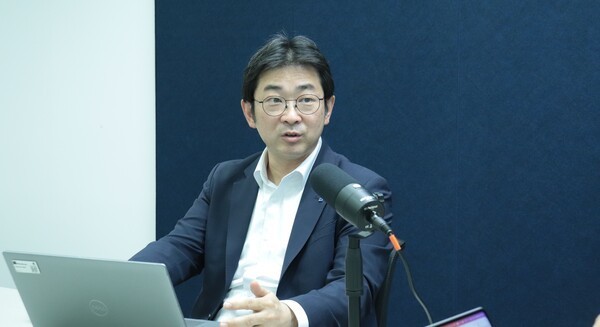
Geun-min Ryu, Managing Director of TRUMPF Korea. (Photo: THE ELEC)

TRUMPF Korea has expressed strong confidence in achieving double-digit revenue growth for its 2026–2027 fiscal year, which began in July. The company expects to benefit from growth in the semiconductor sector, rising demand for machine tool automation, and the resumption of investments across previously stagnant industrial sectors.

Founded in 1923, TRUMPF is a representative German "hidden champion"—a term referring to highly competitive industry leaders that are not widely known to the general public. TRUMPF is widely recognized as the exclusive supplier of the "drive laser"—a carbon dioxide (CO₂) laser source—used in ASML's extreme ultraviolet (EUV) lithography systems. The company operates four primary divisions: Machine Tools, Laser Technology, Power Electronics, and its EUV Lithography division.

"In the previous fiscal year, our Korean branch faced operational challenges due to rising exchange rates and downturns in the battery and display industries," said Geun-min Ryu, managing director of TRUMPF Korea. "However, this year, driven by advances in laser technology and machine tool automation, we expect to achieve double-digit growth and surpass 200 billion won in revenue."

One product line expected to fuel this growth is the Power Electronics division's radio frequency (RF) generator module, which is installed in semiconductor etching and deposition equipment. Driven by the rapid surge in High Bandwidth Memory (HBM) demand, the market for related processing equipment is expanding, which in turn is boosting module sales.

The transition toward laser technology in semiconductor wafer dicing is another major growth opportunity. Wafer dicing involves cutting device wafers after front-end fabrication for back-end packaging. TRUMPF's global R&D team is currently co-developing a "pure laser dicing" process with LeadroTech, which cuts wafers using lasers alone. TRUMPF is also actively communicating and conducting technology validation with domestic memory semiconductor manufacturers.

Compared to traditional mechanical cutting, pure laser dicing lowers the risk of micro-cracks or defects on semiconductor chips. By preventing physical damage to high-cost chips, it helps customers reduce yield loss. Currently, manufacturers rely primarily on mechanical blades, using lasers only in a supplementary role.

However, achieving high yields with laser dicing requires precise power control, ultra-short pulse-width optimization, and thermal management technology. "We expect customer equipment featuring this technology to undergo validation testing in South Korea around early next year," Ryu explained. TRUMPF does not manufacture complete semiconductor processing equipment directly. Instead, it supplies components like laser sources and RF generators to equipment manufacturers, who then deliver the fully assembled systems to semiconductor producers.

In TRUMPF's machine tool division—a stable source of revenue—demand for automation solutions is rising steadily. As manufacturing sectors face severe labor shortages, finding skilled equipment operators has become increasingly difficult. TRUMPF's machine tools are widely used in manufacturing for metal bending, cutting, and punching. "In the past, most customers purchased standalone machine tools. Today, not only large corporations but also small job shops are actively adopting automated systems that operate unmanned during nights or weekends," Ryu noted. This trend has driven steady sales growth for the machine tool division in South Korea.

TRUMPF also anticipates expanded investments across recovering downstream sectors such as batteries and displays. "In the battery sector, investments are shifting toward Energy Storage Systems (ESS)," Ryu said. "We also expect the domestic display industry's investments in new 6th-generation Organic Light-Emitting Diode (OLED) production lines to materialize soon." TRUMPF Korea supplies continuous-wave (CW) 'TruFiber' laser sources and optical sensors tailored for battery manufacturing, as well as the ultra-short pulse laser 'TruMicro' platform for glass processing.

Furthermore, the expansion of Hyundai Motor Group and its Tier-1 domestic suppliers into North American production hubs represents a positive driver. TRUMPF supplies 3D 5-axis laser processing machines to major automotive manufacturers and suppliers, holding a market share near 100%. With 71 subsidiaries and 11 production sites globally, TRUMPF provides rapid technical support and real-time predictive maintenance capabilities that detect equipment anomalies proactively.

Regarding glass substrate through-glass via (TGV) process investments, Ryu maintained a cautious stance. "TGV involves far more than simply drilling holes with a laser; it requires precise alignment across aspect-ratio control, copper plating, and sputtering processes," Ryu remarked. "While several domestic equipment makers are conducting pilot tests, it will take more time before mass-production equipment orders materialize."

Q&A

Q: Could you introduce TRUMPF and explain what kind of company it is?

A: TRUMPF was founded in 1923 and has a history of over 100 years. It is a family-owned business and a representative German "hidden champion." Because it is family-owned, there are no public shareholders, allowing the company to maintain a long-term operational vision without being bound by short-term profit margins. This structure enables us to invest heavily in long-term R&D. Globally, TRUMPF operates 71 subsidiaries and 11 production hubs, employing approximately 18,000 people. Our fiscal year runs from July to June, and global revenue reached approximately 7.5 trillion won in the previous fiscal year.

Q: Is the Laser Technology division your main core business?

A: Not exclusively. Globally, the Machine Tools division is TRUMPF's largest unit. It manufactures laser cutting machines, automatic and manual bending machines, punching machines, pipe processors, and combination machines that handle both punching and cutting. It also encompasses smart factory automation equipment that integrates directly with storage systems. In Germany, TRUMPF is widely known primarily as a machine tool company.

In the Laser division, we have transitioned from disc lasers to fiber lasers, and we provide ultra-short pulse lasers operating in picosecond (ps) and femtosecond (fs) ranges for ultra-precision processing. This division delivers core technologies to the semiconductor, display, automotive, and battery industries.

Thirdly, we have the Power Electronics division. With rising HBM demand, our RF generator modules serve as critical components in etching and deposition equipment.

Q: Are RF generator modules primarily supplied as modular components to equipment builders?

A: Yes, they are installed as modules within larger processing equipment. Lastly, we have the EUV Lithography division. We exclusively supply the CO₂ laser sources (drive lasers) used inside EUV lithography equipment. Based on those laser systems, equipment is supplied to key end-customers such as Samsung Electronics and SK Hynix.

Q: So the company consists of four main divisions?

A: Yes, there are four primary business divisions. Additionally, with the rise of AI, integrated services across all four divisions—covering machines, lasers, and generators—are becoming increasingly vital. Customers no longer focus solely on raw manufacturing capacity; they focus heavily on quality management, driving demand for integrated software solutions.

Q: So software solutions are bundled alongside those four divisions?

A: Yes. Customers in our Machine Tools division often purchase our software alongside equipment. Those using competitor equipment sometimes adopt compatible third-party software. The same applies to our Laser division. We supply not only laser sources, but also optical sensors like Optical Coherence Tomography (OCT) sensors and Programmable Focusing Optics (PFO) as bundled packages. While some customers buy full packages, System Integration (SI) equipment manufacturers may purchase only our laser sources and integrate their own software and sensors. We offer flexible options, ranging from standalone laser sources to comprehensive end-to-end solutions combining optics, sensors, software, and real-time process monitoring.

Q: Is revenue reported by division, or is service tracked as a fifth segment?

A: Service functions are embedded within each division, but because many service operations overlap, we manage and operate services across all divisions as a single unified structure.

Q: You mentioned recent global revenue was around 7.5 trillion won. What was it in prior fiscal years?

A: It typically ranged between 8.5 trillion and 9 trillion won. Between 2024 and 2025, overall macroeconomic downturns caused revenue to decline by about 15%. Beyond semiconductors, downturns in battery and industrial sectors across Germany, the US, and South Korea impacted performance.

Q: What is the revenue breakdown by division?

A: Machine Tools is the largest, accounting for over half of total revenue at around 4 trillion won. Laser Technology generates roughly 1 to 1.5 trillion won, while Power Electronics and the EUV Lithography division generate approximately 1 trillion won each.

Q: Machine Tools is indeed the largest unit.

A: Historically, Machine Tools has been our foundational business. Most customers know TRUMPF as a maker of sheet metal cutting, bending, and punching equipment. In South Korea, our customer base spans from very small job shops with a few employees to major industrial conglomerates.

Q: How long have you served as managing director of TRUMPF Korea?

A: I completed my studies in the United States and managed various R&D and business operations across the US and Europe before assuming the position of Managing Director for South Korea on July 1, 2025. I have just completed my first full fiscal year in this role.

Q: Is the revenue breakdown in South Korea similar to global proportions?

A: South Korea is unique in that the Laser division is significantly larger, accounting for more than half of our local revenue. It is essentially the reverse of our global breakdown. The remainder is divided among Machine Tools, Power Electronics, and the EUV Lithography division.

Q: After your first year in office, what key directives or goals has global headquarters emphasized?

A: Given my academic and professional background in laser R&D in the US, I have extensive experience in laser technologies. Having also worked for three years in our EUV lithography division in the Netherlands, I have hands-on experience across our business units. Headquarters tasked me with taking an active, customer-centric approach. Customers today look beyond raw productivity; they focus heavily on process efficiency, energy consumption, and automation due to severe field labor shortages. In line with headquarters' guidance, I spend most of my time visiting and communicating directly with clients nationwide.

Q: Is that customer-centric approach why TRUMPF Korea operates multiple regional service offices beyond its Seoul headquarters?

A: Yes. While our Dongtan and Pyeongtaek offices primarily support the EUV division, we also operate regional hubs in Cheonan, Daegu, Gwangju, and Busan. Because most of our customers are located along the Gyeongbu Highway axis, maintaining local hubs allows us to deliver technical support and service as quickly as possible.

Q: Have there been notable shifts in your revenue structure over the past year?

A: Our Machine Tools division faced challenges in the previous fiscal year but returned to growth this year. The Laser division maintained revenue levels similar to the previous fiscal year.

Q: Which specific areas are you focusing on personally?

A: While a managing director must oversee all business units, the Laser and Machine Tools divisions naturally take up a significant portion of my attention due to their size and scope. That is not to say Power Electronics or EUV are less important, but Laser Technology drives our largest revenue share, while Machine Tools encompasses the highest number of individual clients. Given my background in laser physics, I naturally have a strong affinity for the Laser division, and as our primary revenue driver, it requires close attention.

Q: Who are the main customers for the Laser division?

A: Unlike the Machine Tools client base, Laser division clients are primarily major corporations in high-tech industries such as semiconductors, displays, and automotive. While we sometimes deal with end-user conglomerates directly, our primary customers are equipment builders who integrate our lasers and optical sensors into their machinery, which is then delivered to manufacturing sites in South Korea, Vietnam, Hungary, the US, and beyond.

Q: Why do equipment manufacturers choose TRUMPF laser sources over competing alternatives?

A: The key factors are productivity and quality. We bring a long heritage of engineering expertise dating back to 1923. After transitioning from disc lasers to continuous-wave (CW) fiber lasers, our 'TruFiber' platform resolved performance drawbacks seen in competing products. For ultra-precision processing, our 'TruMicro' ultra-short pulse laser platform—specifically the 3000, 5000, and 6000 series—holds the leading market share in South Korea.

While TRUMPF lasers carry a premium price tag, they deliver high reliability, low defect rates, and optimal yield in mass production. Furthermore, our platform includes real-time process monitoring software, allowing defects to be identified instantly during processing—such as during battery welding—rather than after completion, preventing costly scrap. Our lasers contain numerous embedded sensors. Even if sensor readings trend upward while remaining within normal operational limits, our system detects the trend and proactively notifies the client to schedule preventive maintenance within three weeks before an actual fault occurs. This predictive maintenance model builds exceptionally high client trust.

Q: How are your lasers currently utilized across different applications?

A: Applications vary by industry. In semiconductors, our CO₂ lasers generate light sources for EUV lithography equipment. Standard CW lasers cut sheet metal and weld battery components. In display manufacturing, ultra-short pulse TruMicro lasers cut glass substrates with minimal thermal damage. In the automotive sector, global OEMs like BMW, Mercedes-Benz, and Hyundai Motor Group use our 3D 5-axis laser processing machines extensively for body frames and door processing.

Q: How are you addressing the trend toward Through-Glass Via (TGV) processing in semiconductor back-end packaging?

A: The surge in TGV interest from late 2025 has moderated into a more cautious evaluation phase. Because traditional printed circuit board (PCB) substrates remain highly reliable, the industry is verifying glass substrate adoption conservatively. TGV requires precise execution not only in laser hole drilling, but also in aspect-ratio control, copper plating, and sputtering. Currently, clients are operating pilot lines. While many customers have purchased our laser solutions for testing, current deployments remain limited to dozens of units rather than full mass-production scales, which would require hundreds of units. Substrate thickness demands are also shifting toward thicker glass (0.3T and 0.5T to over 1T). Follow-on orders for commercial mass-production equipment will take time, though we anticipate initial small-scale production deployments within the current fiscal year ending next June.

Q: Is the shift from mechanical wafer dicing to laser dicing gaining momentum?

A: Yes. Surging HBM demand has significantly heightened industry interest. TRUMPF Korea is actively collaborating with our German R&D team, partner firms, and domestic semiconductor leaders to co-develop applications this year.

Q: Does collaborating mean TRUMPF will build dicing equipment directly?

A: No. Standalone lasers cannot perform wafer dicing directly without risking thermal damage to adjacent chip edges. Because wafer processing occurs at the final stage of fabrication, micro-cracks or heat damage cause severe yield and financial losses. We are conducting R&D to enable "pure laser dicing" that minimizes thermal and physical damage.

Q: What technical approaches are being pursued?

A: We are collaborating with equipment makers and end-customers to optimize laser power control, pulse-width selection (picosecond or femtosecond), and thermal management mechanisms.

Q: Do you engage in direct transactions with end-customers for this?

A: We rarely transact directly with end-customers. We supply laser sources to equipment builders, who integrate them into complete tools, though we often participate jointly in R&D alongside end-customers.

Q: Are pure laser dicing tools currently deployed on active mass-production lines?

A: Current wafer dicing relies primarily on mechanical saw blades, with lasers playing a secondary role (such as stealth dicing). Pure laser dicing tools are still under development. Once commercialized, they will significantly reduce structural damage compared to mechanical blades. A similar transition occurred in smartphone cover glass processing, which shifted entirely from mechanical cutting to laser cutting to eliminate edge cracking. We are actively conducting R&D for both silicon (Si) and silicon carbide (SiC) wafers.

Q: What is the target timeline for commercial R&D milestones?

A: Initial tool testing in South Korea is targeted for late this year or early next year. Because semiconductor mass-production transitions require exhaustive qualification to avoid financial risks, adoption timelines will vary by customer.

Q: How does TRUMPF generate revenue in South Korea for EUV lithography laser sources?

A: Our local EUV division does not engage in direct sales activities. When domestic semiconductor manufacturers purchase EUV systems from ASML, TRUMPF headquarters supplies the drive laser units. Our local team handles installation, ongoing maintenance, and technical field support.

Q: So the laser source is installed separately from the main EUV tool?

A: In cleanroom fabs, you see the ASML lithography system. However, our CO₂ drive laser system is installed in the sub-fab level directly below. Installing a single drive laser system involves a dedicated engineering team working on-site over an extended period.

Q: TRUMPF holds an exclusive supply position for these drive lasers?

A: EUV lithography technology was developed through approximately 15 to 20 years of joint R&D between ASML, Zeiss, and TRUMPF.

Q: That means sales efforts are not required for that specific segment?

A: We do not take our position for granted. We continuously collaborate with ASML and Zeiss to increase laser output power. Equipment throughput—measured in wafers per hour (wph)—directly impacts customer return on investment. For High-NA EUV tools, the industry target is laser power exceeding 1 kilowatt (kW), whereas current operational levels remain below 500 watts.

Q: Is the laser source the main bottleneck in increasing output power?

A: It is not the sole factor. Generating EUV light requires firing laser pulses at falling tin droplets twice—at frequencies of 50 kHz to over 60 kHz. Managing energy generation, pulse timing, and optical collection involves complex interactions between the laser source, Zeiss optics, and overall tool design. ASML, Zeiss, and TRUMPF continuously optimize these integrated components together.

Q: What is TRUMPF Korea's revenue target for the current fiscal year?

A: Prior to my predecessor's retirement, annual revenue was slightly under 200 billion won. For the current fiscal year, we expect revenue to reach approximately 200 billion won. While this represents growth, I believe our technological capabilities position us to achieve even higher targets. As battery investments pivot toward overseas hubs and display investments recover, we anticipate further revenue momentum.

Q: Are there other key growth drivers?

A: Severe labor shortages are driving small job shops as well as large enterprises to adopt fully automated smart factory machine tools capable of running unmanned overnight and on weekends. Beyond machine tools, our RF generator and laser divisions are experiencing solid growth driven by EUV adoption, ESS battery production, and 6th-generation OLED investments. In the automotive sector, as Hyundai Motor Group and its Tier-1 suppliers expand production in North America, demand for our 3D 5-axis laser processing tools—where we hold near 100% market share—remains strong. Because our global service network supports clients seamlessly overseas, our products receive the same level of support abroad.

A significant recent challenge is currency exchange rates. Because our parent company reports in euros, translating TRUMPF Korea's revenue from won to euros results in an approximately 20% decline. This means we must achieve double-digit growth well beyond that baseline, which we believe is fully achievable.

  •  

SSenStone Targets Core Security Technology Leadership with OTAC

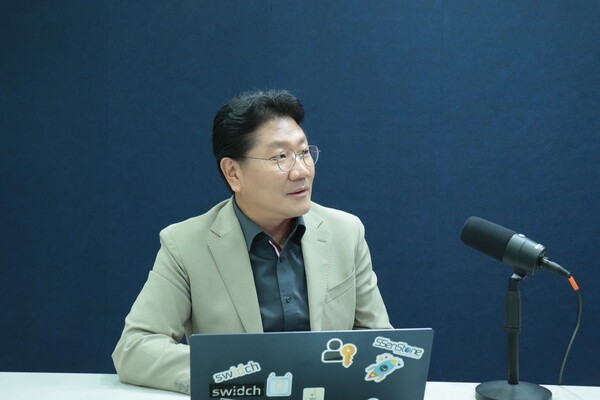
Chang-hun Yoo, chief executive officer of SSenStone. (Photo: THE ELEC)

"SSenStone's technology is not an incremental refinement of solutions that existed in other countries. We aim to become the first company from South Korea to establish a foundational security technology used across the global market."

These are the words of Chang-hun Yoo, chief executive officer of SSenStone. SSenStone is targeting the operational technology (OT) security market with its proprietary One-Time Authentication Code (OTAC) technology, a world-first solution developed in-house.

Founded in 2015 as an authentication security startup, SSenStone spent its first three years offering a "two-way dynamic token" service that generated and received tokens back and forth between clients and servers. The company subsequently developed OTAC to overcome the structural limitations of two-way dynamic tokens, particularly their heavy reliance on network connectivity.

Two-way dynamic tokens are already familiar to most people in everyday life—quick response (QR) codes widely used during the COVID-19 pandemic are a prime example. Users would shake their smartphone to generate a QR code, which connected to a server to request authentication. Recognizing the generated QR code within a specified time window and sending the signal back constitutes a two-way dynamic token.

In contrast, OTAC enables identification and authentication simply by transmitting a generated code based on a pre-registered unique key to a server. The code changes with every use, and identical codes are never generated under any circumstance. This unique OTAC value alone allows systems to identify users or devices without requiring static inputs like user IDs or passwords.

Q&A

Q: Hello, today we are joined by Chang-hun Yoo, CEO of SSenStone. You mentioned the company name translates to "strong stone" in Korean. Could you briefly introduce SSenStone?

A: SSenStone started in November 2015 as an authentication security startup. For the first three years, we operated using two-way dynamic tokens. After three years, we developed our foundational technology called OTAC—One-Time Authentication Code—which is a unidirectional dynamic token technology unprecedented globally. In December 2018, we established a wholly owned global headquarters in the UK called swIDch. The UK government invited us through a program that included visa sponsorship capabilities.

Q: Could you elaborate on your proprietary technology, One-Time Authentication Code?

A: People already use one-time codes today, such as One-Time Passwords (OTP). But a password alone cannot identify a user; you still need a user ID first to know who the person is before applying the password. That is why OTP can only serve as a second factor for authentication. If you send only an OTP to a system without an ID, the system has no way of knowing who you are. Many security professionals are unaware of this structural limitation. When we suggested that identification and authentication could be accomplished with a unidirectional dynamic token, the global industry initially claimed it was impossible. But after more than a year of R&D, we found the solution.

Q: Could you explain the concept of unidirectional authentication in more detail?

A: Think of this mouse on the desk as a mobile phone. We experienced dynamic tokens frequently during COVID-19 with QR check-ins. You used your phone, a QR code appeared, you scanned it at a shop, and you were authenticated. That was a dynamic token, but it was two-way. The QR code was not created entirely on your phone; when you shook your device, a request was sent to service providers like Naver or Kakao. Their servers generated a code valid for three minutes and sent it back to your phone, which displayed it as a QR code to be scanned and routed back to the server within three minutes. On a device without communication capabilities, if a code keeps changing and you send it out, the server cannot know who is sending it. Before OTAC, authentication required the server to generate and send the code, which then had to return within a set timeframe.

Our unidirectional dynamic token technology works even in client environments without communication capabilities—even inside a tiny smart card chip—generating ever-changing codes that uniquely identify the user, command, or device without overlap.

Q: It is hard to grasp how that is possible. Could you explain the mechanism again?

A: What I have in my hand is a non-communicating smart card. This actual device is currently used by Korea Water Resources Corporation (K-water) and LG Energy Solution. Employees cannot bring mobile phones into factory floors, so they use OTAC codes instead of IDs, passwords, and OTPs.

When you press a button on the card, it prompts for a PIN, providing multi-factor authentication (MFA). Even if I hand this card to you, you cannot use it without knowing my PIN. Once the PIN is verified and you press OK, an 8-character alphanumeric code appears at the bottom. These eight characters replace my ID, password, and OTP. When entered, our system algorithm recognizes who I am and verifies the OTP simultaneously. It sounds improbable, doesn't it?

Q: How exactly does that single 8-character code accomplish all of that?

A: Security experts and academics worldwide believed one-way dynamic identification and authentication was mathematically impossible. When we began R&D, even SSenStone's head of research initially declined to work on it. I ended up working on it alone at first. Fortunately, because my background was not in computer science or cryptography, I had never learned why it couldn't be done—I simply didn't know the reasons it was supposed to fail. After failing for over a year, I almost gave up, thinking, "This must be a geometric structure, but it doesn't work in our current dimensional framework." While walking along the Han River, a scene from the movie Interstellar came to mind—the moment near the end where the protagonist wakes up in a hospital on a space station and sees a baseball game outside, where a hit ball smashes a window on a house hanging upside down. I realized: the XYZ axes are not straight lines; they are curved into a circle.

We started from that circular structure. The result was "continually shifting coordinates." What is generated is a coordinate that changes constantly, yet every time it drops a point, it consistently maps to my designated position. When another person generates a code, a completely different, non-overlapping coordinate appears, yet it maps consistently to that person's location. When we announced this solution, it was not immediately recognized in South Korea. We sought validation overseas, and a faculty team at the University of Surrey's cybersecurity lab in the UK mathematically verified our technology. That verification allowed us to bring the technology back to the global market.

Q: That sounds like a significant breakthrough.

A: I agree, but it is not yet widely known globally, which is why we are actively promoting it while securing major investments.

Q: Network-level information interception is one of the most common cyber threats. Does your technology mean stolen network information becomes useless?

A: Precisely. Cryptography is about making stolen data useless to an interceptor. If you write "Chang-hun Yoo" on a sticky note and pass it along, anyone who intercepts it knows the name. Encryption obfuscates the name into code so the recipient needs a key or decryption program to reconstruct "Chang-hun Yoo." However, hackers can still infer where the data came from or deduce that it is an ID and password used for login. Even with static obfuscation, vulnerabilities remain. OTAC continuously changes the token. Even if a hacker intercepts and decrypts the data, the valid timeframe—whether 30 seconds or three minutes—has already expired, rendering the decrypted data useless.

Q: What are the primary practical advantages of unidirectional technology?

A: Indonesia was among the first to adopt this technology, embedding it into their "e-Stamp" tax collection system. If you assign sequential serial numbers to tax transactions, patterns emerge that could allow forgery. They chose our technology because it generates continuous, non-sequential codes with zero discernible patterns.

Another case involves high-volume online services. In South Korea, when millions of citizens access the National Tax Service website simultaneously for year-end tax settlements, systems experience heavy congestion. Handling such traffic with traditional two-way tokens requires massive server infrastructure because servers must hold open requests while waiting for user responses. With OTAC, the server remains passive until a client device generates and sends a unique dynamic code, allowing instant identification without consuming massive server holding capacity.

Our current core focus is operational technology (OT) security. OT environments differ significantly from IT. While IT relies on robust two-way networks, OT restricts network environments, favoring air-gapped networks and unidirectional flows to prevent unauthorized access or control.

In OT environments, endpoint devices—such as Programmable Logic Controllers (PLCs), Remote Terminal Units (RTUs), Distributed Control Systems (DCS), and Human-Machine Interfaces (HMIs)—cannot easily support multi-factor authentication. Managing passwords across thousands of PLCs is impractical, and standards requiring regular password changes are difficult to enforce. Standard FIDO biometric authentication also fails because it demands active two-way communications. In these constrained environments, our clients use OTAC to authenticate access to equipment securely.

Q: Such as access control in sensitive facilities like semiconductor fabrication plants?

A: Exactly—preventing unauthorized access to critical equipment. In geopolitical conflicts, cyberattacks increasingly target OT and industrial infrastructure rather than just IT systems because the impact is immediate and physical. In traditional OT setups, once an attacker breaches the boundary network between IT and OT, internal systems are often unprotected. With OTAC, even if an attacker crosses that boundary, they cannot execute operational commands without generating the required dynamic code.

Some ask whether focusing on air-gapped, unidirectional OT environments limits our scalability. In fact, the opposite is true—the recent issue around Claude Mythos has actually worked in our favor. AI agents can now identify and exploit vulnerabilities at unprecedented speeds. Whether an attack originates from a human or an AI, the AI cannot generate an OTAC code, blocking unauthorized execution. This capability attracted investment from Hyundai Motor Group during our recent funding round.

Looking ahead, Anthropic published a report titled "Zero Trust for AI Agents" on May 27, which recommends using hardware-bound keys to prevent software-based key theft by AI agents, as well as short-lived expiring tokens. Traditional Public Key Infrastructure (PKI) or symmetric algorithms struggle to generate short-lived tokens without continuous two-way communication or challenge-response exchanges. OTAC natively generates dynamic credentials from hardware-bound keys without needing continuous two-way networks, making it a critical future-proof architecture for the AI era.

Q: Will traditional two-way security communication methods eventually disappear?

A: No, two-way security will remain necessary. However, environments where two-way communication is restricted or impractical will become increasingly prevalent.

Q: And in those restricted environments, unidirectional authentication becomes essential?

A: Whenever short-lived tokens are needed in unidirectional environments, our technology serves as the core solution.

Q: Could you share details regarding your financial performance and client traction?

A: SSenStone recently passed its 10th anniversary since founding in November 2015. During our first four years, we operated comfortably with around 10 employees, generating over 2 billion won in revenue. After developing OTAC and securing Series A funding, we shifted focus toward refining our business model rather than aggressive short-term sales.

After revenue bottomed out, license-based tech revenues began climbing steadily last year. Key commercial deployments include Korea Water Resources Corporation (K-water) and LG Energy Solution.

Q: Could you mention other corporate clients?

A: I can confirm contracted partners, though companies currently conducting proof-of-concept (PoC) evaluations cannot be named yet. Most are major domestic conglomerates and global corporations, with two to three international firms currently conducting in-house PoC trials.

Q: Company materials also list Bithumb as a client?

A: That deployment uses our legacy authentication solution, which was awarded through standard competitive bidding. The newer prospects I mentioned are specifically evaluating OTAC for advanced OT integration.

Q: Does establishing your UK headquarters signal an aggressive expansion into European markets?

A: Establishing our UK entity, swIDch, was driven less by the local UK market alone and more by our desire to build a global headquarters outside Korea. South Korea is not as widely recognized in global cybersecurity as it is in cultural industries. Initially, outreach attempts originating from South Korea received limited responses from international enterprises. Today, all our global business outreach across Europe, the US, and Asia is conducted through swIDch in the UK. The UK government offered attractive incentives, including visa sponsorship and official recognition as a UK company while maintaining its role as global HQ.

Q: Are team members permanently stationed at the UK office?

A: We maintained local staff in the UK until early last year while establishing our core tech partnerships. Now that our product maturity and commercial references are established, meetings arranged through our UK headquarters can be effectively conducted by our team operating out of South Korea, allowing us to streamline international operational costs.

Q: What are your prospects regarding the Middle Eastern market?

A: The Middle East represents a significant market opportunity. Currently, we are engaging with partners across Taiwan, the United States, France, Japan, and the Middle East without limiting ourselves to specific geographic boundaries.

Q: What is your long-term outlook for SSenStone?

A: During the years spent developing the business model for OTAC technology, many expressed skepticism. I persevered because I remained fully confident in the technology, which market research firm Gartner has also highlighted as a next-generation authentication architecture.

SSenStone's ultimate goal is to stand as a premier holder of foundational cybersecurity technology from South Korea. Rather than modifying existing foreign solutions, we intend to be recognized as the company that created the first original Korean security technology widely adopted across the global cybersecurity market.

  •  
❌