❌

Reading view

Samsung might've started racing ahead to Android XR glasses with a color display

What you need to know

  • Rumors claim Samsung is developing a new pair of smart glasses, and has tapped Samsung Display for an in-lens color display.
  • The glasses would allegedly focus on displaying "text, notifications, icons, and more" on an extremely thin panel.
  • Samsung has its Intelligent Eyewear, which is supposedly coming out this fall, but those are mostly voice-focused with Google's Gemini and a camera.

Samsung has barely dipped a toe into the world of smart glasses, and there's already a rumor that it wants to go bigger next time.

This report from The Elec (Korean) claims Samsung might've started developing smart glasses with a color display (via 9to5Google). The publication cites its "industry sources" in saying Samsung has tapped Samsung Display to "create microdisplays" for a future pair of AI smart glasses. These rumors claim Samsung has a lot on its plate to prepare this product.

Specifically, the post claims Samsung has a "technical challenge" to overcome: its FOV (field of view). The company is purportedly chasing a wide FOV for these glasses to accommodate the information users would see. What's more, Samsung is leaning on its Display side to create "ultra-small panels" of ~0.2 inches or smaller for the lenses. Samsung is allegedly focusing on displaying "text, notifications, icons, and navigation arrows" (machine-translated).

It's still incredibly early to know for sure how Samsung's first color display smart glasses will arrive. However, the publication suggests the glasses could see a launch in the second half of 2027 or "early" in 2028.

Got lenses?
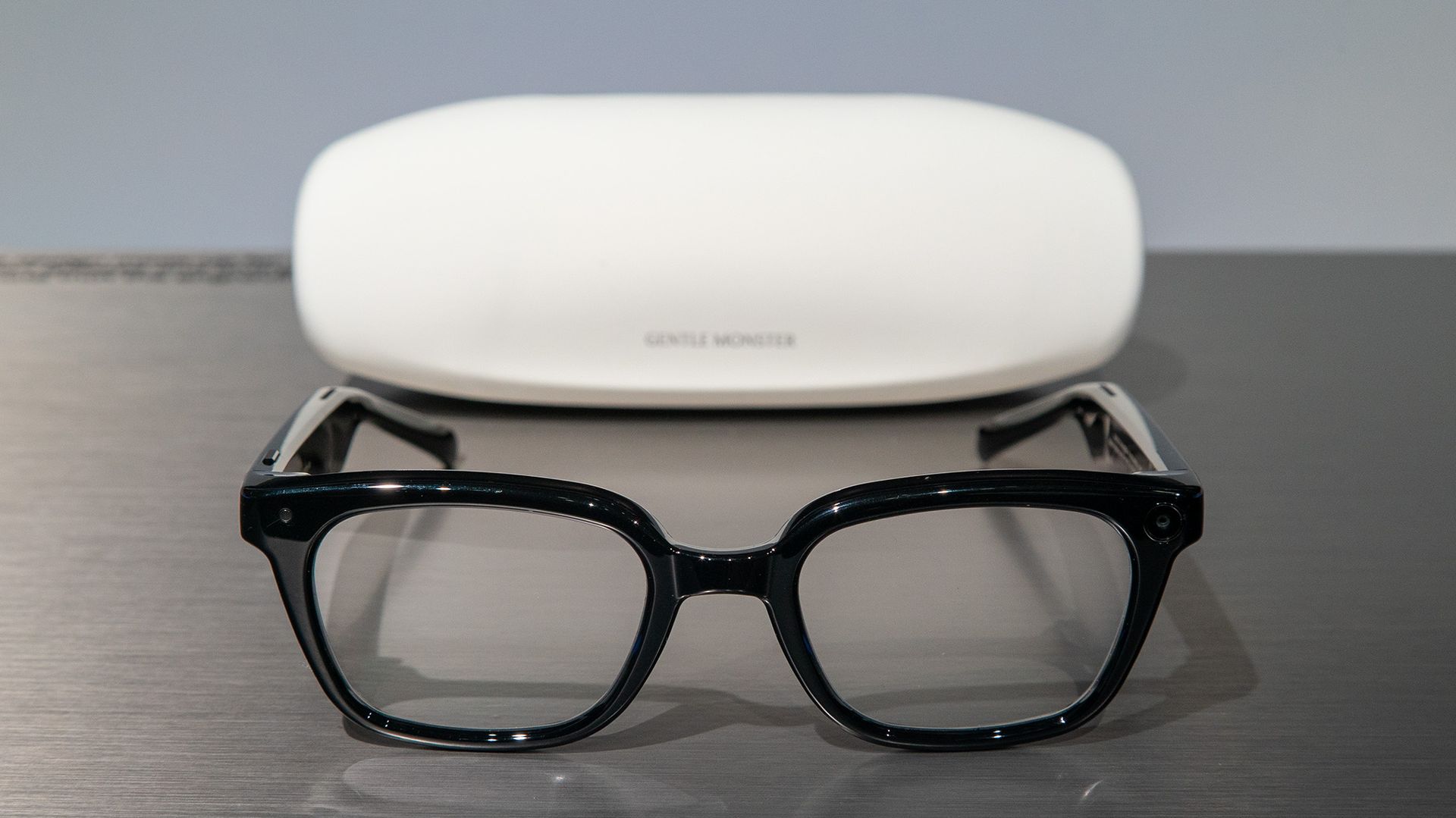
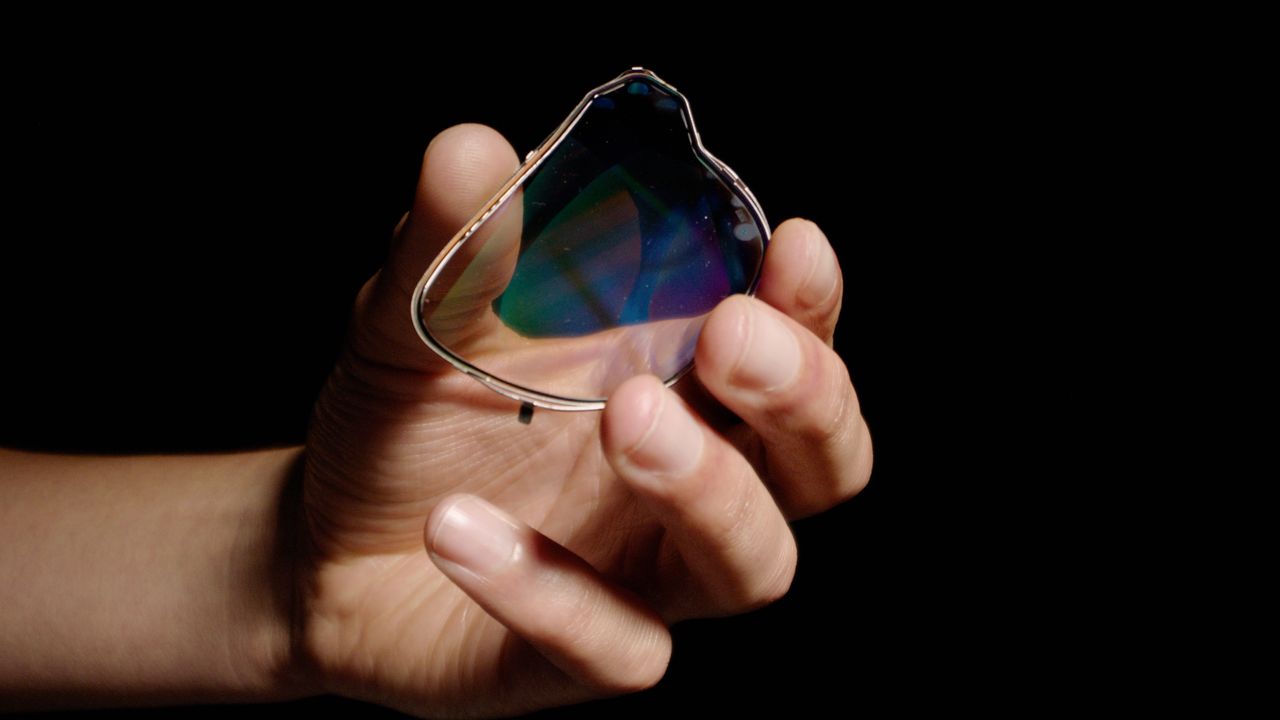
Hands-on with Samsung Glasses with Warby Parker and Gentle Monster styles

(Image credit: Derrek Lee / Android Central)
Android Central's Take

Samsung's getting serious. I don't think its Intelligent Eyewear are a bad start, though. It's starting simple. Useful, even. Everything is based on your voice. You still have a camera to take photos, and Gemini is there to help with hands-free assistance. To put a color display—a proper screen—would definitely take things up a notch. To me, I think this rumor is probably a little more eye-catching.

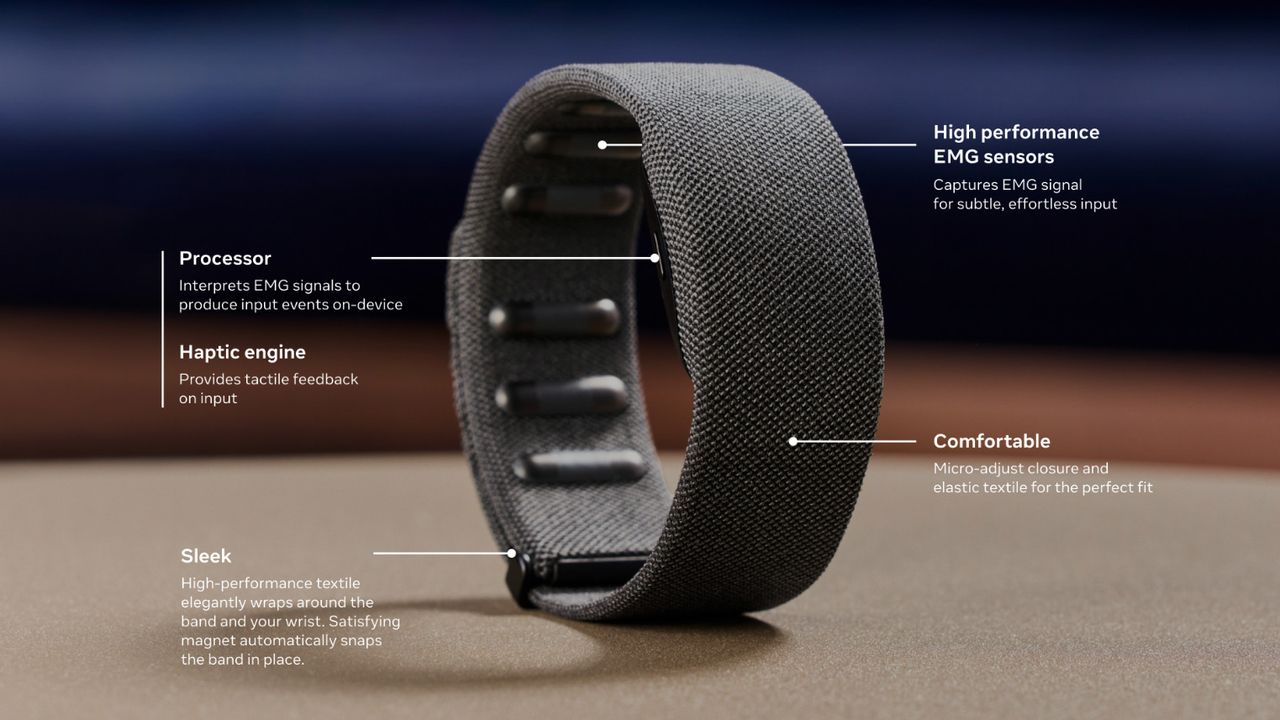
We can't help but think about the Ray-Ban Display glasses from Meta. In fact, that's probably the kind of competition Samsung wants to get itself involved in. These glasses also feature the neural band. It makes it easier to control the display and content on your lenses with hand gestures. There's plenty of time still to see how Samsung manages this.

Right now, we have (kind of) Samsung's "Intelligent Eyewear." These glasses are in partnership with Google, alongside designs from Warby Parker and Gentle Monster. These are Samsung's first smart glasses, but they lean more on the user's voice. Users can communicate with Gemini for navigation, order pickups, and photos. The glasses feature a camera and a microphone to get all of this done. Google reiterated its Samsung partnership during this summer's Unpacked.

These glasses aren't out yet. During the original announcement this past spring, Samsung said we shouldn't expect to see them until "later this fall."


  •  

Rokid wants anyone to build AI agents for its smart glasses

What you need to know

  • Rokid's AIUI Studio is a browser-based platform that lets anyone build spatial AI apps for Rokid Glasses, with no coding experience or dev kit required.
  • Developers can describe an idea, while the AI-native workflow helps turn it into a working app.
  • The built-in smart glasses simulator lets developers create and test projects before getting physical hardware involved.

Rokid is making it easier to build apps for its AI glasses, and you won't need a coding background or even to own a pair of the glasses.

The company has launched AIUI Studio globally at IFA Berlin 2026, giving developers a browser-based platform for creating and publishing spatial AI applications.

Much of the development process takes place via an AI-native workflow in AIUI Studio. You can say what you want to build in plain language, and the platform can take that idea and build an app without the traditional coding skills.

It also offers a simulation of Rokid’s smart glasses, enabling developers to work on their projects without having to purchase the hardware.

There’s still a reason to get the real hardware involved eventually, though. Rokid’s developer documentation advises testing agents in its Interactive Inview simulator before performing a final check on the actual glasses.

Rokid booth at IFA 2026

(Image credit: Rokid)

For developers who want to have more control, Rokid pairs its AIUI Skills Library framework with AIUI Code assistance. The company says this helps creators make better use of the glasses’ hardware while also optimizing apps for less latency, less memory use, and less power consumption.

The move is the latest as Rokid’s developer ecosystem continues to grow. The company says it now has some 35,000 registered developers and more than 500 agents available through its Agent Store.

AIUI Studio is now available worldwide. If Rokid can take advantage of that growing developer base to create a steady stream of useful agents, its glasses might just become a platform that people actively build around.

  •  

Lumus, Quanta reach licensing agreement for next-gen waveguides for AR glasses that may turn the tide

What you need to know

  • Lumus is expanding its partnership with Quanta this week, which brings a licensing agreement between the two companies for next-gen waveguides.
  • Lumus states Quanta will manufacture its next-gen waveguides: the Z-30 2.0, A-Lens 30 (30-degree FOV), and A-Lens 50 (50-degree FOV).
  • The company was at CES 2026 where it stated it's future for waveguides for AR glasses will be "thinner, lighter, and easier to produce."

This morning (Sept 1), Lumus, a developer of waveguides for several big-name brands, announced a major partnership expansion.

In a press release, Lumus announced that it has expanded its partnership with Quanta Computing. This expansion sees the two companies reaching a licensing agreement "to manufacture three new geometric waveguides for AR glasses." The post states Lumus is developing three new waveguides: the Z-30 2.0, A-Lens 30 (30-degree FOV), and A-Lens 50 (50-degree FOV).

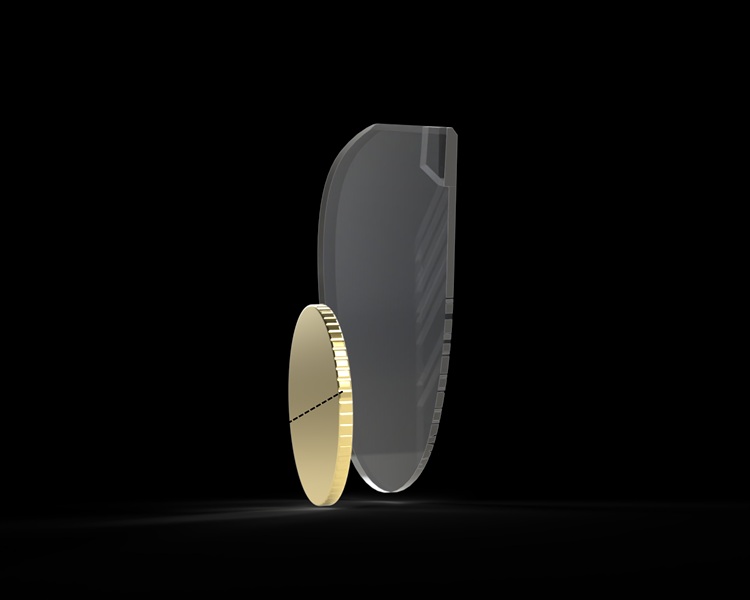
Thanks to the new licensing agreement, Quanta will handle manufacturing. What we can expect from the Z-30 2.0 is a 30-degree FOV "in a thinner, lighter optical engine." Lumus adds that its latest technology increases the display's brightness, alongside direct prescription lens bonding. The two new A-Lens waveguides (30 and 50) are Lumus' "lower-cost" production solutions.

The next-gen A-Lens waveguides are reportedly cutting down the weight and thickness by 50%. However, Lumus states it maintained its image quality and efficiency with this upgrade. This is an ongoing trend that Lumus is trying to introduce into this advancing world of AR glasses. Trimming down waveguide weight and thickness is key, but so is image quality, brightness, and cost.

Earlier today, Lumus' CEO, Ari Grobman, said, "Our relationship with Quanta has always been built around solving the practical challenges of bringing advanced AR optics into mass production. This agreement allows us to bring our next generation of lower-cost waveguides into manufacturing with a partner that understands both the technology and the production requirements behind it."

Here comes the future, and Lumus is leading it

The Lumus Z-30 2.0 is much thinner, and this rendering displays that it's roughly as thin as a penny.

(Image credit: Lumus)

As mentioned before, Lumus creates waveguides for several brands, even for Meta and its Ray-Ban Display Glasses. Earlier this year, Meta announced that it was doubling the production of its Ray-Ban glasses to meet demand. This was something Lumus echoed in its press release this morning. The demand for smart glasses continues to rise, but there's room for improvement. Its work to reduce the weight and thickness of its waveguides for AR glasses is one such upgrade.

Additionally, the lower-production-cost A-Lenses are designed to help bring more products to consumers. We'll have to see how things pan out going forward.

On a related note, Lumus was at CES 2026. This major tech event is where the company first stated what its plans were for the future of AR glasses. Lumus said, "That's the future for us—making these waveguides thinner, lighter, and easier to produce." Its announcement today further echoes that sentiment.

  •  

Early Access: Meta's Neural Band just got cooler with neural handwriting for Ray-Ban Display

What you need to know

  • Meta announces that its neural handwriting is now rolling out in its EAP (Early Access Program) for the Ray-Ban Display.
  • Users are recommended to write with their index finger on a stable surface, and allow the AI to correct any typos or mistakes.
  • Meta confirmed this was on the way for the Ray-Ban Display in December.

Meta's neural band is an important part of its smart glasses experience. It brings convenience, and Meta says it's offering a new feature in Early Access for silent AI interactions.

If you've got a pair of Meta smart glasses, the company has announced a silent handwriting feature in Early Access using the Neural Band. In a press release, Meta says users can write "AI queries with their index finger when their display is on." It states users can get answers to questions, play a song, pull up directions, and more without much effort—just a finger. Meta went into more detail about this EAP (Early Access Program) feature.

If you're interested, Meta says users must ensure their Neural Band is paired with their glasses and that everything is updated, as well as enroll in the EAP. To enable neural handwriting, head to Meta AI app > Settings > select your glasses > Early Access > toggle Meta AI with neural handwriting. For the "best results," Meta recommends users write with their index finger. It states you should "anchor your wrist on a hard surface and use your index finger to write." What's more, you should write in print, not cursive.

To ensure the Neural Band and neural handwriting feature captures what you're writing properly, you should write smoothly and at a consistent pace. Meta says users shouldn't worry about typos, nor should they wait for their HUD to catch up to what they've written. Continue regardless, and Meta AI will automatically fix any errors.

Neural handwriting is headed to the Meta Ray-Ban Display in the EAP.

Writing in the air

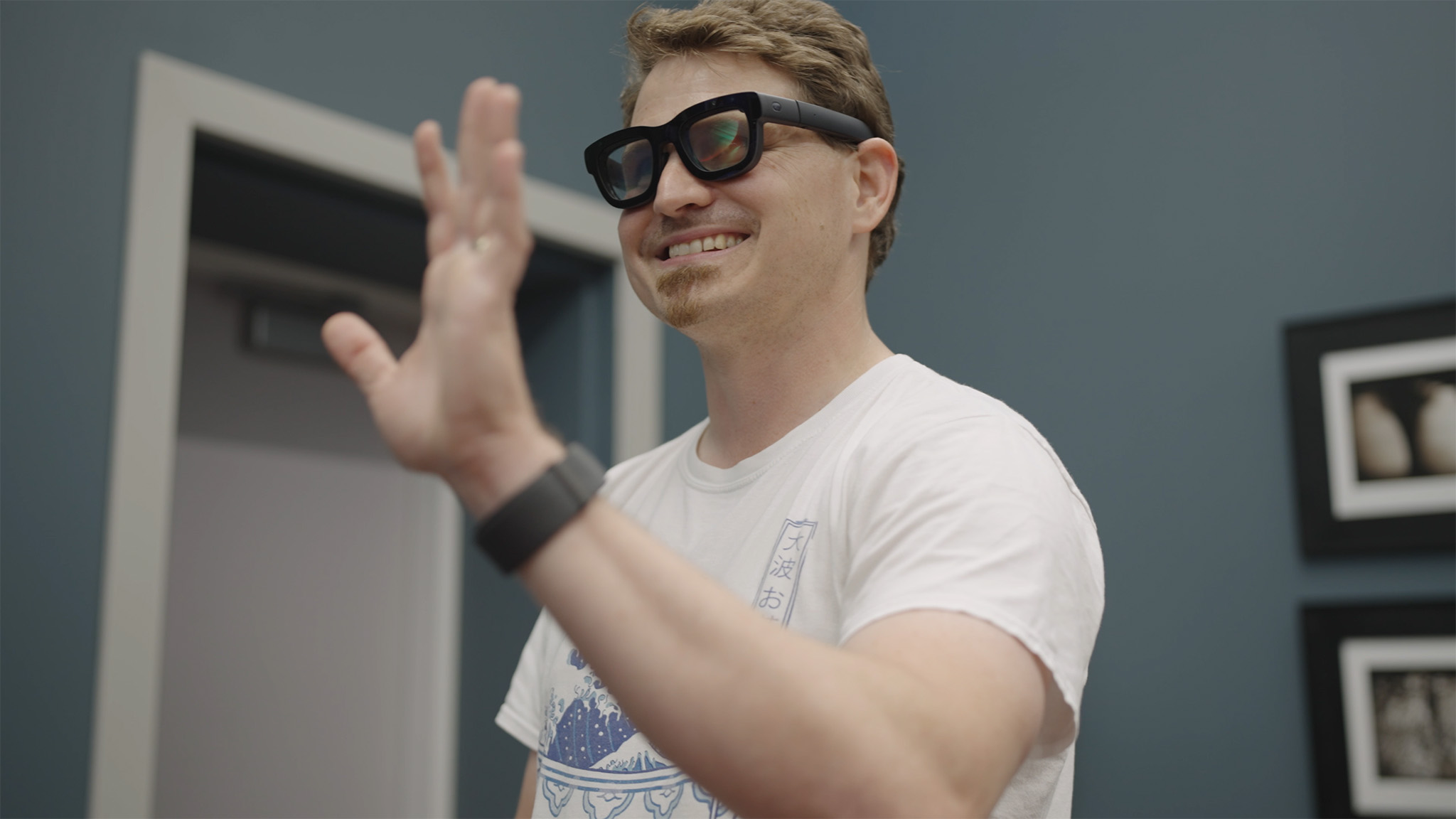
Going hands-on with Meta Orion smartglasses and using an EMG wristband for input

(Image credit: Android Central)

It was teased in December 2025, and now it's finally here. Meta confirmed late last year that it planned to empower its Ray-Ban Display further with "virtual" handwriting. We've now seen this arrive as neural handwriting. This EMG handwriting feature was confirmed to leverage the Neural Band with the user's drawing and gesture inputs. The company also teased Instagram Reel support for its glasses, too.

The neural band was an object of interest for Android Central's Nicholas Sutrich last year, too. To him, it felt like a true device straight out of a Sci-fi movie. To Meta, the sEMG band (neural band) is a requirement for "true AR smart glasses products." Users wouldn't need to rely on a screen to type their commands. The band captures your muscle movements to act out what you're writing or capture your gestures. It's silent and completely hands-free (technically).

Android Central's Take

The neural band is pretty cool, I have to admit. But bringing this "virtual" or neural handwriting just seems like the next logical step for Meta. It can already capture gesture for scrolling through song lists, why not do more? Why not make it so writing a quick message or asking its AI is effortless with single movements?

  •  

AI ‘Ghosts’ Offer New Opportunities for Conversations with Deceased Loved Ones, Study Reveals

A recent study documented a participant using an AI model to simulate a conversation with her late grandmother. According to her report, the experience offered a sense of closure that she had not experienced before.

This interaction was one of sixteen documented in a study published in the Proceedings of the 2026 ACM Designing Interactive Systems Conference. The research provides some of the first empirical data on how individuals respond to the opportunity to communicate with AI representations of deceased loved ones.

Researchers at the University of Colorado Boulder call these AI agents ‘generative ghosts.’ These systems use data such as writing, voice recordings, or photographs from the deceased to create simulated conversations. Some platforms, such as Project December and Séance AI, generate text-based versions of journal entries and messages. Others, such as HereAfterAI, include voice and images. A few companies have also developed virtual reality experiences that let users interact with holographic representations of loved ones.

Jack Manning, the PhD candidate in Information Science who led the study, expected the sessions to feel unsettling. “We originally thought it might feel very Black Mirror creepy to people and make them uncomfortable,” he said. “I ended up being completely wrong. People thought it was amazing.”

How To Build a Ghost

The study included 16 participants, aged 22 to 50, each of whom joined a Zoom interview about a deceased relative or friend. During the session, a facilitator led the conversation while another researcher entered details into a large language model, generating an AI representation of the deceased in real time.

Each participant interacted with two versions of the AI model for about twenty minutes each. One version spoke as the deceased, using the first person, while the other described the person in the third person. A facilitator stayed present to offer support if the conversation became emotionally difficult.

The results indicated a clear preference for the version that spoke as the deceased individual, rather than about them. Researchers described this as a preference for ‘reincarnation’ over ‘representation.’

What People Will and Won’t Forgive

Participants tended to overlook factual mistakes or made-up details from the AI. What mattered more was whether the AI captured the right tone and language. If the model used words or phrases that felt out of character, people were more likely to disconnect from the experience. The study found that getting the voice and manner right was more important than perfect factual accuracy.

How the AI communicated also shaped the experience. Participants preferred short, to-the-point sentences and even the use of emojis, rather than the longer, more formal responses that AI models often produce. This suggests that future versions of these systems should pay close attention to conversational style.

A Technology Both Wanted, and Feared

All sixteen participants indicated that they would be willing to use the technology again. However, most also expressed concerns about the potential risks of individuals in grief accessing these AI systems without supervision.

Lead researcher Jack Manning said his own experiences with loss have shaped his view of the risks and benefits of AI grief tools. He acknowledged that negative outcomes are possible but also noted that the technology could help some users find a sense of closure and peace.

Jed Brubaker, the study’s senior author and an associate professor of Information Science, said the lab took on the work precisely because the field had outpaced the research. “To our knowledge, we are conducting the first user experience studies of simulated AI ghosts,” he said.

The research team intends to involve mental health professionals in future studies. The next phase will evaluate the psychological risks and benefits of prolonged use of AI grief tools to ensure that empirical research guides product development.

Generative ghost technology is already available through commercial platforms, and people are actively using these systems. The study highlights that voice, tone, and pacing are often more important to users than factual accuracy. As the technology develops, researchers are working to address the challenges of providing appropriate safeguards and responsible design.

Austin Burgess is a writer and researcher with a background in sales, marketing, and data analytics. He holds an MBA, a Bachelor of Science in Business Administration, and a data analytics certification. His work focuses on breaking scientific developments, with an emphasis on emerging biology, cognitive neuroscience, and archaeological discoveries.

  •  

Holographic Breakthrough: This New Futuristic 3D Imaging System Overcomes a Longstanding Problem for Holographic Tech


A new 3D image projection system from researchers at the UCLA Samueli School of Engineering and the California NanoSystems Institute (CNSI) marks a major step toward overcoming a longstanding problem for holographic technology.

Professor Aydogan Ozcan led the work reported in a recent paper published in Light Science and Applications, which describes the team’s new snapshot 3D image projection system, solving one of the technology’s most daunting issues.

“These results establish the diffractive 3D display system as a compact and scalable framework for depth-resolved snapshot 3D image projection, with potential applications in holographic displays, AR/VR interfaces, and volumetric optical computing,” the authors write.

3D Image Challenges

While 3D films viewed wearing special glasses were popular a decade ago, this type of 3D image projection is something more akin to the holodeck on Star Trek, projecting sophisticated, real-time images. While advances have been made in bringing such technology to life, many obstacles remain to creating convincing three-dimensional projections.

The snapshot 3D image projection system described in the paper combines a digital encoder with a passive optical decoder and uses a deep learning algorithm that operates end-to-end to overcome one of holography’s greatest challenges. 

Interplane cross-talk is one of the main issues associated with 3D image projection. As 3D objects are sliced up and images projected at various depths, elements from one image can leak through to the image in front of it, destroying the illusion of a solid object existing in three-dimensional space. 

Improving Holographic Technology

In the new system, an image first enters the encoder, which uses a Fourier-based neural network to separate spatial and frequency features into a stack of images. It then analyzes the positions where the images will be projected to simultaneously generate a 3D visual. Then the images are decoded and projected onto structurally optimized surfaces, where the depth-dependent field programming occurs as the light propagates.

The deep learning algorithm, building on recent advances in combining machine learning and 3D projection, optically routes the image slice to its correct depth while adjusting for in-plane leakage.

Together, this system creates a compact, high-fidelity display in a single shot, combining closely spaced axial planes to create the illusion of a three-dimensional object from projected light. These improvements provide for a more natural depth perception and increase visual comfort for the viewer.

The Future of 3D Image Technology

Advancing 3D imaging technology is essential for a variety of emerging applications, including augmented reality, virtual reality, holography, and immersive visualization. The rapid degradation of image fidelity caused by light bleed has been one of the primary issues impeding progress in these fields.

So far, the researchers have demonstrated their multi-plane snapshot image projection with a model of volumetric scenes comprising 28 axial slices. They also constructed a simpler real-world prototype to validate the model, made of only two planes. Experiments with the prototype corroborated the model’s results, producing outputs that matched the simulated numbers and achieved a similar image quality. Additionally, when the team ran their prototype against a projection without a diffractive decoder, their device exhibited considerably superior performance.

Between the simulations and laboratory tests on a physical prototype, the team has demonstrated that their work is scalable yet compact, enabling a 3D display with high axial resolution. In their current form, the researchers see near-eye displays, microscopy, and volumetric optical computing as the primary use cases, but continued development could open possibilities for multi-perspective holography and energy-efficient 3D systems.

The paper, “Snapshot 3D Image Projection Using a Diffractive Decoder,” appeared in Light Science and Applications on June 10, 2026.

Ryan Whalen covers science and technology for The Debrief. He holds an MA in History and a Master of Library and Information Science with a certificate in Data Science. He can be contacted at ryan@thedebrief.org, and follow him on Twitter @mdntwvlf.

  •  

The Google / Xreal Aura XR glasses are now available to preorder

The Xreal Aura glasses, powered by Google’s Android XR.
There’s still no word on the final launch price, however. | Image by Xreal

The Project Aura glasses collaboration between Xreal and Google is now one step closer to being something you can buy. Reservations for the second Android XR device, now dubbed the Xreal Aura, are available for $99 starting today, with a full launch in the US, UK, Japan, Canada, and South Korea expected sometime this Fall.

The Xreal Aura follows Google's first Android-powered XR device, the Samsung Galaxy XR headset, which launched at $1,799 in October 2025. We still don't have a full price for the Aura - which Google has previously described as "a headset masquerading as glasses" - but Best Buy will be the first in-store retail partner whe …

Read the full story at The Verge.

  •  
❌