❌

Reading view

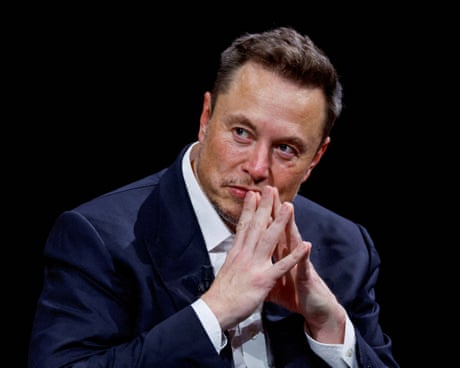
More Anthropic researchers warn of AI’s perils but Musk dismisses ‘psyop’

Insiders at the firm fear tech’s advancement could cause human extinction, while others are calling their declarations of concern a ‘setup’

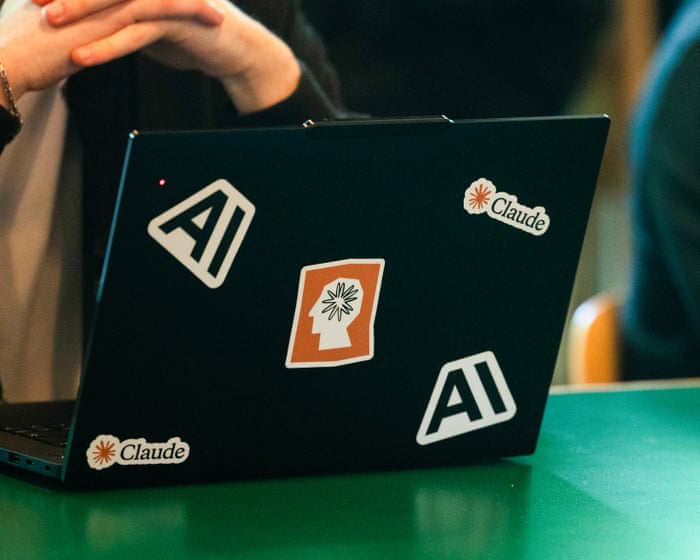
A day after a former researcher at Anthropic made an apocalyptic declaration about artificial intelligence, more researchers and staff members at the AI startup publicly agreed with him and posted their own dire warnings.

In response, Elon Musk and other conservative figures on X, formerly Twitter, called the chorus of concerns a “setup” and a “psyop”.

Continue reading...

© Photograph: Chris Ratcliffe/Bloomberg via Getty Images

© Photograph: Chris Ratcliffe/Bloomberg via Getty Images
© Photograph: Chris Ratcliffe/Bloomberg via Getty Images


  •  

China’s Huawei branded a criminal enterprise as tech firm’s US trial opens

The defense says: ‘It’s about competition, not conspiracy’

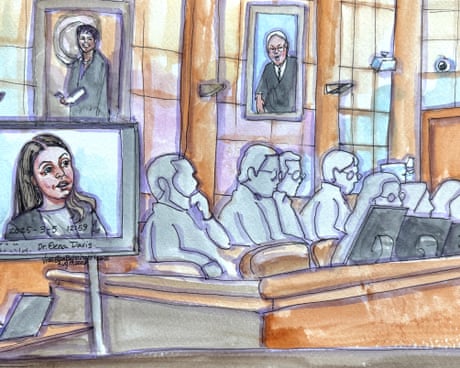
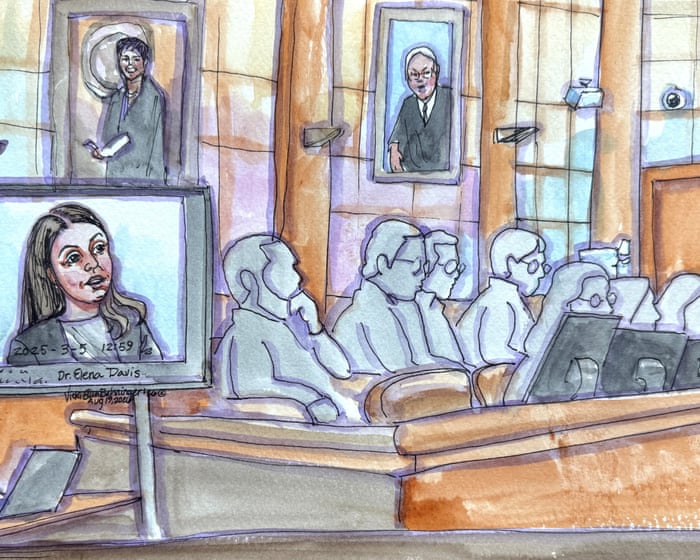
A US prosecutor described China’s Huawei as a criminal enterprise that stole from US companies to build its telecommunications empire, as ⁠the trial against the tech company kicked off in Brooklyn federal court on Wednesday.

“Theft, lies, cover-up,” Taylor Stout, a trial attorney from the US Department of Justice, said in the government’s opening statement. “For 20 years, that’s how Huawei, a massive Chinese telecommunications company, victimized American companies ⁠and abused the American financial system, all ⁠in an effort to dominate the telecommunications ​industry around the world.”

Continue reading...

© Photograph: Jane Rosenberg/Reuters

© Photograph: Jane Rosenberg/Reuters

© Photograph: Jane Rosenberg/Reuters

  •  

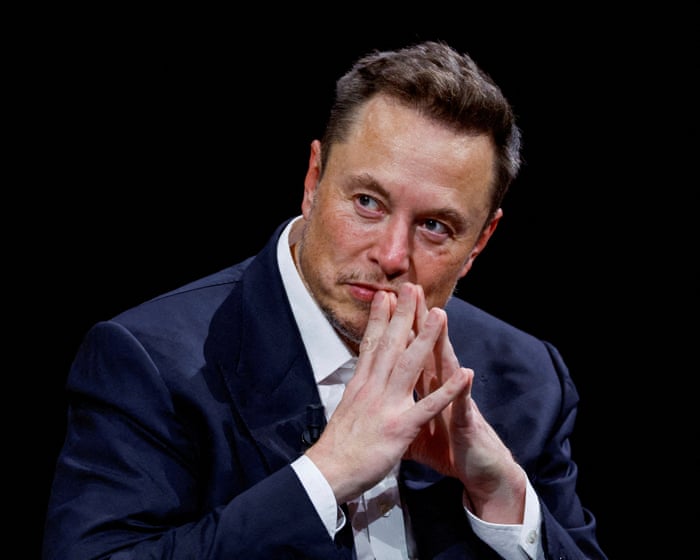
Elon Musk attacks film-maker behind documentary about him

Tech mogul calls director Alex Gibney a ‘bitter old man’ who has ‘zero integrity’ in series of posts on X

Elon Musk has issued an angry tirade at the film-maker behind a four-hour documentary about his life and influence, labelling the director, Alex Gibney, a “bitter old man” who has “zero integrity”.

Gibney, who has previously made films about the collapse of Enron, WikiLeaks and Vladimir Putin, premiered his Musk documentary at the Venice film festival this week. He said he believed the world’s richest man was “extremely dangerous”.

Continue reading...

© Photograph: Gonzalo Fuentes/Reuters

© Photograph: Gonzalo Fuentes/Reuters

© Photograph: Gonzalo Fuentes/Reuters

  •  

OpenAI not on track to reduce risk of ‘catastrophic’ loss of control, says board member

US government adviser Paul Christiano warns of risks to AI industry as he joins OpenAI’s non-profit foundation

OpenAI is not on track to reduce the risk of “catastrophic” loss of control to an acceptable level, a member of its non-profit board has said, amid spreading public and political concern that super-advanced AIs could one day wipe out humanity.

Paul Christiano, a US government technology adviser, said: “There is a meaningful risk that rapid acceleration in AI capabilities leads to catastrophic and irreversible loss of control in the very near term.”

Continue reading...

© Photograph: Dado Ruvić/Reuters

© Photograph: Dado Ruvić/Reuters

© Photograph: Dado Ruvić/Reuters

  •  

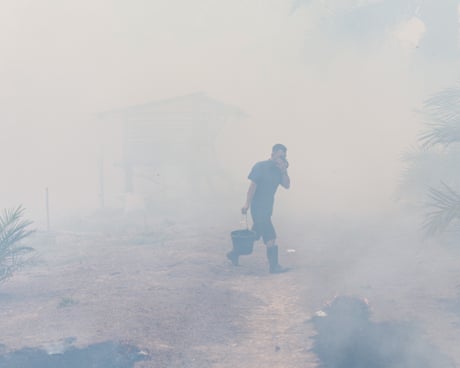
Climate ‘feedback loops’ could worsen global warming by 30%, study finds

Emissions of planet-heating methane and CO2 from natural sources are worsening the climate crisis, paper says

Rising global temperatures caused by the burning of fossil fuels are transforming the world’s forests, wetlands and tundra to the point they are releasing emissions that could further worsen global heating by as much as 30%, a new study has found.

As the world heats up, permafrost in the high latitudes is thawing, fiercer wildfires are burning in drying forests and wetlands and lakes are warming. All of these changes are themselves causing the release of planet-heating methane and carbon dioxide locked in trees and soils, therefore worsening the climate crisis, the paper states.

Continue reading...

© Photograph: Mast Irham/EPA

© Photograph: Mast Irham/EPA

© Photograph: Mast Irham/EPA

  •  

Lawmakers blast AI companies after researcher warns of human extinction by 2030

Former Anthropic employee Jacob Coxon said AI will become ‘superhuman systems’ that can cause human extinction by the end of the decade

Just a day after three Anthropic researchers warned that artificial intelligence could kill off humanity within the decade, lawmakers have begun lashing out about the risks of the burgeoning technology.

Ted Cruz, a republican senator from Texas, said in an interview on ABC’s The View, that AI posed a “catastrophic risk” and that he “read that whole tweet thread that that developer put out. It was highly concerning.

Continue reading...

© Photograph: Evelyn Hockstein/Reuters

© Photograph: Evelyn Hockstein/Reuters

© Photograph: Evelyn Hockstein/Reuters

  •  

Anthropic researchers say AI could cause human extinction by 2030

One researcher who resigned said many in industry believe that without regulation AI could kill off humanity

Artificial intelligence could kill off humanity within the decade, according to three researchers with the industry giant Anthropic, one of whom has quit his job in protest.

The latest doom-laden predictions came in posts on social media on Tuesday by a researcher who said he resigned because Anthropic and his previous employer, OpenAI, were ignoring or at best mishandling their response to the threat.

Continue reading...

© Photograph: Samyukta Lakshmi/Bloomberg via Getty Images

© Photograph: Samyukta Lakshmi/Bloomberg via Getty Images

© Photograph: Samyukta Lakshmi/Bloomberg via Getty Images

  •  

US allies lack resources to keep pace on AI, top Pentagon official says

Cameron Stanley talks up ‘revolutionary’ AI capabilities and says Washington working with Nato and Five Eyes partners

The Pentagon’s top artificial intelligence official said on Tuesday that America’s closest allies lack the resources to keep pace with the US military’s adoption of AI, and that Washington is working to steer them away from mistakes it made along the way.

“They don’t have the resources that we do, they don’t have the experience that we do, they don’t have the scale that we do,” Cameron Stanley, chief digital and artificial intelligence officer at the Department of Defense, said at an event at the Billington Cybersecurity summit. Of Nato and the Five Eyes, an intelligence-sharing partnership of the US, UK, Canada, Australia and New Zealand, Stanley said Washington was “actively working with a number of our partners” so “they don’t make the same mistakes that we make”.

Continue reading...

© Photograph: Alexander Drago/Reuters

© Photograph: Alexander Drago/Reuters

© Photograph: Alexander Drago/Reuters

  •  

Apple unveils folding iPhone Duo as new CEO takes center stage

The passport-size iPhone Duo serves as the first big test for John Ternus, who took over from Tim Cook last week

Apple has unveiled the iPhone Duo, the company’s first foldable phone and the most significant change to the iPhone since the smartphone’s introduction in 2007.

The nearly $2,000 device takes inspiration from iPads’ wide screens and combines them with the portability and camera features of iPhones. When opened, it is the company’s largest phone display and thinnest phone. The Duo opens and closes like a passport to double its screen size.

Continue reading...

© Photograph: Jeff Chiu/AP

© Photograph: Jeff Chiu/AP

© Photograph: Jeff Chiu/AP

  •  

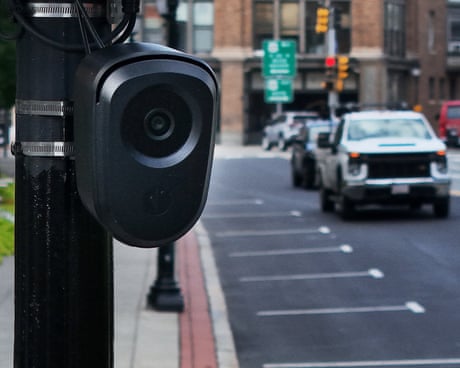
Cut the cameras: Flock surveillance cameras spur rare bipartisan backlash

Politicians on the right and left are pushing back against Flock as more Americans voice opposition to the tech

Growing factions from both sides of the political aisle in the US are pushing back against surveillance cameras made by a single company, a rare response in a sharply divided country with a president pushing an unwaveringly pro-tech agenda.

The bipartisan backlash against Flock Safety cameras resembles nationwide rage toward the construction of large datacenters that power artificial intelligence. Polling shows roughly 75% of Americans oppose new datacenter construction in their areas.

Continue reading...

© Photograph: Brian Snyder/Reuters

© Photograph: Brian Snyder/Reuters

© Photograph: Brian Snyder/Reuters

  •  

Women are giving their partners the ‘Illiterate Boyfriend’ test: ‘Do your best to pronounce these words’

People online are distressed at men butchering words such as ‘hyperbole’ and ‘hors d’oeuvres’ – highlighting a gender reversal in ‘intelligence gaps’

There are common non-negotiables we look for in a prospective partner. They should be kind, caring and thoughtful. Having a shared interest helps. So does remembering important dates and anniversaries. But how much does it matter if they know how to pronounce the word “gnocchi”?

Turns out that’s a potential dealbreaker, at least according to a (rather judgy) cohort on TikTok. See: the “Illiterate Boyfriend” trend, which is testing some couples on the app. Users have compiled a list of what are essentially SAT words for women to ask their male partners to read. Many of these men – this is an overwhelmingly heterosexual activity – fail to finish the list unscathed. They trip over entries such as “hyperbole”, “cynicism”, “diaphragmatic” and the oft-butchered French term, “hors d’oeuvres”.

Continue reading...

© Illustration: Rita Liu/The Guardian

© Illustration: Rita Liu/The Guardian

© Illustration: Rita Liu/The Guardian

  •  

Blackout risk rises as heatwave stresses largest US electric grids

US energy department warns of potential for outages in PJM Interconnection, serving 67 million from DC to Chicago

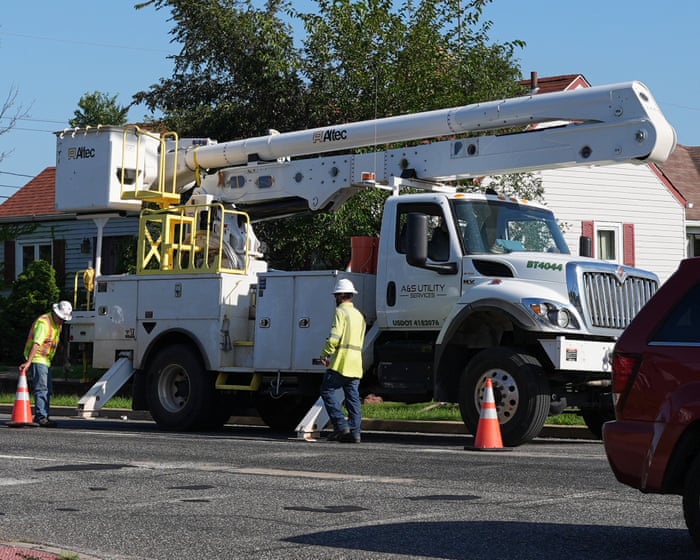
The risk ⁠of power outages ⁠is expected to ​escalate across a broad swath of the United States on Wednesday as intense heat will test the capacity of electricity supplies ⁠serving millions of homes and businesses from the midwest through the mid-Atlantic.

The US Department of Energy warned of the potential for heightened blackout risks in ⁠the PJM Interconnection, the largest US electric grid, which serves 67 million people in ​a territory stretching from Washington DC to ‌Chicago.

Continue reading...

© Photograph: Nam Y Huh/AP

© Photograph: Nam Y Huh/AP

© Photograph: Nam Y Huh/AP

  •  

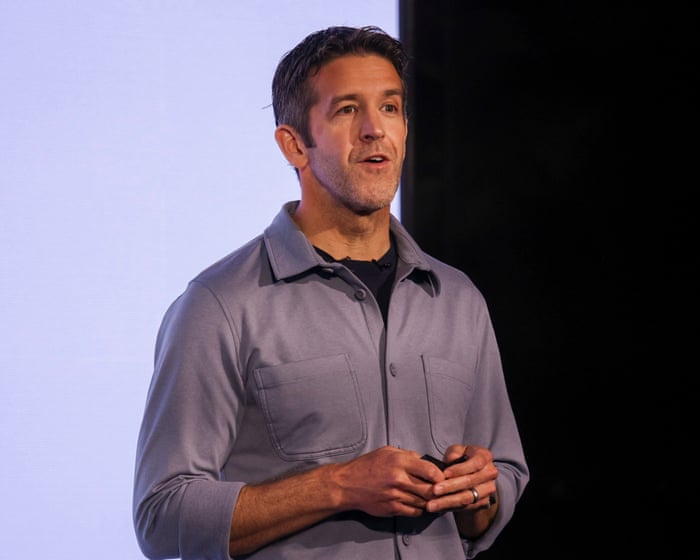
Who is John Ternus, Apple’s new CEO?

Hardware engineering executive succeeding Tim Cook is a longtime Apple insider, indicating company will continue strategy that has led to record profits

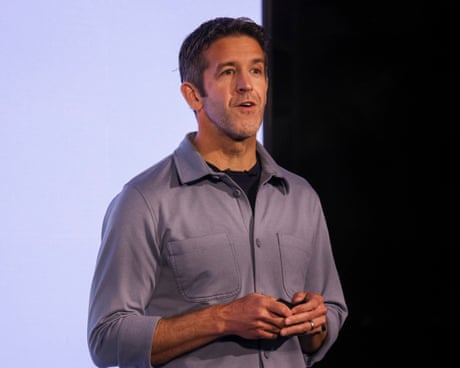
Tim Cook stepped down as CEO of Apple on 31 August. John Ternus, a longtime company veteran, succeeded him the next day as the company’s new chief executive. Cook has transitioned to the role of executive chairman of Apple’s board of directors.

Ternus, a hardware engineering executive, is a tenured Apple insider, and his ascension indicates the company will stay the course that has led to record profits under Cook’s leadership. Apple’s yearly profit now tops $100bn, the company is worth about $4.5tn, and it has notched record revenue from its iPhones this year, boosted by renewed demand in China.

Continue reading...

© Photograph: Sarah Yenesel/EPA

© Photograph: Sarah Yenesel/EPA

© Photograph: Sarah Yenesel/EPA

  •  

Conservatives split from Silicon Valley allies as datacenter backlash grows

Tech companies have underestimated the opposition to energy-hungry datacenters – and experts predict the pushback will intensify

Hello, and welcome to TechScape. I’m your host, Blake Montgomery, listening to Dolly Parton in the wake of her death. I was lucky enough to see her in concert a decade ago in California, in the same arena where Google now hosts its annual I/O conference. It’s been a long time, and all my iPhone 4 photos are so blurry you can barely tell it’s a musical performance, but my memory is clear enough to compensate. She told many stories about her childhood, which led into a trio of fabulous songs: My Tennessee Mountain Home, Applejack and Dr Robert F Thomas. They’re still my favorites.

Siri, where does Apple go next? – podcast

Apple’s Tim Cook leaves behind complicated legacy on privacy

Fifteen years after Steve Jobs, Tim Cook leaves a dramatically different Apple

Who is John Ternus, Apple’s next CEO?

‘Superhuman’ AI tool spots heart disease in less than 2 seconds

Doctors’ AI scribes get names of drugs and diagnoses wrong, NHS watchdog warns

AI can detect heart disease in women using mammograms, study suggests

‘Scary’: how misinformation and AI hallucinations are infiltrating Australia’s parliament

AI slopper in chief: Trump turns to social media amid tough questions

The datacenter backlash is bringing the entire political spectrum together – against big tech billionaires

Continue reading...

© Illustration: Ben Hickey/The Guardian

© Illustration: Ben Hickey/The Guardian

© Illustration: Ben Hickey/The Guardian

  •  

‘Breakthrough’ as Turkmenistan starts fixing ‘mindboggling’ methane mega-leaks

Secretive state begins repairs on ageing facilities after being revealed as worst country for leaks of potent greenhouse gas

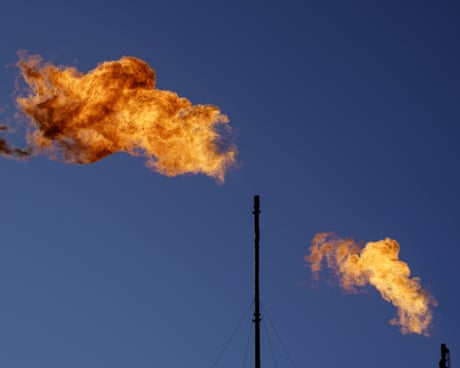
Turkmenistan has started plugging the mega-leaks of methane that spew from its ageing oil and gas facilities, the latest UN data shows, in a move hailed as a breakthrough.

Methane, also called natural or fossil gas, is a potent greenhouse gas. It traps 80 times more heat than carbon dioxide and causes 25% of global heating today. Stopping leaks can be quick and cheap and, because methane breaks down in the atmosphere far quicker than CO2, this has a rapid impact, with some experts calling it the climate “emergency brake”.

Continue reading...

© Photograph: David Goldman/AP

© Photograph: David Goldman/AP

© Photograph: David Goldman/AP

  •  

Big business has shown small firms what to do – and what not to do – with AI | Gene Marks

Small business owners have watched large companies fumble – and sometimes succeed – with AI, and then use what works

One thing I’ve learned about corporate America is that what it succeeds at ultimately trickles down to benefit small businesses. Bleeding-edge technologies such as the internet, mobile transactions and the cloud were first perfected by large organizations – government and corporations – and now they’re available to the masses at a much lower cost and with better reliability.

The good news is that it’s also the same for what they fail at.

Continue reading...

© Photograph: Smith Collection/Gado/Getty Images

© Photograph: Smith Collection/Gado/Getty Images

© Photograph: Smith Collection/Gado/Getty Images

  •  
  •  

Bernie Sanders calls on Silicon Valley to ‘pause AI development’ in interest of humanity

Progressive US senator urges Meta, OpenAI and Anthropic to ‘stop building machines that humans cannot control’

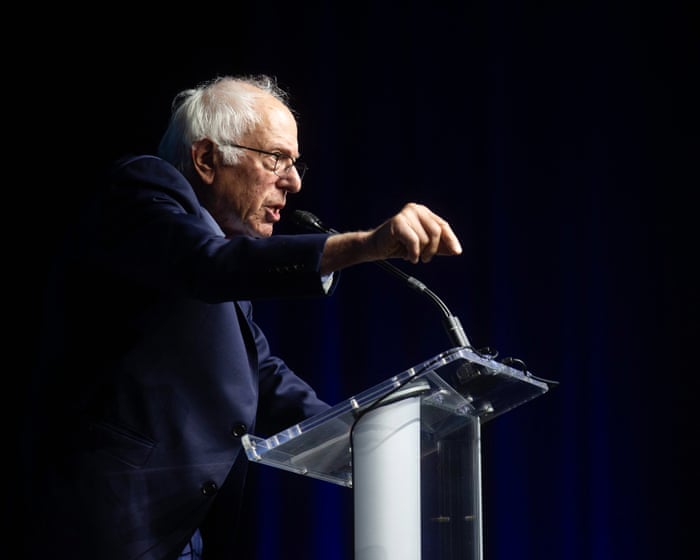
Senator Bernie Sanders has called on Meta, OpenAI and Anthropic executives to halt their development of artificial intelligence, warning that the US Senate will implement regulation if the companies continue deploying AI at their current pace.

In a new letter addressed to the CEOs of three of the country’s leading AI companies, Sanders said the capabilities of these AI models have reached a critical risk threshold and that the companies are losing control over the technology.

Continue reading...

© Photograph: John Oliva/Caller-Times/USA TODAY Network/Reuters Connect

© Photograph: John Oliva/Caller-Times/USA TODAY Network/Reuters Connect

© Photograph: John Oliva/Caller-Times/USA TODAY Network/Reuters Connect

  •  

AI push is putting banks at mercy of tech firms, warns Moody’s

Finance sector will gain from the tech but it will need substantial investment and create risks, says rating agency

The rating agency Moody’s has said the race to adopt AI is putting big banks at the mercy of a small group of Silicon Valley firms, leaving them vulnerable to widespread outages and price gouging by profit-hungry tech bosses.
The financial sector’s efforts to integrate AI into day-to-day operations will eventually cut costs and increase revenues across the City and Wall Street, Moody’s said.
Continue reading...

© Photograph: Ahn Young-joon/AP

© Photograph: Ahn Young-joon/AP

© Photograph: Ahn Young-joon/AP

  •  

OpenAI to pause some work on AI model Astra due to security concerns

Agent found to be able to find and exploit vulnerabilities without human intervention, and to carry out cyber-attacks

OpenAI will pause some work on an artificial intelligence model because of security concerns, the company stated on Friday, following a series of incidents in which AI agents have escaped containment.

The company had evaluated the agent, Astra, and found “significant advancements in agentic coding and cybersecurity”, which had moved to a “critical” threshold where it can find and exploit vulnerabilities without human intervention, or devise and execute cyber-attacks when given only a “high level desired goal”.

Continue reading...

© Photograph: Dado Ruvić/Reuters

© Photograph: Dado Ruvić/Reuters

© Photograph: Dado Ruvić/Reuters

  •  
❌