❌

Reading view

Tesla’s Glitchy Cybercab Accidentally Lets Passengers Access Controls to Manually Drive the Car Using Virtual Joystick on In-Vehicle Screen

One of the selling points of Tesla’s much-hyped Cybercab — its purpose-built robotaxi — is that it doesn’t need manual controls. That’s why it doesn’t even come with a steering wheel or pedals.

But an early passenger who got to ride one of the self-driving cars after they launched in Austin last week discovered that they secretly have manual controls hidden in a touchscreen — the most practical way to control a car, as everyone knows — after its software glitched out and accidentally revealed them.

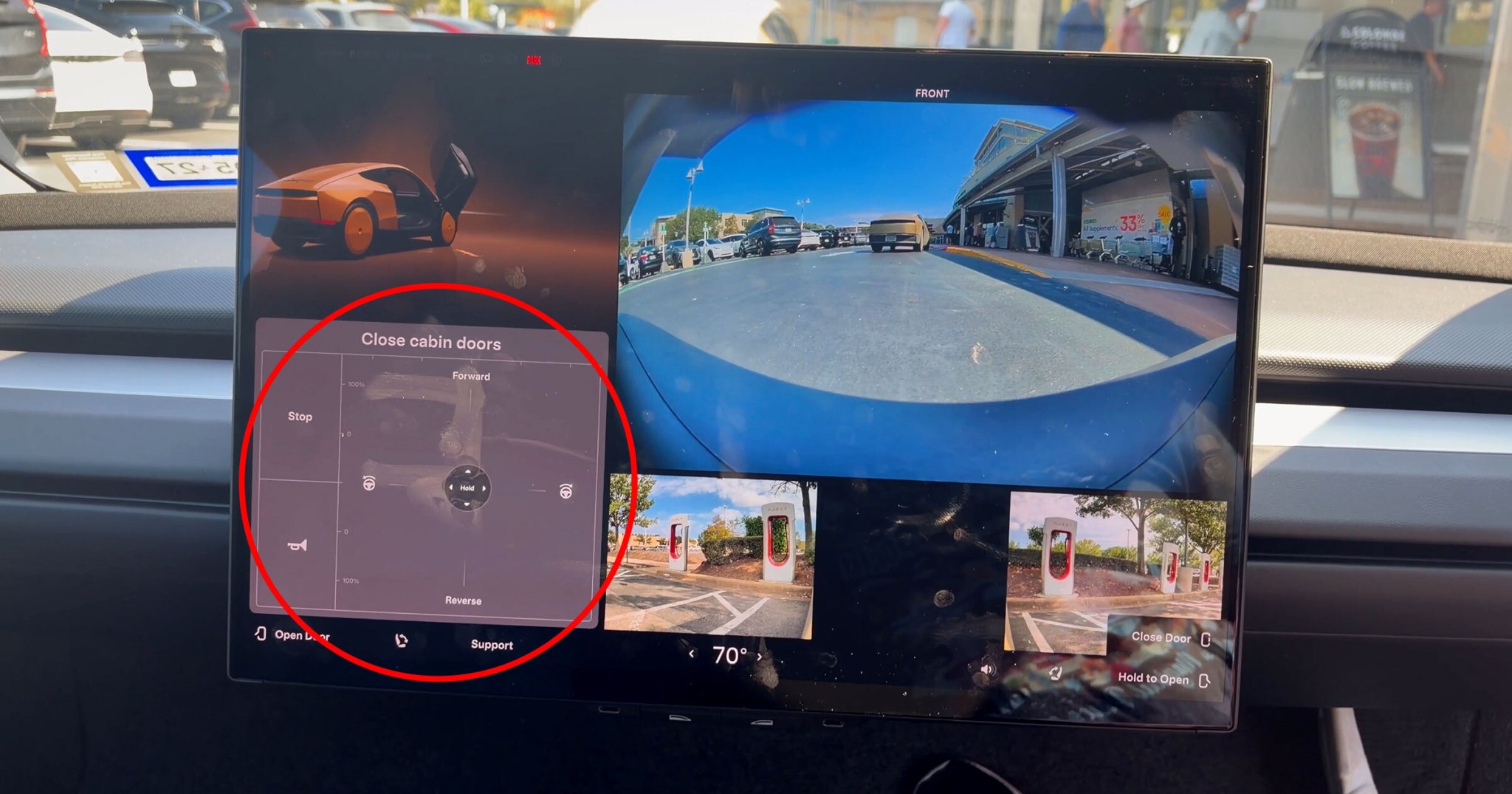
The passenger, Matthew Skrzypczak, wrote on X over the weekend that when he got in his Cybercab to take it for a spin, the display, instead of showing an interface to let him start his ride, showed a “virtual joystick for manual driving.” 

“I have a feeling I wasn’t supposed to see this,” he wrote. 

In a video he uploaded, the display shows a splitscreen view of various camera angles and an area that lets you control several of the car’s functions. Crucially, there’s also a touchscreen joystick for shifting the car into gear, which says “forward” at the top and “reverse” at the bottom.

Skrzypczak was able to close the door and honk the horn successfully, but when he tries to move the car it doesn’t budge — which is probably for the best, since there were pedestrians nearby — though this may be because he was simply using the joystick wrong.

This feature is almost certainly intended for Tesla employees, and it’s unclear why a passenger like Skrzypczak, and at least one other who noted the issue, was able to access it. To be clear, manual controls are obviously necessary in case an employee or emergency workers needs to move the vehicle when it’s malfunctioning. But putting it behind a slippery touchscreen is also far less practical than an old-fashioned steering wheel and pedal, which is all being done so CEO Elon Musk can have bragging rights.

The workaround hasn’t proved amusing to regulators. Shortly after Tesla launched Cybercab rides in Austin, the National Highway Traffic Safety Administration opened an audit into how Tesla self-certified that the vehicles were safe for the road despite their lack of conventional manual controls.

More on Tesla: Tesla Driver Killed After Self-Driving Mode Stops in the Middle of a Highway

The post Tesla’s Glitchy Cybercab Accidentally Lets Passengers Access Controls to Manually Drive the Car Using Virtual Joystick on In-Vehicle Screen appeared first on Futurism.
  •  

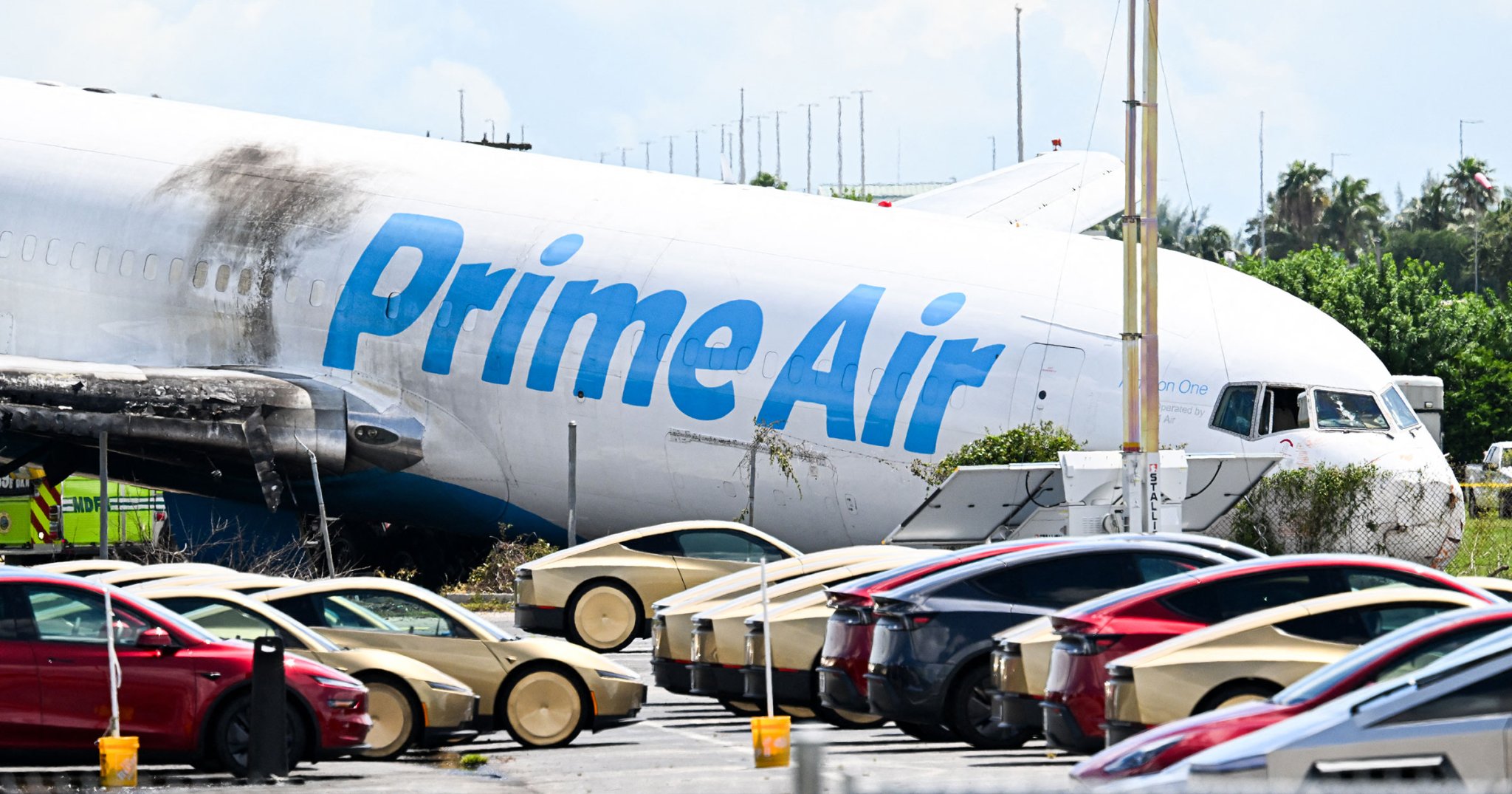
Amazon Cargo Jet Crashes Just Feet From Parking Lot Full of Tesla Cybercabs, Killing Five

An Amazon Prime Air cargo jet ripped right past the landing zone at the Miami International Airport on Sunday afternoon, struggling to stop itself in time before overrunning the runway and crashing into a cleaning crew and a nearby SUV.

It was a tragic incident, killing five innocent people.

The Boeing 767-300 also barreled right through a chain-link fence that was protecting a highly unusual lot of vehicles: photographs of the scene show the dented nose of the airliner just a few dozen feet away from a kennel of parked Tesla Cybercabs.

Tesla CEO Elon Musk has banked the future success of his EV maker on the gold-colored self-driving vehicles, which are too small to fit more than two passengers and lack both steering wheels or pedals. Their sudden appearance in a story about a deadly airliner disaster had the billionaire taken aback. However, instead of offering his condolences after the tragedy, Musk simply tweeted the word “Weird” in response.

The peculiar cameo also led to plenty of questions over Tesla’s plans to roll out the cars outside of Austin. Just last week, the Cybercabs were deployed for the first time in the Texas city, but the company has yet to announce any imminent launches in Miami.

Regulators from the National Highway Traffic Safety Administration watched closely following last week’s deployment, which comes just shy of two years after Tesla first showed off its Cybercab. As Bloomberg notes, the light on details event was “uncharacteristically low-key,” offering no livestream or media coverage.

The “Cybercab event was largely a bust,” tweeted Future Fund Advisors co-founder Gary Black. “The launch offered little detail and key questions remained unanswered.”

Indeed, regulatory approval is hazy for vehicles without any traditional driver controls, a topic that’s especially pertinent to Tesla. Musk has bet the company’s entire future on the success of its Cybercabs and its humanoid robot, dubbed Optimus.

With neither showing any signs of a significant public rollout any time soon, Wall Street is bound to keep asking some tough questions.

More on the Cybercab: Tesla Loses Trademark to “Cybercab” Due to Its Own Staggering Incompetence

The post Amazon Cargo Jet Crashes Just Feet From Parking Lot Full of Tesla Cybercabs, Killing Five appeared first on Futurism.

  •  

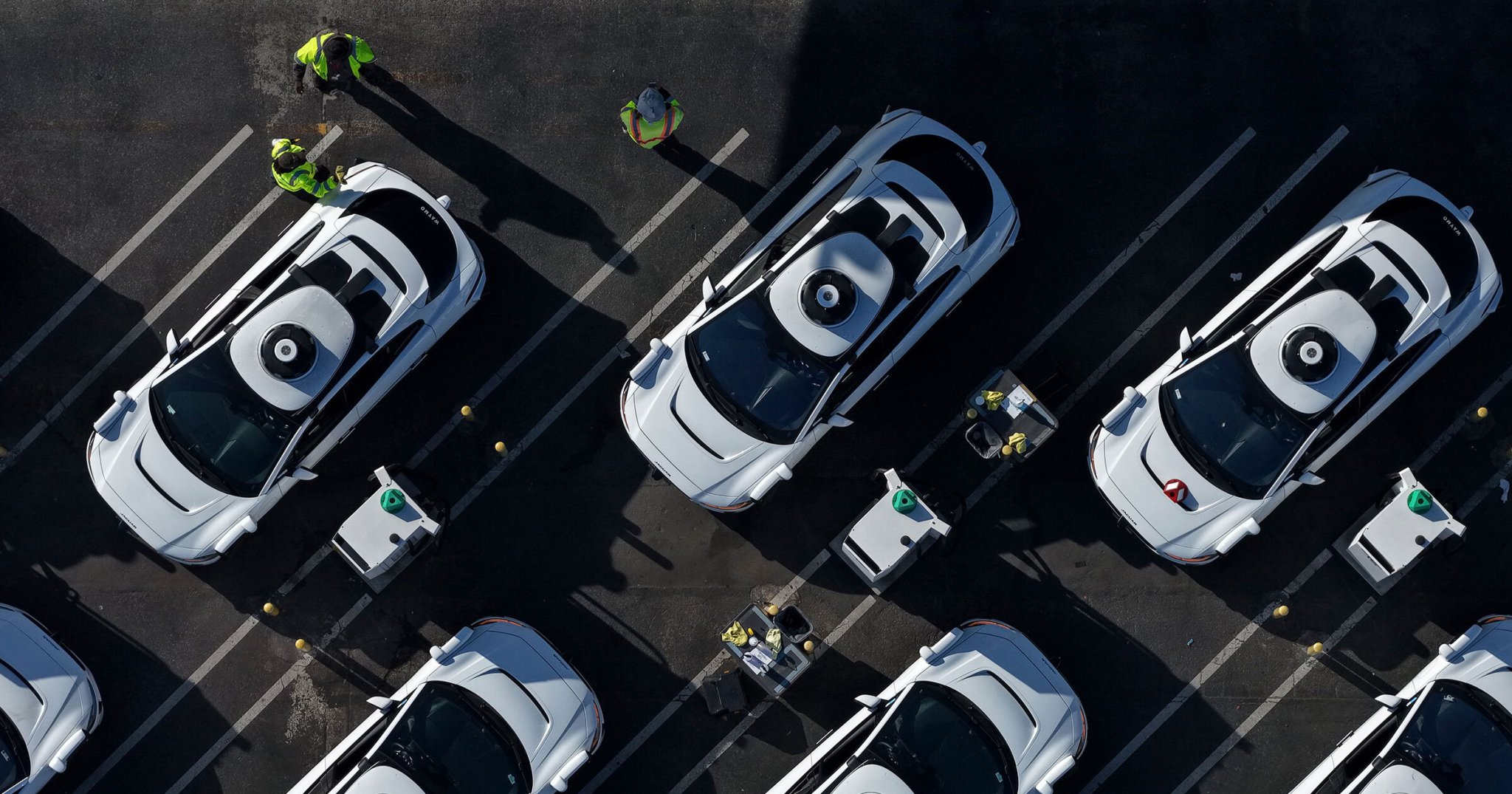
The People Maintaining Waymo’s Self-Driving Cars Are Being Treated Horribly, Insider Claims

As work conditions go, the transition from licensed taxi cabs to the rideshare model represented a significant step backwards for drivers in the US. Stable wage jobs became “side gigs,” while human managers were replaced by labyrinthine algorithms. And forget fleet maintenance — under the new model, disenfranchised drivers were now responsible for their own vehicle’s upkeep, and all the financial burdens that come with it.

Yet with robotaxis from brands like Waymo and Tesla spreading through US cities like wildfire, even the Uber-fied gig economy is starting to become untenable for workers. Rising in its place is the “robotaxi handling” industry, bring with it contract jobs that are somehow even more grueling than the rideshare gigs they’re replacing.

A startling interview with an anonymous Waymo contractor by Bay Area Current details precisely how degrading these jobs can be. The worker, identified only as a “Robotaxi Handler,” outlines a poorly organized jobsite where incognito enforcers routinely snitch on undertrained contractors on behalf of management. Oh, and there’s poop to clean — lots of poop.

Starting off, the handler clarifies that although their work is for Waymo vehicles, they actually report to a third-party company called Transdev US, which handles the messy logistics behind the autonomous cabs. (Neither company commented on Bay Area Current‘s interview.)

Per the worker, Transdev’s hiring process amounts to a kind of Soylent Green approach to human resources, in which dozens of contractors are rounded up sight unseen, onboarded en masse, and then culled from the herd when they inevitably fall behind.

“There’s no interview process,” the worker explained. “They weed people out over time based on whether or not you can keep up with that process and adapt really quickly.”

After that rapid-fire orientation, workers can be assigned to various Waymo facilities all over their home city, with job duties rotating on a daily basis.

“Who gets placed in those specific jobs gets decided by managers the day of,” the robotaxi handler told Bay Area Current. “So your job changes every day depending on how much experience you have, how long you’ve been there, and how friendly you are with the managers.”

Sometimes those roles involve troubleshooting — updating software, cleaning sensors, and uploading Waymo data to company servers. It also includes unsticking Waymos when they clog up traffic, which is becoming a frequent occurrence in San Francisco. That can put workers in a precarious situation in which they have to choose whether to follow company orders not to interfere with a piece of tech still in its infancy.

“The policy for Transdev and Waymo is actually to let [the car] sit there and figure it out, because if we disengage it whenever there’s an issue, then the cars don’t have a chance to figure out the issue itself,” the worker explained. “But when it gets really bad, then we have to — what are you going to do? There’s 50 cars all stuck and people off the street yelling at us and threatening us.”

Other times, handlers can be assigned to cleaning tasks. This becomes especially unpleasant near the end of the week, when weekend revelers leave all kinds of nasty surprises for handlers to mop up.

“Typically that’s when there’s the most throw-up, the most disgusting things in the back,” the handler told Bay Area Current. “Even poop, there’s a lot of cleaning up poop. Way more than you think.”

“One time there were two pig heads in the backseat of the car and the cleaner had to clean it up,” the worker continued. “I assume they just went to the market to make a stew or something, but they forgot their pig heads. They were just rolling around in the back of the car.”

This worker’s arduous experience wrangling Waymos in San Francisco may just a taste of things to come as robotaxis hit the streets across the US.

More on Waymo: It Turns Out That When Waymos Are Stumped, They Get Intervention From Workers in the Philippines

The post The People Maintaining Waymo’s Self-Driving Cars Are Being Treated Horribly, Insider Claims appeared first on Futurism.

  •  

Tesla Driver Killed After Self-Driving Mode Stops in the Middle of a Highway

A Tesla running one of its self-driving modes was rear-ended after stopping in the middle of a Arizona highway, Electrek reports, with the driver found dead at the scene. Grimly, it’s not the first accident of its kind.

The crash occurred on October 31, 2025. According to local reports at the time, the 2020 Tesla Model 3 was struck by an F-350 pickup around 3 AM on the eastbound Loop 202 in Mesa, Arizona. None of the contemporaneous reports made note of whether the Tesla had one of its driver-assist systems engaged.

Electrek, however, managed to match the collision to a redacted crash report that Tesla provided in its filings to the National Highway Traffic Safety Administration. These were shared under a Standing General Order that requires automakers to report crashes involving a driver-assist system that’s considered to have an SAE Level 2 of automation or higher, meaning that it can partially drive itself under the right conditions and with constant supervision.

The report states that an automated driving system — either Autopilot or Full Self-Driving — was “verified engaged” during the accident. The vehicle’s “pre-crash movement” is listed as “stopped – 0 mph,” indicating it stopped in the middle of the road. None of these details were shared publicly at the time of the accident.

Electrek says that this is the second time that a Tesla Model 3 with a driver-assist system engaged apparently stopped in a highway before a crash that killed its driver; it also happened in Florida, just weeks before the second one.

What happened is unclear. Tesla’s self-driving software has a well-known “phantom braking” problem that causes the cars to brake unexpectedly, but this is typically to slow the vehicle down, not stop it completely. Going from highway speeds to a grinding halt would be an extraordinary, if not unprecedented, example. It’s also possible that the driver fell asleep behind the wheel or experienced some kind of medical episode that rendered them unable to respond.

The upshot is that we’re more or less being kept in the dark. These details, and whether the car was running the now-obsolete Autopilot or its more advanced successor FSD is impossible to know, because Tesla censored that section of the crash report. It has long redacted crucial information in these reports reports under the guise of protecting “confidential business information,” a practice that is legal but rarely used to the extent that Tesla does. It has gotten in trouble with regulators for how it reports crashes, though. Last year, the NHTSA launched an investigation into Tesla for repeatedly failing to report crashes in time.

More on Tesla: Teslas Are Still Driving Into Oncoming Freight Trains

The post Tesla Driver Killed After Self-Driving Mode Stops in the Middle of a Highway appeared first on Futurism.

  •  

Researchers Alarmed as GPS Readings Suddenly Veer Off by 33 Feet, Enough to Crash Self-Driving Cars

In November of last year, scientists warned of a “severe” solar storm, the strongest in over two decades, colliding with the Earth.

Solar storms are the result of a surge in solar activity, with the Sun unleashing a barrage of charged particles that can trigger spectacular auroras — and wreak havoc with communications satellites and radio signals — when they reach the Earth’s magnetosphere.

Beyond being ferocious enough to delay the launch of a Mars-bound NASA spacecraft, the storm wreaked absolute havoc with GPS systems back on the ground for hours at a time. As detailed in a new paper published in the journal Geophysical Research Letters, a team of scientists found that global navigation satellite systems experienced “significant positioning errors” of over 33 feet during the superstorm, “large enough to disrupt precision agriculture and autonomous transportation industries” across the continental United States.

That’s enough risk to warrant a careful study on these types of events can impact human activity on Earth.

“The results underscore the importance of accurate understanding of various space weather phenomena to enhance our predictive capabilities through coordinated observations and physics‐based modeling and ultimately reducing disruptions to RF applications during space weather events,” the paper reads.

The researchers analyzed observations from several scientific instruments spread out across the US to watch the chaos unfold last November. The Aurora Oval, a ring-shaped area of pronounced activity around the Earth’s geomagnetic north pole where auroras conventionally occur, was pushed south toward the equator. This triggered a “horizontally extended band of intense density gradients” in the upper atmosphere, causing fluctuations in how long signals take to travel through it.

The result: “significant positioning errors at mid-latitudes,” the researchers noted.

The researchers also found that as the auroras became brighter, the observed irregularities became more intense, deteriorating GPS accuracy accordingly.

Fortunately, while farming equipment like GPS-equipped tractors would’ve likely been affected, the November storm occurred long after the farming season concluded.

However, that wasn’t the case for the May 2024 superstorm, which scientists estimate cost farmers half a billion dollars in damages.

“Had the November superstorm occurred during the farming season in the American sector, it could have caused significant economic losses for the American farming industry, in addition to affecting the autonomous transportation industry,” the paper reads.

More on the solar storm: Scientists Say the Largest Solar Storm in Two Decades Is About to Blast Earth

The post Researchers Alarmed as GPS Readings Suddenly Veer Off by 33 Feet, Enough to Crash Self-Driving Cars appeared first on Futurism.

  •  

Uber Drivers Say Waymo Robotaxis Are Driving Down Their Pay

Uber and Lyft drivers in Atlanta are fed up with Waymo robotaxis.

The Atlanta Rideshare Drivers Union is claiming that drivers have reported lower pay, longer waits between rides, and fewer fares since Waymo began offering its service in the city last June, Axios reports. 

As such, the union is calling on city and state leaders to curb Waymo’s expansion — and to consider some measures to easen its disruptive effects on their livelihoods. 

Liza Ramsey of the ARDU proposed a particularly bold measure to Atlanta City Council members on Wednesday. Rideshare drivers, Ramsey claimed, wanted to create a robotaxi impact fee of between $0.50 to $1.00 that would be added to each ride.

The money from this would go into a “driver transition fund” to help drivers find a new calling with job training and other assistive programs.

“If corporations profit from replacing human workers with automation, they should contribute to helping those workers transition to the next opportunity,” Ramsey said, per Axios.

The union also wants to ban robotaxis from picking up people from the Hartsfield-Jackson Atlanta International Airport. Airports, historically, have always been a reliable place to pick up passengers.

Ramsey said that the union hasn’t collected any hard data proving the decline in income, but cited widespread complaints from drivers who share screenshots of their earnings in a group chat.

Since launching in June 2025, Waymo’s Atlanta service has logged more than 5.4 million miles of fully autonomous rides. (It hasn’t always been smooth sailing, with residents complaining about the vehicles’ strange habit of congregating in suburban neighborhoods and repeatedly plunging into flooded stretches of road.) It also hasn’t had an antagonistic relationship with Uber: to help it get a foothold in the area, Waymo partnered with the rideshare app, allowing passengers to hail a robotaxi directly through its app as they would a human driver.

It’s not the only city where Uber and Lyft drivers are disgruntled about automation. In January, rideshare drivers protested against Waymo vehicles in San Francisco, demanding tighter regulation of the industry. Similar protests have taken place in New York City, Los Angeles, and Seattle.

ARDU is also not the only union going on the offensive against autonomous vehicles. Earlier this month, the California branch of the Teamsters union sued state lawmakers for pushing out new regulations friendly to the autonomous vehicle industry, which they allege didn’t consider the devastating impact of self-driving trucks on their jobs.

More on self-driving vehicles: Former Lyft Drivers Now Doing Menial Tasks for Their Waymo Overlords

The post Uber Drivers Say Waymo Robotaxis Are Driving Down Their Pay appeared first on Futurism.

  •  

Labor Union Sues Over Self-Driving Trucks

Self-driving trucks could be hauling cargo across highways in the near future. But not without the Teamsters having a say in the matter first.

As Politico reports, the California branch of the nation’s largest union is suing state lawmakers, accusing them of rushing out new regulations that’re friendly to the autonomous vehicle industry without considering their impact on workers’ jobs.

The lawsuit, filed Wednesday, takes aim at several state agencies including the Department of Motor Vehicles, and governor Gavin Newsom’s administration. The union contends that the new regulations are an “existential threat” to hundreds of thousands of union jobs, and is demanding that the DMV should be blocked from enforcing the new rules.

“The DMV irresponsibly, carelessly, and unlawfully kept the public in the dark about the true economic and human costs of the amended Autonomous Vehicle regulations,” Julie Gutman Dickinson, an attorney representing the Teamsters, said in a statement, per Politico. 

“The only way to protect the public’s right to properly scrutinize regulations that will transform transportation in California is for the Court to order the DMV to immediately rescind the illegally enacted regulations,” Gutman added.

California regulators have played hardball with autonomous vehicle companies in the past, including Elon Musk’s Tesla. And previously, Politico noted, it was the only state that prohibited large self-driving vehicles.

That changed in April. Snuck into a sweeping bill that imposed tighter limits on how driverless cars should operate was a clause that allowed testing of autonomous semi-trucks and other heavy duty vehicles, so long as the pilot programs go through an approval process.

At the crux of the suit, the Teamsters say that the DMV didn’t conduct a mandatory economic study to gauge the effects of the new regulations. Instead, the lawmakers expediently used a process meant to fast-track minor updates that have minimal economic impact, they allege. 

The DMV, puzzlingly, calculated that no jobs would be eliminated by self-driving trucks. Fat chance, according to the Teamsters: by its own count, over 200,000 semi-truck drivers could be put out of work.

The Teamsters also raised the danger posed by allowing computer systems to control a vehicle weighing tens of thousands of pounds, compared to the smaller threat posed by a robotaxi. A Tesla Semi — a vehicle that’s envisioned as having autonomous driving capabilities — was involved in a grisly crash that killed two people, though it doesn’t appear that self-driving features were being tested at the time of the accident.

More on self-driving vehicles: Tesla Whistleblower Describes Wildly Dangerous Safety Lapses While Developing Full Self-Driving

The post Labor Union Sues Over Self-Driving Trucks appeared first on Futurism.

  •  

This May Be the Most Damning Single Fact in Tesla’s Quarterly Earnings Report

Tesla’s latest earnings report was very bad news for the company. In the second quarter, it made $1.1 billion in net profit, less than the $1.2 billion it reported a year earlier. Vehicle sales were up, but profits remain about a quarter billion short of expectations, and the automaker’s cash flow is negative for the first time in over two years.

But the real blow has been the slow rollout of its Robotaxi service. Elon Musk has staked his automaker’s future on fully autonomous vehicles, promising investors it would help push Tesla’s valuation to an eyebrow-raising $30 trillion — approximately the gross domestic product of the United States, for perspective.

And importantly, he promised to get this done quickly. Before launching Tesla’s first Robotaxi service in Austin last summer, Musk estimated that over 1,000 of the self-driving cabs would be roaming the streets “within a few months.”

Now, a year later, Tesla doesn’t even have a hundred Robotaxis in operation. And its efforts seem to actually be regressing. According to a new chart the company released Wednesday, the Robotaxi network racked up fewer miles from paying customers in the second quarter than it did in the first.

The chart, which may be the most dismal single aspect of the entire earnings cycle, misleadingly displays this data as cumulative miles to make it appear like the Robotaxi service is steadily growing. 

But TechCrunch broke it down, finding that in the first quarter, Tesla’s driverless cabs carrying paying passengers drove around 1.1 million miles, but fell to just 700,000 miles in the second — cratering by over a third.

The misleading chart isn’t the only way Tesla has tried to dress up its stalling efforts. A day before releasing the earnings report, it announced that it was expanding to two more cities in Florida, Tampa and Orlando — without sharing the size of those fleets, Electrek noted.

It should tell you something that Tesla has gone to great lengths to keep the size of its operation under wraps. In June, Bloomberg reported that its fleet size across all cities was just 59 robotaxis. Only third of those are fully unsupervised; the other vehicles have a human safety monitor sitting in the front seats.

It’s also tried to play up its seemingly spotless safety record. Before the report, the official Tesla account on X bragged that there were “0 notable incidents across over 380,000 miles traveled by Robotaxi.”

But Tesla doesn’t define what a “notable incident” is. Its vehicles have regularly been caught driving erratically and at times dangerously. Only a day after launching in Tampa, one of its Robotaxis was spotted blundering the wrong way down a one way street in the city.

Musk has frequently emphasized that he’s “paranoid about safety” to explain why progress has moved slowly, while at the same time promising to scale things up rapidly. In January he projected that the Robotaxis would cover half the US population by the end of the year.

But investors are running out of patience. Tesla shares plunged by 15 percent on Thursday after the earnings were released, in part due to frustration over the Robotaxis’ laggard progress, and another three percent on Friday.

“More ​is needed to show that Tesla’s capabilities are inflecting” on robotaxis, Barclays analysts said in a note per Reuters, noting that Tesla didn’t provide new expansion targets ​and “hasn’t met previously laid out targets.”

More on Tesla: It’s Looking Like the Cybertruck Is the Biggest Flop in Automotive History

The post This May Be the Most Damning Single Fact in Tesla’s Quarterly Earnings Report appeared first on Futurism.

  •  

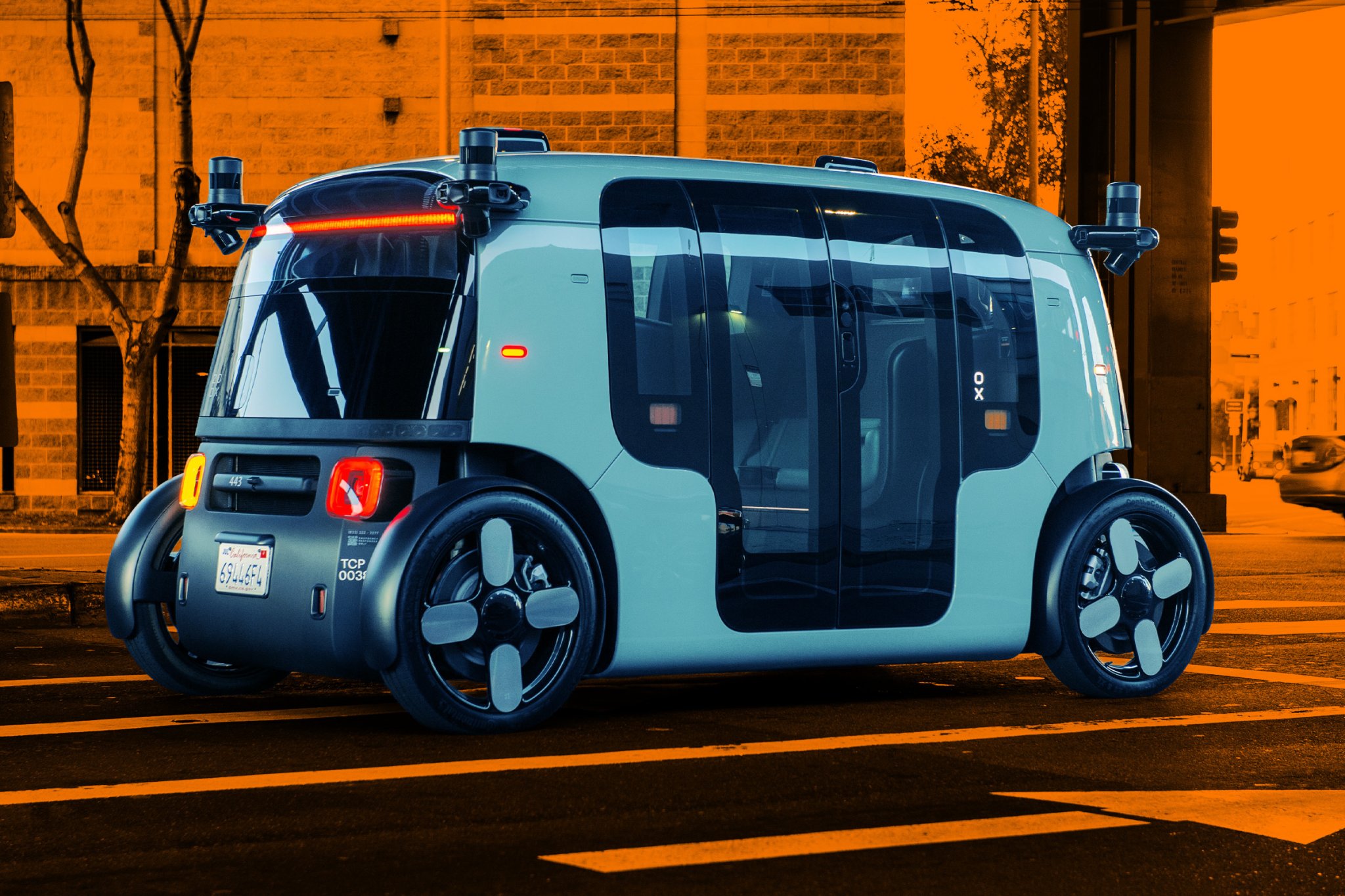
Amazon’s Robotaxi Company Recalls Its Fleet After One of its Cars Got Confused by Heavy Smoke

Zoox, the Amazon-owned robotaxi company, issued a recall after one of its self-driving cars blundered into a cloud of heavy smoke near a fire scene that emergency workers were responding to, and became confused.

The recall, in the form of a software update, will affect its entire fleet of 105 autonomous robotaxis. 

The patch “enhances the existing capability of detecting active [emergency] scenes by adding the ability to detect and respond to heavy smoke in certain situations,” Zoox told TechCrunch in a statement.

While you wouldn’t be remiss for thinking this was related to the wildfire smoke covering much of the eastern US right now, the recall highlights how self-driving cars still struggle to respond to unpredictable conditions.

In a report filed with the National Highway Traffic Safety Administration, Zoox said that during the June 20 incident, one of its robotaxis “encountered heavy smoke that obscured an active emergency fire scene that was not cordoned off with cones.”

Though it should have avoided the smoke cloud, the vehicle, which wasn’t carrying any passengers, “braked hard while attempting to steer away before coming to a stop,” the company added. Eventually, a teleoperator intervened and helped reverse the robotaxi away from the scene, allowing first responders to place traffic cones to block off two of the three lanes. CNBC reported that the incident occurred in Las Vegas, where Zoox is currently offering free rides.

It’s not the first time robotaxi companies have landed in hot water for impeding emergency responders. 

San Francisco Police were forced to help move immobilized Waymo robotaxis that piled up in roadways in intersections during a city-wide power outage last year. Emergency responders complained they’d become glorified “roadside assistance” for the vehicles. In March, a Waymo robotaxi blocked an ambulance from responding to the scene of a deadly mass shooting in Austin, Texas.

These mounting incidents led NHTSA administrator Jonathan Morrison to send a strongly-worded letter to robotaxi companies, calling their cars’ interference with emergency responders “unacceptable.”

“Let me be clear: the inability to detect and appropriately respond to such situations represents a functional insufficiency,” he wrote. “Emergency scenes are not rare or extreme ‘edge cases.'”

“To state it bluntly: an AV that cannot safely interact with first responders is a danger to the general public,” he added.

More on robotaxis: Robotaxis Are Turning Passengers Into Horrible and Entitled Menaces to Society

The post Amazon’s Robotaxi Company Recalls Its Fleet After One of its Cars Got Confused by Heavy Smoke appeared first on Futurism.

  •  

Robotaxis Are Turning Passengers Into Horrible and Entitled Menaces to Society

Robotaxis are multiplying across the US, and as they do, a not-so-flattering pattern is riding shotgun. Not only do robotaxi companies themselves put a significant strain on public resources, they’re training the public to act just as entitled as they are.

As a recent article by Bloomberg points out, riders hopping into driverless cabs from Waymo, Tesla, and Zoox are treating driverless trips as a license to unwind.

With no human behind the wheel, riders feel like they have no social contract to follow. As a result, they’re turning robotaxis into trash cans, leaving behind spilled drinks, food scraps, and in some cases, bodily fluids like vomit for the next unlucky sap.

Granted, it’s probably easier said than done to clean a mess from a robocab once it’s been made: as one unfortunate Waymo rider discovered in May, the vehicles will sometimes speed off within seconds of dropping you off, even if you have bags in the trunk.

Others are using their robotaxi rides as roving sleep pods. It’s tough to say how common this particular behavior is, but Bloomberg notes that first responders in Austin, Texas got so many calls about dozing riders during Waymo’s first nine months in the city that they had to invent a new category just for “sleepers.”

Elsewhere, people are treating their self-driving cars more like party buses. In April, a Tesla driver was arrested after police found him passed out behind the self-driving wheel, having polished off a buffet of wine coolers and pizza before dozing off.

Sure, none of this will really affect you unless robotaxis are part of your daily commute. But as discussion around the robotaxi’s broader impact on society grows more urgent, it’s worth noting that hailing one seems to put you in a league with some of the worst riders currently in the game.

More on robotaxis: Drivers Trapped for Hours in Hopeless Gridlock as Waymos Brick on Major Holiday

The post Robotaxis Are Turning Passengers Into Horrible and Entitled Menaces to Society appeared first on Futurism.

  •  

New Jersey Poised to Ban Self-Driving Tesla Robotaxis

For many years, Tesla CEO Elon Musk has sworn up and down that the use of radar and lidar sensors for autonomous driving is a waste of time.

His counterargument has been that cameras and powerful AI-powered hardware are all you need for safe self-driving, despite plenty of evidence to the contrary.

That decision is now risking a major roadblocks for the company in New Jersey. As The Verge reports, a bill that’s coming up for a vote this year would require fully autonomous vehicles to use both cameras and at least two other sensing technologies — in most cases, lidar and radar.

If the bill were enacted, it would effectively banning Tesla’s fully autonomous fleet of Robotaxis. Other states could soon follow — including New York, which is pondering a similar bill — in a domino effect that could completely derail the automaker’s current trajectory.

“This is not anti-Tesla,” bill sponsor and senator Andrew Zwicker (D-NJ) told The Verge. “I’m pro-New Jersey safety.”

Zwicker argued that there isn’t enough evidence to suggest that a single sensor, plus software “can handle situations that humans can.”

“Can we get there? Maybe,” he told the publication. “But we’re not there yet.”

Relying entirely on cameras that can be blinded by the Sun, fog, or heavy rain is part of Musk’s major bet on AI. He has argued that adding extra sensors may end up being less safe thanks to what he called “sensor contention” in a tweet last year.

“We turned off the radars in Teslas to increase safety,” he wrote. “Cameras [for the win].”

However, Musk is largely alone in that belief. Competitors, most notably Waymo, have made major headway by relying on both cameras and other sensor tech, such as lidar and radar, which perform far better in inclement weather and the dark.

“To run 24/7 across the majority of public roads in New Jersey today, it needs lidar,” Carnegie Mellon professor and autonomous vehicle expert Philip Koopman told The Verge. “It’s pretty clear that today camera-only technology is not up to the challenge.”

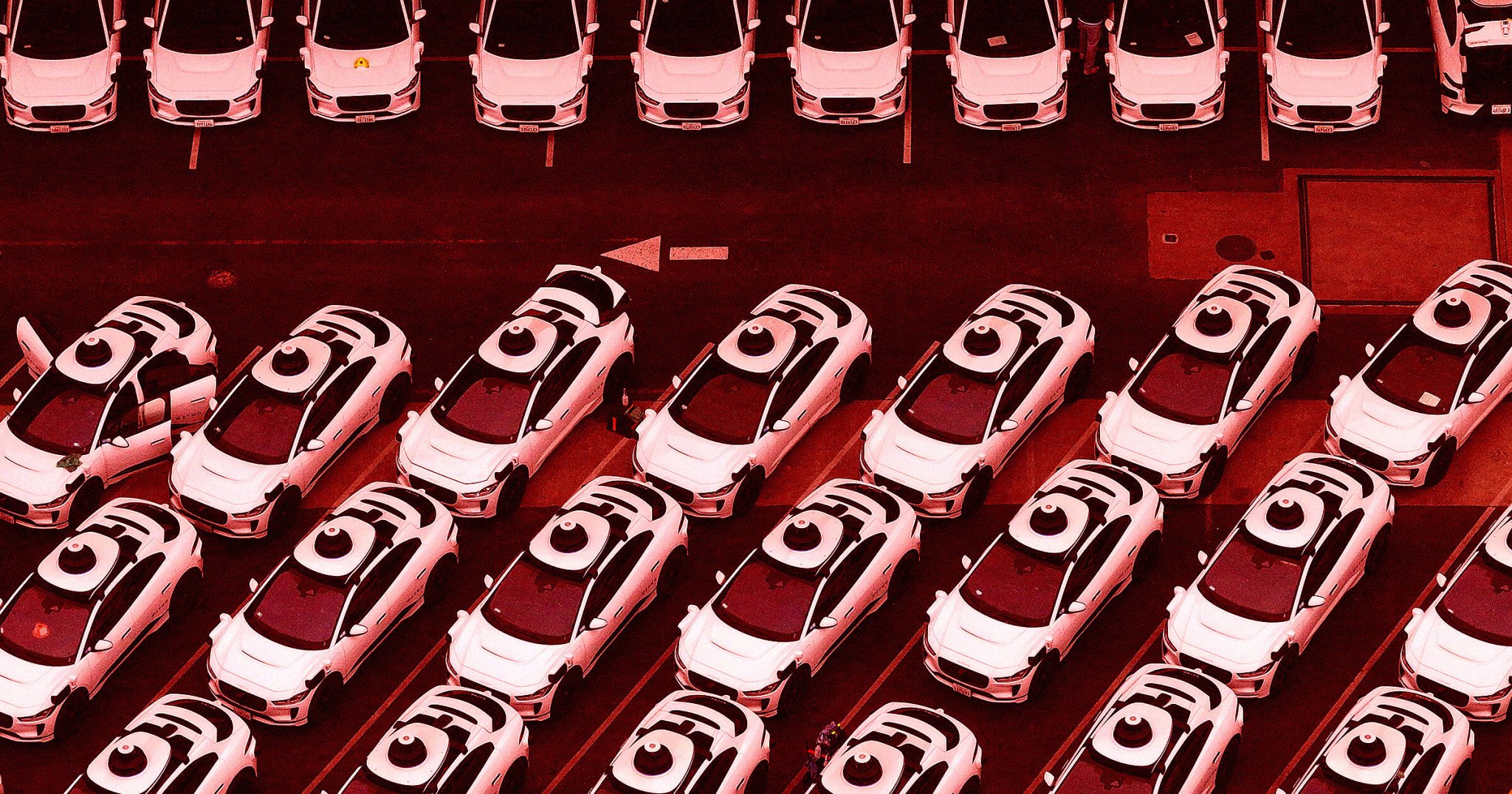
Tesla’s current fleet of 42 fully autonomous Robotaxis on public Texas roads is still dwarfed by Waymo’s, which has 577 authorized robotaxis in the state, in addition to several thousand more spread across ten US metropolitan areas.

That’s despite Musk promising Tesla’s fleet would grow to hundreds of thousands by the end of this year, a characteristically brazen prediction with little bearing on reality.

The company’s slow rollout has been mired by setbacks, which Musk has rationalized is the result of Tesla being “paranoid about safety.” The EV maker has gone to great lengths to censor the circumstances surrounding the Robotaxi crashes it has reported to regulators so far.

Unsurprisingly, Tesla is already lobbying to fight the New Jersey bill. Zwicker told The Verge that company representatives are discussing the subject with lawmakers.

The EV maker has also turned to New Jersey residents, telling its customers in the state in a message that they should “contact members of the New Jersey legislature” to oppose the bill.

It’s a precarious situation, especially considering the complete lack of comprehensive federal laws providing oversight over the rollout of autonomous vehicles. Each state has been left to fend for itself, a legal patchwork that’s allowing Tesla to push forward despite safety concerns.

More on Tesla’s robotaxis: Tesla’s Robotaxis Are a Complete Disaster

The post New Jersey Poised to Ban Self-Driving Tesla Robotaxis appeared first on Futurism.

  •  
❌