With his approval ratings in the gutter, US president Donald Trump is cooking up another cash advance for the American people, and it’s a doozy.
At the first-ever Republican Midterm Convention in Dallas, Texas — which is really more of a MAGA pep rally than a legitimate party assembly — President Trump promised that “if the Republicans win the House of Representatives and the United States Senate, both of them, I will issue a dividend to every adult citizen in the United States of America for $5,000,” the BBC reported.
“Because we’ve done so well and because our country is making so much money, that only I can make you this promise,” Trump told supporters in a slightly garbled quote, to rapturous applause. As Al Jazeera noted, the president was scant on the details around the payments, saying only that the money would have to be spent on US goods and services.
“We don’t want you going to Canada to spend the money,” Trump admonished the crowd.
Split across the entire adult-aged population of the US, we’re talking 270 million $5,000 checks. While that would no doubt provide some relief for working class families struggling under Trump’s erratic economic regime, it would immediately cost taxpayers $1.3 trillion, before factoring in administrative costs and hits to the inflation rate, per Al Jazeera.
Such a payout would essentially land straight on the US national balance sheet, Fortune explains, which is already so far in the red that it suffers a $2 trillion annual deficit.
Though the math on this is pretty simple, the massive figure leaves more questions around the theoretical payout than answers. For example, if Republicans have control of the House and the Senate, why not issue the $5,000 check now, to demonstrate what the party can do for voters? Given that Trump’s second term has been defined by brokenpromises and financialmisconduct, voters from across the political spectrum are quickly running out of patience for more GOP can-kicking.
Either way, we’re talking about an 80 year old man who recently started believing he was lifted from the rubble of the World Trade Center collapse — which is to say there’s a pretty good chance he won’t remember his $1.3 trillion promise come November.
It’s no exaggeration to say that if you own an LG smart TV, it might be spying on you.
The widely respected computer hardware experts at the YouTube channel Gamers Nexus found that the company’s boob tubes and pricey OLEDs can scan your Wi-Fi network to search for the devices you own, secretly record audio logs of your conversations using built-in microphones, and keep tabs on what you’re watching and listening to.
It collects all this data, Gamers Nexus found, even when the TV is disconnected from the internet and appears to be off in standby mode.
To unearth these surreptitious practices, Gamers Nexus partnered up with independent security researchers and Level1Techs. Their resulting two-hour video report has since been picked up by other trusted cybersecurity voices like Malwarebytes.
By digging into the firmware and intercepting some of the data the TVs were sending, the team found that the TVs were extensively scanning local Wi-Fi networks to log what devices were on it, including phones, computers, and other smart-home devices like thermostats. It even collected the names of nearby Wi-Fi networks, creating an alarmingly detailed picture of all the devices in a user’s household.
Why might that information be relevant to LG? The TVs also use a controversial technology called automated content recognition (ACR) that routinely scans and determines what you’re watching so it can sell that data to advertisers.
Combined together, they build an advanced and disturbingly comprehensive profile of what you watch and the devices you use, Gamers Nexus warn. All this data is sent back to LG Ad Solutions, its lucrative advertising business.
LG TVs, on top of it all, can also listen to you. Tests showed that their built-in microphones could capture clean audio of nearby conversations and generate transcripts of them, even when the TVs were in standby mode, which most TVs default to when you think you’ve turned them off, with the display powering down. The recording feature continued even when the TVs were unplugged from the internet, storing the audio files locally and uploading them the moment the internet connection was restored.
The researchers also found a vulnerability that allegedly allow a hacker to remotely execute code, though they’re keeping the details on this light so they can responsibly disclose their findings.
Many LG owners are furious about the news.
“LG hardware is just spyware,” fumed a post on the r/LGOLED subreddit. “You[r] TV is wiretapping your whole house.”
Smart TVs collecting data on you isn’t new — ACR in particular is well-documented — but the reported findings here illustrate a degree of invasiveness the public could only speculate about previously.
It’s far from the first time LG has caused a stir over purported privacy violations, either. Another Gamers Nexus investigation last month found that LG monitors were sneakily installing pop-up ads onto customers’ computers. The ensuing controversy caught Microsoft’s attention, with the company demanding LG remove the ads.
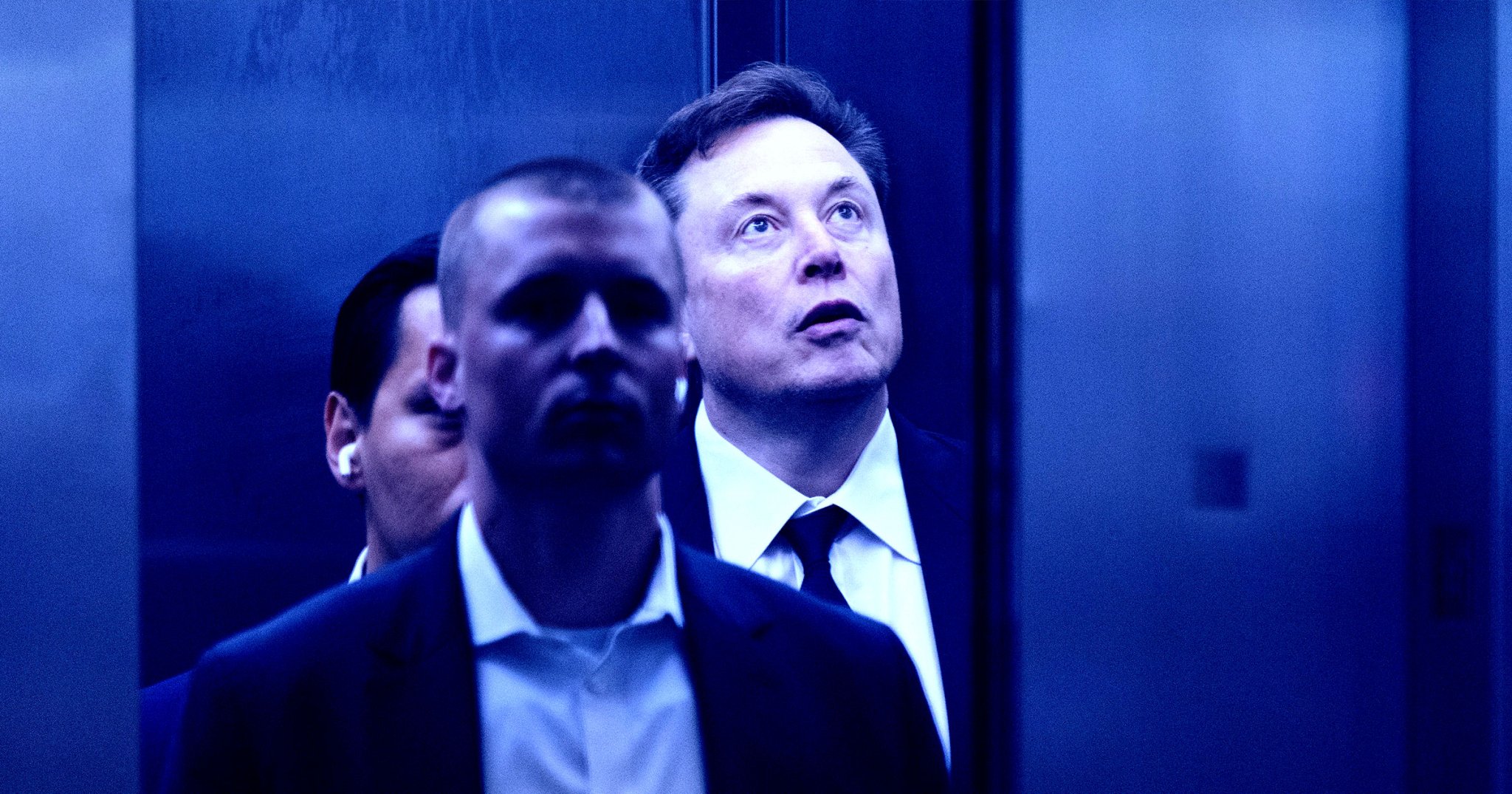
Elon Musk is reportedly “freaking out” over a new documentary by documentarian and investigative journalist Alex Gibney.
And by all accounts, there might be a good reason for why Musk is lashing out at Gibney, calling his work a “hit piece” and “boring af.”
The four-hour documentary, which had its world premiere today at the Venice Film Festival earlier this week, featured interviews with Musk’s first wife, Justine Musk, who has had five of his (known) 14 children.
As Agence France Presse reports after attending the premiere, an emotional Justine Musk recalled the billionaire mistakenly claim that he was holding their first child Nevada when he died due to sudden infant death syndrome, when it was actually her.
“I learned the term gaslighting through my relationship with Elon,” she said in the documentary.
She also claimed that Musk refers to the mothers of his many children as “breeders” who “are interchangeable,” a vile descriptor perfectly highlighting the entrepreneur’s deep-rooted misogyny and bizarre obsession with procreation.
The term “breeder” also highlights his troubled relationship with the at least four known women he has had children with. During the documentary’s premiere this week, Musk’s ex and former conservative influencer Ashley St. Clair, who is featured in the movie, told reporters that she was “offered the opportunity not to speak for $40 million.”
In the documentary, Justine Musk also recalled Musk whispering into her ear that he’s the “alpha in this relationship” — during their first dance at their wedding in January 2000, per AFP.
Tesla’s flashy unveiling of its Cybercab robotaxi in 2024 left some glaring questions unanswered.
The sleek, gold-colored coupé impressed with a futuristic design, but baffled onlookers with its cramped two-seat interior, lack of a charging port, and a dubious, far-too-good-to-be-true $30,000 price tag.
Just under two years later, the first Cybercabs are starting to hit the streets in Austin, Texas — and Tesla is just itching to sell you one. Last week, the EV maker started handing out a “Robotaxi interest form,” as Electrek reported at the time, in an apparent effort attract would-be entrepreneurs willing to buy an entire fleet of the unusual vehicles.
Put simply, the idea is to share revenue from ride income with Tesla while the vehicles operate on the carmaker’s network, using its self-driving tech.
It’s part of a much broader plan. For many years, Tesla CEO Elon Musk has promised that its Full Self-Driving-enabled vehicles, including the Cybercab, could effectively turn into an appreciating money-printing machine, allowing owners to sit on their couch and magically watch the money roll in.
As early as 2018, Musk promised investors that he saw the “future as kind of a shared electric autonomy, so that you’d be able to do ride-hailing or share the car any way,” likening it to “some combination of like Uber, Lyft, and Airbnb.”
But there are plenty of reasons businesspeople should hesitate before takeing Tesla up on the offer of operating a Robotaxi fleet, as Electrek‘s Fred Lambert argued in a compelling essay this week.
Basically, he pointed out, “if running a fleet of Cybercabs were actually profitable, Tesla wouldn’t sell you a single one.” It’s like claiming you’ve found an infinite money glitch — and then instead of quietly profiting off it, selling a get-rich-quick book on how to do it yourself.
There are also looming technical questions. Musk’s lofty promises of a vehicle that completes ride-hailing requests autonomously while also appreciating in value has little, if any, bearing with reality in 2026. To the contrary, the EV maker’s offerings are among some of the fastest depreciating vehicles on the market today.
Then there’s the questionable value proposition. Tesla controls the entire network, the self-driving software, and prices. It even “sets the split,” as Lambert argues. Instead, fleet owners are stuck eating the “capital cost and the depreciation, while Tesla keeps the software margin and its cut of every fare.”
In other words, “you don’t own a business in that arrangement. You own the downside.”
It’s a dubious business opportunity closely reminiscent of Tesla’s infamous FSD advanced driver assistance software. Owners once shelled out a massive $15,000 — before it became exclusively a $99 a month subscription — to access a feature that’s still a complete disaster, leading to fatal collisions and terrifying close calls even after many years of development.
Not only are they spending the equivalent of a small car on faulty software, they’re willing to shoulder the risk as well. Tesla has a long track record of trying to wriggle out of lawsuits arising from these accidents, arguing it was the driver’s fault for engaging the software and not paying attention.
Much like its regular lineup of FSD-enabled vehicles, Tesla’s Cybercab relies entirely on a camera-based autonomous driving system, an approach that experts say is fundamentally flawed.
Nonetheless, as the Austin American-Statesman reports, local investors in Austin are chomping at the opportunity to run their own Cybercab fleet.
Meanwhile, regulators from the National Highway Traffic Safety Administration are watching closely. The agency opened a probe into the Tesla, questioning that its new Cybercab “meets all applicable Federal Motor Vehicle Safety Standards.”
With opposition to AI continuing to grow, a top AI lab is building out a massive surveillance apparatus meant to keep a close eye on dissenters and predict when the next groundswell of protest might occur.
News of Anthropic’s system was first reported by the American Prospect, which spoke with Anthropic senior security officials and indexed job postings to get an understanding of the dragnet.
On top of keeping tabs on protests in the vicinity of Anthropic offices, the publication notes that the AI lab is taking a “pre-crime” approach to watching for potential civil unrest.
To give an example, the Prospect points out an incident shared by Anthropic security operations managers Keon Ellison and Zach Melvin, alongside James Neufeld, CEO of risk detection company Samdesk.
“Last year we had an executive travel into a major city when we received some intelligence through Samdesk about a planned protest,” Ellison said candidly. After the scheduled protest was moved up an hour due to a mix-up with police permits, the security chief said that “Samdesk gave us about 60 minutes of advanced notice that the protest organizers had moved the timeline.”
“That extra hour was critical,” Ellison continued. “Without it our executives would have departed their meetings, they would have ran right into the heart of the disruption. What could have been a high-stress situation was really mitigated through early detection through Samdesk and giving us that information.”
Outside of anticipating protests, there were also cases where Anthropic reported conversations held with its AI chatbot Claude to police. Though there have been calls to increase safety guardrails on large language models, Anthropic’s approach sounds bizarre.
As the San Francisco Standard reported in August, Anthropic reported a San Francisco man to the cops after he told Claude he was holding a rifle, and had the company’s CEO Dario Amodei “in his sights.” Yet when Anthropic reported the conversation to Bay Area police, the company refused to provide the man’s chat logs — as the Prospect observes, essentially reporting the man without sharing any tangible evidence of misconduct.
“The goal,” as Anthropic’s security manager said in the interview, “would be transforming operations from reactive information to gathering proactive and predictive and preventative threat engagement and management. That’s the kind of operational maturity that makes sense for protecting high-value targets in any industry.”
Last week, a mother in Utah named Kalie Robins took to Instagram to post what she felt was an “innocent” video of herself and one of her two young daughters singing in the car. Her daughter’s face was visible, but Robins hadn’t said her name. None of her existing Instagram and Facebook posts on the account, she told Futurism, publicized the names of her children.
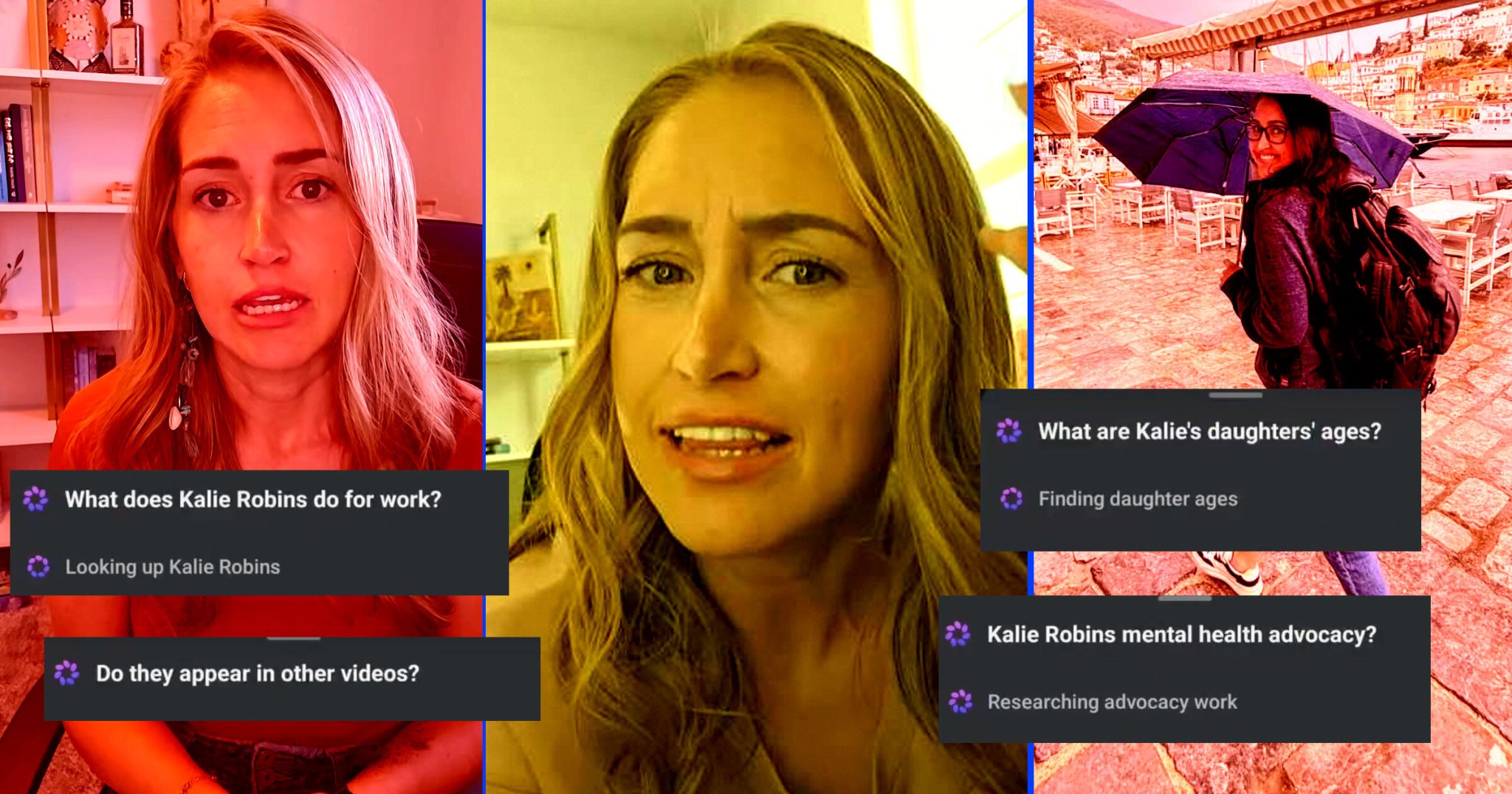
When she returned to the same video later, which had been cross-posted on Facebook, Robins discovered that Meta’s built-in AI was offering a suggestion: that she investigate the identity of the child in the backseat.
“Who’s the child passenger?” read the Meta AI’s suggested prompt, talking about her daughter.
Robins, who detailed her dystopian experience in a viral Instagram video, decided to engage with the Facebook AI feature to see what would happen. To her horror, it coughed up a detailed response that named not only her daughter who was pictured in the video, but her other daughter as well. It did so, seemingly, by cross-referencing information from her Facebook page with other posts on Meta platforms going back years — information largely shared not by Robins, but by family members including excited grandparents.
“I clicked on it, and it gave a whole portfolio of not just my daughter that was in the car, but also my other daughter,” Robins told Futurism. “I’m thinking, ‘Why is that in here?’ And then it just kept offering more and more.”
Meta AI continued to recommend new questions, each more invasive than the next, according to screenshots shared by Robins.
“What are Kalie’s daughter’s ages?” read one suggested prompt, which spurred the AI to provide a detailed age breakdown and timeline based on “family birthday posts and birth announcements” that included a Facebook post of one of her daughters as a newborn that was shared by the child’s grandmother.
A similar response, also referencing Facebook posts, discussed how much one of Robins’ daughters weighed at birth. Screenshots also show Meta AI prompting Robins to ask questions about the girls’ lives and interests.
Meta AI “started talking about, because of their ages, this is the grade they should be in. Well, there’s only one school here, so that wouldn’t be hard to find,” Robins recalled. “And then it talked about what are my daughter’s favorite beaches, what are this daughter’s favorite books, where they go hiking, what’s their favorite trail.”
In another disarming prompt, Meta encouraged Robins to ask it: “Where does Kalie Robins live?”
As Meta AI searched for the information, it said it was working on “pinpointing Kalie Robins’ location.” It then offered multiple paragraphs expounding on where Robins was likely based, drawing on content including a 2018 Facebook post that, per the Meta AI summary, “congratulated her” on a life achievement.
Meta AI also encouraged users to ask questions about Robins’ professional life and her work in “mental health advocacy,” providing information about her and her husband’s employment histories. Robins was stunned as she watched the Facebook-embedded AI draw on years of posts to Meta platforms to assemble an intelligence dossier about her and her family.
“It just kept going and going, and that pit in my stomach just kept getting bigger and deeper,” said the mother of two. “I felt this dread.”
Robins’ Instagram and Facebook accounts, where she’s been working to build her following as a travel creator, were public. But she was far from a celebrity influencer; she had only a few hundred followers. And though a human investigator may well have been able to cobble together a similar pile of information, Meta AI was able to do so in minutes.
“I thought we were being safe and smart,” said Robins. “I have done so much to make sure my kids are safe… the more it kept showing me, I felt more and more like I was failing my kids, and I didn’t realize it.”
Have you had a disturbing interaction with Meta’s AI? Email us: tips@futurism.com. We can keep you anonymous.
A self-avowed “90s kid,” Robins told Futurism that she’s been using Meta platforms since Facebook “first came out.” She lives far from her extended family, and as she and her relatives have started families, Facebook has long been an avenue to stay connected to loved ones and to share life milestones — the very kind of human connection that Meta has long said that its social media platforms are intended for.
But this is also meant that Robins and those in her life, like billions of others worldwide, have been leaving breadcrumbs of personal information throughout Meta’s platforms for years. In this case, Meta AI was able to quickly surface that years-long trail and piece it into a detailed portrait of Robins, her family, and their life; as it turns out, there’s a lot of information in the mundane.
Robins is now in the process of asking loved ones to take down or hide memories they’ve shared online, which she says has been an emotional process.
“I’ve had a couple relatives cry because they were going through and deleting everything. One of them was a grandparent — she said, ‘This is my scrapbook, I have to get rid of my scrapbook?'” Robins recalled. “I love seeing my niece, my nephew. I love sharing my daughters with their family that they never see… they’ll comment, ‘Oh my gosh, she’s getting so big,’ and it’s exciting for all of us to watch each other grow when we’re nowhere near each other. So to have some family members actually crying that their scrapbooks are gone — it’s rough. It’s hard, and it is a bummer for me.”
Reached for comment, Meta confirmed that Meta AI can search though a user’s own content as well as for public information on the web. In this case, though, it said its AI search feature had “missed the mark.”
“We created this feature to help people get more information about topics or posts that interest them. When someone clicks on a prompt and uses this feature, the response it generates is based on information the user already has access to,” said the tech giant. “But we missed the mark because the feature never should have prompted the individual with questions like that and we’ve fixed that issue.”
Between the rise of AI and the growing ubiquity of a new wave of surveillance technologies — like Meta’s smartglasses and other wearables, or Flock cameras — years-old questions around tech and privacy have reached a fever pitch. Robins, for her part, says she hopes that sharing her experience will encourage other families to make changes about the way they use the web.
“If this tool is putting things together and making a neat little package with your kid’s name on it, make it hard,” Robins urged. “Make it so hard to find that information.”
Back in August, a massive leak in El Reno, Oklahoma spewed close to four million gallons of local water into the ground, forcing the city into an unofficial stand-still.
The cause was quickly traced back to a damaged water line belonging to a Bitcoin-mining data center operated by the company Athlon BT. As ABC5 reported at the time, city inspectors trawling the building’s exterior uncovered the failed water line, as well as violations around drainage, maintenance and access, and expired building permits.
Weeks later, an investigation by the local fire marshal inside the El Reno data center uncovered a further laundry list of horrifying violations.
The inspectors discovered vessels full of flammable liquid stored near combustible materials, Oklahoma station KFOR reported, in addition to fire extinguishers that weren’t properly maintained.
Electrical equipment and crucial wiring was also found in disrepair, while a lockbox meant to hold keys for emergency first responders to easily access the facility was left empty. Vegetation on the building’s exterior was in violation of the fire code.
As a result of the copious fire hazards, the city gave the data center a “failing” grade, indicative of a building with severe structural or safety failures.
When it comes to data centers, fire safety is no small matter. The structures are already highly prone to conflagration due to massive electrical loads, lithium-ion batteries, and chips that run at extremely high temperatures.
In one Ohio township, fire fighters reported being overwhelmed by the high volume of calls to two local data center campuses. In addition to tying up first responders, data center fires are costly affairs for taxpayers, as property tax abatements mean nearby residents — not data center owners — can be the ones fronting the bill whenever the fire company gets a call.
Burning Man, the week-long festival that takes place in the middle of the Nevada desert and draws many luminaries from the tech industry, prides itself on building community.
But unfortunately, this year’s festivities, which concluded on Monday, were not without incident. As NBC reports, there have been three separate deaths in less than a week at this year’s Burning Man.
This past Saturday, officials announced that 60-year-old Craig Mann was found dead in his camp, days after Sampson Tshombe, a man in his mid-50s, passed away after experiencing a medical emergency.
Then on Monday, the Washoe County Medical Examiner confirmed that 51-year-old Armando Ramirez died on the way to a hospital in Reno, which is roughly two hours south of the festival grounds in Black Rock City, Nevada.
News of a third death wasn’t far behind.
“Although we average one death a year at the Festival, we have had two so far this year within the confines of the Festival and I have received information regarding a third who died in transit to a hospital in Reno,” said Pershing County sheriff and coroner Jerry Allen in a Monday statement, as quoted by NBC.
The three incidents leave far more questions than answers. Officials have yet to comment on the exact cause of death, but said there are no indications of any foul play. The deaths also don’t appear to be linked in any way.
It’s nonetheless a sobering facet of organizing an often drug-fueled festival in the middle of the desert with giant art installations, the structural safety of which is the responsibility of festivalgoers. According to the Reno Gazette Journal, it’s the most deaths on record for a single Burning Man. Previous incidents involved a man on a motorcycle being fatally struck by a van in 1996, and a woman who was killed after being run over by a trailer in 2003. There have also been reports of suicide and a man running into the Burning Man effigy fire.
According to a survival guide on the festival’s website, the site is a “huge, flat, prehistoric lakebed, composed of a hardpan alkali, ringed by majestic mountains” where “daytime temperatures routinely exceed 100 Fahrenheit, with extremely low humidity.”
“It takes nearly everyone a day or so to adjust to the desert climate,” the website reads. “Don’t be surprised if you spend your first day feeling queasy and cranky. DRINK WATER!”
Officials also warned that taking drugs, including alcohol or caffeine, can increase the risk of dehydration.
In the case of emergencies, experienced festival goers dubbed Black Rock Rangers volunteer to patrol the grounds in pairs.
After an ego-bruising stint with the New York Jets, it seems like seasoned quarterback and chief NFL conspiracy crank Aaron Rodgers is finally in good company with the Pittsburgh Steelers.
In a recent interview with the Athletic, the team’s veteran wide receiver DK Metcalf admitted that he’s a “big conspiracy theorist.”
“Shout out to my quarterback,” the two-time pro bowler said, referring to Rodgers, whose infamous conspiracy takes range from 9/11 skepticism to belief in a hollow Earth. That latter idea — known in conspiratorial Facebook groups as the “Inner Earth theory” — evidently has a supporter not only in Rodgers, but also in his receiver.
“I think there is another civilization inside of Earth,” Metcalf told the Athletic. “I think it’s another world.”
Following the basic outline of the Inner Earth theory, Metcalf outlined his concept of a civilization thriving deep beneath the crust, which can only be accessed via passageways in Antarctica.
“You can go to Alaska. You could go to the North Pole,” the wide receiver continued. “But why not Antarctica? Why can’t you just book a trip to Antarctica? Why is there a secret meeting — well, it’s not secret, but why is there a meeting between every world leader of every country in Antarctica, specifically?”
While it shouldn’t take an expert to tell you that this scenario is impossible, the Athletic asked one anyway. As Brent Christner, a rabid Steelers fan and associate professor of microbiology at the University of Florida told the publication, one can easily book a trip to Antarctica (in fact, Antarctic tourism is growing faster than environmental monitors can realistically keep up with, resulting in a notable rise in pollution on the white continent.)
As for any sort of UN-style meeting-of-the-minds at McMurdo Station, Christner says forget it.
“There are definitely some distinguished visitors that come down to Antarctica,” the researcher told the Athletic. “When they would come down, they would get the royal treatment and get thrown in helicopters and shown all the excellent sites. But there’s not like a G7 that occurs down there.”
Now, it seems the bots are also capable of swarming the city’s busy sidewalk, making it all but impossible for residents to pass safely.
A clip shared by Chicago resident Becca Ostein on her morning run captured the bizarre moment when a swarm of delivery robots operated by the firm Coco caused a traffic jam on a sidewalk near Lincoln Park.
Apparently caused by a freak glitch, the video shows Ostein attempting to pass a veritable obstacle course of a dozen squirming robots, their on-board lights flashing as they congregate on a patch of narrow sidewalk. Another bot is seen maneuvering off in the distance, though it isn’t clear whether it’s approaching or fleeing the fray.
“Run route was crowded this morning,” Ostein wrote in her caption of the video.
The video garnered plenty of reactions in the comments, the majority of which were negative.
“As a disabled person this is an actual nightmare,” one user replied.
“They were swarming,” Ostein told CBS News in an interview following the incident. “They didn’t seem to have anywhere to go. Without agile feet, no one could have gotten by.”
In a statement shared under Ostein’s post, Coco apologized, admitting “that’s not how our robots are designed to operate.”
“Our team caught it quickly, and the robots were cleared and operating normally within minutes,” the company continued. “We’ve made sure this won’t happen again.”
Schools across the world are experimenting with AI tools, usually to the dismay of unsuspecting parents. But one privately-run school is explicitly embracing AI as part of its sales pitch, and the in-class experience sounds more bizarre than anything you’d imagine.
A blistering new article by education policy writer and cognitive scientist Benjamin Riley took a look under the hood of Alpha School, a private K-12 school company in the US which boasts an AI-based teaching model, among other highly dubious features.
To make the grade, high school students are required to pass an eight-week “bootcamp.” After being invited to follow social media accounts of other students at Alpha School, Riley observed a process more akin to hazing than high school orientation, as the private company made its prospective pupils jump through increasingly degrading hoops to secure their spot on the roster.
For example, students in the bootcamp are required to start a brand-new account on X-formerly-Twitter, for which they’re required to get a minimum of 100 organic followers, pay for X Premium, and post an unknown number of replies to “bigger accounts with real substance,” as one student explained.
“‘Great post’ replies don’t count,” the anonymous student posted in a screenshot shared by Riley. “Buying followers or spamming = automatic fail.”
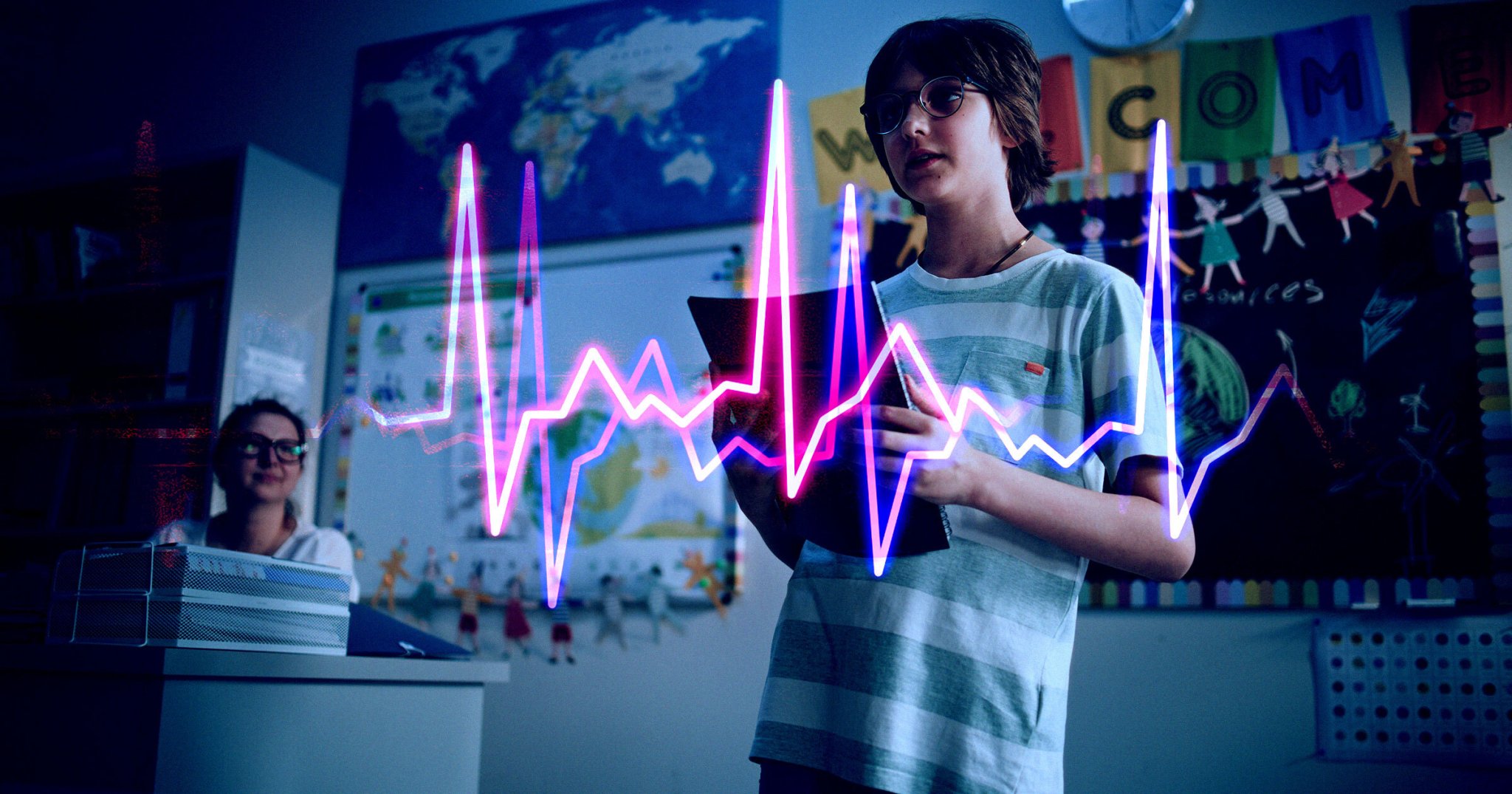
But forced social media assignments are just the beginning. As part of the bootcamp, students are also required to pass an eyebrow-raising heart rate challenge, in which they’re hooked up to live monitors in front of their classmates and presented with a pre-recorded video of their parents berating them.
“The challenge rule was simple,” one student wrote: “my resting heart rate was 80bpm, and I had to stay within 10 percent of that the whole time. Anything above 88 was a fail.”
It isn’t clear what educational purpose this particular trial was supposed to serve, or what the penalty would be for students who fail the heart rate challenge, or the boot camp overall. At least one student said the eight-week hazing period is meant to “prove I deserve to be here,” though Alpha School didn’t comment on Riley’s inquiry.
“I ended up averaging 87bpm,” the student continued, evidently just barely making the grade. “Barely made the cutoff by one single beat, and my hands were shaking the entire rest of the afternoon.”
As part of boot camp, Alpha School students apparently have their heart rates monitored as they watch recorded videos of their parents critiquing them. This activity takes place in front of their classmates, and students must keep their heart rates within 10 percent of their baseline to pass.
Additionally, Riley noted that Alpha School “requires students to do unpaid labor cleaning restaurant kitchens or gas-station bathrooms” in a test of “grit and hard work.”
This “assignment,” confirmed by two Alpha School pupils, involved students recording themselves and narrating their tasks, with any complaint or negative comment resulting in an automatic fail.
“We have to find and execute an unglamorous job with zero pay, whether that means mucking horse stalls, cleaning grease traps after closing, washing trash bins, or scrubbing gas station bathrooms,” one of the students explained.
Other challenges abound, like a requirement to complete an entire unit of a standard Advanced Placement course without a teacher — AI chatbots only — and pass an exam within just five days. One 14-year-old student wrote that they were required to survive for three days in an unfamiliar section of wilderness “with only 3 bags of rice and a tent.”
Contacted by Riley for comment, Alpha School flipped the script, hounding the writer for daring to report on the “social media activity of minor children.”
“We ask that you weigh the ethics of identifying minors in this way in your reporting, and we expect any published piece to protect their identities,” an Alpha School representative said.
Responding to Riley’s story, educator and writer Audrey Watters said that “Alpha School’s promises have always been mostly snake-oil: this idea that artificial intelligence can deliver high-speed, high-quality education is mostly the stuff of science fiction, not reality.”
“What we witness with Alpha School isn’t a matter of simply ignoring the weatherman, fingers-crossed hoping that the sun will continue to shine on the chosen few and that the winds will shift again in industry’s favor,” Watters continued, referring to rising outrage against AI, and the Silicon Valley-ethos underlying Alpha School’s mission. “Rather, it’s pretty clear that there’s an absence of any moral compass at all.”
Simply put, documentarian and investigative journalist Alex Gibney had a very rich source of material to draw from for his upcoming documentary “Musk,” which had its world premiere today at the ongoing Venice Film Festival.
According to journalist David Sirota, Musk is “freaking out” about the film because Gibney “doesn’t pull punches, doesn’t cower and won’t be bullied.”
By all accounts, the four-hour epic will be a doozy. The documentarian “crafted a movie that, while not new in its specifics, is often damning in its totality, standing apart from anything the media entertainment complex has recently turned out — a portrait of power with the cinematic scope of ‘All the King’s Men’ and the potential social impact of ‘The Pentagon Papers,'” the Hollywood Reporter gushed.
Musk has reportedly gone to extreme — and sometimes unsuccessful — lengths to silence those involved in Gibney’s latest work. Musk’s ex and former conservative influencer Ashley St. Clair, who is “prominently featured” in the documentary, told reporters at the Venice Film Festival that she was “offered the opportunity not to speak for $40 million,” as quoted by People.
“When you’re offered something like that [to stay quiet], it really causes a debate in your head about what your speech means and how valuable that is and why do they want to offer me this amount of money to not speak?” St. Clair said.
St. Clair is one of four women who have had a total of 14 children with Musk, at least that we know about so far. The 26-year-old had a major falling out with the entrepreneur, going as far as to allege that the billionaire “financially retaliated” against her for filing a custody petition by reducing child support payments.
We’re likely to hear more commentary from Musk about the film. Last week, Musk tweeted that Gibney was “obviously going to make the most convincingly terrible hit piece on me that he can possibly think of,” calling him a “douchebag to his core.”
But considering the staggering amount of material Musk has gifted the world, Gibney had plenty of material to work with.
AI’s wide proliferation shares some striking similarities with the ways viruses spread, as an international team of researchers argue in a new paper that has yet to be peer reviewed. They set out to lay out a new theoretical framework about how we’re increasingly becoming hooked on tools like OpenAI’s ChatGPT and Anthropic’s Claude, and how it’s changing our collective ways of understanding the world around us.
“Here we introduce the idea of [large language models] as cognitive viruses,” they write. “Culturally transmitted technologies whose spread is promoted by their usefulness but can also increase dependence through cognitive offloading.”
“More generally, humans have always externalized parts of cognition into language, writing, institutions, and technology,” the researchers write. “This externalization has been the engine of rapid and accelerated change driven by culture. AI represents a new step in this process, one in which external cognitive machinery becomes increasingly active and agent-like.”
This transition to adapting LLMs also “has a contagion-like component,” because the spread occurs “because people learn from other people.”
It’s a slippery slope, the researchers argue, as the “loss of autonomy becomes self-reinforcing and the population can move rapidly toward a state of much stronger cognitive offloading and lower cognitive competence.”
Put simply, the widespread use of LLMs could be making us much dumber than we were before — not to mention wreaking complex psychological and sociological changes that we’re only starting to understand.
At the same time, there are ways to protect ourselves from being infected through a process the researchers dub “cognitive immunization.”
“At the population level, immunization does not mean preventing contact with AI,” the paper reads. “It means preserving the practices and institutions that keep human cognition active: unaided problem solving, verification, critical discussion, periods of deliberate disengagement, maintenance of non-AI skills, and educational designs in which the model supports rather than completes the cognitive task.”
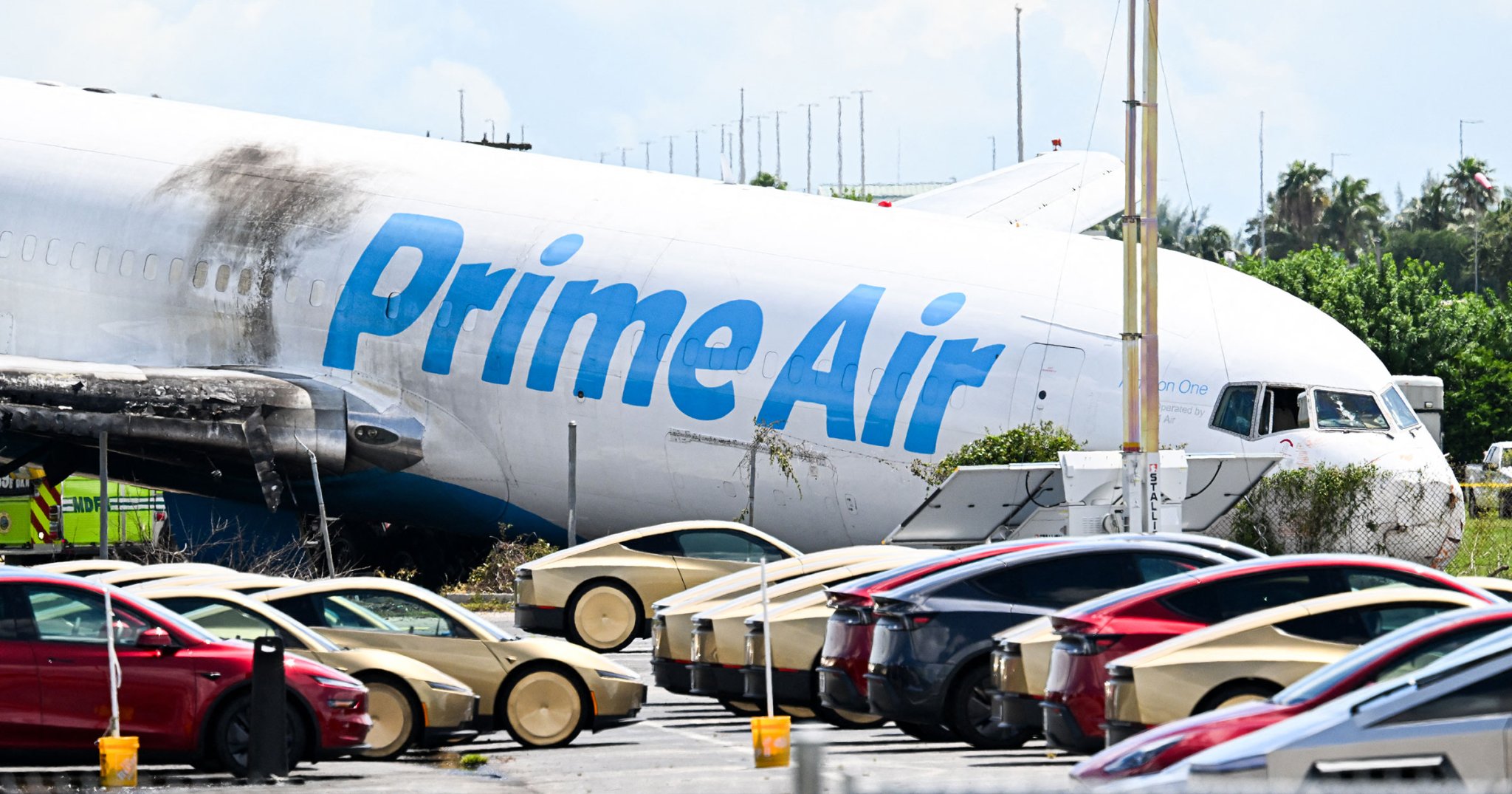
An Amazon Prime Air cargo jet ripped right past the landing zone at the Miami International Airport on Sunday afternoon, struggling to stop itself in time before overrunning the runway and crashing into a cleaning crew and a nearby SUV.
It was a tragic incident, killing five innocent people.
The Boeing 767-300 also barreled right through a chain-link fence that was protecting a highly unusual lot of vehicles: photographs of the scene show the dented nose of the airliner just a few dozen feet away from a kennel of parked Tesla Cybercabs.
Tesla CEO Elon Musk has banked the future success of his EV maker on the gold-colored self-driving vehicles, which are too small to fit more than two passengers and lack both steering wheels or pedals. Their sudden appearance in a story about a deadly airliner disaster had the billionaire taken aback. However, instead of offering his condolences after the tragedy, Musk simply tweeted the word “Weird” in response.
The peculiar cameo also led to plenty of questions over Tesla’s plans to roll out the cars outside of Austin. Just last week, the Cybercabs were deployed for the first time in the Texas city, but the company has yet to announce any imminent launches in Miami.
Regulators from the National Highway Traffic Safety Administration watched closely following last week’s deployment, which comes just shy of two years after Tesla first showed off its Cybercab. As Bloomberg notes, the light on details event was “uncharacteristically low-key,” offering no livestream or media coverage.
The “Cybercab event was largely a bust,” tweeted Future Fund Advisors co-founder Gary Black. “The launch offered little detail and key questions remained unanswered.”
Indeed, regulatory approval is hazy for vehicles without any traditional driver controls, a topic that’s especially pertinent to Tesla. Musk has bet the company’s entire future on the success of its Cybercabs and its humanoid robot, dubbed Optimus.
With neither showing any signs of a significant public rollout any time soon, Wall Street is bound to keep asking some tough questions.
In a world dominated by cheaply-produced AI content, it’s never been easier to imitate your favorite artist. YouTube, for instance, has succumbed to a tidal wave of AI-generated music released under the names of real artists without their permission — and a baffling number of its unknowing users are blissfully unaware they’re being served a microwaved counterfeit.
The track, which has seemingly convinced countless users that it’s actually Mathers’ latest return to the music world, has amassed well over 100,000 views since being uploaded last week. It’s achieved surprising prominence on YouTube, being featured prominently in a search for “Eminem” on the platform — where it’s even beating out charting singles by the actual rapper, including “Superman” and “Shake That,” as well as the actual “I’m Back” track.
“Guess who’s back?” the algorithmic Eminem raps in the video. “Yeah, a headache return. Same match in my hand.”
The low-rent beat alone should be a dead giveaway. And while AI music generating tools certainly have come a long way, giving the fake Mathers a passing imitation of the real one’s voice and delivery, the plasticky sound of the vocals make it clear that it’s not the real deal.
Nonetheless, users on YouTube were fooled hook, line, and sinker.
“This is fire eminem is the goat hands down,” one user gushed.
“Really Proud of you Eminem!!” another wrote. “You really are getting it and not giving up!! Keep going!”
The video’s title gives no indication that it’s not a real release, and doesn’t feature YouTube’s official AI label. Buried in its description is a strangely-phrased disclaimer.
“Fan-made music videos inspired by Eminem, Slim Shady, and legendary Detroit hip-hop,” it reads. “This is a fan-made audiovisual project created for entertainment purposes only.”
The owner of the account even proactively offers up an email address for “copyright concerns or removal requests,” suggesting they’re all too familiar with the process of having angry record labels try to shut them down or get hung up in YouTube’s infamous copyright filters.
A web search for the email address reveals that it’s also listed on a litany of other YouTube accounts, many of which masquerade as other rap artists, including Meek Mill — an account that has over 13,000 subscribers — and 21 Savage.
Reached by email, the account owner offered their thoughts on the situation.
“No, my intention was never to make it look like a genuine new Eminem release,” the creator, who goes by the name Milana Salaeva, told Futurism in a message, referring to the “I’m Back” track. “I make it clear in the description that the content is unofficial and that AI-generated or AI-assisted elements may be used.”
“I’m a music producer, and I’ve been making music myself for quite some time,” they added. “I often create my own beats and handle the arrangement, mixing, mastering, and other parts of the production process. AI is just one of the tools I sometimes use as part of that workflow.”
The Eminem mimicry is only a drop in a bucket in an internet dominated by AI-generated music. For years now, we’ve watched as outraged artists and their labels have tried to tamp down on a proliferation of tracks that use their voice and likeness without permission, often going viral on social media.
We’ve also come across users exploiting royalties on platforms like Spotify by flooding them with AI. A man pled guilty earlier this year for posting slop on Spotify and using an army of bots to fraudulently boost listenership, netting $8 million in royalties.
While it’s unlikely Salaeva is making anywhere near that amount of cash — especially now that YouTube has significantly changed how it counts views — the fake Slim Shady’s 11-minute tirade also touches on a far more profound subject: the authenticity of human creativity and expression.
“If you came here for the old me, here’s the new me kicking his ass,” the fake Eminem raps. “That’s why they call me Slim Shady. I’m back again. Same crooked little grin with a pad and pen.”
Is being the world’s richest man not enough for Elon Musk?
He must also have us all believe that he’s a genius, sui generis, with a mind so mighty that it’s wasted on supposedly intellectual pastimes like “chess.”
He’s so convinced that the board game is beneath him, in fact, that he’s begun arguing about it with… Chess.com, a leading source of expertise and chess AI.
The inane saga kicked off yesterday on X — where else — when Musk responded to a post about all the possible moves you can make in chess. To a mind as omniscient as Musk’s, the number — a mere 40 orders of magnitude more than all the atoms in the observable universe — wasn’t sufficiently large enough to be interesting.
“The actual number of moves that are not utterly stupid in chess is tiny,” he claimed, “and chess will be fully solved one day.”
Here, Chess.com entered the fray by responding with a succinct rejoinder: “skill issue.”
The bait worked.
“Chess is hard for humans, but not for computers. One day, it will be fully solved like checkers,” Musk wrote, essentially repeating himself. “Between now and then, or even after, have fun. People enjoy many games/sports where machines are vastly better.”
Indeed, humans who aren’t intelligent as Musk, in their feeble-mindedness and fleeting time on this planet, may enjoy activities such as games and sports, blissfully unaware that a hypothetical machine may hypothetically make mince meat of those activities one day. And yet, as Musk admitted, he’s choosing to waste his time “arguing with some random intern.” (“I’m a full-time employee,” the Chess.com account clarified.)
Musk also went on about how an artificial superintelligence — something we don’t even know is possible to build — will “figure out ways to solve and compress that are far beyond what we could possibly comprehend.” Then he cited some conversations he had with his personal AI chatbot, Grok, as if that put matters to bed.
There’s certainly an interesting intellectual debate to be had about “solving” chess — something that actual mathematicians have explored and tried to tackle — but Musk’s arguments seem to be driven solely by contempt. The board game is a long-held bugbear of his.
Back in 2022, in a now infamous tweet, Musk wrote about how he stopped playing chess as a child because he “found it to be too simple to be useful in real life,” before extolling how Polytopia, a mobile game, was the superior activity of choice for the cognoscenti.
He had something similar to say amid his battle with Chess.com. Responding to another account, Musk wrote that he “felt diminishing returns from chess in terms of transfer learning to understand reality.” Next time your opponent destroys you at chess, you might try deploying that excuse, too.
A man is facing numerous felony charges in Georgia after police allege he allegedly used a bizarre projectile to melt automatic license plate readers into smoldering heaps of metal and plastic.
According to Fox5 in Atlanta, 25-year-old Colby Williams was hauled into jail after allegedly setting fire to three automatic license plate readers (ALPRs) installed by the extremely controversial company Flock.
Though it isn’t known how the fires started, at least one camera was found “completely melted,” and had a “DeFlock” sticker slapped onto what remained of the pole. A fourth camera nearby was reportedly found with two bullet holes, the news channel reported.
Ironically, Williams was arrest using video captured from the ALPRs, which picked up a vehicle registered under his name.
Williams is now being charged with four counts of criminal damage to property and four counts of arson, as well as reckless conduct and interference with government property — though Flock operates using a model known as “hardware-as-a-service,” meaning its ALPRs are only rented, not owned by police agencies.
The use of fire to disable Flock ALPRs is a new one, as far as we can tell. So far, anti-surveillance vigilantes have mostly resorted to using tools like hand saws and power drills, or barring that, spray paint.
On social media, supporters further fanned the flames, expressing support for Williams and blasting the police department for deploying the devices in the first place.
“What it boils down to is this, either y’all can take them down or somebody will!” one Facebook user declared under Fox5‘s post about the arrest.
Another commenter made an appeal to patriotism: “it wasn’t him, he was at the library rereading the Constitution!”
In an affront to creeps everywhere, Meta has started remotely bricking the smart glasses of wearers who try to secretly record other people.
Earlier this month, the Mark Zuckerberg-led company said it would crack down on customers who modified the spectacles to disable or cover up their lights that indicate when they’re recording, amid incredible public backlash against how the glasses are being used to film people without their consent — girls and women especially — and harass them.
Now, it looks like more than a few weirdos have gotten the ax. On Tuesday, Meta said it’s bricked the photo and video-taking capabilities on thousands of its smart glasses users, as part of a software update that was reported by Semafor.
Meta didn’t provide hard numbers, but its vice president of wearables Alex Himel told Semafor that it estimated that less than one tenth of a percent of all glasses sold have been tampered with. Seven million of the glasses were sold in 2025, making that fraction of a percentage translate to up to, but probably less than, 7,000 individual units.
More than a sign of Meta caring about people’s privacy, it goes to show that the abuse of its “pervert glasses” wasn’t down to just a few bad apples. A few thousand doesn’t sound like a lot, but it’s worth remembering that this crackdown only applies to customers who physically tampered with their glasses to disable the recording light. There’s no doubt that many people using the glasses to creepily record people have made no effort to modify their devices or hide that they’re recording.
Instagram, which is owned by Meta, recently began suspending some influencers who filmed themselves using the glasses as they aggressively hit on girls and women, often by making sexually explicit and provocative comments. The social media platform’s head Adam Mosseri vowed to crackdown on the harassment in “every way we can.”
Still, these efforts are a drop in the bucket, and with Meta reportedly planning to stuff the glasses with facial recognition tech, members of the public who aren’t convinced that Meta has their best interests in mind have taken matters into their own hands. Many establishments are outright banning smart glasses, including popular nightclubs. Some feel strongly enough about the glass that they’re confronting people who wear them in public.
Himel, Meta’s VP of wearables, admitted that it’s fighting an uphill battle.
“It’s been a little bit of a cat and mouse game,” Himel told Semafor, adding that “I don’t think we’ll ever be done… There’s always new ways to get around the safeguards that are in place. So we’re going to keep monitoring and evolving the measures that we have.”
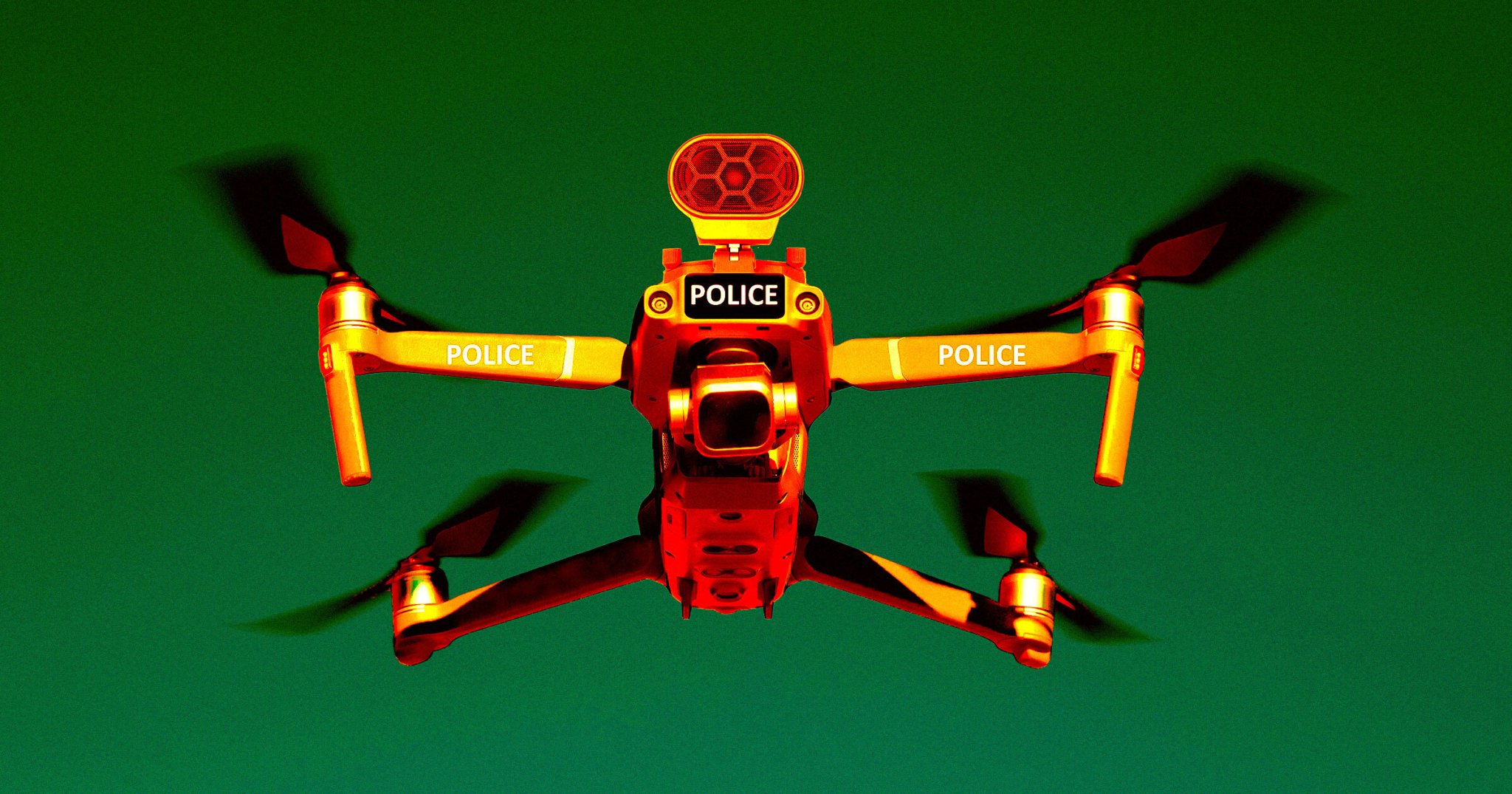
Well, tell that to president Trump. On Thursday, he slapped a 100 percent tariff — he sure loves round numbers and levying imports — on larger foreign-made drones.
Speaking to the New York Times, Scott Mlakar, chief of the Lake County Drone Unit outside Cleveland, called the tariffs financially onerous and lamented that it would prevent many communities from buying them, adding that his unit uses them to hunt crime suspects at night and search for lost children.
“Most of this, in our humble opinion, is lobbying by US manufacturers to eliminate foreign competition,” he said. “This is not national security. It’s protectionism.”
The tariff is explicitly designed to target popular Chinese drones, while making exceptions or imposing much lighter tariffs on drones made from allies like Japan, Taiwan, South Korea, and the EU. In particular, these steep duties will apply to drones that use thermal imaging or weigh more than 55 pounds. In addition, the Federal Communications Commission is weighing reclassifying some drone technologies like lidar as “military grade,” Ars noted, which would restrict who can access these drones even further.
Drones have a lot of other practical uses beyond law enforcement, obviously, including monitoring wild fires and assisting rescue operations. Amid heightened backlash against Flock, though, they’ve come to be seen as another surveillance apparatus.
But weaning the US off Chinese drone tech is supposed to be good for national security, according to the Trump administration. One small problem: a single Chinese company, DJI, makes more than 70 percent of the world’s commercial drones, according to the NYT. Good luck replacing all those.
Plenty of other cops are bellyaching about the tariffs, too, extolling how irreplaceable that awesome Chinese made drones have become to their operation.
Ars spotted a Texas police officer named Jason Lee, for instance, who complained to the FCC that “there is currently no economically viable domestic replacement” for DJI drones. “More than 80 percent of state and local law-enforcement drone programs surveyed in 2024 used DJI aircraft,” he added.
“The fact that a domestic product exists does not necessarily mean it is a viable substitute,” Lee said. “A replacement must be operationally comparable, economically obtainable, supported by an adequate supply chain, and accepted by pilots who must rely on it during real-world incidents.”
For seafood lovers, there are few things more appealing than a simple slab of raw tuna — a fish whose fatty, savory, and tender muscle tissue has been a delicacy for thousands of years.
Unfortunately for those foodies, fresh raw fish comes with the distinct possibility of parasitic infection. Off the coasts of southern Brazil, that risk is rising, as hauls of the common skipjack tuna come with the near certainty of parasitic contamination.
Out of 53 skipjack, marine researchers counted over 1,600 worms infesting nearly every organ of every fish hauled in from the ocean. Only the kidneys and hearts of the tuna remained worm-free, the researchers noted. Everything else, including the muscle tissue we humans eat, was festering with flatworms and roundworms.
Though most preparation methods will kill the parasites, the images are pretty off-putting. As the researchers explain, the sheer volume of parasitic infection is alarming.
“These results highlight the importance of sanitary inspection and emphasize the importance of immediate evisceration to avoid the migration of larvae from the viscera to the musculature,” the authors write.
Still, parasitologists say the worms aren’t all bad. Though increased presence of worms also comes with more risk of infection, University of Washington parasitologist Chelsea Wood told ScienceAlert in a prior story that they can actually be a sign that the fish is well-sourced.
“Everyone assumes that worms in your salmon is a sign that things have gone awry,” Wood said. “But the anisakid [roundworm] life cycle integrates many components of the food web. I see their presence as a signal that the fish on your plate came from a healthy ecosystem.”

 Login