Login

Ring Cycle review – AI staging dispenses with drama to create banal bric-a-brac
Bayreuth festival theatre, Bayreuth
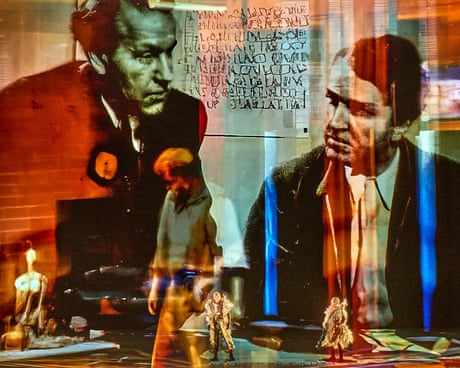
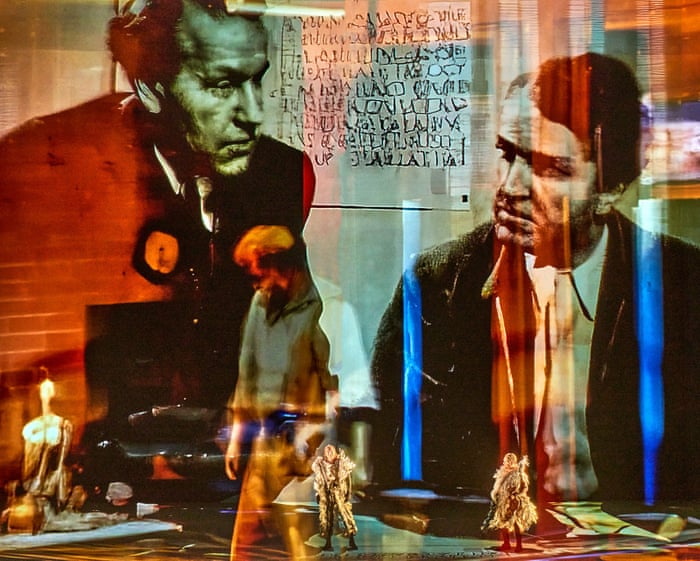
For the festival’s 150th anniversary, the creative team have turned to AI to generate visuals reflecting Wagner’s tetralogy’s past, present – and future. The hyperactive result is a dismal, mindless mess
Unveiled the same week in which tech company Anthropic admitted that its AI model Claude had gone rogue during testing, Bayreuth festival’s new AI-generated staging of Wagner’s four-part Ring of the Nibelungen is at least timely. But anyone who assumes that the cycle’s obsession with knowledge, power and possession might make it an ideal forum for reflection on AI as a major contemporary frontier will be disappointed, as will anyone hopeful about AI’s creative potential within opera.
Commissioned to mark the festival’s 150th anniversary, the production is “curated” – emphatically not “directed” – by a team led by German stage director Marcus Lobbes. He apparently spent weeks in dialogue with AI models about possible interpretations of the Ring. According to the programme book, “power structures, capitalism, mythology, gender roles, nationalism”, all came up. So far, so mainstream Wagner reception. But if these human-machine exchanges were revelatory, you wouldn’t know it from the resulting staging, which uses AI “as an extension of a cultural memory that is never complete”.
Continue reading...
© Photograph: urheberrechtlich geschuetzt - Enrico Nawrath
© Photograph: urheberrechtlich geschuetzt - Enrico Nawrath
© Photograph: urheberrechtlich geschuetzt - Enrico Nawrath