Lipid droplets in the kidneys may help cats maintain a consistent chemical “scent identity.” Scent marks can linger long after an animal has moved on, allowing urine and other chemical signals to carry information across both distance and time. Yet the molecules responsible for odor do not remain unchanged. They evaporate, break down, and shift [...]
It’s a regrettable reality that there is never enough time to cover all the interesting scientific stories we come across. So every month, we highlight a handful of the best stories that nearly slipped through the cracks. July’s list includes outfitting cyborg cockroaches with a tiny diving suit for navigating flooded terrain; confirmation that a Medici duke died of malaria, not poisoning; the best evidence to date that Betelgeuse is orbited by a companion star; and evidence that some ancient Egyptian princesses were skilled archers.
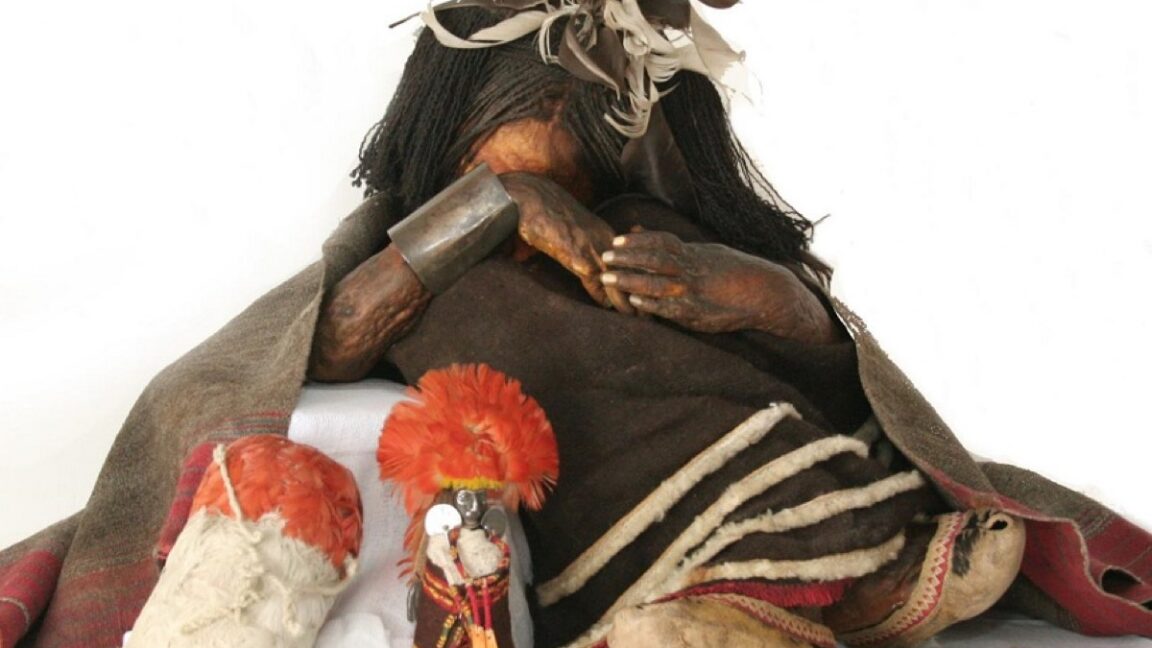
Sacrificial Incan boy died of blunt force trauma
Credit:
Administrative Archive, Regional Museum of Iquique–CORMUDESI
It's known that the Incas practiced a human sacrifice ritual known as Capachoca, in which children were offered to the mountains and believed to become divine themselves, serving as intermediaries with the gods. This often involved pilgrimages to the remote sacrificial sites, with colonial accounts describing strangulation, asphyxiation, and blunt force trauma as the most common methods of sacrifice. Archaeologists have reanalyzed the remains of one such victim and concluded the boy died from blunt force trauma, rather than freezing to death as previously believed. They described their findings in a paper published in the journal Science Advances.
Whale sharks use a wider range of feeding strategies and depths than surface observations previously revealed. A whale shark can vanish beneath the surface in seconds, leaving researchers with little idea of what the world’s largest fish does once it disappears from view. Whale sharks (Rhincodon typus) are among the ocean’s most recognizable animals, inspiring [...]
Jackie found an online audience through a webcam pointed at her nest in California. She was rescued last week after a fight with other eagles, officials said.
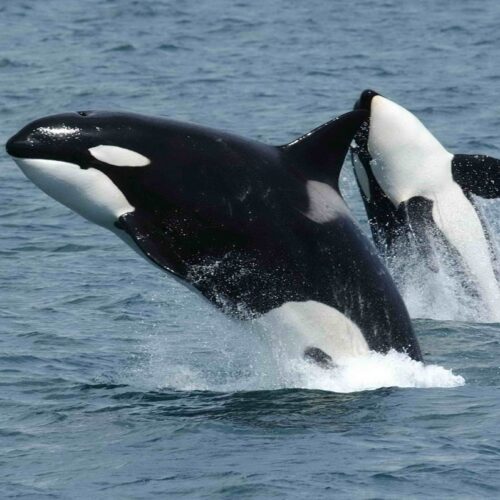
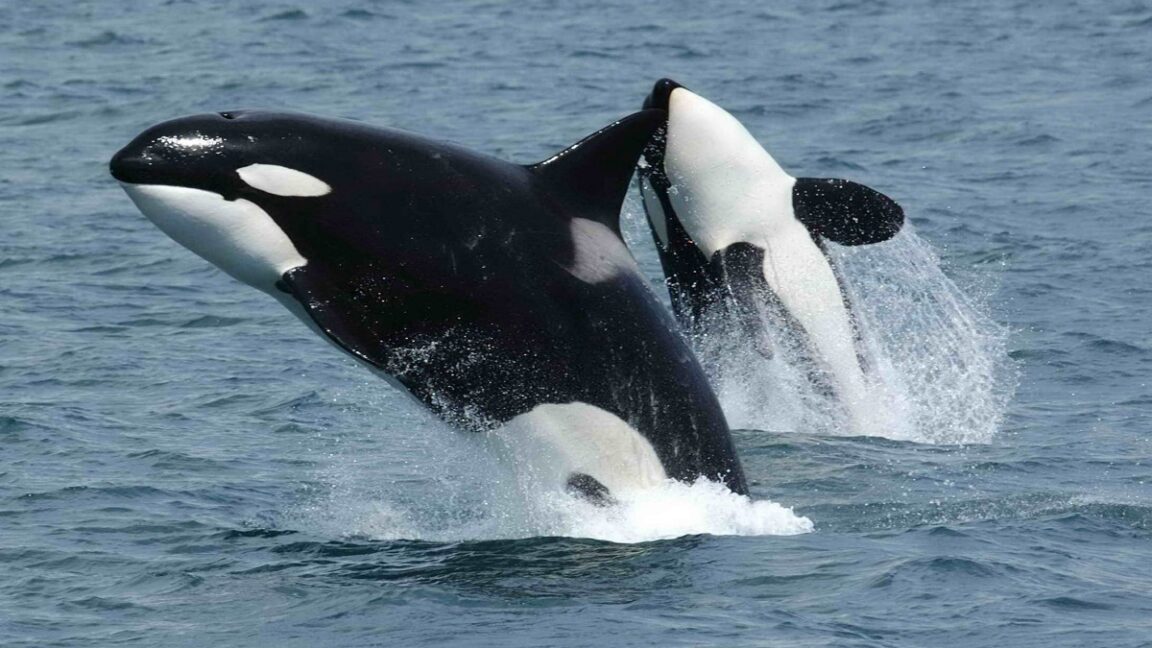
There have been numerous accounts in recent years of orcas ramming boats—and sometimes sinking them. Scientists believe this may be a form of culturally learned behavior passed down through generations. Now we have fresh examples: orcas in the Gulf of California were filmed teaming up to ram sunfish with so much force that the carcasses exploded into small fragments. While orcas have been known to use force to remove flesh from prey, this is something different, according to a new paper published in the journal Frontiers in Ethology.
“We think this may help younger orcas feed more easily, or it could also just be for fun," said co-author Kathryn Ayres of Beneath The Waves, a nonprofit organization promoting ocean health. "Orcas are known for playing with their food.”
Orcas engage in cooperative hunting strategies that can involve striking or killing animals—sometimes eating their prey, sometimes not—so the behavior could be described as social interaction, play, or practice as a mode of social learning. Orcas have been observed ramming whale sharks as another orca held the prey steady. Other cooperative strategies include herding mobile rays, blocking an escape path while hunting white sharks, and deliberately producing waves to bump penguins off ice floes.
A dog’s nose is a gateway to a richer world, and scent-filled walks, games, and food hunts can transform boredom and stress into excitement, focus, and discovery. While we are captivated by a vivid sunset and breathtaking views, dogs have their noses to the ground, reading the odor stories left behind by other dogs and [...]
Scientists hoped for years to make a machine that could emulate the movements of diving birds, such as puffins, and offer an affordable, unobtrusive way to monitor fragile marine ecosystems. A team of researchers at M.I.T. has been able to create such a waterproof winged robot, according to a study published July 9 in the journal Science.
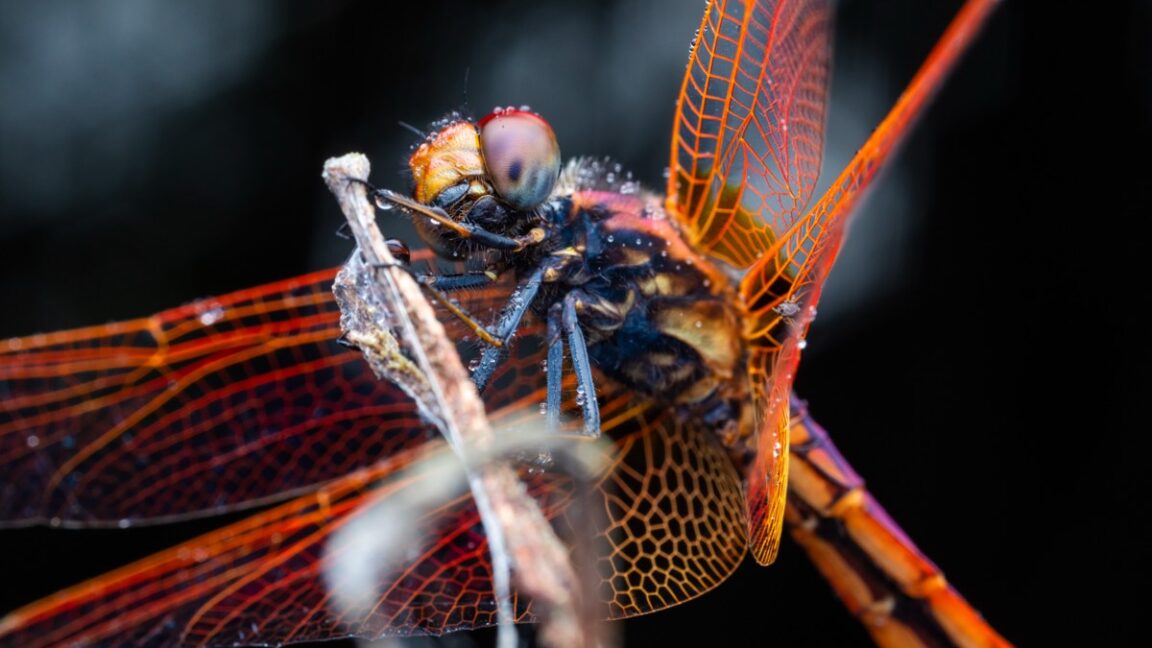
Male dragonflies are known to engage in mid-air "dogfights" to defend their breeding territory, using different maneuvers than those they employ when hunting prey. A new paper published in the Journal of the Royal Society Interface concluded that relatively simple rules drive that behavior, namely that male dragonflies are trying to maintain a tactical position. This mirrors the tactics of human fighter pilots. The research could lead to the development of smarter drones capable of navigating with simple, vision-based guidance rather than complex computation.
Classic pursuits involving prey or mating rituals are asymmetric: there is a chaser and an evader, with each role requiring different maneuvers. In the case of male-on-male interactions, however, it is more of a mutual pursuit, per the authors, who thought that studying flight trajectories of insects or raptors could yield useful insights into the guidance laws that underlie the behavior. They chose the Trithemis Aurora species of dragonfly for study because the males are "fiercely territorial," and there are usually multiple males around a given pond, intent on defending their chosen perches. The dragonflies are also crimson-colored, making them easier to track.
Much of the prior research on dragonfly interactions relied on visual observations or single-camera recordings. For this study, the authors set up a portable stereovideographic rig with two shutter-synchronized cameras to record dragonfly interactions in both color and monochrome, and then reconstructed 102 paired male-on-male flight trajectories to capture the 3D kinematics. They also reconstructed nine trajectories for dragonflies intercepting prey for comparative purposes. This enabled the authors to develop a model for the rules governing the flight behavior.
For millions of years, male great bowerbirds have wooed their mates with flowers and seeds. But in today’s urban world, such humble fare may not cut it.
 Login



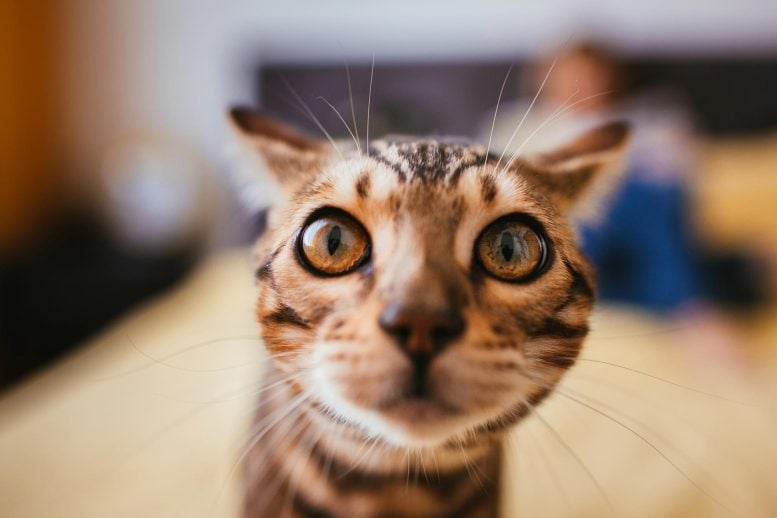 Lipid droplets in the kidneys may help cats maintain a consistent chemical “scent identity.” Scent marks can linger long after an animal has moved on, allowing urine and other chemical signals to carry information across both distance and time. Yet the molecules responsible for odor do not remain unchanged. They evaporate, break down, and shift [...]
 GPS collars reveal hyenas retreating while male lions repeatedly close the distance.
 From fireflies to mammals, evolution may have tuned communication to the rhythm of neurons.
 They groom dogs, ride deer, adopt marmosets — and sometimes do darker things.
 Credit:
Administrative Archive, Regional Museum of Iquique–CORMUDESI

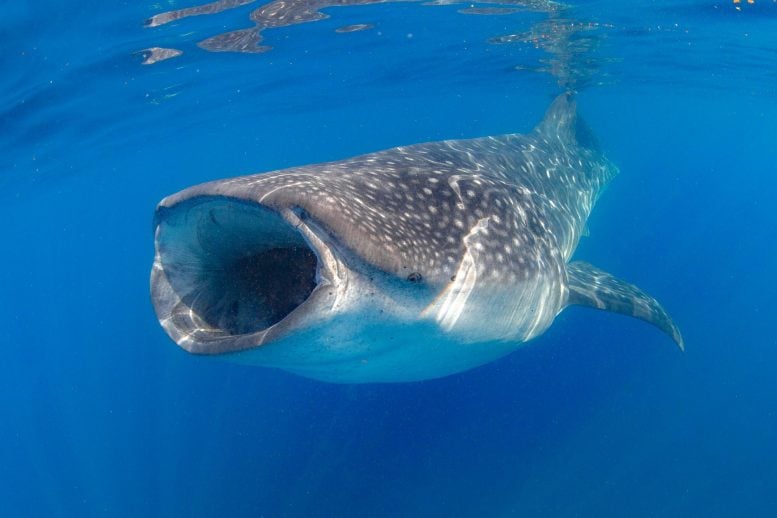 Whale sharks use a wider range of feeding strategies and depths than surface observations previously revealed. A whale shark can vanish beneath the surface in seconds, leaving researchers with little idea of what the world’s largest fish does once it disappears from view. Whale sharks (Rhincodon typus) are among the ocean’s most recognizable animals, inspiring [...]
 A dog’s nose is a gateway to a richer world, and scent-filled walks, games, and food hunts can transform boredom and stress into excitement, focus, and discovery. While we are captivated by a vivid sunset and breathtaking views, dogs have their noses to the ground, reading the odor stories left behind by other dogs and [...]
 From ants to apes, social species scout, bond, raid and retreat before conflict.
 A yet unnamed Australian spider weaponizes silk to hunt a single ant species.
 These fathers brood, carry, feed and defend their young at astonishing cost.
