❌

Reading view

NASA expands Deep Space Network with giant new dish in California desert

NASA's long-distance spacecraft-calling network just got a boost.

The Deep Space Network (DSN), best known for communicating with distant spacecraft such as Voyager 1, Voyager 2 and New Horizons, added a 114-foot (34-meter) radio-frequency antenna in California, boosting capacity on the increasingly crowded network.

More than 40 spacecraft exploring the solar system and interstellar space use DSN, which has struggled to keep pace with growing demand. Communications with the uncrewed Artemis 1 mission in 2022 and the crewed Artemis 2 mission in 2026 took priority as they traveled around the moon, substantially reducing the network's capacity to support other missions.

At least as early as 2021, managers were warning that despite ongoing efforts to add new antennas to DSN, the agency cannot reach all deep-space missions at once.

"We're trying to add capacity and more antennas, but we can't keep up with the demand that's currently out there, so missions should expect to be getting less availability," Brad Arnold, DSN manager at NASA's Jet Propulsion Laboratory (JPL), said during a presentation attended by Space News. Arnold also warned that the Artemis moon program would be "the gorilla in the room," because the astronauts by default have to be prioritized over robotic spacecraft: "That ultimately will affect our ability to service the rest of the missions."

That's because the DSN is designed to serve both human and robotic deep-space spacecraft. While JPL (then under contract to the U.S. Army) had three spacecraft radio-tracking stations in Nigeria, Singapore, and California ready for the early space program in 1958, the DSN with more powerful dishes was established in December 1963 as "the de facto network for missions into deep space," state JPL materials from the 50th anniversary celebration in 2013.
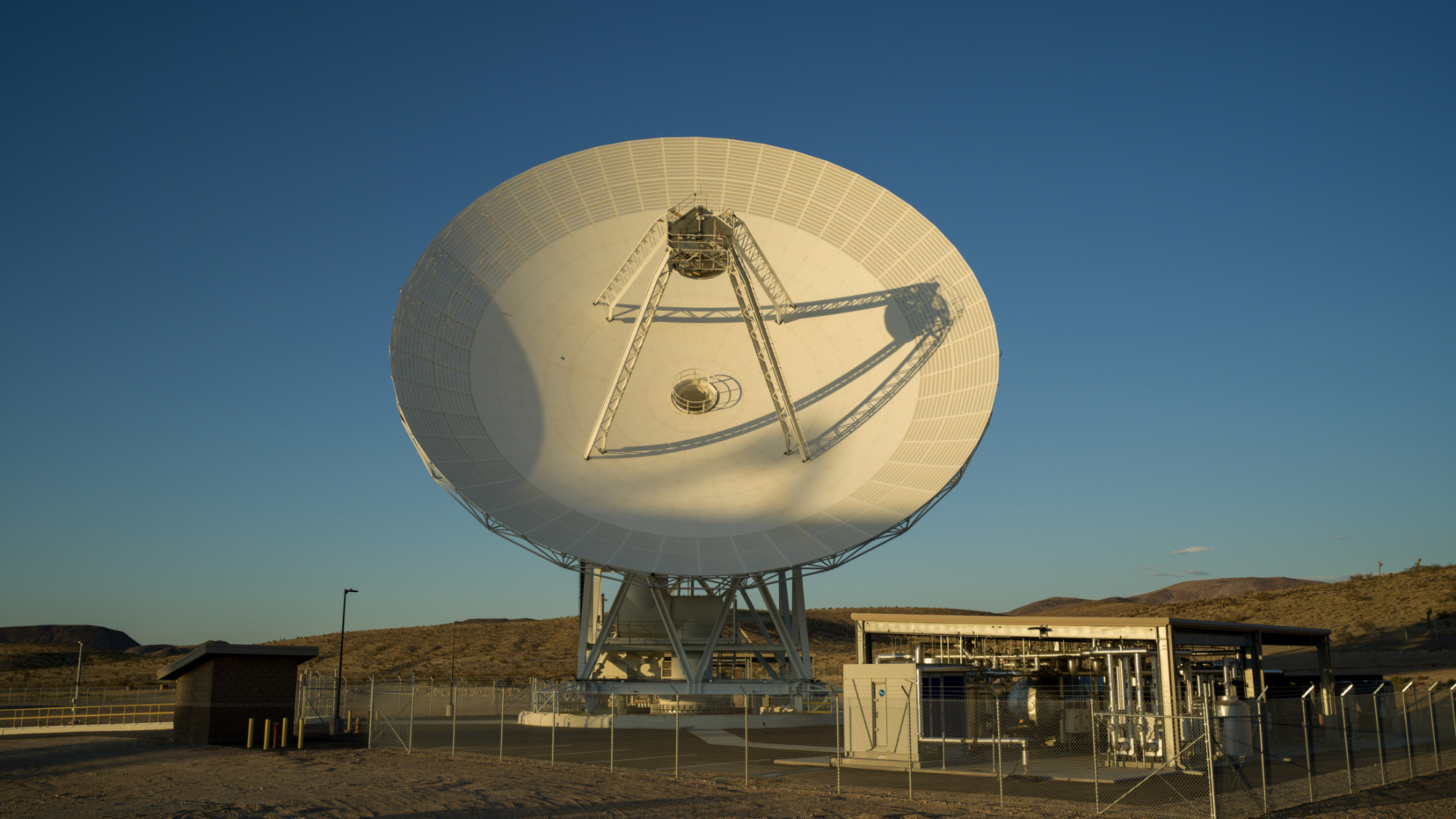
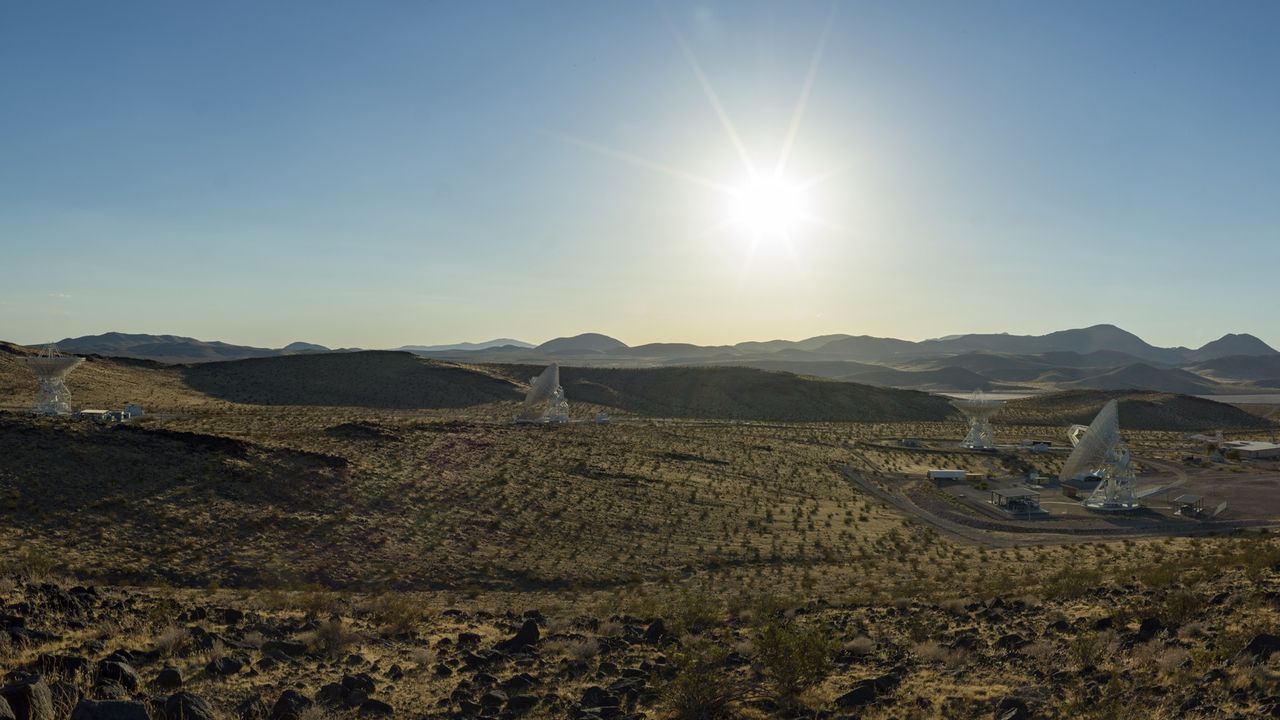
a large dish points towards the sky.

The recently completed Deep Space Station 23 at the Deep Space Network's Goldstone complex near Barstow, California. (Image credit: NASA/JPL-Caltech)

The DSN helped relay communications from Apollo 11's historic moonwalk by NASA astronaut Neil Armstrong's on July 20, 1969, and has since supported countless milestones. This includes images from Mars rovers starting in the 1990s and data showing that both Voyager 1 and Voyager 2 crossed into interstellar space in the 2010s.

These days, Artemis isn't the only extra demand on DSN; other space agencies also use the network for their own spacecraft, to a much greater degree than 50 years ago as space exploration has matured. NASA is also planning a permanent Moon Base near the lunar south pole as soon as the 2030s, although the agency does promise the base will, in its third phase, include "a coordinated lunar network supporting communications across Moon Base assets."

The DSN operates three complexes β€” at Goldstone in California, near Madrid in Spain and Canberra in Australia β€” each of which includes a large 230-ft (70m) antenna alongside several smaller dishes. The new antenna is about half that size and is co-located at Goldstone. It came online on Aug. 3, tracking NASA's Chandra X-ray Observatory.

DSS-23 is the fifth of six new 34-meter antennas planned under the DSN's Aperture Enhancement Project, which began in 2009. The project is expected to be completed when the sixth antenna, DSS-33, comes online at the Canberra complex in 2029.

The expansion has also taken longer and cost more than originally planned. A 2015 NASA Office of Inspector General report estimated the project at $362.4 million, but by the start of fiscal year 2023, expected costs had risen by 68% to $706 million and the project was nearly five years behind schedule. NASA now expects the final enhancement antenna to come online in 2029.
  •  

This NASA-funded 'Slingshot' spacecraft idea could map minerals on planets and moons across our solar system

Nearby Earth, an iconic series of orbiting U.S. government satellites called Landsat have collectively been charting minerals and climate change for more than 50 years.

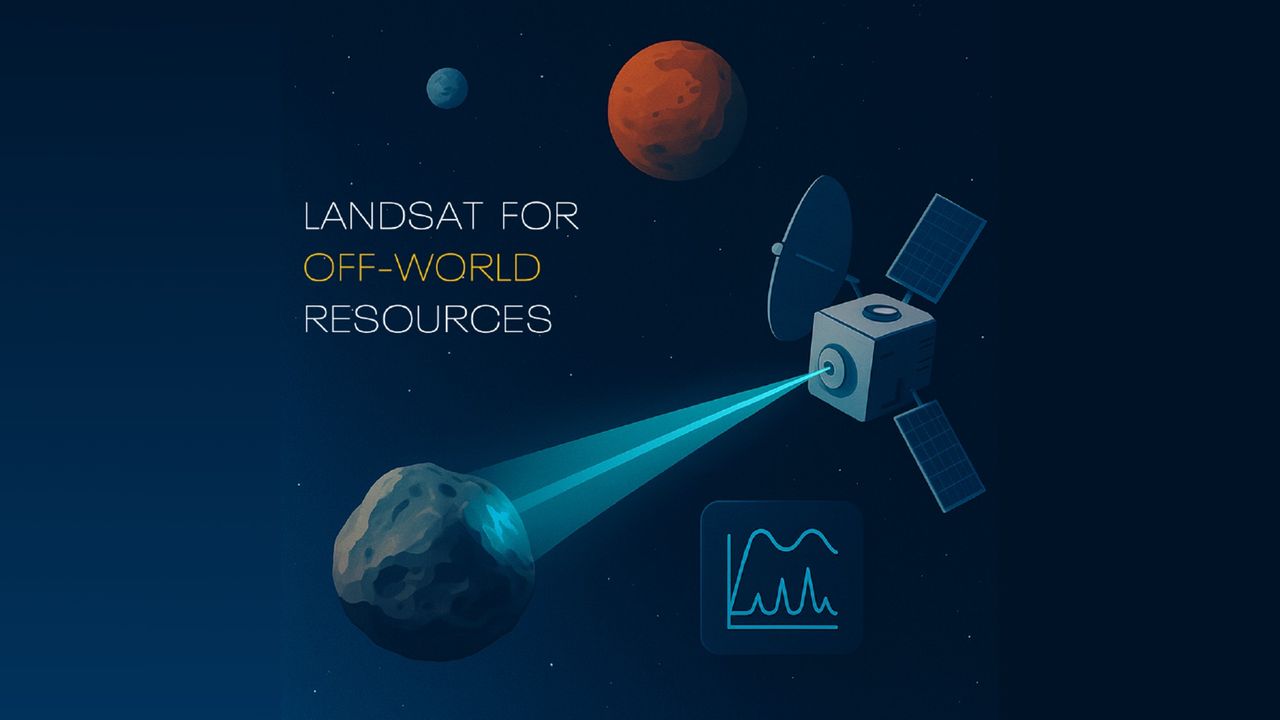
What if we can do the same thing in space? A new NASA early-stage project, whimsically named "Interworld Slingshot Resource Surveys", aims to bring "Landsat-style mineral intelligence" to other worlds, including the moon. NASA is aiming to put a moon base on the lunar surface in the 2030s that would be staffed by astronauts, as the U.S. tries to secure access to helium-3 and other minerals on the surface ahead of China. Being able to scout for minerals ahead of landing and setting up a base would be a huge boon for the United States' lunar ambitions.

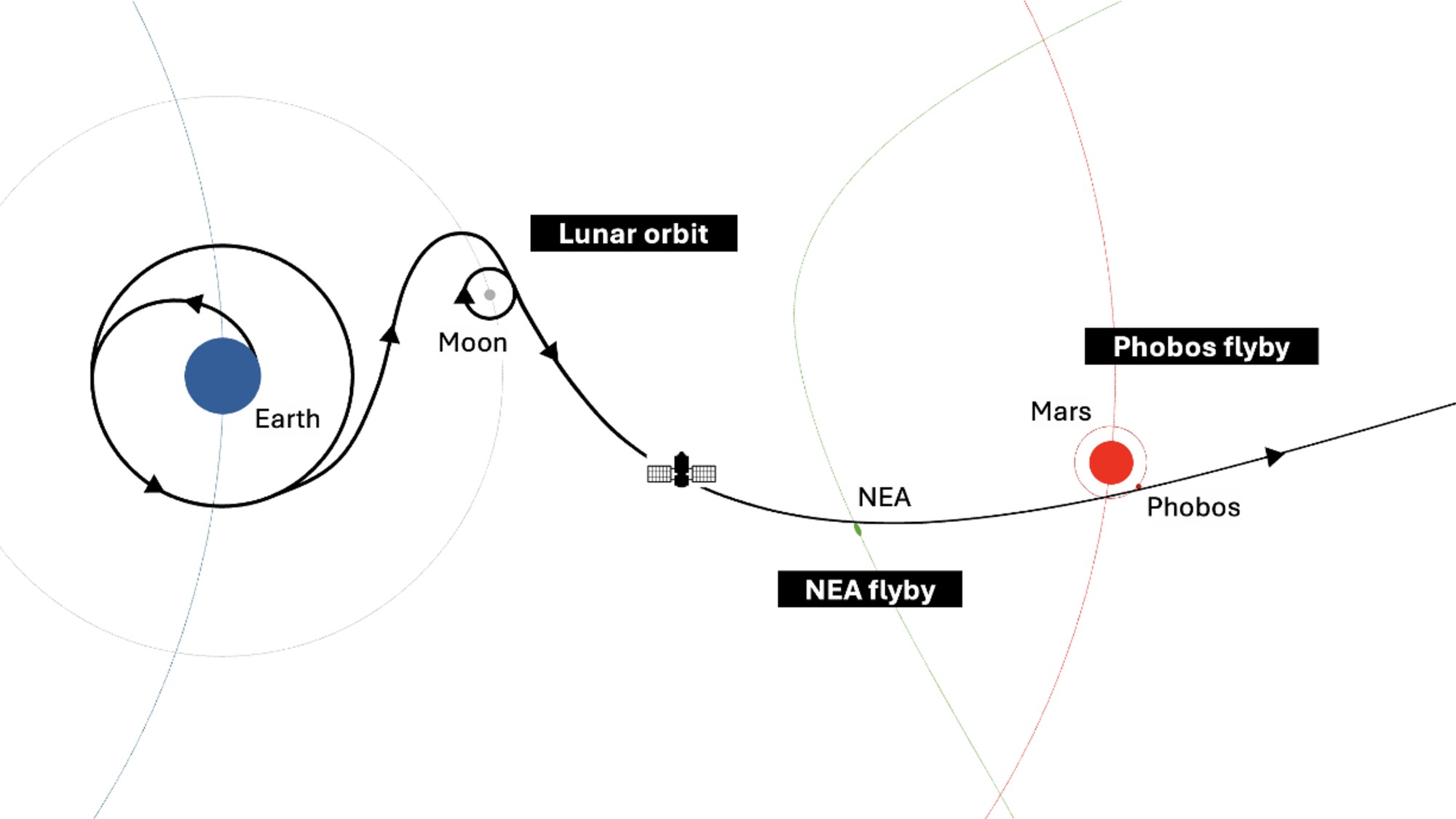
The newly funded concept β€” which doesn't appear to have an official nickname or acronym, so we will call it "Slingshot" for short β€” isn't meant to address that big task all at once, but to be a Phase 1 study for a far-future Discovery-class (large) mission. The spacecraft could fly from world to world, scanning destinations such as the moon, an asteroid near Earth, or a target like the Mars moon Phobos, said principal investigator Pablo Sobron, a research scientist at the SETI (Search for Extraterrestrial Intelligence) Institute, in a statement.

"The thing most likely to stop space mining may be that we cannot afford to prove there is anything worth mining," Sobron said. "Land in the wrong place and you can lose an entire exploration program or a company, and nobody has enough money to keep sending spacecraft and hoping for the best."

The overall aim is to not only prove a spacecraft could make it that far, but also to see if Raman spectroscopy β€” which is commonly used close up to look for minerals or water by NASA's Perseverance mission on Mars, for example β€” could work from orbit or a flyby. The technique uses reflected light from a laser popped at a target to see the molecular structure of a mineral, which in turn reveals the mineral's composition.

"The main challenge for Interworld Slingshot Resource Surveys is the distance involved," SETI stated. "Raman scattering is very faint and hard to detect. The project team says that only about one photon in 10 trillion is Raman-scattered. Sobron's earlier long-distance Raman tests reached about 120 meters [393 feet]. This study is looking at whether useful measurements can be made from much farther away, around 30 to 50 kilometers [19 to 31 miles]."

a map showing earth, the moon, mars and its moon phobos with a long s-shaped path drawn between them on which a T-shaped spacecraft flies

The NASA-funded Interworld Slingshot Resource Surveys study is exploring whether a small spacecraft could survey the moon, a near-Earth asteroid and Phobos during a single mission using a single remote-sensing instrument. (Image credit: Pablo Sobron)

Slingshot received a Phase 1 grant from the NASA Innovative Advanced Concepts (NIAC) program, which aims to prove out conceptual ideas into something that could be nudged into further development.

NIAC has funded dozens of grants over the years, but illustrating the difficulty of and long development cycles to bring things into space, not much has made it out of the atmosphere yet. A notable NIAC success story was SNAPPY, the Solar Neutrino Astro-Particle Physics CubeSat, which reached space earlier this year aboard SpaceX.

Slingshot will use the Phase 1 funding to study photons (particles of light) to be used and detected by the spectrometer, along with lasers, pointing, and spacecraft propulsion and orbits. The concept received up to $175,000 over nine months and next in line would be trying to receive more lucrative Phase 2 NIAC funding over two years.

  •  

Hubble confirms mysterious, 10-sided cloud is growing over Saturn's south pole

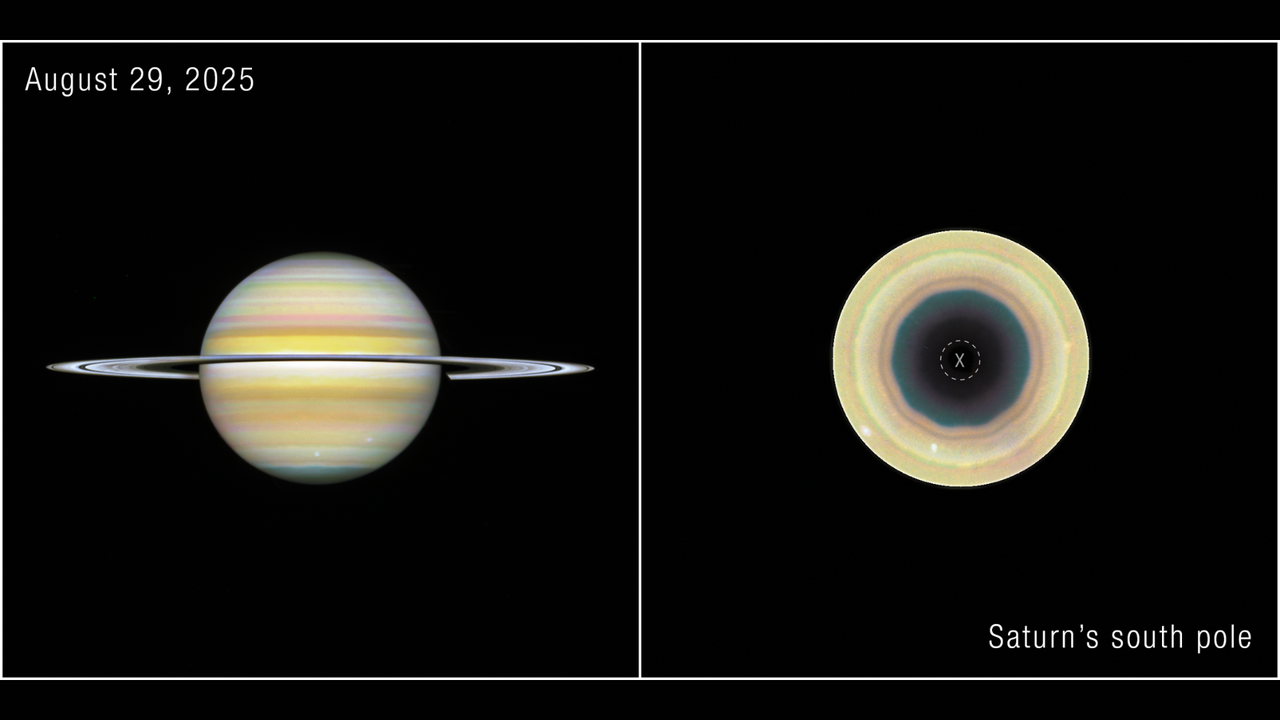
New Hubble observations have revealed a dramatic, 10-sided jet surrounding Saturn's south pole, and it appears to be evolving before our eyes.

The Hubble Space Telescope recently snapped a high-resolution view of the striking "atmospheric wave," which appears to have begun forming in 2023, archival Hubble images show. Scientists are curious about how this "decagon" popped up so quickly, given that Saturn's other famous multisided wave β€” a hexagon at the north pole β€” has been observed on the planet for 40-plus years.

"The question is, why did it suddenly form now when we haven't seen one before?" Amy Simon, a senior scientist at NASA's Goddard Space Flight Center and co-author of a new study describing the observations, said in a statement.

"The northern hexagon has been there every time we've looked for more than 40 years," Simon added. "This feature is different β€” it appears to be strengthening, giving us the rare opportunity to watch a giant atmospheric pattern develop."

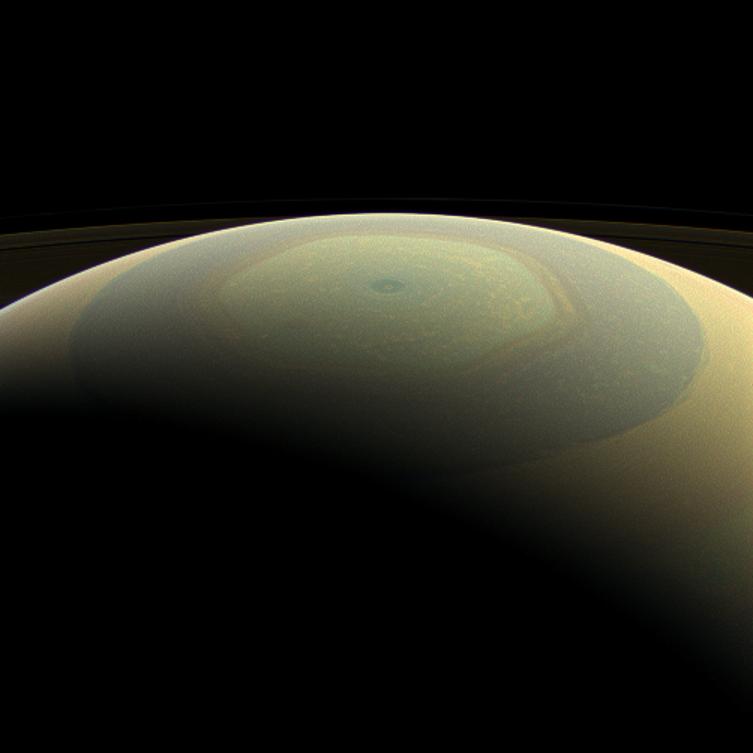
The globe of Saturn, seen here in natural color, is reminiscent of a holiday ornament in this wide-angle view from NASA's Cassini spacecraft.

The famous hexagon at Saturn’s north pole. (Image credit: NASA/JPL-Caltech/Space Science Institute)

Scientists can see the wave persisting through several atmospheric layers, which means it extends beyond the cloud tops. The wave is also found in a large jet stream at Saturn. More observations with Hubble and the James Webb Space Telescope (JWST) will be required to see how the wave is generated and what the decagon illustrates about atmospheres in large gas giants like Saturn.

The images were obtained as part of Hubble's Outer Planet Atmospheres Legacy program, which uses some of the telescope's time to image the solar system's outer planets β€” Jupiter, Saturn, Uranus and Neptune β€” once a year. The goal is to obtain long-term observations of these worlds, to supplement spacecraft orbiting or flying by.

From Earth's perspective, Saturn is slowly orbiting in its roughly 29-year journey of the sun so that its south pole is visible from our planet, allowing for a good view of the changing decagon. Hubble, in fact, was not the first to see signs of this decagonal shape; it was ground-based observatories that spotted a mysterious undulating band around Saturn’s south pole in 2024.

AgustΓ­n SΓ‘nchez-Lavega, first author of the study and a researcher in the Department of Applied Physics at the University of the Basque Country, and amateur astronomers Trevor Barry and Jean-Paul Oger first spotted the forming wave. The trio used the university's Planetary Virtual Observatory Laboratory, which brings in observations from around the world, to make the Saturnian discovery.

While more images in 2025 showed the wave starting to move into a decagon structure, Hubble was able to obtain high-resolution images without Earth's atmosphere in the way.

The Cassini spacecraft, which orbited Saturn between 2004 and 2017, didn't see the feature, hinting that it hadn’t started forming yet, according to NASA. "Given Saturn's symmetry in its north-south jet stream system, we have been searching for a counterpart to Saturn's northern hexagon on the south pole in Hubble images since 1990," SΓ‘nchez-Lavega said.

Both Hubble and JWST are expected to provide more opportunities to look at the ringed planet's developing decagon in the near future. In the meantime, Saturn isn’t the only solar system planet with perplexing polar features; 2017 images from NASA’s Juno spacecraft showed that Jupiter’s south pole is studded with gigantic, oval-shaped cyclones that echo the chaos of the planet’s famous Great Red Spot.

  •  
❌