 Login

Georgia bet big on EV manufacturing. Trump pulled the plug

It's a grim moment for what was a booming industry in the state, but EV makers are still forging ahead.


It's a grim moment for what was a booming industry in the state, but EV makers are still forging ahead.

Oak Ridge National Laboratory (ORNL) and industry partners are deploying advanced manufacturing technologies, such as heavy 3D printing and AI-driven automation, to repair broken US industrial supply chains.
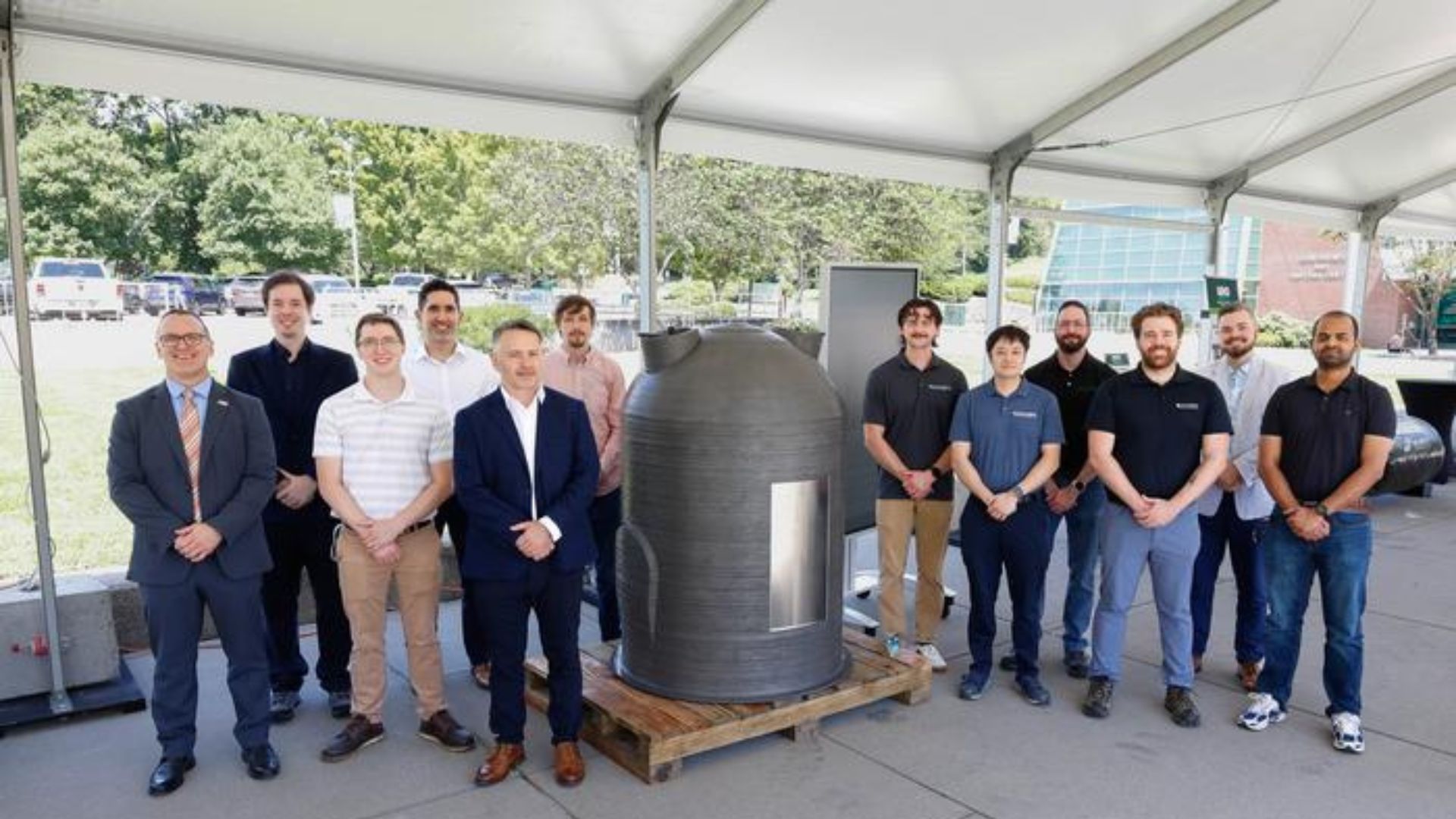
For instance, inside an advanced Tennessee facility, a giant three-armed robot called MedUSA crafted a three-by-five-foot nuclear pressure vessel by guiding molten steel into place. Nearby was a large 12-foot model of an impact limiter, made from strong plastic instead of the usual wood. These were battle tests for the future of American industry.
America’s industrial sector is facing severe operational hurdles, driven by irregular supply chains and a shortage of skilled workers. These issues have created extreme delays in infrastructure sectors like hydropower, where acquiring major custom components can now take over ten years.
Over 350 leaders gathered at ORNL for the Materials and Manufacturing Innovation Days. They discussed ways to speed up the adoption of advanced manufacturing technologies.
The goal of M2IND was simple yet ambitious: remove the administrative and technical obstacles slowing advanced technology, and turn laboratory breakthroughs into factory-floor reality before time runs out.
“We want to make sure we have input from industry to help guide our research and ensure that the work at Oak Ridge and the Manufacturing Demonstration Facility (MDF) is valuable to U.S. manufacturers and takes into account the supply chains needed to commercialize new technologies,” said MDF Director Ryan Dehoff.
The event featured two large 3D-printed nuclear energy structures. Researchers worked with the University of Maine to print a glass-fiber polymer model of an impact limiter. This massive component protects spent nuclear fuel shipping containers during transport and replaces traditional wood designs.
Scientists also used a three-arm robotic system to print a steel pressure vessel with complex domed geometry. This project shows how additive manufacturing can produce large metal parts that usually face production issues.
Standard reactor vessels use large-scale forging and welding, which face severe domestic capacity limits. The 3D-printed vessel served as a test case to evaluate additive manufacturing as a viable alternative.
Participants highlighted urgent needs for resilient supply chains, alternative materials, and faster part qualification. They also pushed to combine manufacturing with AI, robotics, and digital engineering. New partnerships were formed to quickly turn laboratory research into practical tools for manufacturers.
Representatives from four Department of Energy offices and defense officials joined leaders from energy, manufacturing, and technology sectors at the event. Together, several key obstacles facing American industry were identified. These challenges include limited local capacity for large metal parts and long component lead times.
ORNL formed key industrial partnerships to bring research into practical factory use. Yet, as forum participants repeatedly emphasized, printing a part is only half the battle. Getting it certified for real-world use is where momentum often dies.
To bridge that gap, ORNL announced a joint research effort with Idaho National Laboratory to standardize digital qualification methods across different facilities
Researchers hope to give regulators the data needed to certify 3D-printed nuclear and energy components in months rather than years. They plan to do this using real-time sensors, machine learning, and defect-tracking algorithms during the build process.
With new partnerships signed with energy titans like SLB and Kairos Power, the push is clear. Urgency has replaced routine. America is racing to rebuild its domestic manufacturing core, starting right on the laboratory floor.

© Nick Rohlman/The Gazette, via Associated Press
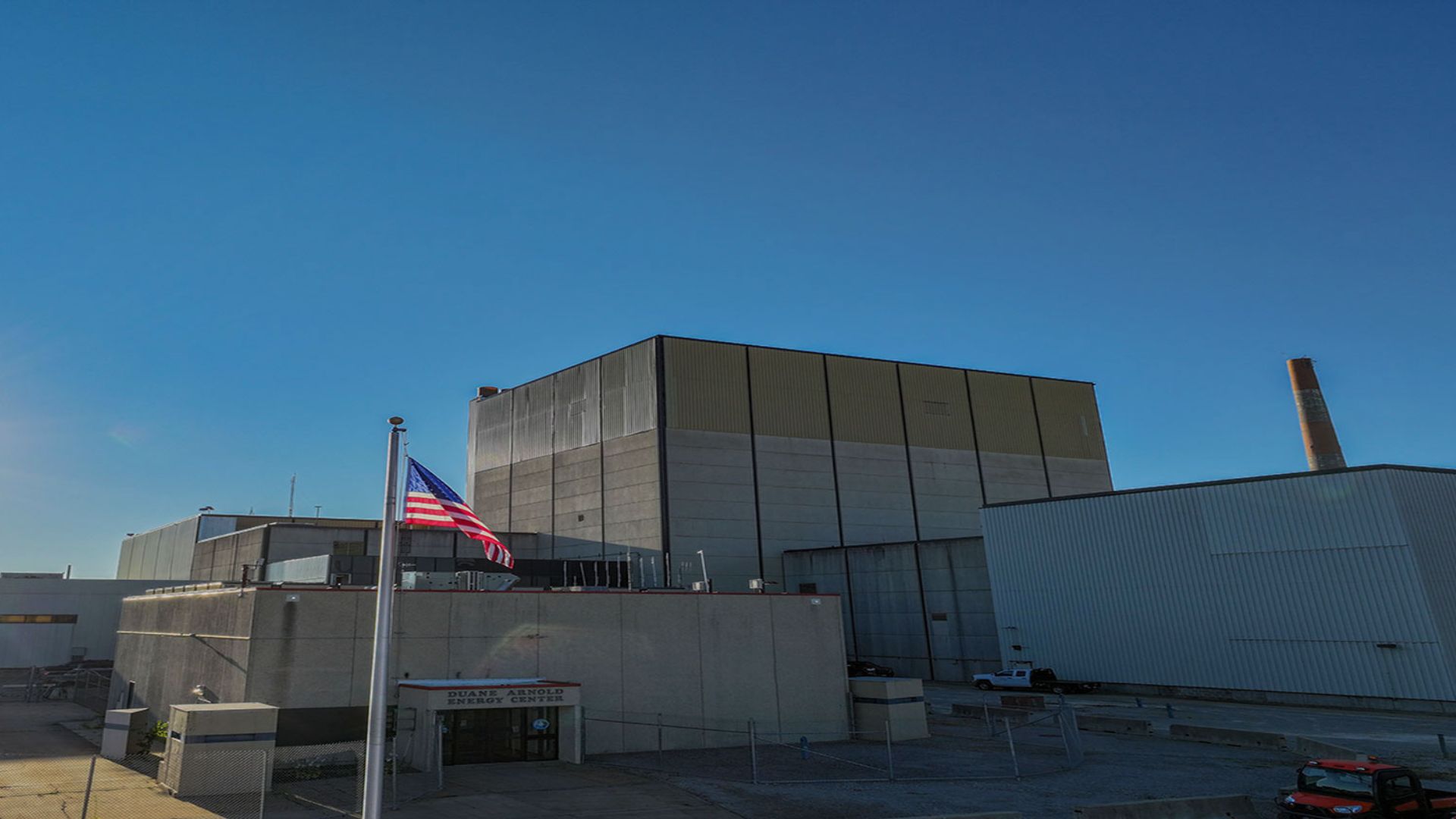
The Trump administration is putting $1.9 billion toward restarting a nuclear plant in Iowa as the U.S. works to keep up with rising electricity needs from artificial intelligence. On Tuesday, the Department of Energy said it had finalized a loan of up to $1.9 billion to help NextEra Energy bring the Duane Arnold Energy Center back online.
The 615-megawatt plant is set to restart in early 2029. It will be able to power almost 500,000 homes and support the expanding cloud and AI infrastructure in Iowa.
Duane Arnold ran for over 45 years before closing in 2020. It was supposed to shut down later that year, but a derecho damaged the facility and forced it offline several months ahead of schedule.
NextEra now plans to bring the plant back online. The federal loan will help pay for the work needed to restore the facility and add its power back to the regional grid.
The Energy Department expects the project to boost electricity supplies and lower power costs. When it restarts, Duane Arnold will be Iowa’s only working nuclear power plant.
Deputy Energy Secretary James Danly said the financing “marks another step in advancing America’s nuclear renaissance.”
Google is a key partner in the restart. In October 2025, Google and NextEra announced a deal where Google agreed to buy electricity from the plant through a multi-year contract.
This agreement gives NextEra a steady customer for the electricity the plant will produce. For Google, it means a reliable power source for its growing cloud and AI operations in Iowa.
“We expect Duane Arnold to be back online in early 2029, and the plant will provide more than 600 MW of clean, safe, “always-on” nuclear energy to the regional grid,” Google said in a blog post last year.
Google also pledged an additional $7 billion investment in Iowa over two years. The spending includes new and expanded infrastructure supporting its cloud and AI businesses.
The deal shows how tech companies are changing as AI increases electricity demand. Running advanced AI models needs big data centers, which use a lot of power.
Google is far from alone in seeking nuclear generation. A Microsoft-backed project to restart Pennsylvania’s Crane Clean Energy Center, formerly known as Three Mile Island Unit 1, received a $1 billion Energy Department loan in 2025.
Meta has also reached agreements supporting up to 6.6 gigawatts of new and existing nuclear capacity by 2035. Amazon, Microsoft, Google and Meta are all expanding data center infrastructure as AI workloads continue to grow.
The Duane Arnold financing also fits into the Trump administration’s broader nuclear strategy. President Donald Trump signed several executive orders in 2025 aimed at accelerating nuclear development in the U.S.
One order directed the Energy Department to halt most previous plans for diluting and disposing of surplus plutonium. It instead called for a program to process the material and make it available to private companies.
The Iowa project now adds another major nuclear investment to that push. If the restart stays on schedule, Duane Arnold will return 615 MW of generating capacity to the grid in 2029, giving Iowa a major new source of dependable electricity as demand from AI infrastructure continues climbing.

Across the stories today, a common thread emerges: the gap between what protects us on paper and what protects us in practice. Again and again, communities are discovering that designations, promises, and permits only matter when someone is willing to enforce them — and that when systems fail, it’s ordinary people, and often the most vulnerable, who absorb the shock.
Nowhere is that clearer than in Jackson, Mississippi, where a federal appeals court ruled this week that the Constitution guarantees no right to clean water. For residents who have lived through years of contaminated taps and boil-water notices, the decision lands as a gut-punch reminder that legal frameworks haven’t caught up to environmental reality. A similar tension runs through the Guardian’s reporting on datacenter wastewater in Wyoming, where testing turned up a rare, potentially hazardous bacterium, and on English golf clubs, where one in twelve have quietly broken water extraction rules amid growing drought stress. Behind the numbers are real communities adapting in real time — often without knowing what’s actually flowing through their pipes or being pulled from their aquifers.
That same gap between promise and delivery surfaces in the UK’s datacentre boom, which new analysis suggests will produce only a quarter of the jobs once advertised, even as it strains the national grid. It echoes in Georgia, where a once-booming EV manufacturing corridor is hitting turbulence under shifting federal policy — a reminder that industrial transitions built on incentives can be as fragile as the politics that fund them.
Yet the day’s coverage also points to growing momentum around care, restoration, and reckoning. Hurricane Lowell’s damage across Hawaii’s western islands — toppled trees, flooded roads, thousands without power — sits alongside quieter stories of renewal: Gloucestershire’s proposal to reintroduce beavers as a defense against drought and flooding, Douglas Head’s new conservation status on the Isle of Man, and Coventry’s investment in Longford Nature Park. These are small, deliberate acts of stewardship, the kind Wendell Berry spent his life advocating for. His death last week, at 92, feels newly resonant this week — a farmer-poet who insisted that loving a place well was itself a form of environmental action, long before it became policy language.
Farther afield, the human cost of extraction runs deep. In Peru and Brazil, mercury from illegal gold mining is showing up in children’s blood and in fish that families have eaten for generations, forcing painful dietary changes in communities that did little to cause the contamination. In Indonesia, El Niño-fueled fires are pushing orangutans out of burning forests, while in Uttarakhand, India, women — who gather firewood and fodder — are bearing the brunt of increasingly long fire seasons. In Colombia, the Wiwa community’s decision to relocate their village down the mountain is less retreat than adaptation, a recognition that sacred land is changing faster than tradition can hold still.
It’s a reminder that progress and pressure often arrive together — a new spaceport investment in Shetland, a badger vaccination program under scientific scrutiny, a push for a Natural History GCSE to reconnect children with the outdoors. Each represents a small bet on the future, even as larger systems strain under climate and economic pressure.
As the week unfolds, watch whether the Jackson ruling prompts congressional attention, whether Britain’s Green Party succeeds in forcing transparency around ecosystem collapse risks, and whether Gloucestershire’s beavers get their chance to prove that sometimes the oldest solutions are still the best ones.
The post Hurricane Lowell Floods Western Hawaii, New Forest Wildfire Threatens Woodland — Today’s Environmental Briefing for Wed, Sep 9 2026 first appeared on EnviroLink Network.
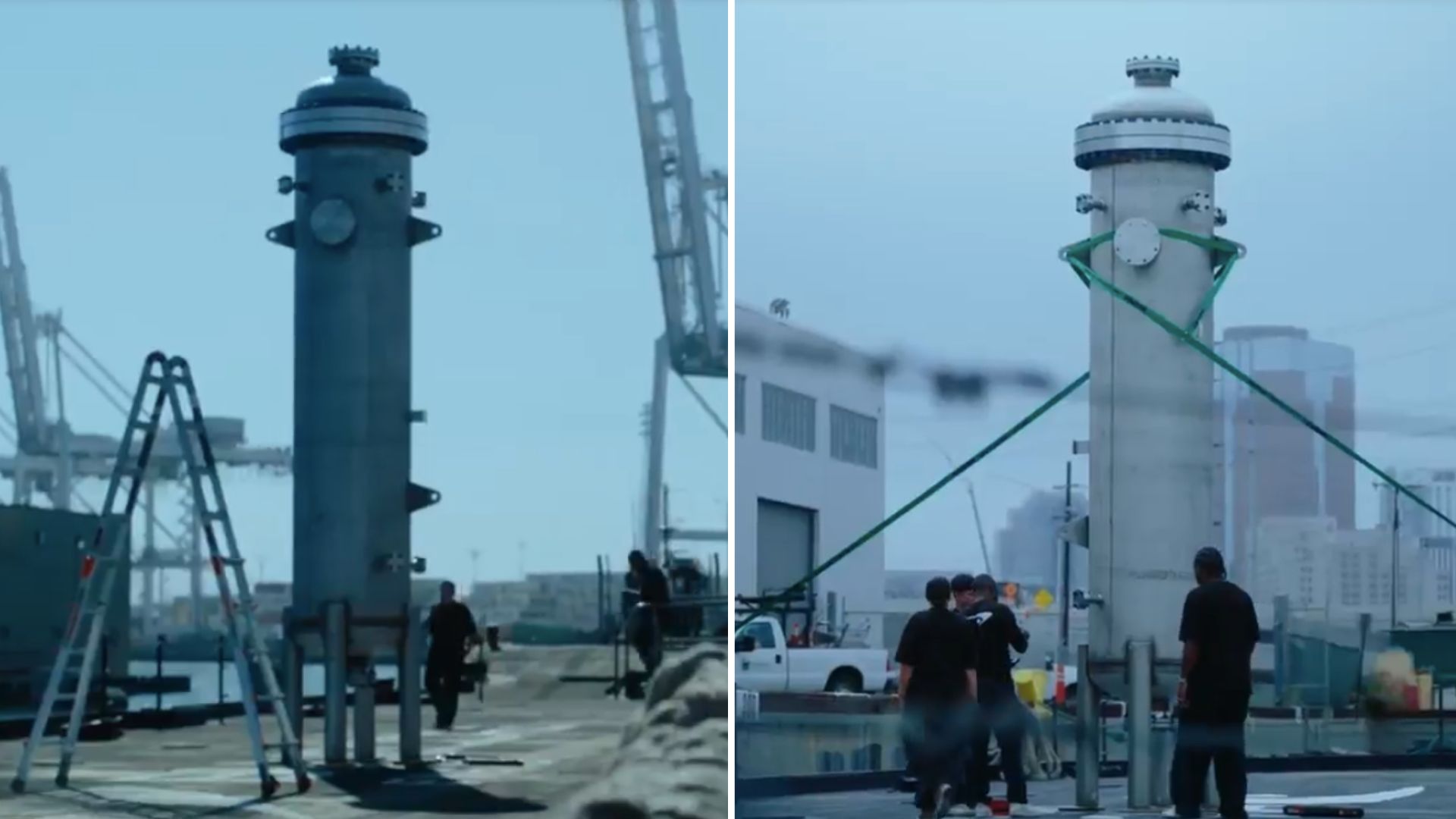
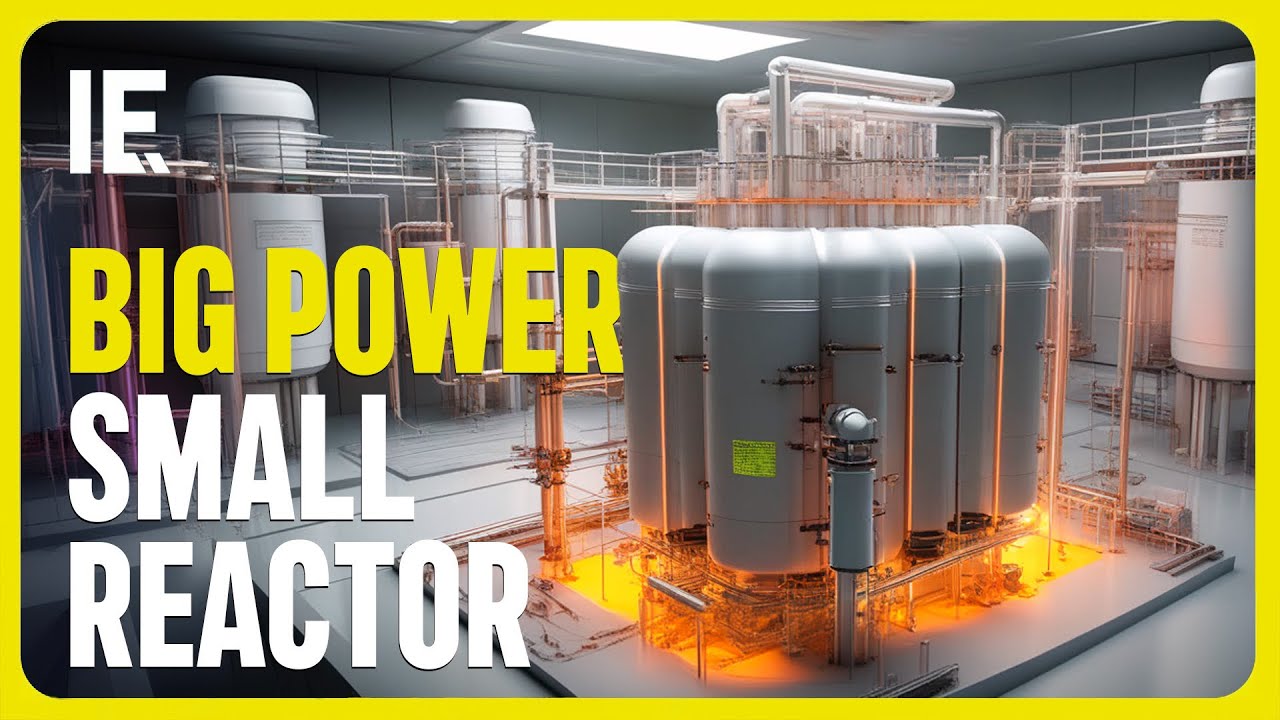
Bluecore Energy, a startup building small modular nuclear reactors (SMRs) on floating barges, announced an oversubscribed $50 million seed round led by Silverton Partners.
Within just nine months of launch, Bluecore Energy has rapidly accelerated its path toward floating nuclear power by securing a port terminal, receiving its first barge, and starting construction on a test reactor.
Designed specifically for commercial applications, the reactor incorporates multiple layers of protective shielding and continuous water-based cooling to ensure safe, resilient operation out at sea.
The company’s founder, Kofi Asante, announced in the LinkedIn post: “Our focus is simple. Create and deliver zero-emission energy as safely and quickly as possible. Over 3 billion people live within an hour of water. We want to power them all.”
Bluecore Energy emerged from stealth on 21 July with $10 million in pre-seed funding to deploy floating SMRs directly on mobile barges.
The startup is the first SMR developer based inside a major U.S. shipping hub, operating directly out of its headquarters at the Port of Long Beach, California.
The goal is to build a 10 MWe water-cooled reactor system using established maritime nuclear physics enclosed in steel pressure vessels and concrete shielding. The reactor will be capable of powering roughly 15,000 homes and can operate for years on a single fueling.
Designed to be modular, multiple units can be chained together to scale up and deliver reliable, long-term power to major ports, utilities, AI data centers, offshore facilities, and energy-constrained coastal communities.
Bluecore’s initial target is its hometown Port of Long Beach — the first American port to publicly back floating nuclear energy.
“Nuclear energy at sea is not a new idea. Our opportunity is to take lessons from decades of maritime nuclear experience and combine them with modern engineering to build systems for a new generation of commercial applications,” stated Asante, who is a former Uber Freight executive.
The startup has already secured and delivered its first physical barge alongside an electric test reactor to its port site. This will allow the engineering team to actively construct, test, and refine system components in real-world conditions.
Alongside these hands-on development milestones, Bluecore is rapidly advancing its formal regulatory, design classification, and commercialization pathways by deepening its technical engagement with both the US Nuclear Regulatory Commission and the US Coast Guard.
Its platform leverages offshore mobility to overcome land-based energy constraints.
The company’s small modular reactors will be mounted on mobile barges that can be moored or anchored like offshore oil rigs. These will be connected directly to land infrastructure using high-capacity subsea power cables. Positioned out in open waters, the units naturally draw on the ocean for continuous cooling.
According to TechCrunch, this seed round drew strong support from returning pre-seed backers, including Slauson & Co., Harlem Capital, and Ripple co-founder Chris Larsen. And high-profile new investors, such as Collab Capital, Kevin Hart’s HartBeat Ventures, and angel investors from Tesla, Uber, Amazon, and Google.
With the new capital, Bluecore will place its first order for nuclear fuel. The primary operational challenge facing the company is navigating hardware supply chain issues.
The startup, staffed by veterans from SpaceX, Rivian, and Navy submarine units, is already undergoing joint design review with the US Nuclear Regulatory Commission and the Coast Guard.


NextEra Energy is one of three U.S. energy companies to win backing from the Department of Energy to revive shut-down nuclear plants to meet soaring power demand.
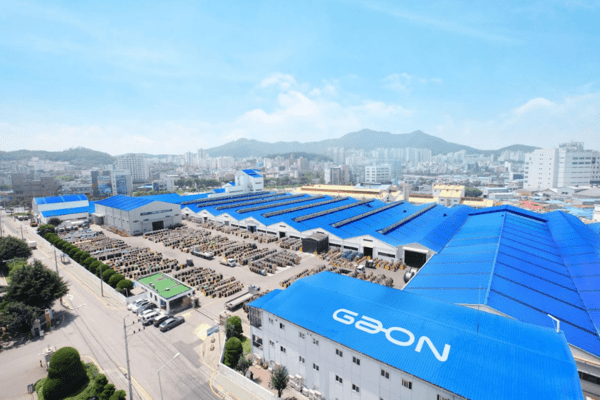
Gaon Cable, a subsidiary of LS Cable & System, has entered Canada's public power grid market for the first time.
Gaon Cable said Sept. 9 it recently supplied medium-voltage (MV) cables to a major public utility in western Canada. It marks the company's first export of power cables to Canada.
Gaon Cable plans to use its entry into Canada as a springboard to expand orders in the North American public power grid market. Canada is expanding and modernizing its transmission and distribution networks to meet rising electricity demand driven by the growth of AI data centers and advanced manufacturing.
The company also expects its North American sales to increase. Gaon Cable is expanding local supply through its headquarters and U.S. manufacturing subsidiary LSCUS in North Carolina.
Gaon Cable expects North American sales to rise more than 50% to about $470 million this year from about $300 million last year.
"We will continue to strengthen our presence in the North American power infrastructure market spanning the U.S. and Canada," Gaon Cable CEO Chung Hyun said.

Korea Aerospace Industries (KAI) is showcasing the KF-21 and Manned-Unmanned Teaming (MUM-T) systems in Poland as it seeks to expand its presence in the European market.
KAI said Sept. 9 it is participating in the International Defence Industry Exhibition (MSPO 2026), being held in Kielce, Poland, from Sept. 8 to 11.
KAI displayed its Next-generation Air Combat System (NACS), linking the KF-21, unmanned combat aerial vehicles (UCAVs), multi-purpose unmanned aerial vehicles (AAPs) and low-Earth-orbit communications satellites. It is also showcasing a MUM-T system connecting the FA-50 with an AAP.
In the rotary-wing segment, KAI unveiled systems linking Air-Launched Effects (ALEs) with the Marine Attack Helicopter (MAH) and Light Armed Helicopter (LAH). KAI plans to offer the MAH, whose system development was completed in August 2026, to European countries seeking to replace their helicopter fleets.
KAI is seeking follow-on business opportunities for the FA-50 in Poland. It also plans to pursue new projects in European countries with fighter replacement demand, including Romania, Bulgaria and Slovenia.
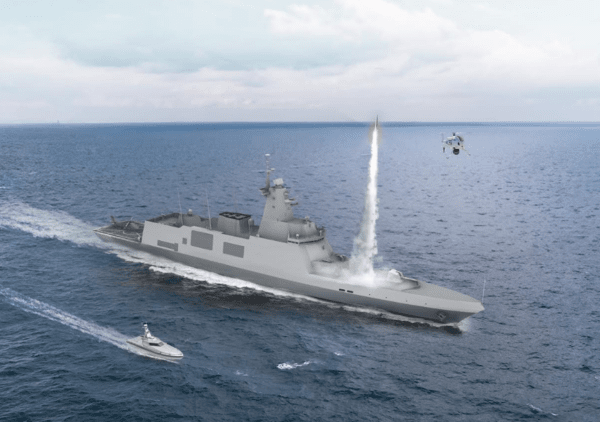
Hanwha Ocean has been selected as the preferred bidder for the Royal Thai Navy's next-generation frigate project worth about 680 billion won.
Hanwha Ocean said Sept. 9 that it was named the preferred bidder for the Royal Thai Navy's next-generation frigate acquisition program and will begin detailed negotiations toward a final contract.
The Royal Thai Navy has set a budget of 16.73 billion baht, or about 683.3 billion won, for the construction of one frigate and integrated logistics support.
Hanwha Ocean will negotiate technical specifications, project scope and contract terms with the Royal Thai Navy. The final project value and contract terms will be determined based on the outcome of the negotiations.
Defense companies from Spain, Singapore and Türkiye competed for the project alongside Hanwha Ocean. The South Korean shipbuilder previously delivered the frigate "Bhumibol Adulyadej" to the Royal Thai Navy in 2018.
Hanwha Ocean plans to expand follow-on naval defense cooperation with Thailand and pursue additional opportunities in Southeast Asia's surface combatant market.

HD Hyundai is expanding cooperation with the Philippine government on naval modernization and the development of the country’s shipbuilding industry.
HD Hyundai said Sept. 8 that Chairman Chung Ki-sun met Philippine Defense Secretary Gilberto Teodoro Jr. in Seoul on Sept. 7 to discuss cooperation in shipbuilding and defense.
HD Hyundai has expanded its naval vessel business in the Philippines since winning a contract for the Philippine Navy’s first frigates in 2016. The company has secured orders for 12 naval vessels in the country and delivered six of them.
The two sides will continue cooperation on naval modernization, including follow-on frigate programs. They will also expand cooperation in the local shipbuilding industry.
HD Hyundai began operations at HD Hyundai Philippines in Subic last year. It recently launched the first vessel built locally and plans to deliver it to the shipowner next year.
“Based on the mutual trust we have built over the past 10 years, we will explore opportunities for long-term industrial cooperation in a wide range of areas beyond commercial and naval shipbuilding,” Chung said.
Dark energy is one of the least satisfying names in astronomy because it sounds more specific than it is. Scientists did not discover a glowing substance called dark energy. They gave that name to the unknown influence associated with the accelerating expansion of the universe. The evidence is strong that the expansion is speeding up […]
The post What Is Dark Energy? The Mystery Behind the Universe’s Accelerating Expansion appeared first on Curiosmos.

Battery installations hit a new record in the US in the second quarter of 2026. In total, 20.2 gigawatt-hours of new capacity came online, according to a new report. That’s enough to supply the daily electricity needs of about 700,000 homes.
The surge is putting the country on a trajectory to see 71 gigawatt-hours of batteries installed in 2026, a 20% increase over last year. This growth is being driven by a combination of cheaper batteries and an urgent need for more energy storage capacity as renewables such as solar and onshore wind power are added to the grid.
Massive, utility-scale systems are leading the way; they’re responsible for most of the record-setting quarter. Seven new gigascale battery installations (those with a capacity of over one gigawatt-hour) came online during the three-month stretch, according to the report, published by Benchmark Mineral Intelligence and the Solar Energy Industries Association.
“It really came down to a handful of big projects,” says Shan Tomouk, energy storage and energy lead for Benchmark Mineral Intelligence.
But there was also growth in the category of so-called behind-the-meter batteries, which include both residential and industrial battery storage systems. These projects, generally smaller than utility-scale installations, are typically owned and operated by homeowners or businesses rather than utilities or power providers.
In the behind-the-meter category, data centers led the way, making up about three-quarters of new batteries in the commercial sector. But residential batteries saw a sharp slowdown. These systems are often installed in homes to store power from solar panels or serve as a backup source in case of a blackout. Home installations are projected to drop by 16% in 2026 compared with last year, according to the report.
That drop happened largely because a tax credit that helped subsidize home battery systems ended in 2025, Tomouk says. Home installations should recover by the end of the decade, he adds. And tax credits for nonresidential batteries have largely survived.
Overall, batteries are a bright spot in energy right now. “This is one of the strong sectors in the US,” says Isshu Kikuma, an energy storage analyst at BloombergNEF, an energy consultancy.
As the battery market continues to grow, one major trend to keep an eye on is a move toward US-made technology. Today, nearly all the systems coming online use cells made in China, though some are put together into complete energy storage systems in the US.
Tariffs were already pushing the US energy storage industry toward domestic production. And beginning this year, energy storage tax credits required projects to limit their reliance on batteries imported from China. There’s a lot of manufacturing capacity set to come online in the US, though these factories probably won’t be able to meet demand until at least 2030 or so, Tomouk says, so prices could tick up.
Facilities likely to employ 10,400 workers, compared with 40,000 in industry estimates, thinktank says
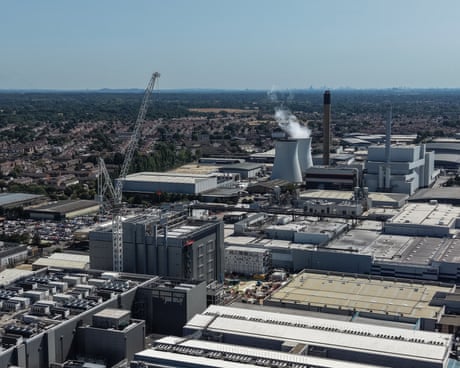
Datacentres in the UK will create just a quarter of the jobs predicted by the tech sector, while consuming vast amounts of energy, according to new research.
Environmental thinktank Verdant predicts that all the datacentres currently planned are likely to directly employ 10,400 workers – compared with the more than 40,000 cited in projections by the industry lobby group TechUK.
Continue reading...
© Photograph: Bloomberg/Getty Images
© Photograph: Bloomberg/Getty Images
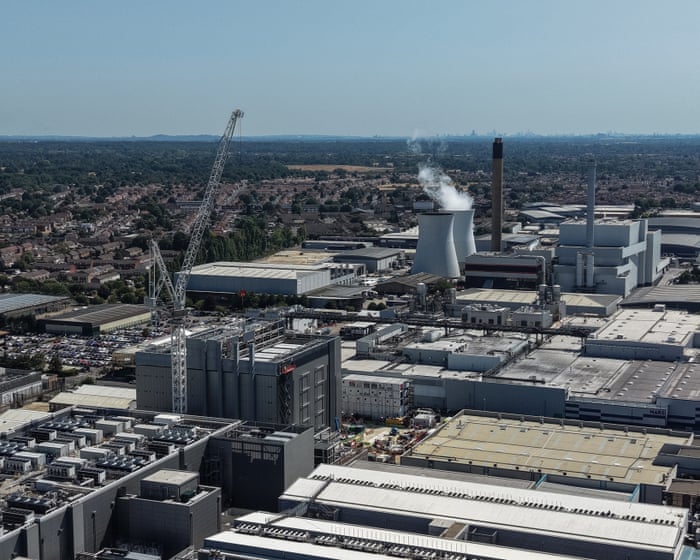
© Photograph: Bloomberg/Getty Images
Facilities likely to employ 10,400 workers, compared with 40,000 in industry estimates, thinktank says
Datacentres in the UK will create just a quarter of the jobs predicted by the tech sector, while consuming vast amounts of energy, according to new research.
Environmental thinktank Verdant predicts that all the datacentres currently planned are likely to directly employ 10,400 workers – compared with the more than 40,000 cited in projections by the industry lobby group TechUK.
Continue reading...
© Photograph: Bloomberg/Getty Images
© Photograph: Bloomberg/Getty Images
© Photograph: Bloomberg/Getty Images
